1. INTRODUCTION
It is essential that lifeboat operators have the necessary skills to launch a lifeboat in an emergency. Because the launch of a lifeboat is not a routine event, coxswains are required to practice regularly to maintain the requisite skills. Lifeboat coxswains are expected to be able to launch and manoeuvre a lifeboat in the environmental conditions that prevail in their location of operation. Coxswains are also expected to know the operating procedures for inspecting and launching a lifeboat and recognising and dealing with waves, wind, reduced visibility and hazards.
Although operators may experience challenging weather conditions in an emergency, training is normally conducted in calm waters to minimise risk to trainees and equipment. Lifeboat coxswains typically complete initial training at an onshore training facility and then perform regular recurrency training to maintain their skills. Recurrency training is normally conducted on the job every three months and has traditionally included implementation of a lifeboat drill that involves the launching of the lifeboat into the water, followed by the performance of simple manoeuvring tasks (International Maritime Organization, 2014). An alternative training schedule is to enact onshore refresher training annually, or every two years, and to refresh skills quarterly through self-study (reading operations manuals or inspecting the launch equipment). A recent alternative, introduced in 2010, is to use immersive digital simulators for training. This alternative uses virtual cues and representative lifeboat equipment to perform training scenarios, instead of using a real lifeboat or onshore facilities.
Training alternatives vary in the amount of physical realism, scenario-based practice and capacity to expose trainees to realistic conditions. These multiple training options available for lifeboat coxswains raise interest in assessing the value and limitations of each alternative.
This study investigated the performance of coxswain trainees who received the alternative training means over a year-long period. These alternatives were: (1) using a lifeboat, (2) using computer-based training (CBT) and (3) using a lifeboat simulator. The three alternatives varied in the amount of hands-on practice provided in a training session, and the difficulty and variability of the scenarios that were used in training. We investigated how these factors affected skills acquisition and performance by making comparisons between separate groups of individuals trained in one of the three alternative ways.
The objectives of the research were to investigate the following.
1. How does the type of training affect performance in a plausible emergency event?
2. Do currently utilised training alternatives provide enough practice to acquire the skills needed to perform tasks in likely weather conditions?
The primary objective was to assess the level of skill development for each of the different training alternatives. Performance was assessed by comparing the ability to successfully complete all launch and manoeuvring tasks in a simulated emergency exercise that included realistic weather conditions and a credible hazard. Performance level in the scenario is an indicator of skills acquired during training and transferred to a plausible emergency event. A secondary objective was to observe individual task performance and identify the common errors made by coxswains during assessment.
We investigated the launch of the lifeboat and on-water manoeuvring separately. During evacuation from an oil and gas platform, launching the lifeboat is the primary duty of the coxswain. Once in the water, coxswains may be required to participate in rescue exercises, rendezvous with other vessels or rescue casualties. The ability to complete on-water tasks is dependent on the ability of the coxswain to manoeuvre the lifeboat in waves. Analysing the performance on individual tasks allowed us to assess the difficulty of the task type and provided insights that may be used to direct training.
2. BACKGROUND
Many factors can affect skill acquisition and retention. These include the similarity of the practice environment to the test environment, the variability in the training exercises, and the frequency and amount of training that is received.
Lifeboat practice is normally conducted in benign weather conditions to minimise risk to trainees and equipment. The same scenario is often used during each practice event. As a result, trainees are given little opportunity to practice in a variety of weather conditions, or to gain exposure to real-life hazards or emergency situations that they might encounter on their jobs. Training with the same scenario increases comfort and decreases stress and cognitive difficulties in completing tasks (i.e., forgetting steps) for the scenario being practiced, but these benefits do not generalise to new scenarios (Baumann et al., Reference Baumann, Gohm and Bonner2011). Research has shown that gaining experience in scenarios that have cues and stressors similar to the operational environment helps trainees to improve decision making and to develop mental models to improve performance (Klein, Reference Klein2008). Driskell et al. (Reference Driskell, Willis and Copper1992) also indicate that long-term retention depends on the environment in which the actual performance will take place. Similarity between the training environment and the operational environment has been shown to improve retrieval of information from memory (Arthur et al., Reference Arthur, Bennett, Stanush and McNelly1998). Billard et al. (Reference Billard, Smith, Magee and Veitch2018) identified that changing the environmental conditions of a lifeboat launch affected the trainees' ability to complete tasks that had previously been mastered through training.
Variability in training exercise has been shown to encourage learners to focus on the structure of problems, providing improved training transfer to new exercises (van Merriënboer et al., Reference van Merriënboer, Clark and de Croock2002). Others have debated that variability in practice scenarios is not as important as the amount of practice given to master tasks, or the structure of the learning program (Van Rossum, Reference Van Rossum1990). Increasing the difficulty of the task over time in training is a common practice that is well established in other training domains, such as flight training. Lim et al. (Reference Lim, Reiser and Olina2009) reported that several research studies have shown that variability of practice usually results in beneficial effects on transfer of training to real-life situations.
3. METHODOLOGY
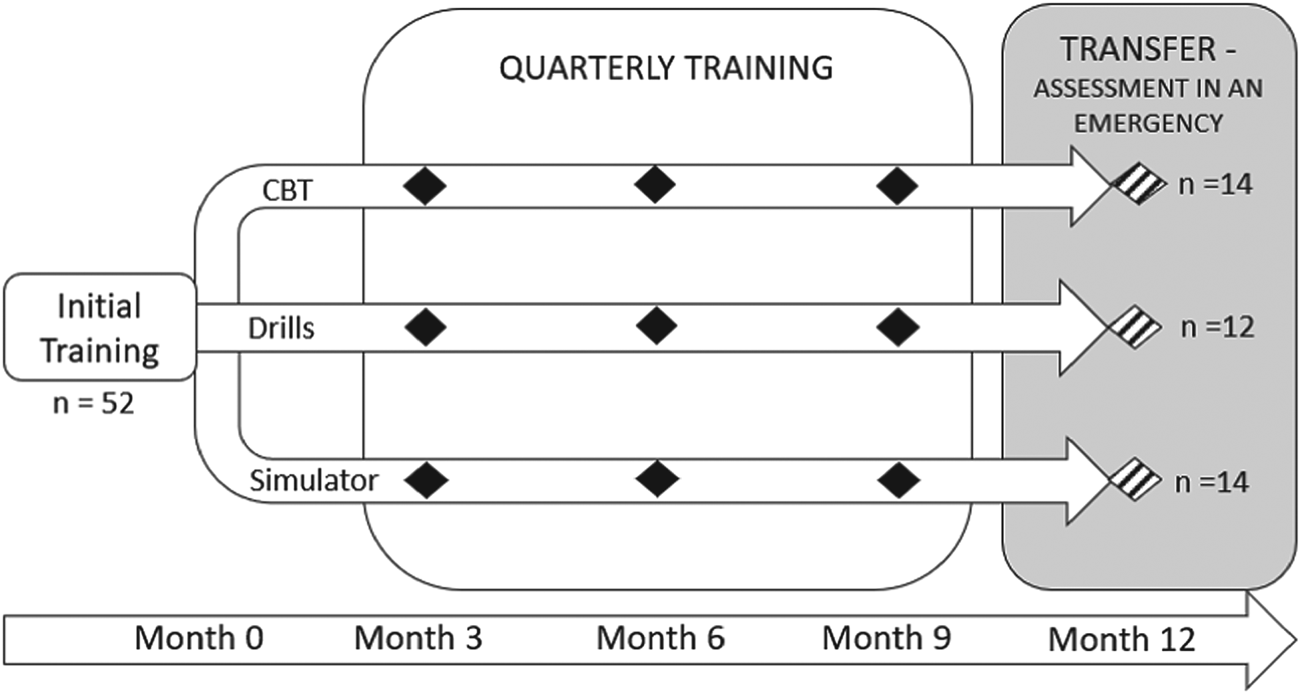
A test program was developed to emulate practice provided to new lifeboat coxswains. Initial training was provided at a shore-based facility. This was followed by quarterly practice events. Participants received initial training (explained in Section 3.1) and then received quarterly training in one of three ways. Following three quarterly practice events, an assessment exercise measured how skills acquired in the training program transferred to a plausible emergency event that required launch of a lifeboat in weather conditions typical of offshore operations. Figure 1 illustrates the elements of the study.
Study timelines.

In the study, we examined launch and manoeuvring tasks separately based on the skill types needed to complete tasks. The launch of a lifeboat is primarily a procedural cognitive task requiring the trainee to recall the steps required to perform a launch and the order of those steps, and recognise equipment faults. Manoeuvring the lifeboat is primarily a psychomotor task and requires application of physical skills to control the lifeboat. Psychomotor tasks are usually less easily forgotten and require less-frequent rehearsal to be remembered than cognitive tasks, which can require frequent practice and rehearsal (Stewart et al., Reference Stewart, Johnson and Howse2008).
As noted by Arthur et al. (Reference Arthur, Bennett, Stanush and McNelly1998), the length of the retention interval, or non-practice period, is a known significant factor in skill retention. For the purpose of the study, we kept the retention interval consistent between the different training approaches. Training was provided at intervals that match industry practice of quarterly training (i.e., every three months). We compared differences in performance based on the type of training received.
Assessing performance in emergency conditions could only be done using a simulator, owing to the risks associated with live boat operations. Simulation has been widely used to assess human performance in flight (McClernon et al., Reference McClernon, McCauley, O'Connor and Warm2011]{bib10a}), as well as medical (Stefanidis et al., Reference Stefanidis, Korndorffer, Markley, Sierra, Heniford and Scott2007) and marine operations (Sellberg, Reference Sellberg2017). Using a simulator that was representative of a real lifeboat provided a means to assess performance in an exercise that would otherwise be prohibitive due to risk.
Participants with no previous lifeboat experience or training were recruited for the study. Recruits were required to be unfamiliar with the lifeboat operation and launch procedure; they were not allowed to participate if they had previous lifeboat experience. Fifty-two volunteers between the ages of 18 and 65 were recruited. After initial assessment, two groups of 17 and one group of 18 participants were formed. Twelve participants dropped out of the study owing to time commitment and scheduling conflicts, as the experiment was carried out over a year. Owing to uneven attrition, two groups finished with 14 participants and the one group finished with 12 participants.
The training emulated practices used in industry, with controls added to make the training safe for the participants and to maintain consistency in training events.
3.1. Phase I – initial training and grouping
Initial training of all participants consisted of a combination of classroom training from an instructor and lifeboat familiarisation exercises with a simulator. Participants were taught a sequence of actions needed to safely launch a lifeboat from davits, and to perform on-water manoeuvring tasks using training designed to teach competencies identified in the Standards of Training, Certification and Watchkeeping for Seafarers (International Maritime Organization and International Conference on Training and Certification of Seafarers, 2010). The training materials covered basic operation of the lifeboat, coxswain duties, pre-launch inspection (PLI) procedures, clear-away procedures, navigation procedures and radio communication. The training course was conducted by an instructor who was experienced in small craft training and was proficient in operating the lifeboat used in the study.
Training also included a guided tour of a real lifeboat to familiarise the participants with the appearance and location of lifeboat equipment, thereby providing the knowledge needed to inspect the lifeboat prior to launch. After training was completed, participants were given a 15 min simulator exercise to become familiar with the lifeboat simulator.
Following initial training, participants completed a simulator assessment scenario designed to evaluate the fundamental skills required to operate a lifeboat, which included the launch and control of the lifeboat in calm weather conditions. To ensure that a baseline competence was achieved, participants repeated the scenario until they were able to complete all tasks. The assessment scenario was used to score personnel on their ability to complete launch and manoeuvring tasks, with the number of trials criterion used to rank performance. The rankings were used to balance the groups as evenly as practicable.
3.2. Phase II – quarterly training
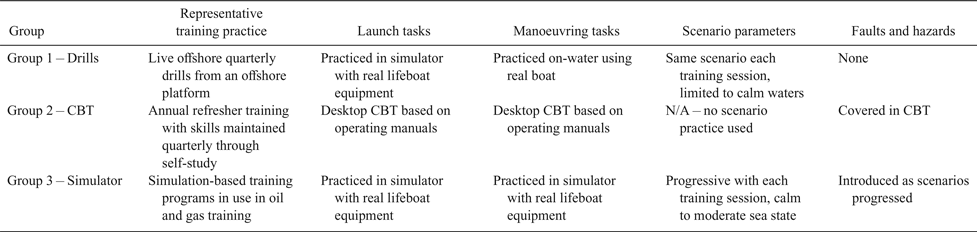
Participants practiced quarterly three times using the training approach assigned to their group. Table 1 summarises the type of training received by each group and the tools used for training. As outlined in this table, the training received by each group was configured to match the conditions used in practice.
Training received by group designation.

Drills training, assigned to Group 1, consisted of practice emulating live offshore quarterly drills, which typically include the launch of a lifeboat in calm water and simple manoeuvring exercises in the water. To minimise risk to trainees, the launch task was performed using a simulator. Manoeuvring was performed using a real lifeboat in calm weather conditions. To emulate industry practice, the launching conditions for each practice drill was calm water with no equipment faults or hazards.
Group 2 participants were representative of trainees who perform annual refresher training onshore and who do not perform regular practice drills or scenarios following initial training. For this type of trainee, skills are maintained through self-study of launch procedures and operating manuals. A CBT program was developed to provide participants with relevant training materials delivered via a desktop computer. Course materials were derived from operation manuals of the davit and lifeboat, and included materials to familiarise trainees with the layout and operation of lifeboat equipment and the launching procedure.
Group 3 represented users of lifeboat simulators. The members of this group were provided with quarterly training in scenarios of escalating difficulty. Launching and manoeuvring were practiced in the simulator. The difficulty of the scenarios increased every quarter, with initial scenarios starting with calm water (low difficulty) and progressing to launches in moderate seas in the final quarterly training period. A subject matter expert developed scenarios to increase the difficulty of tasks over time and to provide exposure to scenarios that are not practiced in the real boat owing to associated risks.
For the drills and simulator groups, participants practiced in each quarterly training session until they achieved the baseline competence, meaning they were able to complete all launch and manoeuvring tasks successfully in the practice scenarios. For the CBT group, participants had to pass a multiple-choice test based on the training materials to demonstrate that they knew the course materials.
3.3. Phase III – transfer to an emergency scenario
After completion of three quarterly training sessions, and following an additional three months without practice, participants performed a scenario in weather conditions that were representative of common operating conditions in the North Atlantic (C-Core, 2015). The parameters of the scenario were set to night-time with clear visibility, with 13 knot winds and a 3 m wave height. To eliminate risks to the participants, all testing made use of the simulator as the test environment for both launch and manoeuvring tasks.
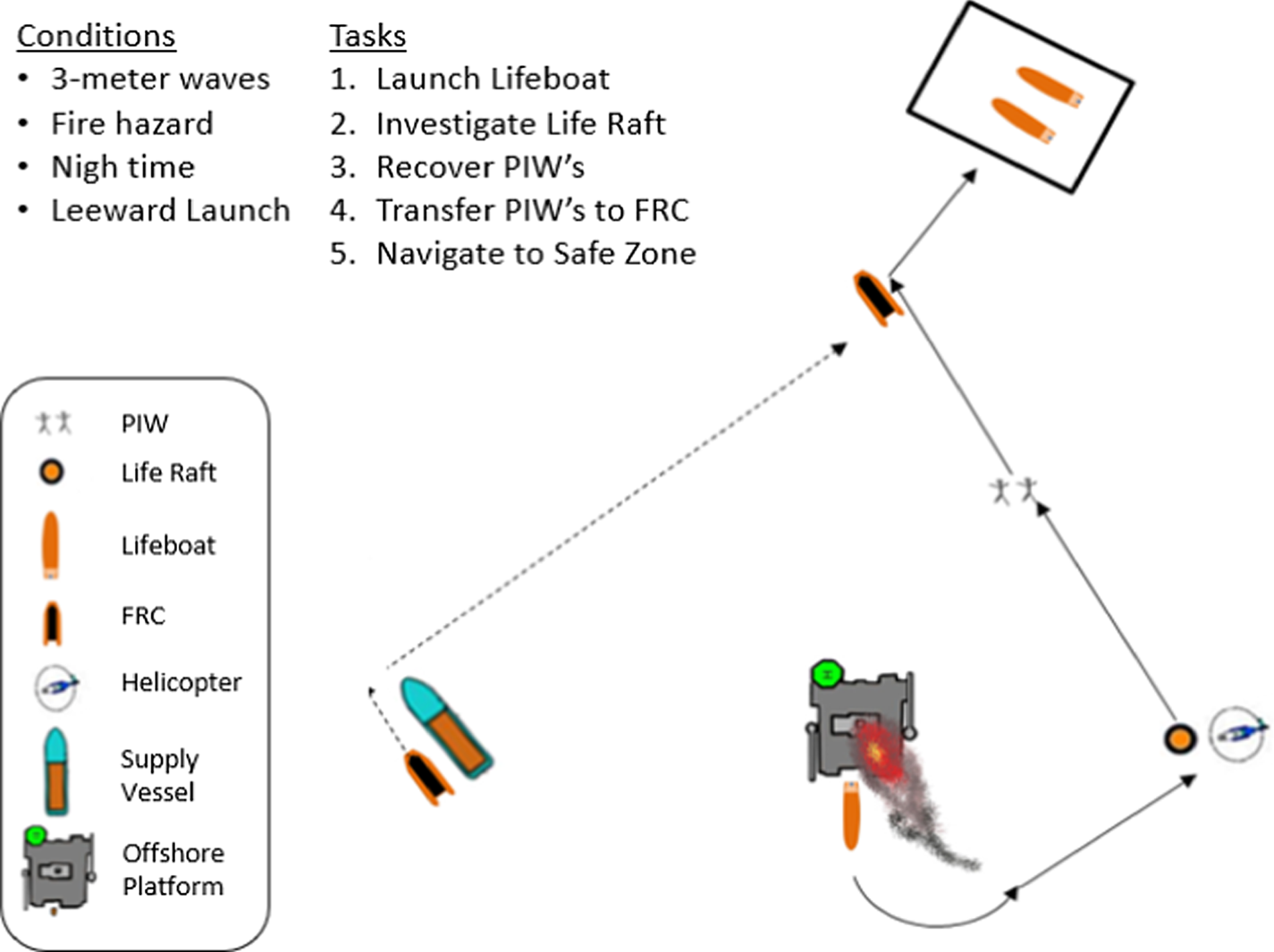
All participants were given the same scenario and scenario briefing. The briefing indicated that an explosion had been heard on the platform, followed by a fire alarm. The Offshore Installation Manager (OIM) had ordered an evacuation from the platform and the task was to launch the lifeboat and assist in a search and rescue exercise once in the water. The evaluation scenario was more difficult than the most difficult scenario that had been provided in any of the training exercises, including those given to the simulator group. Figure 2 provides an overview of the emergency scenario. This image was provided to trainees in the briefing.
Emergency scenario.

Participants were required to perform a PLI of the lifeboat and then launch the lifeboat and clear from the oil and gas platform. As a fire was active, participants had to turn on the air and sprinkler system to minimise the chance of harm. Once in the water, the participant had to participate in a rescue exercise that included locating and recovering persons in the water (PIWs) and transferring personnel to a fast response craft (FRC). The weather increased the difficulty of some launch tasks practiced in training, including releasing the lifeboat when in the water. It also made on-water tasks more difficult.
3.4. Performance measurements
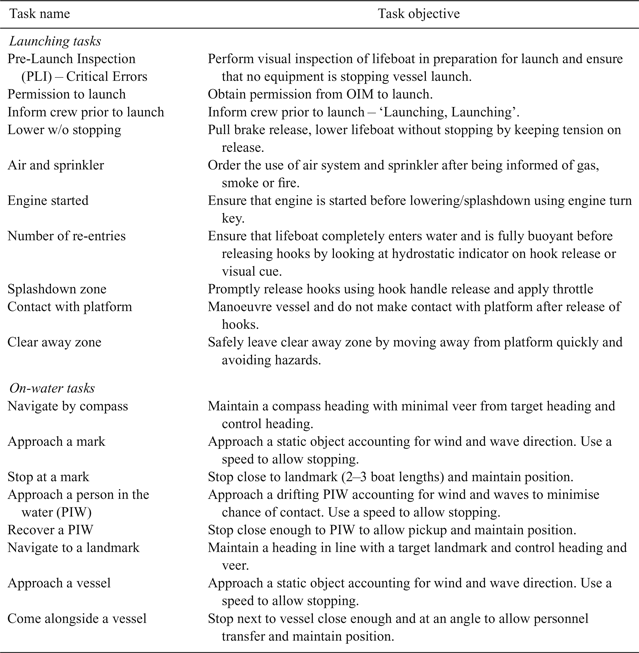
A scoring rubric was established to measure performance for launching and manoeuvring tasks in the practice sessions and the emergency test scenario. The criteria for task completion were established by a subject matter expert to reflect a standard of proficiency as identified in recognised training standards, including the Standards of Training, Certification and Watchkeeping for Seafarers (International Maritime Organization and International Conference on Training and Certification of Seafarers, 2010). This standard is commonly used to model lifeboat training courses. Table 2 provides a list of tasks and objectives used to measure performance. Launch actions are expected to be performed in sequence, except for operating the sprinkler system, which can occur any time before entering the water. The order, type and number of on-water tasks are dictated by the scenario being practiced.
Task objectives.

For the drills group (Group 1), quarterly training sessions allowed for practice of nine out of ten of the launch tasks identified in Table 2, as there was no training scenario that required the operation of the sprinkler and air system. Training on the operation of the air and sprinkler system was provided to all group members during the initial training session. On-water tasks comprised manoeuvring a short distance followed by a single task of approaching and stopping next to a vessel. The simulator group (Group 2) practiced navigating by compass and PIW pickup in each of the quarterly practice sessions, and practiced stopping next to a vessel in one practice scenario. The simulator group did not practice in environmental conditions as difficult as the emergency test scenario. No launching or manoeuvring practice was provided to the CBT group (Group 3). The CBT group reviewed launch procedures and the equipment manuals. This allowed for mental rehearsal of the launch tasks, but did not allow a practice launch in a scenario.
In the emergency test scenario, a total of ten launch tasks were required to be completed. The on-water tasks included two navigate-by-compass tasks and two PIW pickups, resulting in a total of ten on-water tasks. All launch tasks were completed in the simulator, except for the PLI, which was conducted prior to starting launch. A PLI normally involves visual examination of the lifeboat's exterior and interior. In the study, pictures were used instead and the trainee had to determine whether a given picture represented a correct or incorrect state of equipment. Identification of correct state of equipment was required to allow for a safe launch (i.e., removal of maintenance pendants, brake cable present).
For each of the assessments and training sessions performed using a simulator or live boat, an instructor evaluated the participants based on the rubric. For practice scenarios requiring voice command (e.g., instructing someone to turn on the sprinkler, requesting permission to launch) the instructor role-played as a crew member and OIM as circumstances warranted. If the student requested assistance from the instructor to complete any task, the task was considered to be incomplete. For the CBT group, completing the quiz at the end of the review of materials was an indicator the trainee knew the materials that had been presented.
3.5. Simulator and lifeboat
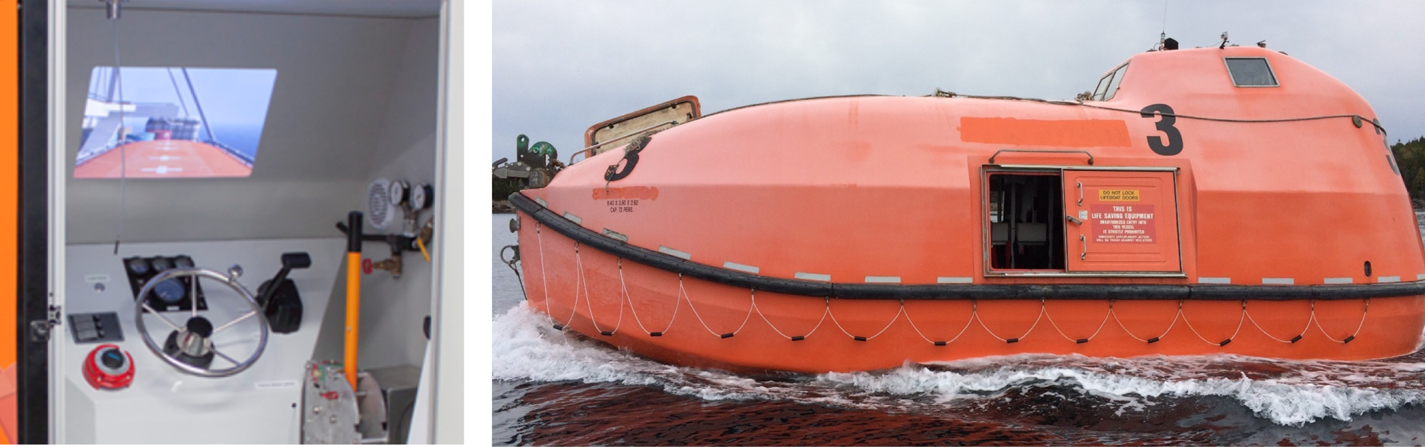
The type of lifeboat used in the study is currently used on offshore platforms in the North Atlantic. The lifeboat can carry up to 72 people and is approximately 9·4 m long, 3·5 m wide and 6 m high, with a draft of 2·9 m. Its empty weight is approximately 5,806 kg and has a fully loaded weight of approximately 11,500 kg. For the study, the lifeboat was empty except for the participants and an operator who monitored student performance and ensured safe operation of the vessel. All testing performed with the lifeboat was conducted in a sheltered harbour. The simulator and lifeboat used in the study are shown in Figure 3.
VMT lifeboat simulator interior and lifeboat.

Participants completed tasks in a simulator with a representative layout and equipment of the real lifeboat. The simulator is equipped with real lifeboat equipment (e.g., steering wheel, throttle, brake release, compass), allowing participants to operate the controls needed to launch the lifeboat in a simulation environment complete with visuals and sounds. The simulator is certified by Det Norske Veritas Germanischer Lloyd (DNV-GL) and Transport Canada as being capable of representing realistic situations needed for training. The simulated lifeboat motion, equipment and layout were modelled to be the same as the real lifeboat. This simulator has been used in previous studies to measure skill transfer (Magee et al., Reference Magee, Smith, Billard and Patterson2016) and skill retention (Billard et al., Reference Billard, Smith, Magee and Veitch2018).
4. RESULTS
Our principal measure of performance was the ability of participants to complete all tasks successfully on their first attempt in the emergency test scenario. The results of first attempts provided an indicator of skills retained from practice and an indicator of skills transferred from practice to a new plausible event. In a real emergency scenario, a successful launch of the lifeboat would require all steps to be completed correctly, based on the established performance criteria. Failure to complete any of the tasks could result in harm to the crew or damage to the lifeboat. To make comparisons between the type of training received, we analysed the performance on tasks on the first attempt at the test scenario launching and manoeuvring tasks.
The frequency of errors made during launching and manoeuvring was also investigated. An analysis of individual tasks provides a more granular measure of performance and indicates which tasks resulted in the most frequent errors for each of the subgroups. Launching and manoeuvring tasks were compared separately, as they require different types of skills.
The final group sizes created some statistical uncertainty in the comparison of performance between groups. Statistical comparisons assume small sample sizes and use appropriate significance levels for acceptance of differences.
4.1. Success on first attempt at an emergency launch and manoeuvring tasks
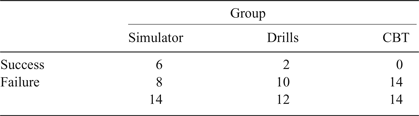
The results shown in Table 3 summarise the performance of each group on their first attempt to launch the lifeboat in the emergency test scenario. The table shows that six members of the simulator group and two members of the drills group were successful on their first attempt at the launch task, and that not a single member in the CBT group was successful.
Frequency of success on first attempt at the launch task.

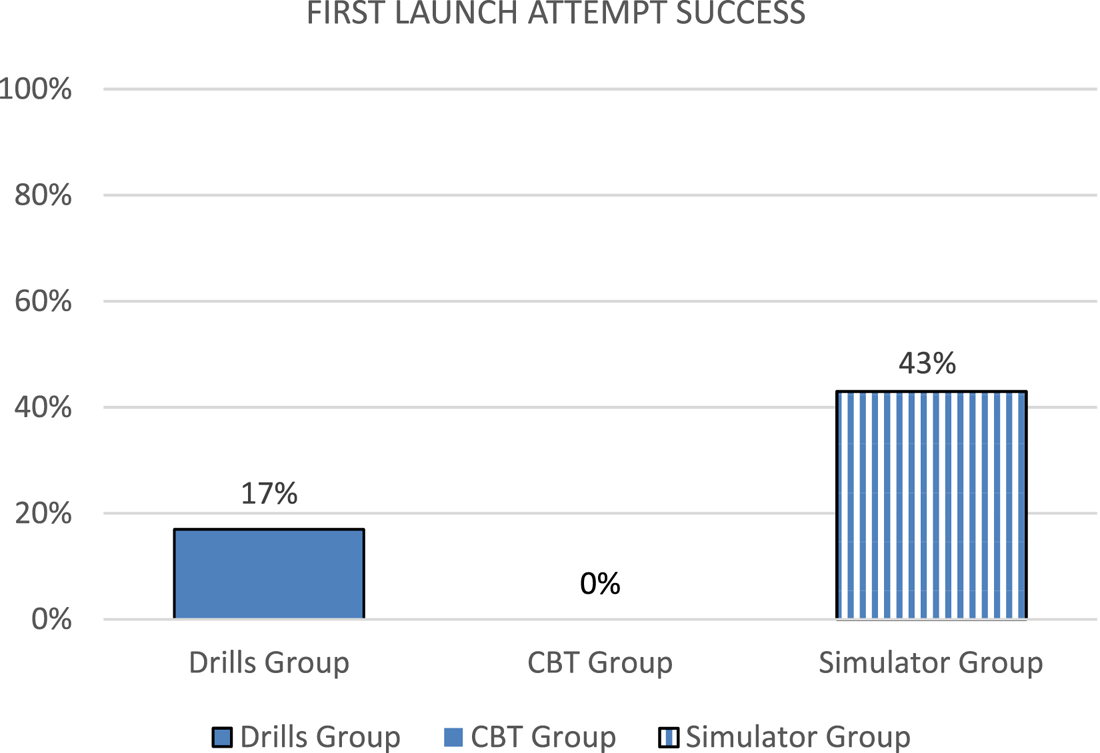
As indicated in Figure 4, this corresponds to 17% of the drills group and 43% of the simulator group being able to complete all tasks successfully on first attempt. Overall, 20% of all participants were able to successfully launch the lifeboat on the first attempt.
Percentage of success on first launch attempt.

Pairwise comparisons of the groups were conducted using Fisher's exact probability tests (one-tailed) with p ≤ 0·10 as the critical value for rejecting the hypothesis that the performance of the groups is the same. The simulator group did not have reliably more successes than the drills group, p > 0·10, but did have reliably more successes than the CBT group, p ≤ 0·10. There is no reliable difference between the CBT group and the drills group, p > 0·10.
No participants in either group could successfully complete all manoeuvring tasks on their first attempt in the emergency test scenario. The inability to achieve the minimum standard of performance for one or more subtasks accounts for the low success rates for the manoeuvring task on first attempt, because success depended on performing all component subtasks. An analysis of frequency of errors for each subtask is made in the next section to compare the performance of the groups on manoeuvring tasks.
4.2. Frequency of errors made on launching and manoeuvring tasks
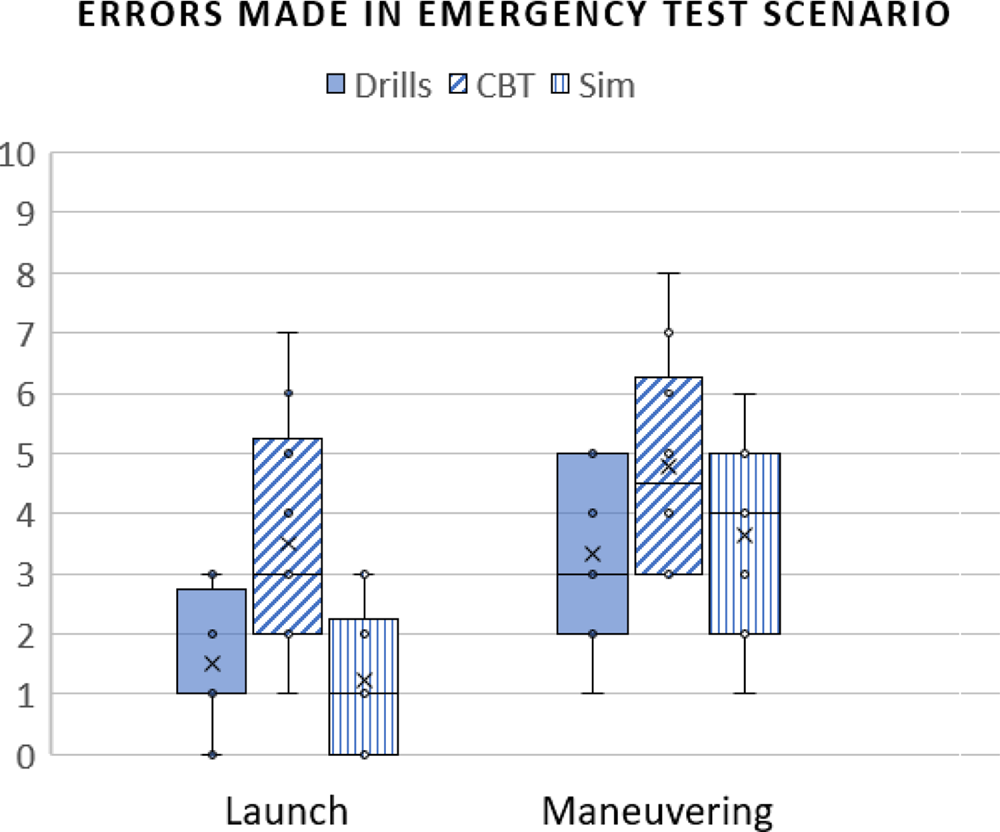
Figure 5 shows the frequency of errors made by each of the groups during the launch and manoeuvring tasks. A lower number of errors is an indicator of higher performance.
Frequency of errors made during launching and manoeuvring tasks.

The simulator group averaged the lowest number of errors during launching, with 1·2 errors made on first attempt of tasks (median 1, mode 0). The drills group made an average of 1·5 errors on first attempt (median 1, mode 1), and the CBT group made an average of 3·5 errors (median 3, mode 3). A Kruskal–Wallis test of differences among the medians indicated significant differences between groups (H = 12·13, p < 0·05). A one-way analysis of variance (ANOVA; 95% confidence) on ranked data of the three groups indicated a significant difference between the group means. Tukey comparison tests (95% confidence) determined the CBT group mean is significantly different than the mean of the drills and simulator groups. No significant difference between the means of drills and simulator groups was determined from this analysis.
Overall, the participants made more errors in manoeuvring tasks than launching tasks. The CBT group had the highest number of errors in manoeuvring on first attempt with an average of 4·8 errors (median 4·5, mode 3). The drills group averaged the lowest number of errors with a mean of 3·33 (median 3, mode 5). The simulator group averaged 3·6 errors (median 4, mode 5) on first attempt on manoeuvring tasks. Kruskal–Wallis tests did not indicate a significant difference between medians of the groups and a one-way ANOVA on ranked data did not indicate a significant difference in sample means. This outcome suggests additional testing is needed to discern whether there is a difference in group performance on manoeuvring tasks.
4.3. Analysis of individual tasks
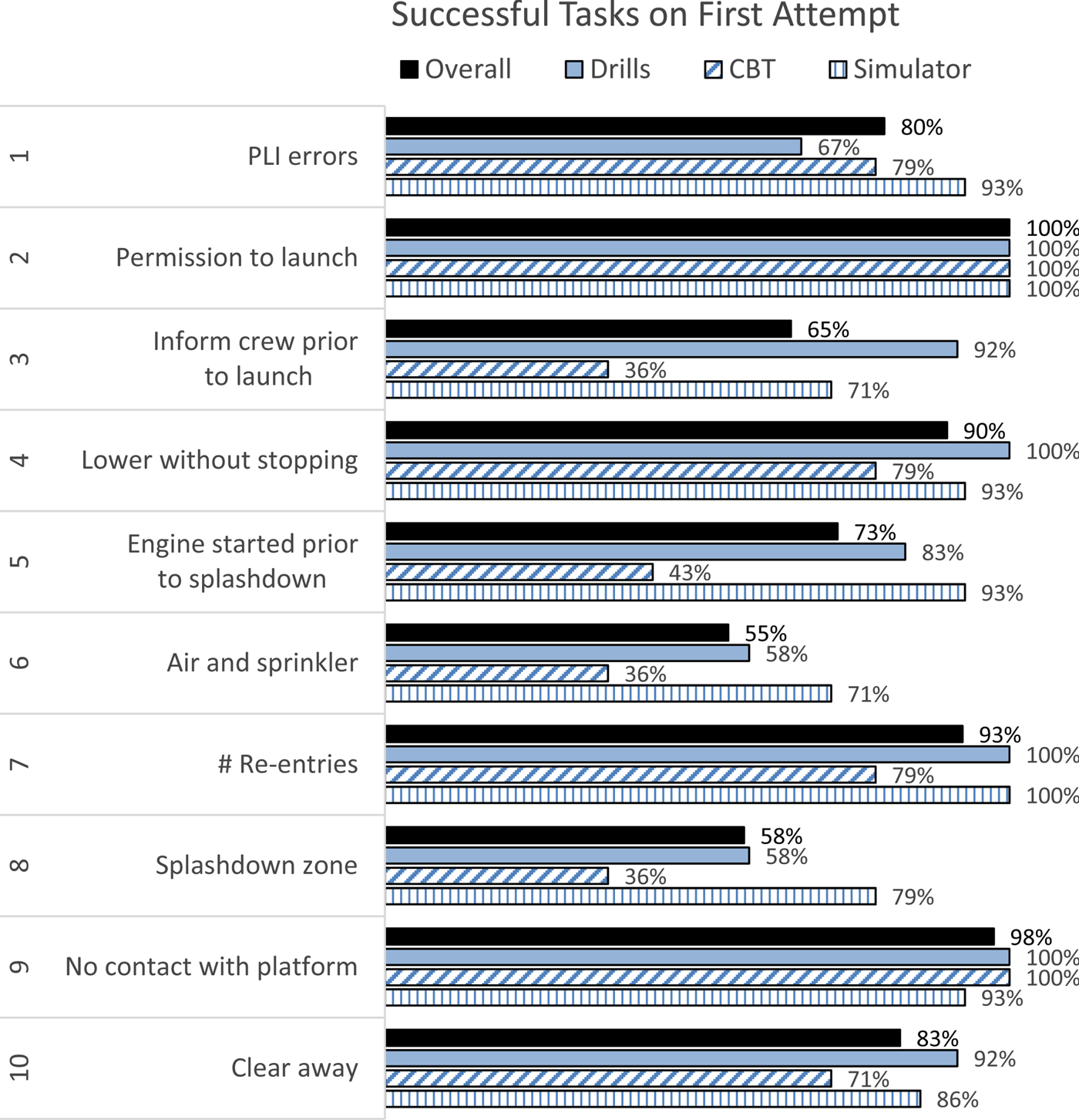
Analysis of individual job tasks provides further insights into the performance of each group. Figure 6 shows the percentage of successful task completions for each of the groups and the overall average of successful task completions for all participants.
Successful task completions: launching.

The CBT group performed worse than the overall group average on eight of the ten launch tasks. The drills and simulator groups scored as good as or better than the overall group average on nine out of ten of the launch tasks. This observation further indicates that the CBT group did not perform as well as the drills or simulator groups, based on the comparison of performance on individual launch tasks.
The analysis of individual tasks also allows us to discern the tasks that had the highest and lowest success rates, thereby providing an indicator of transfer of skills to the emergency test scenario and the difficulty of the tasks. The completion of the air and sprinkler and splashdown zone tasks (see Table 2) scored lowest for all groups, with less than 58% overall success. The simulator group was the only group that had previous practice in identifying a fire hazard and launching into sea states, and showed the highest success rate for these tasks. All other tasks showed an overall success rate of 65% or higher.
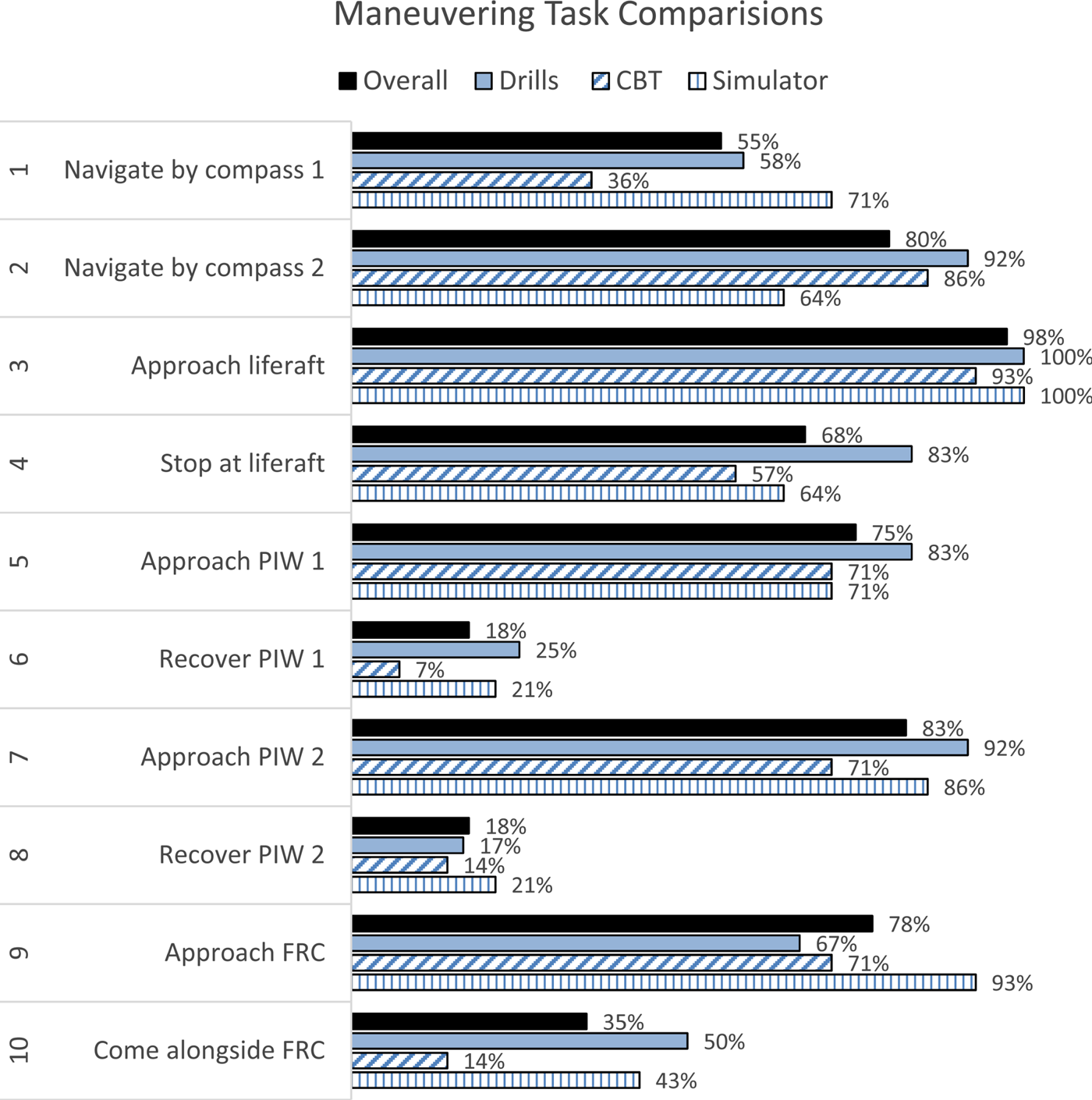
Figure 7 shows the percentage of successful manoeuvring task completions. The CBT group scored lower than the overall group average on nine of ten of the manoeuvring tasks. The simulator group scored higher than the overall group average on seven of ten tasks, and the drills group scored higher than the overall group average on eight of ten tasks. This shows that the CBT group did not perform as well as the drills and simulator groups on manoeuvring tasks. Tasks related to stopping the vessel showed the lowest success rate for all groups. The task recover a PIW was identified as the most difficult, with less than 20% of all participants able to the complete the task on first attempt. Coming alongside a vessel had an overall success rate of 35% on first attempt.
Successful task completion: manoeuvring.

5. DISCUSSION OF RESULTS
The results of the study provide evidence regarding skill acquisition and transfer in relation to the type of training. There is a benefit to performing training using realistic scenarios and real lifeboat equipment. The participants in the drills group and the simulator group practiced using lifeboat equipment during launching and manoeuvring training and were able to practice tasks in live scenarios. The CBT group refreshed their knowledge of procedures and skills learned during initial training through mental practice. The drills and simulator groups outperformed the CBT group in launch tasks in all comparisons.
On the overall task of successfully launching a lifeboat on first attempt, the drills and simulation group outperformed the CBT group. Combining the drills and simulation groups, 31% of participants who received hands-on training were able to successfully launch the lifeboat on first attempt, compared with 0% of CBT group participants, who did not receive hands-on training. Through task-by-task analysis, we observed that specific tasks that could not be rehearsed in the CBT training resulted in inferior performance. These comprise procedural tasks during launch, including turning on the lifeboat engine, informing the crew prior to launch and timing the release of the lifeboat. While these tasks were identified in the quarterly training material, the CBT group did not rehearse in a scenario, or have the opportunity to practice using real equipment. The CBT group also performed worse than the simulator and drills groups on psychomotor manoeuvring tasks, including the more difficult slow manoeuvres.
Practicing in progressive scenarios with exposure to weather conditions and hazards provides an incremental improvement in performance during launch tasks. This is evident in the successful completion of all tasks during first launch attempt. Although no significant difference between groups was established based on success on the first launch, the analysis of individual tasks indicates that the simulator group was able to recognise hazards and deal with weather conditions better than the drills group, who practiced in calm water conditions without hazards. These outcomes provide further evidence that providing similarity between the test environment and the learning environment enhances the retrieval of information (Arthur et al., Reference Arthur, Bennett, Stanush and McNelly1998; Wickens et al., Reference Wickens, Hollands, Banbury and Parasuraman2013) and skill retention (Driskell et al., Reference Driskell, Willis and Copper1992).
No one was able to successfully complete all manoeuvring tasks on first attempt. This result indicates that no group received enough practice to successfully perform these skill-based tasks. The study suggests that specific tasks, such as stopping a vessel in waves, are difficult to learn and require more practice to master. The amount of practice received on manoeuvring tasks in calm water or lower sea states did not provide opportunity to achieve competence for tasks in moderate waves. The poor performance of a lifeboat at low speeds could also be a factor contributing to the low success rate.
An analysis of all groups indicates lifeboat launch training is a task that is susceptible to skill fade. For the study, the interval of training was kept constant, to match industry practice and to allow comparisons based on the type of training received. While some failures were due to hazards that were not practiced in training, the analysis suggests that errors were made in tasks that were practiced to competence during quarterly training sessions including performing PLIs, starting the lifeboat and issuing commands to crew members.
6. CONCLUSIONS AND RECOMMENDATIONS
The study provides insights on the difficulty of performing tasks in hazardous scenarios and environmental conditions that are plausible in real-life operations. Although the participants received multiple practice sessions, overall there was low success rate on launching and no participants were able to do all of the manoeuvring tasks. This outcome indicates a need to further investigate the acquisition and loss of manoeuvring skills over time, and the transition of skills from benign conditions to challenging conditions. These results may be of interest to stakeholders in oil and gas, shipping, defence, security and cruise ship industries who are required to maintain the competence of personnel in emergency evacuation tasks or launching procedures.
The training regime used in the experiment was designed to emulate training practices currently utilised in industry. The results of the study suggest that some skills may not be mastered using the type, amount and frequency of training given in practice. The study of performance on the cognitive tasks associated with launching a lifeboat indicate some skill fade, which has been found in similar research (Stewart et al., Reference Stewart, Johnson and Howse2008). The low performance on manoeuvring tasks suggests these skills were not mastered in the training provided, as we would expect higher performance on these psychomotor tasks if competency had been achieved. The study indicates that current practices may not provide enough training time to acquire the needed skills in a year-long training program. Subsequent training beyond the one year would provide more training events and would likely increase training performance.
The study did not measure physiological information on trainee stress, though the context of the emergency exercise and increased difficulty was expected to create more mental demand and stress. Allowing trainees to practice in stressful environments has been shown to improve performance in stressful operations (McClernon, 2011]{bib10a}) and can reduce cognitive difficulties in high-reliability occupations such as firefighting (Baumann et al., Reference Baumann, Gohm and Bonner2011). Research has shown that practice in scenarios with representative events and difficulty helps development of mental models to improve decision making (Klein, Reference Klein2008). Similar benefits are expected for lifeboat operators if they receive training in difficult and complex scenarios.
Maritime education and training instructors can apply the results to improving training practices and outcomes. We see a benefit to performing training using real lifeboat equipment and practicing in scenarios of progressive difficulty, collectively creating a training environment that is representative of a real emergency. Training in scenarios with stressors and hazard that are possible in a real emergency is expected to increase trainee confidence and performance in an actual emergency event.
Psychological principles of learning, such as overtraining, could be employed to improve retention between practice sessions and to improve performance in new events. They could also be employed to promote training adaptability and to provide training that addresses recognised weakness in skills. More-frequent training events, shortened intervals between training and adaptive training can improve skill acquisition and limit skill fade. Future studies will examine the effect of these factors on achieving and maintaining competence in lifeboat coxswains.
ACKNOWLEDGMENTS
We thank Petroleum Research Newfoundland and Labrador and the Industrial Research Assistance Program of the National Research Council who sponsored the study.