The nationwide registry data on patients in Japan with single-ventricle physiology have been rarely reported. Reference d’Udekem, Iyengar and Galati1,Reference Idorn, Olsen and Jensen2 The Medical Aid Program for Chronic Pediatric Diseases of Specified Categories has contributed to the financial support of medical expense for patients younger than 20 years with chronic paediatric disease, and almost all children in Japan who require disease-specific treatment voluntarily apply to this programme. Reference Gu, Kato, Harada, Sato and Kakee3 Currently, the application data of the medical aid programme are included in the database-compiling process of the research project of the Ministry of Health, Labor and Welfare and have become available for research. Analysis of these data may provide nationwide epidemiologic information on patients with CHD. The purpose of this study is to use this database to investigate the epidemiology and medium- to long-term outcome of patients following a Fontan procedure. Additionally, we examined the usefulness of this epidemiologic investigation for the identification of real-world objectives and clinical applications.
Material and methods
Among patients with single-ventricle physiology, we extracted from the registered data those who underwent a Fontan procedure between April 2012 and March 2013 (FY2012). The following data were analysed: patient’s background (age, sex, and basic diagnosis); patient’s condition (cyanosis, somatic growth, NYHA classification); treatment status (medications, oxygen supplementation, catheter interventions); and grade of the Guidance for School Life and Exercise for individuals, classified from A to E according to the need for exercise restriction (A, require home medical care at home or hospitalisation; B, allow school attendance without exercise; C, allow only light exercise; D, allow moderate exercise; E, allow strong exercise). 4 Each parameter was analysed according to age group, and body weights of individuals were plotted on the Standard Growth Charts for Height and Weight of Japanese Children. Reference Sato, Sasaki, Aoki, Kuroda and Kato5 The growth data were shown by sex and for two representative high-risk subgroups, hypoplastic left heart syndrome and right isomerism, the diseases-specific data were shown.
Informed consent was obtained from the patient or guardian of the patient, and personal information was deleted before data were entered into the database. The study was approved by the Showa University Ethics Committee (approval number: 3229). The Standard Growth Charts for Height and Weight of Japanese Children were licensed by the Japanese Society of Pediatric Endocrinology.
Results
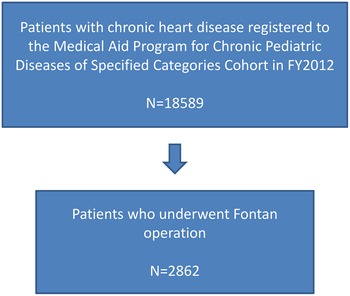
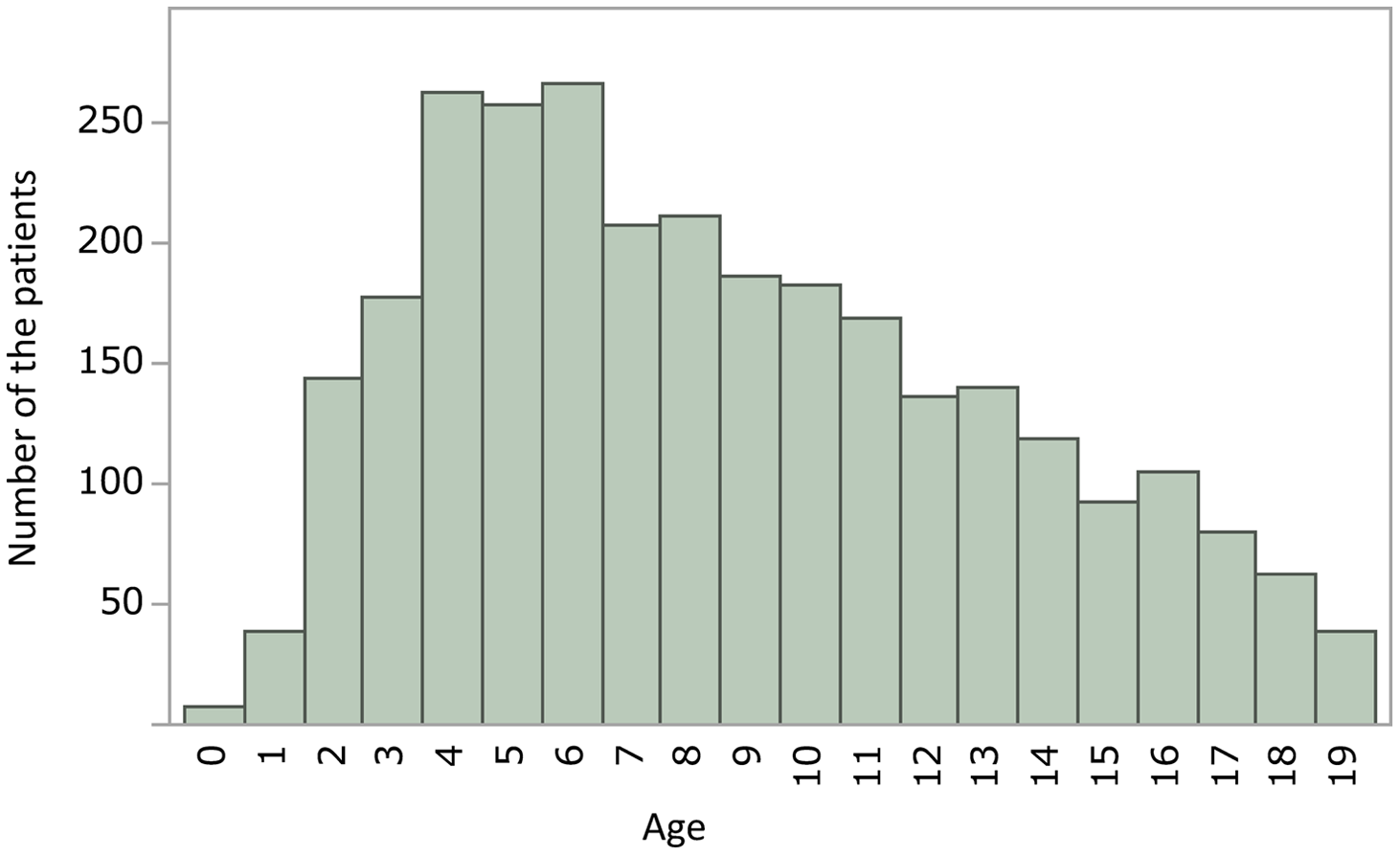
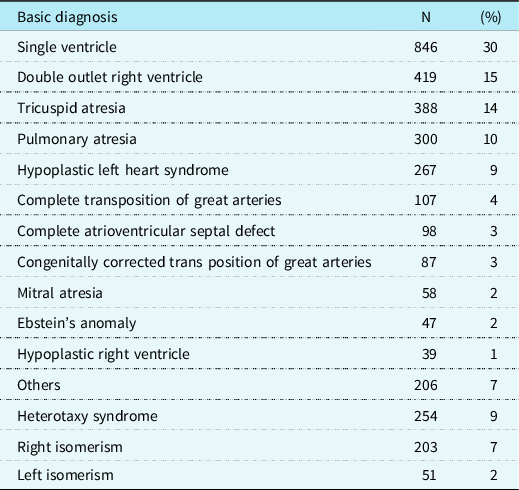
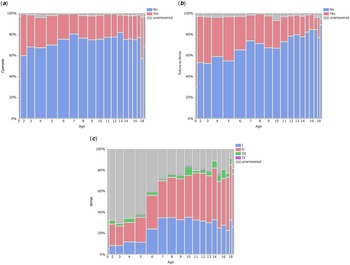
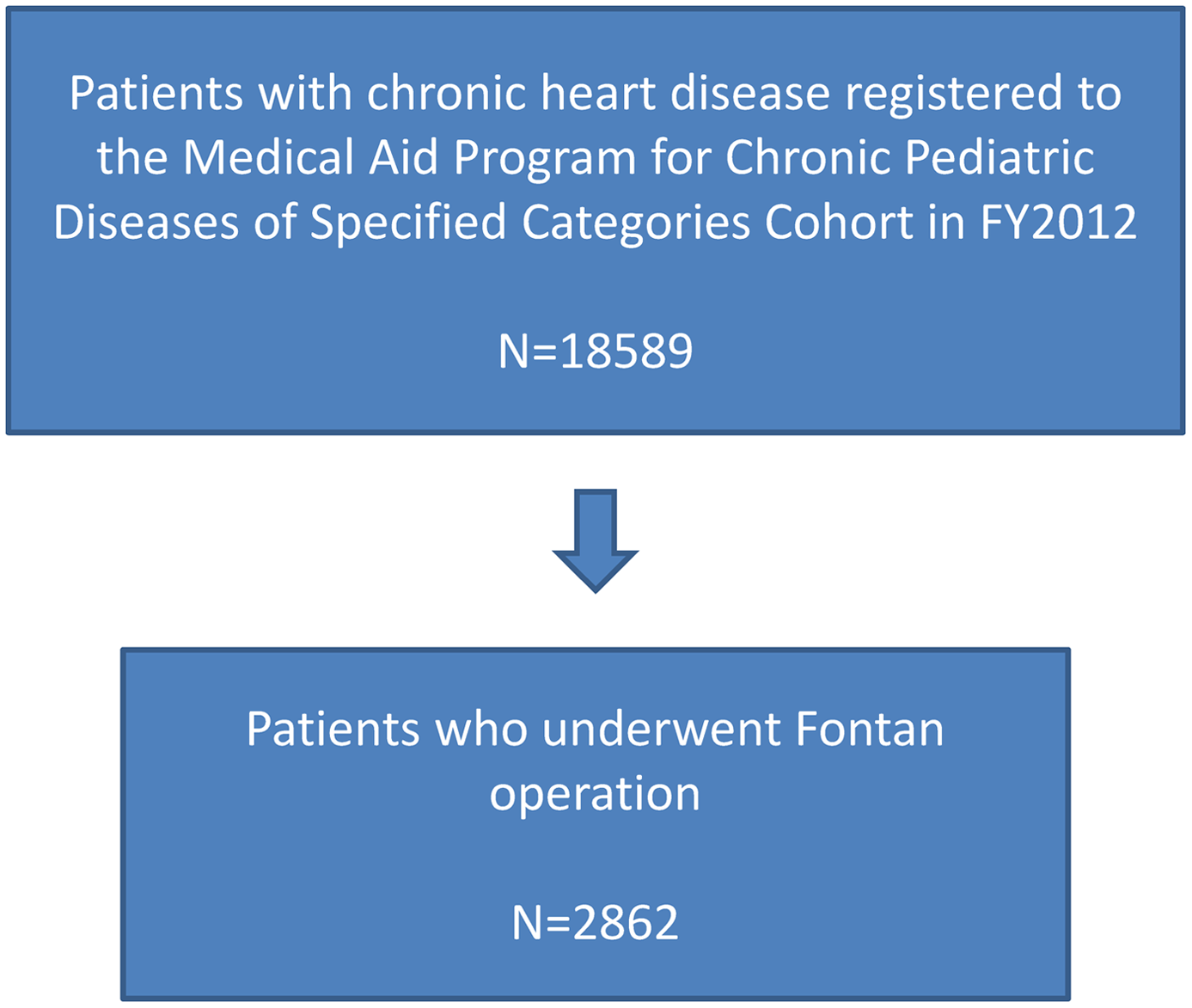
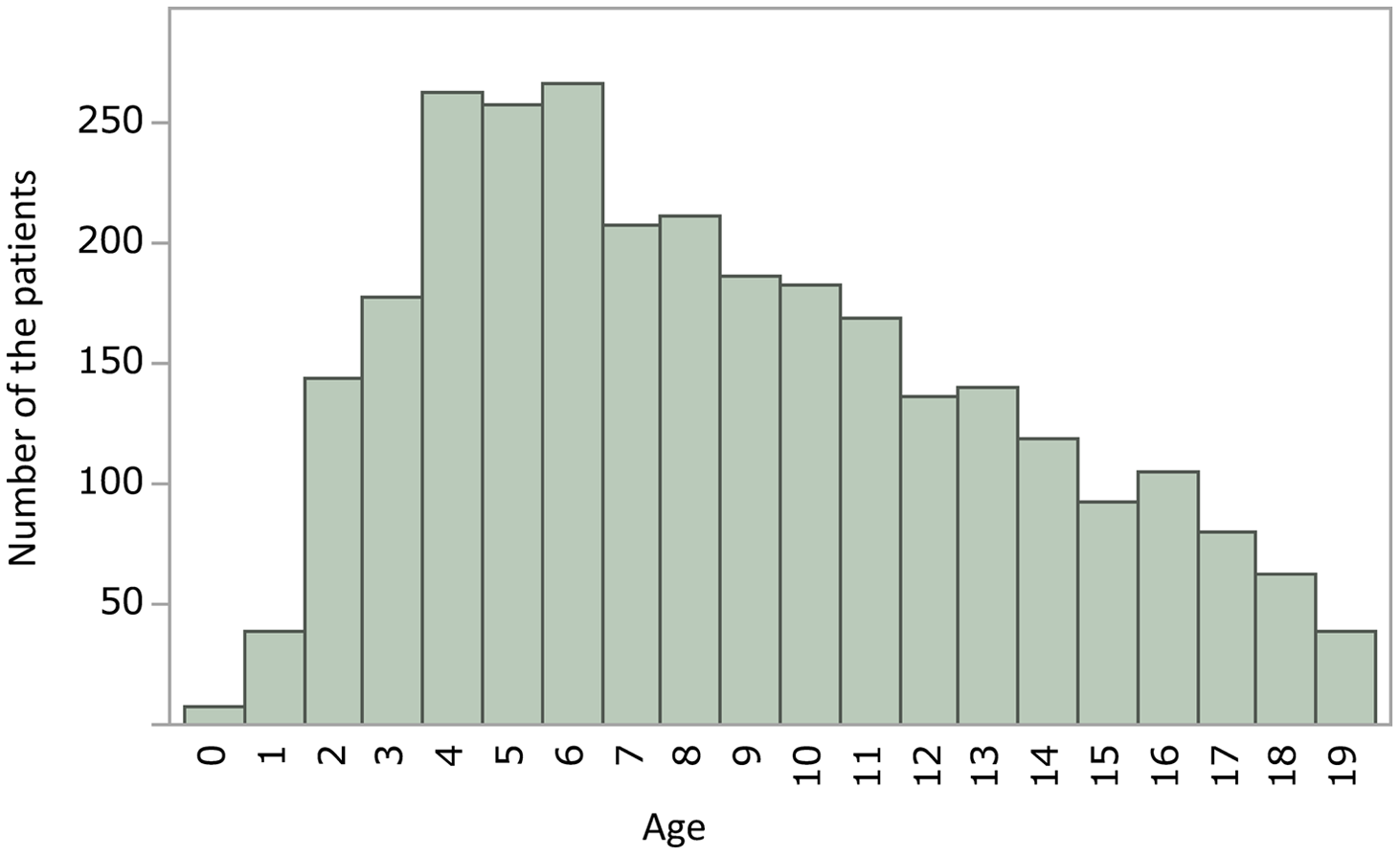
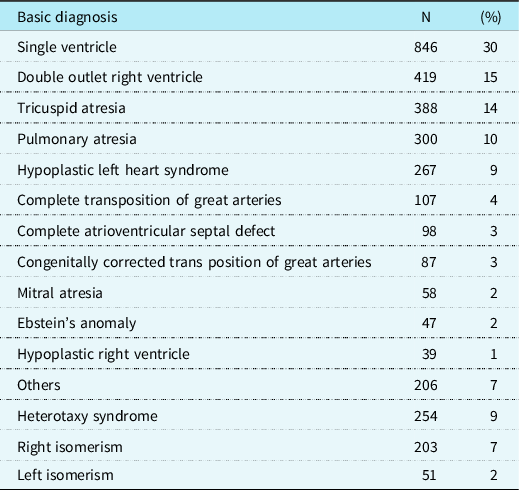
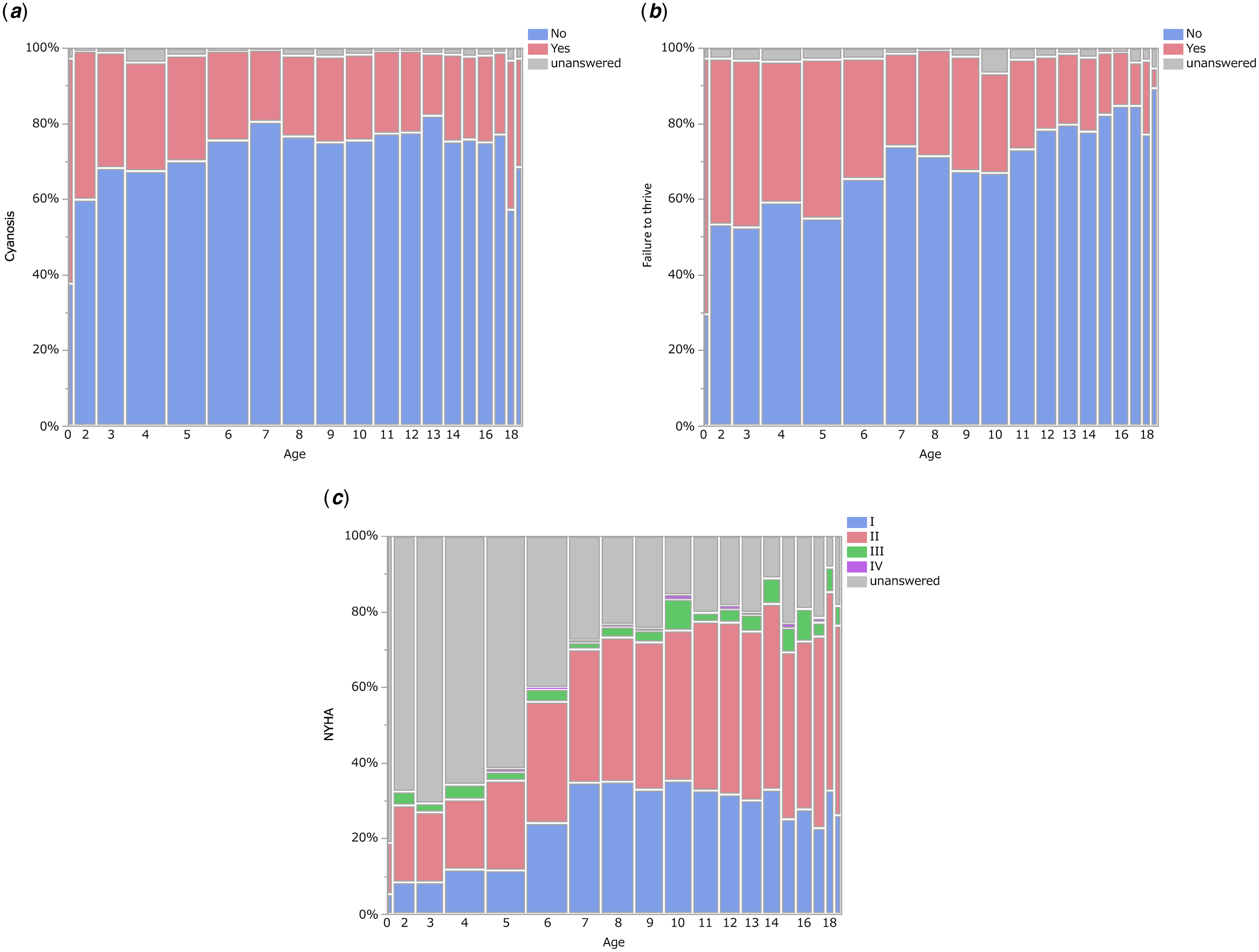
A total of 2862 patients who underwent a Fontan operation were identified (Fig 1) from 18,589 patients with chronic heart disease registered to the medical aid programme. The mean age was 9.0 ± 4.5 years among the 1619 male and 1243 female patients. The age distribution was as shown in Fig 2. The basic diagnosis was single ventricle, 846 (30%); double-outlet right ventricle, 419 (15%); tricuspid atresia, 388 (14%); pulmonary atresia, 300 (10%); hypoplastic left heart syndrome, 267 (9%); complete transposition of great arteries, 107 (4%); complete atrioventricular septal defect, 98 (3%); congenitally corrected transposition of great arteries, 87 (3%); mitral atresia, 58 (2%); Ebstein’s anomaly, 47 (2%); hypoplastic right ventricle, 39 (1%); and others, 206 (7%) (Table 1). Heterotaxy syndrome was identified in 254 (9%) patients, right isomerism in 203 (7%), and left isomerism in 51 (2%); 25% of patients had cyanosis (Fig 3a), and 29% had poor body weight gain as determined by the attending physician (Fig 3b). The NYHA classification was I, 25%; II, 35%; III, 4%; and IV, 0.4% (Fig 3c).
Number of cases.
Distribution of post-Fontan patients by age.
Distribution of basic diagnosis of post-Fontan patients.
Distribution of the presence of symptoms by age. The width of the bar graph shows the number of cases. ( a ) Cyanosis. ( b ) Failure to thrive. ( c ) NYHA classification.
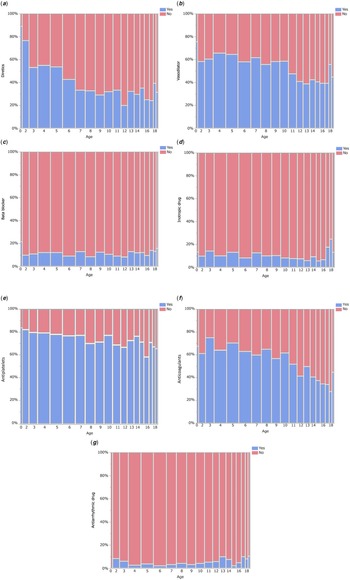
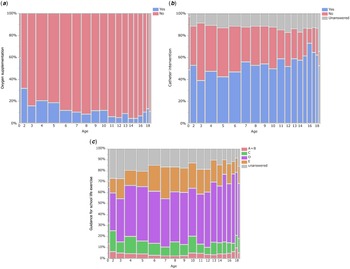
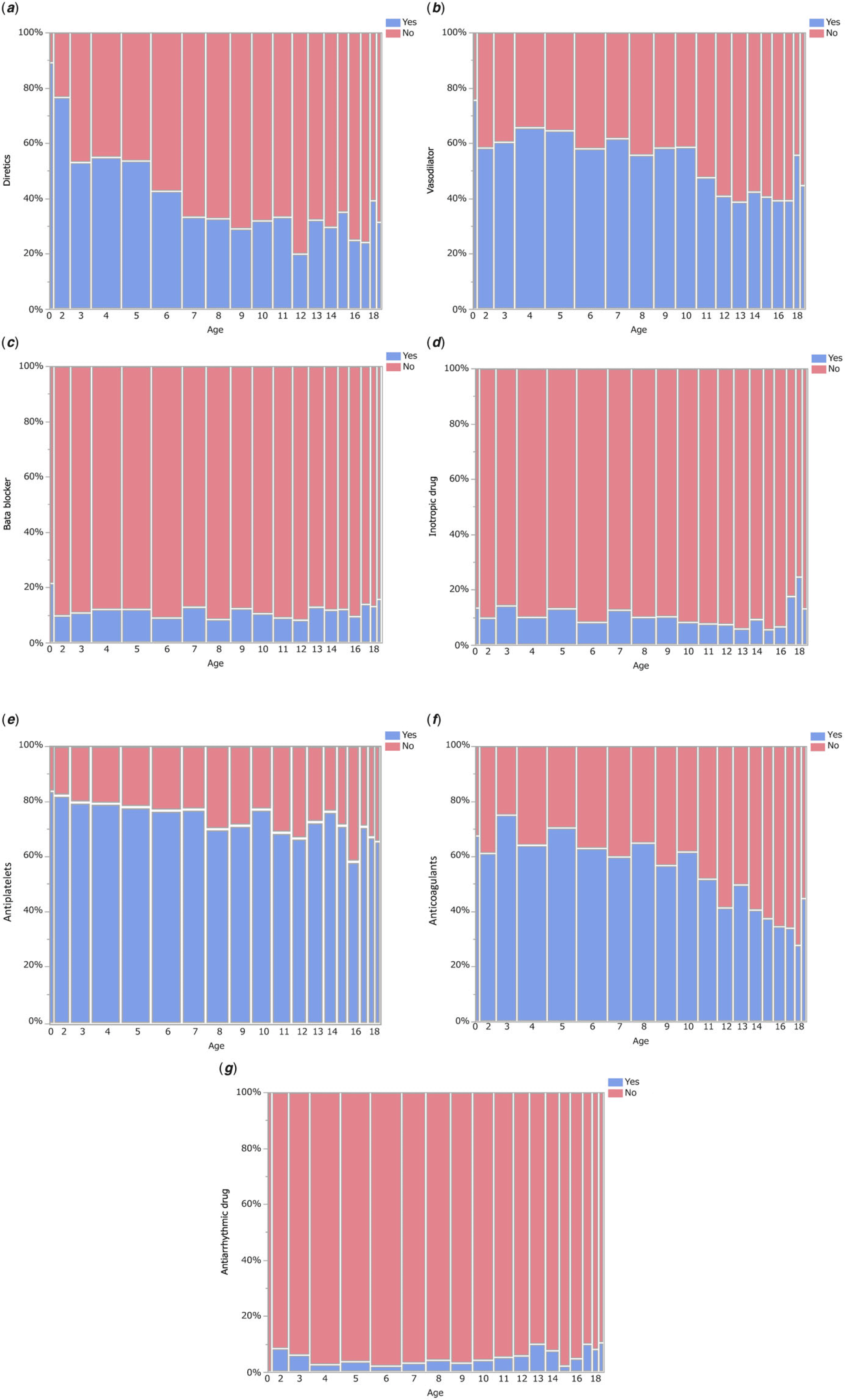
Medications administered included diuretic, 68% (Fig 4a); vasodilator, 55% (Fig 4b); beta-blocker, 11% (Fig 4c); inotropic drug, 10% (Fig 4d); antiplatelet, 74% (Fig 4e); anticoagulant, 57% (Fig 4f); and antiarrhythmic drug, 5% (Fig 4g). Home oxygen therapy was provided to 13% of the patients (Fig 5a). For the heart failure medication, diuretics alone were used in 269 patients (9%), vasodilators alone were used in 675 patients (23.5%), beta-blockers were used in 42 patients (2%), and none of the patients were treated with inotropic drugs alone. A combination of diuretics and vasodilators was most commonly used in 653 patients (23%). The other kinds of dual or more than triple combinations of heart failure medications were rare (0.2–4%). A combination of antiplatelets and anticoagulants was used in 1212 patients (42%). Anticoagulant use was significantly common in the patients who use oxygen (p < 0.01); anticoagulants were used in only 92 patients who did not use oxygen and in 283 patients who used oxygen. Catheter intervention was performed in 52% of patients (Fig 5b).
Distribution of medications by age. The width of the bar graph shows the number of cases. ( a ) Diuretics. ( b ) Vasodilators. ( c ) Beta-blockers. ( d ) Inotropic drugs. ( e ) Antiplatelets. ( f ) Anticoagulants. ( g ) Antiarrhythmic drugs.
Distribution of other treatment by age. The width of the bar graph shows the number of cases. ( a ) Oxygen supplementation. ( b ) Catheter intervention. ( c ) Grade of the Guidelines for School Life and Exercise.
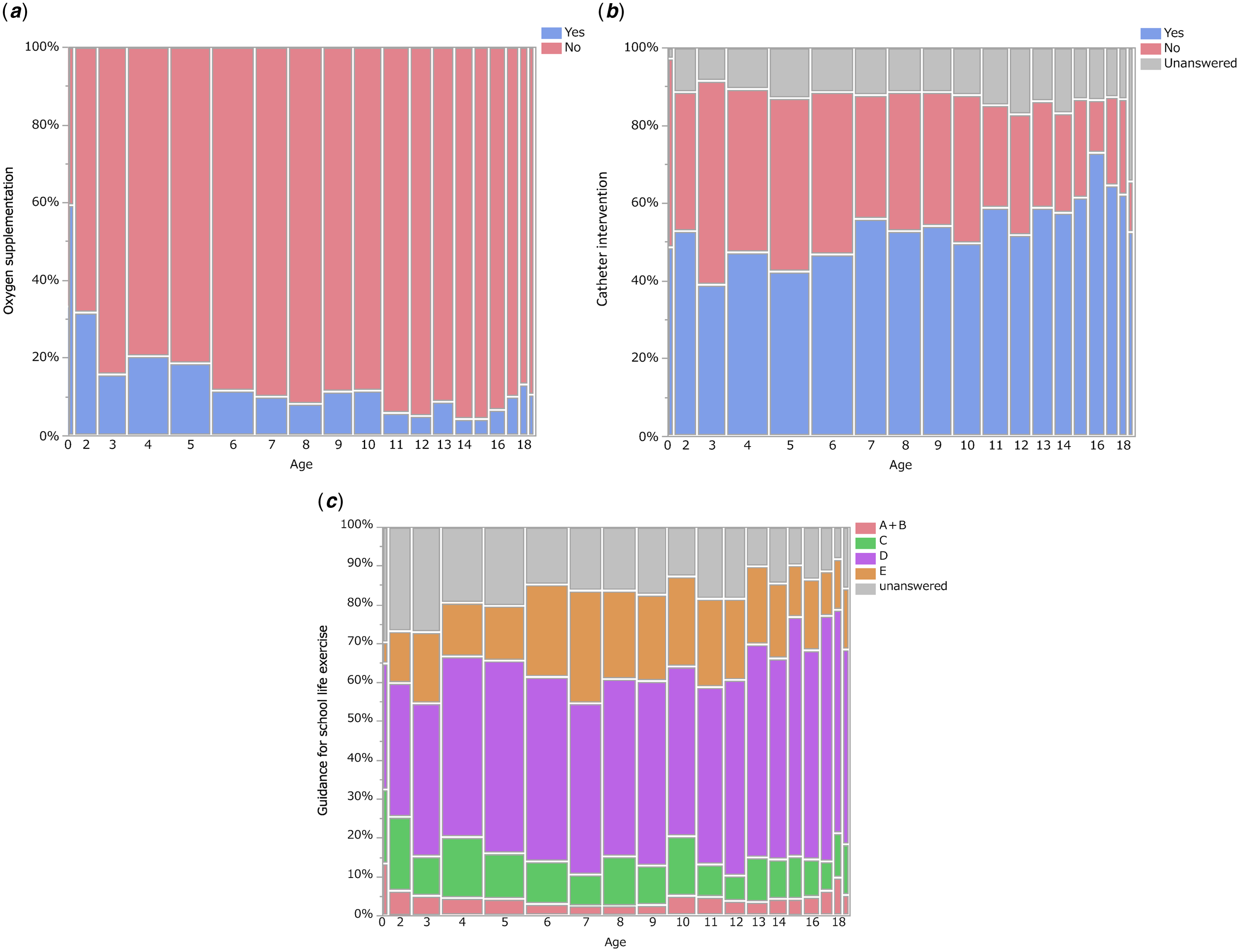
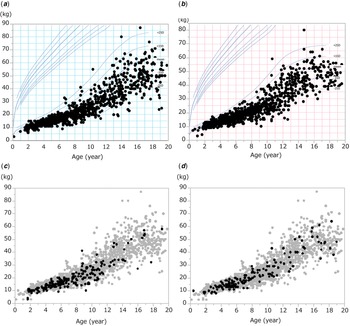
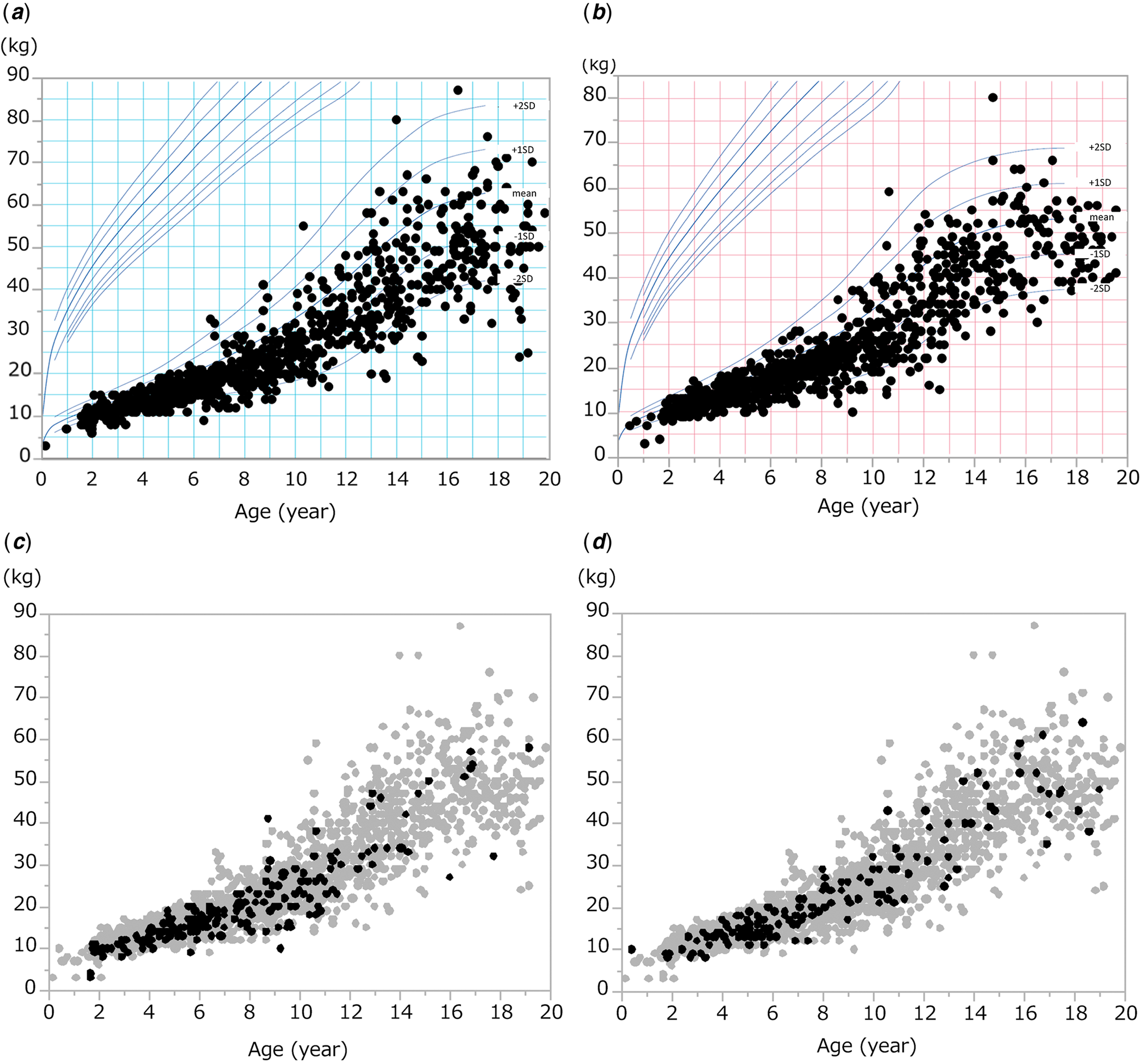
Grade of the Guidance for School Life and Exercise was A, 0.6%; B, 4%; C, 12%; D, 48%; E, 19%; and no data, 17% (Fig 5c). The weight distribution plotted on the Standard Growth Charts for Height and Weight of Japanese Children (boys, Fig 6a; girls, Fig 6b) showed lower weight distribution than normal through all age groups in both sexes. The average body weight of patients older than 18 years was 50.4 kg for men and 46.5 kg for women, −0.97SD and −0.93SD, respectively, of Japanese standard at the age of 17.5 years.
The weight distribution plotted on the Standard Growth Charts for Height and Weight of Japanese Children with mean, ± 1 SD, and ± 2 SD lines, ( a ) boys and ( b ) girls. ( c ) and ( d ) Black dots show the disease-specific data of ( c ) hypoplastic left heart syndrome and ( d ) right isomerism, while gray dots show the other subjects of this study (boys and girls).
Discussion
Although the Fontan procedure has been performed for longer than 40 years, research on epidemiology and outcomes of patients who have undergone this operation is limited to series from single Reference Fuchigami, Nagashima and Hiramatsu6–Reference Ohuchi, Negishi and Noritake8 or multiple Reference McCrindle, Zak and Breitbart9,Reference McCrindle, Williams and Mitchell10 centres. The data of the present study show the current nationwide status of post-Fontan patients in Japan. Furthermore, comprehensive information about patient characteristics, treatment (including the frequency of catheter interventions), and symptoms is clarified. To our knowledge, nationwide data including such detailed individual information have not yet been reported in a global context. In 2014, d’Udekem et al. Reference d’Udekem, Iyengar and Galati1 reported the follow-up data of 1006 survivors of the 1089 post-Fontan patients in the entire population of Australia and New Zealand. This paper is invaluable for analysis of complete national data. From these data, the prevalence of post-Fontan patients was 1 in 29,000, as the population of Australia and New Zealand was about 30 million at that time. In Japan, Watanabe et al. Reference Watanabe, Muneuchi, Yuge and Joo11 reported the national data of adult patients who underwent the Fontan procedure, the so-called Fontan-NET. This study was based on the nationwide survey of post-Fontan patients aged 18 years and older conducted by the Japanese Society for Adult Congenital Heart Disease, including a total of 1048 post-Fontan patients from 95 institutions. Therefore, the population of post-Fontan patients in Japan can be estimated at approximately 3900 because our study includes 2862 post-Fontan patients younger than 20 years. Calculating from the sum of the two reports including children and adults, the prevalence of post-Fontan patients is 1 in 33,000. We believe the data in this study to be sufficiently credible because the estimated prevalence of post-Fontan patients in two national datasets was comparable. Furthermore, in the current medical aid programme for chronic heart disease in Japan, the application is approved when the patient has any of the following criteria: long-term medication, valve regurgitation (greater than Sellers classification II), re-coarctation (pressure gradient of more than 20 mmHg), ventricular outflow obstruction (pressure gradient of more than 20 mmHg), pulmonary hypertension, systemic ventricular dysfunction (ejection fraction less than 60%), and significant arrhythmia. Almost all post-Fontan patients are prescribed at least some medication such as anticoagulants or antiplatelets, and some patients have a significant residual lesion or compromised haemodynamics described in the aforementioned criteria. From this point of view, the exhaustiveness of data in our study is considered to be sufficiently reliable.
With regard to the age distribution, the number of patients was highest in the 4–6 year age groups and gradually decreased with age. The dominant number in younger age groups is probably caused by some reasons. First, the number of Fontan operation has increased as the indication of the operation has been extended, as a result of the improvement of quality of diagnostic examinations, medical management, and surgical outcome of pre-Fontan palliation. Second, applications to the medical aid programme for chronic paediatric diseases were discontinued as a result of abandonment or death.
Presumably, in the era of this study, the typical oral vasodilators given for the included patients were angiotensin-converting enzyme inhibitor or angiotensin II receptor blocker, and inotropes were digoxin or pimobendan. Pulmonary vasodilators were not contained in the application form. For the heart failure medication, vasodilators alone (24%) and a combination of diuretics and vasodilators (23%) were most commonly used, and diuretics alone (9%) were next. That appears to be basically the result of compliance with the guidelines for adult patients. Most patients requiring oxygen supplementation are expected to have fenestration or other right to left shunts, but the need for anticoagulation in patients with right to left shunts is controversial. Although there are not exact data of oxygen saturation of individual patients and the presence of fenestration, anticoagulant use was significantly common in the patients who use oxygen (p < 0.01). There were significant relationships between the NYHA functional class and oxygen supplementation, and the NYHA functional class and medication for heart failure (diuretics, vasodilators, beta-blockers, or inotropic drugs). This is an expected result showing the validity of the treatment.
In the present study, the majority of the patients belonged to NYHA class I and II. The collective growth chart of patients showed a small difference from normal, and less than one-third of patients had poor body weight gain. Furthermore, the grade of Guidance for School Life and Exercise for individuals was evaluated. In Japan, a school heart screening in accord with the School Health Law has been obligatory since 1973. When heart disease is diagnosed, school life and exercise guidance, from grade A to grade E, are provided according to basic diagnosis and individual haemodynamic conditions based on the Guidelines for School Life and Exercise for CHD, whereby about 80% of the patients provided grade D or grade E (i.e., allow moderate to strong exercise). 4 Reports regarding somatic growth long after the Fontan procedure are limited. In 2012, François et al. Reference François, Bové and Panzer12 reported somatic growth post-Fontan procedure, whereby the Z-value of weight at follow-up (mean 12.5 ± 6.1 years) was −0.8 ± 1.6 and not affected by gender, which is consistent with the data of our present study (−0.97SD for men and −0.93SD for women). These data show a relatively good medium- to long-term outcome for post-Fontan patients; the impairment of physical activity and extent of heart failure during childhood were limited.
The percentage of patients receiving any medication decreased with age until the middle teens and increased in patients older than 17 years. These data reveal the scheduling of medication tailored to individuals for age-specific haemodynamic problems, probably suggesting the necessity of treatment optimisation based on the age of the patient. Data analysis of the Medical Aid Program for Chronic Pediatric Diseases of Specified Categories cohort will provide useful information towards understanding the current status of patients with chronic heart disease in Japan.
Limitations
First, there is a problem with exhaustiveness of the study because data registration is based on the patient’s voluntary application. Registered data may include assessments that can bias results because the application is connected to a decision regarding medical benefit. As no such information is recorded, it is difficult to obtain the reasons for withdrawing from the database. In addition, haemodynamic data such as pressure gradients and Sellers classification of valve regurgitation include those assessed by echocardiography as well as cardiac catheterisation.
Conclusions
This study has clarified the current status of post-Fontan patients younger than 20 years in Japan. Data analysis of the Medical Aid Program for Chronic Pediatric Diseases of Specified Categories cohort provides useful information towards understanding the comprehensive status of patients with chronic heart disease and contributes to improved disease management.
Acknowledgements
We thank Hugh McGonigle, from Edanz Group (https://en-author-services.edanzgroup.com/), for editing a draft of the manuscript.
Financial support
This research received no specific grant from any funding agency, commercial, or not-for-profit sectors.
Conflicts of interest
None.
Ethical standards
The authors assert that all procedures contributing to this work comply with the ethical standards of the relevant national guidelines on human experimentation (please name) and with the Helsinki Declaration of 1975, as revised in 2008, and have been approved by the institutional committees, Showa University Ethics Committee (approval number: 3229).