In 2019, the first cases of COVID-19 were recorded in Wuhan, China, and in March 2020, COVID-19 was declared a pandemic by the World Health Organization. In the earlier days of the pandemic, it was stated that paediatric cases made up 2–6% of all COVID-19 cases, Reference Sperotto, Friedman and Son1 and that in most of these cases, the infection was either asymptomatic or mild. Reference Ludvigsson2 Between April and May 2020, the first paediatric cases that had hyperinflammatory symptoms similar to Kawasaki syndrome and toxic shock syndrome findings related to COVID-19 infection were recorded in England. Reference Riphagen, Gomez and Gonzalez-Martinez3 Following these first cases, more cases were reported and diagnostic criteria were decided upon. Reference Sperotto, Friedman and Son1,Reference Henderson, Canna and Friedman4 Two names were commonly used to address this situation: The Royal College of Paediatric and Child Health referred to this form of the disease as “Paediatric Inflammatory Multisystem Syndrome Temporally Associated with SARS-CoV-2 ,” whereas the World Health Organization and the United States Centers for Disease Control and Prevention referred to it as Multisystem Inflammatory Syndrome in Children. Reference Swann, Holden and Turtle5 The hyperinflammatory pathology in these cases was observed to affect the cardiovascular system to a serious degree along with every other organ system, and cardiac pathologies were reported in 56% of all Multisystem Inflammatory Syndrome in Children/Paediatric Inflammatory Multisystem Syndrome Temporally Associated with SARS-CoV-2 cases. Reference Feldstein, Rose and Horwitz6–Reference Dufort, Koumans and Chow8 Given this high prevalence rate, this study was conducted to evaluate the cardiac findings of the cases diagnosed with Multisystem Inflammatory Syndrome in Children/Paediatric Inflammatory Multisystem Syndrome Temporally Associated with SARS-CoV-2 in the paediatric clinic of our hospital.
Materials and methods
This study consists of the 26 inpatient cases that have been diagnosed with Multisystem Inflammatory Syndrome in Children between December 2020 and August 2021 in our hospital, all of whom were less than 18 years old and had applied to our hospital’s emergency ward with various symptoms including high fever, vomiting, diarrhoea, abdominal pain, and skin rash. After their clinical and laboratory examinations, these cases were diagnosed with Multisystem Inflammatory Syndrome in Children according to the World Health Organization’s criteria.1–4 All of the cases had either been infected with COVID-19 themselves or had an infected person in their families. The patients who did not fit the World Health Organization criteria or had high fever due to another disease were excluded from this study.
During the examinations, the cases were hospitalised for at least 3 days. Five of the cases whose clinical status were expected to get worse were referred to ICUs in other centres. The remaining 21 cases were clinically more stable and responded well to the treatments. The histories, clinical, laboratory, and cardiac findings of all 26 cases were retrospectively analysed from the hospital’s records. The cases were followed up in our clinic for at least 2 months during which they were called in for controls 1–2 weeks, 1 month, and 2 months after their discharge from the hospital.
During these controls, the clinical and laboratory findings as well as the electrocardiographic and echocardiographic results of the cases have been evaluated.
The cases’ echocardiograms were taken using the Vivid S6 (General Electric Healthcare Systems) echocardiography device. The structural and functional cardiac pathologies were assessed from the echocardiographic findings. These evaluations were done according to the guidelines of the American Society of Echocardiography.
All statistical analyses (median, min, max, etc.) and tests were performed using SPSS version 21 (IBM SPSS Statistics, IBM Corporation, Armonk, NY, USA) on a personal computer. p values <0.05 were considered statistically significant. The Mann–Whitney U-test was used for group comparisons.
A report was taken from the Ethics Committee for our Hospital (17.03.2021/N0:74) and the Ministry of Health, General Directorate of Health Services Scientific Research Platform (2021-04-20T18_01_49). During the study, the Helsinki Declaration was adhered to.
Results
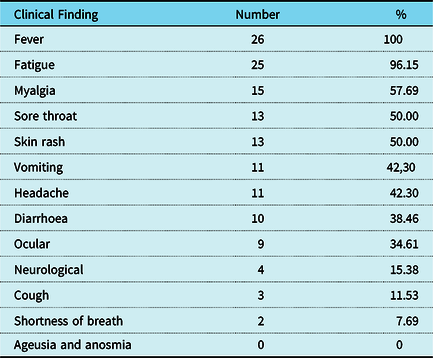
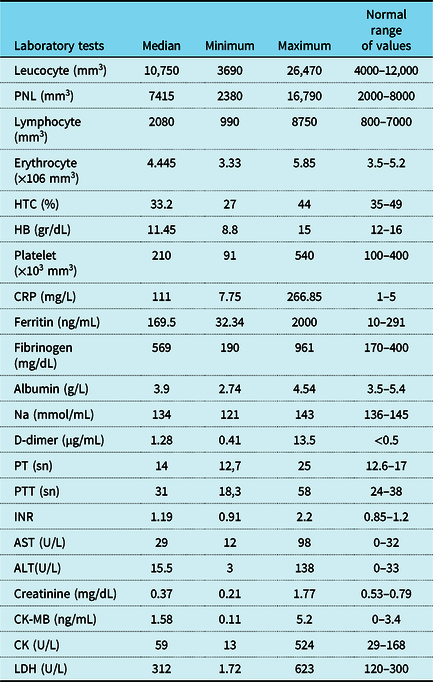
The study group consisted of 26 cases diagnosed with Multisystem Inflammatory Syndrome in Children. Fourteen (53.85%) of these cases were male and 12 (46.15%) were female. The cases’ ages ranged from 2 months to 17 years, with the median age being 3.67 years. They were hospitalised for 3 to 21 days, and the median duration of hospitalisation was 10 days. There were 1 to 14 days between the time when the cases’ symptoms developed and when they were hospitalised and the median duration was 4 days. Most of the cases had received antibiotic or antipyretic treatment before being hospitalised. The cases’ body temperatures were between 38°C and 41°C, and the median temperature was 39°C. Twenty-one of the cases (80.76%) had a known history of contact with COVID-19, it was unknown in 2 (7.69%), and 3 (11.53%) had no contact with COVID-19 but had no other pathologies that might have caused their hyper inflammation and Kawasaki-like findings and thus were accepted as Multisystem Inflammatory Syndrome in Children cases. All of the cases were healthy and had no abnormalities prior to hospitalisation. The clinical findings of the cases are presented in Table 1 and their laboratory findings are given in Table 2.
The distribution of clinical findings

Laboratory findings of study group

PNL: Polymorphonuclear leucocytes, HTC: Hematocrit, HB: Haemoglobin, CRP: C-reactive protein, PT: Prothrombin time, PTT: Prothromboplastin time, INR: International normalised ratio, AST: Aspartate aminotransferase, ALT: Alanine aminotransferase, CK-MB: Creatine kinase-MB, CK: Creatine kinase, LDH: Lactic acid dehydrogenase.
Troponin levels above 0.003 are known to indicate cardiac involvement; however, our cases had troponin levels only slightly above 0.003 and thus were not included in Table 2.
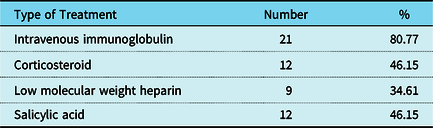
Non-specific fluid, antibiotic, and antipyretic treatments were used along with immunosuppressive (intravenous immunoglobulin and corticosteroid), antithrombotic (salicylic acid), and anticoagulation (low-molecular weight-heparin) medication. The distribution of these treatments is given in Table 3.
The distribution of the types of Multisystem Inflammatory Syndrome in Children treatment

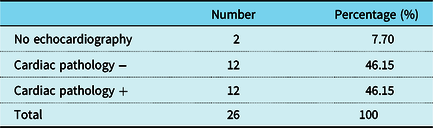
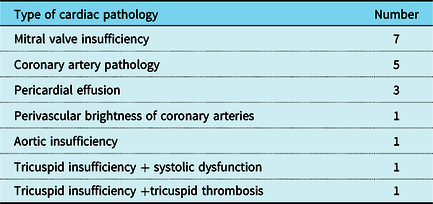
Two of the cases were directly transferred to the ICU and had no echocardiographic measurements. From the 24 cases that had echocardiography results, 12 had cardiac pathologies while 12 did not, as shown in Table 4. The distribution of these cardiac pathologies is presented in Table 5. Although one case had an atrioventricular septal defect and one case had mitral valve prolapse, these were not included in Table 5 as they were structural pathologies that were not related to COVID-19. In some of the cases, mitral valve insufficiency overlapped with other cardiac findings such as coronary artery pathology, pericardial effusion, aortic insufficiency, systolic function deficiency, and tricuspid thrombosis.
The distribution of the cases according to the presence of cardiac pathologies

The distribution of the cardiac pathologies observed with echocardiography

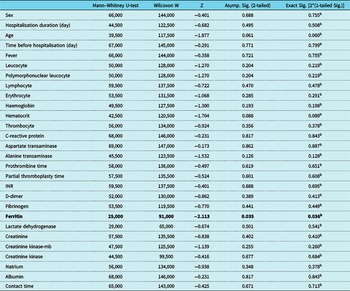
Among the 24 cases that had echocardiography results, the ones that had no cardiac pathologies were compared with those that had cardiac pathologies based on sex, age, the duration of the symptoms prior to hospitalisation, and laboratory findings using the Mann–Whitney U-test. There were no statistically significant differences between the groups based on these criteria except for a difference in Ferritin (Exact Sig. [2*(1-tailed Sig.)] 0.036), which was skewed due to the laboratory results of only one severe patient (Table 6).
Mann–Whitney U-test results

a. Grouping Variable: Group with and without pathology in echocardiography.
b. Not corrected for ties.
Mann–Whitney U-test was applied. A significant difference was found only in Ferritin levels according to ecopathology (p < 0.05) (p = 0.036).
Five of the patients were transferred to ICUs in different centres. Two of the cases had shock-like findings, whereas the others had findings similar to Kawasaki and incomplete Kawasaki syndrome. Bradycardia developed in 3 of the asymptomatic cases during treatment but disappeared within a few days. There were no other arrhythmia findings. The cardiac findings of the cases who had cardiac involvement disappeared during their follow-up in our hospital.
Discussion
Ever since the first COVID-19 case was recorded in 2019, numerous new forms and manifestations of the disease have emerged. One of these relatively newer aspects was regarding the incidence rate in children, as during the earlier days of the pandemic it was claimed that children were less prone to COVID-19 and that they were either asymptomatic or experienced milder symptoms than adults. In a number of studies, it has been reported that paediatric COVID-19 cases make up less than 2% of all cases and that their rate of hospitalisation is much lower compared to adults. Reference Beroukhim and Friedman9 However, with more cases being observed worldwide each day, recent studies have begun to report higher incidence rates among children, such as the joint report published by the American Academy of Pediatrics and the Children’s Hospital Association, which stated that 9.1% of the cases in the United States were children. Reference Wald, Schmit and Gusland10 Although the paediatric cases are still reported to be noticeably milder than their adult counterparts, the presence of severe cases among children cannot be overlooked, especially those with Multisystem Inflammatory Syndrome in Children, which is characterised by fever and non-specific symptoms such as abdominal pain, vomiting, headache, and fatigue Reference McArdle, Vito and Patel11 and a clinical picture similar to that of Kawasaki Disease or toxic shock syndrome. Following its initial documentation in April 2020, various studies on Multisystem Inflammatory Syndrome in Children cases were conducted and diagnostic criteria: serious illness leading to hospitalisation, age <21 years, fever lasting for at least 24 hours, laboratory evidence of inflammation, multisystem organ involvement, evidence of SARS-CoV-2 infection based on reverse transcription polymerase chain reaction test, antibody testing, or exposure to persons with COVID-19 in the past 3 months Reference Guana and Pagliara12 were decided upon. It has been stated that Multisystem Inflammatory Syndrome in Children tends to affect males slightly more than females, although a definitive result has yet to be reached in terms of sex distribution, and that it can be observed in children whose ages range from 7 months to 20 years, with the median being reported between 7 and 10 years old. Reference Rafferty, Burrows and Joseph13 The sex distribution of our cases was parallel to these reports as 53.85% of our cases were male. However, the median age of our study group (3.67 years) was lower than previous studies, which might have been due to the fact that our group was predominantly composed of cases with clinical pictures similar to Kawasaki Disease, which is known to mostly affect children below the age of five, Reference Henderson, Canna and Friedman14 rather than toxic shock syndrome.
Multisystem Inflammatory Syndrome in Children can be manifested with various clinical findings in different cases. It has been stated that the most common Multisystem Inflammatory Syndrome in Children symptom is fever, with its rate being reported up to 97–100% in several studies, along with dermatologic, mucocutaneous, and gastrointestinal symptoms such as diarrhoea and vomiting, neurological symptoms, and headache. Reference Rafferty, Burrows and Joseph13 Similarly, fever was the only finding that was present in all cases in our study group, their body temperatures ranging from 38°C to 41°C. Skin rash was observed in 13 cases (50%), vomiting in 11 (42.30%), and diarrhoea in 10 (38.46%). Fatigue, myalgia, sore throat, headache, and neurological symptoms were among the other common symptoms, as shown in Table 1. As for the laboratory findings, elevated levels of C-reactive protein, erythrocyte sedimentation rate, ferritin, procalcitonin, and serum interleukin-6 are common inflammatory markers in Multisystem Inflammatory Syndrome in Children cases, Reference Rafferty, Burrows and Joseph13,Reference Henderson, Canna and Friedman14 while elevated levels of D-dimer, fibrinogen, prothrombin time, partial prothrombin time, and international normalised ratio are indicators of coagulation dysfunction. In our study group, there were cases whose C-reactive protein levels were mildly higher than the normal range as well as those who had significantly elevated levels. There was a similar trend in terms of fibrinogen, D-dimer, prothrombin time, prothromboplastin time, and international normalised ratio levels as some cases were in the normal range while others were moderately above it. Interestingly, the ferritin levels of our cases ranged over a wide spectrum. Although most cases had moderately elevated levels of ferritin, one of our severe cases, who had systolic dysfunction, had an exceptionally high ferritin level of 2000 ng/mL, as shown in Table 2, which reinforces the fact that critically high ferritin levels are thought to increase the susceptibility for cardiac dysfunction. Another important marker for Multisystem Inflammatory Syndrome in Children is platelet count, though a consensus does not seem to be reached on this matter as some studies claim that platelet count is elevated in Multisystem Inflammatory Syndrome in Children cases, Reference Hoste, Van Paemel and Haerynck15 whereas others contrarily state that it is in fact reduced. We observed that there were cases that had elevated platelet levels as well as reduced levels in our group, as shown in Table 2; thus, it is hard to make a conclusive inference from our laboratory results. However, it is worth noting that the severe cases that had to be referred to the ICU in our study group had significantly decreased platelet counts.
The cardiovascular system is among the various organ systems that can be affected by Multisystem Inflammatory Syndrome in Children. Almost every retrospective cohort study that has been published has reported prominent cardiac involvement in Multisystem Inflammatory Syndrome in Children cases. Reference Henderson, Canna and Friedman14 In a prospective cohort study conducted in the United Kingdom, it was observed that 57% of Multisystem Inflammatory Syndrome in Children cases had one or more documented cardiac complications. Reference Swann, Holden and Turtle5 In another cohort study done in New York City, 73% of the 33 patients in the study group had at least one abnormality in cardiac testing. Reference Minocha, Phoon and Verma16 In our study group, echocardiographic measurements were taken for 24 of the 26 cases, and half of these cases had at least one cardiac abnormality, as shown in Table 5. The most prevalent pathology among our group was valve insufficiency. The severity of regurgitation ranged from mild to moderate. The second most common pathology was coronary artery pathology. One of these cases had a small aneurysm whereas the others had coronary artery dilation. 3 patients had pericardial effusion. One of our severe cases had ventricular systolic dysfunction (ejection fraction 50%), right ventricular dilation, and mitral and tricuspid valve insufficiency. Another severe case had tricuspid thrombosis as well as mitral and tricuspid valve insufficiency. These patients were among the five cases that were transferred to the ICU. Unlike our findings, in the previously published studies, the incidence rate of left ventricular systolic dysfunction in Multisystem Inflammatory Syndrome in Children cases has been reported to be quite high. Various studies have reported left ventricular systolic dysfunction in 31–100% of cases that underwent imaging. Reference Rafferty, Burrows and Joseph13 This significant difference between these numbers and our results might have been due to the fact that most of our study group was composed of mild Multisystem Inflammatory Syndrome in Children cases. Since left ventricular systolic dysfunction is generally observed in more severe cases, it was only present in the most severe case in our group, whose ferritin levels were 2000 ng/mL. Regarding this matter, Henderson et. al have stated that the frequency of left ventricular dysfunction, coronary artery dilation, and coronary artery aneurysms reported in the initial descriptions of Multisystem Inflammatory Syndrome in Children may have actually been overestimated since they most likely represent the most severe component of the Multisystem Inflammatory Syndrome in Children spectrum. Reference Henderson, Canna and Friedman14 As our understanding of Multisystem Inflammatory Syndrome in Children has significantly improved nowadays, patients can be diagnosed before they reach a critically severe stage; hence, this might have led to a decrease in the left ventricular dysfunctions in these cases.
For the treatment of children with Multisystem Inflammatory Syndrome in Children, the commonly accepted approach is to use intravenous immunoglobulin and corticosteroids as first-tier agents to suppress the inflammatory response, as well as using low molecular weight heparin for anticoagulation and salicylic acid for antithrombotic treatment based on the clinical picture of the case. Reference Henderson, Canna and Friedman14 We have used a similar approach in the treatment of our cases, as shown in Table 3. All of the cases that we have followed up have responded well to the treatments as their cardiac findings disappeared in less than a month and no other complications occurred for the most part except for three cases that developed asymptomatic bradycardia during treatment, which resolved later on. Other studies have also found similar results, stating that the cardiac symptoms of Multisystem Inflammatory Syndrome in Children cases mostly resolved in a few weeks during follow-up. Reference Minocha, Phoon and Verma16 However, despite this rapid cardiac improvement, any possible long-term complications are yet to be known for certain, as myocardial inflammation may lead to myocardial fibrosis and scarring in the future. Reference Henderson, Canna and Friedman14 Furthermore, due to its similarities with Kawasaki Disease, common long-term symptoms of Kawasaki Disease such as early atherosclerosis and coronary pathologies may also be observed in cases with Multisystem Inflammatory Syndrome in Children; hence, the long-term follow-up of these cases would be beneficial to shed light on this matter. Given that cardiac involvement is commonly seen in Multisystem Inflammatory Syndrome in Children cases, whether it be mild or severe, echocardiographic examinations are crucial in the diagnosis of these patients. Additionally, the cases should be classified according to their severity and different treatment protocols for different severities should be developed in order to maximise the treatments’ efficacy. To improve our current understanding of Multisystem Inflammatory Syndrome in Children, more multi-centred studies with long-term follow-up periods should be conducted.
Limitations
Our study was conducted at a single centre, with a respectively small sample that was mostly composed of mild cases. Patients who received intensive care and their follow-ups were not included in this study. However, despite its limitations, this study can be useful for comparison with Multisystem Inflammatory Syndrome in Children cases in different societies.
Acknowledgements
I express my sincere thanks to Zeynep Eylül Erol for her support in the preparation and translation process of this paper and to Cigdem Erol for her contributions in the statistical examination.
Financial support
This research received no specific grant from any funding agency, commercial or not-for-profit sectors.
Conflict of interest
None.
Ethics declarations
This study was performed in accordance with the standards of ethics outlined in the Declaration of Helsinki, 2013. All participants provided informed written consent (or written assent with parental consent, for minors) prior to participation in this study.
Disclosure of interest
The authors declare that they have no competing interest.
Authors’ contributions
Nurdan Erol planned the study, applied to the Ethics Committee for approval, examined the cases, carried out the echocardiographic measurements, and wrote the manuscript. Erdal Sari did the follow-up of the cases in the COVID-19 and Multisystem Inflammatory Syndrome in Children ward of our hospital.