


1. Introduction
This article contributes new knowledge on the insertion of Spain into the European integration project and examines how European Investment Bank (EIB) lending policy helped boost the Spanish economy. EIB loans to Spain supported the development of several sectors, with a particular focus on the Trans-European Networks (TENs) (transport, energy, and telecoms) and the funding of enterprisesFootnote 1 (through credit linesFootnote 2 and the industrial sector). We argue the funding of TENs promoted the integration of Spain into the European space, while the funding of enterprises reinforced their competitive positions facilitating their expansion abroad and the subsequent success of several multinational enterprises (MNEs) based in Spain.
The EIB was established in 1957 with the Treaty of Rome to support the construction of the European Single Market, its operations beginning in 1958. Gradually, the bank grew in volume and importance. During the “Golden Age”—the two decades following World War II—factors such as reductions in trade barriers and technological advancements facilitated high investment rates and economic growth in Europe (Cubel and Sanchis, Reference Cubel and Sanchis2009, p. 220). By 1991, the EIB had become the largest International Financial Institution (IFI) in terms of loan volumes.Footnote 3 The EIB’s mission, as stated in its Statute (EIB Statute, 1957), consisted of the promotion and support of the European project with three over-riding aims: to promote economic development, financial intermediation, and regional integration. In the first decades of operations, Italy (largely the Mezzogiorno) received the bulk of loans (60% from 1959 to 1969), reflecting the Bank’s prioritization of supporting economic development and “solidarity.” This changed from the 1990s (Clifton et al., Reference Clifton, Díaz-Fuentes and Gómez2018a, Gómez et al., Reference Gómez2018). After the end of the Cold War, European enlargement and the new objectives established by the Commission (for example, the TEN), led to a “turn towards supporting markets” and a trend whereby EIB loans corresponded more closely to countries’ capital subscribed in the bank. This shift has been interpreted as the “end of German solidarity” (Clifton et al., Reference Clifton, Díaz-Fuentes and Gómez2017a, p. 36, Reference Clifton, Díaz-Fuentes, Gómez, Díaz Fuentes, Aparicio and Marichal2017b, p. 492). Although Germany’s EIB loans per capita remain lower compared to some other countries, the trend towards a more proportional distribution of loans relative to capital contributions is evident. During this market-turn and trend towards more “mechanized” lending logic, Spain emerged as one of the most important recipients of EIB funds.
To date, of the scholarly work on the EIB, most attention has focused either on its overall functioning, or on contemporary questions about its financing role. There is a gap in the literature on the historical role of the Bank as regards the development of individual countries, including its role in facilitating the insertion of future Member State countries into the European integration project. This article contributes to the literature by examining the EIB’s lending policy to Spain, which, as mentioned, became one of the most important recipients of EIB funds from the 1990s. It explores how this policy encouraged the insertion of Spain into the European project and helped reinforce enterprises’ competitive positions, facilitating their expansion abroad and the subsequent success of several Spanish MNEs. To do so, we use two sources of information: the Historical Archives of the EU (HAEU) and a reconstructed database of all EIB loans. First, the HAEU offer an array of primary data, which provides insight into the policies, agreements, sectors, and recipient companies associated with EIB loans. Second, we assembled and processed all data on EIB lending and selected all finance destined for projects in Spain over the period 1958–2022. Lending was reconstructed using data from both the official financed projects of the EIB (EIB, 2023a) and from the EIB Annual Reports as obtained from the HAEU. To introduce an unbiased rate of inflation, we report all figures in 2015 constant euro.
To determine the extent to which EIB lending facilitated the insertion of Spain into the European project and reinforced enterprises’ competitive positions facilitating their expansion abroad and the subsequent success of several Spanish MNEs, we construct two hypotheses. First, Bank loans facilitated the insertion of Spain into the European project, which we label as regional integration, when lending goes to transport, energy, and telecom projects (TENs). Second, because enterprises find it challenging to become competitive without financial assistance (Hayward, Reference Hayward1995, p. 3), we assume EIB loans reinforce enterprises’ competitive positions when lending goes to credit lines and to the industrial sector. As highlighted by Hayward (Reference Hayward1995, p. 3), the increase in international competition due to trade liberalization in the 1960s exposed European firms to “The American Challenge,” necessitating financial support to remain competitive. This historical context underscores the ongoing importance of financial assistance to compete globally. Loans to credit lines and industry facilitate the funding of international activities and enterprises’ expansion (Bell et al., Reference Bell, Mcnaughton, Young and Crick2003), leading to the subsequent success of Spanish MNEs. In this analysis, we assume the EIB is particularly encouraging one activity (either the insertion of Spain into the European project or enterprises’ competitiveness) when the proportion of loans dedicated to it surpasses 30% of the total EIB lending to Spain, mirroring the EIB’s own 30% benchmark to indicate a deliberate strategic focusFootnote 4 (EIB, 2023b).
An in-depth study of EIB loans to Spain facilitates an examination of its lending to specific sectors and their relation to Commission policies, and, moreover, its lending to enterprises. The results are revealing. Overall, 86.8% of all EIB loans granted to Spain until 2022 either promoted regional integration (TENs) (e.g., RENFE and Telefónica) or helped reinforce enterprises’ competitive positions, facilitating their expansion abroad and the subsequent success of several MNEs (e.g., Banco Santander and Gamesa).
The rest of this article is divided into five sections. The second section provides a brief review of publications on the role of the Bank in the European integration project. The third section focuses on the historical evolution of EIB lending, offering context to Spain’s integration into the European project. The fourth section reviews the evolution of the EIB from 1958, when the EIB initiated its operations, to 2022, through the prism of its lending to Spain. Despite the EIB’s first loan to Spain occurring in 1981, this broader timeframe allows us to contextualize Spain’s integration within the European project and consider lending from other institutions. The section uncovers the extent to which EIB lending facilitated the insertion of Spain into the European integration project and reinforced Spanish enterprises’ competitive position. Conclusions follow.
2. The EIB and the European integration project
Studies on the role of the EIB in the European integration project can be roughly divided into three groups. First are those official publications promoted by the Bank itself, which tend to present an uncritical vision of the institution—see, for example, Bussière et al. (Reference Bussière, Dumolin and Willaert2008) for an overview of the first 50 years of the EIB, including its participation in the Single Market. Second are the independent reports commissioned by the European Parliament and the Council of the EU on the EIB financing activities, with a more critical view (Wise Persons Group, 2010; High-Level Group Of Wise Persons, 2019). Third are a body of independent, academic studies. Some of the earliest contributions focus on the EIB at a general level, and examine its main roles (Licari, Reference Licari1969; Käser, Reference Käser1984). Lewenhak (Reference Lewenhak1982) more specifically focuses on how EIB lending distribution promoted the European project. Honohan (Reference Honohan1995) and Pinder et al. (Reference Pinder, Edwards and Wise1995) examine the EIB’s public policy role and its lending to the transport sector, respectively. Despite these publications, in the 2000s, the EIB was still an “under-researched” institution (Robinson, Reference Robinson2009).
More recently, in the aftermath of the “Great Recession,” scholarly publications on the EIB and its lending practice have increased. The Great Recession helped raise awareness about the importance of IFIs in general and in the European context. In part, thanks to archives on the EIB, the Bank’s history was revisited, and lending logic analyzed (Clifton et al., Reference Clifton, Díaz-Fuentes and Revuelta2014, Reference Clifton, Díaz-Fuentes and Gómez2017a, Reference Clifton, Díaz-Fuentes and Gómez2018a, Reference Clifton, Díaz-Fuentes and Howarth2021a, Reference Clifton, Díaz-fuentes, Gómez Peña and Howarth2024). Griffith-Jones and Tyson (Reference Griffith-Jones, Tyson, Cintra and da Rocha Gomes2012), Kollatz-Ahnen (Reference Kollatz-Ahnen2013), and Clifton et al. (Reference Clifton, Díaz-Fuentes, García, Gómez, Mertens, Thiemann and Volberding2021b) focus on the catalytic role of the institution and its importance for European integration. Moreover, Kavvadia (Reference Kavvadia2020) study of the EIB’s business model reveals a counter-cyclical modus operandi. Despite this, authors including Erforth (Reference Erforth2020) and Hodson and Howarth (Reference Hodson and Howarth2023) argue the Bank does not go far enough in its lending operations, behaving in an over-conservative fashion, so only partially serving the European development finance architecture. Hence, though publications on EIB lending have increased, there remains a striking gap on the topic of the role played by the EIB as regards the insertion of future Member State countries into the European integration project. This paper contributes to this gap in the literature by focusing on Spain.
3. EIB lending from a historical perspective
The EIB was established at a specific international economic and political moment. In the aftermath of World War II, economic and political confrontation had resulted in the formation of two ideological blocs: the United States and its Western allies from the Organization for European Economic Cooperation (OEEC) (Marshall Plan),Footnote 5 on the one hand, and the USSR and the countries from Eastern Europe that would integrate the “Treaty of Friendship, Cooperation and Mutual Assistance” (usually known as Warsaw PactFootnote 6). Europe was central to the confrontation between these two opposing economic systems: capitalism versus communism. In this context, the outbreak of the Korean WarFootnote 7 in 1950 exacerbated the fear of communism in the United States, which reinforced its interest in a unified Europe where economic integration would guarantee peace and the prevalence of capitalism.
It has been well documented that steps towards integration in Europe materialized in the form of the European Coal and Steel Community (ECSC), the supranational institution that administered those sectors, promoted by Robert Schuman and Jean Monnet (Treaty of Paris, 1951). Supported by the United States (eager to guarantee political stability and an export market), in 1957, the six ECSC founders ratified the Treaty of Rome (EEC, 1957), which, in essence, would constitute a common market for manufactured goods with a common agricultural policy (Gilbert, Reference Gilbert2020).
The establishment of the European Economic Community (EEC) implied an agreement among the six pioneer countries over a range of issues, including agriculture, energy, migration, and common tariffs. Contemporary economists Nurske (Reference Nurske1953) and Myrdal (Reference Myrdal1957) argued that, without preventative measures, integration could lead to polarization or divergence between the development of rich and poor regions (HAEU 26/091956b). Hence, the Treaty of Rome included an agreement to set up the EIB to encourage integration facilitating the funding of investments with difficulties in obtaining resources (usually in the least developed regions) (EEC, 1957).
The EIB was, therefore, created to facilitate European integration through the provision of resources, given the lack of funding and huge post-war investment needs. Its establishment came after protracted negotiations between two competing positions: Italy and France, on the one hand, the Federal Republic of Germany and the Benelux countries (Belgium, the Netherlands, and Luxembourg), on the other (Clifton et al., Reference Clifton, Díaz-Fuentes and Gómez2018a). Given these negotiations and taking the Statute of the IBRD as a source of inspiration and only founding reference (HAEU 03/10/1956), it was agreed to establish the EIB with a dual nature: on the one hand, the Bank would be an official institution of the EEC, whose lending and investment policy would be guided by its Member countries; on the other, it would be an independent Bank, able to raise funding in the global capital markets in the best possible conditions (EIB STATUTE, 1957; 1995; 2013; 2020, Articles 11 and 13). Hence, the Bank would function under market principles, granting loans with guaranteed amortization and interest payments (at lower rates than those available on the market) (EIB Statute, 1957; 1995; 2013; 2020, Article 20).
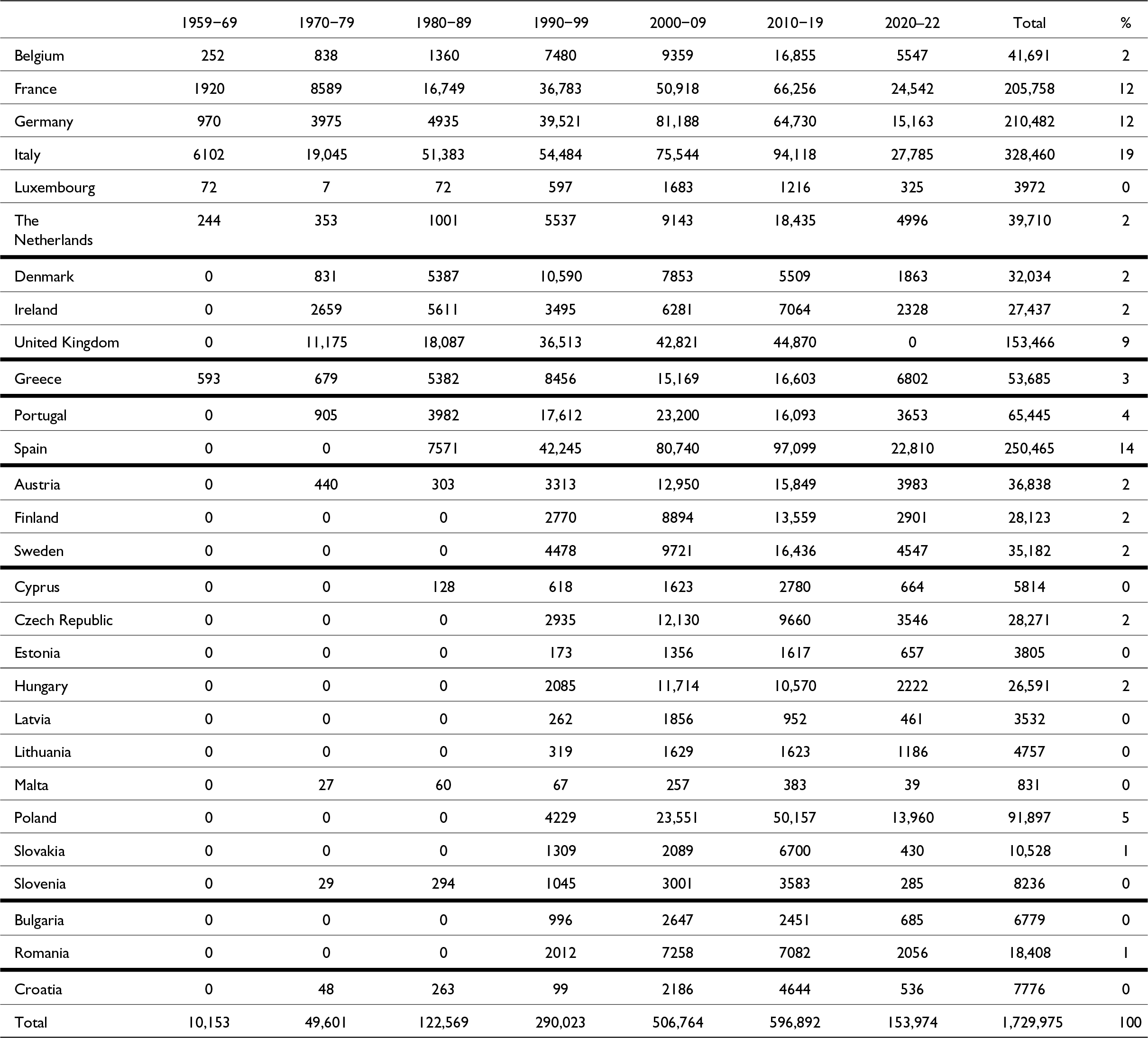
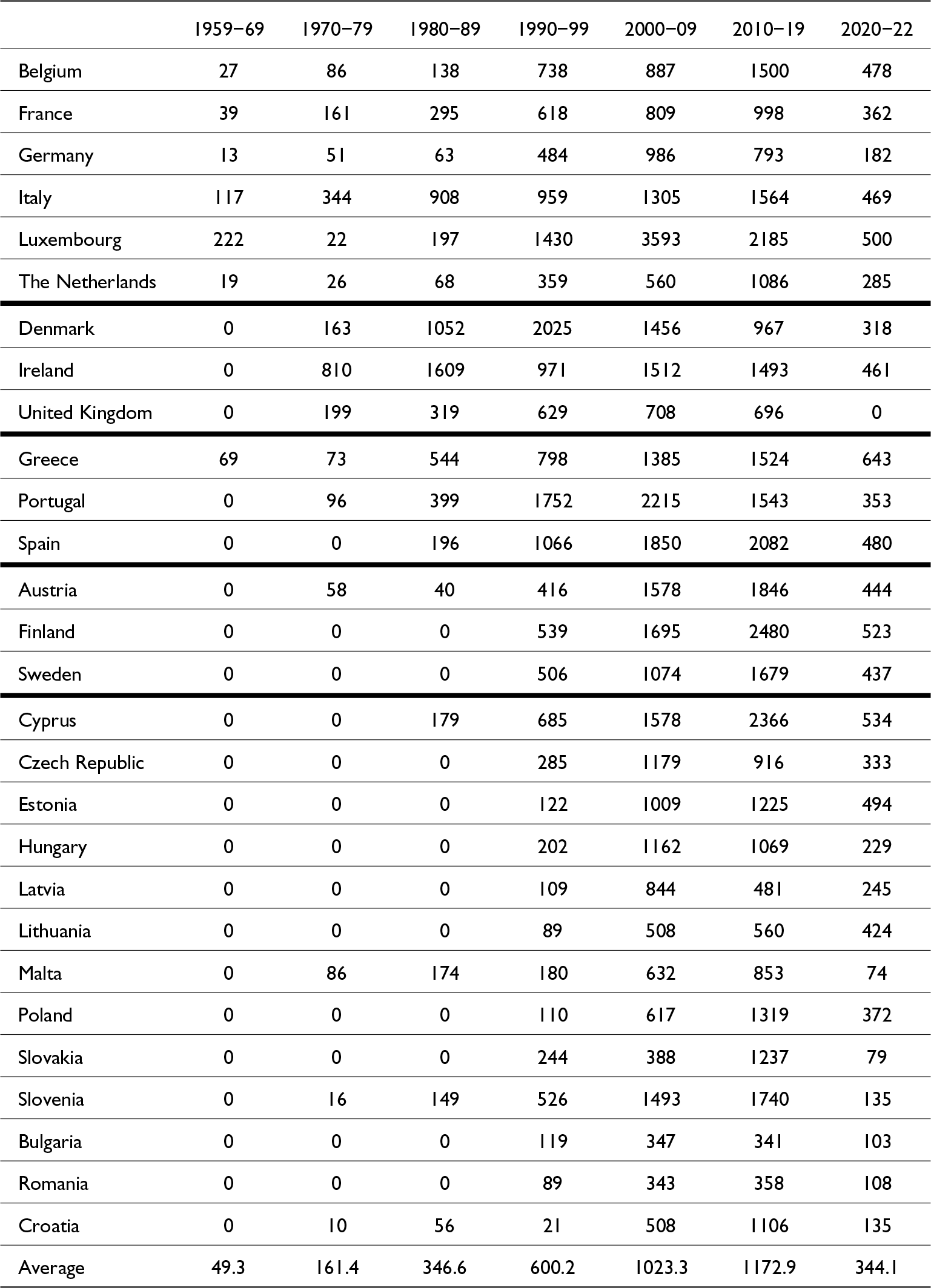
Rather than making a specific reference to the least developed regions as preferential recipients of loans, as Italy requested (HAEU 26/09/1956), Italy managed to attach a Protocol which included an agreement to help boost (and integrate) its economy (EIB Statute, 1957; 1995; 2013; 2020). Indeed, Italy became the main recipient of loans in the first few years.Footnote 8 Table 1, which sets out the allocation of EIB loans across EU countries from 1959Footnote 9 to 2022, segmented into decadal intervals for enhanced temporal clarity, shows Italy was apportioned 60% of the loans in the first decade. Presenting loans in the same period but on a per capita basis, Table 2 shows that Italy was the second-largest recipient of EIB loans from 1959 to 1969, after Luxembourg.
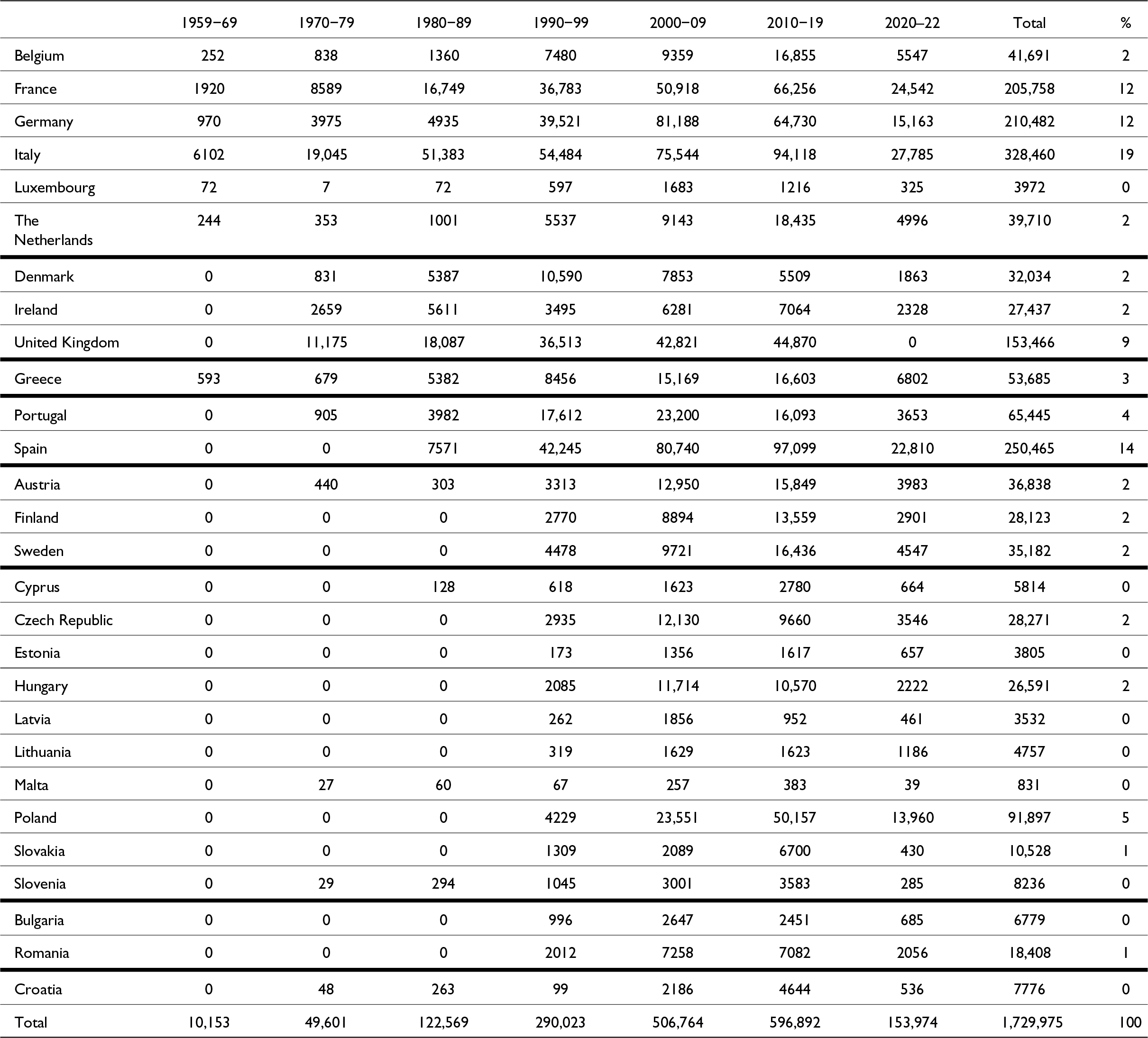
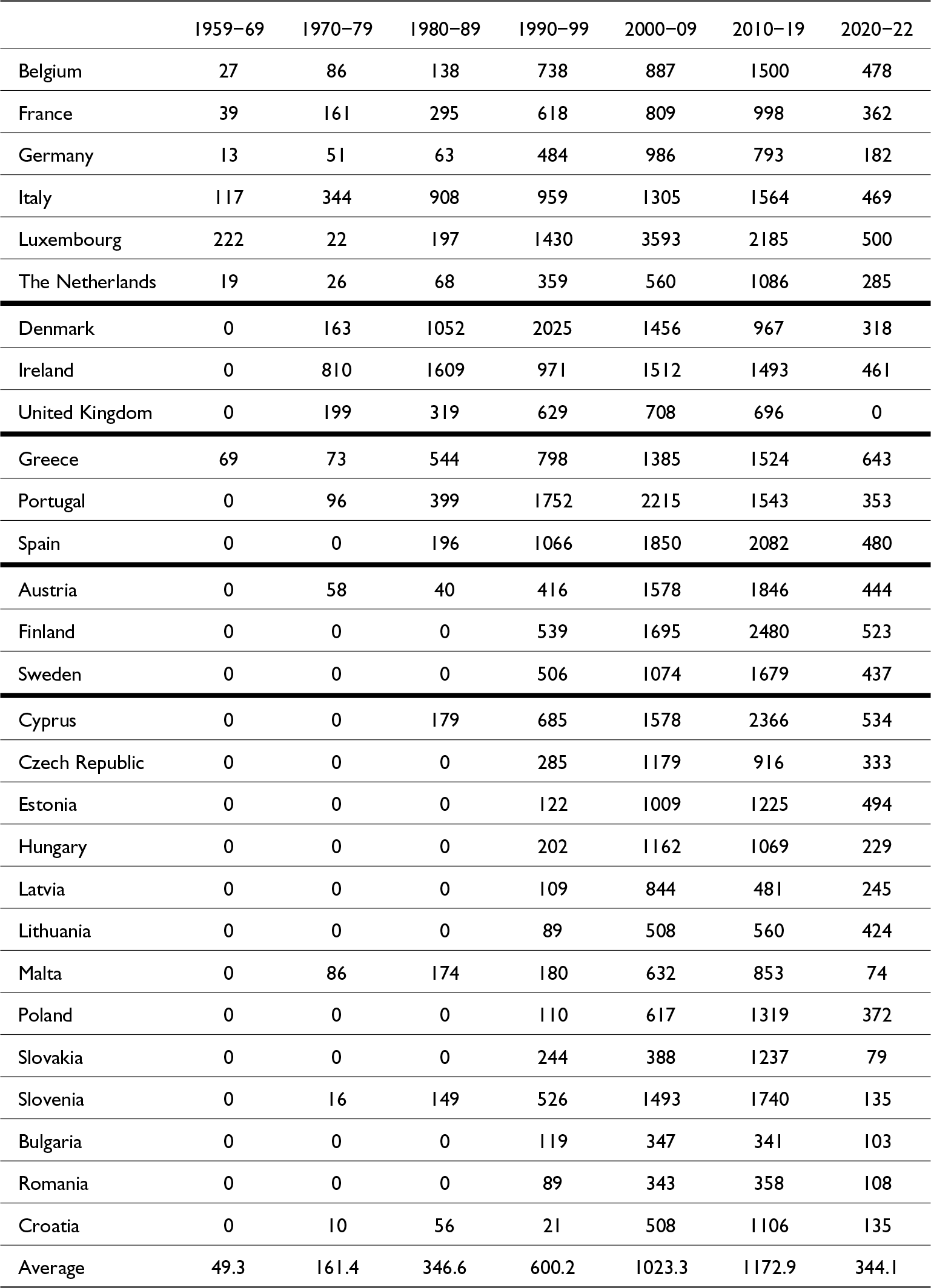
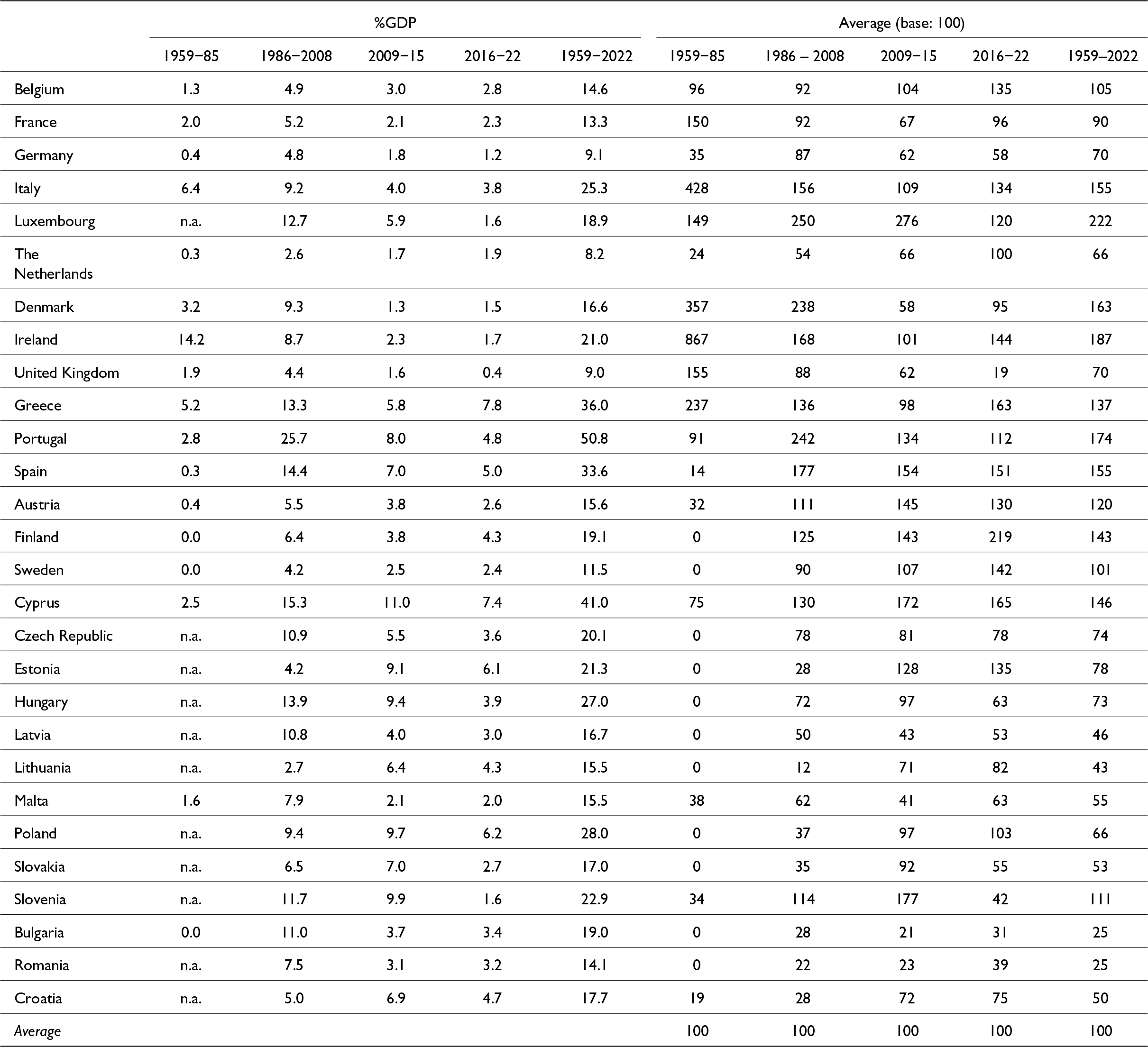
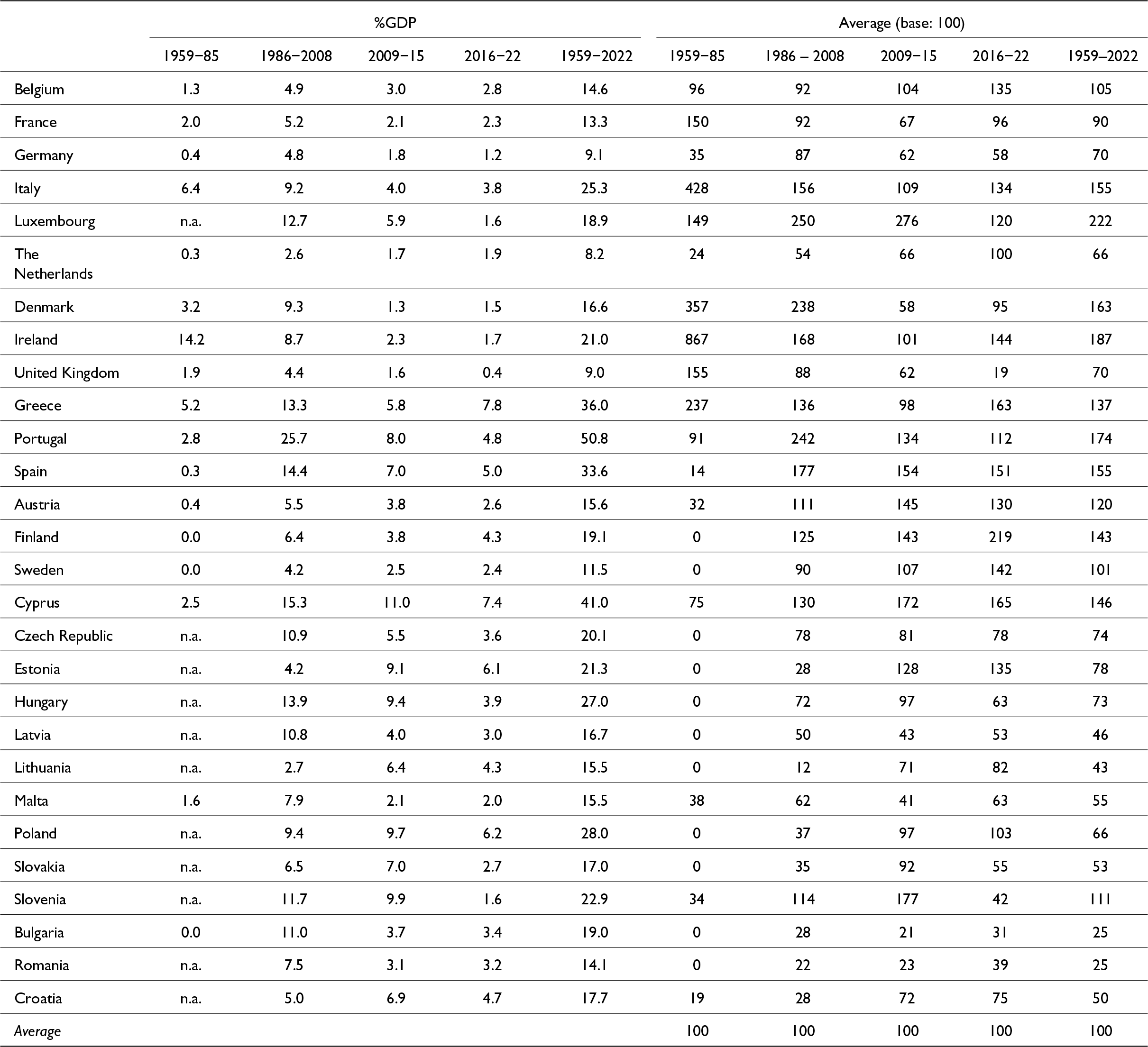
Table 1 also shows how, with Spain’s accession to the EEC in 1986, a pivotal shift occurred. Spain emerged as one of the primary beneficiaries of EIB funding (14.5% from 1990 to 1999, 15.9% from 2000 to 2009, and 16.2% from 2010 to 2019), while Italy gradually ceded its position as the largest beneficiary of EIB funds (18.7% from 1990 to 1999, 14.9% from 2000 to 2009, and 15.7% from 2010 to 2019). Spain’s per capita loans increased significantly over the decades, from 196 euros in 1980–89 to 1066 euros in 1990–99, then from 1850 euros in 2000–09 to 2082 euros in 2010–19. During these three periods, Spain was outpaced solely by Denmark, Luxembourg, and Portugal (between 1990 and 1999), by Luxembourg and Portugal (between 2000 and 2009), and by Luxembourg, Finland, and Cyprus (between 2010 and 2019). When comparing these figures to GDP, the Spanish case remains significant, with EIB loans amounting to 14.4% of its GDP for the period 1986–2008 and 33.3% for the entire period 1959–2022. This underscores Spain’s substantial leverage of EIB funding relative to its economic size. From 1959 to 2022, only Cyprus (41%), Greece (36%), and Portugal (50.8%) had higher EIB loans relative to their GDP, all of which underwent international bailout programs monitored by the Troika (see Table 2).
In the next section, we consider the Spanish case to examine the role of the EIB in its insertion into the European integration project and the dynamization of the Spanish economy through the allocation of loans.
4. The role of the EIB from the prism of its lending to Spain
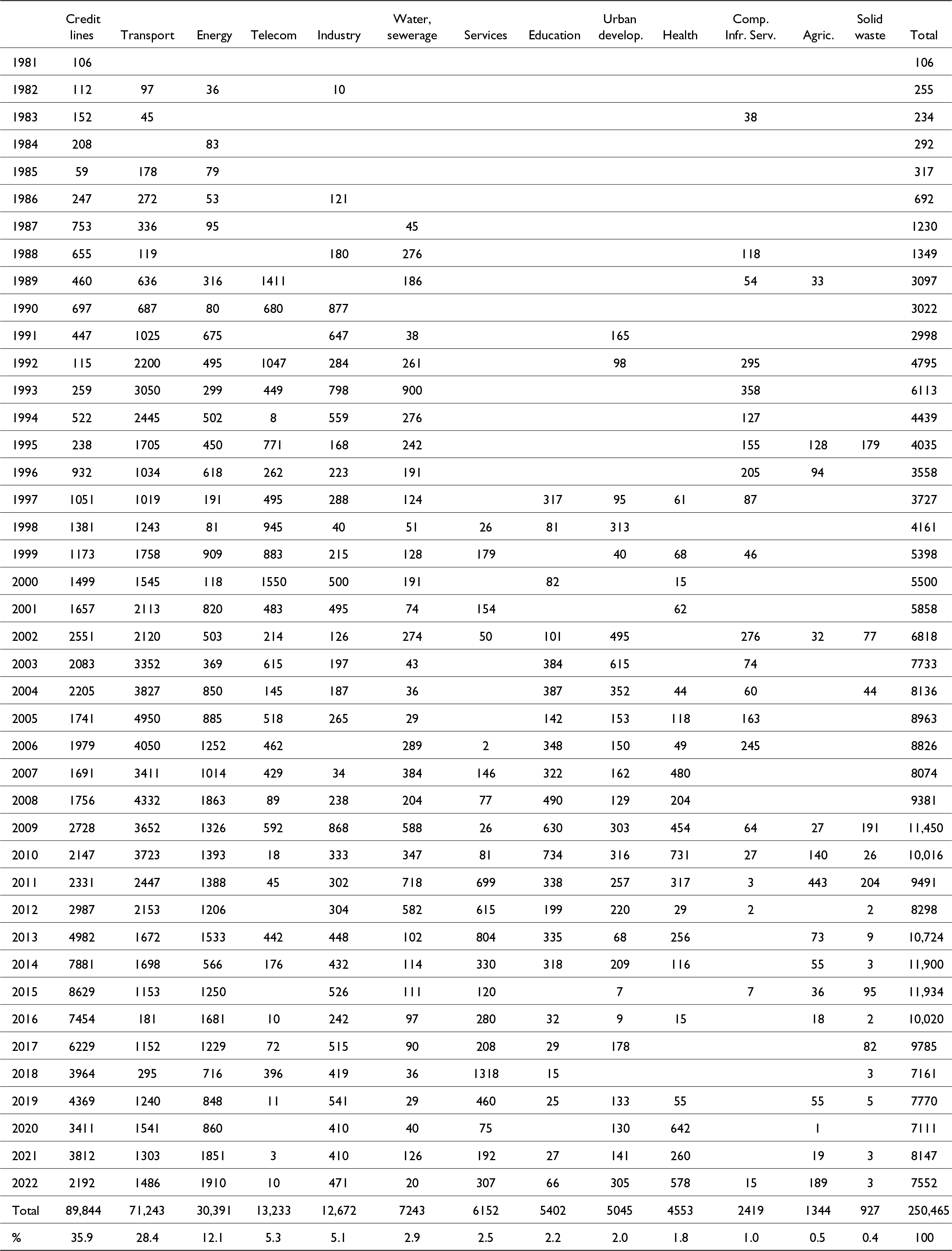
The last section showed how Spain became a major recipient of EIB lending, even overtaking Italy. Spain received approximately 15.9% of EIB loans from 2000 to 2022, and 14% over the entire period from 1981 to 2022 (see Table 1). From 2004 onwards, Spain became the top recipient of EIB funds as measured by volume. Reflecting its robust engagement with the EIB, Spain stands as the fourth-largest contributor to the bank’s budget, providing about 11.3% of the 248 billion euros of subscribed capital, marking an increase from its pre-Brexit contribution of around 9.7% (EIB Statute, 2013).
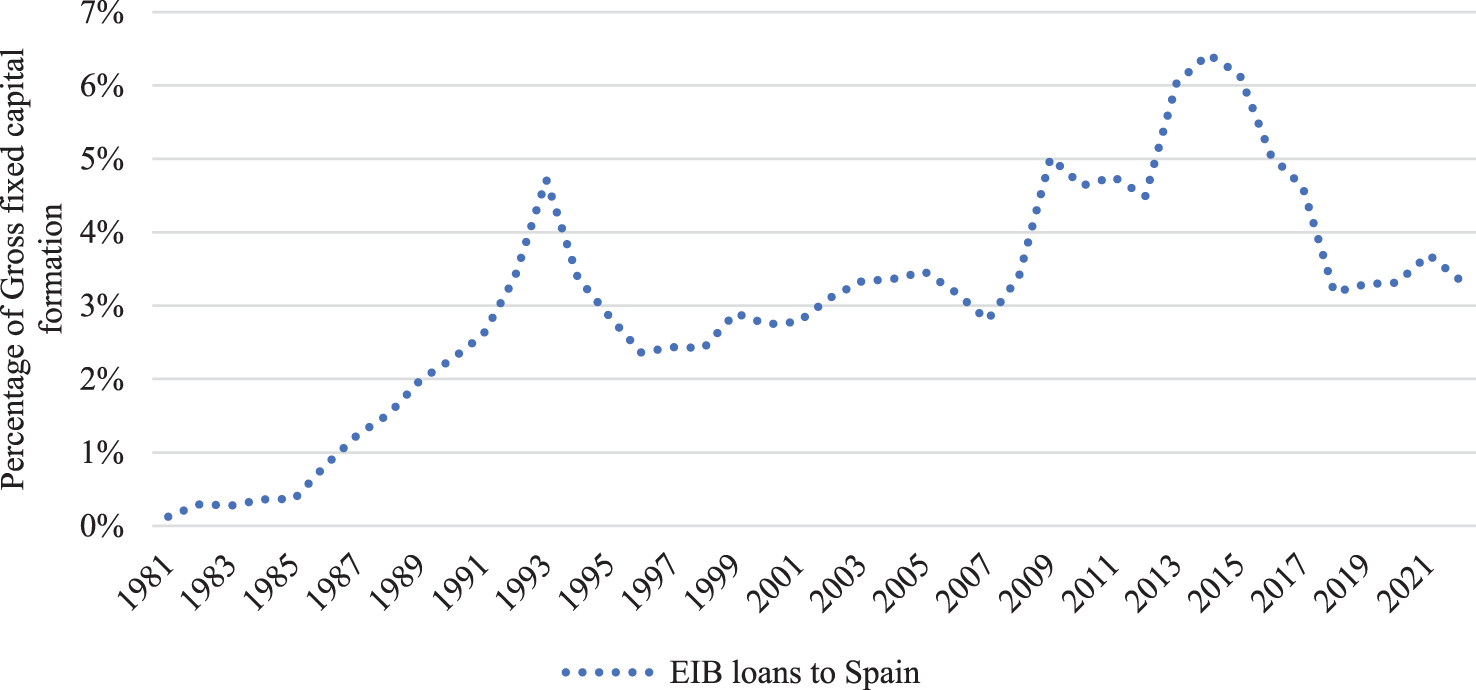
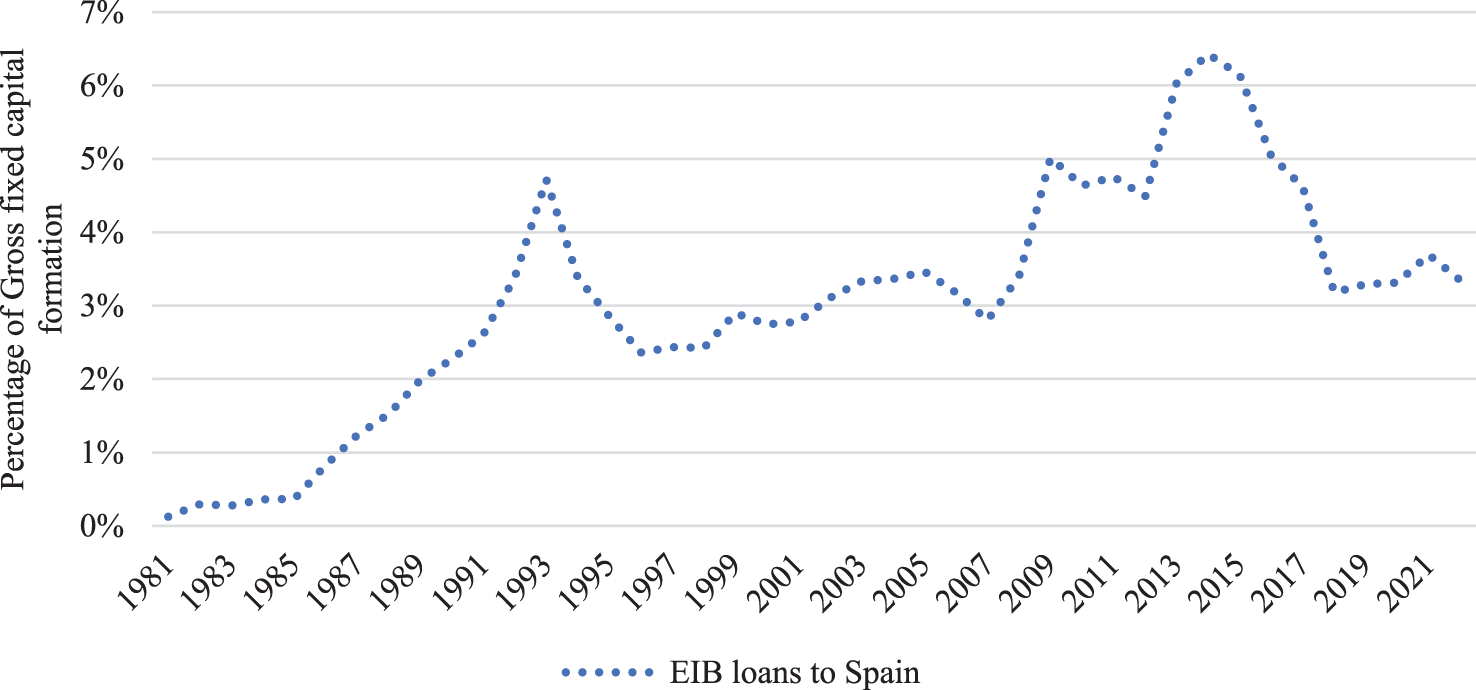
Figure 1 offers a visual representation of EIB loans to Spain in relation to Gross Fixed Capital Formation (GFCF), underscoring the EIB’s substantial role in bolstering Spain’s economic development. By benchmarking the loans against GFCF, it becomes evident how EIB funding has contributed to the country’s investment in key physical assets, which are vital for enhancing Spain’s productive capacity and shaping its economic trajectory. This figure shows notable peaks in the 1992–93 recession and again after the start of the Great Recession (2009–15), suggesting that EIB lending increased during these economic downturns. This pattern indicates a counter-cyclical credit policy.
In this section, we examine the role played by the EIB lending policy in Spain across three distinct periods: from 1958 (the first loans to Spain in 1981) to 1985, the last year before Spain´s entry to the EEC in 1986; from 1986 to the beginning of the Great Recession in 2008; and from 2009 to 2022.
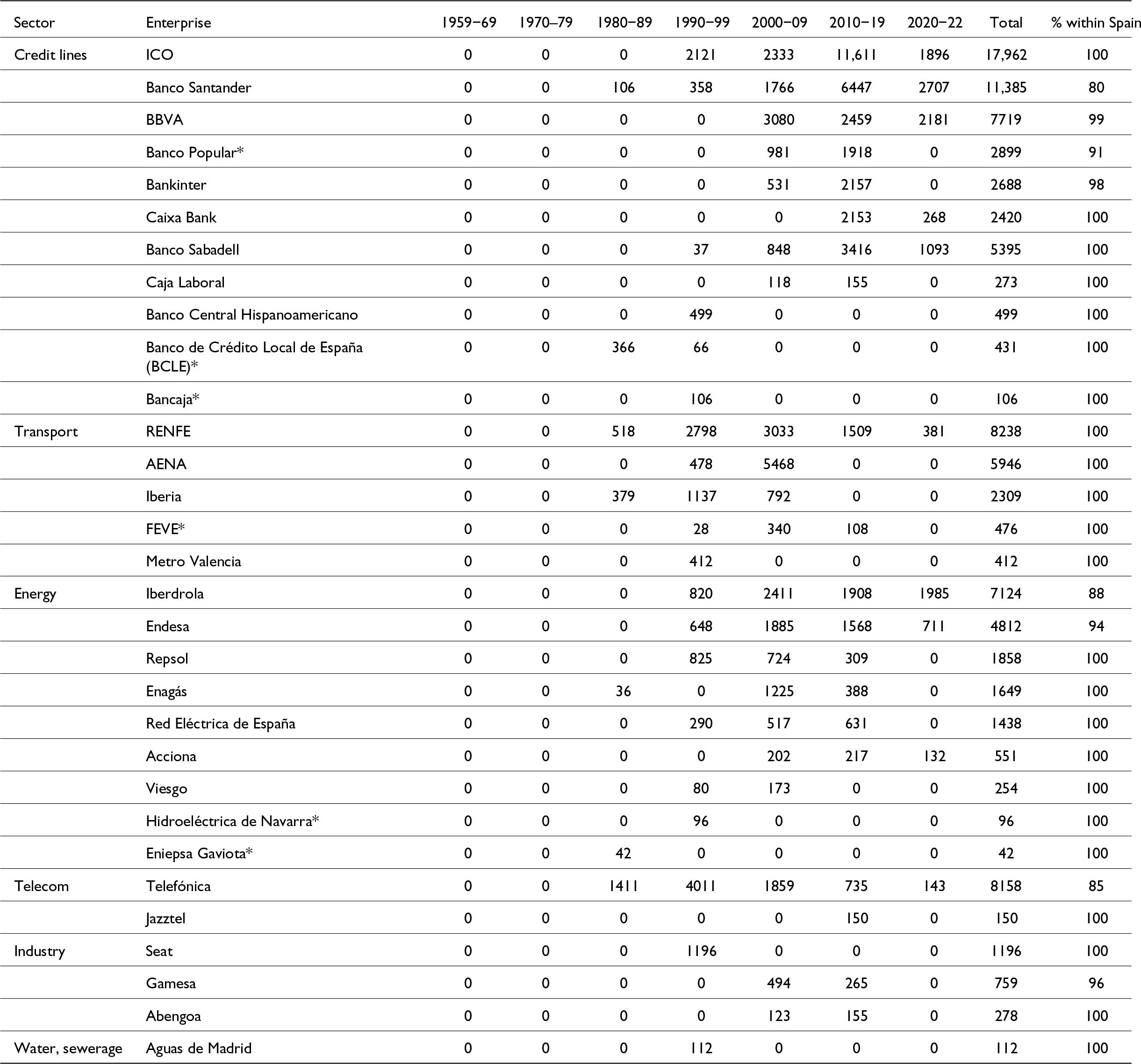
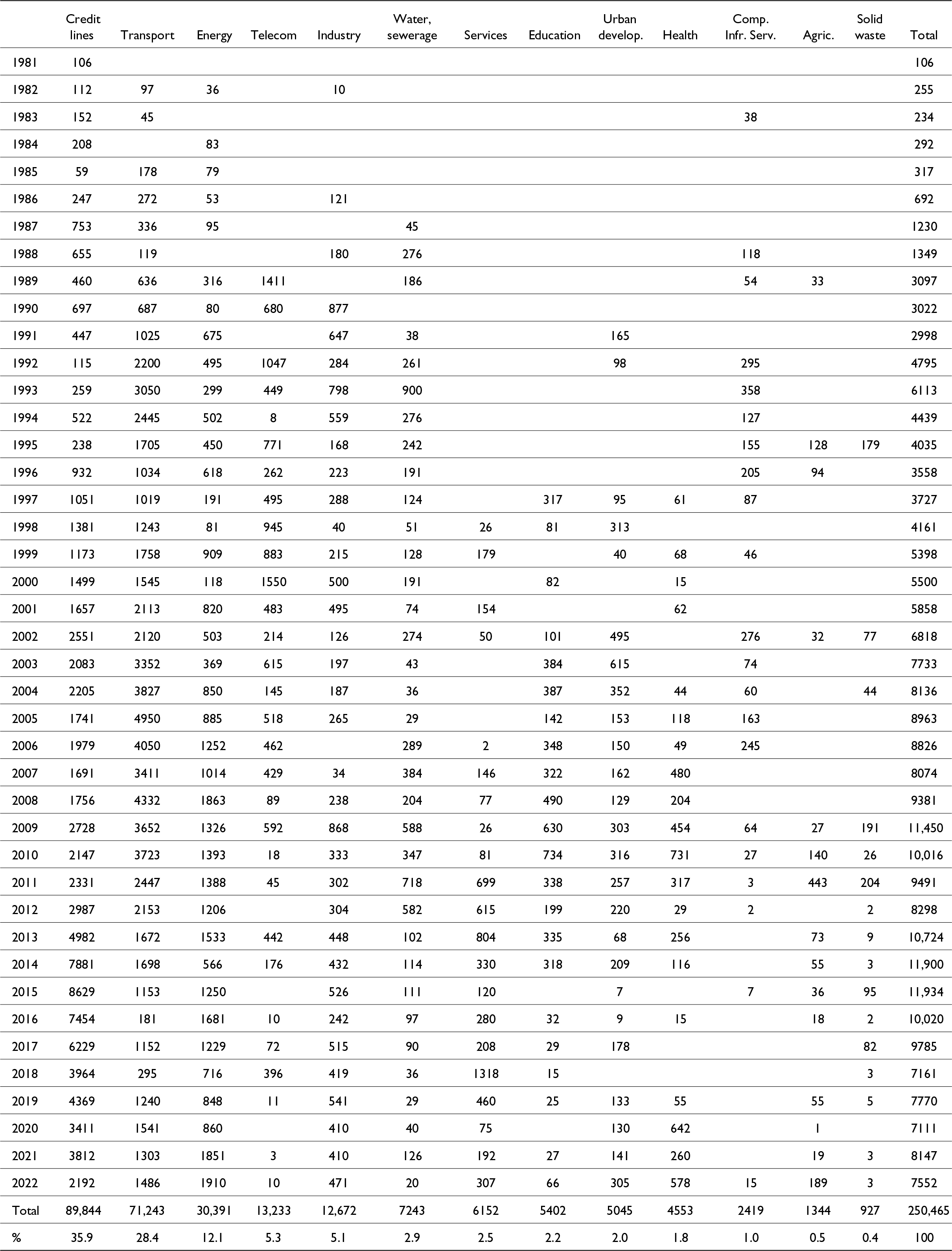
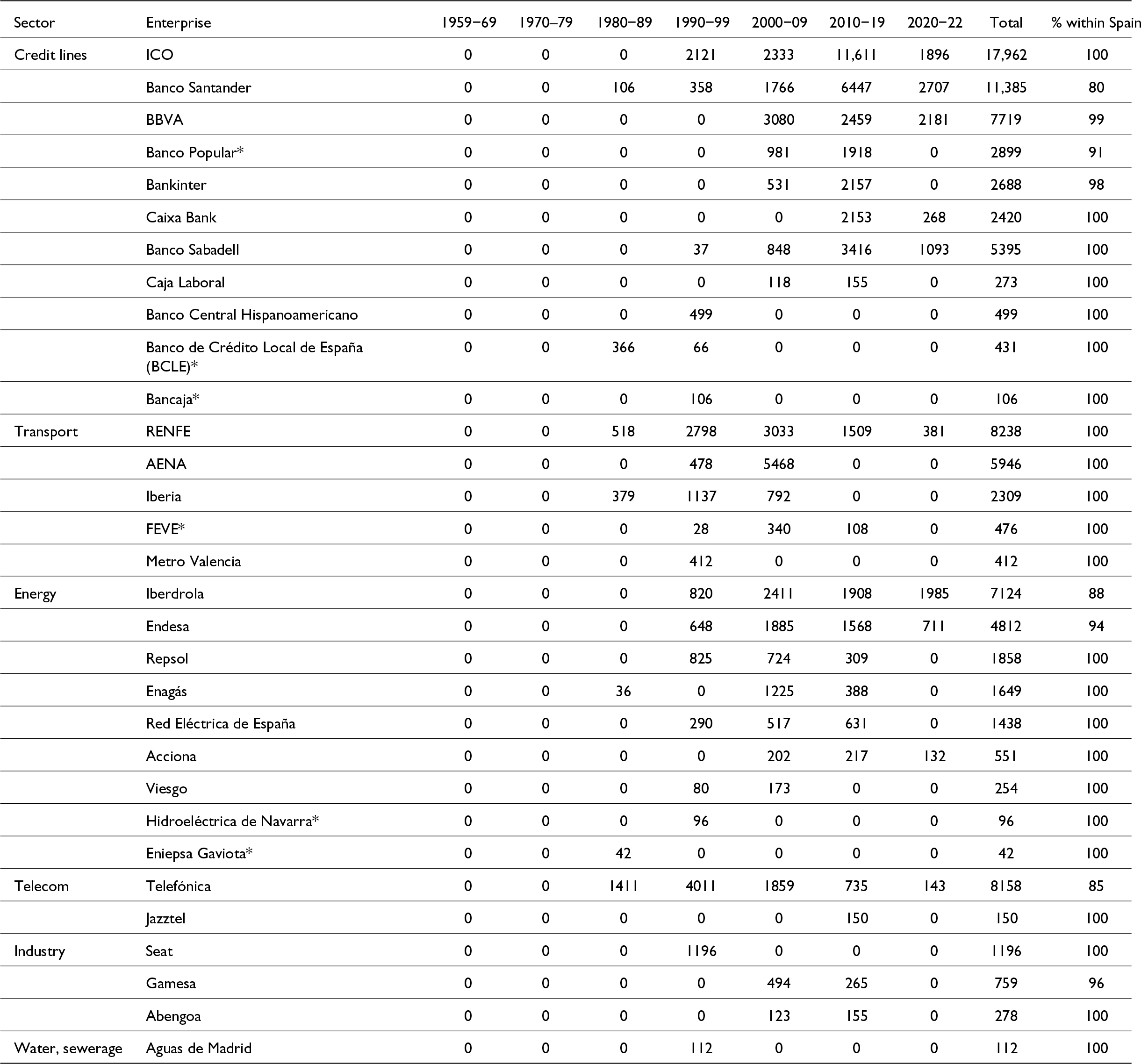
To do so, we use two sources of information: the HAEU and the EIB database of loans which we reconstructed for this research. Data are presented in two tables: Table 3 displays all EIB’s loans to Spain, organized by sector and chronological order, quantified in millions of 2015 constant euros. It ranges from the sector with the most funding (credit lines), to the least funded (solid waste management). Table 4 presents the EIB’s financial contributions to selected prominent Spanish companies, measured in millions of 2015 constant euros over 10-year periods, with the exception of the last interval (2020–22) for clearer temporal distinction. This table shows the cumulative loans received by these enterprises, with the final column indicating the proportion of loans disbursed within Spain, acknowledging that, as MNEs, they may also receive loans in other countries, as indicated in the reconstructed database of EIB loans.
EIB loans to Spain by sector (million, 2015 constant euro)
Source: EIB (2023a).
Notes: Agric. = agriculture, fisheries & forestry; comp. infr. serv. = composite infrastructure services; educ. = education; telecom. = telecommunications; urban develop. = urban development.
Amount given by the EIB to a selection of the most relevant companies in Spain (millions, 2015 constant euro)
Source: EIB (2023a).
Notes: Selection of companies that received EIB loans in Spain (some of the companies could have also received loans in other countries). Companies with an asterisk no longer exist: Banco Popular was bought by Banco Santander in 2017; BCLE was merged with other public banking entities under the name Argentaria in 1991; Bancaja transformed into a foundation in 2012; FEVE was dissolved by the Spanish Government in December 2012 and was integrated into RENFE in 2013; Hidroeléctrica de Navarra was acquired by Acciona in 2004; and Eniepsa Gaviota was acquired by Hispanoil in 1985.
4.1 The years before the Spanish entry to the EEC (1958–85)
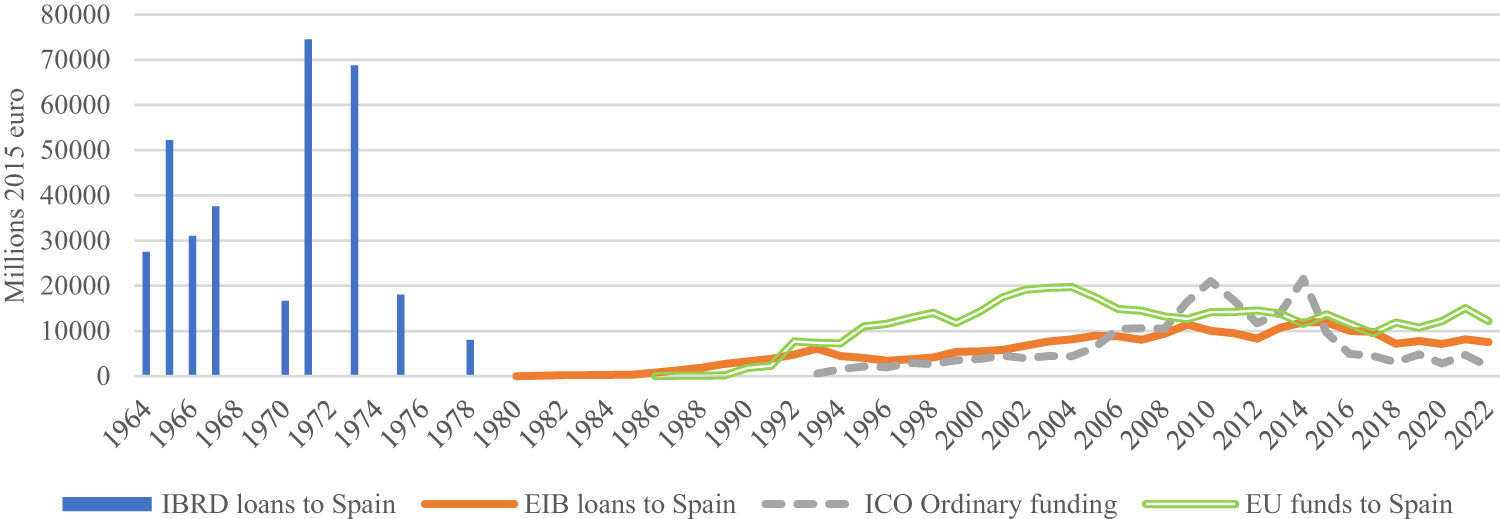
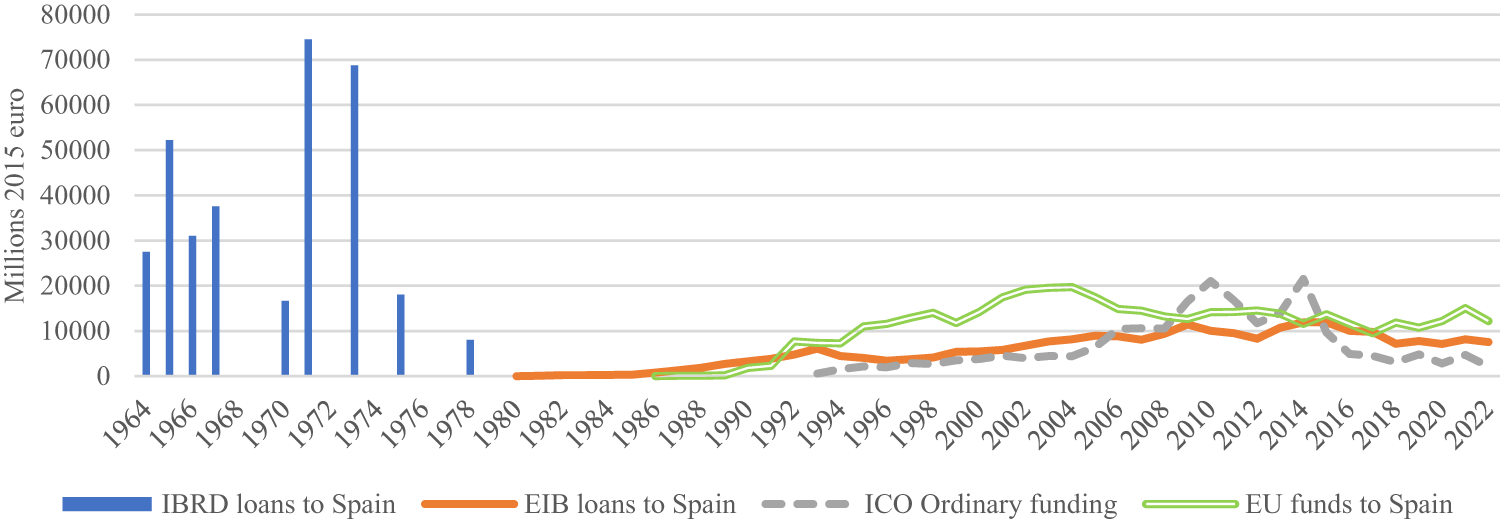
During the 1950s, Spain was characterized by opening up its economy to the world and incorporating several international organizations.Footnote 10 In a context of hunger, low productivity, state interventionism, rapid inflation and exchange rate difficulties, Spain was on the brink of the abyss (Carreras and Tafunell, Reference Carreras and Tafunell2020). The Stabilization Plan of 1959 provided an economic framework to initiate a process of liberalization after two decades of autarky (Martínez-Ruíz and Pons, Reference Martínez-Ruíz, Pons, Betrán and Pons2020). These institutional developments were the cornerstone which supported Spain’s path to prosperity (Calvo-González, Reference Calvo-González2021). Funding remained scarce and came mostly from public and mutual financial institutions (Comín, Reference Comín2007), along with the IMF and other international organizations that supported the Stabilization Plan (Comín, Reference Comín2007; Martínez-Ruíz and Pons, Reference Martínez-Ruíz, Pons, Betrán and Pons2020; Muns, Reference Muns1986). In 1961, the IBRD sent a ‘mission to Spain to assist the government in working out the basis for a long-term development program’ and in October 1961 it approved the first loan for a ‘Highway Improvement Project’ (World Bank, 2001). Figure 2 provides a comprehensive overview of Spain’s financial support from major financial institutions. Funding from the IBRD started in real effective terms in 1964, and it lasted until 1978, when it was superseded by EIB loans from 1981 onwards (in the framework of a pre-membership agreement between Spain and the EEC) (Commission Of The European Communities, 1981; EIB, 2009). Unlike countries such as France, West Germany and the United Kingdom, which were among the largest recipients of Marshall Plan aid, Spain did not receive funds from the Marshall Plan. The start of EEC funds in 1986 further aligned Spain’s growth with broader European integration goals. Additionally, the introduction of ICO (Official Credit Institute) funds in 1993 provided a sustained domestic financial mechanism, further supporting Spain’s economic development (García et al., Reference García, Fernández and Díaz-Fuentes2024).
The Franco dictatorship (which had begun in 1939) was superseded by a new government that decided to apply for EEC association in 1962 (Calvo-González, Reference Calvo-González2021). That year, Fernando María Castiella, Minister of Foreign Affairs, sent a letter to the President of the EEC Council asking for an association agreement with the Community. Negotiations became paralyzed because of the extremely complicated political context, with a dictatorship rejected by the EEC and its members (Neal and Garcia-Iglesias, Reference Neal and Garcia-Iglesias2003). In 1970, amidst a deteriorating European economic climate, Spain took its first step toward establishing a relationship with the EEC by signing the “Spain—Common Market” Association Agreement. Spanish industrial exports started to revive, thanks to the tariff reductions agreed with the EEC, whilst foreign direct investment started to grow (Rubio-Varas, Reference Rubio-Varas, de la Torre and Rubio-Varas2022). Still in a context of major political instability, Spain’s formal application for accession to the EEC was deferred until after the death of General Franco in 1975 and the subsequent proclamation of Juan Carlos I as king. After the 1977 elections, then President Adolfo Suárez, continuing with the project of integrating Spain into Europe (at the time much less developed than Italy or other EEC members), requested to start accession negotiations (EC, 2016; Archivo Digital España—Unión Europea, 2016). Despite “huge difficulties in terms of inflation, external imbalances, high unemployment rates and low growth rates” (p. 159) (tackled by the Moncloa Pacts signed in 1977), integration into Europe became a priority (Cuevas and Pons, Reference Cuevas, Pons, Betrán and Pons2020). Membership became a reality in 1985, with the signing of the Accession Treaty in Madrid and the accession of Spain to the EEC on January 1, 1986. Nonetheless, a pre-membership financial cooperation agreement between Spain and the EEC enabled the EIB to support Spanish projects from 1981 onwards (Commission Of The European Communities, 1981; EIB, 2009). Regional policy was revised and remodeled, including increased financial resources, to qualify for assistance under the European framework (Salmon, Reference Salmon2004). Spain initiated a catching-up and modernization process that allowed the country to exit its isolation, maintain the increase of Foreign Direct Investment flows, and put the industrial recession of the transition behind it, becoming “one of the fastest growing economies in the world” (Calvo-González, Reference Calvo-González2021, p. 3; Betrán et al., Reference Betrán, Martín-Aceña and Pons2012; Viñals, Reference Viñals1992).
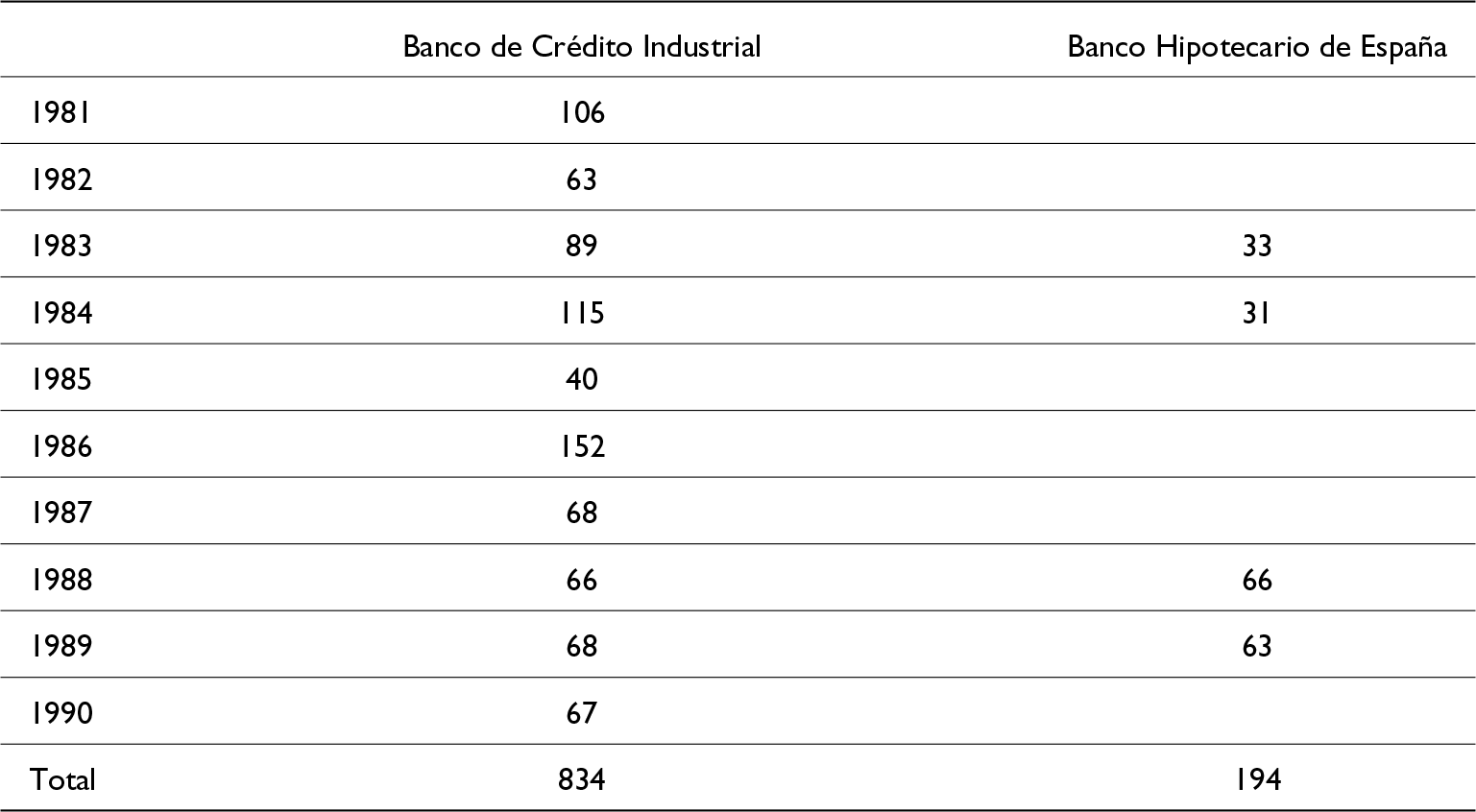
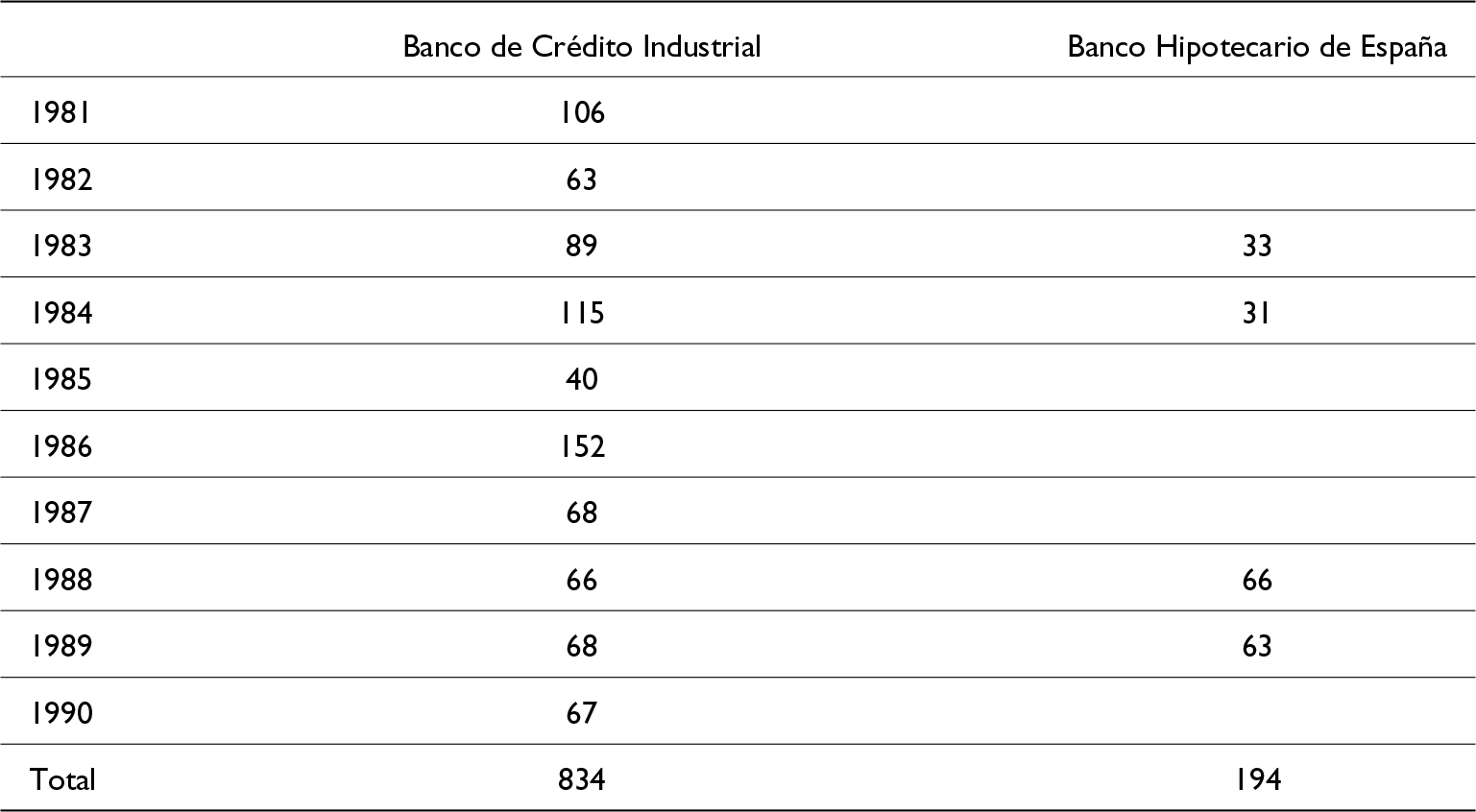
Torre and Rubio-Varas (Reference Rubio-Varas2015) highlight the crucial role that funding played in the country’s industrialization. EIB credit lines to public promotional banks including “Banco de Crédito Local de España” (BCLE) (431 million, 2015 constant euros, from 1982 to 1990), “Banco de Crédito Industrial” (834 million, 2015 constant euros, from 1981 to 1990) and “Banco Hipotecario de España” (194 million, 2015 constant euros, between the years 1983–84 and 1988–89) (see Tables 4 and A1) supported industrial and export activities in Spain. While commercial bank lending had interest rates around 16.9% in 1983, the one offered to Spain by the EIB was around 9.4% (OECD Data Explorer, 2024; EIB, 1958-2018). From 1981 to 1985, 53.7% of EIB loans to Spain went to credit lines and industry, and 43.1% went to the energy and transport sectors. This lending facilitated their expansion, helping to transform some of them into leading MNEs (Casanova, Reference Casanova2020). A case in point is “Empresa Nacional del Gas”, known today as “Enagás, S.A.Footnote 11” which has internationalized to Chile, Mexico, Peru, Sweden, and participated in the Trans Adriatic Pipeline European project, receiving 36 million (2015 constant euro) as early as 1982. Another example is “Empresa Nacional de Investigación y Explotación de Petróleo S.A.” (ENIEPSA), which received EIB lending (41 million, 2015 constant euros) in 1984, later merging with “Hispanoil” in 1985, to then become a subsidiary of the well-known “Repsol S.A.” (under the name of “Exploración”) in 1986, when the National Institute of Hydrocarbons (INH) reorganized the Spanish oil sector. In the transport sector, RENFE, which obtained 518 million (2015 constant euros) between 1982 and 1987, nowadays is positioned in France, Central and Eastern Europe and even Saudi Arabia (Renfe, 2024) (see Table 4).
Amount given by the EIB to banco de crédito industrial (BCI) and banco hipotecario de españa (BHE) (million, 2015 constant euro)
Source: EIB (2023a).
Overall, there was a “push and pull” scenario in this period. On the one hand, the EIB sought to finance Spain before its accession to the EEC, in line with its “rewarding” or “sweetener” approach it had used for other future Member States (Clifton et al., Reference Clifton, Díaz-Fuentes and Gómez2018a). Moreover, the push to finance was bolstered by the fact that the EEC feared the reversal of democratic transition in Spain (Cuevas and Pons, Reference Cuevas, Pons, Betrán and Pons2020). On the other hand, there was demand in Spain: after the oil crisis and the crisis of the international monetary system, the EIB provided Spain with lower interest rates and better long-term financial conditions than it could obtain on its own. As a result, as a candidate country, Spain started to receive more EIB loans than some of the founding members.
4.2 The years between the Spanish entry to the EEC and the beginning of the great recession (1986–2008)
Spain’s accession to the EEC in 1986 underscored its status as one of the least prosperous Member States, increasing the need for financial resources and accentuating economic disparities. Although EIB loans to Spain began in 1981, lending was significantly boosted upon accession. By 2004, Spain had emerged as one of the EIB’s largest lending recipients (Table 1). This increase in lending was facilitated by the establishment of the Official Credit Institute (ICO)Footnote 12 as Spain’s National Development Bank (NDB) in 1991 (Martín-Aceña et al., Reference Martín-Aceña, Blasco and Cuevas2016; Clifton et al., Reference Clifton, Díaz-Fuentes, García, Gómez, Mertens, Thiemann and Volberding2021b; Blasco-Martel et al., Reference Blasco-Martel, Cuevas and Riera-Prunera2023). The counter-cyclical nature of EIB policies became evident during the recession in 1992–93, where increased lending helped stabilize financial resources amidst contracting growth, as illustrated by the peak in EIB loans relative to GFCF in 1993 (see Figure 1).
Overall, 60.3% of all EIB loans to Spain during the period 1986–2008 went to the development of TENs, whose action plans were launched in the 1990s (Turró, Reference Turró1997; Johnson and Turner, Reference Johnson and Turner2007). In particular, some 40.1% of these EIB loans went to transport (roads, railways, ports, and airports). Lending was destined to Spanish enterprises including Iberia Líneas Aéreas de España, which received 2309 million (2015 constant euro) between 1989 and 2004. Soon after, in 2010, Iberia merged with British Airways, becoming Europe’s third largest airline by revenue (IAG (International Airlines Group), 2011). Furthermore, AENA,Footnote 13 one of the world’s leading airport operators with presence in 33 airports across different countries (Aena, 2024), received 5946 million (2015 constant euro) of EIB lending between 1990 and 2009. Additionally, FEVE received 368 million (2015 constant euro) between 1993 and 2008 (618 million, 2015 constant euro, up to 2022) and it was integrated into RENFE (with international presence) in 2013 (see Table 4).
Some 10.5% of EIB loans during this period 1986–2008 went to the energy sector. This was due to the impetus given by the government from the 1990s to the wind power sector following Royal Decree 2366/1994 which guaranteed the price of electricity generated by wind farms for at least 5 years; followed by Royal Decree 2818/1998, which established a bonus for the price of the electricity from a wind power source (Varela, Reference Varela1999; RD 2366/1994; RD 2818/1998). This including lending to “Viesgo Generación S.L.,” which owned and operated power plants with generation capacity of 4000 M.W. and obtained 81 million (2015 constant euro) in 1991 and another 173 million (2015 constant euro) in 2006. It also benefitted “Iberdrola,” which obtained 3231 million (2015 constant euro) from 1992 to 2009 and is today one of the world five most important companies in the sector.Footnote 14 Other energy companies to benefit included “Hidroeléctrica de Navarra” (96 million, 2015 constant euro, from 1995 to 1997), acquired by Acciona, a MNE with a significant international presence in renewable energy, in 2004. Indeed, Acciona received 202 million (2015 constant euro) in EIB loans from 2000 to 2009 (Table 4).
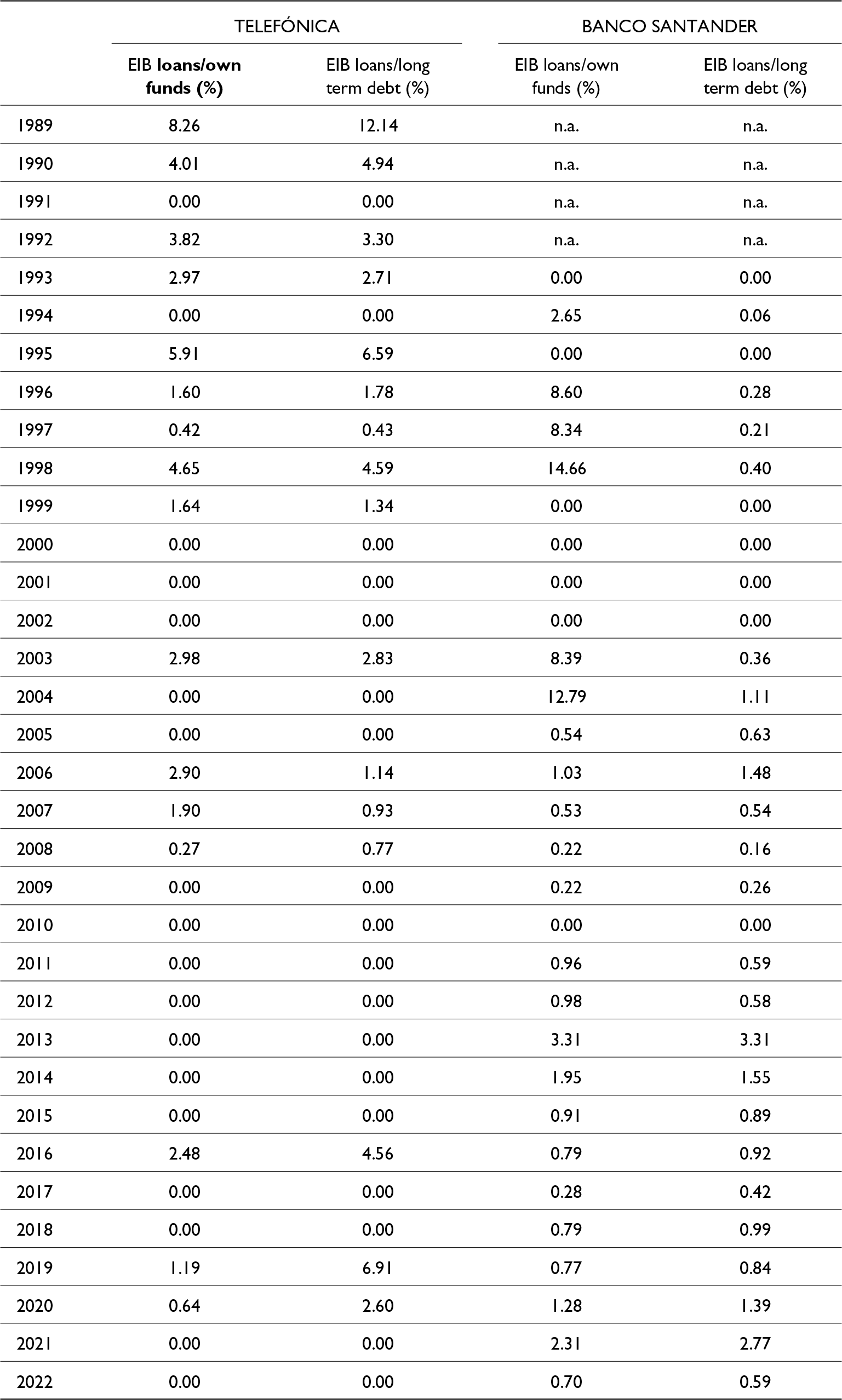
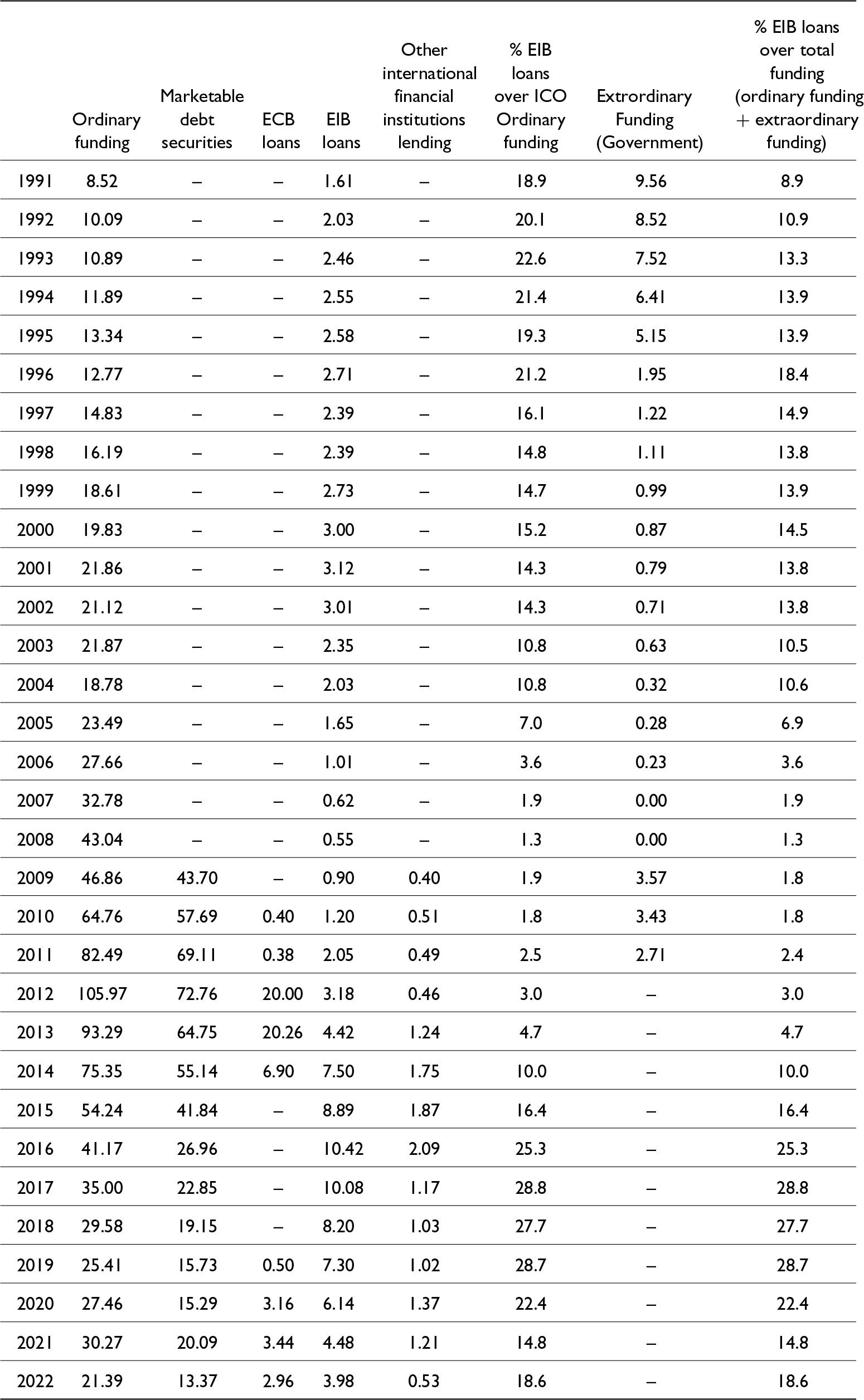
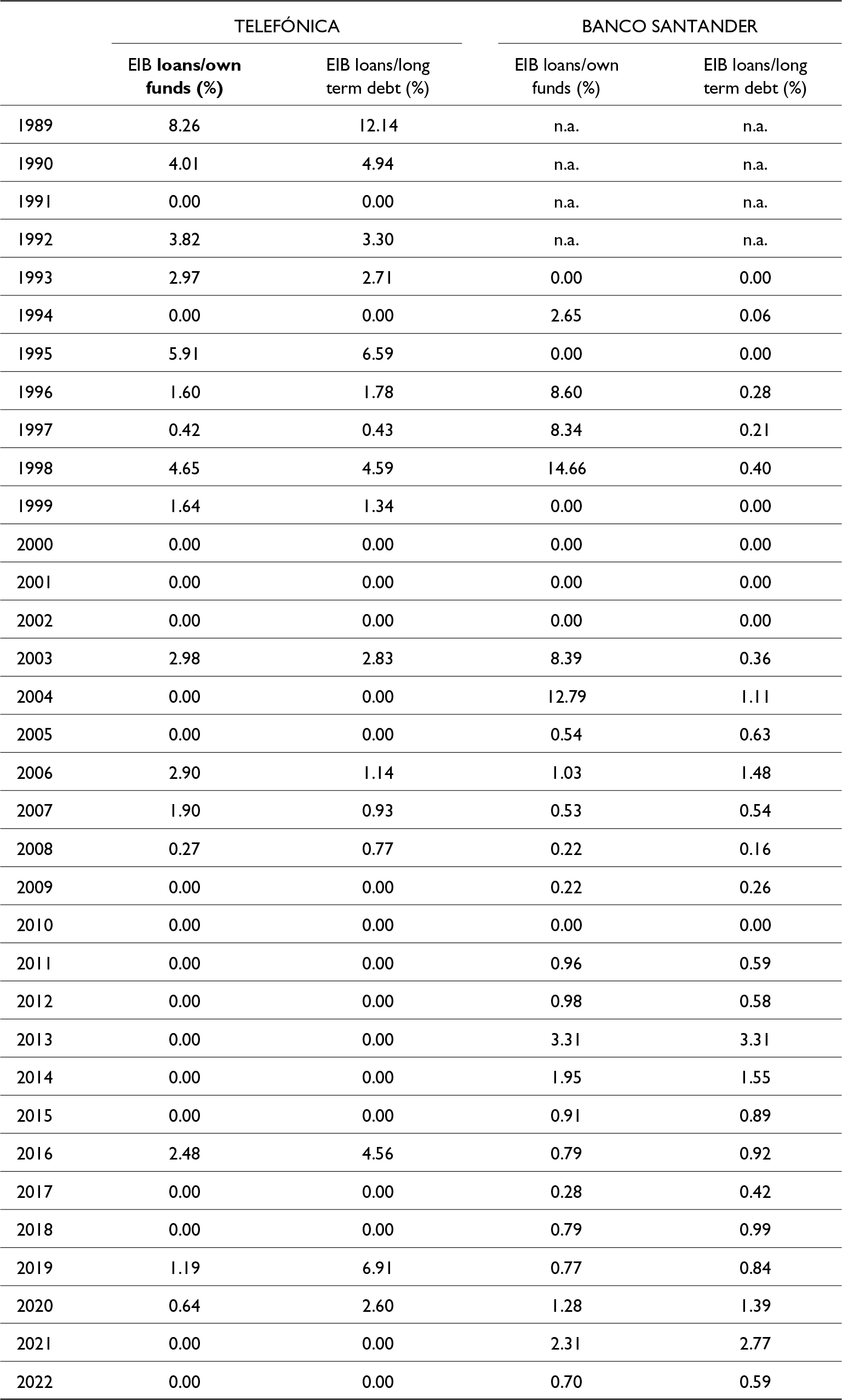
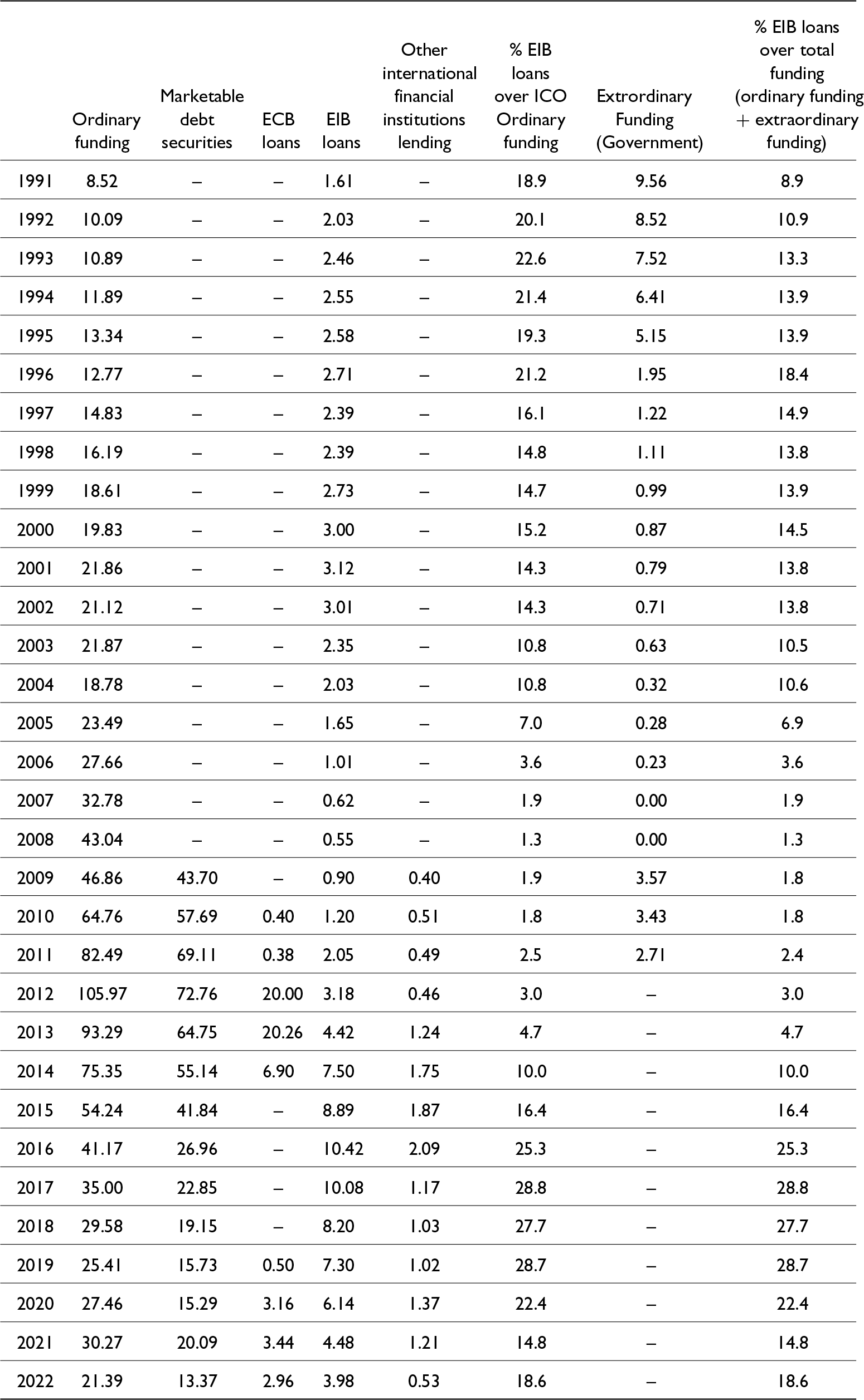
The reinforcement of enterprises’ competitive positions in the form of credit lines for small and medium enterprises (SMEs) also became an essential pillar of the Bank’s policy. Some 27.6% of all EIB loans to Spain went to credit lines (22.1%) and industry (5.5%) during this period (Table 3). In Spain, SME lending became increasingly important from the 1990s, with credit lines granted to “Banco Central Hispanoamericano SA” (499 million, 2015 constant euro, from 1990 to 1998), “Caja de Ahorros de Valencia, Castellón y Alicante (BANCAJA)” (106 million, 2015 constant euro, between 1994 and 1997), and Banco Santander (1950 million, 2015 constant euro, between 1986 and 2008), among others. For an institution such as Banco Santander, this represented 14.6% of its own funds (and 0.4% of its long-term debt) in 1998 (Banco Santander, 1993-2022, Table A2), which facilitated its expansion to 15 countries (Banco Santander, n.d..) and its transformation in the world’s leader in export finance (Banco Santander, 2023). Additionally, credit lines were also granted to ICO (3909 million, 2015 constant euro, between 1986 and 2008), for which the share of EIB loans over ICO ordinary funding hovered around 20% in the 1990s (e.g., it was 22.6% in 1993), and around 14% if we consider the extraordinary funding from the Government (see Table A3). In addition, in the industrial sector, Gamesa, an enterprise specializing in wind turbine manufacturing, expanded after receiving EIB loans (494 million, 2015 constant euro, from 2000 to 2009) and, in 2017, merged with Siemens Wind Power to become a leader in renewable energy industry (Siemens Gamesa, 2024).
Share of EIB loans over own resources and long-term debt of telefónica and banco santander (percentage)
From its accession to the EEC in 1986, Spain emerged as one of the leading recipients of EIB lending. Access to this funding particularly facilitated regional integration and also supported the expansion, often abroad, of numerous Spanish companies, some of which emerged as leading MNEs (Carreras and Tafunell, Reference Carreras and Tafunell2020; Guillén and Tschoegl, Reference Guillén and Tschoegl2008; Guillén and García-Canal, Reference Guillén and García-Canal2010).
4.3 The years from the start of the Great Recession to the present (2009–22)
This period can be divided into two distinct phases: the first phase (2009–15) encompasses the main effects of the Great Recession, while the second phase (2015–22) includes the recovery period and the impact of Covid-19.
Focusing first on the initial phase, the financial crisis that led to the Great Recession of 2008–12 contributed to the European sovereign debt crisis (Clifton et al., Reference Clifton, Díaz-Fuentes and Gómez2018b). The Great Recession exposed the weaknesses of both the European and Spanish financial systems. The Spanish risk premium grew to the point of jeopardizing the stability and independence of public finances and, in 2012, Spain was forced to apply for a 100-billion-euro rescue package (Carreras and Tafunell, Reference Carreras and Tafunell2020). Against this background, the EIB further increased its lending volume with a counter-cyclical policy, as evidenced by the rise in EIB loans relative to GFCF from 2009 to 2015 (Figure 1). This policy emphasized the importance of enhancing enterprises’ competitiveness through credit lines and investments in the industrial sector (47.3% of all EIB loans to Spain during the period 2009–15), and TENs (35.8% of all EIB loans to Spain during the period 2009–15) (particularly transport and energy).
During this phase, the Spanish case reflected general European trends. Significant efforts in export manufacturing and the new digital economy were launched (Carreras and Tafunell, Reference Carreras and Tafunell2020). Given the increased importance of EU energy policy, energy loans were enhanced. “Endesa,” the leading enterprise in the Spanish electricity sector, had previously benefited from EIB loans from 1996, however, from 2010 to 2022, it received some 2279 million in 2015 constant euros, facilitating its transformation into the second-largest operator in the Portuguese electricity market whilst expanding to multiple countries (Endesa, 2024). The relevance of EIB loans can also be seen in the case of Telefónica, one of the largest Spanish MNEs with operations in 12 countries across two continents and a key player in the telecommunications industry. EIB loans facilitated Telefónica’s expansion: Telefónica acquired Brazil’s enterprise “Vivo” in 2010 and expanded to Colombia (Telefónica, 1989-2022), while it received 878 million, 2015 constant euro, in EIB loans from 2010 to 2022. In fact, 6.9% of Telefónica’s long term debts in 2019 came from EIB loans.
Following the initial phase up to 2015, Europe entered a period of recovery that persisted until the onset of Covid-19. From 2015, the Juncker Plan catalyzed Spain’s economic growth, notably in TENs and credit lines. The EIB, through the European Fund for Strategic Investments (EFSI), mobilized over 500 billion euro, with Spain receiving 8.5 billion euro (about 11% of all EFSI investments until 2020), plus an additional 1.5 billion euro from ICO, to enhance infrastructure and SMEs (EIB 2015; EIB, 2024a; Clifton et al., Reference Clifton, Díaz-Fuentes, García, Gómez, Mertens, Thiemann and Volberding2021b). In 2019, the decision by the EIB to halt the finance of fossil fuel, whilst financing projects aligned with the Paris Agreement, resulted in a boost to energy classified as renewable or green by the EIB. In Spain, these loans were largely directed at the construction of solar plants (for example the “Helios Green loan” granted in 2022 for 203.7 million, 2015 constant euro). During these years, the EIB’s lending strategies continued to support economic stabilization and growth.
With the Covid-19 pandemic from 2020, the EIB took an active role to ensure that funding was available to enterprises (Howarth and Kavvadia, Reference Howarth and Kavvadia2024). In April 2020, the Bank approved a 40 billion support package, which was complemented with the creation of a 24.4-billion euro Pan-European Guarantee Fund (EGF) to primarily provide finance to SMEs struggling in the crisis (EIB, 2022bb). It granted credit lines to the Banco Santander, Banco Sabadell, CaixaBank and BBVA, among others, exerting a counter-cyclical role. For example, BBVA, a global financial group with significant international presence, received 2181 million, 2015 constant euro, in EIB loans from 2020 to 2022, making a total of 7719 million (2015 constant euro) from 2000 to 2022. The emphasis on credit lines due to Covid-19 is evident in the increased importance of this sector from 2016 to 2022, accounting for 54.6% of all lending, compared to 42.9% during the initial phase (2009–15). Combined, credit lines and industrial sector investments made up 59.8% of all lending from 2016 to 2022. Consequently, the proportion of investment in TENs was reduced to 29.2% during 2016–22, with a continued focus on transport and energy.
Overall, during the period from 2009 to 2022, the focus of EIB loans to Spain was primarily on enterprises’ competitive positions, accounting for 52.8% of the total. This emphasis was influenced by the Great Recession, the Juncker Plan, and the Covid-19 pandemic. Additionally, the EIB continued to prioritize funding for TENs, which constituted 32.9% of all EIB loans during the period.
5. Conclusions
This paper sought to examine the role of the EIB on the insertion of Spain into the European integration project and the extent to which EIB lending policy boosted the Spanish economy. We focused on the funding of TENs (transport, energy, and telecoms) and the funding of enterprises (through credit lines and the industry sector). When lending goes to TENs, we interpret that Bank loans facilitate the insertion of Spain into the European project, which we label as regional integration. When lending goes to the funding of enterprises through credit lines and the industry sector, we interpreted that Bank loans reinforce enterprises’ competitive positions and leads to the subsequent success of MNEs based in Spain. To evaluate these hypotheses, we analyze the historical evolution of EIB loans granted to Spain from the first steps taken for the European reconstruction process to 2022. We use two sources of information: the Historical Archives of the EU (HAEU) and a reconstructed database of all EIB loans.
We found EIB lending policy nurtured the Spanish economy and contributed, first, to facilitate Spain’s insertion into the European project and, second, to reinforce enterprises’ competitive position (some of the enterprises becoming leading MNEs) over all periods examined (1981–85; 1986–2008; 2009–22). Summing up, for the period 1981–2022, some 86.8% of loans to Spain were focused on one of these two policies. Loans to TENs (transport, energy, and telecom) constituted 45.9% of all loans to Spain. Loans through credit lines made up 35.9% and those to industry some 5.1%. There are many examples of enterprises expansion leading to successful MNEs based in Spain, as discussed. ICO was the largest beneficiary of EIB credit lines, followed by Banco Santander and BBVA, nowadays among the 100 large international banks in terms of assets. In transport, RENFE and AENA, both MNEs, were among the largest beneficiaries in transport, while in the energy sector Iberdrola and Endesa expanded internationally after receiving several EIB loans. Similarly, in the telecom sector the EIB facilitated the rise of Telefónica, which became a MNE, and in the industrial sector EIB lending promoted in the 2000s the expansion of Gamesa, which in 2017 merged with Siemens Wind Power to become a leader in renewable energy industry (see Table 4).
The EIB constituted a key factor behind the integration of Spain, without which it would not have been possible to reach the present levels of integration, cohesion, and regional investment. It is difficult to think that private financial initiatives would have prompted and sponsored the ambitious European integration project with the success achieved. Nonetheless, while this paper provides valuable insights into the EIB’s role in Spain’s economic development, it does not consider the cumulative effect of financial assistance from various EU sources. Further research could explore a more holistic analysis that includes a range of EU funding mechanisms. This would provide a broader perspective on Spain’s economic integration and development.
The EIB has played a particularly important countercyclical role promoting investment after the 1992–93 recession and the Great Recession. In view of the new challenges that have arisen regarding disintegration and fragmentation, the Bank’s role may shift from its current emphasis on TENs and enterprise funding (via credit lines and industry) to a heightened focus on Europe’s security and defense industry (EIB, 2024b). Nonetheless, it is necessary to consider the actions and the historical achievements of Europe and the EIB in order to redefine the potential role of the Bank to face the new challenges of globalization.
Appendix
Resources of ICO, including the share of EIB loans over ICO ordinary funding and over ICO total funding (percentage), and detailed quantities on ICO ordinary funding and extraordinary funding (billion euro)
Source: ICO (2005–2024).