Introduction
This paper focuses on a series of photographs by Linnaeus Tripe, a Madras Army officer, taken during the British Indian diplomatic mission to Burma in 1855. In an apologetic and self-deprecating note accompanying his ‘Burma Views’ (1857),Footnote 1 Tripe modestly described the fruits of his labours as ‘a series of views of subjects interesting on account of their novelty’.Footnote 2 The word ‘novelty’ connotes ‘newness’ and ‘unusualness’, and Tripe's photographs were indeed startlingly ‘novel’ in terms of their materiality and their subject matter. The nascent technology of photography and the subjects of visual representation were, however, understood and defined in relation to things that were established and better-known, and affinities were sought and comparisons were made. These photographs can be seen as exemplary specimens of exploratory photography. Tripe's experimentation with his ‘myriad-pencil’—a turn of phrase deployed by the mission's sketch artistFootnote 3—and his delineations of a largely unmapped and hitherto unphotographed locale were similarly rooted in wider processes of scientific classification and enquiry.
Influenced by critiques of imperialism and neocolonialism and the work of Said and Foucault, many historians since the 1970s have focused on ‘colonial science’ as a means of imperial control, and have seen it as ‘essentially different from science practiced in noncolonial contexts’.Footnote 4 For Deepak Kumar the ‘entire gamut of the relationship between science and colonization can be precisely expressed by the term colonial science’.Footnote 5 It has all too often been argued by historians of ‘colonial science’ that the diffuse processes of classification and enquiry were anchored to a monolithic imperial project that was geared towards the ‘ordering of difference’ and the legitimation of British expansion and rule. The variegated activities of British scientists in India and other ‘colonial contexts’ have been seen through the prism of colonialism as being solely or predominantly concerned with relations of power and overarching strategic imperatives. They were supposedly no more than cogs in the imperial machine: unthinking ‘colonial’ functionaries without any individual agency, who ‘classified, named, mapped, and ordered non-Western peoples and things to realize their desires for domination’.Footnote 6 A corollary to this line of argument is the assumption that ‘colonial science’ was derivative and merely mimicked ‘metropolitan science’.
In this way the study of the accumulation of knowledge in a ‘colonial’ setting has been divorced from its broader pattern of activity, and above all from attempts by individuals such as Tripe to understand the world scientifically. Whilst the East India Company certainly could not have ruled that which it did not ‘know’, early photographers in British India and other ‘colonial contexts’ can be seen as more than simply tools of government and agents of imperial control. John MacKenzie has emphasized that nineteenth-century Britons were living in an age in which ‘all the cultures of the world had been made available’ for the first time, largely due to the proliferation of writings, illustrations, museums, photographs, and increased opportunities for safe travel. Moreover,
given the immense quantity of information pouring in upon them, it is perhaps not surprising that they were obsessed with classification, attempting through codification to control and understand this welter of material.Footnote 7
The frequent overemphasis on ‘colonial contexts’ also obscures the fact that scientists and photographers in the period after the East India Company's ascendancy could and did move between Company dominions and Crown colonies, other European-ruled polities, and semi-independent and independent state-systems. Indeed, the photographic activities of Tripe could be framed more widely in terms of Tony Ballantyne's ‘webs of empire’: a model of the exchange and circulation of knowledge, which foregrounds ‘the integrative nature of cultural traffic’ and transgresses the limitations of metropolitan-centred imperial histories and those that focus on the ‘march to independence’ of specific colonies.Footnote 8
In any ‘black and white’ photograph there are myriad shades of grey. The tonal subtlety of Tripe's photographs thus epitomizes my approach, which is to view them as complex artefacts and carriers of inherently ambiguous visual information. In an essay on Tripe's photographic record of architecture in the Madras Presidency (1856–1958), Nicholas Dirks argues that ‘colonial aesthetics could never be divorced from the utilitarian impulses and appropriations of colonial rule’.Footnote 9 But Dirks does not explain what he means by ‘colonial aesthetics’ and because of this recapitulates the colonizer/colonized binary.Footnote 10 This sort of ‘black and white’ approach limits interpretations: it implies that there was uniformity in ‘colonial aesthetics’, without adequately considering any other factors that may have impinged upon an individual's ‘way of seeing’.Footnote 11 Sunil Khilnani pertinently suggests that early photographs of India might be seen ‘as forms of technical and cultural experiment, whose results were not always predictable or conforming to wider political imperatives’, adding that, ‘instead of merely being documents in an archive of colonial oppression, the meanings of this work might be recognised as more uncertain.’Footnote 12
Photographs do not have hegemonic meanings, and the medium cannot simply be bent to the will of the practitioner: ‘no matter what the intention of the photographer, the image they produce is always a record of an event of the entrance of light through a lens’.Footnote 13
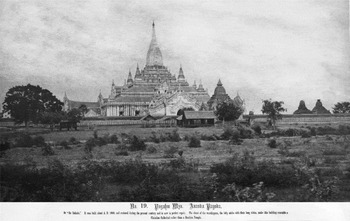
Although neatly encapsulated by a photographic metaphor, the negative-positive process, the view that European representations of ‘the East’ and ‘the Other’ were uniformly negative and contradistinctive is far too simplistic and does not withstand scrutiny.Footnote 14 In fact Europeans were ‘massively eclectic in their response to cultures’.Footnote 15 This is amply borne out by the responses of Tripe and the mission party to Buddhist architecture, the focus of the majority of the photographs. Several captions note striking affinities with European architecture: the Ananda Temple at Pagan was thought to ‘resemble a Christian Cathedral rather than a Heathen Temple’ (Fig. 1, No. 19). Whilst this might suggest a ‘similar and inferior’ response, considerable praise was lavished on the elegantly carved kyoungs (monasteries) of Amarapura, which ‘attracted much attention’ (No. 42). The mission's secretary, Sir Henry Yule, was sufficiently impressed by these monasteries’ ‘exquisite workmanship’ to avow that ‘one despairs of being able to exhibit to visitors from such a people, in any of our Anglo-Indian cities at least, works which they are likely to appreciate as indicative of our superior wealth and resources’.Footnote 16 These responses were varied and multifaceted; Burmese culture was not simply defined in contradistinction to European culture, nor was it axiomatically considered ‘different and inferior’.
No. 19. Pugahm Myo. Ananda Pagoda.Footnote 17

The ‘lenses’ through which Tripe viewed this region were cultural perspectives as well as optical instruments. Indeed habitués of British India were informed in various ways by their experiences and knowledge of the subcontinent and tended to look for evidence of ‘Indian’ influence and cultural transmission. In 1855 ‘Burma’ was regarded uncertainly in relation to British India's possessions on the western side of the Bay of Bengal. It is unclear as to whether, in the eyes of Europeans, it constituted a discrete cultural entity, or if it was part of ‘India’. But it is clear that affinities between these locales were sought,Footnote 18 which many historians of Southeast Asia and South Asia today overlook because they are ‘standing with their backs to each other’.Footnote 19 In the 1850s photography was seen as a means of mapping and situating this ‘novel’ locale. This paper considers Tripe's prints in terms of the newness of the technology, and why he took these specific photographs: why some sites/sightsFootnote 20 were deemed to be ‘worthy of being represented’ and others were not.Footnote 21 It also emphasizes that interpretations would have been refracted according to the viewer's context, and a limitless number of meanings could have been ascribed to them. The concept of ‘interpretative communities’ was usefully deployed in a recent symposium of Burma specialists as a means of identifying ‘distinctive ways of defining, debating, and thinking about’ the history of Burma/Myanmar.Footnote 22 There are clearly also ‘distinctive ways’ of thinking about Tripe's photographs, but none of these are definitive or unencumbered by value judgements about Burma and the nature and purposes of photography.
The mission to Ava
The principal objective of the mission of 1855 was diplomatic. In reductive terms the mission was deployed to secure a treaty acknowledging the cession of the strategically and economically important province of Pegu (Lower Burma) following its occupation during the 1852–1853 war between British India and the Burmese Konbaung polity.Footnote 23 The incorporation of Pegu into British India in 1852 followed soon after the annexation of the Punjab in 1849. The impetuses behind expansion in the northwest and east were different, and influenced by local conditions and specific strategic and financial considerations. Regarding the ‘Kingdom of Ava’, some of the key considerations were outlined by Sir Michael Symes, who led the first diplomatic mission to Amarapura in 1795. Symes identified ‘three distinct objects’, indicating why ‘Pegue’ was crucial to British India. Firstly, he emphasized the importance of securing regular supplies of timber, ‘without which the British marine of India could exist but on a very contracted scale’. Secondly, he envisaged that this region could constitute a market for British manufactures, and maybe offer access to ‘a mart in the south-west dominions of China’. Thirdly, he insisted that it was necessary ‘to guard with vigilance against every encroachment or advance which may be made by foreign nations’.Footnote 24 Not incidentally, he added that British India, from the Ganges to Cape Comorin, lacked ‘a single harbour capable of affording shelter to a vessel of five hundred tons’, whilst the serendipitous ‘King of Ava’ possessed three such ports, namely Negrais, Rangoon, and Mergui.Footnote 25
By the 1850s the Konbaung king and his wungyis (senior ministers) routinely referred to the polity they governed as the Myanma Naing-ngan, or ‘Burmese country’, attesting perhaps to a relatively cohesive sense of Myanma identity.Footnote 26 But most outsiders still used diverse nomenclature—Ava, Birman empire, Burma(h)—which indicates the extent of the ambiguity concerning the polity's peoples, territorial extent, and political structure. By the mid-1850s the ‘Court of Ava’ could be used as either a synonym for the government or the entire kingdom. The mission to the ‘Court of Ava’ began to take shape after the Secret Committee of the East India Company instructed Lord Dalhousie, the Governor-General of India, to secure a treaty. But King Mindon—who replaced King Pagan on the throne in 1853, following a palace revolution—sent the Myoza of Magwé to Calcutta in 1854 to negotiate for its restitution. Dalhousie categorically rejected this request, and the Myoza's delegation was only permitted to offer presents and greetings.Footnote 27 On 1 August 1855, however, a reciprocal British Indian deputation began its journey up the Irrawaddy river. The mission party, with its ‘accomplished photographer’Footnote 28 and an artist in tow, comprised scientists, geographers, and other personnel, and was accompanied by at least 440 soldiers and a private escort of cavalry.Footnote 29 The mission lasted three months: August passed by en route to Amarapura, via Prome, Thayetmyo (the new border station), Yenangyaung, Tantabeng, Pagan, and Sagaing; the period between 1 September and 21 October was spent in the capital and its environs; and the party returned to Rangoon at the end of October. Reflecting on these three months amidst the 1857 Mutiny-Rebellion, Sir Henry Yule recalled ‘a bright and joyous holiday’.Footnote 30
The mission was led by Major Arthur Phayre, the new Commissioner of Pegu. Phayre, a scholar-administrator who later wrote a History of Burma,Footnote 31 was considered uniquely qualified due to his ‘long and thorough acquaintance with the character, manners, and literature of the Burmese, and his considerate but firm conduct towards them’. Mindon, however, decided to wait for a more accommodating governor-general and also expressed concern that he would be tarnished in the royal chronicles if he ceded territory.Footnote 32 Against the advice of the four wungyis, Mindon pointedly refused to sign a treaty.Footnote 33 Nonetheless, although there were some misunderstandings and misgivings concerning certain areas of protocol (i.e. the controversy surrounding the ‘ceremony of unshoeing’ before entering religious buildings or compounds),Footnote 34 Mindon was not maligned as an ‘oriental despot’. Influenced by Phayre's generally favourable impressions of him, Yule declared Mindon to be ‘really kind and hospitable’, ‘a remarkable man for a Burman’, ‘just and mild in temper’, and ‘a man of conscience and principle’.Footnote 35 The mission was, then, unsuccessful in its main purpose, but did momentarily establish a good footing for bilateral relations.Footnote 36 Dalhousie declared himself to be ‘entirely content with the results of the Mission. . .peace with Burma is to the full as any written Treaty could have made it’.Footnote 37
Whilst the main objective was diplomatic, Yule later noted that the mission had also been ‘partly one of inquiry, [as] had previously been trumpeted in the Calcutta newspapers’.Footnote 38 Yule's Narrative, an invaluable source for the student of Tripe's photographs, epitomizes the mission's broader scientific and investigative aims: it constitutes both a detailed travel narrative and encyclopædic compendium of data about Ava's or Burma(h)'s geography, geology, topography, government, peoples, languages, and culture. Many of Yule's observations were revelatory—concerning, for instance, the course of rivers—due to the extent to which the Irrawaddy valley region remained unmapped and ‘new’ to Europeans. Yule's response to a singular architectural specimen at Pagan, unphotographed by Tripe, indicates how astonishingly ‘novel’ this region could seem: ‘the fantastic Bo-phya, or Pumpkin Pagoda. . .seemed rather like a fragment of what we might conceive the architecture of the moon than anything terrestrial’.Footnote 39
Yule's Narrative also included more down-to-earth expositions on architecture, as well as a miscellany of other things that were evidently interesting on account of their novelty, from the rare and revered white elephantFootnote 40 to the so-called ‘hairy woman’.Footnote 41 Both were considered to be extraordinary and caught the attention of visitors throughout the century. The former—white elephants—were highly sought-after symbols of beneficent kingship and good fortune in Theravada societies. ‘In the money market’, an American travel writer suggested in the 1870s, ‘a white elephant is almost beyond price’.Footnote 42 The latter, Maphoon, a Burmese woman with inherited hypertrichosis whose face was ‘more or less covered in hair’,Footnote 43 subsequently became a well-known subject of scientific enquiry.Footnote 44
The mission's photographer
Linnaeus Tripe was born in Plymouth Dock, Devon in 1822. His earliest photographs were taken in the town of his birth (renamed Devonport in 1824) during a period of furlough that began in 1850.Footnote 45 It is possible that he was inspired by the photographic exhibits at the Crystal Palace in London in 1851.Footnote 46 Tripe's ‘Devonport Views’, especially those taken at the Royal Navy's Keyham Yard, evince the extent to which his method approximated a Linnaean system of classification: he photographed HMS Duke of Wellington from all four sides.Footnote 47 Tripe strove to be both systematic and methodical in his ‘mapping’ of Devonport. In his first photographs taken in India—at Halebid and Belur in Mysore in 1854—Tripe and his companion, Dr Neill, adopted an equally painstaking and studied approach, producing site plans of the Hoysalesvara Temple at Halebid, and taking photographs from each of the cardinal points.Footnote 48 It cannot be doubted that novelty was a driving force: they travelled 120 miles from Bangalore to the temple sites, which were difficult to access and previously unphotographed.
Tripe's appointment to the mission followed the enthusiastic reception of his photographs of Halebid and Belur.Footnote 49 The jury of the 1855 Madras Exhibition of Raw Products, Arts, and Manufactures of Southern India applauded his photographs, which were ‘clear, sharp, and well defined in the details’, and Tripe, for his ‘careful ground plans of the position and measurements of the temples’.Footnote 50 Tripe's appointment and the expectations surrounding his work must have derived in part from the quality and visual content of these ‘Mysore Views’. In order to impress his superiors, Tripe may have attempted to replicate the clarity, subject matter, and other aspects of these photographs. Tripe's work certainly impressed Lord Dalhousie, who personally suggested he accompany the mission party ‘for purposes of Photography in which art he is to my knowledge highly skilled’.Footnote 51
Although Tripe seems to have been fascinated by architecture, he may have been equally interested in exploring the effect of light on buildings.Footnote 52 Tripe was a photographer by choice: his official appointments provided him with opportunities to practice his hobby ‘for some really useful purpose’.Footnote 53 Tripe's choice of subjects, then, would surely have been informed by a desire to see what the new technology could do, and he would have been acutely aware that he was situating himself and his apparatus in relation to the sun, the generating source of his ‘light-drawings’, as well as his subject matter. Tripe's ‘Burma views’ were taken at various times of day, as can be discerned by shadows of different lengths and the crispness of some photographs. It is likely that this was a form of technological experimentation rather than simply a matter of expediency, considering his ‘rigorous compositional approach’.Footnote 54 In No. 51, for example, Tripe seems to have carefully placed the shadow of a small tree in the right-foreground of the frame, whilst the clarity of No. 57 suggests he took advantage of early morning quietude and lighting conditions.
The brilliant sunlight that made Tripe's photographs possible would also have made the task of executing them difficult.Footnote 55 Indeed Tripe alluded to ‘unfavourable weather’ as one of the reasons for his ‘defective photographs’.Footnote 56 Phayre noted that it started to rain almost as soon as the party had reached Amarapura, but more often he referred to the intense heat, which ‘was exceedingly warm with a bright sun’.Footnote 57 This would have caused myriad problems for the travelling photographer: high humidity and excessive heat could have destabilised his chemicals, irreparably damaged his camera, led to fungus growth on photosensitive paper, or tarnished his waxed-paper negatives and caused defects which might only be detected later.Footnote 58 It is likely that Tripe used waxed-paper rather than glass negatives because he feared the latter would break in transit. His preferred method had one clear advantage over the new wet collodion process (1851), which enabled skilful practitioners to produce remarkably fine-grained, crisp negatives with broad tonal ranges. This advantage was portability.Footnote 59 In these and other respects, he cuts a somewhat different figure to the ubiquitous camera operator of the third millennium CE. Exploratory photographers during this period had sometimes to endure considerable dangers and hardships, not least as a result of being subjected to so many noxious chemicals.Footnote 60
Although Tripe bemoaned the fact that, due to ‘unfavourable weather, sickness, and the circumstances unavoidably attending such a mission’, his working time was reduced to 36 days, he was able to develop his negatives in situ.Footnote 61 Yule observed that the Burmese ‘took much interest’ in Tripe's photographs, and that although they remained ‘in the negative stage, appeared to be understood, and in some degree appreciated by them’.Footnote 62 The real toiling, however, took place when the party returned to Calcutta. After Tripe and Yule had selected the 120 most ‘interesting’ photographs to print for the Government of India, the tortuous and exhausting task of printing began, which occupied Tripe and his Indian assistants throughout 1856.Footnote 63 The printing took place in Bangalore, which was cooler and more suitable for printing than Calcutta or Madras. But much of it was carried out in an almost insufferable room, ‘where no air in movement is allowed because of dust, and no ventillation [sic] because of white light [,] the temperature higher than outside [and] the atmosphere a mass of chemical evaporations’.Footnote 64
The 50 completed sets were sent from Madras to Calcutta on 13 March 1857. The views were encased in loose-leaf portfolio cases, organized topographically, numbered, and captioned. Tripe's note declaring that his photographs were ‘defective’ as well as ‘interesting on account of their novelty’ was enclosed in each. The author of the captions, so crucial to understandings and interpretations of the photographs, remains unknown. They are probably ‘to some degree a collaborative effort between Tripe and Henry Yule’, with titles by Tripe, due to inconsistencies in the spelling of common and proper names vis-à-vis Yule's Narrative, but sometimes striking similarities in terms of content.Footnote 65
The newness of photography
The intriguing reference to the ‘myriad-pencil of the Photographer’ in my title is striking because it defamilarizes photography and foregrounds the fact that it takes a concerted effort to see photography today as it might have been seen in the 1850s, when ‘the simple ability to produce a photograph was itself a marvel’.Footnote 66 In British India the proliferation of cameras and associated photographic paraphernalia proceeded apace following the advent of the daguerreotype (1839) and calotype (1841) processes. The Photographic Society of Bombay was a flourishing institution by the time Tripe embarked for Rangoon; societies were established in Calcutta and Madras during 1856–1857.Footnote 67 Although a few photographic studios had been established in the presidency towns, most early practitioners were dedicated European amateurs, like Tripe, who were ‘largely preoccupied with the artistic potential of the medium and unconcerned with commercial considerations’.Footnote 68 Due to the newness of the technology, the photographer's ‘sketches’ were rare and highly valued artefacts, materially and intrinsically interesting on account of their novelty. The information conveyed in photographs compounded this fascination with the new visual technology, whilst its apparently remarkable capacity for verisimilitude was central to its appeal. It was lauded by one proponent for its ‘perfect accuracy’ and ‘stern fidelity’.Footnote 69
From its inception the nature of the relationship between photography and pre-existing modes of visual representation was uncertain. In the mid-1850s there was no consensus concerning photography as an ‘Art, or Science’Footnote 70 or the photographer's role in generating his ‘sketches’ or ‘drawings’. Yet, the perceived ‘advantages of perfect accuracy, small expenditure of time and moderate cash’ prompted the East India Company's Court of Directors to declare in June 1855 that ‘this method be generally substituted throughout India’.Footnote 71 In Britain, in 1855, cadets at the East India Company's Military Seminary at Addiscombe thus started to receive training in photography, and cameras were sent to units of the army in India.Footnote 72 In spite of this, artists and draughtsmen were not redundant overnight: although Tripe was hastily seconded to the mission party in mid-June, only six weeks before its departure, he did not simply replace the mission's artist, Colesworthy Grant, nor did he receive specific instructions.Footnote 73 This indicates that photography remained an unknown quantity, and a potentially unreliable means of providing a visual record of the mission. It might also reflect the notion that a photographer and artist could produce substantially different visual records, which might together constitute a more complete picture. It is significant that Yule should refer to the mission's ‘two artists’.Footnote 74
The first-appointed of these ‘two artists’, Grant, produced a series of 106 pen-and-ink and watercolour drawings. Unlike the mission's photographic ‘artist’, Grant received detailed instructions from Cecil Beadon, Secretary to the Government of India, explaining what his visual record of the mission should include. Grant was expected to comprehensively ‘obtain sketches of the river. . .and of the country through which [the mission] is to pass, such as will convey a good idea of the natural features of the Kingdom of Burmah’. In addition he was somewhat vaguely requested to ‘take sketches of the people, of cities and palaces’, and if at all possible, ‘chief personages of the Court as well as of the sacred White Elephants and the “Lord of All White Elephants” and other notable objects of that kind’.Footnote 75 Due partly to this remit Grant's visual record of the mission has broader coverage than Tripe's: it includes a large number of portraits, such as ‘Maphoon, The Hirsute faced Woman of Ava, and her child’ and ‘Three Burmese Infantry Soldiers’. In the same letter detailing his role and rather daunting workload Grant was informed that another ‘Artist’, ‘who is skilled in Photography’, had been seconded to the mission. Beadon added that ‘your duties will, therefore, be confined for the most part to the pencil’.Footnote 76
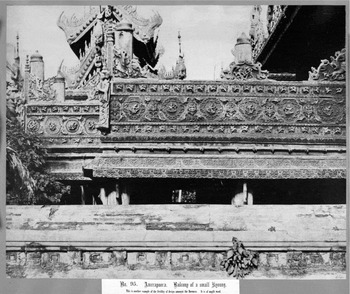
Grant also explicated on his own freehand ‘views taken in Burmah’ in his Notes, which offer fascinating insights into an artist's perception of photography's capabilities. Like other members of the mission party, Grant was impressed by Amarapura's ‘splendid monasteries’, which he also considered to be so elaborately carved and numerous that they were ‘suitable only to the myriad-pencil of the Photographer’ (see Fig. 2, No. 95). These buildings could only have been sketched by hand, he added, if ‘the stay of the Mission had been for years instead of a very few weeks’.Footnote 77 Grant's descriptions of the locales of his own sketches undoubtedly constituted, in part, an attempt to demonstrate his trustworthiness as an artist and the ‘closeness of fit between the image and reality’.Footnote 78 But no such assurances were deemed necessary for a photographer. Grant suggested that, ‘Of the exterior of these strikingly gorgeous and picturesque buildings and their endless carvings, Captain Tripe's beautiful Photographs render description needless’.Footnote 79
No. 95. Amerapoora. Balcony of a small Kyoung.Footnote 80

Whilst photographs ostensibly ‘render description needless’ and the photographer did not compose lengthy explanatory notes, Tripe did textually précis/caption his views.
The abundant contradictions and uncertainties concerning the nature and capabilities of photography can be detected in the 1857 Madras Exhibition jury report. The jury declared Tripe's ‘Calotypes taken in Burmah’ to be ‘excellent’ both in terms of execution and informational value. Several were singled out for praise, such as No. 92, which was ‘remarkable both as regards the beauty of its detail and the picturesqueness of its effect’, and No. 95 (Fig. 2), which had been ‘photographed with the greatest delicacy’.Footnote 81 But the jury also pronounced that ‘the arts of painting and photography are diametrically opposed to each other’. They maintained that a painter should possess ‘good taste and judgment’, and sought to ‘idealize, to paint nature not as she is seen at any particular time’. By contrast, a photographer,
must possess talent, knowledge, and conception, combined with such skills in using, and power over the implements and materials he employs as can only be attained by long and laborious practice.Footnote 82
The two ‘arts’ were not, then, ‘diametrically opposed’, since a painter must also possess some of these qualities, which are similar to ‘good taste and judgment’. Moreover, in complimenting No. 92 for the ‘picturesqueness of its effect’ the jury intimated that when framing their subjects photographers were often influenced by picturesque notions and ways of organising visual space—i.e. harmonious composition, a predilection for intricate detail, and evidence of humanity's presence on the landscapeFootnote 83—which had been cornerstones of European visual representations of India since William Hodges’ aquatints of the 1780s.Footnote 84 In some photographs a tropical aesthetic might be detected, as in No. 118, ‘Rangoon. Natural Bridge’, in which the superabundance of tropical verdure dwarfs humanity's impact on the environment and fills the photograph.Footnote 85
The extent to which a photographer ‘created’ his sketches was moot in the 1850s. Tripe's signature blindstamp motif, ‘By thee I draw’, suggests perhaps that he saw himself and his camera as a conduit for the sun's rays: the photographer harnessed the sunlight and exposed the film, and the sun sketched the pictures.Footnote 86 Mindon and his ministers may have had a broadly similar conception of what they apparently termed ‘sun-pictures’.Footnote 87 But the photographer was also widely understood to have some sort of modificatory role. Thus the 1857 Madras Exhibition jury noted the ‘curious fact’ of works by ‘one operator being perfectly distinctive in character from those by another, even when the same description of apparatus and the same process has been used’.Footnote 88
In particular the camera's ‘operator’ could make alterations and improvements during the printing process. Ernest Lacan, an art critic, placed photography ‘in the domain of art’ due to the practitioner's ability to manipulate skies.Footnote 89 Tripe did retouch some views to add clouds (i.e. No. 83).Footnote 90 This ambiguity concerning photography as ‘art’ is further illustrated by the fact that Yule used Tripe's No. 38 as background for a lithograph,Footnote 91 indicating that he saw photographs as ‘visual source material’ rather than works of art.Footnote 92 The Madras Exhibition jury considered such sullied works ‘neither good as pictures or photographs’, but overlooked modifications made before images had been chemically fixed.Footnote 93
The expectations of photography
The lack of clearly defined expectations gave Tripe room for experimentation in his delineations of unphotographed locales. But he was also, to a certain extent, participating in wider processes of classification and preservation taking place in the presidencies of Bengal, Bombay, and Madras. The caveat is necessary because most of the photographs were taken outside the East India Company's formal territory: the immediate aim was not physically to preserve these architectural specimens, even if photography ensured a kind of photochemical preservation. In all three presidencies the processes of systematically recording archaeological sites and photographic experimentation with architectural sights had coalesced in the late 1840s.Footnote 94 This followed a declaration by the Court of Directors in 1847 that ‘the great object’ of a large-scale programme of documentation should be to ensure ‘the preservation and illustration of the Monuments of India’.Footnote 95 Increasingly the utilitarian potential of photography was apparent and its ‘greatest strength’ seen as its ‘perfect applicability’ to ‘Architecture, Botany, Minerology, Anatomy, &c’.Footnote 96
By 1855 the Government of India was mindful of ‘photography as a means by which representations may be obtained of scenes and buildings’, which was deemed accurate, efficient, and inexpensive.Footnote 97 It should be stressed, though, that whilst Tripe was in some ways constrained by the expectations of documentary photography in British India, he was, as a largely unsupervised photographer in an unknown locale, in a position to decide for himself what was ‘worthy of being represented’.Footnote 98 Both Phayre and Yule were for the most part too busy with official duties to direct his photography.Footnote 99 Tripe might, then, have interpreted his task in terms of what he thought he was expected to do, and his selection of particular sites/sights is discernible. For instance it seems unlikely that he would have been instructed to photograph ‘No. 36. Tsagain Myo. Water Pots’; rather, this ‘frequent thing, in a Burmese thoroughfare’ was probably chosen for its ‘novelty’ value. Moreover the photographer-captioner notes of No. 28 that ‘I do not remember having seen a similar building in Burmah’, which suggests that he also chose this subject.
Tripe's photographs are primarily a visual record of exemplary and unusual architectural specimens. But his calotypes of Rangoon, whilst eclectic, suggest that there might have been different expectations of views taken in British Indian territory. Due to Rangoon's status as an entrepôt, these were certainly not as ‘novel’ as those taken in Mindon's dominions and they have been described as ‘a visual progress report on the state of the cantonment’.Footnote 100 Indeed it is striking that many focus on the imprint of the British and other kalas Footnote 101 on the environment: i.e. ‘No. 103. Rangoon. The Church’, which delineates ‘an old kyoung converted for the purpose’, and ‘No. 119. Rangoon. Mission House at Kemendine’. In the Rangoon photographs there is, perhaps, sufficient focus on the transformations wrought by the advent of British Indian rule to support an interpretation which sees them as de facto propaganda. Thus ‘No. 101. Rangoon. A Street; old Style’ might be said to represent Rangoon as it was, ostensibly ramshackle and bleak, prior to the thoroughgoing destruction of 1852Footnote 102 and implementation of a new (and improving?) town plan.Footnote 103 Here anteriority could have been the driving force, since by 1855 images of ‘old’ Rangoon might have been considered interesting on account of their novelty.
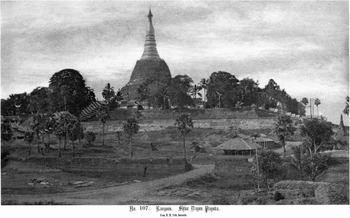
It is significant that Tripe was not the first person to photograph Rangoon. John McCosh of the Bengal Artillery, considered the first ‘war photographer’ in Asia, took a series of mainly architectural photographs during the 1852–1853 war.Footnote 104 Like McCosh, Tripe was an army officer, and he was photographically ‘shooting’ and ‘capturing’ locales that had been stormed and stockaded by British Indian artillery only three years earlier.Footnote 105 The fighting had taken place ‘among the temples’,Footnote 106 in the immediate vicinity of the esteemed Shwe Dagon Pagoda, which is still visibly stockaded in No. 109. Moreover, the caption note of No. 107 is simply, ‘From H. M. 84th Barracks’, indicating that the photographer-captioner was situating himself in relation to the conflict, temporally, as well as the pagoda, spatially (Fig. 3, No. 107). Writing about the events that occurred 42 months before Tripe's views of Rangoon were taken, William Laurie, a lieutenant in the Madras Artillery, recalled that, ‘On, on to the Shoé Dagoon was soon the grand animating thought of every officer and soldier’.Footnote 107
No. 107. Rangoon. Shwe Dagon Pagoda.Footnote 108

In 1855, then, Captain Tripe was following in the footsteps of Madras Army colleagues as he ‘shot’ an architectural/battle site. But other interpretations of these photographs are possible. In No. 115 there are no clear martial allusions: Tripe focuses his myriad-pencil on the ‘scaffolding of bamboo’ surrounding the bottom of the Shwe Dagon, which would allow the Burmese ‘to regild the Pagoda; an operation which will cost them £15,000’ (according to the caption).
A Linnaean system of classification
In certain respects early photographers in British India resemble the practitioners of other ‘sciences of collection and comparison,’Footnote 109 such as botanists, geologists, and surveyors. In particular the activities of ‘specimen-gathering’ photographers mirrored those of itinerant botanists, who also sought to incorporate what they collected into a system of knowledge. Significantly, Tripe's father bequeathed him his abiding fascination with natural history and information gathering,Footnote 110 naming him after Carolus Linnaeus (1707–1778). Insofar as Tripe focussed his myriad-pencil on the interrelatedness and distinctive characteristics of architectural ‘specimens’, as they are called in several captions, his classificatory schema resembles the systema naturae of his namesake, in which all botanical specimens could be incorporated taxonomically.Footnote 111 Tripe might even have seen his photographic activities in terms of an analogous ‘Linnaean system’. According to Linnaeus, the botanist, ‘The Ariadne thread in botany is classification, without which there is chaos’.Footnote 112 In seeking to order chaos Linnaeus and the Linnaeans had ‘launched a European knowledge-building enterprise of unprecedented scale and appeal’, as eighteenth-century scientist-travellers scoured the world for botanical ‘specimens’ to name, recognise, collect, and transpose to different contexts for study and posterity. This diffuse enterprise had involved nothing less than ‘locating every species on the planet, extracting it from its particular, arbitrary surroundings (the chaos), and placing it in its appropriate spot in the system’.Footnote 113
In the light of these observations Tripe's photographic method might be regarded as a systema architecturae. No less than Linnaeus and the Linnaeans, Tripe was obsessed with specimen gathering. In fact Tripe's keen interest in natural history ultimately superseded his photographic activities. After returning to Devon in 1873, Tripe amassed an enormous collection of shells and corals, which included two holotypes—specimens upon which the description and name of a new species is based—which are held by the Natural History Museum in London.Footnote 114 Tripe's photographs can similarly be regarded as ‘specimens’, in that the subjects of representation were symbolically ‘taken’ from their locales. Once photogenically ‘captured’ and impressed onto paper these subjects could be pored over for their informational content, compared with specimens from elsewhere, and ultimately located in ‘the system’. Interestingly, it was reputedly due to the ability of artists and photographers to ‘take’ their subject that Mindon refused to sit for his portrait. In the words of one of his ministers, ‘It is not the custom. . .to carry away the King's face’.Footnote 115
Tripe was, however, permitted to ‘carry away’ representations of exemplary architecture from Mindon's territory. These include a number of what might be considered akin to holotypes, or type specimens of distinctively ‘Burmese’ or regional architectural styles. ‘No. 8. Ye-nan-gyoung. Kyoung’ was evidently photographed because, as its caption attests, it was ‘a fine specimen of provincial architecture’. It was, then, quite unnecessary to produce an extensive photographic record of similar kyoungs, unless noteworthy variations on the norm for ‘provincial architecture’ could be discerned. The laboriousness and costliness of the photographic process would also have militated against further exposures of similar kyoungs. This economical approach is similarly evident in ‘No. 32. Tsagain Myo. Doorway of a small Pagoda’, in which the photographer filled nearly the entire frame with this ‘very fair specimen of a style of architectural decoration common in Burmah’, and in ‘No. 14. Pugahm Myo. Shwe-Koo Pagoda’, which delineated a ‘good miniature specimen of the most decorated style of Pugahm Architecture’. In such images, in which a particular ‘specimen’ is identified, ‘we are aware, however slightly, of the photographer selecting that sight from an infinity of other possible sights’.Footnote 116
Tripe's systematic approach to photography can be clearly discerned in his mandate as Madras Presidency Photographer: a role he received due to the reception of his ‘Burma Views’ and fulfilled with aplomb until early 1859, when financial shortfalls obliged the new Governor of Madras to abolish his post.Footnote 117 In his mandate, written in the midst of the ‘very trying’ printing process in Bangalore, in July 1856, Tripe outlined his main aims as Presidency Photographer. It is significant that he should declare that this had ‘demanded some consideration’, suggesting perhaps that his ideas concerning the capabilities and purposes of photography were not fully formed a year earlier. Put another way, Tripe's formative experiences in Burma, with his first officially commissioned work, might be seen as the blueprint for his mandate. In 1856 Tripe sought ‘1st and chiefly’ to, ‘secure before they disappear the objects in the Presidency that are interesting to the Antiquary[,] Architect, Sculptor, Mythologist and Historian’.Footnote 118
He proceeded to detail ‘features of the Country’, including peoples and geological sites, that ‘may be deemed worthy of being represented’, such as ‘any object with which, people, at a distance, can only become acquainted, by means of a representation’. Tripe added as an afterthought: ‘The Picturesque may be allowed perhaps, supplementally’.Footnote 119
Although Tripe's aims would not have been identical as mission photographer in 1855, this indicates that his method was studied and empirical. In John MacKenzie's phrase, quoted above, Tripe seems to have been ‘attempting through codification to control and understand this welter of material’.Footnote 120 He undoubtedly recognised the necessity of ‘very methodic’ working practices, which included a far wider range of activities than exposing and printing photographs. For instance, to carry out his work in the Madras Presidency with optimum accuracy and efficiency, Tripe noted that, ‘To systemise the information a tabular form would perhaps be the best, any information not anticipated by the form might be entered into the remarks’.Footnote 121
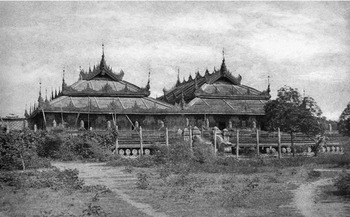
This is apposite in terms of the Burma views, due to the photographer's admission that classificatory schema such as tables cannot easily accommodate that which is ‘not anticipated’. To some extent the captions equate to this ‘remarks’ column. ‘No. 63. Amarapura. Pyee-dyk Kyoung’ might have been classified by Tripe under the rubric ‘kyoungs’, with reference to construction date, building material, and other rudiments. But the distinctive characteristics of some specimens could not always be encompassed by the entablature and were accordingly remarked upon/captioned by Tripe: ‘An unusual form of roof as may be seen by comparison with those of other Kyoungs’ (Fig. 4, No. 63).
No. 63. Amerapoora. Pyee-dyk kyoung.Footnote 122

Tripe's predominant focus on architectural sites is one of the most striking features of his photographs. To some extent this can be understood in terms of the job that Tripe was commissioned to do. Even though he was not given specific instructions, it is reasonable to surmise that he was expected to produce a photographic record of architecture, as he had done without instruction at Halebid and Belur. Moreover, as a relatively experienced photographer of British India, Tripe was clearly influenced by systematic attempts to document, classify, and preserve its buildings, which he saw as part of a ‘very methodic’ process of ‘mapping’.Footnote 123 But there were numerous other reasons for Tripe to capture a variety of architectural specimens, one of which was their interestingness. Yule noted that, ‘The Burmese. . .were gratified, and perhaps somewhat surprised, at the interest and admiration expressed by us for many of the buildings which formed the subjects of pictorial representation’.Footnote 124
The subjects of representation were thus often those that aroused the ‘interest and admiration’ of the party. Burmese architecture was intriguing due to its aesthetic appeal and informational value and it was perhaps the most conspicuous index of ‘Burmeseness’ or means by which ‘Burma’ could be culturally located.
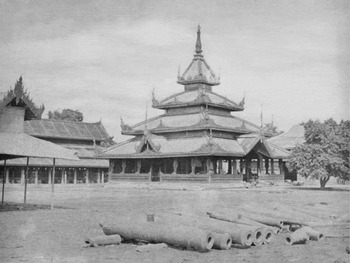
Tripe's predominant focus on architecture should also be considered with regard to the limitations of the new technology. It is significant that the camera could not ‘capture’ the instantaneous, due to the long exposure times needed (up to or more than nine minutes in some cases), and it was therefore unsuited to moving subjects.Footnote 125 Several of his exposures were made in blustery conditions, as can be seen by looking at the blurred trees in No. 55. Moreover, people were almost certainly removed from the locales of some photographs before Tripe opened the camera's aperture. There are very few photographs in which people can be descried: in one of only several exceptions (No. 12), the two marginal figures are obfuscated.Footnote 126 In several views the conspicuous absence of people is at odds with the captions, which seem to describe the scene before the photographer set up his apparatus and staged his shot. For instance, in No. 57 a vacant street scene in a densely populated western suburb of AmarapuraFootnote 127 is counterposed with the assertion that ‘here porters of all descriptions may be seen enjoying a rest’. Tripe was also unable to photogenically ‘capture’ the white elephant: presumably the regal proboscidean would not stay still for a full nine minutes.Footnote 128 No. 73 (Fig. 5), Tripe's photograph of the Palace of the White Elephant, is thus remarkable in that its main focus is, paradoxically, absent.
No. 73. Amerapoora. Palace of the White Elephant.Footnote 129

Whilst photography could not ‘capture’ the instantaneous, its ability to delineate intricate detail meant it could record the ‘action of time’ on specimens of ancient architecture.Footnote 130 Since Tripe's main aim as Madras Presidency Photographer was to be ‘to secure before they disappear’ the most important specimens,Footnote 131 it is not surprising that the anteriority and ruinous state of some buildings is remarked upon, and that he was drawn to ancient architecture. In a distant view of the Gaudapalen Pagoda at Pagan, there can be seen ‘ruins of all shapes and sizes’ (No. 18), whilst three semi-dilapidated pagodas in Tantabeng are described as being ‘in a remarkable and ancient style’ (No. 12). In this light, Tripe's comment that he had been ‘working against time’ to complete the ‘Burma Views’ has a dual meaning.Footnote 132 Tripe was concomitantly trying to finish the task at hand and ‘secure’ the most important type specimens in the photochemical salts of his prints.
Interpretative contexts
More than 150 years after they were first printed in Bangalore, Tripe's photographs remain interesting on account of their novelty. But far from being ‘new’, they are primarily valued as rare material artefacts, and are perhaps appreciated more for their aesthetic appeal than for their informational content. As Vidya Dehejia emphasizes, it takes a concerted effort to see photography today as it might have been seen by Tripe and his contemporaries in the 1850s, when ‘the simple ability to produce a photograph was itself a marvel’.Footnote 133 The attribution of meaning to a photograph, however, has always been shaped by contexts: any prints from the same negative will have divergent histories of circulation and presentation and might therefore be interpreted in substantially different ways. My research is largely based on the portfolios Tripe prepared for the Government of India in 1856–1857.Footnote 134 Since these collections reside in the British Library's India Office collections, alongside other official photographs of India, it is not surprising that they are often characterized as ‘documents in an archive of colonial oppression’.Footnote 135 But prints with the same informational content generate myriad interpretations when presented in other material forms and contexts: in November 1857 Griffiths and Co. in Madras were selling prints from Tripe's negatives (in sets of nine or ten) to the public at a cost of 2 rupees per print.Footnote 136 It is important to bear in mind that it is the negative (rather than the print) that is ‘the primary document’, which carries a chemical trace of light from the picture-making event.Footnote 137 Equally, when writing about photography it is crucial to acknowledge that ‘our ascription of context might also be seen as the first step in an interpretative process’.Footnote 138
The interpretations of government officials poring over Tripe's prints in 1857 would have been refracted though their knowledge and experiences of India. They might have been looking for corroboration of the ways in which many written sources contradistinguished ‘Burma’ with ‘India’ in this period, such as Theravada Buddhism, the superabundance of tropical verdure, and the relative dearth of population.Footnote 139 ‘The landscape is beautiful, but little population was visible’, wrote Yule; this might also have been a response to Tripe's photographs.Footnote 140 The photographs’ locales would perhaps inevitably have been compared to British India and the conspicuous absence of people in images of central Amarapura counterposed with the bustling streets outside Government House. According to its caption, No. 78 delineates ‘One of the most frequented of the Amarapura Temples. The approach is a perfect bazaar’. This photograph was taken in the afternoon, judging by the length of the shadows, yet this ‘perfect bazaar’ is completely ‘unpeopled’. The fact that people might have been removed from this locale would not have been at the forefront of these officials’ minds, and a contradistinction with the frenetic bazaars of Calcutta would not have been an unlikely response. It might also have been discerned, in Yule's words, that the ‘streets are very wide, and in dry weather are tolerably clean. They are always free from the closeness and offensive smells of most Indian towns’.Footnote 141
Many interpretations by habitués of British India would have focussed on similarities and differences between ‘Burma’ and ‘India’.Footnote 142 For James Fergusson, the nineteenth-century doyen of Indian architectural studies, the extent to which ‘Burma’ was a discrete cultural entity was written in stone: architecture was an unparalleled index of society that could be used to culturally locate a country or region within a comprehensible framework.Footnote 143 Fergusson and others could have done this from afar, since for ‘detecting similarities, or distinguishing differences between specimens. . . photographs are almost equal to actual personal inspection’.Footnote 144 Fergusson later wrote that the regions that composed ‘Further India’ (‘Burmah, Siam, Java, Cambodia’) had all ‘adopted religions originating in India, and borrowed from them architectural forms which expressed, with more or less distinctness, how far their religious beliefs differed from, or agreed with, those of the country from which they were derived’.Footnote 145 In reductive terms, ‘India’ became the cultural yardstick by which ‘Burma’ was measured. Viewers of Tripe's prints in the 1850s might also have defined ‘Burmeseness’ negatively, as not ‘Indian’, and perceived similarities between these regions and their architectures as evidence of ostensibly one-way cultural traffic across the Bay of Bengal. The 1857 Madras Exhibition jury declared that, ‘The series of views by Capt. Tripe are remarkable not only as excellent photographs, but as examples of the Burmese style of Building and ornament’.
This seems to suggest that, from the vantage point of 1850s Madras, Tripe's photographs were seen as ‘Burmese’ rather than ‘Indian’. But the jury report also referred to them as ‘Indian Photographs’.Footnote 146 This is an indication of the uncertainties concerning the extent to which a place or person could be seen as both distinctly ‘Burmese’ and broadly ‘Indian’. The former could be defined against the latter, and could be subsumed within it.
Present-day interpretations are likely to be refracted through commonplace perceptions of Burma as a ‘rich country gone wrong’.Footnote 147 Some will be informed by the characterization of post-colonial Burma as a ‘pariah’ state beset by armed conflicts, grinding poverty and HIV/AIDS, and ruled (or indeed misruled) by an iron-fisted military junta. Many others will focus on academic scholarship on the social and political transformations wrought by the British Indian conquest and the ideologies that sustained colonial rule. For instance, it is likely that Tripe's emphasis on ancient architecture will lead some to argue that he sought to distance himself temporally from the subjects of representation. The arguments Johannes Fabian outlined in Time and the Other might be adapted and utilized so that it could be argued that the photographer was denying the Konbaung polity ‘coevalness’, by focussing on ‘stagnation, underdevelopment, tradition’, and locating the polity and its peoples in another Time.Footnote 148 However, although tendentious proofs of such an ‘allochronic discourse’Footnote 149 might be detected, myriad alternative interpretations are possible. While the caption to ‘No. 19. Pugahm Myo. Ananda Pagoda’ explicitly refers to an ancient subject of representation, ‘built about 1060’, it also details that it was ‘restored during the century and is now in perfect repair’ (Fig. 1, No. 19). This suggests Tripe was not simply preoccupied with temporal ‘Othering’, since the Ananda ‘is now in perfect repair’. The date of construction may have been noted for largely taxonomical reasons, as this would allow comparisons to be made with contemporaneous buildings at Pagan and elsewhere.Footnote 150
The interpretations of historians that focus on ‘colonial photography’ are often grounded in conceptions of the ‘colonial archive’.Footnote 151 In many studies the intentions and motivations of photographers such as Tripe are posthumously inferred from archival contexts, without adequate consideration being given to operative contexts and the ambiguous nature of the medium. Since photographs ‘transcend their original intentions and audiences’,Footnote 152 Tripe's photographic activities in 1855 and the microhistories of prints made from his negatives after 1856 should be recognised as separate but intimately connected processes: as part of complex broader histories of circulation and contextualisation. Accordingly, selective and ideologically driven interpretations are inevitable. For example, the letterpress to some of Tripe's photographs taken in the Madras Presidency contextualized the prints ‘to support a positive message of material progress under British rule after the upheavals of the Mutiny in Northern India’.Footnote 153 In the letterpress J. A. C. Boswell alleged that the ruins of Palakoddu fort were an indication ‘of the anarchy which generally prevailed’ before the advent of British rule and ‘Christian European Civilisation’.Footnote 154 An interpretation framed in terms of ‘the orientalist cliché of the unchanging East’Footnote 155 could certainly be supported by the often ruinous and ancient subject matter, but it is misleading to suggest that this is the photographs’ hegemonic meaning. Ultimately, in order to assess Tripe's activities, it is important to be aware of the myriad ways in which we view the past through distorting ‘lenses’ and to remain focused on the contexts in which he operated in 1855.
Concluding remarks
The photographer's myriad-pencil captured many sophisticated and modern architectural specimens, including a distinctive mosque in Amarapura (No. 52) and various kyoungs, which comprise no less than 25 of the 120 views prepared for the Government of India. Far from being ancient and ruinous, No. 83, which was ‘built and endowed by the present Queen’, was considered to ‘far surpass one's expectations of Burmese Art’ in terms of its carvings and adornments.Footnote 156 The ubiquitous carved monasteries seem to have been chosen as subjects for extensive representation due to their interestingness, newness, variety, and intricate detail. They were considered by Grant to exhibit ‘a vast amount of elegance in design, and of artistic feeling’,Footnote 157 whilst Yule acknowledged that, ‘when the richness and elaboration of any one of them has peculiarly struck us, we have invariably found it to be of comparatively recent construction’.Footnote 158
It was due to this ‘richness and elaboration’ that Grant also deemed them ‘suitable only to the myriad-pencil of the Photographer’.Footnote 159 The 1857 Madras Exhibition jury expressed a similar view: three of the five photographs they considered ‘especially worthy of notice’ were of kyoungs (Nos 85, 92 and 95). These were excellent ‘examples of the buildings and details’, whilst No. 92, the photograph itself, was praised for the ‘beauty of its detail’. The camera's remarkable capacity to capture minutiae with ‘exactness or distinctness’ and the kyoungs’ intricate adornments perfectly complemented one another.Footnote 160
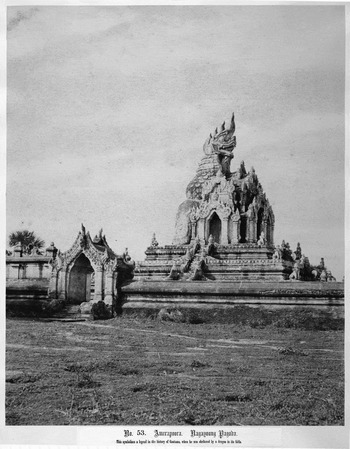
In addition to Tripe's in situ technical experimentation, the exploratory can be detected in his search for novel subject matter. Such an approach might be seen as predominantly a means of ‘certifying experience’.Footnote 161 The photographer-explorer was positioning himself in relation to that which he deemed extraordinary and might not have known how to react to: unsure of how to classify or interpret some particularly ‘novel’ specimens, he may have carefully positioned his photographic apparatus and opened the aperture.Footnote 162 Tripe's photograph of Amarapura's Nagayoung Pagoda, No. 53, captured what Yule considered to be
one of the most singular edifices which even Indo-Chinese art ever designed. Seen from a distance, it perplexed us much. In some points of view it appeared as a Pagoda; in others as one of the gigantic Lions or Griffins.Footnote 163
Tripe's photograph, ‘seen from a distance’, might also have been perplexing (Fig. 6, No. 53). But rather than seeking to convey such uncertainties, Tripe positioned his myriad-pencil at an angle from which the dragon-shaped building could be most easily comprehended in a material image: an almost side-on portrait of the naga's head or pagoda's pyathat (spire), which brings out the multidimensionality of the pagoda in a one-dimensional photograph. The invisible presence of the photographer can be discerned in this image, in the picture-making event itself, as Tripe sought to order chaos and decipher all that was novel.
No. 53. Amerapoora. Nagayoung Pagoda.Footnote 164