Introduction
Low-latency teleoperations (LLT) is the remote operation of an asset at time-delays that are low enough to allow for robust ‘real-time’ or near real-time control of a wide variety of assets – e.g. typically under 0.5 s communication delays (with some variance depending on the task involved and ‘overhead’ factors such as computational and network activities and constraints). LLT has important potential to address potential planetary protection concerns and to enhance astrobiological activities on both robotic and human missions to Mars and elsewhere in the Solar system. LLT can assist with the search for extraterrestrial life and help mitigate planetary protection concerns as required by the UN Outer Space TreatyFootnote 1. LLT can facilitate real-time exploration of areas that may otherwise not be conducive to direct human contact, robotically manipulate samples in real-time and engage in precise measurements and experiments without requiring the crew to be present in dangerous or otherwise problematic conditions or environments. LLT can be particularly effective in studying ‘Special Regions’– areas of astrobiological interest identified by the Committee on Space Research (COSPAR)Footnote 2 that might be adversely affected by forward contamination from humans or spacecraft contaminants during activities on Mars. Similarly, LLT can aid in addressing concerns about backward contamination that could impact mission implementation details for returning Martian samples and crew to Earth.
Planetary protection policy
Future human missions to Mars must comply with COSPAR Planetary Protection Policy, which currently comprises a set of principles and implementation guidelines. The principles indicate that safeguarding the Earth from potential back contamination is the highest planetary protection priority in Mars exploration. In addition, they acknowledge that it will not be possible for all human-associated processes and mission operations to be conducted within entirely closed systems; and that crew members, or their support systems, will inevitably be exposed to Martian materials. Accordingly, the principles also recognize that astrobiological exploration of Mars will be accomplished only if human-associated contamination is controlled and understood. The implications of this overall approach are further detailed in a set of explicit Implementation Guidelines shown in Box 1.
Summary of COSPAR implementation guidelines for Human Mars Missions Footnote 3
• Continued monitoring and evaluation of terrestrial microbes will be needed to address forward and backward contamination concerns
• A quarantine capability (for individuals & entire crew) is needed during and after the mission
• Need to develop comprehensive planetary protection protocols for combined human and robotic aspects of mission
• Neither robotic systems nor human activities should contaminate ‘Special Regions’
• Uncharacterized sites should be evaluated by robotic precursors prior to crew access
• Pristine samples or sampling components from uncharacterized sites or Special Regions should be treated as Planetary Protection Category V, restricted Earth return
• An onboard crewmember should be designated as responsible for implementing planetary protection measures during the mission
• Planetary protection requirements will be based on conservative approach and not relaxed without scientific review, justification and consensus
Because the intent of planetary protection policy is the same whether a mission is conducted robotically or with human explorers, the policy explicitly indicates that planetary protection goals should not be relaxed to accommodate a human mission to Mars. Rather, the planetary protection concerns become even more directly relevant – even if specific implementation requirements must differ for robotic versus human missions.
Looking ahead, it is apparent that LLT could help mitigate many concerns related to both forward and backward contamination controls. At the very least, integration of LLT assets and operations will be critical for addressing the current COSPAR principles and guidelines for planetary protection – and eventually for meeting future NASA procedural requirements (NPR), which are currently under development. Integrating LLT into key mission planning work now is prudent since it is anticipated that LLT can aid human missions to Mars and other destinations in a number of ways.
Additional science mission considerations
For further science context, the MEPAG HEM-SAGFootnote 4 (2008) Science Operations General Conclusions have potential relevance for LLT astrobiology, including for example, the importance of exploring multiple sites over large areas (including subsurface environments), exploring possible extant biology with caution and specialized equipment, and the importance of robotic assistants and navigational and telecommunications infrastructure.
The same MEPAG report also noted that LLT would be a valuable asset for science activities in general even while the crew is on the surface. Analyses could be conducted in a science ‘backroom’ on Earth or elsewhere such as possibly in Mars orbit. A science ‘backroom’ is a function that is staffed by many experts and provides detailed science support in almost all capacities ranging from pure science decision-making to science and engineering operations. Even if a mission has two to four highly skilled scientist astronauts, there are still backroom activities that would be useful to perform, including assessments related to planetary protection. The backroom performs enabling activities, to include defining daily scientific objectives, monitoring robotic assets performance, processing of instrument data and detailed engineering (thermal, power, data) analysis. However, the ability of crew and robots to do more tasks autonomously needs to be pursued, including dynamic science decision-making, implying the need for significant training and advanced information systems.
The NASA Human Spaceflight Architecture Team (HAT) Evolvable Mars Campaign (EMC), also examined various challenges from an integrated operational perspective and specifically analysed roles for LLT. As part of that work, the HAT Cislunar Team, the HAT Mars Moons task team and the HAT Mars Surface task team analysed teleoperations from Mars orbit to assess trades (e.g. operational needs and time to perform certain tasks versus complexity of assets and infrastructure needs such as communications assets), including potential advantages and implications of telerobotically exploring Special Regions from Mars orbit. In earlier EMC work, LLT was also analysed for possible applications in cislunarFootnote 5 space. This latter work analysed many of the tasks that might allow for high-fidelity testing in preparation for eventual human Mars missions that could leverage LLT.
Future missions and LLT
The sections below briefly summarize findings from various HAT LLT analyses and scenarios that apply to future human Mars missions.
Mars orbit-to-surface LLT
The NASA HAT has analysed the feasibility and effectiveness of missions to the moons of Mars (and Mars orbit generally) prior to landing crew on the surface of Mars. One potential advantage of such missions is that orbit-to-surface teleoperations can be conducted with very short communication delays (e.g. under 0.5 s). As illustrated in Fig. 1, this kind of LLT can allow crew members to be highly responsive by virtue of having such a short communications delay with assets on the Mars surface – a form of ‘real-time’ or ‘near real-time’ operations.
Low-latency teleoperations from Mars Orbit. Credit: NASA/GSFC.

Such surface assets could either be pre-deployed prior to human missions to Mars or deployed during human Mars orbital missions. Depending on the capabilities of those assets (e.g. mobility and scientific capabilities), it should be possible to scientifically explore somewhat large areas of the surface (perhaps relatively quickly), and potentially the sub-surface, prior to crew landing on the surface. Not only would such advance exploration provide valuable science and mission data, it could also identify previously unknown Special Regions that might be explored thoroughly before a crew lands on the surface. In this way, orbit-to-surface teleoperations can also potentially inform crew landing site selection and areas of special planetary protection concern.
Depending on what we eventually learn about contaminant transport and contamination impacts to Martian sites of interest, a crewed surface landing may compromise planetary protection protocols. Crew operations of surface assets from Mars orbit would avoid this concern – as long as the telerobotic surface assets were properly cleaned and maintained prior to deployment – and perhaps during operations as well. Because important remaining questions are (a) the size of the area (including subsurface) that reconnaissance efforts should cover and (b) the kinds of analyses needed over that area prior to crew landing, LLT could be an invaluable tool for preparations to realize astrobiological and planetary protection objectives.
For example, LLT from orbit to surface would also be useful for precursor sampling of Mars surface locations in advance of human activities. The notion of understanding levels of biological risk and of designating special zones or areas has been mentioned in multiple reports about planetary protection and human missions. For example, the NRC Space Studies Board ‘Safe on Mars’ report (2002) recommended that:
‘…NASA establish zones of minimal biologic risk (ZMBRs) with respect to the possible presence of Martian life during human missions to Mars. In order to do so, NASA should conduct a precursor in situ experiment at a location as reasonably close to the human mission landing sites as possible to determine if organic carbon is present. The measurement should be on materials from the surface and down to a depth to which astronauts may be exposed. If no organic carbon is detected at or above the life detection threshold, the landing site may be considered a ZMBR. If no measurement technique can be used to determine if organic carbon is present above the life detection threshold, or if organic carbon is detected above that threshold, a sample should be returned to Earth for characterization prior to sending humans to Mars” (National Research Council, Space Studies Board 2002).
The notion of zones and areas pre-designated as ‘safe’ were discussed further in subsequent reports by NASA and ESA (e.g., NASA 2005; ESA-NASA 2007). Even now, the concept of using pre-designated zones remains important for planetary protection and science considerations. A recent NASA workshop on Planetary Protection & Human Extraterrestrial Missions (2016) noted the importance of zonal approaches (and special regions) in development of procedural requirements for planetary protection during human missions. In particular, workshop participants noted the utility of robotic and LLT assets for gathering important precursor data about natural environments and processes on Mars. Such LLT data-gathering – either from Martian moons or on the surface – could provide important research information in advance of human arrival or science exploration activities on the surface.
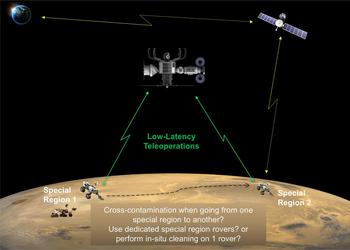
Participants at the same NASA workshop identified 25 different knowledge gaps (touched on at the end of this paper) that should be addressed through research and technology development in order to make incremental progress towards formulating NPR for planetary protection during human missions. LLT assets and operations were identified as useful for gathering important data about the natural environmental process on Mars, particularly details about meteorological conditions and dispersion of dusts/aeolian transport that may be associated with dissemination and sterilization of microorganisms. As shown in Fig. 2, while LLT may be useful for gathering precursor data in Special Regions, there remain challenging questions about if and how robotic surface assets may need to be cleaned if they are used for repeat sampling in the same or multiple Special Regions.
Multiple special regions low-latency teleoperations from Orbit.

Drilling into the subsurface before landing crew may also turn out to be an important function for LLT. Astrobiology activities and in situ resource utilization (ISRU) present potential planetary protection challenges – e.g. drilling below 5 m may be considered drilling into a Special Region (COSPAR 2002/2011). Conducting LLT drilling from orbit may turn out to be one of the most difficult LLT tasks and very sensitive to time delays, so extremely reliable and low-latency data communication paths will be needed.
The use of force-feedback or haptics (e.g. transmitting a sense of feel/force into the hands of an operator) may turn out to be an important technology development path to ensure effective LLT drilling (including the possibility of hitting subsurface challenges such as certain kinds of rock or other unforeseen subsurface environmentsFootnote 6), and space-based haptics tests using the International Space Station are being conducted (Schiele et al. Reference Schiele2016). It may also be the case that humans will ultimately be needed close to the drilling site to help address any number of challenges that may arise – particularly for deep drilling. Drilling is covered in more depth in the next section.
Crew-on-surface and LLT drilling
Much of the data gathering that can be conducted from Mars orbit via LLT could also be performed once the crew has landed on the surface. This would be particularly useful for any scouting that needs to be done immediately after the crew arrives, as well as during a period of acclimation, or later during the mission as well. Such surface LLT has the additional advantage that for many scenarios the latency will be lower and potentially less complicated when surface assets are closer and perhaps in direct line of sight at all or most times.
For example, the HAT Mars Destination Operations Team developed an integrated long-duration 500 day ‘science-driven’ surface operations concept in which LLT was invoked as a possible strategy for exploring new and interesting areas, while the crew is on the Martian surface at a safe distance from presumed or possible Special Regions (Bobskill & Lupisella Reference Bobskill and Lupisella2014). The team reviewed past literature and invited presentations on planetary protection and contamination control. It was suggested that if the surface assets can be maintained to meet planetary protection protocols, then such assets could be teleoperated to safely explore areas around the landing site and beyond. During the period of crew acclimation following their initial landing, LLT can be conducted from the habitat into the surrounding landing area in order to gain an additional detailed understanding of the landing area environment before the crew performs its first EVAs or other operations that may be problematic for contamination reasons.
Even after the crew has landed on the Mars surface, LLT can help address a number of planetary protection and contamination concerns associated with human exploration by providing a relatively clean method to explore areas of biological interest. This would allow the crew to remain isolated from areas that could be biologically dangerous, including areas near the habitat that may need to ‘cleared’ or re-validated for safety or other reasons that may not have been sufficiently addressed before crew arrival. In comparison with other human-associated assets (e.g., habitats, crew transport vehicles, pressurized rovers or EVA suits), robotic assets are easier to clean, re-clean and maintain in a clean state over time. Thus, LLT can be used for robotic operations in sensitive areas, with the potential for robotic cleaning while in sampling areas or when going between potential or known Special Regions if cross-contamination in a concern (as noted in Fig. 2 above).
Based on present characterizations of potential Special Regions on Mars it may be prudent to find and explore such regions telerobotically in order to address contamination control concerns in advance and to mitigate potential biohazards to crew members and possibly to terrestrial biota when crew members return to Earth (COSPAR Planetary Protection Policy 2002/2011; Beaty et al. SR-SAG Report Reference Beaty2006; NRC Space Studies Board 2015). The complexities and uncertainties regarding Special Regions are noteworthy. The 2015 NRC Space Studies Board emphasizes uncertainties by stating:
‘The specific terrains identified as Special Regions in both the COSPAR policy and in the SR-SAG2 report (i.e., ‘gullies, and bright streaks associated with gullies, pasted-on terrains, subsurface below 5 meters, others, to be determined, including dark streaks, possible geothermal sites, fresh craters with hydrothermal activity, modern outflow channels, or sites of recent seismic activity’ and ‘spacecraft-induced Special Regions’) are best regarded as ‘Uncertain Regions.’ The final determination of a Special Region would depend on the review of the latest scientific knowledge about a specific site in order to verify if it is within the environmental parameters defining Special Regions, taking into consideration the potential existence of microscale habitats.
Depending on how Special Regions are ultimately defined and understood in their actual environments (e.g. through precursor mission data, modelling, etc.), and depending on what kinds of contamination control technologies may be implemented with crew assets (such as suits, rovers, sample acquisition systems, drills, etc.) it may also be prudent to explore these scientifically sensitive regions for long periods of time without humans in the immediate environment of interest. Similarly, if there is sufficient uncertainty about the biological or chemical nature of Mars samples, it may be wise to explore strategies for conducting extensive LLT sample operations as well. Teleoperations may also be important for addressing other concerns related to planetary protection, such as spacesuits and their uses (e.g. cleaning, maintenance, doff-don by the crew, etc.) and ‘end of life’ infrastructure and mission operations.
During surface missions (and possibly before crew lands), there will likely be a need to drill into the subsurface for a number of reasons – ranging from resource prospecting and ISRU, to the search for life and biohazard detection. LLT options would be valuable for various operations involved in drilling into the subsurface, which may have special concerns relevant to planetary protection, Special Regions, and crew-on-surface activities. COSPAR policy (2002/2011) presently indicates that drilling deeper than 5 m is considered to be drilling into Special Regions. Furthermore, astrobiologists have already identified difficult sampling requirements that may someday require materials from 250 to 300 m below the surface [e.g. to obtain samples from an aquifer where there is potential for Mars extant life (MEPAG HEM-SAG Report 2008)]. If such deep-drilling is eventually required, it will be one of the more challenging tasks ahead – making it advisable to keep humans away from the immediate drill zone at different times. Thus, both initially and in the longer term, there are anticipated situations that strongly suggest the utility of LLT.
While drilling for samples using LLT from orbit may be useful prior to crew landing, it is reasonable to think that additional drilling, for science and otherwise, will occur after the crew is on the surface. By its nature, drilling is likely to be a very challenging and long-duration activity. Thus, LLT drilling at a safe but close distance on the surface will have its advantages (e.g. close line of sight communications, visual proximity, better contingency response capability, etc.) Additionally, it will be prudent to conduct drilling without having to put humans in the immediate drill zone, at least initially, if not for longer durations while sensitive drilling activities are being conducted. A HAT drilling report (Rucker et al. Reference Rucker2013) on activities during human missions has indicated a number of other important considerations:
‘A fully automated and/or telerobotic drilling system, with no hands-on human interaction, could meet planetary protection constraints but may not be practical, particularly for deep drilling operations which often require hands-on trouble-shooting. Depending on the type of drilling technology selected, automation or telerobotic control could drive the need for specialized equipment manipulators, which in turn would require additional power and thermal conditioning. Adding to the complexity, subsurface sample collection and return to a Science Lab would also have to be fully automated or telerobotic.’
Acknowledging these concerns, the report made further recommendations relevant to LLT:
• If deep drilling operations must be autonomous and/or telerobotic due to planetary protection concerns, technology development emphasis should be placed on automated core and fluid acquisition and handling, low mass borehole stabilization, rugged and high-temperature sensor development and placement, automated drilling control software, and software testing and validation.’
• If deep drilling operations must be completely autonomous and/or telerobotic, a high-fidelity mass and operational timeline analysis should be completed to determine whether it makes more sense to perform this activity on a crewed versus robotic mission. Some of this analysis is underway.’
• Mass should be allocated for automated and/or telerobotic control for deep drilling systems (including power).’
The HAT drilling report also noted the following concerns about drilling:
• The time-scale for a drill to encounter difficulties is often of the order of 10 to 20 s, making teleoperation from Earth risky. Teleoperation from Mars orbit or Mars surface is feasible, but risks will vary with drill design and drilling conditions, both for shallow and deep drilling.
• Because ice may be only 3–5 m below the surface within 30° of the equator, it may be advisable to take a conservative approach to shallow drilling. In light of the uncertainties associated with the Martian environment, subsurface planetary protection guidelines will need review, update and mission-specific interpretation.
• To date, none of the 53 drill technologies surveyed are guaranteed to work for 300 m target depth. In addition, at current demonstrated drilling rates, it may take more than 500 sols to drill to depths of 300 m. Despite these considerations, deep drilling is potentially solvable with technology development, more power, drilling before the crew arrives and possibly LLT drilling.
Surface science lab operations and LLT
A wide variety of science operations and data collection needs may be aided by LLT operations on future Mars missions. For example, the Report on ‘Planning for the Scientific Exploration of Mars by Humans’ (NASA HEM-SAG 2008) noted that Habitat Laboratory requirements for sample analysis should include operations that help to:
• Facilitate high grading of ‘sample return to Earth’ mass;
• Enable biology-unique measurements that cannot be done on Earth;
• Conduct extant life tests (productivity, labelled radio-C, etc.);
• Monitor environmental isolation (contamination and habitat isolation, curation, etc.); and
• Use samples analysis data to help direct future sample collections and science decisions.
In addition, the report noted that all operations should be done in ways that ensure separation of Astrobiology experiments from human life sciences biology conducted for the crew (e.g. for crew health).
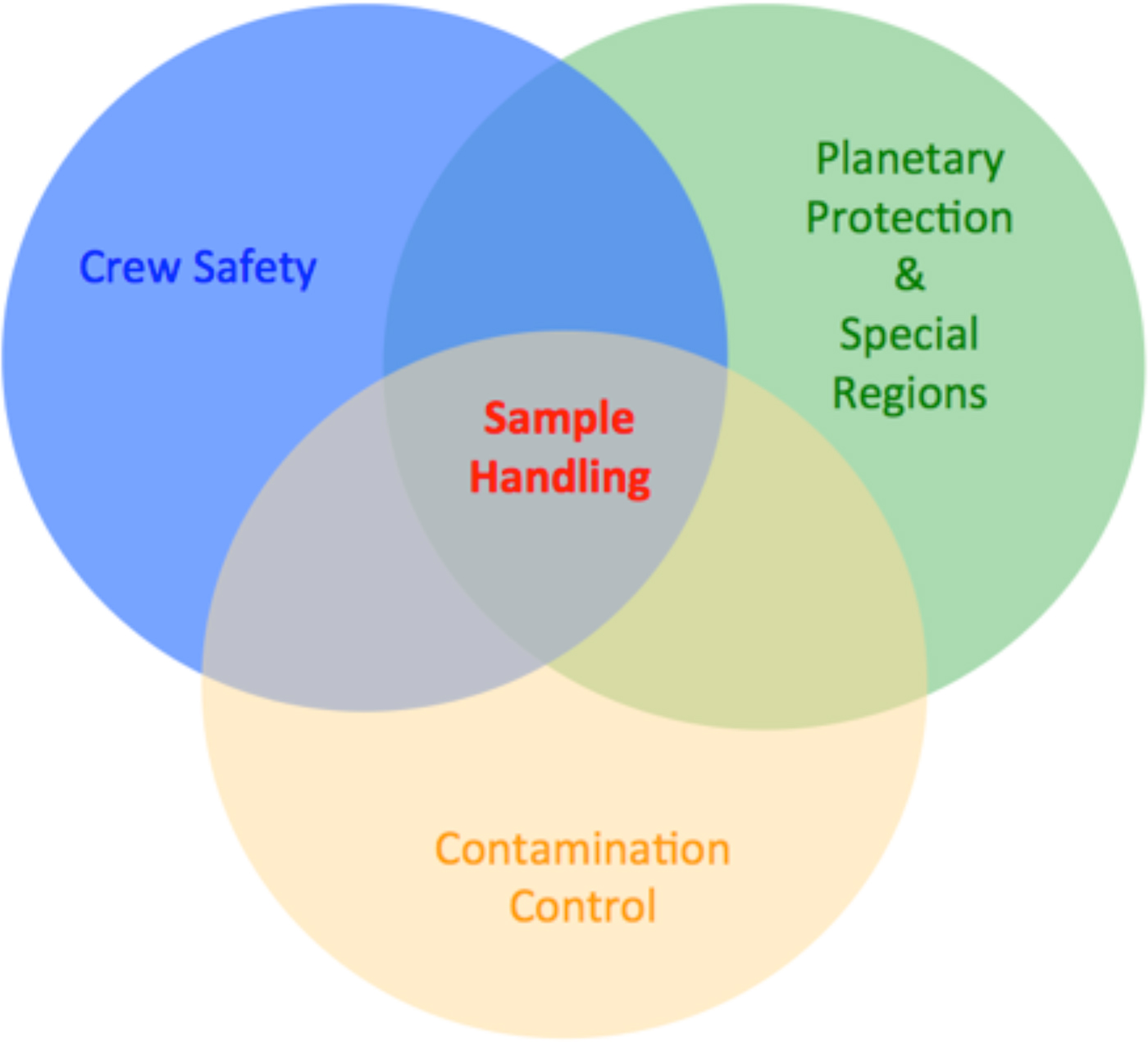
As shown in Fig. 3, sample handling involves a complex mix of activities, which ultimately involve detailed operations such as sample acquisition, containment, transport & delivery, sub-sampling and subsequent analysis – all of which intersect key considerations relevant to contamination control, planetary protection and crew safety. Even if sampling is planned for areas located outside Special Regions, where crew may do the actual collections directly, there are other considerations involved in ensuring that scientists will have pristine, uncontaminated materials to study – whether on Mars or back on Earth. Not only will real-time telerobotic sample acquisition avoid the threat of introducing terrestrial biota into Special Regions or sample materials, but it will also be beneficial for the science operations as well.
The criticality of sample handling.

It is possible that the crew [either operating from orbit or a surface location (e.g., a habitat or rover)], using telerobotic assets on the surface, could efficiently acquire samples, including via shallow and deep drilling and transport them to a pre-deployed science laboratory to classify the samples and conduct additional detailed analysis on the samples as needed. Experiences on Earth with advanced teleoperations technologies such as the da Vinci Surgical System have demonstrated improved remote surgical capability through stabilizing instrument manipulation, enhancing dexterity and allowing for greater precision and operator comfort (Anvari et al. Reference Anvari2005) and should be applicable to more challenging environments such as space and other planetary surfaces.
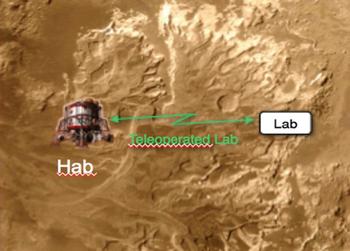
On Mars, sample analyses done via LLT of laboratory assets would similarly benefit from high-precision manipulators, advanced scientific instruments and operator comfort. As shown in Fig. 4, once the crew has landed, a similar LLT strategy can be used to keep samples relatively isolated from the crew and other surface assets and associated operations by teleoperating a science lab that is some distance from a habitat.
Low-latency teleoperations of separate science lab from surface habitat.

In addition to transporting materials to an isolated or remote lab location, LLT could be used to physically manipulate samples, conduct visual sample analysis, prepare samples for molecular analyses using miniature biomolecule sequencers (John et al. Reference John2016), and be safely prepared for rapid, remote response to dynamic science events such as atmospheric or biological phenomena. LLT could also be used to prepare and emplace materials securely into a sample containment unit for launch into Mars orbit and eventual return to earth. Thus, LLT strategy will also help to ensure breaking the chain of contact before returning samples to earth.
Additional considerations
Several additional considerations regarding LLT are worth noting, including relevance to: (a) cislunar space activities and opportunities, (b) potential for diverse LLT candidate systems and (c) end-of-mission concerns. Each of these is briefly discussed below to help provide additional context and considerations for LLT.
Cislunar space
Many LLT science activities, including astrobiology related activities, could be tested on ISS (Fong et al. Reference Fong, Burns and Pratt2014; Thronson et al. Reference Thronson2014) and deeper in cislunar space (Lupisella & Bobskill Reference Lupisella and Bobskill2012; Bobskill et al. Reference Bobskill, Lupisella, Mueller, Sibille, Vangen and Williams-Byrd2015; Lupisella et al. Reference Lupisella, Wright, Bleacher, Young, Gernhardt, Chappell and Beaton2017). For example, work has been done on the mission concept of crew-assisted sample return where crew in the Orion capsule (Burns et al. Reference Burns2013) and/or a cislunar habitat [perhaps at a Libration/Lagrange pointFootnote 7 on the far side of the moon in order to have constant visibility of the lunar farside (Lester et al. Reference Lester, Hodges, Ower and Klaus2012)] could acquire a sample and return it to earth. A lunar sample could be obtained by the crew in lunar orbit using LLT to the lunar surface to operate rovers, acquire and analyse samples, and launch them to lunar orbit for pick-up and return to earth. This could help prepare for and test similar systems and operations that might be conducted from Mars orbit.
A Mars sample could also be returned to cislunar space where LLT could be used by the crew in cislunar space to acquire that sample and ensure its containment integrity prior to acquiring it and returning it to Earth. If the proper technology were developed, one or several LLT assets could also be useful to assess the containment integrity and cleanliness of the sample containment unit and to mitigate any potential containment breaches or clean the outside of the sample containment unit to whatever specifications are required. Under all of these scenarios, this ‘in-space’ LLT sample assessment and mitigation strategy could be tested in cislunar space for feed-forward to Mars where crew may acquire collected samples in Mars orbit.
Diversity of LLT assets
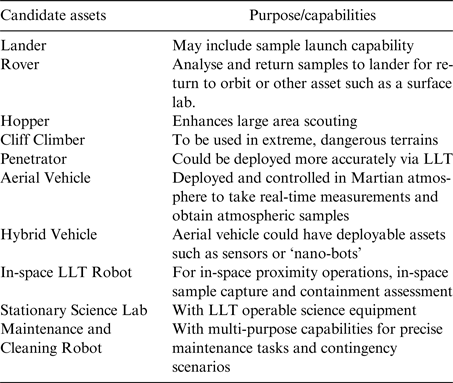
A diversity of LLT systems can be used to perform science-related operations in different locations, each with certain advantages and disadvantages. As indicated in Table 1, while many possible LLT platforms and systems can be used to address assorted mission needs, their applicability depends largely on the particular science drivers and operational factors for any given infrastructure and mission construct. Clearly, astrobiology exploration and activities could benefit in various ways from the many candidate assets and options already identified and deemed feasible.
Possible low-latency teleoperations systems and capabilities

End of mission concerns and LLT
In addition to assisting with ongoing mission activities, LLT may also contribute in a number of ways prior to returning to Earth. For example, potential ‘end of mission’ concerns and associated operational details such as disassembly applications or ‘seal up’ operations (e.g. for habitat, rovers, etc.) may be best done via LLT, either while on the surface prior to the crew's launch, or from Mars orbit before leaving the Mars system.
LLT could also be useful in dealing with disposal of the Mars ascent vehicle (MAV) itself, which could be a unique challenge because its uncontrolled impact could release contaminants widely. In addition, LLT of the MAV could help ensure that appropriate end of mission planetary protection requirements are met (e.g. venting down to vacuum to try to kill organisms; transport to, and/or orientation in, a safe in-space location; or possibly a ‘controlled’ landing to a safe zone if needed).
LLT-related knowledge gaps and concluding remarks
While the potential benefits of LLT are many, there remain a number of research and technology development areas that still must be addressed for future human missions. The recent Workshop on Planetary Protection Knowledge Gaps for Human Extraterrestrial Missions (NASA 2015), identified 25 important knowledge gaps that should be addressed in order to inform a path forward towards the development of NPR. LLT research activities and technical development areas were mentioned in the discussions of critical knowledge gaps related to planetary protection activities. In particular, LLT was mentioned for assisting in reconnaissance and science operations, conducting clean drilling (e.g. cleaning assets, drill bit change-outs, etc.), making borehole measurements, and providing information for making dynamic decisions for follow-on explorations (e.g., pre-landing site/region analysis; rapid in situ decision-making; etc.). The report also noted that prior to integrating LLT assets on future human Mars missions, it will be important to determine how effectively LLT can assist in planetary protection-related tasks performed with small crews and/or from orbit, and how quickly LLT rovers can accomplish basic science and mission operations.
NASA HAT high-level mission strategies and concept development for LLT have been underway for several years, and LLT is fairly well developed for use on Earth. However, there still remains considerable work to address LLT's effectiveness for clean drilling in natural environments, particularly in beyond earth. Additional tests using ISS and other analogs for site recon, science operations, and non-nominal situations would be useful to inform details of the full breadth of operational activities associated with complex LLT tasks.
Looking ahead, LLT can be flexible and robust in its application and adaptation to potential needs, particularly with real-time crew control and varied designs that could cover many use cases, including planetary protection mitigation. Importantly, LLT can be used to find and explore Special Regions as well as to clean assets if they move between Special Regions or other areas of science interest. In addition, conducting LLT from orbit or Mars moons will allow for multiple missions to safely explore Mars surface well in advance of actual crew landing. LLT reconnaissance may also help understand how to address the potential for cross-contamination between surface locations on Mars.
In conclusion, LLT have the potential to address questions of contamination control, which are likely to remain important challenges for human activities and astrobiology science exploration. Robust LLT science can allow for effective exploration of Special Regions, or areas of interest more generally, in a way that can allow for better contamination control and hence reduced risk to the astrobiological science that may result from adverse effects of contamination.
Many contamination-associated risks can be addressed via LLT at varied times: prior to crew landing, when the crew is in orbit around Mars, or when the crew is on the surface, including when operating a surface laboratory at a safe distance from a surface habitat. As we prepare for human missions to Mars there are many remaining knowledge gaps and potential systems that would benefit from additional analysis and testing using LLT – whether on Earth, involving ISS, or in cislunar space.