Introduction
Spiny and slipper lobsters are characterized by the presence of a unique larval form (phyllosoma) especially adapted for long-distance dispersal (Palero & Abello, Reference Palero and Abello2007). The phyllosoma phase may take up to 2 years to complete larval development (Booth et al., Reference Booth, Webber, Sekiguchi and Coutures2005) and metamorphose into a decapodid stage (Kaestner, Reference Kaestner1980; Felder et al., Reference Felder, Martin and Goy1985). The decapodid stage of Achelata lobsters, which has been traditionally called puerulus, nisto or pseudibacus due to the existence of former generic names, is a key transitional stage linking the planktonic zoea and the benthic adult (Jeffs et al., Reference Jeffs, Montgomery and Tindle2005; Ventura et al., Reference Ventura, Fitzgibbon, Battaglene and Elizur2015). The nisto stage of slipper lobsters remains poorly known because few specimens are generally obtained from plankton samples and the great difficulties in rearing phyllosoma larvae in the laboratory (Palero et al., Reference Palero, Guerao and Abelló2008). The complete laboratory-reared larval sequence has only been obtained for S. americanus Smith, Reference Smith1869 (Robertson, Reference Robertson1968) and Petrarctus demani Holthuis, 1946 (Ito & Lucas, Reference Ito and Lucas1990), so further advances will most likely rely on molecular methods.
Only 16 Scyllarinae nisto morphotypes have been assigned to species level and previous identifications may be incorrect. Bouvier (Reference Bouvier1913) originally proposed Scyllarus arctus Linnaeus, 1758 to have two nisto stages, but those two stages have been shown to correspond to the decapodid stages of S. arctus and S. pygmaeus Bate, 1888 respectively (Palero et al., Reference Palero, Guerao and Abelló2008, Reference Palero, Crandall, Abelló, Macpherson and Pascual2009a, Reference Palero, Guerao, Clark and Abelló2011). The recent results on the phyllosoma of Scyllarides squammosus (H. Milne Edwards, 1837) confirm the importance of using DNA barcoding methods to characterize these larvae (Palero et al., Reference Palero, Genis-Armero, Hall and Clark2016). Nevertheless, some studies on scyllarid larvae still confuse the decapodid of Scyllarus with that of Scyllarides (Pagliarino et al., Reference Pagliarino, Massi, Canali, Costa, Pessani and Bianchini2013) and stress the necessity of further morphological descriptions and taxonomic research.
The largest Scyllarus decapodid known to date was recently collected near the Canary Islands and identified by DNA analysis as Scyllarus subarctus Crosnier, Reference Crosnier1970. This species had never been previously reported from the area and its decapodid stage is described here for the first time. A thorough examination of material from previous expeditions across West Africa also significantly expanded the known species range, identifying further material from NW Africa (e.g. Morocco) and several specimens from St Helena (one nisto and two adults). These results highlight the importance of associating molecular analysis of recently collected specimens with historical collections.
Materials and methods
Sampling
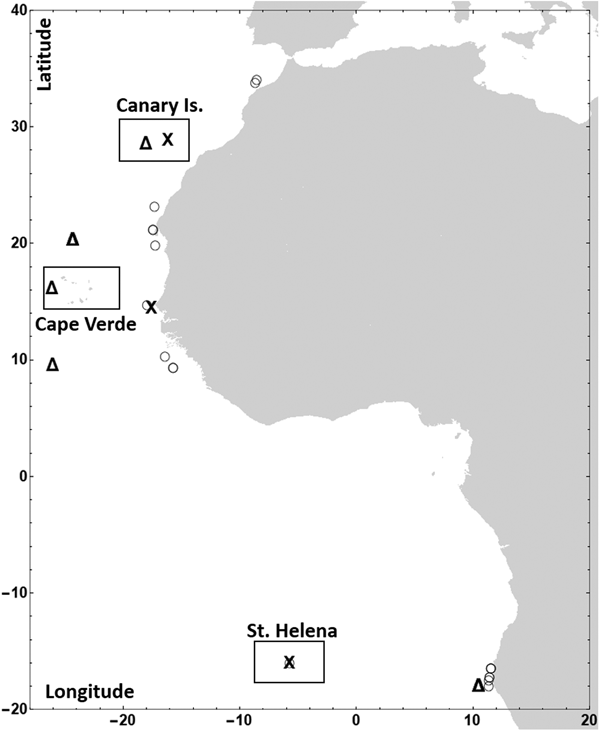
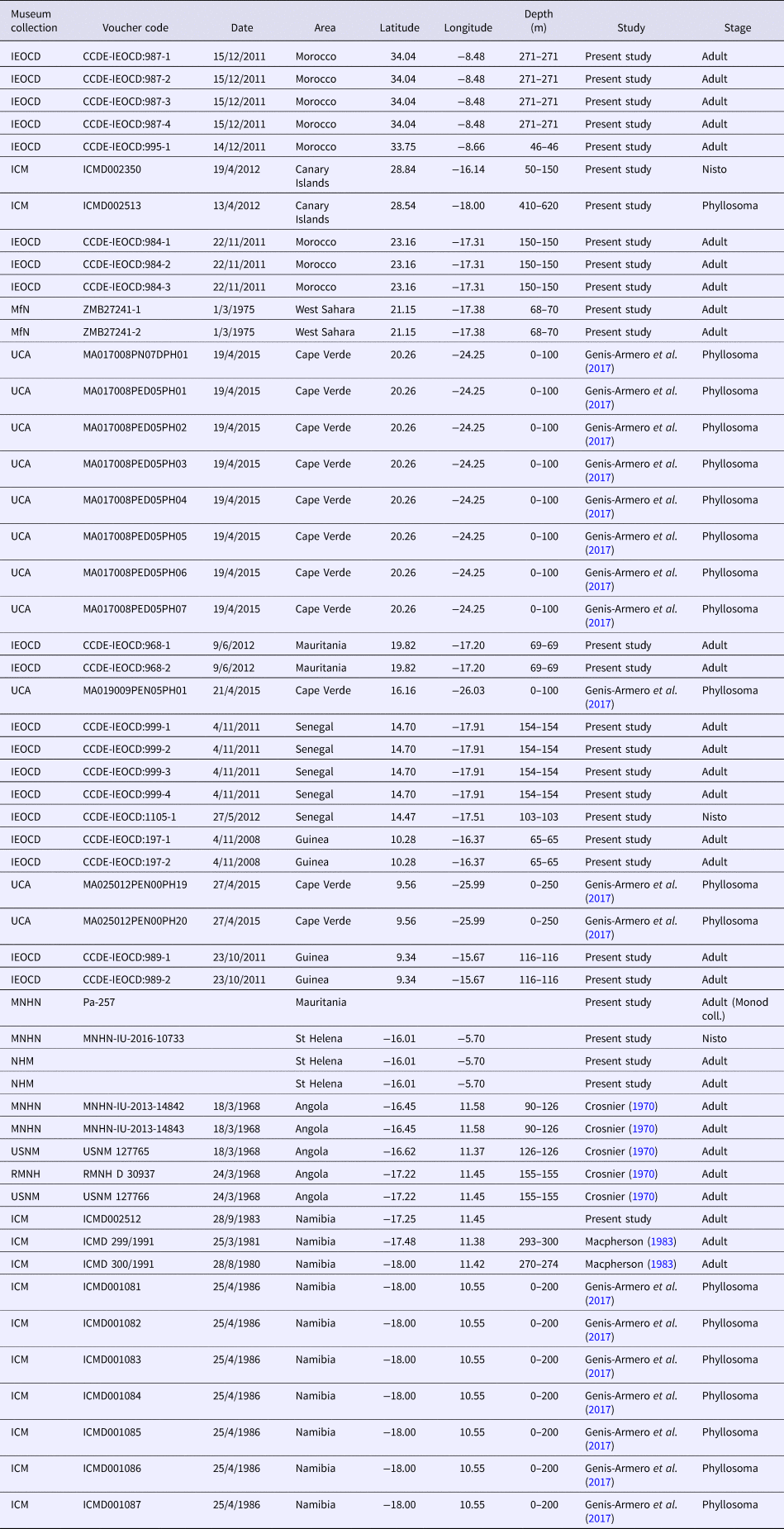
Several specimens corresponding to undetermined Scyllarus species were collected in April 2012 during the CETOBAPH experimental fishing cruise on board the RV ‘Cornide de Saavedra’. Sample stations were located around the Canary Islands, between the 1000 and 2000 m isobaths, off El Hierro, La Palma and Tenerife. Sampling was performed using a pelagic net (300 m2 mouth area, 45 m length, mesh size of 80 cm near the opening, decreasing to 1 cm in the cod end) towed during 1 h, at speed of 3 knots between 40 and 800 m depth. Hauls were performed horizontally along narrow depth ranges within the different scattering layers using the information provided by echosounders and Scanmar depth sensors (for more details see Ariza et al., Reference Ariza, Landeira, Escánez, Wienerroither, Aguilar de Soto, Rostad, Kaartvedt and Hernández-León2016). Further S. subarctus material from several museum collections included specimens from Angola, Namibia, St Helena, Guinea, Cape Verde, Senegal, Mauritania, West Sahara, Morocco and Canary Islands (Figure 1; Table 1).
Localities where Scyllarus subarctus has been found in the Eastern Atlantic. × : nisto, o: adult, Δ: phyllosoma.

List of Scyllarus subarctus specimens analysed in the present study.

IEOCD, Centro Oceanográfico de Cádiz; ICM, Instituto de Ciencias del Mar; MfN, Museum für Naturkunde; MNHN, Muséum national dʼHistoire naturelle; NHM, Natural History Museum; RMNH, Rijksmuseum van Natuurlijke Historie; USNM, Smithsonian National Museum of Natural History; UCA, Universidad de Cádiz.
DNA analyses
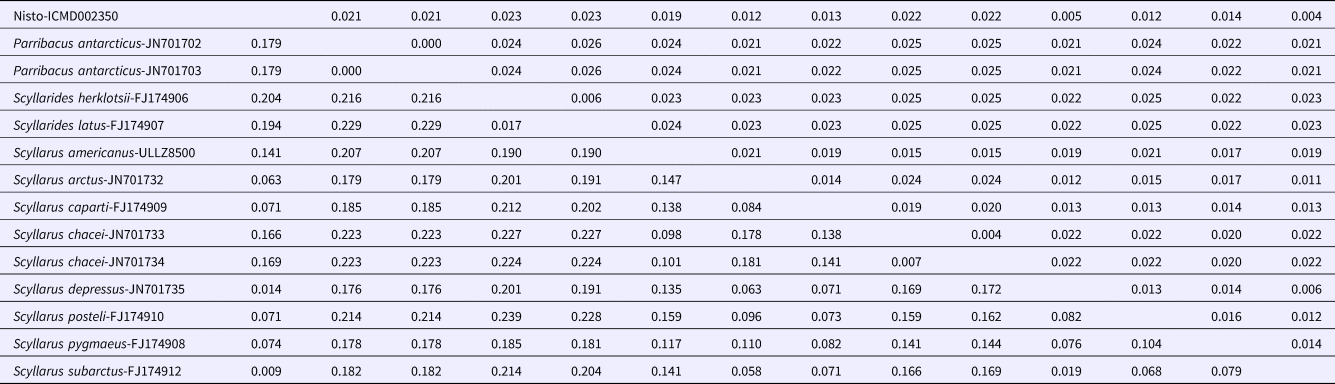
Total genomic DNA extraction of five small and one large Scyllarus decapodid from the CETOBAPH expedition was performed using the Chelex-protK method (Palero et al., Reference Palero, Guerao, Clark and Abelló2010). The standard universal primers for the 16S rDNA gene (Hillis et al., Reference Hillis, Moritz and Mable1996) were used for DNA barcoding, since this marker shows a higher amplification rate than COI primers in Achelata (Palero et al., Reference Palero, Guerao, Clark and Abello2009b; Bracken-Grissom et al., Reference Bracken-Grissom, Ahyong, Wilkinson, Feldmann, Schweitzer, Breinholt, Bendall, Palero, Chan, Felder, Robles, Chu, Tsang, Kim, Martin and Crandall2014). Amplifications were carried out with ~30 ng of genomic DNA in a reaction containing 1 U of Taq polymerase (Amersham), 1 × buffer (Amersham), 0.2 mM of each primer and 0.12 mM dNTPs. The polymerase chain reaction (PCR) thermal profile used was 94 °C for 4 min for initial denaturation, followed by 30 cycles of 94 °C for 30 s, 50 °C for 30 s, 72 °C for 30 s and a final extension at 72 °C for 4 min. Amplified PCR products were purified with QIAquick PCR Purification Kit (QIAGEN Inc.) before direct sequencing of the product. The sequences were obtained using the kit BigDye v3.1 (Applied Biosystems) on an ABI Prism 3770. The chromatograms for each DNA sequence were checked using the software BioEdit ver. 7.2.5 (Hall, Reference Hall1999). Sequence alignment was conducted using the program Muscle v3.6 (Edgar, Reference Edgar2004) with default parameters. The Kimura 2-parameter (K2P) genetic distance was estimated between the Canary Island decapodid and sequences of Atlantic slipper lobsters available in GenBank using MEGA v7 (Kumar et al., Reference Kumar, Stecher and Tamura2016) (Table 2).
Estimates of 16S gene evolutionary divergence (below diagonal) and the corresponding standard deviation (above diagonal) between the large Canary Island decapodid and Atlantic slipper lobsters (sequences available in GenBank).

Larval description
Description of the S. subarctus nisto stage was based on the malacostracan somite plan, from anterior to posterior and proximal to distal (Clark et al., Reference Clark, Calazans and Pohle1998; Clark & Cuesta, Reference Clark, Cuesta, Castro, Davie, Guinot, Schram and Von Vaupel Klein2015). Larval illustrations were obtained using a camera lucida attached to a Leica high-performance stereo microscope (M165C, Leica Microsystems). Antennule, mandible, maxillule, maxilla, maxillipeds and pereopods were dissected before drawing. The following measurements were taken: total length (TL) from the anterior margin of the antennae to the posterior margin of the telson; cephalic length (CL) from the anterior to the posterior margin of the carapace; carapace width (CW) measured at the widest part of the carapace; pleon length (PDL) from the anterior margin of the pleon to the posterior margin of the telson. Morphological nomenclature follows Holthuis (Reference Holthuis1985).
Results
Molecular identification and updated distribution of S. subarctus
As expected based on the known distribution of the species, molecular data allowed us to assign the small nisto samples to S. arctus and S. pygmaeus. K2P genetic distances between the DNA sequence obtained from the large nisto and adults from either S. depressus (0.015 ± 0.006) or S. subarctus (0.010 ± 0.005) were smaller than of other African Scyllarus (S. arctus: 0.064 ± 0.012; S. pygmaeus: 0.074 ± 0.014). Genetic distances were larger when compared with S. americanus (0.142 ± 0.020) and S. chacei (0.166 ± 0.023). Therefore, the nisto could be assigned with confidence to S. subarctus. The DNA sequence obtained from the S. subarctus nisto is now available from GenBank (accession number: MK421157).
The results provide further evidence to recent observations of S. subarctus phyllosoma stages collected near Cape Verde islands (Genis-Armero et al., Reference Genis-Armero, Guerao, Abelló, Ignacio González-Gordillo, Cuesta, Corbari, Clark, Capaccioni-Azzati and Palero2017) and expand the known latitudinal range. Compared with the few adult specimens originally described from the Angola/Namibia border (Crosnier, Reference Crosnier1970; Macpherson, Reference Macpherson1983), the morphological revision of further museum specimens allowed us to significantly expand the current spatial distribution including much of the NW African coast, St Helena and Canary Islands (Figure 1).
Morphological description
Order DECAPODA Latreille, 1802
Family SCYLLARIDAE Latreille, 1825
Genus Scyllarus Fabricius, 1775
Scyllarus subarctus Crosnier, Reference Crosnier1970
Nisto stage (MNHN-IU-2016-10733; ICMD002350; CCDE-IEOCD:1105-1)
Dimensions. TL = 24.8–27.8 mm; CL = 7.1–7.7 mm; CW = 9.2–9.8 mm; PDL = 12.4–13.8 mm.
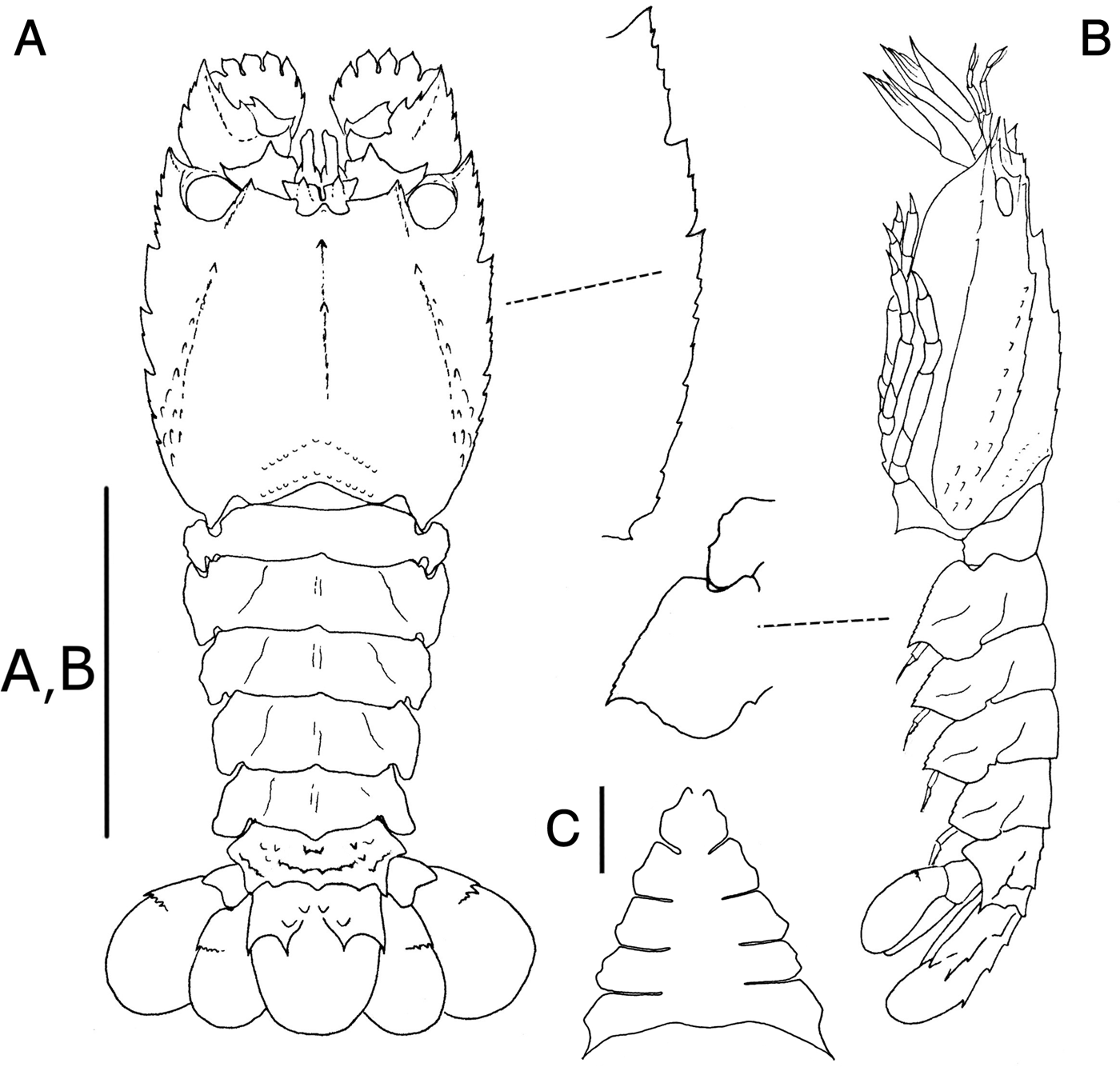
Carapace (Figure 2A, B). Slightly wider than long, broadest near middle section; surface mostly smooth; short and rounded rostrum; orbits deep, subrectangular, lined with cilia; lateral margin with two incisions (cervical and postcervical, latter less obtuse) and ~29 teeth (9 anterolateral, 7 mediolateral and 13 posterolateral); pregastric tooth small, gastric and cardiac low and bilobed; posterior submedian ridge with small spine; anterior branchial ridge with 7 spines ending in two large blunt teeth; posterior branchial ridge formed by 2 arches, inner carina more pronounced with 14–18 teeth and outer carina with 7 teeth; cervical groove shallow; intestinal ridge with 12–14 triangular-shape tubercles and posterior carina with 12–14 tubercles; ~8 tubercles in posterior lateral margin.
Scyllarus subarctus Crosnier, Reference Crosnier1970, nisto stage: (A) dorsal view and detail of carapace profile; (B) lateral view and pleura of second abdominal somite (detail); (C) sternum. Scale bars: A–B, 10 mm; C, 2 mm.

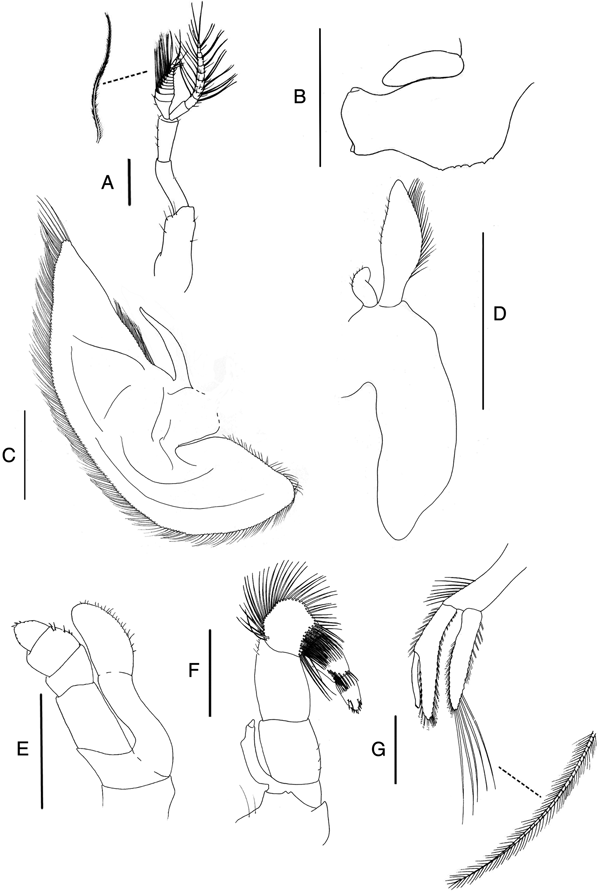
Antennule (Figure 3A). Longer than antennae; peduncle with 3 articles, proximal article stout, compressed at middle with long stiff setae, dorsal extension on the left distal margin; primary flagellum (12 annuli) with dense plumose setae on distal half and widening in the middle, shorter than accessory flagellum (13 annuli), which is more slender and with scattered setae along entire length; antennular somite with a blunt central spine and one or two smaller spines on inner margin.
Scyllarus subarctus Crosnier, Reference Crosnier1970, nisto stage: (A) antennule (detail of aesthetasc); (B) mandible; (C) maxillule; (D) maxilla; (E) maxilliped 1; (F) maxilliped 2; (G) maxilliped 3; (H) pleopod (detail of seta). Scale bars: A, 1 mm; B, 0.5 mm; C, 0.2 mm; D–H, 1 mm.

Antenna (Figure 2A). Uniramous with exopod absent, 4-segmented endopod, broad and flat; first segment trapezoidal with 2 spines; second segment (proximal squame) triangular with pronounced median ridge, outer lateral margin serrated with two deep notches; third segment with irregular margin and 2 spines; fourth segment with 7 serrated lobes with setae in margin, first three lobes pointier.
Mandible (Figure 3B). Not fully developed. Endopod present as unsegmented palp and exopod absent.
Maxillule (Figure 3C). Not fully developed, with short spines on coxal (6 spines) and basial (8 spines) endites. Endopod and exopod absent.
Maxilla (Figure 3D). Coxal and basial endites inconspicuous. Endopod unsegmented; scaphognathite (exopod) well developed and setose.
First maxilliped (Figure 3E). Coxal and basial endites inconspicuous. Epipod elongated and without setae. Biramous with unsegmented ramii. Endopod with 5 setae. Poorly developed. Exopod with ~16 and 9 plumose setae on outer and inner margin respectively.
Second maxilliped (Figure 3F). Biramous, endopod 4-segmented; carpus, and propodus with 3 and 6 setae respectively, dactylus with ~11 spines; exopod superficially 2-segmented, outer margin of distal segment with ~20 short setae.
Third maxilliped (Figure 3G). Biramous; endopod 5-segmented; merus, carpus and propodus with 5, ~150 and ~28 setae respectively; dactylus with 13 spines; exopod 2-segmented, as long as ischium.
Sternum (Figure 2C). Anterior margin with U-shaped incision in the middle and longitudinal depression; surface smooth, last sternite with acute lateral spines; posterior margin convex.
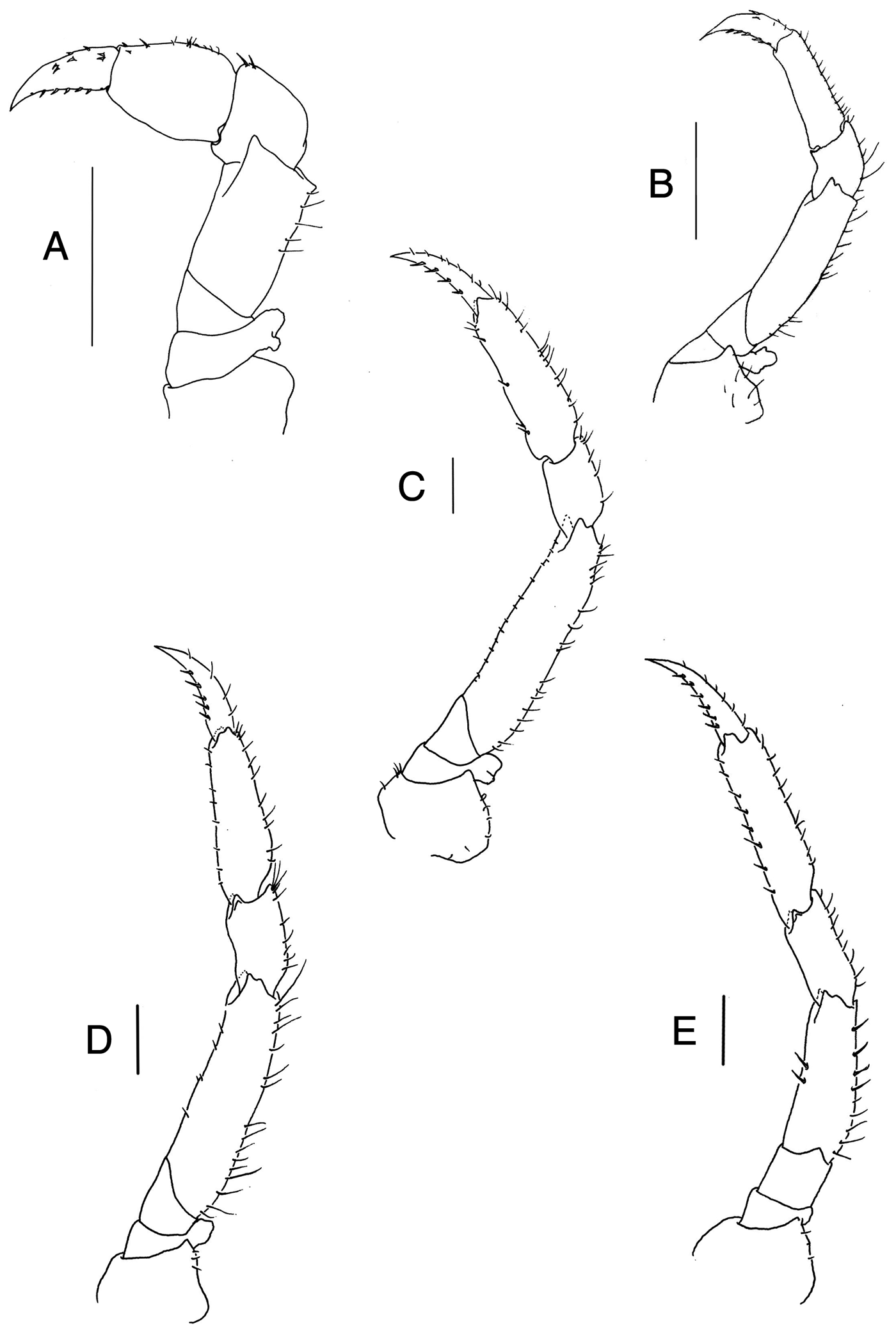
Pereopods (Figure 4A, E). P1 (pereopod 1) to P4 (pereopod 4) biramous with a 5-segmented endopod and a residual exopod, P5 (pereopod 5) uniramous with exopod absent; P1 endopod short and robust, merus, carpus and propodus with 5, 2 and 13 setae respectively, dactylus with 12 spines (2 missing); P2 with 7, 13, 5 and 13 setae on coxa, merus, carpus and propodus respectively, 7 spines and 4 setae on dactylus; P3–P5 more setose.
Scyllarus subarctus Crosnier, Reference Crosnier1970, nisto stage: (A) pereopod 1; (B) pereopod 2; (C) pereopod 3; (D) pereopod 4; (E) pereopod 5. Scale bars: A–B, 2 mm; C–E, 1 mm.

Pleon (Figure 2A, B). Smooth median carina in the midline of pleomeres 2–5, with shallow transverse grooves; pleomeres 1–4 with a deep subtriangular notch at midline of posterior margin; posterior margin of fifth somite rounded and ending with acute corners; posterior margin of sixth pleomere with 2 long spines on posterior corners, and 3 less acute spines between previous ones; 11 pairs of smaller bulges on the surface; seventh somite with 2 pairs of long spines in the margin and 3 pairs on the surface; pleura of pleomere 1 with a minute spine in margin; pleura of pleomeres 2–5 with serrated margin and sharp ending, pleura of fifth somite less acute; rami of uropods faintly serrated on outer margins.
Pleopods (Figure 3H). Present on pleomeres 2–5; biramous; protopod with ~8 setae; exopod and endopod with ~35 and ~45 long plumose natatory setae respectively; appendix interna without setae, not reaching distal tip of endopod; cincinnuli present.
Discussion
Considered as data deficient in the IUCN Red List of Threatened Species, the distribution of Scyllarus subarctus was previously known from only a few localities including Angola (type locality), northern Namibia and NW Africa (Crosnier, Reference Crosnier1970; Macpherson, Reference Macpherson1983; Muñoz et al., Reference Muñoz, García-Isarch, Sobrino, Burgos, Funny and González-Porto2012). The results presented here enlarge significantly the distribution area of the species through new records obtained from several oceanographic expeditions and museum collections. The nisto stage of S. subarctus is also described based on material collected around the oceanic islands of St Helena and the Canaries as well as the continental coast of Senegal. The most characteristic features of S. subarctus nisto are the number of setae on the pereopods, the relative position and morphology of the rostral, pre-gastric and gastric teeth and a pronounced ‘U-shaped’ anterior margin of the fourth thoracic sternite. The nisto of both S. subarctus and S. depressus present a larger number of setae on the pereopods compared with S. pygmaeus or S. arctus (Palero et al., Reference Palero, Guerao, Clark and Abello2009b) and this difference is also observed during the phyllosoma stages (Genis-Armero et al., Reference Genis-Armero, Guerao, Abelló, Ignacio González-Gordillo, Cuesta, Corbari, Clark, Capaccioni-Azzati and Palero2017). Although the nisto stages of S. subarctus and S. depressus are similar, the specimens described here are up to 50% larger (Robertson, Reference Robertson1971) and they have 8–7 setae on the protopod of the pleopods instead of 6 setae as in S. depressus (Lyons, Reference Lyons1970). The identification of nisto stages based on morphology remains difficult, and the lack of detail in previous descriptions prevents us from further comparison.
The new distribution data presented here shows that the type locality, placed in the temperate area of Angola/Namibia (around 17°S), actually represents the southern limit of S. subarctus (Crosnier, Reference Crosnier1970). The Benguela upwelling system, which appeared in the Miocene and intensified during the later Pliocene (Siesser, Reference Siesser1980), acts as a natural barrier between the Atlantic and Indian biota, delimiting the biogeography of many marine species (Lessios et al., Reference Lessios, Kane and Robertson2003). Scyllarus subarctus is now shown to be mostly distributed along the Tropical Eastern Atlantic, including North-west and South-west Africa, St Helena, Canary Islands, and Cape Verde. Previous records had established the northern limit of S. subarctus as near Cape Verde, around 20°N (Genis-Armero et al., Reference Genis-Armero, Guerao, Abelló, Ignacio González-Gordillo, Cuesta, Corbari, Clark, Capaccioni-Azzati and Palero2017), but the new data presented here expand the known latitudinal range to 34°N, near Rabat, Morocco. A possible expansion due to warming trends remains speculative, and the new northernmost citations for S. subarctus can simply be the result of improved sampling.
Long planktonic life duration facilitates dispersal, and the large size of the S. subarctus nisto stage suggests increased swimming abilities (Booth et al., Reference Booth, Webber, Sekiguchi and Coutures2005), which is in agreement with the wide distribution of the species. It might be hypothesized that prevalent east-to-west oceanic currents in the Tropical Atlantic (Rodríguez et al., Reference Rodríguez, Braun and García2000; de Lestang & Caputi, Reference de Lestang and Caputi2015; Pelegrí & Benazzouz, Reference Pelegrí, Benazzouz, Valdés and Déniz-González2015) facilitated S. subarctus colonization of St Helena from Africa (Gillespie, Reference Gillespie and Levin2007). Oceanic islands such as St Helena could have functioned in that case as stepping-stones (Muss et al., Reference Muss, Robertson, Stepien, Wirtz and Bowen2001), and this type of long-distance dispersal between Africa and America has already been reported in fish or sea urchins (Joyeux et al., Reference Joyeux, Floeter, Ferreira and Gasparini2001; Lessios et al., Reference Lessios, Kane and Robertson2003). This hypothetical scenario would be consistent with the fact that S. depressus is phylogenetically and morphologically much closer to S. subarctus than to other American species such as S. americanus or S. chacei (Genis-Armero et al., Reference Genis-Armero, Guerao, Abelló, Ignacio González-Gordillo, Cuesta, Corbari, Clark, Capaccioni-Azzati and Palero2017) and merits further attention.
Adult specimens of both S. subarctus and S. depressus can be distinguished from S. arctus by the presence of 5–6 antennal lobes, the antennular plate showing just one or two pairs of small teeth, the 8th thoracic sternite presenting a strong and larger tubercle and the dorsal sculpturing of abdominal segments being narrower and less branched. According to Crosnier (Reference Crosnier1970), S. subarctus and S. depressus can be distinguished by the gastric tooth in the caparace pointing upwards (lateral view) in S. subarctus, the posterior part of the dorsal carina being wider in S. depressus (volcano-like from dorsal view), and the pregastric tooth being closer to rostral than to gastric tooth in S. subarctus. A thorough morphological analysis of our S. subarctus samples revealed that some character states assigned to S. depressus are also present in the African specimens studied here. The low morphological and genetic differentiation observed between S. subarctus and S. depressus could be explained by S. depressus resulting from a relatively recent colonization of America, but this hypothesis would need further testing. Future studies should include more samples from western Atlantic waters and new molecular markers in order to obtain an accurate delimitation of the geographic distribution of Scyllarus species and test the relationship between S. subarctus and S. depressus.
Acknowledgements
Thanks are due to Eva García (IEOCD), Eli Muñoz (IEOCD), Oliver Coleman (MfN), Paul Clark (NHM), Alain Crosnier (MNHN), Pierre Opic, Laure Corbari (MNHN) and Paula Martin-Lefevre (MNHN). They were key to the completion of this study through both museum loans and their joyful encouragement.
Financial support
This research was funded by projects CETOBAPH (CGL2009-1311218) and POPCOMICS (CTM2017-88080) of the Spanish Government and EU-Synthesys grants (DK-TAF-4873: Morphological study of Achelata lobsters and phyllosoma larvae from Danish collections; DE-TAF-7058: Achelata lobsters from the Museum für Naturkunde and FR-TAF-5980: Description of phyllosoma stages of West-African lobster species). FP acknowledges project FP7 Marie Curie IAPP #324475 ‘Colbics’ of the European Union and a post-doctoral contract funded by the Beatriu de Pinos Programme of the Generalitat de Catalunya.