Introduction
The concept of continuity implies the maintenance of given traits in artefactual assemblages and their reiteration through time. These traits commonly form a tradition or cultural inheritance. According to Roux (Reference Roux, Stark, Bowser and Horne2008: 87), continuity in technological adjustments represents the linear evolution or diversification of limited technical components, established by a ‘technical logic’ (i.e. technological development). Conversely, discontinuity or ‘discontinuous technological changes’ indicate a break in the ways of learning and cultural transmission (Roux Reference Roux, Stark, Bowser and Horne2008; Roux & Courty Reference Roux and Courty2013). In ceramic technology, continuity refers to the transmission—and occasionally development—of certain (if not all) decorative and technological methods from one generation of potters to the next, whereas discontinuity represents the interruption of a stylistic or technological tradition and the introduction of new skills and practices (e.g. Gosselain Reference Gosselain, Stark, Bowser and Horne2008; Roux Reference Roux2013). Bowser and Patton (Reference Bowser, Patton, Stark, Bowser and Horne2008) suggest furthermore that continuity is not simply a form of conservatism, but represents a conscious cultural decision. In archaeological contexts, discontinuity seems to be more striking than continuity and can help to date archaeological evidence.
Continuity and discontinuity is a particularly significant feature in the analysis of Nubian handmade ceramics from Sai Island (northern Sudan) within an exceptionally long chronological framework, from about 7600 BC to 1300 BC. This time frame includes the earliest appearance of ceramic technology during the Khartoum Variant horizon (c. 7600–4800 BC), through the rise of the Nubian state of Kerma (c. 2500 BC), into the Eighteenth Dynasty (c. 1539–1292 BC) of the New Kingdom, when the indigenous Nubian culture and traditions were absorbed and partially integrated into the Egyptian social system. Although several technological studies have been conducted on Nubian and Sudanese ceramic assemblages (e.g. Nordström Reference Nordström1972; Hays & Hassan Reference Hays and Hassan1974; Francaviglia & Palmieri Reference Francaviglia, Palmieri and Caneva1983; Khabir Reference Khabir1991; Klein et al. Reference Klein, Jesse, Kasper and Gölden2004; Carrano et al. Reference Carrano, Girty and Carrano2009; Dal Sasso et al. Reference Dal Sasso, Maritan, Salvatori, Mazzoli and Artioli2014; Spataro et al. Reference Spataro, Millet and Spencer2015), this is the first time that prehistoric and historical materials have been compared, and that such a large dataset has been investigated within a broad and continuous time frame.
Ceramic analysis combined macroscopic investigations with analytical data obtained by optical microscopy (OM), scanning electron microscopy (SEM) and instrumental neutron activation analysis (INAA). These methods have already been widely applied to materials from the New Kingdom (both Egyptian- and Nubian-style vessels; see Carrano et al. Reference Carrano, Girty and Carrano2009), but never before to prehistoric Sudanese pottery.
The context of Sai Island: its geographic and cultural position in Nubia
The ancient region of Nubia encompassed the Middle Nile Valley, stretching from the First Cataract in present-day Egypt to the Sixth Cataract in present-day Sudan, as well as the desert and semi-desert areas east and west of the river (Adams Reference Adams1977). Traditionally, scholars have considered Nubia as either a mere southern extension of Egypt or as an integral part of Sudan's historical and cultural past (Edwards Reference Edwards2004). Yet, due to the preservation of its own geographic and especially cultural identity, Nubia became a de facto regional unit, not solely linked to either Egypt's history or Sudan's cultural developments (van Pelt Reference van Pelt2013).
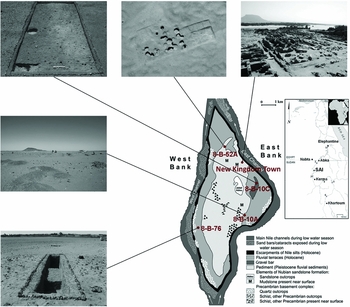
Sai Island is located in northern Upper Nubia (northern Sudan), in a gold-rich area, and had a central strategic position and historical relevance until Ottoman times (Vercoutter Reference Vercoutter and Gratien1986; Geus Reference Geus1998, Reference Geus and Kendall2004; Budka Reference Budka2011; Garcea Reference Garcea, Kabaciński, Chłodnicki and Kobusiewicz2012) (Figure 1). Its earliest ceramic production dates to the Khartoum Variant horizon (c. 7600–4800 BC) and was made by semi-sedentary hunting-fishing-gathering populations (Jesse Reference Jesse and Nelson2002; Garcea Reference Garcea2006; Gatto Reference Gatto2006a; Honegger & Williams Reference Honegger and Williams2015). This pottery was part of a large cultural sphere of influence, spreading from the Second Cataract in the north to the Kerma region in the south, and from the Eastern Desert (Atbai) to the Nabta-Kiseiba area of the Egyptian Western Desert (Garcea & Hildebrand Reference Garcea and Hildebrand2009). During the Abkan horizon (c. 5500–3700 BC), the occupants of Sai Island gradually adopted animal husbandry (cf. Nordström Reference Nordström1972; Lange & Nordström Reference Lange, Nordström, Kroeper, Chłodnicki and Kobusiewicz2006; Garcea in press); pottery of this period demonstrates that social interactions changed and developed along a north–south axis parallel to the Nile (Garcea & Hildebrand Reference Garcea and Hildebrand2009).
Map of Sai Island showing the archaeological sites discussed in this study (modified after Garcea & Hildebrand Reference Garcea and Hildebrand2009).

This picture was reinforced during the Pre-Kerma horizon (c. 3600–2600 BC) (Hildebrand & Schilling Reference Hildebrand and Schilling2016). Trade between populations from Pre-Dynastic Egypt, the A-Group in Lower Nubia, and the Pre-Kerma in Upper Nubia (Hildebrand Reference Hildebrand and Gratien2006–Reference Hildebrand and Gratien2007) was clearly indicated at Sai Island by exotic Asian domesticated grains exchanged with A-Group or Early Dynastic people, along with local wild species (Geus Reference Geus1998; Garcea & Hildebrand Reference Garcea and Hildebrand2009). The first distinct territorial and cultural consciousness of Nubia was seemingly established at this time and developed rapidly, culminating in the birth of the Nubian Kingdom of Kerma (c. 2500 BC) (Bonnet Reference Bonnet and Valbelle2014).
The exact boundaries of the Kingdom of Kush (Bonnet Reference Bonnet and Valbelle2014), with its capital at the Third Cataract, are still partly unclear (Smith Reference Smith2003: 80). In any case, a large community of Kerma Nubians is attested at Sai Island prior to the Eighteenth Dynasty, in the Ancient and Classical Kerma periods (Gratien Reference Gratien1986). As a northern outpost of the rival kingdom of Kush, Sai was of prime importance during the Egyptian southern expansion in the early New Kingdom (see Budka Reference Budka2014: 56 for further references). By the mid Eighteenth Dynasty, Sai had become one of the most important Egyptian centres in Upper Nubia. The diversification of the pottery at Sai allows for comparison with material from Egyptian sites like Elephantine—showing a mixture of Nubian and Egyptian ceramics, but with locally made Egyptian-style vessels still prevailing (Budka Reference Budka2014). The latter are not addressed in this paper, which focuses on Nubian ceramic traditions.
The dataset presented in this paper includes ceramic assemblages from various sites on Sai Island. The prehistoric assemblage comes from the excavation of four sites. These are 8-B-10C, a Khartoum Variant settlement with two phases of occupation; 8-B-76, a settlement with Khartoum Variant and Abkan occupations (Garcea Reference Garcea2016); and 8-B-52A and 8-B-10A, respectively a Pre-Kerma grain storage site and a Late Pre-Kerma habitation site (Geus Reference Geus1998, Reference Geus and Kendall2004; Hildebrand Reference Hildebrand and Gratien2006–Reference Hildebrand and Gratien2007; Garcea & Hildebrand Reference Garcea and Hildebrand2009; Hildebrand & Schilling Reference Hildebrand and Schilling2016). The Nubian Eighteenth Dynasty assemblage comes from the New Kingdom town of Sai Island (Budka & Doyen Reference Budka and Doyen2013; Doyen Reference Doyen, Anderson and Welsby2014; Budka Reference Budka2015) (Figure 1; see also online supplementary material Document S1).
The pottery corpus—macroscopic data
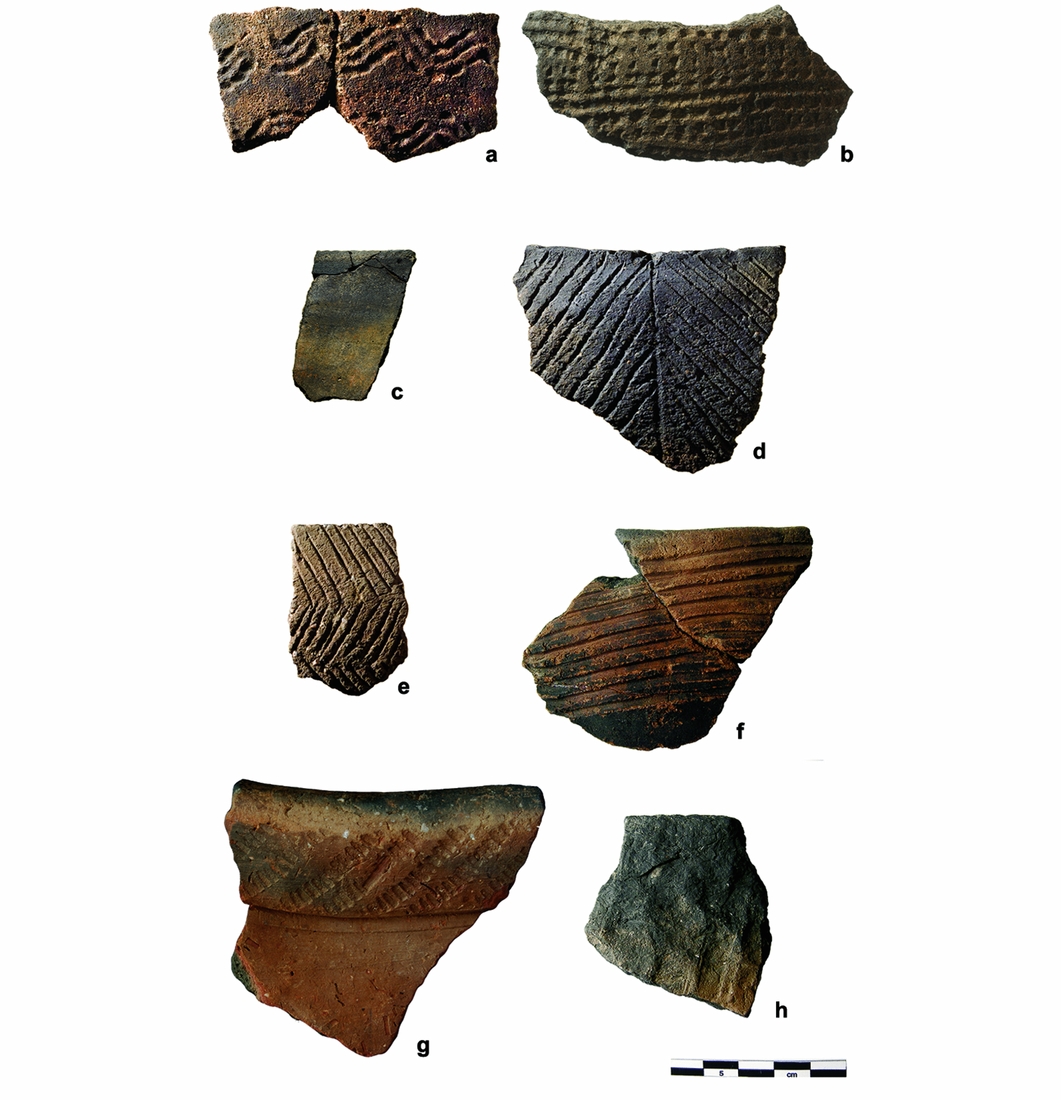
The makers of Khartoum Variant ceramics appear to have lacked systematic knowledge of pottery manufacturing. They mostly produced coarse-grained open bowls and jars, with poorly sorted inclusions. Surfaces were typically decorated with dotted wavy lines and zigzag (rocker technique) impressions with milled and notched rims (Figure 2a–b).
Potsherds of the types: a–b) Khartoum Variant; c) Abkan; d–e) Pre-Kerma; and f–h) Nubian-style New Kingdom, Eighteenth Dynasty. (Photographs by R. Ceccacci and G. D'Ercole.)
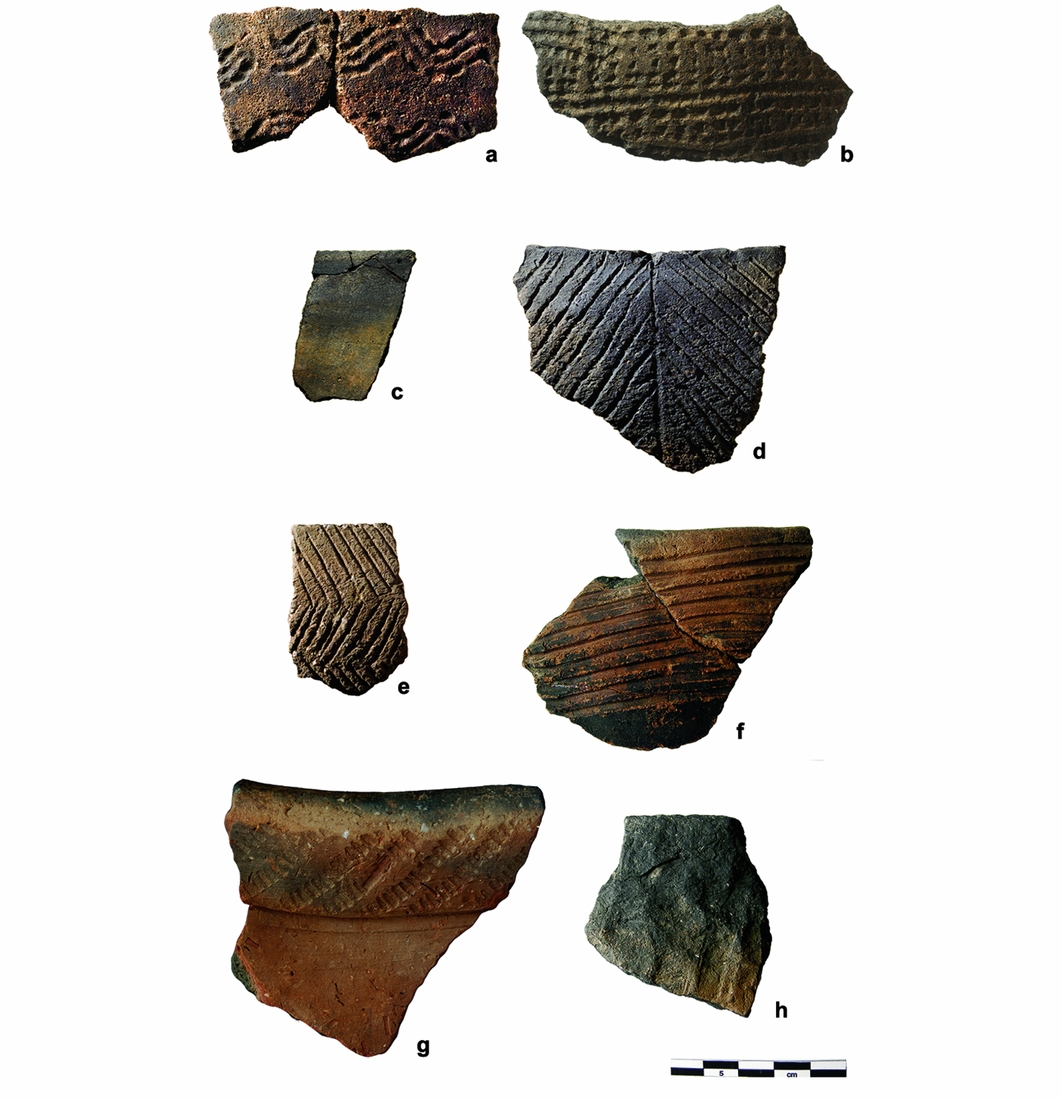
During the Abkan and Pre-Kerma horizons, significant technological and stylistic changes occured in ceramic manufacturing. Abkan vessels have straight or rounded walls and are usually undecorated, although they were sometimes decorated with zigzag (rocker technique) impressions. For the first time, some surfaces were burnished (Figure 2c). The Pre-Kerma pottery is very distinct and shows further technological and stylistic changes. Large storage jars, mostly from the granary site 8-B-52A (Garcea Reference Garcea, Kabaciński, Chłodnicki and Kobusiewicz2012), and bowls are predominant. Burnished and polished surfaces are common, and geometric motifs, zigzags (rocker) and alternately pivoted stamped impressions are present (cf. D'Ercole et al. Reference D'Ercole, Eramo, Muntoni, Anderson and Welsby2014) (Figure 2d–e). Some ‘black-topped’ vessels resemble the Lower Nubian A-Group (Geus Reference Geus1998; Gatto Reference Gatto2006b; Garcea Reference Garcea, Kabaciński, Chłodnicki and Kobusiewicz2012).
Various interactions are attested between Nubia and Egypt from the fourth millennium BC and influences on the Nubian pottery tradition are traceable. The time of the New Kingdom (c. 1539–1077 BC) is notable for the appearance of indigenous, hand-made pottery of the Kerma tradition within the corpus of Egyptian wheel-made ceramics.
The most common Nubian vessels of the Kerma tradition from the New Kingdom settlement are illustrated in Figure 2f–h. They mainly comprise cooking pots and large storage jars, but black-topped fine ware is also attested. Mat and basketry impression is very common; incised and rocker-stamped decorations represent direct links to the Pre-Kerma tradition, but fell out of use during the later Eighteenth Dynasty (cf. Rose Reference Rose, Forstner-Müller and Rose2012; Budka Reference Budka2014: 71).
During the New Kingdom, the ceramic repertoire of Sai Island was characterised by a complex mix of Egyptian and Nubian cultural elements. Hybrid types can be observed, with typical Nubian decorative patterns applied to Egyptian vessel forms, as well as technical expedients in some aspects of manufacture (e.g. hand-finishing for otherwise wheel-thrown vessels). The appearance of such hybrid types is significant, but not easily explained (cf. Budka Reference Budka2014: 68–69).
Laboratory analyses
Materials and methods
Eighty-two samples (43 prehistoric and 39 New Kingdom) were analysed from the sites. Sampling was undertaken systematically, in order to represent equally the cultural and chronological phases, and to address the macroscopic, stylistic and technological variations within each horizon, as well as the differing stratigraphic positions of the various artefacts. The 43 prehistoric samples included 14 Khartoum Variant sherds (9 from 8-B-10C and 5 from 8-B-76), 11 Abkan sherds from 8-B-76, and 18 Pre-Kerma sherds (9 from 8-B-52A and 9 from 8-B-10A). The 39 New Kingdom samples were selected from the northern and eastern sectors of the New Kingdom town to the south-east of 8-B-52A (see Table S1 in the online supplementary material).
All samples were analysed by instrumental neutron activation analysis (INAA), a trace elemental composition method that uses a ‘chemical fingerprint’ to identify the provenance of the samples (see Sterba et al. Reference Sterba, Mommsen, Steinhauser and Bichler2009 for the analytical procedure). Optical microscopy (OM) was used in combination with INAA on 66 samples, as it allows for observing the optical properties of the minerals and can provide a qualitative determination of the mineralogical phases of the pottery. This analysis has been directed at characterising different fabrics and examining particular technological aspects of the manufacturing sequence (i.e. raw material procurement, preparation and production). Furthermore, four samples discussed in this paper were examined by scanning electron microscope/energy dispersive spectrometry (SEM/EDS) in order to determine the structure and chemical composition of particular mineralogical phases.
The results of the petrographic (OM) analysis of the prehistoric samples have been published elsewhere (D'Ercole et al. Reference D'Ercole, Eramo, Muntoni, Anderson and Welsby2014, Reference D'Ercole, Eramo, Garcea, Muntoni and Smith2015, in press). Here, they are integrated and compared with the compositional INAA and the SEM/EDS results of the prehistoric and the New Kingdom materials, as well as the petrographic data of the New Kingdom samples. Petrographic observations on the prehistoric samples were carried out with a Carl Zeiss ‘Axioskop 40 pol’. The New Kingdom samples were analysed by a Nikon Eclipse E600 POL microscope, within the ERC project AcrossBorders. The SEM used for the analysis of the prehistoric samples was a LEO EVO-50XVP, fitted with a PentaFET Si (Li) detector for energy dispersive microanalysis. A Jeol JXA 8530-F was used for the analysis of the New Kingdom samples. INAA data were further evaluated using a modified Mahalanobis Distance (Beier & Mommsen Reference Beier and Mommsen1994) for the best relative fit.
Petrographic data
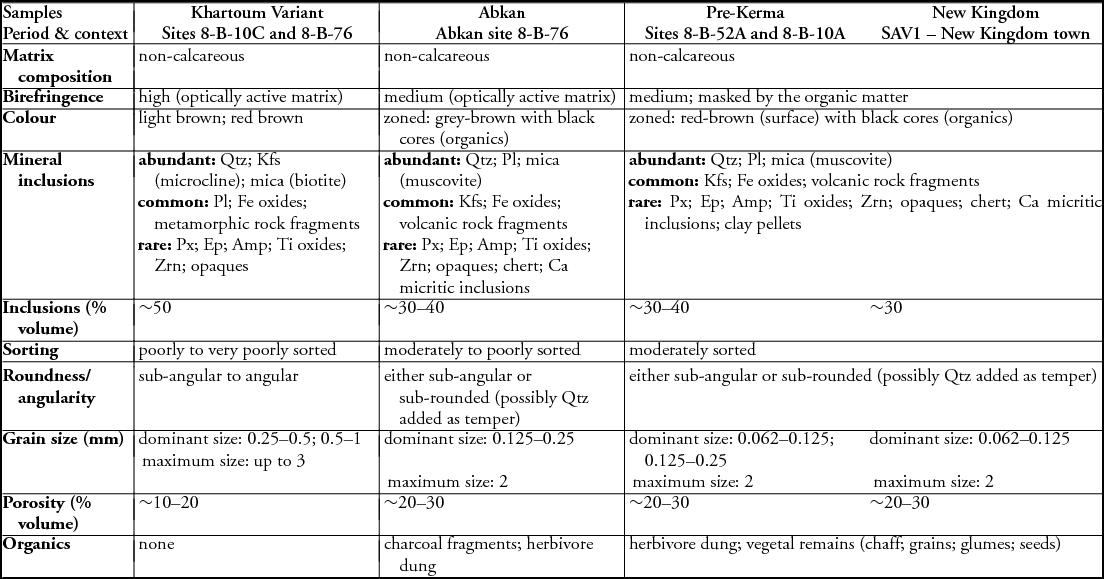
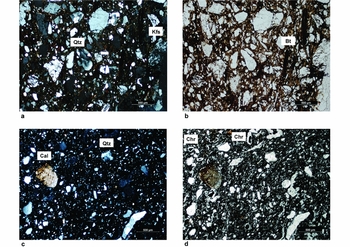
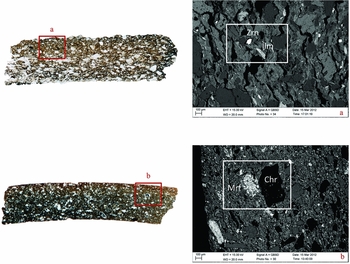
The main petrographic features are summarised in Table 1. The Khartoum Variant pottery (Figures 3a–b & 4a) does not contain organic tempers, and was fabricated with a residual clay deriving from the weathering of metamorphic rocks, seemingly originating from the Nubian Precambrian basement in the Eastern Sahara. Conversely, the composition and grain size of the Abkan samples (Figures 3c–d & 4b) indicate the selection of Holocene sediments of alluvial origin. This pottery is tempered with sub-millimetre charcoal fragments (D'Ercole et al. Reference D'Ercole, Eramo, Garcea, Muntoni and Smith2015).
Summary of the main petrographic features of the samples. Symbols for mineral inclusions as in Kretz Reference Kretz1983.

Microphotographs of examples from the Khartoum Variant sample: (a–b) showing quartz (Qtz), K-feldspar (Kfs) (a: cross polarised light) and biotite (Bt) (b: plane polarised light) inclusions; and from the Abkan sample (c–d) showing calcite (Cal), quartz (Qtz) (c: cross polarised light) and charcoal (Chr) (d: plane polarised light) inclusions. (Photographs by G. Eramo and G. D'Ercole.)

Thin section and SEM images showing a Khartoum Variant sample (a) with zircon (Zrn) and ilmenite (Ilm) inclusions and an Abkan sample (b) with a metamorphic rock fragment (Mrf) and a charcoal inclusion (Chr). (SEM photographs by G. Eramo.)

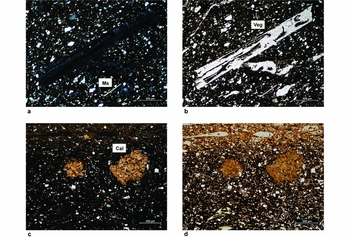
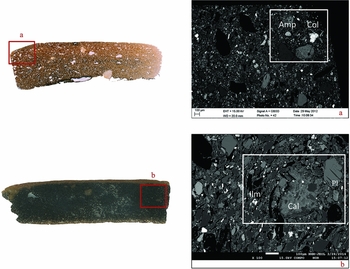
The Pre-Kerma (Figures 5a–b & 6a) and Nubian-style pottery from the New Kingdom sites (Figures 5c–d & 6b) are petrographically consistent with the Abkan fabric, suggesting the same (or very similar) raw material: a secondary clay of alluvial origin. Both the Pre-Kerma and Kerma vessels from the Eighteenth Dynasty contexts are commonly tempered with a significant quantity of herbivore dung and vegetal fibres.
Microphotographs of examples from the Pre-Kerma sample: (a–b) showing muscovite (Ms) (a: cross polarised light) and vegetal (b: plane polarised light) inclusions; and from the Nubian-style New Kingdom sample (c–d) showing calcite (Cal) inclusions (c: cross polarised light; and d: plane polarised light). (Photographs by G. D'Ercole.)

Thin section and SEM images showing a Pre-Kerma sample (a) with amphibole (Amp) and collophane (Col) inclusions, and a Nubian-style New Kingdom sample (b) with ilmenite (Ilm), micritic calcite (Cal) and plagioclase (Pl) inclusions (SEM photographs by G. Eramo (a) and D. Topa (b)).

Both the prehistoric and the Nubian New Kingdom samples showed a medium to high index of birefringence of the clayey minerals (Table 1), which indicates moderately low firing temperatures (≤800°C) (D'Ercole et al. Reference D'Ercole, Eramo, Garcea, Muntoni and Smith2015, in press).
Chemical INAA data
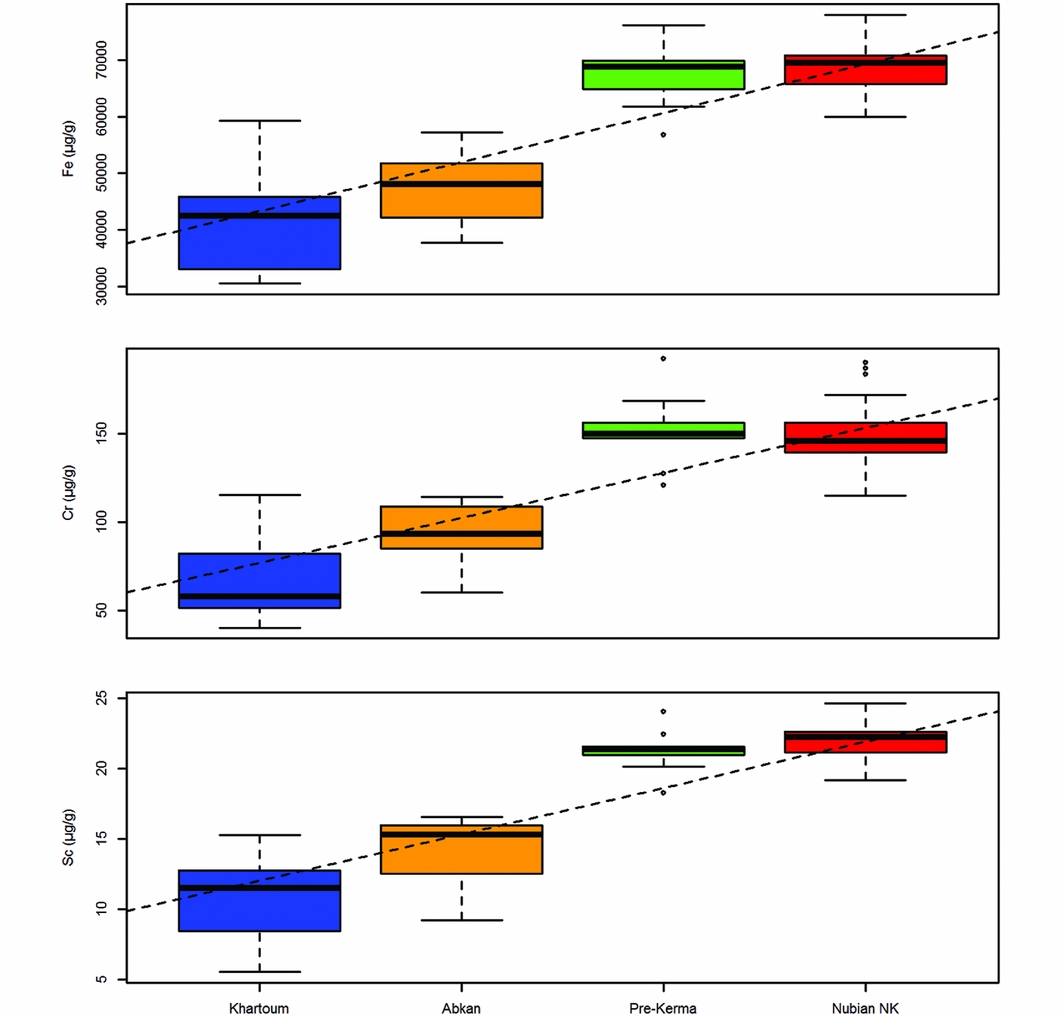
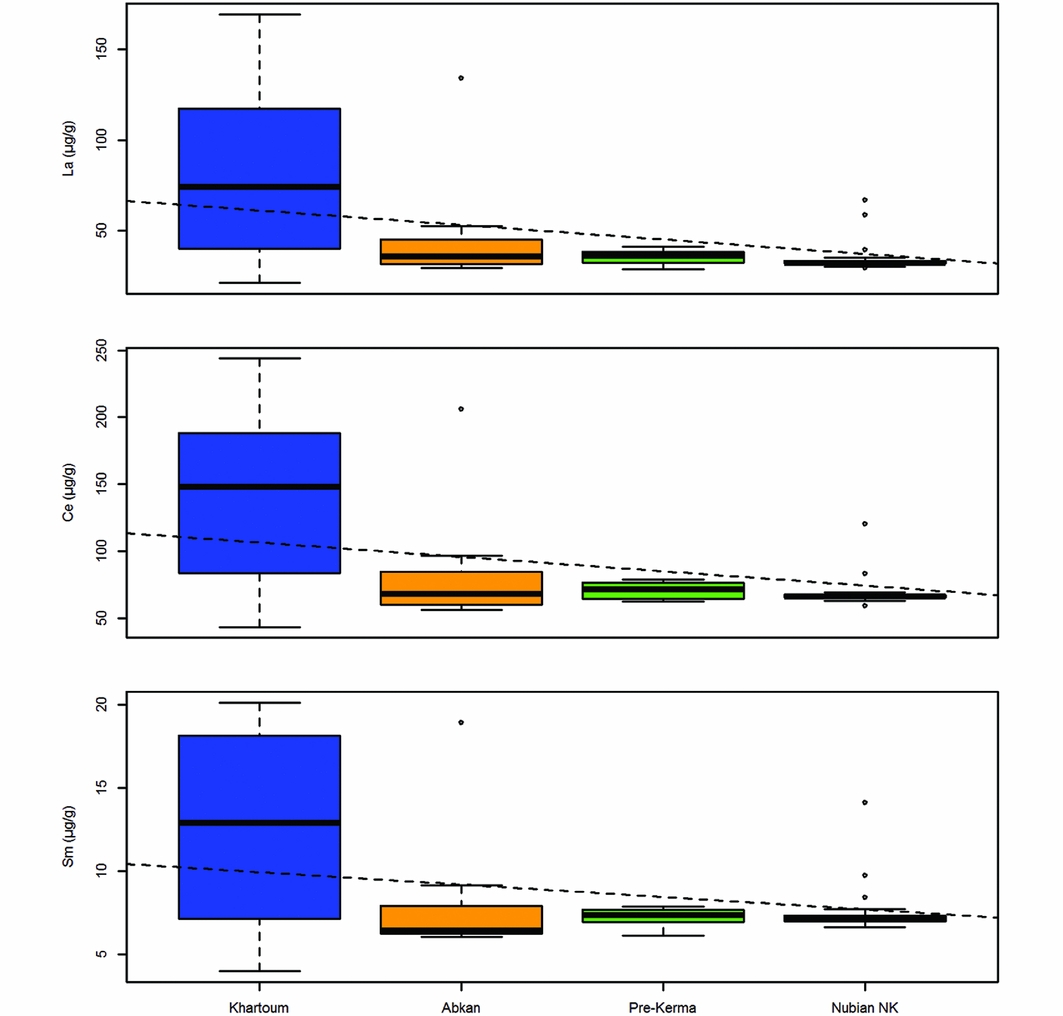
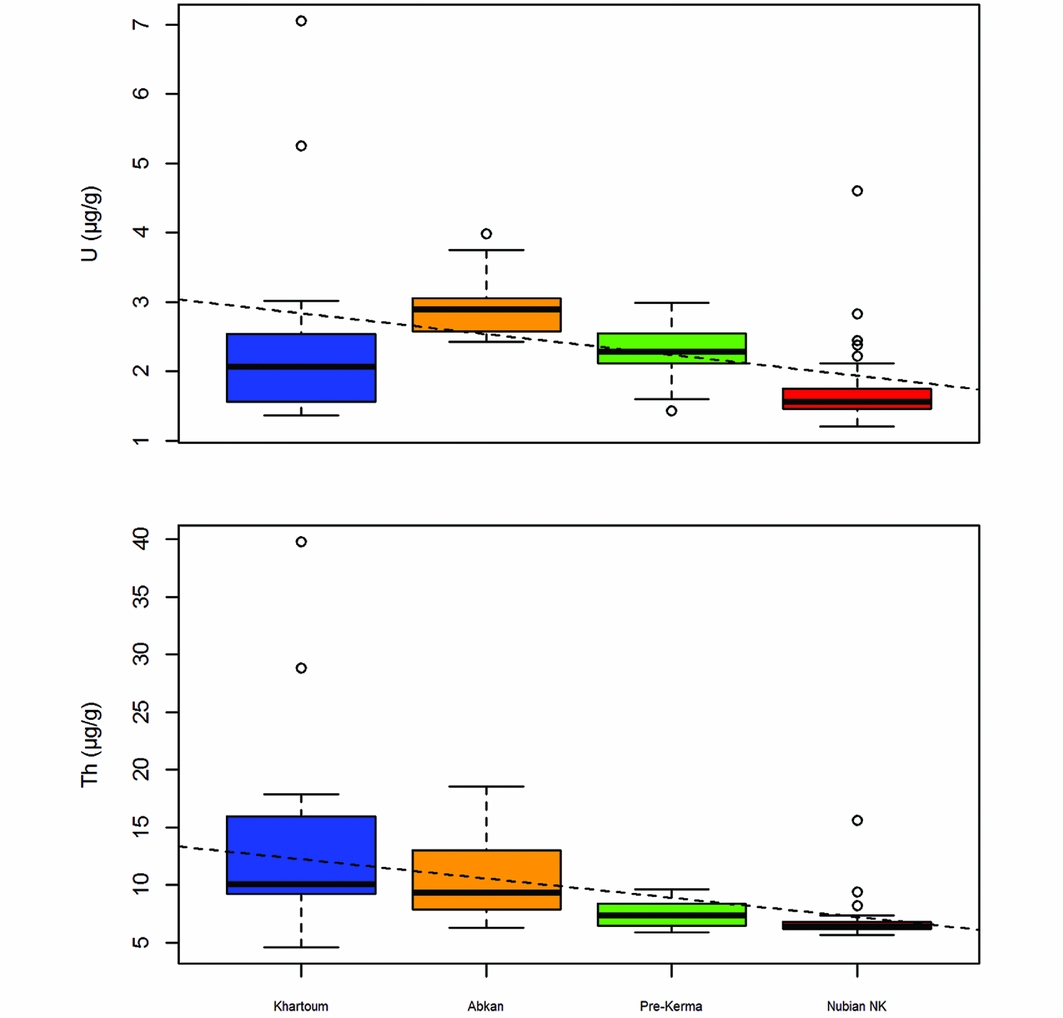
The chemical data from INAA are consistent and enhance the petrographic results, allowing a better understanding of the geochemical qualities of the pottery across time (primary data in Table S2 in the online supplementary material). Figure 7 shows the chemical behaviour of three higher transitional oxides: scandium (Sc), chromium (Cr) and iron (Fe). These elements are geochemically related, and the boxplots clearly show how the means of the groups progressively increase with time, being lower for the Khartoum Variant and higher for the Pre-Kerma and New Kingdom samples. Figure 8 shows the behaviour of three lanthanides: samarium (Sm), cerium (Ce) and lanthanum (La). Here we observe a reverse pattern: the means of the groups decrease with time, and the Khartoum Variant has the highest values. Figure 9 compares two actinides: thorium (Th) and uranium (U). Thorium shows the same behaviour as the lanthanides: lower values in the younger samples. The behaviour of uranium is more irregular, and the Abkan samples have the highest mean. Regardless of the elements, the older samples always show wider spreads than the younger ones.
Boxplots for three higher transitional oxides: Sc, Cr and Fe. All values in µg/g. The dashed line indicates the increase of the group mean over time, being lower for the Khartoum Variant and higher for the Pre-Kerma and New Kingdom samples.

Boxplots for three lanthanides: Sm, Ce and La. All values in µg/g. The dashed line indicates the decrease of the group mean over time, being higher for the Khartoum Variant and lower for the Pre-Kerma and New Kingdom samples.

Boxplots for the actinides: U and Th. All values in µg/g. The dashed line indicates that uranium has the highest mean in the Abkan samples while thorium decreases over time, being higher for the Khartoum Variant and lower for the Pre-Kerma and New Kingdom samples.

The sources of the lanthanides and actinides are most probably pegmatites and minerals such as monazite. The formations of the Nubian Precambrian basement complex, partially emerging in the inner pediment of Sai, are often overlapped by quartz and pegmatite veins. In general, pockets of pegmatite can be found scattered within granitic gneisses (e.g. Küster Reference Küster1995: 73–74). This is also well correlated in the older Khartoum Variant samples, with higher amounts of potassium (K), rubidium (Rb), zirconium (Zr) and hafnium (Hf), which all occur in granitoid and metamorphic rocks. In contrast, elevated levels of scandium (Sc), chromium (Cr) and iron (Fe) characterise the younger Pre-Kerma and Nubian-style New Kingdom samples, and are probably related to the heavy minerals (e.g. pyroxenes, magnetite and titanomagnetite) that are detrital components of Holocene Nile alluvia (cf. Garzanti et al. Reference Garzanti, Andò, Vezzoli, Megid and El Kammar2006; see also Woodward et al. Reference Woodward, Macklin, Fielding, Millar, Spencer, Welsby and Williams2015).
The grain size of the samples—which are coarser in the Khartoum Variant and Abkan, but much finer in the Pre-Kerma and Nubian-style New Kingdom examples—may have also played an important role, as the conspicuous presence of large quartz and feldspar grains would have diluted the heavy mineral content (and consequently reduced the levels of Sc, Cr and Fe) in the Khartoum Variant samples. Moreover, as these samples contained more silica (quartz), they also have higher proportions of lanthanides and actinides.
Discussion
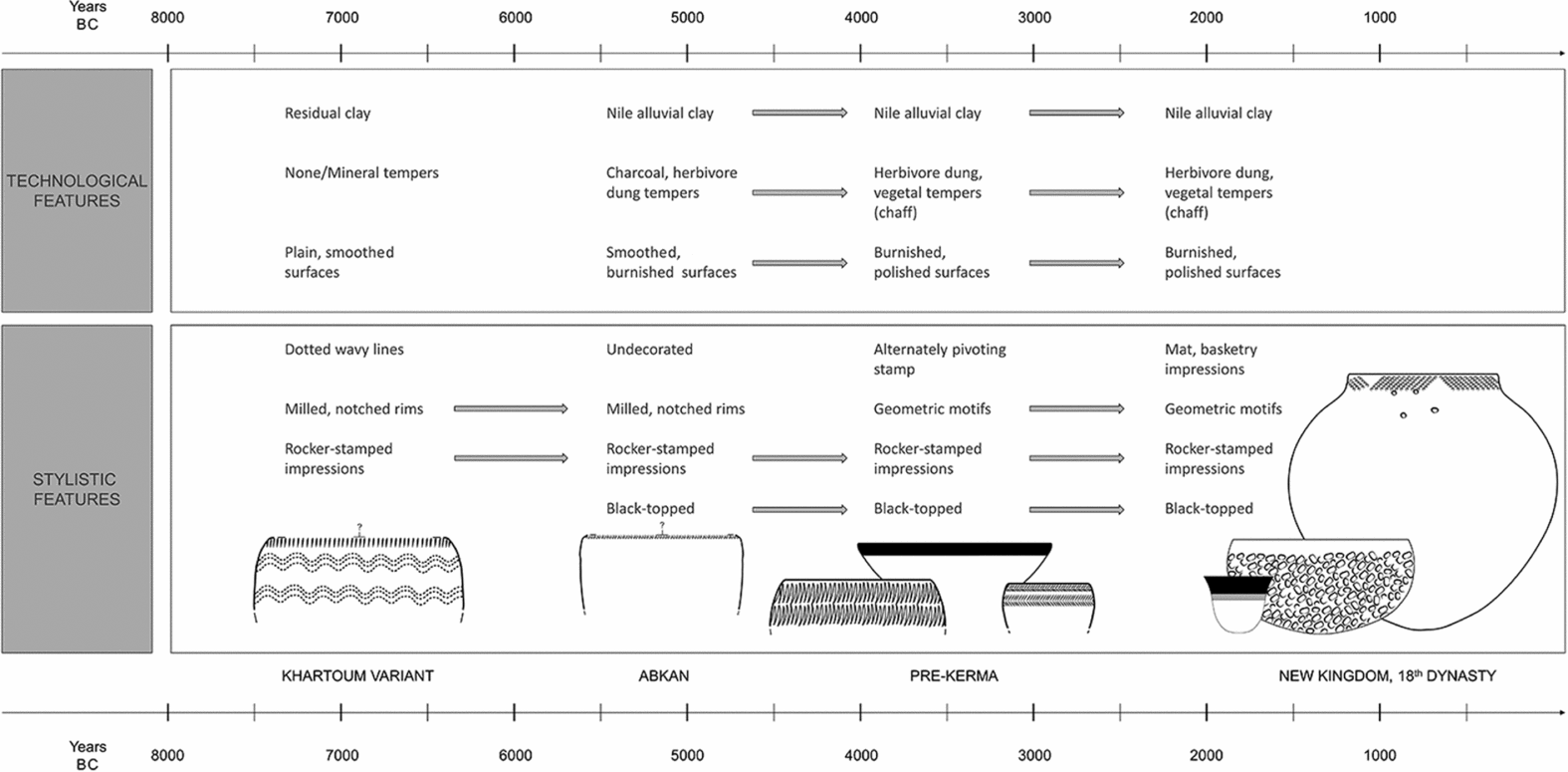
By looking at the general diachronic development and changes in the manufacturing stages of pottery from the Khartoum Variant to the Nubian production of the Eighteenth Dynasty, changes may occur from a single step to the complete manufacturing process, adjusting the morphological and decorative styles, or even the ‘technological style’ (Lechtman Reference Lechtman, Lechtman and Merrill1977). When a change occurs in the morphological or decorative attributes, it commonly expresses an overt and conscious message, which usually reflects group identity. In contrast, the technological style is often related to more subtle methods of production, although technological changes can be explained in terms of functional/performance criteria (e.g. Schiffer & Skibo Reference Schiffer and Skibo1997) or as cultural choices (e.g. Sillar & Tite Reference Sillar and Tite2000). The changes observed in the analysed assemblages from Sai Island are summarised in Figure 10.
Summary of the main technological and stylistic features of the ceramic assemblages over time. The arrows show continuity in technological and stylistic traditions (figure by G. D'Ercole).

Evidence for continuity and discontinuity
The first significant change or technological discontinuity was recognised between Khartoum Variant and Abkan productions, which exhibit several variations affecting all stages of the chaîne opératoire:
-
1. raw material procurement: Holocene Nile alluvial clay vs Pleistocene residual clay;
-
2. preparation: organic tempers vs mineral tempers;
-
3. production: introduction of new shapes, surface treatments and decorative techniques/motifs.
Most of the technological choices introduced as ‘innovations’ in the Abkan remained unchanged in the following periods. Essentially, potters continued to use Holocene Nile alluvial clay as raw material and to prepare the paste by adding organic tempers. Despite the continuity of raw material procurement and preparation in the initial manufacturing stages, several innovations were recorded in the production stage of the manufacturing sequence during the Pre-Kerma period and into the Kerma Kingdom, as well as in the Eighteenth Dynasty. New surface treatments and a significant increase in vessel shapes, decorative motifs and techniques appeared, although the firing technology did not change considerably.
Explanations for continuity and discontinuity
The Khartoum Variant pottery was produced by hunting-fishing-gathering groups. As in other North African contexts (Marshall & Hildebrand Reference Marshall and Hildebrand2002), these groups intensively exploited a wide range of local food resources, requiring increased sedentism and the development of storage facilities, including ceramic containers (cf. Garcea Reference Garcea2006; Hildebrand & Schilling Reference Hildebrand and Schilling2016). These first pots were probably used for storage within the household as a substitute for perishable organic containers. An ethnographic parallel is presented by the Dorobo hunter-gatherers in Samburu (Kenya), who have been more or less residential for several generations and use a range of pottery types, including large storage vessels for water, honey and beer (Grillo Reference Grillo2014). Due to their use as heavy-duty storage items, the Khartoum Variant pots primarily needed to be resistant to mechanical stress, explaining the massive presence of quartz and K-feldspars in the paste (Dal Sasso et al. Reference Dal Sasso, Maritan, Salvatori, Mazzoli and Artioli2014). Aside from the impressed decorations covering the body of the vessel, little care was paid to the other steps of the chaîne opératoire, as manufacturing methods were rather opportunistic and possibly based on trial and error.
In correspondence with the shift to a food-production economy, Abkan pottery acquired a central role in daily life and became necessary for several functions: storing, processing, cooking and serving food. Furthermore, it was also used as a vehicle for the transportation and exchange of goods with other groups, as illustrated by the trade between Pre-Kerma and A-Group people. The technological change or discontinuity in the steps of procurement and preparation of the clay observed since the Abkan horizon is suggestive of the consolidated skills acquired for pottery manufacture. The potters had learned which raw materials and tempers were good for making their pots and how to prepare them properly for their purposes; once the most suitable ‘recipe’ was found, it was maintained while being adjusted and repeated over time. This level of standardisation has also been recognised with regard to the Neolithic assemblages from other sites in central Sudan (e.g. Al Khiday, 17km south of Khartoum; Dal Sasso et al. Reference Dal Sasso, Maritan, Salvatori, Mazzoli and Artioli2014) and in the Egyptian Sahara (e.g. Nabta Playa, in the Western Desert; Zedeňo Reference Zedeňo and Nelson2002).
Within the material consistency from the Abkan onwards, innovations in the successive steps of the chaîne opératoire (shaping, surface treatment and decoration) were recorded. These aesthetic and functional variables, which are much more prone to change than the choice of raw materials and tempers, were also means for diverse groups to express and communicate their cultural identities. Interestingly, the variety of decorative styles and vessel shapes increased lineally along with the social complexity of the groups until the Kerma Classic period, when it reached its highest level of diversity. It declined again during the New Kingdom when the Nubian culture was absorbed into the Egyptian administrative and social system.
Conclusion
This study has illustrated the development of the ceramic manufacturing traditions from Sai Island (Nubia) across six millennia (c. 7600–1300 BC). Combining analyses of prehistoric and Pharaonic Nubian pottery production demonstrates the value of adopting a broader diachronic perspective and a scale of analysis that has previously been ignored. Furthermore, our analysis combined macroscopic studies with optical microscopy and instrumental neutron activation analysis. Macroscopic data were used to address stylistic aspects and other technological traits, while OM and INAA data allowed consideration of raw materials and tempers.
With the exception of the Khartoum Variant, with its distinctive technological and decorative traits, Nubian ceramic technology remained almost unchanged from the Middle Holocene onwards, once the ‘successful recipe’ was found. Prehistoric production methods for Nubian ceramics lasted into the second millennium BC, a period when Egyptians and local communities coexisted in Nubia. At the onset of the Abkan, a major discontinuity became visible in the initial stages of the chaîne opératoire (raw material procurement: Holocene Nile alluvial clay vs Pleistocene residual clay; preparation: organic tempers vs mineral tempers). In the following periods, technological and stylistic development of hand made Nubian vessels continued within the same ceramic tradition until the New Kingdom, even after the wheel technique had become available. On the other hand, recurrent discontinuities appeared in every period in the final stages of the chaîne opératoire (decoration and surface treatment). These discontinuities suggest that while knowledge of pottery manufacture was well established and changed very little, chronological and cultural differences were expressed through aesthetic, stylistic or functional variables.
Acknowledgements
The analyses of the New Kingdom material and INAA of the assemblages from all periods, including prehistoric and New Kingdom samples, were funded by the European Research Council Starting Grant 313668 ‘AcrossBorders’, which was hosted by the Austrian Academy of Sciences and currently by the Ludwig Maximilians-University in Munich. We are grateful to Michaela Foster (Atominstitut, Vienna) for her help in the preparation of the INAA samples; to Claudia Beybel (Department of Geodynamics and Sedimentology, University of Vienna) for the preparation of the New Kingdom thin sections; and to Dan Topa (Naturhistorisches Museum Wien) for the SEM/EDS analysis of the New Kingdom samples.
The petrographic and SEM/EDS analysis of the prehistoric samples were undertaken at the Department of Earth and Geoenvironmental Sciences, University of Bari, Italy. We thank Giacomo Eramo and Italo M. Muntoni.
Fieldwork at the prehistoric sites on Sai Island was conducted thanks to an agreement between Sudan's National Corporation for Antiquities and Museums and E.A.A. Garcea, who was entrusted with the Research Unit for the Later Prehistory within the Sai Island Archaeological Mission of the University of Charles de Gaulle-Lille 3 in 2004. Fieldwork of the New Kingdom town of Sai Island is presently directed by J. Budka and funded by European Research Council Starting Grant 313668 ‘AcrossBorders’. We are grateful to the former and present directors, Didier Devauchelle and Vincent Francigny respectively, of the Sai Island Archaeological Mission of the University of Charles de Gaulle-Lille 3; and to the General Director, Abdelrahman Ali Mohamed, and Inspector, Huda Magzoub, of Sudan's National Corporation for Antiquities and Museums.
Finally, we thank Meg L. Gundlach (AcrossBorders project, LMU Munich) for help in translating this article.
Supplementary material
To view supplementary material for this article, please visit https://doi.org/10.15184/aqy.2016.262