Between the 1867 Representation of the People Act, and the Liberals' landslide victory at the 1906 general election, British politics underwent a transformation.Footnote 1 Political developments during this period were shaped by politicians' efforts to reconcile themselves to the consequences of endowing working men with the vote. The advent of the popular parliamentary franchise fundamentally reshaped the British political landscape, upsetting an existing partisan balance and increasing electoral volatility. To reconcile the established political order and nascent democracy, while avoiding a challenge to the political order, politicians were forced to interact with their plebeian rank and file.Footnote 2 After 1867, the Conservative leader, Benjamin Disraeli, re-orientated his party. The Tories were traditionally associated with the landed interest, but during speaking tours of Manchester and Glasgow in 1872 and 1873, Disraeli outlined his desire to improve the living conditions of the working classes through sanitary legislation.Footnote 3 To many workers, this suggested that Disraeli had their interests at heart, despite accusations that he did not understand the issues involved, and that all he had done was ‘stir up among half-blind crowds in Lancashire … that indignation which people are sometimes pleased to term the “Conservative Reaction”’.Footnote 4
Until the 1980s, popular Toryism in Lancashire was thought to result from a widespread Protestant reaction against the influx of Irish Roman Catholics, who had fled the Potato Famine.Footnote 5 However, in Work, society and politics: the culture of the factory in later Victorian England (1980), Patrick Joyce sought to construct a more substantial explanation for the phenomenon. Joyce argued that the ‘Conservative Reaction’ was the result of factory employers creating a deferential political culture among their workers.Footnote 6 Joyce sought to take a new direction in labour history by placing cultural change at the centre of his analysis, and using a ‘synthesis of social theory and … historical process’ to ‘reconstruct the totality of the historical experience’.Footnote 7 In Work, society and politics, Joyce argued that the automation of manufacturing industry before 1850 wrought fundamental cultural change, especially in the factory-dominated towns of the textile districts of Lancashire and the West Riding, on which his study focused. He argued that mechanization fundamentally altered the structure of working-class society, bringing a ‘mature industrial proletariat’ into being.Footnote 8 During this process, the removal of traditional skill hierarchies transferred control of the manufacturing system from worker to employer, thus subordinating workers to the wage system and factory discipline.Footnote 9 This was validated by the use of the family as the basic work unit in factories, which left the family authority structure intact. Factory life thus came to reflect that of the family, with the employer filling the role of patriarch. The factory could, therefore, function ‘as a political force because it represented a common life’.Footnote 10 Consequently, the ‘popular protest and disturbance’ of the 1840s gave way to ‘stability and harmony within the class structure’ post-1850. Joyce also sought to dispose of the Marxist concept of a ‘labour aristocracy’ since he believed that skill hierarchies had been dismantled, and, therefore, ‘what working people had in common [was] more important … than that which is held to have divided them’.Footnote 11 Moreover, he argued that deference was secured by inducement; employers could threaten eviction or to ‘sell out and go’ if their operatives did not conform to workplace policy or comply with their religious views, such as ensuring their children attended Sunday school.Footnote 12
By questioning Joyce's thesis, this article both substantiates the concerns of many critics of his work in the 1980s, and offers an alternative explanation for the popular-political developments of Bury in south-east Lancashire. First to be examined is Joyce's claim that his study formed a basis for the reinterpretation of later Victorian social relations, as it encompassed a ‘valuable span of industrial and political diversity’.Footnote 13 Geoffrey Crossick has noted, however, that ‘the most serious problem’ with Work, society and politics was that it primarily focused on the moderate-sized factory town of Blackburn, and, consequently, that its model could not account for industrially diverse cities, such as Manchester, Liverpool, and Leeds.Footnote 14 By reanalysing the information on which the central sociological premise of Joyce's argument was based, this article questions whether the factory fulfilled the same role in all Lancashire towns. The analysis of the socio-economic data of Lancashire from the 1881 census shows that, contrary to the ‘three Lancashires’ model, which Joyce inherited from Henry Pelling, the county was more economically diverse.Footnote 15 To corroborate this argument, the socio-economic environments of Bury and the neighbouring town of Bolton are examined and contrasted with Blackburn, Joyce's primary case study. Bury and Bolton had almost identical economic structures, but divergent political trends in the later nineteenth century, and neither was a Conservative stronghold, as Joyce assumed. It is thus argued that while Joyce's claims may be accurate for Blackburn, they cannot be used to generalize for either Lancashire or the nation.
The second section of this article addresses the empirical basis of Joyce's argument: his study of the Blackburn and Bury poll books from the 1868 election. This analysis was heavily indebted to the electoral sociology tradition pioneered by Lewis Namier and H. J. Hanham in the 1950s. Namier and Hanham suggested that electors voted according to the influence of underlying social forces and, consequently, that election results were indicative of political parties' success in adjusting to social change.Footnote 16 This approach dominated the study of elections for the period after the Ballot Act and has continued to underpin the study of later nineteenth-century politics.Footnote 17 Consequently, many landmarks of electoral sociology after 1872 remain unchallenged, although the survival of poll books and voter registers for many parliamentary elections between 1832 and 1872 have allowed a comprehensive empirical revision of this period.Footnote 18 Lately, however, electoral sociology's relevance to the era of the secret ballot has been subject to scrutiny. Through the study of discourse and the ‘linguistic turn’, attempts have been made to demonstrate that election behaviour and political loyalties cannot be reduced to underlying social structures and practices. Voters' independence and the importance of issues and ideas to their political decision-making processes have thus come to the forefront of the historiography.Footnote 19
Regardless, the shortcomings of Joyce's empirical analysis were identified by his contemporaries. It was noted that Work, society and politics was heavily indebted to the work of Joyce's doctoral supervisor, John Vincent. Pollbooks: how the Victorians voted had been published in 1967, and bequeathed many of its methodological infelicities to Joyce's work.Footnote 20 This is particularly apparent in his occupational categorization, where, as in Pollbooks, some groups were ‘too indefinite to be helpful’.Footnote 21 For instance, Joyce could not clearly identify ‘makers’ and ‘dealers’ of certain goods and accordingly grouped them with ‘small masters’. His ‘engineering’ category included ‘smiths and mechanics, among whom there would have been some factory workers; these have thus been included twice’.Footnote 22 When assessing small-scale artisan manufacturing, Joyce claimed that ‘Occupationally and socially[,] these middle groups would have merged … and to some degree have extended into the retailer and dealer group.’Footnote 23 Furthermore, Crossick noted that, rather than systematically demonstrating his case, Joyce used his data to illustrate it.Footnote 24 This article argues that he ignored the implications of some of his evidence, particularly the Bury poll book data. Joyce did not give a full analysis of the Bury findings, as he claimed they suggested ‘the general applicability of the Blackburn ones’ despite significant discrepancies between them.Footnote 25 Here, the poll book for Bury was reanalysed using a computer database and clearer occupational categories. These simplify the occupational statistics by taking the census enumerators' entries as an accurate record of occupation. The census enumerators were men familiar with the local economy and were thus aware of the difference between a ‘mechanic’ who worked in a factory and a ‘blacksmith’ who did not. By adhering to these categories, Joyce's double counting of workers has been avoided.
The final part of this article addresses another frequent criticism of Joyce: that he conveyed little sense of popular agency and that the factory workers he discussed resembled ‘shadowy and anonymous figures’.Footnote 26 Joyce dismissed plebeian radicalism as the preserve of the ‘artisanate’ who sought to defend traditional working practices with traditional methods of political activism.Footnote 27 Consequently, there is no room in Joyce's model for organic working-class liberalism, which was identified by Vincent in his Formation of the British Liberal party (1967), or for the persisting plebeian radicalism subsequently identified.Footnote 28 Although the advent of the factory may have cemented a form of class consciousness amongst industrial workers from mid-century, the factory workforce should be seen as a new generation who inherited political ideals from their predecessors, not ‘a tabula rasa on which the factory impressed its mighty stamp’.Footnote 29 Popular-political action in the early nineteenth century laid a firm foundation for the wider electoral participation of the British working man and the mid-century reform agitation, of which the central premise was that ‘labour should be directly represented in Parliament, in order that the aspirations and requirements of our working people may be fairly and properly explained’.Footnote 30 This article advances an alternative explanation of Bury's popular politics between 1868 and 1880, which demonstrates that local factory owners had little influence over a town's popular politics and that, in order to solicit the votes of the post-1867 electorate, candidates had to engage actively with their constituents.
I
Joyce sought to design a political model that was applicable across the entire northern textile region, based on his assumption that a dominant industry ‘shaped the whole personality of town life’.Footnote 31 This analysis was founded on Pelling's ‘Three Lancashires’ paradigm, in which he presented urban ‘Lancastria’ (Lancashire, southern Westmorland, Cheshire, the High Peak of Derbyshire and north-west Staffordshire) as having a tripartite structure, which has become known as the ‘three Lancashires’ model. Here, Lancastria was divided into three economic areas: ‘cotton-weaving Lancashire’ in the north, ‘cotton-spinning Lancashire’ in the south and east, and ‘engineering Lancashire’ in the west.Footnote 32 Pelling equated political developments in these areas with the interests of their dominant industries, although he acknowledged that the divisions were simply a convenient framework for analysis, and that the situation was more complex. He explained that within these areas, there were towns with specialist interests, including coal mining in Wigan, chemicals in Widnes, and locomotive works in Crewe.Footnote 33 This caveat was, however, subsequently ignored by Joyce.Footnote 34 Moreover, Pelling and his successors took no account of the movement of Lancastria's boundaries over time that reflected ‘changes in the scale of production, the way it was organized and the means by which it took place’. This theme still awaits its historian.Footnote 35
In this model, the political development of Bury and Bolton, both located in ‘cotton-spinning Lancashire’, should be similar. This was not the case, and it is argued here that while this can be partly explained by their economic differences, these simply provided different environments for the reception of political ideas, and thus a foundation for the divergence of their political representation. It is not the aim here to undertake a full-frontal assault on Pelling's model; as Geoff Timmins and Jutta Schwarzkoph have recently shown, there was a substantial degree of regional concentration and local specialization in the industries of Lancashire in the later nineteenth and early twentieth centuries.Footnote 36 Instead, the object is to demonstrate that Pelling's model should not be used rigidly; it oversimplifies the economic character of the county's towns and thus disguises the subtleties and nuances of political developments in nineteenth-century Lancashire.
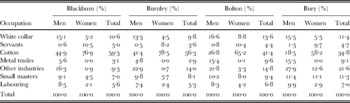
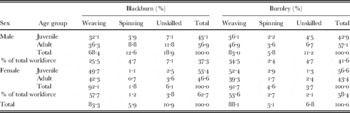
The 1881 census data for ‘cotton Lancashire’ reveals the heterogeneity of the county's urban economies. Cotton manufacturing dominated north Lancashire towns, for example Blackburn and Burnley, and only here did men form a significant part of the industry's workforce. Cotton manufacture employed about 60 per cent of the total workforce (40 per cent of male workers), of which between 80 and 90 per cent were weavers (Tables 1 and 2). This contrasts with Bury and Bolton, where cotton manufacture only accounted for about a third of total employment and 20 per cent of male employment, compared with 60 per cent of female employment (Table 1). It was, therefore, Joyce's focus on Blackburn that allowed him to claim that women simply maintained the status quo and that the cotton-manufacturing industry was the ‘dominant’ political influence on electors.Footnote 37
Occupational structure of Blackburn, Burnley, Bolton, and Bury, 1881

Source: PP 1883 (C 3722) lxxx, Census of England and Wales 1881, vol. iii (ages, condition as to marriage, occupations, and birth-places), pp. 347–62.
Occupational structure of the Blackburn and Burnley cotton-manufacturing industry, 1902

Source: PP 1902 (C 65-lxv) cxix, Accounts and papers: population (England and Wales) – continued Gloucester to Lincoln, pp. 559, 553. These figures are for cotton manufacturing only, the finishing trades, such as bleaching, printing, and dyeing, are not included.
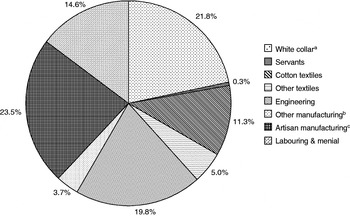
Consequently, in the mixed economies of Bury and Bolton, other industrial sectors must be taken into account. Male employment was particularly diverse. Cotton manufacturing only accounted for 26 per cent of Bolton's male workforce in 1881 and only 16·5 per cent of Bury's total male workforce (11·3 per cent of adult males) in 1871, rising by about 10 per cent in 1881 (Table 1 and Fig. 1).Footnote 38 Concomitantly, engineering and iron-founding comprised approximately 15·5 per cent of male employment in both towns. Nor is this an anachronistic interpretation of these economies; Bury's economic diversity was recognized by contemporaries. When the town received its permission for a Grant of Arms after its incorporation in 1876, the new council had strong views on the charges to be placed on the town's blazon. They decreed that the town's four principal industries – cotton, wool, engineering, and papermaking – should be represented.Footnote 39 This perception endured in the 1890s, when one Bury newspaper commented that ‘Unlike some towns, Bury has not put all its eggs into one basket’, and thus the inhabitants were ‘not dependent on one trade for their subsistence’.Footnote 40 Yet, while cotton was the largest employer in both Bury and Bolton, it did not employ a majority of the total workforce or of the male workforce and cannot, therefore, have defined the character of either town.
Bury adult male workforce, 1871.

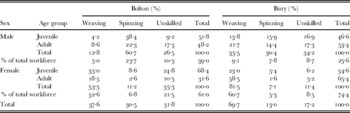
The influence of the cotton-manufacturing industry upon politics, therefore, appears to have been overstated in Bury and Bolton. Additionally, Pelling's categorization of these towns as spinning centres is inaccurate. Bury's cotton-manufacturing industry was not spinning-based, as Table 3 illustrates. In 1901, 70 per cent of Bury cotton workers worked in weaving sheds (35·5 per cent of male workers) and only 13 per cent (30 per cent of men) in spinning mills. In Bolton meanwhile, the overall employment structure of the cotton-manufacturing industry was equally divided between weavers, spinners, and preparation workers, although 60 per cent of men were spinners.Footnote 41
Occupational structure of the Bolton and Bury cotton-manufacturing industry, 1902

Source: PP 1902 (C 65-lxv) cxix, pp. 561, 555.
Joyce's generalization across the northern textile district is inconsistent with such socio-economic diversity. The cotton-manufacturing industry fulfilled different roles in each town, and consequently had a different impact on each political environment. By conflating these, Joyce over-simplified the socio-economic context in which mid-Victorian popular politics stabilized. That the economy of Blackburn was dominated by cotton manufacturing is undeniable, but this is not the case for either Bury or Bolton. It is, therefore, difficult to justify Joyce's use of Blackburn and Bury as examples of the same phenomenon.Footnote 42
II
The reanalysis of the Bury poll book for 1868 highlights Joyce's oversimplification of the economic structures of Lancashire towns, demonstrating Bury's Liberal tradition, in contrast to Blackburn's Conservatism.Footnote 43 Bury's Conservatives did not present a viable challenge to Liberalism until the 1890s, returning their first MP in 1895. The intention, however, is not to suggest that in comparison with Blackburn's strong Conservatism and dominant cotton industry, the weakness of Bury's Conservative party correlates with its less-significant cotton-manufacturing sector. The political affiliation of the industry's employees was more complex than Joyce's deferential model suggests. Cotton workers were not necessarily Tories, and most importantly the politics of employers had little influence over those of their workforces. Neither were all employers Conservative. Joyce's concentration on the cotton-manufacturing industry led him to assert that ‘Liberal employer Lancashire was never much more than an element in the political mythology of Liberal Manchester.’Footnote 44 This overstates employers' Conservatism: in Bury, 40 per cent of traceable factory employers were Liberal, and they dominated certain sectors. In the metal trades, Liberals employed twice as many workers as Conservatives; whereas in the dyeing, bleaching, chemical, and paper industries, workers in Liberal employ outnumbered those employed by a Conservative by seven to one. Even Lord Derby, the largest landowner in the town, recognized the strength of the Liberal manufacturing interests in Bury, noting in a letter to Sir William JoliffeFootnote 45 that ‘most of the manufacturers [in Bury] are Radically inclined’.Footnote 46 The presence of Liberal employers in local industry cannot, therefore, be discounted as a mere ‘myth’.
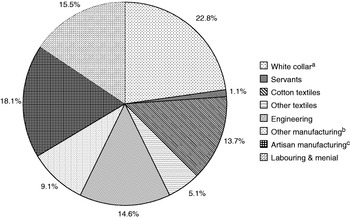
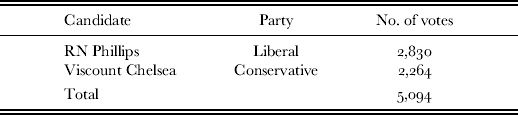
After 1867, the electorate of Bury was broadly representative of the adult male employment structure of the town, as illustrated by Figures 1 and 2. Figure 1 draws on the findings of a one in ten sample of census enumerators' returns to estimate the structure of the adult male workforce of Bury in 1871.Footnote 47Figure 2 shows the breakdown of the Bury electorate at the 1868 election.Footnote 48 As these demonstrate, the electorate was broadly representative of the workforce: there is little middle-class bias. They also undermine the idea of deferential politics in factories. In 1868, Bury elected a Liberal MP, Robert Needham Philips, despite the fact that at this election, the Liberal-dominated engineering and iron-founding industry was under-represented in the electorate by 25 per cent, while the substantially Conservative-owned cotton industry was over-represented by 20 per cent. Had the workers in Conservative employ voted in accordance with their employer, the Conservative candidate, Viscount Chelsea, would have been elected: Philips's majority was only 10 per cent of the total votes cast (see Table 4). Neither did factory workers account for a majority of the Bury electorate or workforce. Those involved in all factory-based industries (textiles, engineering, and other manufactures) only accounted for 40 per cent of both these groups. Consequently, ‘factory politics’ could not explain the popular vote, even if they had dictated that of factory workers.
Occupational analysis: Bury electorate, 1868.
a ‘White collar’: employers of over twenty (the distinction made between small- and medium-scale employers by H. Pelling in Social geography of British elections, 1885–1910 (London, 1967), and subsequently adhered to by Gareth Stedman Jones in ‘Working-class culture and working-class politics in London, 1870–1900: notes on the remaking of a working class’, Journal of Social History, 7 (1974), pp. 460–508); professionals; retailers; publicans and clerical workers.
b ‘Other manufacturing’ consists of bleaching, dyeing, chemical, and papermaking industries.
c ‘Artisan manufacture’ includes construction workers, furniture makers, watch making, shoe and boot making, milliners, tailors and dressmakers, blacksmiths, basket and rope makers, leatherworkers, and tool makers.

Bury election result, 1868
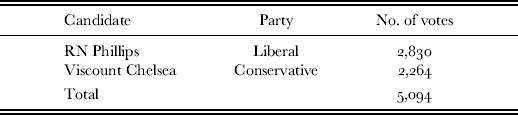
Source: F. W. S. Craig, British parliamentary election results, 1832–1885 (Aldershot, 1977), p. 72.
There was also a discrepancy between the number of adult males employed in small-scale, artisan industry and those on the electoral roll. McKibbin and Pelling's observations on the employer–employee relationship in smaller industrial units indicate that these industries were prone to radicalism. The data collected concurs with this view: two-thirds of those employed in Bury's artisan industries voted Liberal. Furthermore, these men, with their small workshops, were significantly under-represented in the electorate. The fact that such a sizeable number of potential Liberal voters were left unenfranchised challenges Joyce's thesis, as it highlights the extent to which workers in Conservative employ voted Liberal.
Other structural factors also undermine Joyce's argument. To demonstrate the ‘bedrock of dependence’ of the textile worker on his employer, Joyce examined the self-actor minders. He argued that operative spinners were the workers most dependent on their employers to maintain their ‘quasi-craft status’ and thus embodied the need to assume the political opinions of their master.Footnote 49 In apparent contradiction, he also argued that trade unionism was more prevalent in this industry, as ‘labour aristocrats’ sought to defend their status, which the factory system had effectively undermined.Footnote 50 Both claims have been discredited by William Lazonick, who convincingly argued that as younger workers needed close supervision, self-actor minders retained their dual role as operative and supervisor because their employers lacked the flexibility to experiment with hierarchies on the factory floor. By the time the minders' authority had been noted by employers, their financial status (the ability to demand a ‘craft wage’) had union protection, which prevented factory owners from changing the spinning hierarchy.Footnote 51 This undermines both Joyce's arguments, as they depend on the ‘trend of investment in the cotton industry’ creating and perpetuating the spinners' status, as defined by their employer.Footnote 52 However, it was the spinners themselves that enforced the factory-floor hierarchy, rather than their employers. It is thus difficult to support Joyce's position on the role of the trade unions.
It could be possible, however, that the central mechanism of ‘factory politics’ – the utilization of the family as the basic work unit – was feasible in Bury's cotton-weaving industry, as women played a central role in the production process.Footnote 53 This was supported by D. A. Farnie, who identified a ‘factory-politics-style’ culture in the cotton-weaving industry. Farnie argued that the use of the family structure in weaving sheds transmitted
a rigid system of values, a deeply conservative disposition and a longing for material independence … Church and chapel satisfied a whole spectrum of otherwise repressed emotions … and imbued them with an abiding sense of community which was extended, as traditional faiths weakened in the 1890s, to democratically organized trade unions and even to political parties.Footnote 54
There is a contradiction here; Farnie noted that the ‘family was almost as authoritarian in structure as the occupational hierarchy of the mill’; consequently, on the factory floor, as in the family, men had an automatic status advantage over many of their colleagues by virtue of their sex.Footnote 55 However, male weavers in towns with largely female cotton-weaving workforces were not reliant on their employers for advancement, unlike their counterparts in male-dominated weaving industries, such as that of Blackburn. Consequently, 63 per cent of Bury weavers were Liberal voters in contrast to 17 per cent of Bury cotton-weaving employers, and 49 per cent of their contemporaries in Blackburn.Footnote 56 This confirms that Bury employers failed to construct a ‘factory politics’ culture in the cotton-weaving industry.
The factory's role as an extension of domestic life was central to Joyce's argument. He argued that factory workers lived in employer-owned neighbourhoods, or ‘townlets’, each with their own distinctive identity. This created insular communities ‘akin to conventional villages’, within which the residential migration of workers tended to be confined.Footnote 57 In Bury, however, it was difficult for employers to construct this environment due to the industrial diversity of the town. This was clearly demonstrated by polling district eight, ‘the centre of Liberal engineering in the town’ and the most Liberal area, where about 70 per cent of voters were Liberal.Footnote 58 The area was home to nearly half of Bury's engineering works and foundries, of which over three-quarters were Liberal-owned. Nevertheless, of the resident engineers, more than half voted Conservative. In this district there were also five cotton mills.Footnote 59 All five were Conservative-owned, and yet 63 per cent of the resident cotton workers identified on the poll book voted Liberal. The concentration of plants in this area would have made it difficult for any employer to own all the real estate near his plant, due to intense pressure on housing. It seems, therefore, unlikely that many employees from the same factory lived together. The industrial diversity of the area would also have made it difficult for any group of employers to gain control and thus prevented the formation of ‘townlets’. Joyce initially noted this phenomenon, commenting that ‘Bury industry was usually small scale [with] Liberal and Tory workplaces jumbled together’, and that industry both in and out of the town centre drew labour ‘from a fairly wide area’.Footnote 60 Indeed, some Bury workers had to walk an hour to their workplace each morning, as there was no available housing closer to the plant.Footnote 61 Joyce went on to acknowledge that there were ‘difficulties with the Bury individual district votes as the cotton workforce was fairly well scattered in the town, and the district cotton complements often too small to be of significance’.Footnote 62 However, he subsequently ignored these caveats and asserted that where a ‘cotton vote’ could be identified in Bury, it was overwhelmingly in favour of the employer.Footnote 63 Even if this were the case (which it is not), it is difficult to see how it could arise from ‘factory politics’ if the supposed mechanism was absent.
The status of local land ownership was also a factor in employers' inability to construct ‘townlets’ in Bury. Five-sixths of the land in the town was owned by Lord Derby, which allowed him, through his agent, Thomas Statter, to determine the rate at which the town expanded.Footnote 64 During the mid-1880s, Bury grew by approximately 15–16 acres per year – precisely the amount of land that the Derby estate let each year for building.Footnote 65 Such an arrangement need not have precluded the development of ‘townlets’, but two-thirds of Derby's land was taken by ‘speculative builders’ rather than ‘genuine building tenants’.Footnote 66 This would have prevented employers from owning their workers' housing since ‘jerry-builders’ usually overcharged. Additionally, Statter's policy of increasing rents on improved properties and stifling industrial growth by demanding high ground rents would have discouraged employers from providing housing as they would have gained no pecuniary advantage.Footnote 67
The failure of Bury employers to create a deferential ethos is confirmed by the poll book: 71 per cent of cotton mills, employing 86 per cent of cotton workers, were owned by Conservatives. If employers had fostered a deferential culture, it would be expected that cotton workers would vote Conservative by a similar margin. Of the 446 cotton workers identified on the poll book, however, only 46 per cent (218) voted Conservative. In contrast to Joyce's thesis, therefore, many workers who voted Liberal must have done so in opposition to their employer, despite open voting. This was noted by employers whose factories lay outside the borough. Jonathan Mellor, a Tory cotton spinner and weaver, owned the Warth Fold Mills.Footnote 68 He had bought a green-field site and constructed a mill and housing for just over half of his employees (237 out of 463) in 1863, which formed ‘a little isolated colony’.Footnote 69 Mellor was violently opposed to the extension of the borough's boundaries to include his works in both 1872 and 1885 ‘on every ground; socially, morally and sanitarily’. His explanation for his opposition was that if his works were to be included in the borough they would ‘be dragged into excitement and demoralization’ because ‘Bury was very much given up to party feeling, and we … did not wish our people to be mixed up with this angry feeling and to get into loggerheads with each other’.Footnote 70 Mellor's position is clear. While his factory and its townlet remained outside the borough he could control the political culture of the ‘colony’. To him, the inclusion of his concern into the parliamentary borough would undermine his political influence and introduce his workforce to the ‘party feeling’ that prevailed in Bury. As such, Mellor's concerns challenge the idea that factory politics operated in Bury and demonstrate the political independence of the town's industrial population.
This lack of consensual political culture was also noted by the Bury press, which highlighted the use of coercion by some employers to enforce their political views on workers. In 1868, a complaint was made that one foreman had lost his job for refusing to vote Conservative when pressed by his employer.Footnote 71 Although the Bury Times believed the influence of the ‘screw’ to be waning and ‘somewhat worn in the thread’ it was still a force to be countered.Footnote 72 Many employers who were practised at coercion still considered it an option and were ‘adept in causing the screw to enter a material which would resist the efforts of a tyro’.Footnote 73 The ‘screw’ was, however, the subject of widespread disapproval. The Bury Times commented that perpetrators would ‘easily be pointed out, and may yet be brought to book’.Footnote 74 This does not suggest a consensual political culture; contrary to Joyce's argument, Conservative employers tried to resort to coercion to secure their workers' votes, rather than relying on deference.
‘Factory politics’ does not, therefore, explain the political development of Bury: the town's industrial landscape was unfavourable to the construction of the environment that Joyce claimed was required to secure the votes of factory workers. This is not to argue, however, that factory politics did not occur in Lancashire. Joyce's case for Blackburn is convincing, although questions remain regarding Hornby's use of the ‘screw’, the actions of the trade unions, and the impact of the ballot on voting patterns. Moreover, Theodore Koditschek has questioned whether any meaningful positive personal relationship existed between factory employers and workers, given the size of industrial units, and the rapid turnover of both ownership and the workforce of mills.Footnote 75 Nevertheless, Joyce's Blackburn case suffers less from the problems outlined here. Blackburn's economy was dominated by cotton weaving, which employed a majority of the male workforce, much of which was employed by the Hornbys – the conditions that Joyce argued were necessary for factory politics to function. The contention is, therefore, that it was only possible for ‘factory politics’ to operate in towns with a similar industrial topography to Blackburn. In Bury, however, this was clearly not the case, and, consequently, another explanation is needed.
III
This section proposes an alternative account of Bury's political development that also challenges the idea, common in the historiography, that the mid-nineteenth century witnessed a ‘triumph of party’. This thesis suggests that increasingly regulatory and disciplinary local party structures appropriated many forms of traditional popular political culture, resulting in the disciplining of grass-roots politics and, as James Vernon has argued, shifting the ‘balance of power in favour of the leaders over the led’.Footnote 76 A number of sociology-influenced studies, including Work, society and politics, have emphasized the role of urban elites' use of their wealth and social prestige to establish political structures to integrate new voters into the political status quo, which lasted long after the demise of the urban ‘squirearchy’ that created them.Footnote 77 More recent works influenced by the linguistic turn have elevated discourse to a key role in securing the ‘triumph of party’. Joyce's later work, for instance, has contended that organized party structures were able to absorb plebeian politics through the use of ‘classless’ rhetoric, which realized ‘broader and more inclusive social and political identities’ and encouraged liberals and radicals to collaborate by highlighting the common origin of their political beliefs in the pre-industrial radical tradition.Footnote 78
In contrast, Eugenio Biagini has argued that working-class support for the Liberal party did not represent the victory of ‘bourgeois’ Liberal ideology, in the Marxist mould, but rather the ‘radicalization’ of the middle class.Footnote 79 This allowed middle-class leaders to dominate popular politics and integrate the recently enfranchised into new political structures and align them with mainstream Liberalism.Footnote 80 The contention, therefore, is that respectable Liberals rejected a narrow interpretation of political economy for a broader ideology with core values common to those of plebeian radicalism.Footnote 81 All these arguments, however, conflate the voice of the political leader and the aspirations of those he sought to represent. Consequently, they oversimplify the complexities of the interaction between politicians and their followers, as well as the role played by both groups participating in the formation of political discourse.
Using Bury between 1868 and 1880 as a case study, the nature of voter allegiance and how rank-and-file electors were mobilized by party workers, as well as the difficulties faced by activists, will be explored. In contrast to existing accounts, in which local elites socialized and disciplined the masses by subsuming them into their political organizations, it is argued that politicians had to work hard to gain voters' support. They thus negotiated their position in a flexible relationship whereby electors were active agents in shaping political discourse. Local political structures and the values they represented were, therefore, the result of a dynamic political debate formed by a compromise between leaders and led, and represented ‘a coincidence of purpose and values’ on the part of ‘respectable’ working- and middle-class opinion. They were not ‘alien imports’ imposed on reluctant workers, but principles generated independently in response to their aspirations and needs.Footnote 82 Consequently, the stability of Bury's politics in the mid-Victorian era was the result of Liberal politicians' success in ‘achieving a working, if constantly shifting, modus vivendi’ between the social and political forces at work in the borough.Footnote 83
Bury's politics centred on an independent, liberal ethos. Before 1868, the town's parliamentary elections had been fought solely between competing Liberals. The main rivalry to emerge was between Frederick Peel (the second son of the former prime minister, Sir Robert) and Robert Needham Philips. These men fought each other in three general elections between 1857 and 1865. Philips first won the seat from Peel in 1857, with a majority of thirty-five – only 3 per cent of the votes cast.Footnote 84 He lost the following election in 1859 to his nemesis, but enjoyed a comfortable victory six years later. This rivalry developed because the Conservative party were unable to find a foothold in Bury during the mid-nineteenth century. The Peel family's connection with the town (Sir Robert had been born there) ensured that a non-Peelite Conservative party was unable to establish itself until the formation of a borough Constitutional Association and Church Defence Union in the 1860s.Footnote 85 The Peel–Philips rivalry proved vital to the town's political development, and was more than a case of ‘one Liberal member … [who] had offended some of his erstwhile supporters’ being challenged by the champion of the affronted party, as H. J. Hanham has suggested.Footnote 86 Peel and Philips held distinct opinions, which required them to highlight their differences in debate. Peel supported free trade and religious freedom, but favoured only a limited extension of the franchise. He believed that if manual workers became a numerical majority of parliamentary voters ‘the House of Commons would become the representative of one class’, which he opposed on the grounds that it should be ‘representative of all classes and interests in the country’.Footnote 87 For similar reasons, he was distrustful of secret voting.Footnote 88 Conversely, Philips consistently supported the ballot and, as part of his political persona, actively cultivated a strong bond with the (mostly radical) non-electors of the borough. He was thus supported by a Bury Non-Electors' Reform Association after its formation in 1858.Footnote 89
Both candidates galvanized strong political feeling among Bury's working men. Partisanship was so intense that the results of the 1857 and 1859 elections were both subjected to a House of Commons committee after petitions were submitted by borough electors claiming that the candidates had sanctioned intimidation and treating of voters. No allegations were substantiated, however, and on each occasion the result was allowed to stand. At the 1859 election, it was alleged that there were ‘a great many mobs of 150 and 200 marching in a military fashion’ in the town on polling day.Footnote 90 There were also accusations of exclusive dealing; for example, Samuel Greenhalgh, a confectioner, claimed to have suffered substantial losses in custom on this account.Footnote 91 These accusations appeared to be corroborated by the findings of the Election Committee, which heard that during the 1859 campaign, ‘bands of workmen on both sides formed themselves into canvassing committees, and they exercised intimidation upon tradesmen … they told the smaller tradesmen … that if they did not vote on the one side or the other, they would take away their custom’.Footnote 92 Nevertheless, none of this activity was ever directly linked to the candidates, which led the Election Committee to conclude that there was simply an active political tradition among non-electors. That such partisan sentiment was aroused illustrates the importance that working men attached to political issues before 1867, and the loyalty that both candidates had earned among the plebeian population. Thus, before the Second Reform Act, Bury politicians had already become adept at soliciting popular support by adapting to non-electors' demands.
The case for the appearance of an issue-based political culture before 1867 is enhanced by the fact that neither Peel nor Philips was a local employer. Local politics did not, therefore, become a battleground for local factory owners to gain political control, as Joyce suggested, but remained resolutely concerned with the questions debated. Neither candidate could rely on personal influence. After the bankruptcy of the Peels' former partners in 1799, and of Peel, Wilkes, Dickinson, and Goodall (the London branch of Peel's Bank) in 1806, the family's local industrial interests had been sold or gifted to competent managers and other connections.Footnote 93 Similarly, Philips's cotton-manufacturing concerns were confined to Manchester.Footnote 94 This continued to be the case after 1867. In 1868, Frederick Peel declined to contest the seat, deciding instead to accept the candidacy for south-east Lancashire.Footnote 95 In Peel's absence, several local notables decided to nominate a parliamentary candidate in the interest of the Conservative party for the first time. The Bury Conservatives were, however, ‘disorganized and [in] want [of] a leader’ and the only candidate the party could find in 1868 was an outsider: the young Viscount Chelsea.Footnote 96
The fragility of Chelsea's position was illustrated in his election campaign. Without an established Conservative tradition in Bury, he had to solicit the votes of those previously aligned with the Peelites. He thus entered the fray as a ‘Liberal Conservative’: a disciple of Palmerston, rather than as a follower of Disraeli.Footnote 97 It was, however, difficult for Chelsea to find fault with Philips's representation of the borough, and he admitted in his first speech of the campaign that his rival was ‘much better able to represent you than I am … in every, except in one respect, and that is … on the question of the Irish Church’.Footnote 98 It was on this matter that Chelsea sought to provoke public sentiment. He was, however, thwarted by Philips, the veteran of three parliamentary contests for the borough, who had a more profound understanding of his constituency. Although an Anglican, Philips was the scion of a Manchester Unitarian family and sympathized with the opinions of the large Nonconformist population of Bury.Footnote 99 In response to Chelsea's claims, Philips declared his opinion to be that the Established Church in Ireland was ‘a grievance and a wrong’, and highlighted the need for extending state education and ‘the equal right of all religious denominations to enjoy the honours and rewards of our Universities’.Footnote 100 The issue, however, failed to stimulate popular opinion. Unlike in other local towns, the Irish Church Question had elicited little display of public sentiment in Bury, and no meeting was held on the issue. This infuriated several correspondents to the Conservative Bury Guardian, one of whom asked ‘Why is it we have no meetings, no lectures, &c. like other places? Is it because there are no God-fearing, law-loving people in Bury?’Footnote 101 Consequently, Chelsea's attempt to press the issue was unsuccessful, especially in light of the small Irish population and Nonconformist community: there were only about a hundred Irish-born men on the electoral register, and the strength of evangelical Nonconformity induced sympathy for the condition of the Irish, rather than antipathy towards them.Footnote 102 The issue did not, therefore, have enough local impact to sway a significant number of electors to the Conservatives, who would have had to abandon their liberal tradition to vote Tory publicly.
Furthermore, Chelsea was outflanked by Philips on labour legislation. The Hornby v. Close case of January 1867, which had ruled that trade unions were illegal, had been a catalyst for the rise of organized and politicized labour throughout the country.Footnote 103 Regardless of the strength of local trade unions, the right of labour to organize in industrial constituencies like Bury was deeply ingrained into local culture. In 1868, the Bury Times could argue that whilst ‘a clever Attorney-General could, by the aid of existing laws, prove that … trades unions are illegal … no Attorney-General, or any other lawyer, would dare to raise such a question. It is universally admitted that trades unions are legal or, to be more precise, not illegal.’Footnote 104 In such an environment, it was clear that a candidate for Bury would need to support the rights of labour organizations and the protection of trades unions' funds, since their success relied upon the support of a largely plebeian urban electorate. Chelsea, however, failed to grasp this point; while he claimed to favour arbitration courts for settling industrial disputes, he stopped short of claiming the justice of financial protection for trades unions.Footnote 105 Conversely, Philips had no such qualms, and supported the unions in their quest for financial recognition, as well as for arbitration.Footnote 106 He thus outmanoeuvred Chelsea, and undermined his rival's ‘Liberal-Conservative’ label, which forfeited the Conservative's claim to the support of former plebeian Peelites for whom the issue held particular weight.
Chelsea did not, therefore, appeal to some working men who were exercising their new electoral rights for the first time. Nevertheless, his defence of the Established Church was sufficient to solicit the votes of those Peelites for whom the defence of ‘Church and State’ was vital, and to whom a Conservative label was acceptable. Nor were Chelsea's more conservative views on industrial legislation entirely disadvantageous: he attracted the support of those who had concurred with Peel's views on the extension of the franchise and had become alarmed by the rise of politicized labour since 1865. As in 1865, however, this was not enough to win a majority. Compared to Philips's poll of 2,830, Chelsea's showing of 2,264 votes was not hopeless, but it was indicative of the continuing strength of Nonconformity and plebeian radicalism, with which candidates had to co-operate in order to gain a majority. Conservatism in Bury, did not, therefore, enjoy an auspicious start.
After Chelsea's failure, the party attempted to foster and organize Conservatism among the town's workers. The man at the forefront of the new initiative was Henry Oram, a local woollen manufacturer, who employed 200 hands at his Bury Bridge works in Elton.Footnote 107 In March 1870, he established a Conservative Sick and Burial Society in Elton, thought to be ‘the stronghold’ of plebeian Conservatism in Bury.Footnote 108 Joyce claimed that such societies, with their ‘relaxed and responsive’ style of ‘stoic common endeavour and the fellowship of pleasure’ fostered Tory culture among workers.Footnote 109 Quite the opposite was the case: the Conservatism of the new association was maintained through coercion. The club's constitution required that any member who voted against a Conservative candidate, ‘or who shall refuse or neglect to vote’, would be reported to one of the secretaries, and summoned before the committee, which would ‘deal with the case according to the evidence which may be produced against them’.Footnote 110 The Liberals condemned the club as a ‘gigantic scheme of bribery’ with ‘slavish and degrading rules’ that exploited the respectable working man's fear of a pauper's burial for political ends.Footnote 111 The working-men electors of Bury, accustomed to independent politics, appear to have concurred with this view and shunned the scheme, and the Association remained insignificant. This was not an isolated incident. Conservative employers attempted to use the ‘screw’ to enforce their political views on their workers, while the rector of Bury, Canon Hornby, directed the town's Conservatives to vote like ‘machines’ from his pulpit, and told his congregation that every elector ‘must obey’ his leaders.Footnote 112
It was not, however, possible to dictate to Bury's working-men electors. Bury was not incorporated until 1876; previously, under the 1846 Bury Improvement Act, the election of improvement commissioners to oversee the management of the borough was carried out under the 1818 Sturges Bourne Act for the Regulation of Parish vestries.Footnote 113 The voting procedure outlined in the Act, allowed a fourteen-day open poll and plural voting dependent upon the rateable value of property. A rated landowner of property worth £50 was eligible for one vote; for every further £25 a man was given another vote up to a maximum of six votes. This biased voting in favour of the more prosperous ratepayers, who were frequently Conservatives.Footnote 114 Given the inherent biases in this archaic voting system, and the expense of such a long poll, it had become standard practice for improvement commissioners to be elected by compromise between the ‘radical’ ‘red list’ and the ‘constitutionalist’ ‘blue list’, which avoided inconvenience and expense of a contest.Footnote 115 As the arrangement was not delineated along strict party-political lines, it encouraged the removal of the improvement commissioners from local party politics. They thus became ‘a legitimising apparatus for the local industrial elites’, which gave them an unpartisan but ‘prestigious means of servicing the community’.Footnote 116
The extension of workers' political rights in 1867, and the creation of a Bury Conservative organization, provoked an increasingly party-political character to the Commissioners' elections. A contest was forced in 1869 and another unprecedented election was fought in June 1870. Not even the Conservative bias inherent in the Sturges Bourne system, however, could prevent the electors from rejecting the ‘bribery or intimidation’ of the Elton Conservative Sick and Burial Society. More specifically, spleen was vented at Oram, for attempting to organize – or ‘dictate to’ – the Conservative vote in Elton. The Bury Times claimed that he ‘assumed the position of dictator, threw down the gage of battle, and announced his advent to power in such uncourteous terms and in such a despotic manner as to rouse his opponents to resistance and disgust many of his own party with his intolerance’.Footnote 117 Bury voters' distaste for organization was demonstrated by the election of the entire Liberal slate. This was voiced by one working man in a letter to the Bury Times; he wrote that ‘the working-men of Bury and Elton desire to be free – free to think, to speak their thoughts, and to vote at all elections for whom they think proper’ and that ‘we do not intend to sell our rights and privileges to the wealthy, the intelligent or the virtuous’.Footnote 118
In contrast to the healthy Conservative position in much of Lancashire after 1868, the Bury Conservative party was weak throughout the 1870s as a result of its inauspicious beginnings. The party was defeated at the 1868 and 1874 general elections, their position in the Improvement Commission was weak, their organization feeble, and their leadership apparently inept. Such a position undermined the Tory leaders' confidence that Bury's new electors were reasonable men, and would support the Conservative party. This insecurity was evident in their opposition to the town's incorporation, which the Liberals had taken the opportunity to raise after their victory in 1870. The Liberals believed that the replacement of the Sturges Bourne system would ‘give us, at little trouble and cost, popular elections for our local governors’ and thus improve the governance of the town by making those involved in the management of civic affairs more accountable to the ratepayers. As it was, they argued that Bury's failure to obtain a Charter demonstrated that the town was ‘notably behind its neighbours in public spirit and enterprise’.Footnote 119 The Conservatives, however, wondered whether incorporation, and its ‘democratization’ of the municipal vote, would thus be the first step towards the ‘atheism and socialism’, which had emerged in England since the Reform Act.Footnote 120 The Bury Guardian, therefore, pleaded for the town to hold strong against such ‘diabolical outrages upon art, property and life, of which the Paris Commune has been guilty’. It was disturbed by the growing influence of Charles Bradlaugh, the republican president of the National Secular Society, over plebeian politics, as well as the threat posed to religious education in the 1870 Education Act and the debate over Catholicism in Irish universities. The Conservative newspaper was also concerned that the principles enunciated in the Irish Land Bill tended towards socialism.Footnote 121 In Bury, however, such fears were evidently quelled by the dissipation of the early 1870s English republican movement, Disraeli's victory at the 1874 general election, and the weakening of the national Liberal party after the resignation of Gladstone as leader. In 1871, the primarily Conservative ‘anti-incorporationists’ had attracted a large following, but this support seeped away as the national political situation gradually settled. Consequently, when a poll of electors was taken in 1876, only a third of ratepayers opposed the granting of a municipal charter for Bury.Footnote 122 The Conservatives ‘gave way with a certain amount of grace’, and allowed a petition for incorporation to be sent to the home secretary.Footnote 123 Bury's liberal mood was reflected in the results of the first municipal contests in November 1876: twenty-three of the thirty new councillors were Liberal and two were ‘independent’.Footnote 124
The Conservatives' declining fortunes in municipal affairs were reflected in the borough's parliamentary politics. As the Conservatives sensed a general election approaching in 1873, they sought to find a local candidate to represent them. The first man to present himself was Henry Marriot Richardson, a future mayor of Bolton.Footnote 125 He was nominated by the Central Conservative Club, but, in keeping with the independence that characterized Bury politics, other Conservative groups had their own ideas. In riposte, the Elton Conservatives nominated Lawrence Booth, a local architect and improvement commissioner.Footnote 126 Neither of these suggestions was favourable to the Conservative leaders, however, who proposed Major Oliver Walker, a local magistrate, landowner, and cotton manufacturer.Footnote 127 Booth retired from the race shortly after his nomination, which resulted in the Elton Conservatives transferring their support to Walker.Footnote 128 Richardson, on the other hand, with the Central Conservative Club's backing, pursued his candidature until the week before the poll, when he retired for the sake of party unity.Footnote 129 Nevertheless, this was too little too late. In contrast to the national trend in 1874, the Conservatives did not make headway into the Liberal majority. Philips was returned by 3,016 votes to 2,500; winning the same proportion of the poll (55 per cent) as he had in 1868.Footnote 130 The Bury Guardian commented that the result owed much to ‘the great amount of time wasted and energy expended by the Conservatives before they fully decided to unite together and work for one candidate’.Footnote 131 The supposed ‘Conservative Reaction’ continued to evade Bury. In 1880, the still hopeless position of the Conservatives in local politics saw them unable to find a suitable candidate. Indeed, the Bury Guardian claimed that the town's Conservatives ‘appear to be so thoroughly disheartened that they do not care to fight’.Footnote 132 They thus allowed Philips a walkover and pledged to contest the borough after his retirement.Footnote 133
The Bury Liberals were successful because they worked with the independent political environment, rather than trying to ‘tame’ it. Liberal party organization thus remained loose and ad hoc. Philips created a manifesto designed to create a sense of inter-class community that transcended social divisions. He was particularly skilful in overcoming class tensions over the politics of land, where he was obliged to strike a balance between the interests of the workers, whom he had to persuade that he stood for reform and change, and those of the propertied, whom he had to reassure that he did not seek to erode their influence. The popular support for land law reform that resulted from the management style of the Derby estate was reflected in Philips's election manifestos. He wanted to cheapen the transfer of land and abolish primogeniture, which, he believed, would increase access to landed property. He also desired to see a greater tax burden placed on ‘realized property’ in return for the ‘free breakfast table’.Footnote 134 Nevertheless, he was keen to emphasize that this was not aimed at undermining the power of landed property, for ‘the easier and cheaper you can make the transfer of land’, he claimed, ‘the more valuable you will make that commodity’. Direct taxation would, in fact, benefit property owners by reducing the cost of tax collection and each taxpayer would know precisely how much he had to pay to the Treasury.Footnote 135 Another instance of Philips's support for the rights of the landed classes was his insistence that there should not be an elected Upper House since ‘Men such as the Earl of Derby have got a good feeling towards the people from whom they received their rents, but the small land owners have no feeling of the kind’.Footnote 136
Debates over labour legislation and an emphasis on the benefits that it would bring to employer and employee alike also illustrated politicians' desire to overcome social divisions. Philips advocated a nine hours' bill, ‘not … for the sake of popularity’, but from his belief that his employees would work more effectively if they started work an hour later.Footnote 137 His support for a workmen's compensation bill also arose from his belief that ‘a master was bound to do all he could to protect his machinery … and if masters or overlookers neglected their duty they must pay the penalty’.Footnote 138 The small-scale, jumbled industrial landscape of Bury meant there were ‘few very large fortunes’ in the town; consequently, there was ‘less social separation between classes’ in Bury than there was in neighbouring Bolton, for instance.Footnote 139 As a result, both parties' parliamentary candidates supported equity of contract, the legalization of trades unions (later, the repeal of the Criminal Law Amendment Act), and reform of the law of conspiracy. They were, however, careful to ensure that they did not alienate either employer or employee.Footnote 140
Mediation between interests was also evident in Philips's stance over the ‘religious difficulty’ in 1874. The Conservatives focused on education, and claimed that Philips was in favour of ‘godless’ instruction, no amount of which would ‘teach a boy or girl the value of truth … and the other grand principles’ contained in the Bible.Footnote 141 Philips, however, advocated non-denominational, rather than secular, education, in which religious instruction was confined to ‘simply reading the Bible and singing a hymn’ as in the United States. This, he believed, was the correct manner in which to conduct a national system of education funded by ratepayers of all denominations, and thus ‘they must acknowledge all and place all upon an equality’.Footnote 142 This stance was popular with the large and diverse Nonconformist population in Bury, which did not have a School Board under the 1870 Education Act. Clauses 5 and 6 of the Act stipulated that there ‘shall be provided for every school district a sufficient amount of accommodation in public elementary schools … where there is an insufficient amount of such accommodation … and the deficiency is not supplied as herein-after required, a school board shall be formed’.Footnote 143 In Bury, however, the Government Schools' Inquiry had praised the standard of education in the Grammar School, in addition to which there were three Methodist schools, one British and Foreign school, the Baptist Theological Seminary (held in Chamber Hall, Elton), Daisyfield School in Elton, and ten private schools (including two boarding schools).Footnote 144 A School Board was, therefore, considered unnecessary. The Bury Times reminded its readers that, despite the Conservatives' attempt to press the issue ‘so far as Bury … [is] concerned, the Act is useless. It has not aided a single school or a single pupil.’Footnote 145 Education, therefore, had little immediacy for Bury's electors as voluntary schools were not threatened. Quarrels over whether School Boards should be compulsory seemed an extraneous crotchet of a few vocal Nonconformist ministers.Footnote 146
It cannot, therefore, be maintained that Bury politics were dominated by a deferential and dependent political culture founded upon the opinions of employers. The political culture of the town responded to appeals that drew together different cross-class interest groups by engaging with their concerns. The development of an issue-based, rather than party-based, discourse between leader and led was strongly influenced by local factors, which retarded the growth of Conservatism in the town. As the election petitions of 1857 and 1859 demonstrated, before 1867 there had been an active local political culture in Bury, which had drawn non-electors and electors together and persisted after the Second Reform Act. Viscount Chelsea's position on labour legislation in 1868 demonstrated that politicians had to engage, and negotiate their position, with a pre-politicized, independent mass electorate, which, in the absence of a deferential factory culture, was hostile to techniques of ‘bribery’ that the Tory party tried to adopt. The Liberal tradition of Bury, and the weakness of the Conservative party, prevented the Tories from having a substantial presence in the town after 1867. The knowledge that they were fighting a losing battle, while their peers in other local constituencies were flourishing, so disheartened Bury's Conservatives that they declined to challenge the Liberals at the 1880 general election.
V
This article has argued that the ‘factory politics’ model cannot be applied throughout the northern textile districts of England. The socio-economic diversity of Lancashire precludes the model's blanket application to all towns in the region. ‘Factory politics’ may have accurately described the political environment of towns like Blackburn where the economy was dominated by a single industry with a dominant employer; however, Bury's diverse, jumbled industrial landscape prevented such a system from functioning, as demonstrated by reanalysis of the 1868 poll book. In towns like Bury, where employers were unable to construct a deferential political ethos or influence their workers' votes, plebeian electors had a greater degree of political agency and impact on political discourse. Politicians had to consider the opinions of plebeian workers when they appealed to their constituencies. Electors, regardless of their social position, voted for those candidates whom they believed to represent their interests most fully, and if their requirements were unsatisfied, they were prepared to use their vote to show their displeasure. Consequently, Bury's political parties sought to construct manifestos with the broadest appeal possible. In contrast to Joyce's argument, therefore, it was political issues that were central to voters' decision-making processes, rather than social structures. The political platform thus functioned as a two-way interface, through which politicians negotiated their position with their constituents. Additionally, while Joyce suggested that the mental horizons of factory workers were limited and localized, it has been shown that if popular politics began at the factory gate, they did not necessarily end there. National issues were increasingly influential in informing each voter's political affiliation. Nevertheless, before 1880, it was still possible for local politicians to override national trends, as Philips did over education in 1874. Factory politics, therefore, describes the peculiar circumstances of Blackburn, but cannot be generalized across Lancashire.
The careful construction of manifestos and Bury's political development represent politicians' attempts to court and harness the support of a pre-politicized electorate.Footnote 147 The ability of political organizations to manage their rank and file clearly progressed in the decade after the Second Reform Act. Nevertheless, how this manifested itself was largely dictated by the nature of the pre-1867 environment. In Bury, organization took a backseat in local politicians' agenda; however, aggressive action, such as that seen at the 1859 Bury election became less common and organized demonstrations an increasingly familiar part of political life. Concomitantly, voters continued to change allegiance in line with their perception of each candidate's ability to represent their interests: electors had to be nurtured and actively encouraged to the poll. To control their memberships effectively, therefore, politicians had to be prepared to compromise on issues central to the lives of their grass-roots members. This is not to suggest that partisanship did not exist, or to deny that the political opinions of some workers may have been influenced by their employer's philanthropic initiatives. However, these factors need to be integrated with a more dynamic depiction of constituency politics, in which the success of local political parties was contingent on their ability to understand and negotiate with their electorate. It is no wonder, therefore, that a despairing Viscount Chelsea apparently found the workers of Bury ‘hard-headed, critical, [and] ready to put his philanthropy under the microscope’.Footnote 148