




No CrossRef data available.
Article contents
The experiences with oral health and dental prevention of children with congenital heart disease
Published online by Cambridge University Press: 24 May 2005
Abstract
Objective: To examine the degree to which children, considered to be at risk from infective endocarditis, had received professional education and preventive procedures in regard to dental health, and to evaluate the knowledge of their parents of the link between oral health and infective endocarditis. Materials and methods: Questionnaires were distributed to the families of 38 children under the care of paediatric cardiology. A short dental examination was carried out. Parents were asked if they knew why oral health was of particular importance in their child. Results: Of the children, 58% demonstrated evidence of previous or current dental disease, with 24% having had at least one filling, 13% with one or more teeth showing deficiency of enamel, and 39% with untreated dental caries. Only 79% of the children were registered with a dentist. According to Chi squared test, there was no difference in the dental health of registered and non registered children. Of the study group, 29% had received instruction in oral hygiene, 42% had received dietary advice, 13% had received advice regarding fluoride supplementation or had had fluoride professionally applied, and 8% had had fissure sealants. These percentages remained relatively low even if only registered children, or only registered children with previous or current dental disease, were considered. Only 64% of parents were aware of the link between the oral health of their children and infective endocarditis. Parents of children who were registered were more likely to be aware of this link than parents of children who were not registered. Conclusions: In spite of being registered with general dental practitioners, few children with congenital heart disease had received basic education in dental hygiene. Even children known to have had dental disease and, therefore, considered to be more vulnerable, were overlooked.
Information
- Type
- Original Article
- Information
- Copyright
- © 2003 Cambridge University Press
Congenital heart disease is known to occur in just under one of every live born children.1 Over the last twenty years, there has been a dramatic improvement in the rates of survival in these children,2 placing additional burdens on health systems that are responsible for the care of these children into adulthood. Not only must the underlying disease be considered, but also problems of co-morbidity associated with therapy need to be addressed. Congenital heart disease impacts upon dental health in three main areas, the effect of the disease itself on the dentition, the risks of infective endocarditis, and the implications for delivery of treatment should intervention become necessary.
Ameloblasts, which form enamel, are extremely sensitive to changes in metabolic conditions.3 Any severe systemic disease that occurs during the formation of the teeth can lead to defective formation of enamel, resulting in thinner or softer teeth. Increased prevalence of these conditions occurs in a number of groups of children, including those born of low birth weight,4 and those with cystic fibrosis.5 A number of studies have reflected these findings in children with congenital heart disease.6–8 Teeth with deficiencies of enamel are more susceptible to dental caries, deteriorate faster, and are more difficult to restore. Early assessment, and therapeutic planning, are therefore extremely important.9
Studies into the prevalence of dental caries in children with congenital heart disease have produced variable results. Hallett et al.6 found increased levels of caries when compared to healthy siblings used as a control group, while Pollard and Curzon10 found that this pattern was repeated for only a narrow range band of those aged from 4 to 7 years. Other studies have shown no difference in the level of caries.11
What is of greater concern in these studies, however, is the consistent finding that children with congenital heart disease have higher levels of untreated caries.6, 8, 11 This implies either that families are not gaining access to dental care, possibly due to the increased health demands made by the medical condition, or that dentists are reluctant to treat these children. Either way, disease is being left in children for whom the consequences are greater than in healthy children.
Children with congenital heart disease may develop infective endocarditis if exposed to oral bacteraemia. Oral streptococci account for approximately two-fifths of cases in children.2 Because of the role of these organisms, it has traditionally been assumed that invasive dental procedures carry a high risk for infective endocarditis in patients who are susceptible. Evidence for this remains poor. Even in the era prior to availability of penicillin, endocarditis rarely followed dental extractions in patients with rheumatic heart disease.12 More recent studies have found that only about one-eighth of patients with infective endocarditis had experienced a dental procedure within the month prior to onset of symptoms.13, 14 Even in these cases, there was no proven association between the dental procedure and the disease. Lacassin et al.15 compared 171 cases of infective endocarditis against 171 controls with cardiac disease that had not developed infective endocarditis. Invasive dental procedures, such as scaling and extractions, were not shown significantly to increase the risk, even when the use of appropriate antibiotic cover was considered. A large population-based study has recently concluded that dental treatment is not a risk factor.16
It seems more likely that spontaneous, everyday bacteraemias are responsible for the majority of cases of infective endocarditis. Significant bacteraemia is associated with chewing, flossing, and brushing,17 and it is suggested that this continuous challenge, likely to be made worse in those with poor oral health,18 has a cumulative affect.19 This is expounded further by Roberts,20 who demonstrated that the intensity of bacteraemia secondary to an everyday event is only slightly less then that following an extraction, but occurs an estimated 8760 times a year, as opposed to less than once a year for a dental extraction. On this basis, a successful “hit” by a bacterial inoculum causing infective endocarditis is far more likely to arise from the spontaneous bacteraemia. Drangsholt21 proposed that multiple spontaneous incidences of bacteraemia prime the endothelial surfaces over a number of years. Late bacteraemia occurring over a much shorter time period subsequently results in the characteristic infection.
Poor oral hygiene affects the frequency of bacteraemia following everyday events such as flossing.18, 22 Good oral health will reduce both the frequency and magnitude of everyday bacteraemia that seem to play such a crucial role in the development of infective endocarditis. It seems, therefore, that prophylaxis of infective endocarditis in patients at risk should be focussed primarily on the maintenance of good oral health. Dental lesions should be treated early to avoid progression, and oral infection treated quickly and aggressively.
It has already been noted that children with congenital heart disease have at least the same levels of decay as healthy children, and that this disease tends to be left untreated. As well as placing them at risk of infective endocarditis, the cardiac condition complicates treatment. Antibiotic cover does carry a small risk.23 General anaesthesia may also pose a threat to the health of these children, and may require additional resources such as specialist care and hospitalisation. In addition, specific dental procedures, such as root treatment of primary teeth, are contra indicated, leading to the possibility of compromised dental care.24
From a dental perspective, it is clear that children with congenital heart disease should be considered a special group at risk, and be targeted with high quality preventive programmes. Unfortunately, it seems that the dental knowledge and attitudes of these families is inadequate,6, 25 probably contributing to dental health which is at least as poor,11 if not worse,6, 10 than healthy controls.
Hallett et al.6 found that less than one-third of children with congenital heart disease had received professional advice regarding preventive dental treatment, and only one-sixth had been advised on the use of fluoride supplementation. These results were similar to those found by Saunders and Roberts,25 who found that one-fifth of children with congenital heart disease had never visited a dentist. As far as we know, there is only one study8 indicating that knowledge of preventive procedures was adequate, yet even this study concluded that this knowledge was not being put into practice, as the children with cardiac disease had higher rates of untreated decay than controls.
Knowledge concerning infective endocarditis also seems poor. Hayes and Fasules,26 screening children prior to cardiac surgery, found that less than one-fifth of parents knew about bacterial endocarditis. Cetta27 found that parents had excellent knowledge about the cardiac malformation suffered by their child and its medication, but again demonstrated a much poorer knowledge about endocarditis and its associated risk factors.
With all these aspects in mind, our aim was:
- To examine the degree to which children with congenital heart disease had received professional education in regard to dental hygiene.
- To evaluate the knowledge of parents concerning the link between oral health and infective endocarditis.
Materials and methods
Our study took place in June and July 2002. Children under the care of the department of paediatric cardiology at Glenfield General Hospital, Leicester were asked to participate. They were either in patients on the ward, or attending out patient review clinics. All children had a cardiac condition that, according to the British Society of Antimicrobial Chemoprophylaxis28 meant that they were considered at risk from infective endocarditis. The children were aged between two and sixteen years, and their cardiac diagnosis had been made at or around birth.
The questionnaire gathered general information about the patient, and asked if they had received each of three types of dental health education. These were advice on diet, advice on toothbrushing, and advice on fluoride. All the children were examined, taking note of the presence of fissure sealants, fillings, caries and teeth with enamel defects. The parents were asked if they were aware of the link between poor oral health and infective endocarditis.
Results
Composition of the sample
A total of 38 children were included in the study (Table 1). No families refused to participate.
Table 1. Composition of the children in the study.

Dental disease
Of the children, 22 (38%) demonstrated evidence of previous or current dental disease. Of the total, 15 (39%) had current untreated dental caries, 9 (24%) had at least one filling, and 5 (13%) had one or more teeth with deficiency of enamel (Table 2). There was no significant difference, as assessed using the Chi squared test, in the dental health of children who were registered with a dental practitioner compared to those who were not registered (Table 2).
Table 2. Dental status of children in the study (n = 38).

Messages on oral health
Percentages of children in the study who had experience of professional dental health education or pro-cedures were low (Fig. 1), even if only registered children, or registered children with experience of dental disease, were examined.

Figure 1. Types of dental prevention experienced by children in the study. OHI: oral hygiene instruction; Diet: dietary advice; F: fluoride advice and/or treatment; F/S: fissure sealants.
Knowledge of infective endocarditis
The parents of 14 of the children in the study were unaware of the link between dental health, dental procedures, and the risk of infective endocarditis. Parents of children who were registered with a dental practitioner had significantly better knowledge than parents of children who were not registered (p < 0.05 according to the Chi squared test).
Discussion
In 1974, Soble29 proposed that, as far as dentistry was concerned, all medically compromised children should be considered to be handicapped. This referred to patients whose oral health was in the normal range, but had a condition that prevented them from receiving routine dental treatment. The Holzel Report in 197830 stated that the consequences of dental treatment in these children were potentially so serious that the highest priority should be given to their care. It concluded that the main objective of dental care for these children was to avoid a situation in which the general health of the child was placed in jeopardy. More recently, national guidelines have placed medically compromised children in the category of high risk for dental caries. This risk is considered greater still if children have had previous experience of dental caries.31
It is, therefore, surprising that in spite of being registered with a dentist, so few of the children we examined had received any basic advice on tooth brushing and diet, advice that should be given routinely to all children. Fissure sealants, and fluoride supplementation, were also generally neglected. Both have been shown to be very effective at reducing caries.32 Of the children examined, two-fifths had no dental problems, and dentists may have overlooked preventive advice because of this. Even in children with dental disease, nonetheless, there was still a considerable shortfall in their preventive care. These figures are comparable to national ones that indicate similar low levels of preventive health messages in all children. The National Diet and Nutrition Survey for children aged from 1.5 to 4.5 years indicated that only two-fifths of parents of these children had received advice on the diet of their child, whilst only three-tenths had received advice on tooth cleaning.33
Of further concern was the fact that two-fifths of children had caries that had not been treated. These children were all vulnerable to dental bacteraemia, and yet had untreated oral disease. This may partly reflect the reluctance of some dentists to restore primary teeth due to issues of time, economics, and behavioural management. Tickle et al.,34 for instance, found that about one-fifth of carious primary teeth in registered children were not restored, and even in those that were restored, the quality of the restorations was generally poor. It may also reflect a lack of confidence and experience on the part of dentists to intervene because of the medical background of the chidlren. In 2000, Parry and Khan35 sent out a questionnaire to 524 dental practitioners to investigate their views in treating medically compromised children. The average number of children with congenital cardiac malformations treated by each practitioner in a five-year period was two. Only just over one-third felt confident in treating children with cardiac disease, whilst over four-fifths stated that they felt they needed further regular training.
Of children in the sample, four-fifths were registered, which is slightly higher than national figures showing that just over two-thirds of children are registered.36 Although there was no difference in the dental health of registered and unregistered children, parents of unregistered children had poorer knowledge of the link between oral health and the cardiac condition of their child. It may be that this knowledge acts as an incentive for parents to register their children. The main source of this was the warning card issued by the British Heart Foundation that was supplied to the families by the cardiac unit. Knowledge seemed to be limited, however, to the need for antibiotics for dental treatment. This reflects the message on the card, which addresses this issue only, and does not mention the need to maintain good oral health. As noted earlier, it is likely that single invasive procedures are far less important as a cause of infective endocarditis than continuous every day bacteraemia exacerbated by poor oral health.20 Prophylaxis of infective endocarditis should concentrate on maintaining good oral health, although this does not seem to be reflected in professional dental or medical practice. A warning card on its own certainly does not seem to satisfy the needs for dental educational in this group of patients.
Thus, in spite of being registered with general dental practitioners, few children with congenital heart disease had received basic education concerning dental hygiene. Even children who had experienced dental disease, and should therefore be considered to be more vulnerable, were overlooked. It cannot be assumed that children who are registered with a general dental practitioner are either dentally fit, or are receiving appropriate levels of preventive input. Close links with specialist paediatric dental units which can contribute to the care of these children is essential.
References
Mollor JH, Hoffman JIE. Pediatric Cardiovascular Medicine. Churchill Livingstone, New York, 2000.
Behrman R, Kliegman R, Jenson H. Nelson Textbook of Pediatrics. W.B. Saunders Company, Philadelphia, 2000.
Soames J, Southam J. Oral Pathology, 2nd edn. Oxford Medical Publications, Oxford, 1993.
Fearne JM, Bryan EM, Eliman AM, Brook AH, Williams DM. Enamel defects in the primary dentition of children born weighing less than 2000 g. Br Dental J 1990; 168: 433–437.Google Scholar
Primosch RE. Tetracycline discoloration, enamel defects, and dental caries in patients with cystic fibrosis. Oral Surg Oral Med Oral Pathol Oral Radiol Endod 1980; 50: 301–308.Google Scholar
Hallett KB, Radford DJ, Seow WK. Oral health of children with congenital cardiac diseases: a controlled study. Pediatr Dent 1992; 14: 224–230.Google Scholar
Hakala PE. Dental and oral changes in congenital heart disease. Suomen Hammaslaakariseuran Toimituksia 1967; 63: 284–324.Google Scholar
Berger EN. Attitudes and preventive dental health behaviour in children with congenital cardiac disease. Aust Dent J 1978; 23: 87–90.Google Scholar
Jalevik B, Klingberg G. Dental treatment, dental fear and behaviour management problems in children with severe hypomineralization of their permanent first molars. Int J Paed Dent 2002; 12: 24–32.Google Scholar
Pollard MA, Curzon ME. Dental health and salivary Streptococcus mutans levels in a group of children with heart defects. Int J Paed Dent 1992; 2: 81–85.Google Scholar
Franco E, Saunders CP, Roberts GJ, Suwanprasit A. Dental disease, caries related microflora and salivary IgA of children with severe congenital cardiac disease: an epidemiological and oral microbial survey. Pediatr Dent 1996; 18: 228–235.Google Scholar
Schwartz S, Salman I. The effects of oral surgery on the course of patients with diseases of the heart. Am J Orthodontics 1942; 28: 331–345.Google Scholar
van der Meer JT, Thompson J, Valkenberg HA, Michel MF. Epidemiology of bacterial endocarditis in The Netherlands. II. Antecedent procedures and use of prophylaxis. Arch Intern Med 1992; 152: 1869–1873.Google Scholar
van der Meer JT, Van Wijk W, Thompson J, Vandenbroucke JP, Valkenburg HA, Michel MF. Efficacy of antibiotic prophylaxis for prevention of native-valve endocarditis. Lancet 1992; 339: 135–139.Google Scholar
Lacassin F, Hoen B, Leport C, et al. Procedures associated with infective endocarditis in adults. A case control study. Eur Heart J 1995; 16: 1968–1974.Google Scholar
Strom BL, Abrutyn E, Berlin JA, et al. Dental and cardiac risk factors for infective endocarditis. A population-based, case-control study. Ann Intern Med 1998; 129: 761–769.Google Scholar
Roberts GJ, Holzel HS, Sury MR, Simmons NA, Gardner P, Longhurst P. Dental bacteremia in children. Pediatr Cardiol 1997; 18: 24–27.Google Scholar
Berger SA, Weitzman S, Edberg SC, Casey JI. Bacteremia after the use of an oral irrigation device. A controlled study in subjects with normal-appearing gingiva: comparison with use of toothbrush. Ann Intern Med 1974; 80: 510–511.Google Scholar
Guntheroth WG. How important are dental procedures as a cause of infective endocarditis? Am J Cardiol 1984; 54: 797–801.Google Scholar
Roberts GJ. Dentists are innocent! “Everyday” bacteremia is the real culprit: a review and assessment of the evidence that dental surgical procedures are a principal cause of bacterial endocarditis in children. Pediatr Cardiol 1999; 20: 317–325.Google Scholar
Drangsholt MT. A new causal model of dental diseases associated with endocarditis. Ann Periodontol 1998; 3: 184–196.Google Scholar
Lineberger LT, De Marco TJ. Evaluation of transient bacteremia following routine periodontal procedures. J Periodontol 1973; 44: 757–762.Google Scholar
Bor DH, Himmelstein DU. Endocarditis prophylaxis for patients with mitral valve prolapse. A quantitative analysis. Am J Med 1984; 76: 711–717.Google Scholar
Curzon ME, Roberts JF, Kennedy DB. Kennedy's Paediatric Operative Dentistry, 4th edn. Wright, London, 1996.
Saunders CP, Roberts GJ. Dental attitudes, knowledge, and health practices of parents of children with congenital heart disease. Arch Dis Child 1997; 76: 539–540.Google Scholar
Hayes PA, Fasules J. Dental Screening of Pediatric Cardiac Surgical Patients. Pediatr Res 1999; 45: 24A.Google Scholar
Cetta F, Bell TJ, Podlecki DD, Ros SP. Parental knowledge of bacterial endocarditis prophylaxis. Pediatr Cardiol 1993; 14: 220–222.Google Scholar
Seymour RA, Lowry R, Whitworth JM, Martin MV. Infective endocarditis, dentistry and antibiotic prophylaxis; time for a rethink? Br Dent J 2000; 189: 610–616.Google Scholar
Soble R. Sociologic and psychologic considerations in special patient care: the dentist, the patient and the family. Dent Clin North Am 1974; 18: 545–556.Google Scholar
Holzel A. The effect of medical conditions on the dental care of children. Working Party Report, 1978.
Shaw L. Prevention of Dental Caries in Children, in Paediatric Dentistry – UK. National Clinical Guidelines and Policy Documents. Dental Practice Board for England and Wales, 1999.
Murray J. The Prevention of Oral Disease, 3rd edn. Oxford University Press, Oxford, 1996.
Hinds K, Gregory J. National diet and Nutrition Survey: children aged 1.5 to 4.5 years, in Report of the dental survey. HMSO, London, 1995.
Tickle M, Milsom K, Kennedy A. Is it better to leave or restore carious deciduous molar teeth? A preliminary study. Primary Dental Care 1999; 6: 127–131.Google Scholar
Parry J, Khan F. Provision of dental care for medically compromised children in the UK by General Dental Practitioners. Int J Paediatr Dentistry 2000; 10: 322–327.Google Scholar
Dental Practice Board. Registrations: October–December 1997, England and Wales. GDS Quarterly Statistics, 1998.
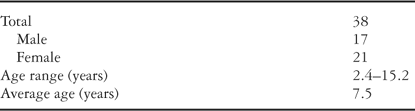
Table 1.
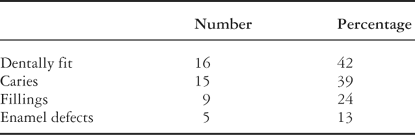
Table 2.

Types of dental prevention experienced by children in the study. OHI: oral hygiene instruction; Diet: dietary advice; F: fluoride advice and/or treatment; F/S: fissure sealants.
 You have
Access
- 39
- Cited by