Introduction
The pathophysiology of acquired cholesteatoma continues to be controversial. Growing evidence leads us to consider the genesis, expansion and progression of cholesteatoma as a complex interaction between the anatomical, inflammatory and regulatory factors involved in cellular proliferation and differentiation. Over the past two centuries, our understanding of cholesteatoma has been improved by the theories of invagination, basal cell hyperplasia or papillary ingrowth, metaplasia, and epithelial invasion. However, the exact mechanisms responsible for the invasion, recidivism and destruction seen in this disease remain unclear.Reference Semaan and Megerian1
The role of enzymatic and cytokine-mediated inflammation in the pathogenesis of cholesteatoma has been studied in recent decades. Certain members of the metalloproteinase superfamily (matrix metalloproteinases 2 and 9) have been shown to play some role in the process.Reference Schonermark, Mester, Kempf, Blaser, Tschesche and Lenarz2–Reference Schmidt, Grunsfelder and Hoppe4
The disintegrin and metalloproteinase family of proteins (also known as ADAM proteins) are members of the metalloproteinase superfamily.Reference Duffy, McKiernan, O'Donovan and McGowan5, Reference Duffy, McKiernan, O'Donovan and McGowan6 They are unique, multidomain transmembrane and secreted proteins which are capable of mediating cell adhesion, migration, development and signalling. Proteases of the disintegrin and metalloproteinase family are involved in a variety of physiological processes, and also in the pathogenesis of various inflammatory and hyperproliferative diseases, including cancer.Reference Duffy, McKiernan, O'Donovan and McGowan6, Reference Reiss, Ludwig and Saftig7 One of their best-established functions is the release of biologically important ligands such as tumour necrosis factor α (TNF-α), epidermal growth factor, transforming growth factor α and amphiregulin.Reference Duffy, McKiernan, O'Donovan and McGowan6 Because these ligands have been implicated in the pathogenesis of cholesteatoma, it might be expected that the specific disintegrin and metalloproteinase family proteins involved in their release would also be involved in the formation of cholesteatoma.
In this study we aimed to elucidate the expression of disintegrin and metalloproteinase family proteins 10, 12 and 17 in cholesteatoma tissues, and to investigate the possible role of these proteins in the pathogenesis of cholesteatoma.
Materials and methods
We included in the study 19 patients who were undergoing surgery for chronic otitis media with acquired cholesteatoma at the otorhinolaryngology department of Baskent University Hospital, Ankara, Turkey.
We excluded from the study patients with a history of any kind of previous ear surgery, or with cholesteatoma classified as congenital.
The study protocol was approved by the Baskent University Ethics Committee for Clinical Research. Written, informed consent was obtained for all patients.
All patients underwent surgery via a postauricular approach. In seven of these patients, a 3 × 3 mm skin sample was taken from the external ear canal during the same operation, as a control specimen. Cholesteatoma and control skin samples were placed in transport medium and sent to the pathology laboratory for immunohistochemical evaluation.
Immunohistochemical evaluation
Expression of disintegrin and metalloproteinase family proteins 10, 12 and 17 was evaluated using paraffin blocks, using the tissue microarrays technique. Arrays were assembled by taking core needle ‘biopsies’ from specific locations containing epithelial and stromal components, within paraffin-embedded tissue blocks from the archives of the Baskent University pathology department, and re-embedding them in an arrayed ‘recipient’ block. Two cores were taken for each case, each approximately 0.6 mm in diameter.
Immunohistochemical analysis for the three proteins was performed using the streptavidin-biotin-peroxidase technique. After construction, 3-mm-thick sections were obtained from ‘recipient’ new paraffin blocks and placed onto poly-l-lysine-covered slides. Sections were deparaffinised in xylene and dehydrated in descending dilutions of ethanol. For antigen retrieval, slides were treated by microwave heating in citrate buffer (pH 6.0) for 20–25 minutes. Endogenous peroxidase activity was blocked by 30 minutes of incubation with 0.3 per cent hydrogen peroxidase. Slides were tested with antibodies to disintegrin and metalloproteinase family protein 10 (1:100, rabbit polyclonal; Santa Cruz Biotechnology, Santa Cruz, California, USA), protein 12 (1:100, rabbit polyclonal; Santa Cruz Biotechnology), and protein 17 (1:100, mouse monoclonal; Santa Cruz Biotechnology), and incubated for 24 hours at room temperature. After incubation with primary antibody, slides were washed with phosphate-buffered saline for 5 minutes. Biotinylated goat anti-polyvalent antibody (Lab Vision, Fremont, California, USA) was applied. Sections were tested using the streptavidin-biotin-peroxidase kit (UltraVision Detection System Anti-polyvalent, horseradish peroxidase and 3-amino-9-ethylcarbazole; Thermo Scientific, Waltham, Massachusetts, USA). After incubation, the reaction product was detected using 3-amino-9-ethylcarbazole (Thermo Scientific).
Finally, the sections were counterstained with Mayer's haematoxylin, and mounted using mounting medium.
Slides were examined within 24 hours of staining. Immunoreactivity was assessed by a pathologist who was blinded to the origin of the slides.
Staining intensity was scored using the following criteria: 0, negative staining of cells; 1+, weak positivity of cells; 2+, moderate positivity of cells; and 3+, strong positivity of cells. The immunostaining intensity of the cholesteatoma epithelial cells, stroma, inflammatory cells and blood vessel mesenchymal cells was noted and compared with that of the external ear canal skin specimens.
Statistical analysis
Statistical analysis was performed by using the SPSS version 15.0 software program (SPSS Inc, Chicago, Illinois, USA). Immunostaining of the epithelium, stroma and vessel mesenchymal cells, in cholesteatoma and control samples, was analysed using the chi-square test. A p value of less than 0.05 was considered statistically significant.
Results and analysis
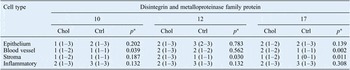
Table I compares immunohistochemical staining results for the 19 cholesteatoma specimens and 7 external ear canal skin samples.
Immunostaining results

Data represent immunostaining score median (minimum–maximum), unless otherwise indicated. *Pearson chi-square test. Chol = cholesteatoma; Ctrl = control
There was no statistically significant difference between the immunostaining scores for epithelial and inflammatory cells, for the disintegrin and metalloproteinase family proteins 10, 12 and 17, comparing the cholesteatoma and control group (p > 0.005) (Table I).
However, an increased immunostaining score was seen for blood vessel mesenchymal cells from the cholesteatoma group, for protein 10 (median, 1; range, 1–2) (p = 0.039) and protein 17 (median, 2; range, 1–2) (p = 0.002), compared with the control group. An increased immunostaining score was also seen for stromal cells from the cholesteatoma group, for protein 12 (median, 2; range, 1–3) (p = 0.03) and protein 17 (median, 1; range, 1–2) (p = 0.011), compared with the control group (Table I).
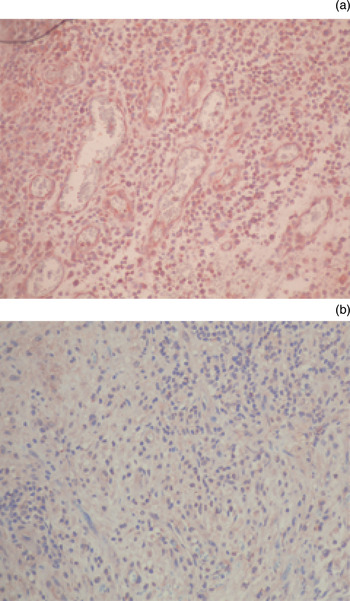
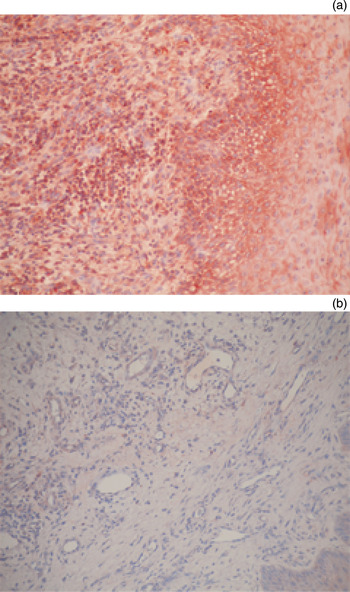
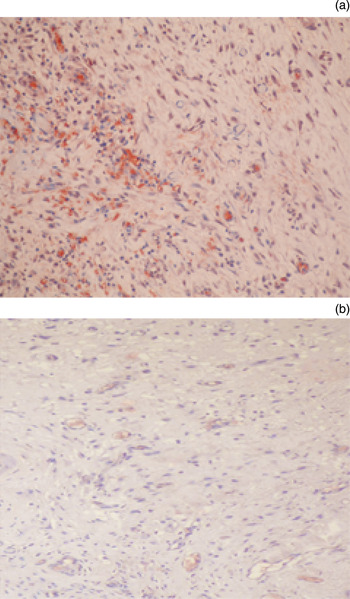
These results suggest that protein 10 was over-expressed in cholesteatoma blood vessels, protein 12 was over-expressed in cholesteatoma stroma, and protein 17 was markedly over-expressed in both cholesteatoma blood vessels and stroma (Figures 1 to 3).
Photomicrographs of immunostaining for disintegrin and metalloproteinase family protein 10, showing: (a) over-expression in cholesteatoma, with increased staining of vascular structures and inflammatory cells; and (b) control tissue. (×40)

Photomicrographs of immunostaining for disintegrin and metalloproteinase family protein 12, showing: (a) general increased staining in cholesteatoma; and (b) control tissue. (×40)

Photomicrographs of immunostaining for disintegrin and metalloproteinase family protein 17, showing: (a) over-expression in cholesteatoma, with marked staining of stromal cells and vascular structures; and (b) control tissue. (×40)

Discussion
Despite improvements in our understanding, the pathophysiology of cholesteatoma continues to be controversial and debated widely. The biological factors that predict development, aggressiveness and recurrence of cholesteatoma remain unclear. However, ongoing research findings lead us to consider the formation, growth and progression of cholesteatoma as a complex interaction between anatomical, inflammatory and regulatory factors affecting cellular proliferation and differentiation.Reference Semaan and Megerian1
The disintegrin and metalloproteinase family of proteins (also known as ADAM proteins) are a recently discovered group of multidomain transmembrane and secreted proteins that belong to the metzincin family of metalloproteases, which also includes astacins and matrix metalloproteinases.Reference Reiss and Saftig8 These proteins mediate cell adhesion and the proteolytic release of cell surface molecules. They also have a prominent role in releasing soluble mediators such as growth factors, hormones and chemokines. Members of this family are involved in various normal physiological processes (e.g. the interaction of sperm and egg, cell fate determination, cell migration, wound healing, neurite and axon guidance, heart development, immunity, cell proliferation, and angiogenesis) but also in the pathogenesis of diverse inflammatory and hyperproliferative diseases (including rheumatoid arthritis, Alzheimer's disease, cardiac hypertrophy, asthma and cancer).Reference Duffy, McKiernan, O'Donovan and McGowan5, Reference Duffy, McKiernan, O'Donovan and McGowan6 Further information about the structure, synthesis and functions of the disintegrin and metalloproteinase family of proteins, and their pathophysiological roles, can be found in a number of excellent recent reviews.Reference Duffy, McKiernan, O'Donovan and McGowan5–Reference Reiss and Saftig8
Some of the best-characterised biologically important disintegrin and metalloproteinase family substrates are TNF-α, epidermal growth factor, transforming growth factor α, epiregulin and amphiregulin, which are released by protein 17.Reference Duffy, McKiernan, O'Donovan and McGowan5, Reference Duffy, McKiernan, O'Donovan and McGowan6, Reference Moss, Jin, Milla, Bickett, Burkhart and Carter9–Reference Sahin, Weskamp, Kelly, Zhou, Higashiyama and Peschon11 Epidermal growth factor, collagen IV and betacellulin are released by protein 10.Reference Sahin, Weskamp, Kelly, Zhou, Higashiyama and Peschon11, Reference Millichip, Dallas, Wu, Dale and McKie12 Finally, heparin-binding epidermal growth factor, collagen IV, fibronectin, and insulin-like growth factor binding proteins 3 and 5 are processed by protein 12.Reference Roy, Wewer, Zurakowski, Pories and Moses13–Reference Loechel, Fox, Murphy, Albrechtsen and Wewer15
In previous studies of cytokine-mediated inflammation and bone destruction within cholesteatoma, molecules such as TNF-α,Reference Yan and Huang16–Reference Yetiser, Satar and Aydin18 epidermal growth factor,Reference Omura, Makino, Amatsu and Itoh19, Reference Bujia, Holly, Schilling, Negri, Pitzke and Schulz20 transforming growth factor α,Reference Schulz, Bujia, Holly, Shilling and Kastenbauer21, Reference Ergun, Zheng and Carlsoo22 epiregulin,Reference Yoshikawa, Kojima, Wada, Tsukidate, Okada and Saito23 amphiregulin,Reference Macias, Gerkin and Macias24 collagen IV,Reference Sudhoff, Bujia, Borkowshi, Koc, Holly and Hildmann25, Reference Ergun, Zheng and Carlsoo26 fibronectin,Reference Sudhoff, Bujia, Borkowshi, Koc, Holly and Hildmann25, Reference Schilling, Holly, Bujia, Schulz and Kastenbauer27 and matrix metalloproteinases-2 and -9Reference Schonermark, Mester, Kempf, Blaser, Tschesche and Lenarz2, Reference Schmidt, Grunsfelder and Hoppe3 were shown to be related to either the formation or the proliferation and growth of cholesteatoma. Thus, disintegrin and metalloproteinase family proteins 10, 12 and 17 may constitute some of the missing links between cytokine production and cholesteatoma development, as these proteases are involved in the release of soluble inflammatory mediators.
Data from ‘knockout’ mice studies have shown a relationship between disintegrin and metalloproteinase family protein 17 (also known as TNF-α converting enzyme) and epithelial abnormalities.Reference Peschon, Slack, Reddy, Stocking, Sunnarborg and Lee28 Kawaguchi et al. Reference Kawaguchi, Mitsuhashi and Kondo29 examined the expression of protein 17 in normal skin and found it to be expressed throughout all layers of the epidermis, in blood vessels of dermis, and particularly in mast cells. Later, these same authorsReference Kawaguchi, Mitsuhashi and Kondo30 demonstrated over-expression of protein 17 in psoriatic skin lesions. Recently, Oh et al. Reference Oh, Schramme, Stark, Tilgen, Gutwein and Reichrath31, Reference Oh, Schramme, Stark, Tilgen, Gutwein and Reichrath32 showed over-expression of disintegrin and metalloproteinase family proteins 10 and 12 in psoriasis, and over-expression of proteins 10, 12 and 17 in invading peripheral cells of basal cell carcinoma. As the pathological processes involved in cholesteatoma and psoriasis are similar in terms of dysregulated inflammation and epidermal cell hyperproliferation, proteins 10, 12 and 17 may also be involved in the pathogenesis of cholesteatoma.
Consistent with this proposition, our study found over-expression of proteins 10 and 17 in cholesteatoma blood vessels, and of proteins 12 and 17 in cholesteatoma stroma (i.e. fibroblasts), compared with normal skin. However, we found no statistically significant differences in the expression of proteins 10, 12 or 17 in cholesteatoma epidermal or inflammatory cells, compared with normal skin. These findings suggest that proteins 10, 12 and 17 are over-expressed in the perimatrix region of cholesteatoma. The differing expression patterns of these proteins within different cholesteatoma cell types may indicate variation in their pathogenetic role.
There is a lack of knowledge about the exact regulation of disintegrin and metalloproteinase family proteins, and how this may be related to cholesteatoma pathogenesis. Increased expression of specific proteins of this family in several cancer types has been found to correlate with features of aggressive disease and poor prognosis. Thus, these specific proteins have the potential to be used as biomarkers in order to determine cholesteatoma aggressiveness or risk of recurrence.
Furthermore, selective inhibition of specific disintegrin and metalloproteinase family proteins has potential as a novel therapy for a variety of pathological conditions, such as cancer,Reference Duffy, McKiernan, O'Donovan and McGowan5–Reference Reiss, Ludwig and Saftig7, Reference Oh, Schramme, Stark, Tilgen, Gutwein and Reichrath32, Reference Duffy, Lynn, Lloyd and O'Shea33 rheumatoid arthritisReference Thabet and Huizinga34 and psoriasis.Reference Oh, Schramme, Stark, Tilgen, Gutwein and Reichrath31 Over-expression of disintegrin and metalloproteinase family proteins 10, 12 and 17 at different sites within the cholesteatoma micro-environment may represent a hitherto missing link between the normal physiological state and the complicated pathological process which results in cholesteatoma development.
• The disintegrin and metalloproteinase family are part of the metalloproteinase superfamily
• Other metalloproteinase superfamily members are known to affect the cholesteatoma process
• This study assessed expression of disintegrin and metalloproteinase family proteins 10, 12 and 17 in cholesteatoma
• Results indicate that all these proteins may play a role in cholesteatoma pathogenesis
There are more sensitive and quantitative analytical methods (e.g. mass spectrometry) which can be used to screen for proteins or markers of interest, in preference to immunohistochemical staining. Our study findings are limited by being semi-quantitative. Even so, ours is the first study aiming to assess the possible relationship between selected disintegrin and metalloproteinase family proteins and cholesteatoma. Further studies should be conducted to elucidate the exact role of these proteases in this specific disease.
Acknowledgement
This study was supported financially by Baskent University Research Fund (project number KA08/61).