Introduction
Common teasel is native to central Europe, east Asia, and north Africa, and is a serious weed of areas of low disturbance in several countries (Werner Reference Werner1975). It is categorized as a noxious weed in five states and as invasive in 12 states and one province in the United States and Canada, respectively. Moreover, it is naturalized in Oceania, Africa, and several South American countries (CABI 2020). Common teasel is widely distributed in central and northern Argentina (Zuloaga and Morrone Reference Zuloaga and Morrone1999); it typically colonizes protected natural areas, pastures, and roadsides. Common teasel is considered a highly competitive weed with other plants, which reduces native species’ diversity in natural areas (Glass Reference Glass1991; Werner Reference Werner1975) and forage availability in grasslands (Solecki Reference Solecki1993). In addition, common teasel is reported to be an alternate host of important pathogens, such as the nematode Ditylenchus dipsaci (Dugan and Rector Reference Dugan and Rector2007) and the sunflower chlorotic mottle virus (Giolitti et al. Reference Giolitti, Bejerman and Lenardon2009). Finally, teasel stalk height (1–2 m) often negatively affects visibility along roadsides and railroad crossings (Bentivegna and Smeda Reference Bentivegna and Smeda2008).
Common teasel is classified as a short-lived perennial; it grows as a deep-rooted rosette in the first year of growth and flowers in the second year and occasionally in subsequent years, after which plant senescence occurs (Rector et al. Reference Rector, Harizanova, Sforza, Widmer and Wiedenmann2006; Werner Reference Werner1975). In Argentina, seedling emergence has been observed in autumn, when soil temperature and moisture conditions are suitable (Daddario et al. Reference Daddario, Tucat, Molinari, Bentivegna and Fernández2014). Rosettes have wide leaves in a compact arrangement that limits light availability to understory vegetation (Bentivegna and Smeda Reference Bentivegna and Smeda2008). Common teasel plants produce a stalk with several branches, each of which holds an inflorescence commonly called a head or capitulum. Reproduction is only by seed, most of which fall close to the parent plant, resulting in formation of large, dense teasel monocultures (Werner Reference Werner1975). Long-distance seed dispersal likely is facilitated by water courses and wild animals, such as birds. This weed is commonly included in flower arrangements, which also promotes human-mediated seed dispersal (Hurrell et al. Reference Hurrell, Bazzano and Delucchi2007; Werner Reference Werner1975).
Management of common teasel must involve control techniques that reduce rosette density and prevent seed production (Bentivegna and Smeda Reference Bentivegna and Smeda2008; Glass Reference Glass1991). Herbicides, such as glyphosate and 2,4-D, are an efficient tool for invasive weed control in natural communities (DiTomaso et al. Reference DiTomaso, Enloe and Pitcairn2007). Glyphosate is a broad-spectrum systemic herbicide, and 2,4-D is a synthetic auxin used for controlling broadleaf weeds (Arregui and Puricelli Reference Arregui and Puricelli2013). Both herbicides are frequently applied alone and, as well, they often are mixed to improve control efficiency (Flint and Barrett Reference Flint and Barrett1989). Researchers have determined the efficacy of herbicides on cut-leaved teasel (Dipsacus laciniatus L.) (Bentivegna and Smeda Reference Bentivegna and Smeda2008; Damos and Parrish Reference Damos and Parrish2013; Zimmerman et al. Reference Zimmerman, Porter, Riney and Parrish2013); however, to our knowledge, such information on common teasel is lacking. Although some herbicides have been suggested for common teasel control (Reeve Reference Reeve2007; Werner Reference Werner1975), the effects when applied alone, or in combination, to different growth stages of this species have not been evaluated.
Mowing may limit common teasel abundance and seed production, depending on time of cutting. Caylor (Reference Caylor1998) reported that mowing common teasel did not reduce infestations but only delayed seed production in teasel species. Cheesman (Reference Cheesman1998) evaluated the cutting effect on common teasel populations, and although this information would be potentially useful, Cheesman reported the effects of cutting the plants in their native range (United Kingdom) and only on bolting plants. The effects of cutting on invasive common teasel in Argentina, at both vegetative and reproductive stages, was not investigated. In addition, Bentivegna and Smeda (Reference Bentivegna and Smeda2011) indicated that mowing cut-leaved teasel after flowering may contribute to the spread of viable seeds. Consequently, a better understanding of the timing of invasive common teasel seed maturity after flowering will help identify the period when cutting will not disperse viable seeds.
The development of an integrated management protocol with minimal impact to the invaded environment is necessary for sustainable control of common teasel. As a first step, it is important to obtain detailed information on the effect of management practices for invasive common teasel at several growth stages. Therefore, the objectives of this research were to (1) assess the efficacy of increasing application rates and combinations of glyphosate and 2,4-D at different common teasel growth stages; (2) quantify the impact of time of cutting on vigor and reproduction; and (3) determine the timing of seed maturation after flowering on invasive common teasel in Argentina.
Materials and Methods
Herbicides
The effect of increasing application rates and combinations of glyphosate and 2,4-D on common teasel was studied in 2014–2015 and then again in 2015–2016 (hereafter referred to as years 1 and 2, respectively) in outdoor pot experiments at the Center of Renewable Natural Resources of the Semiarid Zone (Bahía Blanca, Buenos Aires province, Argentina; 38.66ºS; 62.23ºW). Common teasel plants were treated with herbicides at three growth stages, designated as 4-leaf, rosette, and bolting. Plants were grown from field-collected seeds, which were harvested in late summer 2014 and 2015 (for years 1 and 2, respectively) from populations located in Bahía Blanca. Harvested seeds were cleaned and stored at 4 C in sealed paper bags until used. At a later date, seeds were germinated in 9-cm Petri dishes containing a sheet of coarse filter paper soaked in distilled water. Petri dishes were placed inside a growth chamber at constant temperature (24 C). Seeds were considered germinated when the radicle was longer than 2 mm. Seedlings then were planted at a depth of 1 cm in 500, 1,500, and 3,000 cm3 pots filled with sandy loam soil (64% sand, 15% silt, and 21% clay), representative of the region, for the 4-leaf, rosette, and bolting stages, respectively. Plants were grown under greenhouse conditions (25–16 C; 42%–22% relative humidity) to ensure establishment, and approximately 1 mo after planting, they were thinned to three uniformly sized plants per pot and placed outside of the greenhouse for growing under natural weather conditions until herbicide applications.
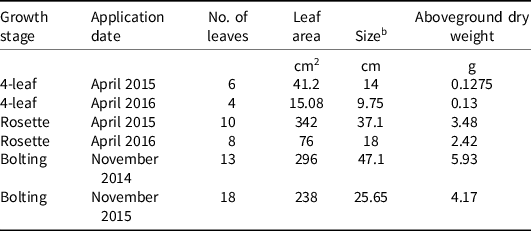
Following the natural phenology observed in the region, herbicide treatments were sprayed at the 4-leaf and rosette stages on April 3, 2015, and April 20, 2016 (autumn), and at the bolting stage on November 5, 2014, and November 13, 2015 (spring), in years 1 and 2, respectively. At each date of application, untreated plants from five randomly selected pots were harvested for morphologic characterization. Plant size and weight were recorded, and leaves were counted and digitized to calculate leaf area, using software Image J (Abramoff et al. Reference Abramoff, Magalhães and Ram2004) (Table 1). Herbicide treatments were as follows: (1) glyphosate (Roundup Full II®, potassium salt; Monsanto Argentina) at 0.034, 0.068, 0.135, 0.27, 0.54, 1.08, and 2.16 kg ae ha−1; (2) 2,4-D (Asi Max 50®, amine salt; Chemotecnica Argentina) at 0.0027, 0.054, 0.1, 0.21, 0.44, 0.875, and 1.75 kg ai ha−1; and (3) glyphosate mixed with 2,4-D at 1.08 + 0.21, 1.08 + 0.44, 1.08 + 0.875, 0.54 + 0.875, and 0.27 kg ae ha−1 + 0.875 kg ai ha−1, respectively. Control treatments were only sprayed with water. Application rates were selected on the basis of label recommendations for the control of similar weeds (e.g., spiny plumeless thistle [Carduus acanthoides L.], Italian plumeless thistle [C. pycnocephalus L.] nodding thistle [C. thoermeri Weinm.], bull thistle [Cirsium vulgare (Savi) Ten.]) (CASAFE 2011).
Morphologic characteristics of the different growth stages of common teasel at the time of application of increasing rates and combinations of glyphosate and 2,4-D amine in outdoor pot experiments performed between 2014 and 2016 in Bahía Blanca, Argentina.a

a Data are reported as mean values.
b Size values correspond to plant diameter (4-leaf and rosette stages) or stalk height (bolting stage).
Herbicides were applied using a spray chamber calibrated to deliver a spray solution of 100 l ha−1 at 255 kPa and a speed of 3.77 km h−1. Applications were made with a Bail 11002 fan nozzle (PPB®; Picos Pulverizadores SA, Argentina) with a 50-mesh filter. Two water-sensitive cards were sprayed to determine the droplet spectrum, using DepositScan software (Zhu et al. Reference Zhu, Salyani and Fox2011). Average volumetric diameter, average numeric diameter, and number of droplets unit area−1 ± SD obtained were 713 ± 191 µm, 204 ± 14 µm, and 75 ± 10, respectively.
Common teasel visual injury was assessed 30 d after the treatments were applied by using a scale from 0% (no visible effect) to 100% (plant death). Glyphosate injury was scored by evaluation of chlorosis in the young leaves, necrosis, stunting, and death. Auxinic herbicide symptoms compared were leaf and stem twisting, malformation, chlorosis, necrosis, and death. In addition, aboveground parts of plants that survived in each pot were cut at the soil surface, put in paper bags, and dried at 60 C until reaching a constant weight. For each pot, total dry weight was divided by the number of plants to determine the average dry weight per pot.
The experiments were conducted as a completely randomized design with five replicates. For each growth stage, visual injury estimations and dry weight data were subjected to ANOVA and the means were separated using the Fisher protected LSD test (P < 0.05). The Shapiro-Wilk test of normality and analysis of residuals for equal variance were determined with a probability of P ≤ 0.05. Data were transformed by natural logarithm in case of absence of normality or homoscedasticity (Snedecor and Cochran Reference Snedecor and Cochran1956). Common teasel visual injury was affected by the interaction between year (trial run) and treatment (P < 0.05); therefore, results are presented separately by year. Conversely, data were pooled over the year because dry weight was not affected by the interaction between year and treatment. All statistical analyses were performed using the software INFOSTAT (Di Rienzo et al. Reference Di Rienzo, Casanoves, Balzarini, Gonzalez, Tablada and Robledo2015). Finally, control was considered effective when visual injury or dry weight reduction was greater than 90%.
Mowing
Cutting Treatments
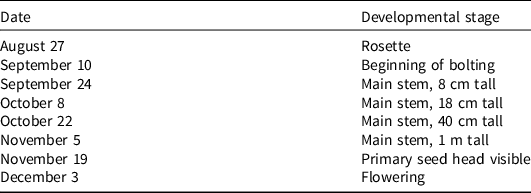
The effect of cutting at several common teasel growth stages was studied in 2015 at two locations in southwestern Buenos Aires province: Bahía Blanca (38.66ºS; 62.23ºW) and Napostá (38.43°S; 62.28°W). At each site, 54 naturally established rosettes were selected and tagged. Only plants greater than 30 cm in diameter were considered, because common teasel must reach this critical size to flower within a year (Werner Reference Werner1975). Then, for each mowing treatment (Table 2), six common teasel plants were cut at 8 cm above ground using hand shears. After plant senescence, the height of all plants, the number of heads, and average head length were recorded. The experiment was performed as a completely randomized design with six replicates. Data were subjected to ANOVA and the means were separated using the Fisher protected LSD test (P < 0.05). Common teasel plant height, number of heads, and head length were affected by the interaction between location and treatment (P < 0.05); consequently, results are described separately by location.
Dates and developmental stages at which common teasel plants were cut to evaluate the effect of time of cutting on the growth and reproduction in experiments performed in 2015, in Bahía Blanca and Napostá, Argentina.

Seed Germination After Flowering
Common teasel seed germination after flowering was evaluated in experiments conducted in 2015–2016 and then repeated in 2016–2017 in Bahía Blanca, Argentina. Following the methodology described by Bentivegna and Smeda (Reference Bentivegna and Smeda2011), the primary head (defined as the largest and first capitulum to flower, formed on the main stem) with 60% anthesis was tagged on 48 naturally occurring plants on December 27, 2015, and December 15, 2016. Eight primary heads were collected every 10 d following tagging over 3 mo. For each head harvested, 100 seeds were sampled at random and separated into two groups of 50 seeds each. To determine the influence of cold temperatures on seed germination at different degrees of maturation, one group of seed was stored at room temperature (20 ± 2 C) and the other was refrigerated (5 C) for 7 mo. After storage, each group of seeds was placed in a 9-cm Petri dish inside a growth chamber at 24 C and in darkness. Seeds were considered germinated when the radicle reached 2 mm.
The experimental design was completely randomized, and data were transformed by arcsine of the square root of the proportion to adjust them to normal distribution (Snedecor and Cochran Reference Snedecor and Cochran1956). Data were subjected to ANOVA and were pooled when three-way or two-way interaction was not detected (P > 0.05). The means were separated using the Fisher protected LSD test (P < 0.05).
Results and Discussion
Herbicides
Glyphosate
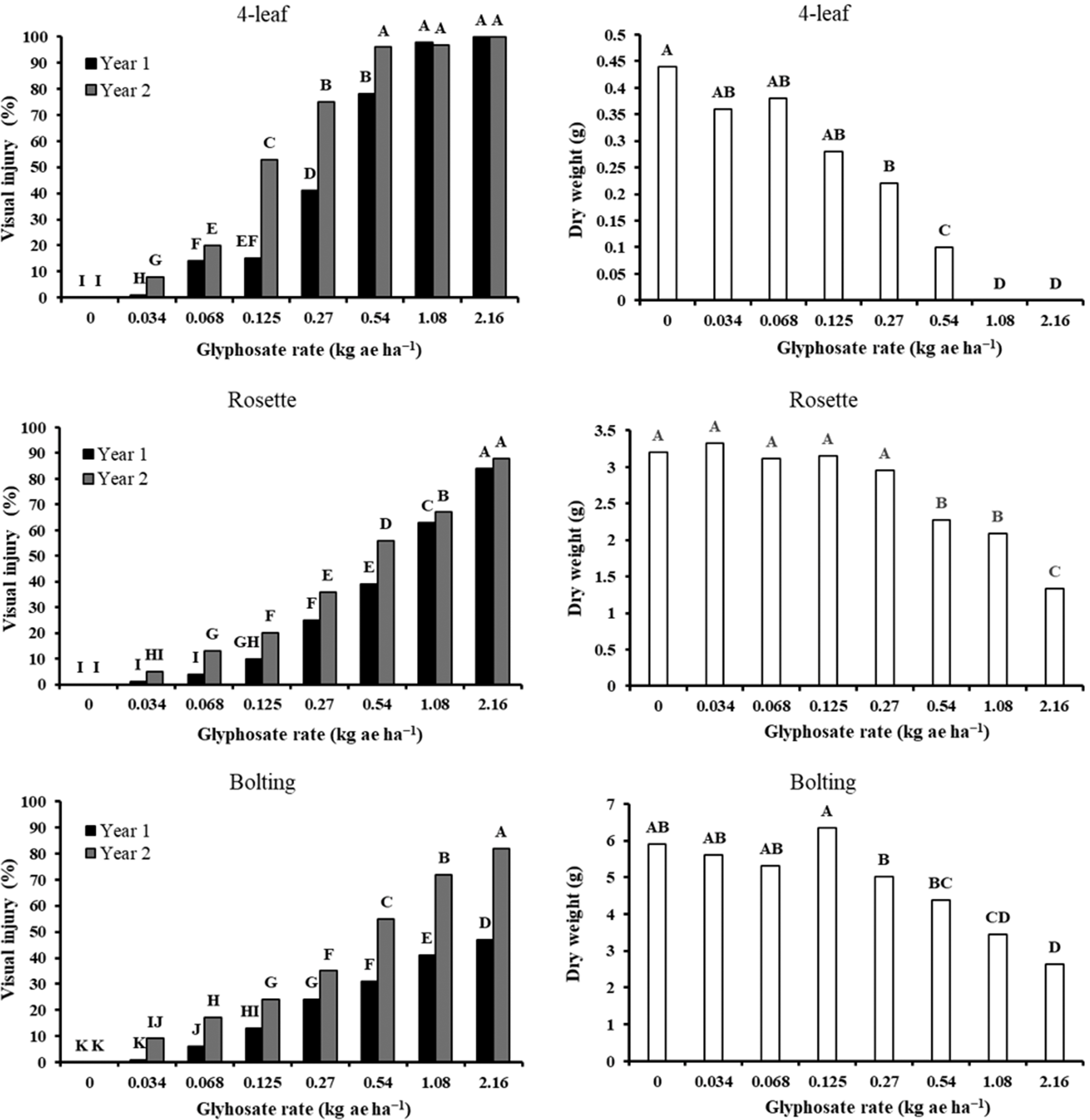
According to visual injury and dry weight reduction, common teasel control was effective when glyphosate was applied at 1.08 kg ae ha−1 at the 4-leaf stage, whereas control at the rosette and bolting stages was not satisfactory at the evaluated rates (Figure 1). Glyphosate applied at 1.08 kg ae ha−1 caused 98% and 97% visual injury to 4-leaf–stage plants in years 1 and 2, respectively. When applied to rosette-stage plants, glyphosate at the highest rate tested (2.16 kg ae ha−1) provided 84% and 88% visual injury in years 1 and 2, respectively. This same rate had a reduced effect on bolting-stage plants in year 1 (47%) but was much greater in year 2 (82%). Visual injury estimations revealed that not all plants died after treatment with glyphosate at 1.08 kg ae ha−1 at the 4-leaf stage, although plants were severely damaged and dry weight was negligible (P < 0.01). Conversely, glyphosate applied at 2.16 kg ae ha−1 produced a decrease in dry weight of 59% and 56% at the rosette and bolting stages, respectively, compared with the control treatment (P < 0.01).
Visual injury and aboveground dry weight at three growth stages (4-leaf, rosette, and bolting) of common teasel 30 d after glyphosate applications in Bahía Blanca, Argentina, in experiments performed in 2014–2015 (year 1) and 2015–2016 (year 2). Bars with the same letter do not differ statistically according to Fisher protected LSD test (P < 0.05). Dry weight data were pooled over the year.

Glyphosate adequately controlled common teasel, although only when applied at 1.08 kg ae ha−1 to young plants. Reeve (Reference Reeve2007) reported that glyphosate provided satisfactory common teasel control in a spring field-application in east central Indiana, but the rate applied was much higher (approximately 7 kg ae ha−1). Our study supports that the growth stage of common teasel was a critical factor for effective and consistent control. Similarly, Damos and Parrish (Reference Damos and Parrish2013) indicated that smaller cut-leaved teasel plants were more susceptible to glyphosate (based on taproot diameter). This observation is typically linked to young plants with leaves that have a thin cuticle and low wax deposition, and to greater translocation by rapidly growing plants (Boutin et al. Reference Boutin, Aya, Carpenter, Thomas and Rowland2012; Schuster et al. Reference Schuster, Shoup and Al-Khatib2007). In addition to the lack of satisfactory control, visual injury did not follow a similar pattern to the dry weight assessment for bolting common teasel plants. In the second year, the symptoms of chlorosis and necrosis were particularly noticeable, but apparently did not translate into the same effect on overall growth. Although it is difficult to explain this, inconsistencies also were reported in other studies between phytotoxicity symptoms and quantitative measurements as a result of variations in weather conditions or in the characteristics of the plants to which sublethal rates of herbicides were applied (Datta et al. Reference Datta, Sindel, Jessop, Kristiansen and Felton2007; DeGennaro and Weller Reference DeGennaro and Weller1984; McCauley et al. Reference McCauley and Young2019). Besides application rate and growth stage, it should be considered that glyphosate is nonselective and, therefore, this herbicide can be safely used in areas infested by dense patches of common teasel where there is little or no risk of negatively affecting desirable species. In this respect, Zimmerman et al. (Reference Zimmerman, Porter, Riney and Parrish2013) indicated that after glyphosate application to infested areas of cut-leaved teasel, an adverse effect was produced on the desirable species. Consequently, these species showed lower competitive ability against the weed, leading to an increase in cut-leaved teasel biomass.
2,4-D
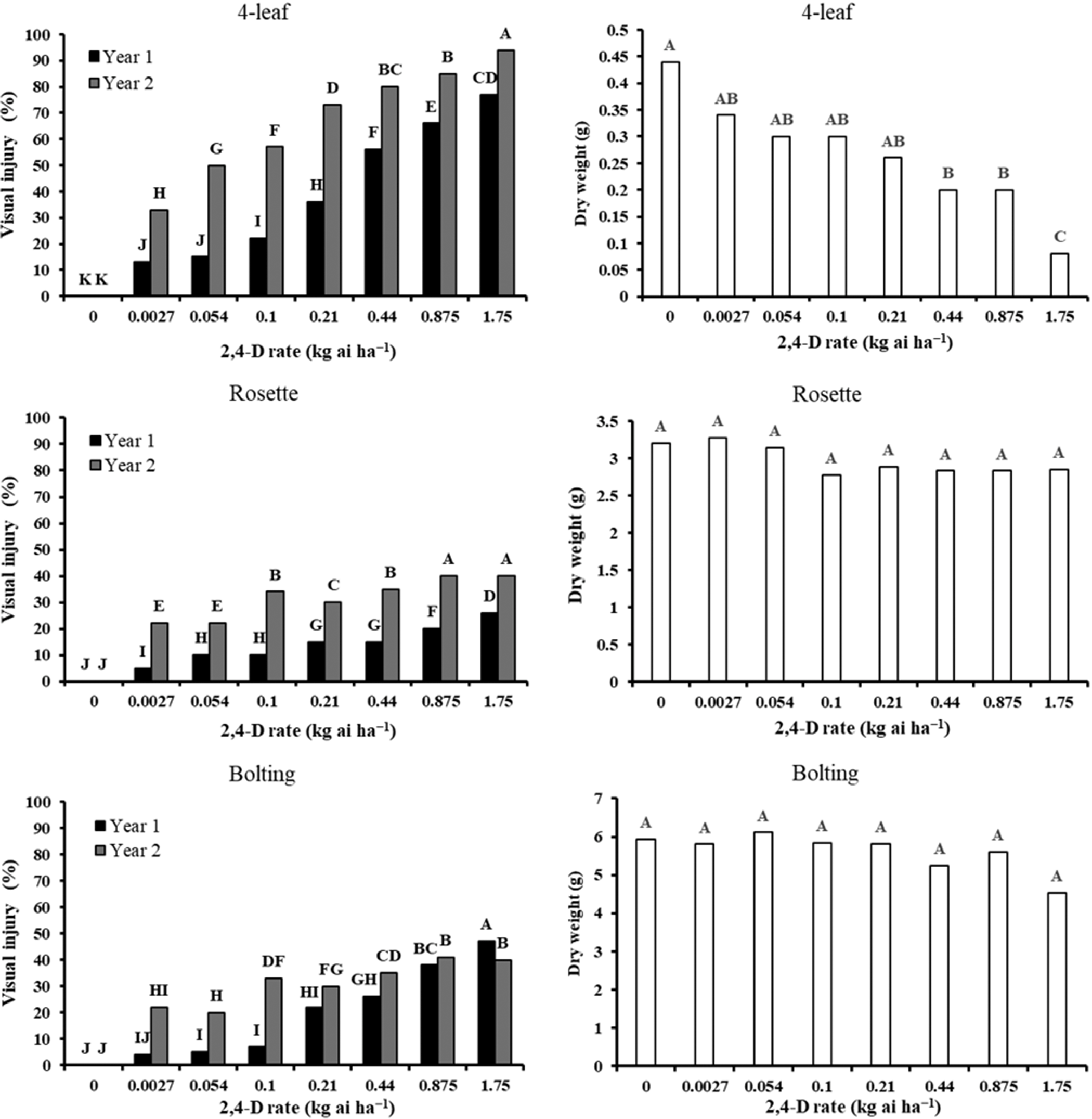
Based on visual injury, 2,4-D was only effective at the highest rate tested (1.75 kg ai ha−1) and at the 4-leaf stage in year 2 (Figure 2). When this rate was applied to 4-leaf–stage common teasel plants, there was nearly 80% and greater than 90% injury in years 1 and 2, respectively. In addition, 2,4-D applied at 1.75 kg ai ha−1 caused 26% and 40% injury to rosette-stage plants in years 1 and 2, respectively. Similarly, this same rate produced 47% and 40% injury when applied at the bolting stage in years 1 and 2, respectively. When 2,4-D was applied at 1.75 kg ai ha−1 to 4-leaf–stage plants, the biomass was reduced by 82% compared with the untreated control. In contrast, there was no effect on the dry weight of rosette-stage (P > 0.5) or bolting-stage (P > 0.6) plants after application of 2,4-D at any of the rates evaluated. Even though this herbicide was recommended by Werner (Reference Werner1975) for the control of teasel, our results did not demonstrate an effective control. Reeve (Reference Reeve2007) achieved total control of rosettes with 2,4-D, but the rate applied was much higher (approximately 27 kg ai ha−1) and the treatment also included dicamba and 2,4-dichlorophenoxypropionic acid. Where desirable grasses might be growing in mixed stands with common teasel, the use of selective herbicides at the commercial recommended rates, such as 2,4-D, could be used to help manage common teasel while avoiding negative effects on nontarget plants. However, our results show that to achieve the best level of growth reduction, 2,4-D should be applied at the beginning of the growing season and as a complement to other management practices.
Visual injury and aboveground dry weight at three growth stages (4-leaf, rosette, and bolting) of common teasel 30 d after 2,4-D applications in Bahía Blanca, Argentina, in experiments performed in 2014–2015 (year 1) and 2015–2016 (year 2). Bars with the same letter do not differ statistically according to Fisher protected LSD test (P < 0.05). Dry weight data were pooled over the year.

Combination of herbicides
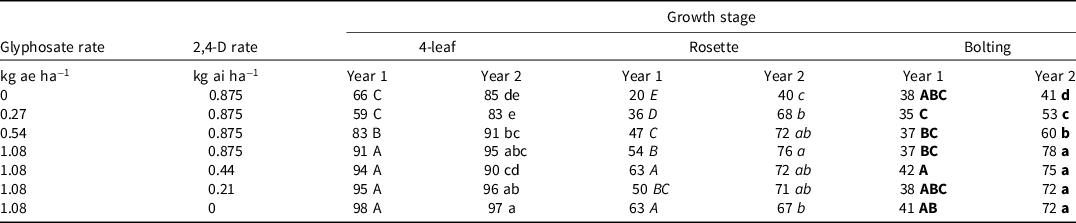
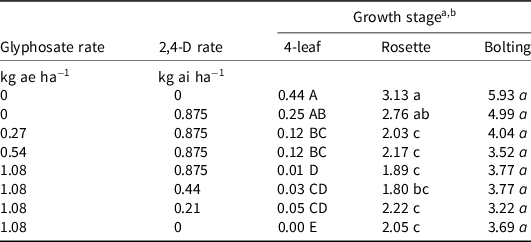
Combinations of glyphosate and 2,4-D effectively controlled plants in the 4-leaf stage but not rosette- or bolting-stage common teasel plants. Treatments containing glyphosate at label rate + 2,4-D at increasing rates induced 91% to 95%, and 90% to 96% plant damage (years 1 and 2, respectively) at the 4-leaf stage (Table 3). Although these injury levels were greater than those achieved with the single 2,4-D treatment (66% and 85%, in years 1 and 2, respectively), they were similar to the single glyphosate application (98% and 97%, in years 1 and 2, respectively). Visual injury was maximal when glyphosate was applied at label rate + 2,4-D at label rate to plants in the rosette and bolting stages in the second year of the study (76% and 78%, respectively). Label rates of glyphosate + 2,4-D, when applied at the 4-leaf stage, resulted in a 97% reduction in plant biomass compared with the untreated control (P < 0.01) (Table 4). The biomass of rosette-stage plants was reduced by 31% to 42% after application of glyphosate + 2,4-D (P < 0.01). There was no reduction in plant biomass after the application of herbicide treatments applied to bolting stage plants (P > 0.08).
Visual injury (%) of common teasel evaluated 30 d after applications of glyphosate mixed with 2,4-D at three growth stages (4-leaf, rosette, bolting) in Bahía Blanca, Argentina, in experiments performed in 2014–2015 (year 1) and 2015–2016 (year 2).a

a Percentages within a column with the same letters do not differ statistically according to Fisher protected LSD test (P < 0.05).
Aboveground dry weight (g) of common teasel evaluated 30 d after applications of glyphosate mixed with 2,4-D at three growth stages (4-leaf, rosette, bolting) in Bahía Blanca, Argentina, in experiments performed in 2014–2015 (year 1) and 2015–2016 (year 2).

a Percentages within a column with the same letters do not differ statistically according to Fisher protected LSD test (P < 0.05).
b Data were pooled over the year.
In this study, glyphosate was more effective than 2,4-D in the control of common teasel and, in general, mixtures of these herbicides did not improve control compared with applications of each herbicide alone. Similarly, cut-leaved teasel susceptibility was greater when treated with glyphosate at 2.52 kg ae ha−1 (64% to 83% visual injury) than with 2,4-D at 1.68 kg ai ha−1 (39% to 65%) in Missouri (Bentivegna and Smeda Reference Bentivegna and Smeda2008). The response to herbicide mixing is variable depending on the weed species; therefore, application decisions should be based on the composition of the weed community (Leon et al. Reference Leon, Ferrell and Sellers2016). For instance, Flint and Barrett (Reference Flint and Barrett1989) found synergism in the control of field bindweed (Convolvulus arvensis L.) when applying glyphosate at 0.84 kg ha−1 in combination with 2,4-D at 0.56 kg ha−1; the synergy apparently was due to increased metabolic activity, which may have improved glyphosate transport and eventually led to effective control. However, Alves de Figueiredo (Reference Alves de Figueiredo2015) indicated an antagonistic effect on tomato (Solanum lycopersicum L.) apparently related to the interference in glyphosate translocation produced by 2,4-D (glyphosate at 0.07 kg ai ha−1 + 2,4-D at 0.035 kg ai ha−1). As a general conclusion, the mixing of glyphosate and 2,4-D for monospecific stands of common teasel are not recommended, although it might be beneficial to increase the spectrum of weed control if the weed community is characterized by a high species diversity.
Mowing
Cutting treatments
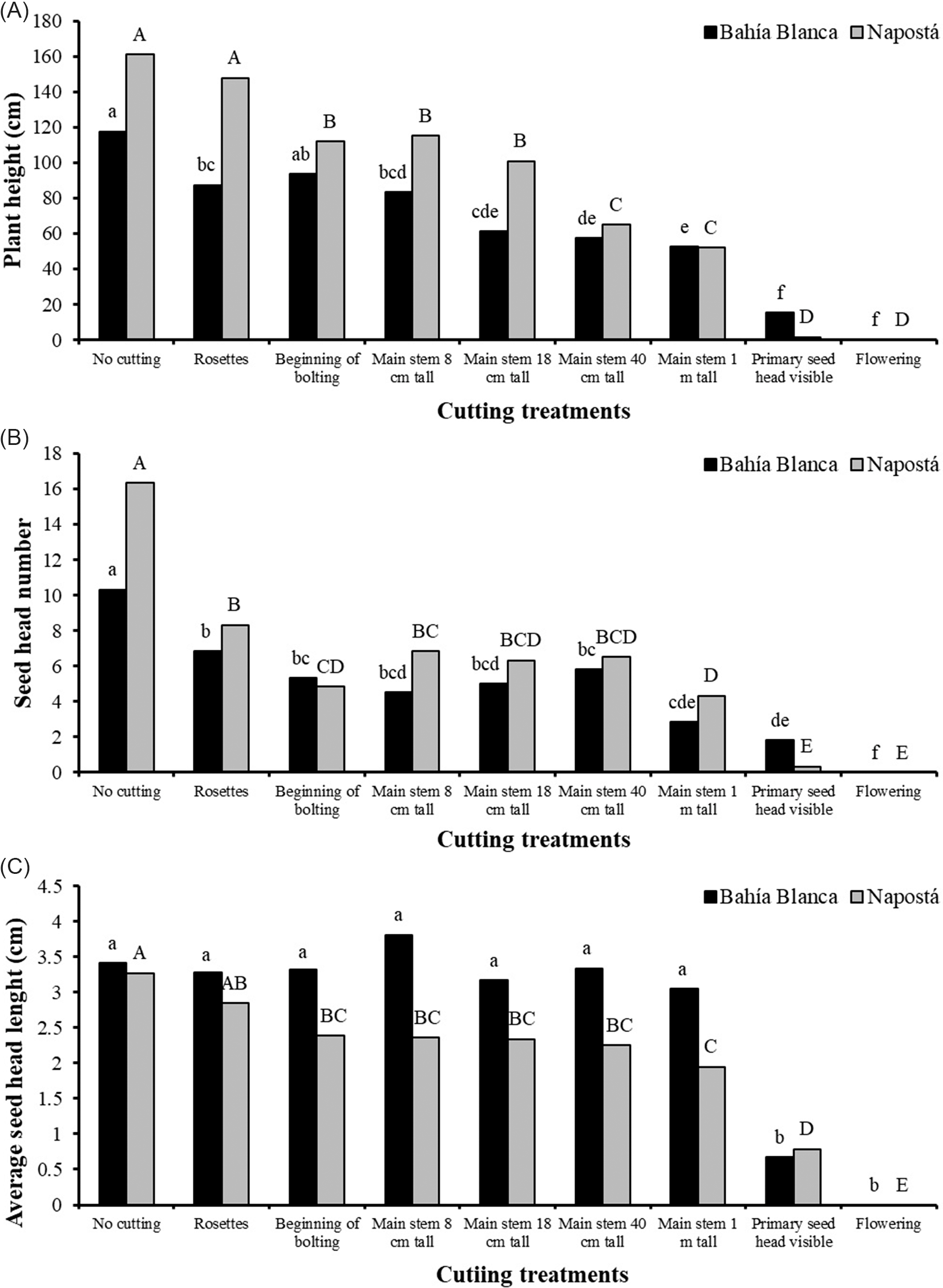
Common teasel plant height, number of heads, and average head length at maturity decreased with cutting times that were closer to flowering (P < 0.01) (Figure 3). Cutting treatments performed when the shoots averaged 8 cm in height resulted, on average, in a 28% reduction in plant height across both sites, and no plant cut at flowering was able to regrow. Cutting at the rosette stage, prior to shoot elongation, led to head number reductions of 34% and 49% in Bahía Blanca and Napostá, respectively. Moreover, plants cut when the principal head was visible (late spring) produced heads at both locations, but not after this stage. In addition, cutting closer to flowering reduced the average head length at both sites (P < 0.01). A decrease by approximately 75% and 82% in the head length was produced when cutting was performed in late spring (plants with a visible principal head) in Napostá and Bahía Blanca, respectively.
Plant height (A), number of heads (B), and average head length (C) of common teasel plants after no cutting (control) or cutting at 8 cm at different developmental stages in Bahía Blanca and Napostá, Argentina, in 2015. Bars with the same letter do not differ statistically according to Fisher protected LSD test (P < 0.05).

Common teasel growth and reproduction were severely reduced by mowing when cutting was performed on plants at the rosette and bolting stages in the populations studied. According to our results, flowering stalk height decreased after cutting at bolting stages. On the contrary, Dudley et al. (Reference Dudley, Parrish, Post, Helm and Wiedenmann2009) found that cutting prior to flowering enables the production of tall stalks, with more flowering seed-producing heads, which apparently encourages seed detachment by wind. In the present study, total regrowth and seed formation were prevented only when mowing at the flowering stage in late spring. This is in agreement with the findings of Cheesman (Reference Cheesman1998), who observed up to 20% of regrowth in native common teasel when stems were cut at the beginning of flowering and no regrowth after cutting at full flowering in the United Kingdom. Similarly, Dudley et al. (Reference Dudley, Parrish, Post, Helm and Wiedenmann2009) indicated that only cutting at full-flowering stage led to an effective reduction in head production of cut-leaved teasel.
Seed Germination After Flowering
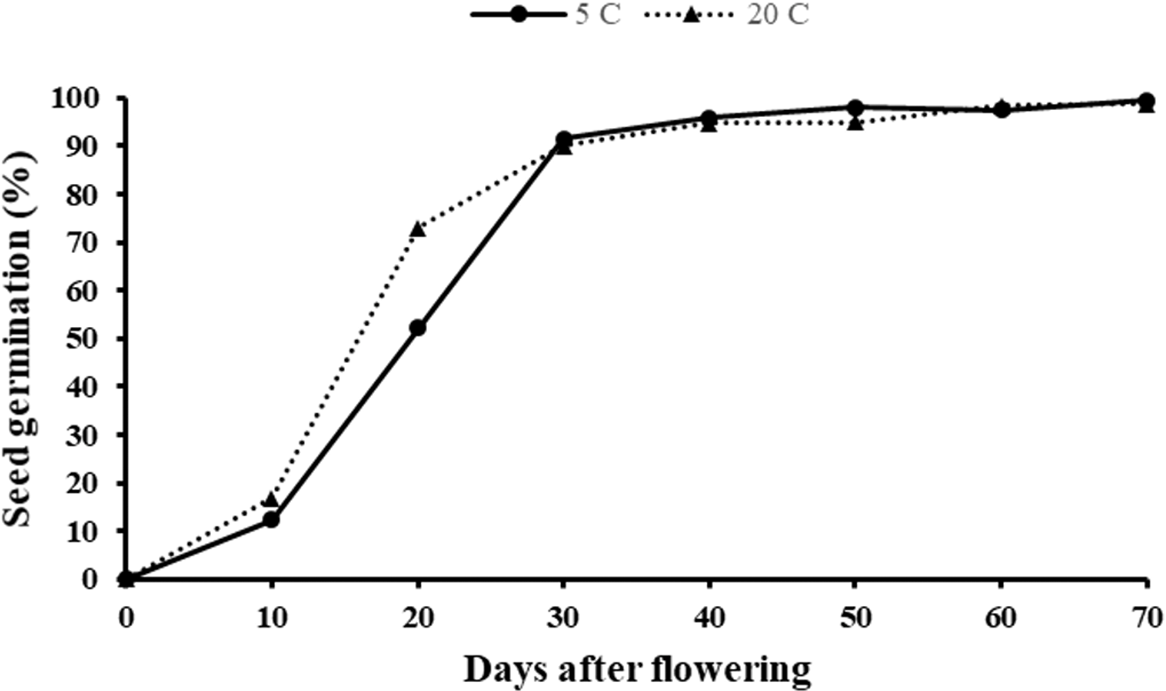
Flowering of common teasel in the studied population began on December 10, 2015, and December 2, 2016. The majority of flowers bloomed between December and January. Common teasel seeds were able to germinate (14% on average) when collected 10 d after flowering (Figure 4). Similarly, Cheesman (Reference Cheesman1998) found less than 20% seed germination in immature seeds of native common teasel in the United Kingdom, and Bentivegna and Smeda (Reference Bentivegna and Smeda2011) detected between 0.4% and 2.5% seed germination in cut-leaved teasel 12 d after flowering in Missouri in 2004–2005. Furthermore, Solecki (Reference Solecki1989) reported that viable seeds were produced on the head before flowering had completely ceased. In the present study, seed germination was maximum (>90%) in seeds harvested 30 d after flowering, which is also similar to the findings reported by Cheesman (Reference Cheesman1998). Conversely, maximum seed germination in cut-leaved teasel was low (24%), in Missouri in 2004–2005 (Bentivegna and Smeda Reference Bentivegna and Smeda2011). In addition, immature seeds (collected 10 d after flowering) stored at both low and high temperatures were able to germinate. Therefore, germination ability may not be affected by temperature after seed dispersal in the population studied. This is in agreement with previous reports on teasel species (Bentivegna and Smeda Reference Bentivegna and Smeda2011; Caswell and Werner Reference Caswell and Werner1978). Our results support that cutting common teasel plants immediately after flowering may contribute to the dispersal of germinable seeds; as a consequence, cutting should be performed before flowering is completed.
Common teasel seed germination from heads harvested at different periods after flowering, in 2015–2016 and 2016–2017, in Bahía Blanca, Argentina. Seeds were stored at room temperature (20 C) and in cold conditions (5 C). Seed germination data were pooled over the year of harvest.

Management Implications
Chemical and mechanical management of invasive common teasel would be effective when applied under specific conditions. Selection of the herbicide and rate of application should be on the basis of the growth stage and the level of establishment of common teasel plants. Effective control can be obtained when applying glyphosate to young plants at the 1.08 kg ae ha−1 rate. Nevertheless, the application of this nonselective herbicide is only suggested for monospecific patches of teasel to avoid damage to desirable plant species. Although rosettes and bolting plants were not controlled as expected, glyphosate can produce a significant growth reduction. On the contrary, 2,4-D may not be as effective as glyphosate for controlling common teasel, but it may cause a significant growth reduction of young plants. When desirable grass vegetation is growing in areas infested with common teasel, 2,4-D could be used exclusively as a complement to other control techniques in the early growing season. Finally, mixing glyphosate and 2,4-D will not provide any improvements in common teasel control. Moreover, mowing common teasel rosettes and bolting plants significantly reduced the number and size of heads in the studied populations; however, cutting once restricted to the flowering stage (late spring) may provide the highest level of control. As expected, cutting after flowering (summer) is not recommended, because this practice can contribute to viable seed dispersal. As a management program, the use of glyphosate at the commercial recommended rate, after maximum seedling emergence (autumn), together with cutting treatment only at full flowering (late spring) is suggested. Common teasel populations in infested areas often form large rosettes in monoculture patches, so during the first year, both glyphosate application and cutting would substantially reduce the number of rosettes and seedbank inputs, which, in turn, would preclude new common teasel infestations. Land managers should implement these practices to achieve control of common teasel populations and consider a management program length of at least 3 yr, due to seed longevity (Daddario et al. Reference Daddario, Tucat, Molinari, Bentivegna and Fernández2014; Roberts Reference Roberts1986).
Acknowledgments
The authors thank the Centro de Recursos Naturales Renovables de la Zona Semiárida for supplying equipment for the experiments. This research was partially funded by a Consejo Nacional de Investigaciones Científicas y Técnicas scholarship and the Universidad Nacional del Sur (no. PGI 24A/210). No conflicts of interest have been declared.