INTRODUCTION
The blue shark Prionace glauca L. is the most abundant pelagic shark worldwide in tropical and subtropical seas, distributed over oceanic as well as neritic waters, and is commercially caught elsewhere (Strasburg, Reference Strasburg1959; Nakano & Stevens, Reference Nakano, Stevens, Camhi, Pikitch and Babcock2008). It is the main target of the artisanal fishery for pelagic sharks off the western Baja California coast, of which 1000 annual tons are landed. This fishery faces management problems with overfishing, as catches are dominated by immature sharks, motivating the need for further research (Sosa-Nishizaki et al., Reference Sosa-Nishizaki, Márquez-Farías, Villavicencio-Garayzar, Camhi, Pikitch and Babcock2008).
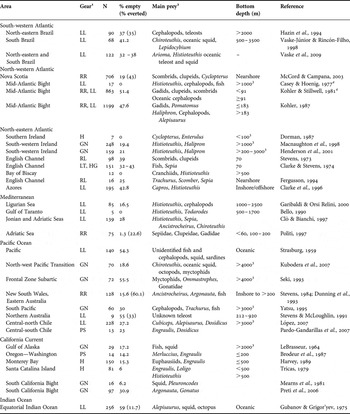
Sharks are abundant marine apex predators, and play a major role in the exchange of energy between upper trophic levels in the marine environment. Studies of consumption and feeding ecology of sharks are few, and knowledge of their role in marine ecosystems is limited (Wetherbee et al., Reference Wetherbee, Gruber and Cortés1990). Previous works on blue shark diet elsewhere reported fish, cephalopods, crustaceans, and miscellaneous items as the most common food, although they were largely unidentified to lower taxonomic levels (Strasburg, Reference Strasburg1959; LeBrasseur, Reference LeBrasseur1964; Capapé, Reference Capapé1975; Gubanov & Grigor'yev, Reference Gubanov and Grigor'yev1975; Stevens, Reference Stevens1984). Prey identification in later studies revealed a remarkable difference in diet between sharks from offshore and inshore waters. The diet of blue shark caught over deep waters (>200–500 m) is dominated by mesopelagic cephalopods (and a large variety of teleosts such as myctophids), whereas shark from shallow waters (<200–500 m) feed mainly on fish (gadoids, scombrids and clupeoids) and neritic cephalopods (Table 1). This pattern has been observed particularly in blue shark from the Mid-Atlantic Bight (Kohler & Stillwell, Reference Kohler and Stillwell1981; Kohler, Reference Kohler1987), off the south-west British Isles (Stevens, Reference Stevens1973; Clarke & Stevens, Reference Clarke and Stevens1974; Henderson et al., Reference Henderson, Flannery and Dunne2001), Azorean waters (Clarke et al., Reference Clarke, Clarke, Martins and Da Silva1996), Adriatic Sea (Politi, Reference Politi1997) and New South Wales (Stevens, Reference Stevens1984; Dunning et al., Reference Dunning, Clarke, Lu, Okutani, O'Dor and Kubodera1993) (Table 1).
Worldwide studies of blue shark stomach contents in which some kind of quantification is reported.

1Gear: LL, longline; RR, rod & reel; H, hook; GN, gillnet; RL, rod & line; LT, light tackle; HG, heavy gear; PS, purse seine; 2quantification method greatly differs between authors. Prey number, frequency of occurrence or weight were mostly used; 3depth estimated from bathymetric maps; 4samples from these works were included in Kohler (Reference Kohler1987).
Few studies have been made on blue shark diet in the California Current. Most of these observations have been made on sharks from shallow water (<500 m) indicating that blue shark feed on neritic prey (Table 1). This work describes the diet of blue sharks caught over the deep waters of the continental slope off Todos Santos Bay, Baja California, Mexico, testing for seasonal and shark size and sex differences. A global review of studies on blue shark feeding is considered.
MATERIALS AND METHODS
Study area and sampling
Shark fishermen based in the harbour of Ensenada, Baja California, Mexico, fish for shark in an area typically comprising 10 to 50 km off Todos Santos Bay, on the continental slope over >800 m bottom depth (Figure 1). Blue shark, the main targeted species, is common year-round in the area, although they are more abundant during summer months further north off California (Harvey, Reference Harvey1989).
Artisanal shark longline set-retrieval positions for 13 fishing nights between June 1995 and May 1996 off Ensenada, Baja California. Depth in 100 m isobaths.

Fishing is done in small open boats with outboard engines called Pangas. Trips last two nights offshore. A rudimentary longline with 400–500 hooks is set all night long (Sosa-Nishizaki et al., Reference Sosa-Nishizaki, Márquez-Farías, Villavicencio-Garayzar, Camhi, Pikitch and Babcock2008). Bait available at the local market are mackerel Scomber japonicus, bullet tuna Auxis spp., Pacific sardine Sardinops caeruleus or jumbo squid Dosidicus gigas.
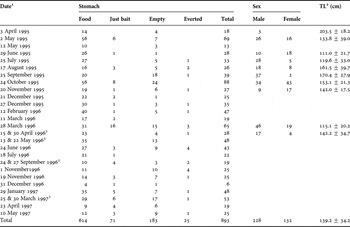
Samples were collected every three or four weeks from April 1995 to May 1997. They were collected by us on board from May 1995 to April 1996 (except December to February when they were sampled by fishermen). During this time, sharks were measured for total length (TL, cm) and sexed, and shark weight was calculated through a length–weight relationship (Harvey, Reference Harvey1989). Fishermen continued sampling for stomachs from May 1996 to May 1997 (except August, October and February). No data on TL or sex are available for these samples. Monthly sample size ranged between 13 and 88 stomachs (Table 2).
Summary of blue shark stomachs collected off Ensenada, Baja California, analysed in this study.

1Samples were also taken the day after every given date; 2TL, total length (mean ± SD); 3samples pooled because of temporal proximity.
Stomach contents analysis
Stomachs were analysed or frozen immediately after arriving to harbour. Stomach contents were weighed to the nearest 0.1 g. Stomach fullness was expressed as a percentage of shark weight. Stomach contents were screened through a 0.5 mm mesh sieve to retain prey remains useful for identification. Cephalopod beaks were identified using available guides (Wolff, Reference Wolff1984; Clarke, Reference Clarke1986) and reference collections at the Santa Barbara Museum of Natural History, California, and at CICESE, Baja California. Fish were identified from available keys for external features (Miller & Lea, Reference Miller and Lea1972), vertebrae (Clothier, Reference Clothier1950) or otoliths (Harvey et al., Reference Harvey, Loughlin, Perez and Oxman2000). Unidentified fish were subsequently identified at the Marine Vertebrate Collection of the Scripps Institution of Oceanography. Marine mammal remains were identified according to the descriptions of Stevens (Reference Stevens1973).
The number of consumed cephalopods or fish was estimated as the maximum number of upper or lower cephalopod beaks, or right or left fish otoliths. Due to the advanced degree of digestion of stomach contents only the most conspicuous prey items were weighed to the nearest 0.1 g. No attempt was made to weigh prey traces, such as cephalopod beaks.
Data analysis
The monthly minimum sample size required to adequately describe the diet of blue shark was determined using the graphic method proposed by Hoffman (Reference Hoffman, Lipovsky and Simenstad1979) which used Pielou's method to calculate dietary diversity (Hk).
Frequency of occurrence, numeric and gravimetric (volumetric) methods were used to quantify the diet. Frequency of occurrence (%FO) was calculated as the percentage of blue shark that consumed certain prey. Number (%N) is the number of individuals of a certain prey relative to the total number of individual prey. Weight (%W) is defined as the weight of a certain prey relative to the total weight of all prey, expressed as a percentage (Cortés, Reference Cortés1997). The index of relative importance (IRI) = (%N + %W) × (%FO) was plotted to illustrate monthly diet composition (Pinkas et al., Reference Pinkas, Oliphant and Iverson1971). Only prey species or taxa with IRI values >1% were included in plots.
A log-linear analysis was performed with measured shark to test for the significance of the interaction terms (prey number by season, shark sex, size and food type) (Cortés, Reference Cortés1997). Stomach contents were grouped by season (spring, summer and autumn 1995 and spring 1996), shark size (< 120, 120–160 and >160 cm TL), and food type (Vampyromorpha, squids, octopods, crustaceans, fish, and miscellaneous items (mammals, floating objects and trash)).
The effect of each of these variables on shark diet (same 6 food types) was tested. Differences in prey numbers among shark groupings were analysed by building R × C contingency tables and calculating G-statistics. This statistic has a Chi-square distribution with (R-1) × (C-1) degrees of freedom. Post-hoc comparisons were performed by removing the variable with largest G marginal value and testing again for differences with the remaining variables (Cortés, Reference Cortés1997).
Frequency of occurrence values among different shark groupings were compared by transforming them to proportions and performing a comparison of two or more proportions (Zar, Reference Zar1999). Statistical analyses were considered significant (P < 0.05), very significant (P < 0.01) and highly significant (P < 0.001).
Cephalopod mantle length (ML) and weight were estimated from lower beak rostral or hood lengths (measured to the nearest 0.1 mm), using available relationships for squids and vampyromorphs (Wolff, Reference Wolff1984; Clarke, Reference Clarke1986; Kubodera, Reference Kubodera2005) and pelagic octopods (Smale et al., Reference Smale, Clarke, Klages and Roeleveld1993; Lu & Ickeringill, Reference Lu and Ickeringill2002; Santos et al., Reference Santos, Pierce, García Hartmann, Smeenk, Addink, Kuiken, Reid, Patterson, Lordan, Rogan and Mente2002). Cephalopod standard lengths (from arm tip to mantle tip) were estimated from ratios obtained from drawings in Young (Reference Young1972) and Nesis (Reference Nesis1987), as suggested by Clarke et al. (Reference Clarke, Clarke, Martins and Da Silva1996).
The total carapace length (CL) of pelagic red crabs was measured from the tip of the rostrum to the posterior midpoint. Relationships between CL and standard carapace length (SCL, from the base of subrostral spines of the rostrum to the posterior midpoint) and length of pelagic crab (TL, from the end of the tail to the tip of extended claws) were obtained from individuals (22.7–31.8 mm CL) stranded in Todos Santos Bay during the 1998 El Niño (all measurements in mm):

An average TL to weight relationship for both sexes was taken from Gómez-Gutiérrez & Sánchez-Ortíz (Reference Gómez-Gutiérrez and Sánchez-Ortíz1997). Fish standard lengths were estimated from otolith lengths using available relationships (Harvey et al., Reference Harvey, Loughlin, Perez and Oxman2000).
RESULTS
Samples structure
A total of 893 blue shark stomach were collected, of which 614 (68.7%) had food, 254 (28.4%) were completely empty (20.4%) or had just bait remains (7.9%), and 25 (2.8%) were everted. Measured shark accounted for 364 (40.7%) of the total collected, of which 132 were females, 228 males and four unsexed (Table 2). Sharks ranged 64–240 cm TL. Males were larger than females (mean cm TL 157.9 ± 24.4 SD versus 104.2 ± 11.0; Mann–Whitney U-test U = −15.8, P <0.001). Mean shark total length and sex-ratio both significantly changed by month (Table 2), although no correlation was found between TL and sex-ratio (r = 0.4, N = 10, P > 0.05).
Stomach contents
Bait remains were readily identifiable by their fresh appearance and knife cuts (McCord & Campana, Reference McCord and Campana2003). They were found in a third (33.1%) of all stomachs, and they accounted for a majority by weight of stomach contents pooled together, totalling 32.7 kg (61.5%). Bait and parasites were not considered when describing diet.
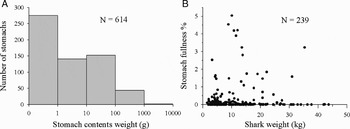
Stomach contents (excluding bait) were generally highly digested and usually only hard parts of prey remained. Almost half (44%) of the 614 stomachs with contents were represented only by traces (cephalopod beaks and lenses) <1 g in weight. Stomach contents weighing >100 g were rare (7.5%) (Figure 2A). Mean stomach content weight was 33.3 ± 102 g, with a maximum of 1141 g. Stomach fullness was determined for 239 measured sharks with stomach contents. This index averaged 0.28 ± 0.78%, with a maximum of 5%. Stomach fullness showed no correlation with shark weight (r = 0.04, N = 239, P > 0.05) (Figure 2B).
(A) Frequency distribution of stomach contents weight and (B) relationship between stomach fullness and blue shark weight. Empty or everted stomach and bait remains were not included in these calculations.

Cephalopods were identified by beaks belonging to at least 1897 individuals. Unidentified cephalopods (3.6% of all cephalopods) consisted of flesh remains of 35 cephalopods in 32 stomachs and another 35 lens pairs in 17 stomachs. Fish were mainly identified by their external features and vertebrae. Otoliths only accounted for 31 identified fish, most of them belonging to the Pacific hake Merluccius productus (28 otoliths in 12 stomachs). Almost half of the fish remains—185 (47%)—were unidentified. These consisted of 144 fish lens pairs found in 51 stomachs, and vertebrae and otoliths of another 41 fish in 39 stomachs. Lenses associated with identifiable remains were not taken into account when quantifying the diet. Cephalopod lenses accounted for twice the number and occurrence of fish lenses.
General description of diet
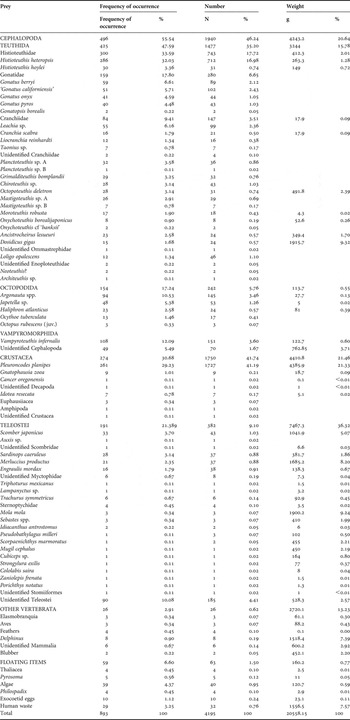
The main prey items of blue sharks were cephalopods, pelagic crustaceans and teleost fish. A large variety of oceanic cephalopods were found in 55.5% of stomachs, representing three coleoid orders and belonging to at least 34 species in 21 families. The most frequent cephalopods were histioteuthid squid, mainly Histioteuthis heteropsis, which occurred in one-third of stomachs. The next most frequent were gonatid and cranchiid squid, with 18 and 9%FO respectively. Pelagic octopods, dominated by Argonauta, accounted for 17%FO and Vampyroteuthis infernalis was found in 12% of stomachs. Crustaceans, mainly the pelagic red crab Pleuroncodes planipes occurred in almost one-third of stomachs. Teleosts occurred in one-fifth of stomachs; other than hake they were dominated by scombrids, engraulids and clupeids. Diet was numerically dominated by the pelagic red crab (41%N). All cephalopods accounted for 46%N but the most numerous species, H. heteropsis, was 17%N (Table 3). Teleosts accounted for only 9%N, although they comprised over a third of stomach contents weight. Cephalopods and crustaceans were 20%W each. Marine mammal remains accounted for 12%W and these were represented by remains of skin, hair, flesh and blubber. Three birds were found. A variety of floating items were also found in the stomachs including thaliaceans, algae and flying fish eggs. Human solid debris included food remains and plastic packing.
Stomach contents quantification for 893 blue shark caught off Ensenada, Baja California.

Hoffman's method (not shown) suggested a monthly sample size from 30 to 40 stomachs. Almost half of our samples reached that number of stomachs. Dietary diversity was high (H k = 0.8–1.0) for all samples, indicating a generalist habit in the diet.
Interactions between sex, size and season
Interactions were tested between factors considering four seasons (spring, summer and autumn 1995 and spring 1996), sex, three size-groups (>160, 140–160 and <120 cm TL) and six food types: Vampyromorpha, squid, octopods, crustaceans, fish and miscellaneous items (mammals, floating objects and trash). The log-linear analysis showed that the three factor interactions between season, sex and size (χ2 = 63, df = 6, P < 0.001) and season, size and food type (χ2 = 73, df = 30, P < 0.001) were highly significant. All two factor interactions were significant (P < 0.05).
Temporal variation in diet
The diet of blue shark varied greatly by month (Figure 3). No clear pattern for the %FO of the most frequent prey (H. heteropsis, P. planipes, Argonauta spp. or V. infernalis) was found. Testing between the four seasons in prey numbers for the aforementioned six food types yielded highly significant differences (G = 172, df = 15, P < 0.001). Post-hoc tests confirmed significant differences between any pair of seasons when all prey groups were considered (P < 0.001), but showed no significant differences between all seasons for vampyromorphs, squids and miscellaneous items (G = 8.3, df = 6, P > 0.05).
Periodical composition by percentage number (%N), weight (%W) and frequency of occurrence (%FO) of those prey found in stomach contents of 893 blue sharks collected off Ensenada from April 1995 to May 1997. Hh, Histioteuthis heteropsis; Hd, Histioteuthis hoylei; Lea, Leachia; Cra, Cranchiidae; Gon, Gonatidae; Al, Ancistrocheirus lessueuri; Lo, Loligo; Dg, Dosidicus gigas; Chi, Chiroteuthis; Mor, Moroteuthis; Oct, Octopoteuthis; Arg, Argonauta; Jap, Japetella; Ocy, Ocythoe tuberculata; Vi, Vampyroteuthis infernalis, CEP?, unidentified cephalopods; Pp, Pleuroncodes planipes; Sj, Scomber japonicus; Mp, Merluccius productus; Mol, Mola mola; Sar, Sardinops caeruleus; Em, Engraulis mordax; Seb, Sebastes; Ts, Trachurus symmetricus; Scor, Scorpaenichthys marmoratus; Aux, Auxis; Por, Porichthys; PI? Unidentified fish; Mam, marine mammals; Av, birds; and Flo, floating debris. Large prey groups in grey: TEU, Teuthida; OCT, Octopodida; CRU, Crustacea; PI, Pisces. Monthly sample size as given in Table 2. Stomach contents of six sharks taken in December 1996 are not shown.

Sexual variation in diet
Empty stomachs (31%) were equally distributed between both sexes (Z = 0.15, P > 0.05). Males had a higher occurrence of Leachia (Z = 2.1, P < 0.05), while females had a higher occurrence of all fish (Z = 2.2, P < 0.05). There were no significant differences in the occurrence of all other prey between sexes, including individual fish species (Z ≤ 1.25, P > 0.05). Considering prey numbers by the six large groups, males ingested more crustaceans than females (G = 66.3, df = 7, P < 0.001). No differences were found for the rest of the prey groups (G = 9.2, df = 6, P > 0.05).
Shark size variations in diet
Smaller sharks (<120 cm TL) had a higher occurrence (%FO) of squid in general and H. heteropsis in particular (χ2 = 14.1, df = 2, P < 0.001), as well as teleosts (χ2 = 6.2, df = 2, P < 0.05), than the other two size-groups. The medium size-group (120–160 cm TL) had a higher occurrence of Argonauta (and octopods) in the diet (χ2 = 12.8, df = 2, P < 0.01). No differences were found for the rest of prey with shark size (χ2 ≤ 5.7, df = 2, P > 0.05). Variation of prey %FO by shark size is shown in Figure 4.
Variability of the frequency of occurrence for (A) squid, (B) other cephalopods, (C) crustaceans, (D) teleost fish and (E) miscellaneous items found in 364 blue sharks (including empty stomachs) caught off Ensenada for each 10 cm total length. Numbers in italics refer to samples size for each shark size interval.

Differences in the diet between sharks of three sizes-classes for numbers of six main prey categories were tested, yielding significant differences (G = 58.2, df = 10, P < 0.001). Post-hoc tests showed that there were no significant differences in prey number between medium (120–160 cm TL) and large (>160 cm TL) size-groups (G = 8.14, df = 5, P > 0.05). Variation of prey number by shark size is shown in Figure 5.
Variability of the average and range in number for (A) all prey, (B) squid, (C) Histioteuthis heteropsis, (D) gonatids, (E) cranchiids, (F) octopods, (G) pelagic red crab, (H) fish and (I) Vampyroteuthis infernalis in occurrences of 364 blue sharks caught off Ensenada for each 10 cm total length. Samples size for each shark size interval as in Figure 4.

Prey dimensions
The most numerous cephalopod beak dimensions and pelagic red crab carapace lengths are shown in Figure 6. Histioteuthis heteropsis beak sizes almost did not overlap with those of H. hoylei. Among gonatids, ‘Gonatus californiensis’ beaks are distinctively larger than other species, and show darkened wings. Next in size was G. berryi. The pelagic red crab mean SCL measured 20.3 mm and ranged from 11.3 to 26.3 mm.
Size distribution of hard remains of most numerous prey found in the stomach of 893 blue sharks caught off Ensenada: lower rostral length (LRL) for histioteuthid squid (A), gonatid squid (B), lower hood length (LHL) for octopods and vampyromorphs (C), and standard carapace length (SCL) for pelagic red crab (D). Prey number as in Table 4.

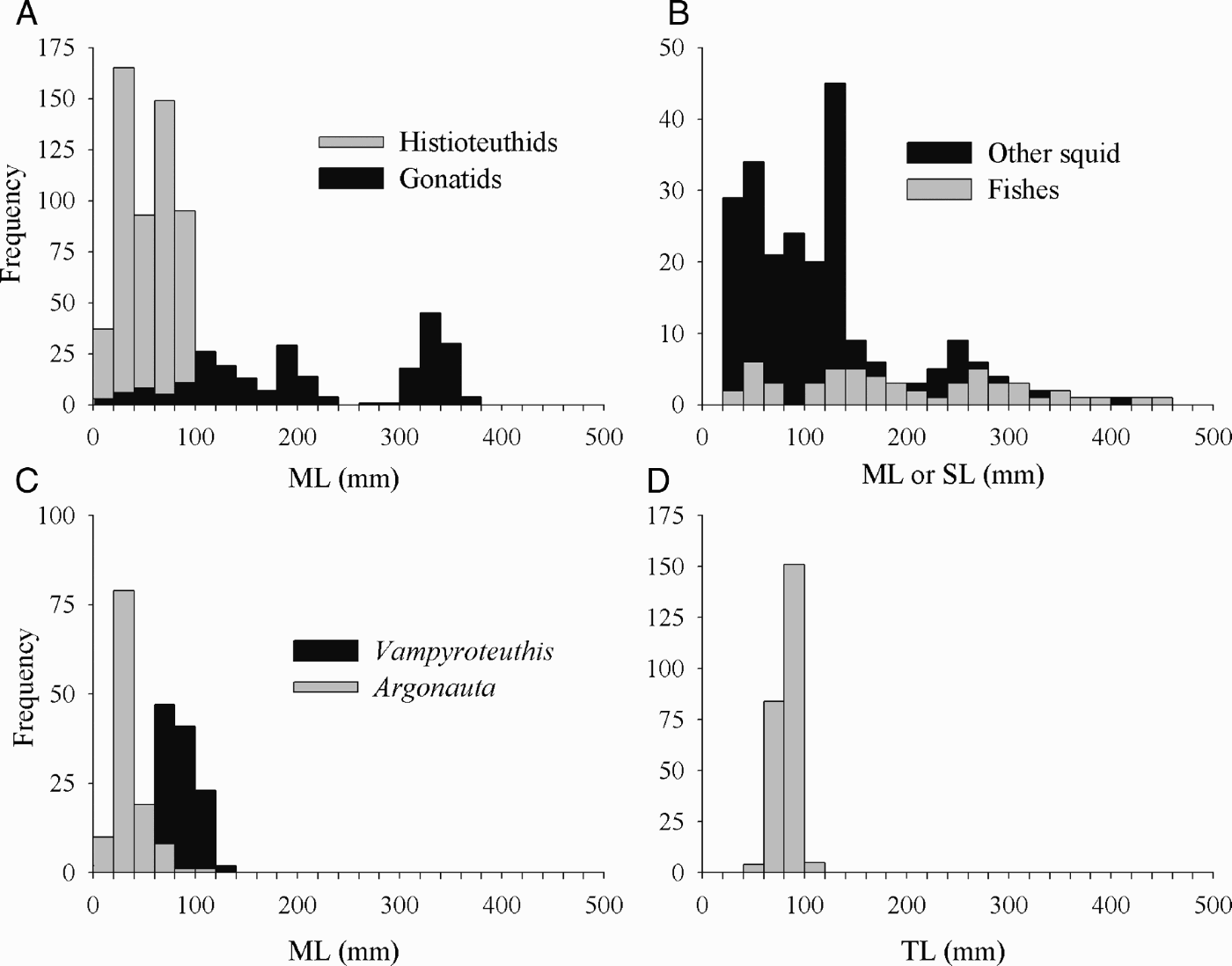
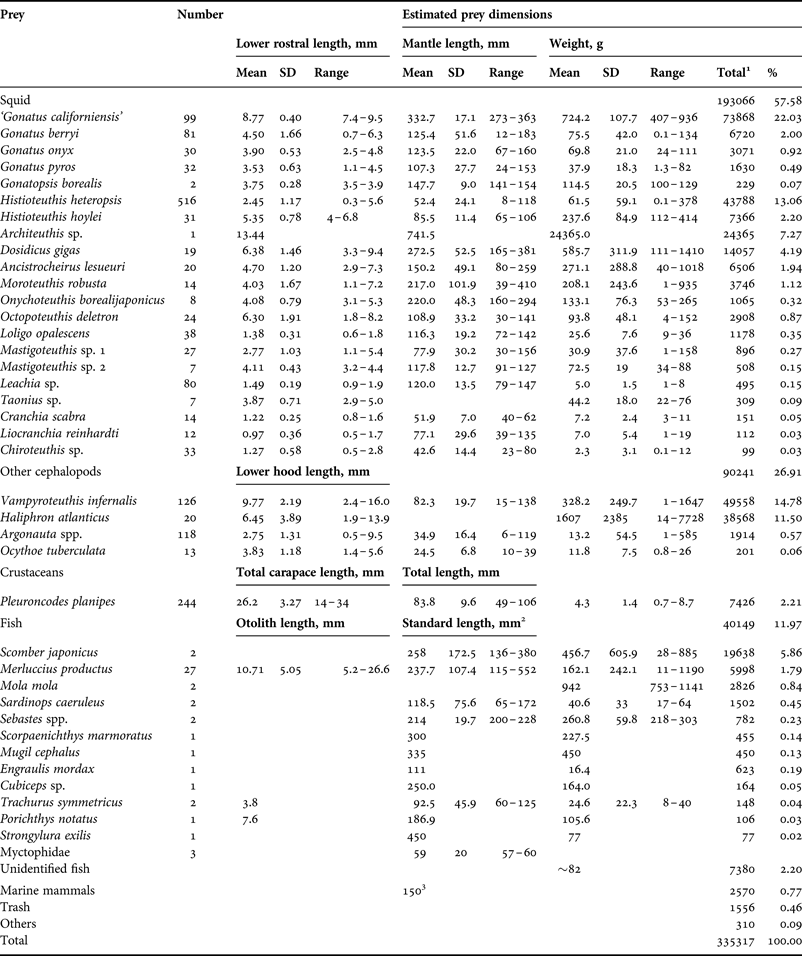
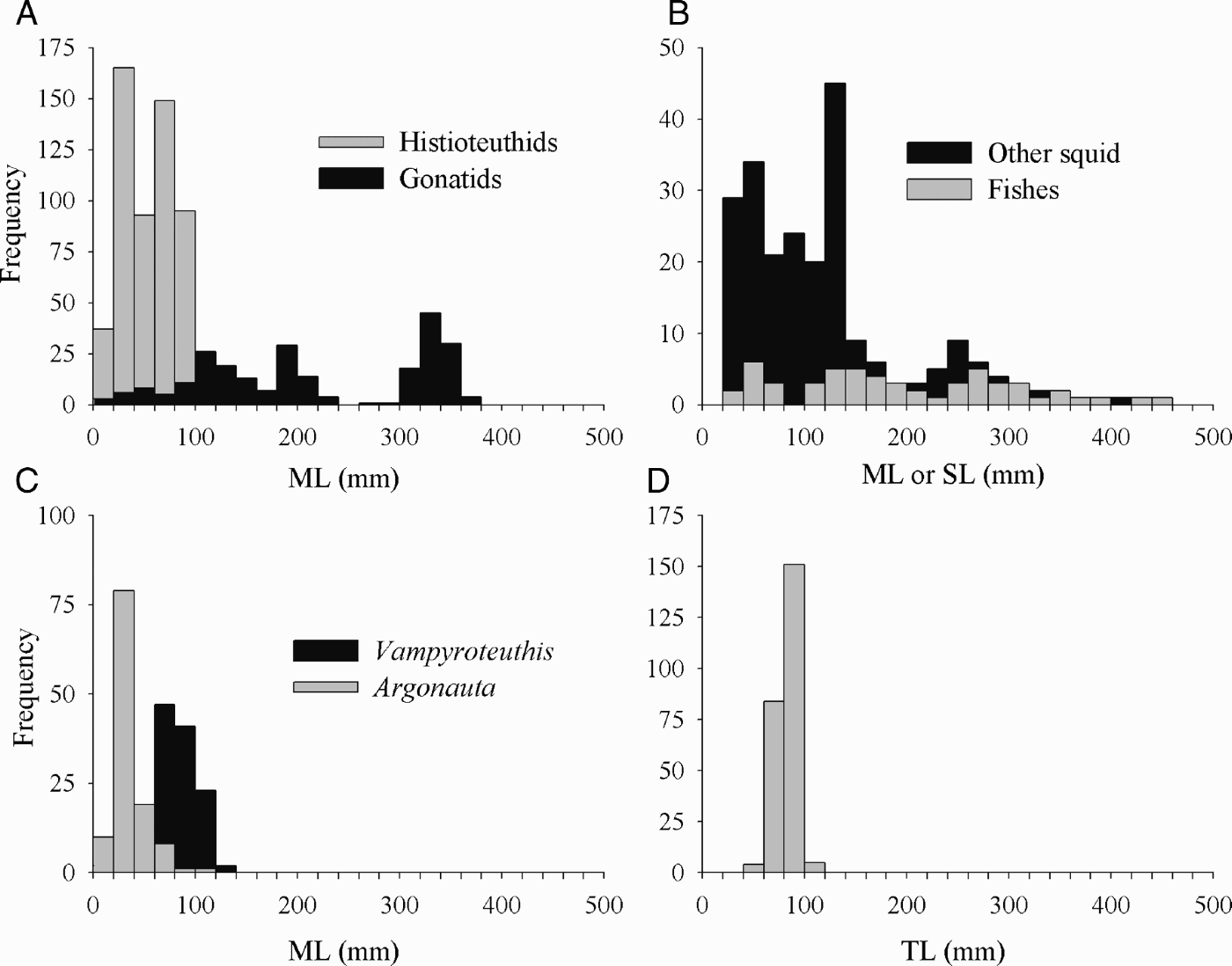
Estimated MLs of the 1092 squids eaten by blue sharks averaged 109 ± 92 mm ML. These varied from a mean of 52 mm ML for H. heteropsis to 332 mm ML for ‘G. californiensis’; V infernalis measured 82 ± 20 mm ML while Argonauta spp. were 35 ± 16 mm ML. The pelagic red crab measured 83 ± 9 mm TL and 56 fish were 203 ± 118 mm in standard length (Figure 7) (Table 4).
Lengths of the most numerous prey found in the stomach of 893 blue sharks caught off Ensenada: (A) mantle length for histioteuthid and gonatid squid, (B) for other squid and standard length for fish, (C) mantle length for other cephalopods and (D) total length for pelagic red crab. Prey number as in Table 4.
Sizes of hard remains and dimensions estimated from them for preys of 893 blue shark caught off Ensenada, Baja California.
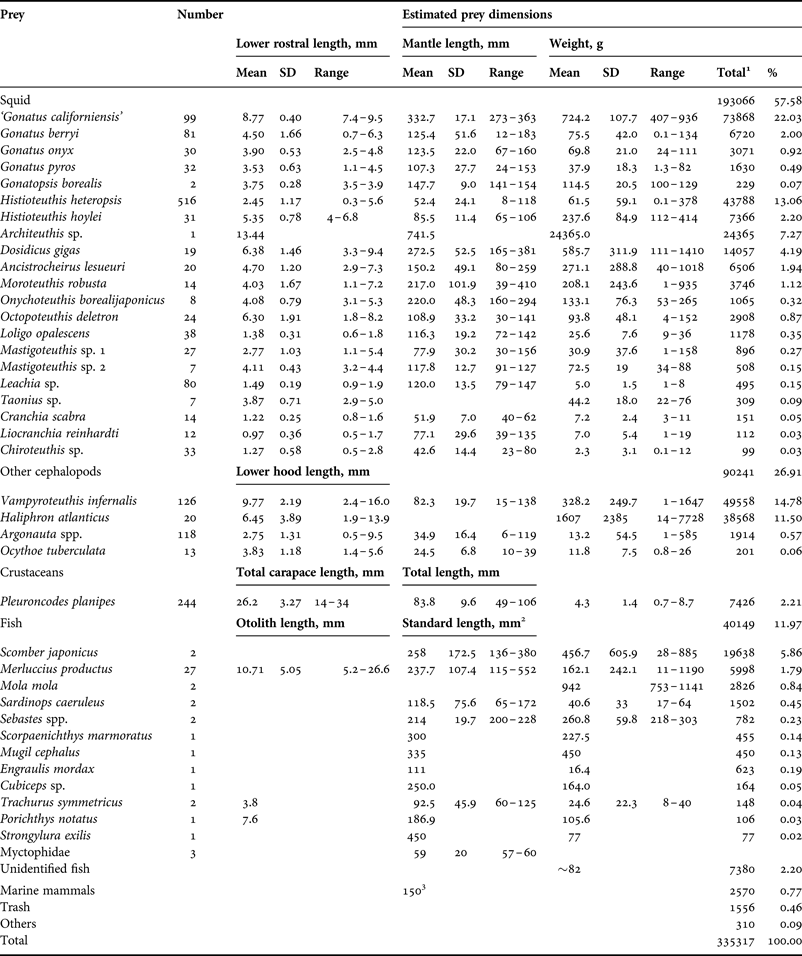
1Multiplying the total number for each prey in Table 3 by its mean weight; 2those not estimated from otoliths were found whole in the stomach; 3fork wide of a Delphinus sp. foetus?
With an estimated mean weight of 156 g, cephalopods accounted for 84.5% of estimated weight of prey found in blue shark stomach contents. Gonatid squid alone, mainly ‘G. californiensis’, accounted for 25%. Despite being the most numerous cephalopods, histioteuthids accounted for only 15% by weight, as did vampyromorphs. Twenty beaks of the large pelagic octopod Haliphron atlanticus yielded an estimated mean weight of 1.6 kg, accounting for 11.5% of total weight. Although numerous, crustaceans represented a negligible portion of diet as estimated weight (2.2%). Teleosts accounted for 12% by estimated weight. The largest fish were the ocean sunfish Mola mola, two of which were represented by pieces of 750 and 1100 g (Table 4).
No correlation was evident between shark size and estimated cephalopod and crustacean sizes (Figure 8A–E, G). Thus H. heteropsis standard length relative to shark total length decreased from 17% TL in sharks <100 cm TL to 5% for shark >180 cm TL. ‘Gonatus californiensis’ relative size decreased from 19 to 11%TL in sharks from <120 to >180 cm TL. Only for teleosts did prey size correlate with shark size (r = 0.62, N = 14, P < 0.05; Figure 8F).
Relationship between prey standard length (SL) or total length (TL) and blue shark size for 364 sharks: (A) histioteuthids, (B) gonatids, (C) and (D) other squid, (E) other cephalopods, (F) teleosts and (G) total length of crustaceans.

DISCUSSION
Stomach contents
A high incidence of empty stomachs is common in blue shark diet studies (see Table 1) and largely depends on fishing gear (Hazin et al., Reference Hazin, Lessa and Chammas1994). Shark caught at night, when most of their feeding occurs, may show a higher frequency of empty stomachs (Henderson et al., Reference Henderson, Flannery and Dunne2001). Well-fed sharks are less interested in bait (Stevens, Reference Stevens1973; McCord & Campana, Reference McCord and Campana2003; Wetherbee & Cortés, Reference Wetherbee, Cortés, Carrier, Musick and Heithaus2004) or they may vomit while on hook (Stevens, Reference Stevens1973). A high incidence of empty stomachs may also reflect a long time between capture and examination (Hazin et al., Reference Hazin, Lessa and Chammas1994; Henderson et al., Reference Henderson, Flannery and Dunne2001; McCord & Campana, Reference McCord and Campana2003). Although some degree of digestion will take place owing to the very acidic pH of shark stomachs, there is no evidence that post-mortem digestion would significantly affect stomach contents. Stomach eversion may be the result of stress at capture or a natural process for removing undesirable ingested items (Kohler, Reference Kohler1987).
Stomach contents with food from previous studies averaged 480 g (Clarke et al., Reference Clarke, Clarke, Martins and Da Silva1996), 360 cc (McCord & Campana, Reference McCord and Campana2003) or 172 cc to 146 g when including empty stomachs (Kohler, Reference Kohler1987; Garibaldi & Orsi Relini, Reference Garibaldi and Orsi Relini2000). These figures are larger than the 32 g mean found in this study (still only 80 g when excluding stomach contents <5 g). The average stomach fullness of our study, 0.18% of body weight, is also lower than those reported elsewhere, 0.9% to 0.30–0.49% (Kohler, Reference Kohler1987; Garibaldi & Orsi Relini, Reference Garibaldi and Orsi Relini2000). The subjective index indicates that mean fullness and digestion were half (Brodeur et al., Reference Brodeur, Lorz and Pearcy1987) and stomachs with contents were usually less than half full and not recent (Harvey, Reference Harvey1989; Vaske et al., Reference Vaske, Lessa and Gadig2009). No relationship has been found between stomach fullness and shark length (Kohler, Reference Kohler1987; Kubodera et al., Reference Kubodera, Watanabe and Ichii2007).
A high incidence of empty stomachs and few food items support the conclusion that sharks are intermittent rather than continuous feeders (Wetherbee & Cortés, Reference Wetherbee, Cortés, Carrier, Musick and Heithaus2004). Telemetered blue sharks revealed extensive dives of hundreds of metres during the daytime and smaller vertical excursions to the thermocline depth at night. This diel difference in shark diving behaviour may be a response to the diel vertical migration of its prey (Carey & Scharold, Reference Carey and Scharold1990). However, it is believed that blue sharks take most prey at night in near surface waters (Sciarrotta & Nelson, Reference Sciarrotta and Nelson1977; Harvey, Reference Harvey1989; Seki, Reference Seki1993; Henderson et al., Reference Henderson, Flannery and Dunne2001). Flesh remains were eaten the night of capture, while the most digested remains were taken the previous nights (Clarke et al., Reference Clarke, Clarke, Martins and Da Silva1996). This could be the case for cephalopods, as lack of flesh in the stomach contents indicates that they were mostly taken quite some time before being caught, perhaps the night before.
Differential digestion between teleosts and cephalopod prey as a bias in the study of shark diet has been stressed (Trikas, 1979; Kohler, Reference Kohler1987; Harvey, Reference Harvey1989; Hazin et al., Reference Hazin, Lessa and Chammas1994; Clarke et al., Reference Clarke, Clarke, Martins and Da Silva1996; Garibaldi & Orsi Relini, Reference Garibaldi and Orsi Relini2000; McCord & Campana, Reference McCord and Campana2003; Kubodera et al., Reference Kubodera, Watanabe and Ichii2007). Cephalopod flesh particularly that of mesopelagic species is digested more quickly than firm fish. On the other hand, cephalopod beaks may stay longer than any other prey remains in the digestive tract (Harvey, Reference Harvey1989; Clarke et al., Reference Clarke, Clarke, Martins and Da Silva1996). This is reflected by the fact that sometimes teleosts comprise most of the stomach contents by volume, even when cephalopod beaks are more numerous (Casey & Hoenig, Reference Casey and Hoenig1977; Clarke et al., Reference Clarke, Clarke, Martins and Da Silva1996). Our estimation of prey biomass in blue shark diet may have been largely biased toward pelagic squid and octopods.
Cephalopods
Blue shark caught off Ensenada preyed on a large variety of pelagic cephalopods from the upper continental slope. Up to 21 species of squid and 5 of octopods in Young's (1972) checklist for southern California were found. Not found in blue shark diet were families Enoploteuthidae, Brachiteuthidae and Bathyteuthidae, and seven species of ommatrephids and cranchiids, and the pelagic octopod Eledonella. However, other species such as Ancistrocheirus lesueuri absent from the checklist and seldom reported in the California Current (Markaida & Hochberg, Reference Markaida and Hochberg2005), were found in blue shark stomachs.
Preference for mesopelagic cephalopods of families Histioteuthidae, Gonatidae and Cranchiidae indicates the slow, low-activity nature of this predator. Histioteuthid squid were the most frequent and numerous prey of blue shark in most offshore areas near continental slope, although in some regions cranchiids, Ancistrochierus or Chiroteuthis were most important (Table 1).
The most important prey by estimated weight in the diet of blue shark, ‘Gonatus californiensis’, was identified by unchecked beaks (Markaida & Hochberg, Reference Markaida and Hochberg2005) and tentatively named after a species whose adults are yet unknown. Walker considers these beaks to be Galiteuthis? sp. A (e.g. Pitman et al., Reference Pitman, Walker, Everett and Gallo-Reynoso2004). Our findings suggest that this is a common squid in the area and underline the importance of studying stomach contents of marine predators to determine cephalopod distribution and biology. Blue shark stomach contents have yielded little known cephalopods (Nigmatullin, Reference Nigmatullin1976; Roper & Vecchione, Reference Roper, Vecchione, Okutani, O'Dor and Kubodera1993; Bello, Reference Bello1994; Clò & Bianchi, Reference Clò and Bianchi1997; Macnaughton et al., Reference Macnaughton, Rogan, Hernández-García and Lordan1998) and it is probably the fish that a largest variety of cephalopods consumes.
Vampyroteuthis infernalis is seldom reported as prey of blue sharks from other seas (Clarke et al., Reference Clarke, Clarke, Martins and Da Silva1996), but our results suggest that it is a common species in the California Current. By contrast, the large pelagic octopod Haliphron atlanticus has greater importance in the diet of blue shark from other areas (Kohler & Stillwell, Reference Kohler and Stillwell1981; Kohler, Reference Kohler1987; Clarke et al., Reference Clarke, Clarke, Martins and Da Silva1996; Macnaughton et al., Reference Macnaughton, Rogan, Hernández-García and Lordan1998; Henderson et al., Reference Henderson, Flannery and Dunne2001; Kubodera et al., Reference Kubodera, Watanabe and Ichii2007) than from the California Current. Argonauta is also abundant in the diet of sharks from subtropical seas (Dunning et al., Reference Dunning, Clarke, Lu, Okutani, O'Dor and Kubodera1993).
A pair of giant squid Architeuthis sp. beaks were found in a stomach collected on the 19 November 1996. This discovery represents the southernmost record of this species in the California Current and the first record for Mexican waters, although it could have been taken by the shark somewhere else (Clarke & Stevens, Reference Clarke and Stevens1974). The dimensions of these beaks are similar to those found in a blue shark from the Eastern Equatorial Atlantic (Nigmatullin, Reference Nigmatullin1976), suggesting a ML of 74 cm and a weight of 24.3 kg (Table 4), the largest prey found in this study.
Many mesopelagic cephalopods undertake diel migrations (Roper & Young, Reference Roper and Young1975) and blue shark may feed on them throughout the water column (Kohler, Reference Kohler1987). Some midwater cephalopods visit surface waters at night (Roper & Young, Reference Roper and Young1975) where blue shark could take them (Trikas, 1979; Harvey, Reference Harvey1989). However, the vertical distribution of other mesopelagic cephalopod prey suggest that blue shark might forage at depths of over several thousand metres (Kubodera et al., Reference Kubodera, Watanabe and Ichii2007), or at least deeper than 500 m (Clarke et al., Reference Clarke, Clarke, Martins and Da Silva1996). The deepest blue shark telemetered dives surpass 600 m depth in the Sargasso Sea and eastern Australia but reach only 275 m depth off California (Carey & Scharold, Reference Carey and Scharold1990; Nakano & Stevens, Reference Nakano, Stevens, Camhi, Pikitch and Babcock2008). In the California Current a well developed oxygen minimum layer occurs below 500 m depth, and it could limit blue shark diving depth, while cephalopod prey such as V. infernalis are thought to live below those depths (Roper & Young, Reference Roper and Young1975). Occurrences of some mesopelagic prey in the blue shark diet are difficult to explain owing to predation. Blue shark telemetry studies currently underway could determine their vertical migration range off California and clarify this question.
Most families found in this study are neutrally buoyant cephalopods such as ammoniacal squid (Histioteuthidae and Cranchiidae; Voight et al., Reference Voight, Pörtner and O'Dor1994), lipid rich gonatids and pelagic octopods (Alloposidae and Boliteanidae; Nesis, Reference Nesis1996) already noted in other studies (Table 1). Spent females of these mesopelagic cephalopods float passively to the surface and die (Nesis, Reference Nesis1996). This could be the case for gonatids like ‘G. californiensis’ whose beaks show pigmented wings, indicating a mature squid. Blue shark might easily scavenge on these dead buoyant cephalopods floating in upper waters. This possibility has only been considered once (Garibaldi & Orsi Relini, Reference Garibaldi and Orsi Relini2000), despite the knowledge that blue sharks are active scavengers (see Other prey below). This feeding behaviour has been widely discussed for sea birds (Croxall & Prince, Reference Croxall and Prince1994). In fact, histioteuthid gonatid and cranchiid squid were also the most abundant cephalopod prey eaten by Laysan albatrosses from the neighbouring Guadalupe Island (Pitman et al., Reference Pitman, Walker, Everett and Gallo-Reynoso2004). All but three of the 22 species of pelagic cephalopods identified in that study were found also in the blue shark diet. The most abundant and frequent species in albatross pellets (Histioteuthis hoylei, Taonius borealis and Gonatus pyros), except Galiteuthis? sp. A = ‘G. californiensis’, were rare in blue shark, although that could be an artefact of the small sample size of bird pellets. The most important prey items in the blue shark diet were also common in albatross pellets, except for the notable absence of V. infernalis and Argonauta spp. Ingested cephalopod lower beak dimensions are strictly similar in range and mean for many species in both predators. If albatrosses scavenge squid prey (Croxall & Prince, Reference Croxall and Prince1994; Pitman et al., Reference Pitman, Walker, Everett and Gallo-Reynoso2004) it is hard to believe that an active scavenger like the blue shark would not profit from such an abundant food source as well, even if they could also catch those prey alive. This comparison suggests that many squid taken by blue sharks could have been scavenged. It would explain the predominance of midwater cephalopod beaks over mesopelagic fish remains. This possibility is important to note in trophic modelling that includes an abundant pelagic predator like the blue shark.
A third way to obtain mesopelagic cephalopods might be to take them secondarily from cetaceans (Stevens, Reference Stevens1973). However, Kohler (Reference Kohler1987) did not find a relationship between marine mammals and cephalopod occurrences in blue shark stomachs. Furthermore, large differences have been found between cephalopods from sperm whales and blue sharks taken off the Azores regarding species composition, estimated sizes and depth distribution (Clarke et al., Reference Clarke, Clarke, Martins and Da Silva1996). Seventeen out of 27 species of pelagic cephalopods taken by sperm whales off California (Fiscus et al., Reference Fiscus, Rice and Wolman1989) were found in the blue shark diet. Both predators feed heavily on gonatids, histioteuthids and cranchiids, although onychoteuthids and octopoteuthids, abundant in sperm whale stomachs, are rarely consumed by blue sharks. Feeding on sperm whale regurgitations is unlikely because the most abundant species in this predator (Gonatopsis borealis, Moroteuthis robusta, Octopoteuthis deletron, H. hoylei, Galiteuthis spp. Mastigoteuthis sp., Taonius sp. and V. infernalis) (Fiscus et al., Reference Fiscus, Rice and Wolman1989) are rare or absent in blue shark stomachs and/or their beaks are much larger.
The squid composition of the blue shark diet significantly differs from that of swordfish, who take mainly muscular ommastrephids and the gonatid Gonatus berryi of western Baja California (Markaida & Hochberg, Reference Markaida and Hochberg2005). This difference in consumption has been also documented for the Mediterranean (Bello, Reference Bello1996; Garibaldi & Orsi Relini, Reference Garibaldi and Orsi Relini2000) and for Azorean waters (Clarke et al., Reference Clarke, Clarke, Martins and Da Silva1996). Both predators are common catches in the pelagic fisheries of the California Current (Sosa-Nishizaki et al., Reference Sosa-Nishizaki, Márquez-Farías, Villavicencio-Garayzar, Camhi, Pikitch and Babcock2008) and their cohabitation can thus be understood on the basis of different feeding habits that reduce competition for food resources. The same difference has been found when comparing blue shark and lamniid shark diets (Kohler, Reference Kohler1987; Kubodera et al., Reference Kubodera, Watanabe and Ichii2007).
Pelagic red crab
Predation on pelagic red crab Pleuroncodes planipes has been previously documented in the Southern California Bight (Bane, Reference Bane1968; Mearns et al., Reference Mearns, Young, Olson and Schafer1981). Only once have crustaceans been observed as the most numerous prey; Harvey (Reference Harvey1989) reported direct feeding on euphausiids, although we found them as secondary prey from mackerel stomachs. We also found pelagic red crab and juvenile Octopus rubescens beaks from the stomachs of two cabezon Scorpaenichthys marmoratus from a shark stomach, so smaller prey may have been secondarily ingested.
The centre of the pelagic distribution of the pelagic red crab is the continental shelf of western Baja California south of Punta San Antonio, although it extends north into California waters during El Niño warm events (Longhurst, Reference Longhurst1966; Boyd, Reference Boyd1967). However, most of the sampling period comprised a La Niña event (September 1995 to February 1997; Schwing et al., Reference Schwing, Murphree, deWitt and Green2002) and not until August during the 1998 El Niño were stranded crabs observed in Todos Santos Bay (U. Markaida, personal observation). Recently it has been found that pelagic red crab is abundant over the shelf and the shelf break southward, near the studied area (Robinson et al., Reference Robinson, Anislado and Chaparro2004). The size distribution of pelagic red crabs ingested by blue sharks is comparable to the pelagic form sampled near the surface in that study (mean SCL = 17.7 mm, range 7.7–28.2 mm) (Robinson et al., Reference Robinson, Anislado and Chaparro2004), and those stranded in Todos Santos Bay in 1998 (mean SCL = 21.7 mm, range 18.3–24.5 mm). During their pelagic phase, they perform vertical migrations between the bottom and the surface, and thus they may have been taken by blue sharks throughout the water column. Crabs >26 mm SCL become exclusively benthic (Boyd, Reference Boyd1967) and thus might be out of the blue shark reach.
Other prey
Both neritic and pelagic fish (mainly scombrids, gadoids and clupeoids) are not uncommon in the blue shark diet, suggesting that blue shark feed at all depths (Stevens, Reference Stevens1973; Kohler & Stillwell, Reference Kohler and Stillwell1981; Harvey, Reference Harvey1989; Henderson et al., Reference Henderson, Flannery and Dunne2001; McCord & Campana, Reference McCord and Campana2003). Remains of neritic fish almost whole or with flesh, in sharks caught off Ensenada suggest a recent movement from inshore waters. Blue sharks perform both diel and seasonal offshore–inshore movements (Sciarrotta & Nelson, Reference Sciarrotta and Nelson1977). Anchovies were the most common fish prey in nearshore waters of California (Tricas, Reference Tricas1979; Harvey, Reference Harvey1989), while myctophids and gonostomatids were the most abundant in the oceanic areas of the Pacific (Seki, Reference Seki1993; Kubodera et al., Reference Kubodera, Watanabe and Ichii2007).
Marine mammal and bird remains were evidently scavenged rather than taken alive (Stevens, Reference Stevens1973; Kohler & Stillwell, Reference Kohler and Stillwell1981; Kohler, Reference Kohler1987; Macnaughton et al., Reference Macnaughton, Rogan, Hernández-García and Lordan1998; Garibaldi & Orsi Relini, Reference Garibaldi and Orsi Relini2000; Vaske et al., Reference Vaske, Lessa and Gadig2009). Predation on netted dolphins has been proposed as an explanation for their occurrence in blue shark stomach contents (Henderson et al., Reference Henderson, Flannery and Dunne2001). Shark fishermen harpooned dolphins in Todos Santos Bay for use as bait when other sources are scarce, as was observed once during this study (U. Markaida, personal observation).
Although anthropogenic material found in blue shark stomach contents is uncommon (1 to 5.9%FO; Stevens, Reference Stevens1973; Kohler & Stillwell, Reference Kohler and Stillwell1981; Kohler, Reference Kohler1987; Macnaughton et al., Reference Macnaughton, Rogan, Hernández-García and Lordan1998; Garibaldi & Orsi Relini, Reference Garibaldi and Orsi Relini2000; McCord & Campana, Reference McCord and Campana2003; Vaske et al., Reference Vaske, Lessa and Gadig2009), it does reflect the impact of human activities on the distant epipelagic environment. Trash of anthropogenic origin found in this study reflects the intense maritime traffic in the area.
Variations in blue shark diet
Although blue sharks are more abundant during summer and autumn farther north off California waters (Harvey, Reference Harvey1989), they are abundant off Ensenada all year around. Few studies have focused on temporal variation in blue shark diet in a given area. Clarke & Stevens (Reference Clarke and Stevens1974) found that a monthly decrease in cephalopod beak occurrence in sharks was due to decreasing shark size as the season advances in the English Channel. Cephalopods, teleosts and alepisuriids increased their frequency from spring to winter in the stomach contents of shark caught offshore Mid-Atlantic Bight, while miscellaneous food and marine mammals decreased (Kohler, Reference Kohler1987). Blue sharks during their seasonal appearance in Monterey Bay fed on northern anchovy, euphausiids and market squid (Harvey, Reference Harvey1989). Interannual differences in blue shark diet have been also documented off Nova Scotia (McCord & Campana, Reference McCord and Campana2003). For a given area, the largest variability in shark diet is temporal and we found large monthly differences. This would be most likely due to large variability in availability and patchy distribution of pelagic prey. No clear tendency in seasonality was found in %FO of most frequent prey (Figure 3). These results suggest that feeding studies based on a few sample collections without covering the whole season must be taken with caution.
Spatial variation in the diet has been extensively documented and mainly explained by changes in potential prey availability (Tricas, Reference Tricas1979; Kohler & Stillwell, Reference Kohler and Stillwell1981; Kohler, Reference Kohler1987; McCord & Campana, Reference McCord and Campana2003; Vaske et al., Reference Vaske, Lessa and Gadig2009). As mentioned before, diet variation is remarkable between sharks taken from inshore and offshore waters (Table 1). Our results generally differ from other studies in the California Current (Tricas, Reference Tricas1979; Harvey, Reference Harvey1989; Table 1) due to covering deeper waters, where mesopelagic cephalopods are available, and more southern waters, where other prey such as pelagic red crab are known to be more common. The only similarity found with the aforementioned studies is the predominance of H. heteropsis as the most frequent squid off Santa Catalina I (Tricas, Reference Tricas1979).
No differences have been found in food groups between the sexes in blue shark (Kohler & Stillwell, Reference Kohler and Stillwell1981; Kohler, Reference Kohler1987; Clarke et al., Reference Clarke, Clarke, Martins and Da Silva1996; this study). Differences in diet by sex and maturity stage have been related to spatial segregation of sexes caused by differing habits, including feeding and reproductive behaviour (Politi, Reference Politi1997; McCord & Campana, Reference McCord and Campana2003).
No differences in diet were found between sharks of different sizes (Kohler, Reference Kohler1987; Clarke et al., Reference Clarke, Clarke, Martins and Da Silva1996). However, Seki (Reference Seki1993) found that sharks of ≤65 cm precaudal length consumed more micronektonic myctophids and gonatids whereas sharks of >65 cm length ingested more neon flying squid and other fish. Differences between several shark sizes for a few prey were found in this study, but no clear tendency was seen along the shark size gradient for any prey.
Cephalopod dimensions estimated in this study were comparable to those found in other areas for cephalopods (Bello, Reference Bello1990; Dunning et al., Reference Dunning, Clarke, Lu, Okutani, O'Dor and Kubodera1993; Clarke et al., Reference Clarke, Clarke, Martins and Da Silva1996; Macnaughton et al., Reference Macnaughton, Rogan, Hernández-García and Lordan1998; Kubodera et al., Reference Kubodera, Watanabe and Ichii2007) and fish (Harvey Reference Harvey1989). Overall no relationship has been found between blue shark and prey sizes (Kohler, Reference Kohler1987). In a few cases a positive correlation has been shown for some squids (Garibaldi & Orsi Relini, Reference Garibaldi and Orsi Relini2000), anchovies (Pardo-Gandarillas, Reference Pardo-Gandarillas, Duarte, Chong and Ibáñez2007) and teleosts (this study).
CONCLUSIONS
Blue shark feed on a large variety of passive prey, mainly mesopelagic cephalopods. This predator could have a more important role as scavenger of the world oceanic ecosystem than previously thought. Blue sharks are heavily fished worldwide and a growing body of evidence on population declines has been documented (Nakano & Stevens, Reference Nakano, Stevens, Camhi, Pikitch and Babcock2008), including in Mexican waters (Sosa-Nishizaki et al., Reference Sosa-Nishizaki, Márquez-Farías, Villavicencio-Garayzar, Camhi, Pikitch and Babcock2008). Removal of this predator from oceanic ecosystems might impact their structure and functioning through changes in top-down control. Short-life, fast-growing prey such as cephalopods might proliferate with depleting shark populations, triggering unknown cascading effects in the poorly understood mesopelagic ecosystem. On the other hand, these effects could be minimized if they were compensated by the proliferation of more productive predators such as tuna (Baum & Worm, Reference Baum and Worm2009), or protected scavengers such as sea birds. In any case we cannot expect the release of any potential mesopredatory shark (Baum & Worm, Reference Baum and Worm2009), as they were absent in the blue shark diet.
ACKNOWLEDGEMENTS
Luis Miranda assisted in sampling. Eric Hochberg helped in the identification of cephalopod beaks at the Santa Barbara Museum of Natural History. Bill Walker (Marine Mammal Laboratory, National Marine Fisheries Service, Seattle) kindly identified gonatid beaks. Richard H. Rosenblatt, Cynthia Klepadlo, and H.J. Walker (Marine Vertebrate Collection, Scripps Institution of Oceanography, La Jolla) identified fish remains. Michael Hendrickx and Carmen Espinosa (Instituto de Ciencias Marinas y Limnología, Universidad Nacional Autónoma de México, Mazatlán) identified non-decapod crustaceans. The senior author received a researcher assistantship grant from the Oceanology Division at Centro de Investigación Científica y de Educación Superior de Ensenada. José María Domínguez Olachea and Francisco Javier Ponce Isguerra helped to edit the bathymetric map. Danna J. Staaf and Karen Englander kindly edited the English. The manuscript profited from the criticism of two anonymous referees. Many fishermen, especially Juan Carlos ‘Guacamaya’, ‘Foca’ (†), ‘Chiapas’ (†), Aaron, and ‘Mongoles’ Bros (†) collaborated in the sampling. This paper is dedicated to the memory of all those who perished while fishing sharks off Ensenada.