Diet, tryptophan and health: an overview
Tryptophan, an essential aromatic amino acid, plays a pivotal role in numerous physiological processes, including protein synthesis, regulation of immune responses and the production of key neuroactive compounds such as serotonin, melatonin and kynurenine. As a precursor in multiple metabolic pathways, its homeostasis is tightly regulated by host and environmental factors, particularly diet and gut microbiota composition(Reference Kałużna-Czaplińska, Gątarek and Chirumbolo1–Reference Gao, Mu and Farzi3).
Recent research has revealed that alterations in tryptophan metabolism are linked to various health outcomes, from mood regulation to cancer progression(Reference Gao, Xu and Liu4). Holthuijsen et al. (Reference Holthuijsen, van Roekel and Bours5) study shows that the kynurenine pathway (KP) of tryptophan metabolism is a biochemical pathway in colorectal cancer and an important factor in post-cancer management. Approaches to cancer prevention through modulation of tryptophan metabolism have begun to be explored.
Dietary patterns have emerged as key modulators, affecting the availability of tryptophan and its downstream metabolic pathways(Reference Hulsken, Märtin and Mohajeri6,Reference Silva, Viana and Andrade7) . Different diets present unique compositions that influence tryptophan bioavailability and its conversion into serotonin and kynurenine, thereby influencing systemic inflammation, neurological function and intestinal homeostasis(Reference Zuraikat, Wood and Barragán8).
Given the complexity of tryptophan metabolism and its critical role in human health, understanding how different diets influence this metabolic pathway is essential for developing dietary strategies that optimise mental and physical well-being(Reference Kałużna-Czaplińska, Gątarek and Chirumbolo1).
In recent years, there has been a growing interest in the relationship between tryptophan metabolism and chronic diseases, such as colorectal cancer. Dysregulation of the KP, which is often driven by inflammation-induced indoleamine 2,3-dioxygenase (IDO) activity, has been associated with tumour progression and immune suppression(Reference Holthuijsen, van Roekel and Bours5). Therefore, nutritional strategies that maintain an optimal tryptophan–kynurenine balance may hold therapeutic potential.
Although a growing body of literature has examined diet–microbiota–immune interactions and tryptophan-related mechanisms, integrative reviews that comparatively evaluate how distinct dietary patterns – such as the Mediterranean diet, high-protein diets, calorie-restricted regimens and Western diets – differentially influence tryptophan metabolism remain limited. Most studies to date have evaluated dietary patterns separately, and relatively few have conducted direct comparative analyses of multiple dietary patterns in relation to tryptophan metabolism(Reference Zhu, Shi and Lin9–Reference Sun, Wang and Li18). This review aims to provide a comprehensive synthesis of current evidence on the effects of different dietary patterns on tryptophan metabolism, highlighting mechanistic pathways, clinical implications and gaps in knowledge for future research.
Tryptophan and its metabolic pathways
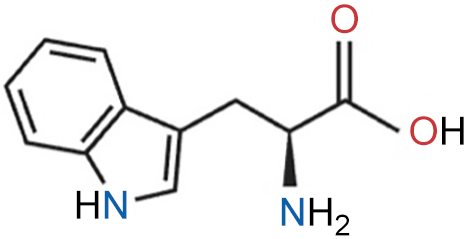
Tryptophan was discovered in 1901 by the British chemist Sir Frederick Gowland Hopkins(Reference Hopkins and Cole19). Hopkins first isolated tryptophan as 4–8 g from 600 g of pancreatic extract crude casein. Tryptophan ((2S)-2-amino-3-(1H-indol-3-yl)propionic acid) is an essential aromatic amino acid that cannot be synthesised endogenously and must be obtained from dietary proteins (Figure 1)(Reference Richard, Dawes and Mathias20).
Chemical structure of l-tryptophan.

Following ingestion of tryptophan in food, a series of processes begins, starting with digestion and culminating in metabolism. Following ingestion, tryptophan undergoes digestion, absorption via the portal vein and systemic distribution either bound to albumin (90 %) or free form(Reference McMenamy21).
Tryptophan is transported into cells by the large amino acid transport system (LAT). LAT transporters import large branched and aromatic neutral amino acids across the cellular plasma membrane(Reference Koopmans, Neels and Kema22). There are four subtypes defined from 1 to 4. LAT1 and LAT2 are primarily responsible for the transport of tryptophan across the cell membrane(Reference Saito and Soga23,Reference Wang and Holst24) . Approximately 80 % of tryptophan is transported by the LAT1 transporter at low tryptophan concentrations (50 nM). As the serum tryptophan concentration increases (0·5 mM), LAT2, LAT3 and LAT4 have been shown to increase their involvement in tryptophan transport to approximately 21 %(Reference Vumma, Johansson and Lewander25).
Tryptophan metabolism proceeds through three major tissue-specific pathways: the KP, the serotonin (5-hydroxytryptamine) pathway and the gut microbiota–derived indole pathway (Figure 2). Each is regulated by distinct enzymes and influenced by nutritional, microbial and inflammatory signals(Reference Gao, Mu and Farzi3).
Overview of tryptophan metabolism through the kynurenine, serotonin and microbial indole pathways. Tryptophan is metabolised via three major routes: (i) the kynurenine pathway (KP), producing metabolites such as kynurenine (KYN), 3-hydroxykynurenine and 3-hydroxyanthranilic acid (3-HAA); (ii) the serotonin pathway, yielding serotonin (5-hydroxytryptamine (5-HT)) and melatonin; and (iii) the gut microbial pathway, generating indole and indole derivatives, including indole-3-propionic acid (IPA), indole-3-acetic acid (IAA), indole-3-lactic acid (ILA) and indole-3-aldehyde (IAld). These metabolites regulate immunity, host–microbe interactions, neurotransmission and circadian rhythm.

The kynurenine pathway: inflammation, immunity and disease
The KP accounts for 95 % of ingested tryptophan(Reference Taleb26). This pathway begins with the oxidative cleavage of the indole ring of tryptophan, catalysed by either tryptophan 2,3-dioxygenase (TDO), predominantly expressed in the liver, or IDO (IDO1/IDO2), expressed in extrahepatic tissues(Reference Badawy27). As a result of TDO, IDO or IDO2 activity, N-formylkynurenine is generated and hydrolysed to kynurenine by N-formylkynurenine formidase. Kynurenine is then catabolised to several metabolites via the action of multiple enzymes.
These enzymes involved in these catabolic reactions synthesise other metabolic products such as 3-hydroxyanthranilic acid, kynurenic acid and quinolinic acid, which are biologically active and have physiological and pathophysiological effects on cellular functions(Reference Badawy28).
TDO is stimulated by tryptophan and stress hormones, whereas IDO is activated by pro-inflammatory Th1-type cytokines such as IL-2, TNF-α and interferon-γ (Reference Oxenkrug29). Activation of IDO suppresses TDO activity, and vice versa(Reference Takikawa, Yoshida and Kido30). Kynurenine, produced through the action of both IDO and TDO, provides positive feedback for IDO activation and, importantly, inhibits tryptophan transport across the blood–brain barrier(Reference Mangge, Summers and Meinitzer31).
Alterations in KP flux have been associated with chronic inflammation, neurodegeneration and cancer progression(Reference Holthuijsen, van Roekel and Bours5). Dietary patterns modulate this pathway through their effects on inflammation: anti-inflammatory diets (e.g. Mediterranean) tend to suppress IDO activity, whereas pro-inflammatory diets (e.g. Western) enhance KP activation(Reference Mangge, Summers and Meinitzer31,Reference Capuron, Ravaud and Neveu32) .
The microbiota–indole pathway: gut-derived signals of health and disease
Intestinal bacteria mainly initiate tryptophan metabolism through the intestinal microbiota pathway to convert small amounts of tryptophan into indole and indole derivatives. The production of these metabolites in the gut depends on the expression of relevant enzymes by the gut microbiota. Indole production from tryptophan via the tryptophanase enzyme is widespread among many gram-positive and gram-negative bacteria, including Escherichia coli, Bacteroides, Clostridium, Enterobacter, Citrobacter and Vibrio species(Reference Lee and Lee33). In contrast, Lactobacillus species primarily contribute to tryptophan metabolism through the production of indole derivatives rather than indole itself, via alternative enzymatic pathways. Indole is absorbed into the circulation, which is subsequently converted to indoxyl sulfate by hepatic cytochrome P450 enzymes (cytochrome P450 family 2 subfamily E member 1) and sulfotransferase 1A1(Reference Devlin, Marcobal and Dodd34,Reference Hubbard, Murray and Perdew35) .
Tryptamine is produced from tryptophan via microbial decarboxylation (e.g. by Clostridium sporogenes and Ruminococcus gnavus)(Reference Williams, Van Benschoten and Cimermancic36). In contrast, indole acetaldehyde and indole-3-acetic acid arise through distinct indole-derivative pathways (e.g. via indole pyruvate/indole acetaldehyde intermediates), while indole-3-aldehyde is generated by specific taxa such as Lactobacillus spp. through alternative enzymatic routes(Reference Roager and Licht37). Moreover, aromatic amino acid aminotransferase from Lactobacilli can convert tryptophan to indole pyruvate acid. Indole-3-pyruvic acid is the essential precursor of several catabolites, including indole lactate (indole-3-lactic acid), indole acrylic acid, indole-3-propionic acid, indole-3-acetic acid, indole acetaldehyde and skatole(Reference Hou, Li and Ying38). Clostridium sporogenes can produce indole-3-lactic acid from tryptophan via a stepwise pathway in which tryptophan is first converted to indole-3-pyruvic acid, followed by reduction to indole-3-lactic acid(Reference Gao, Xu and Liu4,Reference Dodd, Spitzer and Van Treuren39) . Skatole formation depends on the action of indolacetate decarboxylase, which is secreted by Bacteroides spp (Reference Gao, Xu and Liu4). The conversion of tryptophan to indole acetamide is catalysed by tryptophan 2-monooxygenase, and the subsequent processing of this compound to indole-3-acetic acid is facilitated by indolasetamide hydrolase(Reference Krishnan, Alden and Lee40).
These metabolites influence gut barrier integrity, immune signalling and host–microbe interactions(Reference Gao, Mu and Farzi3,Reference Gao, Xu and Liu4) . Diet composition shapes this pathway: fibre- and polyphenol-rich diets favour production of beneficial indoles (indole-3-propionic acid, indole-3-acetic acid)(Reference Gao, Mu and Farzi3,Reference Iriti, Varoni and Vitalini41) , while high meat-protein diets increase skatole and pro-inflammatory indoles(Reference Zhu, Shi and Lin9,Reference Shi, Zhao and Song10,Reference Morrison and Preston42) .
The serotonin pathway: linking nutrition, mood and circadian rhythms
The serotonin pathway accounts for a minor fraction of total tryptophan metabolism but is crucial for central and peripheral physiological functions. Along this pathway is the generation of serotonin or 5-hydroxytryptamine, the precursor of melatonin(Reference Taleb26). Tryptophan is first converted to 5-hydroxytryptophan by tryptophan hydroxylase. Tryptophan hydroxylase is the rate-limiting enzyme of this pathway, and it is expressed in enterochromaffin cells and the brain(Reference Lin, Sun-Waterhouse and Cui43). The amount of serotonin synthesised depends on the availability of tryptophan and the activity of these enzymes(Reference Richard, Dawes and Mathias20).
Peripheral serotonin has been demonstrated to regulate gastrointestinal motility, platelet aggregation and metabolic processes, whereas central serotonin modulates mood, cognition and the sleep–wake cycle(Reference Richard, Dawes and Mathias20,Reference Lin, Sun-Waterhouse and Cui43) . A portion of serotonin is further acetylated and methylated to produce melatonin, a key regulator of circadian rhythms(Reference Iriti, Varoni and Vitalini41).
The influence of diet on this process is bidirectional: adequate levels of tryptophan and micronutrients (such as vitamin B6 and Fe) promote serotonin synthesis, whereas inflammatory conditions or high activation of the KP reduce serotonin availability through substrate competition(Reference Mangge, Summers and Meinitzer31,Reference Capuron, Ravaud and Neveu32) .
Dietary sources, bioavailability and daily requirements of tryptophan
The tryptophan requirement for adults is estimated to be between 250 mg/d(Reference Sainio, Pulkki and Young44,Reference Harper and Yoshimura45) and 425 mg/d(Reference Richard, Dawes and Mathias20,Reference Young46) , corresponding to a dietary intake of 3·5–6·0 mg/kg body weight per d. Given the limited storage capacity of this amino acid in the human body, adequate daily intake is essential to sustain physiological processes, including neurotransmitter synthesis, immune regulation and protein turnover(Reference Richard, Dawes and Mathias20).
Typical daily tryptophan intake in omnivorous diets ranges between 900 and 1000 mg, with significant interindividual variability due to dietary patterns(Reference Richard, Dawes and Mathias20). High-protein foods, particularly animal-derived proteins, generally contain more tryptophan than plant-based sources. Tuna fish, turkey, milk, oats, bread, bananas, dried prunes, chicken, peanuts and chocolate are some common sources of tryptophan. However, bioavailability can vary depending on the protein matrix, digestion kinetics and presence of competing large neutral amino acids(Reference Gorissen, Trommelen and Kouw47). Figure 3 illustrates the tryptophan content of commonly consumed foods by food group, highlighting dietary sources with the highest bioavailability (Figure 3)(Reference Kałużna-Czaplińska, Gątarek and Chirumbolo1,Reference Zuraikat, Wood and Barragán8,Reference Richard, Dawes and Mathias20) . This information is critical for dietary planning, particularly within clinical contexts where modulation of tryptophan metabolism is targeted, as evidenced by its use in mood disorders, sleep disturbances and chronic inflammatory conditions(Reference Hulsken, Märtin and Mohajeri6,Reference Silva, Viana and Andrade48) .
Tryptophan content (mg/100 g) in various food sources, categorised by food group.

Figure 3 Long description
A horizontal bar graph compares tryptophan content in milligrams per 100 grams across various food sources, categorized by food group. The graph includes 40 horizontal bars, each representing a different food source. The horizontal axis represents tryptophan content ranging from 0 to 600 mg per 100 grams. The vertical axis lists the food sources. The color scheme differentiates food groups: Dairy products in pink, Fish/Seafood in blue, Grains in yellow, Legumes in green, Nuts/Seeds in brown, and Meat/Poultry/Eggs in red. The highest tryptophan content is found in Pumpkin & squash seeds (576 mg), Soybeans, roasted (575 mg), and Cheddar (574 mg). The lowest content is in Lentils (81 mg). Notable trends include high tryptophan levels in dairy products and nuts/seeds, with varying levels in other categories. The graph provides a detailed comparison of tryptophan content across different food groups, highlighting significant variations.
Despite its physiological significance, there is a noticeable absence of comprehensive databases concerning the tryptophan content of regional diets, and the limited research conducted focuses on the influence of processing and cooking methods on tryptophan stability in foods. The collation of such data could facilitate the provision of more precise dietary recommendations and fortification strategies.
Dietary influences on tryptophan metabolism
Mediterranean diet: anti-inflammatory modulation of tryptophan metabolism
The Mediterranean diet gained international recognition through the work of Ancel Keys and was designated as the original prototype of dietary guidelines in the USA and some other countries(Reference Willett, Sacks and Trichopoulou49,Reference Nestle50) . The Mediterranean diet primarily comprises plant-based foods, including vegetables, fruits, whole grains, nuts and seeds. Such foods provide antioxidants, significant amounts of dietary fibre, vitamins and minerals. Another significant nutritional benefit of the Mediterranean diet is the presence of healthy lipids, particularly those derived from olives, nuts and oily fish. These sources are rich in monounsaturated fats, which are beneficial for cardiovascular health, and are used as a substitute for saturated and trans-fats, which are typically found in fatty meat and cheese. Furthermore, the consumption of saturated fats, commonly present in red meat, is limited, with moderate intake of fish and poultry and lower levels of red meat. Dairy products are also consumed in moderation(Reference Minelli and Montinari51–Reference Trichopoulou53).
Natural sources of tryptophan within the Mediterranean diet include dairy products, fish, seeds, nuts, legumes and certain fruits and vegetables(Reference Iriti, Varoni and Vitalini41). Evidence suggests that adherence to the Mediterranean dietary pattern may increase plasma tryptophan concentrations and modulate its downstream metabolic pathways. In the PREDIMED trial, higher tryptophan levels were associated with reduced CVD incidence among high-risk individuals(Reference Yu, Ruiz-Canela and Guasch-Ferré11). Moreover, metabolomics analyses have shown that Mediterranean diet interventions, especially when supplemented with extra virgin olive oil, modify the direct association between plasma metabolites derived from tryptophan catabolism, namely, kynurenines, and the risk of heart failure and atrial fibrillation, thus potentially counteracting the deleterious health effects of these metabolites(Reference Razquin, Ruiz-Canela and Toledo12).
However, not all studies agree. For example, in a short-term dietary intervention comparing a Mediterranean diet with a fast-food diet containing a similar amount of protein, serum tryptophan levels decreased unexpectedly after the Mediterranean diet. They increased after the fast-food diet(Reference Zhu, Sawrey-Kubicek and Beals13). The authors hypothesised that differences in protein source and amino acid absorption kinetics could account for this finding. They suggested that tryptophan from red meat in a fast-food diet might be absorbed more quickly than from plant-based sources(Reference Gorissen, Trommelen and Kouw47).
Overall, the Mediterranean diet supports tryptophan bioavailability and promotes a favourable balance between serotonin and KP. This could potentially confer both cardiometabolic and neuroprotective benefits. However, inconsistent results highlight the need for more controlled trials to clarify the influence of food components and protein sources within this dietary pattern.
High-protein and ketogenic diets: microbial metabolites and kynurenine shifts
High-protein diets have attracted considerable attention as a dietary strategy for weight management, largely due to their potential to promote satiety, preserve fat-free mass and enhance thermogenesis during energy restriction(Reference Westerterp-Plantenga, Nieuwenhuizen and Tome54). Protein-rich foods constitute a significant dietary source of tryptophan; however, the impact of high protein intake on tryptophan metabolism is contingent on the source and amino acid composition of the consumed proteins. Animal-derived proteins, particularly from meat, are rich in l-tryptophan, which can be metabolised by the gut microbiota in the cecum and colon to form skatole and indole via enzymes such as tryptophanase. Diets high in meat protein have been shown to increase the abundance of skatole- and indole-producing taxa, including Lactobacillus and members of the Family XIII AD3011 group(Reference Zhu, Shi and Lin9,Reference Shi, Zhao and Song10) . These metabolites, particularly skatole, may exert detrimental effects by promoting gut dysbiosis and systemic inflammation. Conversely, reducing meat protein intake can lower skatole and indole production(Reference Zhu, Shi and Lin9).
Experimental studies support these findings. In rats, high chicken or pork protein diets increased skatole and indole levels in the cecum, colon, faeces and subcutaneous adipose tissue(Reference Shi, Zhao and Song10). Interestingly, high-meat-protein diets were associated with reduced hepatic cytochrome P450 family 2 subfamily E member activity, the enzyme involved in skatole metabolism, suggesting altered hepatic detoxification capacity(Reference Shi, Zhao and Song10).
Ketogenic diets – characterised by low carbohydrate intake and high fat, with moderate to high protein – also significantly affect tryptophan metabolism. A recent human metabolomics study found that ketogenic diets markedly shifted tryptophan metabolism towards kynurenine and kynurenic acid production, while decreasing quinolinic acid synthesis(Reference Effinger, Hirschberger and Yoncheva14). Given that elevated kynurenic acid levels have been linked to inflammatory processes and cardiovascular risk(Reference Pedersen, Tuseth and Eussen55,Reference Schefold, Zeden and Fotopoulou56) , these shifts in metabolic balance may have both beneficial and adverse health implications, depending on the clinical context.
High-protein and ketogenic diets can substantially influence tryptophan metabolism by modifying substrate availability, competitive amino acid transport and gut microbial activity. While they may support weight management and metabolic control, their potential to promote dysbiosis and alter KP activity warrants careful consideration in long-term dietary planning.
Calorie-restricted diets: inflammation, indoleamine 2,3-dioxygenase activity and weight regulation
Calorie restriction and structured weight reduction diets are widely used to improve cardiometabolic health in individuals with overweight and obesity. Beyond their effects on energy balance, these interventions can influence tryptophan metabolism by modulating inflammatory status, substrate availability and enzymatic activity(Reference Strasser, Berger and Fuchs15).
Obesity is characterised by chronic, low-grade inflammation. Hypertrophic adipocytes secrete elevated leptin levels and pro-inflammatory cytokines, such as IL-6 and TNF-α, and reduce adiponectin levels(Reference Engström, Hedblad and Stavenow57–Reference Wang, Mariman and Renes59). These inflammatory mediators produce hepatic C-reactive protein and markedly stimulate IDO activity(Reference Mangge, Summers and Meinitzer31,Reference Brandacher, Hoeller and Fuchs60) . Consequently, the KP is frequently activated in obesity, which diverts tryptophan away from the synthesis of serotonin and increases the kynurenine:tryptophan ratio – a marker of immune activation(Reference Capuron, Ravaud and Neveu32,Reference Capuron, Schroecksnadel and Féart61) .
Calorie restriction can partially reverse these changes. Although bariatric surgery does not appear to normalise tryptophan breakdown rates or inflammatory markers in the short term(Reference Brandacher, Hoeller and Fuchs60), whereas caloric restriction is known to be a potent activator of protective metabolic pathways, dietary energy restriction has been shown to improve cardiovascular risk factors and reduce C-reactive protein levels(Reference Fontana and Klein62). In a randomised trial of overweight individuals, both very-low-calorie (600 kcal/d) and low-calorie (1200 kcal/d) diets for 2 weeks reduced plasma tryptophan and kynurenine levels by approximately 15–21 %, although changes in inflammatory biomarkers were not statistically significant(Reference Strasser, Berger and Fuchs15). As a result of the study, the weight loss diet decreased leptin levels by 46 % in both groups but did not reach significance. Tryptophan and kynurenine decreased by 21 and 16 % in the very-low-calorie-diet group and by 15 and 17 % in the low-calorie-diet group, respectively. Inflammatory biomarkers, neopterin and tyrosine, did not change significantly during the study period. Leptin was significantly associated with tryptophan degradation before and after the intervention(Reference Strasser, Berger and Fuchs15).
From a mechanistic perspective, calorie restriction may enhance tryptophan metabolism by reducing adipose tissue inflammation and normalising IDO activity. Furthermore, tryptophan supplementation during energy restriction could enhance serotonin-mediated satiety mechanisms, potentially supporting weight loss adherence(Reference Yu, Ruiz-Canela and Guasch-Ferré11).
Overall, calorie-restricted diets can modulate tryptophan metabolism beneficially by reducing the pro-inflammatory stimulation of the KP. However, further research is required to ascertain the long-term effects of various levels and durations of calorie restriction and whether combining such diets with tryptophan supplementation provides additional benefits.
Western diet: pro-inflammatory shifts in tryptophan pathways
There is mounting evidence to suggest that developing countries’ food systems are transitioning from traditional to Western-style models. This shift is characterised by intensive inputs, extensive processing and the sale of food products through supermarkets and fast-food chains, particularly those originating from Western countries(Reference Kennedy, Nantel and Shetty63). Economic growth, globalisation and urbanisation and increased affordability and availability of food have led to what is known as the ‘nutrition transition’ since the 1990s(Reference Popkin64). The Western dietary pattern is characterised by high intakes of processed and red meats, refined grains, added sugars, saturated and trans-fats and sodium, alongside low consumption of fruits, vegetables, legumes and whole grains. This unbalanced diet contains excessive energy, simple sugars and sodium and inadequate amounts of fibre. This nutrient profile is associated with increased glycaemic load, an unfavourable fatty acid ratio, low fibre content and insufficient intake of essential vitamins and minerals, collectively contributing to a higher risk of chronic diseases(Reference Monsanto, Hintze and Ward65).
Emerging evidence indicates that Western diets can disrupt tryptophan metabolism by enhancing KP activation and reducing circulating tryptophan levels(Reference Francis, Stevenson and Tan16). Mechanistically, chronic intake of high-fat, high-sugar foods promotes systemic inflammation, which upregulates IDO1 expression in adipose tissue, thereby increasing kynurenine production(Reference Huang, Song and Gao17). This metabolic shift has been linked to mood disorders, neuroinflammation and cognitive deficits.
Animal studies can provide mechanistic insights. For example, mice fed a high-fat Western diet displayed impairments in cognitive and social behaviour, intestinal dysbiosis and marked alterations in tryptophan metabolism(Reference Sun, Wang and Li18). Bacterial lipopolysaccharide administration further amplified the neuroinflammation mediated by microglia, diverting kynurenine metabolism towards quinolinic acid. This neurotoxic metabolite can induce the hyperactivation of glutamate in hippocampal mossy cells and disrupt inhibitory interneuron circuits. This impairs neurogenesis and contributes to behavioural dysfunction(Reference Sun, Wang and Li18).
The Western diet has been shown to have a pro-inflammatory effect on tryptophan metabolism, resulting in increased activation of the KP, decreased serotonin synthesis and reduced indole production by beneficial microbes. These changes may underlie the observed associations between Western dietary patterns, neuropsychiatric disorders and cardiometabolic risk. Interventions that seek to reduce the intake of saturated fat, added sugar and processed food, while increasing the consumption of fibre and polyphenols, may assist in restoring a healthier tryptophan metabolic balance.
Comparative summary of dietary patterns
When considered collectively, these dietary patterns demonstrate distinct and sometimes opposing influences on tryptophan metabolism. It has been hypothesised that diets rich in anti-inflammatory and microbiota-supportive components, like the Mediterranean diet, may preserve serotonin pathway activity and limit excessive KP activation(Reference Zhu, Sawrey-Kubicek and Beals13). Conversely, dietary patterns characterised by elevated consumption of saturated fat, refined carbohydrates and processed foods, as evidenced by the Western diet, have been observed to induce pro-inflammatory metabolic shifts(Reference Monsanto, Hintze and Ward65). The effects of high-protein and ketogenic diets are subject to variation, with the potential to facilitate weight management but the possibility of adverse modulation of microbial tryptophan metabolism(Reference Effinger, Hirschberger and Yoncheva14). Calorie-restricted diets have been hypothesised to downregulate KP activity; however, the long-term implications of this remain underexplored(Reference Mangge, Summers and Meinitzer31). These comparative findings are summarised in Table 1.
Summary of dietary patterns and their effects on tryptophan metabolism

Table 1 Long description
A table comparing dietary patterns and their effects on tryptophan metabolism. The table has four rows and five columns. The columns are labeled Dietary pattern, Tryptophan bioavailability, Kynurenine pathway activity, Serotonin pathway, Gut microbiota impact, and Key references. The rows are labeled Mediterranean, High-Protein/Keto, Calorie-Restricted, and Western. The Mediterranean diet shows an increase in tryptophan bioavailability, a decrease in kynurenine pathway activity, maintained or increased serotonin pathway activity, and beneficial taxa in gut microbiota impact. The High-Protein/Keto diet shows variable increase in tryptophan bioavailability, increased or altered kynurenine pathway activity, may decrease serotonin pathway activity due to competition, and increased skatole and indole producers in gut microbiota impact. The Calorie-Restricted diet shows a slight decrease in tryptophan bioavailability, a decrease in kynurenine pathway activity, may increase satiety-related 5-hydroxytryptamine in serotonin pathway activity, and limited data in gut microbiota impact. The Western diet shows a decrease in tryptophan bioavailability, an increase in kynurenine pathway activity, a decrease in serotonin pathway activity, and increased dysbiosis and endotoxin in gut microbiota impact. The key references are listed as numbers.
↑, increased; ↓, decreased.
Conclusion and future directions in nutrition–tryptophan research
Tryptophan is an essential amino acid that plays a multifaceted role in human health. It is a precursor for bioactive metabolites in the kynurenine, serotonin and gut microbiota-derived indole pathways. Maintaining balance in these metabolic pathways is imperative for preserving physiological homeostasis, as it impacts immune regulation, neurological function and intestinal integrity. Dietary patterns have been identified as significant modulators of this balance, given their impact on substrate availability, inflammation and microbiota composition.
The evidence suggests that the Mediterranean diet promotes a favourable tryptophan metabolic profile. This supports serotonin synthesis and limits excessive activation of the KP. In contrast, Western dietary patterns have been observed to increase pro-inflammatory KP activity and decrease beneficial indole production. The effects of high-protein and ketogenic diets can vary, and they can potentially be advantageous for weight management. However, they have also been observed to induce gut dysbiosis and alter tryptophan metabolism towards less favourable pathways. Calorie-restricted diets have been found to reduce KP activity. However, the long-term impact of these diets on tryptophan homeostasis is unclear.
Despite the growing interest in the relationship between diet, tryptophan metabolism and health, several important gaps remain in the current literature. The primary limitations are attributed to the absence of standardised dietary assessment methodologies and the paucity of comprehensive databases that can accurately quantify dietary tryptophan intake at the population level. Furthermore, the variability in food composition data, in conjunction with a paucity of information regarding the effects of food processing and cooking on tryptophan content, complicates the interpretation and comparison of study findings. Moreover, there is a paucity of studies that have concurrently incorporated dietary patterns, gut microbiota composition and circulating tryptophan-derived metabolites in relation to clinical outcomes. There is also a paucity of evidence from well-controlled human studies examining the therapeutic or preventive potential of targeting tryptophan metabolism in conditions such as depression, inflammatory bowel disease and cancer.
Future research should aim to develop comprehensive databases of the tryptophan content of foods that consider the effects of processing and cooking methods. Controlled dietary trials directly comparing the effects of different nutritional habits on tryptophan metabolism could provide further insight. Personalised dietary strategies that target tryptophan metabolism while considering genetic polymorphisms, microbiota composition and inflammatory status should also be researched. Combined interventions (e.g. diet plus probiotic/prebiotic supplementation) to synergistically optimise tryptophan metabolic pathways should be investigated.
Addressing these gaps will enable future studies to identify nutrition strategies that are more effective at supporting mental and physical health, reducing disease risk and improving clinical outcomes by leveraging tryptophan metabolism.
Acknowledgements
This research received no external funding.
C. A. B. and M. G. K. designed the research. Literature review, data interpretation and writing – original draft preparation were performed by C. A. B., while writing – review and editing and supervision and critical revision of the manuscript were performed by M. G. K. All authors have read and agreed to the published version of the manuscript.
The authors declare that they have no known competing financial interests or personal relationships that could have appeared to influence the work reported in this paper.