Introduction
Advances in visual data technology have created a vast array of new legal opportunities and challenges. The proliferation of mobile recording tools and global platforms for sharing visual data—alongside tools for automated processing and analysis of those data—enables state actors and individual citizens alike to capture, analyze, and disseminate photographs and video at unprecedented rates. Visual data can be used to document private individuals' encounters with legal agents; to capture evidence of wrongdoing, from low-level criminality to the atrocities of war and genocide; to exonerate the falsely accused; and to exploit, embarrass, or harm others. The generation of such data can be incidental and mundane—a function of modern life, in which everyone carries a camera at all times—or deliberately orchestrated to gain or maintain power. The process of transforming lived experience into digital, visual evidence can engender accountability, facilitate resistance to power, and reshape relations between the individual and the state.
The purpose of this symposium is to outline and analyze some of these legal challenges posed by recent developments in visual data technologies and practices. Its contributors highlight legal issues that arise when state actors collect visual data and when civilians and state actors deploy visual data in legal disputes. As technological development outpaces the production of empirical research on, and legal regulation of, visual data within society and inside the courtroom, opportunities to highlight new legal and empirical research at the intersection of visual data and law are needed more than ever.
Each of the articles in this symposium focuses on an empirical case of the use of visual data in a legal context. Anna Banchik analyzes an ongoing lawsuit between the American Civil Liberties Union and the Department of Defense to analyze how disputes over the disclosure of photographs taken of detainee abuse in Iraq and Afghanistan include, but are not limited to, debates over the evidentiary status of visual data. Jay Aronson also focuses on the human rights context, examining how techniques such as machine learning and computer vision can be used to analyze masses of video footage for advocacy and accountability efforts. Coauthors Bert-Jaap Koops, Bryce Clayton Newell, Andrew Roberts, Ivan Skorvánek, and Maša Galič analyze the criminalization of nonconsensual visual observation across jurisdictions in Europe and North America. Mary Fan highlights variation in police body-worn camera policies concerning data retention, deletion, and use for officer evaluation and discipline.
Legal actors are implicated and legal principles challenged in new ways when visual data are recorded, distributed or disclosed, redacted or deleted, or used as evidence in a legal proceeding. The visual records created by the use of police body cameras and citizen video, for example, can serve as powerful means to “police the police” (Fan Reference Fan2018), just as citizen media has been used to document human rights abuses and war crimes (Aronson Reference Aronson2018). Visual recording may be conducted covertly for more voyeuristic purposes, giving rise to privacy violations (see Koops et al. Reference Koops, Newell, Roberts, Skorvánek and Galič2018). The use of visual data as evidence—both within and outside formal legal proceedings—raises a wealth of issues related to privacy and visibility, credibility and interpretation, accountability, and ethics. As detailed by Banchik (Reference Banchik2018), ongoing lawsuits over the disclosure of visual images bring into stark relief critical socio-legal issues of objectivity and interpretation that arise when courts are consumers of visual images.
The production and interpretation of visual data provoke emergent legal and policy questions because of their technical form and social effects. Key questions emerge about the “objectivity” of visual evidence: though commonly considered to be more reliable and freer of bias than oral testimony, visual evidence is subject to variable interpretation (Banchik Reference Banchik2018). As the photographer Richard Avedon famously put it: “All photographs are accurate. None of them is the truth.” Indeed, what a photograph depicts is not objective truth: it is a portrayal, dependent on context, viewpoint, and other limiting factors, despite our tendency to impart it with “mechanical objectivity” (Brucato Reference Brucato2015a, 44).
These limitations impair the usage of visual data for constructing uncritical evidentiary narratives of “what really happened” in a particular situation, yet policymakers and publics often rely on video as a mechanism of accountability. This reliance will likely only increase as the capture and instantaneous distribution of video by everyday people creates more visual records of all types of behaviors and conflicts—from police/citizen confrontations to political gaffes, from sex tapes to dashboard camera footage. The recent proliferation of police-worn body cameras and the increasing use of video by bystanders as a tool for inverse surveillance—reversing the panoptic gaze and enabling individuals to watch those in power, such as the state (Mann, Nolan, and Wellman Reference Mann, Nolan and Wellman2003, 332; Newell Reference Newell2015, 46)—demonstrate increasing reliance on video as a check on power, as well as a source of ostensible authority when accounts are in conflict. But since video footage may not be as much of an objective observer or independent witness as it is sometimes claimed to be, it often has unforeseen implications for weighing evidence in civil or criminal cases—or in the court of public opinion.
Permissive freedom of information laws in some jurisdictions have also raised substantial visibility-related concerns (Banchik Reference Banchik2018) because they have exposed sensitive personal information about private individuals to public scrutiny after the individuals have interacted with the state. For example, body-worn camera recordings made by police officers during police-civilian contacts have ended up on websites such as YouTube, alongside myriad police-misconduct videos filmed by citizens, after the recordings were released under state public records laws (Newell Reference Newell2017). All this footage increases the secondary visibility of those captured in recordings. Additionally, the video itself can be analyzed as a new form of “big data”—though large quantities of video remain difficult to analyze effectively or efficiently (see Aronson Reference Aronson2018). Audio and video streams contain biometric information that can be detected, analyzed, and compared against existing databases using, for example, facial and voice recognition technologies, while also adding new data to these databases in the process.
The remainder of this introduction is organized around four legal issues that recent developments in visual data have brought to the fore. First, we examine privacy harms of activities ranging from police-civilian interactions to sexual activity being made more visible. Second, we consider the potential of visual data to hold legal actors more accountable. Third, we look at how visual data are interpreted in the context of legal decision making. Last, we examine the challenges that confront legal decision makers who are tasked with interpreting data, establishing fact patterns, and applying the law in cases where visual evidence is neither objective nor neutral.
Privacy and Visibility
The proliferation of visual data raises profound concerns about the visibility of a wide range of behaviors, and the privacy of individuals whose images are captured. To whom are visual data made available, and how practically accessible are they? What rules govern their distribution and retention? When are they censored, and to what effect? What harms arise from dissemination and viewing of visual data? How may they later be re-viewed under different circumstances or by newly involved actors?
These are not new questions. The first fundamental argument for a right to privacy in US law—Samuel Warren and Louis Brandeis's Reference Warren and Brandeis1890 entreaty for a “right to be let alone” (Warren and Brandeis Reference Warren and Brandeis1890)—responded directly to the development of the pocket camera and the rise in amateur photography that accompanied it. The widespread production of photographs, particularly those taken covertly, was both threatening and revelatory: it challenged Victorian sensibilities of propriety in self-presentation, while also creating a wave of hobbyist photographers and a cultural “craze” for the activity (Mensel Reference Mensel1991). A New York Tribune article at the time claimed that “[a]mateur photography has the reputation of possessing … all those seductive charms in the enjoyment of which the weary, earthbound mortal is released from durance vile and translated, for the time being, into some seventh heaven of bliss” (quoted in Mensel Reference Mensel1991, 29). The legal effect of this technological development was enormous: Warren and Brandeis's influential formulation of the right to privacy decries the fact that “[i]nstantaneous photographs … have invaded the sacred precincts of private and domestic life” (Warren and Brandeis Reference Warren and Brandeis1890, 195).
Contemporary production of visual data far exceeds the capabilities of the pocket cameras so reviled by Warren and Brandeis. The ubiquity of mobile phones, webcams, and other devices that capture and disseminate high-quality video and audio footage make more behavior instantaneously visible than ever before, and they often come to political or legal use as documentation of such behavior. Satellites and drones offer another level of visual capabilities—and new challenges to privacy. The first use of commercial satellite imagery by the news media depicted the aftermath of the Chernobyl nuclear explosion in the face of Soviet government denials that the explosion had even occurred (Braman Reference Braman2009, 225). The documentation of visual images has been employed to facilitate and document the controversial work of Pentecostal rehab centers in Central America (O'Neill Reference O'Neill2017), detainee abuse in wartime and conflict settings (Banchik Reference Banchik2018), the current conflict in Syria (Aronson Reference Aronson2018), agricultural operations (Negowetti Reference Negowetti2015), and melting arctic ice (Starr Reference Starr2016). In yet other contexts, the creation and sharing of sexual, intimate, private, and pornographic visual content has given rise to a range of civil and criminal penalties related to voyeurism (Koops et al. Reference Koops, Newell, Roberts, Skorvánek and Galič2018), sexting (Reyns et al. Reference Reyns, Burek, Henson and Fisher2013), live-streaming sexual abuse of minors (Schermer et al. Reference Schermer, Georgieva, van derHof and Koops2016), nonconsensual or “revenge” pornography (Citron and Franks Reference Citron and Franks2014), animal cruelty (Strossen Reference Strossen2010), child pornography (Lynch Reference Lynch2002), and domestic abuse (Moore Reference Moore2013). Perhaps no visual documentation has garnered as much public attention as bystander video of police misconduct (Goldsmith Reference Goldsmith2010; Ariel, Farrar, and Sutherland Reference Ariel, Farrar and Sutherland2015; Bosman, Smith, and Wines Reference Bosman, Smith and Wines2017; Yokum, Ravishankar, and Coppock Reference Yokum, Ravishankar and Coppock2017), spurring the rise in body-worn police cameras among police departments in many countries around the world (Brucato Reference Brucato2015b; Mateescu, Rosenblat, and boyd Reference Mateescu, Rosenblat and boyd2016; Taylor Reference Taylor2016; Fan Reference Fan2018).
The public disclosure of visual data may raise unique privacy harms (Banchik Reference Banchik2018) and poses significant threats to individual privacy (Newell Reference Newell2017). For example, police in Washington State and elsewhere have been required, by state freedom of information law, to publicly disclose sensitive video recordings captured by police officers' body-worn cameras—including interviews with suspected prostitutes and statements from witnesses and victims of crimes—and some of this video has been subsequently posted to YouTube in non-redacted form (Newell Reference Newell2017, 1386). However, police officers themselves often cite that their concerns toward policing on camera stem from the added visibility that visual records engender (Brown Reference Brown2016; Farmer Reference Farmer2016; Farmer and Sun Reference Farmer2016; Sandhu Reference Sandhu2016; Sandhu and Haggerty Reference Sandhu and Haggerty2017; Newell Reference Newellforthcoming). Banchik (Reference Banchik2018) recounts the nightmares and insomnia claimed by the widow of a high-profile suicide victim that were caused by the release of death-scene photographs, which led a federal court to rule that privacy interests extend to family members under the federal Freedom of Information Act. Additionally, Banchik (Reference Banchik2018) outlines how federal appellate courts have recently overruled decades-old decisions holding that the public release of booking photographs is harmless, largely because “time has taught us otherwise”:
The appeals court described humiliation and reputational injuries in the information age, noting that “[t]he internet and social media have worked unpredictable changes in the way photographs are stored and shared … they can be instantaneously disseminated for malevolent purposes.” (Detroit Free Press II 2016, 10)
Similarly, Lageson (Reference Lageson2017) illustrates how the proliferation of publicly available websites, crime watch blogs, Facebook pages, and mug shot databases facilitates the rapid spread of digital mug shots, including those of individuals whose arrests never led to charges, and those whose offenses were legally sealed and expunged. Koops et al. (Reference Koops, Newell, Roberts, Skorvánek and Galič2018) demonstrate how several jurisdictions have begun to criminalize the dissemination of images or recordings captured in violation of voyeurism or other privacy-related laws prohibiting intrusive visual observation.
These privacy issues are further complicated by the ease with which dissemination occurs, and the breadth and speed readily attained by a video gone “viral.” Dissemination of visual data can itself constitute a harm—though courts have had some difficulty applying existing legal frameworks to widespread dissemination facilitated by networked technologies. Consider, for instance, the holding of Paroline v. United States (2014), in which images of the abuse of a young girl named Amy went viral and were viewed many thousands of times over. Amy sought restitution under the Violence Against Women Act and proved that she had suffered $3.4 million in financial losses as a result of the harm. The issue the US Supreme Court faced was whether Amy could collect this entire amount from an individual possessor of the images—or whether she had to prove that a specific proportion of the harm she suffered was attributable to that possessor, and she could collect only that proportion of the restitution amount from him. The Court ruled that restitution should be paid “in an amount that comports with the defendant's relative role in the causal process underlying the victim's general losses”—a ruling that was roundly criticized for failing to acknowledge that the harm created by dissemination of a viral video is more than the sum of its parts, and it cannot practically be subdivided into individual harms (Cassell Reference Cassell2014). The difficulty Paroline illuminates is likely to become even more salient in the age of easy dissemination of harmful images and video data: the fact of virality constitutes its own harm, and it can be impossible to apportion responsibility for that harm among viewers.
Accountability and Transparency
Visual data can be used to increase the accountability of various actors, ranging from state officials and individuals committing antisocial or criminal acts to protestors, prisoners, and school children, among many others. Visual evidence may make it easier to prosecute cases of police brutality, shoplifting, and intoxicated driving, or it may document human rights abuses during war or support internal investigations into legal or policy violations by employees or other workers in the workplace (e.g., teachers, prison guards, police officers, ride-share drivers, etc.). However, transparency and accountability do not flow automatically from the capacity to collect visual data. Images must be made available to parties that can hold wrongdoers accountable, and forensic questions must be addressed before they can be admitted into legal proceedings as evidence. These issues are made more complex by the fact that information technology companies frequently own and manage the cameras or tightly integrated information systems that manage camera footage, storage, and disseminating platforms.
Once visual data are created, whether and for how long they must be retained varies by context and jurisdiction. As Fan (Reference Fan2018) explains, police body cameras generate an unprecedented amount of data: a video is uploaded to Axon's Evidence.com platform every 2.9 seconds (Mearian Reference Mearian2015, quoted in Fan Reference Fan2018). What to do with those data once uploaded—and who controls and pays for their retention, access, and dissemination—are critical questions for socio-legal scholars and legal practitioners alike, let alone the agencies that use the technologies on a day-to-day basis. Data storage costs are considerably higher than the cost of cameras themselves. Fan argues that there are significant obstacles to mining body-camera data to improve police regulation. Policies are asymmetrical, prioritizing the preservation of footage that is adjudged to be possibly beneficial (as evidence) in future criminal prosecutions, but not necessarily for preserving recordings that might be useful only as evidence in potential civil cases against officers for alleged misconduct. Recordings deemed non-evidentiary (i.e., not likely to support future claims raised in formal legal proceedings) are deleted more quickly, limiting the potential use of these recordings for officer accountability and discipline (Fan Reference Fan2018). As with many types of big data, function creep (Innes Reference Innes2001) is an issue—data initially collected for one purpose can be used for another. Importantly, police officers' unions resist when they perceive that data are being repurposed for managerial surveillance (Brayne Reference Brayne2017), but not all police agencies benefit from unionization or collective bargaining agreements that allow for this sort of organized resistance.
It is not only what images and recordings include that is important. Missing data can be telling in their own right. One Los Angeles Police Department officer described departmental recording equipment as a “double edged sword”—on the one hand, technology such as vehicle cameras can clear him of wrongdoing, but if he does not turn the camera on, he suggested the assumption is that he must have been doing something wrong (Brayne Reference Brayneforthcoming). Indeed, some commentators have argued that, in cases of alleged police misconduct, courts should presume that police officers have acted inappropriately whenever their body-worn cameras have not been activated, for whatever reason (Harris Reference Harris2018, 365; see also Newell and Greidanus Reference Newell and Greidanus2018).
Credibility and Interpretation
Accountability does not flow automatically from visual data. Visual data need to be authenticated and judged admissible by a judge or other relevant gatekeeper, depending on the forum and context. When used as evidence (in court, but also defined more broadly), visual data must also be interpreted.
The interpretation, animation, and representation of visual evidence generate and reinforce power dynamics, both within and outside formal legal proceedings. In the courtroom, visual data can serve to incriminate or exonerate, to legitimize accounts of events or call them into question. Visual evidence has become common within legal disputes and criminal trials: attorneys regularly use visual displays to recreate crime scenes or to document visible injuries from domestic violence, car accidents, or even, in civil trials, patent infringements or equipment malfunctions (Dahir Reference Dahir, Henderson and and Epstein2011, 77; Moore Reference Moore2013). Within the legal context, some suggest the interpretation of visual evidence is a straightforward and objective exercise—that is, what you see is what you get. For example, Justice Antonin Scalia of the US Supreme Court wrote in his majority opinion in Scott v. Harris that a police dash-camera video “so utterly discredited” the claimant's version of events during a high-speed car chase that “no reasonable jury could have believed him” (Scott v. Harris 2007, 380). The federal appeals court, whose decision the Supreme Court reversed, “should not have relied on such visible fiction; it should have viewed the facts in the light depicted by the videotape” (Scott v. Harris 2007, 380–81). However, the lower court had actually viewed the videotape when it came to its contrary conclusion (Harris v. Coweta County 2005, 819n14), demonstrating that multiple interpretations were, of course, possible. Justice John Paul Stevens, in his dissent, argued that the majority of the Supreme Court had “used its observation of the video as an excuse for replacing the rule of law with its ad hoc judgment” (Scott v. Harris 2007, 394).
Body-worn cameras are another case in which the tension between “objectivity” and interpretation are often salient. Despite some police departments, civil liberties groups, and the media promoting a rhetoric claiming that body-camera adoption would provide better and more “objective” evidence of police conduct, it is far from clear that ideal plays out in reality (Harris Reference Harris2010, 368–69; Wasserman Reference Wasserman2015, 837–42; Jones, Crozier, and Strange Reference Jones, Crozier and Strange2017). As Mateescu, Rosenblat, and boyd (Reference Mateescu, Rosenblat and boyd2016, 125) have argued, body-worn cameras are now at the center of many of the same debates over interpretation and authoritativeness that dashboard camera and citizen video footage have been for decades. Indeed, police officers themselves voice concerns that the visual evidence will be interpreted incorrectly by those outside of law enforcement who may not understand the rules officers are required to work under or grasp the assumptions under which an officer was working at the moment an incident occurred (Sandhu and Haggerty Reference Sandhu and Haggerty2017, 84).
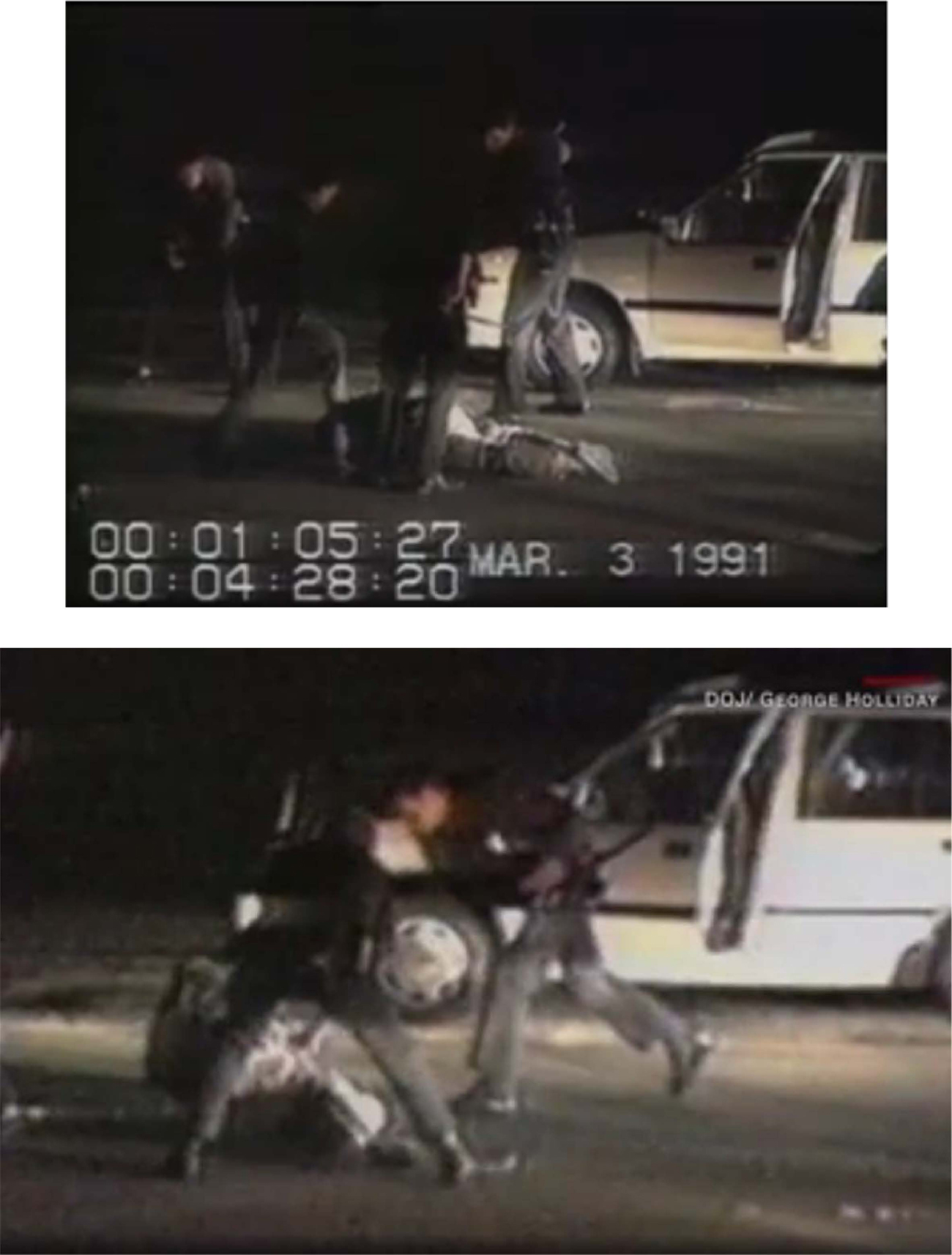
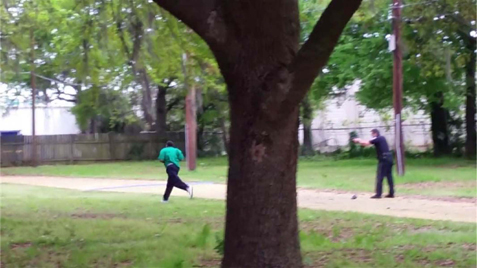
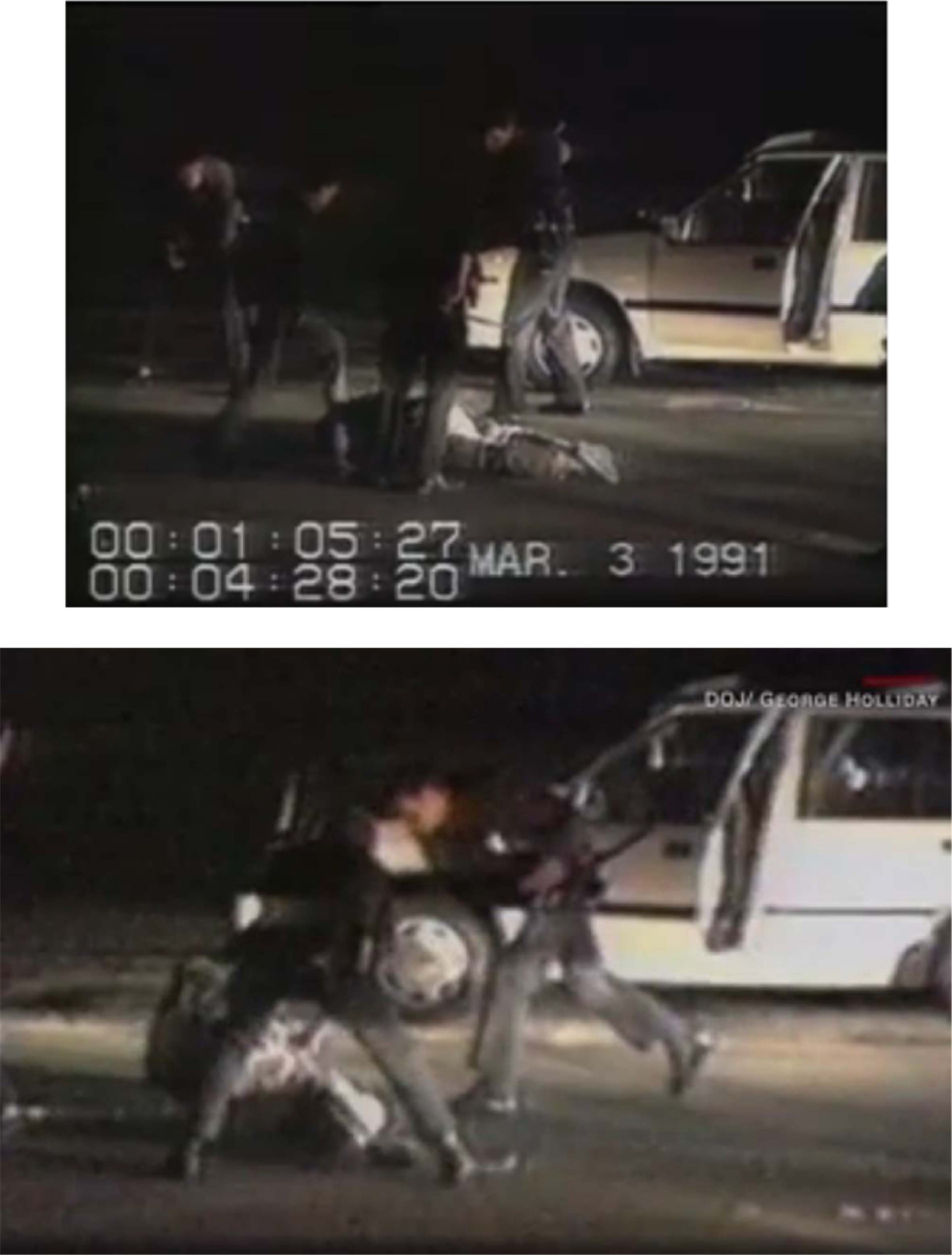
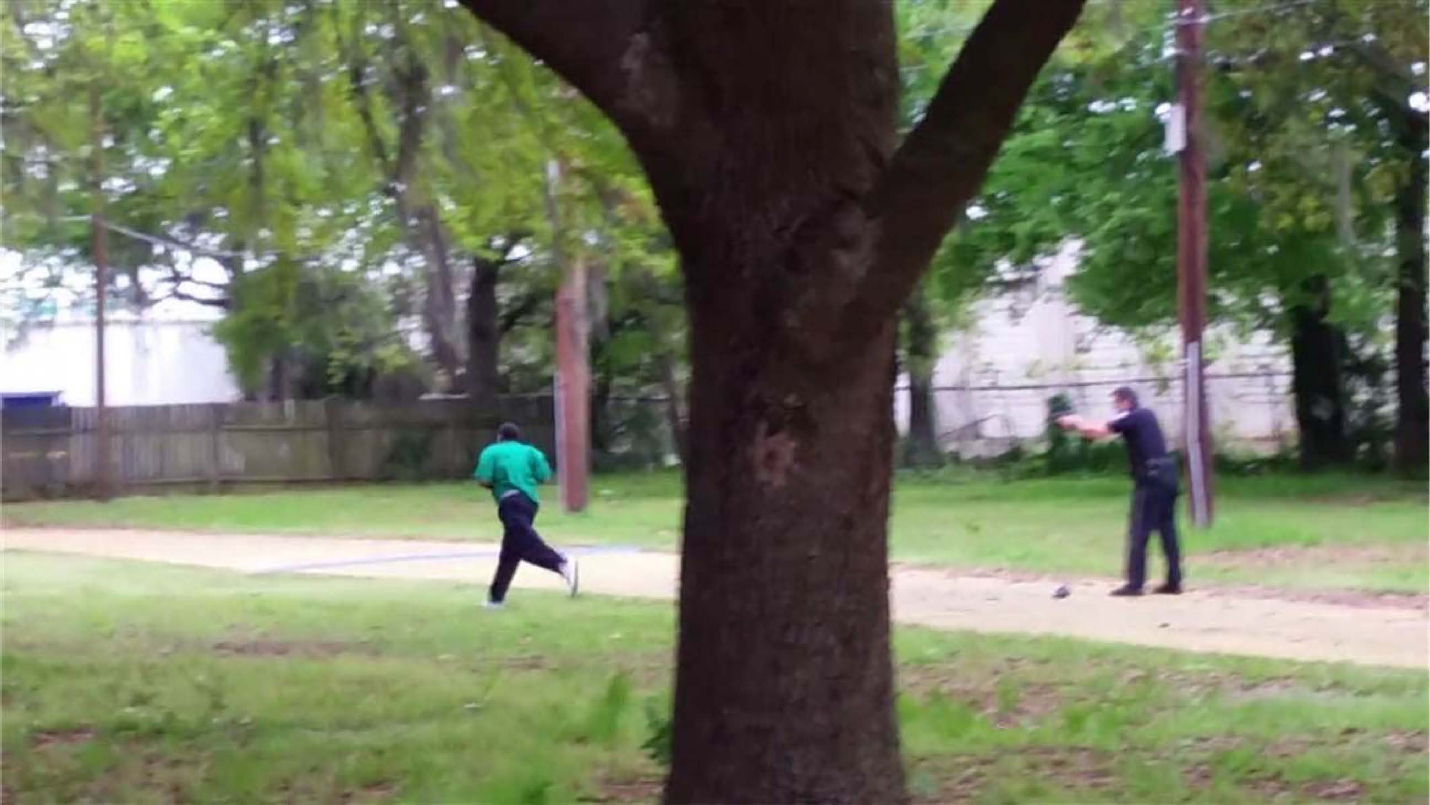
Put simply, an image does not speak for itself. Rather, it is mediated in preexisting organizational contexts—often an adversarial setting in which actors have vested interests in visual data being interpreted in a particular way. As Goodwin (Reference Goodwin1994, 606) notes, professionals (such as the police) use discursive practices to present events in legal domains. These practices create preferred narratives and anchor perceptions about what stories visual images tell and what conclusions they can be used as evidence to prove. Moreover, how one displays visual data can shape how they are interpreted, and visual data can be manipulated. This presentation and interpretation of visual evidence can significantly impact what formal decision makers (judges, juries, internal affairs staff, etc.) decide as well as how they justify their decisions. For example, presenting video evidence in slow motion replay systematically increases viewers' perceptions of premeditation and intentionality (Caruso, Burns, and Converse Reference Caruso, Burns and Converse2016). In the trial of the police officers who beat Rodney King, defense attorneys replayed the video footage in slow motion to make King's actions look like he may have been trying to stand up and resist arrest (Newton Reference Newton1993; Goodwin Reference Goodwin1994). Prosecutors, defenders, and public affairs officers use narration, sketches, and physical imitation to increase the likelihood that observers will see what they want them to see—and not see what they do not want them to see (Vertesi Reference Vertesi2015a, Reference Vertesi2015b) (see Figures 1 and 2).
Freeze Frames from Video Recorded by George Holliday of Los Angeles Police Department (LAPD) Officers Beating Rodney King in Los Angeles in 1991 (video available at https://www.cnn.com/videos/us/2017/04/28/rodney-king-la-riots-25th-anniversary-viral-tape-orig-nccorig.cnn) [Color figure can be viewed at wileyonlinelibrary.com]
Freeze Frame from Bystander Video of Officer Michael Slager Shooting Walter Scott on April 4, 2015, in North Charleston, South Carolina; the Video Was Instrumental in the Prosecution and Conviction of Slager for Second-Degree Murder and Obstruction of Justice. Source: https://www.nbcnews.com/storyline/walter-scott-shooting/walter-scott-shooting-michael-slager-ex-officer-sentenced-20-years-n825006. [Color figure can be viewed at wileyonlinelibrary.com]
Beyond manipulability and suggestibility, visual data can also be falsified or wholly misrepresented. For example, in 2016, hours after Islamic State attacks on a Brussels airport and station, individuals posted video footage to YouTube that they claimed documented the Brussels explosions. The videos were shared widely and reported by a national news site. However, the footage was not of the Brussels explosions; it was repurposed video from attacks in Moscow and Minsk in 2011 (Jackson Reference Jackson2016). These concerns are becoming more prevalent with the rise of “deep fakes”—artificially constructed, but seemingly authentic, images and videos (often pornographic) that believably impose one person's face on another's body (Chesney and Citron Reference Chesney and Citron2018). In the aftermath of revelations about the viral reach and possible impact of “fake news,” primarily as spread on online social media, commentators have expressed concerns that faked video content is becoming increasingly common and could become a significant problem for online vigilante “justice,” online harassment, and consumer protection (Brooks Reference Brooks2018).
Scholars have long suggested that there is something qualitatively different about visual evidence; there is a viscerality, a multifacetedness that can be more compelling than a verbal account of events. Courts appear to have adopted a similar view, according visual evidence substantial weight in litigation (Madison Reference Madison1984, 705), supporting the trope that “a picture is worth a thousand words” (Fadely Reference Fadely1990, 839). As Fadely (Reference Fadely1990, 839) explains: “Photographs have been used for over a century to … persuade a jury of one party's particular version of the facts” and, with the advent of film and video technology, these images create “a sense of realism and trustworthiness” that is hard to replicate in their absence.
Finally, a host of issues arise with the growing use of computer vision to interpret visual data. The explosion of digital images in everyday life—from security cameras, automatic license plate readers, satellites, cell phones, and more—is notable not merely because these machines create many more images; rather, as Paglen (Reference Paglen2016) notes, “[w]hat's truly revolutionary” about digital images “is the fact that they are fundamentally machine-readable”—circumventing the need for human vision to interpret or classify. When machines not only create but also see, they may serve to further concentrate power in the hands of the already powerful: through differentiating people and objects at much broader scale and with far greater granularity than a human could, and by subsequently operationalizing these profiles “to collect municipal fees, adjust insurance rates, conduct targeted advertising, prioritize police surveillance, and so on” (Paglen Reference Paglen2016). Facial recognition is a prime example of this dynamic: as a report from Georgetown Law's Center on Privacy and Technology recently revealed, half of US adults are in a law enforcement facial recognition network—and the collection and use of these data are largely unregulated at the state and local levels, with plenty of potential for inaccuracy and racial bias in this new, technologically facilitated “perpetual line-up” (Garvie, Bedoya, and Frankle Reference Garvie, Bedoya and Frankle2016).
Machine vision is often brought to bear when the scale of the data produced is large, and manual processing and analysis is time consuming and expensive; but as Aronson (Reference Aronson2018) describes, humans are required to extract information manually in conflict- and human-rights-related video, as human intermediaries must understand the legal and evidentiary requirements of advocacy and accountability efforts. Automation raises another set of normative questions. According to one recent study (Wang and Kosinski Reference Wang and Kosinski2018), artificial intelligence can identify a person's sexual orientation with great accuracy based solely on the analysis of photographic images of the person's face, demonstrating the potential that algorithms have to become more adept than humans at inferring personality traits and private aspects of people's lives (or, whether accurate or inaccurate, serving as the basis for decisions that could affect people's life chances significantly). Though the study drew both ethical and methodological critique (see, e.g., Bergstrom and West Reference Bergstrom and West2017), it illustrates a broader point: automated identification and processing of images creates a host of social and legal issues, regardless of whether its predictions are accurate (Aguera y Arcas, Mitchell, and Todorov Reference Aguera y Arcas, Mitchell and Todorov2017).
The Ethics of Viewing
Viral dissemination of visual data also calls into question the ethics of viewing. Even in cases where possessing an image is not a crime, we might consider it unethical to (purposefully) view certain types of images or video. In 2014, hundreds of nude photos of celebrities, primarily women, were leaked on 4chan (and subsequently distributed on Reddit and other sites) after being illicitly obtained by taking advantage of iCloud security vulnerabilities—an event colloquially known as “the Fappening.” Many public responses to the event, including by the involved celebrities themselves, implored people not to look at the images because doing so “perpetuate[s] a sexual offense” (Jennifer Lawrence's words, as reported in Vanity Fair, Reference Vanity2014)—while others justified the viewing because the subjects of the photos were famous, and by faulting them for inadequate data protection (Marwick Reference Marwick2017). Marwick (Reference Marwick2017) argues that the gendered nature of the privacy violation underlies this sense of entitlement to viewing these images. These same arguments have been in play for years, as exemplified by the recurring controversies around the posting of “creepshots”—sexualized, voyeuristic images of women—to online message boards like Reddit and 4chan, as well as the popularization of crowd-sourced online collections of demeaning or sexualized imagery captured from, for example, Google Street View images (Hargreaves Reference Hargreaves, Newell, Timan and Koops2018).
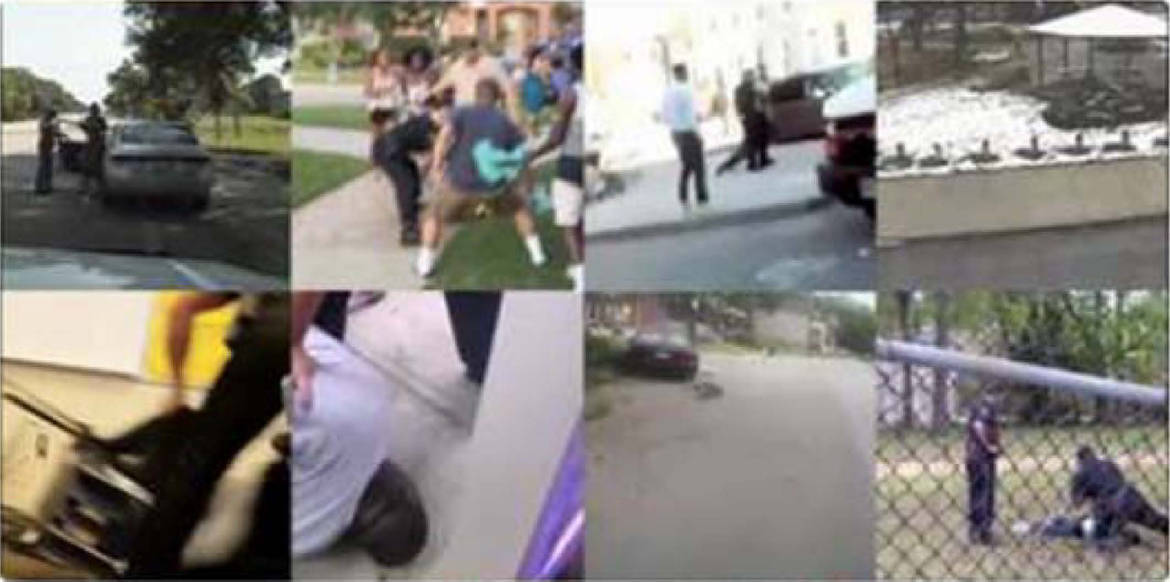
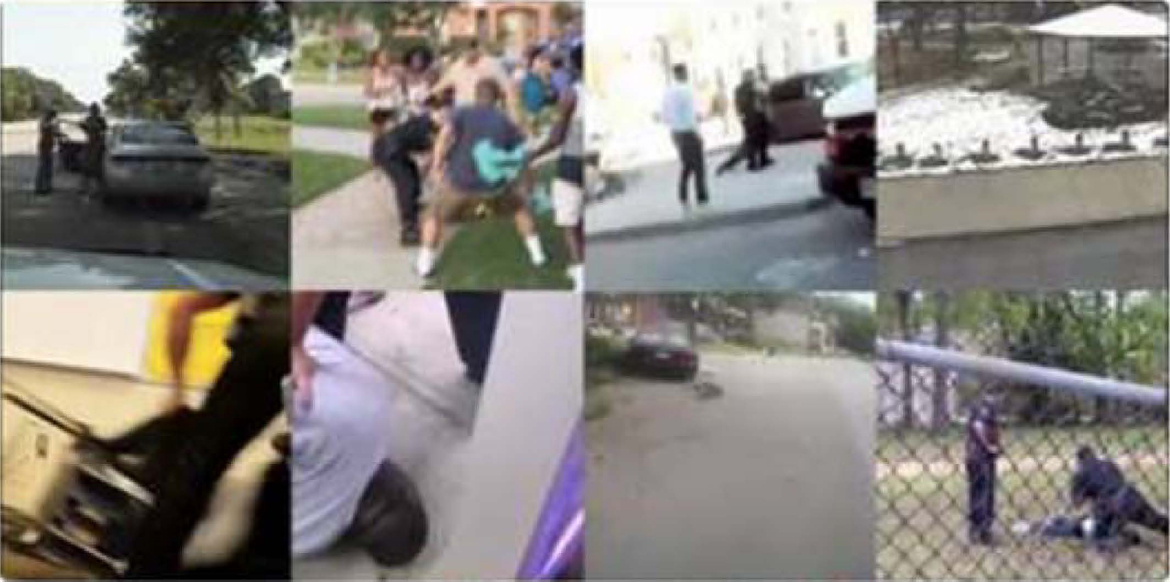
Related ethical questions are brought to the fore by video of police shootings of black men (see Figure 3). In some respects, such videos can serve important testimonial purposes that help the public understand, both intellectually and viscerally, the depth of the problem of police violence; we might even argue that the public has an ethical duty to view these disturbing videos. However, on the other hand, as Davis (Reference Davis2015) points out, violence can be titillating or perversely pleasurable to watch, comparing videos of police violence to pornography, public lynching, and snuff films. Though obviously newsworthy, these videos have the flavor of spectacle—and public voyeurism may be driven in part by the desire for monetizable clicks.
A New York Times Gallery of Videos of Police Violence Against Black People (https://www.nytimes.com/interactive/2017/08/19/us/police-videos-race.html). [Color figure can be viewed at wileyonlinelibrary.com]
Similar tensions arise around the deletion of, or restrictions on viewing, disturbing videos and images—particularly those depicting political violence. On one hand, these data are historical documents that can critically inform public opinion on issues like terrorism and gun violence; on the other, broadcasting sordid images may give desired attention to the criminals who create them. These debates have arisen following, for instance, the on-camera murders of two newscasters in Virginia (Thomas Reference Thomas2015) and the recorded beheading of US journalist James Foley by Islamist militants (National Public Radio 2014). More recently, the DC Circuit Court refused to unseal classified videos of the force-feeding of a Guantanamo Bay detainee, as requested by several intervening media outlets—in part, holding that the videos' potential to undermine national security overrode the public benefit to be derived from their exposure (Dhiab v. Trump 2017; also see Banchik Reference Banchik2018).
These decisions become even more complex when private platforms serve as de facto data repositories for politically consequential visual data, granting them immense private power over such data's use for political accountability. In 2016, Facebook censored the iconic image of a naked young girl fleeing napalm bombs in Vietnam, citing the site's community standards barring child nudity; the image was later restored based on its historical significance (Scott and Isaac Reference Scott and Isaac2016). In August 2017, YouTube's algorithmic content moderation system, in aiming to remove extremist propaganda from its site, inadvertently deleted thousands of videos documenting human rights atrocities in Syria—potentially jeopardizing war crimes prosecutions that might rely on those videos as evidence (Browne Reference Browne2017).
Just as the meaning of an image or video is never fixed, neither is the act of viewing it. Depending on the social frame through which it occurs, viewing may replicate or commodify injustice—or it may serve to expose corruption or misuse of power. On one hand, viewing violent or intimate images for voyeuristic or entertainment-related purposes, especially as these sorts of images become commonplace and easily accessible via online social media platforms, may also desensitize the viewer to the reality of the depicted violence, the significance of the intrusion into a person's privacy, or the serious forms of harassment or embarrassment that might result from the dissemination of these images. On the other, if some such images are inaccessible, the public may never fully understand the reality or importance of what the camera witnesses. In this complex reality, it is no wonder that policies governing content moderation and the nonconsensual public disclosure of visual images of others have become topics of contentious debate.
Conclusion
Across the range of socio-legal contexts in which the authors analyze the use of visual data, all the articles in this symposium share common analytic themes around how actors within legal institutions “see,” interpret, regulate, analyze, or share such data. Advancements in the technologies used to capture, analyze, and disseminate visual data far outpace legal responses to the digital landscape. Therefore, timely socio-legal work exploring and analyzing the connections between visual data and the law is of paramount importance. We hope the contributions to this symposium will push research in this area forward and spur additional attention to the topic by socio-legal scholars across a variety of jurisdictions and contexts of inquiry.