Implications
Perceptions of livestock effects on ecosystem services (ES) in grazing areas are shaped by specific knowledge and awareness of stakeholders, those impacts being viewed here as positive, especially for cultural services, which thus merit further characterization. In developing countries, increasing recognition of these ecosystem services by policy makers should become a priority to ensure that the value of ES provided by livestock is reflected in legislation and policies. In European countries, sustainability of ES provision should take into account insufficiency of income generation from livestock as it was viewed as a major challenge by survey respondents.
Introduction
The concept of ES can be defined as the benefits that people can obtain from ecosystems. It has been largely developed through the Millennium Ecosystem Assessment (2005). Humankind benefits from ES in a multitude of ways, from providing for its most basic needs, such as food, clean water and shelter, to the realization of its higher personal and collective aspirations (FAO, 2014). Over the last years, the awareness about ES has been increasing. In Europe, in particular, the establishment of common policies with agri-environment schemes and payments for ecosystem services since 1992 (Schomers and Matzdorf, Reference Schomers and Matzdorf2013; Bouwma et al., Reference Cardellino and Boyazoglu2017) may have framed specific awareness and perception towards the provision of ES.
Until recently, ES were differentiated into four different categories: provisioning ES (production of material and energy output), regulating ES (regulation of ecosystem processes such as climate regulation or flood prevention), supporting ES (various processes that are necessary for the production of all the other services, such as habitat provision or nutrient cycling) and cultural ES (recreational, aesthetic and spiritual benefits) (Swinton et al., Reference Swinton, Lupi, Robertson and Hamilton2007).
While the views of the different stakeholders from nature conservation and agricultural fields on agricultural and livestock practices often diverge, there is some convergence with regards to the fact that low input grazing systems may provide a large diversity of ES. Many studies (e.g. Rook et al., Reference Rook, Dumont, Isselstein, Osoro, WalliesDeVries, Parente and Mills2004; Carvalho and Batello, Reference Celaya, Jáuregui, Rosa García, Benavides, García and Osoro2009; Metera et al., Reference Metera, Sakowski, Słoniewski and Romanowicz2010; Bernués et al., Reference Bernués, Ruiz, Olaizola, Villalba and Casasús2011; Rodríguez-Ortega et al., Reference Rodríguez-Ortega, Oteros-Rozas, Ripoll-Bosch, Tichit, Martín-López and Bernués2014; Sabatier et al., Reference Sabatier, Durant, Hazard, Lauvie, Lécrivain, Magda, Martel, Roche, de Sainte Marie, Teillard and Tichit2015; Schieltz and Rubenstein, Reference Schieltz and Rubenstein2016; D’Ottavio et al., 2017) have reviewed the impacts, positive and negative, of pasture-based farming systems on different grassland landscapes. There is evidence that moderate grazing improves ES by increasing floristic and functional diversity, improving carbon balance and water infiltration rates, as well enhancing soil attributes (Carvalho and Batello, Reference Celaya, Jáuregui, Rosa García, Benavides, García and Osoro2009). In Europe, it has also been shown that species richness and landscape diversity were negatively affected by grazing abandonment, while grazing areas in general had great aesthetic values (Rodríguez-Ortega et al., Reference Rodríguez-Ortega, Oteros-Rozas, Ripoll-Bosch, Tichit, Martín-López and Bernués2014). Petz et al. (Reference Petz, Alkemade, Bakkenes, Schulp, van der Velde and Leemans2014) exploredthe multiple trade-offs and synergies between ES in rangelands as related to grazing intensity. Recently, D’Ottavio et al. (2017) concluded from their review that, in comparison with other ES, cultural services had been poorly studied despite their relevance for local and general stakeholders. Other authors (Lamarque et al., Reference Lamarque, Tappeiner, Turner, Steinbacher, Bardgett, Szukics, Schermer and Lavorel2011; Martín-López et al., Reference Martín-López, Iniesta-Arandia, García-Llorente, Palomo, Casado-Arzuaga, Del Amo and González2012; Oteros-Rozas et al., Reference Oteros-Rozas, Martín-López, González, Plieninger, López and Montes2014) have also highlighted differences in values and perceptions towards grassland ES according to stakeholders. Regarding the specific role of livestock species and breeds, several studies compared the impact of different livestock species (cattle, horse, sheep) and their combinations on different aspects of grassland biodiversity (i.e. species richness and vegetation structure) with varied results, grazing behaviour (foraging strategy and selectivity) and body size being important determinants of livestock impacts on grazing areas (Loucougaray et al., Reference Loucougaray, Bonis and Bouzille2004; Wallis De Vries et al., Reference Wallis De Vries, Parkinson, Dulphy, Sayer and Diana2007; Ford et al., Reference Fraser, Moorby, Vale and Evans2012; Fraser et al., Reference Garrido, Elbakidze and Angelstam2014; Nolte et al., Reference Nolte, Esselink, Smit and Bakker2014; Tóth et al., Reference Tóth, Deák, Valkó, Kelemen, Miglécz, Tóthmérész and Török2016). The role of animal genetic resources on the provision of other ES has been rarely investigated so far (Ovaska and Soini, Reference Ovaska and Soini2016), with the exception of the study by Ford et al. (Reference Fraser, Moorby, Vale and Evans2012), comparing ES provision in ungrazed, rabbit grazed and mixed-grazed (with rabbit, cattle and ponies) coastal grassland in United Kingdom. From our knowledge, however, no study has considered the perception of those ES at a global scale.
This study explores the perception of non-provisioning ES provided by livestock in grazing areas based on case studies provided by practitioners and scientists from European and non-European countries. It has been developed on the basis of a global survey on ES provided by livestock breeds and species in grazing systems. Our aim was to investigate (i) what are the perceived impacts of livestock on the provision of different ES in grazing systems, (ii) what are the interactions between these impacts perceived across ES and how different factors affect these perceptions, and (iii) what are the levels of ES recognition by the society, and what are the constraints and opportunities preventing or ensuring that ES are provided, differentiating between European countries and non-European ones.
Material and methods
Material
The data set was derived from a survey, undertaken in 2014, inviting case studies and supporting data and material on ES as provided by livestock in grazing systems. This survey has been designed based on a more qualitative pilot survey with 38 responses, undertaken in 2013 by the Food and Agriculture Organization of the United Nations (FAO), the European Federation of Animal Science’s Working Group on Animal Genetic Resources, Wageningen University and Research, and the University of Milan. Those qualitative results have not been included in the data set analysed here (FAO, 2014).
The global survey was structured in three parts, the first one providing general and contextual information on the case study, the second one assessing the impact of livestock on ES provision, and the last one dealing with the different forms of recognition by society, constraints and opportunities relative to the ES provided. For each set of questions, respondents were asked to provide comments or references (see Supplementary Material S1). The questionnaire was distributed via FAO’s Domestic Animal Diversity Network (DAD-net) and several contact lists of scientists and other experts working in grassland-related fields. Questionnaires were checked for completeness, and respondents were contacted in order to complete missing information.
For the purpose of the survey, respondents included a diversity of stakeholders that were categorized as researchers, government (mostly ministry officers), non-governmental organizations (NGOs) (including conservation trusts, environmental museums, etc.), breeding organization representatives or others (e.g. intergovernmental agencies, or respondents for which the role was not identified). More than half of the cases were provided by European countries (44 answers) and the remaining came from other continents (38 answers). For the analysis geographical regions were therefore grouped as European and non-European countries, taking into account existing regulatory framework regarding ecosystem services that is in place in most European countries. Species were subdivided between ruminants (cattle, buffalo, sheep and goat), other species (horse, pig and avian), and species associations in mixed-species grazing. Ecosystem types were subdivided into five categories, namely temperate grasslands, savannas and shrublands (e.g. meadow, steppe, heathland), montane grassland and shrublands (e.g. alpine and subalpine meadows), Mediterranean shrublands (e.g. matorral, maquis), tropical and subtropical grasslands, savannas and shrublands (e.g. cerrado, bushveld), and other ecosystem types, including either deserts and xeric shrublands, tundra, or flooded grasslands and savannas (e.g. wet meadow, salt marsh). The size of the grazing area attribute was grouped into three categories: less than 10 km2, 10 to 100 km2, and more than 100 km2. Four categories of land ownership were considered: private ownership, communal ownership, state ownership, and other ownership types. It was reported whether grazing areas were under some protected status following International Union for Conservation of Nature (IUCN) protected areas categories system (strict nature reserves, wilderness areas, national parks, natural monuments or features, protected landscapes, or protected area with sustainable use of natural resources) (IUCN, Reference Josse and Husson1994). Finally, respondents were asked to indicate whether the livestock breeds reported in the survey were historically present in the grazing area or had been introduced into the area specifically for the purpose of grazing management to provide one or more ES.
In the second part of the survey, respondents were asked to assess the impact of the described livestock population on the provision of ES in the grazing area, and to provide documented evidence if available. ES considered included either supporting ES (habitat provision, nutrient cycling, support of primary production, other), regulating ES (control of crop residues/eradication of weeds, climate/air quality regulation, erosion/avalanche control, bush encroachment/fire control, pest and disease regulation, water quality/cycling regulation, seed dispersal, other), or cultural ES (rural culture, historic and natural heritage, knowledge systems and educational values, landscape values, recreational values, spiritual and religious values, other). The answers on those 18 ES were scored on a scale from ‘very negative’ to ‘very positive’, with the added response options ‘neutral effect’ and ‘no data’. For the analysis, the responses were then transformed into a 5-point scale from −2 (very negative) to +2 (very positive) scale, ‘neutral’ answer being given the value of 0, and ‘no data’ being considered as if the answer was not available.
In the last part, the survey focused on the state of recognition of the ES among different stakeholders (other than the respondents themselves): first, whether there was any general recognition of the various roles of livestock, and; second, which stakeholders were the agents of such recognition (e.g. policy makers, land managers, livestock owners, or a group composed of civil society, consumers and general public). In two final sets of questions, the respondents were asked to select in two closed lists (determined based on the responses to the pilot survey) the most important barriers and constraints to the provision of ES by livestock populations (e.g. management not based on recognition of ecosystem services, lack of sufficient income generation from the livestock…), as well as the existing opportunities (e.g. ensuring recognition of ecosystem services among policy makers, financial support/economic incentives…) to recognize and stimulate the future delivery and utilization of ES (see Supplementary Material S1).
Statistical methods
Differences in answers according to the geographical origin of case studies (European or non-European countries) were assessed through χ 2 tests, considering either all categories (grouping categories with low number of answers), or one category v. the others.
To analyze factors affecting ES perception, the statistical analysis was conducted in three steps. (i) To impute missing data (35% of data), Iterative Principal Component Analysis was carried out to avoid bias related to variance reduction or distortion of correlations between variables (Josse and Husson, Reference Kompan, Klopčič and Martyniuk2013). (ii) To assess the effects of seven factors (stakeholder category, livestock species, time of livestock presence, type of ecosystem, size of the grazing area, land ownership, protection status of the grazing area) on the ES perception, a multivariate multiple regression analysis was undertaken (MANOVA), using the 18 ES as dependent variables, and removing sequentially factors with non-significant impact (P>0.05). (iii) Finally, a multivariate factorial analysis was undertaken on the 18 ES, by using the R MFA procedure (Becue-Bertaut and Pages, Reference Bernués, Rodríguez-Ortega, Ripoll-Bosch and Alfnes2008), with explanatory factors found previously significant (P<0.05) in MANOVA plotted as supplementary data.
Differences in recognition of ES, and in constraints and opportunities to provide ES, according to the geographical origin of case studies (European v. non-European countries) were assessed through χ 2 test.
Results
Characteristics of case studies
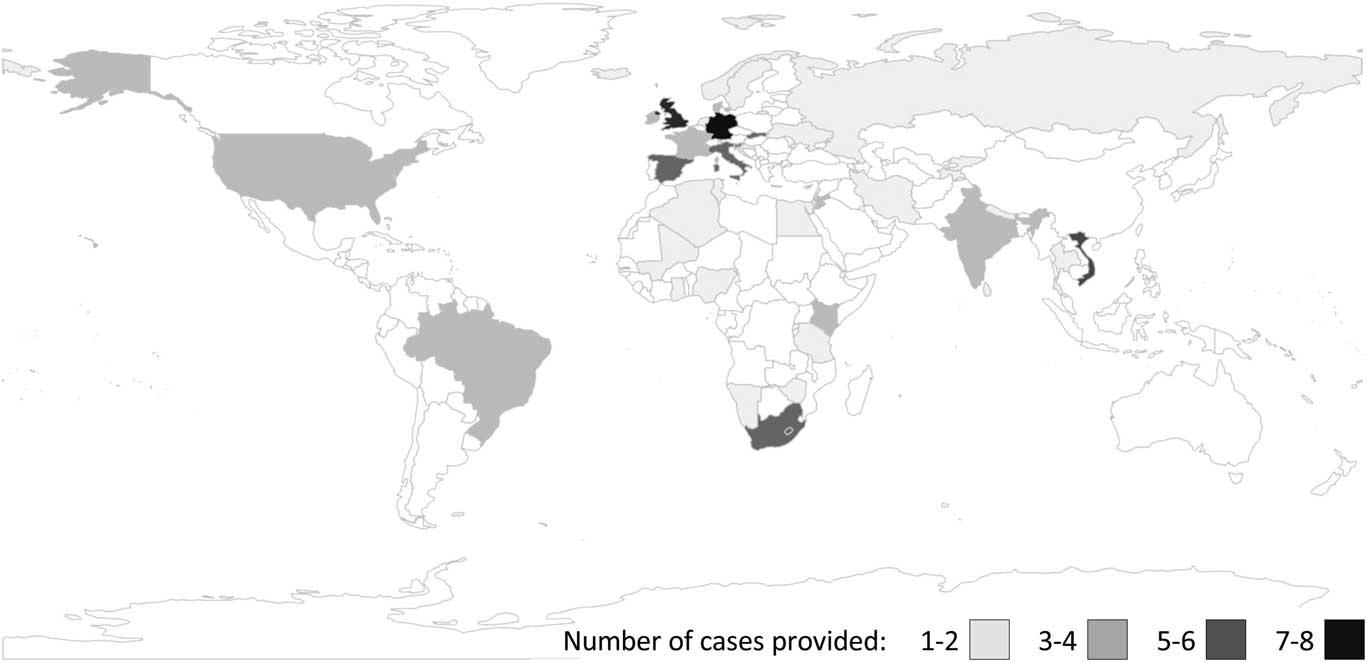
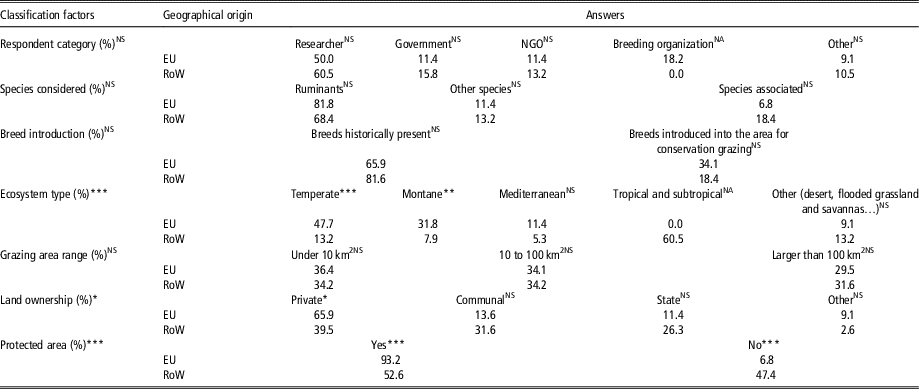
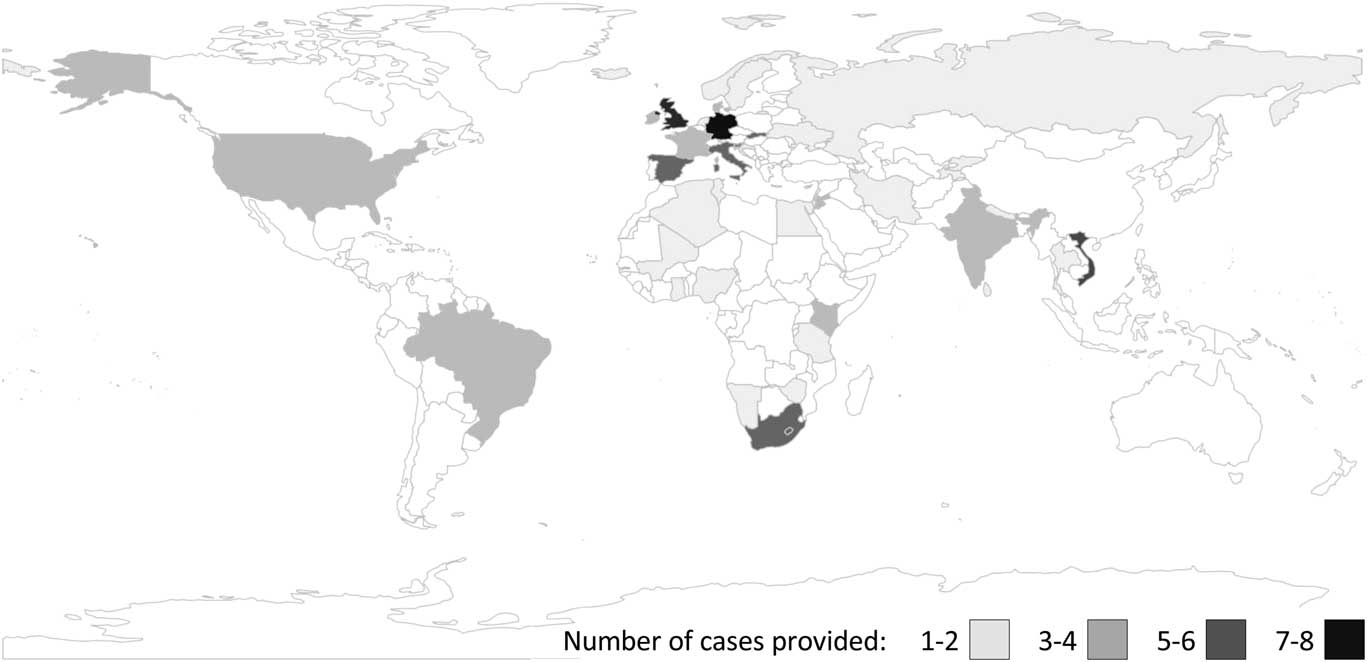
The surveys attracted 82 responses from 42 countries across all regions (53.7% from Europe and 46.3% outside of Europe) and covered all major grassland habitats. A total of 44 of the case studies were from Europe, 15 from Asia and the Pacific, 14 from Africa, four from near and Middle East, two from North and three from Latin America and the Caribbean (see Figure 1). Table 1 provides cases distribution across the different categories considered. A majority of cases were provided by researchers (54.9%) while other respondents included government officers (13.4% of cases), NGOs, including either development organizations, conservation trusts, environmental museums or nature parks (12.2%), and breeding organizations/breed associations (9.8%). When information on breeds used for grazing was provided, 45% of cases referred to the use of one or several local breeds, 37% to the use of transboundary breeds (including a few cases where international ones like Holstein or Angus cattle, or Angora goat were reported), while 18% of the cases either indicated use of various breeds, crossbred animals or did not provide information on breed type.
Countries of origin of the investigated case studies on ecosystem services provided by livestock.
Classification of the case studies on ecosystem services provided by livestock

EU=Europe; RoW=rest of the world; NGO=non-governmental organization; NA=not applicable (one empty cell); NS=non-significant.
Ruminants: cattle, buffalo, sheep and goat, Other species: horse, pig and avian, Species associated: species associations in mixed-species grazing.
*P<0.05, **P<0.01, ***P<0.001.
The reported cases showed a large diversity of examples in terms of environment and management. The majority (76%) of the 82 cases reported the use of a single ruminant species. 12.2% of cases reported mixed-species grazing involving ruminants, eventually in combination with other species (horses and donkeys), and the other cases (12.2%) involved either horses, pigs or avian species. In 73.2% of cases reported, livestock breeds have been historically present in the grazing area, whereas they were introduced recently to provide one or more ES in 26.8% of cases, with no significant differences revealed between European and non-European countries. Temperate grasslands found on most continents formed the larger proportion of responses (31.7%), in particular from Europe (47.7% v. 13.2% outside Europe). Respondents described the following ecosystems used as grazing areas: mountain grasslands (20.7%), tropical and subtropical grasslands (28%) and Mediterranean grasslands (8.5%) to a lesser extent (other ecosystem types: 11%). Note, however, that tropical and subtropical grasslands were only reported outside of Europe (60.5% of non-European case studies). Only a few responses covered other ecosystem types, such as flooded savannas and grasslands, as well as steppes and deserts (11% of case studies). A third (35.4%) of the 82 case studies reported a very limited grazing area, i.e. under 10 km2, while 34.1% and 30.5% of grazing areas were between 10 and 100 km2 or larger than 100 km2, respectively. Land ownership was mostly private (53.7%) and communal (22%), followed by state-owned land (18.3%), with a larger proportion of private ownership in European countries (65.9%). Finally, 74.4% of respondents mentioned that livestock grazing took place in protected areas (93.2% in Europe v. 52.6% in non-European countries). Those included a wide diversity of categories of protected areas, including strict nature reserves (four cases), wilderness areas (five cases), national parks (11 cases), natural monuments or features (two cases), habitat/species management areas (11 cases), protected landscapes (15 cases), or protected areas with sustainable use of natural resources (13 cases).
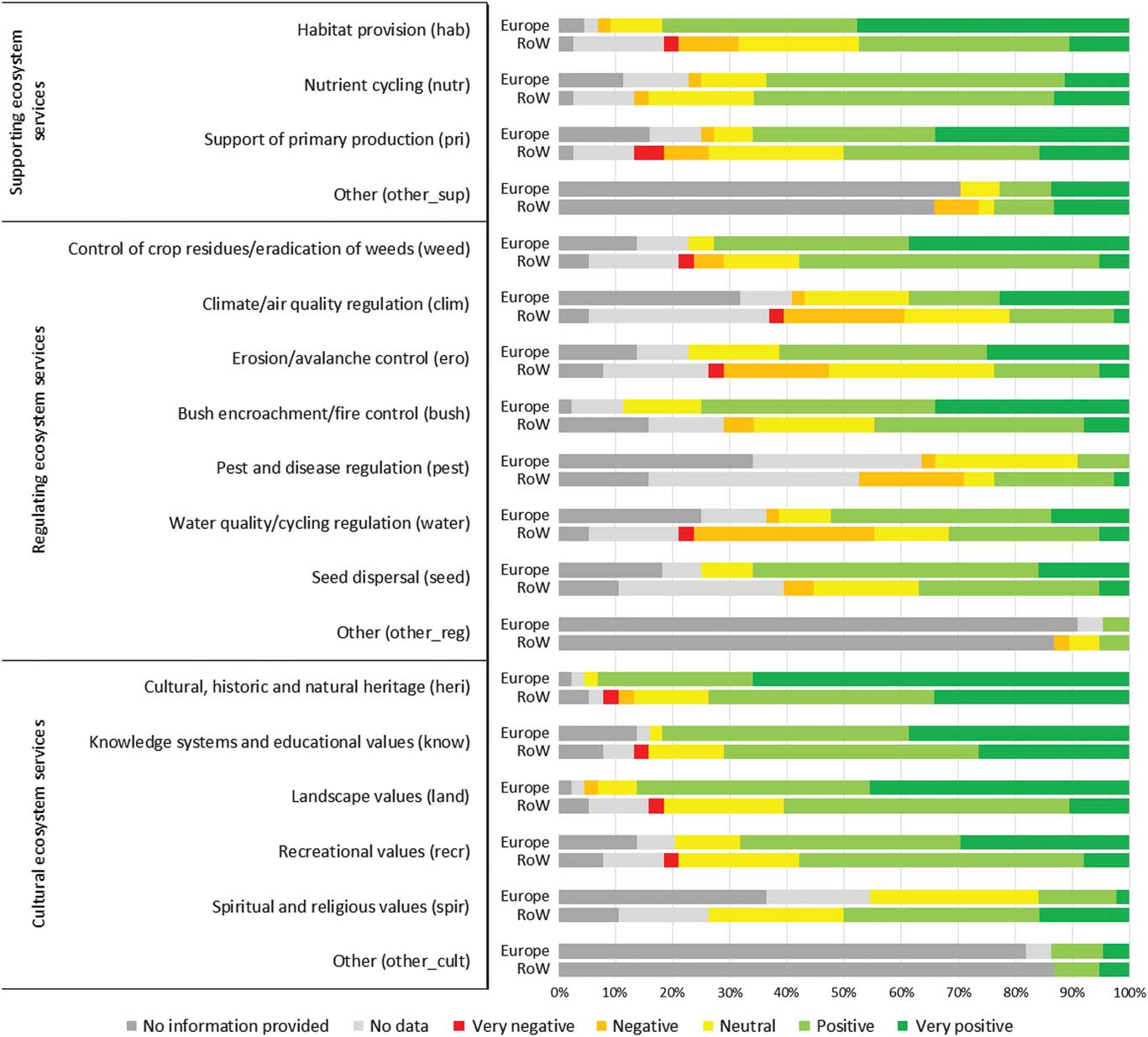
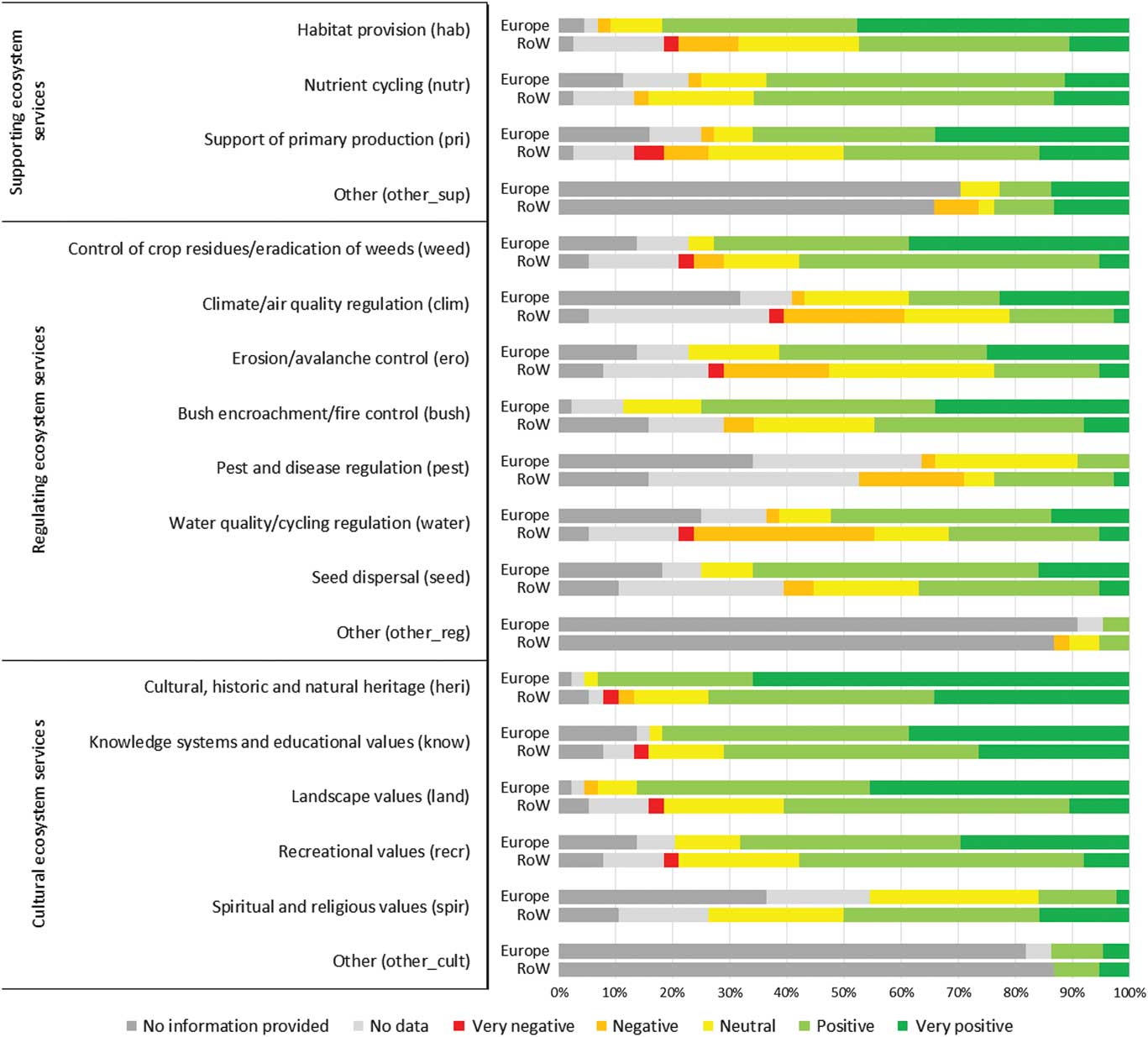
Figure 2 provides information on the extent of perceived livestock impacts on supporting, regulating, and cultural ES given in the 82 cases analysed. Overall, the different impacts reported were perceived as much more positive than negative. A large majority of respondents reported either positive or very positive impacts for habitat provision (66%), and nutrient cycling (65%) for supporting ES, control of crop residues/eradication of weeds (61%), bush encroachment/fire control (66%) for regulating ES, and cultural, historic and natural heritage (84%), knowledge systems and educational values (77%), landscape values (74%) and recreational values (63%) for cultural ES. Depending on the ES, between 0% (spiritual and religious values, other) and 17% (water quality/cycling regulation) of respondents reported negative or very negative impact. In a large proportion of cases, however (between 7% and 59% according to ES, the categories ‘other’ being not included), respondents did not provide answers or indicated that no data was available on the impact of a given ES (Figure 2). They often reported as comments ‘a lack of scientific evidence’ relative to the ES provided.
Impacts of livestock on ecosystem services reported by respondents.
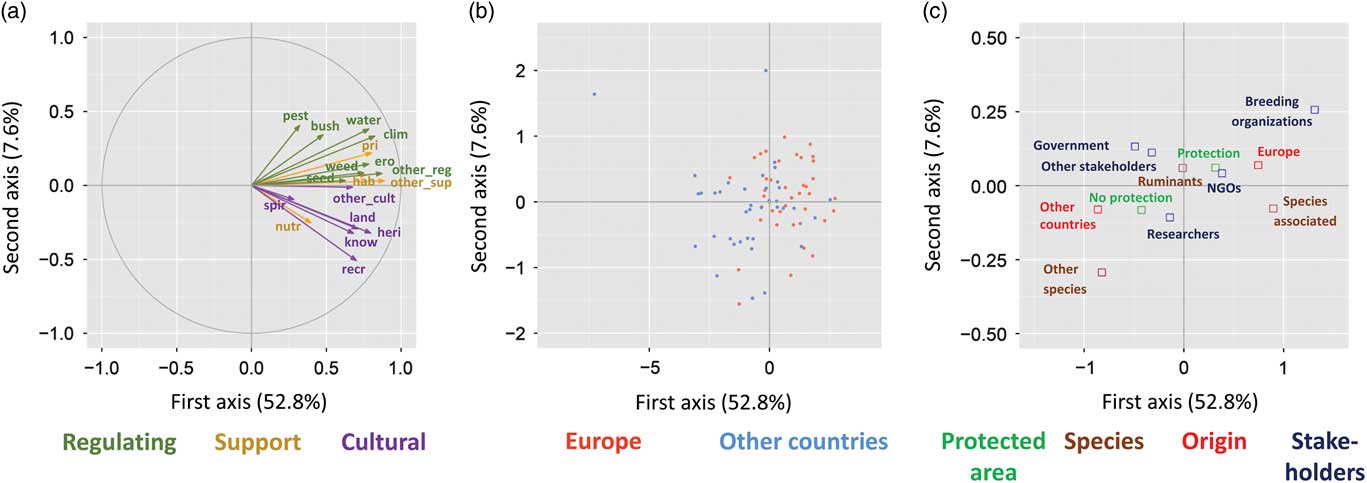
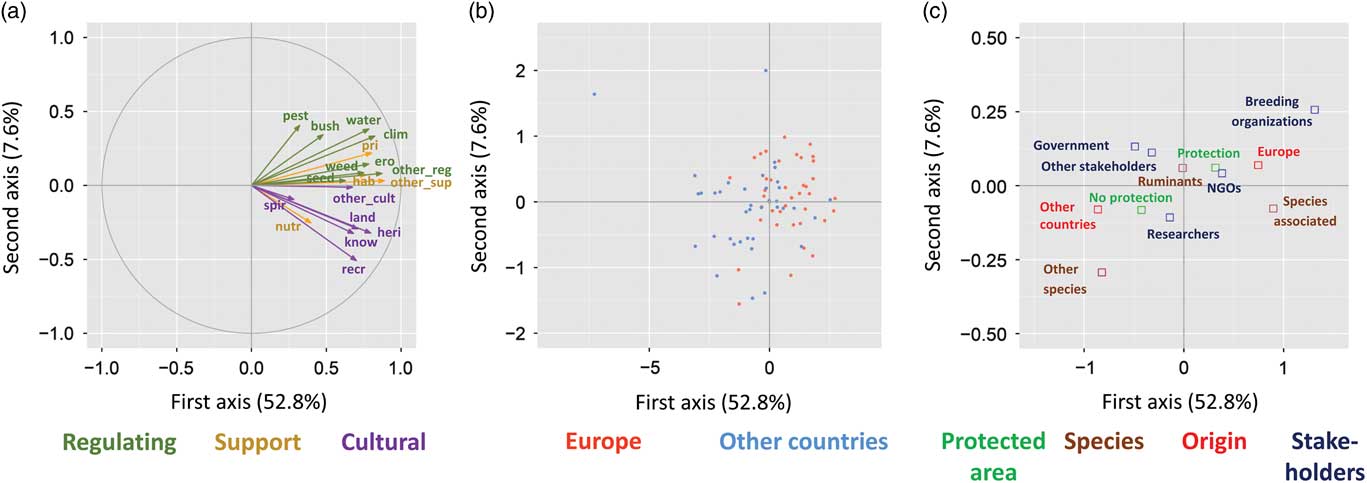
In the multivariate regression analysis, geographic origin (P<0.001), species category (P<0.01), stakeholder category (P<0.01), and protection status (P<0.05) appeared to have significant effects on the 18 ES-related variables. The impacts of grazing on the different ES were positively correlated, with an average correlation around 44% (SD=18%). It appears, however, that the correlation was significantly higher (P=0.005) within regulating ES (50.5%) than between regulating ES and cultural ones (39.1%), which showed the lowest correlations. When implementing the multiple factorial analysis, the majority of inertia (52.8%) could be explained by the first principal component (first axis of Figure 3). The first axis was positively correlated to all ES considered. Correlations varied from a minimum value of 0.28 (spiritual and religious values, spir) to a maximum of 0.89 (other supporting ES, other_sup). Particularly high correlations were also observed for other regulatory ES (other_reg), climate/air quality regulation (clim) and support of primary production (pri) (0.87, 0.82 and 0.80, respectively) (Figure 3a). By contrast, 2nd and 3rd axes explained only 7.6% and 6.5% of inertia. As reported in Figure 3c, impacts on ES were reported as more positive in Europe, one outlier case study in Algeria reporting especially negative impact of livestock ES, in relation to the replacement of Hamra sheep by Ouled Djellal breed, involving significant damage on local ecosystem as well as radical changes in cultural breeding practices. Other than that, impacts on ES were reported as more positive in protected areas, while respondents from breeding organizations and NGOs also appeared to report more positive impacts on ES, compared with other stakeholders (Figure 3c). Case studies with mixed-species grazing reported more positive impacts on ES, especially when compared with non-ruminant species grazing.
Projection of variables, case studies and explanatory factors on the two first axis of the multiple factorial analysis based on the impacts of livestock on ecosystem services reported. (a) Correlation circle of the ecosystem services as quantitative variables; (b) plotting of the 82 case studies analysed; (c) plotting of the four explanatory factors, namely the area protection status, the species groups and the geographical origin.
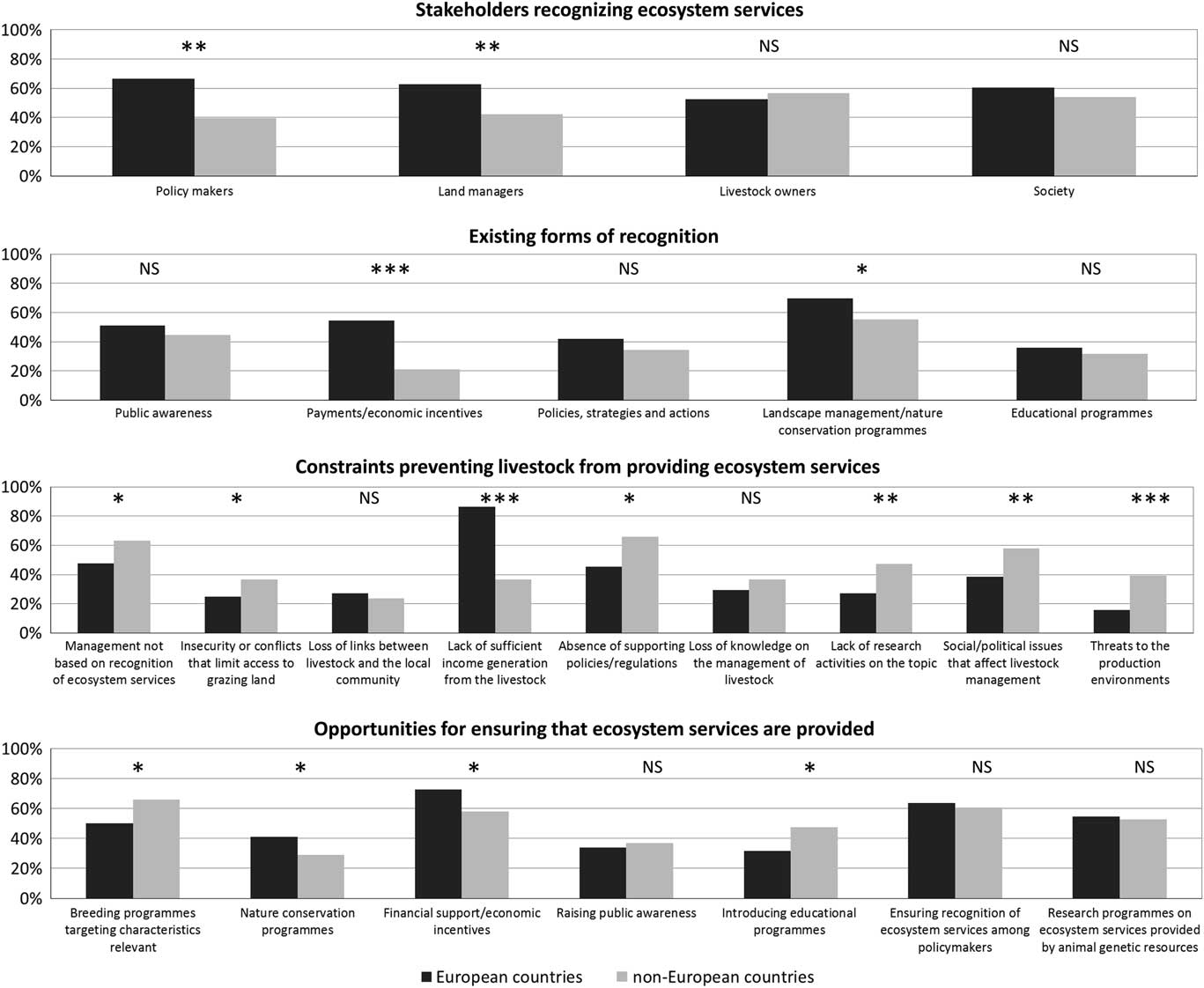
A significantly larger proportion (P<0.01) of respondents reported recognition of ES by society (Figure 4) provided by the grazing livestock population in European countries (40.9%) compared with non-European countries (23.7%). Among other answers, 50% of respondents in European and 50% in non-European countries reported that there was only some level of recognition of those services, and 9.1% and 26.3% indicated no recognition at all, respectively. Respondents from European countries indicated more frequently that ES were recognized by policy makers (66.7% v. 39.5% in non-European countries, P<0.001) and by land managers (62.8% v. 42.1% in non-European countries, P<0.01). By contrast, no regionally significant difference was found regarding the recognition of the ES by livestock owners and civil society (54.4% and 57.5% of overall respondents indicated such recognition, respectively).
Proportion of respondents indicating recognition or existence of constraints and opportunities relative to ecosystem services provided by livestock. *P<0.05, **P<0.01, ***P<0.001. NS=non-significant.
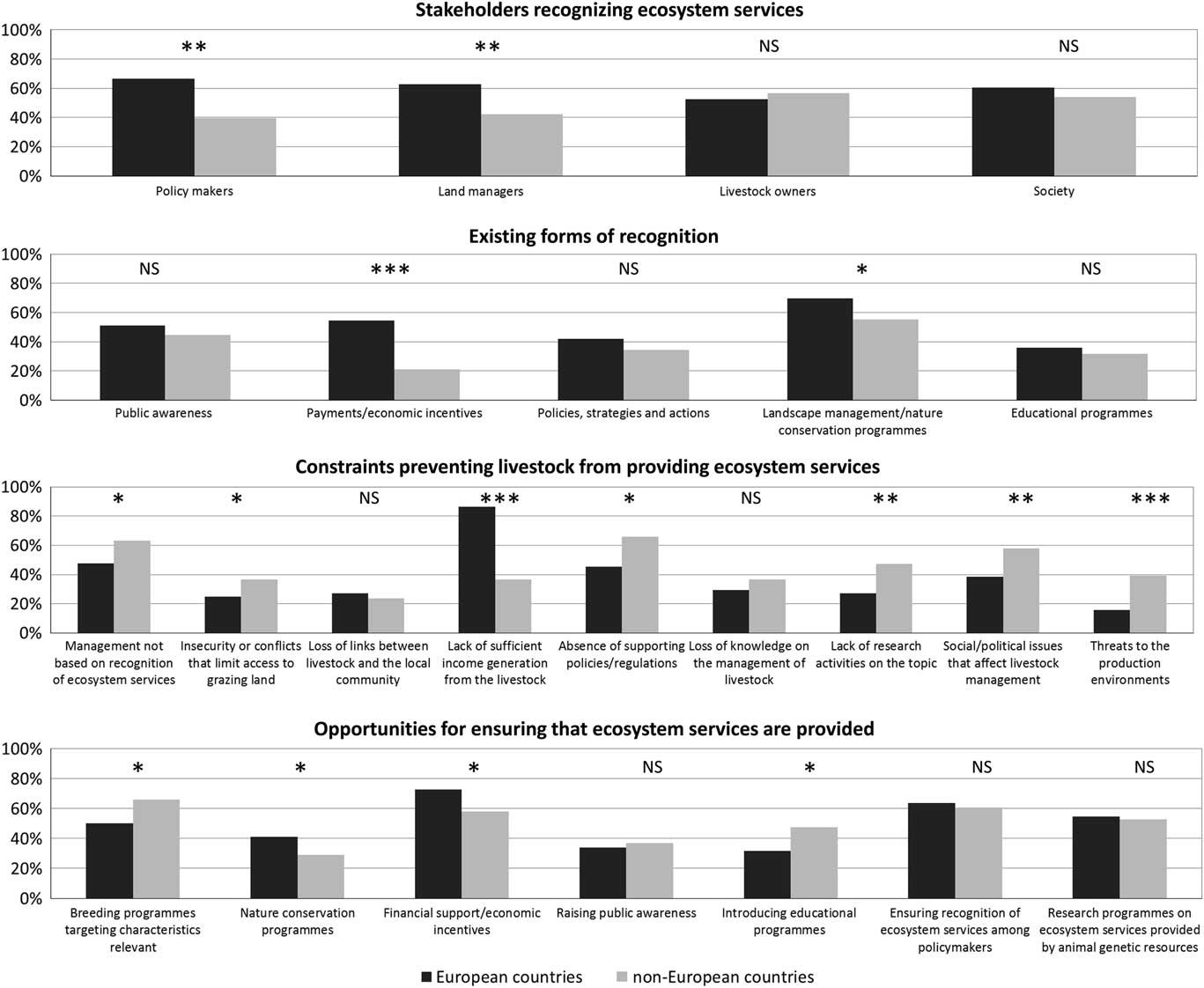
A larger proportion of cases in European countries reported payments/economic incentives based on ES as a form of recognition (54.5% v. 21.1%, in European and non-European countries, P<0.0001) and landscape management/nature conservation programmes based on the recognition of the ES (69.8% v. 55.3%, respectively, P<0.05). No significant differences between EU and non-EU countries were found for public awareness about the role of livestock population (51.2% v. 44.7%), policies, strategies and actions that support the role of the livestock population (41.9% v. 34.2%), and educational programmes (35.7% v. 31.6%).
Among the constraints preventing the livestock population from providing ES in the grazing area in the future, the lack of sufficient income from the livestock was most frequently reported, (86.4% v. 36.8% by European and non-European respondents, P<0.0001) followed by the absence of supporting policies/regulations (45.5% v. 65.8% by European and non-European respondents, P<0.01), the fact that livestock management was not based on the recognition of ES (47.7% v. 63.2% by European and non-European respondents, P<0.05), and social/political issues that affect livestock management ES (38.6% v. 57.9% by European and non-European respondents, P<0.01). Non-European respondents reported also more frequently the lack of research activities as constraints (47.4% v. 27.3%, P<0.01), the threats to production environment (39.5% v. 15.9%, P<0.001), and insecurity and conflicts (36.8% v. 25%, P<0.05). In terms of opportunities for ensuring that ES are provided, financial support/economic incentives were most frequently reported (72.7% v. 57.9% by European and non-European respondents, P<0.05), followed by ensuring recognition of ES among policy makers (62.2%, no significant difference), breeding programmes targeting characteristics relevant to the provision of ES (50% v. 65.8% by European and non-European respondents, P<0.05), and research programmes on ES provided by animal genetic resources (53.7%, no significant difference).
Discussion
The aim of this study was to investigate, based on case studies provided, how stakeholders perceive the role of livestock in the provision of different ES in grasslands in Europe and outside Europe, considering also constraints and opportunities for the recognition and provision of those ES. Although most of received cases were related to protected areas and/or limited size of the area (less than 100 km2), the 82 cases represented a diversity of geographic origin, ecosystem types and livestock species, with respondents representing researchers and practitioners from public and private sectors.
Perception of livestock impacts on ecosystem services
Given the anthropocentric nature of the ES framework (D’Ottavio et al., 2017), stakeholder perception on ES provision requires to be considered and assessed, especially in relation to identification, recognition and valuation of ES. In this study, the extent of assessed impacts was found to be generally positive.
While supporting and regulating ES were perceived to be positive, cultural ES were found to be the most valued by the respondents. This result is most interesting as in comparison with other ES, cultural ones have been particularly poorly studied (Haida et al., Reference Hiernaux, Bielders, Valentin, Bationo and Fernández-Rivera2016; D’Ottavio et al., 2017), even if public generally recognized those as among the most important services provided in grazing areas (Bernués et al., Reference Bouwma, Schleyer, Primmer, Winkler, Berry, Young, Carmen, Spulerova, Bezak and Vadineanu2014; Garrido et al., Reference Garrido, Elbakidze, Angelstam, Plieninger, Pulido and Moreno2017a and Reference Guimet, Giroud, Guet, Jardin, Peppin and Bornard2017b). Regarding livestock breed and species more specifically, Marsoner et al. (Reference Marsoner, Vigl, Manck, Jaritz, Tappeiner and Tasser2017) suggested that, given the variety of cultural non-material benefits obtained from local livestock breeds, the diversity of livestock breeds within a given region could be considered as an indicator for cultural ecosystem services. Here the impact of livestock in terms of cultural, historic and natural heritage was generally perceived as positive (84% of respondents, several of them providing comments on the importance of livestock for local culture, lifestyle and livestock keepers’ prestige). For instance, one respondent noted that in Kenya the Kalemjin pastoralist tribes measure their wealth in number of cows, which are also used in traditional cultural celebrations, while in Slovenian national park in Bela Krajina region its managers were reported to revive the traditional knowledge in wool production from the local sheep breed.
The results of the PCA analysis showed a global positive correlation between impacts perceived from the different kinds of ES, which can be linked to the multiple synergies reported between ES in livestock farming systems (Bernués et al., Reference Bernués, Ruiz, Olaizola, Villalba and Casasús2011; Rodríguez-Ortega et al., Reference Rodríguez-Ortega, Oteros-Rozas, Ripoll-Bosch, Tichit, Martín-López and Bernués2014). Trade-offs may also exist, most of them occurring between non-provisioning and provisioning ES as suggested by Martín-López et al. (Reference Martín-López, Iniesta-Arandia, García-Llorente, Palomo, Casado-Arzuaga, Del Amo and González2012). However, our study did not consider provisioning ES. Multiple studies have identified grazing intensity as one of the major factors of ES provision (Ford et al., Reference Fraser, Moorby, Vale and Evans2012; Petz et al., Reference Petz, Alkemade, Bakkenes, Schulp, van der Velde and Leemans2014; Rodríguez-Ortega et al., Reference Rodríguez-Ortega, Oteros-Rozas, Ripoll-Bosch, Tichit, Martín-López and Bernués2014), often driving the trade-offs between provisioning and non-provisioning ES. In our surveys, several respondents indicated that the positive impact of livestock grazing on shrub growth dynamics also increased the environmental and recreational value of the grazing area. In the case studies analysed, information on stocking rate was provided only for a limited number of cases (13 cases), with stocking rates ranging from less than 0.02 to more than 2 Livestock Tropical Unit (TLU) per ha, stocking rates higher than 1 TLU/ha reported being all from Europe.
This survey reflects the nature of respondents’ perception of the provided ES. Understanding the perceptions between different stakeholders with different roles and interests is important when designing environmental policies aiming at promoting multifunctionality (Bernués et al., Reference Bouwma, Schleyer, Primmer, Winkler, Berry, Young, Carmen, Spulerova, Bezak and Vadineanu2014). This is especially true for NGOs, private actors and research institutes which may have an important role in influencing agricultural policy making (Carnol et al., Reference Carvalho and Batello2014). Stakeholder perception can be related to local knowledge (localized, experiential or indigenous knowledge), scientific knowledge (explicit knowledge that has been derived from applying more formal methods) (Raymond et al., Reference Raymond, Fazey, Reed, Stringer, Robinson and Evely2010), as well as the level of involvement in management of local environment and resources (Lamarque et al., Reference Lamarque, Tappeiner, Turner, Steinbacher, Bardgett, Szukics, Schermer and Lavorel2011). In the study of Carnol et al. (Reference Carvalho and Batello2014) on ES linked with forestry in Belgium, practitioners and scientists showed the difference in perception of importance of various ES. Similarly, in a study on grassland ecosystem services in three European mountain regions, Lamarque et al. (Reference Lamarque, Tappeiner, Turner, Steinbacher, Bardgett, Szukics, Schermer and Lavorel2011) showed differences in objectives and concerns between regional experts and farmers, fostering divergent priorities for ES. By contrast, Haida et al. (Reference Hiernaux, Bielders, Valentin, Bationo and Fernández-Rivera2016) found that importance of ES in European mountain areas was not influenced by region of origin or background of experts. In our survey, stakeholders from breeding organizations and to a lesser extent from NGOs (i.e. practitioners) reported more positive impacts of livestock on ES than researchers or stakeholders from government organizations. It is difficult to draw strong conclusions from these results, we may, however, hypothesize that researcher’s perceptions are more shaped by formal scientific knowledge (see below) and are therefore more critical than practitioners. Similarly, the common regulatory framework that exists in Europe since 25 years may have shaped to some extent the awareness and perception towards ES, explaining the more positive impacts reported in European cases than in non-EU cases.
One may argue to what extent the assessed impacts of livestock on ES reported in this survey differ from actual outcomes. Carnol et al. (Reference Carvalho and Batello2014) showed that both practitioners’ and scientists’ perceptions of ecosystem services in mixed-species forest stands in Belgium differed to some extent from formal scientific findings. In our study, respondents were asked to indicate if documentation existed on the impact of livestock grazing on ES provision. In multiple cases, respondents indicated that reported ES impacts had been documented, either through scientific papers, projects or farmer interviews. Direct observations were also reported by respondents, for instance in terms of bush encroachment following the decrease of grazing activities. This is consistent with literature indicating that positive impacts of livestock on ES have become apparent only once grazing has diminished or disappeared within the areas (Verrier and Bresson, Reference Verrier and Bresson1995; Lasanta et al., Reference Lasanta, Gonzalez-Hidalgo, Vicente-Serrano and Sferia2006; Fontana et al., Reference Ford, Garbutt, Jones and Jones2014). As our survey invited respondents to provide case studies of ES provided by specific livestock population, impacts reported were expected to be positive, relative to the actual outcomes. For instance, a large majority (65%) of respondents reported either positive or very positive impacts of livestock on nutrient cycling, compared with those reporting negative or very negative impacts (4%). This contrasts with the much variable results of studies having measured the actual impact of grazing on nutrient cycling, those impacts depending largely on soil and plant properties, as well as grazing practices (see for instance Hiernaux et al., 1999; Ford et al., Reference Fraser, Moorby, Vale and Evans2012). Disservices were reported only in a small number of cases. For instance, a case from South Africa reported free roaming feral horses as a cause of trampling in wetlands and streams (negative impact on erosion), as well as spreading exotic weeds (negative impact on seed dispersal).
As the survey was sent to experts and organizations, the views of livestock keepers were not directly reflected. In any future survey, the attitude and perception of farmers towards ES need to be taken into account, as they are the main providers and beneficiaries of those ES, their attitude being often determinant for the success of ES policies (Chen et al., Reference D’Hour, Hauwuy, Coulon and Garel2017).
In this study, respondents reported a significant effect of species or species combination on the extent of ES provided. As our surveys focused on grasslands, it was not surprising that a large majority of cases (75.6%) involved ruminant species (cattle, sheep, goat and buffalo). When providing details on livestock breed, the use of local or landrace breeds was frequently reported, and many respondents highlighted breeds’ adaptation to the local environment. Some experimental studies in Europe assessing the impact livestock practice on grassland biodiversity, found no clear effect of breed on faunal and botanical diversity (Rook et al., Reference Rook, Dumont, Isselstein, Osoro, WalliesDeVries, Parente and Mills2004; Dumont et al., Reference D’Ottavio, Francioni, Trozzo, Sedić, Budimir, Avanzolini, Trombetta, Porqueddu, Santilocchi and Toderi2007; Wallis De Vries et al., Reference Wallis De Vries, Parkinson, Dulphy, Sayer and Diana2007), except in one case studies in Spain where local Celtiberic goat breed appeared to be more efficient in reducing cover of shrubs in comparison to the commercial Cashmere breed (Celaya et al., Reference Chen, Zhang, Liu and Yu2010). There is, however, some scientific evidence showing the specific abilities of those breeds, for instance their walking ability (D’Hour et al., Reference Dumont, Rook, Coran and Röver1994; Bailey et al., Reference Becue-Bertaut and Pages2001) or their ability to ingest and digest forages of low value (Guimet et al., Reference Haida, Rüdisser and Tappeiner1969), for example on high altitude pasture of the Northern French Alps. In our study, it appears, however, that exotic crossbred or international transboundary breeds (Holstein, Simmental or Angus cattle, Saanen goat) were also used in some cases, showing that the provision of ES is not exclusive to local breeds. In a recent publication, Ovaska and Soini (Reference Ovaska and Soini2016) showed that Finnish stakeholders viewed ES provided by local breeds as similar to other livestock, with some emphasis on cultural ES provided by local breeds; 12.2% of the case studies involved several species in the grazing activity, mostly ruminants. When different species (or, to a lesser extent, several ruminant species) were present in the grazing area, respondents reported impacts on ES to be more positive than for single species (Figure 3). Several studies noted the positive impacts of mixed-species grazing (Celaya et al., Reference Celaya, Martínez and Osoro2007; Fraser et al., Reference Garrido, Elbakidze and Angelstam2014). Sabatier et al. (Reference Sabatier, Durant, Hazard, Lauvie, Lécrivain, Magda, Martel, Roche, de Sainte Marie, Teillard and Tichit2015) suggested that multi-species grazing favours complementarity in resource use and improves the overall use of plant communities, strengthens resilience to economic perturbations, and reduces animal parasitism. In that regard, impacts of multi-species grazing perceived in this survey seem to reflect actual outcome in terms of ES provision although the responses did not provide details on how the species mix in the grazing areas.
The most discriminating factor in terms of the impact of ES was the geographic origin of the cases. Cases from Europe were in general less negative in their assessment of livestock roles, especially when considering regulating ES: 1% of answers were either very negative or negative in cases from European countries, while this proportion reached 10% in non-European countries. It can be discussed whether this difference is due to differences in quantification and perception of ES between European and non-European countries, or better management of eventual negative externalities in Europe. To a lesser extent, respondents reported more positive impacts of livestock on ES in protected compared with non-protected areas. At first, this result may seem a bit counterintuitive, in the sense that livestock grazing is often excluded in strictly protected areas considering its potential impacts on wildlife biodiversity. The impact of livestock on ES, actual and perceived, may differ according to the IUCN protection category area. For instance, managers may be more focused on wildlife preservation in wilderness areas while the governance and institutional context may differ. It may be hypothesized that the cases provided in our study originate from protected areas where livestock are kept because their positive impacts on ES are well known. Literature shows that the relationship between grazing and wildlife biodiversity is complex and that species adapted to open habitats are often positively affected by livestock grazing (Schieltz and Rubenstein, Reference Schieltz and Rubenstein2016).
Besides the geographic origin, species and protected area status, no factor (ecosystem type, grazing area range, land ownership…) was found to have a significant effect on the global impact of livestock on ES, as perceived by the different stakeholders. This result is in contrast with the study by Harrison et al. (2010) on European ecosystems which showed, for instance, that intensively managed ecosystems contributed (e.g. agro-ecosystems provide food via crops and livestock) mostly to vital provisioning services, while semi-natural ecosystems such as grasslands and mountains were key contributors of genetic resources and cultural services.
Recognition, constraints and opportunities for ecosystem services provision
In addition to the more positive assessment of impacts of livestock and breeds on ES reported in Europe, it is interesting to note that those cases also reported a better recognition of ES than non-European countries. This difference in the recognition of ES appears to be connected to the inclusion of ES within the wider political, legislative and administrative framework stated above; a much larger proportion of respondents from European than non-European countries reported recognition of ES by policy makers (66.7% v. 39.5%) and land managers (62.8% v. 42.1%). In terms of the form of recognition, if the proportion of answers indicating existing forms of recognition was always equivalent or larger between European and non-European respondents (Figure 4), the main and the largest difference would be related to the existence of payments or economic incentives (54.5% and 21.1% in European and non-European countries), which is in agreement with their inclusion in legislative frameworks. Indeed, several European cases referred to the European Union (Council Regulation (EC) No 1698/2005 on support for rural development) and national agri-environmental measures to provide funding to farmers to conserve local habitats and breeds.
When considering constraints and opportunities related to the provision of ES and their relevance to the continuation of livestock production in grazing systems, there were several differences between European and non-European cases (see Figure 4). Again, respondents viewed management not based on recognition of ES and absence of supporting policies and regulation as the most important constraints by non-European respondents. For instance, a respondent from South Africa reported a lack of recognition towards holistic management approaches. The loss of social prestige of pastoralists was also highlighted in several responses such as the studies on Borana cattle and Red Maasai sheep in Kenya. In Europe, the major constraint reported was the lack of sufficient income from livestock keeping (84% v. 38% in non-European countries). This result seems to highlight the dependency of European farmers on external financial support. For instance, a survey response from the United Kingdom mentioned that further management of the Exmoor pony could be threatened by decreases in the EU or national funding for agri-environmental schemes. On the other hand, respondents viewed financial support/economic incentives, and recognition of ES among policy makers as the most important opportunities for ensuring that ES are provided, with no significant differences between European and non-European countries. To a lesser extent, respondents within and outside Europe insisted on the need to improve research programmes on the topic, especially related to genetic resources (identification of services, breeding programmes targeting relevant characteristics). According to Cardellino and Boyazoglu (Reference Carnol, Baeten, Branquart, Grégoire, Heughebaert, Muys, Ponette and Verheyen2009), research in the field of animal genetic resources is required to understand the socio-economic, infrastructural, technical and formal constraints that limit the operation of sustainable conservation programmes in less developed countries. Many cases mentioned that the current state of knowledge on the ES affecting grassland ecosystems is limited to the habitat provisioning roles of grazing animals and effects of overgrazing on grassland communities, which often only addresses the animals’ roles at species level. Breed effects are more difficult to measure and they are rarely integrated in studies on environmental roles of grazing.
Conclusion
As a main outcome, this study highlighted the perceived importance of livestock for ES provision, especially cultural ones, and how this perception is shaped by specific knowledge and awareness of stakeholders. In particular, our results show that the prevailing policy and social environment, at local (i.e. protected area) or wider scale (i.e. EU framework on ES), can have a strong impact on the perception of ES provided by livestock. It is also worth noting that in non-European countries, absence of formal recognition of ES, especially by policy makers, can be viewed as a major challenge for the continued provision of ES in grazing systems. In developing countries, the lack of adequate legislative and policy framework is viewed as an important drawback for programmes related to the sustainable management of breeds and natural resources (FAO, Reference Fontana, Radtke, Walde, Tasser, Wilhalm, Zerbe and Tappeiner2015). It has also been suggested that internalization of the costs and values of natural assets into national accounting systems and structures further contributes to recognition of the critical economic role of biodiversity and ecosystems (United Nations Development Programme, 2012). To a lesser extent, it appears that in developing countries, ES should be better characterized and taken into account in livestock management through, for instance, optimization of stocking rates.
In Europe, recognition of ES appears to be less of a priority than in non-European countries as it is already included in national and regional legislation. The long-term sustainability of those policies and related payments was, however, viewed as a major issue by the respondents. Some programmes, such as the Subsibreed project (Kompan et al., Reference Bailey, Kress, Anderson, Boss and Miller2014), aiming at investigating the efficiency of in situ conservation programmes of rare breeds within the European Union have therefore recommended to focus more efforts on the protection of products from local breeds within national legislation. Besides public support, development of high value products improving marketing channels, certification of products and better communication are among the tools which can directly contribute to increasing consumption of locally produced milk, meat, cheese, etc. From the first European survey, 12 cases from the Mediterranean or alpine regions, had breeds with protected designation of origin, protected geographical indication (PDO/PGI). Within those cases, 28 breeds originated from 22 PDO/PGI. Through such labels and specific marketing chains, the farmers can valorize the unique characteristics of a product linked to a traditional production system and a breed, increasing farming profitability. The recent European Commission decision defining new rules for using the optional quality term ‘mountain product’ for food products coming from mountain areas may be useful for the development of other PDO/PGIs (Regulation (EU) No 664/2014).
Promotion of eco-tourism and facilitation of learning, as well as capacity development (Wilkes et al., 2006) can build of the importance of cultural ES while improving the productivity and profitability of such systems. Finally, there is still a lack of scientific research regarding ES: further research should therefore focus in the characterization and valuation of ES, especially cultural ones and in developing countries, in particular where the issue remains generally understudied (Pastur et al., Reference Pastur, Peri, Lencinas, García-Llorente and Martín-López2016).
Acknowledgements
The authors would like to thank the French Government for providing for the secondment of Dr Gregoire Leroy to FAO.
Declaration of interest
None.
Ethics statement
Not relevant.
Software and data repository resources
Not relevant.
Supplementary material
To view supplementary material for this article, please visit https://doi.org/10.1017/S1751731118001027