Introduction
Exposure to interparental conflict increases children’s vulnerability to behavioral, emotional, and social difficulties (Cummings & Davies, Reference Cummings and Davies2010; Grych & Fincham, Reference Grych, Fincham, Grych and Fincham2001). In addressing why interparental conflict poses such a risk, research has identified children’s emotional reactivity to interparental conflict as a key mediating mechanism underlying their vulnerability for experiencing poor outcomes (Davies et al., Reference Davies, Cicchetti and Martin2012; Davies & Cummings, Reference Davies and Cummings1994; Rhoades, Reference Rhoades2008). However, research has revealed considerable individual differences in the relationship between interparental conflict and emotional reactivity (Davies & Martin, Reference Davies and Martin2014; Jouriles et al., Reference Jouriles, McDonald and Kouros2016). Consequently, children’s physiological reactivity, characterized by tendencies for neurobiological systems to respond to adverse events, has been proposed as a moderator that might explain the heterogeneity in the association between their exposure to interparental conflict and their emotional reactivity (Bauer et al., Reference Bauer, Quas and Boyce2002). In support of this premise, reactivity measures of the sympathetic nervous system (e.g., pre-ejection period and skin conductance reactivity) and parasympathetic nervous system (e.g., respiratory sinus arrhythmia) have each been shown to moderate how children respond to interparental conflict (El-Sheikh, Reference El-Sheikh2005; Obradović et al., Reference Obradović, Bush and Boyce2011; Obradović, Bush, Stamperdahl, Adler, & Boyce, Reference Obradović, Bush, Stamperdahl, Adler and Boyce2010). Although the HPA axis has also been documented as a stress-sensitive physiological system (Dickerson & Kemeny, Reference Dickerson and Kemeny2004; Flinn, Reference Flinn2006; Flinn, Turner, Quinlan, Decker, & England, Reference Flinn, Turner, Quinlan, Decker and England1996), little is known about the role of children’s HPA axis reactivity in modulating how children emotionally respond and adjust to interparental conflict. To address this gap, the goal of the present study was to test whether the mediating role of children’s emotional reactivity in the association between interparental conflict and their psychological problems varied as a function of their cortisol reactivity to conflict.
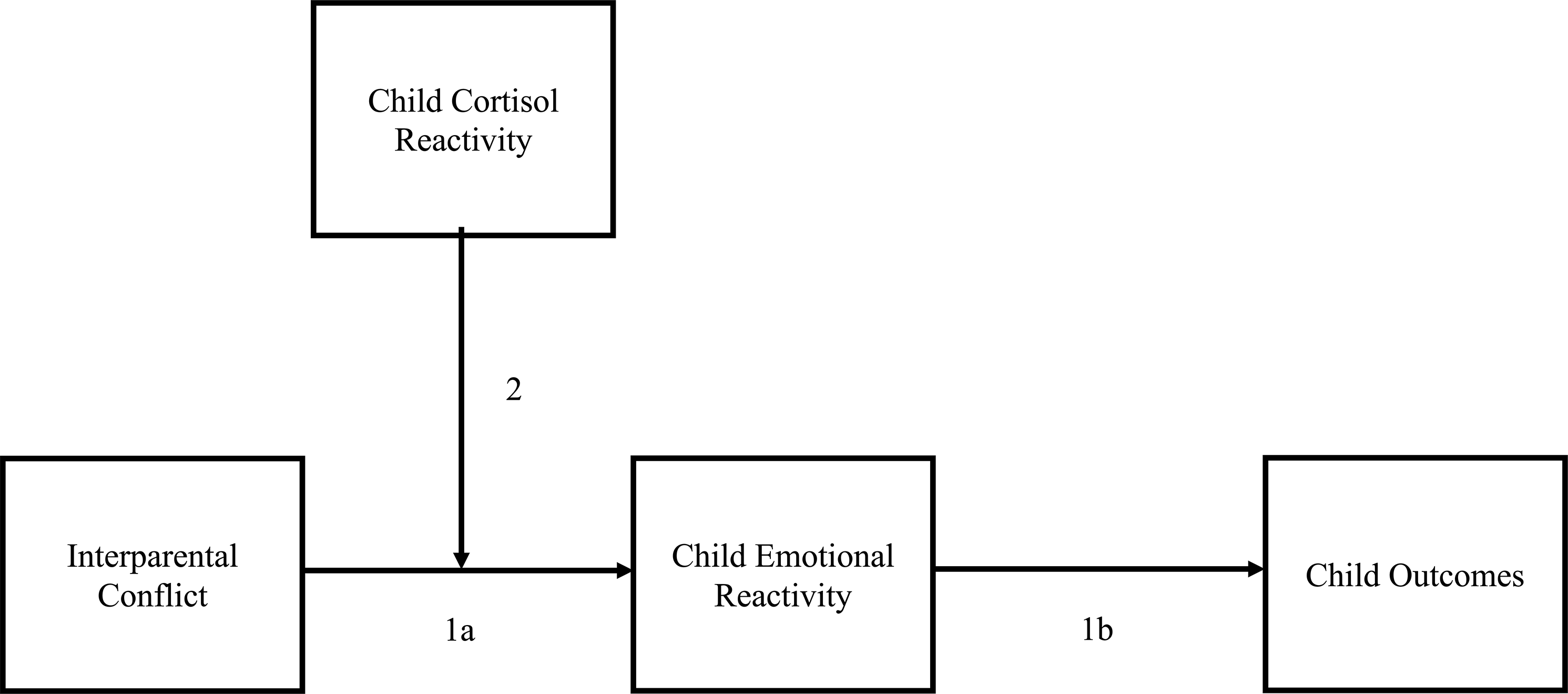
Several developmental models of interparental conflict define emotional reactivity characterized by heightened and prolonged fearful distress (e.g., freezing, nervous fidgeting, gaze aversion), diminished affiliative behavior and social withdrawal from the parents (e.g., limiting or avoiding interactions with parents), and greater vigilance (e.g., cautiously watching parents) in response to interparental conflict (Davies & Cummings, Reference Davies and Cummings1994; Grych & Fincham, Reference Grych and Fincham1990; Zimet & Jacob, Reference Zimet and Jacob2001). In these models, emotional reactivity is posited to serve as a risk mechanism underlying children’s vulnerability to interparental conflict. Although several theories share the assumption that interparental conflict is an emotionally distressing experience for children, the prominent focus on children’s affective experiences in emotional security theory (EST) is particularly useful as a guide for understanding children’s emotionality as a risk mechanism underlying their vulnerability to conflict (Davies & Cummings, Reference Davies and Cummings1994). As shown in Path 1a of Figure 1, EST proposes that persistent angry and aggressive conflict between parents elicits negative emotional reactivity from children by undermining their sense of safety and security within the family. As children struggle to regulate their emotions during these interactions, greater emotional reactivity to conflict, in turn, is posited to intensify and broaden into significant behavioral, social, and academic problems as children struggle to regulate their emotions in other interpersonal contexts (see Path 1b in Figure 1; Bascoe et al., Reference Bascoe, Davies, Sturge-Apple and Cummings2009; Davies & Martin, Reference Davies and Martin2014; Davies, Hentges, Coe, Martin, Sturge-Apple, & Cummings, Reference Davies, Hentges, Coe, Martin, Sturge-Apple and Cummings2016; Davies & Sturge-Apple, Reference Davies and Sturge-Apple2007). In support of this hypothesis, longitudinal studies have delineated emotional reactivity as a mediator of the link between interparental conflict and children’s behavioral, social, and school problems using a variety of methods (Buehler et al., Reference Buehler, Lange and Franck2007; Davies et al., 2002, 2012).
A conceptual model of the proposed mediated moderation framework in which cortisol reactivity moderates the link between interparental conflict and children’s internalizing and externalizing problems through the underlying mechanism of children’s fearful reactivity to interparental conflict.

Although research has consistently identified emotional reactivity as a mechanism underlying the association between interparental conflict and subsequent outcomes, emotional reactivity is a modest mediator with small to medium effect sizes (Cummings, George, McCoy, & Davies, Reference Cummings, George, McCoy and Davies2012; Davies et al., 2002, 2012; McCoy et al., Reference McCoy, Cummings and Davies2009). The modest association reflects, in part, wide variability between children in the magnitude of the relationship between interparental conflict and children’s emotional reactivity to subsequent parent conflict. Multiple theories postulate that physiological reactivity may be a source of this heterogeneity through its operation as a moderator of environmental input (Boyce & Ellis, Reference Boyce and Ellis2005; Del Giudice, Reference Del Giudice2014). The stress response system is hypothesized to coordinate the complex relationship between the individual and the environment by organizing adaptive responding to environmental stimuli. The HPA axis, in particular, is one component of the human stress response that is responsible for calibrating the body’s response to social stimuli. When an individual is threatened, the hypothalamus secretes the corticotropin-releasing hormone (Tarullo & Gunnar, Reference Tarullo and Gunnar2006). The corticotropin-releasing hormone activates the anterior pituitary gland to release the adrenocorticotropic hormone, which then triggers the secretion of cortisol from the adrenal cortex (Tarullo & Gunnar, Reference Tarullo and Gunnar2006). Heightened cortisol mobilizes energy, enhances myocardial contractility, decreases appetite, and facilitates information processing, learning, and memory consolidation (Gunnar & Vazquez, Reference Gunnar, Vazquez, Cicchetti and Cohen2006; Sapolsky et al., Reference Sapolsky, Romero and Munck2000). The neurobiological and psychological changes associated with increased cortisol prepare the organism to respond adaptively to stimuli. Accordingly, the relative change in cortisol output following a stressor is hypothesized to moderate children’s emotional reactivity to interparental conflict (see Path 2 in Figure 1).
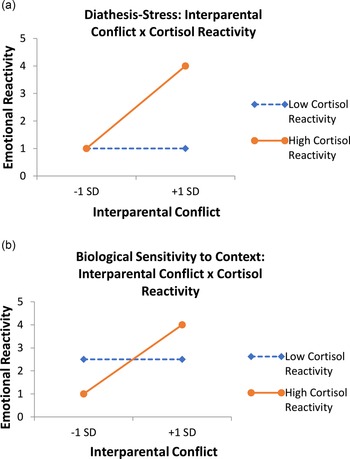
Although the HPA axis is expected to coordinate children’s response to interparental conflict, theoretical and empirical work is inconsistent in its characterization of the range of stimuli to which the HPA axis is sensitive within those interactions. Several studies have found that cortisol increases are associated with faster processing and improved memory consolidation of negative stimuli relative to positive stimuli (Abercrombi, Speck, & Monticelli, Reference Abercrombie, Speck and Monticelli2006; Henckens et al., Reference Henckens, Klumpers, Everaerd, Kooijman, Van Wingen and Fernández2016; Schwabe et al., Reference Schwabe, Haddad and Schachinger2008; van Peer, Roelofs, Rotteveel, van Dijk, Spinhoven, & Ridderinkhof, 2009). Consistent with a diathesis–stress model, a derivative implication of these findings is that children’s heightened cortisol reactivity may serve as a liability or vulnerability factor that disproportionately heightens children’s emotional reactivity to high levels of interparental conflict (Monroe & Simons, Reference Monroe and Simons1991). Thus, as illustrated by the solid line in Figure 2a, interparental conflict is an especially potent predictor of children’s emotional reactivity to interparental conflict for children who exhibit higher cortisol reactivity by virtue of their proposed selectivity in vigilance to negative stimuli. In contrast, the dotted slope in the figure depicts the relatively low level of emotional reactivity across a range of exposure to interparental conflict, reflecting the relatively low physiological sensitivity to negative stimuli for children with low cortisol reactivity. Therefore, in the context of the broader moderated-mediation model, the mediational role of emotional reactivity in the association between children’s exposure to interparental conflict and psychological problems is proposed to be particularly pronounced for children with higher levels of cortisol reactivity.
(a) A diathesis-stress interaction, in which high cortisol reactivity reflects children’s vulnerability when exposed to high interparental conflict and (b) An example of a BSC interaction, in which high cortisol reactivity reflects children’s environmental susceptibility, such that children with high cortisol reactivity experience more negative emotionality when exposed to interparental conflict but disproportionately lower levels of negative emotionality in low-conflict interactions.

In contrast to the diathesis–stress model, biological sensitivity to context theory (BSC; Boyce & Ellis, Reference Boyce and Ellis2005; Del Guidice, Ellis & Shirtcliff, Reference Del Giudice, Ellis and Shirtcliff2013) proposes that children’s heightened cortisol reactivity increases children’s sensitivity to both benign and harsh environmental stimuli. In support of this theory, some studies have documented that heightened cortisol is associated with improved encoding and consolidation of stimuli that widely vary in valence (Kuhlmann & Wolf, Reference Kuhlmann and Wolf2006; Putman, van Honk, Kessels, Mulder, & Koppeschaar, Reference Putman, van Honk, Kessels, Mulder and Koppeschaar2004). Thus, greater cortisol reactivity may be a manifestation of an HPA axis that is calibrated to respond to a broad range of rewarding and adverse environmental stimuli (e.g., Boyce & Ellis, Reference Boyce and Ellis2005). The cross-over interaction in Figure 2b illustrates the implications of this premise. The flattened slope of the dotted line in Figure 2b indicates that children with low cortisol reactivity are expected to experience moderate levels of negative emotionality regardless of interparental conflict exposure. Conversely, as illustrated by the solid slope in the figure, the derivative hypothesis from BSC theory is that higher cortisol is proposed to serve as a plasticity factor that increases children’s susceptibility to interparental conflict in a “for better and for worse” manner. Thus, consistent with diathesis–stress models, the right (“for worse”) side of the graph illustrates the greater attunement to high levels of interparental conflict of children with greater cortisol reactivity manifested in disproportionately greater emotional reactivity to conflict over time. However, as denoted by the left (“for better”) side of the figure, BSC is distinct in its proposal that children with higher cortisol reactivity will evidence considerably lower emotional reactivity than their counterparts following exposure to more cooperative (e.g., support, problem-solving) conflicts between parents. Therefore, BSC and diathesis–stress models share the hypothesis that the mediational pathway involving exposure to interparental conflict, emotional reactivity to conflict, and child psychological problems will be especially strong for children with higher cortisol reactivity, but BSC posits a unique form of moderation that is expressed as greater sensitivity to the benefits of cooperative conflict and the disadvantages of destructive interparental conflict.
Although prior empirical work has identified cortisol reactivity as a moderator of parenting and other family processes, interparental conflict has been largely neglected (Kopala-Sibley, Dougherty, Dyson, Laptook, Olino, Bufferd, & Klein, 2018; Winiarski, Engel, Karnik, & Brennan, 2017). In one study that did examine interparental conflict as part of broader family adversity, cortisol reactivity failed to moderate the association between interparental conflict and internalizing or externalizing difficulties (Obradović et al., Reference Obradović, Bush, Stamperdahl, Adler and Boyce2010). However, EST characterizes these forms of psychopathology as distal outcomes that develop after children form patterns based on their emotional reactivity to interparental conflict. Therefore, it is necessary to examine children’s short-term reactivity as a more proximal mediator in these associations. Furthermore, among the literature analyzing interactions between cortisol reactivity and family processes, the rigorous post hoc analyses necessary to characterize the operation of cortisol reactivity as reflecting either vulnerability or general sensitivity were not conducted (Barrios, Bufferd, Klein, & Doughterty, Reference Barrios, Bufferd, Klein and Dougherty2017; Del Giudice, Reference Del Giudice2017; Roisman et al., Reference Roisman, Newman, Fraley, Haltigan, Groh and Haydon2012; Saxbe et al., Reference Saxbe, Margolin, Spies Shapiro and Baucom2012; Steeger et al., Reference Steeger, Cook and Connell2017). However, consistent with BSC, one study reported that cortisol reactivity moderated the relationship between a family adversity measure including interparental conflict and children’s prosocial behavior in school (Obradović et al., Reference Obradović, Bush, Stamperdahl, Adler and Boyce2010). This study provides preliminary support that cortisol reactivity may operate as an index of broad susceptibility to both adversity and support.
To address the gaps in existing research, the synthesis of EST with models of diathesis–stress and BSC allows for a novel test of the moderating role of cortisol reactivity in the mediational pathway involving interparental conflict, emotional reactivity, and subsequent psychological functioning. Based upon several developmental considerations, the decision was made to examine these associations during the transition from preschool to the early school years. Relative to older children, children at this age employ less sophisticated strategies of emotion regulation that increase their susceptibility for experiencing high levels of negative emotional reactivity to interparental conflict (Cummings et al., Reference Cummings, Vogel, Cummings and El-Sheikh1989). At the same time, the start of formal schooling introduces an array of novel and complex challenges for children who tend to rely on patterns developed within the family to process and respond to new experiences (Davies & Martin, Reference Davies and Martin2013). Thus, the transition to school introduces a period of heightened vulnerability to interparental conflict for children and increase the tendency for earlier patterns of reactivity to conflict to intensify into more enduring psychological problems (Davies et al., Reference Davies, Woitach, Winter and Cummings2008; Repetti et al., Reference Repetti, Robles and Reynolds2011). Furthermore, early childhood is considered to be a crucial period in which the HPA axis coordinates children’s responses to environmental stimuli (Del Giudice et al., Reference Del Giudice, Ellis and Shirtcliff2013). Therefore, early childhood is posited to be a sensitive period for the operation of adrenocortical reactivity, during which time children are particularly receptive to interparental conflict.
In summary, the current study represents the first test of cortisol reactivity as a moderator of the first link of the mediational chain between interparental conflict, children’s emotional reactivity, and children’s psychological adjustment. To increase the rigor of our moderated-mediation analyses, we utilized a multimethod (i.e., observations, surveys, and cortisol collection), multi-informant (i.e., coders and teachers) measurement battery across three annual waves of measurement. Because behavioral problems, peer relationship difficulties, and academic disengagement pose significant challenges to children’s short-term and long-term mental health (Coolahan, Fantuzzom, Mendez, & McDermott, Reference Coolahan, Fantuzzo, Mendez and McDermott2000; Masten et al., Reference Masten, Roisman, Long, Burt, Obradović, Riley, … and Tellegen2005; Obradović et al., Reference Obradović, Bush, Stamperdahl, Adler and Boyce2010), our assessments of children’s difficulties adjusting to school were designed to assess their externalizing symptoms, peer rejection, and academic engagement problems. To maximize our ability to detect a potential association between the specific context to which children’s cortisol reactivity is sensitive and children’s short-term outcomes, children’s emotional reactivity, and cortisol reactivity were assessed during the same task. Consistent with multidimensional definitions of emotional reactivity, our measure of emotional reactivity was indexed by greater fearful distress, heightened vigilance, and diminished sociability. Likewise, we used LDS modeling to assess individual differences in intraindividual change in children’s cortisol reactivity from pre-to post-periods of their exposure to interparental conflict (McArdle & Hamagami, Reference McArdle, Hamagami, Collins and Sayer2001). Although research has largely focused on examining cortisol reactivity as a possible moderator of family risk, it is possible that cortisol recovery from stressors may also alter children’s vulnerability or susceptibility to family processes (Houbrechts et al., Reference Houbrechts, Cuyvers, Goossens, Bijttebier, Bröhl, Calders, … and Bosmans2021; Salisbury et al., Reference Salisbury, Stienwandt, Giuliano, Penner-Goeke, Fisher and Roos2020). Thus, we sought to test the bounds of selectivity or generality of cortisol responses as a moderator by examining both: (1) cortisol reactivity, indexed by the difference between cortisol levels prior to the stressor and 20 min after children’s sustained exposure to conflict when cortisol production is regarded as reaching a peak response to stress; and (2) cortisol recovery, indexed by the difference between pre-stressor cortisol and cortisol 40 min after sustained exposure to the conflict, when cortisol is proposed to drop toward baseline levels (Blair et al., Reference Blair, Granger, Kivlighan, Mills-Koonce, Willoughby, Greenberg, … and Fortunato2008; Dickerson & Kenemy, Reference Dickerson and Kemeny2004). Based on prior research, we proposed that cortisol reactivity would moderate the association between interparental conflict and children’s emotional reactivity (Barrios et al., Reference Barrios, Bufferd, Klein and Dougherty2017; Obradović et al., Reference Obradović, Bush, Stamperdahl, Adler and Boyce2010; Steeger et al., Reference Steeger, Cook and Connell2017). However, at this early stage of research, we did not formulate any hypotheses about whether moderating effects would be selective, comparable, or different across indices of cortisol reactivity and recovery.
Following guidelines for testing mediation, we examined whether Wave 1 interparental conflict predicted Wave 2 emotional reactivity and Wave 3 school problems and whether Wave 2 emotional reactivity predicted difficulties in school at Wave 3. Autoregressive controls of emotional reactivity and school problems at Wave 1 were also included. To evaluate cortisol reactivity’s role as a moderator according to recommendations for testing first-stage moderated mediation (Hayes, Reference Hayes2018), we further examined the relationships between Wave 1 cortisol reactivity and the product term from interparental conflict and cortisol reactivity with Wave 2 emotional reactivity and Wave 3 school problems. Finally, given that gender and family income have been associated with children’s self-regulation and psychological problems in prior research (Dearing et al., Reference Dearing, McCartney and Taylor2006; Miner & Clarke-Stewart, Reference Miner and Clarke-Stewart2008; Sterba et al., Reference Sterba, Prinstein and Cox2007), they were examined as possible covariates in the primary analyses.
Method
Participants
The sample came from a multi-measure, multi-informant longitudinal study conducted in a moderate-sized city in the Northeast of the United States. Participants included 243 children and their mothers and fathers recruited primarily through universal Pre-K, childcare, and Head Start programs. Children were between 4 and 5 years old at Wave 1 (M = 4.6, SD = 0.44). Fifty-six percent were female; 44% were male. The median education attained by parents was a high school diploma or its equivalent, with 19% of parents not earning a high school diploma or GED. Nearly half of the parents identified as Black or African American (48%), followed by 43% who identified as White or European American, 6% as multiracial, and 3% as other; 13% identified as Latinx. At Wave 1, 99% of mothers and 74% of their partners were the biological parents. Mothers and their partners had lived together with the child for an average of 3 years (M = 3.36), and half of the mothers were married to their partners. Household income ranged between $2,000 and $121,000 per year, with a median income of $36,000 and 69% of families receiving some form of public assistance. The study consisted of three waves of data collected 1 year apart, starting when the children were in their final year before entering kindergarten. Retention was 97% from Wave 1 to 2 and 94% from Wave 2 to Wave 3. Families
Procedure
The study was approved by the University of Rochester Institutional Review Board prior to the beginning of the study. At each wave, families visited a research center twice within a 2-week period. Parents and children participated in laboratory tasks, and teachers completed a battery of questionnaires. Families and teachers were compensated for their participation.
Interparental problem solving task
At the first visit of Waves 1 and 2, families participated in the Interparental Problem-Solving Task (IPST). Parents were asked to identify commons topics of disagreement and then select one to three topics that they felt comfortable discussing in front of their child. After parents agreed on topics for discussion, the child was brought into the same room and given a set of toys with which they could play, and parents were instructed to discuss the problem(s) for 10 min in front of the child. Recordings of the interactions were later coded for parents’ conflict behaviors (Wave 1) and children’s emotional reactivity (Waves 1 and 2).
Salivary cortisol collection
Saliva samples were collected at three points during the IPST at Wave 1. A pre-conflict sample was collected prior to the IPST to obtain a baseline measure of children’s cortisol levels. The timing of the two post-conflict samples were calibrated in relation to children’s sustained exposure to the conflict, which we defined as 7 min into the interaction. Thus, for our assessment of reactivity, the first post-conflict sample was taken 20 min after the 7-min mark of the interaction based on previous research indicate that cortisol peaks during this period following stress exposure (Blair et al., Reference Blair, Granger, Kivlighan, Mills-Koonce, Willoughby, Greenberg, … and Fortunato2008). As an assessment of cortisol reactivity, the second post-conflict sample was taken 40 min after the 7-min mark of the interparental interaction based on previous findings indicating that cortisol evidences substantial recovery to baseline levels during this period (Dickerson & Kenemy, Reference Dickerson and Kemeny2004). Saliva samples were stored at −36 °C until they were shipped on dry ice to the Institute for Interdisciplinary Salivary Bioscience Research (IISBR) at Arizona State University for analysis.
Teacher-report of child adjustment
At Waves 1 and 3, teachers reported on children’s emotional and behavioral adjustment at school.
Measures
Interparental conflict
To assess children’s exposure to interparental conflict, video-recordings of the IPST were observationally coded for four dimensions of conflict behavior by mothers and fathers. Because BSC theory proposes that elevated cortisol reactivity sensitizes children to both harsh and supportive contexts, the four conflict codes were evenly distributed to capture both destructive (i.e., anger, aggression) and cooperative (i.e., support, problem-solving) forms of conflict. Coders used the Interparental Conflict Expressions system to rate each behavior on 9-point scales ranging from 1 (not at all characteristic) to 9 (extremely characteristic) (Davies, Coe, Martin, Sturge-Apple, & Cummings, Reference Davies, Coe, Sturge-Apple and Cummings2015). First, the anger code assessed signs of tension, frustration, and irritability with higher levels reflecting greater disruption of the interaction and relationship quality. Second, aggression was characterized by verbalizations and behaviors that were psychologically harmful or threatening to the partner (e.g., demeaning, insulting, threatening, and cruel remarks). Third, support reflected expressions of appreciation, respect, and validation of the partner’s perspective. Fourth, problem solving consisted of constructive conflict tactics likely to be effective in managing and resolving the disagreement (e.g., asking for clarification, generating constructive solutions). Interrater reliability was calculated based on independent ratings by two coders of 23% of the interactions across maternal and paternal codes. Intraclass correlation coefficients ranged from 0.62 to 0.85 (M = 0.77) for mothers and from 0.68 to 0.82 (M = 0.77) for fathers. To obtain a parsimonious composite of interparental conflict, the eight measures (i.e., the four maternal and four paternal codes) were averaged together after reverse scoring support and problem-solving to be compatible with the scaling of the destructive forms of conflict (α = 0.84).
Emotional reactivity
To obtain observational assessments of children’s signs of insecurity in the interparental relationship at Waves 1 and 2, trained raters coded the video records of children’s reactivity to interparental conflict along four molar scales of vigilance, fearful distress, relatedness, and overall security. Independent teams coded Wave 1 and Wave 2 emotional reactivity, and neither team overlapped with the coders who rated Wave 1 interparental conflict. Vigilance, which was defined as watchful attention to the possibility of danger and threat accompanying the conflict, was rated by coders on a five-point scale ranging from (1) no vigilance to (5) intense vigilance. Examples of vigilance include listening intently and warily to the parental disagreement, verbal concern, and other signs of preoccupation (e.g., substantial decreases in the quality of play). Coders rated the remaining three codes along nine-point scales, ranging from 1 (Not at all characteristic) to 9 (Mainly or highly characteristic). Fearful distress was evidenced by children’s displays of anxiety, tension, fear, worry, vigilance, or emotional upset through facial (e.g., open mouth staring wide-eyed), postural (e.g., freezing), or gestural (e.g., wringing hands) expressions. Relatedness consisted of attempts to initiate and maintain enjoyable interaction with the parents, such as genuine displays of pleasure (e.g., smiling or offering verbal or physical affection) and constructive invitations to join an activity. Finally, the rating of security was designed to assess tendencies for children to efficiently preserve their sense of security through well-regulated patterns of responding to interparental conflict. Specific manifestations of security included negligible or mild levels of fearful distress that are largely reflected in displays of empathetic concern followed by quick resumption of normal activities in the aftermath of interparental tension or anger. Relatedness and overall security were reverse scored so that higher values reflected low levels of relatedness and overall security, respectively. Two trained coders independently rated at least 21% of the videos at each wave to assess interrater reliability. Intraclass correlation coefficients ranged from 0.74 to 0.89 (M = 0.84) at Wave 1 and 0.78 to 0.85 (M = 0.81) at Wave 2.
Cortisol reactivity and recovery
Samples were assayed in duplicate for salivary cortisol using a highly sensitive enzyme immunoassay (IISBR, AZ). The test uses 25 µL of saliva per determination and has a lower limit of sensitivity of 0.007 µg/dl, an upper limit of sensitivity of 3.00, and average intra- and inter-assay variations of 4.6% and 6.0%, respectively. Method accuracy, as determined by recovery of five saliva samples spiked with known quantities of cortisol, ranged from 98 to 113%. Values from matched serum and saliva samples show the expected strong linear relationship, r = 0.91, p < 0.001. Prior to transforming the cortisol variables, values below and above the limits of sensitivity for the test (<0.007 or >3.00) were deleted. Consistent with existing research on cortisol (Edwards et al., Reference Edwards, Clow, Evans and Hucklebridge2001), the remaining data evidenced high positive skew and kurtosis and were log-transformed. However, a positive skew remained in the distributions of the cortisol variables, and values at the higher end of the distribution for each cortisol variable were winsorized to 3 SD above the mean until skewness was below the absolute value of 3 and kurtosis was below the absolute value of 7 (Edwards et al., Reference Edwards, Clow, Evans and Hucklebridge2001). Mean cortisol values in the sample, denoted in micrograms per deciliter (µg/dL), were 0.09 (SD = 0.06) at baseline, 0.08 (SD = 0.05) at post-conflict I, and 0.07 (SD = 0.05) at post-conflict II. The three mean values for cortisol reflect that, on average, children in the sample experienced decreases in cortisol levels from the baseline assessment to each subsequent post-conflict assessment, which is consistent with the normative diurnal pattern of cortisol (Saxbe et al., Reference Saxbe, Margolin, Spies Shapiro and Baucom2012). However, 20.6% of the sample exhibited an increase from baseline to post-conflict I, and 20.9% of the sample increased in cortisol levels from baseline to post-conflict II, suggesting that a substantial subset of children evidenced increases in cortisol in response to witnessing conflict between parents.
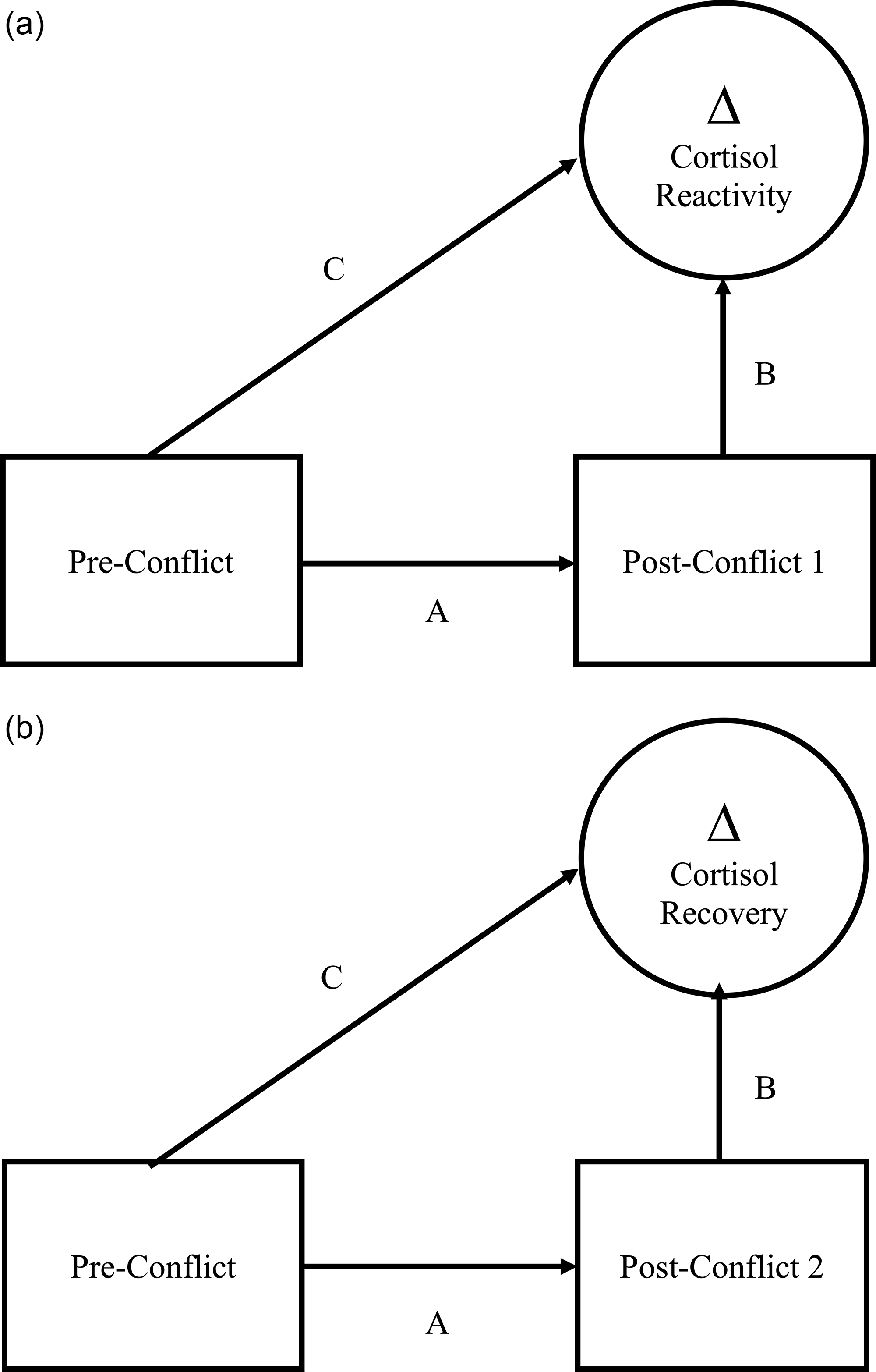
Latent change score modeling was used to quantify differences in cortisol reactivity and recovery using Mplus 8.3 (Muthén & Muthén, Reference Muthén and Muthén1998-2017; McArdle et al., Reference McArdle, Hamagami, Chang and Hishinuma2014). As can be seen in Figure 3a, to create a latent change score model representing cortisol reactivity, the post-conflict I cortisol measure was regressed onto the baseline cortisol measure (see Path A) and onto a latent change variable (see Path B). To extract the difference between baseline and post-conflict I, both Path A and Path B were constrained to one. Figure 3b shows that an identical approach was used to create a LDS model to represent the measure of cortisol recovery, with the post-conflict II measure replacing the post-conflict I cortisol assessment from the previous model. Therefore, the LDS variable of cortisol reactivity reflected change from immediately before the conflict to 20 min following sustained exposure to the conflict, with higher scores indexing increases or less steep decreases in cortisol across the two timepoints. Similarly, the LDS for cortisol recovery captured change from pre-conflict to 40 min following sustained exposure to the conflict, with higher scores indicating increases or less steep decreases in cortisol, relative to baseline levels. Factor scores from the latent difference models for cortisol reactivity and recovery were saved in Mplus 8.3 and used in subsequent analyses (Muthén & Muthén, Reference Muthén and Muthén1998-2017). Because various studies have identified relationships among cortisol levels and different child characteristics (Adam & Kumari, Reference Adam and Kumari2009), several variables were initially examined as possible confounds. Of the possible demographic (i.e., gender and race), lifestyle (i.e., recent meal and recent dairy consumption), medical (i.e., taking an over-the-counter medication, a prescription medication in general, and a prescription steroid in particular), and time (i.e., collection time) covariates that were examined, only collection time was significantly associated with the LDSs for cortisol reactivity. Given that cortisol evidences normative declines throughout the day (Knutsson et al., Reference Knutsson, Dahlgren, Marcus, Rosberg, Brönnegård, Stierna and Albertsson-Wikland1997; Stansbury & Gunnar, Reference Stansbury and Gunnar1994), collection time was specified as an additional predictor of each latent difference.
Latent difference score models of the two cortisol reactivity measures. (a) Change in cortisol from pre-conflict to post-conflict 1, controlling for the starting value is depicted and (b) Change in cortisol from pre-conflict to post-conflict 2, controlling for the baseline levels is depicted.

Children’s school adjustment
Teachers reported on children’s behavioral, social, and academic functioning at school at Waves 1 and 3. The externalizing scale from the MacArthur Health and Behavior Questionnaire (HBQ; Ablow et al., Reference Ablow, Measelle, Kraemer, Harrington, Luby, Smider, … and Essex1999) was used to capture children’s behavioral adjustment. The externalizing scale consisted of 21 items from the Conduct Problems (“Lies or cheats”), Overt Hostility (e.g., “Gets in many fights”), and Relational Aggression (“Tries to get others to dislike a peer”) subscales. The seven-item Academic Engagement (e.g., Is interested in classroom activities”) subscale assessed children’s engagement with school. The response options for the externalizing and academic engagement subscales were 0 (Never or Not True), 1 (Sometimes or Somewhat True), and 2 (Often or Very True). For the measure of social functioning, teachers completed the Peer Acceptance/Rejection subscale (e.g., Has lots of friends at school”). Response alternatives for each of the eight items in the Peer Acceptance/Rejection subscale ranged from 1 (Not at all like) to 4 (Very much like). Item responses were averaged together for each construct, and internal consistencies for each of the measures ranged from 0.84 to 0.94 (M = 0.89) at Wave 1 and from 0.89 to 0.93 (M = 0.92) at Wave 3.
Sociodemographic characteristics
Demographic covariates derived from an interview with the mother at Wave 1 included (a) children’s gender and (b) household income per capita, quantified as the total annual household income divided by the number of members in the household.
Results
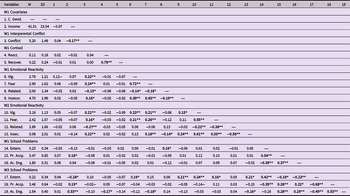
Table 1 presents the means and standard deviations for the variables of interest, as well as the correlations between them. Structural equation models testing the study’s primary hypotheses were then analyzed in Amos (Version 25.0; Arbuckle, Reference Arbuckle2017). Analyses of associations among rates of missing data in the study and the 19 primary variables in Table 1 produced one significant finding. Missingness was correlated with lower total household income (p = 0.03), consistent with our decision to include income as a covariate in the analyses. The overall rate of missing data for the variables was 9%. Therefore, we used FIML to estimate missing data to retain the full sample in the analyses based on evidence indicating that it produces accurate parameter estimates when less than 20% of the data are missing (Schlomer et al., Reference Schlomer, Bauman and Card2010).
Means, standard deviations, and correlations among the primary study variables

*p < .05. **p < .001.
To maximize analytic parsimony and reduce multicollinearity, the moderating roles of cortisol reactivity and cortisol recovery were examined in two separate models. Multiplicative terms were computed from the cross product of the specific physiological index and interparental conflict, and the predictors were mean-centered prior to creating the interaction terms. To evaluate whether the association between children’s emotional reactivity and subsequent school adjustment varied as a function of the interaction between interparental conflict and each index of children’s neurobiological functioning, (a) interparental conflict at Wave 1, children’s cortisol functioning, and their interaction were estimated as predictors of Wave 2 emotional reactivity and Wave 3 school problems, (b) Wave 1 interparental conflict and emotional reactivity at Wave 2 were specified as predictors of children’s school adjustment at Wave 3, and (c) autoregressive pathways were estimated between emotional reactivity and school adjustment at Wave 1 and Wave 2 emotional reactivity and Wave 3 school adjustment, respectively. Finally, Wave 2 emotional reactivity and Wave 3 school adjustment were regressed onto the covariates (i.e., child gender and total family income).
Cortisol reactivity
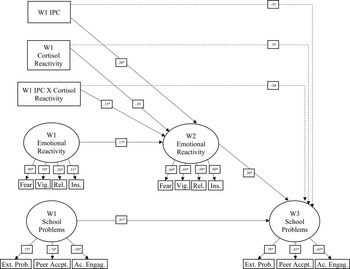
The first model with cortisol reactivity represented the data well, χ 2 (116) = 172.80, p < 0.001, χ 2 /df ratio = 1.49, RMSEA = 0.05, CFI = 0.96 (see Figure 4). Family income was significantly associated with school adjustment at Wave 3, β = -0.213, p = 0.008, such that higher family income predicted fewer school problems. Emotional reactivity at Wave 2 and school functioning at Wave 3 were both significantly related to initial levels at Wave 1 (β = 0.17, p = 0.04; β = 0.41, p < 0.001). As a test of the first link in the mediation chain, conflict between parents at Wave 1 predicted greater emotional reactivity at Wave 2, β = 0.20 p = 0.009. Supporting the second link in the chain, emotional reactivity at Wave 2 was associated with worse school adjustment over time, β = 0.20, p = 0.03. To more authoritatively examine the role of emotional reactivity as a mediator of the association between interparental conflict and school functioning, we conducted bootstrapping tests with the RMediation program (Tofighi & MacKinnon, Reference Tofighi and MacKinnon2011). The results indicated that the indirect effect of interparental conflict on children’s school adjustment through emotional reactivity was significantly different from 0, 95% CI [0.001 to 0.015].
An autoregressive structural equation model examining moderation of cortisol reactivity in the association between interparental conflict, emotional reactivity, and children’s school problems. *p < .05.

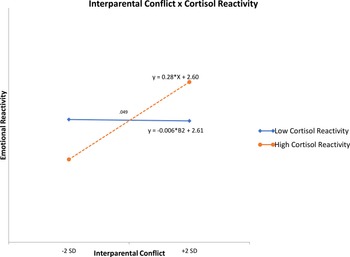
In support of the hypothesized moderation, the association between Wave 1 interparental conflict and Wave 2 emotional reactivity significantly varied as a function of cortisol reactivity 20 min following sustained exposure to interparental conflict, β = 0.61, p = 0.046. However, as expected, cortisol reactivity did not moderate the relationship between emotional reactivity at Wave 2 and Wave 3 school adjustment. Therefore, post hoc analyses were conducted to characterize the nature of the significant interaction. The Johnson–Neyman method for identifying regions of significance revealed that the association between Wave 1 interparental conflict and Wave 2 emotional reactivity became significant at cortisol reactivity values of −0.0408 and above, or 0.84 SD above mean cortisol reactivity (61% of the sample; Padhazur, 1997). Simple slopes analyses were subsequently analyzed and plotted at two standard deviations above and below the mean of interparental conflict using designations of high (+1 SD) and low (−1 SD) levels of cortisol reactivity (see Figure 5). The decision to examine the predictor at two standard deviations above and below the mean was informed by recommendations for sensitively capturing the operation of cortisol reactivity as a moderator across a relatively comprehensive range of the environmental variable (Roisman et al., Reference Roisman, Newman, Fraley, Haltigan, Groh and Haydon2012). To further assess the moderated-mediation hypothesis, we estimated the conditional indirect path involving interparental conflict, emotional insecurity, and school problems at high (+1) and low (−1) levels of cortisol reactivity (Hayes, Reference Hayes2018). Consistent with the above findings, emotional reactivity mediated the relationship between interparental conflict and school adjustment difficulties at high cortisol reactivity, 95% CI [0.002 to 0.026]. In contrast, a comparable analysis of the indirect path at low levels of cortisol reactivity was not significant, 95% CI [−0.006 to 0.010].
A graphical plot of the association between interparental conflict and changes in children’s emotional reactivity at high and low levels of cortisol reactivity. Proportion Affected index = .52. Proportion of the Interaction index = .50.

Although the disordinal interaction presented in Figure 5 provided tentative support for BSC, two additional values were calculated to provide more definitive quantitative tests of whether the interaction corresponded more closely with either diathesis–stress or BSC (see Roisman et al., Reference Roisman, Newman, Fraley, Haltigan, Groh and Haydon2012). First, the proportion affected (PA) identifies the percentage of the sample below the crossover point (0.049) along the interparental conflict variable in Figure 5 where the two regression slopes cross (i.e., children within the hypothesized “for better” region in BSC theory, shaded in Figure 5). Values between 0.00 and 0.16 support a diathesis–stress model, whereas values between 0.17 and 0.80 provide evidence for BSC theory. Thus, BSC theory is supported if between 17 and 80% of children who exhibit high levels of cortisol reactivity evidence better (i.e., larger decreases in emotional reactivity) functioning than their peers in contexts of more supportive or benign interparental conflict. Second, the proportion of the interaction (PoI) provides the most definitive, direct test of the form of moderation. The PoI indexes the proportion of the interaction that signifies the “for better” area (i.e., children high in cortisol reactivity exhibiting better functioning relative to children low in cortisol reactivity) relative to the total area of the interaction (Del Giudice, Reference Del Giudice2017). PoI values between 0.20 and 0.80 support BSC, with values below 0.20 indicating diathesis–stress. Consistent with BSC, the PA and PoI for the sample were 0.52 and 0.50, respectively.
Cortisol recovery
Finally, the second model examining the moderating role of cortisol recovery provided a good fit to the data, χ 2 (116) = 173.83, p < 0.001, χ 2 /df ratio = 1.50, RMSEA = 0.05, CFI = .94. The significant autoregressive pathways were identical to those in the first model. In accordance with findings from the mediation analysis above, exposure to interparental conflict at Wave 1 was significantly associated with greater emotional reactivity at Wave 2, β = 0.20, p = 0.01, and Wave 2 emotional reactivity significantly predicted worse school functioning at Wave 3 β = 0.21, p = 0.02. However, the main effect of cortisol recovery on Wave 2 emotional insecurity and Wave 3 school adjustment was not significant, and the association between Wave 1 interparental conflict and Wave 2 emotional reactivity or Wave 3 school problems did not vary as a function of cortisol recovery.
Discussion
Although research has repeatedly documented that children’s emotional reactivity to interparental conflict operates as a primary risk mechanism accounting for the association between interparental conflict and their psychological difficulties, research has yet to identify the neurobiological sources of individual differences in the magnitude of this mediational pathway (Cummings & Davies, Reference Cummings and Davies2010; Grych & Fincham, Reference Grych, Fincham, Grych and Fincham2001). Drawing on theories on the modulating role of children’s adrenocortical reactivity in the face of socialization experiences, the goal of this study was to address this gap by testing children’s cortisol responses to interparental conflict as a moderator of the mediational pathway involving interparental conflict, children’s emotional reactivity, and their school adjustment problems (Boyce & Ellis, Reference Boyce and Ellis2005; Del Giudice et al., Reference Del Giudice, Ellis and Shirtcliff2013). Greater conflict between parents predicted increases in children’s emotional reactivity to interparental conflict, which, in turn, predicted increases in school problems. However, in line with our hypotheses, our analyses revealed that children’s cortisol reactivity interparental conflict moderated the first link in the mediational chain involving the relation between interparental conflict and emotional reactivity. Children with high levels of cortisol reactivity evidenced higher than expected emotional reactivity when exposed to greater interparental conflict but also disproportionately lower levels of emotional reactivity when they experienced relatively low or benign interparental conflict. Moderated-mediation tests further revealed that emotional reactivity mediated the relationship between interparental conflict and children’s subsequent school adjustment only for children who exhibited high levels of cortisol reactivity.
Consistent with other multi-method, longitudinal studies in the field, we found that children’s emotional reactivity served as an explanatory mechanism underlying the association between interparental conflict and children’s school problems (Cummings et al., Reference Cummings, George, McCoy and Davies2012; Jouriles et al., Reference Jouriles, McDonald and Kouros2016; Rhoades, Reference Rhoades2008). In the first link in the mediation chain, children exposed to hostile interparental conflict displayed significant increases in negative emotional reactivity from Wave 1 to Wave 2. According to EST, interparental conflict is threatening to children as it can undermine the stability of the family (Davies et al., Reference Davies, Harold, Goeke-Morey, Cummings, Shelton, Rasi and Jenkins2002). Repeated exposure to interparental conflict is proposed to sensitize children to conflict, eliciting greater distress and dysregulation to subsequent conflict between parents. Concern about potential family instability is hypothesized to organize children’s emotional reactivity to conflict, resulting in successively greater emotional reactivity. This can manifest through heightened fear, vigilance to threat, as well as diminished affiliation and sociability (Grych & Fincham, Reference Grych and Fincham1990; Zimet & Jacob, Reference Zimet and Jacob2001). In the second pathway of the proposed developmental cascade, children’s emotional reactivity predicted their worse adjustment in school 1 year later, even after controlling for their prior school problems. Interpreted within EST, these results support the conceptual premise that children’s distress and underlying concerns about their security in response to interparental conflict may signify an emerging tendency to rely on defensive ways of responding to novel and challenging contexts during the transition to school. As products of this theorized cascade, children are hypothesized to experience difficulties in emotion regulation, problem solving, and conflict management skills that increase their school problems (Davies et al., Reference Davies, Cicchetti and Martin2012; McCoy et al., Reference McCoy, Cummings and Davies2009).
Although our findings provided further support for emotional reactivity as a risk mechanism underpinning children’s vulnerability to interparental conflict, the modest nature of the mediational path highlights the importance of identifying why some children may be more susceptible to this developmental cascade. Consistent with neurobiological models of susceptibility, our moderated-mediation findings indicated that the strength of the mediational pathways between interparental conflict, emotional reactivity, and school adjustment varied significantly as a function of their cortisol reactivity to interparental conflict (Boyce & Ellis, Reference Boyce and Ellis2005; Del Giudice et al., Reference Del Giudice, Ellis and Shirtcliff2013). Exposure to interparental conflict predicted subsequent increases in emotional reactivity over a 1-year period only for children who initially exhibited heightened cortisol reactivity. Post hoc analyses were further conducted to determine whether the moderation more closely corresponded with diathesis–stress or BSC models. Although both models propose that children with high cortisol reactivity will exhibit greater emotional sensitivity to threatening contexts such as heightened interparental conflict, they differ in their predictions of children’s functioning in benign socialization contexts. Whereas diathesis–stress models propose that children will only be sensitive to adverse socialization contexts, BSC posits that heightened cortisol reactivity confers a broader sensitivity that is also expressed in substantially lower levels of emotional reactivity to the benign environmental conditions (Boyce & Ellis, Reference Boyce and Ellis2005; Swearer & Hymel, Reference Swearer and Hymel2015; Zuckerman, Reference Zuckerman and Zuckerman1999). Our results specifically supported the BSC formulation of cortisol reactivity over diathesis–stress model. Children with high cortisol reactivity exhibited substantially greater emotional reactivity when exposed to elevated interparental hostility but also disproportionately lower levels of emotional reactivity when interparental conflict was low. Thus, our results provide support for the hypothesis that adrenocortical reactivity reflects greater susceptibility to supportive and harsh environments and that the HPA axis coordinates children’s responses to a wider range of environmental stimuli than diathesis–stress models have proposed.
Our findings beg the question of why cortisol reactivity confers susceptibility to interparental conflict in a “for better or for worse manner” proposed by BSC. According to various conceptualizations, cortisol reactivity is part of a larger network of mechanisms across multiple levels of analysis that organizes greater susceptibility to environmental stimuli (Pluess, Reference Pluess2015). At a neurobiological level of analysis, cortisol reactivity has been associated with the activation of brain regions that are sensitive to both positive and negative environmental stimuli (Gard, Shaw, Forbes, & Hyde, 2016; Pruessner, Pruessner, Hellhammer, Pike, & Lupien, Reference Pruessner, Pruessner, Hellhammer, Pike and Lupien2007). For example, individuals with heightened cortisol reactivity also evidence greater activation of the amygdala and hippocampus in response to both positive and negative emotionally arousing stimuli (Root et al., Reference Root, Tuescher, Cunningham-Bussel, Pan, Epstein, Altemus, … and LeDoux2009). Furthermore, research suggests that greater activation of the HPA axis and hippocampus volume increase processing of stimuli and improves memory consolidation (e.g., better recall) of both positive and negative events (Pruessner et al., Reference Pruessner, Pruessner, Hellhammer, Pike and Lupien2007). Thus, the HPA axis and brain regions designed to process and respond to environmental input may operate in tandem to confer greater plasticity to both benign and threatening features of interparental conflict.
At a behavioral level of analysis, cortisol reactivity has also been linked with temperamental expressions of environmental sensitivity characterized by increased vigilance to changes in the environment (Greven et al., Reference Greven, Lionetti, Booth, Aron, Fox, Schendan, … and Homberg2019; Korte et al., Reference Korte, Koolhaas, Wingfield and McEwen2005; Lionetti et al., Reference Lionetti, Aron, Aron, Burns, Jagiellowicz and Pluess2018). Individuals with heightened environmental sensitivity (e.g., “doves” in animal models of sensitivity and “orchids” in sensory processing models) are more likely to pause, process, and deliberate when exposed to new or changing environmental parameters. Paralleling our findings that children with increased cortisol reactivity are susceptible to a wide range of stimuli, children with temperamental sensitivity fare exceptionally well in supportive environments but do poorly under harsh conditions (Aron & Aron, Reference Aron and Aron1997; Greven et al., Reference Greven, Lionetti, Booth, Aron, Fox, Schendan, … and Homberg2019; Slagt, Dubas, van Aken, Ellis, & Deković, Reference Slagt, Dubas, van Aken, Ellis and Deković2017). Multiple evolutionary biological theories posit that a more reactive neurobiological system is one mechanism underlying individuals’ increased processing sensitivity, and animal research has linked phenotypic sensitivity with greater HPA activation (Aron & Aron, Reference Aron and Aron1997; Korte et al., Reference Korte, Koolhaas, Wingfield and McEwen2005). Therefore, behavioral phenotypes characterized by greater awareness of subtle environmental changes may be coupled with a responsive HPA axis to render certain individuals more susceptible to the nuances of both harsh and neutral features of interparental conflict interactions.
In the broader context of the moderated-mediation models, the role of cortisol as a moderator of the mediational path involving interparental conflict, emotional reactivity, and school difficulties was specific to our measure of cortisol reactivity. In contrast, the mediational associations among interparental conflict, children’s emotional reactivity, and psychological adjustment did not vary significantly as a function of their cortisol recovery 40 min after the interparental stressor. Although replication is necessary before drawing firm conclusions about specificity in the temporal course of cortisol responses to stressors, the differences in findings for cortisol reactivity and recovery are consistent with previous research. For example, theoretical and empirical work link cortisol reactivity, but not cortisol recovery, with greater limbic system activation (Pruessner et al., Reference Pruessner, Pruessner, Hellhammer, Pike and Lupien2007; Root et al., Reference Root, Tuescher, Cunningham-Bussel, Pan, Epstein, Altemus, … and LeDoux2009). In contrast, cortisol recovery has been found to be unrelated to the processing of emotional stimuli (Ellenbogen et al., Reference Ellenbogen, Schwartzman, Stewart and Walker2002). Therefore, the moderating role of heightened adrenocortical reactivity appears to be driven by more efficient information processing and memory consolidation of emotionally significant events that can be either positive or negative in valence, whereas the capacity of the HPA axis to return to a baseline state following a stressor does not appear to moderate their adjustment in the face of interparental conflict. However, this does not preclude cortisol recovery’s importance for children’s health and well-being. Future research should attempt to identify the function of cortisol recovery as it relates to the adjustment of children exposed to interparental conflict.
This study is qualified by certain limitations. First, despite demographic and racial diversity in our sample, further research with different subpopulations is needed before generalizing results to other groups. Second, although we carefully coordinated the timing of the saliva samples to correspond with peak cortisol reactivity to stressors and cortisol recovery (Dickerson & Kemeny, Reference Dickerson and Kemeny2004), future research would benefit from more frequent assessments of cortisol to more precisely pinpoint the temporal bounds of cortisol reactivity as a plasticity factor. Third, cortisol reactivity was examined only in response to interparental conflict. Therefore, we cannot determine whether cortisol reactivity to a broad range of stressors would serve as a plasticity factor for interparental conflict. Alternatively, cortisol reactivity may function as an especially potent susceptibility factor when the stressor in which cortisol reactivity is assessed (i.e., witnessing conflict between parents) closely corresponds with the environmental variable being examined (i.e., child experiences with interparental conflict). In the former case, the important piece is that children evidence heightened adrenocortical reactivity to any stressor, whereas in the latter case, the correspondence between the stressor and environment typically experienced by the child is crucial. Although some research suggests that heightened cortisol reactivity sensitizes children to other types of family adversity (e.g., parent–child conflict, sibling conflict), other studies suggest that children are not equally susceptible across multiple environmental conditions (Essex, Armstrong, Burk, Goldsmith, & Boyce, Reference Essex, Armstrong, Burk, Goldsmith and Boyce2011; Obradović et al., Reference Obradović, Bush, Stamperdahl, Adler and Boyce2010). To capture potential specificity in the interaction between interparental conflict and cortisol reactivity, more research comparing outcomes associated with children’s cortisol reactivity to multiple stressors is needed. Fourth, although we considered a range of possible covariates in the assessment of cortisol in our analysis of cortisol, future research would benefit from expanding consideration to other possible confounds, such as physical health or exercise (Adam & Kumari, Reference Adam and Kumari2009). Fifth, although we aimed to examine the developmental implications of children’s experiences in the family for their functioning outside of the family (i.e., school), delineating the applicability of the findings for children’s functioning in other contexts (i.e., family) is an important direction for future research.
Despite these limitations, our findings support the value of integrating emotional security and BSC models to advance an understanding of why children’s emotional reactivity is a relatively modest mediator of the association between interparental conflict and their adjustment problems. Consistent with the conceptualization of neurobiological functioning in BSC, the results indicated that variability in the role of emotional reactivity as a mediator of interparental conflict was attributable, in part, to the specific moderating effects of children’s cortisol reactivity in magnifying the first link in the cascade between interparental conflict and emotional reactivity. Children with heightened cortisol reactivity exhibited greater emotional reactivity to conflict 1 year later and, in turn, a higher occurrence of subsequent school problems when they were exposed to high levels of prior interparental conflict. By the same token, these same children evidenced considerably lower levels of emotional reactivity and, in turn, fewer school problems than their peers who experienced relatively low interparental conflict. If replicated, our findings may have important clinical implications in terms of the development and application of intervention programs. Because children are more sensitive to both positive and negative environmental conditions, interventions that improve the relationship between parents could be particularly effective for children with higher cortisol reactivity (van de Wiel, van Goozen, Matthys, Snoek, & van Engeland, Reference Van de Wiel, van Goozen, Matthys, Snoek and van Engeland2004). Therefore, identifying cortisol reactivity as one source of the variability in children’s emotional reactivity to interparental conflict may have important implications for public health initiatives.
Acknowledgements
We are grateful to the children, parents, and community agencies who participated in these projects. We also thank Mike Ripple, the Mt. Hope Family Center Staff, and the personnel at the University of Rochester who assisted on this project.
Funding statement
This study was supported by Eunice Shriver Kennedy National Institute of Child Health and Human Development Grant R01 HD065425 (to P.T.D. and M.L.S.-A.). The study was conducted at Mt. Hope Family Center, University of Rochester.
Conflicts of interest
None.