Introduction
Sudden sensorineural hearing loss (SNHL) refers to hearing loss of 30 dB or greater, over three or more contiguous frequencies, occurring in a period of 72 hours or less.Reference Stachler, Chandrasekhar, Archer, Rosenfeld, Schwartz and Barrs1 Though the specific aetiology is unclear, glucocorticoids are widely used as an effective therapy for sudden SNHL.Reference Hultcrantz and Nosrati-Zarenoe2,Reference Lim, Kim, Choi, Lee, Park and Park3 Glucocorticoids can be systemically or locally administrated. Systemic administration, usually by intravenous infusion, is recommended as a conventional treatment. Local intratympanic administration is specifically recommended as a salvage therapy for sudden SNHL patients who fail to respond to systematic treatments.Reference Stachler, Chandrasekhar, Archer, Rosenfeld, Schwartz and Barrs1 However, a significant number of sudden SNHL patients are still insensitive to systemic or intratympanic glucocorticoid treatment.Reference Filipo, Attanasio, Russo, Viccaro, Mancini and Covelli4
Recent studies have revealed that low levels of histone deacetylase 2 (HDAC2) may cause glucocorticoid insensitivity in asthma and inflammatory diseases, and ascending HDAC2 activity can enhance the therapeutic effect of glucocorticoids.Reference Hou, She, Du, Dai, Xie and Zhou5–Reference Zhou, Wang, Yang, Liu, Kang and Wang7 Together with histone acetyltransferase, HDAC2 can regulate histone acetylation.Reference Hou, She, Du, Dai, Xie and Zhou5,Reference Barnes and Adcock6,Reference Baek8,Reference Yamaqoe, Kanno, Kanno, Sasaki, Siegel and Lenardo9 The acetylation of histone is one of the key mechanisms in regulating gene transcription, by converting the linear naked genome into sensible architecture chromatin.Reference Khan, Reddy and Gupta10,Reference Kurdistani, Tavazoie and Grunstein11
Based on these studies, we presumed that reduced histone acetylation may be critical for intratympanic glucocorticoid treatment of sudden SNHL. By monitoring pure tone average (PTA) gain, and detecting histone H3 and H4 acetylation in 34 refractory sudden SNHL patients who underwent a 10-day intratympanic methylprednisolone perfusion treatment, we found that intratympanic methylprednisolone perfusion could improve hearing in a considerable number of refractory sudden SNHL patients in whom systemic treatments had failed. The present study confirmed our hypothesis that reduced histone acetylation was closely related to the therapeutic effect of intratympanic methylprednisolone perfusion, and may be one of the key mechanisms for intratympanic methylprednisolone perfusion when treating refractory sudden SNHL patients.
Materials and methods
Patient enrolment and treatment
This study aimed to explore the role of histone acetylation in refractory sudden SNHL patients before and after intratympanic methylprednisolone perfusion treatment. Forty refractory sudden SNHL patients were enrolled, from January 2013 to December 2015, at Nanjing Drum Tower Hospital Clinical College of Nanjing Medical University. Refractory sudden SNHL was defined as sudden SNHL occurring in patients for whom a 10-day conventional treatment regimen had failed (PTA gain of less than 15 dB and PTA (at 0.25–8 kHz) of more than 60 dB after the conventional treatment). The conventional treatment included the intravenous infusion of glucocorticoids (dexamethasone (Chenxin Pharmaceutical Industry, Jining, China), 2.5–10 mg/day for 10 days; or methylprednisolone (Pfizer, New York, USA), 20–80 mg/day for 10 days), and antioxidants (ginkgo biloba extract injection (Dr Willmar Schwabe, Essen, Germany), 30 ml/day for 10 days).
The exclusion criteria were as follows: hearing loss with a definite aetiology, such as acoustic neuroma, aqueduct syndrome and acquired immunodeficiency syndrome; and patients with a family history of hearing loss, a history of ear diseases such as otitis media, ear trauma or ear surgical procedures. Patients were also excluded if they: had severe adverse reactions to intratympanic methylprednisolone perfusion treatment; had a history of asthma, chronic obstructive pulmonary disease or autoimmune diseases; took other medications; or voluntarily quit during the study.
All refractory sudden SNHL patients in the present study received a 20 mg sterile aqueous suspension of methylprednisolone (Pfizer), once a day for 10 consecutive days, through a transtympanic tube inserted by a qualified otolaryngologist.Reference She, Dai, Du, Yu, Chen and Wang12
Twenty healthy volunteers with normal audiograms, who were matched in terms of age and sex, were recruited as normal controls.
The study protocol was approved by the ethics committee of Nanjing Drum Tower Hospital Clinical College of Nanjing Medical University (approval number: 2012063). Written informed consent was obtained from all sudden SNHL patients and healthy volunteers enrolled in the present study.
A pure tone audiometer was used to monitor PTA before treatment and the day after a 10-day treatment regimen with intratympanic methylprednisolone perfusion. Hearing tests were also performed every two to four weeks within a three-month follow-up period. Sudden SNHL patients were assigned into two groups according to the gain of PTA (at 0.25–8 kHz) at three months after sudden SNHL onset,Reference Yang, Ko, Peng and Hwang13 as follows: intratympanic methylprednisolone perfusion sensitive group (PTA gain of 15 dB or more) and intratympanic methylprednisolone perfusion insensitive group (PTA gain of less than 15 dB).
Unfortunately, because of the lack of Chinese standard word recognition tables and corresponding word recognition scores, the word recognition test was not performed in the present study.
Peripheral blood mononuclear cell preparation
Peripheral blood mononuclear cells were collected for the detection of histone H3 and H4 acetylation and HDAC2 protein level. Twenty millilitres of peripheral blood was drawn from all patients before and after intratympanic methylprednisolone perfusion, and from all healthy volunteers. Peripheral blood mononuclear cells were isolated according to the manufacturer's instructions (Lymphocyte Separation Medium; HaoYang Biological Technology, Tianjin, China). The isolated cells were washed with phosphate-buffered saline, aliquoted into two tubes and stored at −80°C prior to use.
Histone acetylation measurement
Histone was first extracted from peripheral blood mononuclear cells using the Histone H4 Acetylation Detection Fast Kit (Epigentek, Farmingdale, New York, USA) purchased from AmyJet Scientific (Hubei, China). The protein concentration was measured using the Bio-Rad Protein Assay Dye Reagent (Bio-Rad, Hercules, California, USA), with bovine serum albumin as a standard. Finally, acetyl-histone 3 and acetyl-histone 4 were measured via enzyme-linked immunosorbent assay, according to the manufacturer's instructions.
HDAC2 protein level measurement
Nuclear protein was first extracted according to the instructions on the Nuclear Protein Extraction Kit (Beyotime Biotechnology, Shanghai, China). Protein concentration was measured using the Bio-Rad Protein Assay Dye Reagent (Bio-Rad). The HDAC2 level was measured with the HDAC2 Assay Kit (EpiQuik, New York, USA). The optical density value of each well was recorded on a microplate reader at 450 nm and used for calculating relative HDAC2 protein levels for each patient.
Western blot analysis
Acetylated histone H3 and H4 protein levels were measured by Western blot analysis. Nuclear and cytoplasmic proteins were extracted by following the instructions on the Nuclear and Cytoplasmic Protein Extraction Kit (Beyotime Biotechnology). The protein concentration was measured using Bio-Rad Protein Assay Dye Reagent (Bio-Rad). Equal amounts (35 µg) of denatured protein were separated by electrophoresis and then transferred onto polyvinylidene difluoride membranes. Rabbit anti-glyceraldehyde-3-phosphate dehydrogenase antibody (1:1000; Cell Signaling Technology, Shanghai, China), anti-acetylated H3 antibody (1:1000; Cell Signaling Technology) and anti-acetylated H4 antibody (1:1000; Cell Signaling Technology) were added and incubated at 4°C, with vigorous shaking overnight. Secondary anti-rabbit immunoglobulin G antibodies (1:3000; Cell Signaling Technology) were added and incubated for 1 hour. Immunoreactive bands were visualised by chemiluminescence.
Data analysis
The SPSS version 13.0 statistical software (SPSS China Analysis Software, Shanghai, China) was used for data analyses. Data with normal distribution were expressed as mean ± standard deviation. Analysis of variance was used to analyse the differences among the intratympanic methylprednisolone perfusion sensitive, intratympanic methylprednisolone perfusion insensitive and normal control (reference) groups. The independent sample t-test was used to compare the discrepancy between two groups, and the paired sample t-test was used to analyse the difference in paired groups. Count data were expressed as ratios and compared using a (Pearson) chi-square test. A p-value of less than 0.05 was considered statistically significant.
Results
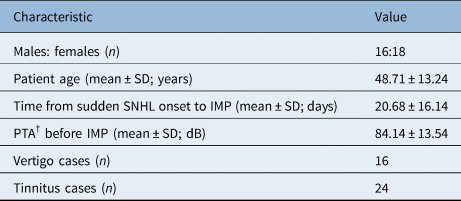
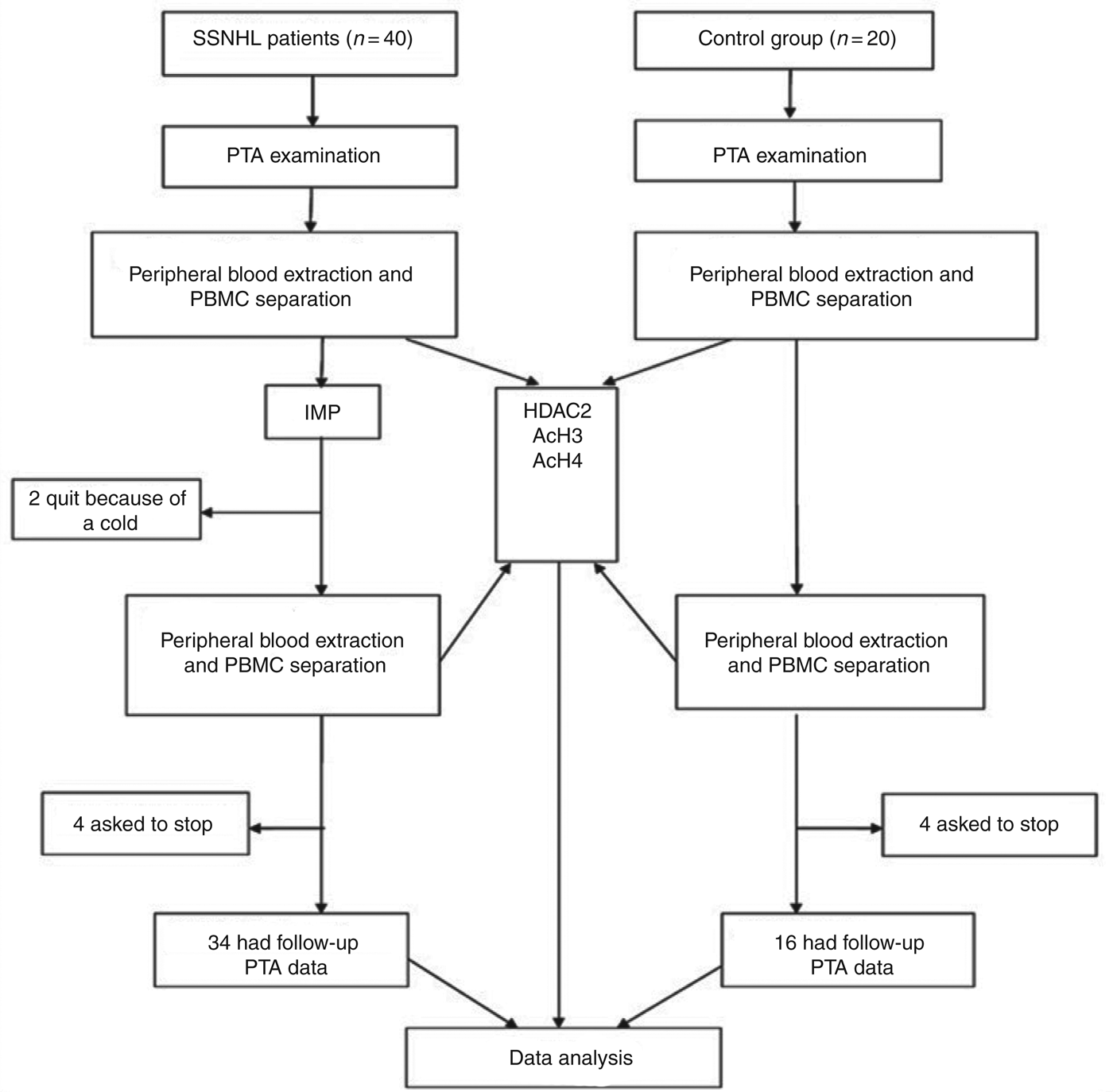
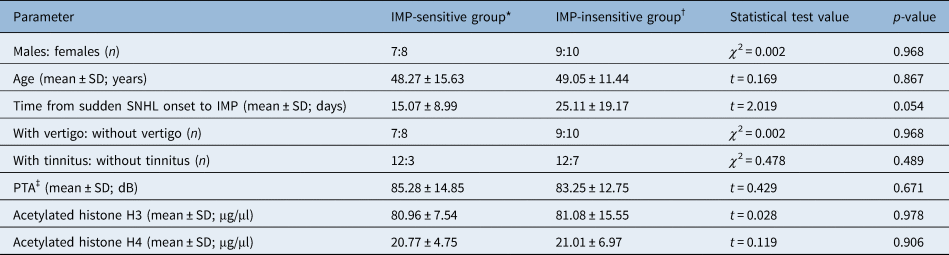
Forty refractory sudden SNHL patients were initially enrolled in the present study. Two patients were eliminated because they had a common cold and four patients quit voluntarily. Thus, 34 patients completed all treatments and follow up. The corresponding demographic data are shown in Table 1.
Demographic data for sudden SNHL patients*

* Total n = 34. †At 0.25–8 kHz. SNHL = sensorineural hearing loss; SD = standard deviation; IMP = intra-tympanic methylprednisolone perfusion; PTA = pure tone average
Twenty healthy volunteers with normal audiograms were initially recruited. Four volunteers left the study; hence, data for 16 of the volunteers were included in the analyses (Figure 1).
Consolidated Standards of Reporting Trials (‘CONSORT’) flow diagram of the present study. SSNHL = sudden sensorineural hearing loss; PTA = pure tone average; PBMC = peripheral blood mononuclear cells; IMP = intratympanic methylprednisolone perfusion; HDAC2 = histone deacetylase 2; AcH3 = acetylated histone H3; AcH4 = acetylated histone H4

There were no significant differences between the sudden SNHL patients and the volunteers in terms of sex or age. No severe side effects were observed in the sudden SNHL patients during intratympanic methylprednisolone perfusion treatment. The tympanic membrane perforations in all sudden SNHL patients healed during the follow-up period.
Improved hearing in glucocorticoid-sensitive patients
The average PTA (at 0.25–8 kHz) in all 34 sudden SNHL patients improved from 84.14 ± 13.54 dB to 73.56 ± 18.45 dB (t = 4.590, p < 0.001) after intratympanic methylprednisolone perfusion, with a PTA gain of 15 dB or more in 11 cases and of 30 dB or more in 4 cases. Based on the guidelines for the diagnosis and treatment of sudden SNHL recommended by the Society of Otorhinolaryngology Head and Neck Surgery in China,Reference Yang, Ko, Peng and Hwang13 the therapeutic efficacy of intratympanic methylprednisolone perfusion was 44.11 per cent. This result indicates that about half of refractory sudden SNHL patients in whom systemic treatments failed could still be treatable via intratympanic methylprednisolone perfusion.
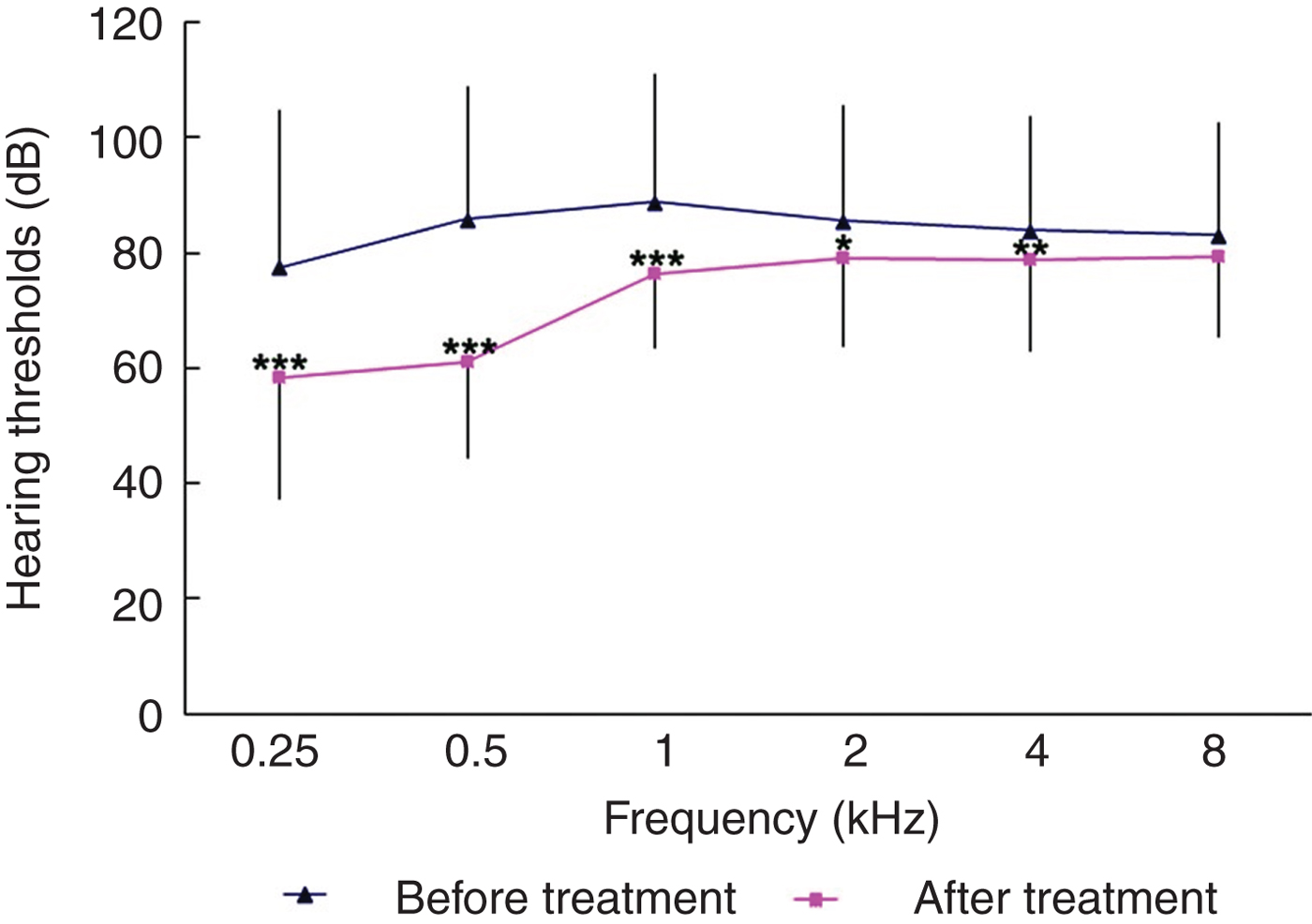
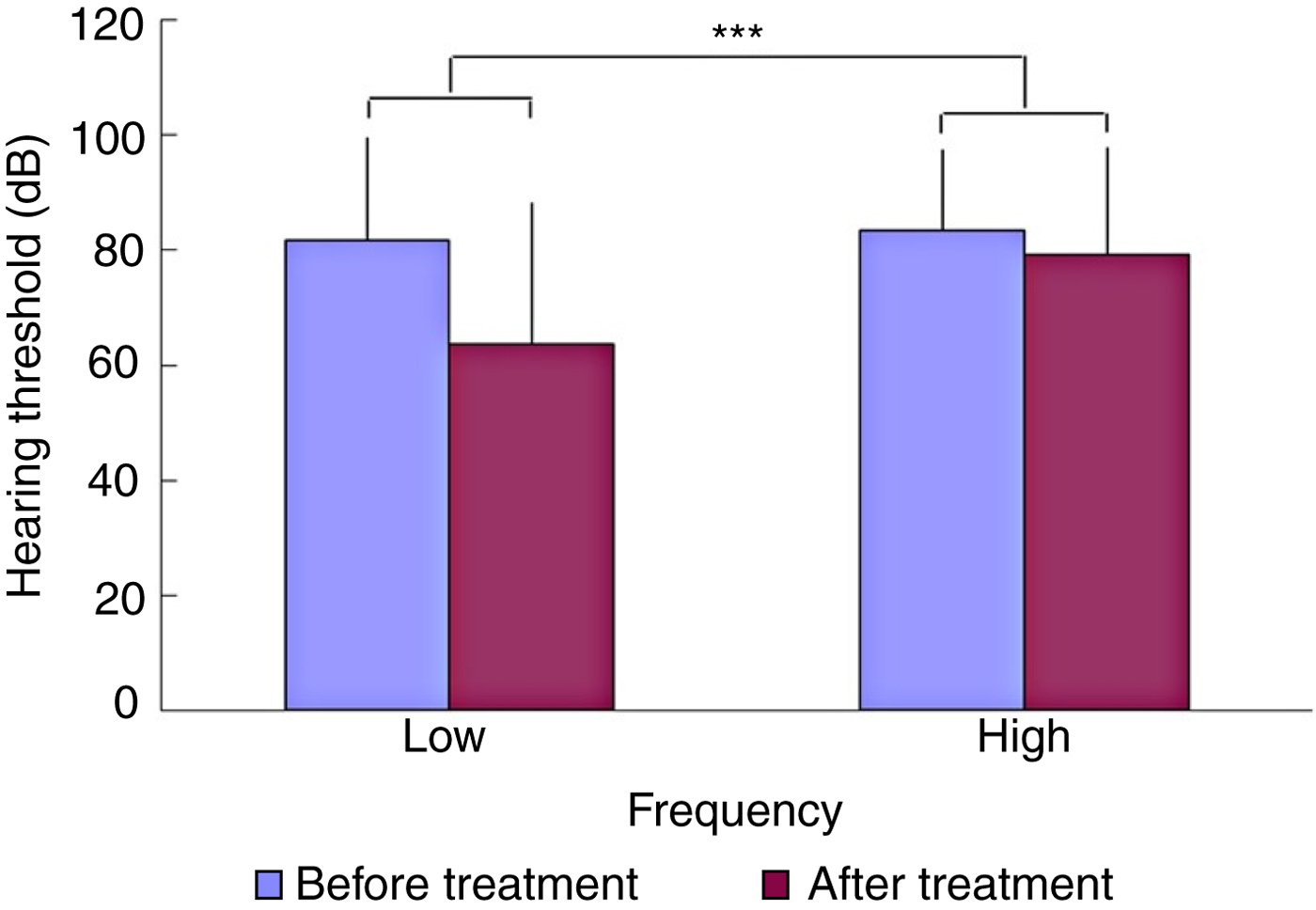
The present study also revealed that low frequency hearing loss was more prone to recovery than high frequency hearing loss (Figures 2 and 3). The PTA gain in the low frequencies (at 0.25–0.5 kHz) after intratympanic methylprednisolone perfusion was 17.94 ± 20.11 dB, which is significantly more than the PTA gain (5.65 ± 13.17 dB) in the high frequencies (4–8 kHz) (t = 3.982, p < 0.001).
Average hearing thresholds at each frequency. Average hearing thresholds were significantly improved in all frequencies except 8 kHz at three months after the onset of sudden sensorineural hearing loss, compared to the values before intratympanic methylprednisolone perfusion treatment. *p < 0.05; **p < 0.01; ***p < 0.001

Pure tone averages (PTAs) at low (0.25–0.5 kHz) and high (4–8 kHz) frequencies. Significantly greater PTA gains were observed in low frequencies (17.94 ± 20.11 dB) than in high frequencies (5.65 ± 13.17 dB) at three months after the onset of sudden sensorineural hearing loss (t = 3.982). ***p < 0.001

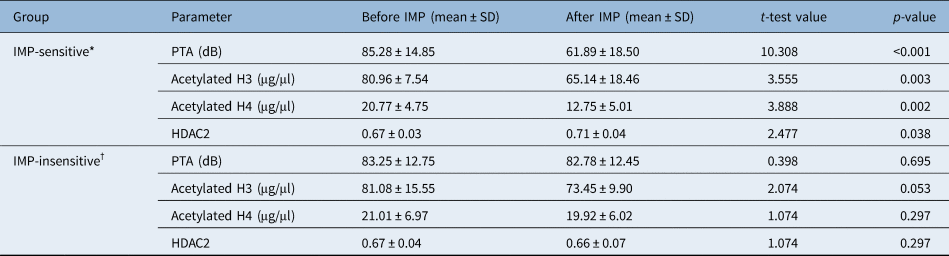
According to the criteria reported previously,Reference Hou, She, Du, Dai, Xie and Zhou5 there were 15 patients with a PTA gain of 15 dB or more, allocated to the intratympanic methylprednisolone perfusion sensitive group, and 19 patients with a PTA gain of less than 15 dB, allocated to the intratympanic methylprednisolone perfusion insensitive group. Before treatment, the PTA in the glucocorticoid-sensitive group was 85.28 ± 14.85 dB, similar to that in the glucocorticoid-insensitive group (83.25 ± 12.75 dB) (t = 0.429, p = 0.671; Table 2). However, a significant PTA gain was observed only in the glucocorticoid-sensitive group after intratympanic methylprednisolone perfusion treatment (Table 3).
Comparison of general data for glucocorticoid-sensitive and insensitive groups

*n = 15; †n = 19. ‡At 0.25–8 kHz, recorded before intratympanic methylprednisolone perfusion. IMP = intratympanic methylprednisolone perfusion; SD = standard deviation; SNHL = sensorineural hearing loss; PTA = pure tone average
Comparison of PTA, and acetylated histones H3 and H4 before and after treatment, for both study groups

Pure tone average (at 0.25–8 kHz) was recorded before intratympanic methylprednisolone perfusion and three months after the onset of sudden sensorineural hearing loss; acetylated histones H3 and H4, and histone deacetylase 2 (HDAC2), were tested before and after intratympanic methylprednisolone perfusion. *n = 15; †n = 19. PTA = pure tone average; IMP = intratympanic methylprednisolone perfusion; SD = standard deviation
Increased HDAC2 and decreased histone acetylation levels in glucocorticoid-sensitive patients
Both HDAC2 and histone acetyltransferase can regulate histone acetylation. However, HDAC2 is more closely related to glucocorticoid resistance in many diseases.Reference Hou, She, Du, Dai, Xie and Zhou5–Reference Yamaqoe, Kanno, Kanno, Sasaki, Siegel and Lenardo9 Thus, we measured the levels of HDAC2, and histone H3 and H4 acetylation, in the peripheral blood mononuclear cells of refractory sudden SNHL patients via enzyme-linked immunosorbent assay analysis.
The HDAC2 protein level (quantified by calculation of optical density) was 0.68 ± 0.03 in sudden SNHL patients prior to intratympanic methylprednisolone perfusion, which is significantly lower than the level found in healthy volunteers (0.75 ± 0.04) (t = 5.447, p < 0.001). However, no significant difference was observed in HDAC2 levels between the glucocorticoid-sensitive and glucocorticoid-insensitive groups before intratympanic methylprednisolone perfusion (t = 0.002, p = 0.998). The HDAC2 protein levels were significantly increased following treatment in the glucocorticoid-sensitive group (from 0.67 ± 0.03 to 0.71 ± 0.04) (t = 2.447, p = 0.038), but not in the glucocorticoid-insensitive group (t = 1.074, p = 0.297).
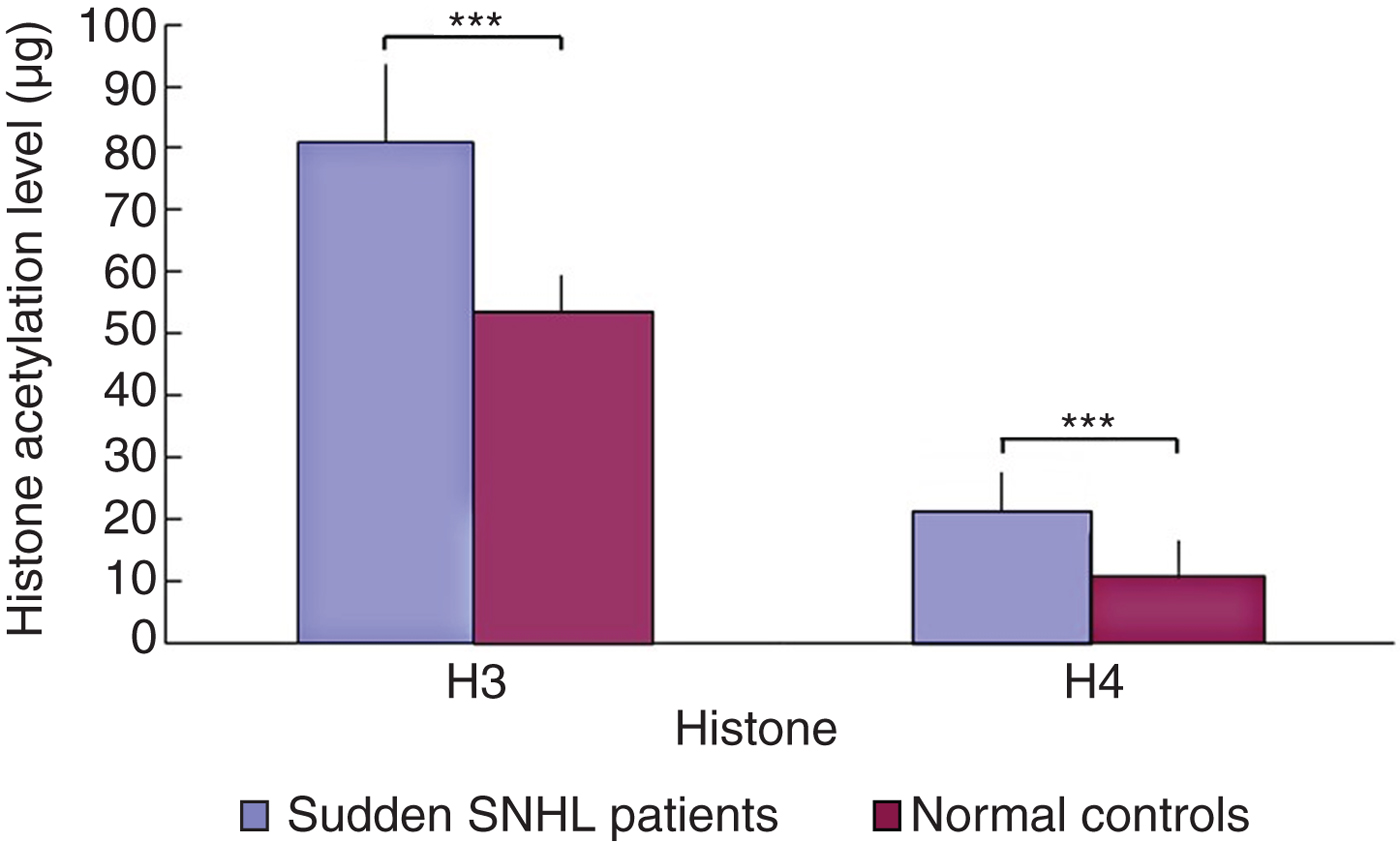
Consistent with the low levels of HDAC2, significantly higher levels of histone H3 and H4 acetylation were observed in all refractory sudden SNHL patients compared to normal controls prior to intratympanic methylprednisolone perfusion. However, there was no significant difference in the histone acetylation levels between the glucocorticoid-sensitive and glucocorticoid-insensitive groups before the treatment (histone H3, t = 0.0028, p = 0.978; histone H4, t = 0.119, p = 0.906).
Histone H3 acetylation was 81.03 ± 12.49 µg/μl in all refractory sudden SNHL patients; in contrast, it was 53.47 ± 20.98 µg/μl in normal control peripheral blood mononuclear cells (t = 4.863, p < 0.001). Similarly, acetylated histone H4 was 20.91 ± 6.01 µg/μl in sudden SNHL patients, while it was 10.66 ± 5.88 µg/μl in normal control peripheral blood mononuclear cells (t = 5.661, p < 0.001) (Figure 4).
Histone acetylation levels in sudden sensorineural hearing loss (SNHL) patients and normal controls. Histone H3 and H4 acetylation levels were significantly higher in sudden SNHL patients before intratympanic methylprednisolone perfusion treatment compared to normal controls (53.47 ± 20.98 µg/μl vs 10.66 ± 5.88 µg/μl). ***p < 0.001

Intratympanic methylprednisolone perfusion treatment significantly decreased histone H3 and H4 acetylation levels in the glucocorticoid-sensitive group. In the glucocorticoid-sensitive group, histone H3 acetylation decreased from 80.96 ± 7.54 µg/μl to 65.14 ± 18.46 µg/μl (t = 3.555, p = 0.003), and histone H4 acetylation decreased from 20.77 ± 4.75 µg/μl to 12.75 ± 5.01 µg/μl (t = 3.888, p = 0.002). In contrast, no significant changes were observed in the glucocorticoid-insensitive group (histone H3, t = 2.074, p = 0.053; histone H4, t = 1.074, p = 0.297) (Table 3).
These results indicate that intratympanic methylprednisolone perfusion significantly changed the levels of HDAC2 and histones H3 and H4 only in the glucocorticoid-sensitive group.
Western blot findings
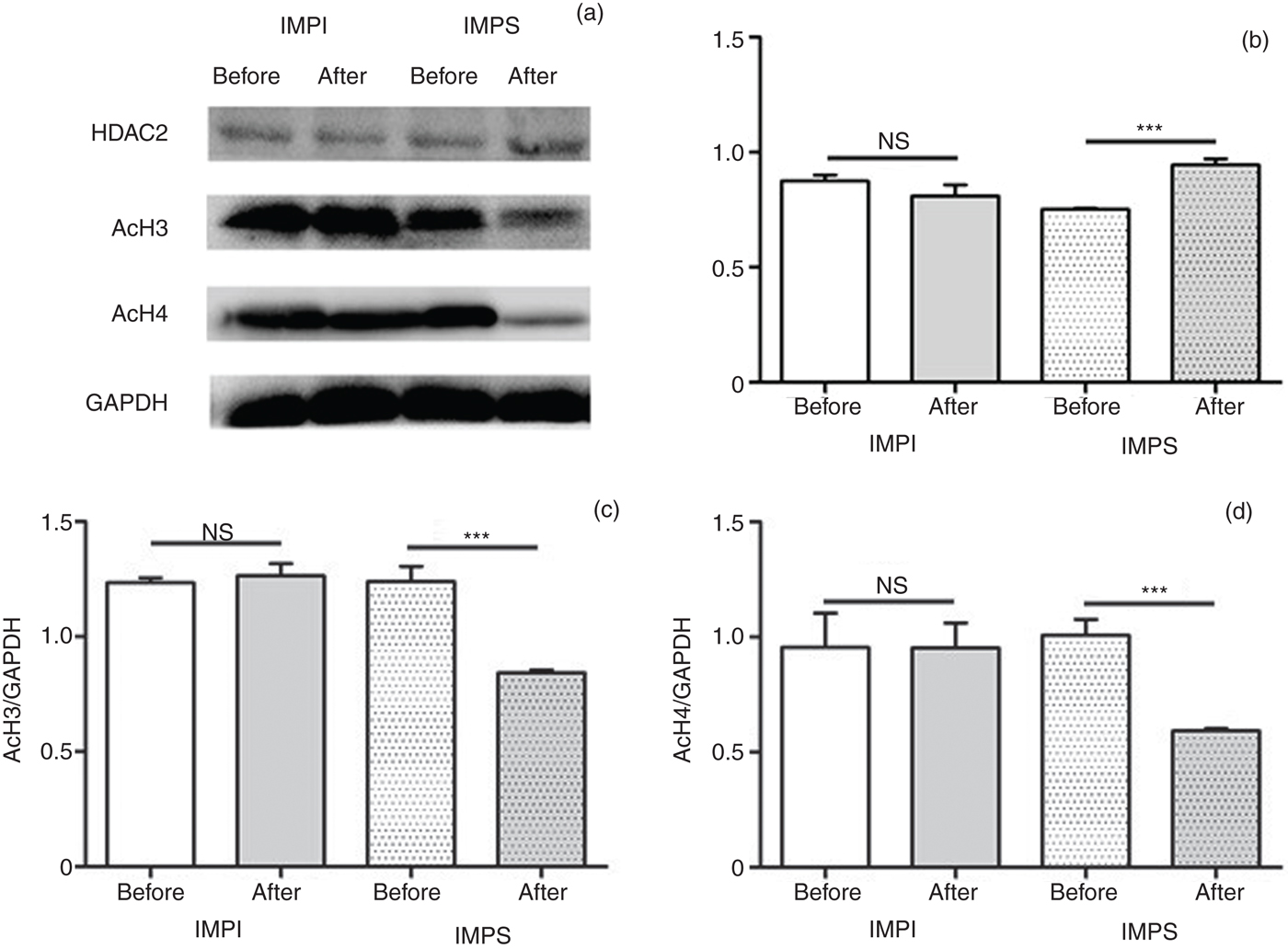
The increased HDAC2 and decreased histone acetylation levels in glucocorticoid-sensitive patients were confirmed by Western blot findings. Consistent with the enzyme-linked immunosorbent assay analysis, increased HDAC2 levels and decreased histone H3 and H4 acetylation levels were only observed in Western blot analyses from the intratympanic methylprednisolone perfusion sensitive group, but not the glucocorticoid-insensitive group (Figure 5). These results again suggest that the reduction of histone acetylation may be one of the mechanisms of successful intratympanic methylprednisolone perfusion treatment in refractory sudden SNHL patients.
Comparison between the intratympanic methylprednisolone perfusion sensitive and insensitive groups in: (a) Western blot analyses, (b) histone deacetylase 2 (HDAC2) levels, (c) acetylated histone H3 levels and (d) acetylated histone H4 levels. Increased HDAC2 levels and decreased acetylated histone H3 and H4 levels were observed only in the intratympanic methylprednisolone perfusion sensitive group. Y-axes represent optical density ratios. ***p < 0.001. IMPI = intratympanic methylprednisolone perfusion insensitive; IMPS = intratympanic methylprednisolone perfusion sensitive; AcH3 = acetylated histone H3; AcH4 = acetylated histone H4; GAPDH = glyceraldehyde 3-phosphate dehydrogenase; NS = non-significant

Discussion
Sudden SNHL patients are often treated with a combination of medicines because of the unclear pathogenesis; these include glucocorticoids, vasodilators, thrombolytics, antivirals, antioxidants and neurotrophic drugs.Reference Yang, Ko, Peng and Hwang13 However, according to the American Academy of Otolaryngology – Head and Neck Surgery Foundation, only glucocorticoids are considered effective drugs for treating sudden SNHL.Reference Stachler, Chandrasekhar, Archer, Rosenfeld, Schwartz and Barrs1
Methods of delivering glucocorticoids include systemic administration, and intratympanic perfusion or injection.Reference Stachler, Chandrasekhar, Archer, Rosenfeld, Schwartz and Barrs1,14 The systemic administration of glucocorticoids has been widely employed in clinics for years. However, the adverse effects limit its application, especially in pregnant patients or those with diabetes. Thus, new methods of delivering glucocorticoids have been developed.Reference Du, Chen, Kuriyavar, Kopke, Grady and Bourne15–Reference Plontke, Glien, Rahne, Mader and Salt18 In these studies, the semi-permeability of the round membrane is the basic mechanism for intratympanic glucocorticoid delivery.Reference Bird, Begg, Zhang, Keast, Murray and Balkany19 Glucocorticoids can directly enter into the cochlea via the round membrane to avoid systemic adverse effects. Furthermore, a higher concentration of glucocorticoids can be attained in the cochlea via intratympanic delivery.Reference Bird, Begg, Zhang, Keast, Murray and Balkany19,Reference Bird, Murray, Zhang and Begg20 However, given the need for surgery and the potential risk of infection, intratympanic glucocorticoid delivery is only recommended as a salvage treatment for sudden SNHL patients in whom systemic glucocorticoid treatment has failed.
The present study comprised 34 sudden SNHL patients in whom conventional treatment had failed, and who were therefore treated with intratympanic methylprednisolone perfusion. Following intratympanic methylprednisolone perfusion, 4 patients had a PTA gain of more than 30 dB, and 11 patients had a PTA gain of more than 15 dB. The therapeutic efficacy was therefore 44.11 per cent, consistent with previous reports in the literature.Reference Chou, Chen, Kuo, Yu, Wen and Wu21,Reference Erdur, Kayhan and Cirik22 These results indicate that about half of refractory sudden SNHL patients for whom systemic treatments failed could still be treatable.
Similar to systemic glucocorticoid treatment, we found that PTA gain was better for low frequencies than high frequencies after intratympanic methylprednisolone perfusion, which is consistent with our previous report.Reference She, Dai, Du, Yu, Chen and Wang12 The poor recovery in the high frequencies may be due to a higher concentration of harmful substances in the basal turn that cause more serious damage in this region of cochlea.Reference Zou, Poe, Ramadan and Pyykko23,Reference Saijo and Kimura24
No severe side effects were observed in the present study, indicating that intratympanic methylprednisolone perfusion is a safe approach for treating sudden SNHL. Nevertheless, there were still a number of sudden SNHL patients who did not respond to intratympanic methylprednisolone perfusion treatment.
Recent studies have suggested that low levels of HDAC2 may cause glucocorticoid insensitivity in patients with asthma or inflammatory diseases.Reference Hou, She, Du, Dai, Xie and Zhou5,Reference Barnes and Adcock6 We have also observed a lower level of HDAC2 in refractory sudden SNHL patients compared to healthy volunteers in the present study and in our previous report.Reference Hou, She, Du, Dai, Xie and Zhou5 Although HDAC2 and histone acetyltransferase can regulate histone acetylation, HDAC2 is more closely related to glucocorticoid resistance in many diseases.Reference Hou, She, Du, Dai, Xie and Zhou5–Reference Yamaqoe, Kanno, Kanno, Sasaki, Siegel and Lenardo9
Consistent with these reports, patients with refractory sudden SNHL had high histone H3 and H4 acetylation levels compared to healthy controls in the present study. It is reasonable to hypothesise that the high levels of histone acetylation measured in sudden SNHL patients may be attributable to the correspondingly low levels of HDAC2 in these patients, although we could not formally rule out the effects of histone acetyltransferase function in this context. Histone acetylation not only makes DNA loose and accessible to transcription factors, but also regulates the corresponding promoter activity, and accelerates nucleotide exchange during DNA replication and transcription.Reference Becker and Workman25–Reference Elliott, Murphy, Hayes and Thiriet28 However, the over-acetylation of histones can inhibit cell growth, induce cell apoptosis and affect cell repair.Reference Li, Zhu and Tian29–Reference Kidd and Schneider31 Thus, a high level of histone acetylation may be not conducive to the recovery of damaged hair cells in the cochlea.
In the process of intratympanic methylprednisolone perfusion treatment, glucocorticoids could recruit HDAC2 and up-regulate its activity.Reference Souza, Marcondes, Albertini, Mesquita-Ferrari, Fernandes and Aimbire32 HDAC2 would reduce histone acetylation in the cochlea and promote hearing recovery. For a much higher glucocorticoid concentration in the cochlea than can be achieved by systemic administration,Reference Bird, Begg, Zhang, Keast, Murray and Balkany19,Reference Bird, Murray, Zhang and Begg20 intratympanic methylprednisolone perfusion could be employed to up-regulate HDAC2 levels in order to decrease histone H3 and H4 acetylation, even in patients for whom systemic steroid therapy has failed. The present study also indicates that the down-regulation of histone acetylation may be a key mechanism for the efficacy of intratympanic methylprednisolone perfusion in the treatment of refractory sudden SNHL.
As no significant differences were observed in HDAC2 and histone acetylation levels between the glucocorticoid-insensitive and glucocorticoid-sensitive groups before intratympanic methylprednisolone perfusion treatment, it is reasonable to conclude that the increase in HDAC2 protein level and corresponding decreased histone acetylation observed in glucocorticoid-sensitive patients reflect a positive treatment effect of intratympanic methylprednisolone perfusion.
Our study is complicated by the fact that all of the refractory sudden SNHL patients enrolled were treated systemically (with treatment including intravenous glucocorticoids and antioxidants) prior to our peripheral blood mononuclear cell evaluations. Thus, we cannot exclude a potential confounding effect of systemic glucocorticoids on the histone H3 and H4 acetylation status. In future studies, the peripheral blood mononuclear cell levels of HDAC2 and histone acetylation should be measured prior to initiating any treatment, to allow for more objective distal monitoring of changes in this biomarker status. However, all patients had similarly high levels of histone H3 and H4 acetylation before intratympanic methylprednisolone perfusion compared to normal control subjects. Therefore, it is noteworthy that histone H3 and H4 acetylation (measured from peripheral blood mononuclear cells) was significantly different following localised treatment with methylprednisolone.
As it is a small molecule, methylprednisolone has strong permeability and can penetrate into the endolymphatic system through the round window membrane. From there, it can pass through the vestibular aqueduct, endolymph sac and cerebrospinal fluid to the systemic circulatory system. When methylprednisolone is perfused into the tympanic cavity, it may be partly absorbed by capillaries and lymphatic vessels in the mucosa of the middle-ear cavity, and then enter into the systemic circulatory system. In addition, some intratympanic methylprednisolone may reach the nasopharynx through the Eustachian tube, and then be swallowed into the digestive tract and absorbed there. Thus, circulating methylprednisolone in the blood may change the levels of HDAC2 and histone H3 and H4 acetylation in peripheral blood mononuclear cells.
• Glucocorticoids are widely used as an effective therapy for sudden sensorineural hearing loss (SNHL)
• Intratympanic methylprednisolone perfusion may improve hearing in sudden SNHL patients in whom systemic glucocorticoids have failed
• A number of sudden SNHL patients remain insensitive to systemic or intratympanic glucocorticoid treatment
• The therapeutic effect of intratympanic methylprednisolone perfusion is closely related to reduced histone acetylation
Conclusion
Overall, the present study demonstrates that intratympanic methylprednisolone perfusion can improve hearing in a considerable number of sudden SNHL patients for whom systemic glucocorticoid treatment failed. The efficacy is closely associated with histone acetylation. Down-regulation of histone acetylation may be one of the mechanisms of intratympanic methylprednisolone perfusion. Our results provide a better understanding of intratympanic methylprednisolone perfusion. We believe that, in addition to glucocorticoids, inhibitors of histone acetylation may be useful in the treatment of sudden SNHL patients.
Acknowledgements
The authors would like to thank Professor Hongwei Wang (Medical School of Nanjing University, China) and his team for their help in our experiments, and Drs Xiaoping Du and Matthew B West (Hough Ear Institute, Oklahoma City, USA) for reviewing the manuscript. Financial support for this research was provided by grants from: the National Natural Science Funds of China (number 81271074), the Six Talent Peaks Project of Jiangsu Province (WSN-009,075), the Medical Science and Technology Development Foundation Nanjing Department of Health (ZKX17019), and the Jiangsu Provincial Key Medical Discipline (ZDXKB2016015).
Competing interests
None declared