1. INTRODUCTION
Designers are easily able to deal with quantifiable objective aspects such as functionality, manufacturability, weight, and other technical properties of the product. However, qualitative aspects such as aesthetics are contributing yet subjective factors in determining the success of a product.
This research concentrates on visual product aesthetics or those characteristics that create a product's appearance and have the capacity to affect observers and consumers. Such characteristics include materials, proportion, color, ornamentation, shape, size, and reflectivity (Lawson, Reference Lawson1983).
The form of a product plays a significant role in the decisions of consumers when purchasing products, with a survey of senior marketing managers stating that 60% of respondents mentioned design as the most important determinant of new product performance (Bruce & Whitehead, Reference Bruce and Whitehead1988). The shape of a product may contribute to its success through a number of ways, including attracting customers in cluttered markets; communicating information; adding quality to the lives of consumers through the provision of sensory pleasure; and providing a long lasting attachment to the product (Bloch, Reference Bloch1995). The significance of the emotive potential of products has led to a growing interest in the fields of emotional design and Kansei engineering.
Emotional design is an increasingly important approach to differentiating a product within a competitive market. Norman (Reference Norman2004) argues that emotional design can lead to users accepting nonoptimal functionality or usability. He states different ways to define how one responds emotionally to a product: visceral, behavioral, and reflective; these interweave both cognitive and emotional responses (Norman, Reference Norman2004). Visceral responses refer to the most immediate level of processing and appeal to the senses before interaction with the product occurs. Behavioral responses are related to the experience of using the product and are usually concerned with the product's interaction. Reflective responses are about one's thoughts after using and owning a product; thus, they are often connected to self-image and status. Visceral responses allow users to make quick judgments on a product and how that product is perceived based upon his/her prior experiences. In this paper, the focus is upon visceral responses only.
Ahmed and Boelskifte's (Reference Dore, Pailhes, Fischer and Nadeau2006) found that the designers of a product and the user of the shape do not necessarily agree about the perception that is described by it. Hence, the designer is not always successful in conveying the desired message through the shape of their designs. Therefore, tools and methods can be a useful support for designers to understand how the shape of a product can be used to describe the desired perception in the intended user group. Support can be through identifying the relationships between the characteristics of the shape of a product and the perceptions of the shape or through user involvement early into the design process. To achieve that link, several studies aiming to identify the relationships between the characteristics of a product's shape and its emotive potential or perception have been carried out. A method based upon perceptual psychology (perception of “safety,” “friendliness” of a machine) was proposed by Lebbon and McDonagh-Philp (Reference Lebbon and McDonagh-Philp2000). Methods based on design and computer science approaches were employed by Wallace and Jakiela (Reference Wallace and Jakiela1993), Hsiao and Wang (Reference Hsiao and Wang1998), Van Bremen et al. (Reference Van Bremen, Knoop, Horvath and Vergeest1998), and Smyth and Wallace (Reference Smyth and Wallace2000). Tsai et al. (Reference Tsai, Hsiao and Hung2006) proposed a neural network-based method considering both color and form and applied it to a door knob design. The authors argued that the method is easily transportable to other products but did not elaborate further on this point. A neurofuzzy-based method for affective design was proposed in Diyar and Kurt (Reference Diyar Akay and Kurt2009), where the link between physical elements and affective response to products was mapped using a neurofuzzy classifier, which extracts rules from a semantic differential scale. This method was combined with a multiple-criteria group decision-making technique and a gray relational analysis applied to mobile phones. A similar study using a method based on neural network and gray relational analysis can be found in Lai et al. (Reference Lai, Lin and Yeh2005), whereas an extension of this work proposing an automatic design approach based on fuzzy logic applied to mobile phones was proposed in Lin et al. (Reference Lin, Lai and Yeh2007). Park and Han (Reference Park and Han2004) developed a fuzzy rule-based method to model affective user perception and applied it to an office chair design. The product-specific design variables were collected by experts to best describe an office chair, three of which were chosen for model construction using fuzzy logic models. The affective space and the design space were both constructed using office chair characteristics only. Lai et al. (Reference Lai, Lin, Yeh and Wei2006) carried out an investigation on the influence of mobile phone form and color on product perception (product image) using a neural network.
A method based on a neurofuzzy model combined with a genetic algorithm (GA) has been employed in Hsiao and Tsai (Reference Hsiao and Tsai2005). The GA enables automatic search for a product form or evaluation of a product image prior to employing a neurofuzzy model for matching with the aesthetics space. The hybrid tool was applied to a door knob design as in Tsai et al. (Reference Tsai, Hsiao and Hung2006). Neural networks are a black box type of algorithm, because the rules are not explicit. It is argued that the proposed tool in this paper is easily transportable to other products even though the conclusions and application are based on the presented product case. Another product-oriented study is proposed by Dore et al. (Reference Dore, Pailhes, Fischer and Nadeau2007), where the links between the function of the product (design variables) and the physical sensation/experience generated by the product (sensory variables) were constructed using a regression analysis. The product case that was used was a parabolic ski. Swarm-optimization based affective modeling was used to model the relationship between Kansei words and design parameters applied to the design of pens. However, the design parameters are case specific (a pen), and the search for an optimal model was initiated by human input. The final result was a set of design parameters that would be considered optimal by users (Mohais et al., Reference Mohais, Nikov, Sahai and Nesil2007). In addition, a multiple-class fuzzy support vector machine recursive feature elimination algorithm was developed and then used to streamline the selection of optimum product form features (Shieh & Yang, Reference Shieh and Yang2008). The fuzzy support vector machine recursive feature elimination algorithm uses continuous and discontinuous product features of mobile phones in order to select the smallest feature subset. Prediction models are built from this subset in order to match consumer perception without considering color and texture. The method proved to be effective, but the identified features in the continuous and the discontinuous spaces were specific to mobile phones. A study using Kansei engineering and neural networks to cluster objects with a similar perception among users focusing upon color influence is proposed in Jianning and Fenqiang (Reference Jianning and Fenqiang2007). Fuzzy logic was employed to validate the sensitivity of aesthetics in automatic generation of roof geometries (Tsutsumi & Sasaki, Reference Tsutsumi and Sasaki2008) and to evaluate aesthetics of buildings based upon specific features (Norikazu et al., Reference Norikazu, Hiroshi, Yukihiro, Tomomi and Daisuk2001), but these studies did not link geometric properties to the emotional content. A major work on aesthetics and perception is presented in Giannini et al. (Reference Giannini, Monti and Podehl2006), where the relationship between aesthetic character and geometric properties was built by including aesthetic/styling constraints in a computer-aided design (CAD) system. The styling tool used aesthetic functionalities such as acceleration, lead-in, and tension, all collected from CAD designers' knowledge. However, the study focused mainly on influencing a shape from a style point of view, while still fitting more common engineering constrains (area, volume, etc.). The understanding of a more general link between geometric elements and a defined emotion/perception was missing. This maybe because the tool was developed to help CAD designers deal more easily with aesthetic constrains while respecting a set of functional constrains.
In the research work reported above, no systematic, precise, and product–context-free specification of a correspondence between simple product shape elements and emotional terms was provided, because all the models and tools were based on an existing functional product that limits the portability and generalization of the results. Furthermore, the number of characteristics used in the models tended to be too high, which might complicate the design work in practical use.
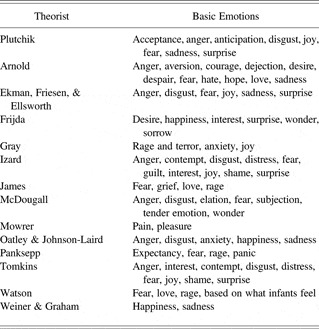
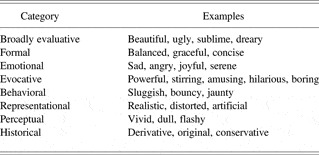
One of the issues surrounding research that attempts to link user perception to the characteristics of a shape is the need to cover all the possible ways to describe or perceive it. Furthermore, emotions can be classified in a number of different ways and theories; from the field of psychology the basic set of emotions can be described as between 2 and 10 different emotions, as summarized in Table 1 (Ortony & Turner, Reference Ortony and Turner1990). If a finite number of emotion categories can be defined, then developing an approach to cover all the basic emotions should be possible. However, user perceptions of three-dimensional (3-D) shapes and products are not limited to words that describe emotions. Several research works investigated this issue, and from the literature survey no one finite set that describes basic perceptions was found in the same way in which emotions can be described. However, some approaches to categorize the perception were attempted; for instance, Pham (Reference Pham1999) highlights that many philosophers have attempted to formalize the properties and meanings of aesthetics for evaluative purposes, which was based on Goldman's (Reference Goldman1995) eight categories to classify perceptions where emotion is one of these categories. These eight categories together with some examples are summarized in Table 2.
Basic emotions

Note: The emotions are according to Ortony and Turner (Reference Ortony and Turner1990).
Categorization of evaluative aesthetic terms

Note: The emotions are according to Goldman (Reference Goldman1995).
Other researchers created lists of adjectives to be used for specific products or applications, such us consumer products (Bouchard et al., Reference Bouchard, Christofol, Roussel, Auvray and Aoussat1999), cars (Hsiao & Chen, Reference Hsiao and Chen1997), and mobile phones (Chuang et al., Reference Chuang, Chang and Hsu2001). These lists are by no means exhaustive, but they clearly show that some adjectives can be better linked to some specific products. Another approach to classify perceptions was proposed by Pedro Company et al. (Reference Company, Vergara and Mondragón2004), where several lists of adjectives representing product perceptions were collected from literature. Then, the adjectives were clustered within three dimensions as an attempt to form a taxonomy of attributes. However, they did not succeed in classifying all of the collected adjectives.
The approach undertaken in this paper is to understand how to map features of a shape against the perception of the users. In addition, the paper aims at using simple geometric features combined with simple to use and explicit design rules in order to build the mapping between the perception space and the form space. The research aim and methods are further described in the following sections.
2. RESEARCH AIM
The aim of this research is to identify basic characteristics of a shape that can be used to describe the product's emotional content or perception as perceived by users. If this is possible, the research aims to understand if these characteristics can be represented in a fuzzy logic model (rule base and database) that can be used to evaluate the ability of a shape to represent a particular emotion or perception. The research presented here extends upon a previous study where a manual fuzzy logic model (steps 1–3 of the methodology below) was obtained (Achiche & Ahmed, Reference Achiche and Ahmed2008), by adding a genetically generated fuzzy logic model (step 4 of the methodology) for comparison and validation purposes.
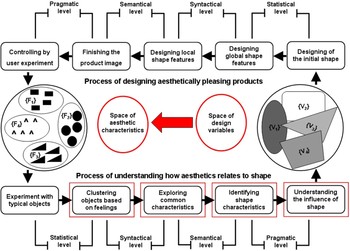
This methodology is based on the analogy of communication (Van Bremen et al., Reference Van Bremen, Knoop, Horvath and Vergeest1998), as presented in Figure 1, combined with a design and computer science approach in order to create a direct link between the space of design variables and the space of aesthetic characteristics. The double framed parts in Figure 1 were followed in the research presented here. However, the “clustering of the objects based on feelings” step was carried out differently in this paper, as all the objects designed by the student were already intended to evoke the perception that is investigated.
The two-way process for understanding and design for aesthetics (Van Bremen, Reference Van Bremen, Knoop, Horvath and Vergeest1998). [A color version of this figure can be viewed online at journals.cambridge.org/aie]

A four-step methodology was employed:
1. Students were asked to create a shape that represents a particular set of emotions. This represents the syntactical level of designing aesthetically pleasing products in Figure 1.
2. Authors created the input premises and the rules representing their attempts to link shape to emotion and embedded in a manually constructed fuzzy logic model (Achiche & Ahmed, Reference Achiche and Ahmed2008). This represents the semantical level of designing aesthetically pleasing products in Figure 1.
3. An evaluation was conducted with users. This represents the pragmatic level of designing aesthetically pleasing products in Figure 1.
4. A genetically generated fuzzy rule base and a database were created. This represents the manual and automatic mapping between the space of design variables and the space of aesthetic characteristics of designing aesthetically pleasing products in Figure 1.
The human perception of the forms was used as a learning set to automatically generate an equivalent fuzzy logic model automatically without the use of the authors' knowledge (avoiding human bias). The fuzzy rules and sets are compared to those that are manually created (in steps 2 and 3). If the automatically derived fuzzy logic model correlates the manually constructed one, then it would validate the authors' manually developed fuzzy logic model for both the rule base and the database.
In this paper the evaluation of the perception of the models was conducted on the aggressive adjective only, whereas the adjective friendly was used as an antonym for control purposes. In other words, only the shapes created by the design students to represent aggressiveness and friendliness were shown to the group of users for them to evaluate the level of aggressiveness. In practice, a group of people were shown shapes in the aggressive and edgy category and were asked to rate only the aggressiveness of each of the shapes. As a control test, the shapes that were designed to be friendly were included in the evaluation. The evaluators were not informed about which shape was intended to be aggressive or friendly or that some of the shapes were designed to be friendly, but were simply asked to rate the level of aggressiveness. The work in this paper investigates the perception of images, rather than any associations. Each of the steps of the methodology is discussed together with results in the following sections.
3. CREATING OBJECTS USING TERMS AS CONSTRAINTS
We created 3-D objects to describe given emotions by 60 engineering design students working individually. By selecting 3-D shapes as opposed to finished products, the fuzzy logic model and subsequent evaluation could focus on visceral responses and therefore separate behavioral and reflective responses. In addition, the functionality and usability of a product could influence the perception of the user toward a shape; hence, products were not used for the experiment. By evaluating the shape alone, the aesthetics are taken out of any functional/behavioral context (Ahmed & Boelskifte, Reference Ahmed and Boelskifte2006). Each student was presented with a set of words describing a certain emotion or perception. The terms given were massive and static, light and friendly, dynamic and integrated, and aggressive and edgy. The choice of these terms was inspired by previous research presented in Lenau and Boelskifte (Reference Lenau and Boelskifte2004, Reference Lenau and Boelskifte2005). Two terms were provided as rarely can the perception of a product be limited to a single term.
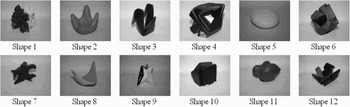
The students were provided with cubes of foam (200 mm3) and one of the four pairs of adjectives. The students were free to use color on their shapes; however, in this study only the shapes are considered and not the color. Each of the shapes was photographed from a fixed distance at 45-degree increments. All of the eight models created by the students to express aggressive and edgy were used, together with the four expressing light and friendly. The choice of using the aggressive adjective (and its antonym for control) was guided by the geometric properties, related to the adjective, identified by the authors. These properties can be evaluated using images only. Figure 2 shows the collected shapes, where shapes 2, 5, 8, and 11 were designed to be friendly and light; the remainder were designed to be aggressive and edgy. This data set was used as it was not influenced by the authors' perception of a form, but allows for subjectivity by collecting multiple perceptions from the students.
The three-dimensional shapes considered for the study.

4. FUZZY DECISION SUPPORT SYSTEM
Fuzzy logic techniques, based on the compositional rule of inference, are used to handle vague/imprecise knowledge (Zadeh, Reference Zadeh1965). Such knowledge can be collected and delivered by a human expert. A fuzzy rule-based model uses the fuzzy set theory proposed by Zadeh (Reference Zadeh1965). A fuzzy set is a set with a smooth boundary, which allows partial membership. The notion of a membership in a fuzzy set is a degree that can vary between 0 and 1 (Yen & Langari, Reference Yen and Langari1998). For example, the degree that we can say a person is “tall” varies with the height.
A fuzzy rule-based model consists of membership functions and fuzzy if–then rules. Each fuzzy if–then rule associates a condition of input data with a specific conclusion of output. The “if” part of a fuzzy rule is in charge of a specific region of an input space (fuzzy sets), and the “then” part has a local model that fits best to the data in the corresponding region (output fuzzy sets). The regions allow partial memberships and can overlap with each other. From a knowledge representation viewpoint, a fuzzy if–then rule can be viewed as a scheme for obtaining knowledge (especially human knowledge).
The degree to which the input matches the condition of each rule is computed by the distance between the input data point and the center of each local region. This is considered as a confidence level of the suggested answer. The model obtains a final output after giving a weight to each answer according to its confidence score, and averaging them; this step is called defuzzification.
In this study, the center of gravity is used for the defuzzification. FDSS Fuzzy-Flou software (Baron et al., Reference Baron, Achiche and Balazinski2001) is used as a validation tool for the fuzzy knowledge bases (FKBs). Fuzzy logic was selected because of its ability to handle imprecise knowledge as described earlier and to allow rules to be easily refined and tested (as opposed to black-box approaches). Explicit rules may assist the creation of design guidelines.
5. MAPPING SHAPE PARAMETERS AND AESTHETIC CHARACTERISTICS
In this section, the mapping of the shape parameters to aesthetic characteristics of the objects is described. Several geometric parameters were selected depending on the emotion represented, based on inspiration from the Gestalt rules of design. Gestalt psychology can provide designers with an understanding of “aesthetic perception and cognition” (Lyons, Reference Lyons2001). There is disagreement on how many rules are part of Gestalt rules for perception; however, the following seem to be the most frequently cited: Law of Proximity, Law of Symmetry, Law of Similarity, Law of Common Fate, Law of Continuation, Law of Isomorphism, Law of Closure, Law of Figure–Ground, Law of Focal Point, Law of Simplicity, Law of Prägnanz (good form), and Law of Unity.
It can be observed that the Gestalt rules are simple and tend to consider the whole picture, while still influenced by how several elements are connected to each other. This principle is used in the work presented in this paper. The considered objects are 3-D shapes, and hence the focus of the authors of this paper is on geometric properties.
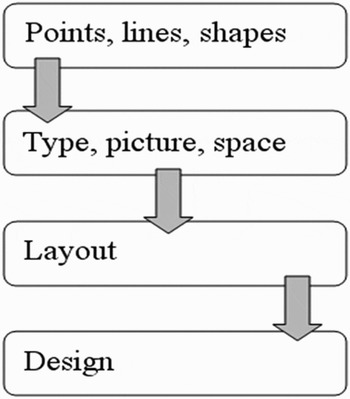
Any element of a 3-D shape is composed of points from which one can create lines and curves, then surfaces and volumes that will form a 3-D solid; this principle is illustrated in Figure 3. However, when dealing with perception from shapes presented as pictures this can be limited to surface 3-D modeling principles, which deal with points, lines/curves, and the surfaces they form when interconnected.
The structuring of visual information (Schamber, Reference Schamber1986).

Consequently, from a visual inspection of all the shapes designed by the students for the adjective aggressive and the adjective friendly, the choice was made to use the two lower levels of definition of 3-D shape in terms of lines and curves, whereas the points were not considered as they are not visible. A line was perceived as a linear edge and a curve was perceived as a nonlinear edge.
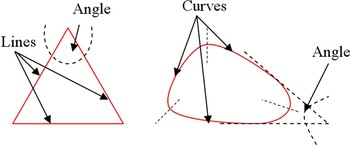
When the lines are connected to each other, they create angles that are considered as the next dimension. When two curves are connected to each other, the considered angle is the one formed by the two tangents to the curves. Figure 4 shows an example using two basic 2-D shapes. Note that an angle is considered acute when inferior or equal to 90 degrees and obtuse when an angle is greater than 90 degrees but less than 180 degrees inclusive. When in the presence of a reflex angle, an angle that is greater than 180 degrees is considered an obtuse angle.
An illustration of lines and curves on simple planar shapes. [A color version of this figure can be viewed online at journals.cambridge.org/aie]

In addition, the objects that were designed to be aggressive presented more shape irregularities and obeyed fewer symmetry rules or patterns. This led to considering the regularity level of the shapes based on symmetry.
Finally, and considering the details given above, the common parameters identified by the authors are as follows: lines/curves ratio (LCR), acute/obtuse angles ratio (AOR), and regularity level (RL). These parameters were defined by the authors as a result of the visual analysis made of the 3-D objects designed by the students. The visual analysis was done by both the authors considering the points cited above, and mutual agreement was achieved on using the above parameters. It is worth noting that the first author has a product design background and the second has a machine and CAD/computer-aided manufacturing design background.
For each shape that was considered, the number of curves (NC), lines (NL), acute angles (NAA), and obtuse angles (NOA) were counted using the different views of the photographs. The RL is based on invariance in symmetry; more details can be found in Achiche and Ahmed (Reference Achiche and Ahmed2008). Only the symmetry of the whole object is considered and not the subparts.
The following parameters were used as the universe of discourse of the input premises:


and the RL. Each object is tested for symmetry and scores 1 point for each (3 points maximum for three plans of symmetry) when compared to the initial position. The RL is evaluated as follows:

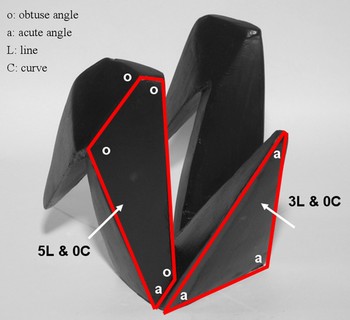
Figure 5 illustrates a partial enumeration of the geometric quantities described above; in the two faces selected one can count five lines and zero curves, four obtuse angles, and one acute angle, and the other surface has three lines, zero curves, and three acute angles. The same approach was followed until all the visible faces available on the each view of the 3-D shape (eight views were available per shape) were covered.
Counting the geometric properties from an image. [A color version of this figure can be viewed online at journals.cambridge.org/aie]

6. CONSTRUCTION OF THE FKB
The FKB is composed of a database and a rule base; the construction of both is detailed below.
6.1. Manual construction of the FKB
The manual construction of the FKB was carried out in the two steps described in the following sections.
6.1.1. Defining the database
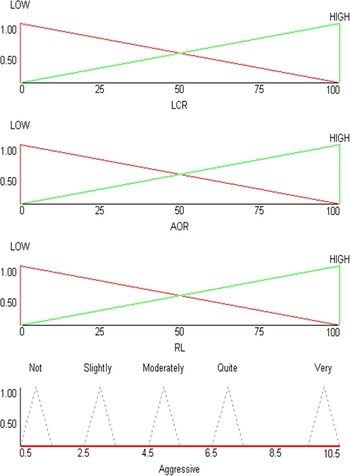
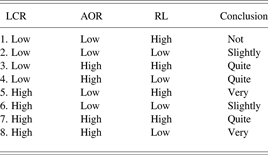
The database is composed of the inputs/outputs of the FKB. In this paper, the inputs are composed of the geometric parameters defined in Section 5. Each of the inputs has two membership functions (low, high). The choice of a simple database (only two triangular fuzzy sets on each input premise) is motivated by two reasons: the rules are constructed manually, so keeping the rules to a low number allows for a tighter design; and a simpler FKB tends to have higher generalization properties, which allows it to be used on a broader range of shapes (Balazinski et al., Reference Balazinski, Achiche and Baron2000; Duda et al., Reference Duda, Hart and Stork2001). The output is the level of aggressiveness ranging from 1 (nonaggressive) to 10 (very aggressive), where five membership functions were used: not, slightly, moderately, quite, and very.
6.1.2. Defining the rule base
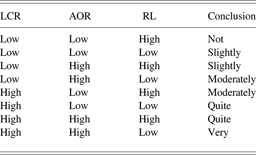
At this step the rule base was manually defined by the authors to map the relationships between the different membership functions of the input premises to the membership functions of the output premise. Table 3 presents the sets of fuzzy rules, and Figure 6 illustrates the manually constructed FKB (MFKB).
A manually constructed fuzzy knowledge base (MFKB). [A color version of this figure can be viewed online at journals.cambridge.org/aie]

Set of if–then rules

Note: LCR, lines/curves ratio; AOR, acute/obtuse angles ratio; RL, regularity level.
6.2. Automatic generation of the FKB
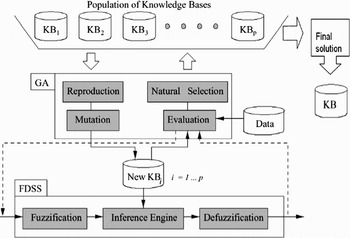
The automatic generation of the FKB is performed using a specialized GA developed by the author (Achiche et al., Reference Achiche, Baron and Balazinski2003). GAs are powerful stochastic optimization techniques based on the analogy of the mechanics of biological genetics and imitate the Darwinian survival of the fittest approach (Goldberg, Reference Goldberg1989). Each individual of a population is a potential FKB (see Fig. 7), where four basic operations of the real/binary-like coded GA (RBCGA) learning are performed: reproduction, mutation, evaluation, and natural selection. The RBCGA developed by the authors combines a real coded and a binary coded GA. The reproduction mechanisms are a multiple crossover and a fuzzy set reducer (Achiche et al., Reference Achiche, Balazinski and Baron2004). A uniform mutation is used for the mutation mechanism (Cordon et al., Reference Cordòn, Herrera and Villar2000).
The genetic learning paradigm.

The genotype of an FKB is the coding of its parameters into chromosomes. The genotype RG corresponds to several independent sets of real numbers and a set of integers.

where RGsets and RGrules are the genotypes of the fuzzy sets and the fuzzy rules, respectively. The genotype contains the following items:
1. Input/output premises: A set of real numbers, which are coordinates of the tip of the triangular fuzzy sets. For the sake of coding simplicity, only nonsymmetrical–overlapping triangular fuzzy sets for premises and symmetrical triangular fuzzy sets were considered for the conclusion. There are as many real number sets as there are premises in the problem, and one set for the conclusion. Each set contains a predefined maximum number of real numbers representing the location of the summit of each fuzzy set on each premise and the conclusion. The two summits located at the minimum and maximum limits of each premise and the conclusion are not coded, because they are constant throughout the evolution.
The genotype of the fuzzy sets of premise i is given as the following:

where Ki is the number of fuzzy sets on the premise i (or the conclusion). The limits of the premises (range) are not included in the sets. RGsets is then given as

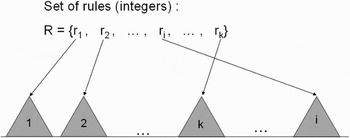
2. Fuzzy rules: The fuzzy rules were coded as a set of integers representing an ordered list of the combination of the premises. Each integer in the set represented a conclusion fuzzy set summit (Fig. 8). The genotype of the fuzzy rules is given as

The reproduction mechanisms.

The initial population of FKBs is composed of P randomly generated FKBs. The genotype of each new solution contains all of the sets mentioned above. However, as explained below, the size of the sets can decrease. The maximum number of fuzzy rules is computed as

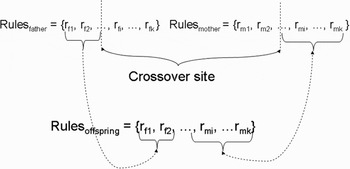
Reproduction is performed by crossover of the parent's genotype to obtain the offspring's genotype. The reproduction of the FKBs in the RBCGA is performed through three crossover mechanisms, each one having a certain purpose to achieve, as explained below.
6.2.1. Multiple crossover
The multiple-crossover mechanism is a combination of two crossovers applied on different parts of the genotype. These two mechanisms are governed by an initial probability pr 1 and are described as follows:
6.2.2. Premises/conclusion crossover
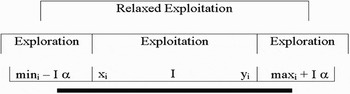
The mechanism used is called blending crossover α (BLX-α; Michalewicz, Reference Michalewicz1992), where α determines the exploitation/exploration level of the offspring (see Fig. 9), knowing that
• in the exploitation zone, the offspring inherits behaviors close to those of its parents; and
• in the exploration zone, the offspring is a result of an exploration; therefore, its attributes will be distant from its parent's average.
The parameter α is set to 1.0 for the first third of the generations (exploration), 0.5 for the second third (relaxed exploitation), and 0.1 for the last third of the evolution (exploitation).
The blended crossover α (BLX-α).

6.2.3. Fuzzy rules crossover
Because the part of the genotype representing the fuzzy rule base is composed of integer numbers, the crossover on this part of the genotype is done by simple crossover. The operation is performed by inverting the end part of the sets of the parents at a randomly selected crossover site as shown in Figure 10.
A simple crossover.

6.2.4. Fuzzy-set reducer
This mechanism aims to increase the simplicity level of the FKBs by randomly selecting a fuzzy set on a premise and erasing it together with its corresponding fuzzy rules. This mechanism allows one to obtain different and simpler (less information) solutions (i.e., FKBs). This mechanism is governed by the initial probability pr 2.
6.2.5. Mutation
Mutation is the creation of an individual by altering the gene of an existing one. The initial probability pr 3 governs the occurrence of this mechanism. The mutation used in the RBCGA is a random mutation (uniform), which is applied to one randomly selected individual (Cordon et al., Reference Cordòn, Herrera and Villar2000).
6.2.6. Natural selection
Natural selection is performed on the population by keeping the “most promising” individuals, based on their fitness. The first generation begins with P FKBs and the same number is generated by crossover and mutation. To keep the population constant, natural selection on the 2P FKBs was applied by ordering them according to the performance criterion and keeping the P first FKBs.
The optimization process is formulated as an optimization problem applied to the numerical data, using the RBCGA in order to produce nearly optimal FKBs. An FKB contains the following entities or information:
1. the number of premises (inputs) and the number of conclusions (outputs),
2. the number of fuzzy sets and their distribution on the premises and the conclusions, and
3. the fuzzy rules (fuzzy rule base).
Item 1 is a part of the problem's input data and all the features in items 2 and 3 are a part of the optimization process. The maximum complexity on each premise (i.e., maximum number of fuzzy sets) is fixed at the beginning of the optimization, and therefore these entities are not a part of the optimization process. It is worth noting that the maximum complexity can differ from premise to premise. After a few executions, maximum complexity can be readjusted to a higher number if required. The goal of the optimization process is to generate FKBs while maximizing the fitness function in terms of accuracy (f RMS), where RMS is the root mean square. Criterion ϕRMS is defined in the next section.
The optimization problem can be defined as follows: max f (ϕRMS), with G as the genotype.
6.3. Fitness function of the RBCGA
The fitness function allows one to compute the ratings of each FKB. Those performance ratings are used by the RBCGA in order to perform natural selection. The main performance criterion is the accuracy level of the FKB (approximation error) in reproducing the outputs of the learning data (belonging to the design context). The approximation error ΔRMS is measured using the RMS error method:

where N represents the size of the learning data. The RMS fitness value ϕ is evaluated as a percentage of the output length of the conclusion L, that is,

6.3.1. Generation of the database and the rule base
To generate the FKB using the RBCGA one has to set up the maximum complexity allowed, the multiple-crossover probability, and the mutation probability.
In this paper the maximum complexity is 5 fuzzy sets per input premise and 10 fuzzy sets on the output. These numbers are set higher than the ones used for the manual construction in order to allow the RBCGA to select from several tradeoffs. The reproduction probabilities are set to pr 1 = 60% (multiple crossover), pr 2 = 40% (simplification rate), and pr 3 = 5% (mutation); more details on these mechanisms can be found in Achiche et al. (Reference Achiche, Balazinski and Baron2004). The simplification percentage was set high, in order to put emphasis on the generalization of the fuzzy model because the optimization starts with a possible 53 (125) possible rules. The population size is set to 200 and the number of generations to 200. Each run was repeated three times to ensure the robustness of the optimization process. At the end of the optimization the best individual is selected according to the highest ϕRMS.
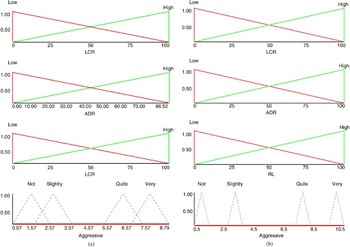
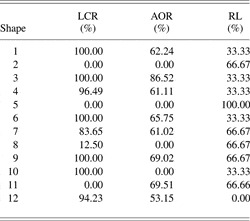
The selected FKB contains two fuzzy sets on each premise that corroborates the choices made for the manual construction. Figure 11 shows the selected genetically generated FKB (GFKB). One can see from Figure 11a that premise 2 (AOR) covers the discourse domain from 0 to 86.52% (and not up to 100%), the reason being that none of the shapes had a 100% AOR. The same goes for the output premise where the values range from 1.3 to 7.6.
(a) A genetically generated fuzzy knowledge base (FKB) and (b) a generalized genetically generated FKB. [A color version of this figure can be viewed online at journals.cambridge.org/aie]

For a more generalized GFKB the upper limit of the AOR premise is stretched to 100% and the output was changed to cover the range 1 to 10; this will be called the generalized genetically generated FKB (GGFKB). These alterations will reduce the accuracy of the FKB regarding the reproduction of the learning set but increase its usability. These alterations are also necessary in order to be able to compare the performance of the GFKB to the MFKB. Figure 11b illustrates the GGFKB.
7. VALIDATION OF THE FKBS
In order to validate the FKBs, 12 different shapes were used (8 aggressive + 4 friendly designs). To avoid differences due to different perceptions among different user groups, the participants selected for the evaluation all had an engineering design or industrial design background, either as undergraduate or graduate students, or worked in product development.
Using subjects without a design background would not provide a suitable data set to extract design rules because the participants would have difficulties distinguishing clearly between the different aspects of design for the desired perception. An assessment of perception using a limited number of shapes demands knowledge of design that subjects without design backgrounds may not possess. Therefore, expert participants were used, using the criterion of whether they had an engineering design or product design background.
There is no agreement about the sample size and no standards by which a sample size selection could be evaluated to select the number of expert participants required (Lai et al., Reference Lai, Lin, Yeh and Wei2006). The number of expert participants is usually far less than the number of general participants. In the studies of Norman and Olaf (Reference Norman and Olaf1963) and Strasser et al. (Reference Strasser, London and Kortenbout2005), a respective 6 and 7 experts participated; in Dore et al. (Reference Dore, Pailhes, Fischer and Nadeau2007) only 4 designers were surveyed. Therefore, in this study 20 experts were used to evaluate the shapes designed by the students.
The authors acknowledge the subjectivity involved in perception, for example, because of cultural differences, hence minimize the effect of this through selecting “homogeneous” groups. The chosen group of 20 experts, without knowledge of the purpose of the study, evaluated each shape. The group consisted of 5 females and 15 males. Each object was illustrated by two photographs in the evaluation grid to give a clear idea of the shape to the evaluator, and four view of each shape was also shown on a PowerPoint presentation. Each of the views lasted 3 s. During the evaluation, the participants were shown color photos but asked to focus on the shape; however, color photos were necessary for clarity of the images. The authors are aware of the influence of the colors, textures, and so forth on the emotional perception of an object; however, in this particular work they were not considered in order to focus on the link between geometry and emotion. The participants awarded scores on a scale from 1 to 10. The response average of the 20 evaluators was computed and used as the gold standard. Ideally, low scores for the friendly designs and high ones for the aggressive designs were expected if the MFKB were to correlate successfully to the users' perception. The GFKB reproduces the users' perceptions through a fuzzy model.
7.1. Experimental data treatment
In order to detect outliers the extreme Studentized deviate method was used, also commonly referred to as the Grubbs' test. First, one has to calculate the ratio Z as the difference between the outlier and the mean divided by the standard deviation (SD). If Z is large, the value is far from the others.

In this paper the SD is calculated from the data including the outliers. Grubbs and others have tabulated critical values for Z (Z c); for 20 values Z c = 2.71.
If the calculated value of Z is greater than the critical value in the table, then the P value is less than 0.05 (5%). In this paper Z was calculated for all values, and the P value for Grubbs' test was calculated for the largest values of Z.
To calculate an approximate P, one has to evaluate the intermediate value T using the following equation:

where N is the number of values in the sample and Z is calculated for the suspected outlier as shown above.
The next step is to evaluate the two-tailed P2 value for the Student t distribution, using the calculated value of T and (N – 2) degrees of freedom: P2 = T DIST(T, N – 2, 2).
Finally, the approximate P value is given by

This P value is the chance of observing one point so far from the others if the data were all sampled from a Gaussian distribution. Once the outliers were identified, they were excluded from the data set. The test was run until no outliers were present in the data. Two outliers were detected in the evaluation of shape 8.
7.2. Geometric properties of the shapes and learning performance
The LCR, AOR, and RL were calculated for each shape. Table 4 summarizes the obtained results, and these values were submitted as an observation file into MFKB and the GGFKB. The same set was used as a learning/validation set for the GFKB. The outputs of the fuzzy models assessed the predicted level of aggressiveness of the shapes.
Characteristics of shapes

Note: LCR, lines/curves ratio; AOR, acute/obtuse angles ratio; RL, regularity level.
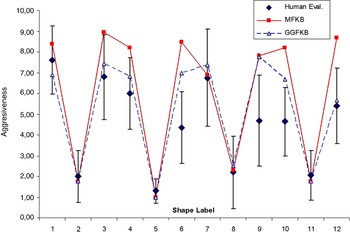
The correlation between the human evaluation and the MFKB prediction of the shapes aggressiveness was about 0.883 with a two-tailed P value of 0.000137, which can be considered satisfactory and extremely statistically significant. The correlation to the GFKB is 2% higher with 0.897 with a two-tailed P value of 0.0001 and to GGFKB is 0.890 with a two-tailed P value of 0.000106. Figure 12 illustrates the predicted aggressiveness of the shapes versus the perception of the users. One can see that the GGFKB prediction is closer to the real perception values than the MFKB, for the majority of the time; however, the general behavior of the curves was similar.
The perception versus prediction of the aggressiveness level. [A color version of this figure can be viewed online at journals.cambridge.org/aie]

7.3. Comparing the databases
From comparing Figure 6 and Figure 11 one can notice that the two fuzzy models are very similar; this confirms our choices when it comes to the database of the MFKB. The only difference is the absence of the fuzzy set “moderately” on the output of the GGFKB. However, because the center of gravity is used as a deffuzification mechanism, the absence of the latter does not highly affect the output, because middle values can be obtained by firing rules involving the extreme fuzzy sets at the same time.
7.4. Comparing the fuzzy rule bases
Table 5 represents the genetically generated fuzzy rule base; when compared to Table 3, one can see that the first two rules and the last two rules are identical but rules 3–6 are different.
Rules base of the generalized genetically generated functional knowledge base

Note: LCR, lines/curves ratio; AOR, acute/obtuse angles ratio; RL, regularity level. Rules 1, 2, 7, and 8 are identical, but rules 3–6 are not.
The difference in the middle rules can partially be explained because the fuzzy set “moderately” was omitted in the genetically generated FKB; this means that rules 4 and 5 cannot be identical. This change also has an influence on the immediate neighboring rules. Furthermore, the common point of rules 3–6 is switching between the high and low memberships for the premises LCR and AOR, respectively (low–high and high–low).
By analyzing Table 4, the closest shapes having those pairs are numbers 10 and 11. The rest of the shapes represent mainly the low–low and high–high pairs.
This leads the RBCGA to give lower priority to the high–low, low–high pairs because the learning was about reducing the ΔRMS. The middle rules were mainly used as a support to the extreme rules. Furthermore, one can see that when it comes to RL for both shapes 10 and 11 it is neither high nor low, which further complicates the rule extraction.
The automatic generation validated the distribution of the fuzzy sets in the database of the FKB, and the extreme rules were also reproduced. Both the automatically and manually constructed FKBs reproduced satisfactorily the human perception of the shapes.
8. CONCLUSION
This paper has shown manually constructed and genetically generated fuzzy logic models for evaluating aggressiveness in shapes, and has been validated through an empirical study with design students and design professionals. The initial results have shown that there are characteristics in a shape that characterize how it is perceived.
The genetically generated model that does not suffer any bias (bias that the authors might have) was very similar to the one manually constructed by the authors, which confirms the statement above. It also points to the possibility of using automatically generated fuzzy logic models as an evaluation/validation method for manually developed ones. Hence, the methodology used may provide an alternative way to triangulate between multiple measures of the same phenomenon because the GFKB correlates with an expert rule base (MFKB) and an empirical knowledge base (participants' ratings, 20 evaluators).
The results indicate that design rules for aggression are possible, and hence, establishing fuzzy logic models for other adjectives is likely to be possible for both emotions and perceptions. The implications of the work are that a set of design rules may be established in a fuzzy model and can be easily accessible. This can assist designers in understanding how a shape may be perceived by users and how they can change certain geometric ratios to change the emotions induced by their product. Furthermore, the fuzzy logic model can be used along with shape grammar techniques (Knight, Reference Knight1999) for both original and analytical shape grammars (Pupo et al., Reference Pupo, Pinheiro, Mendes, Kowaltowski and Celani2007). For the original type, an emotional evaluation of the generated designs can be predicted by the fuzzy models and compared against a desired emotion, whereas for the analytical type, one can validate the emotional value of an already existing design by extracting the relevant parameters from the shapes and using these as an observation set for the fuzzy logic model. For both the original and analytical shape grammars, and within a scope of evolutionary generation/analysis of designs, these evaluation/predictions could serve as a fitness function.
The limitation in respect to the automatic extraction of fuzzy models for other adjectives is the lack of variety of some of the shape characteristics. More shapes would be needed for the learning. Hence, future sets may be supplemented through shapes deliberately created to obey certain rules; because ideally a first subset should be used for learning, a second subset for cross-validation, whereas the final should be used for validation.
Sofiane Achiche is an Associate Professor in the Engineering Design and Product Development Section of the Department of Management Engineering at the Technical University of Denmark. He attained his PhD in mechanical engineering at the University of Montreal, Ecole Polytechnique de Montreal. Dr. Achiche's research interests focus on evolutionary computational intelligence for control and decision support applied to engineering problems such as emotional design, process control, mechatronic systems, and decision making.
Saeema Ahmed-Kristensen is an Associate Professor in the Department of Management Engineering at the Technical University of Denmark. She attained her PhD at the University of Cambridge, where she was also a fellow of New Hall. She leads a group whose research interests focus on engineering design knowledge to develop tools and methods to improve design synthesis, to manage engineering change and emotional design, and to provide decision support throughout a product's life cycle. Dr. Ahmed-Kristensen's approach is multidisciplinary, including computer science, engineering, and psychology.