




No CrossRef data available.
Article contents
Spatial and temporal repeatability in parasite community structure of tropical fish hosts
Published online by Cambridge University Press: 17 October 2003
Abstract
An assessment is made of the repeatability of parasite community structure in space for a marine fish, and in space and time for a freshwater fish from south-eastern Mexico. The marine fish species was the red grouper, Epinephelus morio (collected from 9 localities), and the freshwater species was the cichlid, Cichlasoma urophthalmus (collected from 6 localities: including monthly at 2 localities for 1 year, and bimonthly at 1 locality in 1990 and 1999). Pairwise interspecific associations and analyses of nested patterns in the distributions of parasite species among hosts were used in both fish species, with comparisons over time made only with the cichlid. Positive interspecific associations, and nested patterns were noted in some localities for both fish species, and/or at some sampling times for the cichlid fish. However, non-random patterns in the structure of parasite communities in these 2 host species only were observed sporadically. When present, nestedness in both fish species was apparently linked with a positive association between total infection intensities and fish size. Additionally, adjacent localities were more likely to display similar parasite community structure than distant ones. This preliminary result suggests that distance between localities is an important determinant of predictability in parasite community structure.
Information
- Type
- Research Article
- Information
- Copyright
- 2003 Cambridge University Press
INTRODUCTION
Much of the evidence available to date on parasite community structure comes from unreplicated studies (Esch, Bush & Aho, 1990; Poulin, 1998, 2001). For instance, a non-random pattern in parasite species distribution among hosts in a sample is almost never validated by comparisons with other independent samples from a different host population. Therefore, the potential for spatial and temporal variation in community structure, and thus the detection of important short-term or very local processes, is usually ignored.
This paper focuses on the repeatability of community structure in both space and time. First, we examined associations between pairs of common species. If 2 common parasite species are significantly associated in 1 host population, but not in another (e.g. Dezfuli et al. 2001; Poulin & Valtonen, 2002), what can be said about the importance of such an association for parasite community structure in that host species? Clearly, pairwise associations between parasite species should be studied across space and time to assess their generality.
Second, we examined the repeatability of nested patterns in parasite community organization. In recent years, a popular approach to the study of community structure has involved searching for a nested pattern in infracommunity composition within the parasite component community (Worthen, 1996; Worthen & Rohde, 1996; Wright et al. 1998; Poulin & Guégan, 2000; Poulin & Valtonen, 2001, 2002). A nested pattern occurs when the parasite species found in depauperate infracommunities represent non-random subsets of progressively richer infracommunities. This implies that the distributions of different parasite species among host individuals are not mutually independent. Significant nestedness (or anti-nestedness, a non-random pattern opposite to nestedness) has been observed in parasite communities of fish, though only in some of the host species studied (Poulin & Guégan, 2000; Poulin & Valtonen, 2001). Again, little attention has been paid to the possibility that nestedness is not a feature of the parasite communities in a given host species, but instead is a characteristic of certain communities at specific times and places. Carney & Dick (2000), and Poulin & Valtonen (2002) are the only researchers who have studied whether nestedness patterns are repeatable in space and time. However, the data of these authors present several shortcomings to address questions about repeatability in both space and time. First, both studies were undertaken in temperate latitudes, where water freezes during winter, making it impossible to get fish samples for more than a few months per year. This is the reason why Carney & Dick (2000) presented data only from summer, and Poulin & Valtonen (2002) pooled their fish samples of winter and summer. Second, the perch data of Carney & Dick (2000) only included 5 localities for their spatial analysis. Furthermore, the lakes studied by Poulin & Valtonen (2002) in Finland were adjacent, which in turn could cast doubts about their independence.
In the present study, we examine the repeatability, in time and space, of the parasite community structure of 2 fish species: the red grouper Epinephelus morio (Serranidae), a marine fish (9 localities), and the Mexican mojarra Cichlasoma urophthalmus (Cichlidae), a freshwater fish (collected from 6 localities: including monthly at 2 localities for 1 year, and bimonthly at 1 locality in 1990 and 1999), both from tropical south-eastern Mexico. Data on helminth species composition, species richness and similarity at component and infracommunity levels for both fish species have been published elsewhere (Vidal-Martínez et al. 1997, 2001; Salgado-Maldonado & Kennedy, 1997; Vidal-Martínez, Aguirre-Macedo & Kennedy, 1998).
Our objectives were to assess the repeatability of parasite community structure, using pairwise interspecific associations and nestedness patterns, across space in both fish species, and over time for the cichlid only. Additionally, a preliminary study of the spatial structure of the data was carried out. This study will provide one of the first evaluations of the generality of parasite community structure patterns in tropical latitudes.
MATERIALS AND METHODS
Specimens of red grouper, E. morio, were collected from 9 localities along the coast of the Yucatan Peninsula, Mexico: Campeche (19° 50′ 30″ N; 90° 32′ 00″ W), in the state of Campeche; Celestun (20° 51′ 20″ N; 90° 20′ 11″ W); Chelem (21° 16′ 00″ N; 89° 40′ 00″ W); Chuburna (21° 18′ 00″ N; 90° 08′ 00″ W); Progreso (21° 17′ 00″ N; 89° 40′ 00″ W); Rio Lagartos (21° 34′ 30″ N; 88° 04′ 44″ W); Sisal (21° 10′ 00″ N; 90° 02′ 00″ W); and Telchac (21° 20′ N; 89° 16′ W), in the state of Yucatan; and Chiquila (21° 34′ 00″ N; 87° 51′ 00″ W), in the state of Quintana Roo. Mexican mojarra, C. urophthalmus, specimens were collected from 6 localities on the Peninsula: Celestun (20° 51′ 20″ N; 90° 20′ 11″ W); MITZA (acronym of Materiales Itza, a flooded quarry; 21° 26′ 36″ N; 89° 41′ 50″ W); and Rio Lagartos (21° 34′ 30″ N; 88° 04′ 44″ W), in the state of Yucatan; Atasta (18° 37′ 08″ N; 92° 06′ 15″ W); and La Pera (18° 17′ 16″ N; 91° 56′ 52″ W) in the state Campeche; and El Yucateco (18° 11′ 33″ N; 94° 00′ 35″ W) in the state of Tabasco. Temporal data for C. urophthalmus were obtained from Celestun (1 year of monthly data: June 1990–June 1991) and MITZA (1 year of bimonthly data June 1990–July 1991, and 1 year of bimonthly data from September 1999–August 2000). The red groupers were purchased from local fishermen, and the C. urophthalmus were collected by hook and line at each locality. In both cases, the fish were transported on ice to the Laboratory of Parasitology at CINVESTAV-IPN, Mérida for necropsy.
Standard length (cm) was recorded for each specimen. To ensure comparability, we used one-way ANOVA to compare the standard length of fish from the different samples. All fish were subjected to a complete necropsy, with all internal and external metazoan parasites collected according to Vidal-Martínez et al. (2001). Metacercarial stages in the muscles and gill lamellae were excysted and identified in vivo, and the helminths of each individual host were counted in situ. The collected parasites were fixed and mounted using routine helminthological techniques and stored for later identification.
We divided the parasite community into 3 subgroups: gastrointestinal helminths only; all internal helminths, including gastrointestinal and all encysted larval helminths; and total community, including the first 2 subgroups plus ectoparasites. We used pairwise interspecific associations (i.e. Spearman correlations between the number of individuals of each parasite species in a host sample) between the most common helminth species (prevalence >40%), excluding fish that did not have at least 1 of the 2 species in a pair.
To determine whether parasite species followed a nested pattern within each fish sample, we used the RANDOM1 algorithm of Patterson & Atmar (1986) to compute an index of nestedness for all localities in both fish species, and for the temporal samples in the cichlid. We included only fish samples (i.e. parasite component communities) comprised of at least 3 different parasite species, since nestedness is meaningless for communities of one or two species. We then computed the index of nestedness, N, for each component community. This index corresponds to the sum, among all the parasite species, of the instances in which a parasite species is absent from infracommunities richer than the most species-poor infracommunity in which it occurs. For each component community, the observed N value was compared with the N values of 1000 randomly generated presence/absence matrices produced using RANDOM1. In these Monte Carlo simulations, the probability of each parasite species being included in an infracommunity was set as equal to its observed prevalence in the studied fish sample. The proportion of simulated N values that were lower than or equal to the observed N value provided the RANDOM1 P value, which was used as a measure of departure from the structure expected from random assembly (Hugueny & Guégan, 1997). When the RANDOM1 P value is [les ]0·05, the infracommunities are significantly nested; when the P value is [ges ]0·95, they have a significant anti-nested pattern. Either significant nestedness or anti-nestedness was considered as a departure from a random assemblage. The program used to calculate nestedness was kindly provided by Dr Jean Francois Guégan (CNRS-IRD, Montpellier).
RESULTS
Parasite communities in red grouper
There were significant differences in standard length of red grouper between localities (one-way ANOVA, F8,182=18·49, P=0·0001), though no one specimen exceeded 57 cm standard length, meaning that all fish were between age 1 and 9 (sensuMoe, 1969).
Four metazoan parasite species were abundant enough in the red grouper for pairwise correlations: the monogenean Pseudorhabdosynochus yucatanensis; the copepod Hatschekia serrana; and the nematodes Philometra margolisi and Ph. salgadoi (Table 1). Most of the pairwise associations among these species were positive, with the exception of that between Ph. margolisi and H. serrana in Celestun. Table 2 shows the results of the nestedness analysis for the red grouper data from different localities. There was evidence of nestedness in 3 of the 9 sampled localities for red grouper, though it is notable that no consistency existed in the subgroups exhibiting nestedness in red grouper among or within localities (Table 2). In other words, in one locality the subgroup producing a nested pattern could be the intestinal parasites, while in another locality it could be all internal helminths. Interestingly, there was a positive, significant correlation between fish size and the logarithm (ln) of total number of parasite individuals per fish (rp=0·50, n=40, P=0·0009) for fish from the 3 localities where nestedness was found. Even when all localities were included, there was still a weak correlation between these variables (rp=0·19, n=114, P=0·04), but not when only the localities without nestedness were considered (rp=0·14, n=74, P=0·15).
Table 1. Associations (Spearman correlations) among pairs of the 4 most common helminth species (those with prevalence values >40%) at each locality for red grouper (Epinephelus morio) from southeastern Mexico (The acronyms for the species are as follows: n, fish sample size; Hs, Hastchekia serrana; Py, Pseudorhabdosynochus yucatanensis; Pm, Philometra margolisi; Ps, Philometra salgadoi[dagger].)


Parasite communities in Mexican mojarra
Significant differences in standard length of Mexican mojarra were found between localities (one-way ANOVA, F5,109=10·41, P=0·0001), with most of the individual fish (96 of 115=83%) being in the 0+ age class (sensuMartínez-Palacios, Chávez & Olvera, 1993). There were also significant differences in size among individuals collected on a monthly basis from MITZA in 1990 (one-way ANOVA, F9,134=4·91, P=0·0001), and 1999 (one-way ANOVA, F9,146=15·42, P=0·0001). Nonetheless, the majority of specimens collected at both times were in the 0+ age class: 115 of 144 (79%) individuals in 1990; and 149 of 156 (95%) in 1999. There were also differences in size among individuals collected monthly from Celestun (one-way ANOVA, F9,245=6·72, P=0·0001), with the proportion of individuals in the 0+ age (122 of 254=48%) and the 1+ age (132 of 254=52%) groups being nearly equal.
Twelve metazoan parasite species were abundant enough for pairwise comparisons (Table 3). All pairwise comparisons among these species were positive, with the exception of those between O. manteri (metacercariae) and Phagicola sp. from Rio Lagartos, and S. mexicanum and O. manteri (adults) from El Yucateco (Table 3). The same pattern was present for the pairwise comparisons of the most prevalent species in the temporal data of Celestun (1990–1991) and MITZA (1990–1991, and 1999–2000) (Tables 4, 5 and 6). The exceptions were the negative correlations between the monogenean S. mexicanum and O. manteri (metacercariae) in MITZA in 1990 and 1999.
Table 3. Associations (Spearman correlations) among pairs of the 12 most common helminth species (those with highest prevalence values) at each locality for Mexican mojarra (Cichlasoma urophthalmus) from southeastern Mexico (The codes are as follows: At, Ascocotyle tenuicollis; Cc, Crassicutis cichlasomae; Cm, Contracaecum multipapillatum; El, Echinochasmus leopoldinae; Oa, Oligogonotylus manteri (adults); Om, O. manteri (metacercariae); Pb, Perezitrema bychowskyi; Ph, Phagicola sp.; Pl, Pelaezia loosi; Pm, Posthodiplostomum minimum; Sc, Sciadicleithrum mexicanum; Sp, Spiroxis sp.[dagger].)

Table 4. Associations (Spearman correlations) among pairs of the 6 most common helminth species (those with highest prevalence values) at MITZA between June 1990 and July 1991 for Mexican mojarra (Cichlasoma urophthalmus) (The codes are as follows: Cc, Crassicutis cichlasomae; Cm, Contracaecum multipapillatum; El, Echinochasmus leopoldinae; Mc, Mexiconema cichlasomae; Oa, Oligogonotylus manteri (adults); Om, O. manteri (metacercariae); Sc, Sciadicleithrum mexicanum[dagger].)

Table 5. Associations (Spearman correlations) among pairs of the 7 most common helminth species (those with highest prevalence values) at MITZA between September 1999 and August 2000 for Mexican mojarra (Cichlasoma urophthalmus) (The codes are as follows: Cc, Crassicutis cichlasomae; Cm, Contracaecum multipapillatum; El, Echinochasmus leopoldinae; Mc, Mexiconema cichlasomae; Oa, Oligogonotylus manteri (adults); Om, O. manteri (metacercariae); Sc, Sciadicleithrum mexicanum[dagger].)

Table 6. Associations (Spearman correlations) among pairs of the 11 most common helminth species (those with highest prevalence values) of Mexican mojarra (Cichlasoma urophthalmus) from Celestun, Yucatan (Codes are as follows: Ar, Argulus sp.; Cc, Crassicutis cichlasomae; Cm, Contracaecum multipapillatum; El, Echinochasmus leopoldinae; Er, Ergasilus sp.; Mc, Mexiconema cichlasomae; Oa, Oligogonotylus manteri (adults); Om, O. manteri (metacercariae); Ph, Phagicola sp.; Pl, Pelaezia loosi; Sc, Sciadicleithrum mexicanum[dagger].)

In the spatial comparisons, nestedness was found in the Mexican mojarra at 4 of the 6 localities included in the study, but again, no consistency existed in the subgroup departing from randomness (Table 7). There was a positive, significant correlation between fish size and the logarithm (ln) of the total number of parasite individuals per fish (rp=0·41, n=69, P=0·0004) for fish from the 3 localities in Yucatan where nestedness was present (Table 7). No such correlation existed, however, when all other localities were included (rp=0·14, n=108, P=0·15).

Tables 8 and 9 show the results of the nestedness analyses for the Mexican mojarra temporal data for Celestun (1 year) and MITZA (1 year in 1990–1991 and 1 year in 1999–2000), respectively. Significant nested subsets were observed but, again, no consistency existed in the groups of metazoan parasites in which nestedness was present, or in the time of year in which this departure from randomness occurred. There was a positive, significant correlation between fish size and the logarithm (ln) of the total number of parasite individuals per fish for both Celestun (rp=0·21, n=255, P=0·0008), and MITZA in 1990 (rp=0·25, n=144, P=0·002) and 1999 (rp=0·39, n=69, P=0·0001).


DISCUSSION
Are patterns observed in the structure of a parasite community at one time and place representative of other parasite communities in different populations of the same host species? Our results say no. Instead, they suggest that even when departures from random assembly expressed as positive associations between the most prevalent metazoan parasite species or nested patterns occurred, no repeatability in parasite community structure existed in time or space for any of the data sets. There were, however, several interesting results: the influence of fish size differences within each locality; the presence of positive correlations in most of the pairwise comparisons; the nature of the subgroups exhibiting nestedness, and the influence of distance between localities on the likelihood of finding nestedness.
One of the most influential variables in this study was fish size, since those localities with nestedness in any subgroup also had a significant correlation between fish size and the logarithm of the total number of metazoan parasites per fish. This was true for the red grouper and mojarra spatial data, as well as for the mojarra temporal data in Celestun, and in MITZA for both 1990 and 1999. For both the red grouper and mojarra it is probable that there were differences in parasite intake that produced significant correlations, meaning that the larger the fish, the higher the number of parasites accumulated. This is to be expected since similar patterns have recently been described by Poulin (2000) in a meta-analysis of 76 datasets on the relationship between fish length and intensity of infection, and by Poulin & Valtonen (2001) for the internal parasite communities of 23 populations of fish from Finland. These latter authors also found that nested patterns occur in parasite communities whose fish hosts accumulate parasites with increases in size. In view of these facts, it is possible that perhaps we have been sampling the wrong size of fish, and that we should study only large (=adult) fish within and between localities to obtain meaningful comparisons. However, limiting the analyses to a narrow size range of hosts would also result in small sample sizes and reduced power. Despite the limitations of the nestedness analyses due to variation in host sizes, it is clear that the patterns uncovered by this approach are not repeatable in time or space.
It is quite unusual that we found no anti-nested patterns (sensuPoulin & Guegan, 2000) in this study. This is likely a result of both the red grouper and mojarra being non-specialist feeders, which allows them to sample most of the pool of locally available parasite species. Similar explanations have been suggested by Poulin & Valtonen (2001) for fish from Finland.
By including data on total communities, we found positive pairwise associations between parasites belonging to different subgroups. Thus, even when a monogenean reaches a high number of individuals in red grouper, such as P. yucatanensis in the gills, it caused no interference in the number of individuals of H. serrana, even in the same habitat. The same pattern applies for P. yucatanensis and Ph. salgadoi from the gonads, and for all the adult and larval helminth species parasitizing mojarra in both spatial and temporal data sets. The positive correlations found in red grouper and mojarra were between adult parasites that were host specialists, which suggests that it is only a matter of coincidence that these parasites are using the same kind of definitive host. Clearly, these species are reaching the host through their own individual specific transmission routes, and appeared to exhibit individualistic responses with respect to microhabitat selection, as suggested by Vidal-Martínez et al. (1998). In the case of the larval helminth species of the mojarra, the positive correlations can be explained by several species using the same intermediate host, the widely distributed snail Pyrgophorus coronatus (Scholz & Aguirre-Macedo, 2000). In this sense, our results support the idea that some of the larval helminths can be acquired by fish as packets, when the mojarra eats a snail harbouring several of these species. That is the case of Echinochasmus leopoldinae, Crassicutis cichlasomae, Oligogonotylus manteri, and Phagicola sp. However, the other larval species Contracaecum and Pelaezia loossi seem to reach the host because they are abundant enough in the locality. In this sense they could be seen as a result of a random selection of the locally available species. Clearly, to assess the agreement between our results and those of Poulin & Valtonen (2001) for larval stages of metazoan parasites of fish from Finland, it will be necessary to undertake a similar analysis to that of these authors.
Spurious correlations are the most likely explanation for the negative significant correlations found between Ph. margolisi (from gonads) and H. serrana (from gills) in red grouper, and S. mexicanum (gills) and both O. manteri metacercariae (encysted in anterior intestine) and adults (from rectum) in Mexican mojarra. Therefore, our results suggest that interspecific interactions are not important as a determinant of species composition for the metazoan parasite communities of red grouper and mojarra. Clearly, negative interactions between metazoan parasites from different microhabitats in a host are extremely unlikely. However, it does not mean that there are not interspecific interactions in tropical fish, since Vidal-Martínez & Kennedy (1998) have demonstrated that such interactions can occur among intestinal species of helminths of Cichlasoma synspilum in south-eastern Mexico.
The nature of the metazoan parasite subgroups which exhibited nestedness was not relevant to the presence of this departure from randomness. We might expect that parasite subgroups, such as that of internal parasites formed by digenean metacercarial stages and intestinal parasites, will tend to accumulate as the fish age, thus leading to a nested pattern. This was not true, especially in mojarra, where there was no constancy in the subgroups producing nestedness. The most likely explanation for the spatial data is that parasite species composition is slightly different among localities, which in turn produces a random assignment of the species forming the regional pool of metazoan parasites to specific localities. This seems to be true, even for larval stages of digeneans. This view seems to be opposite to what has been found in southeastern Mexico with respect to larval digeneans, since they are quite frequent and abundant between and within localities (Salgado-Maldonado & Kennedy, 1997; Vidal-Martínez et al. 2001). However, the lack of nestedness indicates that the same species of larval digeneans were not present in all the localities or all the individual hosts in one locality, which in turn produces differences in species composition. An additional factor here is the fish size as indicated above. In the case of luminal intestinal parasites, adult metazoan parasites may not be available at a specific locality, which in turn also produces differences in species composition and then the lack of repeatability. Overall, these results suggest that parasite community structure is fickle, influenced by the presence or absence of one or very few species, and that it may be hopeless to search for repeatable patterns.
Distance among localities for spatial analyses of repeatability and sampling date for temporal analyses seem to be an additionally important factor affecting species composition and thus nestedness and repeatability. In the specific case of the red grouper, there was nestedness in 3 of the localities examined: Chelem, Chuburna, and Progreso. This departure from randomness in the last two localities was between the subgroups including all the metazoan parasite species, while nestedness for Chelem was only for intestinal parasites. Nevertheless, the closeness of the localities (<40 km from each other) seems to be influencing the presence of nestedness. Clearly, in the case of the red grouper, the continuity of the sea provides a constant connection between the localities. As the localities are close to each other, fish are exposed to the same local pool of parasites, and therefore similar nested patterns (i.e. repeatability) are possible. In the case of mojarra, nestedness was present also among close localities (MITZA, Rio Lagartos) for internal parasites, and Celestun for intestinal ones, all of them in the Peninsula of Yucatan. There was also nestedness in intestinal worms from Atasta, a locality far away from those of the Peninsula. However, there is a large geographical distance between the closest locality of the Yucatan Peninsula (i.e. Celestun) and Atasta (362 km). Therefore, it is possible that the reason there was nestedness in the 4 localities is because they have a different biogeographical history, a condition sufficient and necessary to have nestedness (Kodric-Brown & Brown, 1993). However, the point is that geographical distance seems to be an important factor determining the repeatability of nestedness patterns. Similar conclusions regarding the influence of geographical distance upon the similarity of parasite species composition between localities have been reached by Poulin & Morand (1999). The extent to which geographical distance is affecting repeatability can only be determined by producing databases taking into account this variable, and determining whether or not there exists spatial structure in the data (sensuBurrough & McDonnell, 1997).
In the case of the temporal data, there was a rough tendency for nestedness to be present from October to February, even when this departure from randomness was present for different subgroups in Celestun. Still, the presence of nestedness seems to be associated with the post-reproductive season of C. urophthalmus, i.e. the time during which the mojarra increases dramatically its food intake after a long nesting time (Martínez-Palacios et al. 1993). A similar explanation for the presence of maximum values of average abundance of O. manteri, C. cichlasomae and S. mexicanum, has recently been suggested by Jiménez-García et al. (2002). In the case of MITZA, there was no clear pattern either in the presence of nestedness or in the subgroups in which it was present. The main reason for this non-repeatability seems to be related to the fact that MITZA is an artificial, and relatively young (25 years) water body, which has been colonized only recently by both mojarra and their parasites (Vidal-Martínez et al. 1998). Therefore, we might expect that, due to its recent origin, the transmission dynamics of the parasites are not fully established, a factor which affects nestedness and its repeatability. However, as in the case of the spatial data, it would be extremely useful to determine whether or not there is temporal structure in the data.
In conclusion, nested patterns in community structure and their repeatability for the spatial data on red grouper and mojarra seem to be deeply affected by geographical distance between localities, and by fish size within each locality. In the case of the temporal data, at least in one locality the presence of nestedness and its repeatability appear related to the reproductive biology of the host. Therefore, there is a need for investigations into whether or not there is spatial and temporal structure in parasite community structure. Our results make it clear that one cannot extrapolate the results from one community to those of other parasite communities in different populations of the same host species.
The authors are indebted to Dr Ma. Leopoldina Aguirre-Macedo, Ana Maria Sánchez-Manzanilla, Clara Vivas-Rodríguez, Gregory Arjona-Torres (all from CINVESTAV Mérida) for their assistance in the fieldwork. This work was supported by CONACYT Mexico (grant number 26396-B), and the grant ‘The role of parasites in the invasion success of introduced fish species from Mexico and the United States’, supported by UC-MEXUS-CONACyT.
References
REFERENCES
BURROUGH, P. A. &
McDONNELL, R. A. (1997). Principles of Geographical Information Systems. Oxford University Press, Oxford.
CARNEY, J. P. &
DICK, T. A.
(2000).
Helminth communities of yellow perch (Perca flavescens) (Mitchill): determinants of pattern. Canadian Journal of Zoology 78, 538–555.CrossRefGoogle Scholar
DEZFULI, B. S.,
GIARI, L.,
DE BIAGGI, S. &
POULIN, R.
(2001).
Associations and interactions among intestinal helminths of the brown trout, Salmo trutta, in northern Italy. Journal of Helminthology 75, 331–336.Google Scholar
ESCH, G. W.,
BUSH, A. O. & AHO, J. M. (1990). Parasite Communities: Patterns and Processes. Chapman and Hall, London.
HUGUENY, B. &
GUÉGAN, J. F.
(1997).
Community nestedness and the proper way to assess statistical significance by Monte-Carlo tests: some comments on Worthen and Rohde's (1996) paper.
Oikos 80, 572–574.CrossRefGoogle Scholar
JIMENEZ-GARCÍA, I.,
VIDAL-MARTÍNEZ, V. M.,
SABAS-FLORES-DÍAZ, M. &
AGUIRRE-MACEDO, L. (2000). Seasonal occurrence of helminthes in wild and experimental cichlid fish Cichlasoma urophthalmus in a tropical locality in Mexico. In Proceedings of the 10th International Congress of Parasitology (ed. Monduzzi Editore), pp. 401–405. Medimond Inc., Bologna.
KODRIC-BROWN, A. &
BROWN, J. H.
(1993).
Highly structured fish communities in Australian desert springs. Ecology 74, 1847–1855.CrossRefGoogle Scholar
MARTÍNEZ-PALACIOS, C. A.,
CHAVEZ, C. &
OLVERA, M. A.
(1993).
The potential for culture of the American Cichlidae with emphasis on Cichlasoma urophthalmus. In
Recent Advances in Aquaculture (ed. Muir, J. F. &
Roberts, R. J.), pp. 233–295. Blackwell Scientific Publications, Oxford.
MOE, M. E.
(1969).
Biology of the red grouper Epinephelus morio (Valenciennes) from the eastern Gulf of Mexico. Professional Papers Series No. 10. Florida Department of Natural Resources, St. Petersburg, Florida.
PATTERSON, B. D. &
ATMAR, W. (1986). Nested subsets and the structure of insular mammalian faunas and archipelagos. Biological Journal of the Linnean Society 28, 65–82.CrossRefGoogle Scholar
POULIN, R.
(1998). Evolutionary Ecology of Parasites, from Individuals to Communities.
Chapman and Hall,
London.
POULIN, R.
(2000).
Variation in the intraspecific relationship between fish length and intensity of parasitic infection: biological and statistical causes. Journal of Fish Biology 56, 123–137.CrossRefGoogle Scholar
POULIN, R.
(2001).
Interactions between species and the structure of helminth communities. Parasitology 122, (Suppl.) S3–S11.CrossRefGoogle Scholar
POULIN, R. &
GUÉGAN, J. F.
(2000).
Nestedness, anti-nestedness, and the relationship between prevalence and intensity in ectoparasite assemblages of marine fish: a spatial model of species coexistence. International Journal for Parasitology 30, 1147–1152.CrossRefGoogle Scholar
POULIN, R. &
MORAND, S.
(1999).
Geographical distances and the similarity among parasite communities of conspecific host populations.
Parasitology 119, 369–374.CrossRefGoogle Scholar
POULIN, R. &
VALTONEN, E. T. (2001). Nested assemblages resulting from host-size variation: the case of endoparasite communities in fish hosts. International Journal for Parasitology 31, 1194–1204.CrossRefGoogle Scholar
POULIN, R. &
VALTONEN, E. T.
(2002).
The predictability of helminth community structure in space: a comparison of fish populations from adjacent lakes. International Journal for Parasitology 30, 1235–1243.CrossRefGoogle Scholar
SALGADO-MALDONADO, G. &
KENNEDY, C. R.
(1997).
Richness and similarity of helminth communities in the tropical cichlid fish Cichlasoma urophthalmus from the Yucatan Peninsula, Mexico. Parasitology 114, 581–590.Google Scholar
SCHOLZ, T. &
AGUIRRE-MACEDO, M. L.
(2000).
Metacercariae of trematodes parasitizing freshwater fish in Mexico: a reappraisal and methods of study. In
Metazoan Parasites in the Neotropics: a Systematic and Ecological Perspective
(ed. Salgado-Maldonado, G.,
García-Aldrete, A. N. &
Vidal-Martínez, V. M.), pp. 101–115. Instituto de Biología, UNAM, Mexico.
VIDAL-MARTÍNEZ, V. M.,
AGUIRRE-MACEDO, M. L.,
VIVAS-RODRÍGUEZ, C. M. &
MORAVEC, F. (1997). Las comunidades de macroparásitos del mero Epinephelus morio (Pisces: Serranidae) en la Península de Yucatán, México.
Proceedings of the 50th Gulf and Caribbean Fisheries Institute 50, 764–779.Google Scholar
VIDAL-MARTÍNEZ, V. M.,
AGUIRRE-MACEDO, M. L., SCHOLZ, T., GONZÁLEZ-SOLÍS, D. & MENDOZA-FRANCO, E. F. (2001). Atlas of the Helminth Parasites of Cichlid Fishes of Mexico. Academia, Prague.
VIDAL-MARTÍNEZ, V. M.,
AGUIRRE-MACEDO, M. L. &
KENNEDY, C. R.
(1998).
The structuring process of the macroparasite community of an experimental population of Cichlasoma urophthalmus through time. Journal of Helminthology 72, 199–207.CrossRefGoogle Scholar
VIDAL-MARTÍNEZ, V. M. &
KENNEDY, C. R. (1998). Potential interactions between the intestinal helminths of the cichlid fish Cichlasoma synspilum from southeastern Mexico. Journal of Parasitology 86, 691–695.Google Scholar
WORTHEN, W. B.
(1996).
Community composition and nested-subsets analyses: basic descriptors for community ecology.
Oikos 76, 417–426.CrossRefGoogle Scholar
WORTHEN, B. &
ROHDE, R.
(1996).
Nested subsets analyses of colonization-dominated communities: metazoan ectoparasites of marine fishes.
Oikos 75, 471–478.CrossRefGoogle Scholar
WRIGHT, D. H.,
PATTERSON, B. D.,
MIKKELSON, G. M.,
CUTLER, A. &
ATMAR, W.
(1998).
A comparative analysis of nested subset patterns of species composition. Oecologia 113, 1–20.Google Scholar

Table 1. Associations (Spearman correlations) among pairs of the 4 most common helminth species (those with prevalence values >40%) at each locality for red grouper (Epinephelus morio) from southeastern Mexico

Table 2. Nestedness (N) of the component communities of the red grouper (Epinephelus morio) at 9 localities along the coast of the Peninsula of Yucatan, Mexico

Table 3. Associations (Spearman correlations) among pairs of the 12 most common helminth species (those with highest prevalence values) at each locality for Mexican mojarra (Cichlasoma urophthalmus) from southeastern Mexico

Table 4. Associations (Spearman correlations) among pairs of the 6 most common helminth species (those with highest prevalence values) at MITZA between June 1990 and July 1991 for Mexican mojarra (Cichlasoma urophthalmus)
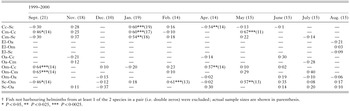
Table 5. Associations (Spearman correlations) among pairs of the 7 most common helminth species (those with highest prevalence values) at MITZA between September 1999 and August 2000 for Mexican mojarra (Cichlasoma urophthalmus)
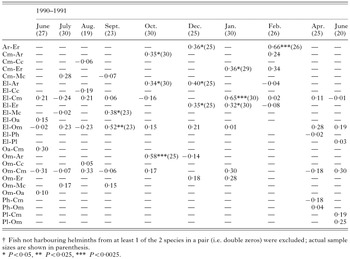
Table 6. Associations (Spearman correlations) among pairs of the 11 most common helminth species (those with highest prevalence values) of Mexican mojarra (Cichlasoma urophthalmus) from Celestun, Yucatan
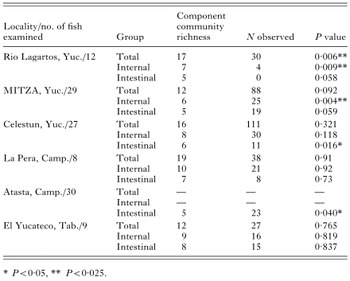
Table 7. Nestedness (N) of the component communities of the cichlid fish (Cichlasoma urophthalmus) at 6 localities from southeastern México

Table 8. Nestedness (N) of the component communities of the cichlid fish (Cichlasoma urophthalmus) from Celestun, a coastal lagoon in Yucatan (southeastern Mexico), over 1 year (June 1990–June 1991)
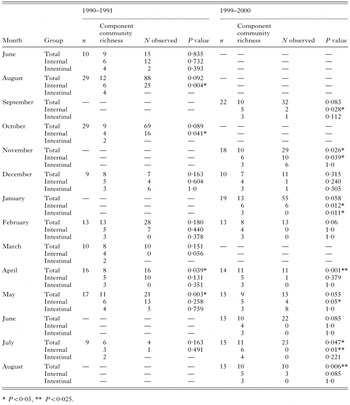
Table 9. Nestedness (N) of the component communities of the cichlid fish (Cichlasoma urophthalmus) from MITZA, a flooded quarry in Yucatan (southeastern Mexico), from June 1990 to July 1991, and from September 1999 to August 2000
 You have
Access
- 65
- Cited by