Introduction
The Appalachian region in the United States spans 13 states, including West Virginia and parts of Alabama, Georgia, Kentucky, Maryland, Mississippi, New York, North Carolina, Ohio, Pennsylvania, South Carolina, Tennessee, and Virginia. The study population is a rural community nested in the foothills of the Cumberland Mountains, and located in the central Appalachia region of the United States. Once a thriving coal-mining area, the Southeastern Kentucky community now is reported as one of the hardest places to live due to an associated unemployment rate of 13.4% and 26% of residents (all ages) living with median household incomes (for an average family of four) that are below federal poverty level.Reference Banks, Davenport, Hayes, McArthur, Toro, King and Vazirani 1 , Reference Lowrey 2 The University of Wisconsin (Madison, Wisconsin USA), supported by Robert Wood Johnson Foundation (Princeton, New Jersey USA),Reference Pollard and Jacobsen 3 compiled county health data indicating the central Appalachian community is ranked 117 out of 120 counties within the state of Kentucky with premature death 35%-40% higher than national average. The combination of economic and health disparities makes the community “at-risk” for greater vulnerability, particularly during times of disaster.
The remote, rocky, mountainous area of this rural community is surrounded by rivers and valleys that are prone to flooding. In Spring 2013, a major flood occurred in the southeast area of the community causing significant damage to homes and critical infrastructure. There is a paucity of research examining the impact of disasters for already distressed rural Appalachia communities. Thus, an inter-professional team of nursing, architecture, and engineering students/faculty conducted comprehensive assessments of health and environmental living conditions for individual or family homes in a targeted community, 12 months after a flooding disaster event that occurred in Spring 2013. Residents revealed coping strategies used to overcome adversity despite the hardships they faced. Resilience portrayed by this community provides greater implications for education, practice, and research to strengthen community wellness and disaster readiness.
Resilience is an emerging theme for many diverse disciplines ranging from the applied science of physics to the natural science of ecology where life processes, interactions, and adaptations are explored. 4 In the human and social science realm, resilience has been defined broadly as positive adjustment of individuals, families, and communities when faced with adversity.Reference Castleden, McKee, Murray and Leonardi 5 Natural or man-made disasters are considered adverse circumstances significantly impacting quality of life and well-being; yet, humans adapt in resilient ways.Reference Haase 6 Contextually, individual, family, and social factors enhance or impede resilient processes and outcomes.Reference Haase 6 The challenge is to identify patterns of intrinsic and extrinsic attributes in which resilience naturally occurs.
Since the 1980s, the concept of resilience has been explored further to better understand how individuals and communities respond to adversity. The term “resilience” applies to individuals as well as communities when any instability or turmoil occurs.Reference Pfefferbaum, Pfefferbaum, Van Horn, Neas and Houston 7 Psychologists refer to resilience when explaining the process a person takes to alter or not alter one’s behavior despite a change in their environment.Reference Haase 6 Psychologists indicate resilience is a person’s ability to recover from negative occurrences by using positive strategies or interventions to cope.Reference Pfefferbaum, Pfefferbaum, Van Horn, Neas and Houston 7
Resilience is recognized as the ability of individuals or communities to “bounce back after a traumatic event” while remaining at or above the previous functioning level.Reference Tugade, Fredrickson and Feldman Barrett 8 , Reference Plough, Fielding and Chandra 9 The capacity of a community to withhold and recover from adversity, whether it be natural disasters, influenza, or even economic downfall, often is considered resilience, or in essence, the capability of a community or society to defy and regain stability post-disaster.Reference Norris, Stevens, Pfefferbaum, Wyche and Pfefferbaum 10
The National Research Council (Washington, DC USA) defines resilience as the “ability to prepare and plan for, absorb, recover from, or more successfully adapt to actual or potential adverse events.”Reference Keim 11 Studies have shown social, cultural, political, and economic systems are inter-related structures that influence the capacity for resilience.Reference Plough, Fielding and Chandra 9 , 12 System relationships impact how well a community can withstand, adapt, and recover from disruptive events. Essentially, a reciprocal relationship between individual household and community preparedness exists; therefore, an effort to reduce risk and improve resource inequities is necessary at all levels.Reference Plough, Fielding and Chandra 9
There is a growing body of evidence that suggests resilience is enhanced by strengthening mitigation, emergency preparedness, as well as response and recovery efforts.Reference Ostadtaghizadeh, Ardalan, Paton, Jabbari and Khankeh 13 Disaster resilience for communities requires an “all hands on deck” approach for each phase of the disaster paradigm: (1) prevention/mitigation, (2) preparedness, (3) response, and (4) recovery.Reference Levac, Toal-Sullivan and O’Sullivan 14 Community resilience was classified “as [one] of [four] critical components of public health and medical preparedness,” as part of the 2007 Homeland Security Presidential Directive 21, directed by President Bush. 15 Building capacity for resilience has become a national imperative 15 and is an explicit priority of the National Health Security Strategy of the US Department of Health and Human Services (HHS; Washington, DC USA). 16
Despite national attention, little is known about disaster resilience in rural Appalachia where vital resources generally are limited every day. Aims of this study were to: (1) identify and better understand the contextual variables that influence vulnerability and compound the impact of a disaster event; (2) identify ways participants manage antecedent circumstances, risk, and protective factors to cope with disaster; and (3) further determine implications for community-focused interventions that may enhance recovery for vulnerable populations to promote greater outcomes of adaptation, wellness, and readiness.
Research and Analysis Method
The Assessment of Appalachia Community Health & Disaster Readiness Needs study was approved by an Institutional Review Board at the University of Tennessee (UT; Knoxville, Tennessee USA) to assess the long-term impact of a disastrous flood that occurred in a rural Appalachia community in Spring of 2013. An ethnographic data collection approach, using both quantitative and qualitative sources of data, enabled the team to: (1) identify and better understand the multitude of factors contributing to disaster vulnerability; (2) explore strategies residents use to cope with adversity; and (3) recognize ways potential interventions may strengthen wellness, quality of life, and disaster readiness.
The inter-professional collaborative practice (IPCP) team collaboratively worked with a community site coordinator, who was the Director of Emergency Management Services, to select target neighborhoods or hollow enclaves in the community most affected by a flood in Spring 2013. The noun “hollow,” or the variant term “holler,” in Appalachia is defined by American Heritage DictionaryReference Morton and Lurie 17 as “small valley between two mountains,” where geographically the terrain is isolated and prone to suffer great consequence when flooding events occur.
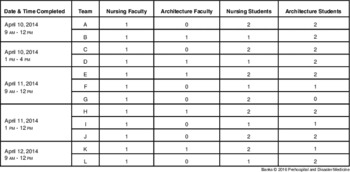
Specifically, on April 10-12, 2014, the Emergency Management Services Director accompanied small inter-professional groups of four to five nursing and architecture students and faculty on the IPCP team to the targeted areas that experienced the most severe flooding in Spring 2013. The Director of Emergency Management Services was not only a life-long resident of the region who knew residents of all flood-impacted hollows, but also accompanied Federal Emergency Management Agency (FEMA; Washington, DC USA)) teams to the region in 2013, post-flooding. In combination with his credible knowledge and experience, he served as the ICPC team’s stakeholder and facilitated participant recruitment by word of mouth and scheduled visits for the IPCP team assessments. To assure the safety and security of team members, all teams were accompanied to the area homes by the Emergency Management Services partner. Table 1 depicts the composition of assessment teams that were designed so that experienced interviewers familiar with both disaster and health concerns led the team (these were graduate nursing students in the UT Global Disaster Nursing Program), and UT architecture students/faculty were able to assess structural conditions of homes and environment. An informed consent was reviewed with all interested participants and approval signatures obtained prior to conducting any assessment procedure.
Community Assessment Team Composition

Comprehensive assessments (N=12) of health, home, and environment were conducted over a 3-day period. The sample population was small, yet considered a targeted pilot group. Inclusion criteria were adults age 18 or older that directly experienced the Spring 2013 flood. Exclusion criteria were those persons who chose not to participate after informed consent was reviewed and opportunity for questions were provided. All eligible participants agreed to consent; therefore, no exclusions were required for the study.
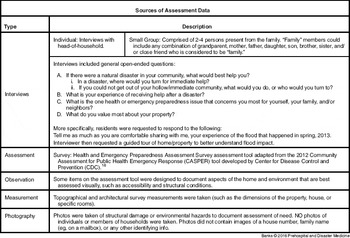
An ethnographic method of data collection was the tactical approach. Sources of assessment data included interviews, surveying, open-ended questions, observation, measurement, and photography. Table 2 describes each data collection method.
Sources of Assessment Data

Assessments began with general demographic questions to facilitate completion of Health and Emergency Preparedness Assessment Survey tool adapted from the 2012 Community Assessment for Public Health Emergency Response (CASPER) tool developed by the Centers for Disease Control and Prevention (CDC; Atlanta, Georgia USA). 18 The CASPER tool reflected more urban-type settings, therefore, the inter-professional team tailored the tool with community partner input to ensure specific relevance for Appalachia. Face validity of the assessment survey was enhanced by co-adapting the tool with key community informants, who participated in the focus groups and had first-hand knowledge in their own history, culture, community challenges, and strengths, to assure cultural appropriateness for targeted respondents. The assessment tool was used to collect demographic, health, housing, environment, and disaster readiness assessment data. Survey questions were read to participants and documented by the team. Participants were free to skip any questions they preferred not to answer. They were able to withdraw from completing the survey at any time without penalty or loss of services to which they might otherwise be entitled. No code numbers, names, or other identifiers were documented on the surveys.
Systematic constant comparative analysis of all data sources provided a means to identify emerging conceptual components and the relationships among them. Transcripts of face-to-face interviews were transcribed and de-identified to protect confidentiality. Qualitative interview data were organized and securely managed using NVivo 10 qualitative data analysis software (QSR International; Burlington, Massachusetts USA). Through engagement and reflection of the text, a collaborative team conducted line-by-line readings to identify in-vivo codes, derived from the words or phrases of the participants themselves. The use of participants’ own words yielded rich descriptions of their flooding experience. A constant comparative method of interview data, observations, quantitative data from assessment tool, and photographs helped to ensure consistency and strength of data interpretations. Quantitative data were organized into a database and descriptive statistical analysis was generated using 2014 SPSS 22 for Windows – 32 bit (IBM Corporation; Armonk, New York USA).
Results
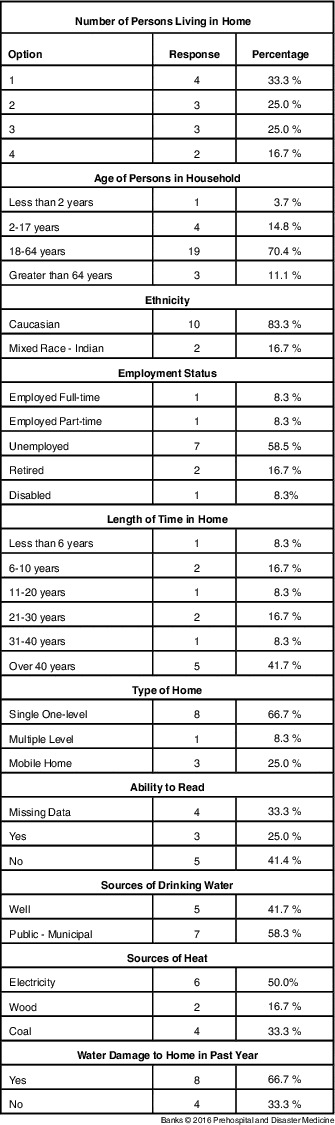
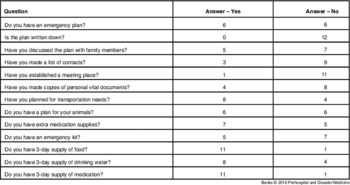
A total of four nursing faculty, five graduate nursing students, two architecture faculty, and 10 architecture students conducted community-based assessments. Twelve individual assessments were completed. Table 3 details demographic data of community participants and Table 4 provides responses to disaster-specific questions.
Demographic Profile of Study Population

Community Response to Questions Related to Disaster Preparedness

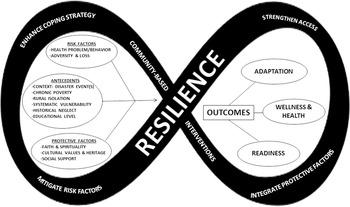
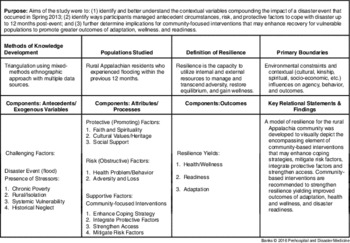
Upon analysis of findings, the community had an innate capacity to utilize and manage resources, to transcend adversity, and to restore equilibrium. Systematic comparative analysis led to the development of Table 5 depicting thematic categories representing a refined definition of resilience specific to Appalachia. Resilience was found to be an encompassing, perpetual quality of the rural Appalachia community. Figure 1 illustrates the endless encompassing opportunity for interventions to strengthen this community’s natural resilience to promote adaptive, readiness, and health/wellness outcomes. Through further study, resilience could be considered as the foundational aspect in the development of community-focused interventions related to disaster preparedness through enhancing coping strategies, strengthening access, mitigating risk factors, and integrating protective factors. Interventions that aim to continually enhance a community’s innate quality of resilience could have the potential to transform risk factors, antecedents, and protective factors that could have otherwise yielded negative outcomes throughout the disaster paradigm.
Conceptual Model of Post Disaster Resilience for Rural Appalachia.

Thematic Components of Resilience

Antecedents: “I looked and it was like the River of Jordan passing over.”
The region persistently is exposed to a wide range of antecedents that have the potential to exacerbate the situation, which include chronic poverty, rural isolation, systemic vulnerability, historical neglect, and educational level. The Spring flood of 2013 hallmarked an extraordinary event different than any hardship the people of the Appalachian region had experienced. One resident indicated, “I’ve lived in one place for 44 years and it’s never been that bad.”
The people of Appalachia are a vulnerable population, and their existence is determined by the cultural and environmental context in which they live. Living among rivers and valleys prone to flooding, a systemic vulnerability exists among the people due to geographic conditions. Although a volunteer fire department may be only 20 miles away, the reality is that a response may take up to an hour and a half due to the geographic landscape and isolation of the hollows: “The power was out a few hours. My husband was out of town and there was no power to call for help.”
For the people of this region, chronic poverty contributes to the complexity of disaster preparedness, response, and recovery. Over 60% of persons deemed head-of-household were unemployed or disabled. Natural disasters such as flooding, that happen unexpectedly, can exacerbate financial hardships, which are difficult to overcome. Sixty-seven percent of participants reported having water damage as a result of the flood: “The flood washed front and back porches away; I now have cinder blocks stacked up to climb into the trailer.” Unfortunately, residents live with the harsh reality of limited income that prevents their ability to make necessary home repairs.
Compounded by geographic isolation, limited access to health care and emergency response resources poses a major threat to the health and safety of area residents, particularly during times of disaster. A reflection of one participant, isolated within the foothills of the mountains, mirrored the struggle or way of life for people of this region:
“The fire department couldn’t get to me. Scared to death. . . we called 911 and they were like the fire department was on their way but the fire department couldn’t get to us . . . and they said, ‘We’ll send a helicopter in to pick you up.’ But there was no place for them to land if they got over here.”
Despite the need to evacuate, residents expressed concerns about leaving their property because they worried about their personal safety, lack of transportation, fear of leaving others behind, lack of money, or had no place to go.
However, in the face of adversity, enduring and persistent stressors led to a level of resilience as individuals and the community created methods to cope: “I’ve been there a lot… you just can’t give up and sit down.” Depending on the crisis and the strength of the individual, resiliency fluctuates, but it never ceases to exist. The cycle of facing hardship, rebounding, supporting one another, and building community is reflected through the continual loop of the resilience model. While these pre-existing stressors of rural isolation, poverty, vulnerability, neglect, and educational level have the potential to affect their ability to cope, the people of this community demonstrated the ability to overcome many of the potential negative outcomes through resilience and the integration of their protective factors, which included their faith and spirituality, cultural values and heritage, and social support.
Protective Factors: “We all have problems, but we make it.”
The ability of the residents to build resilience is dependent upon strong family, social support, and cultural values. These innate qualities of the people of Appalachia should be integrated into the development of community-based interventions to maximize disaster mitigation, response, and recovery. These attributes naturally allow the residents to see adversity in a positive light, surrounding themselves with supportive friends and family as they find meaning in overcoming hardships and challenges. Professionals and community stakeholders must partner to help communities maximize disaster mitigation, response, and recovery.
Faith and Spirituality
Reliance on their faith and spirituality is a protective strategy to help residents of the community cope in hard times. Residents depend on their strong faith daily to manage life circumstances. Spirituality is sacred to Appalachians and is a way for them to maintain optimistic vision for faith and hope in their lives: “Oh, I’ve got faith, I’ve got faith. I went to praying and I seen the water just start going down. God works miracles.” Essentially, prayer is a strategy residents use to demonstrate dependence on a higher being that helps them cope with every aspect of their lives.
Cultural Values and Heritage
Cultural values and heritage foster community cohesiveness and strength among the Appalachian people. The ability and desire to lean upon their heritage and culture during times of hardship enhances their ability to transcend adversity and restore equilibrium. Many residents believe their home “… is precious to me. It’s real precious. A lot of good memories.” “The old homestead is like a song …,” indicating that property was irreplaceable and great value was placed on the home. Many had “… lived here all [their] life.” Home was considered precious and held many memories of family. Home, to these residents, creates harmony in their lives:
“Oh, it’s so sweet here. It’s peaceful and stuff around my home, what we’ve got, it’s like a peaceful place and I can lay down and I feel just like a, a real, real good calm spirit over my body and stuff. It’s real peaceful. And I don’t think, I think it would be really hard for me to lose my home because it was devastating just enough to see what was around it.”
Home provides a sense of tranquility, “This is a good place to live . . . it is just quiet and peaceful,” and is a safe refuge even when life situations seem out of control. Residents of hollows experience severe repercussions when their home and environment are damaged significantly or destroyed by floods. Hollows often are distinctly connected with family characteristics. For example, residents of Smith Hollow may be representative of several generations of the Smith family, such as grandparents, aunts, uncles, children, or great-grandchildren. Ownership of homes and property may have been transferred or handed-down from generation to generation.
Social Support
When individuals experience loss as a community, social support is a key factor in promoting resilience. Networking and drawing upon the strength of one another to access resources is evidenced by the following statement:
“We all got depressed at the Christmas holidays and we lost, she lost all she had and some folks at (mission) give her a couch and a chair and they helped her with some and I bought some pieces and stuff myself and bought pipes and plywood back and me and her’s doing it a little bit at a time and we’ll make it.”
Participants described relationships with others as playing a significant factor in providing strength and hope during adverse times. A strong kinship existed within the community, and the extended family cared for one another. Family was able to serve as a means of emotional and physical support in times of distress, as expressed by one community member:
“When the flood come in Dad had to move out there with her (niece)…We didn’t have nowhere else to go…They didn’t have any shelters set up…It was about three months before we could get back in here (home.)”
Interventions utilizing the desire to support family and community during times of disaster have the potential to further increase positive outcomes of adaptation and readiness through pre-established means of trust.
Building upon this social support is imperative to helping individuals develop adaptation skills and integrate this protective factor to ensure that resilience is utilized throughout community-based interventions which yield positive outcomes. The desire to help one another during adversity represents a strong tie, which binds family and community together and serves to support and protect one another.
Risk Factors: “Things will happen as long as we stay here in this life.”
Several risk factors that afflicted the Appalachian community were identified into two categories: (1) adversity and loss, and (2) pre-existing health concerns. While these risk factors have the ability to yield negative outcomes, through mitigation and integration of protective factors when developing community-based interventions, resilience of residents has the potential to prevail and produce positive outcomes.
Adversity and Loss
The flood resulted in extreme adversity and loss for many residents of the Appalachian community. Many participants reflected positive thoughts in the face of adversity as one resident expressed, “I know that we are going to go through worser times than what we are going through now in our life.” Reflection allows the individual to draw from past experience and persevere with confidence that current struggles can be overcome. These individuals possess the strength to rebound through the characteristic strength of self-determination, which should be enhanced through interventions to highlight resilience.
Pre-existing Health Concerns
Existing health conditions impact coping strategies of the residents because they are significant life stressors. Eight residents reported a history of high blood pressure, six had diabetes, five had a physical disability, and four had asthma. In addition, five participants reported frequently worrying about the health of family members experiencing chronic illnesses such as congestive heart failure, chronic obstructive pulmonary disease, and disability from stroke:
“I almost made myself sick when my husband had congestive heart failure and my brother had a stroke. So after that I gave it to the Lord. You know, we can’t take nothing on our own.”
When asked “How often do you worry about your health?” one participant responded, “Lord, I all the time worry . . . I’ve had three heart attacks . . . I had a stroke . . ..” The same participant used oxygen to help her breathe due to chronic lung disease and used a manual wheelchair for mobility due to an amputated leg. She also had a power wheelchair, but she indicated “I need some new batteries is what I need but I ain’t got em. Ain’t got that kind of money.”
Accessibility of resources affects health and prevents individuals from being able to prepare successfully for disasters and emergencies that are not imminent. A participant in need of a hearing aid neglected health for the security of the home stating, “I’m worrying about my home now, trying to get it fixed up.” Residents are unable to appropriately prepare for the disasters or emergencies that may or may not happen due to the daily struggle for resources to survive independent of adversity. The level of adaptation is dependent upon present resources and the effectiveness of community preparedness to assure that residents with disabilities have access to needed resources. Eight residents reported having a 3-day supply of drinking water, and 11 residents reported a 3-day supply of food and medication. Inability to evacuate with adequate resources during disaster can pose great risk for residents. The necessity for assistive devices such as a cane and walker could impede safe evacuation of an entire family. Therefore, mitigation of this risk factor and focusing interventions on increasing resources related to the prevalent health problems and access in the community would yield the most positive outcomes to enhance community resilience.
Interventions: “Things got so bad we could not do that, not on our own.”
Interventions that focus on resilience through enhancing coping strategies, mitigating risk factors, strengthening access, and integrating protective factors are needed to improve disaster preparedness and produce positive outcomes through adaptation, wellness, and readiness. During times of disaster, basic needs must be met in order to sustain or regain optimal health. One participant remembered, “They (community organization) brought water and food . . . they also brought clothes and stuff . . . they done pretty good to help us.” Supporting existing protective factors through utilization of current community resources also will serve to promote family and community preparedness, building a stronger and more cohesive, resilient community overall. While many communities utilize aid organizations as described by the resident, community-focused interventions that enhance resources for these organizations to better serve community members and advance preparedness are essential for effective sustainability.
Stabilizing and strengthening access prior to disaster through building abundant resources as a buffer can mitigate further risk. One participant reflected, “I think it would be really hard for me to lose my home because it was devastating just enough to see what was around it.” These resources must be readily accessible because availability of adequate resources can positively impact outcomes.
When disaster strikes a vulnerable, isolated population, the experience has the potential to be exacerbated due to inadequate emergency preparedness and availability of resources. As evidenced by the narratives, residents expressed their resilience and an increased level of adaptation in the face of disaster. Residents revealed coping strategies used during hardships and identified protective factors which served to increase wellness and health. The residents of Appalachia are a group of highly vulnerable people who managed to persevere amidst hardship.
Discussion of Findings
The use of participants’ own words yielded rich descriptions of their flooding experience, highlighting resilience as an underlying theme throughout inductive interpretation. Despite the contextual boundaries of rural isolation, systemic vulnerability, and chronic poverty, residents of the Appalachia community were able to overcome adversity despite the hardships they face every day. Positive adjustment in the face of adversity was the essence of resilience that became an unanticipated, yet prominent finding.
Resilience was not expected a priori; however, evident findings revealed the community had an innate capacity to utilize resources to manage and transcend adversity and to restore equilibrium. Through resilience, a process of adjustment and adaptation provided a stronger level of functioning after a disastrous event. Both risk and protective factors, two complementary attributes, work together to help residents maintain strength post-disastrous situations within the community, leading to community resilience and wellness.
For the Appalachia community, resilience is key to survival. Residents draw upon their cultural values and heritage to rise above the challenges they face. Faith and spirituality help them maintain a positive vision for a meaningful future. Despite health related struggles, social support, kinship, and resourcefulness provide a way for them to cope with adversity and loss. One’s ability to cope is evidenced by the outcomes of an improved quality of life, resilience, and adaptation. Faith and spirituality, cultural values and heritage, and social support, all as protective factors, contribute to supporting the coping skills of the residents and instill hope. Although some reported great loss, an attitude of perseverance and determination emerged to rebound and carry on. While Table 5 depicts categorical findings of resilience for Appalachia, communities with similar antecedents could benefit from interventions enhancing the theme of resilience.
According to Haase,Reference Castleden, McKee, Murray and Leonardi 5 few studies examine cultural boundaries of resilience. Cultural and contextual factors that impede or enhance resilience need to be understood, particularly for advancing science and knowledge of disaster mitigation, preparedness, and response. Essentially, community-focused interventions, such as enhancing coping strategy, integrating protective factors, strengthening access, and mitigating risk factors (which lead to resilience), help build a healthier community. Coping mechanisms, which helped build resilience, contributed to stronger readiness for emergency preparedness. Continuing to understand resilience is useful in developing appropriate interventions to enhance positive outcomes, to enhance quality of life for vulnerable populations, and to influence public policy for individuals, families, and communities.Reference Castleden, McKee, Murray and Leonardi 5
Limitations
This study focused on one disaster, affecting a single Appalachian community, the Spring flooding of 2013. Purposeful sampling of a target convenient population may impose selection bias; therefore, generalization to other communities may be limited. Use of an adapted tool for a pilot study with a small sample size does not confirm content, construct, or criterion validity. Reliability and validity of tool will need to be evaluated in future studies with larger sample size.
Recommendations
The results of this study create implications for practice, education, research, and policy.
In this study, resilience was identified as a common quality of the community. Resilience theory could be used as a framework to guide development of interventions with residents of Appalachia to enhance coping strategies for future challenges and adversities. Community-focused interventions that strengthen coping strategies, improve access, mitigate risk, and promote wellness in individuals and families will produce positive resilient outcomes for community members during and post-disaster. Efforts to build capacity for resilience should be incorporated at all levels of community teaching to help individuals and families gain wellness. Interventions can unite the relationship between community resilience and disaster-preparedness programs to increase production of positive outcomes through improved wellness, health, readiness, and adaptation.
The expansion of educational opportunities to serve and research vulnerable populations should be provided by academic institutions. Multi-sectoral partnerships can expand and broaden the opportunity for researchers to collaborate and create unique strategies to improve the quality of life and disaster preparedness for vulnerable populations.
Further longitudinal research is needed to identify and compare the effect of resilience throughout the disaster cycle and measure resilience six months or 12 months surrounding a disaster event. The findings of this study may be transferrable to other vulnerable populations experiencing chronic poverty, neglect, and isolation with critical environmental and infrastructure needs, and associating negative social factors.
Community intervention, on the local level, must utilize political factors to enhance the effectiveness of outcomes. Collaborative partnerships, both public and private, with the community as the focus, can identify priorities and goals, which may lead to allocation of resources to meet needs and enhance community resilience overall. Acknowledgement of local community resilience can help governmental leaders appreciate the capacity of people to recover and grow, which often go unrecognized in society.
Summary/Conclusion
Research findings reveal the challenges that residents of the Appalachian region faced during disaster. Resilience, a dynamic process, was found to be a key theme in the ability of the residents to rebound amidst adversity. Improving outcomes for at-risk populations is important in helping people overcome hardship, restoring equilibrium, improving health and wellness, and enhancing adaptation.
Understanding the mechanisms which the people of Appalachia use to build resilience remains a challenge; however, development of interventions should be incorporated as a key factor to enhance coping strategies, strengthen access, mitigate risk factors, and integrate protective factors. Integration of communities’ innate capacity to utilize internal and external resources to manage and transcend adversity, restore equilibrium, and gain wellness will yield positive outcomes for vulnerable communities. Resilience should be considered the foundation for development of interventions surrounding disaster preparedness in similar communities.
Acknowledgements
The authors wish to recognize the significant contributions of the University of Tennessee (Knoxville, Tennessee USA) College of Architecture and Design students, led by Professor John McRae; and Master of Architecture and College of Engineering faculty, Dr. John Schwartz, who were integral to survey tool development and community assessment process. Furthermore, the authors would like to recognize and thank their community partners at Red Bird Mission (Beverly, Kentucky USA) and Manchester Memorial Hospital (Manchester, Connecticut USA) for the feedback provided during survey development and their support of community engagement and research.