INTRODUCTION
This article is the third of a series of studies of the linguistic repertoire of adolescents in Lille. The first (Pooley, Reference Pooley, Beeching, Armstrong and Gadet2009) looked at the factors correlating with variable use of regionally marked features in French; the second (Pooley and Mostefai-Hampshire, Reference Pooley and Mostefai-Hampshire2012) examined one aspect of multilingualism, i.e. knowledge of migrant languages and the social factors correlating with French-Arabic code-crossing among subjects of European or Metropolitan French background. The current study focuses on the same subjects’ competence in, and perceptions of, the ancestral regional variety, Picard.
While most researchers interested in linguistic demography (e.g. Kloss and McConnell, Reference Kloss and McConnell1984; Kloss, McConnell and Verdoodt, Reference Kloss, McConnell and Verdoodt1989; Héran, Filhon and Deprez, Reference Héran, Filhon and Deprez2002) suggest that Picard enjoys the greatest vitality of any of the Oïl languages in FranceFootnote 1 in terms of speaker numbers, there is at the same time strong evidence to show that, like all Oïl languages (Caldwell, Reference Caldwell1994), it is highly recessive,Footnote 2 not least in Lille, where, as I have previously argued (Pooley, Reference Pooley2004), very few people, if any at all, born since 1980 have inherited the language from their parents and may thus be considered to constitute post-shift generations.Footnote 3 Of equal, if not of greater, importance are the potentially favourable perceptions of a historically highly stigmatised language engendered by changes in national language policy and certain regional cultural phenomena which reached an audience far wider than the patois associations whose members are generally the main consumers of Picard cultural products. These events took place largely between the two periods of fieldwork during which the data discussed here were gathered (the first having been conducted between 1995 and 1999 and the second in 2004 and 2005).
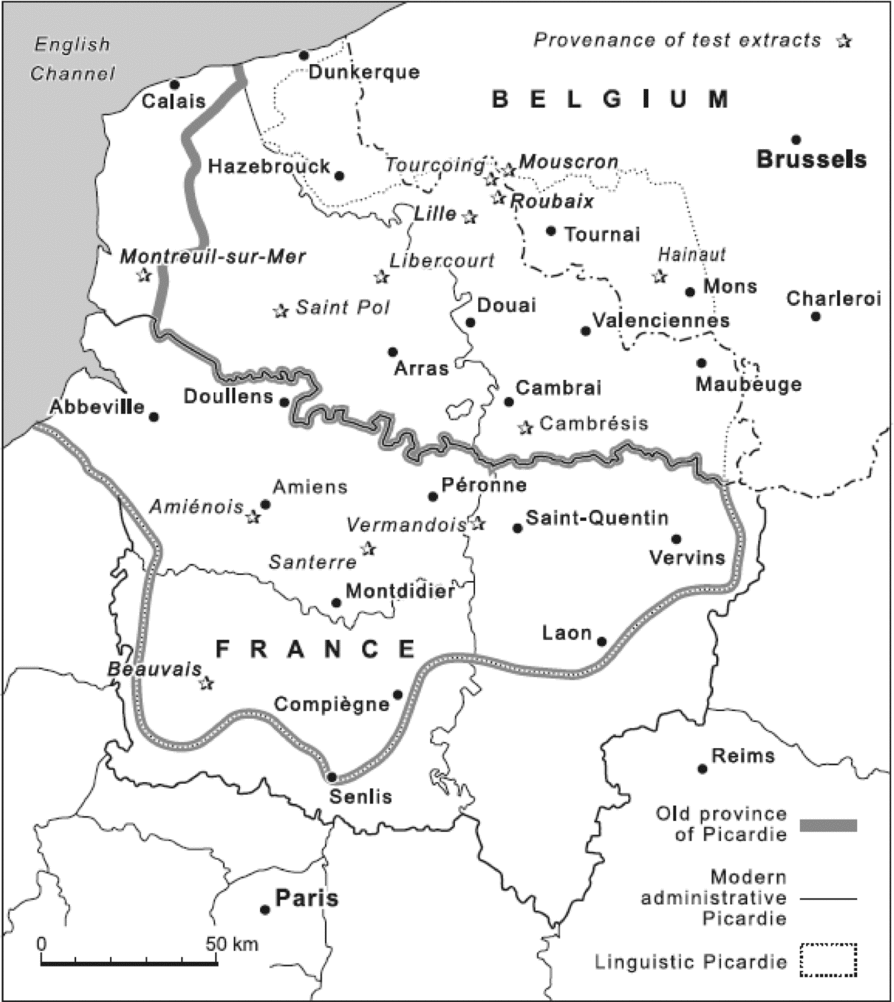
In the arena of public policy, the description of the Oïl languages moved from being a residual manifestation in regional varieties of French (Poignant, Reference Poignant1998) to a collection of undifferentiated languages (but presumably distinct from French) later in the year (Carcassonne, Reference Carcassonne1998) to an inventory of individually differentiated languages less than a year later (Cerquiglini, Reference Cerquiglini1999), a position endorsed by the expansion of the role of the DGLF (Délégation Générale à la Langue Française) to encompass the Langues de France (DGLFLF or Délégation Générale à la Langue Française et aux Langues de France) in 2001. This accession to ‘languagehood’, although strongly endorsed by linguists, arguably ran counter to the effects of two cultural events of wider public impact within the picardophone regions (Figure 2): firstly, the publication of two Assimil booklets (Dawson, Reference Dawson2002; Reference Dawson2003) which separated Ch'ti (construed by no means uncontroversially,Footnote 4 as subsuming all varieties spoken in the Nord–Pas-de-Calais) from Picard (spoken in the modern-day region of Picardie, but particularly in its heartland in the Somme) and secondly, the phenomenal success (at least at the regional level) of the nationally popular comedian, Dany Boon's DVD entitled A s'baraque et en ch'ti (Reference Boon2003).Footnote 5 Both the booklets and the DVD encouraged the association of locally/regionally marked speech with Ch'ti, identified, as I have argued (Pooley, Reference Pooley, Ayres-Bennett and Jones2007) with a somewhat light-hearted, but nonetheless influential, perspective on local identity.Footnote 6
1. METHODOLOGICAL CONSIDERATIONS
1.1 Eliciting competence in alanguage not used spontaneously
As previous studies (e.g. Pooley, Reference Pooley1996) had shown that spontaneous use of Picard among adolescents in Lille was at most an extremely rare phenomenon, it was decided to incorporate some questions designed to elicit information about respondents’ linguistic repertoire other than French in individual interviews designed to complement the group recordings used to analyse their spontaneous usage in the mainstream language (Pooley, Reference Pooley2004; Reference Pooley, Beeching, Armstrong and Gadet2009). With regard to receptive competence in Picard, the approach adopted was similar to that used in a small but growing number of studies of lexical retention of dialect items, as exemplified in England by Upton and Widdowson (Reference Upton and Widdowson1999), Simmelbauer (Reference Simmelbauer2000) and Britain (Reference Britain2009) and for some Oïl varieties: Walloon (Gaziaux, Reference Gaziaux1987), Gallo (Walter, Reference Walter1991), the southern Touraine (Simon, Reference Simon, Bouvier and Martel1991, Reference Simon and Eloy1998), the Nord–Pas-de-Calais (Carton, Reference Carton and Eloy1998). This approach involves presenting subjects with a manageable list of items drawn from relevant dialect atlases, glossaries and monographs, plus my own data from earlier studies and asking respondents whether they knew the words chosen or could demonstrate knowledge of their meaning, either through translation or other means. This approach has undeniable advantages, particularly as regards quantification, over other possible approaches to the investigation of obsolescent varieties, such as longitudinal observation or the investigation of semantic fields where a range of French and Picard items might be proffered (cf. Llamas, Reference Llamas1999).
Examples of testing for productive competence over a limited range of phenomena, appear to be extremely rare (e.g. Romanello's (Reference Romanello, Preston and Long2002) investigation of Puglia dialect and Moracchini's (Reference Moracchini1991) study of Corsican), and, to the best of my knowledge, have not thus far been used for Oïl varieties. The phenomena noted in dialect studies were, however, elicited in various ways, including translation from, or definition in, the mainstream language (e.g. Gilliéron and Edmont, Reference Gilliéron and Edmont1902–10; Carton, Reference Carton1972), although in what might be called the second generation of dialect atlases (e.g. Carton and Lebègue, Reference Carton and Lebègue1989, Reference Carton and Eloy1998), the use of visual stimuli and, where possible, of the variety under investigation was favoured. Given that other parts of the current project were to be conducted in French, eliciting French equivalents of patois terms (or vice versa) seemed to fit satisfactorily with the various parts of the interview.Footnote 7 It could be that in some cases there might be difficulties of immediate recall, but these could be compensated by an open-ended Speaking Test, where respondents could show competence in Picard, even if they struggled with the immediate retrieval of specific items.
1.2 Investigating perceptual phenomena
If, as Preston has claimed (Reference Preston and Preston1999: 369), ‘some recent language attitude research has shown that there is little or no difference in evaluations when the stimulus is a category name or an actual speech sample’, then one has to assume that in cases where they are merely named, the varieties concerned enjoy sufficient vitality for respondents to have awareness of them. Alternatively, respondents would need to have sufficient geographical awareness to label the varieties according to their perceived area of origin. Moreover, it seems highly problematic in relation to the Oïl varieties to expect a situation comparable to that characterised by Daan (Reference Daan and Preston1999: 13) for the Netherlands, where it is claimed that every Dutch speaker knows what is meant by regionally coloured Dutch as opposed to dialect. With regard to northern France, a number of perceptual studies (e.g. Landrecies, Reference Landrecies, Hintze, Pooley and Judge2001; Eloy, Blot, Carcassonne and Landrecies, Reference Eloy, Blot, Carcassonne and Landrecies2003: 207) point rather to a blurring of the equivalent distinction on the part of respondents as well as a certain reluctance to differentiate on the part of researchers and it is only in areas where the local Oïl variety maintained vitality until relatively recent times, as on the island of Noirmoutier (Léonard, Reference Léonard and Eloy1998, Reference Léonard, Preston and Long2002) or arguably certain parts of the Poitou (Auzanneau, Reference Auzanneau1998), that such localisation and differentiation have proved possible.
For this study, the use of speech samples allows the introduction of a considerable degree of geographical variation (in this case 13 varieties) as well as a not inconsiderable range of picardité or degree of differentiation from French (going from the minimal to the highly marked). Although the situation of my Lille respondents does not completely parallel Kerswill's (Reference Kerswill1994; Reference Kerswill, Preston and Long2002) investigation of Bergen dialect in Norway, the methodology employed provided some valuable pointers. Kerswill asked his respondents to rate a number of speech samples on a six-point scale ranging from ‘pure Bergen’ to ‘pure Stril’ (Stril being the stigmatised rural variety as opposed to the more sophisticated urban dialect). He then compared these ratings based on the perceptions of non-linguists with the degrees of difference that emerged from an analysis carried out by professional linguists using lexical and morphological criteria. Contrary to the current study, as will become clear from later sections, Kerswill found a remarkable degree of concordance between the two sets of evaluations.
2. THE RESPONDENTS
2.1 The social geography of Lille
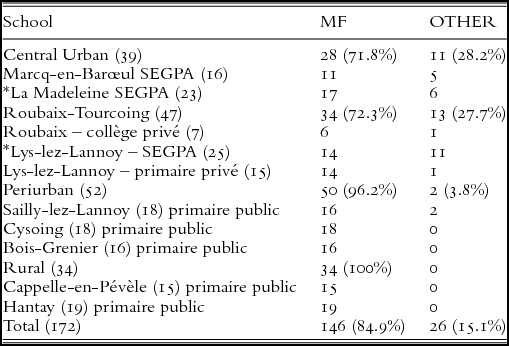
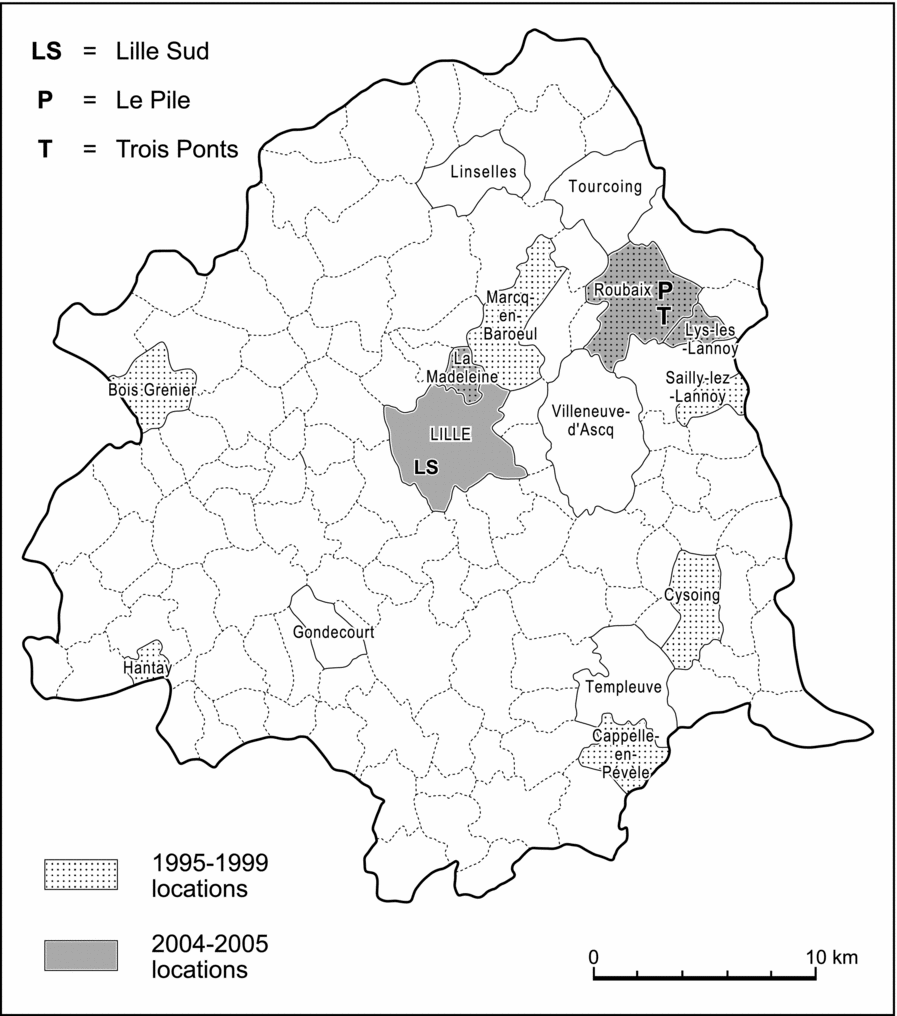
The 2004–2005 data are derived from the same corpus as was used for the investigation of code-crossing (Pooley and Mostefai-Hampshire, Reference Pooley and Mostefai-Hampshire2012), as well as variation in the use of French (Pooley, Reference Pooley, Beeching, Armstrong and Gadet2009) in the urban heartlands of Lille, i.e. the central areas of Lille-Métropole and the north-eastern corner around Roubaix, Tourcoing and Wattrelos (Figure 1). The same areas, and in two cases the same schools, were also investigated during the 1995–1999 fieldwork, which was designed to explore firstly, variation in the use of French and secondly, one other part of the subjects’ linguistic repertoire, Picard. From 1998 onwards, it was decided to expand the geographical coverage beyond the urban heartlands into periurban (Bois-Grenier, Cysoing, Sailly-Lez-Lannoy) and rural areas (Cappelle-en-Pévèle, Hantay) within the whole of Lille-Métropole (see Pooley, Reference Pooley2004, Chapter 5 for a full discussion) (Figure 1) (Table 1), but only to carry out the section of the interview which focused on Picard (Figure 1, Table 1).
Ethnicity and geographical distribution of informants in 1995–1999 fieldwork locations (* indicates location also investigated in 2004–2005)

MF = Metropolitan (European) French parentage; OTHER = at least one parent not of MF background
Location of fieldsites within Lille-Métropole (1995–1999 and 2004–2005)
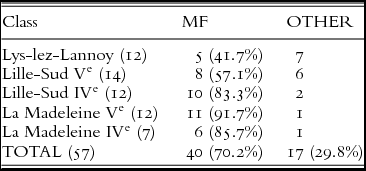
As Table 1 indicates, in the 1995–1999 study 172 school students were interviewed, fairly evenly divided with regard to gender (82 boys, 90 girls: 48-52%) (compared to 57 subjects, 32 boys, 25 girls: 56-44% in 2004–2005). Most urban informantsFootnote 8 (and all those interviewed in the 2004–2005 study) were in Ve or IVe (13–15)Footnote 9 whereas all respondents from the outlying periurban and rural areas were of primary age.Footnote 10 Here geographical location was allowed to take precedence over age, since the secondary-age sections were located in urban areas, and many of the outlying communes offered only primary education. Location of school attendance clearly cross-cut with other potentially important factors: such as social class, ethnicity and rootedness (or intergenerational continuity of residence). Most of the subjects of secondary age were from SEGPA (Section d'Education Générale et Professionnelle Adaptée) sections where pupils deemed unable to cope with the mainstream curriculum, whether for lack of academic ability, troubled family lives or recent immigration, were placed so that they could be given additional support in basic subjects such as French and mathematics as well as the opportunity to acquire more practical skills. These latter parts of the curriculum were often taught in situations of marked gender segregation with girls being oriented towards such activities as laundry and kitchen work and boys towards, for instance, painting and building. From a social-class perspective, the SEGPA respondents may all be placed into Category 4 (the lowest) of the Ministry of Education's scale of favourability to educational success http.www.education.gouv.fr/ival Footnote 11 and, according to Chauvel's (Reference Chauvel2005: 28) social categorisation, be shared between the working class and underclass.
Ethnicity and geographical distribution of informants in 2004–2005 fieldwork locations
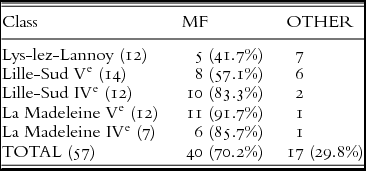
MF = Metropolitan French parentage; OTHER = at least one parent not of MF background
Informants from mainstream school sections and those in periurban and rural areas came from a much wider social spectrum (Categories 1–4 according the scale of favourability to educational success or in Chauvel's categorisation covering working-class, median-class and middle-class). Location of school attendance also correlated strongly with ethnicity. All rural and all but two periurban respondents were of European or Metropolitan FrenchFootnote 12 (henceforth MF) background, i.e. were born of parents of European descent who were themselves born and brought up in Metropolitan France and testified to no sociolinguistically significant factors, such as use of a language other than French at home or residence outside France. In the 1995–1999 data, 24/86 of subjects (28%) from the urban heartlands had at least one parent born outside France with a first language other than French. Two thirds of these (16/24) were of Maghrebian extraction. The proportions in the later study are broadly similar: 17/57 respondents (29.8%) had at least one non-MF parent with around two thirds of those being of Maghrebian background (65%). With regard to intergenerational continuity within the commune of residence, this proved to be greater among MF subjects than their non-MF counterparts in urban areas. In periurban areas (and here only MF subjects are concerned), mobility was higher than in both urban and rural areas and usually caused disruption of local intergenerational continuity. Two locations, the SEGPAs in La Madeleine and Lys-Lez-Lannoy, feature in both studies and thus permit some degree of direct comparison. The school in Lys-Lez-Lannoy is attended by large numbers of pupils from two recognised social-problem areas, officially designated as zones urbaines sensibles (ZUS) in Roubaix, Le Pile and Trois-Points (marked P and T respectively in Figure 1).
In the 2004–2005 fieldwork, another ZUS was chosen for investigation, Lille-Sud (marked LS in Figure 1), rather than Rouges-Barres (a working-class area in the generally well-to-do town of Marcq-en-Barœul that fills much of the space between Lille and Roubaix-Tourcoing), where the then incumbent head declined my request to undertake a follow-up to the initial 1995 study (reported in Pooley, Reference Pooley1996; Reference Pooley2000, with regard to French and Pooley, Reference Pooley2004, with regard to both French and Picard). The third school location, studied in both sets of fieldwork, was in La Madeleine, a central commune which developed in the industrial boom of the late 19th century, but not classified as a ZUS. During the 2004–2005 investigation, in Lille-Sud and La Madeleine, every member of the Ve and IVe classes was interviewed and in Lys-Lez-Lannoy, every member of the IVe.
2.2 Verbal repertoire, social variables and linguistic perceptions
Investigation of other aspects of the informants’ verbal repertoires clearly demonstrated that these correspond to various aspects of their social identity. Firstly, variable use of the regionally marked French variants, back a as in [ɑ] in ça and open o in checked syllables as in [ʀɔz] rose, have been shown to correlate strongly with differences of gender and ethnicity, e.g. back a is most used by MF boys. In the Rouges-Barres data (recorded in 1995), use of back a also correlated strongly with a Regional Loyalty Index (Appendix 2) based on three questions concerned with attitudes to the Nord region (1) and its people (2) and the subjects’ choice of an ideal region of residence in adulthood (3). Use of the same variant was also found to correlate in a later study (Pooley, Reference Pooley, Beeching, Armstrong and Gadet2009) with the adolescents’ popularity among their peers as measured by an Index of Popularity in Class which was based on the number of mentions each individual received from the other members of the class when they were asked to name their best friends.
Secondly, previous results from the same interviews (Pooley and Mostefai-Hampshire, Reference Pooley and Mostefai-Hampshire2012) indicated that MF boys, and to some degree those from Roubaix-Tourcoing rather than the central areas, showed greater knowledge of Arabic than girls of the same ethnic and residential background. More importantly, however, it was again friendship factors, in this case MF boys having Maghrebian friends both in and out of school, which correlated with significant differences in competence in Arabic. Although all the social factors so far mentioned were tested with regard to results of the Picard Skills Tests, only ethnicity proved to be significant (see Table 6). This should not be taken to imply any observed spontaneous use among peers, indicated by differences corresponding to gender and network membership. The 1995–1999 data, in particular, provided the opportunity to investigate a range of other possible factors, including age, social class and area of school attendance/residence. Perhaps more important (and this applies to all respondents) is family background, and in particular whether subjects heard the language spoken in their extended family circle, given that, as already observed, no informant had inherited Picard as a first language from her/his parents. Other indices used with both corpora give some perspective on how subjects perceive Picard: firstly, the Cultural Value Index gives a numerical value to the perception of the distinctiveness of Picard as a separate language and the desirability of knowing it (Appendix 3); secondly, respondents were also asked to assess their competence in Picard, with regard to understanding and speaking (Professed Competence Index, Appendix 4) and whether, given the opportunity, they would take classes to learn the language. Respondents were also asked whether they had any contact with Picard through various media, such as television, radio, the printed page or live performances, testing whether the cultural events described in the introduction had had any discernible effect. Where appropriate, χ2 tests were used to evaluate statistical significance, but subjects with relatively high or particularly low test scores were profiled individually in the hope that common factors would become discernible.
3. EVALUATING COMPETENCE IN PICARD
3.1. The Picard skills test
As already mentioned, respondents’ knowledge of Picard was assessed by means of testing using a three-part procedure, called the Picard Skills Test, as follows: a) ‘translation’ of ten Picard items into French; b) the ‘translation’ of ten French words into PicardFootnote 13 and c) a Speaking Test in which subjects were invited to say anything at all in the language.
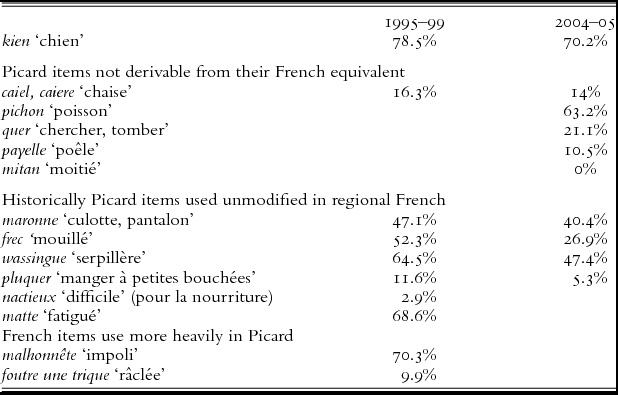
Results of part a) are reported in Table 3. In this section, respondents were asked whether they could show understanding of ten Picard items, whether by translation or other means. Over the two field studies, four categories of items were used: a) items recognisable through regular sound correspondences with French, e.g. kien ‘chien’ (Picard [k] for French [ʃ]. b) Picard items not used in regional varieties of French such as quer ‘chercher, tomber’ and whose form is not predictable from regular sound correspondences with French; c) items which may be used in French without modification such as matte ‘fatigué’ and d) in the 1995–1999 study two (standard) French items deemed to be more frequent in regional and dialectal speech. These were replaced in the later round of fieldwork.
Categories of distinctiveness of items used in Picard Skills Test (Part a, Picard-French) (Items verified in Legrand (Reference Legrand1853); Vermesse (Reference Vermesse1867); Viez (Reference Viez1910); Carton and Poulet (Reference Carton and Poulet1991; Reference Carton and Poulet2006); Blanquaert and Blanquaert (Reference Blanquaert and Blanquaert1998)
Percentages indicate that in 1995–99 x% of 172 answers and in 2004–05 x% of 57 answers were deemed adequate or acceptable.
For part b) of the Picard Skills Test, respondents were asked to give Picard equivalents of ten French items. Given the items chosen this was arguably as much a test of awareness of sound correspondences as knowledge of (clearly differentiated) vocabulary (Table 4).
The Picard Skills Test Part b) French-Picard
Percentages indicate that in 1995–99 x% of 172 answers and in 2004–05 x% of 57 answers were deemed adequate or acceptable.
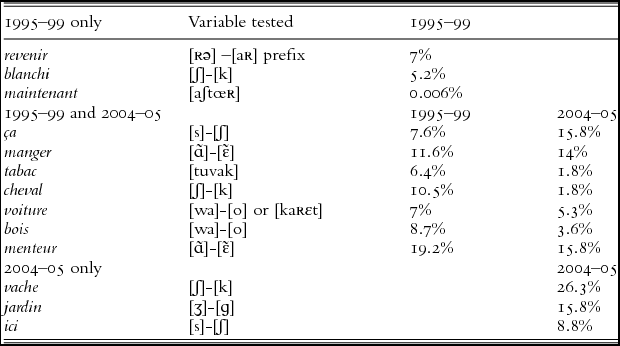
In the 2004–2005 questionnaire, five such variables were tested [s]-[ʃ] i.e. Picard [ʃa] or [ʃɑ] for French ça and [iʃi] for ici; [ ]-[
 ] [mʒe] manger, [mtø] menteur; [ʃ]-[k] [vak] vache [kval] cheval; [wa]-[o] [bo] bois n, [votyʀ] voiture and [ʒ] -[ɡ] [ɡaʀd] jardin . In the 1995–1999 field study, awareness of metathesis in the re- prefix in Picard was tested with the item revenir [aʀvniʀ] leaving tabac [tuvak], carette (alternative for voiture) and maintenant [aʃtœʀ] or [astœʀ] as differentiated items. Parts a) and b) were graded on the basis of one point for each acceptable answer, bearing in mind that some latitude was allowed in the scoring. For manger and menteur the points were awarded for appropriate use of the []-[] correspondence making responses such as [mʒ] or [mʃ] and [mtøʀ] or [mtœʀ] acceptable, as well as the more marked r-less form. While the [ʃ]-[k] correspondence was illustrated by vak and kval, a number of forms may be used for the latter item, such as [ɡva], [ɡval], [ɡvɑ], [kva] and [kvɑ], all of which were accepted. For voiture, carette is the most authentic answer, whereas for bois mere use of back a [bwɑ] was deemed to be a French form. Three items ici, vache and jardin were introduced in place of revenir, blanchi and maintenant. The omission of revenir meant that awareness of the metathesis of the re- prefix was not tested ([aʀvniʀ]). The item blanchi caused considerable difficulty since the presence of [] in the French form could give rise to responses such as the ‘incorrect’ [blʃi] or the hyperdialectal [blki]. The form [aʃtœʀ] or [astœʀ] for maintenant although quite frequently noted by observers of Oïl varieties proved to be virtually unknown to the subjects questioned.
In Part c) (the Speaking Test), informants are asked to say something (literally anything) in patois and therefore have the possibility of displaying additional knowledge of lexis and phonology but also grammar without the constraint of trying to recall instantaneously certain set items. Acceptable answers to part c) were awarded three, five or ten points out of a possible ten. Three points were awarded for isolated lexical items, five for grammatically linked sequences of up to five morphemes in Picard and ten for longer sequences (See Appendix 5 for examples). Respondents were thus awarded a total score out of 30 which was converted to a percentage.
3.2 Results of the Picard Skills Test
3.2.1 Linguistic factors
The overall results showed a similarly low level of competence in both data sets with a mean score of around 20% in both cases (22.1% in 1999 compared to 19.8% in 2005 (Table 5). The breakdown of the individual parts points a significant (p < .01, χ2 = 26.8) drop in the Picard-French scores (43.1% to 30.7%), partially compensated by smaller improvements in parts b) (7.7% to 11.8%) and c) (14.9% to 16.8%). Changes in the test items were undoubtedly a contributory factor. In particular, two high-scoring items used in 1995–1999 matte ‘fatigué’ and malhonnête ‘mal poli’ were only partially compensated by one slightly less high-scoring item pichon ‘poisson’ in 2004–2005 (Table 3). In the French-Picard test, the three items used only in 1995–1999 revenir, maintenant and blanchir turned out be less familiar than the replacement items used in only in 2004–2005, vache, ici and jardin. For the 13 items used in both parts a) and b) of the test in both fieldwork investigations, where there was thus direct comparability between the two sets of results, the 2004–2005 score was lower in all but two cases, those of ça and manger.
Comparison of overall results in percentages of Picard Skills Test (1995–1999 and 2004–2005)

In both parts a) and b) of the test, it would seem that the items most familiar to the subjects did not contain the French-Picard correspondences most frequently cited in part c). The two best known items [kj] (part a) and [vak] (part b) exemplify the [ʃ]-[k] correspondence, which is less widely cited in the Speaking Test than the [s]-[ʃ] (exemplified by ça and ici) and []-[] (manger and menteur). In the parts a) and b), however, such items triggered around 15% of appropriate answers,Footnote 14 whereas [wa]-[o] and other [ʃ]-[k] items produced only single-figure scores.
In the Speaking Test, the most frequently cited items containing firstly []-[] were rinte (rentrer), minger, mins (mentir), diminche, flamind and cinse (‘cense’) and secondly [s]-[ʃ] chinquante, garchon, cha and ches. Items containing the [wa]-[o] and [ʃ]-[k] equivalences were only cited occasionally. The Speaking Test also revealed awareness of certain morphological items which were cited relatively frequently, particularly the singular disjunctive pronouns mi, ti and li (‘moi’, ‘toi’ and ‘lui’) and the singular possessives, where the masculine forms min, tin and sin (‘mon’, ‘ton’ and ‘son’) were most often used.
The great majority of attempts at speaking Picard depended on a limited number of features in sequences which were nearly always realised with a degree of code-mixing, as is the case for one of the occurrences of ça in mi ça va nin aller comme cha (‘moi ça va pas aller comme ça’). Even the witty sequence [fɛʀm l buk t ne i va kɛʀ dədFootnote 15] ‘Ferme ta bouche, ton nez il va tomber dedans’, or the key line of one of the most famous Picard songs, which is part of regional folklore, repeated as Dors mon p’tit quinquin Footnote 16 do not escape code-mixing.
Such examples of code-mixing suggest that the speakers do not habitually use Picard and that they are repeating, almost always with an admixture of French: 1) either witty or well-known sayings (as in the two examples just quoted); 2) expressive (at least partial) switches that they may have heard used by adults to evoke familiarity such as va quer le marteau ‘va chercher le marteau’ when working together or to give a summary assessment as in min kien i a fait le bordel chez mi ‘mon chien a fait le bordel chez moi’ or mi hier j’ai attrapé chinquante pichons ‘moi, hier, j’ai attrapé cinquante poissons’. Such sequences, which are totally absent from the recordings of peer-to-peer exchanges, appear to derive their communicative value from relationships with older adults, almost invariably family members.
3.2.2 Awareness of Picard and social factors
Generally speaking, the overall low level of scoring point strongly to advanced, and possibly ongoing, attrition. In the 1995–1999 data, the overall score of 22.1% was clearly depressed by the lower mean scores of pupils in periurban areas (17.9%), with those from rural (24.8%) and central areas (25.5%) hovering one or two points above the overall average and those from the north-eastern part of Lille rather higher (29.7%). Unlike other aspects of the subjects’ linguistic repertoire, i.e. use of vernacular French variants and code-crossing in Arabic, boys (21.3% in 1999; 20.8% in 2005) and girls (22.9% in 1999; 18.1% in 2005) did not achieve significantly different scores in the Picard Skills Test, a finding which remains solid, if only MF subjects are considered.
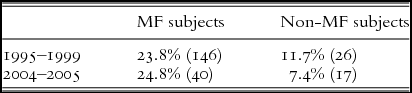
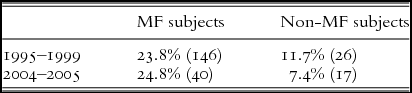
In both data sets MF respondents achieved significantly higher scores than their non-MF classmates (23.8% compared to 11.7% in 1999, χ2 = 56.1, and 24.8% compared to 7.4% in 2005, χ2 = 30.7) (Table 6).
Overall Picard Skills scores of MF and non-MF informants
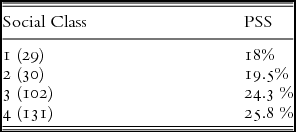
In the 1995–1999 data, year of birth proved important. The 45 subjects born between 1980 and 1983 scored significantly higher (32.4% compared to 20.7%, p < .01, χ2 = 63.1) than those born in 1984 or later, although this clearly overlapped heavily with areas of residence and school attendance. Forty-two of the MF students claimed that a member of their extended family used Picard in their presence and these subjects achieved significantly higher scores (28.8% compared to 20%, p < .01, χ2 = 39.5). Only pupils from Hantay and the private primary school in Lys-Lez-Lannoy professed direct experience of cultural activities. In Hantay, some children had taken part in patois performances and in Lys a local volunteer had previously offered lunch-time classes in Picard. Not surprisingly, the Hantay ‘performers’ outscored their classmates (35.9% compared to 19.3%), as did participants in Picard classes in Lys, albeit with a lesser difference in percentage terms (21.3% compared to 15.7%).Footnote 17 The 1995–1999 data show that differences in social class correlated with differences in Picard Skills scores (Table 7). The scores suggest a neat pattern of social stratification with the respondents from the lower social classes achieving higher scores than those from the higher social classes, bearing in mind the strong overlap with age and commune of residence/school attendance.
Picard Skills Scores (PSS) and social class (French students only); n = number of parents whose occupation was specified by their offspring

Social-class categories based on French education Ministry's predictor of educational success (Appendix 1)
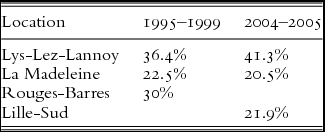
Table 8 shows direct comparisons of the two studies carried out in the SEGPA of La Madeleine and Lys-Lez-Lannoy, and juxtaposes the Rouges-Barres results of 1995 with the Lille-Sud results of 2005.
Overall mean scores in Picard Skills Test of MF subjects at identical or comparable locations between 1995–1999 and 2004–2005
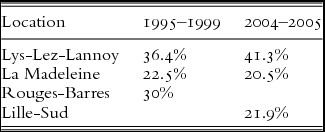
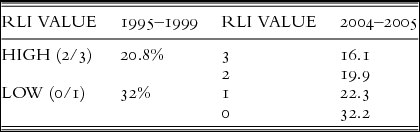
If these results hint at ongoing attrition in the central areas, this is by no means the case on the Roubaix-Tourcoing side of the metropolis, where like-for-like scores were higher in the more recent study. It would, however, be hazardous to claim that Picard is better preserved in certain areas than in others, without taking into account factors derived from individual profiles discussed below. What can be said is that subjects in MF-dominated classes did not score as well as those in ethnically mixed ones, as suggested by direct comparison of the Lys-lez-Lannoy and La Madeleine scores, but also by the sizeable difference in the scores between the ethnically mixed Lille-Sud Ve (27.5%) and the MF-dominated Lille-Sud IVe (17.3%). One could speculate that in the most ethnically mixed areas, Picard may take on greater identity value for MF subjects, possibly more so for older generations, leading to somewhat greater exposure to the language for these adolescent subjects within (extended) family circles. An indicative but striking manifestation occurred in the Lys-Lez-Lannoy SEGPA on a day when the (female) headteacher was absent. Picard variants started to appear in staffroom talk, particularly among the male teachers. Moreover, the small number of Maghrebian subjects achieving scores of 20–30% tended to see Picard as a factor in MF identity, and their relatively high degree of awareness may be at least ephiphenomenal to their desire to integrate into ‘mainstream’ society. Two cultural indices were inversely correlated with test scores in both data sets. With regard to the Regional Loyalty Index (RLI), subjects professing the highest degree of regional loyalty were consistently outscored by respondents with low RLI values giving a neat overall rank order as shown in Table 9.
Regional Loyalty Index (RLI) and Picard Skills scores (all subjects) 1995–1999 and 2004–2005
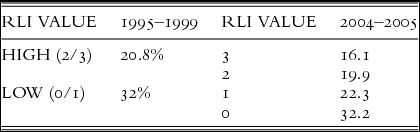
In the 1995–1999 study respondents from periurban and rural areas professed greater attachment to the region than those residing in the urban heartlands. In a study based on the Rouges-Barres data (Pooley, Reference Pooley2000), the RLI correlated significantly both with ethnicity (only MF subjects had the highest value) and use of two regionally marked variants in French (back a and open o). In the 2004–2005 sample, however, this neat matching of RLI values and ethnicity did not re-occur.
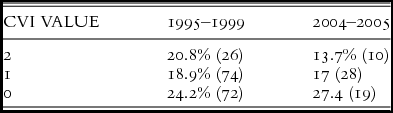
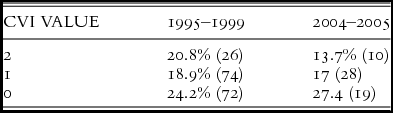
In both corpora, the Cultural Value Index (Table 10, Appendix 3) showed a significant negative correlation with test scores, suggesting that respondents more familiar with Picard were less likely to consider it either to be a distinct language or worth knowing. Paradoxically, a follow-up question about whether the subject would wish to take classes to learn Picard produced a significantly positive result (p < .01, χ2 = 9.6) in the 1995–1999 study, although the finding was not confirmed in the 2004–2005 data, since the result was reversed, albeit without yielding a significant difference.
Cultural Value Index (CVI) and Picard Skills Test scores (all subjects) 1995–1999 and 2004–2005
The Professed Competence Index (Appendix 4) correlated more stronglyFootnote 18 with relatively high test scores than in the earlier study. Although not statistically significant, it is perhaps worth noting that in 2004–2005, a clear majority of respondents (60%) professed zero competence compared to a sizeable minority of 47% in 1995–1999.
3.2.3 Profiling high and low scorers in the Picard Skills Test
Analysis of the 1995–1999 data shows that seven of the 172 subjects (4%) achieved test scores of 50% or more. They were in the majority male and from urban areas, having a Picard-speaking parent or grandparent, a factor which appears to outweigh social background, although the highest scorers are mostly from the lower social strata and, as already observed, there was no evidence of intentional transmission in infancy. High scorers tended not to be from periurban areas, where geographical mobility (even on a local scale) was most apparent, which suggests that intergenerational rootedness may have some bearing on the degree of exposure to the regional language. From the 2004–2005 data, five individuals (9%) (four boys and one girl) emerged as high scorers on the 50%+ criterion. All had close relatives who used Picard in their presence, but only in the case of the girl was it a grandparent. For the boys the Picard speakers within the family circle were a generation closer: older brother, father, uncle, and, as these example suggest, always male. That said, two of these informants dissociated themselves from the use of Picard as a spontaneous means of expression, in such terms as ‘eux parlent patois et moi, je réponds normalement’ and ‘ça fait vieux de parler patois à mon âge’. Two of the boys also had close connections and regular family contact outside Lille but within the historic picardophone area (Saint Omer in the Pas-de-Calais, and Belgium).
In the 1995–1999 study, the profiling of low scorers (0 or 3.3%) in the Picard Skills Test pointed to the following five factors as potentially important in this respect: a) be of primary age; b) live in a periurban area; c) have no contact with grandparents; d) have mobile parents; e) live in an unstable family situation, e.g. parental divorce (Pooley, Reference Pooley, Ayres-Bennett and Jones2007: 101). In the 2004–2005 study, there were 16 subjects who achieved only single-figure percentages (0, 3.3 or 6.7), in the Picard Skills Test, nine of whom were of non-MF background, with eight of the eleven Maghrebians scoring 2/30 (6.7%) or lower. Among the MF subjects, factors a) and b) cited above obviously did not apply. Of the seven low-scoring MF informants in the more recent corpus, two were twin sisters, who had recently moved to Lille from the Haute-Loire following the break-up of their parents’ marriage (factor e). For the others, Picard (patois) simply did not even seem to figure on their mental map. Apart from the twin sisters, who reacted to the Variety Labelling Test, not in terms of bafflement at the mention of patois, but in terms of differences in regional accent compared to the area where they had, until recently, been living, the other informants offered a reduced set of answers, usually French and something else, whether that something else was a foreign language or contributed to a mixed code. In a number of cases, their ignorance of the term ‘patois’ led to their never offering that option as a response in the Variety Labelling Test to be discussed in the next section.
4. PERCEPTIONS OF PICARD
4.1 The Variety Labelling Test
As noted in the introductory section, subjects were asked to listen to a series of short recorded texts and classify them according to a typology offering four possibilities: a) French; b) mixture (mixed code); c) patois; d) other (in French autre chose). In the first round of fieldwork carried out between 1995 and 1999, respondents were given six such texts to listen to, five of which could be claimed to be Picard and the sixth containing a clear French-Picard switch. All the speakers on the recordings were from the Nord–Pas-de-Calais, except for one from the Belgian Hainaut. Four of the six extracts were retained for the significantly augmented version of the test administered in 2004 and 2005. The six Picard recordings were increased to thirteen, covering most of the traditional picardophone area (Figure 2), as set out in Table 11.
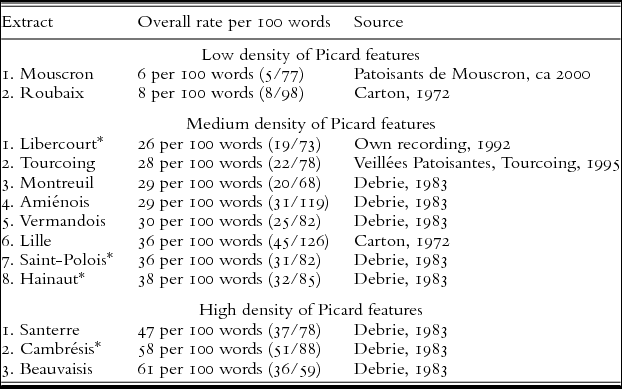
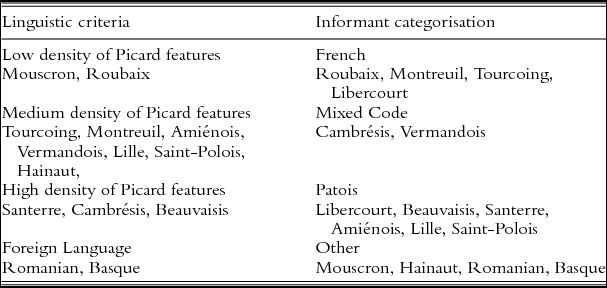
Density of Picard features in Picard extracts (Extracts marked with an asterisk were also used in 1995–1999)
The Picardophone area with indication of geographical origin of extracts in Variety Labelling Test
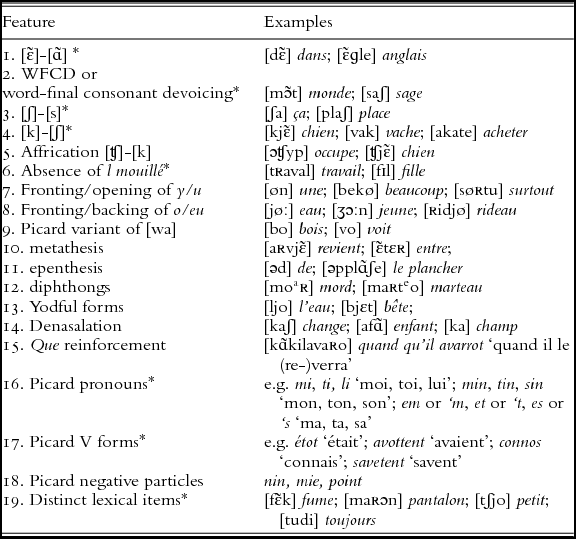
The major sources were Debrie (Reference Debrie1983) and Carton (Reference Carton1972) augmented by two clips collected from patois association meetings and one of my own recordings. Table 11 lists the 13 extracts used in 2004–2005 graded into three sets (low-medium-high) according to the density of Picard features measured by occurrences of any of the 19 features listed in Table 12. The clips being between 59 and 126 words long, the measure of density of Picard features was derived by counting the number of occurrences of any of the nineteen items and calculating the equivalent rate per 100 words. For instance, in the case of the Tourcoing extract, 22 occurrences of any the features were noted in a sequence of 73 words, giving a rate of 28 features per 100 words. In addition to the increased number of examples, two distractors, short clips from teaching materials in Romanian (Deletant, Reference Deletant1983) and Basque (taken from London Metropolitan teaching materials) were included to give genuine choices for the ‘autre chose’ option. At the other end of the spectrum, the speaker in the Roubaix extract is speaking French but quoting a past conversation in which she used some Picard features (hence density score of 8 features per 100 words).
List of Picard features used for evaluating 2004–2005 data (* = also used in 1995–1999)
The Picard extracts selected for the test were spoken by people from all five picardophone départements plus the three largest towns of Lille-Métropole and two locations in Belgium, exemplifying different degrees of picardité. The use of 19 features constitutes a considerable increase compared to the eight used for 1995–1999 (Pooley, Reference Pooley2004: 444), partly warranted by the greater geographical coverage of the more recent study. On the basis of the measure of density, the clips clustered fairly readily into three sets, which have been labelled as follows: a) low density (up 8 tokens per 100 words); b) medium density (26–36 tokens per 100 words); c) high density (47 or more tokens per 100 words). A secondary measure of dialectal density based on occurrences of morphological and lexical features was also calculated but this did not yield as consistent results as the measure of density based on the 19 features.
4.2 How the test corpus was perceived
While distinctiveness of grammar and lexis are the traditional criteria for distinguishing dialects, the subjects’ responses suggest quite strongly that only the latter is of consequence in their perception. At least two explanations may be put forward for the absence of grammatical considerations in the metalinguistic comments. Firstly, as Léonard (Reference Léonard and Eloy1998) observes with regard to another Oïl variety, the subjects may well believe that Picard (or Poitevin) has no grammar in the sense of one that is written down and can be studied, as is the case for ‘une vraie langue’ such as French; secondly, grammatical features may be manifested through a single sound difference, resulting in a different word, such that [avo] is perceived, for instance, as a different word from avait, although the alternation depends on a single sound segment. When asked how they recognised patois, subjects often had recourse to explanations in terms of words but more frequently they referred to sounds (and occasionally letters).
As regards lexical differences, opinions were varied: ‘Ils n'emploient pas les mêmes mots que nous en français’, ‘Ils disent des mots qui ressemblent au français, mais c’est pas pareil en fait’ or ‘Ils disent les mêmes mots, mais ils ont un accent’. Many subjects referred to differences of pronunciation from French, sometimes expressed in moderate terms such as: ‘Eux quand ils parlent français ils ont un petit accent’ or conveying an air of strangeness ‘une drôle de voix’, or even some of the oft-quoted perceptions regarding Picard or Nordiste pronunciation such as ‘un accent grave’ or ‘ils écrasent les mots’, both expressions often used to refer to the backing of a, which in some clips was velarised and markedly rounded (e.g. Amiénois). The comments also contain a strong thread of disapproval, which may be expressed either as distorting words: ‘Ça s'entend, ils déforment les mots’, ‘ils ont un accent et ils déforment presque tous les mots’ or even of speaking like foreigners trying to communicate in French. The language exemplified by the clips is often perceived as somehow incorrect and unlike the informants’ own way of speaking, which, in their own perception, emerges as some kind of reference: ‘ils parlent pas comme nous, comme les Français’ or ‘ils parlent pas comme tout le monde’ or ‘ils parlent pas “normal”’ or ‘j’aime pas cette façon de parler’. Only a small minority of respondents recognised the clips for what they were by relating them to the way that people of a certain generation or from a certain area speak or by quoting something in patois.
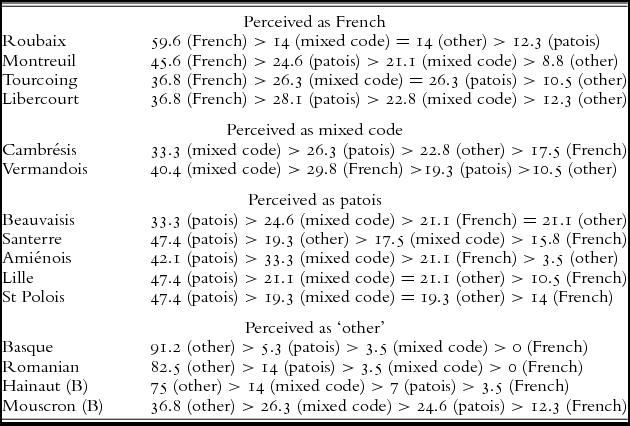
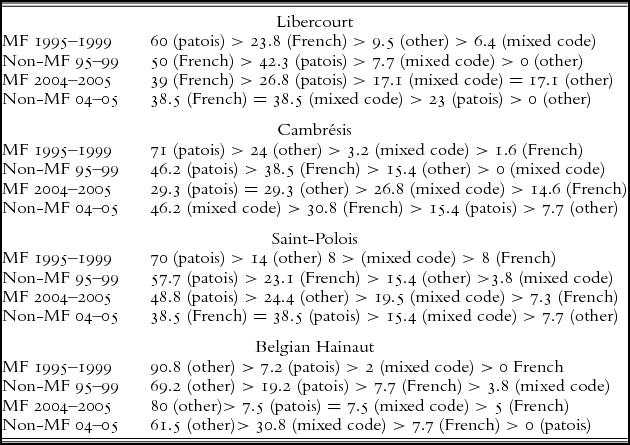
As Table 13 indicates, it is the two foreign languages, Basque and Romanian, which are perceived as ‘other’ with the greatest degree of consensus, but the Picard of the Belgian Hainaut, judged by over 90% of informants in the 1995–1999 study as ‘other’, still achieves a level of agreement far above any other variety spoken in picardophone territory (75%). Curiously, the other Belgian variety was also widely perceived (38.6%), albeit without a real consensus, as ‘other’. The only other majority verdict in the later study was that 59.6% of subjects deemed the Roubaix variety to be French. The results are thus largely characterised by relative lack of certainty, in several cases little better than purely chance guessing, particularly with regard to mixed code and patois, since no extract achieved a majority verdict with these labels.
Informants’ classification of extracts
Taking the categorisations that respondents were asked to use and those derived by calculating the density of Picard features, such that French corresponds to low density, mixed code to medium density and patois to high density, the perceptions presented in Table 13 may be compared to the linguistic classification of Table 12. This is shown in Table 14. The results, unlike those of Kerswill (Reference Kerswill, Preston and Long2002), are marked largely by a lack of correspondence between the two evaluations, with only 6/15 clips being placed in the corresponding slots, including the two foreign languages. Of the four ‘Picard’ clips on which there is agreement, three are clearly towards the French end of the dialectality spectrum (Roubaix, Beauvaisis, Santerre) leaving only Vermandois in the middle range. There seems to be no clear pattern in how medium-density clips are perceived, even if morphological and lexical criteria are taken into account. One of the most striking results is the perceived otherness of the Belgian varieties, although on the basis of the linguistic features they do not fall into the high-density category. In the case of the Hainaut extract, this finding is consistent across the two data sets (Tables 13 and 15) although perhaps attenuated in the later study by the presence of the more obviously ‘other’ varieties. The perception of the Mouscron clip is all the more surprising given the proximity of Mouscron to Lille and the well-documented similarity of the traditional varieties (cf. Legrand, Reference Legrand1853; Blanquaert and Blanquaert, Reference Blanquaert and Blanquaert1998; Maes, Reference Maes1942).
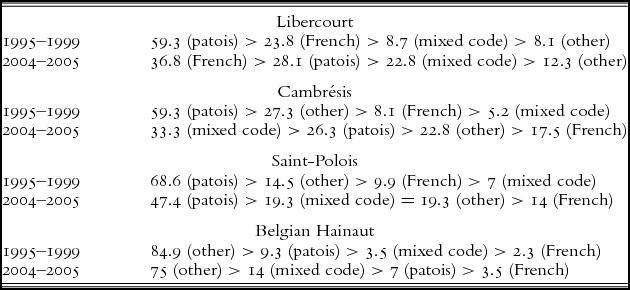
Comparison of perceptions of four extracts used in 1995–1999 and 2004–2005
Separating the Variety Labelling Tests results of subjects considered to be high (50%+) or low (6.7% or less) in the Picard Skills Tests failed to reveal significant differences nor indeed any sign of a possible patterning closer to the linguistic analysis.
4.3 Indicators of the real-time trends
With regard to subject perception, the degree of uncertainty manifested in 2004–2005 is considerably greater than in the 1995–1999 study, as indicated by Table 15, where the clear majority verdicts regarding the Libercourt, Saint-Polois and Cambrésis varieties have dropped to most frequent but minority answers in the later study. Apart from the Hainaut clip (‘other’) only the Roubaix extract (French) receives a clear majority verdict (Table 13).
In the light of the comments quoted earlier about strange forms of French and the recurrent theme of condemnation and indeed puzzlement pervading them, these results seem to add credence to the hypothesis that Picard is continuing to recede from the perceptual landscape. The filter of French seems to be stronger, hence the greater frequency of responses along the lines of: ‘Il y a du français et puis autre chose’. Arguably it has also become increasingly problematical to state what this ‘autre chose’ might consist of.
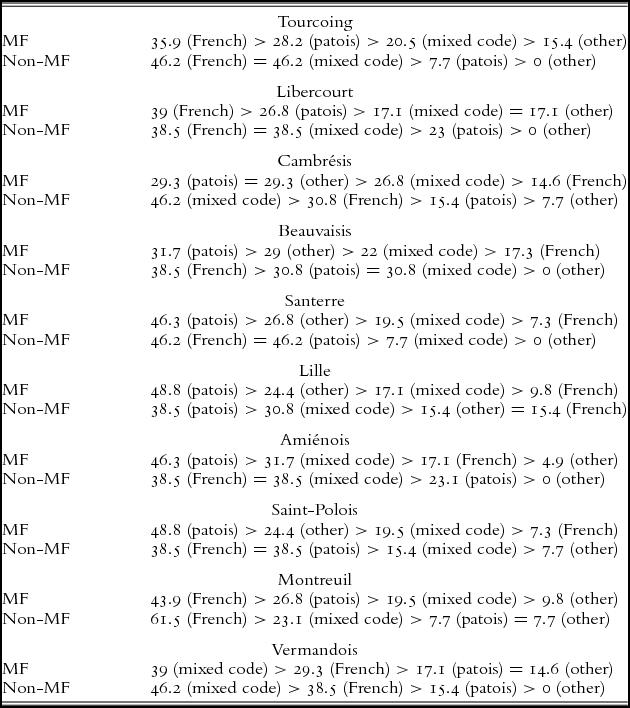
Secondly, the proportion of subjects labelling the varieties used in both studies according to the most frequently chosen category categorising the four varieties is markedly lower. This discrepancy in perception may be due in part to the higher proportion of MF subjects (85%) in 1995–1999 compared to 70% in 2004–2005, although the latter proved less inclined to give a majority verdict. One of the clearest findings of the earlier study was that non-MF subjects were significantly more likely than their MF counterparts to construe these varieties as French (Pooley, Reference Pooley2004a: 438ff). Whether the 2004–2005 produced a similar result is tested in the tabulation presented in Table 16, which shows respondents’ categorisation of ten of the clips. For all ten recordings, MF subjects offered the answer ‘patois’ more frequently than their non-MF classmates, whereas the latter responded more frequently with French in every case except that of Libercourt, where scores for French were virtually equal. Moreover, their greater use of the ‘mixed code’ response (as in the case of Libercourt) also hints at a stronger tendency to interpret the data through the filter of French and to avoid the problematical choice between ‘patois’ and ‘other’.
Comparison of perceptions of ten extracts (2004–2005) by subjects of Metropolitan French (MF) and other ethnic (non-MF) backgrounds
Comparing the perceptions of the varieties used in both data sets, Tables 16 and 17 lend a degree of confirmation to the finding that non-MF subjects are more likely to interpret the data as French, whereas MF subjects seem less confident about labelling varieties as patois.
Results of Variety Labelling Test for MF and non-MF subjects for clips used in both studies
CONCLUSION
Bearing in mind the relatively short interval between the two periods of fieldwork, the signs of ongoing attrition appear remarkably telling. Overall potential competence in Picard as measured by the Picard Skills Test is diminishing. A fair proportion of respondents are able to recognise a few frequent items, some of which may be used in (regional) French. Active competence is largely demonstrated by variable use of about half-a-dozen features, of which two appear to be fairly marginal. Relatively strong performance in the Picard Skills Test does not correspond with the friendship indices which proved significant for the use of vernacular French variants and code-crossing. Indeed, it correlates negatively with two important indices of regional identity, the Regional Loyalty Index and the Cultural Value Index. This perception was strongly confirmed by the metalinguistic comments which gave no reason to suggest that the clips presented exemplified a valuable heritage but rather deviance from what is ‘normal’ and in some cases was disowned as foreign. Even where it was more reliably recognised, it was associated with older generations and again eschewed.
In both data sets geographical factors appear to take on importance, as MF subjects from the north-eastern corner of Lille-Métropole again achieved the highest scores. That they should also be from the most ethnically diverse area might indicate, as previous studies have done, that the social background of the Lys-Lez-Lannoy students was of crucial importance. Available evidence consistently suggests that patois survives best in the lower strata of the working classes, and that for adults it is a marker of white working-class, particularly male, identity. Such acquisition as occurs among the generation investigated, tends to happen in an unplanned way mainly through contact with older members of the extended family.
As regards the Variety Labelling Test, the respondents’ classification of the varieties does not correspond to that produced by the application of the linguistic criteria listed in Table 12. One of the main findings of the 1995–1999 study, i.e. that the Belgian Hainaut variety was perceived as ‘other’ received confirmation. Indeed, the second Belgian variety (Mouscron), despite the low density of Picard items was also so perceived by a sizeable minority. Another finding that was also confirmed was that non-MF respondents were significantly more likely to construe the speakers on the recordings as using French, whereas the MF informants were more willing to use the label ‘patois’. What is perhaps more striking is the paucity of majority verdicts, even compared to the 1995–1999 study, suggesting that Picard is continuing to recede from the mental map of this generation, despite the ideological changes and cultural events that might have been expected to counter this tendency. In the competition for sociolinguistic space between the vernacular varieties in the linguistic repertoire of the adolescents studied, vernacular French is clearly highly dominant in peer-to-peer exchanges, but perhaps more surprisingly, Picard shows fewer signs of socialisation among these MF peer groups than Arabic.
APPENDIX 1
Parents’ profession and favourability to success at school
APPENDIX 2
Questions for Regional Loyalty Index
1. Love of the region
a) J’aime beaucoup vivre par ici.
b) J’aime assez bien vivre par ici.
c) Je n'aime pas vraiment vivre par ici.
d) Je n'aime pas du tout vivre par ici.
2. Attitudes towards local people
a) Les gens par ici, je les trouve très sympathiques.
b) Les gens par ici, je les trouve assez sympathiques.
c) Les gens par ici, je les trouve pas très sympathiques.
d) Les gens par ici, je les trouve pas sympathiques du tout.
3. Test of regional attachment
Si, quand tu seras adulte et donc totalement libre de faire ce que tu veux, tu avais tout ce dont tu pourrais avoir envie: une belle maison, une (ou deux) belles) voiture(s), un mari (une femme) qui te plaît, des amis, la possibilité de pratiquer les loisirs que tu aimes, bref si tu pouvais avoir tout cela, est-ce que tu préfèrerais l'avoir:
a) par ici?
b) à Paris ou dans la région parisienne?
c) dans une autre partie de la France?
d) à l'étranger?
Scoring : 1. and 2. 1 point for either a) or b). 3. 1 point for a).
APPENDIX 3
Cultural Value Index questions
1) Laquelle de ces deux affirmations correspond mieux à ton opinion personnelle?
a) le patois est un français déformé
b) le patois est une langue différente du français.
2) Est-ce une bonne chose pour un(e) jeune comme toi de connaître le patois?
Scoring 1b) 1 point; 1a) no points. 2) 1 point for positive response.
APPENDIX 4
Professed Competence Index Questions
1) Est-ce que tu comprends le patois?
2) Est-ce que tu parles le patois?
Scoring: 1 point for each positive answer.
APPENDIX 5
Examples of grading of Picard Skills Test, part c) (Speaking Test)