Emergency medical responders are skilled at assessing and treating patients in high-stress and time-critical situations. However, many emergency situations fall outside of even their normal operations. Chemical, biological, radiological, and nuclear (CBRN) exposure can come from a variety of man-made and natural disasters. The most common include terror attacks, industrial accidents, earthquakes, extreme weather, and infectious diseases (H1N1 and H5N1 influenza), severe acute respiratory syndrome (SARS), cholera, Ebola hemorrhagic fever, enterovirus-71 [EV71]). Personal protective equipment (PPE) for disaster workers came to the forefront after the 1995 Sarin gas attack in a Tokyo subway by a religious cult. Health-care professionals became casualties in that incident because they lacked proper CBRN-PPE.Reference Nakajima, Sato, Morita and Yanagisawa1, Reference Suzuki, Morita and Ono2 Similarly, the 2014 Ebola virus disease outbreak in West Africa (Sierra Leone, Guinea, Nigeria, and Liberia) killed more than 200 doctors, nurses, and healthcare workers due to lack of access to proper protective gear and training.Reference Diamond3 There has been a resurgence of interest in the topic due to these and other recent events. Many disease outbreaks and disasters may require PPE but no existing device can detect all possible CBRN agentsReference Ramesh and Kumar4 or communicable diseases. Wearing CBRN-PPE is one of many safety precautions that can ensure that healthcare responders and receivers do not become victims.
There are 2 primary CBRN-PPE classification systems in the United States from the Occupational Safety and Health Administration (OSHA) / Environmental Protection Agency (EPA) and the National Fire Protection Association Standards (NFPA). These 2 systems use 4 categories of protection: OSHA/EPA Levels A-D and NFPA Class 1-4. In both instances, the level of protection increases with decreasing number or letter, meaning Level A and Class 1 are the most protective.Reference Gershon, Vandelinde and Magda5, Reference Scott, Miller and Issenberg6 Level C or greater PPE are recommended in a CBRN-contaminated zone. Briefly, Level A comprises a fully encapsulated and chemically resistant suit, gloves, boots, and self-contained breathing apparatus (SCBA); Level B uses a nonencapsulated chemically resistant suit, boots, gloves, and SCBA; Level C also uses a nonencapsulated suit with air filter apparatus and butyl gloves; Level D includes coveralls, chemical resistant gloves and boots, head protection, face shield, and mask. In contrast, the U.S. military designates mission oriented protective posture (MOPP) gear, in which higher numbers denote greater protection. MOPP 1-3 fall in between OSHA Levels D and C.Reference Tavares7 MOPP 4 is equivalent to OSHA Level C, and it may be modified to include either a powered air purifying respirator or SCBA to make it equivalent to OSHA Level B.Reference McIsaac8
Other PPE classification systems also exist for different occupational hazards. Typical clinical PPE used for the tasks described in this article do not conform to the OSHA classification system. Standard PPE used in clinical and hospital settings are rated for their ability to prevent or reduce the risk of disease transmission both from the patient to the user and vice versa. They are also rated to be used in controlled environments, such as a clinic or operating room. In the event of emergency medical response in field or austere conditions, or in any response to a CBRN event, U.S. personnel should refer to the OSHA or NFPA PPE standards. Outside of the United States, the European9 and British10 standards have been adopted for CBRN-PPE with similar protection levels to the United States.
Many general and specialized PPE selection guides exist and are beyond the scope of this article. For example, OSHA publishes 1 for CBRN responders and hospital-based first receivers.11 In general, OSHA Level A protection is worn when the highest level of respiratory, skin, eye, and mucous membrane protections is needed. Level B protection is selected for respiratory protection, but a lesser level of skin and eye protection is needed. Level C protection is selected when the type of airborne substance is known, and the criteria for using air-purifying respirators are met. Level D protection is primarily a work uniform and is used for nuisance contamination. For radiation, chemical, and/or biological hazards referred to as “combined hazard” event or unknown contaminant, Level A PPE ensemble is recommended for first responders. Furthermore, for radiological incidents where PPE can be effective, Level C PPE often provides adequate protection for first responders.Reference Goldfrank and Manning12 Generally, PPE Level B or C offers adequate protection for biological or chemical hazards. However, higher levels of PPE are recommended for unknown or specific high-level hazards.Reference Goldfrank and Manning12
A national survey of U.S.Reference Reilly, Markenson and DiMaggio13 and CanadianReference Kollek, Welsford and Wanger14 EMS providers showed that more than half have received training in CBRN response. However, CBRN-PPE use poses numerous physiological, psychological, and biomechanical effects,Reference Tavares7, Reference McIsaac8 impacting medical device use safety and effectiveness.Reference Suyama, Knutsen and Northington15 The physiological and psychological stress associated with the use of CBRN-PPE can reduce working capability by as much as 30%.Reference Krueger16 Training in mass casualty and pandemic response as well as adherence to recommended guidelinesReference Gershon, Vandelinde and Magda5, Reference Scott, Miller and Issenberg6, Reference Hsu, Jenckes and Catlett17 has been shown to improve performance. The purpose of this study was to systematically review literature examining the impact of CBRN-PPE on the efficiency (time) and accuracy (error rate) of medical device use during simulated and actual emergency medical responses. We believe our study is the first systematic literature review of CBRN-PPE effects on medical device use during emergency response.
METHODS
Data Sources and Search Strategy
We conducted a systematic literature search of publications describing PPE use with medical devices in PubMed, Web of Science, and EBSCO using the Preferred Reporting Items for Systematic Reviews and Meta-Analyses framework.Reference Liberati, Altman and Tetzlaff18 We included publications in English from January 1984 through February 2015. A combination of keywords within the title or abstract were used, including: impact (effect, issues, human factors, or ergonomic issues), personal protective equipment or PPE (chemical protective suit, chemical protective ensembles, mission oriented protective posture or MOPP, anti-chemical protective gear, chemical protective clothing, hazardous materials or HAZMAT suits), medical device (devices, medical instrument, medical equipment, armamentarium, airway management medical devices, diagnostic and/or monitoring medical devices), and public health emergency (public health disaster, public health crisis, mass casualty events, pre-hospital, chemical, biological, radiological, nuclear, or explosive or CBRNE).
Inclusion and Exclusion Criteria
To be included in the present review, articles had to satisfy the following criteria: (1) published in peer-reviewed journal, book, or commission report; (2) contained both PPE and at least 1 medical device; (3) included at least 1 emergency medical procedure or task; and (4) included subjective and/or objective assessment based on the interactions pertaining to the device use with the PPE. The abstracts were screened for inclusion criteria, and uncertainties about inclusion were referred for a second opinion. The selected articles were then reviewed. The focus for the review was to identify each study’s PPE, medical device(s), use environment, tasks, impacts, and limitations. We also extracted other identifying information to assist in categorization. The first author’s corresponding address was used to identify each paper’s affiliated country. Furthermore, we used the study participants’ background and journal title to classify a study as either civilian or military. Study participants were evaluated on task performance using normalized criteria based on each study’s dependent variables. This provides a window into the interactions between medical devices, the intended users, and the use environment. Some objective task performance variables were error rates, task completion times, percentage of task completion, accuracy, safety, and success rates. Subjective response variables were ease-of-use (the ability of user to readily and successfully use a product/tool to perform a task), comfort, and task difficulty.
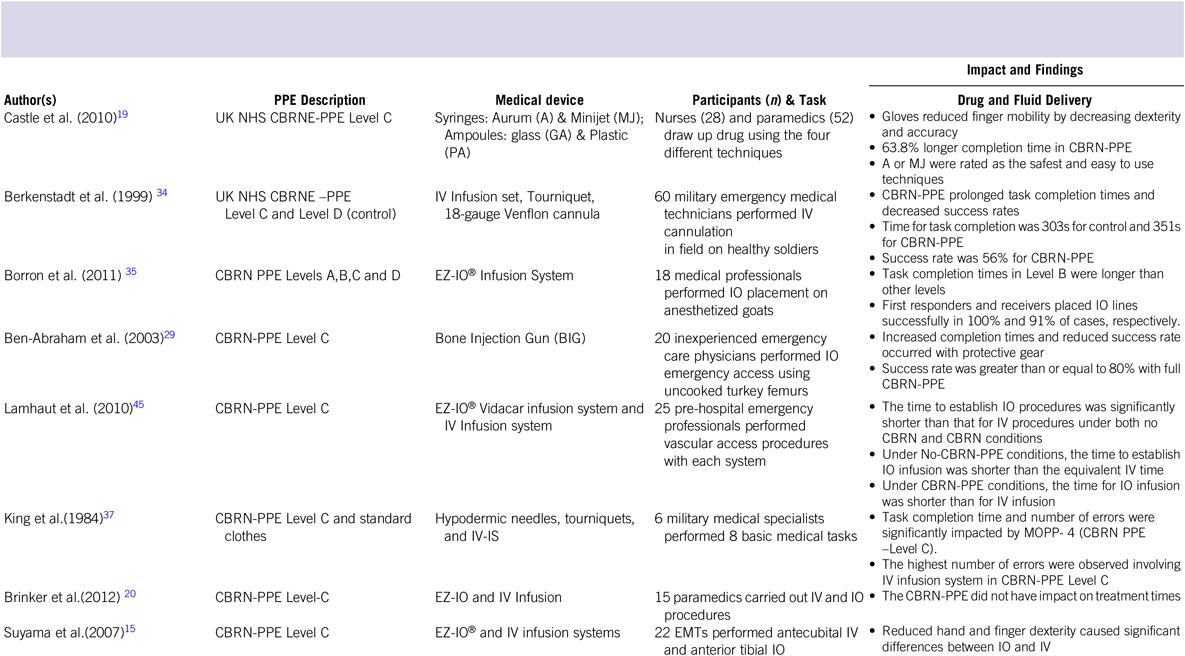
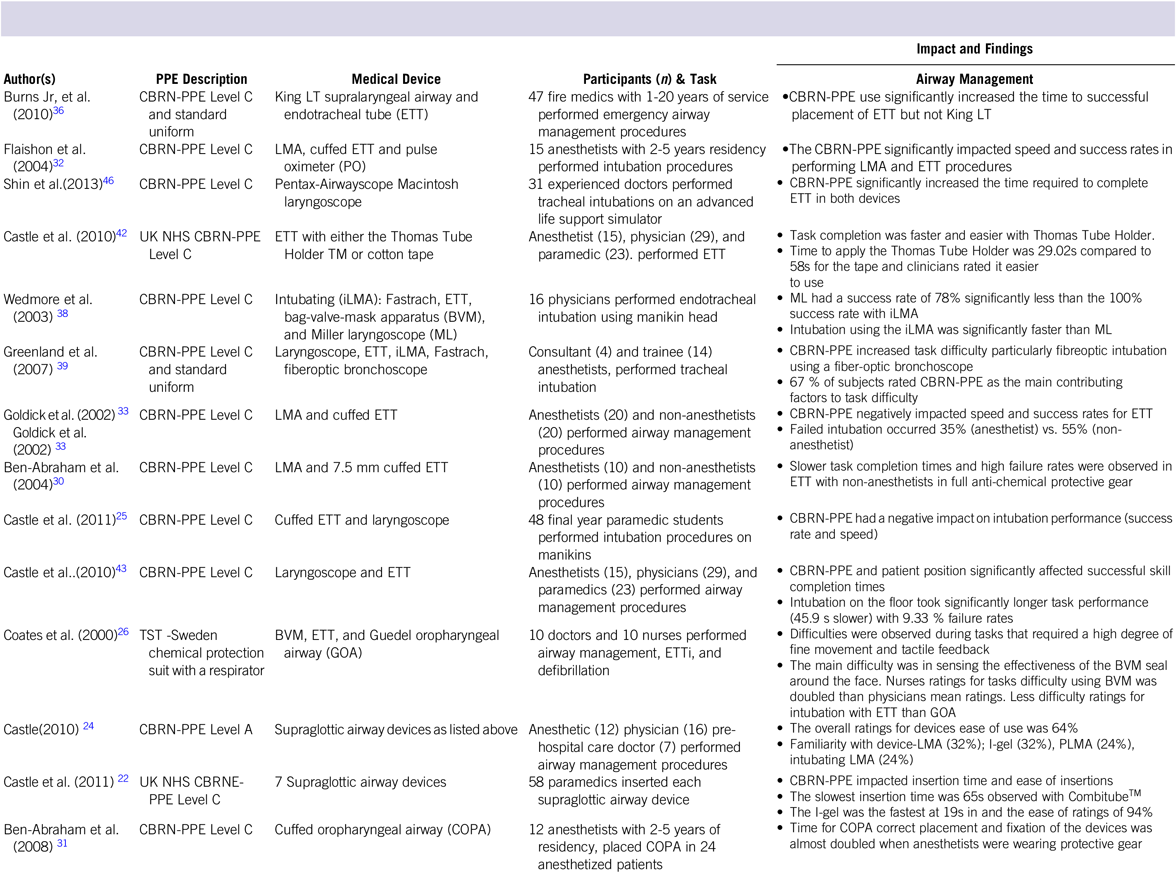
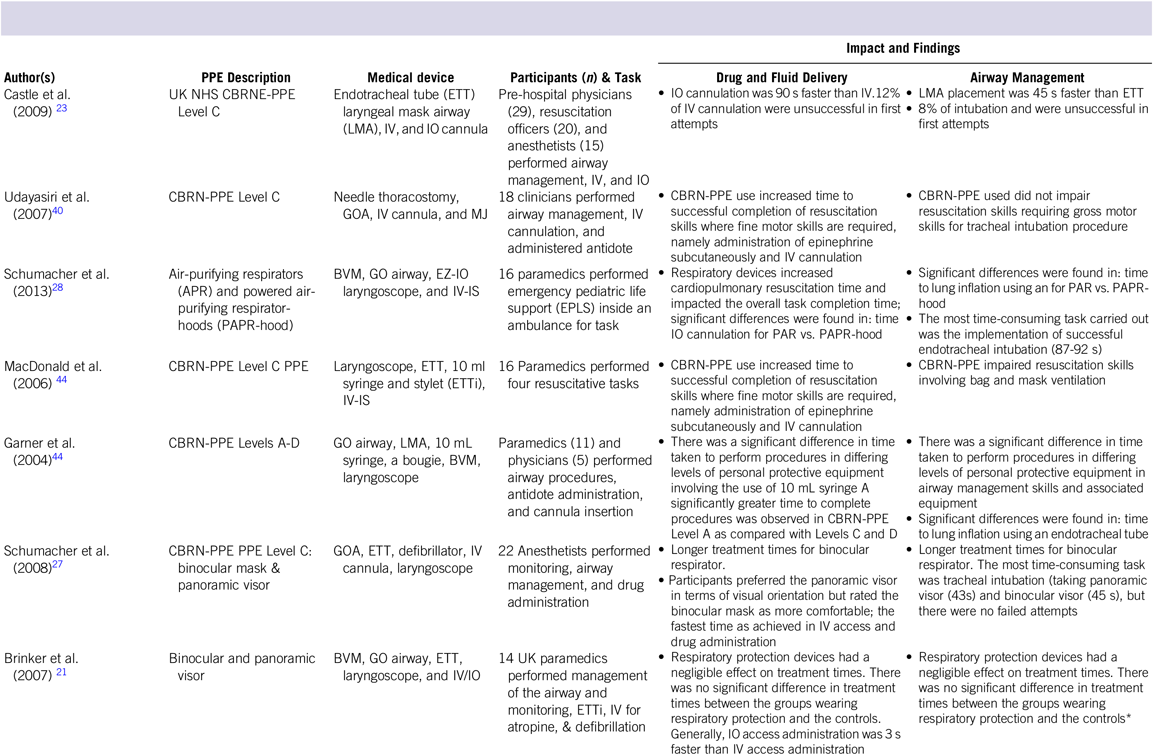
Articles were excluded for the following reasons: abstract only (in conference proceeding), non-clinical task, quality (durability or reliability) and safety or use compliance of PPE, and inapplicable PPE (eg, night vision googles). Inclusion and exclusion discrepancies were unanimously resolved by the authors. The characteristics of the studies meeting inclusion criteria are summarized in Tables 1, 2, and 3.Reference Suyama, Knutsen and Northington15, Reference Castle, Bowen and Spencer19–Reference Shin, Choi and Na46
Summary of Study Characteristics, Findings, and Limitations on the Impact on CBRN-PPEs on Drug Delivery Medical Device Use

Summary of responses published between 1984 and February 2015 in English-language peer-reviewed journals.
Summary of Study Characteristics, Findings, and Limitations on the Impact on CBRN-PPEs on Airway Management Medical Device Use
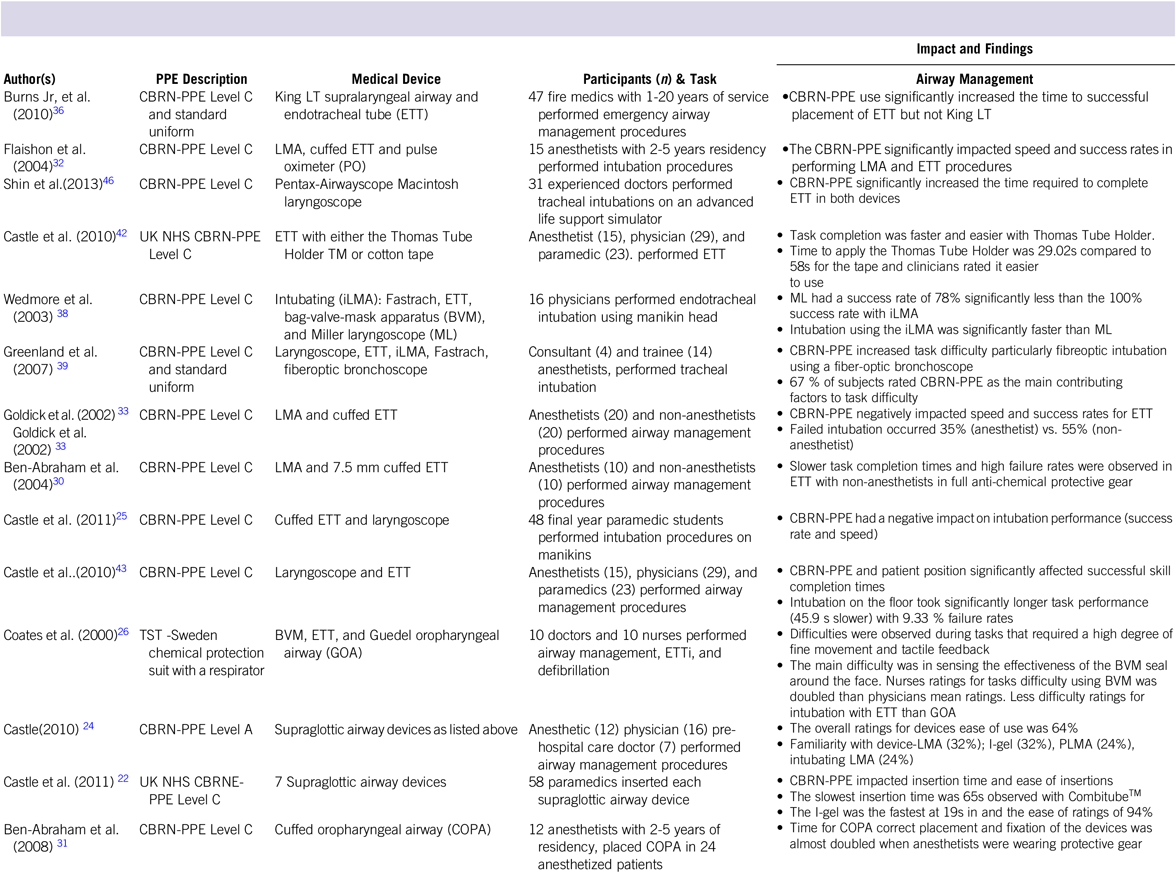
Summary of responses published between 1984 and February 2015 in English-language peer-reviewed journals.
Summary of Studies Evaluating Both Drug Delivery and Airway Management Medical Device Use
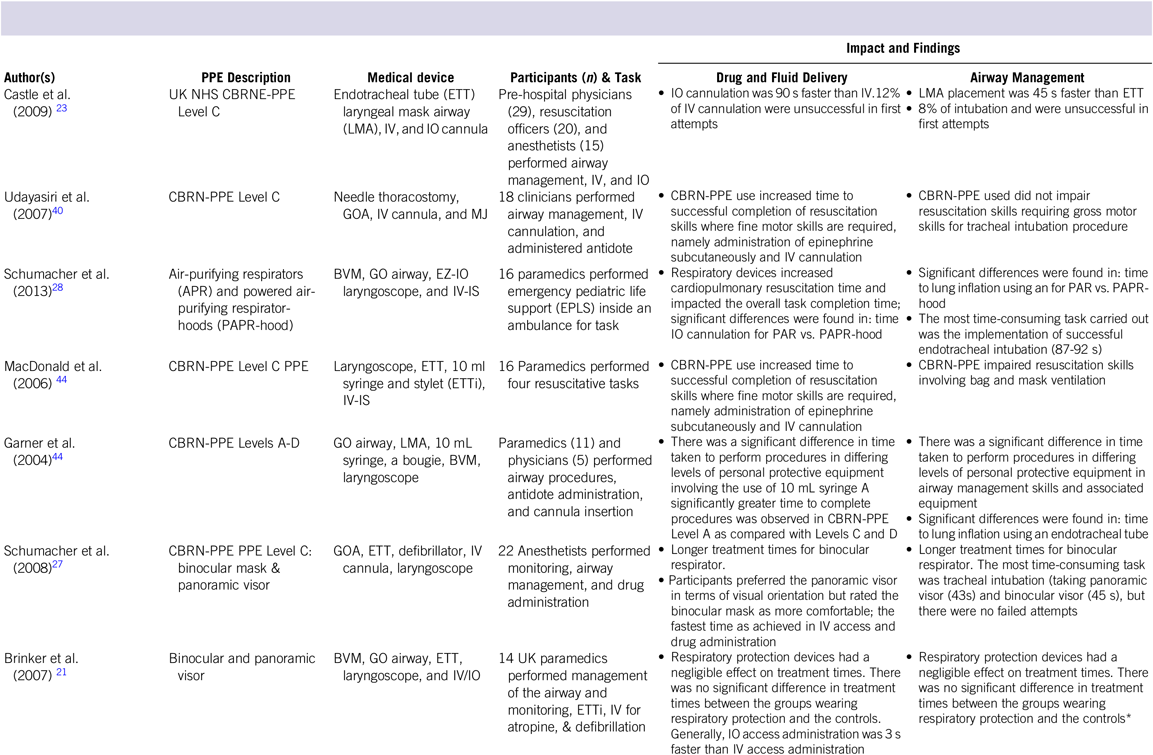
Summary of responses published between 1984 and February 2015 in English-language peer-reviewed journals.
RESULTS
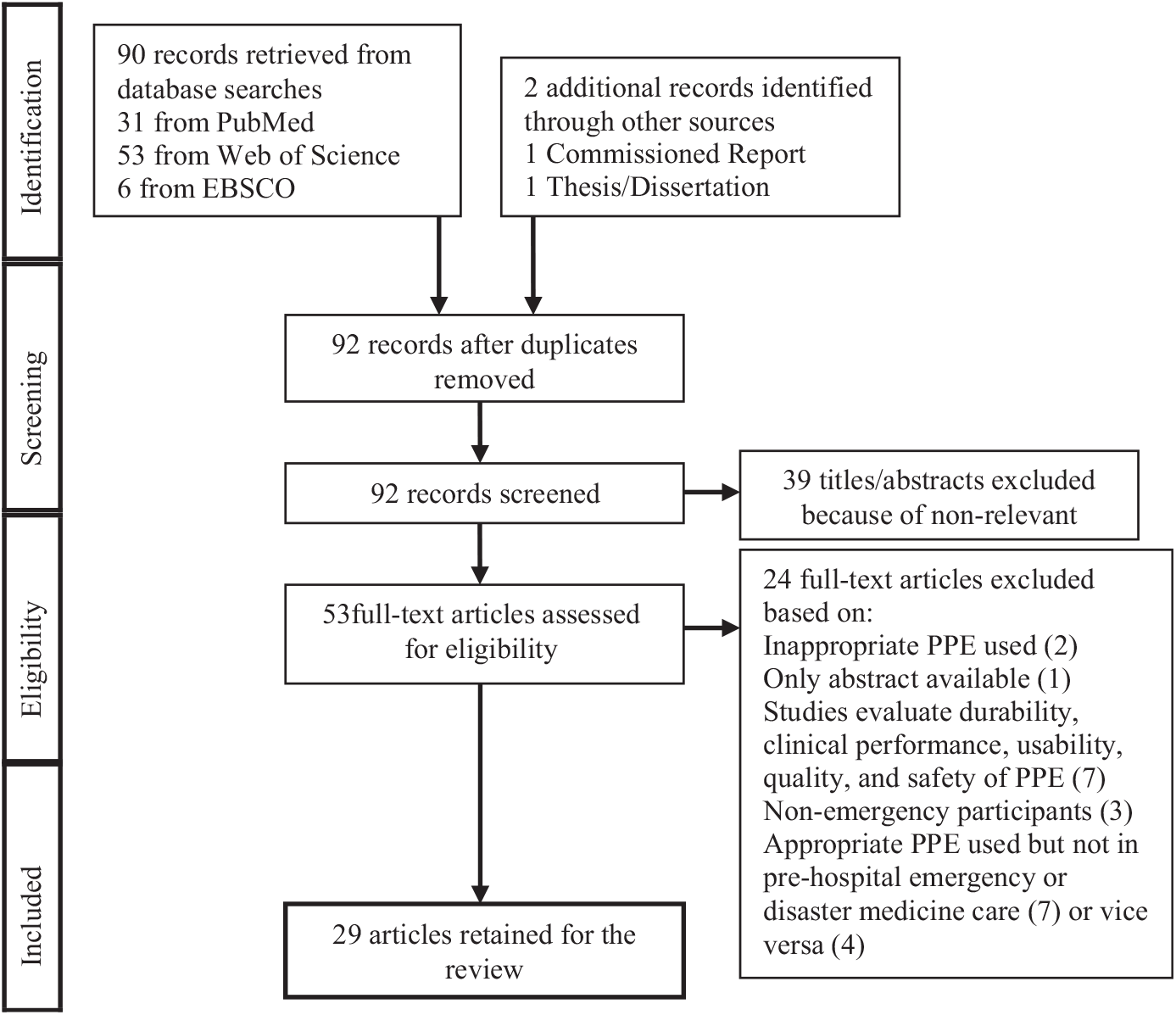
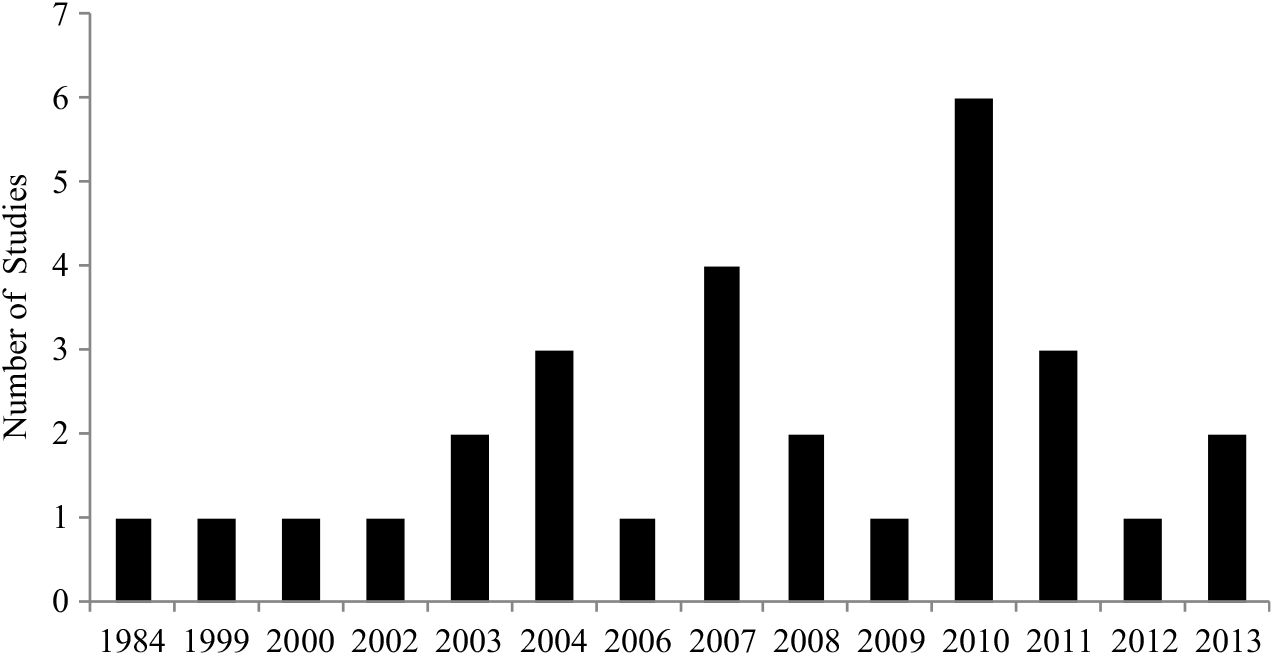
We retrieved 92 titles from all sources (Figure 1). Of these, 29 studies published between 1984 and September 2015 were identified for review based on the predefined inclusion and exclusion criteria (Figure A). While the studies were performed all over the world, the United Kingdom (10),Reference Castle, Bowen and Spencer19–Reference Schumacher, Gray and Michel28 Israel (6),Reference Ben-Abraham, Gur and Vater29–Reference Berkenstadt, Arad and Nahtomi34 and the United States (5)Reference Suyama, Knutsen and Northington15, Reference Borron, Arias and Bauer35–Reference Wedmore, Talbo and Cuenca38, Reference Hur, Motawar and Seo52–Reference Northington, Suyama and Goss54,published the majority of the studies. Australia (3),Reference Greenland, Tsui and Goodyear39–Reference Garner, Laurence and Lee41 South Africa (2),Reference Castle, Owen and Clark42, Reference Castle, Owen and Clarke43 Canada (1),Reference MacDonald, LeBlanc and McArthur44 France (1),Reference Lamhaut, Dagron and Apriotesei45 and South Korea (1)Reference Shin, Choi and Na46 published the rest. Only 3 (10%) of the studies were performed by military organizations. All the studies selected for inclusion took place in a setting that mimicked realistic situations, involving trained healthcare responders with an average of 1 to 15 years of relevant clinical experience using medical devices for emergency responses. The September 11 and 18, 2001, terrorist and anthrax attacks marked a sharp increase in CBRN preparedness research, as denoted by a subsequent increase in publications (Figure 2). Studies of medical device use with CBRN-PPE primarily focused on 2 main areas: drug administration and airway management. Diagnostics and monitoring, although less often evaluated, also factors into PPE use and training decisions and was included in this discussion.
PRISMAReference Liberati, Altman and Tetzlaff18 Flowchart Showing the Review Process for Studies That Assessed the Impact of CBRN-PPE on Medical Device Use, 1984 -2015.

Number of Studies Carried out in 7 Countries From 1984 to 2015.

Taxonomy of PPE Impact on Device Use
Impact on the Administration of Fluids and Drugs
Intravenous (IV) and intraosseous (IO) drug administration were the most reported procedures. Task completion times were reported to be approximately 1.2-2.5 times longer at first attempt when participant performed a task involving IO or IV cannulation in CBRN-PPE Level C or greater conditions. In addition to increased task completion times, the most often reported difficulty associated with additional PPE was reduced dexterity for fine motor tasks. In total, 11 studies reported on the impact of PPE on drug administration. Each study reported significant negative impacts on task completion times. Seven studies assessed IOReference Suyama, Knutsen and Northington15, Reference Castle, Owen and Hann23, Reference Ben-Abraham, Gur and Vater29–Reference Ben-Abraham, Flaishon and Sotman31, Reference Borron, Arias and Bauer35, Reference Lamhaut, Dagron and Apriotesei45, infusion, 6 evaluated IVReference Suyama, Knutsen and Northington15, Reference Brinker, Gray and Michel20, Reference Brinker, Gray and Schumacher21, Reference Castle, Owen and Hann23, Reference Berkenstadt, Arad and Nahtomi34, Reference MacDonald, LeBlanc and McArthur44, drug administration, and 3 studies included subcutaneous drug administration.Reference Castle, Bowen and Spencer19, Reference Castle, Owen and Clark42, Reference MacDonald, LeBlanc and McArthur44, Many of the reviewed studies showed that peripheral IV catheter insertion is often difficult, resulting in more frequent failures (12% compared with 3% of IO), with an average increase in completion time of 90 s compared with IO.Reference Brinker, Gray and Michel20, Reference Castle, Owen and Hann23, Reference Berkenstadt, Arad and Nahtomi34, Reference Lamhaut, Dagron and Apriotesei45 Berkenstadt et al.Reference Berkenstadt, Arad and Nahtomi34 reported 56% IV placement failure rates in real patients. A 2009 study by Castle et al.Reference Castle, Owen and Hann23 showed that the mean task completion times at first attempt for 64 prehospital clinicians in surgical attire verses CBRN-PPE Level C doubled in the IO cannulation and tripled for IV cannulation tasks.
Impact on Airway Management
Twenty-two studies assessed the impact of CBRN-PPE on airway management tasks. Most studies reported that CBRN-PPE significantly degraded airway management task performance. CBRN-PPE prolonged the time to successfully complete airway management tasks and increased failure rates regardless of specialization and task experience (time-on-task). Significant task performance degradation was observed when a high level of the CBRN-PPE was used. Twenty studies used Level C CBRN-PPE, 1 study used all the CBRN-PPE Levels (A-B-C-D)Reference MacDonald, LeBlanc and McArthur44, and 1 used Level BReference Bowonder and Linstone48 to assessed task performance. On the average, compared to with performance in their standard uniform, participants took about approximately 78.6 secondss and 75.6 seconds s longer to successfully complete intubation task in Level- C and Level- D conditions,Reference Schumacher, Runte and Brinker27, Reference Lamhaut, Dagron and Apriotesei45 respectively. Again, manual dexterity played a role in decreased performance. CBRN gloves impeded both gross and fine hand movements.
CastleReference Castle24 reported that 64% of participants chose 1 of the studied airway devices to use while in CBRN-PPE, primarily based on its ease-of-use or insertion speed. The reviewed studies generally reported approximately 8-12% failure rates and doubled task completion times of airway management procedures when participants were wearing CBRN-PPE at first attempts.Reference Castle, Pillay and Spencer25, Reference Schumacher, Gray and Michel28, Reference Goldik, Bornstein and Eden33, Reference Wedmore, Talbo and Cuenca38, Reference Greenland, Tsui and Goodyear39 However, 1 study reported that second attempts reduced task completion times and failure rates compared with the first attempts (eg, 9.33% to 4%).Reference Castle, Owen and Clarke43 This is still greater than the average failure rate without CBRN-PPE. Castle et al.Reference Castle, Pillay and Spencer25 evaluated the effect of responders’ positioning on intubation performance (ie, task successfully completed) and found that in standard uniform, performance was similar in all 4 positions, but variable in CBRN-PPE: trolley (100%), sitting (88.8%), kneeling (81.2%), and laying (62.5%). Responder experience also affected task performance. Goldik et al.Reference Goldik, Bornstein and Eden33reported that the first attempts of both anesthetists and non-anesthetists failed at the significant rate of 35% and 55%, respectively for endotracheal intubation.
Diagnostic and Monitoring Interaction Impact
Two studies Reference Brinker, Gray and Schumacher21, Reference Schumacher, Runte and Brinker27, investigated diagnostic and monitoring device use while wearing CBRN-PPE. Devices such as pulse oximeters, automated external defibrillators (AEDs), and patient monitors took a longer time to use successfully by participants in CBRN-PPE. Both Brinker et al. and Schumacher et al. determined that there was very little difference in the time required to perform diagnostic tasks with either the binocular or panoramic visor respirators compared with a control.Reference Brinker, Gray and Schumacher21, Reference Schumacher, Runte and Brinker27
DISCUSSION
The year 1984 was selected as the initial year for this review because of increased awareness of CBRN safety due to 2 major CBRN events that year. The largest bioterrorism attack in the United States was carried out in Dalles, Oregon, United States, where terrorists sickened 751 people with salmonella spread through restaurant salad bars. In the same year, a gas leak at a Union Carbide pesticide plant in Bhopal, India, caused one of the worst chemical disasters in modern history.Reference Tucker47, Reference Bowonder and Linstone48 However, only 1 article in 1984 met this review’s inclusion criteria. Additional articles published during this time were not included, because they assessed elements of PPE effectiveness, responder fatigue, and training for a variety of applications that did not involve the use of medical devices.
The attack of September 11, 2001 followed by the London Underground bombings of July 7, 2005 focused national attention on nations’ and international preparedness and responses for attacks. In a show of national resilience, nations increased their spending on preparedness and response to public health emergencies. In 2007, the United States alone invested 5 billion dollars into public health emergency preparedness.Reference Garner, Laurence and Lee41 After the September 11th attacks, European member countries also increased their spending on security and public safety. Spending averaged between 1.0% and 2.5% of national gross domestic product and this increased (at European Union [EU] level) by 163% for fiscal framework from 2007-201349 There was a corresponding increase in mass casualty preparedness and response research publications during this time. With recent world events and the Ebola outbreak in West Africa, even more attention has been brought to PPE for healthcare providers and emergency responders. The Centers for Disease Control and Prevention has also updated its Guidance on Personal Protective Equipment to include new donning and doffing instructions to decrease the chance of infection during the transition from contaminated to safe areas.50
Administration of Fluids and Drugs
Vascular access techniques require fine hand and finger motor skillsReference Castle, Bowen and Spencer19, Reference Ben-Abraham, Gur and Vater29, Reference Berkenstadt, Arad and Nahtomi34, Reference Castle, Owen and Clarke43 and a firm, strong grip,Reference Willms, Wells and Carnahan51, Reference Hur, Motawar and Seo52 which are often difficult to achieve in CBRN-PPE. While visual field occlusion had some effect on performance, the CBRN-PPE that had the most impact on these activities were the gloves. Bulky, thick gloves with liners provide greater user protection but reduce fine finger motor movements and finger grip strengths. Coupled with the small sizes and designs of IV device components, this can compromise clinical task performances. Manual or semi-IO techniques and devices (eg, battery-powered IO-insertion devices) can reduce failure rates and completion time compared with procedures done with standard IV.Reference Suyama, Knutsen and Northington15, Reference Ben-Abraham and Weinbroum30, Reference Borron, Arias and Bauer35, Reference Lamhaut, Dagron and Apriotesei45 Handheld semi-automatic devices can provide good grip strength mostly unaffected by user dexterity, but they are more specialized.
Overall, these studies support the conclusion that IO access is easier and faster to achieve than IV access with minimal skill and practice when using CBRN-PPE. These data would not likely be sufficient to support switching standard emergency response techniques from IV to IO. In contrast to IV delivery, fluid delivery through an IO port (depending on the type and location) can be extremely painful to the patient. Manufacturers often recommend using a local anesthetic before delivering IO fluids. This tradeoff may be outweighed when using CBRN-PPE. However, a recent review of IO access techniques across several use cases and disaster scenarios by BurgertReference Burgert53 found that emergency response organizations might improve overall responses by generally adopting IO techniques.
Airway Management
Airway management techniques also require dexterity and tactile sensation to be performed effectively. Adequate oxygenation and sufficient ventilation are crucial when delivering emergency care during mass casualty incidents. The safety and efficacy of the devices in this category depends on complex controls and user experience, which is characterized by time on task and tacit knowledge. Increased frequency of training may be the best method to optimize airway management performance procedures in CBRN environments. Furthermore, airway management devices provide little or no visual information and audio feedback. In an instance where the oral cavity is obstructed due to secretion or vomitus (a common occurrence), insertion may be further hindered due to the CBRN-PPE. Greenland et al.Reference Greenland, Tsui and Goodyear39 found that improving visual feedback with a bronchoscopic eyepiece or attached camera/video screen mitigated significant differences in task completion times and failure rates between CBRN-PPE and standard uniforms.
Diagnostics and Monitoring
Wearing CBRN-PPE may cause a short delay in diagnosis, but when coupled with the additional factors described here, it can have a subsequent impact on downstream treatment. Diagnostic and monitoring devices often include screens and audio feedback for menu-driven and user-prompted operation. Input interfaces include keypads, touchscreens, keyboards, etc. CBRN-PPE can reduce the user-experienced fidelity and functionality of these interfaces. Mask lenses reduce peripheral vision (tunnel vision) and fogging and high internal reflection of face piece may impair device user’s ability to read device interfaces in real-world conditions. From a visual perspective, anti-glare coatings on screen surfaces, newer high brightness /contrast displays, and attention-getting visual alarms can also increase the usability of standard medical devices without modification to the original device. Attachment straps for devices and styli are invaluable when multitasking with limited tactile feedback in the fast-paced emergency response environment.
As with the other activities, large CBRN gloves make it very difficult for users to interact with many standard diagnostic and monitoring devices such as defibrillators, pulse oximeters, or electrocardiographs. Styli are often used to activate touchscreens with gloves, but they can also have dexterity drawbacks. Mitigating strategies that can be designed into the devices include larger push buttons, push buttons with high relief, adequate separation between buttons, and lower activation force.
Overall Lessons
During prehospital or disaster emergency conditions, there is a risk of prolonged completion times and increased failure rates for both airway management and drug administration procedures. Estimates place the rate at which a responder can treat victims of a disaster at 12 min per patientReference Hsu, Jenckes and Catlett17; longer dwell times on 1 patient reduces the next victim’s probability of survival. The impact of CBRN-PPE on the efficiency (time) and accuracy (error rate) may reduce treatment rate and thereby reduce overall survival from a mass casualty disaster. The physiologic effects of CBRN-PPE are well understood.Reference Moseman63–66 Training in full equipment includes work-rest cycles, additional hydration, and physiologic monitoring. However, the effects of CBRN-PPE on medical procedure completion are less frequently assessed. Across the reviewed studies, the success rate of disaster emergency medical procedures was significantly impacted by the users’ CBRN-PPE. Clinical procedures ranged from gross motor tasks such as chest compressions, defibrillation, and fine motor skill tasks such as venous access and intubation.
Collectively, these studies support the firm conclusion that a user’s CBRN-PPE can have a substantial detrimental effect on clinical task performance due to deterioration of tactile and visual input. CBRN-PPE butyl gloves (range: 7-14 mil thickness) reduce both fine (finger) and gross (hand) motor movements and tactile sensation, which are vital skills for airway management and cardiovascular access. Thus, the ease-of-use of these devices is primarily dictated by the minimum dexterity needed to operate them effectively. Purchasing or 3D printing accessory devices may reduce the dexterity needed to operate a device and, therefore, increase its usability. 3D printing has become inexpensive and relatively easy to do for groups of all sizes. It also allows people and groups to design assistive strategies that allow people with reduced mobility to use standard devices. Assistive devices are often used for patients with mobility deficits Reference Northington, Suyama and Goss54–Reference Hanson57 but may also be useful to responders using displays and diagnostics with reduced mobility. Overlays to mask areas of touchscreens that should not be activated or larger buttons that cover a control surface and actuate the smaller buttons below are easy to make with 3D printing. While many clinicians are not experts in creating these kinds of assistive devices, hospitals, universities, and community centers often have facilities that can design and create 3D printed parts and adaptations.
Proper selection of CBRN gloves can also increase user dexterity and reduce the impact on clinical performance. Teixeira et al.Reference Teixeira and Bensel58 in 1990 and Scanlan et al.Reference Scanlan, Roberts and McCallum59 in 2004 both reviewed a selection of CBRN gloves, identifying user preferences for fitted, seamless, single layer gloves among participants. Improvements in polymers are increasing the dexterity in CBRN-PPE but consistent training will always be an important factor in making any system work.Reference Magalhães, de Magalhães and Revett60–Reference Moseman63 Likewise, PPE selection guides offer suggestions based on user activities and experience.
Limitations
Every effort was made to provide a comprehensive review of the available literature through the use of a systematic literature search strategy and abstraction processes. The included studies covered recruited subjects from several medical specialties with varied years of experience, giving this review broad applicability. However, this review has several limitations. Only articles published in English were reported and sample sizes varied among the studies. A handful of studies reported small sample sizes without statistical justification, whereas other studies did not perform statistical analyses. Furthermore, variability in the experimentation regarding test bed models and simulated environment may have had an impact on device use, limiting the ability to compare across studies. The studies used different test bed models: 23 (79%) studies used mannequin, 4 (14%) human, and 3 (7%) animal. Each test bed model has some level of realism in physiological response. Additionally, these experiments did not attempt to replicate the chaotic conditions that characterize mass casualty events and, hence, the level of urgency and stress felt by the participants was likely reduced. Despite the numerous device use impacts by the CBRN-PPEs during public health emergencies, it was possible to conduct the review and develop a taxonomy of device use impacts.
CONCLUSION
We believe this is the first comprehensive review to examine the impact of CBRN-PPE on device use during emergency response. Despite the limitations on available research and/or published literature, our findings suggest that CBRN-PPE use by first responders can significantly delay task completion times and increases failure rates in pre-hospital emergency clinical procedures. The simplest strategy to mitigate the impact of CBRN-PPE on medical device use is to increase training and practice in CBRN environments. Long-term, development of ruggedized hardware and design modifications to medical devices and accessories may improve the usability, safety, and efficacy of medical devices during public health emergency response.
Practicing in CBRNE-PPE should place the intended device users in real settings or represented simulated use environments so that tasks performance experiences can be obtained and thoroughly evaluated. Measurable parameters include use difficulties, use hesitations, confusion, close calls, and failures. User feedback interactions can also be gained using neutrally worded open-ended questions regarding impact of the CBRN-PPE on the overall device use experience, the most challenging user tasks, and instances of all task failures, difficulties, and hesitations The data/information should be used to inform and support the design of device-user interface including but not limited to component, buttons, data trends, size, color, screen size, display. The testing data should also be used to design new training materials or revise existing training materials.
Additionally, we recommend device developers and designers appropriately apply human factors principles, particularly the analysis and evaluation of use-related risk, to identify the weaknesses and strengths associated with device users, device use environments, and device user interfaces. This process will ensure that medical device use during emergency response is not vulnerable to potentially harmful use errors that could lead to patient/user work-related injuries, sub-optimal use, such as delay in therapy or diagnosis. Finally, we conclude that more research collaborations between device manufacturing companies and government regulatory agencies are needed to determine user interface specifications, CBRN-PPE material characterizations and specifications to optimize the efficacy of device use during emergency response.
Conflicts of Interest
The authors are not aware of any affiliations, memberships, funding, or financial holdings that might be perceived as affecting the objectivity of this review.
Acknowledgments
The authors thank LCDR Rachael Cook, PharmD, for editing and clinical expertise. The content is solely the responsibility of the authors and does not necessarily represent the official views of US Food and Drug Administration.
Funding
This work was supported in part by the Food and Drug Administration (FDA) Medical Countermeasures Initiative (MCMi) and Office of Science and Engineering Laboratories.