


INTRODUCTION
Energetic ions generated in intense (Iλ2 > 1018 Wcm−2 µm2, where I and λ are the laser intensity and wavelength, respectively) laser interaction with plasma are of much research interest because of their potential applications to fast ignition in inertial confinement fusion (Roth et al., Reference Roth, Cowan, Key, Hatchett, Brown, Fountain, Johnson, Pennington, Snavely, Wilks, Yasuike, Ruhl, Pegoraro, Bulanov, Campbell, Perry and Powell2001; Eliezer et al., Reference Eliezer, Murakaml and Val2007; Hora, Reference Hora2007; Winterberg, Reference Winterberg2008), proton radiography (Mackinnon et al., Reference Mackinnon, Patel, Borghesi, Clarke, Freeman, Habara, Hatchett, Hey, Hicks, Kar, Key, King, Lancaster, Neely, Nikkro, Norreys, Notley, Phillips, Romagnani, Snavely, Stephens and Town2006), radioisotope production (Santala et al., Reference Santala, Zepf, Beg, Clark, Dangor, Krushelnick, Tatarakis, Watts, Ledingham, Mccanny, Spengcer, Machacek, Allott, Clarke and Norreys2001), etc. In the interaction, the ions in the target front surface can be accelerated against the laser pulse by the electrostatic space-charge field created by the expanding hot electrons in the front vacuum region (Nickles et al., Reference Nickles, Ter-Avetisyan, Schnäuerer, Sokollik, Sandner, Schreiber, Hilscher, Jahnke, Andreev and Tikhonchuk2007; Mckenna et al., Reference Mckenna, Carroll, Lundh, Näurnberg, Markey, Bandyopadhyay, Batani, Evans, Jafer, Kar, Neely, Pepler, Quinn, Redaelli, Roth, Wahlsträom, Yuan and Zepf2008). On the other hand, the ions at the target rear surface are accelerated by the sheath field induced by the laser-expelled hot electrons that have passed through the target and escaped into the rear vacuum, i.e., by target-normal sheath acceleration (TNSA) (Cowan et al., Reference Cowan, Fuchs, Ruhl, Kemp, Audebert, Roth, Stephens, Barton, Blazevic, Brambrink, Cobble, Fernández, Gauthier, Geissel, Hegelich, Kaae, Karsch, Lesage, Letzring, Manclossi, Meyroneinc, Newkirk, Pépin and Renard-Legalloudec2004; Roth et al., Reference Roth, Brambrink, Audebert, Blazevic, Clarke, Cobble, Cowan, Fernandez, Fuchs, Geissel, Habs, Hegelich, Karsch, Ledingham, Neely, Ruhl, Schlegel and Schreiber2005; Brambrink et al., Reference Brambrink, Roth, Blazevic and Schlegel2006; Limpouch et al., Reference Limpouch, Psikal, Andreev, Platonov and Kawata2008; Liu et al., Reference Liu, Wu, Xie, Liu, Wang and Yu2008; Huang et al., Reference Huang, Duan, Lan, Tan, Wang, Tang and He2008). In the experiments, TNSA proton bunches with energies up to 60 MeV have been reported (Snavely et al., Reference Snavely, Key, Hatchett, Cowan, Roth, Phillips, Stoyer, Henry, Sangster, Singh, Wilks, Mackinnon, Offenberger, Pennington, Yasuike, Langdon, Lasinski, Johnson, Perry and Campbell2000). When the target thickness is comparable to the skin depth (i.e., at nanometer scale), it has been shown (Yin et al., Reference Yin, Albright, Hegelich and Fernandez2006; Flippo et al., Reference Flippo, Hegelich, Albright, Yin, Gautier, Letzring, Schollmeier, Schreiber, Schulze and Fernandez2007) that ions can be accelerated violently to GeV energies by the “break-out afterburner” mechanism.
Ions can also be accelerated by collisionless electrostatic shock (CES). As a CES propagates in the plasma, the upstream ions can be continuously reflected by the shock front to high energies. The CES has been intensively investigated theoretically (Forslund & Shonk, Reference Forslund and Shonk1970; Forslund & Freidberg, Reference Forslund and Freidberg1971; Denavit, Reference Denavit1992; Silva et al., Reference Silva, Marti, Davies, Fonseca, Ren, Tsung and Mori2004; Chen et al., Reference Chen, Sheng, Dong, He, Li, Bari and Zhang2007; He et al., Reference He, Dong, Sheng, Weng, Chen, Wu and Zhang2007; Sorasio et al., Reference Sorasio, Marti, Fonseca and Silva2006) and experimentally (Wei et al., Reference Wei, Manglez, Najmudin, Walton, Gopal, Tatarakis, Dangor, Clark, Evans, Fritzler, Clarke, Hernandez-Gomez, Neely, Mori, Tzoufras and Krushelnick2004; Desai et al., Reference Desai, Dezulian and Batani2007; Romagnani et al., Reference Romagnani, Bulanov, Borghesi, Audebert, Gauthier, Läowenbräuck, Mackinnon, Patel, Pretzler, Toncian and Willi2008; Lebo et al., Reference Lebo, Lebo, Batani, Dezulian, Benocci, Jafer and Krousky2008). Recently, Silva et al. (Reference Silva, Marti, Davies, Fonseca, Ren, Tsung and Mori2004) pointed out that in certain situations, the CES acceleration (CESA), instead of TNSA, may be responsible for the highest-energy ions found in some experiments, and has thereby motivated much interest in the CES in laser-plasma interaction. Chen et al. (Reference Chen, Sheng, Dong, He, Li, Bari and Zhang2007) investigated the generation of CES and its structure, as well as the dependence of the CES on the laser intensity, target parameters, and preplasma. He et al. (Reference He, Dong, Sheng, Weng, Chen, Wu and Zhang2007) found that the energy spectrum of the CESA ions has a quasi-monoenergetic temporal-spatial peak and the solitary wave can only accelerate ions at the rear surface of the target. Sorasio et al. (Reference Sorasio, Marti, Fonseca and Silva2006) showed that collisions of two plasma slabs at different temperatures and densities can generate a CES with very high Mach number (M ≫ 10). Such a fast CES can reflect and thus accelerate the ions in front of it to very high energies.
Zhidkov et al. (Reference Zhidkov, Uesaka, Sasaki and Daido2002) found that for relatively thin overdense targets, the CESA ions in the expanding plasma can be further accelerated by the space-charge field produced by the expelled hot electrons, and form a soliton-like bunch. The velocity of the latter in the expanding plasma can exceed the maximum velocity of the TNSA ions. D'Humières et al. (Reference D'humières, Lefebvre, Gremillet and Malka2005) also studied the interplay between CESA and TNSA. However, the details of CES generation and the electron and ion dynamics in it are still unclear if self-induced transparency (SIT) (Lefebvre & Bonnaud, Reference Lefebvre and Bonnaud1995) occurs. In this article, we use particle-incell (PIC) simulation to study the generation of CES in a plasma foil by an intense laser pulse and the resulting ion accelerating in the presence of SIT. The evolution of the ion momentum distribution in the generation of the CES and in the expanding plasma behind the foil is analyzed. It is shown that CES can also be formed if the plasma foil is transparent to the laser pulse, and that the resulting ion acceleration is more efficient than that by CESA in an opaque plasma, and by TNSA because of an enhanced and extended rearside sheath field.
MODEL AND SIMULATION RESULTS
We shall use a one-dimensional-3V VORPAL code (Nieter & Cray, Reference Nieter and Cray2004) for the PIC simulation. A laser pulse is incident normally onto the thin foil. It has a central wavelength λ = 1 µm and peak intensity I 0 = 3.5 × 10²⁰ Wcm−2, i.e., a 0 = eA 0 = m ec 2 = 16, where A 0 is the vector potential, c is the speed of light in vacuum, −e and m e are the electron charge and mass, respectively. The laser propagates along the x direction and is linearly polarized in the y direction. It has a Gaussian envelope with an full width at half maximum duration of T L = 100 fs. At t = 0, the peak of the laser pulse is at x = −30 µm, and it incidents on the foil surface at t = 167 fs. The thin foil initially occupies a region from x = 50 µm to x = 52 µm, its density is n 0 = 10n c, where n c = m eω2/4πe 2 is the critical plasma density, and ω is the laser frequency. The initial density is assumed to be uniform. The ion charge and mass numbers are Z = 1 and M = 1, respectively. The ion-to-electron mass ratio is m i/m e = 1836. The initial electron and ion temperatures are assumed to be small and their effects are ignored. The simulation domain spans over 100 µm. We take 550 particles per species and per cell, and the cell size is of λ/200.
When the laser pulse impinges onto the plasma foil, electrons are quickly J × B heated (Kruer & Estabrook, Reference Kruer and Estabrook1985) and pushed inward by the laser ponderomotive force. A strong electrostatic field at the front surface is induced, which accelerates the ions there (Badziak et al., Reference Badziak, Gãlowacz, Jabãloński, Parys, WoŁowski and Hora2005). An ion-acoustic structure is excited and it propagates into the foil plasma. Furthermore, the piston-like laser field drives the ions inward into the plasma layer. The piston velocity is given by (Denavit, Reference Denavit1992; Silva et al., Reference Silva, Marti, Davies, Fonseca, Ren, Tsung and Mori2004; Chen et al., Reference Chen, Sheng, Dong, He, Li, Bari and Zhang2007)

where n i is the ion density, a is the normalized vector potential, and m i is the ion mass. The velocity v ias of the electrostatic ion acoustic structure approximately equals the piston velocity v piston. Thus, a sufficiently high laser intensity is required to drive the ions inward like a piston. Figure 1 shows the distribution in the ion phase space at different times. Because of hot electron recirculation (Mackinnon et al., Reference Mackinnon, Sentoku, Patel, Price, Hatchett, Key, Andersen, Snavely and Freeman2002; Huang et al., Reference Huang, Lan, Duan, Tan, Wang, Shi, Tang and He2007), the hot-electron temperature in the thin foil at the start of the interaction is higher than that in the thicker target. The recirculation process can not only enhance the hot electron density but also heat the other electrons in the plasma. At t = 240 fs, the hot-electron temperature reaches T e = 5.8 MeV, which is consistent with the formula

Ion phase space (x, p x) at (a) t = 240 fs, (b) t = 295 fs, (c) t = 350 fs, and (d) t = 550 fs, respectively. The foil density is n e0 = 10n c. The peak intensity and pulse duration of the laser pulse are a 0 = 16 and 100 fs, respectively. The initial position of the front of the foil is at x = 50 µm and its thickness is 2 µm. The laser pulse impinges on the foil front at t = 167 fs.

The piston velocity v piston is about 0.0834c. The Mach number of the ion acoustic structure is given by

where c s is the ion acoustic speed and k B is the Boltzmann's constant. We have M ~ 1.057 at t = 240 fs. Since M is lower than the critical Mach number M c = 1.6 for CES formation, only a soliton-like ion structure is formed in the plasma foil, as shown in Figure 1a. The ions at the backside surface are effectively accelerated by TNSA and some ions at the front target surface are accelerated backwards against the laser. The peak of the laser pulse eventually reaches the turning point at about t = 280 fs in the plasma expansion. At t = 295 fs a CES is generated in the expanding plasma behind the foil as ions in the front of the electrostatic structure begin to be reflected, as shown in Figure 1b. Due to momentum conservation, the reflected ions efficiently gain energy from the CES. At about t = 340 fs, the CESA ions overtake the TNSA ions. Figure 1c clearly shows the formation of the CES in the expanding plasma at t = 350 fs. The velocity of the CES is v shock = 0.2585 c and the Mach number reaches about 3.2. The CESA ions can shield the TNSA ions. Figure 1d shows that the CES can accelerate ions more efficiently than TNSA. We see that at t = 350 fs the maximum velocities of the CESA and TNSA ions are 0.43c and 0.28 c, respectively, and at t = 550 fs the corresponding velocities are 0.515 c and 0.32 c.
We now consider the evolution of the laser pulse and the longitudinal electrostatic field in more detail. Figure 2a shows that at t = 240 fs the laser field is limited to a narrow region near the front surface of the foil and a solitary wave is formed. Large space-charge electrostatic fields at the front and back sides of the foil are induced by the laser-expelled electrons. Multiple hot-electron recirculation contributes to the heating of the foil. Figure 2b shows that when the solitary wave begins to evolve into a CES, the space-charge field in the expanding plasma has significantly increased (up to 29 TV/m). As the electron plasma continues to expand, the relativistic mass increase lowers the plasma frequency 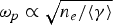 , where 〈γ〉 is the cycle averaged relativistic factor. The skin depth becomes comparable to the thickness of the electron layer, so that the laser pulse can transmit through the plasma, i.e., SIT occurs in the overdense plasma (Lefebvre & Bonnaud, Reference Lefebvre and Bonnaud1995). The critical field strength is given by (Kaw & Dawson, Reference Kaw and Dawson1970)

The longitudinal (dashed line) and transverse (solid line) electric fields at (a) t = 240 fs, (b) t = 295 fs, and (c) t = 350 fs. The dash-dot line in Figure 2a indicates the initial edges of the foil.

The initial plasma density in the cases studied here is n e = 10n c. According to Eq. (4), the threshold field for the transition is a 0 = 12.7, which is lower than the laser strength a 0 = 16. Figure 2c shows that the laser pulse can transmit through the plasma because of SIT. In view of Figures 1b and 1c, we see that the laser-driven CES continuously reflects and thus accelerates the upstream ions.
The transmitting laser pulse can also expel a significant number of the target-interior electrons out of the plasma foil. The increase in the electron number in the rear vacuum region in turn enhances the sheath field. The electron phase space and the space-charge field at t = 350 fs and 400 fs are shown in Figure 3. We see that a hot-electron bunch is generated by the ponderomotive force of the propagating laser pulse, whose front profile is considerably steepened by the laser-plasma interaction that leads to the SIT, as can be seen in Figure 2c.
(Color online) Electron phase space (x, p x) (black) and longitudinal electric field (red) at (a) t = 350 fs and (b) t = 400 fs.

At the same time, the electrons behind the foil are pulled out and pushed back into the foil by the 2ω-oscillating component of the ponderomotive force. However, the more energetic electrons cannot return to the foil because of their high forward momentum and they remain outside, forming a second hot-electron bunch in the rear vacuum, behind the electrons from the front target surface. The two hot-electron bunches co-moving with the propagating laser pulse can efficiently enhance the target-backside sheath field by increasing its intensity as well as its spatial extent. It follows that the ions in the sheath can be accelerated more strongly and over a longer distance.
We now consider in more detail the dynamics of the CESA and TNSA ions. Figure 4 shows the evolution of the electrostatic field E x experienced by typical CESA and TNSA ions and their energy gain. One can see that the quasistatic electric field E x experienced by the CESA ion initially increases and reaches a peak at about t = 285 fs, when the ion is at the peak of the solitary wave. At that moment, the ion in the frame moving with the soliton experiences a decelerating E x. However, the soliton rapidly (in ~5 fs) evolves into a CES. If the velocity −v i of the ion in the shock frame satisfies m iv i2/2 < eλDE x, where E x ~ k BT e/eλD is the CES amplitude and 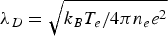 is the Debye length of the hot electrons, the ion will be reflected with the velocity v shock + v i in the laboratory frame. Such CESA ions will overtake the shock wave due to their higher speed. Thus they experience the CES again at a higher field level and are further accelerated, and the process is repeated. At t = 340 fs these ions eventually overtake the TNSA ions, which have been experiencing a nearly constant sheath field eE x/mω0c ~ 2. However, after being overtaken by the CESA ions, the TNSA ions become shielded by the latter from the sheath field. In fact, one can see that after t ~ 450 fs the energy of the typical TNSA ion becomes constant at 63.5 MeV. In contrast, the typical CESA ion is further accelerated by the sheath field of the hot electrons driven by the transmitted laser pulse. Its energy can reach 160 MeV, which is more than twice that of the typical TNSA-accelerated ion.
The longitudinal field E x experienced by a typical CESA ion (solid line) and the ion energy (dotted line) as functions of time. The dash and the dash-dot lines represent the longitudinal field experienced by a typical TNSA ion and its energy, respectively.

OPAQUE TARGET
For comparison, we have also considered the case in which the plasma foil is completely opaque to the laser pulse. Opaqueness is realized by using a higher plasma density, here n 0 = 20 n c. The other simulation parameters are the same as that for Fig. 1. According to Eq. (4), the SIT threshold for this density is a 0 = 25, which is much larger than the a 0 = 16 used in the simulation. Thus, the laser cannot propagate in the plasma. Instead, it launches in the front region of the foil a CES whose velocity is only 0.05 c (but its Mach number is still larger than the critical value since the foil electrons are not efficiently heated) because of the high plasma density. Figure 5a shows the ion phase space at t = 240 fs. One can see that a CES is formed inside the front part of the target. The ions at the right are due to TNSA of the target-backsurface ions.
Ion phase space (x, p x) at (a) t = 240 fs and (b) t = 550 fs. Here, the foil density is n e0 = 20n c and it is opaque to the laser. The other parameters are the same as in Figure 1.

Again, a typical CESA ion will be further accelerated in the sheath field (see Figure 5b) and its velocity will be larger than the velocity of the TNSA ions, agreeing with the results of Silva et al. (Reference Silva, Marti, Davies, Fonseca, Ren, Tsung and Mori2004). The maximum velocity of the TNSA ion at t = 550 fs is 0.35 c, which is nearly the same at that for the n 0 = 10 n c case at the same instant. This similarity can be expected since TNSA (of the foil-backside ions) should be independent of the foil density. However, the maximum speed of the CESA ion is only 0.395 c, which is far lower than that of the n 0 = 10 n c case. In fact, the corresponding ion energy is only 82 MeV, about half of that (156 MeV) of the n 0 = 10 n c case at the same instant. This result is also expected, since the opaque target case the laser pulse, being stopped, absorbed, and reflected at the target front, it cannot continuously accelerate and expel the target-interior electrons to enhance the plasma expansion and the backside sheath field. Therefore, we can conclude that CESA of ions in the presence of SIT is superior to TNSA and CESA in a opaque foil.
CONCLUSION
In this article, the interaction of a laser pulse with a thin foil is studied using one-dimensional PIC simulation. It is shown that for the chosen laser and foil parameters, a CES can be generated and it can continuously reflect the upstreaming ions to high energies in the expanding plasma, when the plasma foil becomes transparent to the laser pulse due to SIT. The propagating laser pulse expels not only the foil-front electrons but also the electrons in the foil interior. Two hot-electron groups are thus generated and transported to the foil backside, producing an enhanced and spatially extended sheath field. As they reach the sheath, the CESA ions are further accelerated by the latter and they can overtake the TNSA ions. The latter are then shielded by the CESA ions, which can eventually attain energies much higher than that of the TNSA ions.
It should be pointed out that the energy spectrum of the ions first accelerated by the CES and then by the sheath field over a long distance in the expanding plasma is, as expected, rather broad. How to obtain quasi-monoenergetic ions from CESA remains to be investigated. Nevertheless, the results here should be useful to future theoretical and experimental investigations on shock acceleration of ions in laser-plasma interaction and their applications.
ACKNOWLEDGMENTS
This work was supported by the National Natural Science Foundation of China (NNSFC) under the grant Nos. 10875015, 10725521, 10834008, 10835003, and partially by the National Basic Research Program of China (973) under the grant Nos. 2006CB806004 and 2007CB815103. BSX is also supported by the New Century Excellent Talents in University of China. The authors would like to thank Dr. Hongyu Wang for his contribution to computational technique. The numerical simulations were performed at the HSCC of the Beijing Normal University.



