INTRODUCTION
Angiosperm flowers are quite diverse in their morphologies. To establish such diversity, the specification of floral organ identity and control of floral meristem fate are critical. In eudicots, flowers generally consist of sepals (whorl 1), petals (whorl 2), stamens (whorl 3) and pistils (whorl 4), going from the outer to inner whorls. Based on intensive molecular and genetic analysis in several eudicot species, notably Arabidopsis thaliana, snapdragon (Antirrhinum majus) and petunia (Petunia hybrida), an ‘ABC’ model is proposed, in which combinations of gene groups designated as A/B/C/D function in concert to specify the identity of each organ and control floral meristem determinacy (Coen & Meyerowitz Reference Coen and Meyerowitz1991; Theiβen & Saedler Reference Theiβen and Saedler2001). According to this model, three classes of homeotic genes control floral organ formation. A-function genes alone specify sepal formation; A-function genes in combination with B-function genes determine petal identity; B- and C-function genes together regulate stamen development; C-function genes alone specify the innermost whorl, the carpel and D-function genes specify placenta and ovule. This genetic model is applicable not only to eudicots but also monocot species, including some grass species, such as Oryza sativa (rice) and Zea mays (maize) (Nagasawa et al. Reference Nagasawa, Miyoshi, Sano, Satoh, Hirano, Sakai and Nagato2003; Yamaguchi et al. Reference Yamaguchi, Lee, Miyao, Hirochika, An and Hirano2006; Dreni et al. Reference Dreni, Jacchia, Fornara, Fornari, Ouwerkerk, An, Colombo and Kater2007).
Grasses are one of the largest monocot families with c. 10 000 species, including crops important for human consumption such as rice, wheat and maize. They have floral architectures distinct from those of eudicots (Clayton & Renvoize Reference Clayton and Renvoize1986; Linder & Rudall Reference Linder and Rudall2005): the structural units of grass flowers are spikelets and florets. The spikelet comprises a series of bract-like organs, glumes and florets. In rice, a single spikelet consists of two pairs of sterile glumes (rudimentary and empty glumes) and one floret is composed of a lemma, a palea, two lodicules (the equivalent of petals), six stamens and a pistil (Bommert et al. Reference Bommert, Satoh-Nagasawa, Jackson and Hirano2005; Itoh et al. Reference Itoh, Nonomura, Ikeda, Yamaki, Inukai, Yamagishi, Kitano and Nagato2005).
Molecular genetic studies in rice and maize have revealed that the function of B class MADS-box genes is conserved in grasses (Nagasawa et al. Reference Nagasawa, Miyoshi, Sano, Satoh, Hirano, Sakai and Nagato2003; Whipple et al. Reference Whipple, Ciceri, Padilla, Ambrose, Bandong and Schmidt2004; Thompson & Hake Reference Thompson and Hake2009). In addition to the crucial role of C class MADS-box genes in carpel specification in eudicots, the YABBY gene DROOPING LEAF (DL) in rice, which determines the carpel, has been identified (Yamaguchi et al. Reference Yamaguchi, Nagasawa, Kawasaki, Matsuoka, Nagato and Hirano2004). Palea and lemma are organs specific to grasses, enclosing the inner floral organs (Kellogg Reference Kellogg2009). The LEAFY HULL STERILE1 (LHS1) gene is involved in partially specifying the identity of lemma and palea in rice, in addition to regulating spikelet meristem determinacy (Jeon et al. Reference Jeon, Jang, Lee, Nam, Kim, Lee, Chung, Kim, Lee, Cho and An2000; Prasad et al. Reference Prasad, Parameswaran and Vijayraghavan2005). Although LHS1 orthologues are expressed in the palea and lemma of other grasses, the expression patterns of these genes suggest that they are also involved in various aspects of the development and morphological diversification of spikelets in grasses (Malcomber & Kellogg Reference Malcomber and Kellogg2004). Although comparative morphological studies suggest a correlation between the lemma/palea and the outer sepals of a typical monocot flower, the relationship of the lemma/palea to floral structures in other monocots and eudicots is not yet fully understood (Preston et al. Reference Preston, Christensen, Malcomber and Kellogg2009).
In rice, the lodicule, an organ homologous to the petal in ordinary flowers, is small and semi-transparent, and acts to open the palea and lemma for anthesis. In contrast to the understanding of other floral organs in rice, it remains to be elucidated whether or not the palea and the lemma are homologous to the calyx. Identification of palea or lemma mutants will help to reveal the mechanism of their formation.
The present study describes a novel rice mutant, lemma-distortion1 (ld1), which has defects in several floral organ identities, including the lemma identity and floral meristem determinacy. The ld1 locus was mapped and candidate genes of the LD1 gene predicted. Molecular cloning of LD1 and phenotypic analysis of the ld1 mutant are also reported.
MATERIALS AND METHODS
The source of materials
The indica rice M38 and japonica Taigeng16 were kept in the Rice Research Institute, Fujian Academy of Agricultural Sciences, China. M38 was derived from progeny of a cross between Shuhui 510 and Dongnanhui 201. The lemma distortion mutant in the background of M38 was obtained through screening of an M 2 population treated by 60Co γ-ray, and was designated as ld1. About 200 plants in the M 1 population and 2000 plants in the M 2 population were field-grown at Fuzhou Experimental Station in Fujian Academy of Agricultural Sciences in 2007 and 2008, respectively.
The construction of the population
In the summer of 2011, the ld1 mutant was used as a pollen donor in crosses with the rice cultivars M38, 93–11 and Taigeng16. The F 1 seeds were sown at Sanya (18°14′N, 109°31′E, 7·0 m a.s.l.) Experimental Station in Hainan Province in the spring and F 2 seeds were harvested. The F 2 seeds, ld1 and M38 were planted at Fuzhou (26°8′N, 119°28′E, 84·0 m a.s.l.) Experimental Station in Fujian Province in the summer of 2012.
The investigation of agronomic characters
Plant height, panicle number per plant, flag leaf length and width, spikelet number per panicle, seed setting rate (i.e. the number of seeds in 100 flowers) etc., were measured at maturity in Fujian Province in the autumn of 2012. The segregation ratios of mutants v. wild-types were also investigated at maturity in Fujian Province in the autumn of 2012. All plants were grown according to standard commercial practices, with spacing of 13·3 cm between plants within each row and 26·4 cm between rows, and field management essentially followed normal agricultural practices.
Morphological observations
In summer 2012, 50 florets were selected randomly from the mutant. The components of each floret were separated using forceps and the types of florets were investigated. Images of florets were recorded using a Leica digital anatomy microscope Leica M26 and by a scanning electron microscopy. The latter was performed essentially according to a previously described protocol (Mizukami & Ma Reference Mizukami and Ma1992; Feng et al. Reference Feng, Fu, Liang and Lu1995) with some modifications. Young panicles at various stages were fixed in a solution of buffered glutaraldehyde (3%) for 24 h, dehydrated in a series of ethanol–water solutions (30, 50, 70, 80, 90 and 100%) and incubated in an ethanol–isoamyl acetate mixture for 1 h. The samples were then dried and coated with gold powder. The mounted specimens were examined and photographed with an XL30 scanning electron microscope (Philips, Amsterdam, the Netherlands) at an acceleration voltage of 15 KV.
Microsatellite analysis
Simple sequence repeats (SSR) primers were synthesized according to the published rice database (http://www.Gramene.org/microsat/ssr.htm1). Indel markers were designed according to the results of manual comparisons between genome sequences of japonica (cvar Nipponpare) (Goff et al. Reference Goff, Ricke, Lan, Presting, Wang, Dunn, Glazebrook, Sessions, Oeller, Varma, Hadley, Hutchison, Martin, Katagiri, Lange, Moughamer, Xia, Budworth, Zhong, Miguel, Paszkowski, Zhang, Colbert, Sun, Chen, Cooper, Park, Wood, Mao, Quail, Wing, Dean, Yu, Zharkikh, Shen, Sahasrabudhe, Thomas, Cannings, Gutin, Pruss, Reid, Tavtigian, Mitchell, Eldredge, Scholl, Miller, Bhatnagar, Adey, Rubano, Tusneem, Robinson, Feldhaus, Macalma, Oliphant and Briggs2002) with those of indica (cvar 93–11) (Yu et al. Reference Yu, Hu, Wang, Wong, Li, Liu, Deng, Dai, Zhou, Zhang, Cao, Liu, Sun, Tang, Chen, Huang, Lin, Ye, Tong, Cong, Geng, Han, Li, Li, Hu, Huang, Li, Li, Liu, Li, Liu, Qi, Liu, Li, Li, Wang, Lu, Wu, Zhu, Ni, Han, Dong, Ren, Feng, Cui, Li, Wang, Xu, Zhai, Xu, Zhang, He, Zhang, Xu, Zhang, Zheng, Dong, Zeng, Tao, Ye, Tan, Ren, Chen, He, Liu, Tian, Tian, Xia, Bao, Li, Gao, Cao, Wang, Zhao, Li, Chen, Wang, Zhang, Hu, Wang, Liu, Yang, Zhang, Xiong, Li, Mao, Zhou, Zhu, Chen, Hao, Zheng, Chen, Guo, Li, Liu, Tao, Wang, Zhu, Yuan and Yang2002). Firstly, the bacterial artificial chromosome (BAC) clone sequences of japonica and indica were aligned, then primers were designed using Primer premier 5·0 (Premier Biosoft, Palo Alto, CA, USA), based on the polymorphism region between the two rice sub-species, and the polymorphic markers were used for gene mapping.
Polymerase chain reaction amplification and marker detection
Plant DNA was extracted from the frozen leaves of rice plants using the cetyltrimethylammonium bromide method (Murray & Thompson Reference Murray and Thompson1980) with minor modifications. For polymerase chain reaction (PCR) amplification of markers, each 20 µl reaction mixture contained 50 ng DNA, 5 µmol of each primer, 10 × PCR buffer (100 mM Tris (pH 8·3), 500 mM potassium chloride (KCl), 15 mM magnesium chloride (MgCl2), 2 µg gelatin), 250 µM of each deoxynucleotide triphosphates and 0·5 dynamic units (U) of Taq polymerase. Amplification was performed using the following programme: 5 min at 94 °C, 35 cycles of 1 min at 94 °C, 1 min at 60 °C (for Indel) or 55 °C (for SSR) and 2 min at 72 °C, with a final extension of 5 min at 72 °C. Amplified PCR products were resolved by electrophoresis on 8% polyacrylamide denaturing gels with silver staining for SSR markers (Panaud et al. Reference Panaud, Chen and McCouch1996).
Bulked segregant analysis
Bulked segregant analysis was used to search for markers linked to the target gene. A mutant DNA pool was constructed with the DNA extracted from leaves of 15 mutants selected randomly from the F 2 population. The SSR markers distributed in the rice genome were used to detect linkage, with DNA extracted from the ld1 mutant and Taigeng16 used as a control. The band type of the markers linking with the mutant gene was the same as that of the ld1 mutant.
The mapping population and molecular mapping of the lemma-distortion1 gene
The mapping population was constructed by crossing ld1 mutant (Indica) with Taigeng16 (Japonica). A primary map of the LD1 gene was obtained using 93 mutant plants from the F 2 population and a total of 1640 mutant plants in the F 2 population were selected for fine mapping.
The band patterns of the mutant (ld1 ld1) and Taigeng16 (LD1 LD1) were recorded as 1 and 3, respectively, while 2 was used to denote the heterozygote (LD1 ld1). Linkage analysis between the ld1 locus and the SSR markers was conducted using MAPMAKER software version 3.0 (Lander et al. Reference Lander, Green, Abrahamson, Barlow, Daly, Lincoln and Newberg1987) and map distances were estimated with MapDraw V2·1 (Liu & Meng Reference Liu and Meng2003). The linkage map in the present study was very similar to that reported by Rahman et al. (Reference Rahman, Chu, Choi, Qiao, Jiang, Piao, Khanam, Cho, Jeung, Jena and Koh2007).
Physical map construction
The physical map of the target gene was constructed by bioinformatics analysis using BAC and P1-derived artificial chromosome (PAC) clones of cvar Nipponbare released by the International Rice Genome Sequencing project (IRGSP, http://rgp.dna.affrc.go.jp/IRGSP/index.html). The clones were anchored with the target gene-linked markers and then alignment of sequences was carried out using the pairwise Basic Local Alignment Search Tool (BLAST) (http://www.ncbi.nlm.nih.gov/blast/bl2seq/b12.html).
Bioinformatics analysis
Candidate genes were predicted according to the available sequence annotation databases (http://rice.plantbiology.msu.edu/; http://www.tigr.org/). DNA and amino acid sequences for LD1 gene from these proteins were used for a complete alignment using Clustal X version 1.81.
RESULTS
Main agronomic characteristics of lemma-distortion1
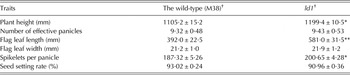
In order to elucidate the genes that control the development of rice flowers, a population mutagenized by radiation was screened for the mutant floret phenotype and the ld1 mutant was identified. Comparisons of phenotypes between the ld1 mutant and the normal M38 are presented in Table 1. The ld1 mutant showed some characteristic phenotypes. For example, the ld1 mutant is taller with a longer flag leaf and increased numbers of spikelets. The seed setting rate of the mutant (90·96%) was very similar to that of wild-type (93·02%), indicating that both stamens and pistil in the ld1 mutant are normal (Table 1).
Comparison of the main agronomic traits between the lemma-distortion1 (ld1) mutant and the wild-type (M38)

*Difference between M38 and ld1 at P < 0·05; **difference between M38 and ld1 at P < 0·01.
† Values are means ± s.d., n = 10.
Phenotype investigation of the lemma-distortion1 mutant
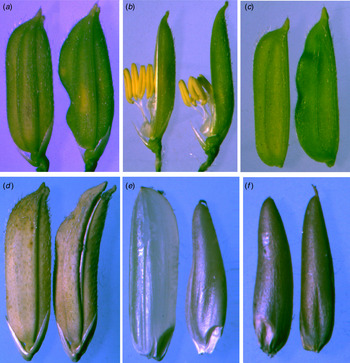
The wild-type and ld1 plants showed indistinguishable phenotypes in their vegetative stages, but their spikelets were different from the booting stage (growth stage (GS) 45, Lancashire et al. Reference Lancashire, Bleiholder, Van Den Boom, Langelüddecke, Stauss, Weber and Witzenberger1991) to maturity (GS 89) (Figs 1(b)–(d) and (f)). A wild-type rice floret consists of a palea, a lemma, two lodicules, six stamens and a pistil with two stigmas. In a mutant floret, the lemma is distorted, while the palea is normal. Close examination of the base of the spikelet revealed that the distorted lemma in ld1 mutation is formed at the booting stage.
Phenotypes of the wild-type (image on the left of each panel) and the ld1 mutant (right) showing (a) Spikelet; (b) Palea and stamen; (c) Lemma; (d) Rough rice; (e) Milled rice; (f) Milled rice without glumes (colour online).

Interestingly, it was observed that the grain of the ld1 mutant was shorter than that of the wild-type (Fig. 1(e)). In order to further analyse the cause of the smaller grain, the glumes were cut off after pollination and results showed that the length, width and thickness of grain showed no obvious difference between the ld1 mutant and the wild-type (Fig. 1(f)). Therefore, it was conjectured that the change of grain shape in the ld1 mutant was caused by lemma distortion. No abnormality was detected in other spikelet organs such as the pistil or stamens, suggesting that the ld1 mutant specifically affects lemma development.
Morphogenesis of the lemma-distortion1 mutant
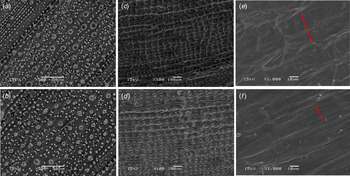
To address the effect of the ld1 mutation in detail, morphological differences in the epidermal cells of the leaf and the lemma between ld1 and the wild-type were examined. No obvious differences were found in the leaf surface and the lemma epidermal surface (Figs 2(a)–(d)). However, differences in epidermal cells were observed on the inner surface of the lemma. In contrast to the wild-type, epidermal cells of the ld1 were irregular and the cell arrangement was tighter than the wild-type (Figs 2(e) and (f)). The results suggested that lemma distortion was due to the altered cell arrangement during lemma development.
Scanning electron micrographs of the cytohistological comparison between the wild-type (WT) and the ld1 mutant (ld1). Epidermal surface of the leaf in WT (a) and ld1 (b); Epidermal surface of the lemma in WT (c) and ld1 (d); Inner surface of the lemma in WT (e) and ld1 (f) are shown, and the white line represents the cell arrangement.

Genetic analysis of the gene for the lemma-distortion1 mutant
To determine whether ld1 was controlled by a single gene or multiple genes, the ld1 mutant was crossed with cultivar 93–11 and M38. All F 1 hybrids showed normal phenotypes and F 2 populations showed normal Mendelian segregation (Table 2). Segregation of the wild-type and the mutant plants fitted a 3:1 ratio in the two F 2 populations (χ 2 = 0·330–0·688, P > 0·05). These results indicated that the mutant phenotype was controlled by a single recessive gene.
Segregations of F2 populations crossed by the lemma-distortion1 (ld1) mutant

NS, not significant.
*Denotes the segregation ratio of normal plants to mutant plants complied with 3:1 at 0·05 significant probability level.
Mapping of the lemma-distortion1 gene using molecular markers
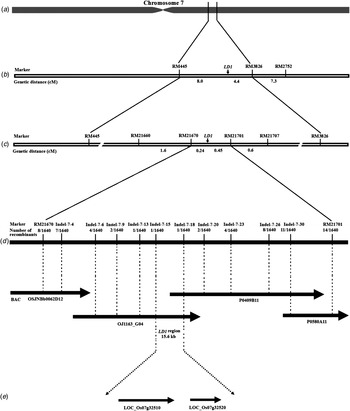
To identify which gene mutation causes the ld1 phenotype, the mutant allele was genetically mapped. At first, a total of 326 SSR markers from the rice molecular map were selected for polymorphism surveys between the hybrid ld1 and Taigeng16 (McCouch et al. Reference McCouch, Teytelman, Xu, Lobos, Clare, Walton, Fu, Maghirang, Li, Xing, Zhang, Kono, Yano, Fjellstrom, DeClerck, Schneider, Cartinhour, Ware and Stein2002), of which 187 pairs exhibited polymorphism. Based on these 187 primer-pairs, 12 mutant plants and 12 normal plants from the F 2 population were used for linkage analysis between markers and the ld1 locus. Three of these SSR markers, RM445, RM3826 and RM2752, were located in the terminal region of the long arm of chromosome 7 and were found to be linked to the mutant trait among the 193 F 2 individuals. The genetic distance between RM445 and RM3826 was 12·4 cM according to recombination frequencies. Thus LD1 was mapped to a 12·4 cM region flanked by the SSR markers RM445 and RM3826 on chromosome 7 (Figs 3(a) and (b)).
Genetic and physical maps of the LD1 gene. (a) The introgression segment of LD1 on the long arm of chromosome 7; (b) Primary mapping of the LD1 gene. The gene was mapped to the region between markers RM445 and RM3826; (c) Further mapping of the LD1 gene. The gene was mapped to the region between markers RM21670 and RM21701; (d) High resolution mapping of LD1. The LD1 gene was finally localized to a 15·6 kb region in the BAC clone OJ1163_G04, and the recombinants number between markers and target gene was indicated under the linkage map; (e) Candidate genes in the 15·6 kb target region.

Fine mapping of the lemma-distortion1 gene
To map the gene to a smaller region, 1640 mutant individuals were identified from the F 2 population derived from ld1 × Taigeng16. A higher precision map was constructed using published markers in the region between RM445 and RM3826 (Fig. 3(b), Table 3). All recombinants were genotyped using nine polymorphic markers within the above interval. Linkage analysis with MAPMAKER/EXP3·0 software showed that the LD1 gene was located in the region between RM21670 and RM21701. These data were derived according to the recombinants revealed by each marker. By genetic linkage analysis, the LD1 gene was mapped between the molecular markers RM21670 and RM21701, with a distance of 0·24 and 0·45 cM, respectively, on chromosome 7 (Fig. 3(c)).
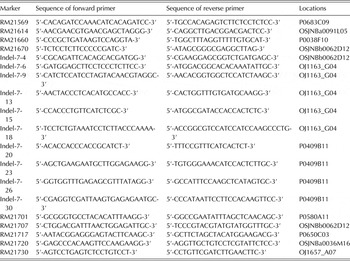
Indel and SSR molecular marker used for fine mapping of the lemma-distortion1 (ld1) locus

To fine-map the LD1 gene, 10 polymorphic Indels were selected from 30 new Indels (Table 3). The Indel markers were designed from publicly available rice genome sequences and the likelihood of detecting polymorphism between the ld1 mutant and Taigeng16 was predicted by comparing sequences from Nipponbare (http://rgp.dna.affrc.go.jp/) and the Indica cultivar 93–11 (http://rice.genomics.org.cn/).
Recombinant screening with 11 markers, which contained Indel-7-4, Indel-7-6, Indel-7-9, Indel-7-13, Indel-7-15, Indel-7-18, Indel-7-20, Indel-7-23, Indel-7-26 and Indel-7-30, were more internal to the ld1 locus. Thus, the LD1 gene was defined precisely in a 15·6 kb region by Indel-7-15 and Indel-7-18 (Fig. 3(d)).
Candidate genes in the 15·6 kb target region
There are two candidate genes (LOC_Os07g32510 and LOC_Os07g32520) in the 15·6 kb region (Fig. 3(e)), according to the available sequence annotation databases (http://rice.plantbiology.msu.edu/; http://www.tigr.org/), and the two annotated genes have a corresponding full-length cDNA. LOC_Os07g32510 encodes a Dof (DNA-binding with one finger) zinc finger domain containing protein and LOC_Os07g32520 encodes an expressed protein.
Sequence analyses of the lemma-distortion1 gene
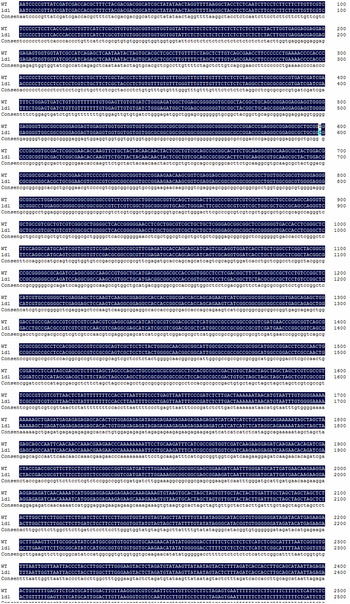
To investigate which gene was responsible for the mutation phenotype, sequencing of two genes in the wild-type and the ld1 mutant revealed that only one 1 bp substitution (T⇨C) was found in LOC_Os07g32510 between the wild-type and the ld1 mutant (Fig. 4), while no difference in the LOC_Os07g32520 between the wild-type and the ld1 mutant was observed. Thus, it was concluded that the LOC_Os07g32510 locus corresponded to LD1.
Sequence comparison between the wild-type (WT) and the ld1 mutant (ld1) in LOC_Os07g32510.

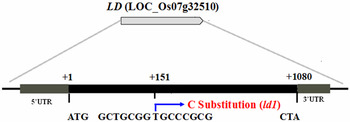
The analysis of the outbound route filtering (ORF) region showed that the LD1 gene (LOC_Os07g32510) had one exon and no intron. The ld1 was a one-point mutant, which was the exchange of T for C (positions 151) in cDNA (Fig. 5).
The structure of the LD1 gene and the mutation site. The start (ATG) and stop codons (CTA) are indicated. Black and grey boxes indicate the ORF region and untranslated region (UTR) of the LD1 gene, respectively. There was a 1-bp substitution at the ORF region of ld1.

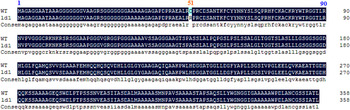
Further analysis showed that the amino acid of the ld1 mutant had one amino acid mutation (51): cysteine (C) mutates into arginine (R) (Fig. 6). Cysteine is a polar, uncharged amino acid, while arginine is polar and positively charged. As such, this mutation would be expected to alter the functions of the protein significantly.
Sequence comparison of amino acids between the wild-type (WT) and the ld1 mutant (ld1).

Homology and conservation analyses of lemma-distortion1 genes from other species
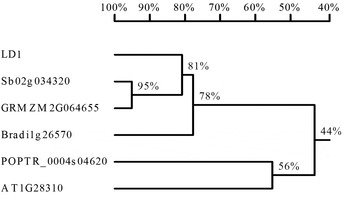
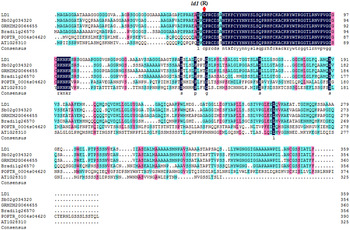
To gain insight into the function of LD1, a homology tree was generated using the zinc finger protein sequences from rice and other plants (Fig. 7), according to available sequence annotation databases (http://rice.plantbiology.msu.edu/cgi-bin/gbrowse/rice/). In Arabidopsis, an orthologue of LD1, AT1G2830, was identified to encode a Dof-type zinc finger DNA-binding family protein. Similarly, in Brachypodium, Bradi1g26570 encodes a Dof zinc finger protein 6; in Maize, RMZM2G064655 encodes a Dof zinc finger protein 6; in Poplar, POPTR_0004s04620 encodes a Dof-type zinc finger domain-containing protein; in Sorghum, Sb02g034320 encodes a Dof zinc finger protein 6. These results indicated that the LD1 gene had high homology among different plants. Conservation of the LD1 gene at the amino acid level was compared. As shown in Fig. 8, five cysteine residues were found to be conserved among six proteins examined. Interestingly, among them is the cysteine that was mutated to arginine in the ld1 mutant (Fig. 6). Thus, it is hypothesized that, with cysteine mutated to arginine in the highly conserved domain, the structure of zinc finger protein would change, leading to a functional alteration of the protein. According to sequence and conservation analysis (Figs 6 and 8), the ld1 mutant does occur in the DNA-binding region, which may alter its DNA-binding ability, and hence may finally change downstream gene expression, leading to the phenotype of the ld1 mutant.
Homology tree of proteins containing the zinc finger protein domain in the plant orthologous group. The phylogenetic tree was constructed by DNAMAN 7·0 using the neighbour-joining method. Bootstrap values are shown at each node.

Alignment of amino acid sequences for the zinc finger protein domain in plant orthologous group. The positions of two conserved motifs are indicated above the sequences. Identical and similar amino acids are shaded dark blue and pink, respectively. The arrow at the top indicates the mutation site of ld1. (colour online)

DISCUSSION
Lemma-distortion1 is a novel gene in specifying carpel identity and floral determinacy of rice. It has been demonstrated that most of the floral organ identity genes belong to the MADS-box gene family in monocot and eudicot plants. However, some other genes have been proven to be involved in determining floral organ identities. In A. thaliana, AP2 genes encode AP2-domain proteins with similarity to the ethylene-responsive element-binding proteins family. LIP1 and LIP2 genes are members of the AP2-like genes in A. majus, which is also involved in determining floral organ identities (Keck et al. Reference Keck, McSteen, Carpenter and Coen2003). In rice, the DL gene (Yamaguchi et al. Reference Yamaguchi, Nagasawa, Kawasaki, Matsuoka, Nagato and Hirano2004), PAL1 (Luo et al. Reference Luo, Zhou, Zhao, Zeng, Xia, Zhai, Xu, Wu, Yang and Zhu2005), SL1 (Xiao et al. Reference Xiao, Tang, Li, Wang, Li, Jin, Xie, Luo, Zhao, Meng, He and Zhu2009) and REP1, SDP1 or DP2 (Yuan et al. Reference Yuan, Gao, Xue, Luo, Li, Ding, Yao, Wilson, Qian and Zhang2009; Jin et al. Reference Jin, Luo, Tong, Wang, Cheng, Tang, Li, Zhao, Li, Wan, Jiao, Chu and Zhu2011; Yang et al. Reference Yang, Lu, Chen, Zeng, Zheng, Ye, Liu and Ye2012) have been identified as genes involved in floral development, but they do not belong to either the MADS-box nor AP2 gene families in rice. These results imply that a non-ABC-class gene may specify rice palea/lemma identity.
In the present study, the LD1 locus was mapped to a 14·6 kb physical region containing two annotated putative genes. Sequence analysis showed that LOC_Os07g32510 was the candidate gene of LD1: this locus was deduced to encode a protein of 385 amino acids, sharing similarity to transcription factors with a Dof zinc finger. Although more physiological roles of Dof domain proteins would be needed, it has already been shown that Dof domain proteins play critical roles as transcriptional regulators in plant growth and development (Yanagisawa et al. Reference Yanagisawa, Liour and Yu2004). In rice, SL1 encodes a member of the C2H2 family (Xiao et al. Reference Xiao, Tang, Li, Wang, Li, Jin, Xie, Luo, Zhao, Meng, He and Zhu2009), and OsSPL16 encodes plant-specific transcription factors, which are composed of two zinc-finger motifs and probably affect the development of the inflorescence and spikelet in rice (Hou et al. Reference Hou, Hong and Chen2014). Interestingly, there is no paralogue found in the completely sequenced rice genome. Thus, it is speculated that LD1 may be co-opted for its novel functions in specifying carpel identity and floral determinacy of rice.
Lemma-distortion1 plays an important role in establishing lemma identity
Facilitated by the recent developments in genome sequencing, i.e., molecular markers and bioinformatics, an impressive number of floral organ identity genes have been fine-mapped and cloned in the past 20 years. For example, G1 is involved in the repression of lemma identity to specify the sterile lemma (Yoshida et al. Reference Yoshida, Suzaki, Tanaka and Hirano2009). SL1 specifies lodicule and stamen identities through positive transcriptional regulation of SPW1/OsMADS16 expression (Xiao et al. Reference Xiao, Tang, Li, Wang, Li, Jin, Xie, Luo, Zhao, Meng, He and Zhu2009). OsJAG regulates irregular development of all floral organs, such as degenerated lemma and palea, elongated lodicules and deformed and sterile pistil (Duan et al. Reference Duan, Diao, Liu, Cai, Wang, Lan and Wu2010). MADS3 regulates late anther development and pollen formation (Hu et al. Reference Hu, Liang, Yin, Cui, Zong, Wang, Hu and Zhang2011). Osmads6–5 controls the formation of the incipient primordia of lodicules, stamen and carpels via regulation of the expression of class B, C and SEP-like MADS-box genes (Duan et al. Reference Duan, Xing, Diao, Xu, Li, Du, Wu, Wang, Lan, Meng, Liu, Wang, Wu and Xue2012). BLS1 is required for lateral development of the lemma and palea and does not function at stages of floral-organ initiation and patterning (Ma et al. Reference Ma, Cheng, Wu, Jin, Zhang, Zhou, Wang, Zhou, Ma, Lin, Lei and Wan2013). UCGL regulates jasmonic acid (JA) metabolism and affects the closure of glumes in rice (Liao et al. Reference Liao, Shi, Zeng, Jin and Wu2015). OsEMF2b regulates the transcript levels of floral homeotic A-, B- and C-class genes and participates in floral organ development in rice (Xie et al. Reference Xie, Chen, Pei, Ouyang and Yao2015). However, to date, there are very few examples of molecular characterization of palea development, especially examples of separate lemma development.
Mutants of the rice floral organ are very important materials used to reveal the genetic mechanism of spikelet development. The current study has presented the LD1 gene, which has a specific role in the regulation of lemma development. In the ld1 mutant, plant height and the number of spikelets increased and leaf differentiation, particularly the flag leaf length, was strongly affected. Furthermore, compared to the wild-type growth pattern, the ld1 mutant showed no obvious difference during vegetative growth. At the flowering stage, the ld1 mutant's spikelet showed normal development of rudimentary and empty glumes, palea, lemma, two lodicules, six stamens and one pistil. The main defect of the ld1 floret was only observed at the lemma position with lemma distortion. According to scanning electron micrographs, the ld1 mutant showed no obvious differences from the wild-type plant in the epidermal surface of the leaf, epidermal surface of the lemma or epidermal surface of the palea. Thus, it is proposed that LD1 plays an important role in specifying rice lemma development, while other aspects of floral development are unaffected.
A rice floral mutant, pd2, was identified previously (Yang et al. Reference Yang, Lu, Chen, Zeng, Zheng, Ye, Liu and Ye2012). The florets of the pd2 mutant exhibited degraded palea and sickle-shaped tortuous lemma. However, compared with the wild-type, the pd2 mutant showed normal development of rudimentary and empty glumes, lemma, two lodicules, six stamens and one pistil. Further research determined that PD2 and REP1 were alleles at the same genetic location (Yang et al. Reference Yang, Lu, Chen, Zeng, Zheng, Ye, Liu and Ye2012). Research indicated that REP1 encoded a TCP gene. The REP1 gene was only expressed in palea primordium during early flower development, but during later floral stages was radially dispersed in stamens and the vascular bundles of the lemma and palea (Yuan et al. Reference Yuan, Gao, Xue, Luo, Li, Ding, Yao, Wilson, Qian and Zhang2009; Jin et al. Reference Jin, Luo, Tong, Wang, Cheng, Tang, Li, Zhao, Li, Wan, Jiao, Chu and Zhu2011). Interestingly, in the current study the ld1 mutant was identified, which showed lemma distortion while other floral organs were normal. It will be interesting to study the relationship between LD1 and REP1or PD2 during lemma and palea development in rice. Therefore, further studies are currently under way, which include the functional characterization of the LD1 gene and the expression and regulation relationship between LD1 and REP1or PD2. Future results will facilitate understanding of the link between LD1-like protein expression and flower asymmetric structure.
This work was supported in part by the National Natural Science Foundation of China (Grant No. 31201197), Technology Innovation Team of Fujian Academy of Agricultural Sciences (Grant No. CXTD-1-1301), the Hundred Talent Plan of Fujian Province, Special Fund for Agro-scientific Research in the Public Interest of Fujian Province (Grant No. 2014R1021-4), Fujian Provincial Natural Science Foundation of China (Grant No. 2015J01108) and Technology Great Item of Fujian Province (Grant No. 2013NZ0002-2).