Introduction
Tourism in Antarctica has significantly increased and diversified over recent decades (Carey Reference Carey and Beal2020). In the 2019–2020 season, the International Association of Antarctica Tour Operators (IAATO) reported 74,401 tourists visiting the continent, representing a 134% increase from the 2010–2011 season (IAATO 2021). The coincidence of the wildlife breeding and the tourist seasons coupled with the high concentration of visits to a reduced number of sites in the Antarctic Peninsula due to their accessibility have raised concerns about increased interactions of tourists and wildlife and the associated behavioural, physiological and population consequences (Barbosa et al. Reference Barbosa, de Mas, Benzal, Diaz, Motas and Jerez2013, Bender et al. Reference Bender, Crosbie and Lynch2016).
Antarctic tourism is managed by the Antarctic Treaty, its related agreements and different policy instruments (i.e. Measures, Decisions and Resolutions). For the 43 most popular sites, Visitor Site Guidelines, issued as Resolutions by the Treaty Parties and implemented by IAATO, constitute the principal guidance for tour operators, guides and tourists on how visits should be conducted (Antarctic Treaty Secretariat 2019, IAATO 2020). For wildlife observations, these guidelines recommend maintaining a viewing distance of 5 m (increasing distance if any behaviour change is observed) while keeping quiet and moving at low speed. Complementary to these, IAATO has developed a set of general guidelines. For birdwatching, they recommend maintaining at least 5–10 m from nesting penguin species, with the exception of certain more sensitive seabirds, including the emperor penguin, Aptenodytes forsteri (Gray 1844), for which more specific guidelines have been developed (IAATO 2020). However, not all site guidelines offer recommendations for the growing diversity of tourists' activities, all wildlife species or different stages of the Antarctic season.
Among wildlife species, penguins constitute one of the iconic tourist attractions in Antarctica. The genus Pygoscelis, represented by chinstrap Pygoscelis antarcticus (Forster 1781), gentoo Pygoscelis papua (Forster 1781) and Adélie penguins Pygoscelis adeliae (Hombron & Jacquinot 1841), represents the most popular penguin species in the Antarctic Peninsula. Their breeding sites are located in coastal, rocky areas where many tourist excursions and associated zodiac boat landings occur (Black Reference Black2016, Lynch et al. Reference Lynch, Youngflesh, Agha, Ottinger and Lynch2019). Therefore, interactions between penguins and tourists can be intense, especially as visits take place during just 4 months of the year. In real terms, this amounted to 36,000 tourists for the most popular visitor sites between late October 2018 and mid-March 2019 (IAATO 2019).
The effects of high and low levels of tourist disturbance on the physiology and population of different penguin species have been well studied using a diversity of methodologies such as observations, comparisons and census (Cobley & Shears Reference Cobley and Shears1999, McClung et al. Reference McClung, Seddon, Massaro and Setiawan2004, Trathan et al. Reference Trathan, Forcada, Atkinson, Downie and Shears2008, Dunn et al. Reference Dunn, Forcada, Jackson, Waluda, Nichol and Trathan2019). By comparing sites with high and low levels of tourist visits and human activities (i.e. areas restricted to research activities), physiological measures of stress such as heart rate and stress hormones in blood (Ellenberg et al. Reference Ellenberg, Setiawan, Cree, Houston and Seddon2007, Viblanc et al. Reference Viblanc, Smith, Gineste and Groscolas2012, Barbosa et al. Reference Barbosa, de Mas, Benzal, Diaz, Motas and Jerez2013) or guano samples (Lynch et al. Reference Lynch, Youngflesh, Agha, Ottinger and Lynch2019) have also been analysed.
Yet there is still little consensus on the direct physiological and ecological effects of tourism because of the differences in species studied, locations assessed and levels and types of human activities tested (Trathan et al. Reference Trathan, Forcada, Atkinson, Downie and Shears2008, Tin et al. Reference Tin, Fleming, Hughes, Ainley, Convey and Moreno2009). Coetzee & Chown (Reference Coetzee and Chown2016) published a review that synthesized 62 studies of human disturbance on Antarctic and sub-Antarctic wildlife. In 55 studies of penguins, they did not find evidence for a significant impact on their behavioural responses. However, the authors recommended further evaluation of pedestrian approach guidelines and underscored the importance of site- and species-specific studies.
Considerable research attention has been paid to the effects of human approaches on penguins' behaviour in Antarctic and sub-Antarctic regions. A summary of this body of research, including methods, results and management recommendations, is provided in Table S1. Even though similar field procedures were followed in all of these studies, variations were introduced according to species phenology, study sites, nesting conditions (i.e. geographical locations and numbers), research questions and logistical possibilities. Moreover, these studies were conducted in sites of high and low tourist activities, and in most cases the treatments were developed under conditions controlled by the researchers. For the Antarctic region, Pygoscelis has been the most studied genus due to the accessibility of nests to researchers and because most of the human activities take place around colonies where this genus breed. However, most of these studies were conducted on sites that had not been exposed to intensive tourist use (i.e. receiving thousands of visits each season), and the treatments applied were less intense and dynamic than actual tourist activities in terms of sound, distance and speed.
Other penguin species, such as royal Eudyptes schlegeli (Finsch 1876), yellow-eyed Megadyptes antipodes (Hombron & Jacquinot 1841) and king penguins Aptenodytes patagonicus (Miller 1778), have been widely studied regarding the different levels of human disturbance caused by tourist activities in sub-Antarctic islands (Holmes et al. Reference Holmes, Giese and Kriwoken2005, Holmes Reference Holmes2007). Important recommendations have been derived from these studies, upon which the key aspects of the guidelines for Antarctica are based. Among the most relevant recommendations are those that have emphasized the importance of applying the 5 m viewing distance with caution, as its efficacy may vary according to species, location and stage of the season. These studies also recommended advancing the development of site- and species-specific management measures, including revisiting the 5 m rule, if the aim is to minimize potential disturbances.
The effects of anthropogenic noise on penguins, from music to industrial sources, have been widely studied in sites with varying tourist levels (Giese Reference Giese1999, Pichegru et al. Reference Pichegru, Nyengera, Mcinnes and Pistorius2017, Fanning et al. Reference Fanning, Larsen and Taylor2020). However, only Chiew et al. (Reference Chiew, Butler, Sherwen, Coleman, Fanson and Hemsworth2019) have empirically analysed the effects of distance and tourist sound on little penguins Eudyptula minor (Forster 1781) at a zoo in Australia. Their results demonstrated that different management strategies (i.e. increasing viewing distance, setting signs requesting specific behaviours from visitors, temporary closures) influenced penguins' behaviours and physiological stress.
We aimed to investigate the differences between chinstrap and gentoo penguins in their behavioural responses to simulated tourists' activities. Even though penguins exposed to an intensive tourist visitation could be habituated to human presence, a better understanding of their behavioural responses to tourist interactions could contribute to improving tourism management measures. We consider that responses may be influenced by the intensity of human activities and behaviours and that the nesting stage could influence the behaviours of parents, which in turn may vary by species. Our objectives are: 1) to characterize the behavioural responses of penguins to passive and active human presence, 2) to identify the differences in the behavioural responses of penguins to human presence with talking sound and under different viewing distances and walking speeds and 3) to examine the relative importance of viewing distance and speed for influencing penguins' behavioural responses to passive and active human presence.
Materials and methods
Study species and area
Chinstrap (P. antarcticus) and gentoo penguins (P. papua) inhabit the Antarctic continent and the sub-Antarctic islands (Black Reference Black2016). For the Antarctic continent, the Mapping Application for Penguin Populations and Projected Dynamics (MAPPPD) has estimated a total of 1,301,586 nests of chinstraps and 143,310 nests of gentoos (MAPPPD 2020).
With considerable variation among regions and sites, chinstrap penguins generally lay eggs in late November and early December and hatching occurs in late December and early January, while gentoo penguins lay eggs in mid-November and hatching occurs between mid- and late December (Black Reference Black2016). After hatching, generally one individual attends the nest at a time while the other makes foraging trips, switching roles later. Higher risks of predation and freezing exist during this early stage of the breeding season, which makes penguins more vulnerable to human disturbances (Burger & Gochfeld Reference Burger and Gochfeld2007).
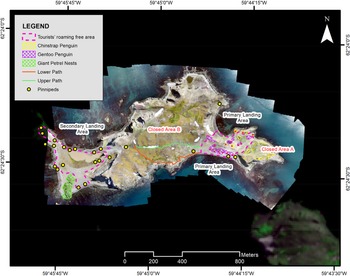
The location where we conducted our study is Barrientos (Aitcho) Island (62°24′S, 59°47′W), which is among the 15 most commonly visited sites in Antarctica and received a total of 7044 tourists during the 2019–2020 season (IAATO 2021). Located in the South Shetland archipelago, Barrientos Island contains breeding populations of 16 seabird species, including chinstrap and gentoo penguins (Cajiao et al. Reference Cajiao, Albertos, Tejedo, Muñoz-Puelles, Garilleti and Lara2020). Our study area corresponded to the south-east and north-east beaches (~3 ha), which are the two primary landing areas for tourists (Fig. 1). A detailed review of the natural features, tourism trends and management is provided by Cajiao et al. (Reference Cajiao, Albertos, Tejedo, Muñoz-Puelles, Garilleti and Lara2020).
Map of Barrientos (Aitcho) Island, Antarctic Peninsula region, showing wildlife breeding and resting areas and tourist use areas.

Design and treatments
The scope and design of this study were guided by a management perspective and realistic tourist behaviours. The aim was to contribute to the management of an intensively visited site in the Antarctic Peninsula region rather than evaluating ecological or biological conditions that may affect penguins' behaviour and physiology.
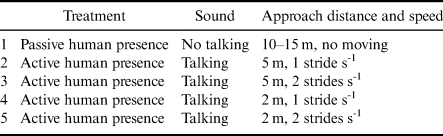
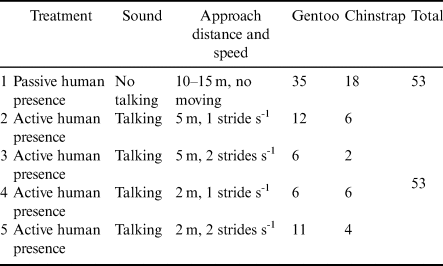
We applied five different treatments (Table I) to compare the differences in penguins' behavioural responses when confronted with passive and active human presence. Passive human presence was defined as the presence of humans when no talking or movement was performed while maintaining 10–15 m distance from the nesting sites. Active human presence was defined as the presence of humans while talking and walking at different speeds and distances from the nesting sites. Human talking was performed at ~70 dB to simulate the sound level of an audible conversation between two tourists in field settings. We practiced achieving this sound level consistently between the two applicable researchers using the Sound Meter mobile app (Abc Apps, ver. 1.7.9). We also applied a walking speed of one or two strides per second to simulate common tourist movement speeds and a viewing distance from nesting sites of 2 or 5 m.
Combinations of treatments applied in the field. The five treatments were randomly assigned to the nesting sites treated. The order of the nesting site and the side on which the treatments were applied were randomly determined before the initiation of the fieldwork. Human activities comprise distance from nesting sites and walking speed while behaviour corresponds to talking.

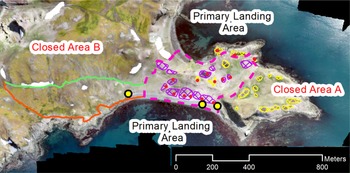
Our fieldwork was conducted from 27 December 2019 to 3 January 2020, coinciding with the actual tourists' season and the most sensitive stage of the breeding cycle. Treatments were applied at different hours from 09h00 to 18h00 and only on those days when no vessel was scheduled for visiting the island. In the field, we selected nesting sites for applying our treatments. A nesting site was defined as a conglomeration of nests within distinguishable site boundaries. The criteria for selecting nesting sites were: 1) to contain only one species, 2) to be regularly visited by tourists, 3) it should be considered permanent based on researchers' records, 4) individual nests should be distinguishable and 5) a sufficient number of chicks and adults remained within the nesting sites. Applying these criteria, we identified a total of 15 nesting sites in the study area: 5 belonged to chinstrap penguins and 10 belonged to gentoo penguins. All selected nesting sites were mapped using GPS (Fig. 2).
Nesting sites in which the treatments were applied (red dots), located in the north-east and south-east beaches and corresponding to the regularly visited area. The last census in 2018 determined a total of 3797 nests for chinstrap penguins and a total of 1943 nests for gentoo penguins on this island (MAPPPD 2020).

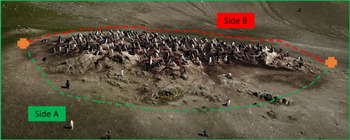
Nesting sites were divided into two sides for applying the treatments. Initially, they were randomly selected for the application of the treatments (Fig. 3). However, at some nesting sites, just one side was available because of the presence of cliffs or irregularities in the terrain. We applied our treatments to one side at a time and avoided conducting a repetition of the treatment on the same side of the nesting site during the same day. All available sides were visited at least once with a maximum of four repetitions on the same side.
Illustration of the identification of sides before conducting the experiments in the nesting sites. The dotted green and red lines correspond to a 0 m viewing distance. Sides A and B were randomly selected for conducting the experiments.

In total, we conducted 53 repetitions of the different active human presence treatments. Those corresponded to 18 repetitions for chinstraps and 35 for gentoos in the 15 nesting sites identified. In all cases, the passive human presence treatment was recorded 1 min before the start of each active human presence to represent realistic background conditions, with the researchers present at a greater distance. Therefore, we got the same number of repetitions by species for the passive human presence treatment (Table II). As we worked at penguin colonies with high visitation rates, it is considered improbable that such a brief exposure to researchers would generate habituation that would substantially modify the results of the treatments, especially when the focal subjects vary from one experiment to another.
Number of repetitions applied by species by treatment.

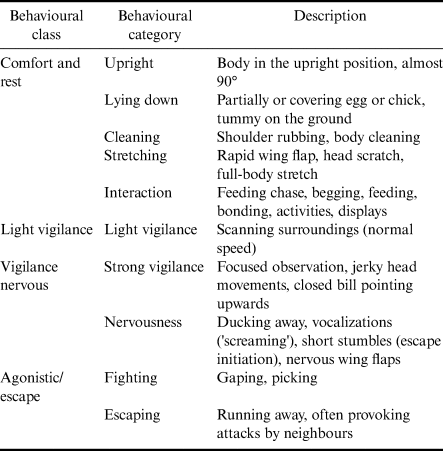
Penguins' behaviours were recorded as our response variables. Penguins' behavioural classes and categories were taken from past research and analysed for the two species of our study (see Table III for references). All behavioural categories (Table III) were determined as mutually exclusive state events that were recorded as the proportion of time and frequency of occurrence of a penguin performing different behaviours during the treatments.
Ethogram of 10 behavioural categories corresponding to four behavioural classes.

Sources: Williams (Reference Williams1995), Giese (Reference Giese1998), Holmes et al. (Reference Holmes, Giese, Achurch, Robinson and Kriwoken2006), Rümmler et al. (Reference Rümmler, Mustafa, Maercker, Peter and Esefeld2016, Reference Rümmler, Mustafa, Maercker, Peter and Esefeld2018), Mustafa et al. (Reference Mustafa, Esefeld, Grämer, Maercker, Peter and Rümmler2017).
Before starting, we marked the treatment distance with flags throughout the side to be treated and set up the camera at a vintage point. Then we observed and recorded behaviours for 1 min as the passive human presence treatment before starting the active human presence treatment.
When applying the active human presence treatments, two researchers (167 and 152 cm in height), wearing red and orange jackets to give consistent visual stimuli to the penguins, walked towards the middle of the random treatment side (A or B) of the selected nesting site. Once there, the researchers moved three steps from each other in opposite directions and initiated the treatment. To keep consistency with the distance from one step to another, the size of a muck boot was considered the standard space between steps when walking. Both researchers kept talking and walking during the treatments corresponding to an active human presence. The duration of treatment ranged from 13 to 30 s dependent on the size of the nesting site.
Data creation and annotation
We recorded the penguins' behaviour responses using videos captured by a Nikon digital camera (model D3400) Videos were saved in .MOV file format with a frame dimension of 1920 × 1080 pixels and a resolution of 59.94 frames s-1. The camera was placed at no more than 10 m from the perimeter of the nesting site. The height and angle were adjusted to get the widest angle possible and diminish side distortions.
We performed our analyses at the behavioural class and focal subject levels. The data from the videos were extracted using the Behavioral Observation Research Interactive Software (BORIS) (Friard & Gamba Reference Friard and Gamba2016). For data extraction, we selected five focal subjects per treatment. We had two categories: 1) parent with chick and 2) parent alone (i.e. a penguin with no active nest, neither chick nor egg). For each category, at least three out of six different attributes should be met by penguins: 1) be in the first row in the nest, 2) tummy visible, 3) from 4 to 6 m from the camera, 4) beyond the first row, 5) just the back being visible and 6) from 6 to 10 m from the camera, Table S2 reflects the preferred order of these combinations.
Penguin behaviour data were transcribed during the playback of the videos by a team of four trained researchers. Four videos (two per species) were used to test internal reliability among the four researchers. Cronbach's α (consistency and absolute) for the four observers was α = 0.699. We also performed pairwise comparisons on four other videos with Cronbach's α values ranging from α = 0.800 to 0.989, values that are considered ‘acceptable’ in most research situations (Cortina Reference Cortina1993).
Data analysis was performed with SPSS V.27 (IBM Corp. 2020). Due to the limited number of occurrences of the ‘agonistic/escape’ behavioural class (n = 32 for both species), we merged it with the behavioural class ‘vigilance nervous’ and rename it as the ‘strong vigilance’ class. For each passive or active human presence treatment, we obtained the corrected time of the treatment by subtracting the total duration of disturbance occurrences (i.e. skua overflying the colony, penguin or human blocking the focal subject) from the total time of the treatment recorded.
For each focal subject, we calculated the frequency of occurrences (number min-1) of, and the proportion of time (fractional numbers) spent on, each behavioural class by dividing the cumulative frequency and cumulative duration of responses with the corrected time of the treatment, respectively. We included the frequency metric as this provides a different perspective regarding the behaviour response than the summative proportion metric. The frequency indicates the intensity of switches between behaviour response classes, which might imply energy consumption, tension/stress and general well-being. This is also a metric that has been reported in the published literature.
We report our results by aggregating the behavioural responses of the five focal subjects for each nesting site for each treatment (our unit of analysis). We decided on this approach in order to avoid any potential risk of pseudo-replication, as some focal subjects were next to each other within the same nesting site. Therefore, their individual behavioural responses may have influenced each other. As our data were non-normally distributed, we applied non-parametric statistical tests. We conducted Mann-Whitney and Kruskal-Wallis tests to compare and identify the differences in behavioural responses of chinstrap and gentoo penguins to passive and active human presence and to conduct intra- and inter-species comparisons among treatments.
Results
Behavioural responses of chinstrap and gentoo penguins to passive and active human presence
Chinstrap penguins
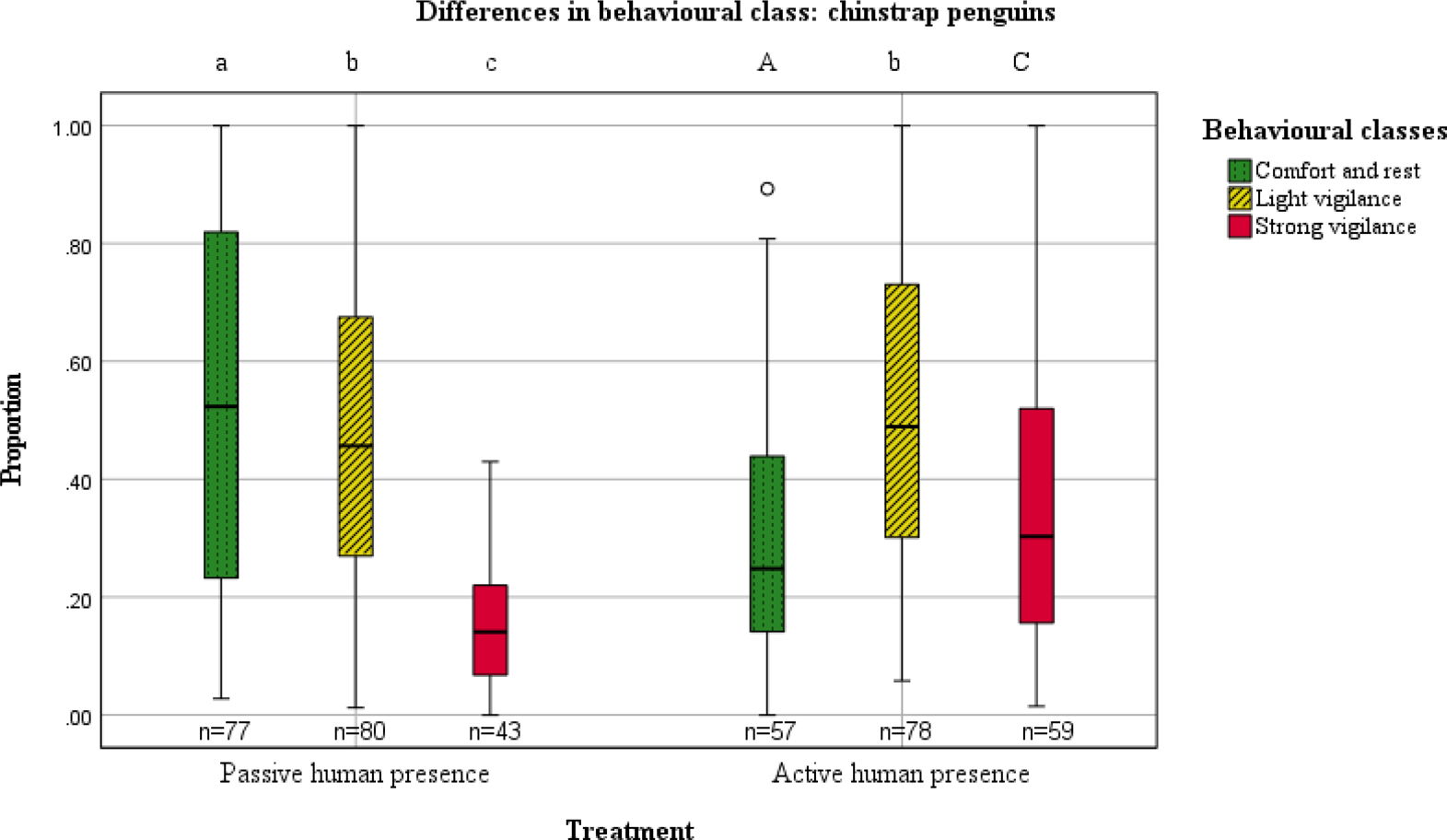
The Mann-Whitney U test results (Fig. 4) for chinstrap penguins showed that the proportion of time spent on comfort and rest behaviour for the group under the passive human presence treatment (n = 77) was significantly higher than for the group under the active human presence treatment (n = 57) (U = 1394, P < 0.001).
Boxplots for chinstrap penguins showing differences in the proportions of time spent on different behavioural classes when comparing passive and active human presence treatments. Letters changing from lower case to upper case indicates significant differences between passive and active human presence for each behavioural class using the Mann-Whitney U test with α = 0.05.

No significant differences were found in the proportion of time spent on the light vigilance behaviour between the passive (n = 80) and active human presence treatment (n = 78) groups. However, a statistically significant increase in the frequency of occurrences of light vigilance in the active human presence group was found (U = 3900, P = 0.007). The proportion of time that chinstrap penguins spent on strong vigilance under the active human presence treatment (n = 59) was significantly higher than in the passive human presence treatment (n = 43) group (U = 1897, P < 0.001). Correspondingly, the frequency of occurrences of strong vigilance was also significantly higher in the active human presence group (U = 1850, P < 0.001).
Gentoo penguins
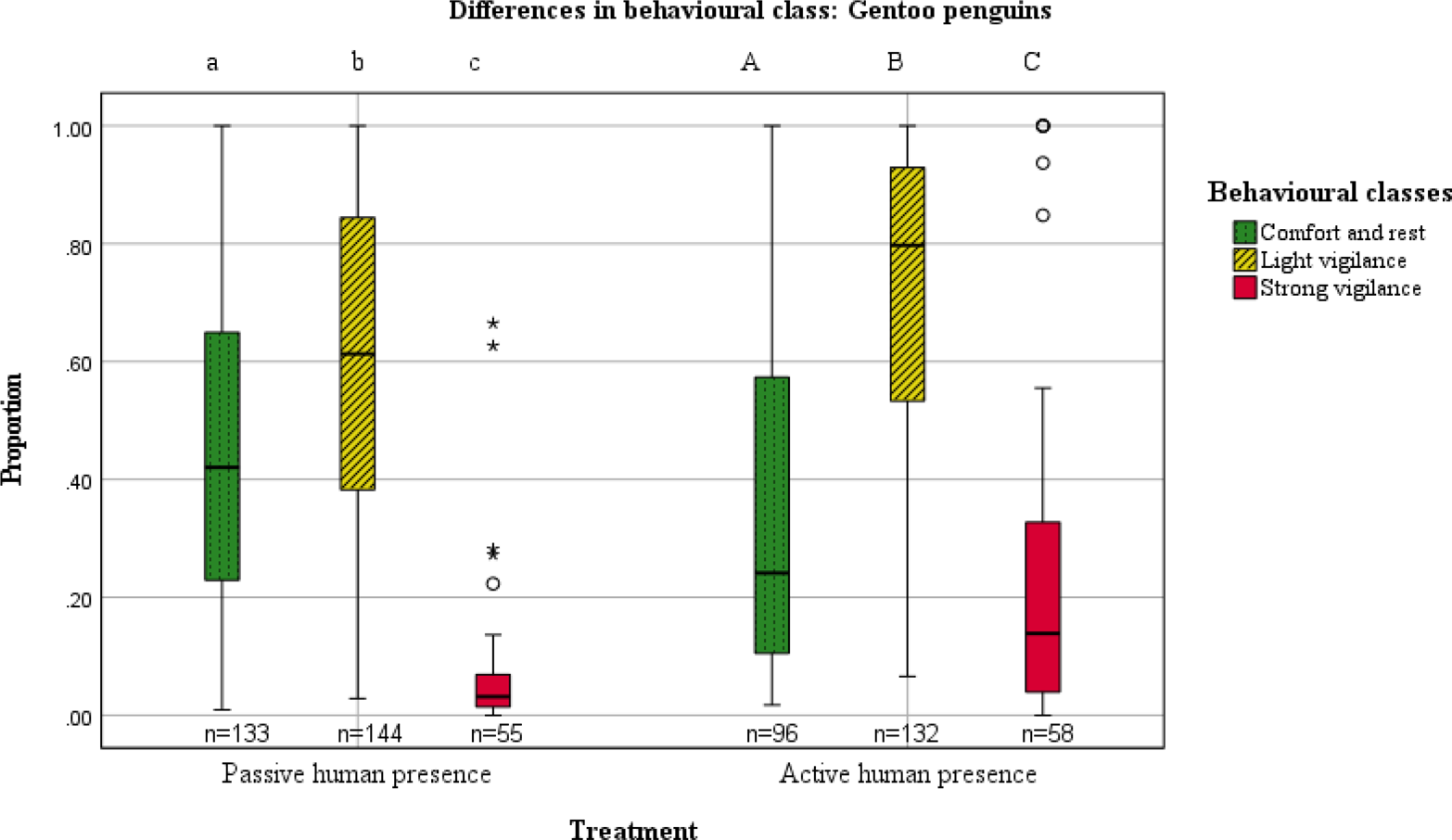
In the case of gentoo penguins, when analysing the proportion, the Mann-Whitney U test results showed statistically significant results for all behavioural classes and comparison groups (Fig. 5). The comfort and rest behaviour in the passive human presence treatment group (n = 133) was significantly higher than in the group under the active human presence treatment (n = 96) in terms of proportion of time (U = 4999, P = 0.005), but no significant difference in term of the frequency of occurrences was found.
Boxplots for gentoo penguins showing differences in the proportions of time spent on different behavioural classes when comparing passive and active human presence treatments. Letters changing from lower case to upper case indicates significant differences between passive and active human presence for each behavioural class using the Mann-Whitney U test with α = 0.05.

Both the proportion of time spent on light vigilance (U = 12,043, P < 0.001) and the frequency of occurrences of light vigilance (U = 12,028, P < 0.001) significantly increased for the group under active human presence treatment (n = 132) when compared with the passive human presence treatment (n = 144) group. Similarly, the proportion of time spent by gentoo penguins on strong vigilance significantly increased for the group under the active human presence (n = 58) treatment (U = 2349, P < 0.001) when compared with the passive human presence treatment group (n = 55), and so did the frequency of occurrences (U = 2641, P < 0.001) for this same group.
When comparing the two species, gentoo penguins showed statistically higher proportions of time spent on light vigilance behaviour in both passive (median gentoo (Mg) = 0.61, median chinstrap (Mch) = 0.45) human presence (U = 7260, n = 224, P = 0.001) and active (Mg = 0.79, Mch = 0.48) human presence (U = 7181, n = 210, P < 0.001) treatments than their chinstrap counterparts. Conversely, chinstrap penguins showed significantly higher proportions of time spent on strong vigilance in the passive (Mg = 0.03, Mch = 0.14) human presence (U = 474.5, n = 98, P < 0.001) and active (Mg = 0.13, Mch = 0.30) human presence (U = 1045.5, n = 117, P < 0.001) treatments.
Differences in behavioural responses of chinstrap and gentoo penguins to human presence under different viewing distance and behaviour treatments
Comfort and rest
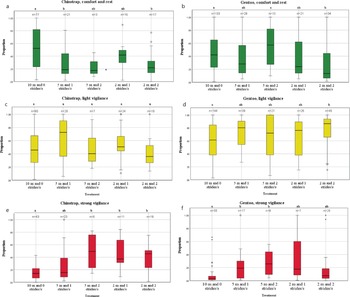
The Kruskal-Wallis tests revealed differences in the penguins' behaviours among different human presence treatments. We found significant differences in the proportion of time that chinstrap penguins spent on comfort and rest behaviour (H(4, 134) = 15.04, P = 0.005). Pairwise comparisons (Fig. 6a) revealed a higher proportion of time spent on comfort and rest behaviour with passive human presence (10 m, 0 strides s-1) and a decrease in the proportion of time spent on this behaviour with active human presence at 2 m and 2 strides s-1 (P = 0.048) and at 5 m and 1 stride s-1 (P = 0.036). However, no significant differences were found for the frequency of occurrences of comfort and rest behaviours under different treatments.
Boxplots showing differences in behavioural classes by species and treatments applied. Boxplots represent the results of the Kruskal-Wallis test with Bonferroni correction. Values denoted by a different letter are significantly different (P < 0.05) among treatments by each species and behavioural class. Treatments with intermediate characteristics are represented with a combination of letters (i.e. ‘ab’). a. Chinstrap penguins, comfort and rest behaviour. b. Gentoo penguins, comfort and rest behaviour. c. Chinstrap penguins, light vigilance behaviour. d. Gentoo penguins, light vigilance behaviour. e. Chinstrap penguins, strong vigilance behaviour. f. Gentoo penguins, strong vigilance behaviour.

Similarly, we found significant differences in the proportion of time spent by gentoo penguins on comfort and rest behaviour (H(4, 229) = 18.53, P = 0.001). Pairwise comparisons (Fig. 6b) revealed a significant decrease in comfort and rest when comparing the active human presence treatment (2 m, 2 strides s-1) vs the passive human presence treatment (P = 0.001). A decrease in comfort and rest was also found when comparing the active human presence treatments at 2 m and 2 strides s-1 and at 5 m and 2 strides s-1 (P = 0.017). However, no significant differences were found for the frequency of occurrences of comfort and rest behaviours under different treatments.
Light vigilance
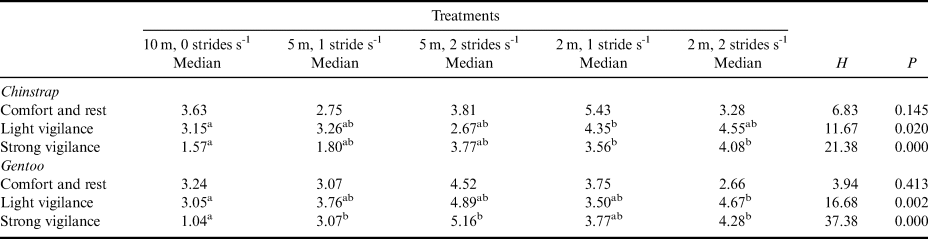
We did not find significant results for the proportion of time spent on light vigilance in any of the treatments (Fig. 6c) for chinstrap penguins. Nevertheless, the frequency of occurrences of light vigilance responses was significantly different among treatments (H(4, 158) = 11.67, P = 0.020). Pairwise comparisons (Table IV) revealed a significant increase in light vigilance with active human presence at 2 m and 1 stride s-1 (p = 0.044) when compared with the passive human presence (10 m, 0 strides s-1).
Median values for the frequency (number of occurrences per minute) of different behavioural classes per species.

Median values denoted by a different letter are significantly different (P < 0.05). P-values were obtained using the Bonferroni correction for multiple pairwise comparison tests.
In contrast, we found significant differences in the proportion of time spent on light vigilance for gentoo penguins (H(4, 276) = 17.71, P = 0.001). We found that a decrease in viewing distance and an increase in speed was associated with an increase in the proportion of time spent on this behaviour. Pairwise comparisons (Fig. 6d) showed a significant increase in the proportion of time spent on light vigilance when comparing the active human presence treatment at 2 m and 2 strides s-1 (P = 0.001) and the passive human presence treatment. Similarly, we found significant results for the frequency of occurrences of light vigilance behaviour (H(4, 276) = 16.68, P = 0.002) in the same pairwise comparison (P = 0.006; see Table IV).
When comparing both species, gentoo penguins spent a significantly higher proportion of time on light vigilance behaviour than chinstrap penguins with the passive human presence treatment (Mg = 0.61, Mch = 0.45) at 10 m and 0 strides s-1 (U = 7260, n = 224, P = 0.001), as well as with the active human presence treatments at 2 m and 1 stride s-1 (Mg = 0.76, Mch = 0.50; U = 420, n = 50, P = 0.036) and at 2 m and 2 strides s-1 (Mg = 0.86, Mch = 0.35; U = 745.5, n = 65, P < 0.001).
Strong vigilance
For chinstrap penguins (Fig. 6e), we found significant differences in the proportion of time chinstraps spent on strong vigilance behaviour (H(4, 102) = 28.88, P < 0.001). Significant increases in the proportion of time spent on strong vigilance with active human presence at 2 m and 2 strides s-1 (P < 0.001), at 2 m and 1 stride s-1 (P = 0.002) and at 5 m and 2 strides s-1 (P = 0.033) were found when compared with the passive human presence treatment. Similarly, significant differences were found for the frequency of occurrences of strong vigilance behaviour (H(4, 102) = 21.38, P < 0.001). Pairwise comparisons (Table IV) revealed a significant increase in the frequency of occurrences of strong vigilance with the active human presence treatments at 2 m and 1 stride s-1 (P = 0.020) and at 2 m and 2 strides s-1 (P = 0.002) as compared with the passive human presence treatment (10 m, 0 strides s-1).
The strong vigilance behavioural class also showed significant results (H(4, 113) = 21.83, P < 0.001) for gentoo penguins. Pairwise comparisons (Fig. 6f) showed significant increases in the proportion of time spent on strong vigilance in the active human presence treatment at 5 m and 1 stride s-1 (P = 0.010) and at 5 m and 2 strides s-1 (P = 0.009) when compared with the passive human presence treatment. We also found significant differences for the frequency of occurrences (H(4, 113) = 37.38, P < 0.001). Pairwise comparisons (Table IV) revealed significant increases in the frequency of occurrences of strong vigilance with the active human presence treatments at 5 m and 1 stride s-1 (P = 0.023), at 5 m and 2 strides s-1 (P = 0.021) and at 2 m and 2 strides s-1 (P < 0.001) when compared with the passive human presence treatment (10 m, 0 strides s-1).
When comparing both species, chinstrap penguins spent significantly higher proportions of time on strong vigilance displays than the gentoo penguins with the passive human presence treatment (Mg = 0.03, Mch = 0.14) at 10 m and 0 strides s-1 (U = 474.5, n = 98, P < 0.001) and with the active human presence treatment (Mg = 0.07, Mch = 0.45) at 2 m and 2 strides s-1 (U = 87, n = 45, P < 0.001).
Discussion
To date, there has been no published empirical evaluation of penguin behavioural responses using a combination of realistic tourist activities, including talking sound, viewing distance and movement speed. Through this study, we attempted to fill this knowledge gap by simulating these activities with a series of active and passive human presence treatments.
Behavioural responses of chinstrap and gentoo penguins to passive and active human presence
We found that penguins are more likely to be disturbed under active human presence conditions (i.e. closer approaches, talking and walking at different speeds) in comparison with passive human presence conditions. Both species exhibited a lower proportion of time spent on comfort and rest under active human presence conditions. We also found that both species spent a significantly higher proportion of time and showed a significantly greater frequency of occurrences of strong vigilance responses under the active human presence conditions. These findings demonstrate that penguins under active human presence conditions elevated their strong vigilance behaviours by forgoing time spent on comfort and rest, and this effect was more pronounced for chinstrap penguins. On the other hand, gentoo penguins tended to exhibit higher levels of light vigilance behaviour than their chinstrap counterparts when both were exposed to active human presence conditions.
Our results support Holmes et al. (Reference Holmes, Giese, Achurch, Robinson and Kriwoken2006) and Holmes (Reference Holmes2007), who reported that, during human approaches (comparable to our active human presence treatment), gentoo penguins demonstrated significantly lower levels of rest and displayed significantly higher levels of vigilance as compared with pre-approach levels (comparable to our passive human presence treatment). Chiew et al. (Reference Chiew, Butler, Sherwen, Coleman, Fanson and Hemsworth2019) also found similar results when assessing the influence of human interactions and viewing distances on the behaviour of little penguins Eudyptula minor in a zoo environment. The results from the current study add to the body of evidence in support of regulations for viewing distance and tourist's behaviour, as these could help reduce vigilant and nervous responses in penguins.
Differences in behavioural responses of chinstrap and gentoo penguins to human presence under different viewing distance and behaviour treatments
Although environmental conditions (i.e. rain, temperature, wind) were similar for both species at the time of the experiments, chinstrap and gentoo penguins showed variations in light and strong vigilance behaviours under different combinations of speed and viewing distance. For example, the display of light vigilance behaviour varied between the two species. While the proportion of time spent on this behaviour increased significantly for the combination of 2 m and 2 strides s-1 for gentoos, no significant changes in light vigilance were observed for chinstrap penguins across different treatments. Interspecies comparisons further confirmed greater increases in light vigilance among gentoo penguins than the chinstraps for three treatments (passive and active human presence treatments at 2 m and 1 and 2 strides s-1).
Chinstrap penguins presented significant increases in the proportion of time spent on strong vigilance in three out of four active human presence treatments. Both species showed significant differences at both walking speeds tested (1 or 2 strides s-1). However, differences in viewing distance led to different responses in each species. In the case of chinstrap penguins, a closer viewing distance (2 or 5 m) significantly increased the proportion of time spent on and frequency of occurrences of strong vigilance behaviour, mainly with fast walking speeds. However, in gentoo penguins, a viewing distance of 5 m was enough to increase both the proportion of time spent on and frequency of occurrences of this behaviour. These results suggest that gentoo penguins have a greater alert distance, which translates into an earlier appearance of behaviours corresponding to a strong vigilance state. Despite the differences in results of the individual species in terms of these behaviours, when comparing both species, only chinstrap penguins showed a significant increase in strong vigilance responses to passive and active human treatments at 2 m and 2 strides s-1.
Our results corroborate those presented by Holmes (Reference Holmes2007) and Holmes et al. (Reference Holmes, Giese and Kriwoken2005, Reference Holmes, Giese, Achurch, Robinson and Kriwoken2006), who concluded that behaviour could be site- and species-specific and could depend on the moment, duration, speed and distance at which human approaches occurred. Furthermore, our results show similar patterns to those of Lee et al. (Reference Lee, Jung, Choi, Chung, Han, Cho and Kim2017), who indicated that even within the same population chinstrap and gentoo penguins may display different responses depending on their degree of exposure to human disturbance. Finally, Giese (Reference Giese1998) found that approaches to 5 m were associated with an increase in the frequency of agonistic acts, vigilance and head shaking, causing the temporary interruption of egg incubation. This supports our results regarding the strong vigilance displays at closer approaches, suggesting that even the 5 m viewing distance could be insufficient during the early stages of the breeding season.
Other observations
Past research has suggested that human disturbance could increase the predation risk for animals. Burger et al. (Reference Burger, Gochfeld, Jenkins and Lesser2010) and Martín et al. (Reference Martín, De Neve, Fargallo, Polo and Soler2004) indicated that, when disturbed, animal responses could follow the same economic principles used when encountering predators, resulting in higher energetic and/or time costs. In the case of penguins, scared parent birds may temporarily desert chicks or eggs, causing death due to exposure (Erize Reference Erize1987, Wilson et al. Reference Wilson, Culik, Danfeld and Adelung1991). Furthermore, Giese (Reference Giese1998) found that the frequency of egg loss increased significantly at nests treated under conditions of tourist recreational use. Even though we did not observe any parents deserting or temporarily abandoning the nests during our treatments, the decrease in comfort and rest activities (i.e. cleaning, feeding and bonding activities) could lead to an increase in energetic and time costs (i.e. strong vigilance behaviours) or changes in physiological stress, leading to sub-lethal consequences in the long term (Barbosa et al. Reference Barbosa, de Mas, Benzal, Diaz, Motas and Jerez2013). This highlights the relevance of implementing temporal or spatial management measures that could prevent the interruption of feeding or bonding activities that are crucial during the early nesting stage (Black Reference Black2016).
While past research with similar field treatments was mostly conducted in colonies with either low or no visitation, our penguin colonies have been intensively visited since 2005. This factor could have influenced the behavioural responses of penguins. Past research has indicated that penguins in colonies habituated to human presence display different responses to disturbances (e.g. predators) in comparison with penguins at barely visited sites (Trathan et al. Reference Trathan, Forcada, Atkinson, Downie and Shears2008, Barbosa et al. Reference Barbosa, de Mas, Benzal, Diaz, Motas and Jerez2013, Black et al. Reference Black, Collen, Johnston and Hart2016, Lynch et al. Reference Lynch, Youngflesh, Agha, Ottinger and Lynch2019). As Viblanc et al. (Reference Viblanc, Smith, Gineste and Groscolas2012) proposed, there is a need to continue evaluating the impacts of anthropogenic disturbances on wildlife, including habituation responses, not only for the management of tourism in natural habitats, but also for the establishment of guidelines that could limit undesirable effects on wildlife. In this sense, a key component for the sustainable use of visited sites will be the identification of acceptable impact thresholds for wildlife (Holmes et al. Reference Holmes, Giese and Kriwoken2005).
Limitations
Logistical challenges with our expedition prevented us from establishing a pure control treatment. While as past studies have analysed the differences in minimum approach distances at sites with low or no visitation, we were more interested in analysing the differences between passive and active human presence. This is also more consistent with the actual conditions of our study area in which penguins have been subject to visitation since 2005, making it impossible to consider the existence of non-visited conditions (i.e. pure control conditions).
Management and research implications and future research
In Antarctica, the establishment of complementary and specific tourism management measures for visited sites, including temporal and spatial restrictions, has been suggested by several authors (Giese Reference Giese1996, Holmes et al. Reference Holmes, Giese and Kriwoken2005, Reference Holmes, Giese, Achurch, Robinson and Kriwoken2006, Burger & Gochfeld Reference Burger and Gochfeld2007; French et al. Reference French, Muller, Chilvers and Battley2019). Moreover, past research has advocated the precautionary principle to setting minimum approach distances for wildlife. The Barrientos (Aitcho) Island Visitor Site Guidelines currently recommend a viewing distance of 5 m from wildlife and giving animals the right of way. However, in the case of penguins, neither temporal nor species-specific guidelines are provided. Considering our results and past research recommendations, we propose that more precautionary measures be applied during the first stage of the summer (i.e. from November to mid-January). These consist of maintaining a slow walking speed (e.g. ≤ 1 stride s-1), encouraging tourists to refrain from talking and keeping a 10 m distance from nests. Under the precautionary principle, these management measures could be applied to other intensively visited sites in which penguins would be exposed to a similar type and level of disturbance, including visited sites for which Visitor Site Guidelines have not yet been formalized. Our results point to the need for more species-specific studies at the other visited Antarctic sites at different stages during the breeding season (e.g. incubation period). This would allow managers to establish more accurate measures that could be season-, site- and/or species-specific.
Some potential variables such as wind direction and speed, nesting size and previous interactions of focal subjects with tourists could have some explanatory power to determine the level of penguin disturbance due to human presence. Unfortunately, we were not able to record such data. However, we think that our results are strong enough for the study objectives, and including these variables would not change the general conclusions even though a higher level of detail would be added to the results. Although future research should strive for more balanced designs, we recognize the potential limitations to achieving this objective in the Antarctic field settings. Even with these limitations from a methodological or design perspective, the results of such research should be analysed in order to inform management and conservation actions.
Conclusions
Our results emphasize the importance of managing intensively visited sites and evaluating the efficacy of Visitor Site Guidelines. These actions are essential not only to maximize their conservation value through appropriate management, but also to ensure that no more than minor or transitory impacts occur, in compliance with Annex II of the Madrid Protocol. Even though intensively visited sites do not necessarily possess the most exceptional natural conditions, they provide valuable cultural ecosystem services, especially through strengthening tourists' awareness, facilitating learning and instilling a sense of stewardship towards Antarctica. As new visitor sites will probably be opened in the future, the evaluation of current recommendations in Visitor Site Guidelines is a crucial step, as this would provide policy-makers and decision-makers with science-based evidence to adopt efficacious management measures.
The purpose of this empirical study was to improve our understanding of penguins' behavioural responses to human presence in order to inform guidelines for tourists and tour operators. Even though Visitor Site Guidelines have been sufficient to contain tourism impacts at its current level, a potential increase in tourism in the post-COVID-19 era, which may include non-IAATO operators, prompts us to suggest complementary and site-specific management measures while ensuring high educational opportunities are available to tourists. Management-orientated research is a valuable tool for other intensively visited destinations in which the assessment of management measures, such as wildlife responses to human presence, could strengthen adaptive management decision-making processes. This type of research could also stimulate the improvement and expansion of Visitor Site Guidelines, contributing to the sustainable future of Antarctica.
Acknowledgements
Our special gratitude goes to the Ecuadorian Navy for its logistical support during the development of this research. Special thanks go to our team members Ana Campos Cáliz and Julianne Reas for their valuable contributions to the data analysis. We also want to thank our reviewers and editor for their constructive feedback that has improved the quality of this paper.
Financial support
Authorization for field procedures and funding for this research was granted by the Ecuadorian Antarctic Institute under the project ‘Assessment of Visitor Site Guidelines for penguin observation through the development of experimental and non-experimental experiments in Barrientos Island. South Shetland islands’. The authors acknowledge the projects CTM2015-64720 and ANTECO CGL2017-89820-P, funded by the Spanish Research Agency. The authors also declare that they have no known competing financial interests or personal relationships that could have appeared to influence the work reported in this paper.
Author contributions
The specific contributions made by each of the authors of this manuscript are as follows: DC: conceptualization, methodology, investigation, formal data analysis, writing - original draft, reviewing, funding acquisition; Y-FL: conceptualization, methodology, formal data analysis, writing - review and editing; PT: formal data analysis, writing - review and editing; AB: review, comments and editing; GR: review and comments; JB: review, comments and supervision.
Supplemental material
Two supplemental tables will be found at https://doi.org/10.1017/S0954102021000559.