Implications
Few research results linking the livestock sector and its water use are available, at a time when a significant increase in animal production is expected to fulfill a rapidly growing demand. This study is based on the assumption that in regions with water scarcity, there is a need to consider improvements in water productivity in cattle farming operations. Our results suggest that more attention should be devoted to the origins of water (rainfall, rather than irrigation water from surface and groundwater, and virtual water in purchased feed) to implement sustainable livestock systems.
Introduction
In southern Mediterranean countries, water scarcity is already threatening human development (Iglesias et al., Reference Iglesias, Garrote, Flores and Moneo2007). This study focuses on Morocco, where available water resources are heavily exploited, and where climate change may negatively affect the country’s economy (Schilling et al., Reference Schilling, Korbinian, Hertig and Scheffran2012). Given the importance of agriculture to rural-based economies and the significant share of irrigation in total water use, technologies aimed at improving its efficiency are actively promoted (Schyns and Hoekstra, Reference Schyns and Hoekstra2014). This is based on the water productivity paradigm (more ‘crop per drop’) and focuses mostly on irrigation water. However, recent research indicates that these measures may actually lead to higher water consumption due to intensification of water use and field efficiencies that are far below theoretical values (Batchelor et al., Reference Batchelor, Reddy, Linstead, Dhar, Roy and May2014). This suggests that increasing attention should be given to rainfall, while exploring the possibility of alternative cropping patterns, irrigation and agricultural practices to improve water productivity (Falkenmark, Reference Falkenmark2007). Livestock production in semi-arid conditions is a particularly interesting system for such a study, since it implies analyzing a series of on-farm production functions, from water use for growing fodder, to its conversion into feed biomass, and the effectiveness of diets ingested by cattle (e.g. nutrient contents and impacts on both milk production and live weight gain) (Le Gal et al., Reference Le Gal, Kuper, Moulin, Sraïri and Rhouma2009). Moreover, the integration of crops and livestock increases farms’ resilience (Ryschawy et al., Reference Ryschawy, Choisis, Choisis and Gibon2013). However, few studies have analyzed complementarities between crops and livestock, particularly from a water productivity viewpoint. Such complementarities need to be addressed to assess the relative pressure of both activities on available water resources (rainfall, surface water and groundwater).
When farm structure consists mainly of smallholder units, the study of water productivity of cattle becomes a difficult task, for two reasons: (i) the output (i.e. milk and meat) tends to vary due to different management practices, with significant difficulties in obtaining accurate on-farm data and (ii) these farms are rarely specialized in either milk or meat, suggesting that research methodologies have to deal with both products. In addition, this analysis needs to consider the use of off-farm feed representing ‘virtual water’ (Allan, Reference Allan1998). Recent research confirms the significant water volumes required by livestock rearing, as a consequence of the numerous losses that may occur (Doreau et al., Reference Doreau, Corson and Wiedemann2012).
Among animal products, beef has a higher water footprint than milk, pork or poultry products (Eschel et al., Reference Eschel, Shepon, Makov and Milo2014). Given the expected rise in the demand of animal products in developing countries, a ‘Livestock Revolution’ will be required (Delgado, Reference Delgado2003). Such a trend will certainly imply a growing pressure on water resources, since livestock already accounts for 10% of global water use (Schlink et al., Reference Schlink, Nguyen and Vilijoen2010). A benchmark of the water footprint of dairy farms at a global scale reported a mean value of 1.7 m3/kg of milk (Sultana et al., Reference Sultana, Uddin, Ridoutt and Peters2014). Such a figure, however, masks the existing variability. This may add difficulties in implementing sustainable dairy systems to cater to an increasing demand without damaging the environment (Hoekstra, Reference Hoekstra2012). In semi-arid contexts, sustainable water use has to be promoted, given the ongoing trend of groundwater depletion (Wada et al., Reference Wada, van Beek and Bierkens2012). In the case of Morocco, increased pressure on groundwater is already threatening the sustainability of many farming systems that depend on it (Kuper et al., Reference Kuper, Faysse, Hammani, Hartani, Hamamouche and Ameur2015). The main objective of this study therefore consists of estimating the water footprint of cattle products (milk and live weight gain) in dual-purpose herds by considering the volumes of water used and their origins: rainfall, irrigation (whether from surface water or groundwater) and virtual water. Another goal of the study is to evaluate the economic terms of water productivity through cattle farming.
Methodology
Water productivity in dual-purpose herds (milk and live weight gain simultaneously) was studied in the Saïss region in northern Morocco (Supplementary Figure S1). It is a rich agricultural plain, originally known for its rain-fed farming systems (cereals, legumes, vineyards). Following recurring droughts in the 1980s and 1990s, many farmers turned to groundwater. Currently, some 37 000 ha are irrigated, of which >25 000 ha rely on groundwater use. The area also witnessed an intensification in livestock activity, with 22 000 cattle (mainly purebred Holstein or crossbred local×Holstein) producing around 30 000 tons of milk and 2500 tons of meat annually (DPA El Hajeb, 2014).
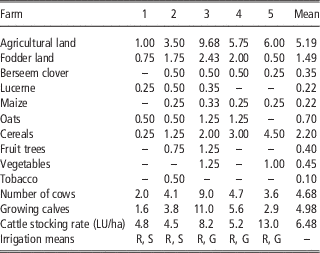
The practices determining water productivity in cattle farming were monitored on five farms from January to December 2014. The protocol consisted of a series of routine visits to farms at times of shifts in management practices, that is, a new cut of fodder crops, a significant change in dietary rations, the beginning of irrigation, etc. The sample included farms with diverse structural parameters and strategic choices (Table 1): either small farms (<5 ha) with livestock as the main activity or combined with cash crops (such as tobacco), or larger farms with livestock associated with fruit trees or vegetables. The strategic options in livestock rearing consisted of the importance of rain-fed v. irrigated fodder, the origin of irrigation water (groundwater from private wells or surface water from a collective network) and changing proportions of the incomes from milk and live animals.
Land occupation (hectare), structure of the herd and irrigation means in the study sample farms

LU/ha=livestock units per hectare of fodder crops; R=rainfall; G=groundwater; S=surface water.
Each farm had an average of 5.2 ha of arable land (range=1.0 to 9.7 ha), with an average animal stocking rate of 6.5 livestock units (LU) per hectare of fodder (range=4.5 to 13.0 LU/ha). All farms had herds of crossbred cows (local×Holstein) and kept their progeny after weaning. The monitoring enabled measurement of (i) water volumes used to produce forage, (ii) forage biomass from irrigated plots and off-farm feed resources and (iii) the annual output of milk and live weight gain obtained per farm. Approximately 29% of the total arable land was cultivated with rain-fed (oats – Avena sativa) or irrigated forage (berseem clover – Trifolium alexandrinum, lucerne – Medicago sativa, and maize – Zea mays). Berseem clover and maize were the forage species grown most (in four of the five farms) since they are complementary in the feeding calendar: berseem clover from November to June and maize from July to October. Oats, as entirely rain-fed forage, was also grown on four farms. In addition, the herds were also fed cereal straw, which is considered locally as a strategic fiber resource (Magnan et al., Reference Magnan, Larson and Taylor2012). Each farm was visited a total of 16 times to collect accurate information. Water volumes were estimated by frequent measurement determination of discharges from wells and at the entry point of fodder plots irrigated from the collective network, combined with regular enquiries about the durations of irrigation applications. Rainfall data were obtained from the local meteorological station, which was located at a maximum distance of 7 km from farms.
Forage biomass was determined by weighing plant samples harvested from each plot within a 1 m² quadrat at each harvest (Martin et al., Reference Martin, Astatkie, Cooper and Fredeen2005). Subsequently, the nutrients (net energy and digestible protein) supplied by this biomass were estimated. The average dry matter (DM) contents of forage crops in the context of Morocco were adopted from Guessous (Reference Guessous1991): berseem clover (12%), lucerne (18%), maize (30%) and oats used as hay (88%). According to the same author, the average net energy content was as follows: berseem clover (0.15 Mcal/kg), lucerne (0.31 Mcal/kg), maize (0.39 Mcal/kg) and oats (1.05 Mcal/kg). These average nutrient values were used to calculate nutrient yields per hectare in each farm.
Simultaneously, dietary rations (forage and concentrate) consumed by lactating cows and growing calves were recorded, since all the herds were in ‘zero-grazing.’ The equivalent virtual water corresponding to off-farm feed resources (mainly cereal grains and bran) was obtained from international references (Hoekstra and Chapagain, Reference Hoekstra and Chapagain2007): 1 m3 of water per kilogram of cereal grains. Milk volumes and live weight gains were recorded on each farm. Milk used by suckler calves was not taken into account but was considered as an intermediary input for live weight gain. The growth performance of calves and heifers was estimated indirectly using heart girth measurements. The following formula linking live weight to heart girth was used (Heinrichs et al., Reference Heinrichs, Erb, Rogers, Cooper and Jones2007):
LW=15.7+(66.88×HG3), where LW is live weight (kg) and HG is heart girth (m).
The economic return from milk sales was calculated for each farm. Gross margins for both milk and live weight gain were determined as the difference between the incomes and the expenses related to feed and veterinary treatments, as well as of farm workers’ wages, but without wages for family members’ work. The economic value of live weight gain was estimated from market prices: US $2.90/kg of live weight for steers, US $4.00/kg live weight for heifers. Water productivity was calculated for milk production and live weight gain (m3/kg). Then, the economic water productivity of milk and live weight gain was calculated as the gross margin for these products divided by the total amounts of water used, expressed in US $/m3.
Results
From water volumes and their origins to forage biomass
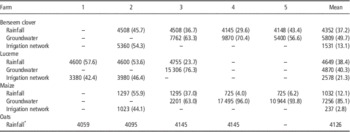
Water volumes applied to fodder crops varied widely among farms and were largely determined by irrigation practices. For berseem clover, the amount of water consumed ranged from 9500 to 14 000 m3/ha. These differences can be explained by the vegetative cycle length, since some farms (3 and 4) continued cutting this crop until July (with additional irrigation), whereas other farms (2 and 5) performed the final harvest in May. Although berseem clover is an annual winter crop, it relied on irrigation for 39% of total water use, since rainfall during the study year (451 mm) was lower than its long-term means (1960 to 2014): 560 mm.
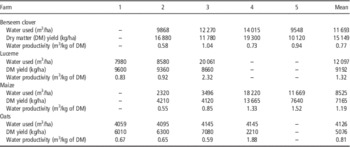
For lucerne, the total volume of water varied among farms from 7980 to 20 061 m3/ha (Table 2). The maximum value was recorded on farm 3, which was the only one equipped with drip irrigation. On the other farms with lucerne, water use averaged 9000 m3/ha, since irrigation water from the collective network was not available on demand (only once every 2 weeks). The mean contribution of irrigation to total water use in lucerne production reached 55%.
Water volumes (m3/ha) and their origins (%) to grow fodder in the five study farms

* No irrigation of oats: all the water used to grow oats comes from rainfall.
Maize also had high water use, with a maximum value of 18 220 m3/ha, also observed on the farm with drip irrigation. As a summer crop, maize requires large volumes of water, but irrigation volumes may exceed its water requirements. Oats had relatively constant water use, with a mean value of 4110 m3/ha, corresponding to the average amount of rainfall recorded during 2014.
Marked variability among farms was also observed for the DM yield of crops. In fact, berseem clover’s DM yield varied significantly (10 120 to 19 300 kg/ha). Differences may be explained by the irrigation volumes applied, as well as the length of the vegetative cycle. The water productivity of berseem clover reached a mean value of 0.77 m3/kg DM (Table 3). This parameter was affected by differences in water volumes applied, soil fertilities and vegetative cycle lengths. This was even more evident for summer crops (lucerne and maize), since they mainly rely on irrigation water and require high amounts of nutrients. Moreover, it appears that the farms that used the most water did not necessarily obtain the highest forage DM yields, indicating other limiting factors. For instance, farm 3 used the most water to grow lucerne but had the lowest lucerne DM yield. A different trend was observed for maize, since farm 4, which used the most water to grow maize, obtained the highest DM yield for this crop. Variability in maize water productivity also appeared to be less pronounced than that in lucerne because all farms cultivated maize as a transition fodder until the end of summer. Finally, oats had relatively homogenous water use and DM yield per hectare.
Water productivity of fodder in the study farms

Dietary ration variations and their impacts on cattle performance
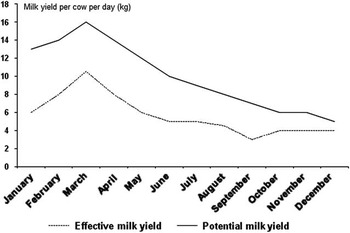
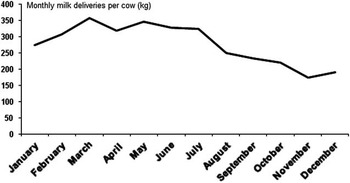
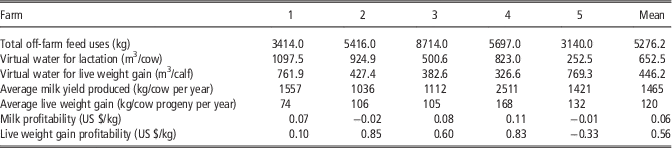
The monitoring of cattle dietary rations confirmed that nutrient availability was highly variable across seasons. In fact, nutrient availability peaked in spring (March to May) and thereafter decreased progressively until winter (late October to December). This was first linked to the cycle of berseem clover, whose yield peaked in spring. A second cause was related to the limited off-farm feed resources, since soaring concentrate prices hindered their purchase. Supplementary feed amounts did not exceed 1.8 kg/lactating cow and 1.2 kg/growing calf per day (Table 4). As a consequence, given the mean cattle stocking rate (6.4 LU/ha) and the limited yields of fodder crops, the quantities of DM ingested did not reach the optimum requirements of cattle. Moreover, not only were the diets insufficient, they were unbalanced. For example, on farm 4 during the spring, with maximum berseem clover availability, the diet had a shortage in net energy that prohibited exploitation of the clover’s protein. Moreover, to decrease production costs, the farmer did not use any feed concentrate. Hence, the effective milk yield per cow on this farm reached 10.5 kg/day at a time when its potential was 16 kg/day. By the end of summer, there was a shift to maize, and the diet became deficient in protein, implying a further decrease in milk yield: only 4.5 kg of milk per cow per day, whereas the potential was 8 kg/cow per day (Figure 1). This led to a persistent gap between potential milk yield and actual production. The gap decreased progressively from spring until late winter, however, due to a drop in the herd’s lactation potential, since no calving occurred. This resulted in less income from milk sales (Figure 2) and overall poor animal performances. For example, milk yield per cow did not exceed a mean value of 1465 kg and mean live weight gain per cow progeny only reached 120 kg/year. These mean figures, however, hide wide variability among farms; for example, annual milk yield per cow varied from 1030 to 2510 kg (Table 4).
The gap between the average effective and potential milk yields per lactating cow in farm 4 during the study period.

Monthly change in average milk quantity delivered per cow in farm 4.

Virtual water use and cattle performance variability among farms

Volumetric and economic water productivity in cattle
The mean gross margin per kilogram of milk was low, not exceeding US $0.06. The gross margin per kilogram of live weight gain was almost 10 times as high, however, reaching US $0.56 (Table 4). There was huge variability among farms. For example, both activities had a net deficit in farm 5: US $0.01/kg of milk and US $0.33/kg of live weight gain. In contrast, in farm 4, which had the highest average annual milk yield per cow and live weight per cow progeny, the economic results from the herd (both milk and live weight gain) were the highest among all farms. The economic profitability per kilogram of milk was the lowest in farm 2 (US $ 0.02), with the lowest average milk yield per cow. This farm seemed, however, to favor live weight gain, obtaining the highest value among farms: US $0.85/kg.
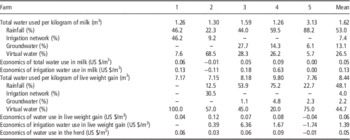
The results reveal a mean water footprint of 1.62±0.81 m3/kg of milk (ranging from 1.26 to 3.13). Of this total water volume, 53.0% originated from rainfall, whereas only 7.4% came from the irrigation network. The remaining amounts were from groundwater (13.1%) and virtual water (26.5%). For live weight gain, the water footprint reached a mean value of 8.44±1.09 m3/kg (ranging from 7.15 to 9.80). The respective contributions of rainfall, surface irrigation, groundwater and virtual water to this amount were 48.1%, 4.0%, 2.2% and 44.7%. This implies a higher use of purchased feed in the diets for fattening calves than for lactating cows. The variability in these contributions among farms showed contrasting situations. Some farms relied almost entirely on rainfall for fodder production to feed the lactating cows. This appeared in the prevalence of oats and berseem clover in their forage system (farms 4 and 5). Others had a feeding strategy mainly based on off-farm resources (farm 2). Another option was to use all water resources in almost equal percentages (farm 3). For live weight gain, the contribution of purchased feed appeared as the most important. However, farm 4 constituted a marked exception, since it relied mainly on forage to feed cows’ progeny.
Assessment of the economic water productivity of milk and live weight gain agreed with the results for water volumes used and gross margins achieved. Farm 5’s overall cattle activity had a negative gross margin, since the use of 1 m3 of water resulted in a loss of US $0.01. In contrast, three farms (1, 2 and 3) had a gross margin per m3 of water of almost US $0.05. Farms 1 and 3 had similar results for economic water productivity of milk and live weight gain (US $0.05 to 0.06). In contrast, farm 2 showed a different trend, since water used for lactating cows resulted in a deficit of US $0.01/m3, whereas the water used to grow calves helped create a positive gross margin of US $0.12/m3 (Table 5). Finally, farm 4 had the highest economic water productivity for both milk production and live weight gain. Economic water productivity considering only irrigation water rather than total water (including rainfall and virtual water) was also calculated. For milk production, the results revealed the same trends as those obtained for total water, but with values almost twice as high, since irrigation water represented almost 50% of the total water used. This means that 1 m3 of water from either the collective network or a private well helps generate an average gross margin of around US $0.13 when used to grow fodder to feed lactating cows. For live weight gain, economic irrigation water productivity changed considerably compared with the one calculated with total water use, since only 6.2% of water use for live weight gain relied on irrigation to feed growing cattle, due to the importance of virtual water (purchased feed).
Water productivity characteristics in milk, in live weight gain and in the whole herd in the study farms

Discussion
The main purpose of this study was to characterize the entire chain of processes influencing water productivity in smallholder dual-purpose cattle farms in a semi-arid environment under irrigated conditions. Such cattle farming with diversified forage crops and purchased feed constitutes one of the most complex systems for water productivity studies. The study sample was explicitly designed to represent the reality of farms (arable land, size of herds, type of forages) within the El Hajeb area where the study was conducted, since >85% rely on <5 ha and have less than five head of cattle (DPA El Hajeb, 2014). The study evaluated the respective contributions and complementarities of rainfall, irrigation and virtual water, thus providing a more integrated view of water productivity. Results revealed the wide variability in water volumes used. This was particularly observed for summer crops relying on irrigation. The average water volumes used to grow lucerne obtained in this study are similar to those reported for another large-scale irrigation scheme in Morocco (Sraïri et al., Reference Sraïri, Rjafallah, Kuper and Le Gal2009a). However, since the previous study took place in an semi-arid region with even lower rainfall (210 mm/year), almost 82% of total water in that study came from irrigation. In our study, irrigation represented 87.9% of the total amount of water applied to maize, implying that such it exerts the highest pressure on groundwater of the forage crops existing in the area. These results agree with previous assessments in temperate countries showing that the development of forage systems based on maize may exacerbate pressure on groundwater (Meul et al., Reference Meul, Van Passel, Fremaut and Haesaert2012). DM yields for all fodder crops were highly variable among farms and appear to be lower than those in recent references, for example in the case of berseem clover (Vasilakoglou and Dhima, Reference Vasilakoglou and Dhima2008). The highest DM yields, for berseem clover, illustrate its strategic role, since most of the farms relied on it. Farmers took advantage of rainfall to grow this crop, thus minimizing their reliance on irrigation. Moreover, two farms used a smart strategy of elongating the exploitation period of berseem clover until the beginning of July, to get a maximum amount of nutrients from it. In addition, its water requirements are mainly fulfilled from rainfall. Lucerne DM yield reached an average of 9190 kg/ha, which is higher than the results of a previous study (6820 kg of DM/ha) conducted in a semi-arid irrigation scheme in Morocco (Sraïri et al., Reference Sraïri, Rjafallah, Kuper and Le Gal2009a). The differences may be explained by higher rainfall in the current study (451 v. 210 mm). The water productivity of lucerne (1.32 m3/kg DM) was lower than that reported by Montazar and Sadeghi (Reference Montazar and Sadeghi2008), since their study was conducted on small plots, aiming to compare irrigation methods. Finally, in the case of maize, wide variability in water productivity was observed, ranging from 0.55 to 1.52 m3/kg DM. These values are close to those reported by Bouazzama et al. (Reference Bouazzama, Xanthoulis, Bouaziz, Ruelle and Mailhol2012) for maize grown under irrigated conditions in Morocco (0.33 to 0.54 m3/kg DM). Our results did not reveal a clear relationship between irrigation water volumes and DM yields of forages, suggesting the influence of other agronomic factors, such as irrigation frequency, soil fertility and crop diseases. Farm 3 used almost twice as much irrigation water to grow lucerne, but no significant increase in the DM yield was recorded compared with average yields of the other farms. Farm 3 was the only one equipped with drip irrigation, which confirms earlier findings that this technique, when linked with groundwater extraction, may not save water, as it may induce some farmers to use higher water volumes than crop requirements (Benouniche et al., Reference Benouniche, Kuper, Hammani and Boesveld2014).
Analysis of the diets ingested by either lactating cows or growing calves showed that the available forages did not provide sufficient DM. Moreover, the nature of the available forages implied unbalanced dietary rations, thus resulting in nutrient wastage and reduced output of cattle products. Similar findings were published in previous studies in emerging countries (Moran, Reference Moran2013; Sraïri et al., Reference Sraïri, El Jaouhari, Saydi, Kuper and Le Gal2015), implying the need to generalize support to smallholder farms for cattle feed formulation to increase dairy production (Sraïri et al., Reference Sraïri, Kiade, Lyoubi, Messad and Faye2011). The milk delivered per lactating cow only reached an average value of 1465 kg/year, whereas the potential is 3500 kg for crossbred Holstein×local cows. Similarly, the annual live weight gain per cow progeny was only 120 kg, far from the potential for beef production in Morocco.
The study determined the water footprint for cattle products, with average values of 1.62±0.81 and 8.44±1.09 m3 of water per kilogram of milk and live weight gain, respectively. This agrees with previous research in Morocco (Sraïri et al., Reference Sraïri, Rjafallah, Kuper and Le Gal2009a) and other countries (Armstrong, Reference Armstrong2004; Sultana et al., Reference Sultana, Uddin, Ridoutt and Peters2014). High variability among farms was observed, reflecting differences resulting from on-farm practices in all production functions, from water to cattle products. The worst-performing farm in milk water productivity (farm 5) had the highest cattle stocking rate, leading to low feed autonomy. Moreover, poor cropping practices such as inadequate crop fertilization and irrigation frequencies led to low water productivity of the forages (berseem clover and maize). This was particularly obvious for maize, with high irrigation volumes almost exclusively coming from groundwater, which meant higher production costs. In contrast, the best-performing farms in milk water productivity (farms 1, 2 and 4) had lower cattle stocking rates and better results in the water productivity of fodder crops. This resulted in higher feed autonomy, which helped produce more milk than the average of the study sample and generate the highest economic margins. Such a positive relation between feed autonomy and gross margin of dairy farms was also found in previous studies (Val-Arreola et al., Reference Val-Arreola, Kebreab and France2006; Lebacq et al., Reference Lebacq, Baret and Stilmant2013). Similarly, it was reported that dairy farms with the best agro-environmental performances were those with the highest milk yields and sound management of their cropping systems (Gaudino et al., Reference Gaudino, Goia, Grignani, Monaco and Sacco2014).
The situation, however, was rather different for live weight gain. The variability in its water productivity among farms was not as marked as that for milk. This can be explained by two main reasons. First, little irrigated forage was used to raise calves, since their diets relied more on purchased feed concentrate and rain-fed roughage (oats hay and straw). Second, there was a relatively constant rate of live weight gain per cow progeny among farms. The mean value of 8.44 m3 of water per kilogram of live weight gain implied a water footprint for beef carcass of almost 15.3 m3/kg, assuming that the mean dressing percentage for dual-purpose cattle is around 55% (Aass, Reference Aass1996). This value is similar to global references for beef production (Hoekstra and Chapagain, Reference Hoekstra and Chapagain2007). Almost all farms achieved positive economic results in live weight gain production, since calves represent a key function to achieve equilibrium in smallholder dairy farms’ gross margin, because of limited milk yields and its stagnating farm gate prices (Sraïri et al., Reference Sraïri, Sannito and Tourrand2009b).
We distinguished between total water and irrigation water economic productivities in our study. Milk irrigation water productivity reached on average US $0.13/m3, varying from US −$0.11 to $0.63. The best results were observed for farm 4, which had adopted good practices throughout the chain of processes, from irrigation management to cattle rearing. These included rational irrigation frequencies and consistent use of manure to improve soil fertility and increase the DM yield of fodder crops. This farm considered livestock as its most strategic activity, given the absence of cash crops. In addition, irrigation water economic productivity in this farm appeared three times as high as the average gross margin per m3 provided by irrigation in Morocco: US $0.20 (Moughli and Benjelloun Touimi, Reference Moughli and BenjellounTouimi2000). Economic irrigation water productivity per kilogram of live weight gain was even higher than that of milk, reaching an average of US $1.39/m3. This result confirms that live weight gain remains a key component in the economics of dual-purpose herds, particularly because of limited dairy specialization.
From a wider perspective, results indicated that distinguishing between different water resources is crucial. Results confirmed the limited pressure of livestock on groundwater, since it relied mainly on rainfall (milk) and/or virtual water (purchased feed) for live weight gain. On the other hand, the relative dependence of live weight gain on virtual water induces a significant vulnerability of cattle farming, particularly whenever off-farm feed prices soar, as observed globally since 2009 (Gilbert and Morgan, Reference Gilbert and Morgan2010). Therefore, farmers should preferably focus their efforts on feed autonomy and be cautious in using off-farm feed resources, by ensuring that they effectively contribute to improve the profitability of their activities. These results converge with findings of recent research underlining the need to add value to green water (rainfall) rather than blue water (irrigation water) to solve the issue of food security in the 21st century (Rockström et al., Reference Rockström, Falkenmark, Karlberg, Hoff, Rost and Gerten2009). Although groundwater may be a key component of farms to deal with climatic hazards (Quarouch et al., Reference Quarouch, Kuper, Abdellaoui and Bouarfa2014), farmers should preferably focus on rainfall rather than irrigation to obtain higher economic margins from their herds. This is in line with Sultana et al.’s (Reference Sultana, Uddin, Ridoutt and Peters2014) global evaluation of water use in livestock farms, which concluded that the key for sustainable dairy systems should be a decrease in the use of irrigation, particularly from groundwater. Moreover, given the volatile farm gate prices of the most used cash crops in the area, particularly fruits and onions (Lejars and Courilleau, Reference Lejars and Courilleau2015), and their significant use of groundwater, livestock appears to provide more secure incomes to farmers, since it relies mainly on rainfall. Finally, it should be remembered that our results mainly focus on smallholder farms, which integrate crops and livestock. Consequently, further research efforts should be devoted to water productivity of cattle in large specialized dairy farms (in some cases with >3000 lactating cows), which are developing in many areas of Morocco. In fact, these are being implemented mainly on forage systems based on groundwater (particularly maize silage) and virtual water, and research should help them assess the sustainability of their activities from a water productivity viewpoint.
Conclusion
The study demonstrates that many setbacks characterize water productivity in cattle farming. The amount of irrigation applied seems to be higher than crop requirements in some farms, meaning less efficient water productivity. Significant setbacks related to cattle performances were also identified, due to inappropriate production practices, such as insufficient and imbalanced dietary rations. The situation even worsens in summer and autumn, as forage availability drops dramatically, because there is no rainfall at all, inducing significant decreases in milk yield. The results show that milk production used only 20.5% of the total water it needed from irrigation, the remaining volumes coming from rainfall and virtual water. The pressure on irrigation water was even less for live weight gain. Therefore, even in a dry year, the livestock sector in the study area depends mainly on rainfall, whereas specialization in cash crops implies a growing pressure on groundwater. Consequently, perspectives for the resilience of livestock production are good, but they would require improving its water productivity by adopting sound practices.
Acknowledgments
This study was conducted within the framework of the CGIAR Research Program on Dryland Agricultural Production Systems (CRP DS), which is led by the International Center for Agricultural Research in Dry Areas (ICARDA). The authors are especially thankful to the cattle farmers of the Saïss plain for their kind participation in the monitoring of on-farm practices and the Provincial Agricultural authorities of El Hajeb for their support in undertaking field work.
Supplementary Material
To view supplementary material for this article, please visit http://dx.doi.org/10.1017/S1751731115002360.