Introduction
The global community faces enormous challenges related to dietary transitions and increased prevalence of non-communicable conditions and diseases such as overweight and obesity, type 2 diabetes, cardiovascular disease and cancer.Reference Lim, Vos and Flaxman 1 It is increasingly clear that these conditions have an early metabolic origin, closely related to nutritional conditions during fetal life.Reference Hanson and Gluckman 2 This calls for preventive public health initiatives targeting pregnancy health and early life nutrition.Reference Barker, Barker, Fleming and Lampl 3
During pregnancy, unhealthy diets, maternal adiposity and excessive weight gain may influence fetal fuel availability in ways that permanently impact fetal metabolism and long-term health.Reference Alfaradhi and Ozanne 4 – Reference Barker and Thornburg 7 The escalating prevalence of overweight and obesity in almost all countries implies that a large proportion of women enter pregnancy with various degrees of metabolic dysfunction.Reference Catalano and deMouzon 8 A large proportion of pregnant women also gain more weight than considered necessary to support a healthy pregnancy.Reference Rasmussen, Catalano and Yaktine 9 In observational studies, weight gain in excess of Institute of Medicine recommendations has been associated with increased risk of gestational diabetes, preeclampsia, emergency cesarean delivery, high birth weight and obstetric complications as well as with maternal weight retention and later adiposity,Reference Rasmussen and Yaktine 10 – Reference Haugen, Brantsæter and Winkvist 12 potentially impacting the mothers’ own health and fetal conditions in subsequent pregnancies.
Interventions targeting dietary behavior during pregnancy have proven successful in limiting gestational weight gain in some studies,Reference Thangaratinam, Rogozinska and Jolly 13 but not in others.Reference Dodd, Turnbull and McPhee 14 , Reference Poston, Bell and Croker 15 Because published interventions have differed regarding target groups, types of intervention and outcome definitions, their ability to inform public health initiatives has so far been limited.Reference Thangaratinam, Rogozinska and Jolly 13 , Reference Muktabhant, Lumbiganon, Ngamjarus and Dowswell 16 , Reference Muktabhant, Lawrie, Lumbiganon and Laopaiboon 17 Evidence to support the development of integrated dietary recommendations for the prevention of excessive gestational weight gain in the general population has been requested.Reference Tobias and Bao 18
In the randomized controlled Norwegian Fit for Delivery study (NFFD), we aimed to investigate whether a lifestyle intervention during pregnancy offering supervised exercise groups and simplified dietary advice would optimize pregnancy weight gain and provide measureable health effects for mother and newborn.Reference Sagedal, Øverby and Bere 19 The present paper reports the effect of the NFFD diet intervention on pregnancy dietary behavior.
Methods
Design
The NFFD trial was a population-based lifestyle intervention evaluated in a randomized controlled trial, with two parallel groups and assessors blinded to randomization status. The intervention consisted of simplified dietary advice combined with access to a biweekly scheduled supervised physical activity program from inclusion throughout pregnancy. The protocol has been published elsewhere,Reference Sagedal, Overby and Lohne-Seiler 20 but is briefly presented below.
Subjects
Midwives at eight healthcare clinics in the southern part of Norway recruited participants from the cities of Kristiansand and Mandal, including the more rural surrounding areas between September 2009 and February 2013. These clinics cover the geographic area that was targeted by the trial. Women were eligible for inclusion if they were nulliparous, ⩾18 years old, had pre-pregnancy body mass index (BMI) ⩾19 kg/m2, were non-diabetic, <20 weeks pregnant, carrying a single fetus and fluent in either Norwegian or English. Exclusion criteria comprised ongoing substance abuse, pre-existing diabetes mellitus (revealed by blood tests upon inclusion), physical disabilities that precluded participation in the physical fitness program or planned relocation outside the study area before delivery.
The first 20 participants comprised a feasibility study. This resulted in two protocol modifications: to include a lower age limit of 18 years and to allow randomization after initial questionnaires and blood tests were completed, in order to assure that participants were sufficiently motivated for participation and avoid missing data. The Norwegian Regional Committee for Medical Research Ethics South-East-C approved the trial and subsequent modifications (REK reference 2009/429).
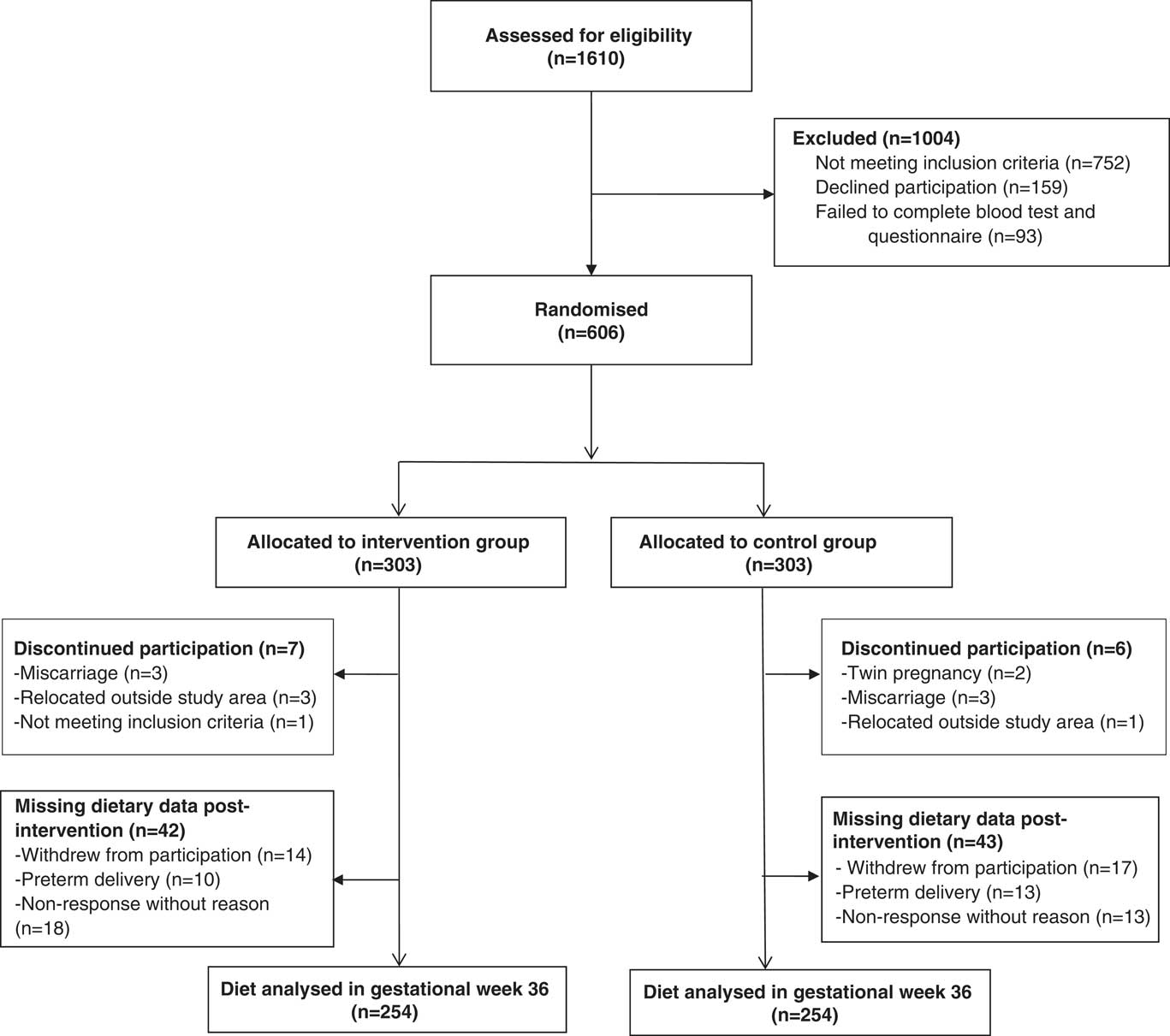
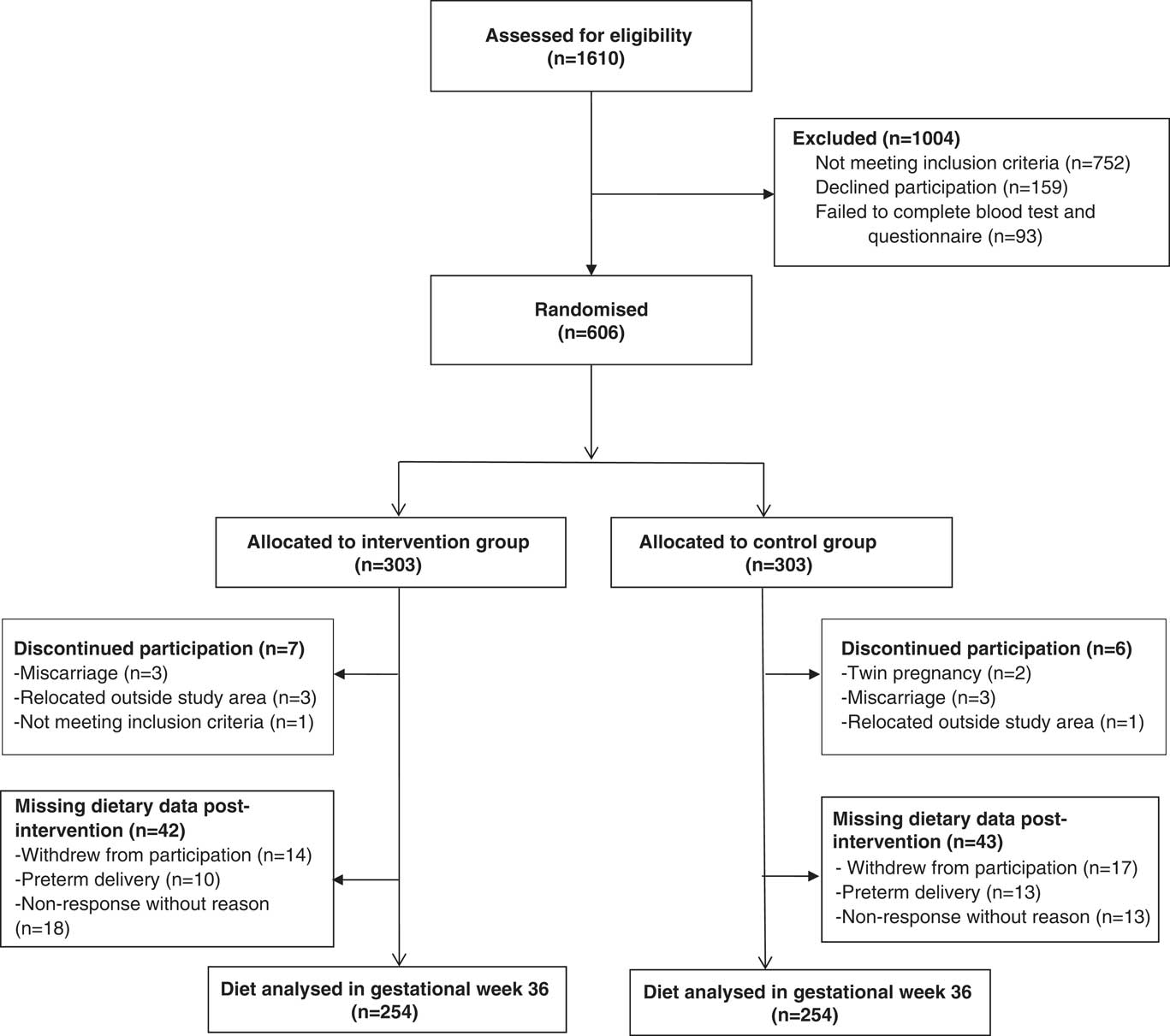
A total of 4245 women attended the healthcare clinics during the inclusion period. Based on detailed data from four participating clinics we approximate that 1610 of these women were nulliparous and thus potentially eligible for inclusion (Fig. 1).
Flow chart describing the process leading to the final number of women included in the analyses of dietary behavior post-intervention in the Norwegian Fit for Delivery study.
Sample size
The aim of the NFFD trial was to examine whether the lifestyle intervention would result in measurable decrease in maternal gestational weight gain, weight retention postpartum, newborn birth weight, term infants >4000 g, maternal hyperglycemia at 30 gestational weeks, and incidence of cesarean section and operative vaginal deliveries.Reference Sagedal, Overby and Lohne-Seiler 20 Based on 2005 statistics from the Norwegian birth registry, we predicted a 20% prevalence of newborns with birth weight >4000 g in the control group. We determined empirically that a reduction to 10% in the intervention group would be clinically relevant and calculated that 198 women would be required in both groups to be able to demonstrate statistical significance with a power of 80%. To allow for attrition and preterm deliveries, we planned to randomize 600 participants.
Randomization and blinding
After receiving the signed consent form and confirmation that blood samples and baseline questionnaire had been completed, a research nurse randomly assigned participants into an intervention group for participation in exercise groups and diet counseling or a control group that continued with routine pregnancy care. Norwegian standard routine prenatal care comprises eight prenatal appointments provided free of charge, with additional care as needed. Standard care includes one second trimester ultrasound examination. All pregnant women receive a booklet with advice on prenatal nutrition, physical activity and recommendations for weight gain based on Institute of Medicine guidelines (Health, 2010 #19)Footnote *. All participants had two hospital appointments for ultrasound examination scheduled in week 30 and 36 of pregnancy, including measurement of body weight and body composition on both occasions and blood tests in week 30.Reference Sagedal, Overby and Lohne-Seiler 20 Group assignment was based on a computer-generated list with 1:1 allocation ratio and blocks of 20. The research nurse who carried out the randomization never met participants, had no role in recruitment and no knowledge of participants’ baseline questionnaire responses. The assessors that performed ultrasound examinations, blood test evaluations and plotting of questionnaire responses were blinded to group allocation and participants were instructed not to reveal their randomization status during measurements and ultrasound examination.
The diet intervention
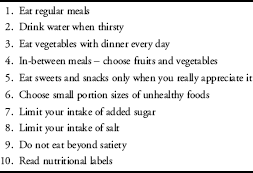
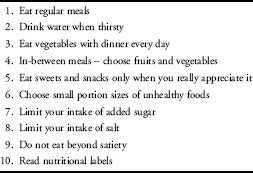
A total of 10 dietary recommendations were developed specifically for this study (Box 1). The recommendation targeted energy balance-related dietary behaviors such as meal regularity, fruit and vegetable intake, consumption of water v. sweetened beverages, and participant awareness regarding frequency and portion size of non-core foods. The rationale for the choice of recommendations has been published previously.Reference Overby, Hillesund, Sagedal, Vistad and Bere 21 A pamphlet describing the 10 dietary recommendations and their simplified rationale was forwarded by postal mail to women in the intervention group soon after randomization, followed by two telephone sessions scheduled 4–6 weeks apart. The telephone counseling was carried out by two clinical nutritionists and six master’s students in public health nutrition. During the telephone sessions, the dietary recommendations were discussed and reinforced according to the woman’s own experience of which aspects of their diet and dietary behavior that needed improvement. Intervention women were also invited to a one-evening cooking class with preparation of healthy and tasty dishes and given access to a password-protected website with recipes and practical tips on cooking.
The 10 dietary recommendations
The Fit for Delivery diet score
The baseline questionnaire that was completed by participants upon inclusion included a 43-item food frequency questionnaire (FFQ) covering selected aspects of dietary behavior. Questions covered meal frequency and the consumption of beverages, fruits and vegetables, sugary foods, sweets and snacks, and fast food. In addition, there were questions about habitual choice of package size when buying unhealthy foods and drinks, frequency of eating beyond satiety, appreciation when eating convenience foods and frequency of reading food labels.Reference Overby, Hillesund, Sagedal, Vistad and Bere 21 An identical FFQ was repeated in week 36 of pregnancy. To be able to identify potential between-group differences in dietary behavior post-intervention, we constructed two diet scores based on participants’ FFQ responses at baseline and in week 36 of pregnancy, respectively. The scores were constructed from 10 subscales, addressing each of the dietary domains that underpinned the dietary recommendations. Each subscale was constructed from one or more FFQ responses as described below, with possible range in parentheses:
-
(1) Combined weekly frequency of eating breakfast, lunch, dinner and evening meal (0–28 times per week).
-
(2) Frequency of drinking water (tap water, bottled water and carbonized water) relative to the combined frequency of all beverages (water, milk, fruit juice, lemonade, sugar and artificially sweetened beverages and coffee) (0–100%).
-
(3) Weekly frequency of having vegetables with dinner (never to seven times per week).
-
(4) Frequency of choosing fruits and vegetables for in-between meals (never to several times per day).
-
(5) Frequency of eating sweets and snacks without really appreciating it (never to daily).
-
(6) Habitual choice of package size when buying soda (1.5 v. 0.5 l), crisps (350 v. 150 g) and chocolate (≥80 or <80 g).
-
(7) Combined frequency of consuming sugar-sweetened beverages, cookies, sweet breads, cupcakes/muffin, sugary cereals, yoghurt with added sugar, chocolates or other sweets (never to several times per day).
-
(8) Combined frequency of eating salted crackers, noodles, crisps or salted snacks, hot dogs or fried potato chips from fast-food restaurants, or canned or freeze-dried foods (never to several times per day).
-
(9) Frequency of eating beyond satiety (never to several timesper day).
-
(10) Regularity of reading food labels (never, sometimes, usually or always).
Each subscale was subsequently dichotomized using the median value as cut-off. Participants were assigned a score of ‘0’ or ‘1’ in each subscale, with ‘1’ representing the healthier behavior. The total NFFD diet score thus ranged from 0 to 10, with higher score indicating overall healthier behavior. A detailed description of the construction of the score and its test–retest reproducibility has been published previously.Reference Overby, Hillesund, Sagedal, Vistad and Bere 21
Other variables
Background information on maternal demographic and socio-economic variables such as age at inclusion (continuous), pre-pregnancy anthropometric measures (continuous), BMI (continuous), educational attainment (⩽12, 13–15 or ⩾16 years), marital status (married/cohabitating v. other), family income (⩽400.000, 400.001–700.000 or >700.000 NOK), present smoking (yes/no) and subjective health rating (good/very good, neither good nor poor, poor/very poor), was obtained from the baseline questionnaire.
Statistics
Statistical analyses were performed with SPSS for IBM statistical software package version 22.0 (IBM Corporation, Armonk, NY, USA). A two-sided P-value of ⩽0.05 was considered significant. Baseline maternal characteristics were compared and presented according to randomization status as mean±standard deviation (s.d.) for continuous variables (independent samples t-test) and proportions (%) for categorical variables (χ2 test).
A one-way between-group analysis of covariance (ANCOVA) of dietary behavior post-intervention was conducted with adjustment for baseline values to evaluate potential intervention effects on the aspects of diet targeted in the intervention.Reference Twisk and Proper 22 The dependent variables were NFFD diet score and individual subscales (continuous) post-intervention. The independent variable was randomization status (control/intervention). Baseline NFFD diet score and subscales (continuous) were used as covariates, respectively. We checked for violations of the assumptions for ANCOVA. Estimated between-group differences are presented with standard error (s.e.) as the measure of dispersion.
We investigated potential between-group effect modification by educational attainment and pre-pregnancy BMI by including the interaction terms ‘randomization×BMI’ and ‘randomization×education’ in the models. A P-value of ⩽0.1 for interaction terms was defined as effect modification.
Potential attrition bias was assessed by comparing background information between those who failed to provide dietary data post-intervention with those who provided dietary data post-intervention and could be included in the analyses.
Results
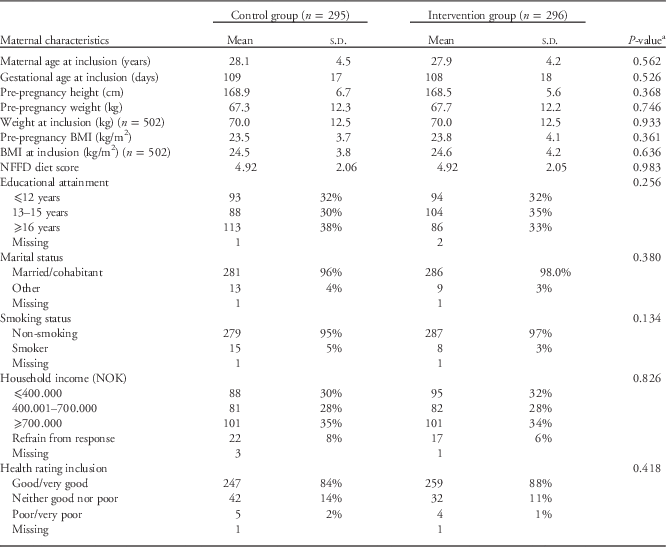
A total of 606 nulliparous women were recruited from primary obstetric care and randomly assigned into control (n=303) or intervention (n=303) groups. Figure 1 provides an overview of the selection process and how we arrived at the final number of participants to be included in the analyses. In all, 13 were excluded from further analyses because of miscarriage (n=6), twin gestation (n=2), pre-pregnancy BMI<17.5 (n=1) or relocation outside study area (n=4). Another 31 women withdrew from participation, 23 delivered before week 36 and 29 did not provide dietary data post-intervention (Fig. 1). A total of 508/591 (86%) completed the FFQ both upon inclusion and post-intervention and were included in the present analyses. Maternal baseline characteristics are described according to randomization status in Table 1. There were no significant baseline differences between the groups regarding age, length of gestation at inclusion, anthropometric measures, educational attainment, marital status, household income, smoking or subjective health rating.
Maternal characteristics at baseline for the 508 participants who provided dietary data at baseline and post-intervention in gestational week 36 in the Norwegian Fit for Delivery study (NFFD)
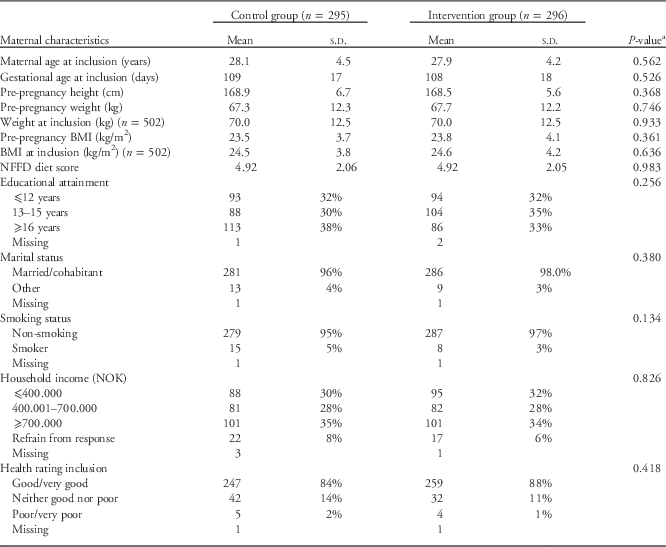
a Independent samples t-test for continuous variables and χ2 test for cross-tabulated categorical variables.
Dietary differences post-intervention
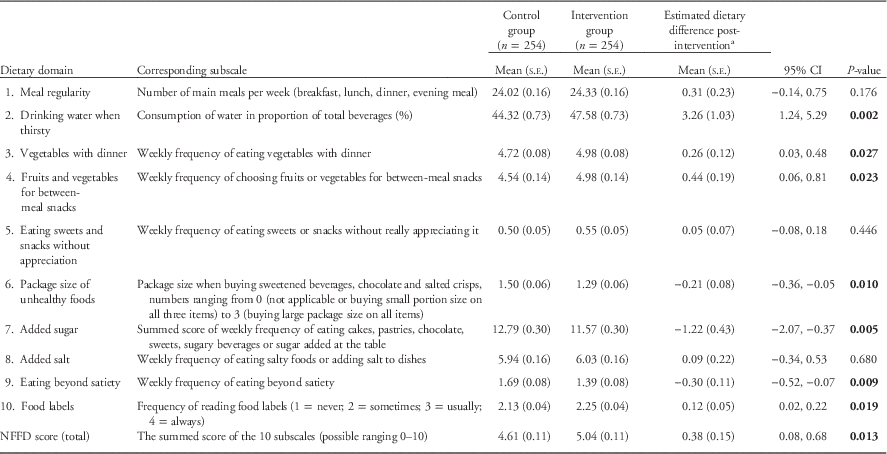
The groups had equal diet score at baseline [intervention 4.92 (s.d. 2.5) v. control 4.92 (s.d. 2.06), P=0.983] and there were no significant baseline differences in the subscales that made up the score (data not shown). In week 36 of pregnancy, the intervention group had higher diet score than the control group adjusted for baseline diet score [intervention 5.04 (s.d. 2.09) v. control 4.61 (s.d. 2.04), P=0.013]. There was no effect modification by educational attainment or pre-pregnant BMI on the overall intervention effect (data not shown).
Table 2 shows between-group differences for overall diet score and the 10 individual subscales post-intervention. Significant dietary differences favoring the intervention group were identified in seven dietary domains: ‘consumption of water relative to total beverage consumption’ (P=0.002), ‘having vegetables with dinner’ (P=0.027), ‘choosing fruits and vegetables for between-meal snacks’ (P=0.023), ‘buying small package size of unhealthy foods’ (P=0.010), ‘limiting sugar intake’ (P=0.005), ‘avoiding eating beyond satiety’ (P=0.009) and ‘reading food labels’ (P=0.011). There was no between-group effect modification by educational attainment or pre-pregnant BMI (data not shown).
Estimated between-group differences in 10 dietary domains post-intervention as reported in gestational week 36 in the Norwegian Fit for Delivery study (NFFD) (n=508)
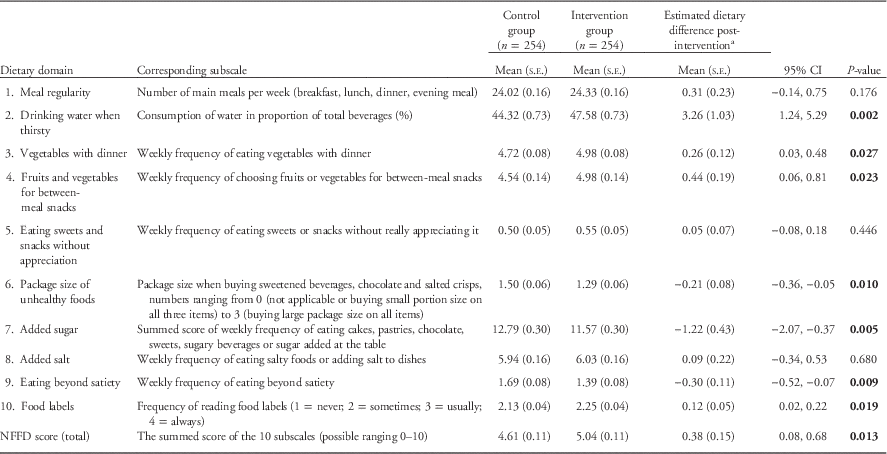
a One-way analysis of covariance adjusted for baseline diet score or individual subscale value. Bold numerals indicate significant between-group differences.
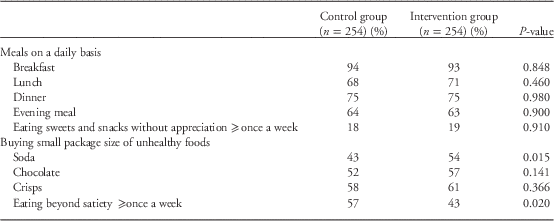
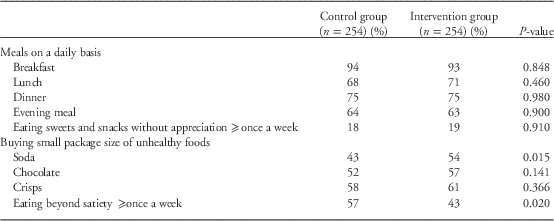
The assumption of homogeneity of regression slopes was violated for the three subscales ‘frequency of main meals,’ ‘appreciation of food’ and ‘choice of package sizes of unhealthy foods.’ This implies that the estimated between-group difference in these three subscales cannot be assumed to be identical across the range of the corresponding baseline behaviors. Supplementary analyses for these specific dietary domains are presented in Table 3. We dichotomized the meal variables into denoting whether they were eaten on a daily basis or not. The variable denoting frequency of eating sweets and snacks without appreciation was dichotomized into eating without appreciation more often than once a week (yes/no). The variables denoting the package size normally bought by participants of soda, chocolate and crisps was dichotomized into buying small package size (yes/no). There was violation of homogeneity of variances in subscale 9 (‘eating beyond satiety’). We therefore recoded this variable into a dichotomous variable denoting eating beyond satiety more often than once a week (yes/no). Cross tabulation according to randomization status yielded essentially the same results as was found with ANCOVA. There was no between-group difference in frequency of main meals or in eating sweets and snacks without appreciation once a week or more. Women in the intervention group reported choosing small bottles of soda more often than did control women (intervention 54% v. control group 43%, P=0.015). There was, however, no post-intervention difference in choice of small package sizes for chocolate or crisps. A higher proportion of women in the control group reported eating beyond satiety more often than once a week post-intervention (57 v. 43%, P=0.020).
Supplementary between-group comparison of three subscales for which the assumption of homogeneity of regression slope was violated
Attrition analysis
A total of 83/591 (14%) participants did not complete the follow-up FFQ that was scheduled in gestational week 36 (Fig. 1). To evaluate potential attrition bias, we compared responders and non-responders in week 36 according to baseline background information. Attrition was similarly distributed among the study groups (control n=26 v. intervention n=28). Non-responders post-intervention were younger (26.7 v. 28.2, P=0.004), and had less often ⩾4 years of education beyond high school (28 v. 37%, P=0.025, linear-by-linear association). There was no difference in pre-pregnancy BMI among responders and non-responders (23.9 v. 23.6, P=0.581).
Discussion
Women in the intervention group of the NFFD study reported higher relative consumption of water, more frequent fruit and vegetable consumption, less frequent consumption of sugar-dense foods, buying smaller packages of unhealthy foods, less frequent overeating and reading food labels more often than control women post-intervention. Pre-pregnancy education level or weight status did not modify these between-group differences, indicating that the dietary recommendations were adopted by the intervention group across weight status and education level. We have earlier shown that women in the intervention group gained on average 0.9 kg less from inclusion to term delivery compared with women in the control group (P=0.043).Reference Sagedal, Øverby and Bere 19 This clinical finding supports the validity of the self-reported dietary differences between intervention and control groups post-intervention, although increased physical activity level in the intervention group is likely to have contributed to the differences in pregnancy weight gain as well.Reference Sagedal, Øverby and Bere 19 Between-group dietary differences post-intervention were not large, but may still be relevant in aggregate and in a life-course and public health perspective.Reference Hanson and Gluckman 23 , Reference Hanson, Bardsley and De-Regil 24
Diet clearly holds a key in weight management during pregnancy,Reference Tobias and Bao 18 but the intensity of dietary interventions required for optimizing weight gain and improving health outcomes has not been established.Reference Moses, Casey and Quinn 25 So far, most dietary interventions during pregnancy have been conducted in high-risk populations, applying individualized and comprehensive dietary counseling of considerable intensity and costs.Reference Thangaratinam, Rogozinska and Jolly 13 – Reference Poston, Bell and Croker 15 , Reference Gresham, Byles, Bisquera and Hure 26 The UPBEAT study targeted obese women and aimed at reducing the incidence of gestational diabetes mellitus (GDM) through improvements in diet and physical activity.Reference Poston, Bell and Croker 15 The diet part of the intervention consisted of one individual consultation and subsequent weekly group meetings of 1 h duration for 8 weeks with focus on problem-solving of barriers to behavioral change. Post-intervention, women in the intervention group reported lower energy intake, lower glycemic index and general improvements in overall diet quality. There was a small effect of the overall intervention on limiting pregnancy weight gain, but no difference in the incidence of GDM was observed.Reference Poston, Bell and Croker 15 In the LIMIT trial that targeted diet and physical activity among overweight and obese pregnant women during pregnancy, those randomized to lifestyle intervention received dietary advice in accordance with Australian standards, tailored to individual needs and informed by stage theories of health decision making.Reference Dodd, Turnbull and McPhee 14 This diet intervention was delivered as three face-to-face sessions in addition to three phone sessions. Such high levels of intervention intensity might not be justified when targeting presumably healthy women as part of routine pregnancy care. The dietary intervention in the NFFD study was planned as a public health initiative that could realistically be implemented into ordinary pregnancy care if proven safe and effective. In a comment in Nature, Barker et al.Reference Barker, Barker, Fleming and Lampl 3 highlight the importance of helping pregnant women to feel more in control of their food choices and to make it easier for them to make healthy choices.Reference Barker, Barker, Fleming and Lampl 3 The dietary recommendations in the NFFD study were selected to improve diet quality and energy balance, but also to inspire maternal reflection on dietary behaviors such as meal planning, snacking habits, enjoyment of food, and how to handle hunger and satiety cues.Reference Overby, Hillesund, Sagedal, Vistad and Bere 21 It is important to note that the dietary recommendations represent dietary principles relevant to health in most populations and need not be confined to pregnancy. The recommendations can be tailored to individual circumstances and preferences, and adopted by individuals depending on existing diet and which aspects of diet or dietary behavior that need to be improved.
Study strengths and limitations
One of the strengths of this study are the large sample of nulliparous women that were recruited from the general population in early pregnancy. The randomized controlled design largely eliminates confounding by maternal characteristics and other lifestyle factors. Baseline dietary data were collected before randomization was carried out, thus securing that randomization status did not influence initial diet reporting. We operationalized dietary behavior by constructing an a priori defined diet score that was designed to reflect degree of compliance with the dietary principles focused in the intervention. Diet scores have the advantage of summarizing a broader part of overall diet and dietary behavior, with the added benefit of capturing potential synergistic effects of the combination of foods within a food pattern.Reference Hu 27 Baseline diet was adjusted for in the post-intervention analyses in order to standardize between-group dietary differences attributable to the intervention.
There are also limitations that need to be addressed. The NFFD FFQ has not been validated against potential superior methods of collecting information on diet and dietary behavior. Whether and to which degree the FFQ and diet score used in the present study actually measures what it is supposed to measure has therefore not been established. Some of the questions covering dietary behavior were subjective and sometimes ambiguous in nature and might not adequately capture dietary differences. For instance, buying large packages of unhealthy foods or drinks does not necessarily imply higher consumption of the same foods. Nor do we know whether participants who reported eating sweets and snacks without real appreciation had a different intake of sweets and snacks than those who ate sweets and snacks only when they appreciated it. Eating beyond satiety during pregnancy may be less predictive of real overeating when the enlarged uterus limits gastric distention.
The FFQ only covered selected aspects of overall diet. This precluded comparison of overall energy intake, nutrient intake and macronutrient distribution between intervention and control group. Some of the FFQ questions addressed dietary behaviors rather than food intake, and was therefore difficult to validate. Some misreporting of diet and dietary behavior most likely occurred in both groups and could reduce the probability of detecting true between-group differences. Several of the diet subscales were computed from participants’ responses to single FFQ questions, each of which thematically reflected the corresponding dietary recommendation. We cannot exclude the possibility that intervention women may have been more attentive and reflective upon the behaviors targeted in the intervention and thus inclined to respond more favorably to the questions than the control group.Reference van de Mortel 28 On the other hand, it is also possible that the control group changed dietary behavior in a healthier direction in response to repeatedly completing questionnaires regarding diet. Finally, we cannot exclude the possibility that between-group differences in selected dietary behaviors were driven by the physical demands of increased physical activity in the intervention group rather than by dietary advice, for instance, the fact that the intervention group were drinking more water relative to other beverages and were having slightly more frequent meals (not significant).
Limitations in the ability of the NFFD diet score to capture longitudinal changes in diet must be kept in mind when interpreting the magnitude of between-group differences in diet score post-intervention. Women, who had already obtained a score in a given subscale at baseline, had no chance of improving dietary performance numerically post-intervention regardless of degree of dietary change. Women without a score in a baseline subscale, may likewise have changed dietary behavior substantially, but not necessarily enough to be assigned a score. The NFFD diet score does not represent a reliable measurement tool regarding magnitude of change in diet over time. The post-intervention difference in overall diet score in the present study should therefore not be interpreted as an absolute measure of dietary change, but rather as an indication that the distribution of diet scores was shifted upwards in the intervention group compared with the control group. In line with this, the NFFD diet score should only be applied for research purpose to evaluate between-group comparisons at given points in time and not for quantifying longitudinal changes in diet or dietary behavior.
Attrition from inclusion to week 36 was equally distributed among control and intervention women, so potential bias introduced by attrition is not likely to have influenced between-group dietary differences post-intervention. However, the study sample consisted of predominantly white, European women with higher educational attainment than the general population from which it was recruited.Reference Sagedal, Øverby and Bere 19 Given that women of higher socio-economic status may be more motivated for behavioral change during pregnancy than women declining to participate in a lifestyle intervention study, the NFFD intervention might not have the same effect on dietary behavior in all subsets of the background population.
Despite documented differences in diet, physical activity and pregnancy weight gain, the NFFD intervention failed to demonstrate significant differences in maternal, obstetrical or child neonatal outcomes.Reference Sagedal, Øverby and Bere 19 Potential long-term effects of the maternal dietary changes accomplished during the NFFD dietary intervention remain to be investigated. Repeat information on maternal and child diet, dietary behavior, anthropometric measures and physical activity are being collected at 6, 12, 24 and 48 months postpartum and will contribute to our understanding of potential longer-term effects of diet interventions during pregnancy.
Conclusion
Women in the intervention group in the NFFD changed dietary behavior during pregnancy in a healthier direction relative to the control group. Dietary behavior during pregnancy seems to be modifiable with interventions of relatively low intensity. Potential long-term effects of the NFFD dietary intervention on maternal and child health will be investigated in future studies.
Acknowledgments
The authors would like to thank the women who participated in the Norwegian Fit for Delivery study. They also want to thank the master’s students who participated in the phone-based diet counseling. Authorship: L.R.S., I.V. and E.B. conceived the NFFD trial. N.C.Ø. and E.R.H. carried out and supervised the dietary intervention. E.R.H., E.B. and N.C.Ø. designed the present study. E.R.H. analyzed the data and drafted the paper. All authors revised the paper critically.
Financial Support
The NFFD trial was financed by a grant from South-Eastern Norway Regional Health Authority. Additional funding was provided by the municipalities of southern Norway and by the University of Agder. The funders had no role in design, analysis or writing of this paper.
Conflicts of Interest
None.
Ethical Standards
Written informed consent was obtained from all participants. The study was approved by the Norwegian Regional Committee for Medical Research Ethics South-East-C (REK reference 2009/429). The authors assert that all procedures contributing to this work comply with the ethical standards of the Norwegian Regional Committee for Medical Research Ethics and with the Helsinki Declaration of 1975, as revised in 2008. The NFFD trial has the Clinical Trials registration: clinicaltrial.gov NCT01001689.