




No CrossRef data available.
Article contents
The development of family hierarchies and their relation to children's conduct problems
Published online by Cambridge University Press: 01 September 2004
Abstract
Despite the intuitive richness of family systems theory, relatively little research has sought to test the validity of constructs theorized to be critical in the development of children's adjustment. One such cornerstone of structural and strategic family therapy is the family hierarchy. The present study investigated both the development of hierarchical structure in families from infancy to late middle childhood and relations between strong hierarchical structure and children's conduct problems. Using structural equation modeling, direct pathways to low hierarchical structure were evident for early caregiving behavior and parent–child conflict, with indirect associations present for parental adjustment, marital functioning, negative child behavior, and ecological disadvantage. In turn, family hierarchies were associated with youth antisocial behavior, an effect that was moderated by ethnic and neighborhood context. The results are discussed in reference to family systems' theory and implications for prevention and intervention.The research reported in this article was supported by grants to the first author from the National Institute of Mental Health (MH 50907 and MH 01666). We are grateful to the staff of the Pitt Mother & Child Project for their years of service and to our study families for making the research possible. We also thank Miles Gilliom and Robert Laird for their assistance on this article.
Information
- Type
- Research Article
- Information
- Copyright
- © 2004 Cambridge University Press
Hierarchical structure represents one of the cornerstones of assessment for Structural and Strategic family therapy (Haley, 1976; Minuchin, 1974; Minuchin, Rossman, & Baker, 1978), as well as an implicit component of diagnosis and intervention for other family systems' orientations (Kerr, 1981; Whitaker & Keith, 1981). Hierarchies have been defined as the degree of intergenerational boundaries between parents and offspring, reflecting the power structure of the family (Faber, 2002). Thus, hierarchical structure plays an integral role in Structural and Strategic schools, which emphasize the centrality of organization in evaluating adaptive family functioning. Well-functioning families are thought to have clear intergenerational boundaries that separate parents and children according to the roles and rules that govern family behavior (Nelson & Utesch, 1990). From the perspective of diagnosis and intervention, both Structural and Strategic approaches stress the importance of parents being in charge of children and taking responsibility for changing their problem behavior (Haley, 1980).
Similar to other indicators of healthy family functioning within a system's perspective, such as enmeshment versus disengagement, extremely low or high levels of hierarchies are viewed as dysfunctional. In studying hierarchies, most attention has been focused on the power structure between parents and children (or lack thereof), particularly in contexts where intergenerational boundaries are diffuse and children assume decision-making and caregiving roles normally held by parents (Burkett, 1991; Kretchmar & Jacobvitz, 2002). Although family therapists allow for some discretion in hierarchies based on the family's context (e.g., single-parent families, Aponte, 1990; Montalvo, 1973), strong intergenerational boundaries represent an important foundation of family organization, particularly in early and middle childhood before the power structure becomes more reciprocal and marked by greater mutuality during adolescence (Faber, 2002; Hartup, 1989; Russell, Pettit, & Mize, 1998). Based on the salient role hierarchies play within the theoretical framework of many family system's models, researchers have investigated and documented relations between diffuse intergenerational boundaries and a wide array of child outcomes, including attention-deficit/hyperactivity disorder (ADHD) symptoms at school entry and school age (Carlson, Jacobvitz, & Sroufe, 1995; Jacobvitz & Sroufe, 1987), and inappropriate gender boundaries in peer interactions at school age (Sroufe, Bennett, Englund, Urban, & Shulman, 1993). However, little research has been carried out to understand the development of intergenerational boundaries and hierarchical structures within families (Fish, Belsky, & Youngblade, 1991). At a broad level, individual family system's models provide some direction in postulating how strong parent–child intergenerational boundaries may fail to develop during early and middle childhood (Minuchin & Fishman, 1975). A primary goal of this study was to use family system models as a guiding framework to investigate the antecedents of hierarchies from infancy to middle childhood.
A second goal was to examine the relation between low levels of hierarchical structure and children's conduct problems. It was hypothesized that families characterized by more egalitarian parent–child relationships or hierarchical reversals in family structure would have boys with higher levels of antisocial behavior. We expected this relation to be particularly important in impoverished neighborhoods, where exposure to deviant peers and adults would be higher. The role of ethnicity was also examined with respect to relationships among family hierarchies, neighborhood quality, and children's conduct problems. As the present sample includes a large proportion of African American (AA) families, who as a group live in more dangerous communities than our European American (EA) participants (Shaw, Bell, & Gilliom, 2000; Winslow, 2001), we were particularly interested in whether a strong hierarchical family structure would serve as a protective factor for both AA and EA youth for antisocial behavior.
The Development of Hierarchies in Families
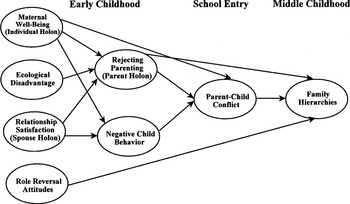
As noted above, only a few studies were identified that provided cross-sectional or longitudinal data on the formation of hierarchies within families. In the one study found that traced the antecedents of role reversals in authority structure, Fish and colleagues (1991) demonstrated that two-family relationship factors were related to violations in intergenerational boundaries at age 4: insecure child attachment at ages 1 and 3 and declining marital quality in the child's first year. These findings suggest that low hierarchical structure is at the very least, a symptom of problematic family relations, and are consistent with Bowen's (1978) conceptualization of triangulation, whereby troubled marital partners are theorized to resolve conflicts by involving offspring in decision-making affairs. There have been other prospective studies that trace the development of early family development, from the formation of couples (Bradbury & Lawrence, 1999) to the birth of the first child (Cowan & Cowan, 2002). However, with notable exceptions (Cowan & Cowan, 2002; Kretchmar & Jacobvitz, 2002), most of these studies have been guided by social learning and transactional models (Bell, 1968; Patterson, 1982; Sameroff, 1990). When a systems' perspective has been adopted, researchers have typically been more interested in studying family-level affective processes, including such constructs as cohesion, adaptability, and the quality of coparenting (Johnson, Cowan, & Cowan, 1999; McHale, Juersten, & Lauretti, 1996; Schoppe, Mangelsdorf, & Frosch, 2001; Steinglass, 1987). Based on the work of family system's researchers, particularly Minuchin (1974; Minuchin & Fishman, 1975), we propose a model that specifies both direct and indirect links between early childhood family processes and the development of family hierarchical systems in middle childhood (see Figure 1). In such a model, the development of strong intergenerational boundaries is viewed as a culmination of several factors tapping individual parent's functioning, the functioning of the parental subsystem, parental attitudes about intergenerational boundaries, and socioeconomic factors. These factors are hypothesized to affect child behavior and/or caregiving quality, which, in turn, are expected to affect the level of parent–child conflict at school entry and hierarchical development at school age. Individual components of the model are discussed below.

The developmental antecedents of family hierarchies.
Minuchin and Fishman (1975) emphasize the development of interdependent subsystems within families, termed holons. Holons are both independent subsystems (e.g., parent holon) and simultaneously parts of other systems (e.g., individual holon, spouse holon), permitting the same individual to be part of multiple subsystems. The spouse holon serves as the foundation of the family's structure. If the spouse holon is marked by conflict or lack of commitment to the partner (e.g., lack of individuation from the family of origin), the formation of the parent holon and subsequent rearing of children is likely to be difficult. Problems in the marriage are hypothesized to spill over to conflicts in caregiving, as parents who cannot establish a united front are likely to have trouble in maintaining a consistent standard of authority in dealing with children's misbehavior (Fish et al., 1991). We also anticipated problems in the spouse holon to be related to negative child behavior, as exposure to marital acrimony would model aggression and raise anxiety for children, the latter of which would likely be expressed in the form of disruptive behavior in early childhood (Emery, 1988; Shaw & Ingoldsby, 1999).
The parent holon begins with the arrival of the first child. This period is generally viewed as a time of stress and disruption, particularly for couples with acrimonious spousal relationships. Family therapy theorists have hypothesized that disgruntled spouse holons would have problems in establishing and maintaining a strong hierarchical structure, as such parents would likely form crossgenerational coalitions with offspring (Bowen, 1978; Fish et al., 1991; Kerr, 1981; Minuchin & Fishman, 1975; Vucinich, Emery, & Cassidy, 1988). Such parent–child coalitions would likely result in greater emotional dependence on offspring, attitudes that supported equal or greater authority for young children relative to parents (Kretchmar & Jacobvitz, 2002), and subsequently, low levels of family hierarchical structure at school age. The spill over hypothesis (Cummings & Davies, 1994) would also suggest that parenting within the context of a dissatisfied spouse holon would be associated with an increase in rejecting parenting, particularly within the context of the second year when children's increases in mobility and aggression test caregiving abilities (Shaw & Bell, 1993).
We also expected that individual differences in parental adjustment would challenge the formation of strong intergenerational boundaries indirectly by affecting children's early adjustment, the quality of caregiving, and subsequent conflict in parent–child relationships. Termed the individual holon by Minuchin and Fishman (1975), it includes both individual characteristics and behavior in response to the individual's social context. From a systemic perspective, individuals are thought to affect and be affected by interactions with others (e.g., parents and target child), and influence the behavior of other family members (e.g., target child and sibling). In particular, specific attributes parents bring to the marriage and caregiving would likely influence the establishment and maintenance of parent holons (Belsky, 1984; Shaw & Emery, 1987). In single-parent families where the burden of caregiving would fall solely on one individual, parental well-being would be especially critical. In the present study, we focused on depressive symptoms based on research that has demonstrated consistent relations between maternal depression and such facets of parenting as negativity, unresponsiveness, and passivity (Downey & Coyne, 1990; Goodman & Brumley, 1990; Radke–Yarrow, 1998; Zahn–Waxler, Iannotti, Cummings, & Denham, 1990), as well as associations with early child problem behavior (Shaw, Winslow, Owens, & Hood, 1998). Such parenting attributes would then be hypothesized to impair the establishment of consistent intergenerational boundaries indirectly via its adverse impact on caregiving and the quality of the parent–child relationship.
The influence of ecological disadvantage was also considered. Theoretically, families with lower educational and occupational attainment and living in more impoverished communities would find establishing and sustaining a hierarchical family structure to be challenging over time. Previous research in this area has suggested that the effects of ecological disadvantage on child adjustment would be mediated by concurrent caregiving (Conger, Ge, Elder, Lorenz, & Simons, 1994; Patterson, 1982); thus, we posited a similar indirect path between ecological disadvantage and the formation of later hierarchies in the present study.
Thus, initial risk factors in the model included maladjustment in the individual parent holon and the spouse holon, ecological disadvantage, and parental role reversal attitudes. The first three factors were expected to be indirectly linked to later hierarchies through their association with child behavior and/or caregiving quality, with role reversals expected to be directly related to later hierarchies. Based on previous research in this area, dysfunction in the individual parent holon and spouse holon were anticipated to be positively related to negative child behavior, in the form of negative emotionality and aggressivity in the second year (Bates, Maslin, & Frankel, 1985; Davies & Cummings, 1994; Emery, 1988). In turn, it was hypothesized that children with problems regulating their emotions would likely elicit greater hostility from caregivers, leading to higher rates of conflictual interactions within parent–child relationships, and ultimately to weaker hierarchical structures within families (Patterson, 1982; Shaw et al., 2000). Similarly, based on previous research, we expected the parent holon, in the form of hostile, rejecting caregiving, to be influenced by impairment in the individual parent and spouse holon, and socioeconomic disadvantage (Conger et al., 1994; Zahn–Waxler et al., 1990).
A final stepping stone was added to the model in the form of parent–child conflict. We hypothesized that acrimony in parent–child relationships at school entry would prevent the development of hierarchies by impeding the establishment of rules and structure; thus, it was hypothesized that such conflict would be directly related to low hierarchical structure during the latter part of middle childhood.
Hierarchies and children's conduct problems
Previous research has been conducted on the association between hierarchical family structure and the maladjustment of offspring during middle childhood, adolescence, and young adulthood. These studies cover a wide array of psychopathologies, ranging from schizophrenia (Haley, 1980); alcohol and heroin abuse (Madannes, Dukes, & Harbin, 1980; Preli & Protinsky, 1988); anxiety disorders (Green, Loeber, & Lahey, 1992); ADHD symptoms (Carlson et al., 1995; Jacobvitz & Sroufe, 1987); and problematic peer interactions (Sroufe et al., 1993); to antisocial behavior (Green et al., 1992; Protinsky, Keller, & Gilkey, 1989). In most cases, the focus has been on hierarchical structures that were egalitarian or reversed, such that in families where children exerted comparable or greater authority than parents, adverse outcomes were evident. Findings have been supportive with respect to externalizing problems, including ADHD, substance abuse, and antisocial behavior in youth (Carlson et al., 1995; Green et al., 1992; Madannes et al., 1980; Preli & Protinsky, 1988), but less so for anxiety disorders (Green et al., 1992). For example, in a study by Protinsky and colleagues (1989), 29 of 35 clinic-referred youth diagnosed with conduct disorder reported hierarchy reversals compared to 1 of 42 nonreferred youth. With the exception of a series of studies conducted by Jacobvitz and Sroufe (1987) and Jacobvitz and colleagues (1991), all studies have been cross-sectional and conducted well after the onset of the youth's or adult's psychopathology. Clearly, longitudinal studies are needed, particularly those initiated prior to the onset of more serious psychopathology.
Why would low hierarchical structure be hypothesized to be associated with antisocial activities, including delinquent acts and substance abuse? A family with a strong hierarchical structure models a system of adherence to rules, with consequences for behavior that deviates from standards. Thus, whereas some previous research on hierarchies has employed a broader definition of hierarchies that encompasses both affective processes and the structure of authority in families, we chose to focus on the role of organization and power rather than affective processes because the former has been more consistently related to child antisocial behavior across gender and ethnicity during this developmental period (Baumrind, 1971, 1972; Deater–Deckard, Dodge, Bates, & Pettit, 1996). In communities characterized by poverty, which include higher rates of exposure to deviant peers and adults, it may be especially important for parents to maintain a strong hierarchical structure characterized by clear intergenerational boundaries and clear consequences for not adhering to established rules and regulations. Alternatively, some evidence suggests there may be limitations of family influence in the most deprived communities. For example, Gorman–Smith, Tolan, and Henry (1999) found family cohesion to be more strongly related to adolescent's delinquency in poor urban versus poor inner city communities. As the poor inner city communities were marked by extreme disadvantage even compared to the poor urban neighborhoods, the findings suggest that family processes may be important in preventing youth from engaging in antisocial activities, but only up to a certain threshold of community-level risk. Among the current sample of predominantly low-income families, AA families are more likely to live in the most dangerous neighborhoods compared to EA families (Winslow, 2001). As a result, it was deemed important to examine how hierarchical structure might exert different kinds of effects on youth antisocial behavior for EA and AA families living in different kinds of neighborhoods.
Thus, a second goal of the present study was to examine the association between family hierarchies and children's antisocial behavior, and the potential moderating influences of neighborhood dangerousness and ethnicity. We expected hierarchical structure to serve as a protective factor for both EA and AA families in contexts where neighborhood dangerousness was not excessive, but postulated this relation would be weakened in the context of extreme neighborhood adversity, particularly for AA youth.
Methods
Participants
The source for subject recruitment was low-income families who use the Allegheny County's Women, Infants, and Children (WIC) Program in the Pittsburgh metropolitan area (Shaw et al., 1998; Shaw, Gilliom, Ingoldsby, & Nagin, 2003). WIC provides nutritional food supplements for income-eligible participants from pregnancy until children are 5 years old. Participants (310) were recruited from WIC sites throughout the Pittsburgh metropolitan area over the course of 2 years. Because the intent of the original investigation was to examine the developmental precursors of antisocial behavior, the sample was restricted to boys. Participants were recruited when target children were between 6 and 17 months old. At the time of the first assessment, at which time infants were 1.5 years old, mothers ranged in age from 17 to 43 years (M = 28 years). Fifty-three percent of participants were Caucasian, 36% were AA, 5% were biracial, and 6% were other (e.g., Hispanic). At the age 1.5 visit, 65% were either married or living together, 26% were single, 7% were divorced, and 2% were other. Mean per capita family income was $241 per month ($2,892 per year) and the mean Hollingshead socioeconomic status (SES) score was 24.8, indicative of a working class sample.
Initially, 421 families were approached at WIC sites. Fourteen (3.3%) declined to participate at the time of recruitment and an additional 97 declined before the first assessment. Thus, of the 421 families asked, 310 (71%) participated in the first assessment at 1.5 years. Of the 310 families seen at the age 1.5 assessment, data were available on 302 at the age 2 assessment. Subsequent lab or home assessments were convened when children were ages 3.5, 5, 6, 8, 10, and 11, during which time retention rates ranged from 85 to 91% per assessment. Of the 310 families seen at the initial age 1.5-year assessment, data were available on 94% at age 5, 90% at age 6, 82% at age 8 (slightly lower because it was an internally funded follow-up), and 85% at ages 10 and 11. The sample size of the current study was further reduced to 235 because some participants had moved more than 100 miles from Pittsburgh, necessitating data to be gathered through phone or mail contact and preventing the collection of observational data on family hierarchies. Attrited (N = 75) and participating families (N = 235) were compared on Child Behavior Checklist (CBCL; Achenbach, 1991) Externalizing factors at ages 2, 3.5, and 5. The two groups only differed on age 2 CBCL Externalizing, F (1, 283) = 8.10, p < .01, with the participating families reporting higher levels of child externalizing behavior (M = 17.15, SD = 7.40) than the nonparticipating families (M = 14.29, SD = 6.57).
Procedures
At ages 1.5 and 2, mothers and target children were seen in our laboratory for approximately 2 hr. These visits included structured parent–child interactive tasks, free play, and maternal interviews. Assessment tasks in the lab were selected to vary in stress level so that mother and child behavior could be observed across a broad spectrum of conditions, from which observations of negative emotionality and aggression were rated. All tasks conducted in the lab were recorded on videotape for future coding. The age 2 laboratory visit was preceded by a 1.5-hr home visit (i.e., occurring on the same day) to observe the quality of the home environment and parent–child interaction during structured tasks and during an interview with the mother. As part of both lab visits, mothers completed inventories about depressive symptomotology and were observed with their sons in a clean-up task, from which ratings of rejecting parenting were made. After a 15-min warm-up period in which boys played with a variety of toys while mothers completed questionnaires with an examiner, mothers were told to instruct their child to put the toys in a basket, a task that lasted 5 min.
At the age 10 home visit, parent(s) and youth were interviewed separately about the child's behavior, parenting practices, and contextual issues, including neighborhood quality, parental depression, and parental social support. Questions about parenting included items on parental structure. Midway through the 3-hr assessment, parent(s), target youth, and the target youth's closest age sibling engaged in a series of videotaped interaction tasks. The topics of the first two tasks were based on “hot” issues identified earlier in the assessment and involved the parents (if two caregivers were present) and then the parent(s) and target youth. Both of these discussion tasks lasted 8 min. In the third task, parent(s), target youth, and sibling played the game “Jenga” for 8 min. The age 11 lab visit followed a similar structure to the age 10 home visit, except it included only the primary caregiver and the target youth. The only measure to be used from the age 11 assessment is maternal and youth report of antisocial behavior.
Measures
Whenever possible, efforts were made to aggregate data across informants and/or methods to form more generalizable constructs (Patterson, Reid, & Dishion, 1992). When data were missing for a composited measure at one of two time points or for one of two methods, data from the one data point were substituted instead.
Factors related to the development of hierarchies
Negative child behavior
Behavior that was viewed as theoretically aversive to caregivers and therefore theoretically challenging to the formation of hierarchical structure was composited from both observations and maternal reports when children were between 1.5 and 2 years of age to generate an index of negative child characteristics. The first of these variables was a composite of negative emotionality based on observations and maternal report. Observations of negative emotionality were coded from molecular counts and global observations of fussing and crying during a 70-min period of mother–child interaction tasks varied on stress level for the dyad (e.g., free play, Strange Situation, teaching tasks, no toys task, high-chair task, clean-up task) when children were 1.5 years old (Owens, Shaw, & Vondra, 1998). Maternal reports of child negative emotionality were assessed at ages 1.5 and 2 (r = .63, p < .001) from the 9-item Difficulty factor of the Infant Characteristics Questionnaire (Bates, Freeland, & Lounsbury, 1979), and averaged across assessment periods. Internal consistencies for the Difficulty factor were adequate at both time points (αs = .80 and .79, respectively). The correlation between observed and maternal report of negative emotionality was .22 (p < .001). The second variable was aggressive child behavior, based on maternal report from the 14-item Aggression factor of the Toddler Behavior Checklist (α = .75; Larzelere, Martin, & Amberson, 1989) at age 1.5, and 15-item Aggression factor of the CBCL (α = .83; Achenbach, 1991) at age 2. The correlation between the two aggression factors was r = .29 (p < .001). The negative emotionality and aggressive behavior composites were also composited (correlation between the two, r = .30, p < .001) to create the negative child behavior factor.
Maternal depression
Maternal well-being was assessed using the 21-item Beck Depression Inventory (Beck, Steer, & Garbin, 1988) at the age 1.5 (α = .83) and 2 (α = .83) assessments. Data from both assessments were averaged (r = .68, p < .001) to create the final maternal depression factor.
Ecological disadvantage
Based on the notion that environmental adversity would impinge on the development of hierarchical structure, an index of ecological disadvantage was generated based on maternal report of Hollingshead (1975) SES at ages 1.5 and 2 (r = .75, p < .001), family income at ages 1.5 and 2 (r = .76, p < .001), and perceived level of neighborhood dangerousness at age 2. These ecological characteristics were derived from a structured interview administered at the beginning of both assessments. Neighborhood dangerousness was measured using a 17-item questionnaire assessing the degree to which parents believe that activities such as vandalism, prostitution, abandoned houses, gambling, and illicit drug use are a problem in the neighborhood (Pittsburgh Youth Study, 1991). The 17 items are summed to create one factor score for dangerousness of neighborhood. The same measure of neighborhood dangerousness was administered to mothers at age 10 to examine its influence on the relation between hierarchies, ethnicity, and child conduct problems. At both time points, the measure demonstrated high internal consistency (age 2 α = .94, age 10 α = .95). Family SES, income, and neighborhood dangerousness were standardized and averaged (α = .65) to create the final ecological disadvantage score.
Adult relationship adjustment
Quality of the mother's relationship with significant others was evaluated based on an average of scores from the Marital Adjustment Test (Locke & Wallace, 1959), administered at the age 1.5 and 2 assessments. This measure has proven successful in discriminating harmonious and disturbed marriages (Locke & Wallace, 1959; Rosenbaum & O'Leary, 1981), and showed adequate internal consistency in the current study (age 1.5 α = .77, age 2 α = .80). In the event of a recent separation, mothers were instructed to report on that period within the last year when she and her partner were living together. In those instances where mothers were not married, they were asked to rate their closest intimate relationship, including a live-in boyfriend, girlfriend, relative, or current dating partner, and the word “relationship” or “close relationship” was substituted for “marriage.” When the relationship was nonsexual in nature, the single item concerned with sex relations was omitted. This strategy is responsive to the fact that many of the study's mothers were single, and allowed for the provision of important information on whichever close relationship mothers considered to have primacy. Such a measurement strategy recognizes the significance of maternal perceptions above and beyond objective circumstances.
Parent–child conflict
Conflict in the mother–child relationship was assessed at ages 5 and 6 using the Conflict factor from the Adult–Child Relationship Scale, an adaptation of the Teacher–Student Relationship Scale (Pianta, Steinberg, & Rollins, 1995). This 30-item questionnaire was originally designed to assess teacher's perceptions of their relationship with children, but was modified to be appropriate for parents to rate the quality of their relationship with offspring. For the present study, because of our interest in the development of acrimonious family interaction, we generated a factor of 10 items related to conflict, which showed adequate internal consistency at ages 5 (α = .83) and 6 (α = .86). Examples of items include, “this child and I seem to always struggling with one another,” and “this child feels I am unfair to him.” The correlation of the conflict factor at ages 5 and 6 was .68 (p < .001).
Rejecting parenting
Maternal rejecting parenting was measured in two ways at ages 1.5 and 2: from videotapes of the clean-up task using the Early Parenting Coding System (EPCS; Winslow & Shaw, 1995; Shaw, Winslow, Owens, Vondra, Cohn, & Bell, 1998) and from examiner report using the Home Observation for Measurement of the Environment (age 2 only; HOME; Caldwell & Bradley, 1984). The EPCS was designed to capture a range of parenting behavior typically exhibited in interactions with young children. This coding system consists of nine molecular and six global ratings. The EPCS measure of harsh parenting included two molecular ratings, verbal/physical approval (κ = .87) and critical statement (κ = .79), and three global ratings, hostility (κ = .94), warmth (κ = .83), and punitiveness (κ = .94). Hostility was defined as the expression of anger by the mother toward the child as indicated by tone of voice and mannerisms. The warmth rating was an evaluation of positive affect directed toward the child. Punitiveness was defined as the extent to which the mother was too strict or harsh, considering the child's behavior. Principal components analysis yielded a single factor with an eigenvalue greater than one. For the present study, a composite rating was created by averaging rejecting factor scores from the age 1.5 and 2 assessments (r = .37, p < .001).
The HOME assesses the quality and quantity of support and stimulation in the child's home environment using semistructured observation and parent interview. The eight-item Acceptance of child's behavior subscale taps parent's responses to child misbehavior or distress (e.g., “parent does not express annoyance with or hostility to the child,” “parent does not shout at child”). The HOME has demonstrated good reliability and validity properties (Caldwell & Bradley, 1984). Trained graduate student research assistants completed the HOME during home visits when boys were 2 years old. Items from the Acceptance scale (α = .68) were reverse scored and the resulting composite was averaged with EPCS rejecting parenting factor (r = .29, p < .001) to create a single measure of rejecting parenting.
Maternal perceptions of child role reversal
To assess maternal attitudes about expectations for their child to be a source of comfort and care, and be sensitive to and responsible for their happiness, the Adolescent Parenting Interview (API) was administered at the age 2 assessment (Bavolek, Kline, McLaughlin, & Publicover, 1977). The API was developed with the aim of identifying parenting factors related to child maltreatment. We selected the eight-item Role Reversal factor because of its relevance to hierarchical structure, particularly given the young age at which these assessments occurred (e.g., “young children should be expected to comfort their mother when she is feeling blue,” “a good child will comfort both of his/her parents after the parents have argued”). The factor showed satisfactory internal consistency (α = .79).
Family hierarchies and child conduct problems in middle childhood
Family hierarchies
A factor of family hierarchies was generated from four variables based on maternal report, observations coded from videotape, and interviewer impressions from the age 10 home assessment. Variable one was generated from six questions asked to mothers as part of the Parenting Interview (Dishion, Patterson, Stoolmiller, & Skinner, 1991), tapping levels of hierarchical structure within the family (e.g., “if you ask your child to do something and he does not do it, how often do you give up trying to get him to do it?” “when you warn your child that he will be disciplined if he doesn't stop doing something, how often do you actually discipline him if he doesn't stop?”). These items, which were all keyed to indicate higher scores to indicate less parental control, were composited into one variable (α = .67) to limit the influence of maternal perception on the hierarchies factor. The second variable was a nine-point global rating of family hierarchical structure coded from videotapes of the parent–parent and parent–child discussion tasks and the Jenga game. Coders completed ratings after watching the discussion tasks and the Jenga game twice. Items tapped a number of individual- and family-level scales (individual family member's level of engagement and both negative and positive affect during the task), one of which included the family's level of intergenerational boundaries. An intraclass correlation coefficient was used to compute reliability for the hierarchies item and found to be .54 among coders, which is considered acceptable for observational coding (Mitchell, 1979). Variables three and four were based on interviewer postassessment impressions at age 10. Impressions were based on input from both interviewers present at the assessment. The two items were: “parent has good control of the target child” and “child is disciplined appropriately.” The four variables were standardized and averaged (α = .62) to create the final hierarchies score.
Child conduct problems
Two informants were used to evaluate rates of child conduct problems at ages 10 and 11. First, mothers completed the age 4–18 version of the CBCL (Achenbach, 1991) at both visits, from which we used the broad-band Externalizing factor. Internal consistency was found to be high for the Externalizing factor at both age 10 (α = .91) and age 11 (α = .92). Second, youth completed 10 items of the Self-Report of Antisocial Behavior questionnaire (SRA; Elliott, Huizinga, & Ageton, 1985). The SRA is a semistructured interview that assesses the frequency with which an individual has engaged in delinquent behavior, alcohol and drug use, and related offenses. As the SRA was intended for youths aged 11 to 17 and children in the present study were ages 10 and 11, certain substance-use items were removed because of their extremely low base rates at these ages (e.g., intravenous drug use). The 10-item factor of Delinquency was found to have adequate internal consistency (α = .71). To generate a more robust factor of child antisocial behavior, scores from the CBCL Externalizing and SRA Delinquency factors were composited across time and informant (i.e., four ratings) to form one factor of child conduct problems. The composite factor of child antisocial behavior showed adequate internal consistency (α = .73).
Results
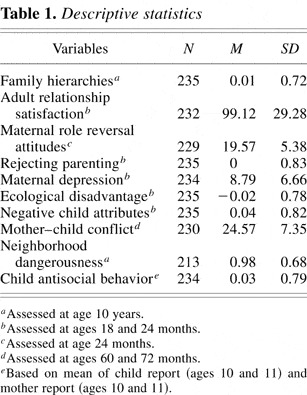
Analyses were conducted to examine two issues: (a) trace the early antecedents of parent–child conflict and hierarchies in families of school-age children from both univariate and multivariate perspectives, and (b) investigate the direct relations between family hierarchies and children's antisocial behavior, and how this relation is moderated by neighborhood dangerousness and ethnicity. Before exploring these issues, descriptive statistics for all study variables are presented in Table 1. Similar to the high level of ecological disadvantage experienced by participants, the mean for maternal depressive symptoms approached the mild depressive symptomatology category (i.e., ≥9).
Descriptive statistics

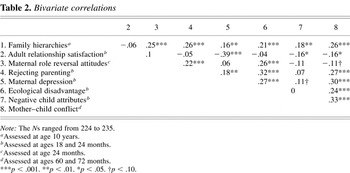
Univariate relations related to our model (Figure 1) and other relations among study variables are displayed in Table 2. Maternal depressive symptoms, a marker of the individual holon, were related to higher levels of rejecting parenting and later parent–child conflict, but unrelated to early negative child behavior. Adult relationship satisfaction, a marker of the spouse holon, was negatively related to early negative child attributes but surprisingly not to rejecting parenting (i.e., parent holon). As expected, ecological disadvantage was moderately associated with higher levels of rejecting parenting and other family risk factors (e.g., maternal depression and role reversal attitudes). In addition, higher levels of maternal role reversal attitudes at age 1.5 were directly related to lower family hierarchies at age 10 and concurrently related to greater marital dissatisfaction and rejecting parenting. Examining hypothesized paths in the model more proximal to parent–child conflict and hierarchies, both negative child attributes and rejecting parenting were related to higher levels of later parent–child conflict and lower hierarchies, and parent–child conflict was associated with less hierarchical structure.
Bivariate correlations

Early risk factors in relation to parent–child conflict and family hierarchies
To provide a more direct test of the proposed model within a multivariate framework, structural equation modeling (SEM) was utilized (AMOS 4; Arbuckle & Wothke, 1999). SEM has the advantage of being able to account for the effects of multicollinearity among variables, an issue in the present study because of our reliance on maternal report in the measurement of several predictor variables. To correct for missing data, full information maximum likelihood (FIML) estimates were computed. When data are missing at random, as is believed to be true in the present study, FIML estimates tend to be less biased than other approaches for handling missing data (Arbuckle & Wothke, 1999; Little & Rubin, 1989).
In the first stage of the SEM analyses, a measurement model was tested that included eight latent variables corresponding to the constructs depicted in Figure 1. The same variables that were used to create composites for the univariate analyses served as the manifest variables in the measurement model. With the exception of parental attitudes about role reversal, all of the latent constructs were measured with multiple indicators from diverse measures and/or from different time points. To increase the reliability of the latent variable representing parental attitudes, the items used to assess this construct on the API were divided into groups based on an oblique factor analysis. The factor analysis yielded two factors—one that assessed parental beliefs about how children should behave when a parent is distressed, and a second that examined general beliefs about the responsibility of children to comfort their parents. These factors were used as separate indicators for parental attitudes in the measurement model. No other changes were made to the composite variables. The resulting measurement model provided an adequate fit to the data. The associated chi-square statistic, 160.78 (142), was nonsignificant (p = .13) and the normalized fit index (NFI; .98), relative FI (RFI; .97), and comparative FI (CFI; .998) all exceeded .90. In addition, all of the factor loadings for the indicator variables were significant.
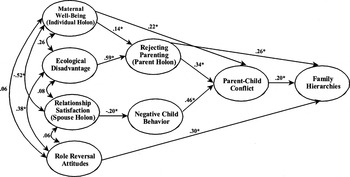
In the second stage of SEM analyses, the theoretical model proposed in Figure 1 was tested. This model also provided a satisfactory fit to the data as evidenced by a nonsignificant chi-square statistic, 177.33 (153), p =.09, and fit indices greater than .90 (NFI = .978, RFI = .970, CFI = .997). However, a few of the model's path coefficients were nonsignificant, suggesting that a more parsimonious model might provide a comparable fit. Thus, nonsignificant paths were deleted from the model, starting with the least significant paths first. This resulted in a model with two fewer paths than the original theoretical model. Deleted paths included negative maternal attributes to negative child behavior and adult relationship satisfaction to rejecting parenting. After each deletion, a chi-square difference test was conducted to compare the fit of the original and revised models. The model fit for the revised model was comparable to the theoretical model (NFI = .977, RFI = .969, CFI = .996), χ2 (155) = 182.53, p < .07. Standardized path coefficients between latent variables for the revised model can be found in Figure 2. In the revised model, parental attitudes, rejecting parenting, and parent–child conflict directly influenced hierarchies. Indirect paths were found for ecological disadvantage, maternal attributes, and negative child behavior, and rejecting parenting. Consistent with the univariate analyses, relative standardized effect sizes (direct and indirect effects combined) were strongest for rejecting parenting (.326), parental attitudes (.299), parent–child conflict (.200), and ecological disadvantage (.191), and weakest for negative child behavior (.092), maternal attributes (.090), and maternal relationship satisfaction (−.019).

The development of hierarchies using structural equation modeling. *p < .05.
Family hierarchies, neighborhood danger, and ethnicity in relation to antisocial behavior
Next, we examined the association between family hierarchies and child antisocial behavior and whether this association was moderated by neighborhood dangerousness and child ethnicity. Hierarchies at age 10 were unrelated to both neighborhood dangerousness (age 10) and ethnicity (rs = .00 and .12, ns, respectively), but lower hierarchies were moderately related to higher levels of child antisocial behavior (r = .41, p < .001). Child minority status (i.e., AA) and higher neighborhood dangerousness were also significantly related to higher levels of youth antisocial behavior (rs = .21 and .27, p < .01, respectively).
We then examined whether neighborhood dangerousness and child ethnicity moderated the association between family hierarchies and child antisocial behavior. As recommended by Jaccard, Turrisi, and Wan (1990), hierarchical regression was used to examine potential moderating effects. In the regression, child antisocial behavior was predicted by the main effects for family hierarchies, neighborhood dangerousness, and child ethnicity (Step 1); Hierarchies × Neighborhood Dangerousness, Hierarchies × Ethnicity, and Neighborhood Dangerousness × Ethnicity interaction terms (Step 2); and the Hierarchies × Neighborhood Dangerousness × Ethnicity interaction term (Step 3). The independent variables were centered before creating the interaction terms. Significant two-way and three-way interactions were explored and interpreted using procedures described in Jaccard et al. (1990). Specifically, the association between family hierarchies and child antisocial behavior was examined at three levels of neighborhood dangerousness (low = −1 SD, medium = M, high = +1 SD) and/or at two levels of ethnicity (EA and AA).
The results indicated significant main effects for family hierarchies (standard β = .38, p < .001) and neighborhood dangerousness (standard β = .25, p < .001); child ethnicity was no longer a significant predictor of child antisocial behavior after partialling out the variance explained by family hierarchies and neighborhood dangerousness (standard β = .11, ns). None of the two-way interactions were significant (standard βs = −.01, .03, and .01, ns for Hierarchies × Neighborhood Dangerousness, Hierarchies × Ethnicity, and Neighborhood Violence × Ethnicity, respectively). However, the three-way interaction term explained a significant percentage of variance in child antisocial behavior on the final step of the regression (standard β = −.14, p < .05; ΔR2 = .02, p < .05). Inspection of the regression slopes indicated that neighborhood danger served as a moderator in the link between hierarchies and antisocial behavior for both EA and AA families. However, the function of neighborhood danger as a moderator differed by ethnicity. Specifically, for EA families, hierarchies were more strongly related to child antisocial behavior among families living in moderately to highly dangerous neighborhoods (slopes = .57 and .42, p < .001, respectively) compared to families in the context of low neighborhood danger (slope = .27, p < .05). In contrast, for AA families, the association between hierarchies and child antisocial behavior was stronger for families living in neighborhoods characterized by low to average danger (slope = .67 and .49, p < .001, respectively) compared to AA families from neighborhoods perceived to be highly dangerous (slopes = .32, p < .001).
Discussion
This study sought to examine the antecedents of hierarchical structure within families and test whether hierarchies were related to antisocial behavior during late middle childhood. Overall, our results were generally consistent with the tenets of Structural and Strategic family theorists (Haley, 1976; Minuchin & Fishman, 1975), in that markers of individual, spouse, and parental holon functioning were either directly or indirectly related to high levels of parent–child conflict at school entry and less firm hierarchies in later middle childhood. When SEM was used to examine these paths within a multivariate framework, direct paths associated with hierarchies were found for rejecting parenting and role reversal attitudes assessed in early childhood and parent–child conflict assessed at school entry. Indirect paths were also evident for maternal depression, adult relationship satisfaction, and ecological disadvantage via their relation with negative child behavior and/or rejecting parenting. Support was also found for an association between family hierarchies and youth antisocial behavior. This relation was moderated by neighborhood dangerousness and ethnicity, such that hierarchies were more strongly associated with child antisocial behavior for EA families when neighborhood danger was average or high, and for AA families when neighborhood adversity was average or low.
The development of hierarchies
Many but not all of our results were consistent with the tenets of family systems theory. For example, much of structural theory on the development of hierarchies is based on the integrity of the individual, spouse, and parent holons; thus, we expected to find significant relations among these factors. Only partial support was found for the hypothesized interrelationships among these variables and their direct or indirect association with later hierarchies. Consistent with systems theory, rejecting parenting (parent holon) was related to maternal depression (individual holon) and maternal depression was related to adult relationship dissatisfaction (spouse holon). However, relationship satisfaction was not associated with higher levels of rejecting parenting or later hierarchical development. This was surprising, given previous research indicating consistent associations between marital relational attributes (e.g., satisfaction, conflict) and parenting (Christiansen & Margolin, 1988; Cummings, Davies, & Campbell, 2000; Jouriles & Farris, 1992) and intergenerational boundary violations (Fish et al., 1991). One potential explanation for these null findings may have been our broad definition of significant adult relationships. Although approximately two thirds of mothers completed the Locke and Wallace about their spouse or live-in partners, a significant minority were not involved in such a relationship. Thus, we chose to include other adults who may have played less influential roles in mother's lives in general, and parenting in particular (e.g., child's grandmother). This strategy, although responsive to the ecological context of our sample, may have decreased the magnitude of any “spillover” effects commonly cited between marital satisfaction and parenting. However, when we compared the pattern of relations for those married or living together versus other groups, no significant differences were found in how the Locke and Wallace related to parenting behaviors and attitudes between groups.
Hierarchies and youth antisocial behavior
In accord with previous studies in this area, a direct negative relation was found between hierarchical family structure and youth antisocial behavior (Green et al., 1992; Madannes et al., 1980; Protinsky et al., 1989). Specifically, children from families marked by lower hierarchical organization displayed higher levels of conduct problems compared to other children.1
It should be noted that although we aggregated ratings of youth antisocial behavior across ages 10 and 11 from multiple informants to form a more robust, generalizable construct, relations between hierarchies and antisocial behavior were comparably as strong at age 11 (r = .38, p < .001) as at age 10 (r = .35, p < .001) and were significant for both parent and youth report of conduct problems.
This relationship was qualified by neighborhood danger and ethnicity, such that for EA families, the relation between strong hierarchical structure and antisocial behavior was strengthened in the context of medium or high levels of neighborhood danger. For AA families, the association was relatively stronger in the context of low or average neighborhood danger, but less apparent when dangerousness was high for AA families. We hypothesized that hierarchical structure would serve as a protective factor for both EA and AA families in the context of average neighborhood risk, but in accord with the previous work of Gorman–Smith and colleagues (1999), we anticipated this relation to be attenuated at levels of severe neighborhood risk for AA families. The finding is consistent with differences in neighborhood adversity for AA versus EA families within the Pittsburgh metropolitan area in general (Ralph Bangs, personal communication, April 1, 2003), and in our sample in particular. For example, during the first 6 years of sample children's lives, there was a 40% versus a 0.7% probability of living in project communities for AA and EA families, respectively. Similarly, among families living in project communities during the child's first 6 years, 98% were AA (Winslow, 2001). Accordingly, strong family hierarchical structure could serve as a protective factor within the context of average neighborhood risk for both EA and AA families and at high neighborhood risk for EA families, for whom extreme neighborhood disadvantage was a rarity in the current sample. However, for AA families, hierarchies may be less protective at high levels of neighborhood adversity, as forces outside of the home environment (e.g., exposure to deviant peers and adults) become more influential than parenting for youth living in project communities. The finding is also consistent with a recent study by Tolan, Gorman–Smith, and Henry (2003), who found gang membership to fully mediate the effects of parenting on antisocial behavior in extremely deprived communities.
Limitations
There are several significant methodological limitations of the study. First, participants were limited to low-income EA and AA boys living in an urban setting. Future work with boys and girls from other socioeconomic strata and ethnic backgrounds is recommended to replicate or disconfirm these results. It also needs to be pointed out that the study was not initially designed to measure the development of hierarchies, particularly from a family systems' perspective. From the perspective of structural family theory, ideally measurement of individual holon characteristics would have been initiated prior to the marriage, and measurement of adult relationship satisfaction would have begun prior to the arrival of the first child. In addition, although we were able to collect observational data on the adult partner when measuring family hierarchies at age 10, measurement of holon-related antecedents of hierarchies was restricted to one parent. The same is true of input from other family members. Ideally, each assessment would have evaluated family interaction within the context of the entire nuclear family, including all siblings. Although this strategy presents practical challenges, it remains an ideal to strive for in future research to more accurately capture family process from a systems' perspective. Relatedly, our measurement of hierarchies was purposefully focused on the organization and power of parent–child relationship in lieu of consistent relations shown between parental structure and child conduct problems. However, a broader definition of hierarchies would also incorporate emotional components of the parent–child relationship. Finally, the three-way interaction involving neighborhood danger, ethnicity, and hierarchies in relation to youth antisocial behavior, although consistent with other research in the area on severe levels of deprivation in urban communities, is speculative and requires some inference about AA ethnicity serving as a proxy for severe danger within neighborhoods. Despite these limitations in measurement, we were able to show several linkages between early family process and hierarchical structure. In turn, low family hierarchical structure was associated with increases in youth antisocial behavior, albeit qualified by ethnic and neighborhood context.
Implications for prevention and intervention
The implications of the findings for preventative efforts can be discussed with respect to two of the study's primary findings. First, echoing previous research in this area (Baumrind, 1971; Galombos, Barker, & Almeida, 2003; Green et al., 1992), strong hierarchical family structure was associated with lower youth conduct problems for both EA and AA families within average levels of neighborhood adversity. Consistent with the tenets of Structural and Strategic theory and practice, interventions that promote strong intergenerational boundaries appear warranted. This finding is consistent with a growing appreciation that the development of antisocial behavior in children is moderated by community-level factors, effects that appear to increase as a function of the child's developmental status (Brooks–Gunn, Duncan, Klebanov, & Sealand, 1993; Chase–Landsdale & Gordon, 1996; Leventhal & Brooks–Gunn, 2000). One must take seriously the reservations of others who have tried to intervene with high-risk families and failed because they neglected to address contextual issues (Kazdin, 1995). For instance, Salvador Minuchin abandoned working with low-income, high-risk families because he concluded it was analogous to putting band-aids on individuals who require surgery. Interventions that are multisystemic and include options tailored to the challenges of community-level adversity are recommended (Henggeler, Schoenwald, Borduin, Rowland, & Cunningham, 1998). In contexts that condone antisocial attitudes and behavior, parents' abilities to exert influence on their child's activities may be limited.
Second, as hierarchies were found to be related to youth antisocial behavior, risk factors in early childhood associated with later parent–child conflict and/or hierarchies, should be viewed as potential targets of prevention efforts. It is noteworthy that several risk factors across multiple domains were found to be indirectly or directly related to hierarchies at age 10, even though they were measured when children were toddlers. Similar to the development of antisocial behavior, the results suggest that the development of hierarchies is also embedded within a multifaceted context, including child characteristics, parental psychological resources, and childrearing practices, as well as the family's social adversity. Thus, preventative interventions that incorporate a multisystemic framework are again recommended, particularly addressing those issues that compromise parent's abilities to provide nurturant and supportive environments for their young children.
References
REFERENCES
Achenbach, T. M.
(1991).
Manual for the Child Behavior Checklist/4–18 and 1991
Profile.
Burlington, VT:
University of Vermont, Department of Psychiatry.
Aponte, H.
(1990).
Too many bosses: An eco-structural intervention with a family and
its community.
Journal of Strategic and Systemic Therapies
9,
49–63.CrossRefGoogle Scholar
Arbuckle, J. L., &
Wothke, W.
(1999).
Amos 4.0 user's guide.
Chicago:
Smallwaters Corporation.
Bates, J. E.,
Freeland, C. A., &
Lounsbury, M. L.
(1979).
Measurement of infant difficulties.
Child Development
50,
794–803.CrossRefGoogle Scholar
Bates, J. E.,
Maslin, C. A., &
Frankel, K. A.
(1985).
Attachment security, mother–child interaction, and
temperament as predictors of behavior-problem ratings at age three
years.
Monographs of the Society for Research in Child Development
50(1–2),
167–193.CrossRefGoogle Scholar
Baumrind, D.
(1971).
Current patterns of parental authority.
Developmental Psychology Monograph,
4(1, Pt. 2).CrossRefGoogle Scholar
Baumrind, D.
(1972).
An exploratory study of socialization effects on black children:
Some black–white comparisons.
Child Development
43,
261–267.CrossRefGoogle Scholar
Bavolek, S. J.,
Kline, D. F.,
McLaughlin, J. A., &
Publicover, P. R.
(1977).
The development of the Adolescent Parenting Inventory:
Identification of high risk adolescents prior to parenthood.
Unpublished manuscript,
Utah State University.
Beck, A. T.,
Steer, R. A., &
Garbin, M. G.
(1988).
Psychometric properties of the Beck Depression Inventory.
Twenty-five years of evaluation.
Clinical Psychology Review
8,
77–100.Google Scholar
Bell, R.Q.
(1968).
A reinterpretation of the direction of effects in studies of
socialization.
Psychological Review
75,
81–95.CrossRefGoogle Scholar
Belsky, J.
(1984).
The determinants of parenting: A process model.
Child Development
55,
83–96.CrossRefGoogle Scholar
Bowen, M.
(1978).
Family therapy in clinical practice.
New York:
Jason Aronson.
Bradbury, T. N., &
Lawrence, E.
(1999).
Physical aggression and the longitudinal course of newlywed
marriage. In
X. B. Arriaga &
S. Oskamp (Eds.),
Violence in intimate relationships (pp.
181–202).
Thousand Oaks, CA:
Sage.
Brooks–Gunn, J.,
Duncan, G. J.,
Klebanov, P. K., &
Sealand, N.
(1993).
Do neighborhoods influence child and adolescent development?
American Journal of Sociology
99,
353–395.Google Scholar
Burkett, L. P.
(1991).
Parenting behaviors or women who were sexually abused as children
in their families of origin.
Family Process
30,
421–434.CrossRefGoogle Scholar
Caldwell, B. M., &
Bradley, R. H.
(1984).
Home observation for measurement of the environment.
Little Rock, AR:
University of Arkansas at Little Rock.
Carlson, E.,
Jacobvitz, D., &
Sroufe, L. A.
(1995).
A developmental investigation of inattentiveness and hyperactivity.
Child Development
66,
37–54.CrossRefGoogle Scholar
Chase–Landsdale, P. L., &
Gordon, R. A.
(1996).
Economic hardship and the development of five- and six-year-olds:
Neighborhood and regional perspectives.
Child Development
67,
3338–3367.CrossRefGoogle Scholar
Christiansen, A., &
Margolin, G.
(1988).
Conflict and alliance in distressed and nondistressed families. In
R. A. Hinde &
J. Stevenson–Hinde (Eds.),
Relationships within families: Mutual influences.
New York:
Oxford University Press.
Conger, R.,
Ge, X.,
Elder, G.,
Lorenz, F., &
Simons, R.
(1994).
Economic stress, coercive family process, and developmental
problems of adolescents.
Child Development
65,
541–561.CrossRefGoogle Scholar
Cowan, P. A., &
Cowan, C. P.
(2002).
Interventions as tests of family systems theories: Marital and
family relationships in children's development and
psychopathology.
Development and Psychopathology
14,
731–759.CrossRefGoogle Scholar
Cummings, E. M., &
Davies, P. T.
(1994).
Children and marital conflict: The impact of family dispute and
resolution.
New York:
Guilford Press.
Cummings, E. M.,
Davies, P. T., &
Campbell, S. B.
(2000).
Developmental psychopathology and family process: Theory, research,
and clinical implications.
New York:
Guilford Press.
Davies, P. T., &
Cummings, E. M.
(1994).
Marital conflict and child adjustment: An emotional security
hypothesis.
Psychological Bulletin
116,
387–411.CrossRefGoogle Scholar
Deater–Deckard, K.,
Dodge, K. A.,
Bates, J. E., &
Pettit, G. S.
(1996).
Physical discipline among African American and European American
mothers: Links to children's externalizing behaviors.
Developmental Psychology
32,
1065–1072.CrossRefGoogle Scholar
Dishion, T. J.,
Patterson, G. R.,
Stoolmiller, M., &
Skinner, M.
(1991).
Family, school, and behavioral antecedents to early adolescent
involvement with antisocial peers.
Developmental Psychology
27,
172–180.CrossRefGoogle Scholar
Downey, G., &
Coyne, J. C.
(1990).
Children of depressed parents: An integrative review.
Psychological Bulletin
108,
50–76.CrossRefGoogle Scholar
Elliott, D. S.,
Huizinga, D., &
Ageton, S. S.
(1985).
Explaining delinquency and drug use.
Thousand Oaks, CA:
Sage.
Emery, R. E.
(1988).
Marriage, divorce, and children's adjustment.
Thousand Oaks, CA:
Sage.
Faber, A. J.
(2002).
The role of hierarchy in parental nurturance.
American Journal of Family Therapy
30,
73–84.CrossRefGoogle Scholar
Fish, M.,
Belsky, J., &
Youngblade, L.
(1991).
Developmental antecedents and measurement of intergenerational
boundary violation in a nonclinic sample.
Journal of Family Psychology
4,
278–297.CrossRefGoogle Scholar
Galombos, N. L.,
Barker, E. T., &
Almeida, D. M.
(2003).
Parents do matter: Trajectories of change in externalizing and
internalizing problems in early adolescence.
Child Development
74,
578–594.CrossRefGoogle Scholar
Goodman, S. H., &
Brumley, H. E.
(1990).
Schizophrenic and depressed mothers: Relational deficits in
parenting.
Developmental Psychology
26,
31–39.CrossRefGoogle Scholar
Gorman–Smith, D.,
Tolan, P. H., &
Henry, D. B.
(1999).
The relation of community and family to risk among urban poor
adolescents. In
P. Cophen,
L. Robins, &
C. Slomkowski (Eds.),
Where and when: Influence of historical time and place on aspects
of psychopathology (pp.
349–367).
Hillsdale, NJ:
Erlbaum.
Green, S.,
Loeber, R., &
Lahey, B.
(1992).
Child psychopathology and deviant family hierarchies.
Journal of Child Family Studies
1,
341–349.CrossRefGoogle Scholar
Haley, J.
(1976).
Problem-solving therapy.
San Francisco, CA:
Jossey–Bass.
Haley, J.
(1980).
Leaving home.
New York:
McGraw–Hill.
Hartup, W. W.
(1989).
Social relationships and their developmental significance.
American Psychologist
44,
120–126.CrossRefGoogle Scholar
Henggeler, S. W.,
Schoenwald, S. K.,
Borduin, C. M.,
Rowland, M. D., &
Cunningham, P. B.
(1998).
Multisystemic treatment of antisocial behavior in children and
adolescents.
New York:
Guilford Press.
Hollingshead, A. B.
(1975).
Four factor index of social status.
Unpublished manuscript,
Yale University.
Jaccard, J.,
Turrisi, R., &
Wan, C. K.
(1990).
Interaction effects in multiple regressions.
Newbury Park, CA:
Sage.
Jacobvitz, D., &
Sroufe, L. A.
(1987).
The early caregiver–child relationship and attention-deficit
disorder with hyperactivity in kindergarten: A prospective study.
Child Development
58,
1488–1495.Google Scholar
Jacobvitz, D. B.,
Morgan, E.,
Kretchmar, M. D., &
Morgan, Y.
(1991).
The transmission of mother–child boundary disturbances across
three generations.
Development and Psychopathology
3,
513–527.CrossRefGoogle Scholar
Johnson, V. K.,
Cowan, P. A., &
Cowan, C. P.
(1999).
Children's classroom behavior: The unique contribution of
family organization.
Journal of Family Psychology
13,
355–371.CrossRefGoogle Scholar
Jouriles, E. N., &
Farris, A. M.
(1992).
Effects of marital conflict on subsequent parent–son
interactions.
Behavior Therapy
23,
355–374.CrossRefGoogle Scholar
Kazdin, A. E.
(1995).
Conduct disorders in childhood and adolescence
(2nd ed.).
Thousand Oaks, CA:
Sage.CrossRef
Kerr, M.
(1981).
Family systems theory and therapy. In
A. S. Gurman &
D. P. Kniskern (Eds.),
Handbook of family therapy (pp.
226–266).
New York:
Brunner/Mazel.
Kretchmar, M. D., &
Jacobvitz, D. B.
(2002).
Observing mother–child relationships across generations:
Boundary patterns, attachment, and the transmission of caregiving.
Family Process
41,
351–374.CrossRefGoogle Scholar
Larzelere, R. E.,
Martin, J. A., &
Amberson, T. G.
(1989).
The Toddler Behavior Checklist: A parent-completed assessment of
social-emotional characteristics of young preschoolers.
Family Relations
38,
418–425.CrossRefGoogle Scholar
Leventhal, T., &
Brooks–Gunn, J.
(2000).
The neighborhoods they live in: The effects of neighborhood
residence on child and adolescent outcomes.
Psychological Bulletin
126,
309–337.CrossRefGoogle Scholar
Little, R. J. A., &
Rubin, D. B.
(1989).
The analysis of social science data with missing values.
Sociological Methods and Research
18,
292–326.CrossRefGoogle Scholar
Locke, H. J., &
Wallace, K. M.
(1959).
Short marital-adjustment and prediction tests: Their reliability
and validity.
Marriage of Family Living
21,
251–255.CrossRefGoogle Scholar
Madannes, C.,
Dukes, J., &
Harbin, H.
(1980).
Family ties of heroin addicts.
Archives of General Psychiatry
37,
889–894.CrossRefGoogle Scholar
McHale, J. P.,
Juersten, R., &
Lauretti, A.
(1996).
New directions in the study of family-level dynamics during
infancy and early childhood. In
J. P. McHale &
P. A. Cowan (Eds.),
New directions for child development: Vol. 74. Understanding how
family-level dynamics affect children's development: Studies of
two-parent families (pp.
5–26).
San Francisco:
Jossey–Bass.
Minuchin, S.
(1974).
Families and family therapy.
Boston:
Harvard University Press.
Minuchin, S., &
Fishman, H. C.
(1975).
Family therapy techniques.
Boston:
Harvard University Press.
Minuchin, S.,
Rossman, B. L., &
Baker, L.
(1978).
Psychosomatic families: Anorexia nervosa in context.
Boston:
Harvard University Press.CrossRef
Mitchell, S. K.
(1979).
Interobserver agreement, reliability, and generalizability of data
collected in observational studies.
Psychological Bulletin
86,
376–390.CrossRefGoogle Scholar
Nelson, T. S., &
Utesch, W. E.
(1990).
Clinical assessment of structural family therapy constructs.
Family Therapy
17,
233–249.Google Scholar
Owens, E.,
Shaw, D. S., &
Vondra, J. I.
(1998).
Relations between infant irritability and maternal responsiveness
in low-income families.
Infant Behavior and Development
21,
761–777.CrossRefGoogle Scholar
Patterson, G. R.
(1982).
A social learning approach: Vol. 3. Coercive family process.
Eugene, OR:
Castalia.
Patterson, G. R.,
Reid, J. B., &
Dishion, T. J.
(1992).
Antisocial boys.
Eugene, OR:
Castalia.
Pianta, R. C.,
Steinberg, M., &
Rollins, K.
(1995).
The first two years of school: teacher–child relationships
and deflections in children's classroom adjustment.
Development and Psychopathology
7,
295–312.CrossRefGoogle Scholar
Pittsburgh Youth Study.
(1991).
Neighborhood Dangerousness Scale.
Unpublished measure,
University of Pittsburgh.
Preli, R., &
Protinsky, H.
(1988).
Aspects of family structures in alcoholic, recovered, and
nonalcoholic families.
Family Therapy
16,
289–291.Google Scholar
Protinsky, H.,
Keller, J., &
Gilkey, J.
(1989).
Hierarchy reversals in clinical and nonclinical families.
Family Therapy
16,
289–291.Google Scholar
Radke–Yarrow, M.
(1998).
Children of depressed mothers.
New York:
Cambridge University Press.
Rosenbaum, A., &
O'Leary, K. D.
(1981).
Marital violence: Characteristics of abusive couples.
Journal of Consulting and Clinical Psychology
12,
328–329.CrossRefGoogle Scholar
Russell, A.,
Pettit, G. S., &
Mize, J.
(1998).
Horizontal qualities in parent–child relationships: Parallels
with and possible consequences for children's peer
relationships.
Developmental Review
18,
313–352.CrossRefGoogle Scholar
Sameroff, A. J.
(1990).
Prevention of developmental psychopathology using the transactional
model: Perspectives on host, risk agent, and environment interactions.
Paper presented at the Conference on the Present Status and Future
Needs of Research on Prevention of Mental Disorders, Washington, DC.
Schoppe, S. J.,
Mangelsdorf, S. C., &
Frosch, C. A.
(2001).
Coparenting, family process, and family structure: Implications for
preschoolers' externalizing behavior problems.
Journal of Family Psychology
15,
526–545.CrossRefGoogle Scholar
Shaw, D. S., &
Bell, R. Q.
(1993).
Developmental theories of parental contributors to antisocial
behavior.
Journal of Abnormal Child Psychology
21,
493–518.CrossRefGoogle Scholar
Shaw, D. S.,
Bell, R. Q., &
Gilliom, M.
(2000).
A truly early starter model of antisocial behavior revisited.
Clinical Child and Family Psychology Review
3,
155–172.Google Scholar
Shaw, D. S., &
Emery, R. E.
(1987).
Parental conflict and other correlates of the adjustment of
school-age children whose parents have separated.
Journal of Abnormal Child Psychology
15,
269–281.Google Scholar
Shaw, D. S.,
Gilliom, M.,
Ingoldsby, E. M., &
Nagin, D
(2003).
Trajectories leading to school-age conduct problems.
Developmental Psychology
39,
189–200.Google Scholar
Shaw, D. S., &
Ingoldsby, E.
(1999).
Children of divorce. In
R. T. Ammerman,
C. G. Last, &
M. Hersen (Eds.),
Handbook of prescriptive treatments for children and adolescents
(2nd ed., pp.
346–363).
New York:
Allyn & Bacon.
Shaw, D. S.,
Winslow, E. B.,
Owens, E. B., &
Hood, N.
(1998).
Young children's adjustment to chronic family adversity: A
longitudinal study of low-income families.
Journal of the American Academy of Child and Adolescent Psychiatry
37,
545–553.Google Scholar
Shaw, D. S.,
Winslow, E. B.,
Owens, E. B.,
Vondra, J. I.,
Cohn, J. F., &
Bell, R. Q.
(1998).
The development of early externalizing problems among children from
low-income families: A transformational perspective.
Journal of Abnormal Child Psychology
26,
95–107.Google Scholar
Sroufe, L. A.,
Bennett, C.,
Englund, M.,
Urban, J., &
Shulman, S.
(1993).
The significance of gender boundaries in preadolescence:
Contemporary correlates and antecedents of boundary violation and
maintenance.
Child Development
64,
455–466.Google Scholar
Steinglass, P.
(1987).
A systems view of family interaction and psychopathology. In
T. Jacob (Ed.),
Family interaction and psychopathology: Theories, methods, and
findings. Applied clinical psychology (pp.
22–65).
New York:
Plenum Press.
Tolan, P. H.,
Gorman–Smith, D., &
Henry, D. B.
(2003).
The developmental ecology of urban males' youth violence.
Developmental Psychology
39,
274–291.Google Scholar
Vucinich, S.,
Emery, R. E., &
Cassidy, J.
(1988).
Family members and third parties in dyadic family conflict:
Strategies, alliances, and outcomes.
Child Development
59,
1293–1302.Google Scholar
Whitaker, C. A., &
Keith, D. V.
(1981).
Symbolic-experiential family therapy. In
A.S. Gurman &
D.P. Kniskern (Eds.),
Handbook of family therapy (pp.
187–225).
New York:
Brunner/Mazel.
Winslow, E. B.
(2001).
Development of boys' early conduct problems in a low-income,
urban sample: Implications of neighborhood context and maternal
parenting.
Unpublished dissertation,
University of Pittsburgh.
Winslow, E. B., &
Shaw, D. S.
(1995).
Early parenting coding system.
Unpublished manuscript,
University of Pittsburgh.
Zahn–Waxler, C.,
Iannotti, R. J.,
Cummings, E. M., &
Denham, S.
(1990).
Antecedents of problem behaviors in children of depressed mothers.
Development and Psychopathology
2,
271–292.Google Scholar
The developmental antecedents of family hierarchies.
Descriptive statistics
Bivariate correlations
The development of hierarchies using structural equation modeling. *p < .05.
 You have
Access
- 44
- Cited by