


School Mental Health Services
Positive mental health is crucial for children and adolescents’ learning and growth (Milovancevic & Jovicic, Reference Milovancevic and Jovicic2013) as its status has been known to affect academic and education-related performance (Arnold et al., Reference Arnold, Lucier-Greer, Mancini, Ford and Wickrama2017; Deighton et al., Reference Deighton, Humphrey, Belsky, Boehnke, Vostanis and Patalay2018). However, worldwide, the peak age range onset for mental health issue is between 12 and 25 years, that is, at adolescence and young adulthood (O’Dea et al., Reference O’Dea, King, Subotic-Kerry, O’Moore and Christensen2017; Shah et al., Reference Shah, Scott, McGorry, Cross, Keshavan, Nelson, Wood, Marwaha, Yung and Scott2020; Solmi et al., Reference Solmi, Radua, Olivola, Croce, Soardo, de Pablo, Shin, Kirkbride, Jones and Kim2021). Indeed, the importance of mental health in adolescent development has prompted schools to introduce onsite mental healthcare services such as school counselling and social work and psychological services (Carey et al., Reference Carey, Harris, Lee and Aluede2017). Askell-Williams (Reference Askell-Williams2016) posits that schools play a crucial role in promoting mental health, particularly in creating awareness and empowering students to make informed decisions regarding help-seeking for mental health issues apart from the traditional pastoral care and career guidance in mental health promotion. Since students spend a significant amount of time in school, schools serve as an appropriate setting to create awareness of the importance of mental health and equip students with skills and strategies to manage social-emotional difficulties (O’Dea et al., Reference O’Dea, King, Subotic-Kerry, O’Moore and Christensen2017).
Underutilisation of School Counselling
Despite the availability of inhouse school counselling services, students do not fully utilise school counselling services (Chen & Kok, Reference Chen and Kok2017; Lubman et al., Reference Lubman, Cheetham, Jorm, Berridge, Wilson, Blee, McKay-Brown, Allen and Proimos2017). The rate of school counselling utilisation globally ranges between 15% and 25% (O’Connor & Coyne, Reference O’Connor and Coyne2017). The issue regarding underutilisation of mental health services is not to be taken lightly because of the rising number of youth mental health issues. Worldwide, it has been estimated that around 13.4% of the youths from 12 to 18 years are affected with mental health disorders (Polanczyk et al., Reference Polanczyk, Salum, Sugaya, Caye and Rohde2015). The increase in diagnosis and the low usage rate of mental health services calls for the need to gain deeper understanding towards this phenomenon. Indeed, early detection and treatment have been shown to make a significant difference to adolescents’ mental wellbeing (Yap et al., Reference Yap, Lawrence, Rapee, Cardamone-Breen, Green and Jorm2017). Although these data were related to the pre-COVID-19 pandemic era, the topic is still of relevance, as once normalcy resumes, help-seeking behaviour could decline once again.
In understanding the issue surrounding poor utilisation of school mental health services, Burt (Reference Burt2014) stressed that the role of shared environment should be examined along with individual factors when trying to understand children’s and adolescents’ mental health and social emotional difficulties. Although existing literature have identified various factors that may contribute to the unpopularity of mental health services, many of these studies did not provide a conceptual framework to examine the interactions between environmental and individual factors to understand the underutilised problem (Eriksson et al., Reference Eriksson, Ghazinour and Hammarström2018; Krieger, Reference Krieger2014; Vanheusden et al., Reference Vanheusden, Mulder, van der Ende, van Lenthe, Mackenbach and Verhulst2008). Investigating the issue using a theory-based model provides a framework to systematically study the interactions between individual beliefs and his or her environment. It may also shed a different perspective that could provide a more nuanced appreciation of the contextual factors underpinning effective utilisation of school counselling (Hearne et al., Reference Hearne, Geary and Martin2017).
Salient beliefs are factors that are influenced by an individual and their environment. These are beliefs that guide or motivate attitudes and subjective norms, and perceive behavioural controls that influence intention (Francis et al., Reference Francis, Eccles, Johnston, Walker, Grimshaw, Foy, Kaner, Smith and Bonetti2004; Tsiantou et al., Reference Tsiantou, Shea, Martinez, Agius, Basak, Faresjö, Moschandreas, Samoutis, Symvoulakis and Lionis2013). Salient beliefs reflect an individual’s beliefs towards a specific behaviour (Sutton et al., Reference Sutton, French, Hennings, Mitchell, Wareham, Griffin, Hardeman and Kinmonth2003) in which three components have been postulated to form these beliefs: salient behavioural beliefs that determine one’s attitude towards the behaviour; salient normative beliefs that determine subjective norms; and salient control beliefs that are assumed to determine perceived behavioural control (Francis et al., Reference Francis, Eccles, Johnston, Walker, Grimshaw, Foy, Kaner, Smith and Bonetti2004; Nisson & Earl, Reference Nisson and Earl2020). The identification of local salient beliefs allows the issue to be examined from the cultural or emic perspective (E.-J. Lee et al., Reference Lee, Chan, Ditchman and Feigon2014; Mak & Davis, Reference Mak and Davis2014). School counselling could benefit from such processes of identifying salient beliefs. To date, there are limited studies found on the identification of salient beliefs using the theory of planned behaviour (TPB) framework in the context of school counselling in an Asian context.
Literature Review
Theoretical Framework
Previous studies have shown the applicability of the TPB in examining students’ help-seeking behaviour for mental health issues. The model has been applied in some areas of help-seeking behaviour related to psychological difficulties and social emotional difficulties, including self-harm behaviours and intention to seek help from mental health professionals (Lewis et al., Reference Lewis, Rosenrot and Santor2011; Mo & Mak, Reference Mo and Mak2009). TPB postulates that behaviour can be predicted from one’s intention to engage in that behaviour, and that intention is the main motivation behind an individual’s decision to carry out a specific behaviour (Ajzen, Reference Ajzen1991). The stronger the intention, the more likely an individual will carry out the behaviour (Abraham & Sheeran, Reference Abraham, Sheeran, Conner and Norman2015). Intention is measured by the following variables: attitude towards the behaviour, subjective norms regarding the behaviour, and perceived behavioural control over the behaviour. It is theorised that the strength of the intention increases when an individual displays a favourable attitude towards the behaviour (attitude), whether one believes that people whose views they value think that one should carry out the behaviour (subjective norm), and whether one feels that one has the necessary resources and opportunities to engage in the behaviour (perceived behavioural control) (Ajzen, Reference Ajzen1991; Mo & Mak, Reference Mo and Mak2009).
An aspect of the TPB less mentioned but critical is one’s ability to identify salient beliefs or belief-based components considered to underpin attitude, subjective norms and perceived behavioural control (Ajzen & Fishbein, Reference Ajzen and Fishbein1980; Chan et al., Reference Chan, Hardcastle, Dimmock, Lentillon-Kaestner, Donovan, Burgin and Hagger2015; Herath, Reference Herath2010). Identifying salient beliefs was seen as a first step in the TPB framework before one proceeds to develop an intervention to increase help-seeking (Demyan & Anderson, Reference Demyan and Anderson2012). Identifying salient beliefs associated with school counselling could be beneficial towards gaining a better understanding of students’ beliefs towards school counselling.
According to Ajzen (Reference Ajzen1991), salient behavioural beliefs are linked to a certain outcome pertaining to the behaviour. These beliefs are either positively or negatively valued and subsequently for one’s attitude towards the behaviour. Salient normative norms refer to the likelihood that important referent individuals or groups approve or disapprove of performing a given behaviour. The strength of each normative norm is determined by identifying the referent and a person’s motivation to comply (Ajzen, Reference Ajzen1991). In a meta-analysis of 14 studies focusing on the role of subjective norms, it was found that the use of descriptive and injunctive norms to measure social norms improved its prediction strengths (Rivis & Sheeran, Reference Rivis and Sheeran2003). This implies that there is a strong need to include the salient normative norms to subjective norms when engaging the TPB to predict intention. Finally, salient control beliefs refer to the beliefs about the presence of factors that might facilitate or hinder the carrying out of the behaviour (Ajzen, Reference Ajzen1991). Stronger control beliefs suggest that the individual is in better control of seeing a counsellor if he or she wants to and this will lead to a greater perceived behavioural control (Francis et al., Reference Francis, Eccles, Johnston, Walker, Grimshaw, Foy, Kaner, Smith and Bonetti2004; Shahwan et al., Reference Shahwan, Lau, Goh, Ong, Tan, Kwok, Samari, Lee, Teh and Seet2020).
Identifying salient beliefs of local secondary school students’ intention towards seeking help from a school counsellor is valuable. In addition to testing the extended model in a local setting, contextual-based beliefs that influence students’ intention could be identified and allow relevant interventions to be introduced to increase intention to seek help from a school counsellor. At a micro-level, the successful identification of such a model may also allow school counsellors to use it as a framework to conduct applied research and introduce school-based interventions.
Study Intent and Research Question
This study seeks to the address the following research questions:
-
1. What are students’ salient behavioural beliefs that influence their attitude towards intention to seek help from a school counsellor?
-
2. What are students’ salient normative beliefs influencing their subjective norms towards intention to seek help from a school counsellor?
-
3. What are students’ salient control beliefs influencing their perceived behavioural control towards intention to seek help from a school counsellor?
Method
A qualitative approach was adopted utilising both focus group discussion and individual interviews with secondary school students attending public schools in an Asian context. The use of qualitative methodologies such as interviews was deemed appropriate for this study because these methods create an opportunity to identify factors and generate rich data relevant to the local context (Miles et al., Reference Miles, Huberman, Huberman and Huberman1994; Myers et al., Reference Myers, Lodge, Speight and Haggins2021).
Participants
Twenty-nine students from 10 different secondary schools under the purview of Ministry of Education of Singapore were recruited. The sample consisted of 21 males and 8 females, with age ranging from 13 to 17 years old (M = 14.9, SD = 1.2). In Singapore, students are placed into four ability streams based on their scores in the national primary school leaving examination. Participants in this study came from each of the four ability streams. The racial composition was 83% Chinese, 14% Malay and 3% Indian, which was similar to Singapore’s population makeup (Statistics Singapore, 2020). A minority of participants (13.8%) reported having previously seen a counsellor.
Six students were first recruited using random sampling after email invites were disseminated through the school counsellors. Twenty-three students were further recruited through convenience sampling.
Instruments
A list consisting of eight questions was used for the interview. These questions were created in accordance with the manual on constructing a questionnaire based on the TPB (Francis et al., Reference Francis, Eccles, Johnston, Walker, Grimshaw, Foy, Kaner, Smith and Bonetti2004). The questions were evaluated by a panel of scholars consisting of three school counsellors and a psychology professor to ensure that they were appropriate for the intent of the study. A pilot interview with three secondary school students identified minor revisions to the list of questions before it was subsequently used in the focus group discussions and individual interviews. An overview of the research questions and the corresponding focus group interview questions can be found in the Appendix.
Procedure
Participants were recruited through email invites to school principals and counsellors. Parental consent and participant assent were obtained. Participants were assured of confidentiality and anonymity, their identity masked with an assigned subject code number. They were asked to indicate their preference between focus group and individual interview. In total, eight focus group interviews, each consisting of two to four participants, and five individual interviews were conducted. Each focus group lasted between 30 minutes to 50 minutes while each individual interview lasted an average of 20 minutes. Focus group interviews are viewed as less threatening by many research participants, and the environment is helpful for participants to discuss perceptions, ideas, opinions and thoughts freely, which may not otherwise be obtained from individual interviews (Krueger & Casey, Reference Krueger and Casey2009). However, Kress and Shoffner (Reference Kress and Shoffner2007) argued that there is a need to use other qualitative methods such as individual interviews to ensure that the data gathered are not restricted to group consensus responses. Individual interviews were therefore included in this study to minimise such limitation. The entire interview was recorded with an audio voice recorder and then transcribed by a research assistant.
Ethics approval and permission to collect from schools were obtained from the university’s Institutional Review Board and Singapore’s Ministry of Education respectively.
Data Management and Study Rigour
Deductive content analysis, a process in which the categories were determined in advance, was used to analyse the transcripts (Acarli & Kasap, Reference Acarli and Kasap2014; Mayring, Reference Mayring2000). The predefined categories were attitude, subjective norm, perceived behaviour control, and behaviour intention — all dimensions of the TPB. Responses were initially tallied and coded by the first author. The codes were examined and redundant codes were regrouped into the same category. This process was repeated until all the categories were exclusive and exhausted and no new ones were uncovered. Each code was subsequently ranked as a percentage of students who identified these codes. Responses that formed more than 50% of the total responses cumulatively in each question were identified as respective salient beliefs.
Several steps were taken to ensure data rigour, nonbias and safeguard the credibility of the data (Lincoln & Guba, Reference Lincoln and Guba1985). In addition to the audio taping of the interviews, the research assistant also took handwritten notes of the participants’ responses and provided a brief summary of their respective responses to each question to ensure the information was captured accurately. The interview was concluded only when all the participants had exhausted their comments or responses, signifying that the interview had reached a saturation point. The notes taken by the research assistant were checked against the transcription.
The second author audited the coding and key themes identified by the first author. The key themes were only accepted after both arrived at a consensus on the identified themes. To ensure internal validity, a cross-checking procedure described by Zeldin and Pajares (Reference Zeldin and Pajares2000) was carried out. Briefly, two school counsellors who were unfamiliar with the TPB provided counterchecks and commentaries on the patterns of data and the findings that emerged. They also acted as external auditors who reviewed the transcripts and the themes identified (Creswell, Reference Creswell2014). This ensured conformability between the data and the themes identified (Lincoln & Guba, Reference Lincoln and Guba1985). These steps were necessary particularly when the data analysed were based on an existing framework and to minimise the possibility of ignoring other theoretical explanations (Chong & Kua, Reference Chong and Kua2017).
Results
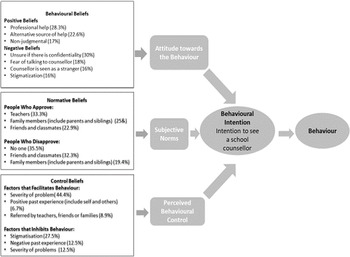
Figure 1 provides an overview of results.
Overview of results.

RQ1: What are Students’ Salient Behavioural Beliefs That Influence Their Attitude Towards Intention to Seek Help From a School Counsellor?
Salient behavioural beliefs shape one’s attitude towards the help-seeking behaviour of students with respect to school counselling. We determined these behavioural beliefs primarily through two questions asking participants to identify advantages and disadvantages in seeking help in a school counselling context. Perceived advantages and disadvantages were postulated to inform the participants’ beliefs towards the help-seeking behaviour.
A total of 53 responses related to the advantages of seeking help were recorded. The advantages (positive salient behavioural beliefs) recorded included: counselling is a form of professional help (28.3%, n = 15) and availability of an alternative source of help (22.6%, n = 12). Participants also viewed school counselling as nonjudgmental (17%, n = 9).
One student (FG1:3) felt that ‘the counsellor might be more qualified to give you help and advice as compared to your friends. So, it (he or she) will be a more reliable and professional people to consult’, while another student (FG3:1) said: ‘The advantageous is to seek professional help.’ This was followed with the view that the school counsellor was ‘another avenue for them to share their problem’ (FG2:2) and ‘help us with problems like [that] we don’t want to talk with our family or friends … like our close friends all these’ (FG3:4). Participants also felt that they were able ‘to confide into someone that won’t judge us you no matter how wrong you are’ (FG3:2). Keeping matters private and confidential was another advantage associated with school counselling — ‘If we see a school counsellor versus maybe talking to a teacher about our problem maybe our teachers view about us might change and thus the teacher may not like you…. The school counsellor everything is kept confidential while everything is not change and you solve your problem’ (FG4:3).
Conversely, a total of 50 negative responses were recorded. The top four frequently cited weaknesses (negative salient behavioural belief) of seeing a school counsellor include: unsure/unable to trust that the counsellor would keep things confidential (30%, n = 15), fear of talking to the counsellor (18%, n = 9), counsellor was seen as a stranger (unfamiliarity; 16%, n = 8), and stigmatisation (16%, n = 8). Since the same number of responses were recorded for the third position, both codes were accepted to form negative salient behavioural beliefs.
Half of the participants were unsure whether the counsellor would keep things confidential. One student described the school counsellor as ‘someone from the school authority so it is almost as if the counsellor would most probably tell your parents or teachers’ (FG1:2). They also felt that the ‘school counsellor is not someone that you will get close with and unfamiliar with, making it difficult to share your problems with’ (FG4:4). Participants were also concerned that they might be stigmatised by others when they see a counsellor because ‘it’s a place for people with discipline problem’ (FG5:1) and sometimes teachers made remarks such as ‘Go see the counsellor because you have a problem’ (FG6:2). Lastly, they were unsure whether the school counsellor ‘can understand our problem since they are adults’ (FG7:1). Such thoughts were attributed to the disadvantages associated with seeing a school counsellor.
RQ 2: What are Students’ Salient Normative Beliefs Influencing Their Subjective Norms Towards Intention to Seek Help From a School Counsellor?
Salient normative beliefs refer to individuals or group whose opinions were deemed to influence one’s decision towards the intended behaviour. These beliefs were identified through individuals or groups of people that participants believe might approve or disapprove their help-seeking behaviour.
Forty-eight responses were identified related to people whom they perceived to support their decision to see a counsellor. The top three groups of people were teachers (33.3%, n =16), family members (include parents and siblings; 25%, n = 12), and friends and classmates (22.9%, n = 11). A student said, ‘Parents don’t mind because maybe they think that since he is a school counsellor so you can trust them’ (FG4:1). Another student said: ‘I think the teachers and friends and classmates will support them as well because if a person needs help and if nobody can help then the way to seek help is for the person to go and see a counsellor’ (FG5:1). These responses indicated participants’ identification of persons whose approval mattered to them.
When asked who they believed might disapprove of them seeing a school counsellor, 31 responses were recorded. ‘No one’ (35.5%, n = 11) was the most frequently cited response. This was followed by friends and classmates (32.3%, n = 10), and family members (including parents and siblings; 19.4%, n = 6). The belief that ‘parents prefer their child to talk to them instead of going to school counsellor’ was the common reason why they believed that parents might disapprove their behaviour. Participants also projected the notion that they would not see a counsellor if their friends discouraged or disapproved their actions.
Taken together, the top three groups of people whom the participants perceived to approve them seeking help from a school counsellor were teachers, family members, and classmates and friends, while the top three groups whom they believed might disapprove their decision to see a school counsellor were ‘no one’, classmates and friends, and family members. It was worth noting that family members (parents and siblings) and friends and classmates were both cited as the groups of people who would approve and disapprove participants’ behaviour of seeking help from a school counsellor. While the difference in percentage that identified parents as a group of individuals that both approve and disapprove of them seeing a school counsellor was large, the difference between the percentage of students who identified classmates and friends as a group of people who approved and disapproved of them seeing the school counsellor was marginal.
RQ 3: What are Students’ Salient Control Beliefs Influencing Their Perceived Behavioural Control Towards Intention to Seek Help From a School Counsellor?
Salient control beliefs refer to factors that facilitate or inhibit a particular behaviour. In the context of seeing a school counsellor, a total of 45 responses were elicited. Participants identified the following as the most common factors that facilitate their decision to see a school counsellor: severity of problem (44.4%, n = 20); positive past experience of others and self (6.7%, n = 3); and referral by teachers, friends or families (8.9%, n = 4). They would see a counsellor ‘when the problem is very serious or like maybe when no one else can help’ (FG:4:3) or ‘if my parents or teacher refer me to see a counsellor. Then I would be more willing to accept their advice and see a counsellor’ (FG2:3). They also mentioned that they would like to see a counsellor if ‘past experience of other people that see counselling and receive help from the counsellors and actually help them’ (FG1:2).
On the contrary, 40 responses related to factors that may inhibit the decision to seek help were recorded. Stigmatisation (27.5%, n = 11), negative past experience of others or self (12.5%, n = 5), and severity of problems (12.5%, n = 5) were the top three responses that made up half of the responses. ‘Face issues’ or ‘not wanting to be perceived as a problematic student’ (FG2:4) were some of the labelling participants cited that may hinder them from seeing a school counsellor. They also would not see a counsellor if ‘the problem is too small’ (FG1:2) or ‘heard from friends that the counselling experience was bad’ (FG6:3). Lastly, participants seemed to avoid counselling if it was mandated or ‘forced’ by the school.
Discussion
Students’ Salient Behavioural Beliefs That Influence Their Attitude Towards Intention to Seek Help from a School Counsellor
Salient behavioural beliefs are beliefs that underpin attitude towards the behaviour (Ajzen, Reference Ajzen2011). The beliefs that counselling is a form of professional help and an alternative source of help available to students and is nonjudgmental in nature were identified as positive beliefs in this study. Conversely, uncertainty of confidentiality, fear of talking to a stranger, and stigmatisation were identified as negative beliefs.
A majority of the student participants perceived counselling to be a form of professional help and almost half of the students identified counselling as an alternative form of help available to them. These findings were consistent with studies conducted against a similar cultural backdrop to Singapore. For instance, in a study by Abdullah (Reference Abdullah2011) involving Malaysian postgraduate students, counselling was viewed as formal professional help. However, the students preferred to seek help from other sources such as friends and families. Similarly, in Singapore, despite the high level of awareness among students on the availability of professional help in school, many preferred to seek help from peers or other informal source of help (Ang & Yeo, Reference Ang and Yeo2004; Picco et al., Reference Picco, Abdin, Chong, Pang, Vaingankar, Sagayadevan, Kwok and Subramaniam2016). Seeking help from a family doctor or traditional Chinese physicians were seen as the other preferred options for professional help (B.O. Lee, Reference Lee2009; Picco et al., Reference Picco, Abdin, Chong, Pang, Vaingankar, Sagayadevan, Kwok and Subramaniam2016). Collectively, while the findings of this study, along with previous research inquiries, may not resolve the issue of mental health services underutilisation immediately, they present encouraging evidence that school counselling is viewed as a source of professional help, constituting a positive salient behavioural belief. This means that although school counselling may not be the main or preferred source of help in Singapore, it is one of the options that students would consider favourably.
School counsellors are required to abide by the school counselling and counsellor or psychologist ethical code and code of conduct. The Ethical Standards for School Counsellors in Singapore, which stipulates that school counsellors are to uphold students’ confidentiality and respect students’ autonomy, thus ensures that the students’ desire for confidentiality is provided for. The present findings also captured students’ beliefs that counselling was a place where they could discuss their issues without being judged (i.e., is nonjudgmental), where information shared can be kept confidential and private, and where someone is available to empathise with them. These notions corroborated with findings from Cooper et al. (Reference Cooper, Hough and Loynd2005), Chen and Kok (Reference Chen and Kok2017), and Rickwood et al. (Reference Rickwood, Deane, Wilson and Ciarrochi2005).
However, interestingly, students in the present study also reported doubtfulness of confidentiality as one of the negative beliefs towards seeing a school counsellor. These observations suggest that while students value the professional aspects of school counselling, they were unsure if this was the actual practice. The presence of such doubts is not surprising. Kok (Reference Kok2013) observed that school counsellors in Singapore may at times be involved in disciplinary proceedings or cases, giving rise to students’ incertitude on the role of school counsellors. Jenkins and Palmer (Reference Jenkins and Palmer2012) posited that assuring students of confidentiality was both a challenge and key to the therapeutic alliance between the student and counsellor due to the age of the students and other ethical considerations such as harming self and others and decision making. Similar challenges could also be seen in Singapore where the ages of secondary school students are between 13 and 17 years old. Students may think and fear that their issues will be shared with their parents or other teachers. School counsellors were at times expected to work collaboratively with other stakeholders in the school such as principals and teachers, and managing these stakeholders’ expectations on information sharing which could affect students’ perception of confidentiality could be a challenge (Yeo & Lee, Reference Yeo and Lee2014). Therefore, it is imperative to address and assure students that matters such as nonjudgement, confidentiality and empathy are taken seriously by the school counsellors and will be granted to them.
Frequently, the students in the present study mentioned that they viewed the counsellor as a stranger or someone they are not familiar with. This may explain the lack of trust and uncertainties pertaining to confidentiality. The perceived lack of empathy and potential judgment of the counsellor increased the students’ reluctance to approach counsellors. A similar observation was made by Fox and Butler (Reference Fox and Butler2007), where the students reported that they preferred to talk to their peers or teachers instead of counsellors due to the familiarity with their social circle. Additionally, Asian communities such as the Chinese tend to perceive talking to a stranger about his or her problems as a loss of face (Chen & Mak, Reference Chen and Mak2008; Poulin et al., Reference Poulin, Deng, Ingersoll, Witt and Swain2012). This leads to their preference to seek help from peers or individuals that they perceived as non-strangers to them.
Lastly, attitude towards seeking help from a school counsellor appears to be dependent on the degree of perceived stigmatisation attached to it. The data herein suggests that students perceive school counselling negatively if the perceived level of stigmatisation is high. This finding is consistent with studies involving Western communities and other Asian communities (Bertram et al., Reference Bertram, Poulakis, Elsasser and Kumar2014; Shea & Yeh, Reference Shea and Yeh2008). Crucially, stigmatisation towards seeking help from a school counsellor seems to be present among students as early as the ages of 13–14 (lower secondary school years; DeLuca, 2019). To counteract this conception, psycho-education to minimise such stigmatisation and to normalise help-seeking from school counsellors should commence as the students start their secondary education. Regardless of culture and age, stigmatisation appears to be a contributing factor towards the formation of negative attitude towards school counselling.
Students’ Salient Normative Beliefs Influencing Their Subjective Norms Towards Intention to Seek Help from a School Counsellor
Salient normative norms refer to the people whose approval or disapproval of school counselling influences students’ intention to seek help from the school counsellor (Tsiantou et al., Reference Tsiantou, Shea, Martinez, Agius, Basak, Faresjö, Moschandreas, Samoutis, Symvoulakis and Lionis2013). More than half of the students in the present study identified teachers as individuals who approve of them seeking help from the school counsellor. Family members, followed by classmates, were identified as groups of individuals who were supportive of their decision to seek help. Although some of the students felt that no one would disagree with them visiting the school counsellor, friends, classmates and family members were identified as a potential group of people whom they believed might voice their disapproval of them seeing a school counsellor.
Two inferences could be made. First, teachers were most frequently cited, followed by family members, friends and classmates. Hence, teachers could play an important role in influencing students’ help-seeking behaviour, particularly in the manner they display their approval or disapproval of school counselling. Encouragingly, the majority of teachers who participated in research on school counselling in Singapore displayed a positive attitude in the support they provided to the school community (Low, Reference Low2015a, Reference Low2015b). Positive attitude, however, may not guarantee the approval of school counselling. Data from a study involving a sample of 144 South Korean teachers suggested that teachers were not keen to refer students showing symptoms of attention deficit hyperactivity disorder (ADHD) for professional help because their peers were not doing it (J.-Y. Lee, Reference Lee2014). There were also varying opinions on the need to have onsite school counselling (Low, Reference Low2015b). Some teachers felt that it was not necessary for the students to see a school counsellor since they were able to manage their problems in the past. The two studies exemplify how positive attitudes may not necessarily lead to higher use or approval of counselling services. It may be useful to encourage teachers to talk about their concerns regarding mental health help-seeking with counsellors and to encourage students to seek help from the school counsellor.
Second, following teachers, it was noted that students valued family members’ and peers’ opinion towards their help-seeking behaviour. Similar findings were observed in a study by Guo et al. (Reference Guo, Nguyen, Weiss, Ngo and Lau2015) where family and peers were found to exert significance influence on the subjective norms about seeking professional mental help. It is noteworthy that students perceived their peers as equally approving and disapproving of their actions to see a school counsellor. The ambivalent perception highlights students’ uncertainty of their peers’ opinion on this matter and could potentially be easily swayed by their peers into or against seeing a school counsellor. This further lends support to the existing literature suggesting that social norms may either positively or negatively influence one’s intention to seek help (Sieverding et al., Reference Sieverding, Matterne and Ciccarello2010).
Collectively, the findings converged with existing evidence to suggest that students’ normative beliefs are influenced by significant others in their immediate school and home environments and any efforts to encourage students to seek help from the school counsellor must necessarily focus efforts at shifting the attending beliefs and attitudes of these agents.
Students’ Salient Control Beliefs Influencing Their Perceived Behavioural Control Towards Intention to Seek Help from a School Counsellor
Salient control beliefs are beliefs assumed to determine perceived behavioural control (Francis et al., Reference Francis, Eccles, Johnston, Walker, Grimshaw, Foy, Kaner, Smith and Bonetti2004). These beliefs either facilitate or inhibit one from performing a specific behaviour. The factors identified as facilitative are severity of problems, positive past experience, and referral by others. Presence of stigma, negative past experience, and severity of problem were identified as inhibitive factors towards seeing a school counsellor.
In the present study, students’ perception of the severity of the problem may either inhibit or facilitate their intention to seek help. Problems that are viewed as severe would facilitate intention to seek help while problems regarded as ‘minor’ or nonsevere would inhibit help-seeking intention. Cheng et al. (Reference Cheng, Wang, McDermott, Kridel and Rislin2018) found that the type of problems faced was one of the significant predictors of help-seeking for mental health challenges. Together with the current finding, the data imply that students may not perceive that their problems require counselling intervention.
The importance of past counselling experience was also believed to facilitate or inhibit students’ decision to seek help from a school counsellor in the present study. While other studies had shown that positive past experience correlates with increased willingness to seek help from a counsellor (Chen & Mak, Reference Chen and Mak2008; Syed et al., Reference Syed, Baluch, Duffy and Verma2012), no clear indication from the present study was found on how past experience may inhibit or facilitate help-seeking. Some students expressed that despite positive past experience, they may not require future counselling help because they felt that past experience had equipped them with better skills to cope with similar issues. There were also students who expressed their preference to seek counselling help due to positive past experience.
In addition, it was also revealed that students are more likely to see a school counsellor if they are encouraged or referred by their teachers, friends or family members to see a counsellor. However, the reverse outcome is observed if they are mandated to see a school counsellor by their teacher. Two inferences could be made. First, students prefer to be in control when it comes to help-seeking. They prefer to have choices and autonomy (Komissarouk & Nadler, Reference Komissarouk and Nadler2014). Second, they are more likely to seek help if the approval from significant individuals (i.e., teachers, friends or family members) is presented in the form of encouragement (Breslin et al., Reference Breslin, Shannon, Prentice, Rosato and Leavey2021). The current information forms important knowledge for the context of school counselling and school leaders. While seeking help is important, caution should be exercised when requiring students to see a school counsellor. There is also a need to create an awareness of school counselling to students and their parents. Referrals from teachers, friends and parents could increase the students’ help-seeking intention. Fostering greater collaboration between parents and school counsellors may facilitate students’ behaviour to seek school counsellor’s help. The same sentiment was also observed by Low (Reference Low2015b) where a collaborative effort between teachers, parents and counsellors creates a positive outlook towards school counselling.
The presence of perceived stigmatisation has an inhibiting effect on help-seeking (Cheng et al., Reference Cheng, Wang, McDermott, Kridel and Rislin2018). The role of stigmatisation is different in belief control and in behavioural belief (as discussed earlier). In belief control, the presence of perceived stigma associated with school counsellor inhibits students from seeing a school counsellor. In behavioural beliefs, stigmatisation may create negative attitude towards school counselling. However, there might be a possibility of an overlapping role of stigma in influencing both attitude and belief control. Such an overlap calls for the need to examine the TPB model closely. In a study by Conner et al. (Reference Conner, Hugh-Jones and Berg2011) involving adolescent participants, a two-factor model consisting of attitude and subjective norms was found to have a higher predictive value of intention. There is thus a need to examine whether this phenomenon may be applicable to the local context. More studies involving a larger sample size and quantitative in nature would be essential for addressing this issue.
Implications
The findings may have implications on the following areas. First, to improve students’ attitude toward school counselling, school counsellors may be required to educate students that counselling is a form of professional help where they would be treated with empathy and open-mindedness. It is important that students can perceive counsellors as someone that they would like to talk to. The current findings reaffirmed these factors as significant in creating a positive attitude towards counselling. This could be achieved through role modelling and psycho-educating the student population on school counselling. Counsellors could also create an awareness of the limits of confidentiality in school counselling. School counsellors should explain to the students and their parents the limits of confidentiality and their obligation to abide by the school counselling ethical codes. Raising the students’ awareness and managing their expectations on schools’ and school counsellors’ professional standards could alleviate some of the fears or misperceptions that students may have about seeing a school counsellor.
Second, school counsellors may consider self-advocating their roles to the different stakeholders; in particular, teachers and parents. Talks or short briefings intended to create awareness of counselling and its processes could be conducted. Teachers and counsellors may need to clarify their expectations to avoid any misinformation or miscommunication. This could also include the need to maintain confidentiality and highlight to teachers the factors that contribute to a positive counsellor–counselee relationship. More importantly, it might be useful to reiterate to the teaching community that their approval and encouragement towards seeing a school counsellor could influence a student to seek help. When students perceived that their parents, caregivers and teachers approve them seeing a school counsellor, they are more likely to do so. It may be useful to encourage teachers to talk about their concerns regarding mental health help-seeking with counsellors and to encourage students to seek help from the school counsellor.
Limitations and Conclusion
Care must be taken in interpreting the current findings. First, the sample size of the current study was small. Recent reviews on qualitative research suggest that there is a lack of focus on ensuring sample size adequacy (Levitt et al., Reference Levitt, Motulsky, Wertz, Morrow and Ponterotto2017; Shek et al., Reference Shek, Tang and Han2005). As establishing generalisation of the findings may not frequently be the focus of qualitative research, a small sample size could affect the reliability and validity of the study. Hence, it would be useful to replicate the study with a larger sample size. Second, in analysing the data, less attention was given to data that were unique or uncommon. Analysing the difference between the single or different responses as compared to the commonly identified responses could enhance meaning of the current findings (Levitt et al., Reference Levitt, Motulsky, Wertz, Morrow and Ponterotto2017). It might be useful to analyse these unique responses.
The findings of this study will be a step closer toward addressing the issue of underutilising of school mental health services despite its limitations. Although findings from this study cannot be generalised to the student population in Singapore, it paves the way for the creation of a first reference in establishing a systematic approach in the form of TPB in examining help-seeking behaviour in the context of school counselling in Singapore. In line with the model, the process of identifying salient beliefs is deemed the first step in developing an intervention to foster greater help-seeking (Demyan & Anderson, Reference Demyan and Anderson2012). It could prove to be useful in attempting to address and encouraging students to seek help readily from a school counsellor.
Acknowledgment
The authors would like to thank the National Institute of Education, Nanyang Technological University for granting the university’s Research Support for Senior Academic Administrator (RS-SAA), an internal research support fund, to Dr Chong Wan Har for the funding of this project.
Appendix
Research Questions and The Corresponding Focus Group Interview Questions