Introduction
False smut of rice caused by Ustilaginoidea virens (Cooke) Takahashi has been reported in more than 40 countries (Ladhalakshmi et al., Reference Ladhalakshmi, Laha, Singh, Karthikeyan, Mangrauthia, Sundaram, Thukkaiyannan and Viraktamath2012; Jecmen and TeBeest, Reference Jecmen and TeBeest2015). The disease causes not only a reduction in the quality and quantity of the products, but also reduces in the germination rate of infected seedlings (Sanghera et al., Reference Sanghera, Ahangar, Kashyap, Bhat, Rather and Parray2012). In India, crop loss has been estimated between 0.2 and 49%, depending on disease intensity and rice cultivars (Dodan and Singh, Reference Dodan and Singh1995; Biswas, Reference Biswas2001). The disease incidence on various rice cultivars is 10 to 20% in Punjab and 5 to 85% in Tamil Nadu (Ladhalakshmi et al., Reference Ladhalakshmi, Laha, Singh, Karthikeyan, Mangrauthia, Sundaram, Thukkaiyannan and Viraktamath2012). The tactics of the pathogen uses to kill rice plants is not fully understood, but may be the result of using susceptible cultivars, heavy nitrogen fertilizer application and climate change contributing to the development of the disease (Fu et al., Reference Fu, Ding, Zhu, Li and Zheng2012; Rani et al., Reference Rani, Pannu and Lore2015).
In general, commercially grown rice varieties do not show high levels of resistance to the disease (Ashizawa et al., Reference Ashizawa, Takahashi, Moriwaki and Kazuyuki2011; Huang et al., Reference Huang, Li, Shi, Fan, Li, Xu and Wang2016). Several reports on the screening and identification of rice germplasm to false smut have been published in the past few decades (Lore et al., Reference Lore, Pannu, Jain, Hunjan, Kaur and Mangat2013; Rani et al., Reference Rani, Sharma, Lore, Pannu and Kaur2016; Kaur et al., Reference Kaur, Lore and Pannu2018; Chaudhary et al., Reference Chaudhary, Rakholiya and Baria2019), but information on the genes/QTLs that confer resistance to false smut is limited (Zhou et al., Reference Zhou Y, Xie X, Zhang, Wang, Liu X, Zhu L and Li Z2013; Ke et al., Reference Ke, Deng and Wang2017; Andargie et al., Reference Andargie, Li, Feng, Zhu and Li2018). Chemical control is ineffective because farmers cannot predict when to spray fungicides until symptoms appear. Because it is too late to fungicide spray after the symptoms appear (Zhou et al., Reference Zhou Y, Xie X, Zhang, Wang, Liu X, Zhu L and Li Z2013). In addition, excessive use of fungicides also increases the risk of developing resistance in pathogen (Brooks et al., Reference Brooks, Anders and Yeater2009) and harmful to humans and animals as well (Luduena et al., Reference Luduena, Roach, Prasad, Banerjee, Koiso, Li and Iwasaki1994; Li et al., Reference Li, Koiso, Kobayashi, Hashimoto and Iwasaki1995). Cultivation practices such as gentle tillage, furrow irrigation with moderate nitrogen and other fertilizers can help in reducing the disease pressures on susceptible rice varieties, but increases costs and other concerns related to agronomic practice hides the overall benefit.
Therefore it is a necessary to search more germplasm for desirable genes and transfer these into elite cultivars of rice because, breeding and utilization of resistant cultivar is the most effective and economical way to manage the false smut disease. Hence the objective of the research was the identification of potential donors for false smut resistance in elite breeding lines of rice (Oryza sativa L.).
Materials and methods
Experimental site and plant materials
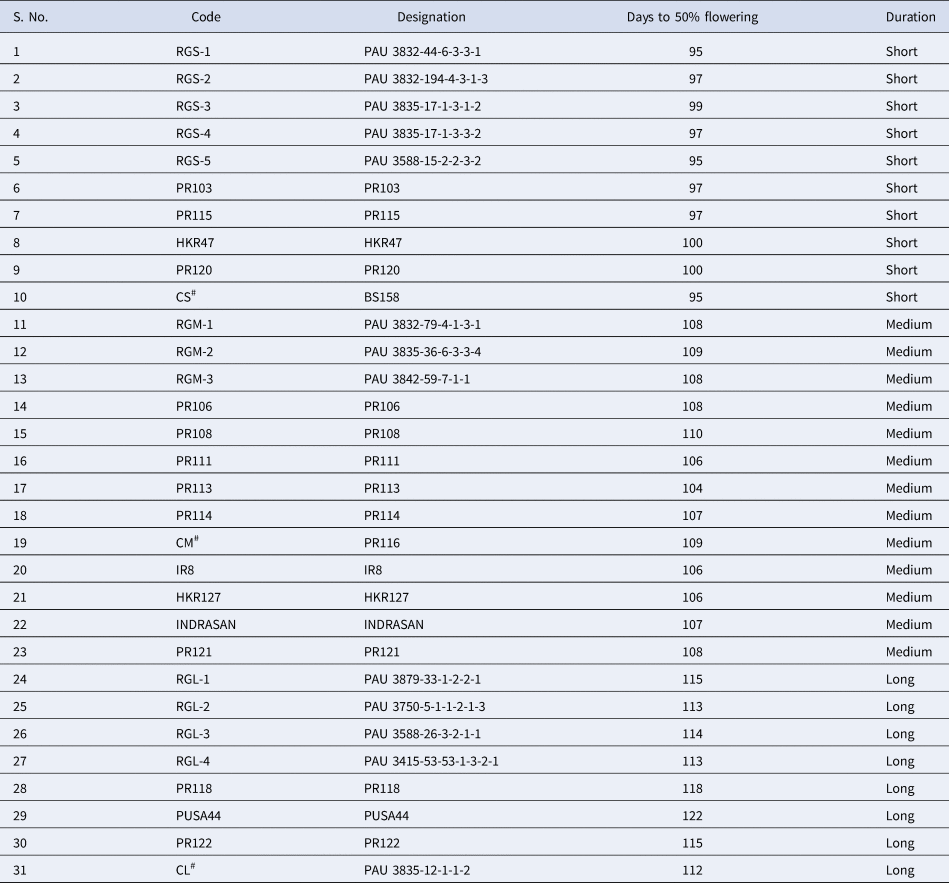
The field experiments were conducted at Punjab Agricultural University (PAU) campus in Ludhiana (Latitude N 30° 54′ 10.30″, Longitude E 75° 48′ 57.05″, Altitude 262 m), India during three consecutive years (year-1: 2012, year-2: 2013 and year-3: 2014). Seeds of 31 rice genotypes were obtained from the Department of Plant Breeding and Genetics, PAU, Ludhiana, India. Based on days to 50% flowering rice genotypes were categorized into three groups namely short, medium and long duration genotypes (Table 1).
Rice genotypes included in this study

# CS - check short duration, CM - check medium duration, CL - check long duration
Experimental design
The seed of each genotype was sown two times on 20 May and 1 June in three years. One-month-old nursery of each genotype was transplanted at two dates 20 June (PD1) and 5 July (PD2) into a randomized block design, replicated thrice. The size of the plot was 2 m × 1 m with a distance between hills of 20 × 15 cm. Nitrogen (125 kg/ha), phosphorus (30 kg/ha) and potash (30 kg/ha) were applied according to the PAU recommendations. Whole phosphorus, potassium, and one third of the nitrogen fertilizer dose were applied prior to transplantation, and the remaining nitrogen dose was applied at 21 and 42 days after transplanting.
Disease assessment and weather data
The experiment was carried out at hot spot location, PAU, Ludhiana India, under natural conditions for three years. Different disease variables such as per cent infected panicles, number of false smut balls per plant and disease score (IRRI, 2002) were recorded 25 days after flowering by randomly selecting three plants from each line. The data on weather parameters including mean temperature, relative humidity, total rainfall, total rainy days and sunshine hours were recorded during the flowering period at agro-meteorological observatory of PAU, Ludhiana, situated at 200 m away from the experimental site (online Supplementary Table S1).
Statistical analysis
The correlation coefficient was calculated within disease variables using the statistical software R 4.0.3 (R Core Team, 2016). Data were subjected to analysis of variance (ANOVA) using a general linear model (GLM) with IBM® SPSS® Statistics 26.0 software (IBM Corp, Reference IBM Corp2019). Year (2 df), genotype (30 df) and planting date (1 df) were used as a independent variable, and infected panicle, number of false smut balls per plant and disease score was considered as dependent variables. Hierarchical cluster analysis of genotypes was done using Euclidean distance with the statistical software R 4.0.3 (R Core Team, 2016).
Results
Relationship between disease variables
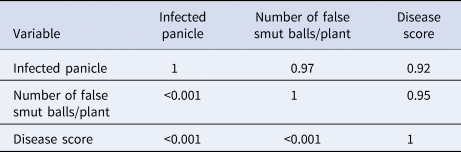
Three disease variables such as per cent infected panicle, number of false smut ball per plant and disease score were measured on rice genotypes for quantification of false smut disease. These disease variables were significantly positive (P ≤ 0.01) correlated to each other (Table 2). The correlation coefficient was 0.97 for infected panicle and number of false smut balls per plant. Disease score also showed a positive correlation with infected panicle (r = 0.92, P ≤ 0.01) and number of false smut balls per plant (r = 0.95, P ≤ 0.01).
Spearman's correlation analysis of false smut variables

Coefficients (above diagonal) and P-value (below diagonal).
Effect of year and planting date on disease variable
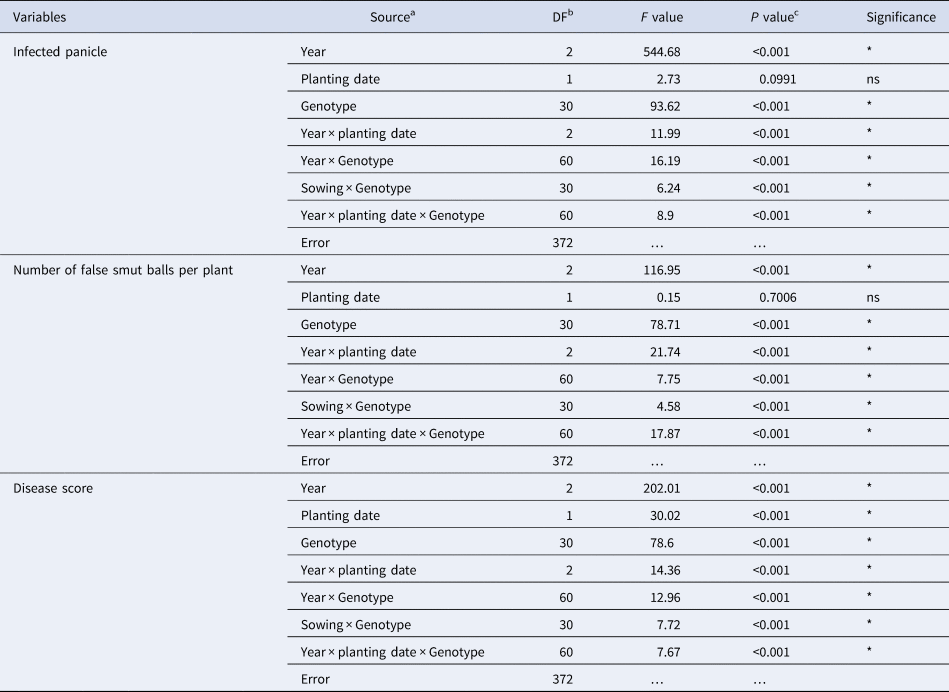
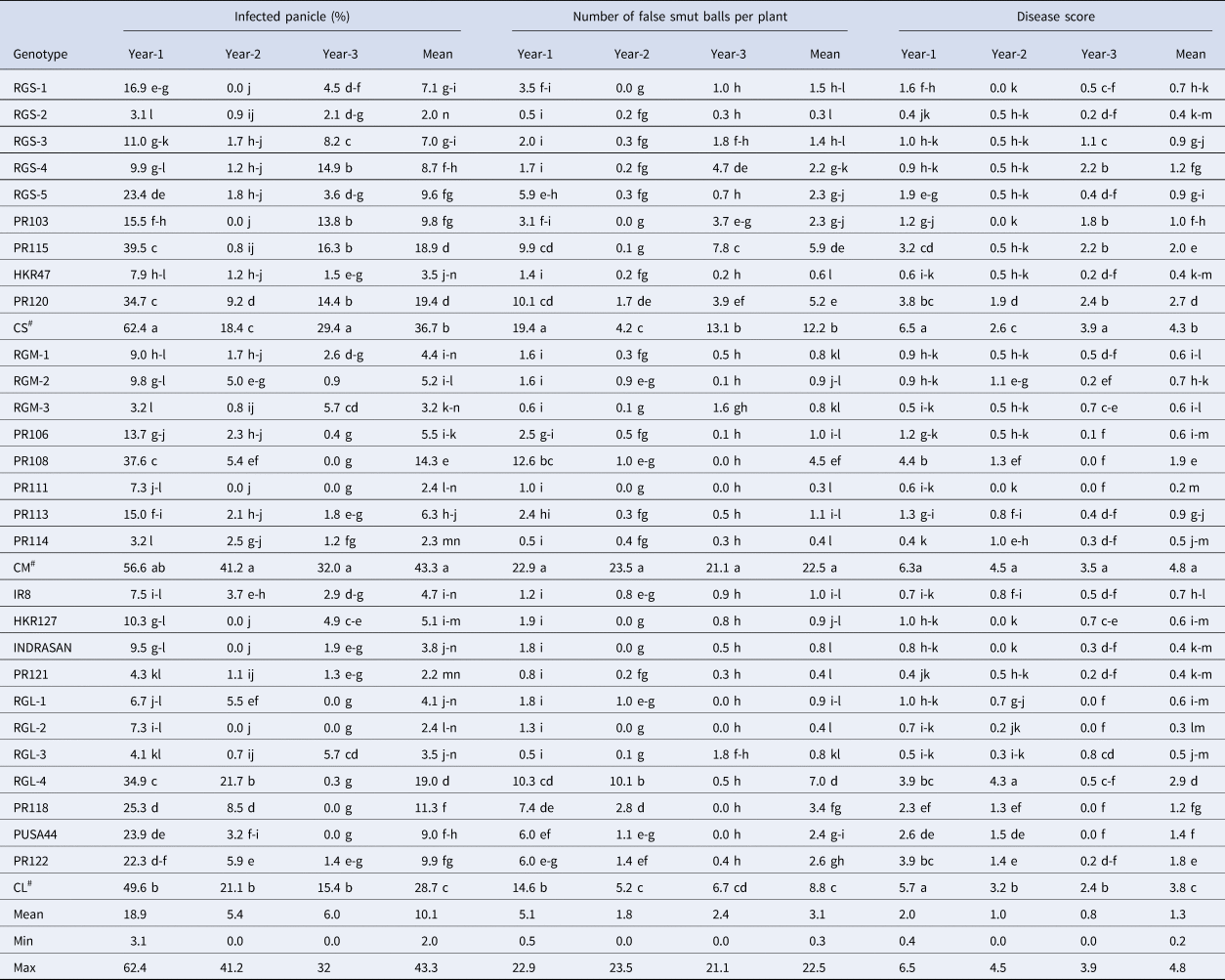
A significant (P ≤ 0.01) effect of year was observed on infected panicle, number of false smut balls per plant and disease score in the tested genotypes (Table 3). The average higher infected panicle (18.9%) during the year-1 as compared to year-2 (5.4%) and year-3 (6.0%) (Table 4). Similarly, number of false smut ball per plant and disease score (Table 4) was also higher during the year-1 as compared to other years. The effect of planting date was non-significant on infected panicle and number of false smut ball per plant (Table 3). However, the interaction between year and planting date was significant (Table 3). The average infected panicle was higher (19.8%) in PD1 during year-1 as compared to PD1 year-2 (4.0%) and PD1 year-3 (5.7%) (online Supplementary Table S2). A similar trend has been observed in number of false smut balls per plant (online Supplementary Table S3) and disease score (online Supplementary Table S4).
Analysis of variance for the effect of genotype, year of testing and planting date on infected panicle, number of smut balls/plant and disease score

a Source of variation: Year – 3, planting date – PD1 and PD2, Genotype – 31.
b Degrees of freedom.
c *Significant at P ≤ 0.01, ns non-significant at P > 0.05.
Effect of genotype and planting date on infected panicle, number of false smut balls per plant and disease score during three consecutive years

Mean value followed by different alphabets within column are significantly different at P < 0.05 according to Fisher's Least Significant Difference test.
# CS - check short duration, CM - check medium duration, CL - check long duration
Effect of genotype and planting date on disease variable
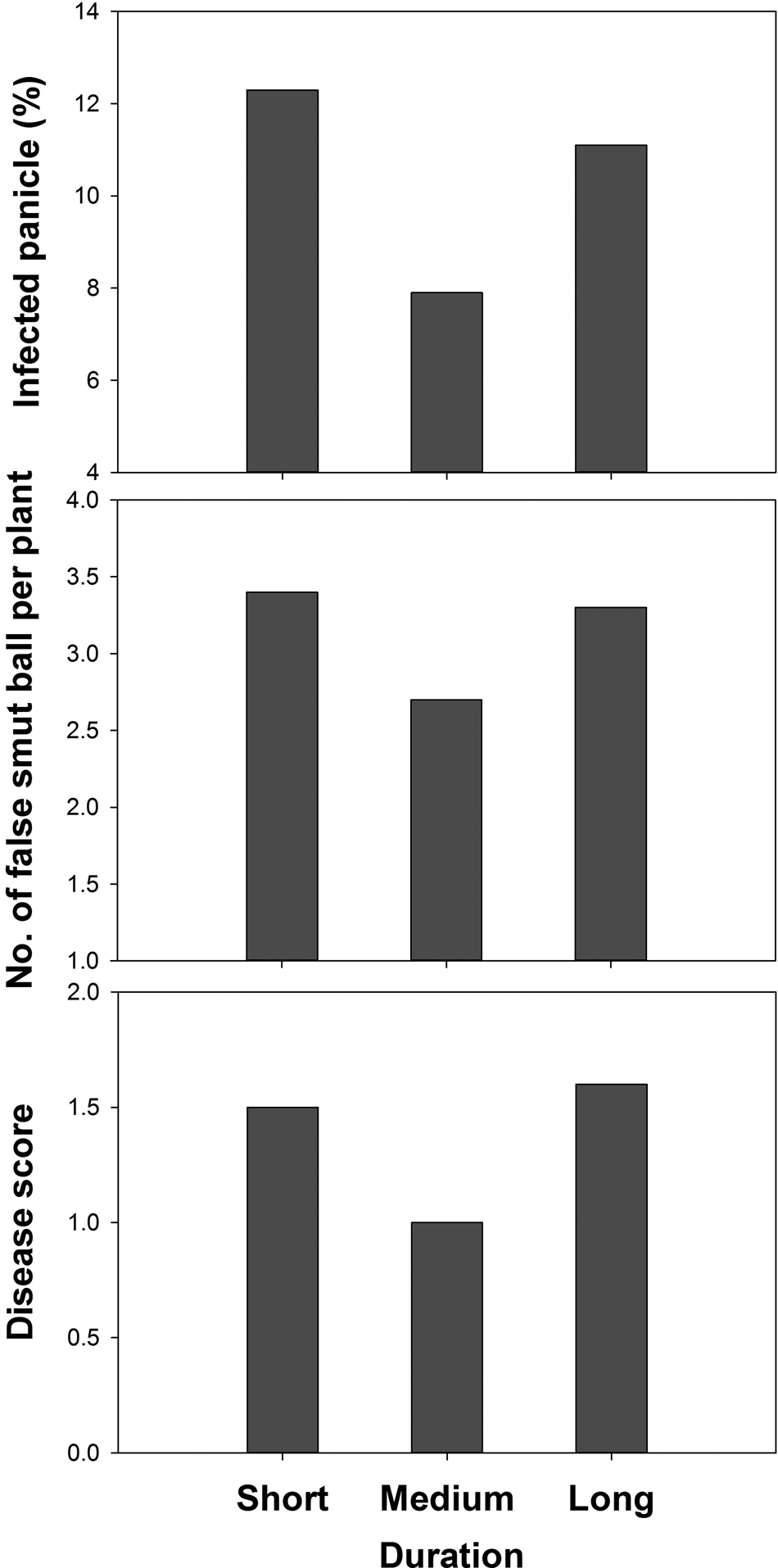
Genotypes had a significant (<0.001) effect on all disease variables (Table 3). Infected panicle ranged between 0.0% and 75.4%, number of false smut balls per plant from 0.0 to 40.7 and disease score from 0.0 to 7.0 were observed on the genotypes during different years of testing (online Supplementary Tables S2, S3, S). Three elite lines namely RGS-2 (PAU3832-194-4-3-1-3), RGM-3 (PAU3842-59-7-1-1) and RGL-2 (PAU3750-5-1-1-2-1-3) had the lowest disease variables such as infected panicle (0.0–9.4%), number of false smut ball per plant (0.0–1.7) and disease score (0.0–0.7) as compared to susceptible check rice hybrid BS 158 carried the highest infected panicle (14.8–75.4%), number of false smut ball per plant (3.3–25.1) and disease score (1.6–7.0) during different planting date in three testing years. Elite lines PR 111, PR 114 and PR 121 recorded comparatively lower disease variables than RGM-3 in the medium duration category (Table 4). The interaction between planting date × genotype was significant (<0.001) on the disease variables (Table 3). Genotype RGS-5 and PR113 showed significantly higher infected panicle in PD1 as compared to PD2 during year-1. However, PR115 and Pusa44 showed comparatively higher infected panicle in PD2 (online Supplementary Table S2). No any disease variables (0.0%) were observed in some of the genotypes during PD1 in year-2 and year-3, however, these genotypes showed significantly higher infected panicle in PD2 (online Supplementary Table S2). Duration of the genotypes had also effect on disease variables. Over all mean showed that short duration genotypes showed higher disease variables as compared to medium and long duration genotypes (Fig. 1).
Effect of different durations (short, medium and long) of rice genotypes on false smut variables; (a) Infected panicle (%), (b) Number of false smut balls per plant and (c) Disease score.

Genotype groups according to the disease variables
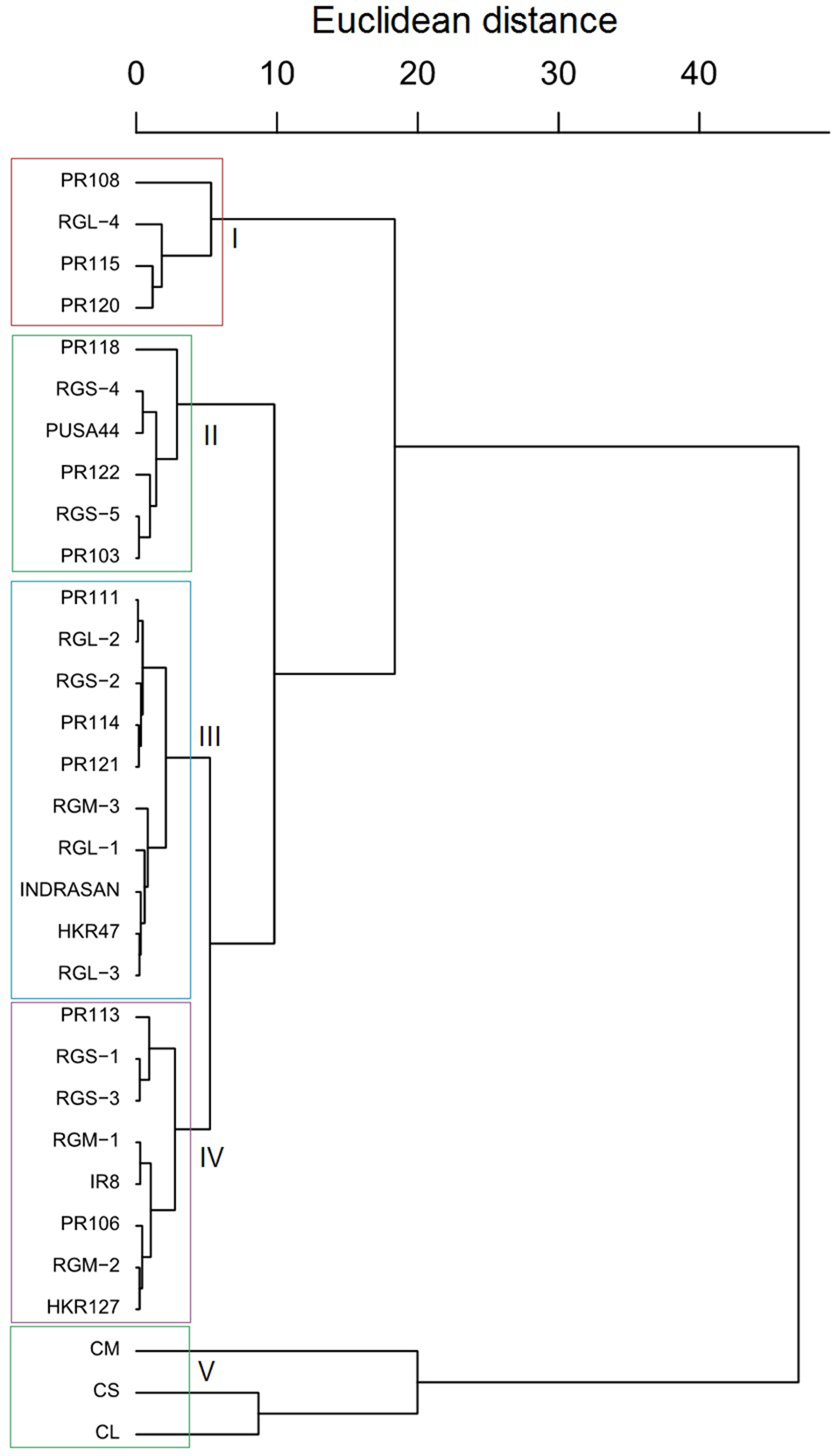
Cluster analysis was conducted with all the disease variables: infected panicle, number of false smut ball per plant and disease score. Five main groups were identified from the hierarchical cluster analyses using Euclidean distance (Fig. 2; online Supplementary Fig. S1). The fifth group with three susceptible checks BS158 (CS), PR116 (CM) and PAU3832-12-1-1-2 (CL) was corresponded to the highest average values of infected panicle (36.2%), number of false smut ball per plant (14.5) and mean disease score (4.3). This was followed by the first group (distance 20.0) with PR108, RGL-4 PR115 and PR120 and a second group (Distance 10.0) with PR118, RGS-4, Pusa 44, PR122, RGS-5 and PR103. The third group (distance 4.0) corresponded to the lowest average values of infected panicle (3.0%), number of false smut ball per plant (0.6) and disease score (0.4). with ten genotypes namely PR111, RGL-2, RGS-2, PR114, PR121, RGM-3, RGL-1, Indrasan, HKR47 and RGL-3. The fourth group comprising PR113, RGS-1, RGS-3, RGM-1, IR8, PR106, RGM-2 and HKR127 was close to third group with average infected panicle (5.7%), number of false smut ball per plant (1.1) and mean disease score (0.7).
Grouping of rice genotype based on cluster analysis according to the disease variables.

Discussion
False smut has recently become a serious disease worldwide, with very less source of high-level resistance in the prevailing germplasms (Zhou et al., Reference Zhou Y, Xie X, Zhang, Wang, Liu X, Zhu L and Li Z2013; Gou et al., Reference Gou, Li, Fan, Li, Haung and Wang2012). In the present study, quantification of false smut resistance in elite breeding lines was done using different disease variables such as per cent infected panicle, number of false smut balls per plant and disease score. Days to flowering are crucial for the disease development therefore all rice genotypes were classified into different duration such short, medium and long. The resistance/susceptible level of the genotypes were compared with susceptible checks BS158 (short), PR116 (medium) and PAU 3835-12-1-1-2 (long) of each duration. Mean relative humidity (RH) between 89.2% (morning) and 59.2% (evening), mean temperature 22.7 °C (minimum) and 33.2 °C (maximum), total rainfall from 24.0 to 278.8 mm, rainy days from 2.0 to 12.0 and sunshine h/day from 5.9 to 8.3 was reported during the flowering days of different experiments in this study (online Supplementary Table S1). During year-1, total rain fall 278.8 mm, rainy days 12.0 and RH 88.1% (morning) and 69.2% were higher as compared to other years (online Supplementary Table S1). These weather conditions were highly favourable for false smut development during year-1 (Table 4). The results were agreement with Dangi (Reference Dangi2020), who observed that heavy rainfall, more number of rainy days and high humidity (95.0%) favourable for the disease development. Similarly, the incidence of false smut disease was highly correlated with days to flowering, rain fall, relative humidity and temperature (Narinder and Singh, Reference Narinder and Singh1989; Nessa et al., Reference Nessa, Salam, Haque, Biswas, Latif, Ali and Galloway2015; Lore et al., Reference Lore, Jain, Kumar, Kamboj, Khanna, Dhillon, Zaidi and Singh2021).
The present study has identified high variations in rice germplasm in response to false smut. Ten genotypes namely PR111, RGL-2, RGS-2, PR114, PR121, RGM-3, RGL-1, Indrasan, HKR47 and RGL-3 were having lower number of average smut balls per plant (0.6) as compared to susceptible checks (14.5) (online Supplementary Fig. S1). Various researchers (Jin et al., Reference Jin, Dai, He, Qian and Xue2005; Mandhare et al., Reference Mandhare, Gawade, Game and Padule2008; Lore et al., Reference Lore, Pannu, Jain, Hunjan, Kaur and Mangat2013; Kumar et al., Reference Kumar, Dwivedi, Kumar, Bhakta, Prakash, Rao, Samal, Yadav, Jaiswal, Kumar, Sharma and Mishra2017; Baite et al., Reference Baite, Raghu, Lenka, Mukherjee, Prabhukarthikeyan and Jena2017) have also described variations in the susceptibility level of rice varieties to false smut. Haung et al. (Reference Huang, Li, Hua, Ma, Qiu, Liang and Lan2010) evaluated regional rice hybrids and found significant variation but, majority of the rice hybrids showed a susceptible reaction. The differences between the tested rice varieties to false smut can be explained not only by environmental factors that can influence the host-pathogen interaction, but also by differences in the genetic makeup of the tested varieties (Walker, Reference Walker1975). Mohiddin et al. (Reference Mohiddin, Bhat, Gupta, Gupta and Kalha2012) tested four genotypes of rice for resistance to false smut. Of the four genotypes tested, HRI 119 had lowest incidence. Singh and Sundar (Reference Singh and Sunder2015) tested 123 non-scented hybrid and inbred genotypes wherein identified the source of resistance to false smut. Out of these, nine genotypes, namely HKR 05-10, HKR 05-22, HKR 07-95, HKR 07-239, HKR. 08-12, HKR 08-17, HKR 08-71, HKR 08-110 and HKR 08-118 were found resistance to false smut. Similarly, the genotypes namely PR111, RGL-2, RGS-2, PR114, PR121, RGM-3, RGL-1, Indrasan, HKR47 and RGL-3 showed lower disease variables (Table 4).
The disease variables such as per cent infected panicle, number of false smut balls per plant and disease score were positively correlated to each other. Similarly, Lore et al. (Reference Lore, Pannu, Jain, Hunjan, Kaur and Mangat2013) reported high correlation between all the disease variables. They also observed quantitative variation in susceptibility level of rice genotypes. Among 25 rice hybrids and 10 inbred cultivars, PR113 and PR114 were having the lowest level of disease intensity and two hybrids NPH 369 and NPH 909 consistently showed a high level of disease intensity. Seven varieties namely Ptb 7, Ptb 23, Ptb 24, Ptb 32, Ptb 36, Ptb 42 and Ptb 46 were free from disease (Raji et al., Reference Raji, Sumiya K, Dhanya, Remya and Narayanankutti M2016). Four rice genotypes, Swarna Shreya, IR96321-1447-521-B-2-1-2, IR96321-1447-651-B-1-1-2 and IR 83294-66-2-2-3-2 were highly resistant against false smut in Bihar (Kumar et al., Reference Kumar, Dwivedi, Kumar, Bhakta, Prakash, Rao, Samal, Yadav, Jaiswal, Kumar, Sharma and Mishra2017).
The results showed that genotype duration also effects the development of false smut in genotypes. The short duration genotypes had higher disease variables as compared to medium duration genotypes. Lore et al. (Reference Lore, Pannu, Jain, Hunjan, Kaur and Mangat2013) and Rani et al. (Reference Rani, Sharma, Lore, Pannu and Kaur2016) also found that short-duration varieties had higher disease score as compared to medium and long duration varieties. The contradictory findings have been reported by several authors (Atia, Reference Atia2004; Jin et al., Reference Jin, Dai, He, Qian and Xue2005; Hiremath et al., Reference Hiremath, Bhatia, Jain, Hunjan, Kaur, Zaidi and Lore2021). They found that short-duration varieties are more resistant than medium and long duration varieties. This could be due to favourable weather factors during days to flowering.
Conclusion
The utilization of resistant rice varieties is thought to be one of the most economical and environmentally efficient ways of crop protection instead of chemicals, where the latter adds additional costs to production, and chemical contamination of environment and food. It is concluded that rice genotypes found resistance to false smut disease under favourable environmental conditions that could be utilized to transfer false smut resistance in the elite cultivars. Days to flowering and duration of genotype plays very crucial role for disease development therefore, it should be kept in mind before screening for false smut resistance.
Supplementary material
The supplementary material for this article can be found at https://doi.org/10.1017/S1479262122000041
Acknowledgement
We acknowledge the Department of Plant Breeding and Genetics, PAU, Ludhiana, India for providing the seeds of rice genotypes.
Conflict of interest
The authors should declare that they do not have any conflict of interest.