There is increasing interest in identifying risk markers for serious and persistent aggression and antisocial behavior, problems that may persist well into adulthood (Frick & Morris, Reference Frick and Morris2004; Frick & White, Reference Frick and White2008). One marker that has attracted considerable interest is the presence of callous-unemotional (CU) features, particularly when these are identified early in development (e.g., lack of empathy, uncaring attitude) (Frick, Ray, Thornton, & Kahn, Reference Frick, Ray, Thornton and Kahn2014; Frick & White, Reference Frick and White2008; Hawes et al., Reference Hawes, Byrd, Henderson, Gazda, Burke, Loeber and Pardini2014). CU features are associated with a severe and chronic trajectory of aggressive antisocial behavior (Fontaine, McCrory, Boivin, Moffitt, & Viding, Reference Fontaine, McCrory, Boivin, Moffitt and Viding2011) and are considered to be analogous to the affective component of psychopathy (Hare et al., Reference Hare1991). High levels of CU features are associated with low levels of fear and engagement in novel and risk-taking activities (Frick, Cornell, Barry, Bodin, & Dane, Reference Frick, Cornell, Barry, Bodin and Dane2003) and indifference or lack of responsiveness to others’ emotions, particularly fear (e.g., Dadds, El Masry, Wimalaweera, & Guastella, 2008). Given the growing literature on CU features in youth, further research is required to understand clinically relevant mechanisms of youth with CU features.
Contemporary research has viewed youth with CU features as a homogeneous and stable group marked by a biological predisposition, suggesting these youth as having CU “traits” (Frick et al., Reference Frick, Ray, Thornton and Kahn2014). Counter to this perspective, there is growing evidence of diverse etiological pathways leading to the development of CU features. Differing etiological pathways resulting in at least two profiles of CU features were proposed over 75 years ago. According to Karpman's (Reference Karpman1941) model, “primary” profiles of CU features resulted from a genetically based deficit in emotion processing, resulting in a lack of anxiety and diminished sensitivity to others’ emotional cues. In contrast, “secondary” profiles of CU features were attributed to an affective deficit produced by pathogenic environmental factors. The central premise of this view is that children who are exposed to chronic maltreatment, particularly in the context of relationships with caregivers, suffer from high levels of dysregulation and experience an adaptive process in which they suppress or numb their emotions in order to cope (Porter, Reference Porter1996).
Consistent with this view, several studies have reported on two variants in the expression of CU features or psychopathy in youth, typically profiled based on levels of anxiety (e.g., Gill & Stickle, Reference Gill and Stickle2016; Kahn et al., Reference Kahn, Frick, Youngstrom, Kogos Youngstrom, Feeny and Findling2013; Kimonis, Frick, Munoz, & Aucoin, Reference Kimonis, Frick, Munoz and Aucoin2008; Tatar, Cauffman, Kimonis, & Skeem, Reference Tatar, Cauffman, Kimonis and Skeem2012). Results have confirmed that compared to youth with a primary profile of CU features or psychopathy, the secondary profile is characterized by higher youth-reported levels of maltreatment. Although there are several studies investigating the level of anxiety and maltreatment in primary and secondary profiles, what is less clear in the literature is whether associated affective and regulatory features are associated with these two profiles. The current study examines the importance of these affective and regulatory features in distinguishing between primary versus secondary profiles of CU features in a clinical sample of youth. In addition, because much of the literature has been focused on adjudicated boys, this study also examines the comparability of primary and secondary profiles across gender.
Affect regulation
To better understand the heterogeneity and CU feature profiles, researchers have begun to examine differences in affect development and regulation (e.g., Bennett & Kerig, Reference Bennett and Kerig2014). Affect regulation emerges from “intrinsic features and extrinsic socioemotional experiences within the context of early parent-child interactions” (Cicchetti, Reference Cicchetti2016, p. 194). Adaptive processing of emotions, or affect regulation, serves as a prerequisite for adaptive social and moral development and influences the development of CU features (Blair, Colledge, Murray, & Mitchell, Reference Blair, Colledge, Murray and Mitchell2001). Children's emotional experiences in the context of committing transgressions (e.g., aggressive behavior) shape their moral development (Kimonis et al., Reference Kimonis, Frick, Munoz and Aucoin2008). In typically developing children, a transgression is met with distress cues from the victim (e.g., crying) or with a parent's response (e.g., disapproval) that signals a threat of punishment. Both responses typically result in increased anxiety or discomfort in the child. Over time, strong emotions of fear and guilt promote prosocial behavior even in the absence of a parent or caregiver (Kimonis et al., Reference Kimonis, Frick, Munoz and Aucoin2008). Research suggests that children with CU features do not experience these negative affective states (i.e., hypoaroused) in response to transgressions, and thus show low empathic concern and poor moral development (Blair, Peschardt, Budhani, Mitchell, & Pine, Reference Blair, Peschardt, Budhani, Mitchell and Pine2006). Consistent with this view, research has shown that children and adolescents high on CU features demonstrated impaired recognition of others’ emotional cues, such as fear and sadness (Frick et al., Reference Frick, Ray, Thornton and Kahn2014); low attention to the eye region of the face (Dadds, 2008); and low psychophysiological reactivity and distress to distress cues (Blair, Reference Blair1999). Such characteristics, including deficits in affective arousal, emotional recognition, empathic responsiveness, and moral development, have been thought to be highly related to the presentation of a primary profile (Kimonis et al., Reference Kimonis, Frick, Munoz and Aucoin2008). However, they do not explain how those with the secondary profile come to develop CU features.
In support of Porter's (Reference Porter1996) theory, there is evidence that those demonstrating a secondary profile engage in negative self-regulation strategies (e.g., emotional numbing) (Bennett & Kerig, Reference Bennett and Kerig2014), have more difficulties with self-regulation (Fanti & Kimonis, Reference Fanti and Kimonis2017), and have physical indicators of amygdala dysfunction (e.g., enhanced aversive startle potentiation) (Kimonis, Fanti, Goulter, & Hall, Reference Kimonis, Fanti, Goulter and Hall2017a). Additionally, authors in each study have noted these affective regulation strategies to be particularly susceptible to the effects of maltreatment (e.g., Kimonis, Fanti, Goulter, & Hall, Reference Kimonis, Fanti, Goulter and Hall2017a).
The role of maltreatment
Children exposed to chronic levels of parental maltreatment are likely to experience overwhelming emotional arousal and dysregulation (Cicchetti, Reference Cicchetti2016). Hyperarousal to emotional cues and environmental influences may interfere with a child's ability to process socialization cues from caregivers and thus impair or interfere with moral development (Kochanska, Reference Kochanska1997). The secondary CU profile appears to arise from the active attempt to suppress or avoid this hyperarousal, resulting in difficulty with processing and regulating affect. Consistent with this model, adjudicated boys with secondary psychopathy have been found to be more likely to endorse negative emotionality (e.g., depression, anxiety, anger, attention problems), increased attention to negative emotional stimuli, and increased experiences of childhood maltreatment (Kimonis, Frick, Cauffman, Goldweber, & Skeem, Reference Kimonis, Frick, Cauffman, Goldweber and Skeem2012). Additionally, Kerig, Bennett, Thompson, and Becker (Reference Kerig, Bennett, Thompson and Becker2012) found that numbing of fear and sadness mediated the relationship between betrayal maltreatment (i.e., maltreatment perpetrated by a caregiver) and CU features in adjudicated youth. Emotional numbing and inhibition of empathy is reinforcing because it effectively lowers distress (e.g., reduced psychological distress and somatic symptoms) and is especially adaptive in contexts where children cannot escape maltreatment (Lansford et al., Reference Lansford, Malone, Stevens, Dodge, Bates and Pettit2006; Bennett & Kerig, Reference Bennett and Kerig2014). Although developed as a coping strategy, avoidance of affective arousal may limit opportunities for the development of affect regulation skills and may inadvertently lead to an increased risk of aggressive and antisocial behaviors in response to perceived threat (Kerig et al., Reference Kerig, Bennett, Thompson and Becker2012).
Maltreatment has been an important factor in understanding primary and secondary profiles of CU features and associated psychopathy. Adjudicated males presenting with secondary profiles but not primary profiles were found to have higher levels of sexual abuse, emotional abuse, and physical neglect (Kimonis, Fanti, Isoma, & Donoghue, Reference Kimonis, Fanti, Isoma and Donoghue2013), posttraumatic stress disorder (PTSD) symptoms, and dissociation (Tatar et al., Reference Tatar, Cauffman, Kimonis and Skeem2012). These results are consistent across other studies, including justice-involved males and females (e.g., Bennett & Kerig, Reference Bennett and Kerig2014; Sharf et al., Reference Sharf, Kimonis and Howard2014) and clinical samples (Kahn et al., Reference Kahn, Frick, Youngstrom, Kogos Youngstrom, Feeny and Findling2013). Bennett and Kerig (Reference Bennett and Kerig2014) found that youth identified as having higher levels of maltreatment and trauma-related symptoms (i.e., youth demonstrating secondary profiles) showed less acceptance of emotions, greater emotional suppression, were more likely to identify negative affect in others, and demonstrated less ability to identify and differentiate their own emotions compared with youth with primary profiles of CU features and those with low CU features. Importantly, higher levels of PTSD symptoms (e.g., avoidance of traumatic stimuli, dysregulated affect) have consistently been associated with secondary profiles of CU features, but not with primary profiles (e.g., Bennett & Kerig, Reference Bennett and Kerig2014; Kahn et al., Reference Kahn, Frick, Youngstrom, Kogos Youngstrom, Feeny and Findling2013). Therefore, the evidence and theory suggest that maltreatment is an important indicator of primary and secondary profiles of CU features.
Youth with both primary and secondary profiles typically present with shallow affect and callous use of others. However, in addition to higher levels of exposure to maltreatment, those with secondary profiles also tend to present with higher levels of psychopathology and emotionality, including higher levels of depression, anxiety, anger, impulsivity, reactive aggression, and attention problems (Kahn et al., Reference Kahn, Frick, Youngstrom, Kogos Youngstrom, Feeny and Findling2013; Kimonis et al., Reference Kimonis, Skeem, Cauffman and Dmitrieva2011; Kimonis et al., Reference Kimonis, Frick, Cauffman, Goldweber and Skeem2012). These symptoms of psychopathology have been found to be behavioral expressions of affect dysregulation (Leibenluft, Reference Leibenluft2011), which lends additional support to the theory that secondary CU profiles are a reflection of hyperarousal (Kimonis et al., Reference Kimonis, Frick, Munoz and Aucoin2008).
Taken together, evidence suggests that problems with affect regulation, increased exposure to maltreatment, and a tendency to cope with the maltreatment through the suppression of emotions, are defining characteristics of youth with a secondary profile of CU features. Although maltreatment has been used sporadically as an indicator of profiles, affect regulation strategies have been examined exclusively as an outcome. Despite their theorized role in the development of the profiles, research has yet to test whether these affect regulation strategies, in addition to maltreatment, could be used as indicators of primary and secondary profiles of CU features. The inclusion of maltreatment, affect dysregulation, and affect suppression, in addition to anxiety, in the model of CU profiles would therefore reflect the original theory.
There is a paucity of research examining primary and secondary CU profiles across gender. Some have suggested that the secondary profile may be more likely to emerge in a sample of girls rather than boys due to the higher symptoms of dysregulation and emotionality amongst females (Gill & Stickle, Reference Gill and Stickle2016). Two studies reported that females were more likely to present with the secondary profile compared with the primary profile (Bennett & Kerig, Reference Bennett and Kerig2014; Euler et al., Reference Euler, Jenkel, Stadler, Schmeck, Fegert, Kölch and Schmid2015); however, a third study found no gender differences (Kahn et al., Reference Kahn, Frick, Youngstrom, Kogos Youngstrom, Feeny and Findling2013). Furthermore, Gill and Stickle (Reference Gill and Stickle2016) found no gender differences in clinical presentations (e.g., negative emotionality) across CU variants. Due to the small number of studies examining gender and inconsistent results (e.g., Bennett & Kerig, Reference Bennett and Kerig2014; Kahn et al., Reference Kahn, Frick, Youngstrom, Kogos Youngstrom, Feeny and Findling2013), there is no clear indication that the secondary profile is more likely to emerge among females compared with males. This has led to a call for more research on gender and CU variants, particularly in relation to outcomes (e.g., Gill & Stickle, Reference Gill and Stickle2016).
Current study
Research clearly shows that there are two CU profiles (e.g., Bennett & Kerig, Reference Bennett and Kerig2014; Kahn et al., Reference Kahn, Frick, Youngstrom, Kogos Youngstrom, Feeny and Findling2013). A primary CU profile is characterized by insufficient arousal and responsivity to emotional cues, which naturally leads to low emotion dysregulation, whereas a secondary CU profile is characterized by hyperarousal and responsivity to emotional cues and high emotion dysregulation (Kimonis et al., Reference Kimonis, Fanti, Goulter and Hall2017a). Importantly, the secondary profile also appears to be associated with avoidance of attending to emotional cues and attempts to suppress arousal (Bennett & Kerig, Reference Bennett and Kerig2014). These attempts at suppression are likely related to the negative affect state that ensues with arousal due to increased exposure to maltreatment (Porter, Reference Porter1996). Historically, anxiety and exposure to maltreatment have been the hallmarks distinguishing primary from secondary CU variants (Kimonis et al., Reference Kimonis, Frick, Cauffman, Goldweber and Skeem2012). Although research defining primary and secondary CU profiles using anxiety increased our understanding of different presentations of CU, examining other features that may distinguish the profile groups may be key to informing treatment targets. To this end, it is also important to understand the differences in how youth with primary and secondary CU profiles regulate their emotions.
We have focused our discussion on the importance of affect dysregulation and suppression in understanding primary and secondary CU profiles. The first aim of the current study was to examine whether affect dysregulation and affect suppression add to the list of features that distinguish primary from secondary CU profiles. These features, along with anxiety and maltreatment, were examined to determine CU profiles in youth drawn from a clinical sample who were high on CU features. The primary CU group was expected to show low levels of affect dysregulation, affect suppression, anxiety, and maltreatment. The secondary CU profile was expected to demonstrate high levels of affect dysregulation, affect suppression, anxiety, and maltreatment. The second aim was to examine associated psychopathology (e.g., oppositional, conduct problems, depressive symptoms) in these two profiles and to compare findings in this regard with previous literature (e.g., Kahn et al., Reference Kahn, Frick, Youngstrom, Kogos Youngstrom, Feeny and Findling2013). Last, this study is the first to examine whether CU profiles can be identified in a similar way when examined separately by gender compared to a mixed gender sample. Due to the lack of research on females, no specific predictions regarding gender differences were made.
Methods
Procedures
Participants from this study were drawn from a provincial-wide intervention evaluation for the Connect Parent Group Program (Moretti & Braber, Reference Moretti and Braber2013), a mental health program for parents or alternative caregivers of pre-teens and teens with serious behavior problems. The majority of parents who attended the group were referred by community mental health teams, schools, or other mental health professionals as a result of concerns about their child's mental health and behavioral functioning. One child from each parent participant was asked to complete a set of questionnaires at the baseline, middle, and end of the treatment. Of those who attended the Connect Parent Group Program, 75% (n = 612) of parents and 50% (n = 450) of youth filled out questionnaires. Every participant in the current study had parental consent to complete the study. Exclusion criteria included the presence of a major mental illness (e.g., schizophrenia) or low IQ, as reported by the parent. The current study uses data collected from 85 groups beginning in the spring of 2014 until the end of the summer of 2015. Participants in the current study included youth ages 12 years and older (n = 32 excluded) to ensure that the participants understood the questionnaires, which were evaluated to be at the 7th grade reading level.
Participants
Participants (N = 418; 56.7% female) ranged in ages 12 to 19 years (M = 15.04, SD = 1.85). Of the sample that reported ethnicity (n = 378), over half of the sample identified as Caucasian (65.3%). The remaining sample identified as Asian (6.6%), Aboriginal (8.7%), and other (e.g., mixed race, Hispanic; 19.2%). At the time of the study, 87.6% of the sample were living with their biological parents, 5.3% were in foster care or group homes, and 7.7% were living with other relatives or elsewhere. In total, 10.5% of the sample had been in foster care at some point in their life ranging from one to six placements. Some of the youth had contact with the law, including facing a charge (4.8%), conviction, and/or probation (3.3%).
Parent education level (n = 371) ranged from some high school courses (8.6%), completed high school (23.5%), some college/university (14.6%), completed college/university (48%), and graduate degree (5.3%). Parent income ranges included 0-25K (24.7%), 25-50K (25%), 50-75K (21.8%), and 75K+ (28.5%).
Measures
Only youth-reported data were included in the study, apart from demographic information (i.e., average household income, parents’ education), which was drawn from parent-report data.
Callous-unemotional features
The Inventory of Callous Unemotional Traits – revised (ICU; Hawes, Dadds, Brennan, Rhodes, & Cauchi, Reference Hawes, Dadds, Brennan, Rhodes and Cauchi2013) is a shortened 12-item self-report measure that assesses two factors associated with a higher-order CU dimension as well as a total overall score. The ICU-revised scale is based on the larger 20-item full ICU (Frick, Reference Frick2004). Each item is rated on a 4-point Likert scale ranging from 1 (Not at all true) to 4 (Definitely true) meaning higher scores relate to higher levels of CU features. The callous factor includes nine items (e.g., “I don't care who I hurt to get what I want”), and the uncaring factor includes eight items (e.g., “I feel bad or guilty when I do something wrong,” reverse coded). The revised scale has shown good psychometric properties in clinical and normative samples (e.g., Hawes et al., Reference Hawes, Dadds, Brennan, Rhodes and Cauchi2013). In the current sample, the scales showed good reliability for the callousness and uncaring subscales (α = .72 and .80, respectively) and the total score (α = .83).
Affect dysregulation and suppression of affect
The Affect Regulation Checklist (ARC; Moretti, Reference Moretti2003) is a 12-item self-report measure adapted from published scales of emotion regulation (Gross & John, Reference Gross and John1998, Reference Gross and John2003; Shields & Cicchetti, Reference Shields and Cicchetti1997) and augmented with supplementary items to tap into three aspects of affect regulation in adolescents. Items do not refer to specific emotions and avoid confounding regulatory processes with emotional states. The current study uses two of the ARC's three factors: affect dysregulation (four items, e.g., “I have a hard time controlling my feelings”; “I find it very hard to calm down when upset”) and affect suppression (five items, e.g., “I try hard not to think about my feelings”; “I believe it is best to keep feelings in control and not to think about them”). The third subscale (i.e., adaptive reflection) was not used. Items are scored on a 5-point scale ranging from 1 (Not like myself) to 5 (A lot like myself) and ask about experiences of affect in general. A total mean score was used with higher scores indicating higher levels of affect dysregulation or suppression. The three-factor structure of the ARC and its relationships with emotional and behavioral problems have been confirmed in previous research (Moretti & Craig, Reference Moretti and Craig2013; Penney & Moretti, Reference Penney and Moretti2010). Both the affect dysregulation and affect suppression scales have shown good reliability in the current sample (α = .83 and .74, respectively).
Psychopathology
The Brief Child and Family Phone Interview (BCFPI) (Cunningham, Boyle, Hong, Pettingill, & Bohaychuk, Reference Cunningham, Boyle, Hong, Pettingill and Bohaychuk2009) is a standardized assessment and service evaluation tool. Derived from the Ontario Child Health Study scales, the BCFPI includes many items in common with the Child Behavior Checklist (Achenbach, Reference Achenbach2009; Boyle, Offord, Racine, & Fleming, Reference Boyle, Offord, Racine, Fleming, Szatmari and Sanford1993). In the current study, the BCFPI was administered as a self-report paper and pencil measure. It possesses excellent psychometric properties and has been used in large-scale epidemiological studies (Boyle et al., Reference Cunningham, Boyle, Hong, Pettingill and Bohaychuk2009). Six domains of functioning related to the Diagnostic and Statistical Manual of Mental Disorders (DSM) IV diagnoses are assessed: Attention-Deficit/Hyperactivity Disorder (ADHD) (six items, e.g., “Do you notice that you are impulsive or act without stopping to think?”), Oppositional Defiant Disorder (ODD) (six items, e.g., “Do you notice that you are defiant or talk back to adults?”) , Conduct Disorder (CD) (six items, e.g., “Do you destroy things belonging to others?”), Generalized Anxiety Disorder (six items, e.g., “Do you notice that you worry about past behavior?”), and Major Mood Disorder (nine items, e.g., “Do you have no interest in your usual activities?”). Items from the Generalized Anxiety Disorder scale were used in the clustering analysis for measures of anxiety, whereas the other scales were used to validate the proposed groups. Each scale is rated on a Likert scale from 1 (Never) to 3 (Often) and summed, meaning higher scores relate to more symptoms. All scales had acceptable reliability (α = .68 to .90), which is consistent with previous literature (e.g., Cook et al., Reference Cooke, Leschied, St. Pierre, Stewart, den Dunnen and Johnson2013). Sum scores were retained for the purpose of analysis, whereas age normed t-scores were examined for descriptive information.
For the purposes of this study, ODD symptoms were also split based on the Burke model (Burke, Hipwell, & Loeber, Reference Burke, Hipwell and Loeber2010). This model resulted in two separate dimensions as a behavioral dimension and an emotional/irritable dimension. Currently, no two-dimensional ODD scale has been validated; therefore, items were separated based on theoretical grounds from previous factor analytic literature (e.g., Burke et al., Reference Burke, Hipwell and Loeber2010; Evans, Pederson, Fite, Blossom, & Cooley, Reference Evans, Pederson, Fite, Blossom and Cooley2016; Herzhoff & Tackett, Reference Herzhoff and Tackett2016). Using the BCFPI ODD scale, emotional symptoms of ODD were assessed by three items (i.e., “I am cranky,” “I am easily annoyed by others,” “I am angry and resentful”). Behavioral symptoms of ODD were also represented by three items (i.e., “I blame others for my mistakes,” “I argue with adults,” “I am defiant and talk back to people”).
Maltreatment
The Conflicts Tactics Scale (CTS) (Straus, Reference Straus1979) is a widely used questionnaire that assesses violence and aggression within relationships (e.g., Moretti & Craig, Reference Moretti and Craig2013). In the current study, we used a modified version of the CTS that assesses perpetration and victimization between parent and child as a screener for maltreatment. We focused on teens’ experiences of emotional and physical maltreatment in their relationships with their parents (e.g., “Done to you by your parent”) in the past 6 months. Emotional maltreatment (e.g., “Insulted, put down, or swore at person,” “Said something to spite”) and physical maltreatment (e.g., “Pushed or shoved,” “Slapped”) were assessed by seven items each. Participants rated each item on a 4-point scale from 1 (Never) to 4 (Always). The mean score for each subscale as well as a total maltreatment score were used in the analysis. The scales showed good reliability in the total sample (α = .84 to .87).
Analytic plan
Analyses were conducted using MPlus 7 (Muthén & Muthén, Reference Muthén and Muthén2012) and the Statistical Package for the Social Sciences (SPSS 22, IBM, 2013). Latent profile analysis (LPA), otherwise known as Latent Class Cluster Analysis, is a statistical analysis that allows for the identification of unique profiles indicated by continuous variables of interest (Vermunt & Magidson, Reference Vermunt, Magidson, Hagenaars and McCutcheon2002). To determine which model best fit the data, several fit indices were calculated. The Akaike Information Criterion (AIC) (Akaike, Reference Akaike1987), the Bayesian Information Criterion (BIC) (Schwarz, Reference Schwarz1978), and the Sample-Size Adjusted Bayesian Information Criterion (Sclove, Reference Sclove1987) were used as goodness-of-fit indices, with the lower value indicating the better fitting model. Entropy scores are used to determine the accuracy of the classification. In addition, the Lo-Mendell-Rubin (LMR) (Lo, Mendell, & Rubin, Reference Lo, Mendell and Rubin2001) adjusted likelihood and bootstrap likelihood ratio test (BLRT) were also examined. The LMR and BLRT provide robust inferential statistics that can infer whether the currently specified model fits the data better than the model with one less profile (Masyn, Reference Masyn2013; Meghani, Lee, Hanlon, & Bruner, Reference Meghani, Lee, Hanlon and Bruner2009; Nylund, Asparouhov, & Muthén, Reference Nylund, Asparouhov and Muthén2007). Residual covariance, which represents the correlation between variables not accounted for by the model, was also examined.
As a four-profile solution was predicted, three-, four-, and five-profile models were estimated. The Bolck, Croon, and Hagenaars (BCH) method (Asparouhov & Muthen, Reference Asparouhov and Muthén2014) was used to examine differences on theoretically relevant validating variables. The BCH method allows for the examination of distal outcome variables while accounting for unequal variances among the outcome variables and accounting for measurement error of the latent class. Using the BCH method also addresses concerns from methodologists of classifying participants into distinct groups, as using probabilities accounts for continuous individualistic differences (Bauer & Shanahan, Reference Bauer, Shanahan, Little, Bovaird and Card2007).
To test for gender differences, several properties were examined, including whether the number of latent profiles, the profile specific item response probabilities, and the prevalence of the profiles were the same across boys and girls (Collins & Lanza, Reference Collins and Lanza2010; Finch, Reference Finch2015). Following the same previous steps for boys and girls separately, once the same number of profiles was established for boys and girls, the next step was to determine whether the profile specific item response probabilities differed and whether the profile proportions differed. The models were compared on fit indices (e.g., AIC, BIC, sample-adjusted BIC) and by conducting a chi-square difference test based on the calculated log-likelihood (Finch, Reference Finch2015). If the constrained model fit the data as well or better than the unconstrained model, and the chi-square difference test was insignificant, the conclusion could be made that item responses do not differ between the groups and there are no gender differences (Collin & Lanza, Reference Collins and Lanza2010). Sample size allowed for the detection of medium effect sizes (Faul, Erdfelder, Buchner, & Lang, Reference Faul, Erdfelder, Lang and Buchner2014).
Results
Sample description
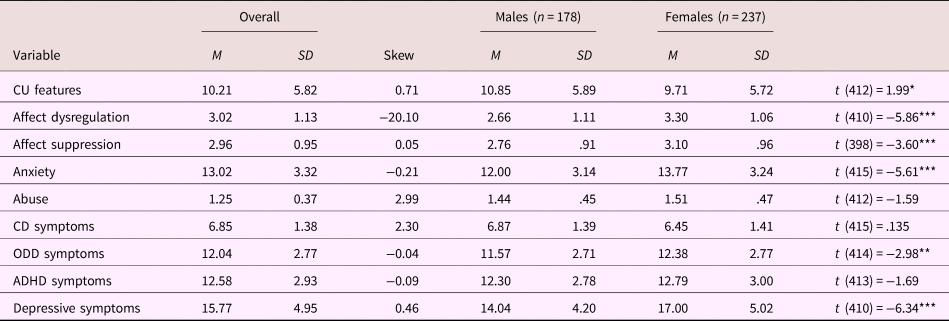
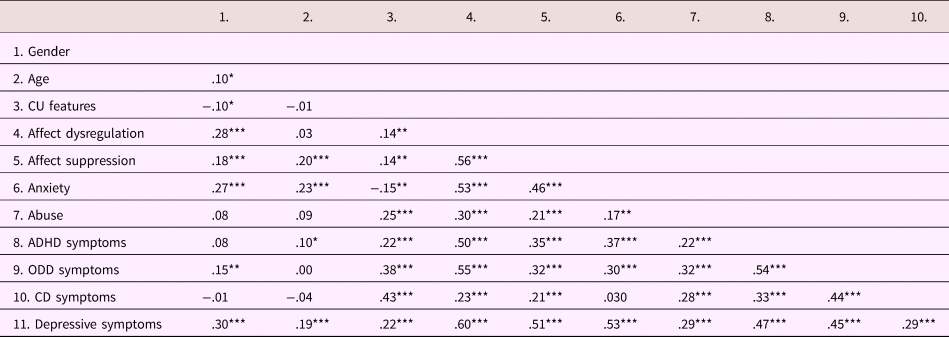
Descriptive statistics for the full sample can be found in Table 1. Correlation for the overall sample can be found in Table 2. In terms of t-scores, the population had a range of clinical scores. T-scores indicate youth with a wide range of clinical concerns with 41.4% of youth reporting at least one clinically significant concern and an additional 33.0% of youth reporting at least one subclinical concern. Specifically, for conduct problems, 14.1% (n = 59) of the youth were in the clinical range, and 20.1% (n = 84) were in the subclinical range. For anxiety, 12.4% (n = 52) were in the clinical range, and 34.4% (n = 144) were in the subclinical range. Finally, 31.3% of youth were in the clinical range for mood problems, and 25.1% were in the subclinical range.
Psychometric properties of the major study variables
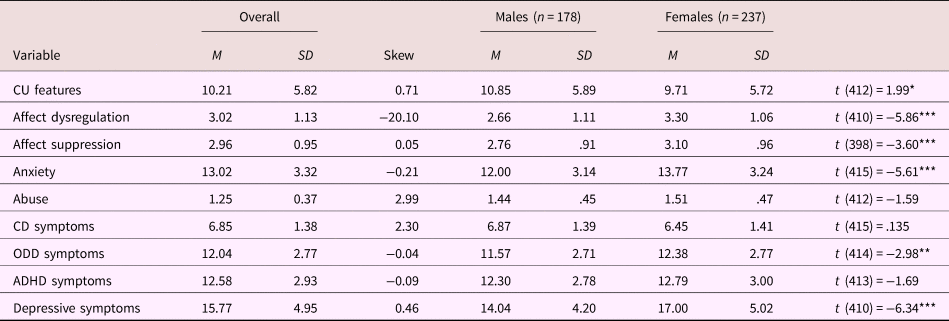
Notes: ADHD = attention-deficit hyperactivity disorder; CD = conduct disorder; CU = callous unemotional; M = Mean; ODD = oppositional defiant disorder; SD = standard deviation; *p < .05, **p < .01, ***p < .001.
Correlations for all variables of interest for a full sample
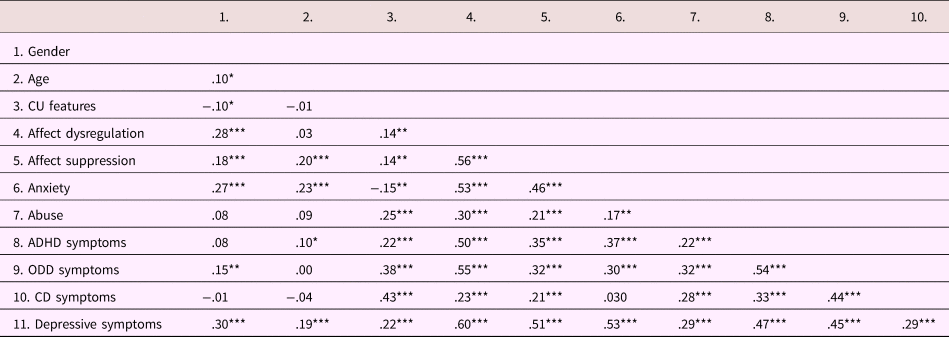
Notes: ADHD = attention-deficit hyperactivity disorder; CD = conduct disorder; ODD = oppositional defiant disorder; *p < .05, ** p < .01, *** p < .001.
Several significant gender differences were found. Females scored significantly higher than males on affect dysregulation: t (410) = −5.86, p < .001; affect suppression: t (398) = −3.60, p < .001); anxiety: t (415) = −5.61, p < .001); ODD symptoms: t (414) = −2.98, p < .01); and depressive symptoms: t (410) = -6.34, p < .001). Males scored higher than females on CU features, t (412) = 1.99, p < .05. There were no gender differences for maltreatment, CD symptoms, or ADHD symptoms.
Can profiles, including two profiles of youth who are high on CU features, be identified?
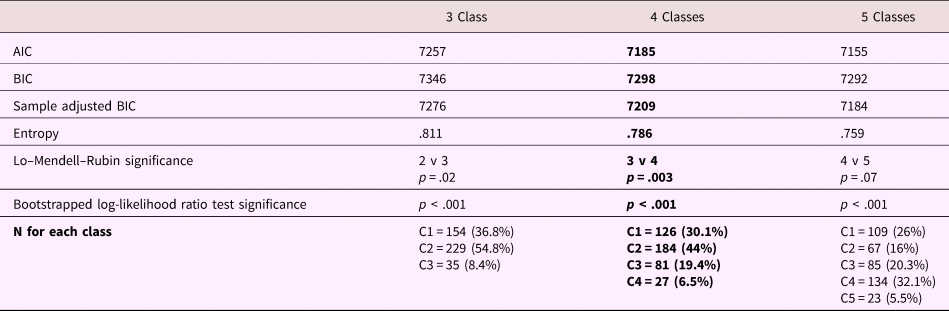
The LPA was conducted using five continuous indicators including measures of CU features, maltreatment, anxiety, affect regulation, and affect suppression. Results of the analysis revealed the best-fitting model to be the four-profile solution as indicated through examination of multiple indicators of best fit (see Table 3). The entropy score (.786) suggests good classification accuracy and good separation between the profiles. Classification probabilities also confirmed that the profiles were well-specified (.91, .90, .79, and .92, respectively). Finally, examination of the residuals for mixed covariance revealed that the model accounted for the relationship between all variables of interest. The four-profile model was an improvement over the three-profile model in that the BIC was lower than the four-profile (7298) compared with the three-profile (7346). The three-profile model also did not account for the relationship between key indicators, CU features and anxiety, as indicated by the residual variance (r = .45). The four-profile solution had significant LMR (p = .003) and BLRT (p < .001), suggesting that it fit the data better than a three-profile solution. Although the five-profile model did have drops in the BIC and a significant BLRT (p < .001), the decrease in BIC (7292) was minimal at 6, thus an increase in the number of profiles had only a marginal gain. In addition, the LMR was not significant for the five-profile solution, indicating that a four-profile model was the best fit across the multiple indicators and will therefore be interpreted further. It should be noted that the five-profile model revealed similar clusters as the four-profile model, with the addition of a medium anxious group – low CU group.
Latent profile analysis model fit statistics
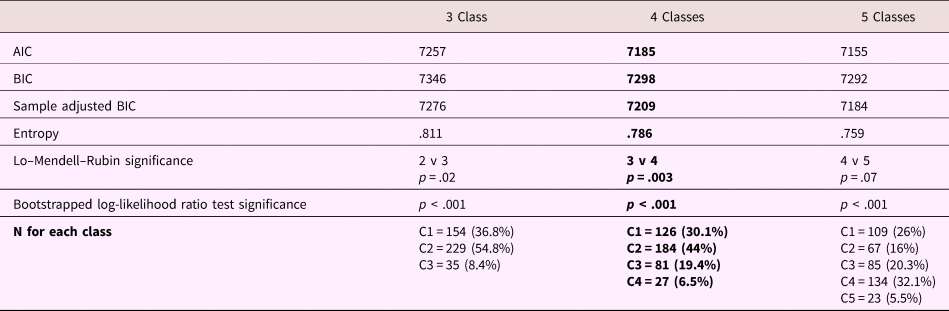
Notes: AIC = Akaike information criterion; BIC = Bayesian information criterion; C3 = class 3; C4 = class 4; C5 = class 5.
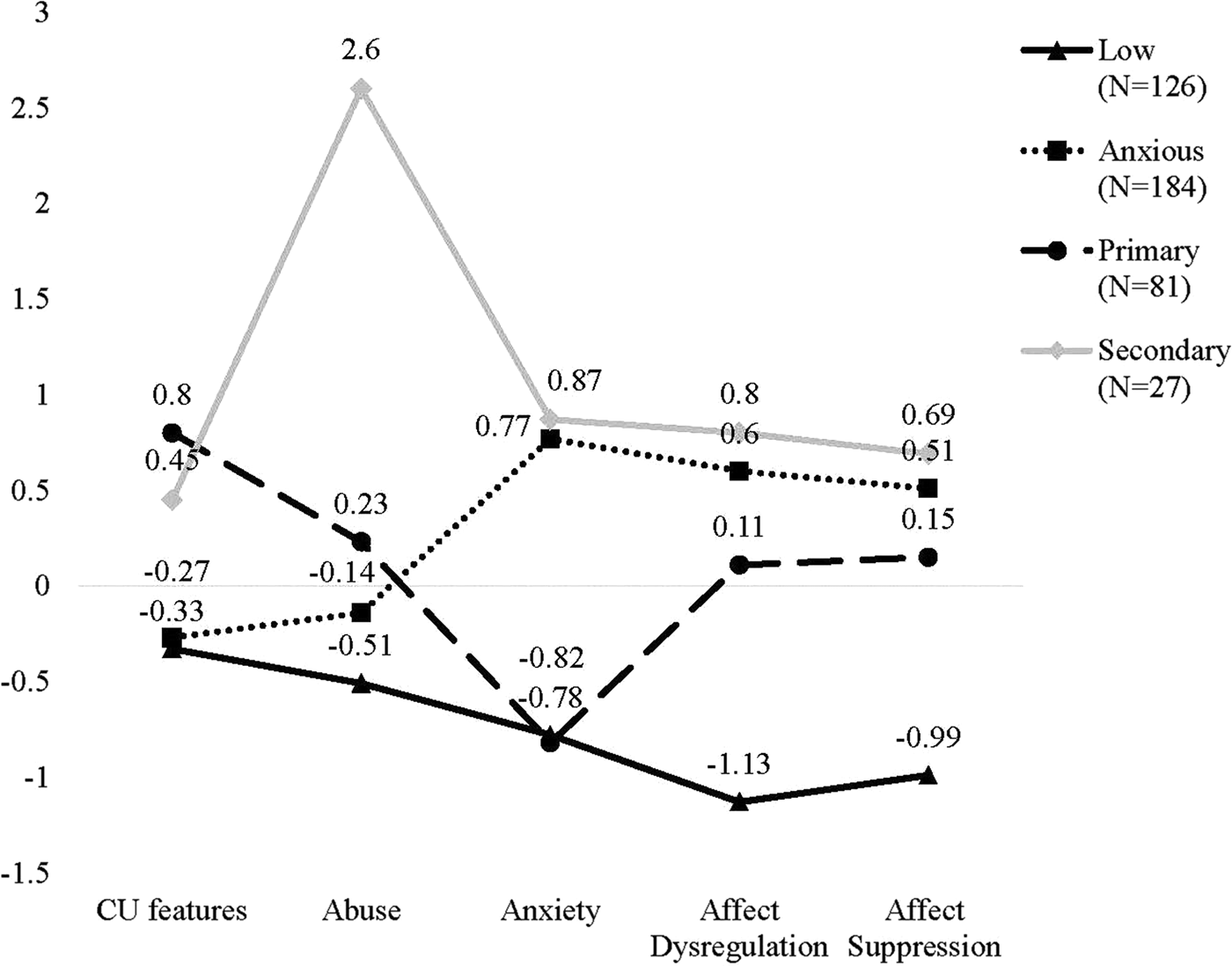
The final model consisted of four profiles (see Figure 1) and indicated 126 youth fit profile 1 (30%), 184 youth fit profile 2 (44%), 81 youth fit profile 3 (19%), and 27 youth fit profile 4 (6%). Findings suggest two low CU profiles: Low CU/Low Symptom (n = 126) or “Low” profile and a Low CU/High Symptom (n = 184; “Anxious” profile) profile based on their relatively low levels of CU. Results also showed two profiles high on CU features. The first represented a High CU/Low Symptom (n = 81) or “Primary CU” profile and a High CU/High Symptom (n = 27; labeled “Secondary CU”). Both the primary and secondary profiles had relatively higher levels of CU features, whereas the Primary CU profile also had lower anxiety, affect dysregulation, affect suppression, and experienced maltreatment compared with the Secondary CU profile.
Model indicators and resulting classes.

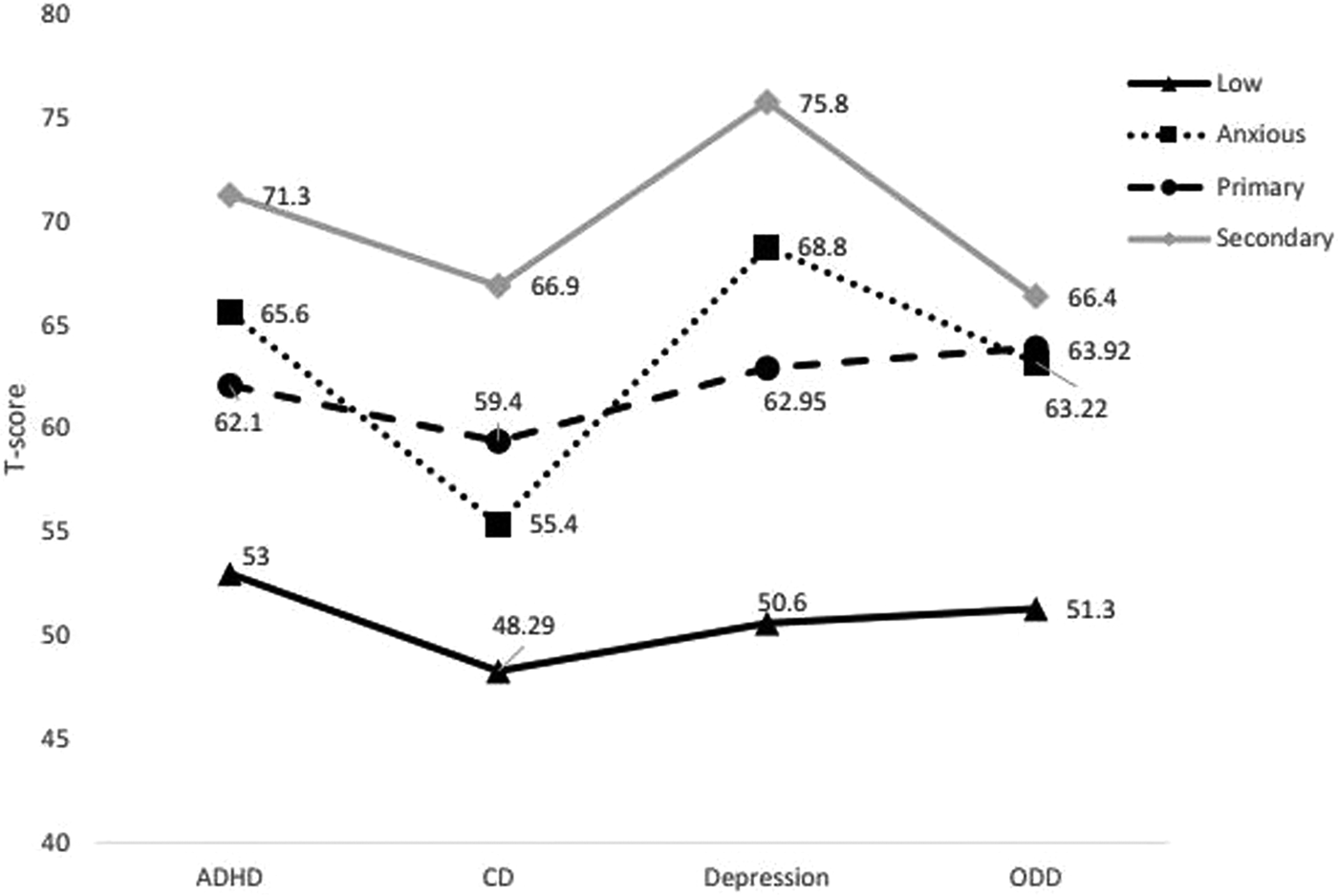
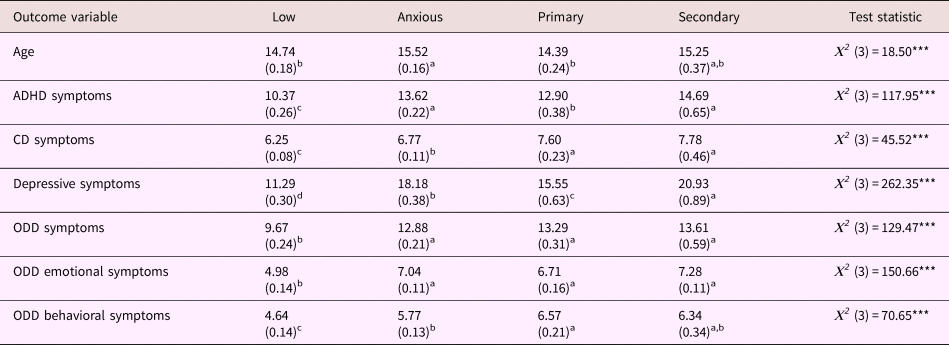
The next step in the analysis was to compare the profiles on psychopathologies that have been found to be associated with the variants using the modified BCH method (Asparouhov & Muthen, Reference Asparouhov and Muthén2014; see Table 4). For measures of psychopathology, significant differences were found across the four profiles, including ADHD symptoms: Χ2 (3) = 117.95, p < .001; CD symptoms: Χ2 (3) = 45.52, p < .001; depressive symptoms: Χ2 (3) = 262.35, p < .001; ODD emotional symptoms: Χ2 (3) = 150.66, p < .001; and ODD behavioral symptoms: Χ2 (3) = 70.65, p < .001. Pairwise comparisons revealed that the results for ADHD symptoms, CD symptoms, and depression were as expected. For ADHD symptoms, the secondary profile scored higher than the primary and low profiles. For CD symptom, the primary and secondary profiles were both higher than the anxious and low profiles. The primary and secondary profiles did not differ on CD symptoms and were both significantly higher than the anxious and low profiles. For depressive symptoms, the secondary profile was significantly higher than all other profiles. The results for ODD symptoms were not as expected because the anxious, primary, and secondary profiles did not differ on ODD symptoms. Further analysis examined previously established emotional and behavioral symptoms (Burke, Hipwell, & Loeber, Reference Burke, Hipwell and Loeber2010; Frick & Nigg, Reference Kimonis, Frick, Cauffman, Goldweber and Skeem2012). ODD emotional symptoms followed the same pattern as the overall scale. The primary and secondary profiles did not differ on ODD behavioral symptoms; however, only the primary profile was significantly higher than the anxious profile. In terms of t-scores (see Figure 2), youth with an anxious profile scored in the subclinical range for anxiety and depression, youth with a primary profile scored just below the subclinical range for CD symptoms, and youth with a secondary profile scored in the subclinical or clinical range for all subscales.
Clinical scale t-scores for classes.

BCH results for clinical presentations
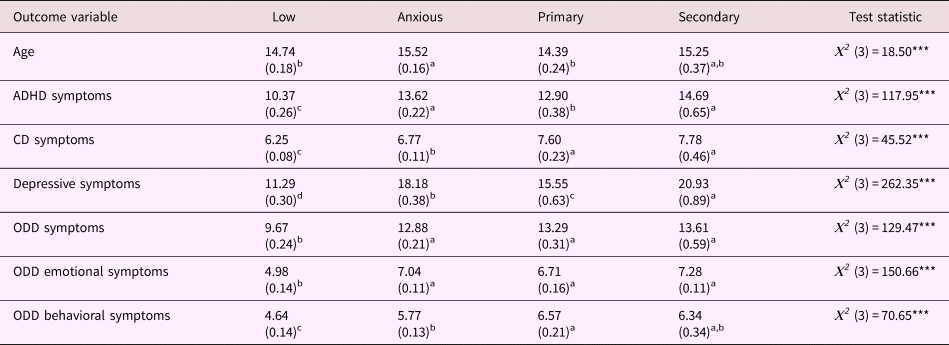
Notes: Different subscripts denote significant differences between groups as analyzed by BCH procedure; **p < .01, *** p < .001.
BCH = Bolck, Croon, and Hagenaars; ADHD = attention-deficit hyperactivity disorder; CD = conduct disorder; ODD = oppositional defiant disorder.
Are there gender differences?
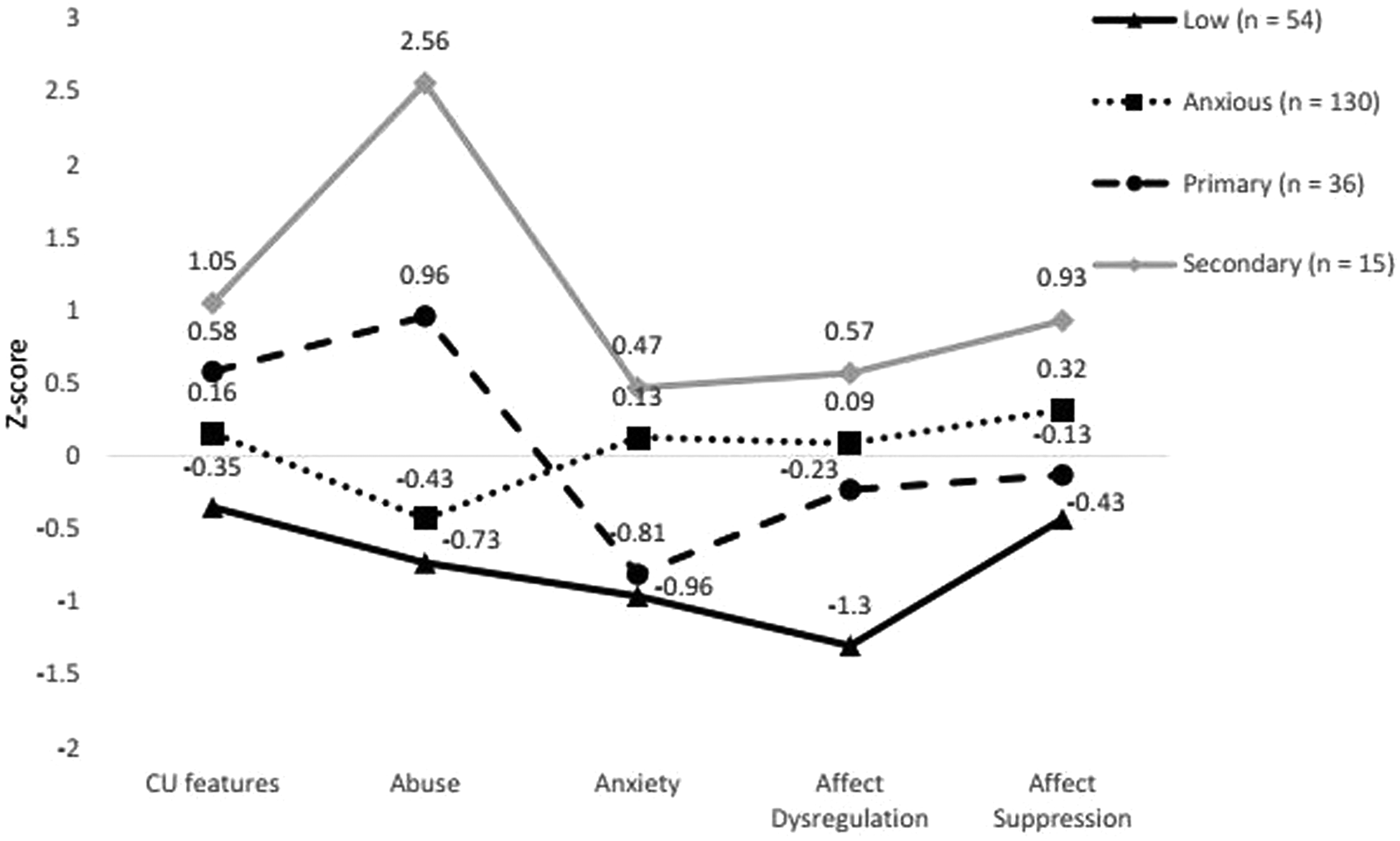
To examine gender differences, first, the LPA was run separately for girls and boys. For girls, a four-profile model showed evidence of being a better model than the three-profile model with a drop in both AIC (30 points) and sample adjusted BIC (27 points) with good identification (entropy = .824). Upon examination of covariance residuals, CU features and anxiety symptoms continued to be highly related in the three-profile model (r = −.54), whereas the four-profile model better accounted for this variance (r = −.15; z = −4.9, p < .001). Given that the relationship between CU features and anxiety is key to the distinction between Primary and Secondary CU, the four-profile model was selected as the better-fitting model for girls. Based on the four-profile model (see Figure 3), the profiles that emerged had profiles consistent with the overall sample: low profile (n = 56, 23%), anxious profile (n = 130, 55%), primary profile (n =36, 15%), and secondary profile (n =15, 6%).
Latent Profile Indicators and resulting classes for girls.

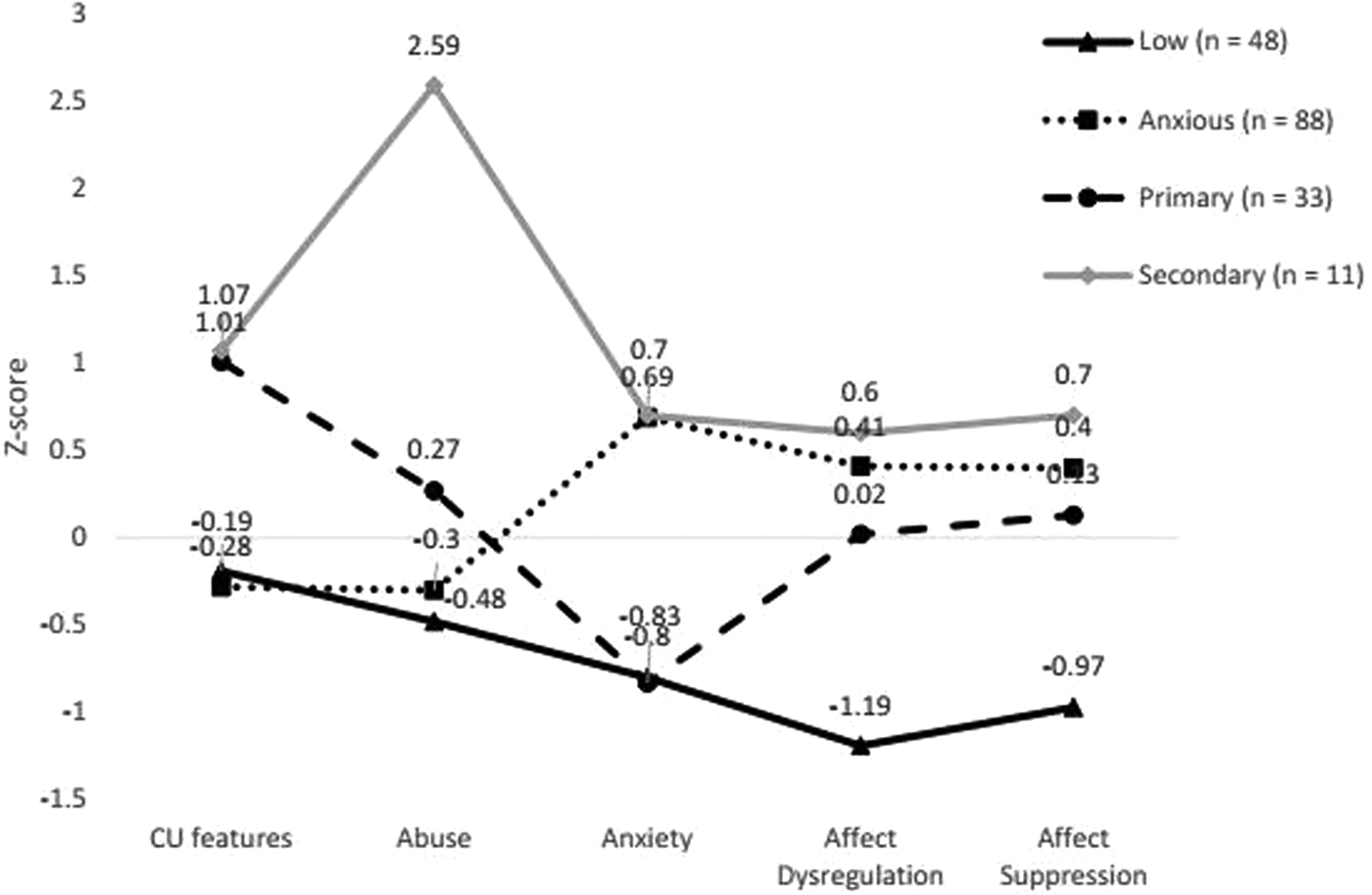
For boys, the four-profile model (see Figure 4) was also the best fitting model with good classification (entropy = .850), significant LMR (p = .02), and lower AIC and sample size BIC. The four-profile model showed the best fit, with evidence of a significant decrease in the relationship between ICU features and anxiety symptoms (r = −.39; z = 1.42, p = .07). The four profiles again were consistent with the mixed gender sample with a low profile (n = 48, 27%), anxious profile (n = 88, 49%), primary profile (n = 33, 18%), and secondary profile (n = 11, 6%).
Latent profile indicators and results classes for boys.

It was found that compared to the profiles that emerged from the mixed-gender LPA, the profiles in the girl-only sample were fairly consistent. Inclusion of participants in these profiles were relatively stable with only eight girls moving profiles, representing 1.9% of the total population. Three girls moved from the secondary profile to the anxious profile, three girls moved from the anxious profile to the low profile, one girl moved from the anxious profile to the primary profile, and one girl moved from the primary profile to the low profile. Comparing the boys-only generated LPA profiles with the mixed-gender LPA revealed a number of individuals shifting profiles, representing 13.6% of the total population. Sixteen boys moved from the low profile to the anxious profile, whereas 10 low-profile boys moved to the primary profile. Four boys moved from the anxious profile to the primary profile, with one going to the secondary profile. From the original primary profile, 25 boys moved to the anxious profile and 1 moved to the secondary profile. No boys moved from the secondary profile to other profiles. Importantly, although there were shifts, the profiles appeared consistent with a low, anxious, primary, and secondary profile emerging for both genders, allowing for a direct comparison.
Item response differences across gender was evaluated by examining whether constraining the item response probabilities to be equal across gender provided the same or better fit than allowing the item response probabilities to vary across gender. Almost all model fit statistics indicate the more parsimonious constrained model to be the better fitting model, including a lower AIC (10), BIC (9), and a nonsignificant change in the log-likelihood, ΔΧ 2 (20) = 18.76, p = .56. Thus, the constrained model was selected as the better fitting model indicating no significant item response differences across gender.
Next, gender differences across profile prevalences were examined (see Table 5). As the sample showed item-response gender invariance, item-responses were constrained to be equal across the nested models. The model indicators all revealed the unconstrained model to be the best fitting model, including differences in the AIC (33 points), BIC (21 points), sample adjusted BIC (31 points), and a significant chi-square difference, Δ Χ2 (23) = 45.93, p < .01. Thus, it can be concluded that the prevalence within each profile varied by gender.
Latent profile analysis model fit statistics for nested class prevalence models
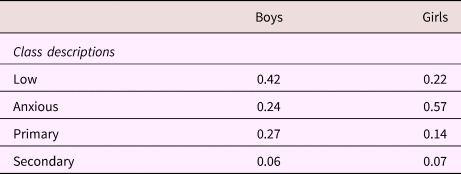
p < .01.
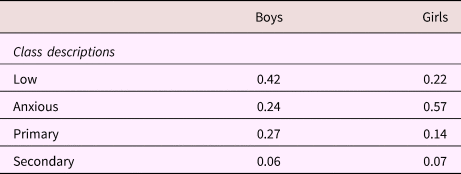
To better understand the differences across gender, the prevalence for each profile was then examined. The low symptom profile was more prevalent for boys than girls, Χ2 (1) = 19.13, p < .001, whereas the anxious profile was more prevalent for girls than boys, Χ2 (1) = 45.26, p < .001. The prevalence for the primary profile decreased for both boys and girls, and included a higher proportion of boys than girls, Χ2 (1) = 10.89, p < .01. The secondary profile was consistent for boys and girls, with a low prevalence for both genders.
Discussion
CU variant identification and affective processes
This study adds to our growing understanding of the clinical presentation and associated emotional regulation strategies associated with CU variants. Two profiles of youth with high levels of CU features were found in the current sample. One profile was characterized by low levels of anxiety, affect dysregulation, and affect suppression, analogous with the description of primary CU features. Consistent with secondary CU features, the other profile was also characterized by high CU features and reported high levels of anxiety, affect dysregulation and affect suppression, as well as very high levels of maltreatment perpetrated by parents (i.e., greater than 2 standard deviations above the mean). A higher proportion of youth were found to present with a primary profile of CU features compared to secondary profile in the current study. These proportions (19.4% and 6.5% for primary and secondary CU features, respectively) are in line with previous research with clinical or community populations, finding the fraction of youth presenting with a primary profile of CU features to range from 8% to 35%, and those presenting with a secondary profile of CU variants ranging from 3% to 31% (Andrade et al., Reference Andrade, Sorge, Na and Wharton-Shukster2015; Fanti et al., Reference Fanti, Demetriou and Kimonis2013; Kahn et al., Reference Kahn, Frick, Youngstrom, Kogos Youngstrom, Feeny and Findling2013). The observed variability in rates seen in the current study compared with previous research could potentially be explained by the variability in the indicators used in identifying profiles; however, due to the smaller number of youth presenting with a secondary profile, interpretations must be made with caution.
Consistent with this research, the primary profile in the current study was characterized by the underarousal of affect (i.e., low affect dysregulation and suppression), whereas the secondary profile showed evidence of overarousal coupled with compensatory coping strategies (i.e., high affect dysregulation and suppression). Paradoxically, affect suppression has been shown to increase rather than decrease physiological arousal and distress (as cited in Hofmann, Heering, Sawyer, & Asnaani, Reference Hofmann, Heering, Sawyer and Asnaani2009), which may give rise to a vicious cycle hyperarousal and distress followed by attempts to avoid and suppress. Although the current study was unable to test this theory longitudinally, the secondary profile of CU features suggests ongoing regulation strategies that are consistent with this theory. It is interesting to note that, although there have been some differences in model indicators across studies, the two profiles have been consistently found in relation to indicators of hypoarousal and hyperarousal (e.g., anxiety) without directly testing these regulation strategies as model indicators. In sum, the current results support the view that children with a fearless and underaroused disposition (i.e., primary profile) may be insufficiently aroused and therefore miss important social-affective cues, whereas those with a dysregulated or overaroused disposition (i.e., secondary variant) may miss cues as they are overwhelmed by negative social situations (Frick & Morris, Reference Frick and Morris2004).
The role of arousal in primary and secondary profiles of CU features has been supported in the neuroendocrine literature. Youth with a secondary profile of CU features have been found to have distinct high cortisol-to-dehydroepiandrosterone (DHEA) ratios, suggesting dysregulation of the hypothalamo-pituitary-adrenocortical (HPA) axis in response to chronic stress (e.g., maltreatment) (Kimonis, Goulter, Hawes, Wilbur, & Groer, Reference Kimonis, Goulter, Hawes, Wilbur and Groer2017b). This is consistent with the hyperarousal secondary profile in the current study. Another distinguishing factor was high DHEA levels found in youth with a primary profile of CU features. High DHEA is consistent with a profile that is more resistant to stress-related psychopathology (e.g., depressive symptoms), and in line with the low affect dysregulation and suppression profile found in the current study. DHEA has also been implicated in youth who have experienced maltreatment. Youth who have experienced maltreatment who also possess the capacity to increase DHEA over the course of the day have been found to be better equipped to cope with chronic exposure to stress (Cicchetti & Rogosch, Reference Cicchetti and Rogosch2009). Thus, lower levels of DHEA combined with exposure to maltreatment may put a youth at risk of maladaptive coping such as the development of CU features. Findings from the current study, in conjunction with the emerging research on the endocrine system, suggest that theories on CU features that focus on the HPA axis may need to include the effects of child maltreatment on the stress response system.
It was also hypothesized that those with a secondary profile of CU features would report higher levels of psychopathology associated with affect dysregulation (e.g., ADHD, ODD, and depressive symptoms) as indicators of emotional distress, hyperarousal, and disruption of attention process. Consistent with this prediction, the secondary profile of CU features was associated with higher levels of ADHD symptoms and depressive symptoms compared with primary CU. These findings are consistent with past work showing that affect dysregulation is associated with increased irritability, negative mood, and ADHD-like symptoms (e.g., hyperactivity, distractedness) (Leibenluft, Reference Leibenluft2011). Consistent with predictions and prior research (Kahn et al., Reference Kahn, Frick, Youngstrom, Kogos Youngstrom, Feeny and Findling2013; Kimonis et al., Reference Kimonis, Frick, Cauffman, Goldweber and Skeem2012), primary and secondary profiles had similar levels of CD symptom severity.
Surprisingly, the primary and secondary profiles had similar levels of emotional or behavioral symptoms of ODD. These findings appear inconsistent with past studies that have reported higher levels of general externalizing problems (Kahn et al., Reference Kahn, Frick, Youngstrom, Kogos Youngstrom, Feeny and Findling2013), impulsivity (Bennett & Kerig, Reference Bennett and Kerig2014), and anger (Kimonis et al., Reference Kimonis, Frick, Cauffman, Goldweber and Skeem2012) in youth presenting with secondary profiles of CU features. However, to our knowledge, this is the first study to specifically examine ODD symptoms across CU profiles, as opposed to measures of anger or overall externalizing problems. A closer look at the mean scores in the current sample did show higher levels of ODD emotional symptoms in the secondary profiles; however, this difference was nonsignificant.
Gender has become increasingly important in research on CU. Prior to examining the latent profiles, boys were found to have higher levels of CU features, which is consistent with previous research (e.g., Gill & Stickle, Reference Gill and Stickle2016; Sevecke, Franke, Kosson, & Krischer, Reference Sevecke, Franke, Kosson and Krischer2016). Nonetheless, profile indicators did not differ by gender. Specifically, the same four-profile model was found to fit both boys and girls, involving both primary and secondary profiles. This finding is particularly noteworthy because previous research has found primary and secondary profiles within male samples (e.g., Kimonis et al., Reference Kimonis, Frick, Cauffman, Goldweber and Skeem2012), or in adult females only (e.g., Hicks, Vaidyanathan, & Patrick, Reference Hicks, Vaidyanathan and Patrick2010) and mixed gender samples (e.g., Bennett & Kerig, Reference Kerig, Bennett, Thompson and Becker2012; Kahn et al., Reference Kahn, Frick, Youngstrom, Kogos Youngstrom, Feeny and Findling2013). It should be noted that when the analysis was completed with single-gendered samples, some youth shifted to different profiles compared with the mixed-gender LPA. When examined further, a total of 45 boys shifted profiles; however, there was no discernible pattern with boys moving between the low, anxious, and primary profiles. Importantly, no boys moved out of the secondary profile. As girls had higher levels of affect regulation, suppression, and anxiety overall, it is possible that there was a higher threshold of those symptoms in the primary profile for the mixed gender sample compared with the male-only sample. Although no statistical differences in the indicators between boys and girls were found, these results suggest that caution should be used when comparing results of mixed-gender studies to male-only studies. Despite the shifts, the same four-profile model was identified for both males and females with no significant differences on the profile indications. While the results showing the same four-profile model for boys and girls in the current study strengthens the model of primary and secondary profiles of CU features, results should be interpreted with caution given this is the first study to examine these differences.
Gender differences were observed, however, when examining the proportion of boys and girls in each class. A significantly higher proportion of boys (27%) than girls (14%) was found in the primary class. In contrast, a similar proportion of boys (6%) and girls (7%) was found in the secondary class. These results are consistent with studies that have found a higher proportion of males in the primary profile (Euler et al., Reference Euler, Jenkel, Stadler, Schmeck, Fegert, Kölch and Schmid2015; Gill & Stickle, Reference Gill and Stickle2016) and no gender differences in the secondary profile (Kahn et al., Reference Kahn, Frick, Youngstrom, Kogos Youngstrom, Feeny and Findling2013). However, findings for the secondary profile have been inconsistent, with some studies finding a higher proportion of girls (e.g., Bennett & Kerig, Reference Bennett and Kerig2014, Gill & Stickle, Reference Gill and Stickle2016), and others finding a higher proportion of boys (Fanti et al., Reference Fanti, Demetriou and Kimonis2013). Further, in clinical populations, studies have found either no gender difference in the variants, or a higher proportion of males overall in the secondary profile (Andrade et al., Reference Andrade, Sorge, Na and Wharton-Shukster2015; Kahn et al., Reference Kahn, Frick, Youngstrom, Kogos Youngstrom, Feeny and Findling2013). Further research is needed to understand sample characteristics that may account for differing proportions of males and females in the secondary class.
Recent research on interventions for youth with CU features has shifted from focusing on managing behavior to addressing specific etiological factors. Although the current study does not examine a causal pathway, the high rate of maltreatment perpetrated by parents and the regulation strategies found in the secondary CU variant adds to the growing literature on the importance of preventing child maltreatment as key to reducing rates of diverse forms of psychopathology, including secondary CU or psychopathy. Parents serve as a primary source of emotional support and regulation for children from birth and well into early adulthood (Rosenthal & Kobak, Reference Rosenthal and Kobak2010). Maltreatment by a parent places a child in a particularly vulnerable position, as the child is left to cope with extreme distress on their own, without the necessary skills to do so effectively (Moretti & Craig, Reference Moretti and Craig2013). The results from the current study add to the growing literature on the negative impacts of parental maltreatment and call for increased efforts in the delivery of early prevention and intervention programs.
In addition to preventing child maltreatment, the current study highlights other potential targets for intervention, including treatments that promote the development of adaptive affect regulation strategies. The quality of the parent–child relationship has been found to mediate the relationship between maltreatment and maladaptive coping strategies (Perlman, Dawson, Dardis, Egan, & Anderson, Reference Perlman, Dawson, Dardis, Egan and Anderson2016). The parent–child relationship has also been found to be an important area for treatment and prevention efforts for young children with CU features (Pasalich, Dadds, Hawes, & Brennan, Reference Pasalich, Dadds, Hawes and Brennan2012). Some research has found that parent training that focuses on positive reinforcement strategies and the promotion of parental warmth is particularly effective in changing levels of general CU features (Hawes et al., Reference Hawes, Byrd, Henderson, Gazda, Burke, Loeber and Pardini2014). Thus, the parent–child relationship appears to be a key intervention target for both primary and secondary CU features; however, intervention selection needs to account for the differences in affect regulation strategies used by the different variants. Based on the current results, children and youth with primary CU features experience low levels of dysregulation and thus may benefit from interventions that focus on developing empathy skills through the parent–child relationship (Hawes et al., Reference Hawes, Byrd, Henderson, Gazda, Burke, Loeber and Pardini2014). Likewise, as secondary CU variants had greater impairments in affect dysregulation and suppression in the current study, programs aimed at addressing affect regulation processes through the parent–child relationship may be more effective for youth with secondary CU features.
Finally, although the current study found no significant gender differences across the variants for the indicators, there may be important gender issues to consider when planning interventions. Importantly, the social consequences of CU may be gendered, and girls with CU features may be viewed as gender atypical in their lack of empathy and concern for others in addition to their heightened level of aggressiveness. As a result, they are likely to experience high levels of peer rejection and potentially harsh parental consequences. It is important that interventions address the gendered social context and consequences of CU for girls versus boys, integrating additional treatment components as needed to address comorbid conditions and social consequences of CU symptoms.
Limitations
Despite the strengths of this study, a number of limitations should be considered when interpreting the findings. First, the study relied solely on self-report data. While some studies have also included parent or teacher reports (e.g., Gill & Stickle, Reference Gill and Stickle2016), other research has suggested that self-report data on CU features is as accurate as parent report and more strongly associated with environmental risk factors (e.g., maltreatment in the home) (Frick et al., Reference Frick, Ray, Thornton and Kahn2014). Future research would still benefit, however, from using multiple informants, including a clinician rating of CU features. Second, the current sample was drawn from a study of a parenting intervention, with some parents self-referring to the community mental health centers that ran the groups. This could lead to a self-selective sample in that parents are willing to engage in treatment and thus are less likely to have engaged in maltreatment. However, the sample is comparable to other clinical samples that are reliant on parent-referrals (e.g., Andrade et al., Reference Andrade, Sorge, Na and Wharton-Shukster2015). The population may have also impacted the rate of CU features, because CU features have traditionally been associated with highly aggressive youth in custody centers. Therefore, the base rate of CU features may be higher in other samples (i.e., justice involved youth), resulting in fewer youth classified as primary and secondary CU variants in the current sample. It is important to note that the proportion of youth with primary and secondary CU in the current study was consistent with other community and clinical samples (e.g., Kahn et al., Reference Kahn, Frick, Youngstrom, Kogos Youngstrom, Feeny and Findling2013).
There is debate among developmental methodologist as to whether continuous measures can be meaningfully categorized into classes. The use of LPA probabilities through the BCH method in the current study attempts to address the main criticism of hard classification of individuals (Bauer & Shanahan, Reference Bauer, Shanahan, Little, Bovaird and Card2007); however, future research may want to consider the use of variable centered approaches in understanding CU traits in the presence of dysregulation and exposure to maltreatment. The adult literature on primary and secondary psychopathy includes whether primary and secondary psychopathy should be viewed as dimensional or through person centered analysis (i.e., cluster analysis) (Poythress & Skeem, Reference Poythress and Skeem2006). Although the current study uses a person-centered analysis based on the theoretical approach proposed by Karpman (Reference Karpman1941), future research may need to consider the value of examining inverse or “Q” factor analysis (Banks & Gregg, Reference Banks and Gregg1965), which assumes that variants are placed along dimensions (Polythress & Skeem, 2005).
Measurement must also be considered in interpreting the current study. While two affective processes, dysregulation and suppression, were examined in the current study, other affect regulation processes such as emotional numbing (Kerig et al., Reference Kerig, Bennett, Thompson and Becker2012) are important and should also be included in future research. We also recognize that a self-report measure of maltreatment was used in the current study, and well-validated interviews would provide richer data on maltreatment across multiple dimensions (i.e., chronicity, timing, type, and severity), which may be highly relevant to the distinction between primary and secondary classes.
Finally, the current study used cross-sectional data and thus was unable to test for the development of the discussed affect regulation strategies. Future research examining the longitudinal precursors of CU variants from childhood into youth adulthood is needed to better understand the unfolding of the discussed emotion regulation strategies used by those with secondary CU.
Financial support
This study was drawn from a larger project funded by the Canadian Institutes of Health Research (#251560).