Acute rheumatic fever is an inflammatory disease that develops via an autoimmune mechanism following Group A β-hemolytic streptococcal tonsillopharyngitis.Reference Ortiz 1 , Reference Ayoub 2 The pathogenesis of the condition has not been well clarified; however, the most commonly recognised assumption is the theory of cross-reaction (autoimmunity).Reference Ayoub 2 , Reference Cilliers 3 Acute rheumatoid fever develops with stimulation of cellular and humoral immunity as a consequence of the similarity between antigenic determinants of tissues, which are involved with antigens of β-hemolytic streptococci (antigenic mimicry).Reference Cilliers 3 Studies had shown that cytokines – tumour necrosis factor-α, interferon-γ, interleukin-6, interleukin-8, and interleukin-1 – are released following this abnormal immune response, and they play a role in the development and progression of the tissue damage.Reference Dajani, Ayoub and Bierman 4 Tumour necrosis factor-α, interleukin-6, and interleukin-8 are among the cytokines that are related to inflammation. Tumour necrosis factor-α enhances the activation of T helper cells for acute inflammation. Interleukin-6 is a cytokine that has synergistic effects with tumour necrosis factor-α; it induces synthesis of acute-phase reactants in the liver. However, interleukin-8 is a chemokine that attracts leukocytes to the acute inflammation site, and it has angiogenic properties.Reference Ferreri 5
Adiponectin is a polypeptide that is primarily produced by fat cells. Antidiabetic, anti-atherogenic, and anti-inflammatory effects have been reported.Reference Matsuwaza 6 Adiponectin regulates the release of some pro-inflammatory and anti-inflammatory cytokines. It suppresses the synthesis of tumour necrosis factor-α and interferon-γ; it induces production of interleukin-1 receptor antagonist and interleukin-10. It was found that secretion of adiponectin is inhibited at conditions associated with increased levels of cytokines such as interleukin-6 and tumour necrosis factor-α.Reference Guzik, Mangalat and Korbut 7 , Reference Tilg and Moschen 8
The investigators had reached a consensus on the fact that adiponectin level decreases in low-grade inflammatory diseases, although the role of adiponectin could not be clarified for chronic inflammatory and autoimmune diseases.Reference Ryo, Nakamura and Kihara 9 – Reference Senolt, Pavelka, Housa and Haluzík 12 In the current literature review, we could not find any study that investigated the level of adiponectin, an important modulator of the inflammation, in acute rheumatic fever, which is an inflammatory disease.
We aimed to investigate whether adiponectin facilitates diagnosis of acute rheumatic fever by analysing adiponectin levels in acute and convalescent periods of acute rheumatic fever and by comparing results with that of the healthy control group, also by comparatively examining the levels of adiponectin in acute rheumatic fever cases who had different clinical findings at presentation. In addition, we aimed to investigate its role in the pathogenesis of acute rheumatic fever by evaluating correlations with cytokines such as tumour necrosis factor-α, interleukin-6 and interleukin-8, and acute-phase reactants.
Materials and methods
Patient group
In total, 33 children (age range: 5–17 years; 15 male and 18 female) were enrolled to the study who were diagnosed as acute rheumatic fever at the Department of Pediatric Cardiology, Medical Faculty, Eskişehir Osmangazi University. The study protocol was approved by Ethics Committee of Medical Faculty, Eskişehir Osmangazi University (Decision No. 41 dated 4 June 2008). Parents of the study patients were informed about the aim and the method of the study, and written consents were obtained.
For each child, detailed baseline medical history was obtained and physical examination was conducted. Anthropometric parameters and body mass index (weight/heigth2) were calculated, and Tanner scale was used to evaluate onset of puberty. Blood cells, erythrocyte sedimentation rate, C-reactive protein, high-sensitivity C-reactive protein levels, antistreptolisine-O and anti-deoxyribonuclease B titres, and throat cultures were analysed for all patients. Standard electrocardiograms were recorded and telecardiograms were imaged. Echocardiographic assessment was made for all patients.
For the study subjects, diagnosis of acute rheumatic fever was made according to the Modified Jones criteriaReference Dajani, Ayoub and Bierman 4 and appropriate treatment was started. The diagnosis of rheumatic fever was made when two of the major criteria, or one major criterion plus two minor criteria, are present along with evidence of streptococcal infection: elevated or rising antistreptolysin O titre or anti-deoxyribonuclease B. Patients were divided into three groups by clinical findings. Group 1 included patients with only chorea, Group 2 included patients with arthritis and carditis, and Group 3 included patients with carditis and two minor criteria. A group with only arthritis was not established as the patients with isolated arthritis are usually followed up at primary and secondary health-care facilities rather than referring those patients to our tertiary health-care centre.
Stages of carditis were determined as follows: mild carditis refers to murmur-positive cases without cardiomegaly; moderate carditis refers patients with cardiomegaly not associated with heart failure; and severe carditis refers to patients with severe heart failure. Cardiomegaly was defined as a cardiothoracic ratio of >0.5 in telecardiogram and/or a large left ventricular end-diastolic diameter measurement according to body weight of patient by M-mode echocardiography.
Aspirin was started for the patients with mild carditis, whereas aspirin or prednisolone were prescribed for patients with moderate carditis, and treatment with prednisolone was given to patients with severe carditis. For patients of arthritis+carditis and isolated carditis who were given steroid therapy, aspirin was added to the treatment regimen 1 week before steroid was discontinued. All patients of the chorea group had echocardiographically confirmed valvular regurgitation findings that were suggestive of previous carditis, because none of them had elevated acute-phase reactants.
Control group
A total of 54, 29 female and Reference Vitoratos, Deliveliotou and Vlahos25 male, age- and gender-matched children were enrolled in the control group. Their age ranged from 5.5 years to 17 years. The control group included asymptomatic cases who were admitted to Paediatrics Outpatient Clinic with minor trauma of extremities that do not cause fracture or incision, known or suspicious intake of a small amount of cleaning agents or drugs that do not require any treatment, followed by previous convulsion without treatment. On physical examination and routine laboratory analyses of the control group, no infection and cardiac or systemic disease were found. Informed consents were obtained from the families, and anthropometric parameters and body mass indexes were calculated; Tanner staging was carried out.
Venous blood sampling
The following tests were analysed using venous blood samples drawn from patients and healthy control subjects: complete blood count, erythrocyte sedimentation rate, nephelometric C-reactive protein and immune turbidimetric highly sensitive C-reactive protein, total cholesterol, triglyceride, low-density lipoprotein and high-density lipoprotein levels by enzymatic colorimetric method, follicle-stimulating hormone and luteinising hormone, and total testosterone (for male subjects) and oestradiol (for female subjects) levels by chemoluminescent assey. Plasma and serum samples were drawn for adiponectin, tumour necrosis factor-α, interleukin-6, and interleukin-8. Blood samples were drawn for analysing acute-phase reactants on Days 2, 5, 10, and 15, and at 8 weeks to evaluate response to the treatment, whereas blood samples were simultaneously drawn for analysing adiponectin, tumour necrosis factor-α, interleukin-6, and interleukin-8 levels.
Plasma adiponectin measurement
Venous blood samples were added into the centrifuge tubes with EDTA: they were centrifuged at 3000 rpm, 4°C for 15 minutes, and the resultant plasma samples were stored at −80°C. Plasma samples were diluted (1:300) as directed by the instructions for use of the kit, before the analysis was performed. Samples taken for plasma adiponectin levels were analysed using Human Adiponectin enzyme-linked immunosorbent assay, High Sensitivity kit (BioVendor Research and Diagnostic Products, Modrice, Czech Republic) with enzyme-linked immunosorbent assay method. Absorbance was read at 450 nm. Results were expressed as ng/ml and converted into µg/ml by dividing them by 1000.
Serum tumour necrosis factor-α, interleukin-6, and interleukin-8 measurements
The venous blood samples were added into the centrifuge tubes not containing anticoagulant for measuring serum tumour necrosis factor-α, interleukin-6, and interleukin-8 levels. Samples were centrifuged at 3000 rpm, 4°C for 15 minutes, and the resultant serum samples were stored at −80°C. Samples taken for measuring serum tumour necrosis factor-α, interleukin-6, and interleukin-8 levels were analysed with enzyme-linked immunosorbent assay method using human tumour necrosis factor-α enzyme-linked immunosorbent assay, human interleukin-6 enzyme-linked immunosorbent assay, and human interleukin-8/NAP-1 enzyme-linked immunosorbent assay kits (Bender MedSystems, Vienna, Austria). Absorbance was read at 450 nm. Results were expressed as pg/ml.
Echocardiographic examination
Patients had echocardiographic examination within 24 hours of the admittance using Hewlett-Packard Sonos 5500 colour Doppler echocardiography device equipped with 2–4 MHz and 3–8 MHz broad band probes.
Statistical analysis
For the analyses, “SPSS for Windows v.15.0”, “Sigma Stat for Windows 3.1”, and “Medcalc v.6.15” statistics software packs were used. Compliance of variables to normal distribution was analysed using the Shapiro–Wilk test. For parameters with normal distribution, comparison of two groups was made with t-test, whereas multiple comparisons were made with analysis of variance test; later, if difference was found with the analysis of variance test, post-hoc tests (Tukey’s and Tamhane’s tests) were used to identify groups showing differences. For parameters without normal distribution, Mann–Whitney U test was used to compare two groups, whereas multiple comparisons were made with Kruskal–Wallis test. For analysis of cross tables, χ2 test was used. Wilcoxon’s t-test was used to determine difference between analysis time points of cytokines and adiponectin (Days 0, 2, 5, 10, and 15, and Week 8) for study groups. ROC curve method was used to determine cut-off values, whereas Pearson’s correlation test was used for normally distributed parameters, and Spearman’s test was used for parameters without normal distribution, considering the evaluation of correlations. Data were expressed as mean±standard error of mean (mean±SEM). p-value <0.05 was considered statistically significant.
Results
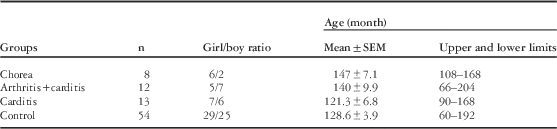
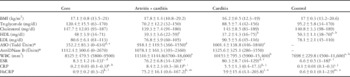
Of the study subjects, eight had chorea, 12 had arthritis and carditis, and 13 had carditis. Age and sex distribution of the groups are shown in Table 1. In terms of gender and age, there was no statistical difference between the groups (p>0.05). Laboratory findings of the study and control groups are summarized in Table 2. There was no statistically significant difference between baseline body mass index, serum triglyceride, total cholesterol, and low-density lipoprotein levels of the study, and control groups (p>0.05). High-density lipoprotein level was lower in arthritis+carditis and carditis groups in comparison with that of the control group (p<0.001).
Age and sex distribution of the study and control groups [mean±SEM (upper and lower limits)].

Laboratory findings of the study and control groups [mean±SEM (upper and lower limits)].

ASO=anti-streptolysin O; BMI=body mass index; CRP=C-reactive protein; ESR=erythrocyte sedimentation rate; HDL=high-density lipoprotein; HsCRP=high-sensitive C-reactive protein; LDL=low-density lipoprotein; WBC=white blood cell
When differences were found between groups using Kruskal-Wallis test, paired group comparisons were made using Mann-Whitney U test
aArthritis+carditis and the control p<0.01
bCarditis and control p<0.01
cChorea and Arthritis+carditis p<0.001
dChorea and carditis p<0.001
eArthritis+carditis and the control p<0.001
fCarditis and control p<0.001
gChorea and Arthritis+carditis p<0.001
hChorea and carditis p<0.001
iArthritis+carditis and the control p<0.001
jCarditis and control p<0.001
kChorea and Arthritis+carditis p<0.001
lChorea and carditis p<0.001
mArthritis+carditis and the control p<0.001
nCarditis and control p<0.001
*Not analysed in control group
Tanner stage, follicle-stimulating hormone, luteinising hormone, oestradiol (for female subjects), and total testosterone (male subjects) levels could not be statistically evaluated for female and male subjects, as the number of subjects in each study group was not enough to make such an evaluation. However, statistically significant difference was not found between the whole patient group and the control group with respect to the pre-pubertal and post-pubertal patient ratios (p>0.05). No correlation was found between baseline plasma adiponectin levels of the study and control groups and age, gender, body mass index, skinfold thickness, waist circumference, follicle-stimulating hormone, luteinising hormone, oestradiol (female subjects), total testosterone (male subjects), and blood lipid levels (p>0.05).
If children in the whole patient group and the control group are divided into pre-pubertal and post-pubertal groups, no correlation is found between baseline plasma adiponectin levels of each group and follicle-stimulating hormone, luteinising hormone, oestradiol (female subjects) ,and total testosterone (male subjects) levels (p>0.05).
White blood cell count, erythrocyte sedimentation rate, C-reactive protein, and highly sensitive C-reactive protein values are given in Table 3 in the study and control groups during admission.
Adiponectin levels of study and control groups [mean±SEM (upper and lower limits)].

*Time points were not compared for the control group.
When differences were found between groups using Kruskal-Wallis test, paired group comparisons were made using Mann-Whitney U test.
aChorea and carditis, p<0.05 at Day 15
bChorea and Control groups, p<0.05 for Day 0 and Week 8
cArthritis+carditis and the control groups, p<0.05 for Week 8 and p<0.001 for other days
dCarditis and the control groups, p<0.01 for Day 2 and p<0.001 for other days
When intra-group differences were determined for the carditis group at different time points with Wilcoxon’s t-test
ep<0.01 for Day 0 and Day 5
fp<0.05 for Day 0 and Day 10
gp<0.05 for Day 0 and Day 15
hp<0.05 for Day 0 and Week 8
Adiponectin levels are demonstrated in Table 3, including adiponectin levels analysed at Days 0, 2, 5, 10, 15, and Week 8 for the study groups and baseline adiponectin levels for the control group. For multiple comparisons of study and control groups with Kruskal–Wallis test, there was a statistically significant difference for all days with respect to the adiponectin levels (p<0.001). For comparisons of dual-study groups, there was no statistical difference for any analysis time point between chorea and arthritis+carditis groups, and between arthritis+carditis and carditis groups (p>0.05). The adiponectin levels of patients in the carditis group were higher than of the patients in the chorea group on Day 15 (p<0.005), although there was no statistically significant difference for other time points (p>0.05). The adiponectin levels of the chorea group was higher than that of the control group at Day 0 and Week 8 (p<0.005), although there was no statistically significant difference at Days 2, 5, 10, and 15 (p>0.05). The adiponectin level was higher in the arthritis+carditis group (p<0.05 for Week 8, p<0.001 for other time points) and in the carditis group (p<0.05 for Day 2 and p<0.001 for other time points) in comparison with the control group at all-time points.
When multiple comparisons of adiponectin levels measured at all-time points were made for each study group using Wilcoxon’s t-test, there was no statistically significant difference between analysis time points for the chorea and arthritis+carditis groups (p>0.05), whereas a statistically significant difference was found between analysis time points for the carditis group (p<0.05). For the carditis group, dual comparisons were made between analysis time points using Wilcoxon’s t-test and no statistically significant difference was found between Days 0 and 2 with respect to the adiponectin level (p>0.05), whereas the levels were higher at Days 5, 10, 15, and Week 8 in comparison with that of Day 0 (p<0.01, p<0.05, p<0.05, and p<0.05, respectively).
Tumour necrosis factor-α levels of the study groups and the control group are given in Table 4. For multiple comparisons of study and control groups with Kruskal–Wallis test, there was a statistically significant difference between all groups for all time points with respect to the tumour necrosis factor-α levels (p<0.001). For comparisons of dual-study groups, there was no statistical difference for any analysis time point between the chorea and arthritis+carditis and only carditis groups, and between the arthritis+carditis and carditis groups (p>0.05). The tumour necrosis factor-α values of all patients in the chorea and arhritis+carditis and only carditis groups were lower than that of the patients in the control group for all time points.
For each group, tumour necrosis factor-α values obtained at each study day were compared with each other. No statistically significant difference was found between the chorea and arthritis+carditis groups with respect to time points (p>0.05). For the carditis group, a statistically significant difference was found between time points with respect to the tumour necrosis factor-α values (p<0.05). The tumour necrosis factor-α levels were lower at Day 0 than Week 8 (p<0.05), at Day 15 than Days 2 and 5 for the carditis group (p<0.05), whereas there was no statistically significant difference for other days (p>0.05).
Interleukin-6 levels of the study groups and the control group are given in Table 5. For multiple comparisons of study and control groups using Kruskal-Wallis test, there was a statistically significant difference between all groups for all time points with respect to the interleukin-6 levels (p<0.001). For paired group comparisons, interleukin-6 levels of the patients in isolated chorea, arthritis+carditis, and isolated carditis groups were higher than the control patients at all time points (p<0.001). When different study groups are compared with each other in pairs, there is no statistically significant difference for any time point (p>0.05).
No statistically significant difference was observed between interleukin-6 values in any of the study groups (p>0.05).
Interleukin-8 levels of the study groups and the control group are given in Table 6. For comparisons of the study and the control groups using Kruskal-Wallis test, there was no statistically significant difference between any of the study and control groups for any time points with respect to the interleukin-8 levels (p>0.05). No statistically significant difference was found between interleukin-8 values in the arthritis+carditis and the isolated carditis groups (p>0.05). For the chorea group, interleukin-8 levels were lower at Day 10 than Days 0, 2, 5, and 15 (p<0.05).
Tumour necrosis factor-α (TNF-α) level of the study and control groups [mean±SEM (upper and lower limits)].

*Time points were not compared for the control group.
When differences were found between groups using Kruskal Wallis-test, paired group comparisons were made using Mann-Whitney U test.
aIsolated chorea and control groups, p<0.001 for all days
aArthritis+carditis and control groups, p<0.001 for all days
dCarditis and the control groups, p<0.01 for Day 0, p<0.05 for Day 2 and p<0.001 for other days.
When intra-group differences were determined for the carditis group at different time points with Wilcoxon’s t-test
dp<0.05 for Day 0 and Week 8
ep<0.05 for Day 2 and Day 15
fp<0.05 for Day 5 and Day 15
Correlations of the adiponectin levels of the patients with diagnosis of acute rheumatic fever with the analysed cytokine levels were examined (Tables 7–9). For the chorea group, the adiponectin level correlated negatively with interleukin-6 at Days 2 and 10 (p<0.01, p<0.05), whereas the tumour necrosis factor-α level correlated positively with interleukin-8 at all time points (p<0.01 for Day 10, p<0.05 for other days) and correlated negatively with interleukin-6 at Days 5, 10, and 15, and Week 8 (p<0.05).
Interleukin-6 (IL-6) levels of study and control groups [mean±SEM (upper and lower limits)].

*Time points were not compared for the control group
There was inter-group differences using Kruskal-Wallis test
When paired group comparisons were made with Mann-Whitney U test
aChorea and control groups, p<0.001 for all days
bArthritis+carditis and control groups, p<0.001 for all days
cCarditis and control groups, p<0.001 for all days
Interleukin-8 (IL-8) levels of study and control groups [mean±SEM (upper and lower limits)].

*Time points were not compared for the control group
When intra-group differences were determined for the chorea group at different time points with Wilcoxon’s t-test
ap<0.05 for Day 0 and Day 10
bp<0.05 for Day 2 and Day 10
cp<0.05 for Day 5 and Day 10
dp<0.05 for Day 10 and Day 15
Correlations of the adiponectin with the analysed cytokine levels were analysed for the chorea group.

APN=adiponectin; IL-8=interleukin-8; IL-6=interleukin-6; TNF-α=tumour necrosis factor-α, statistically significant differences are found
*p<0.05, **p<0.01
For the arthritis+carditis group, the adiponectin level correlated positively with tumour necrosis factor-α at Day 10 (p<0.05), whereas the tumour necrosis factor-α level correlated positively with interleukin-8 at Day 2 (p<0.05), and interleukin-6 correlated negatively with interleukin-8 at Day 5 and Week 8 (p<0.05).
For the carditis group, the adiponectin level correlated positively with tumour necrosis factor-α at Day 15 (p<0.01), with interleukin-6 at Day 10 (p<0.05), with interleukin-8 at Days 2, 10, and 15 (p<0.01 for Day 15, p<0.05 for other days), whereas the tumour necrosis factor-α level correlated negatively with interleukin-6 at all time points excluding Day 15 (p<0.01) and correlated positively with interleukin-8 at Day 15 and Week 8 (p<0.01).
For each group and for the combined acute rheumatic fever group that is formed by combining all patient groups, ROC curves and cut-off values were determined to differentiate patients from the control group with respect to adiponectin and the analysed cytokine levels (Table 10).
Correlations of the adiponectin with the analysed cytokine levels were analysed for the arthritis+carditis group.

APN=adiponectin; IL-8=interleukin-8; IL-6=interleukin-6; TNF-α=tumour necrosis factor-α, statistically significant difference are found
*p<0.05, **p<0.01
Linear and logistic regression analyses were carried out between adiponectin and interleukin-6 and adiponectin and tumour necrosis factor-α. No statistical significant relation was found between adiponectin and interleukin-6 and adiponectin and tumour necrosis factor-α (r-values: 0.170 and 0.105).
Discussion
It is known that the inflammatory cytokines produced by T helper cells are involved in the pathogenesis of many autoimmune and multi-systemic diseases.Reference Elenkov and Chrousos 13
When the relevant literature is searched, studies about the role of cytokines in acute rheumatic fever are scarce.Reference Zedan, el-Shennawy, Abou-Bakr and al-Basousy 14 – Reference Kütükçüler and Narin 19 Yegin et alReference Yegin, Coskun and Ertug 18 conducted a study on 27 children who applied for the first episode of acute rheumatic fever, and they found that for the study group baseline plasma tumour necrosis factor-α, interleukin-6, and interleukin-8 levels were significantly higher than those at the 7th day of the treatment and 10 days after the treatment was completed. The study did not enroll the control group comprising healthy children. Narin et alReference Narin, Kütükçüler, Özyürek, Bakiler, Parlar and Arcasoy 17 studied 25 patients who were diagnosed for the first episode of acute rheumatic fever and found no significant difference with respect to the tumour necrosis factor-α level between the pre-treatment group than the levels measured 3 months after the treatment was completed. The finding of Narin et alReference Narin, Kütükçüler, Özyürek, Bakiler, Parlar and Arcasoy 17 contradicts the results reported by Yegin et al.Reference Yegin, Coskun and Ertug 18 Miller et alReference Miller, Gray and Mansour 15 demonstrated, in an in vitro study, decreased production of tumour necrosis factor-α in tonsillar cell cultures of patients with rheumatoid heart disease and increased production of tumour necrosis factor-α in blood mononuclear cell cultures in comparison with that of the healthy control group.
Correlations of the adiponectin with the analysed cytokine levels were analysed for the carditis group.

APN=adiponectin; IL-8=interleukin-8; IL-6=interleukin-6; TNF-α=tumour necrosis factor-α, statistically significant difference are found
*p<0.05, **p<0.01
ROC curves and cut-off values for adiponectin and analysed cytokine levels in the patient groups and the combined ARF group.

ARF=acute rheumatic fever; CO=cutoff (µg/ml for adiponectin; pg/ml for TNF-α, IL-6 and IL-8); Sen=sensitivity %; Spe=specificity %
APN=adiponectin; IL-8=interleukin-8; IL-6=interleukin-6; TNF-α=tumour necrosis factor-α, statistically significant difference are found
In the current study, no statistically significant difference was found at any time points between the chorea, arthritis+carditis, and carditis groups with respect to the tumour necrosis factor-α levels, whereas mean tumour necrosis factor-α values of all patients in the study groups at baseline and other time points were lower than that of control subject (p<0.001). The study conducted by Yegin et alReference Yegin, Coskun and Ertug 18 did not include a comparison with health children. In the current study, mean tumour necrosis factor-α values determined for healthy children were significantly higher than the mean value for healthy adult subjects (8.8±3.2 pg/ml), which is used by Yegin et alReference Yegin, Coskun and Ertug 18 to compare the tumour necrosis factor-α values of children with acute rheumatic fever. In a study evaluating cytokine status of children who get sick often because of viral infectious agents, tumour necrosis factor-α values (74±4.2 pg/ml) determined for 30 healthy children, who comprised the control group, were consistent with and even higher than the tumour necrosis factor-α values (57.1±4.5 pg/ml), which were determined for health children included in our study. The tumour necrosis factor-α value (6.9±3.1 pg/ml) determined by Narin et alReference Narin, Kütükçüler, Özyürek, Bakiler, Parlar and Arcasoy 17 at the first presentation of acute rheumatic fever patients were similar to the tumour necrosis factor-α values of our patient group.
In the current study, no statistically significant difference was found between chorea and arthritis+carditis groups with respect to the tumour necrosis factor-α values, whereas there was statistically significant difference between time points in the carditis group (p<0.05). For the carditis group, baseline tumour necrosis factor-α level was lower than that of the control group, whereas the highest tumour necrosis factor-α values were found at baseline (Day 0) and Day 2 followed by a reduction from Days 2 to 15. Although it is not statistically significant, the tumour necrosis factor-α level of the arthritis+carditis group was lower than that of the control group and tended to decrease since the 2nd day of the treatment in comparison with the baseline values. The study conducted by Yegin et alReference Yegin, Coskun and Ertug 18 demonstrated that the tumour necrosis factor-α level was lower at the 7th day of the treatment and at post-treatment Day 10 in comparison with the baseline values.
In the current study, no statistically significant difference was found at any time points between the chorea, arthritis+carditis, and carditis groups with respect to interleukin-6 levels, whereas the interleukin-6 values of all patients in the study groups were significantly higher than that of the control group (p<0.001). No statistically significant difference was observed between time points with respect to the interleukin-6 levels of the patients in the study groups. This finding is consistent with the study by Yegin et al,Reference Yegin, Coskun and Ertug 18 where no difference was found between patients with arthritis and carditis, and the higher baseline interleukin-6 levels tended to decrease following the treatment. However, in contrast with the study by Yegin et al,Reference Yegin, Coskun and Ertug 18 the current study did not demonstrate any tendency of reduction for high baseline interleukin-6 levels in the course of the time. Yegin et alReference Yegin, Coskun and Ertug 18 reported that the interleukin-6 levels were higher at the period of acute rheumatic fever in comparison with the improvement period. In our study, the fact that similar elevated interleukin-6 levels were determined at the active period and improvement period of different clinical findings made us consider the presence of persistent subclinical inflammation.
Kütükçüler et alReference Kütükçüler and Narin 19 studied 25 patients who were diagnosed for the first episode of acute rheumatic fever and found that interleukin-8 levels were higher in the pretreatment group than the levels measured 3 months after the treatment was completed. In the current study, no statistically significant difference was found between study groups and the control group with respect to the interleukin-8 levels (p>0.05). Moreover, no difference was found between time points with respect to the interleukin-8 values of the study group patients, excluding the reduction found in the chorea group at Day 10.
We could not find any study that investigated the cut-off values of cytokines for acute rheumatic fever in the literature. In the current study, it is believed that interleukin-6 is the best indicator in terms of distinguishing patients from controls based on the observation that interleukin-6 has remarkably higher sensitivity and specificity for distinguishing both all study groups and the whole acute rheumatic fever group (the combination of study groups) from the control group. Moreover, for distinguishing the chorea group from the control group, tumour necrosis factor-α had high (100%) but moderate sensitivity (83.3%).
In both the paediatric and adult studies, it was found that the adiponectin levels showed negative correlation with parameters such as total and visceral body fat tissue percents, body weight, body mass index, and waist/hip ratios.Reference Lawlor, Smith and Ebrahim 20 Obese, overweight, and malnourished children were not included in the control group to better distinguish the inflammatory effect. In the current study, no relationship was found between the adiponectin levels and age, gender, body mass index, weight skinfold thickness, and waist circumference in the patient and control groups.
Tanner stage, follicle-stimulating hormone, luteinising hormone, oestradiol (for female subjects), and total testosterone (male subjects) levels could not be statistically evaluated for female and male subjects, as the number of subjects in each study group was not enough to make such evaluation. However, statistically significant difference was not found between the whole patient group and the control group with respect to the pre-pubertal and post-pubertal patient ratios (p>0.05). No correlation was found between baseline plasma adiponectin levels of the study and control groups and follicle-stimulating hormone, luteinising hormone, oestradiol (female subjects), total testosterone (male subjects), and blood lipid levels (p>0.05).
We could not find any difference between patient and control groups with regard to the serum total cholesterol, triglyceride, and low-density lipoprotein levels. Our findings are consistent with the literatureReference Panamonta, Settasatian, Kaplan and Chaikitpinyo 21 such that high-density lipoprotein levels were lower in the arthritis+carditis and carditis groups in comparison with the control group, whereas levels were similar between two groups and in comparison with the chorea group. This finding supports our view that high-density lipoprotein level decreases in inflammatory diseases.
We found that the adiponectin levels were higher in the carditis and arthritis+carditis groups at all time points in comparison with the control group (p<0.001). The adiponectin levels were higher in the chorea group at Days 0 and 8 in comparison with the control group, whereas measured at Day 15 they were lower in the chorea group in comparison with the carditis group; there was no difference at other time points. As indicated by the study findings, no significant difference was found between study groups and between the chorea group and the control group with respect to the adiponectin levels. Moreover, no difference was found between the time points with respect to the adiponectin levels in the chorea and arthritis+carditis groups. Baseline adiponectin levels were higher in the carditis group in comparison with the control group (p<0.001), although the baseline levels were lower than levels measured at other time points (p<0.05); there was a tendency towards increased levels starting at Day 2. The increase was statistically significant as of Day 5 and persisted even at Week 8. The primary possible explanations indicate that under conditions of chronic inflammatory and autoimmune diseases, the production increases and the use and loss of the substance decrease. Plasma adiponectin levels were measured at baseline, which implies immediately before treatment is given, and at Days 2, 5, 10, and 15 and at Week 8, which imply post-acute period, as specified by our study protocol, to better understand effects of the inflammation. Although the tumour necrosis factor-α levels of our patients were lower than the control group, the remarkably higher baseline tumour necrosis factor-α level in the carditis group in comparison with that of the improvement period, and the elevated interleukin-6 levels at baseline and at all other time points in all study groups provide support to our view.
Human plasma adiponectin levels were reported to range between 3 and 30 µg/ml.Reference Ouchi and Walsh 22 For our control group consisting of healthy subjects, the reported upper and lower limits (6.6–32 µg/ml) were very close to the above referenced values. The adiponectin levels were higher in the chorea group in comparison with the control group at the time points, although the difference was not statistically significant at the time points other than baseline and Week 8. The adiponectin levels were significantly higher in the arthritis+carditis and carditis groups at all time points in comparison with the control group. Highest levels were found in the carditis group.
In the review of the literature, studies are scarce that investigate the adiponectin levels and cut-off levels in obesity and related diseases that are low-grade chronic inflammatory conditions.Reference Ogawa, Kikuchi, Nagasaki, Hiura, Tanaka and Uchiyama 23 – Reference Vitoratos, Deliveliotou and Vlahos 25 Ogawa et alReference Ogawa, Kikuchi, Nagasaki, Hiura, Tanaka and Uchiyama 23 found that serum adiponectin levels were related with visceral fat deposition and metabolic syndrome for subjects with serum adiponectin levels below the cut-off level of 6.65 µg/ml (sensitivity 63.9%, specificity 66.7%). Ko et alReference Ko, So and Tong 24 reported in 360 male subjects (41.3±9.2 years) that diagnosis of diabetes can be made for subjects with adiponectin levels, below 5.7 µg/ml. Vitoratos et alReference Vitoratos, Deliveliotou and Vlahos 25 reported on the assumption that when adiponectin cut-off level was accepted as 5.2 µg/ml, gestational diabetes can be ruled out with sensitivity of 86.4% and specificity of 59.1%. In the current study, sensitivity was 84.3% and specificity was 63% when the cut-off level was 16.1 µg/ml, which is the cut-off level determined according to the ROC analyses for the baseline adiponectin level for distinguishing the patient group from the control group with regard to the diagnosis of acute rheumatic fever. As indicated by our findings, sensitivity level of the adiponectin levels is higher than the specificity when patient group is distinguished from the control group. When groups were separately examined, highest sensitivity for high adiponectin values were found in the arthritis+carditis group and highest specificity was in the carditis group.
It was found that adiponectin suppresses tumour necrosis factor-α.Reference Matsuwaza 6 , Reference Guzik, Mangalat and Korbut 7 It was also demonstrated adiponectin induces apoptosis of monocytes and inhibits the phagocytic functions of macrophages.Reference Tilg and Moschen 8 In the light of these findings, it is understood that adiponectin plays an anti-inflammatory role, or in other words, suppresses the inflammation and the immune response. Tsuchihashi et alReference Tsuchihashi, Yamamoto and Maeda 26 found a negative correlation between plasma adiponectin levels and tumour necrosis factor-α levels. In the current study, a negative correlation was found between interleukin-6 and adiponectin and it is considered that adiponectin exerts anti-inflammatory effects.
In the current study, adiponectin showed no correlation with cytokines for first 5 days, although correlation with cytokines was found for several study days, excluding negative correlation with interleukin-6 in the chorea and carditis groups and positive correlation with interleukin-8 at Day 2.
On the contrary, increasing studies reported pro-inflammatory effects of adiponectin rather than anti-inflammatory effects.Reference Fantuzzi 27 It was demonstrated that in the presence of lipopolysaccharide, high molecular weight adiponectin facilitated translation of interleukin-8, a pro-inflammatory molecule, in macrophages. High molecular weight adiponectin induces interleukin-6 secretion in monocytes. However, low molecular weight adiponectin decreases production of interleukin-6 and induces synthesis of interleukin-10 in response to lipopolysaccharide. In the light of these findings, it is required to determine all effects of adiponectin with different length and globular structure on the inflammation and the immune system.Reference Tilg and Moschen 8
Studies investigating local and/or systemic adiponectin levels in chronic autoimmune and inflammatory diseases are scarce in the literature,Reference Takeshita, Takabayashi and Yoshida 11 , Reference Senolt, Pavelka, Housa and Haluzík 12 , Reference Schaffler, Ehling, Neumann, Herfarth, Tarner and Scholmerich 28 – Reference Rothenbacher, Weyermann, Fantuzzi and Brenner 32 and no study was found that demonstrated adiponectin level in acute rheumatic fever.
In the chorea and arthritis+carditis groups, although the adiponectin levels at baseline were significant higher than that of the healthy control group, baseline adiponectin levels were lower in comparison with other time points, but the differences were not statistically significant. The adiponectin level measured at Day 0 was significantly lower in the carditis group in comparison with other days, excluding Day 2. In addition, baseline tumour necrosis factor-α levels were higher in the carditis group, although it was not statistically significant, and in contrast with adiponectin, it tended to decrease over the course of time. Baseline interleukin-6 levels were higher in all groups. Lower adiponectin levels in the acute period in comparison with the improvement period found in the current study and the finding is consistent with the study by Takeshita et alReference Takeshita, Takabayashi and Yoshida 11 and Tsuchihashi et al,Reference Tsuchihashi, Yamamoto and Maeda 26 which involved different inflammatory and infectious diseases. Some investigators showed increased the adiponectin levels in the synovia of patients with rheumatoid arthritis.Reference Senolt, Pavelka, Housa and Haluzík 12 , Reference Schaffler, Ehling, Neumann, Herfarth, Tarner and Scholmerich 28 , Reference Chen, Chen, Hsieh, Chang, Chou and Tsai 29
In a study conducted on mice with arthritis induced by collagen, Lee et alReference Lee, Kim, Park, Park and Lee 33 found that the administration of adiponectin to the arthritic region decreased the inflammation of the synovial area and the bone destruction in comparison with the arthritic region not administered adiponectin, and among the pro-inflammatory cytokines, the expression of tumour necrosis factor-α and interleukin-1β decreased, but the expression of interleukin-6 increased, and the authors suggested that adiponectin exerts protective effects against articular destruction and it has anti-inflammatory effects. It was reported that systemic inflammation decreased and adiponectin levels increased when anti-tumour necrosis factor treatment was given to patients with rheumatoid arthritis.Reference Kitahara, Kusunoki, Kakiuchi, Suguro and Kawai 34 In the current study, the fact that patients of study groups had high plasma adiponectin levels and low serum tumour necrosis factor-α levels, and the patients of carditis group had increasing plasma adiponectin levels and decreasing serum tumour necrosis factor-α levels as of Day 2, suggested us that adiponectin had antagonistic effects on tumour necrosis factor-α.
In conclusion, it was considered that increasing throughout the treatment period, the adiponectin exerts anti-inflammatory effects in acute rheumatic fever. In addition, the adiponectin levels are associated with a decline in inflammatory mediators in rheumatic fever. Moreover, it is concluded that adiponectin is not a safe indicator for the diagnosis of acute rheumatic fever, as sensitivity is moderate and specificity is low, and that interleukin-6 is a safe indicator for the diagnosis of acute rheumatic fever as this cytokine has highest sensitivity and specificity values in patients with isolated carditis or particularly with carditis and arthritis. However, the role of adiponectin has not been clarified in the inflammation and the autoimmunity. Further studies are required where adiponectin with different molecular weight and adiponectin receptors are examined. Moreover, there is need for further studies including larger study groups including children from different pubertal stages and adiposity levels.
Acknowledgement
The authors appreciate the residents of pediatrics for their assistance in the follow-up of the patients.
Financial Support
This study was supported by the Eskisehir Osmangazi University Scientific Research Project Commission (Contract 200811035).
Conflicts of Interest
None.
Ethical Standards
The study protocol was approved by Ethics Committee of Medical Faculty, Eskişehir Osmangazi University (Decision No. 41 dated 4 June 2008). Parents of study participants were informed about the aim and the method of the study and written consents were obtained.