Introduction
Abies Mill. (Pinaceae) is one of the largest genera of conifers (Farjon, Reference Farjon2010), with approximately 50 fir species recognized (Edwards, Reference Edwards, Bonner and Karrfalt2008). Firs are indigenous to the Northern Hemisphere, growing in temperate, boreal or mountainous regions of North and Central America, Europe, Asia and North Africa. Despite the cold- and shade-loving nature of the genus (Theophrastus HP 4.1.1, 4.1.3), the Mediterranean Basin is a significant distribution centre of Abies; extensive fir forests occupy areas in southern and central Europe to the north, western Asia-Asia Minor (Caucasia, Syria and Lebanon) to the east, and northwestern Africa (Morocco, Algeria and Tunisia) to the south (Edwards, Reference Edwards, Bonner and Karrfalt2008). Circum-Mediterranean firs consist of ca 10 native taxa (Aussenac, Reference Aussenac2002), a natural hybrid (A. borisii-regis) and several varieties (Vidakovic, Reference Vidakovic and Brekalo1991). Four fir species (A. pinsapo, A. nebrodensis, A. cephalonica and A. borisii-regis) are relatively restricted in the Mediterranean mountains (Aussenac, Reference Aussenac2002).
Grecian fir is one of the few endemic trees of Greece (Tan and Iatrou, Reference Tan and Iatrou2001; Dimopoulos et al., Reference Dimopoulos, Raus, Bergmeier, Constantinidis, Iatrou, Kokkini, Strid and Tzanoudakis2013). Abies cephalonica habitat is very important as it constitutes a climax plant community of great ecological value for the equilibrium of the upper and lower elevation neighbouring habitats. Thriving populations are observed between 900 and 1400 m (Dimopoulos et al., Reference Dimopoulos, Bergmeier, Eleftheriadou, Theodoropoulos, Gerasimidis and Tsiafouli2012). Although A. cephalonica Loudon has a restricted range (Edwards, Reference Edwards, Bonner and Karrfalt2008) and a significant part of its forests has been recently lost, its conservation status is still considered to be relatively stable due to its extended mountainous populations in Southern Greece (Gardner and Knees, Reference Gardner and Knees2016). Nevertheless, Grecian fir habitat (Greek Habitat Code: 951B) is potentially threatened by hybridization with other firs (Gardner and Knees, Reference Gardner and Knees2016), in addition to habitat pressures (e.g. human pressure, agriculture, land abandonment, irregular logging, overgrazing, prolonged drought events, insects or other pathogen attacks), which impose an increased wildfire risk (Aussenac, Reference Aussenac2002). Several A. cephalonica forests in Greece (Mt Ainos, Mt Parnassos, Mt Oiti and Mt Parnitha National Park) are included in the NATURA 2000 Network (Dimopoulos et al., Reference Dimopoulos, Bergmeier, Eleftheriadou, Theodoropoulos, Gerasimidis and Tsiafouli2012), but its habitat is not included in Habitat Types of Community Interest (Annex I, Council Directive 92/43/EEC).
Grecian fir is a monoecious tree, up to ca 30 m tall (Vidakovic, Reference Vidakovic and Brekalo1991), which reaches reproductive maturity in wild populations at an age of 30–35 years on average, but earlier (20–25 years) in isolated trees; maximum seed production is observed at the age of 60–100 years (Panetsos, Reference Panetsos1975). ‘Flowering’ occurs in spring, in May (Christensen, Reference Christensen, Strid and Tan1997); female cones complete their external growth in early August and ripen in early autumn (September–October) of the same year; seed dispersal is carried out in late autumn (Panetsos, Reference Panetsos1975). Masting, i.e. a full crop production in a particular year, is a quite common characteristic of the genus (Edwards, Reference Edwards, Bonner and Karrfalt2008) and has been reported to occur in Grecian fir every 2–4 years, on the basis of anecdotal evidence (Panetsos, Reference Panetsos1975; Dafis, Reference Dafis1988; Politi et al., Reference Politi, Georghiou and Arianoutsou2011).
Parnitha National Park (NP) is located near Athens and includes Mt Parnitha (1413 m). The A. cephalonica forest extends over ca 3500 ha in an altitudinal belt from 600–800 m and upwards; in the summer of 2007, 2180 ha of the fir forest were burned. Grecian fir is a non-fire-resilient species and the developing cones along with the enclosed immature seeds were burned during the wildfire. Abies cephalonica is a late succession, shade-preferring species that has been reported to remain under shade for more than 60 years (Panetsos, Reference Panetsos1975); it does not create a soil or canopy seed bank similar to other relict Abies spp. (e.g. A. pinsapo; Arista et al., Reference Arista, Herrera and Talavera1997). In addition, its post-fire regeneration could not be possible from seeds dispersed from neighbouring trees, taking into account the open post-fire environment. Contrary to the general belief that silver fir forests do not burn, the above-mentioned forest biomass was entirely destroyed. Therefore, the post-fire regeneration of the NP fir forest has become a major environmental challenge ever since (Ganatsas et al., Reference Ganatsas, Daskalakou and Paitaridou2012). The need for A. cephalonica conservation actions is urgent, as its habitat was considerably degraded after the 2007 wildfire. Although the burnt subpopulations were the most diverse and differentiated, a large part of the total genetic diversity of the burnt trees probably still exists in the surviving subpopulations (Papageorgiou et al., Reference Papageorgiou, Kostoudi, Sorotos, Varsamis, Korakis and Drouzas2015).
Reproduction, seed dispersal, germination and seedling establishment constitute the most critical stages in a plant's life cycle. The majority of fir species exhibit some degree of physiological dormancy, which is broken by a chilling pretreatment (Edwards, Reference Edwards, Bonner and Karrfalt2008; Baskin and Baskin, Reference Baskin and Baskin2014). Excised embryos germinate readily and thus factors like poor oxygen exchange and the presence of an inhibitor have been assumed responsible for dormancy (Edwards, Reference Edwards, Bonner and Karrfalt2008). Variation of seed dormancy in firs, as reflected by germination percentages of fresh seeds, has been reported not only among species, but also for the same species in different provenances, habitats, crop years, etc. (Edwards, Reference Edwards, Bonner and Karrfalt2008; Baskin and Baskin, Reference Baskin and Baskin2014). The degree of dormancy determines the duration of the chilling pretreatment (Edwards, Reference Edwards, Bonner and Karrfalt2008). On the basis of the recommendations for breaking seed dormancy and due to the above-mentioned variation, the International Rules for Seed Testing (International Seed Testing Association, 2007) distinguish Abies spp. into two groups: (a) firs with an absolute prechilling requirement (3 weeks cold stratification at 3–5°C) and (b) species, including A. cephalonica, with and without prechilling requirements; therefore double tests are advised.
A diachronic study of reproductive characteristics and seed germinability was carried out on material collected from unburned sites of Parnitha NP. The present study aimed to: (a) evaluate A. cephalonica cone and seed morphometric characteristics, (b) examine potential correlation between morphometric characteristics and masting years and (c) analyse seed germination requirements. Data on seed germination requirements are essential for an effective conservation strategy. These data subsequently lead to the necessary practical advice (e.g. recommendations for substantial cone–seed collections, successful germination tests and massive seedling production and growth in nurseries) for both forest ecologists and post-fire managers, ensuring thus a successfully applied restoration policy. As relatively little research has been carried out on Grecian fir seed germination (e.g. Dafis and Papageorghiou, Reference Dafis and Papageorghiou1980; Fady, Reference Fady1992; Politi et al., Reference Politi, Georghiou and Arianoutsou2011), data obtained in this study can contribute to both in situ and ex situ conservation efforts (Fady et al., Reference Fady, Aravanopoulos, Alizoti, Mátyás, von Wühlisch, Westergren, Belletti, Cvjetkovic, Ducci, Huber, Kelleher, Khaldi, Bou Dagher Kharrat, Kraigher, Kramer, Mühlethaler, Peric, Perry, Rousi, Sbay, Stojnic, Tijardovic, Tsvetkov, Varela, Vendramin and Zlatanov2016) and to a better understanding of germination mechanisms, seedling establishment and also natural forest regeneration.
Materials and methods
Cone collection and processing
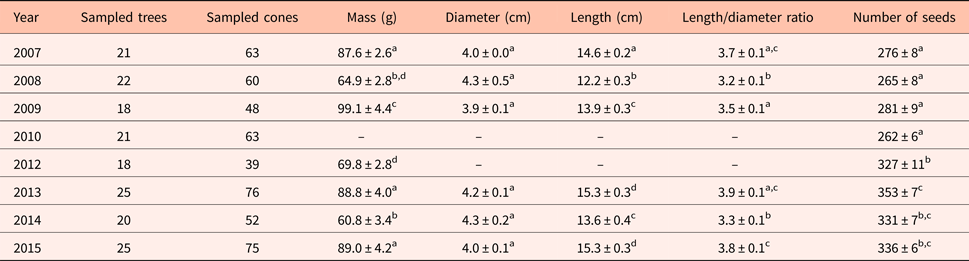
During eight consecutive years (2007–2015, 2011 excluded), an average of 60 mature closed cones from ca 20 randomly selected trees (18–25, minimum–maximum values) were collected in autumn (mid-October) of each year from the unburned part of Parnitha NP fir forest (Table 1). Closed cones remained at room conditions (ca 20°C) for at least 2 weeks, until resin was dried, thus facilitating the cone opening, the separation of scales and seeds from the central cone axis and finally the seed extraction. Seeds were extracted manually from the disintegrated cones and seed wings were removed as well.
Abies cephalonica cone biometric characteristics freshly matured cones were collected from the unburned Parnitha National Park in autumn (October) for eight consecutive years (2007–2015, 2011 excluded). Different letters represent significant differences between years (P < 0.05).

Freshly matured cones were collected from the unburned Parnitha National Park in autumn (October) for eight consecutive years (2007–2015, 2011 excluded). Different letters represent significant differences between years (P < 0.05).
Additional processing of seeds was performed in two stages. In the first stage, aborted and insect-infected seeds were visually identified and removed. Larvae of Choristoneura murinana (affecting fir needles and buds, according to Tsopelas et al., Reference Tsopelas, Angelopoulos, Economou, Voulala, Xanthopoulou and Radoglou2001) and Dioryctria abietella (consuming buds and cones after Kailidis and Georgevits, Reference Kailidis and Georgevits1973) were observed in insect-infected seeds. The total amount of processed seeds was 142,412 in all eight collection years, ranging from 12,744 (2012) to 26,645 (2013).
In the second stage, a Seed Cleaner device with airflow (Agriculex Inc., Canada, CB-1 column seed blower, CB 107008) was used for the separation of sound and empty/dead seeds, on the basis of their specific seed mass values. All full seeds separated from the first stage (excluding aborted and insect-infected) were placed in the Seed Cleaner device for ca 15 s, using the appropriate airflow settings. Seeds separated from the airflow were divided into two categories, ‘potentially sound’ and ‘potentially empty/dead’, and were stored separately in aluminium containers at room conditions for a short time (less than 1 month) until the onset of germination experiments. Different experiments were conducted for the two above-mentioned categories. The term ‘potential’ is used to indicate that airflow does not fully separate empty/dead from sound seeds.
Cone biometric characteristics
Cone biometric characteristics, i.e. cone length, largest cone diameter (both recorded in millimetres) and fresh cone mass (weighed in grams), were measured 2–3 weeks after collection, using an electronic digital Vernier caliper and an analytical balance (N34120 Navigator portable electronic balance, OHAUS, Switzerland). The number of seeds per each cone, including infected and aborted seeds, was counted after the cone opening process. The number of infected seeds per cone was counted separately for all years, except for 2008 and 2009. Moreover, the mass of sound seed was measured for the years 2007–2008 and 2012–2015 (n = 18–138, depending on the annual percentage of empty seeds); after each measurement, a cut test (FAO, Reference Willan1985) was performed to assess the percentage of empty seeds.
Germination experiments
Seed germination of ‘potentially sound’ seeds was examined in seeds from each cone separately (group A: seed lots 2007–2010 and 2013), or in seeds merged from cones in a single sample (group B: seed lots 2012–2015). The 2013 seed lot appears in both groups, as a number of cones had disintegrated during transfer and their excised seeds were merged into one sample. ‘Potentially sound’ seeds were placed in Petri dishes lined with two discs of filter paper and moistened with 8 ml of a fungicide solution. In group Α, seeds from each cone were placed in many Petri dishes as required (maximum 30 seeds per Petri dish) and in group B, five Petri dishes with 20 seeds were placed per each condition.
In group A, the experiments were performed at 20°C, in continuous darkness (CD) after 4 weeks of cold stratification at 2–4°C. In group B, experiments were performed (a) at various temperatures without cold stratification, and (b) at 20°C, after various durations of cold stratification. The constant and alternating (12/12 h) temperatures tested were 15, 20 and 20/10°C for seed lots 2012–2013 and 5, 10, 15, 20, 25 and 20/10°C for 2014–2015 (in addition, 30/20°C was tested on the 2015 seed lot). To test the effect of light on germination, experiments were conducted in alternating light/dark conditions (L/D, 12 h/12 h) and in CD. For the 2014 and 2015 seed collections, when experiments in light were completed, all dark samples were subsequently transferred to the corresponding light conditions. Durations of cold stratification tested were 4 and 8 weeks for the 2012 seed lot, 4, 6 and 8 weeks for the 2013–2014 seed lot and 2, 4, 6 and 8 weeks for the 2015 seed lot. After cold stratification seeds were transferred to 20°C, in L/D and CD, except for the 2013 seed lot which was tested only at 20°C CD.
The criterion of germination was visible radicle protrusion. Germination experiments were completed when no additional seeds germinated for 2 weeks. The rate of germination was measured by T 50, which is the time to 50% of final germination and was calculated according to the following formula:
 $$T_{50} = T_1 + {\rm} \left\{ {\left( {N/2-N_1} \right){\rm} \times {\rm} \left( {T_2 -T_1} \right)/\left( {N_2 -N_1} \right)} \right\},$$
where N is final germination, N 1 and N 2 are germination percentages prior to and after N/2, respectively, and T 1 and T 2 are the time taken to N 1 and N 2, respectively (Skourti and Thanos, Reference Skourti and Thanos2015). For experiments in continuous darkness (CD), Petri dishes were placed in metal light-proof containers and measurements were performed twice a week under green safelight. Germinated seeds were discarded after each count. When germination tests were completed, cut tests were performed on the non-germinated seeds and final germination percentages were corrected for every seed lot, excluding empty and dead seeds.
‘Potentially empty’ seeds were tested for germination at 20°C L/D after 4 weeks of cold stratification. Seeds were imbibed within two to three layers of filter paper and placed above two cotton layers in a plastic box. Germinated seeds were discarded after each count. When germination tests were completed, a cut test of a sub-sample of n = 200 seeds was performed.
Seed ‘classification’
In order to assess the annual seed production and quality, seeds were divided into four categories: (a) germinable, (b) empty, (c) dead and (d) apparently viable but not germinated. The number of seeds in each category was calculated based on the experiments conducted every year for ‘potentially sound’ and ‘potentially empty’ seeds, as described above, and is expressed as a percentage. For reasons of homogeneity between groups A and B for ‘potentially sound’ seeds, experiments at 20°C CD after 4 weeks chilling were used to make the necessary calculations.
Seedling development
Subsequent to germination experiments, seedlings were grown in a growth chamber for a short period (at 15°C for 2–3 weeks) and then transplanted in planting trays (1 part humus:1 part peat:1 part perlite) outdoors in the nursery. The number of cotyledons of each of 3317 seedlings (135, 18, 301, 65, 1231, 600 and 967 seedlings in 2007, 2009, 2010, 2012, 2013, 2014 and 2015 collection years, respectively) was counted.
Statistical analysis
A two-level nested ANOVA was used to test differences in cone morphometric characteristics among years, followed by a Tukey's post-hoc analysis, and between trees of the same year. The relationship between cone length and seed number was assessed by calculating Pearson's correlation coefficient. Differences among the various temperatures and durations of chilling pretreatment for each seed lot were tested by a one-way analysis of variance (ANOVA), followed by Tukey's multiple comparisons test, or the non-parametric Kruskal–Wallis H test depending on whether the ANOVA assumptions were met (normal distribution and homogeneity of variance). In order to test the effect of light on seed germination, at each temperature, both with and without a chilling pretreatment, an f-test followed by a t-test was performed. All germination percentages were arcsine transformed prior to analysis. Statistical analyses for normality, Kolmogorov–Smirnov (K–S) and Shapiro–Wilk (S–W) test, were applied to data for the number of cotyledons (confidence level 95%). All analyses were performed using IBM SPSS Statistics 23.
Results
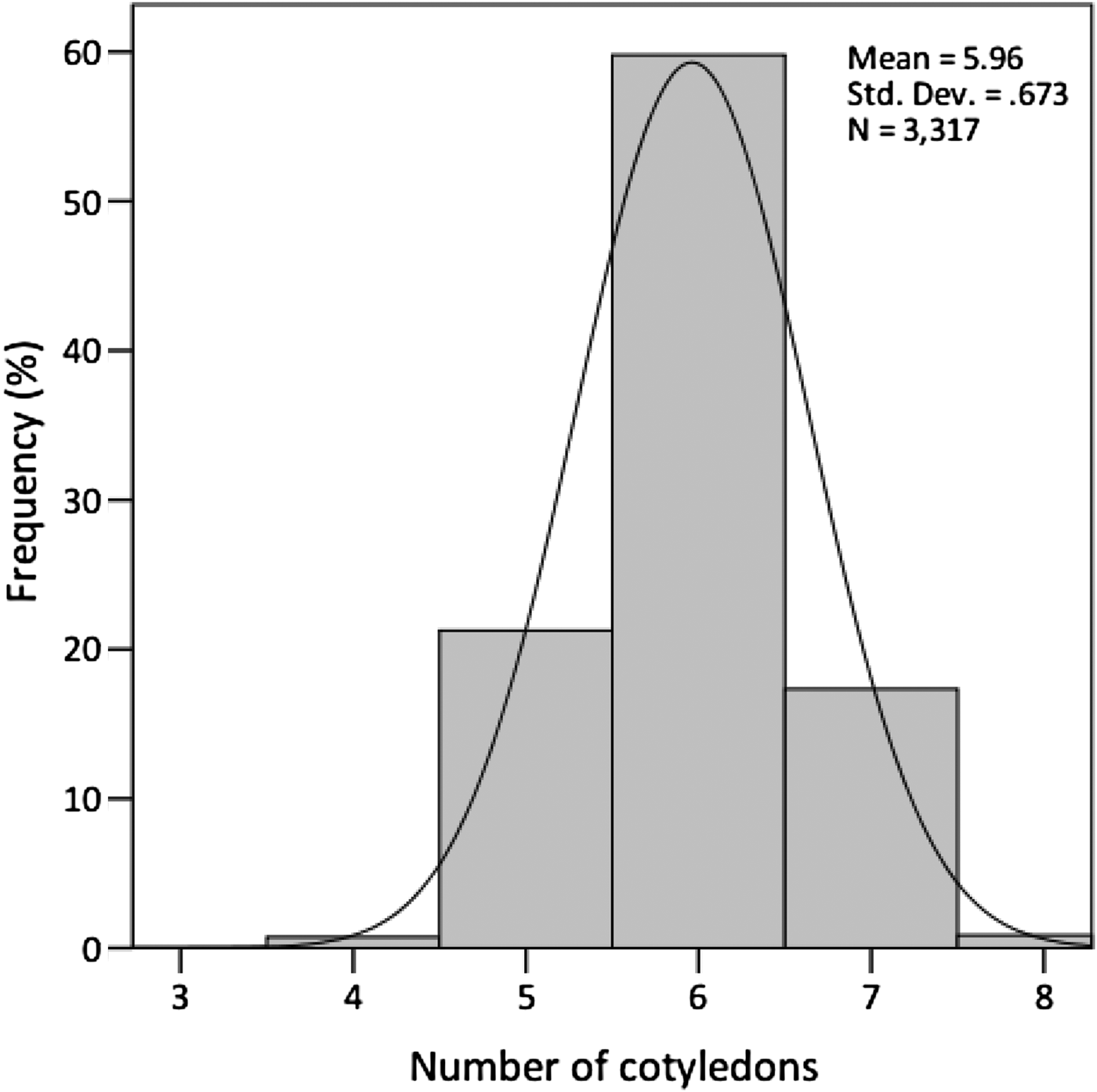
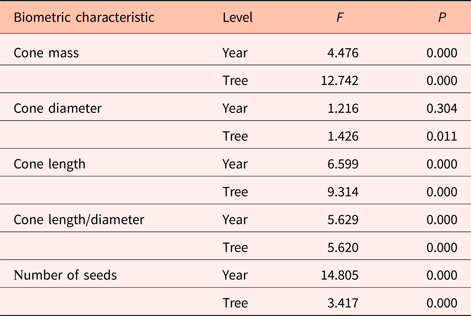
Average annual freshly collected cone mass varied from 60.8 ± 3.4 to 99.1 ± 4.4 g and cone length from 12.2 ± 0.3 to 15.3 ± 0.3 cm; cone maximum diameter was ca 4.0 cm, a constant value in all collection years (Table 1). The cone length to diameter ratio was between 3.2 ± 0.1 and 3.9 ± 0.1. Grecian fir produces heavier cones every other year, thus larger cones occur in alternate years, a pattern shown in fresh cone mass. The number of seeds per cone was ca 270 during the first 4-year post-fire period (2007–2010) and higher, ca 330, in the following years (2012–2015). Cone length is correlated to the number of seeds per cone in all years (Pearson's correlation coefficient: 0.470, 0.684, 0.756, 0.507 and 0.749 for 2008, 2009, 2013, 2014 and 2015, respectively) except for 2007, which is the year the wildfire occurred (Pearson's correlation coefficient: 0.209). The number of infected seeds per cone (data not shown) fluctuated widely between collection years. Lower values were recorded in masting years 2010 and 2015 (5 ± 2 and 13 ± 3, respectively) and higher values in the other years (27 ± 6 and 133 ± 13, minimum–maximum).The mean mass of sound seeds for collection years 2007, 2008, 2012, 2013, 2014 and 2015 was 71.4 ± 1.4, 59.3 ± 2.3, 64.0 ± 4.4, 66.4 ± 1.4, 67.4 ± 2.1 and 73.7 ± 1.6 mg, respectively.The two-level nested analysis of variance resulted in statistically significant differences for all A. cephalonica cone morphometric characteristics, both among years and among trees, except for cone diameter (Table 2). Abies cephalonica seedlings had three to eight cotyledons (Fig. 1), while the vast majority (98.4%) had five to seven cotyledons. The average value was 5.96 ± 0.01 (n = 3317) cotyledons per seedling, which shows a departure from normality (K–S: d = 0.302, P = 0.000; S–W: 0.814, P = 0.000); however, it should be considered as a normal distribution as the median and mode values (6.00 in each case) are very close to the mean (5.96).
Frequency distribution of the cotyledon number per Abies cephalonica seedling (n = 3317). Cotyledon number was counted in 135, 18, 301, 65, 1231, 600 and 967 young seedlings from 2007, 2009, 2010, 2012, 2013, 2014 and 2015 seed collection years, respectively.

Results of two-level nested analysis of variance on Abies cephalonica cone biometric characteristics

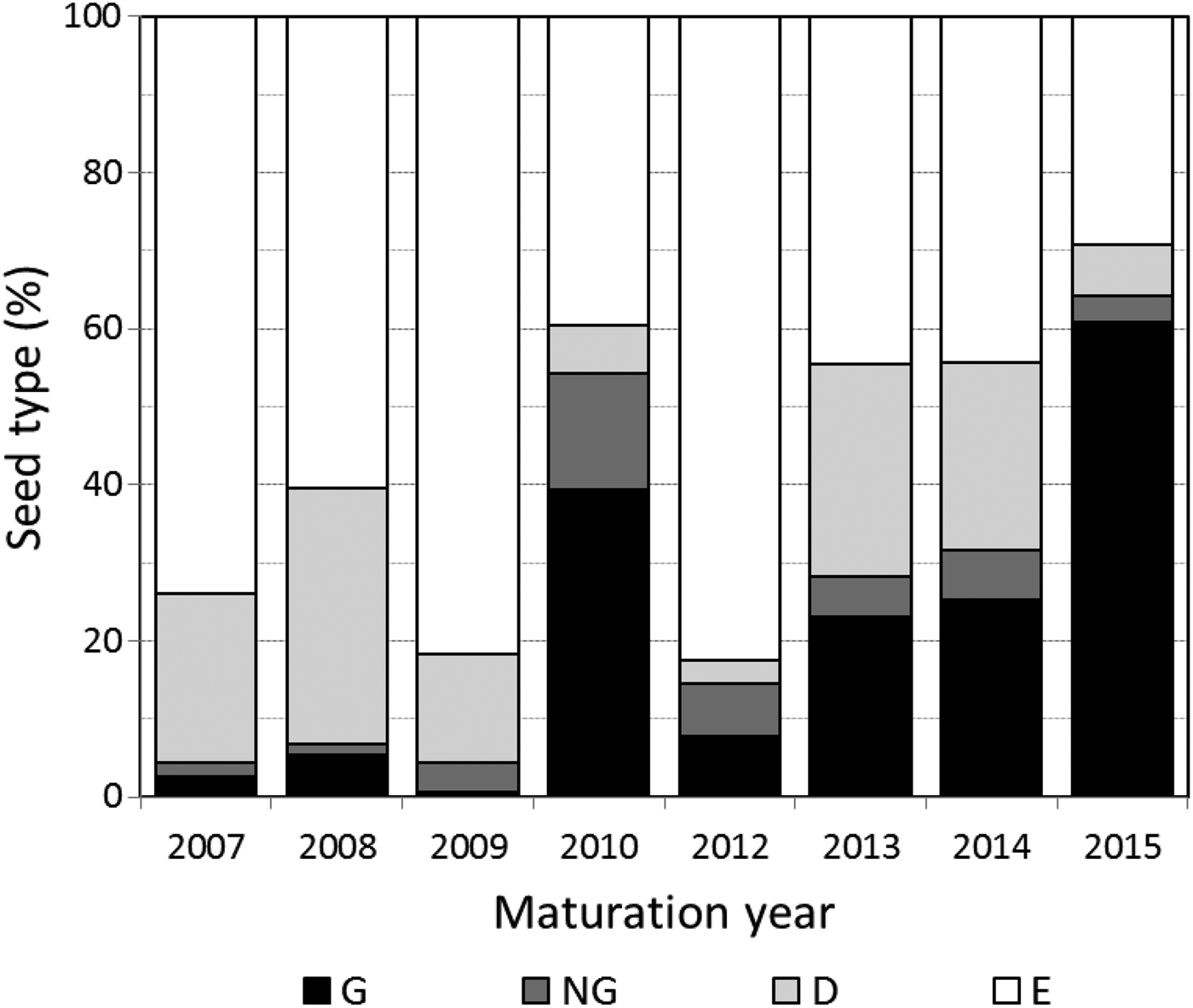
Seeds in each cone were grouped into four categories: germinable, not germinated, dead and empty. The proportion of germinable seeds in each cone (Fig. 2) ranged from 0.6 to 60.9% in the examined seed lots with the considerably higher values recorded in masting years (39.4 and 60.9% in 2010 and 2015, respectively). However, empty seed percentage was consistently high in each yearly seed production, with lowest (29.3%) and highest values (81.8%) observed in the masting and lean crop years, respectively. Dead and not germinated seeds constitute a relatively low component each year, ranging from 3.0 to 32.8% and 1.4 to 14.8%, respectively.
Abies cephalonica seed classification for an 8-year post-fire period (2007–2015, 2011 excluded) in Parnitha National Park. For each yearly cone production, seeds were classified as germinable (G), apparently viable but not germinated (NG), dead (D) and empty (E) after (a) seed separation by a Seed Cleaner device with airflow, (b) germination experiments at 20°C in continuous darkness, after 4 weeks cold stratification at 2–4°C and (c) cut tests applied to seeds that did not germinate. Infertile and insect-infested seeds were discarded prior to classification.

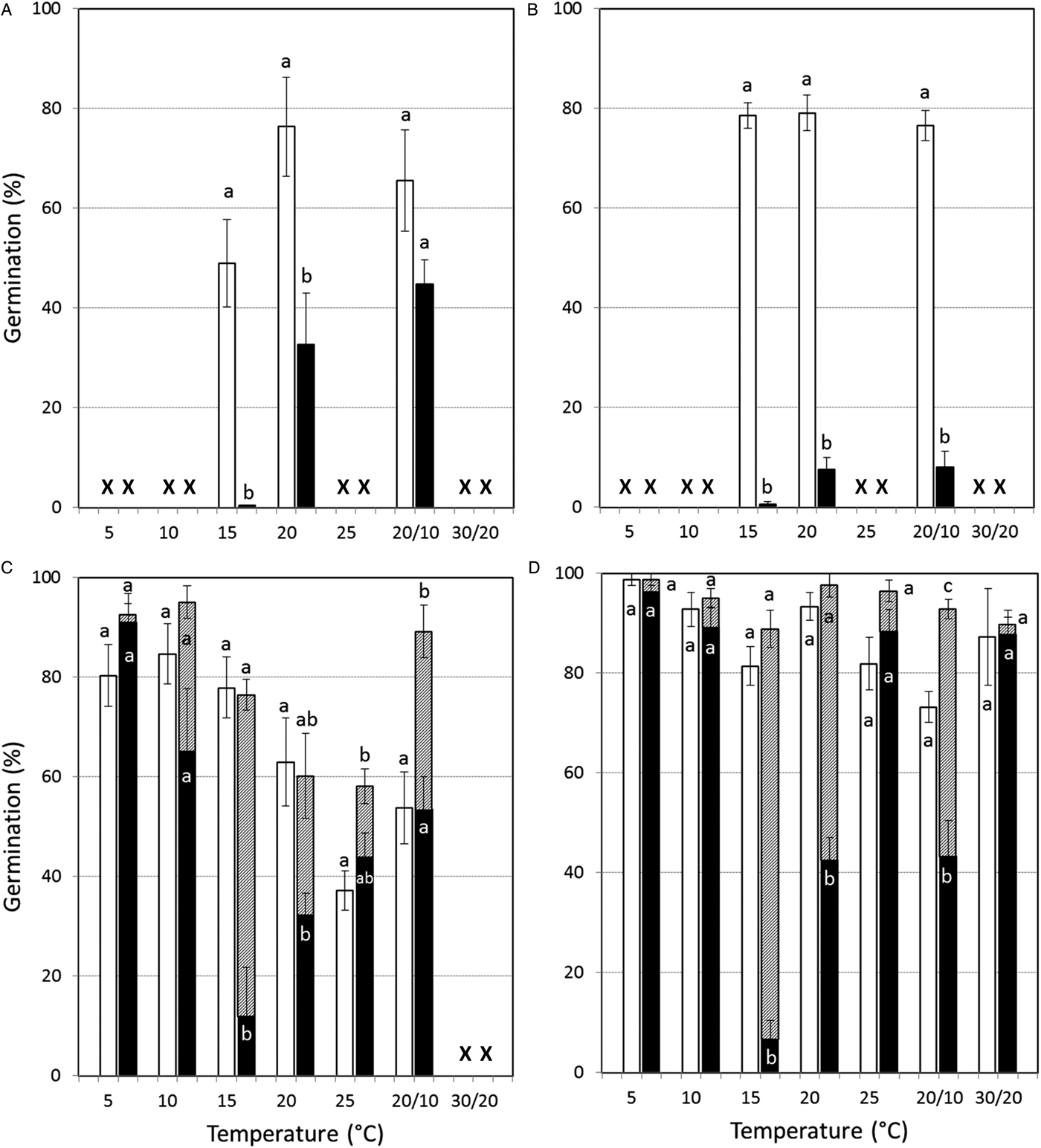
Final germination of untreated healthy (sound) seeds in light exceeded 60% at the majority of the constant and alternating temperatures tested for collection years 2012–2015 (Fig. 3). In a few instances germination was somewhat lower: 49% at 15°C for 2012, 37% at 25°C and 54% at 20/10°C for 2014. In the masting year 2015, final germination exceeded 80% at the constant temperatures 5–25°C and the alternating temperatures 30/20°C. Optimal germination temperatures in light, based mainly on T 50 values, were 20°C (T 50: 18–24 days, final germination 63.0–93.8%) and 15°C (T 50: 20–26 days, final germination 49.0–81.4%) depending on collection year; higher T 50 values (43–78 days) were recorded in light at lower temperatures (5 and 10°C). Overall, germination experiments are completed within 4–5 weeks at higher temperature (T ≥ 15°C), while at lower temperatures (5–10°C) experiments are significantly prolonged, i.e. ca 15 weeks. However, final germination in darkness was highly temperature dependent, ranging from 0.5 to 96.2%; lower final percentages (<43%) were observed at optimal conditions for light germination, 15 and 20°C. Thus, light requirement for germination was found at 15 and 20°C for all collection years and at 20/10°C for 2013 and 2015. Seed germination was light indifferent at low (5 and 10°C) and high (25°C) marginal constant temperatures, with a prolonged germination period (T 50: 43–84 days). The ungerminated seeds from experiments held in darkness germinated sufficiently after they were transferred from dark to light conditions (Fig. 3C and D); thus A. cephalonica seeds are not skotodormant.
Final germination in untreated Abies cephalonica seeds, tested over a wide constant temperature range (5, 10, 15, 20 and 25°C) and alternating temperatures (20/10 and 30/20°C) in light (12 h photoperiod, white bars) and in continuous darkness (black bars) for collection years 2012 (A), 2013 (B), 2014 (C) and 2015 (D). For 2014 and 2015, when experiments in light were completed, all dark samples were subsequently transferred to the corresponding light conditions (grey bars). Different letters represent significant differences under different light conditions within each temperature (P < 0.05); X, not tested.

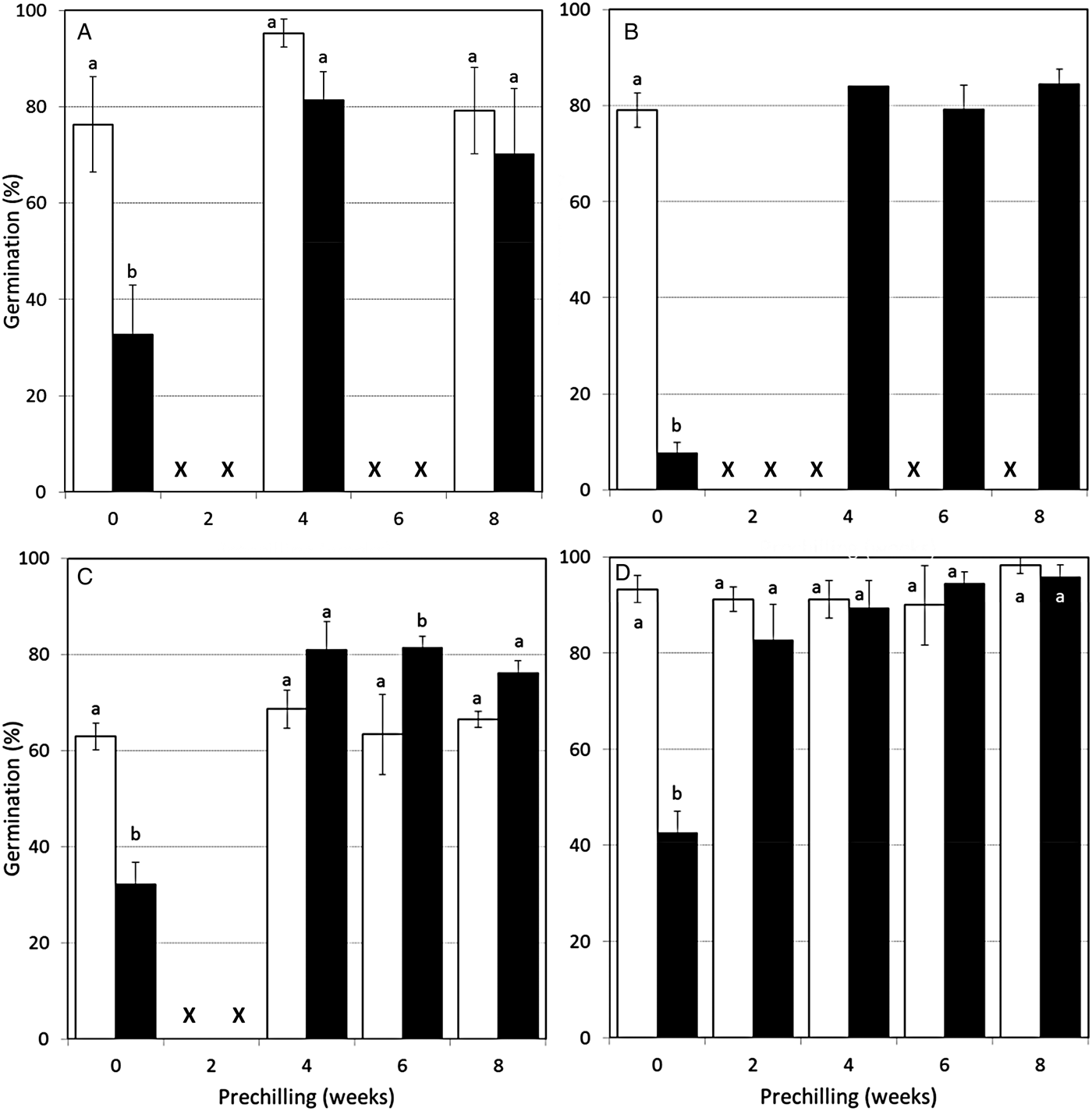
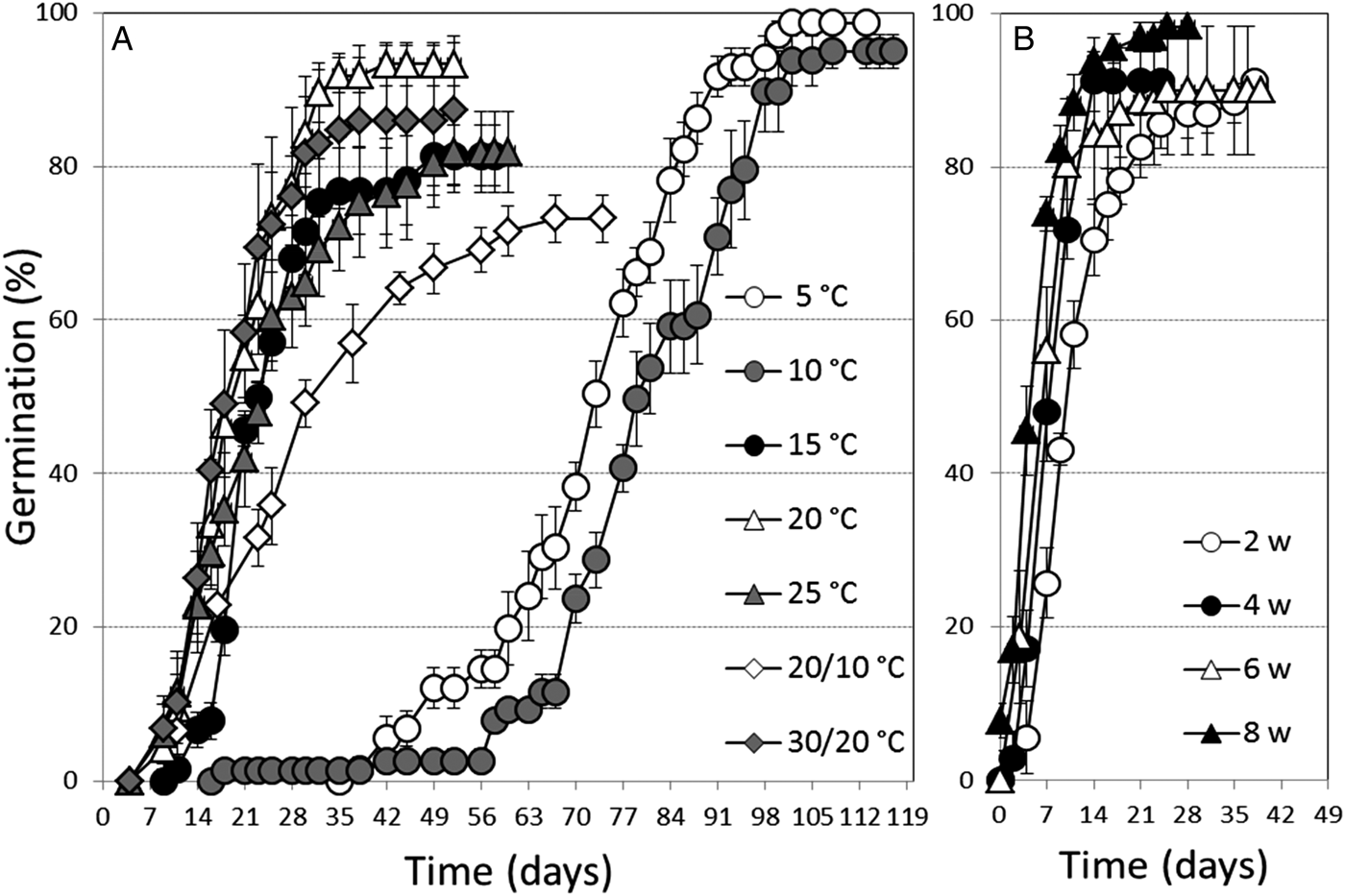
In four successive collection years (2012–2015) the effect of various chilling durations on seed germination at 20°C in light and darkness was studied (Fig. 4). In all years tested, final germination was statistically significantly promoted by cold stratification, but only in darkness, where 2-week pretreatment was sufficient for the promotion of germination. Germination in light was high, even without a cold stratification pretreatment; thus no promotion was observed. However, germination rate in light experiments was increased following stratification, especially at 5 and 10°C (Fig. 5A and B). A remarkable gradual reduction of the T 50 of untreated seeds was noted at higher (>15°C) temperatures; T 50 was 9, 7 and 6 days after 2, 4 and 6 weeks of chilling for collection year 2015. During the highest period of cold stratification tested, i.e. 8 weeks, a small proportion of seeds, ca 8% for collection year 2015, germinated during the pretreatment (Fig. 5B).
The effect of various chilling durations (0, 2, 4, 6 and 8 weeks) on final germination of Abies cephalonica seeds at 20°C, in light (12 h photoperiod, white bars) and dark (black bars) for collection years 2012 (A), 2013 (B), 2014 (C) and 2015 (D). Different letters represent significant differences under different light conditions within each temperature (P < 0.05); X, not tested.

Time course of Abies cephalonica seed germination in (A) untreated seeds examined at constant (5, 10, 15, 20 and 25°C) and alternating (20/10 and 30/20°C) temperatures in light (12 h photoperiod); and (B) previously stratified (at 2–4°C in darkness) seeds for an increasing period of time (2, 4, 6 and 8 weeks) and subsequently transferred to 20°C in light throughout; both experiments correspond to the masting year (cone and seed collection of 2015).

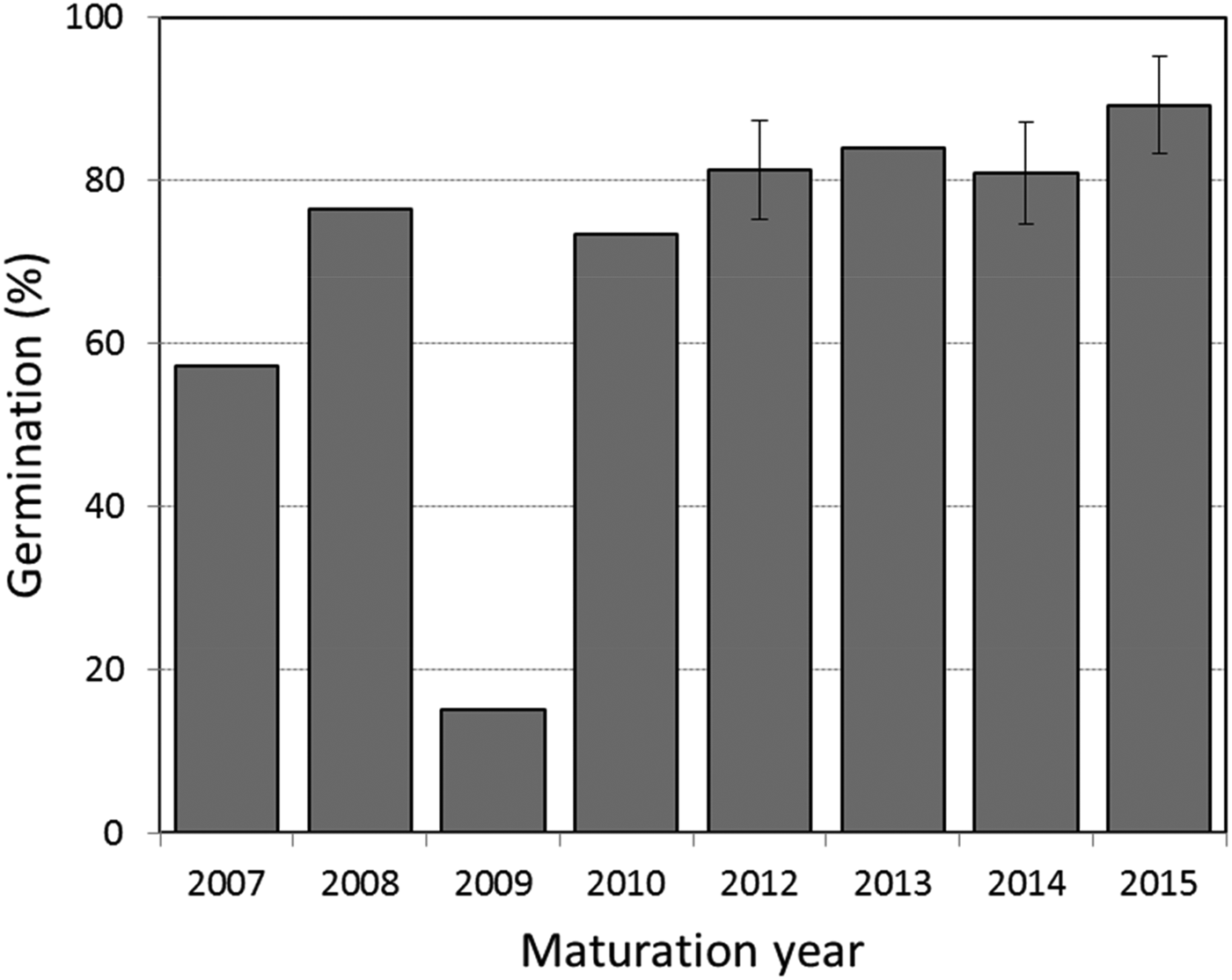
Seed germination in each collection year was tested at 20°C in darkness after 4 weeks of cold stratification (Fig. 6). Final germination was successful in all collection years, in the range of 73.4–89.2%, except for the lower final percentages observed in 2009 (15.1%), which is considered as the leanest seed-crop year, and in 2007 (57.2%), namely the wildfire year.
Final germination of Abies cephalonica seeds at optimal temperature (20°C) in continuous darkness; seeds were previously stratified for 4 weeks at 2–4°C in darkness. Germination experiments implemented for eight successive, post-fire years (2007–2015, 2011 excluded).

Discussion
Reproduction
Firs generally require 2 years to complete their reproduction cycle (Edwards, Reference Edwards, Bonner and Karrfalt2008), while a shorter period (18 months) is reported for A. cephalonica (Politi et al., Reference Politi, Georghiou and Arianoutsou2011). Anthesis of the Grecian fir occurs at the beginning of May (Panetsos, Reference Panetsos1975; Politi et al., Reference Politi, Georghiou and Arianoutsou2011), bud burst takes place in early spring and almost 1 year after bud differentiation, the female cones elongate, followed by pollination and fertilization; seeds are developed inside the cones until autumn (October to November) when seed dispersal occurs (Panetsos, Reference Panetsos1976; Politi et al., Reference Politi, Georghiou and Arianoutsou2011). The cone axis remains on the tree canopy, unlike the scales and bracts which are dispersed along with the seeds. Masting is a common characteristic in Abies species, while intervals between full crop years vary significantly due to numerous factors (Edwards, Reference Edwards, Bonner and Karrfalt2008). In A. cephalonica, a 2- to 4-year periodicity for masting has been reported (e.g. Panetsos, Reference Panetsos1975; Dafis, Reference Dafis1988). In this 8-year study, masting occurred twice (2010 and 2015).
Morphometric characteristics
The size, the shape and the cone mass along with other morphometric characteristics, e.g. exerted bracts in A. cephalonica cones (Tan and Iatrou, Reference Tan and Iatrou2001), correspond to diagnostic characters for the identification of Abies species (Panetsos, Reference Panetsos1976). The female cones are erect and cylindrical, reaching a size of (10) 12-(16) 17 × (3) 4–5 cm at maturity (Panetsos, Reference Panetsos1976; Christensen, Reference Christensen, Strid and Tan1997; Tan and Iatrou, Reference Tan and Iatrou2001). The presented cone length x cone diameter dimensions (see Table 1) are in agreement with the above mentioned length and diameter values, even though minimum and maximum values deviate. Slightly higher mean values were found in samples from Mt Ainos NP (Cephalonia Island), especially during a masting year (Politi et al., Reference Politi, Georghiou and Arianoutsou2011). Ιn the present study the masting years and cone morphometric characteristics were not correlated. Grecian fir produces heavier cones every other year; this pattern was obtained with fresh cone mass and should be confirmed with dry cone mass in the future. Cone collection occurred more or less at the same period every year, therefore this pattern could be the result of either an endogenous rhythm or the prevailing climatic conditions. The mean number of seeds per cone was different for the years 2007–2010 (fewer seeds per cone) and 2012–2015, and was not associated with the mean values of the cone morphometric characteristics for the same periods. As the mean number of seeds corresponds to the visibly ‘potentially sound’ seeds, this differentiation could be attributed to the variation on the number of infected and aborted seeds, as well as the climatic conditions during the reproduction period. The minimum and maximum values regarding the number of seeds per cone are higher than those reported in a series of cone collections from Cephalonia Island (Panetsos, Reference Panetsos1975). The average mass for sound and empty seeds is similar to that found from a study at the same region, Parnitha NP (Panetsos, Reference Panetsos1976). Seed mass is considerably lower in several other fir species, e.g. A. balsamea, A. grandis, A. lasiocarpa and A. procera (Edwards, Reference Edwards, Bonner and Karrfalt2008). In general, data on sound seed mass of fir species are few as it is not usually mentioned in research papers.
High percentages of empty seeds have been reported in several fir species (Edwards, Reference Edwards, Bonner and Karrfalt2008), as observed in the present study for A. cephalonica annual seed production from Parnitha NP. These values were quite similar to other reports [e.g. 32–53% in Panetsos (Reference Panetsos1976); 73–97% in Politi et al. (Reference Politi, Georghiou and Arianoutsou2011); 18.5–32.5% in Stamatopoulos (Reference Stamatopoulos1995)]. In Abies species, the presence of empty seeds has been attributed to frost during pollination, insect damage following pollination, pollination efficiency, inbreeding (lethal alleles), seed collection period and amounts of pollen associated with masting and lean crop years (Arista and Talaverna, Reference Arista and Talavera1994; Kormuťák and Lindgren, Reference Kormuťák and Lindgren1996; Arista et al., Reference Arista, Herrera and Talavera1997; Owens and Morris, Reference Owens and Morris1998; Houle, Reference Houle1999; Edwards, Reference Edwards, Bonner and Karrfalt2008; Cremer et al., Reference Cremer, Ziegenhagen, Schulerowitz, Mengel, Donges, Bialozyt, Hussendoerfer and Liepelt2012; Rossi et al., Reference Rossi, Morin, Laprise and Gionest2012). In the Grecian fir from Parnitha NP, the lowest empty seed percentage values (29–39%) were assessed in the two masting years, while the highest values (up to 82%) were observed in the leanest crop year. In agreement with the above-mentioned results, the germinable A. cephalonica seed contribution reached considerably high values in masting years (39.4 and 60.9% in 2010 and 2015, respectively). In a previous cone–seed collection 40 years ago (Panetsos, Reference Panetsos1976), the proportion of filled (sound, 53.3%), empty (33.6%), and insect infested (13.1%) seeds achieved quite comparable percentages to the presented data for the masting year.
In the present study, the most frequent cotyledon number was six, ranging from three to eight per seedling, while in Abies species cotyledons ranged from two to 14 (Edwards, Reference Edwards, Bonner and Karrfalt2008). This characteristic has been shown to play an important role in seedling survival in other conifers (e.g. Pinus halepensis), where cotyledon number per seedling is positively correlated with photosynthetic surface, seed size and seedling survival (Daskalakou and Thanos, Reference Daskalakou and Thanos2010).
Seed germination
Previous studies have mainly focused on germination experiments conducted (a) in natural conditions at the nursery (e.g. Wenhui et al., Reference Wenhui, Xiaobo and Jianyun2006, Strandby Andersen et al., Reference Strandby Andersen, Prado Córdova, Braüner Nielsen and Kollmann2008, Boncaldo et al., Reference Boncaldo, Bruno, Sicoli, Tommasi and Mastropasqua2010), (b) in a single temperature at the laboratory, often only after cold stratification (Kurt et al., Reference Kurt, Frampton, Isik, Landgren and Chastagner2016), and (c) through priming techniques for reducing the time required to break dormancy, and at the same time avoiding the high fungal damage caused by prolonged chilling pretreatments (e.g. Ma et al., Reference Ma, Feurtado and Kermode2003; Doody and O'Reilly Reference Doody and O'Reilly2005). Moreover, the interpretation of germination results for Abies species, and A. cephalonica in particular, has been difficult as experiments often suffer fungal damage while germination values are not usually corrected for full seeds; empty seed percentage is always a critical parameter in these seed samples.
Seeds of A. cephalonica from Parnitha NP germinate over a wide temperature range without any pretreatment, at both constant and alternating temperatures. Successful germination occurs in light, at temperatures between 5 and 25°C, and the fastest rate of germination occurs at 15 and 20°C. Dark germination is lower only in the more favourable germination temperatures, thus indicating a temperature-dependent light-promoting effect. The light-promoting effect in A. cephalonica is also found in other Abies species; light promoted germination percentage in A. alba (Messeri et al., Reference Messeri, Innamorati and Jacopi1963) and germination rate in A. chensiensis (Jiang-Shan et al., Reference Jiang-Shan, Qing-Mei and Zong-Qiang2003), A. amabilis, A. grandis and A. laciocarpa (Li et al., Reference Li, Burton and Leadem1994). The presence of dormancy indicated in previous studies of A. cephalonica seed germination (Politi et al., Reference Politi, Georghiou and Arianoutsou2011), was found because experiments were conducted in darkness, at light requiring temperatures, and are thus in agreement with the findings of this study. Finally, in the present study, the ungerminated seeds that were previously imbibed in darkness germinate readily when transferred to light, and thus A. cephalonica seeds are not skotodormant.
According to the present results, a 4-week-long cold stratification does not affect final germination at optimal conditions, although it increases the germination percentages at 15 and 20°C in darkness and, as expected, the germination rate of A. cephalonica at all temperatures tested. A longer period of cold stratification (6–8 weeks) shows only a marginal effect on germination time, also reported by Stamatopoulos (Reference Stamatopoulos1995), while some seeds do germinate during chilling. Therefore, A. cephalonica seeds show a dual strategy of germination as they can germinate optimally at warm temperatures in the light while a cold pretreatment may further enhance germination rate and percentages at suboptimal conditions.
Seeds of A. cephalonica are shed in autumn and, as shown in the present study, they can optimally germinate without any cold treatment. However, germination does not take place during autumn or early winter because the particular temperatures recorded within the mountainous belt of the species’ geographical distribution are considerably lower than those required (≥15°C). On the other hand, the temperatures experienced by seeds during this ‘wet and cold season’ (November to February) may either prime seeds or promote slow germination so that a rapid seedling growth would take place by the end of winter and concurrently with the rise of temperatures. In the current, largely fluctuating Mediterranean climatic conditions, the cold season may be any combination of length and wetness; whatever the climatic scenario, the seeds of A. cephalonica are well adapted to germinate by the end of winter (sometimes observed to emerge in snow beds) or by early spring at the latest (as a result of stratification, spring rising temperatures or both). In a warmer and drier future, predicted for the Mediterranean area, seeds might be able to germinate early in the rainy season but only in forest gaps (as we have shown that light acts favourably) and this might lead to either seedling decimation upon later-occurring frost conditions or successful establishment in an ensuing mild winter. Furthermore, the promotion of germination in non-chilled seeds by light might be an ecological advantage in mixed forests, with A. cephalonica encroaching through deciduous tree stands.
Even though the overall pattern of germination behaviour did not vary among various seed lots (collected and tested over eight consecutive years), final percentages were higher for those seeds that matured during the masting years. This finding requires further investigation but it could be tentatively attributed to the higher percentage of full seeds produced in masting years.
In conclusion, A. cephalonica cone and seed collection, seed germination experiments and a succeeding massive seedling production for restoration purposes are recommended during the masting years. Grecian fir seeds show a dual germination strategy; they can germinate optimally either at warmer temperatures in the light without any pretreatment or at suboptimal conditions after a cold stratification, which may further enhance germination rate and final percentages. Grecian fir is well adapted to germinate by the end of winter or by early spring (February to March) at the latest (as a result of stratification, spring rising temperatures or both), when a massive seedling occurrence was observed in the field. Therefore, the data obtained in this study contribute to both the understanding of the germination mechanisms in the field and the proper in situ and ex situ management of the Grecian fir.
Acknowledgements
The authors are grateful to Dr Despina Paitaridou, Kostas Ioannidis, Victoria Menteli and Dr Asimina Skouteri for their contribution in collecting cones. We also thank the local Forest Department (Attica Region) and the Management Body of Parnitha National Park for their assistance.
Conflicts of interest
None.
Financial support
This work was partly supported by the project “Contribution to the post-fire management of Parnitha National Park” (2013–2015), a national research project that was assigned by the Hellenic Ministry of Environment and Energy, General Directorate of Development and Forest Protection and Agroenvironment and funded by the Green Fund.