


Introduction
The invention of pottery is considered one of the most important technological developments in human history and represents a key stage in the development of pyrotechnology (Tsuneki Reference Tsuneki, Tsuneki, Nieuwenhuyse and Campbell2017a). In archaeological studies, pottery is considered one of the most important cultural markers and is widely used to reconstruct chronological sequences (Nishiaki Reference Nishiaki2010a), identify cultural boundaries, examine socio-economic structures (Khanipour Reference Khanipour2024; Pollock Reference Pollock, Fahimi and Alizadeh2012; Stark Reference Stark1991), study subsistence strategies (Demirci et al. Reference Demirci, Lucquin, Craig and Raemaekers2020) and analyse regional interaction and exchange networks (Rice Reference Rice1987; Reference Rice, Bishop and Lange1991; Shepard Reference Shepard1976; Sinopoli Reference Sinopoli1991; Van der Leeuw Reference Van der Leeuw1977). However, the question of why and how pottery technology emerged remains a fundamental issue and a major topic of debate in Neolithic archaeology and continues to require new regional datasets.
The western parts of Iran are known as the Eastern Fertile Crescent, a region that is considered one of the main centres of domestication of plants and animals and the formation of the first sedentary communities (Darabi Reference Darabi2015; Hole Reference Hole, Richter and Darabi2024; Richter et al. Reference Richter, Darabi and Alibaigi2021; Riehl et al. Reference Riehl, Zeidi and Conard2013; Riel-Salvatore et al. Reference Riel-Salvatore, Lythe and Albornoz2021). Despite numerous studies on the Neolithic period of Iran, our knowledge of when and how societies entered pottery production in different regions of Iran is still limited. Investigating the process and conditions of the emergence of pottery is of fundamental importance for understanding the economic and cultural developments of Neolithic societies. This study attempts to examine the time and context of the emergence of pottery in the Fars cultural zone in southern Iran and to evaluate the role of this region in the emergence of pottery in Southwest Asia. This study addresses the following questions: What are the technological and stylistic characteristics of early pottery from Tol-e Sangi? Did Tol-e Sangi adopt pottery technology from neighbouring regions, or develop it independently? Under what cultural and economic conditions, particularly regarding subsistence strategies, did Neolithic societies in Fars begin producing pottery? In this regard, data from the excavations of the Tol-e Sangi are used as a key site. Tol-e Sangi, with its continuous stratigraphy and substantial Neolithic deposits, provides a rare stratified sequence for examining the transition from Pre-Pottery Neolithic (PPN) to Pottery Neolithic (PN) Period.
The Neolithic period in the Fars cultural zone
Archaeological research conducted in Iran over the past 100 years shows that since the Neolithic period, numerous cultural regions have been formed on the Iranian plateau. Among them, large parts of southern Iran are known as the Fars cultural zone (Khanipour & Azizi Kharanaghi Reference Khanipour, Azizi Kharanaghi, Richter and Darabi2024). For several decades, the Mushki period was considered the oldest Neolithic phase in the region (Alizadeh Reference Alizadeh2006; Nishiaki Reference Nishiaki2010b; Sumner Reference Sumner, Levine and Young1977; Weeks Reference Weeks, Matthews and Fazeli Nashli2013; Weeks et al. Reference Weeks and Niakan2006). However, the results of excavations at Rahmat Abad (Azizi Kharanaghi et al. Reference Azizi Kharanaghi, Fazeli Nashli, Nishiaki, Matthews and Fazeli Nashli2013) and Tol-e Sangi (Khanipour & Nishiaki Reference Khanipour and Nishiaki2024) indicated that Neolithic settlements in the area were formed in the second half of the eighth millennium bc, and this process appears to have been influenced by developments in the central Zagros. These new data show the beginning of the Neolithic in Fars and highlight the need to reevaluate the cultural sequence of the region.
From the Pottery Neolithic to the Elamite period, local ceramic traditions with distinct and identifiable features continued in this region. During the Neolithic period, several sub-regions within the Fars cultural zone can be distinguished based on ceramic typology and stylistic variations. In the northern half of Fars, the Neolithic cultural sequence includes Rahmat Abad (c. 7450–6900 bc), Formative Pottery (c. 6900–6400 bc), Mushki (c. 6400–6000 bc), Jari (c. 6000–5600 bc) and Shamsabad (5600–5200 bc) (Khanipour et al. Reference Khanipour, Niknami and Abe2021). In contrast, in the southern half of Fars, distinct ceramic traditions were prevalent, including the Qasr-e Ahmad ceramic tradition in the Kavar region (Khanipour & Azizi Kharanaghi Reference Khanipour, Azizi Kharanaghi, Richter and Darabi2024), the Jalyan ceramic tradition in Fasa, the Bizdan ceramic tradition in Darab (De Miroschedji Reference De Miroschedji and Bagherzadeh1973) and Forg (Khanipour Reference Khanipour2023).
The Neolithic pottery sequence in northern Fars does not follow a linear or uniform evolutionary process. All pottery traditions in this region are handmade and use vegetal tempers in their paste, but there are significant differences in the quality of manufacture, surface treatment and decoration techniques. The earliest pottery from the region, including the Rahmatabad and Tol-e Sangi ceramics, is rarely decorated; however, the surfaces of many vessels are well smoothed, covered with a layer of slip and, in some cases, burnished. These features indicate that attention was paid to the appearance and quality of the vessels from the earliest stages of pottery production.
In the Mushki period, pottery reaches its highest level of technical and decorative quality in the Neolithic of Fars. Vessels are characterized by carefully finished and highly burnished surfaces and are decorated with a wide variety of geometric motifs (Nishiaki Reference Nishiaki2010a). Some of these motifs required considerable skill to execute, and bichrome motifs also appear in this period (Khanipour & Abe Reference Khanipour and Abe2025). In contrast, Jari pottery exhibits a reduction in both manufacturing quality and decorative diversity. In the different phases of this period, a gradual trend of decreasing frequency and complexity of motifs is observed (Nishiaki Reference Nishiaki2010b). This trend reaches its peak in the Shamsabad period, when coarse chaff-tempered ceramic becomes popular. The ceramic sequence of northern Fars demonstrates that technological and decorative developments did not follow a simple linear trajectory. On the contrary, after the technical and artistic florescence of the Mushki tradition, a trend towards the production of simpler and more functional pottery is observed, which may have reflected economic, social, or cultural changes in the Neolithic societies of the region.
This tendency toward simpler and less elaborately decorated pottery was not restricted to northern Fars. By the mid-sixth millennium bc, similar coarse chaff-tempered ceramic traditions had spread across much of Fars and neighbouring regions, leading to a degree of regional ceramic homogenization. This pottery tradition is known in the Kur River Basin as Bakun B1 or Shamsabad (Sumner Reference Sumner, Levine and Young1977), in the Darab region as Banuj ware (Khanipour Reference Khanipour2025) and in Kerman as Yahya VII (Lamberg-Karlovsky & Beale Reference Lamberg-Karlovsky and Beale1986). This ceramic similarity may indicate increased interregional interaction, population mobility, or the formation of wider exchange networks in southern Iran and adjacent regions.
Tol-e Sangi
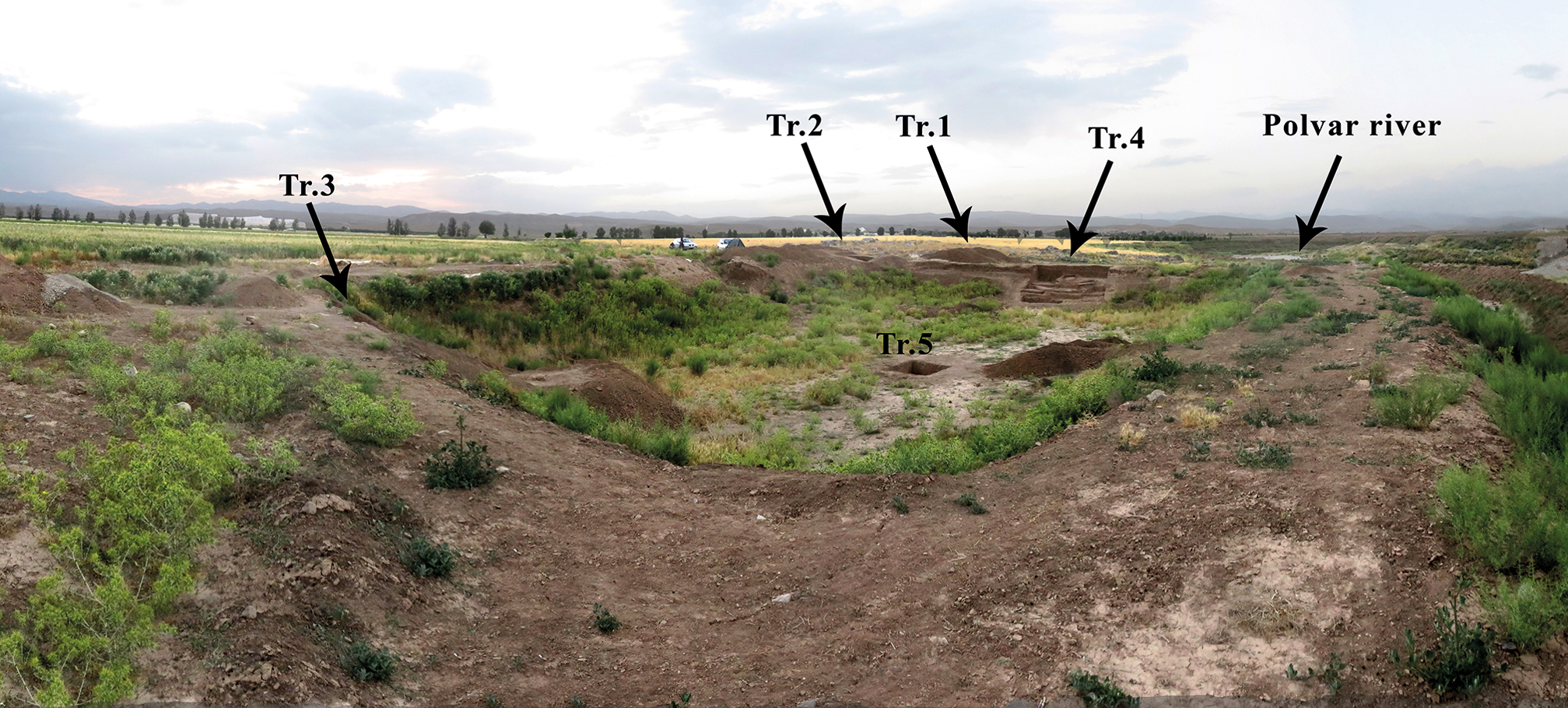
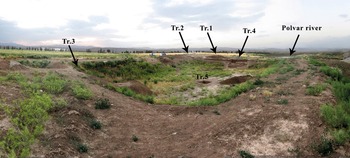
Tol-e Sangi is located about 1 km south of Morghab city in southern Iran (Fig. 1), on the western bank of the Polvar River. The site has little elevation relative to the surrounding land, and parts of it have been disturbed by agricultural activities, while a central pond has been created within the site. The author conducted excavations at the site in 2019 to study the stratigraphic sequence and examine the cultural characteristics of Pottery Neolithic (PN) in Fars. To achieve the research objectives, five trenches (Trenches 1–5) were excavated at the site (Fig. 2). Trenches 1 and 2 reached bedrock at depths of less than 2 m, indicating a low-relief outcrop in the northern part of the site. The greatest thickness of cultural deposits and stratigraphic sequence was obtained from Trench 3; in this trench, about 5 m of cultural deposits were identified, including 14 occupational phases. Trench 4 yielded cultural deposits along with two ovens, several floors and a painted wall. Trench 5 was excavated within the central pond area of the site, and cultural deposits and architectural features were identified from it. The discovery of stone and mudbrick architecture, painted floors and heating installations all indicate permanent occupation at this site. These factors make Tol-e Sangi one of the key sites for studying the Late Pre-Pottery Neolithic (PPN) and Early PN in Iran.
Distribution map of Neolithic sites in the Fars Cultural zone. (1) Tol-e Sangi; (2) Hormangan; (3) Rahmatabad; (4) Mianroud; (5) Bashi; (6) Bakun B; (7) Mushki; (8) Jari; (9) Nurabad; (10) Poostchi; (11) Qasr-e Ahmad; (12) Sabz; (13) Qalat Surmagh; (14) Jalian; (15) Beriskan; (16) Pol-e Bizdan; (17) Hemati.

Figure 1 Long description
The map displays the distribution of Neolithic sites in the Fars Cultural zone. The map includes several labeled locations, each marked with a number and corresponding name. The sites are spread across a region bordered by the Persian Gulf to the south and the Caspian Sea to the north. Key labeled locations include Tol-e Sangi, Hormangan, Rahmatabad, Mianroud, Bashi, Bakun B, Mushki, Jari, Nurabad, Poostchi, Qasr-e Ahmad, Sabz, Qalat Surmagh, Jalian, Beriskan, Pol-e Bizdan, and Hemati. The map provides a detailed view of the geographic distribution of these archaeological sites, highlighting their spatial relationships and the broader cultural context of the region.
General view of Tol-e Sangi and the location of the excavation trenches (view from the south).
Chronology of Tol-e Sangi
The chronology of Tol-e Sangi was established in two main ways. During the excavation, layers containing pottery, along with co-level layers, were assigned to the PN, while the underlying layers without pottery were attributed to the PPN. Although no pottery was found in Trench 1, the co-level of its layers with the PN deposits in Trenches 2 and 4 led to these deposits also being attributed to the PN. Pottery was found from the surface down to 120 cm in Trench 2, 270 cm in Trench 3 and 200 cm in Trench 4; these deposits were assigned to the PN. The deposits below these layers were dated to the PPN. Trench 5 had no pottery, and since its deposits were level with the PPN layers of Trenches 3 and 4, it was also assigned to the PPN.
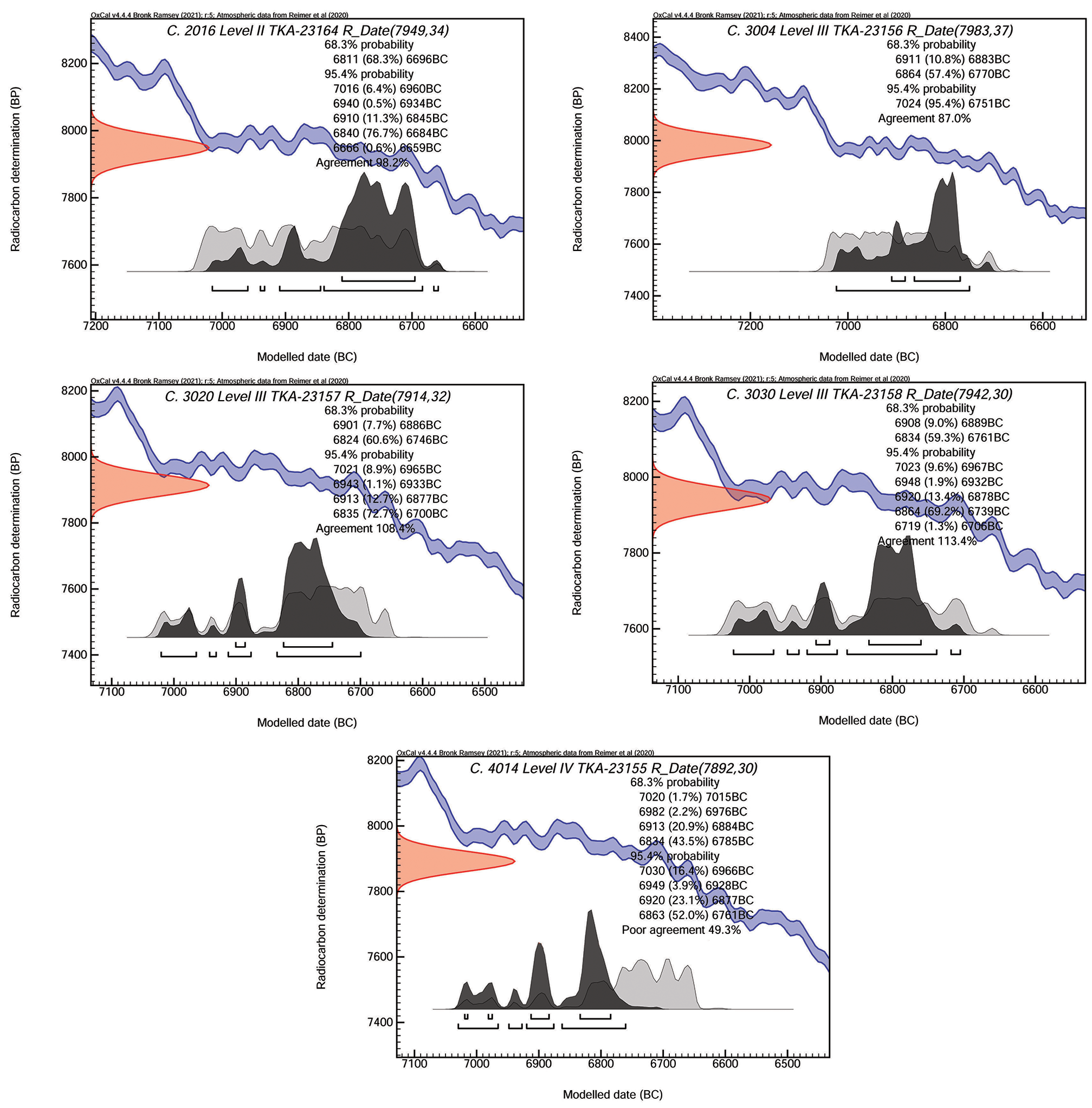
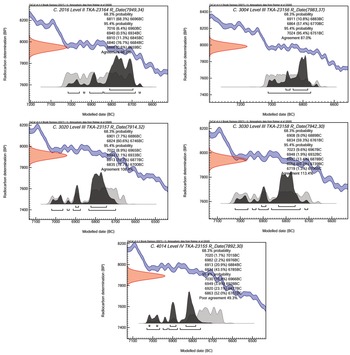
For absolute dating, 10 charcoal samples were submitted for radiocarbon dating in Japan. Among them, five samples were selected from the PN layers; one sample from Trench 2, three from Trench 3 and one from Trench 4. The results indicated that these deposits date to c. 6900–6650 bc (Fig. 3). Below the PN deposits, there are layers of PPN, and their date is c. 7050–6900 bc. Therefore, considering the dates of the PPN and PN deposits, it can be said that the oldest pottery from the site dates back to the early seventh millennium bc.
PN radiocarbon dates from Tol-e Sangi.
Pottery from Tol-e Sangi
A total of 739 sherds were found from Trenches 2 to 4 of Tol-e Sangi. The highest abundance was found in Trench 3, with 507 sherds (68.6%), representing the thickest Neolithic deposit in this part of the site. Trench 2 with 144 sherds (19.5%) and trench 4 with 88 sherds (11.9%) were next. All sherds recovered from Tol-e Sangi were handmade. The inner and outer surfaces of most sherds were well smoothed and, in some sherds, especially those with thick red slip, polishing traces were also visible. The presence of smoothing and occasional polishing suggests deliberate attention to surface treatment during vessel manufacture. The temper in all sherds was of the organic type, and its effects in the form of small and in some cases medium voids were clearly visible on the inner surface, outer surface and paste. The widespread use of vegetal temper may have reduced shrinkage during drying and improved resistance to thermal stress during firing and use.
In terms of firing quality, a significant portion of the pottery was underfired, indicating that the firing process was carried out under uncontrolled conditions. As a result, heat was not evenly distributed, and firing temperatures were poorly controlled. This resulted in many pots having a gray or black core and significant colour variation across their surfaces.
In terms of manufacturing quality, the pottery can be classified into three general groups: coarse, medium and fine ware. Medium-quality pottery is more abundant than the other two groups, indicating the widespread production of domestic or utilitarian vessels. Coarse pottery was likely used for heavy-duty purposes and storage, while finer, well-finished and sometimes polished samples were produced for more specialized uses. The technological characteristics of the pottery recovered from Tol-e Sangi indicate that this assemblage belongs to the early stage of pottery production in southern Iran, a stage when the manufacture and use of pottery had become common but the firing control and standardization of production had not yet been fully developed.
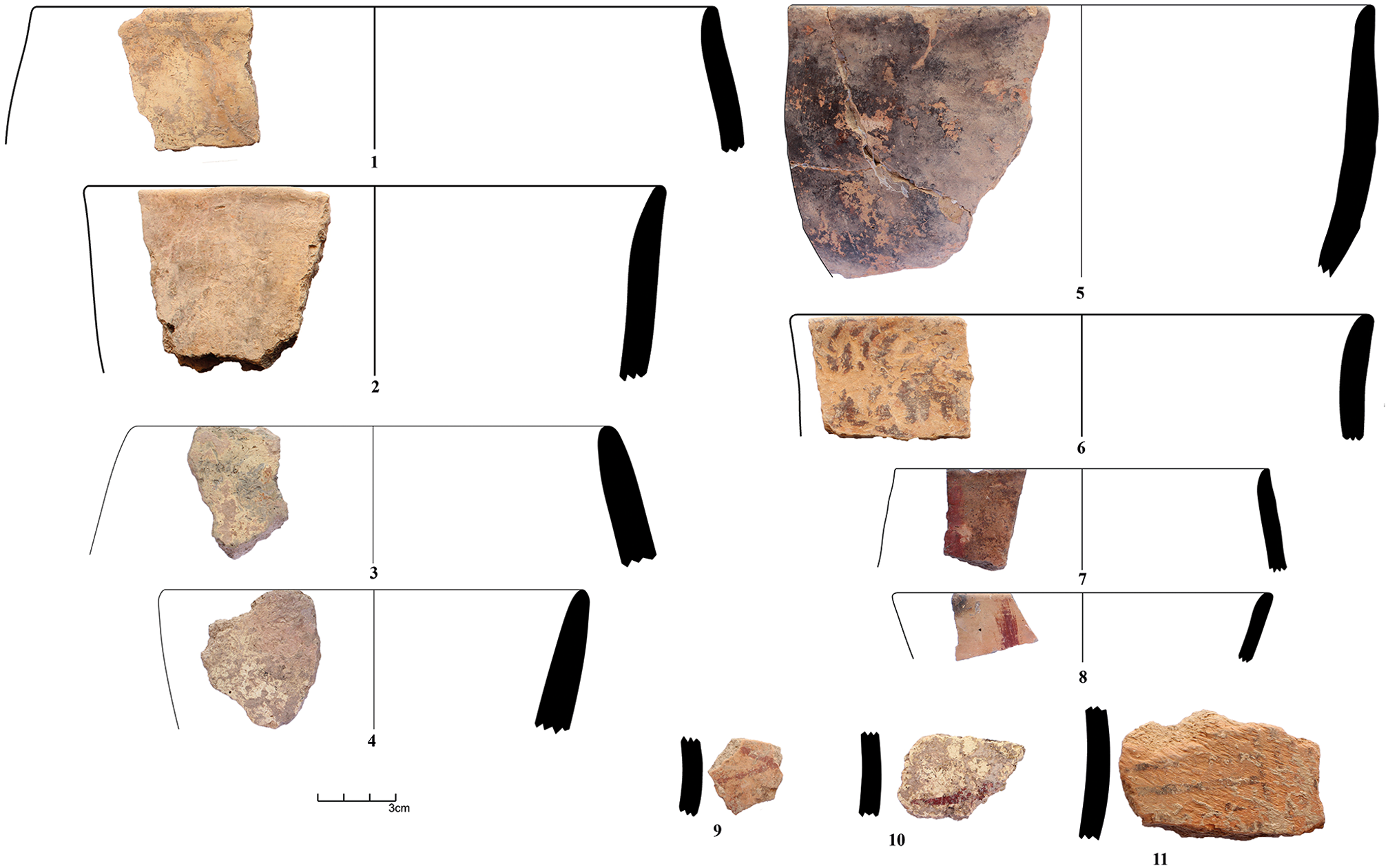
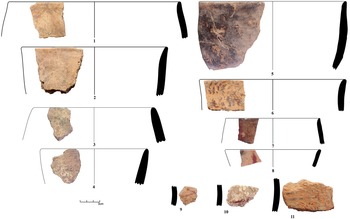
Based on paste colour, the pottery can generally be divided into two groups: Buff (with thick slips) and red (with thin or thick slips). Only a limited number of sherds have decorative motifs, including vertical, horizontal and diagonal bands or lines. This suggests that these examples represent some of the earliest attempts at pottery decoration, indicating that pottery gradually began to acquire not only functional value but also an emerging decorative importance (Figs 4 & 5).
Plain buff and painted pottery from Tol-e Sangi.
Red pottery from Tol-e Sangi.
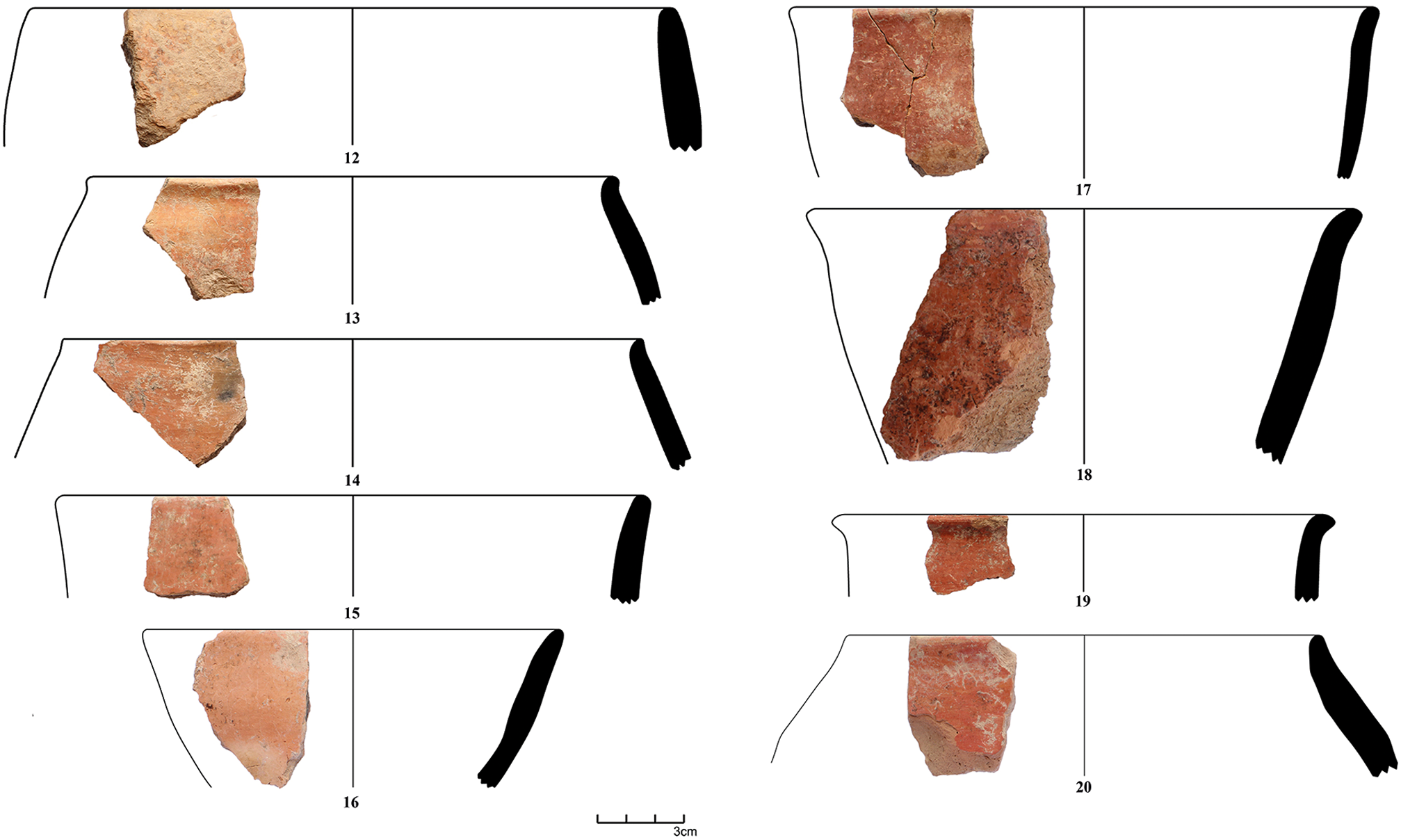
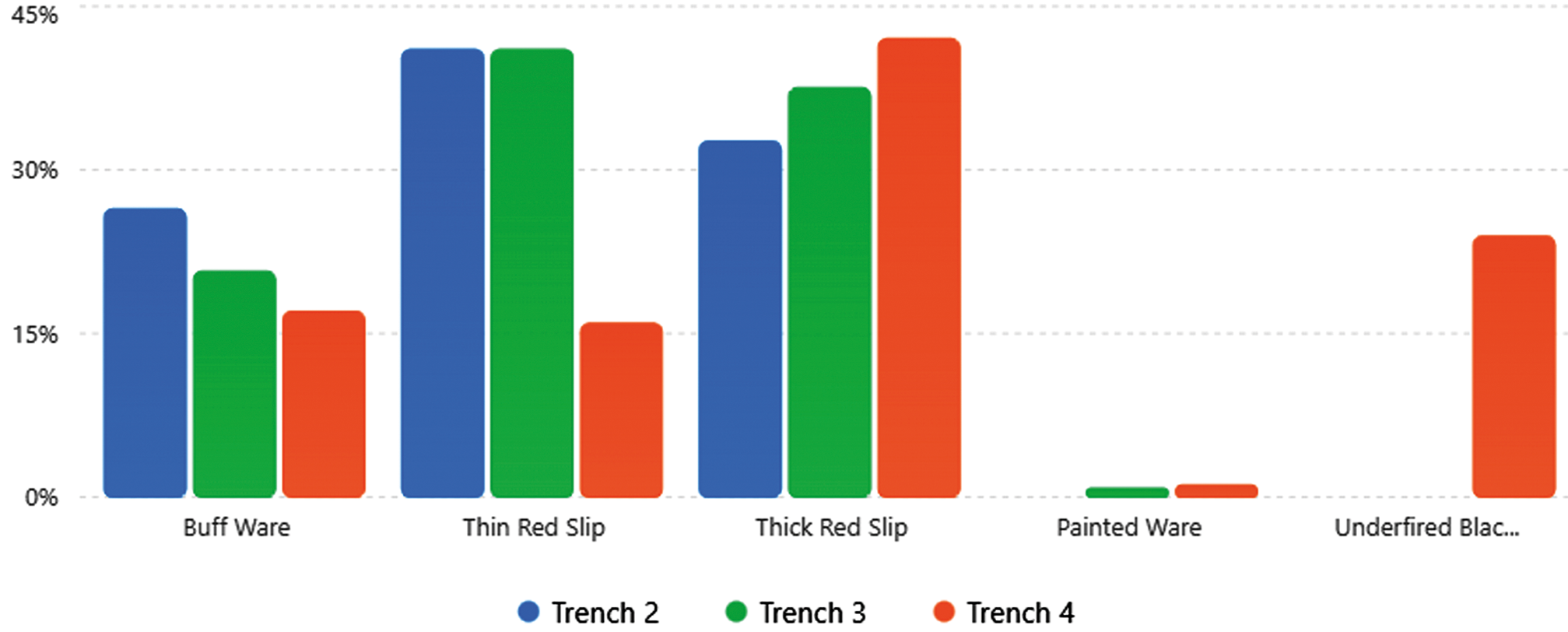
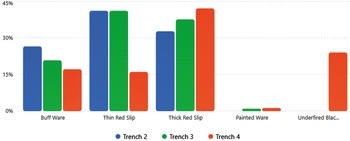
Regarding ware composition, red-slipped wares—including both thick and thin slips—dominate in all trenches. In Trench 2, thin-slip red ware is most abundant (59 sherds, 41%), followed by thick-slip red ware (47 sherds, 32.6%) and buff ware (38 sherds, 26.4%). In Trench 3, thin-slip red ware (208 sherds, 41.0%) and thick-slip red ware (190 sherds, 37.5%) predominate, while buff ware accounts for 105 sherds (20.7%). A limited number of painted wares, including red-painted and buff-painted pottery, were also identified, totaling four sherds (0.8%) of the assemblage. In contrast, Trench 4 shows a different pattern. Thick-slip red ware (37 sherds, 42.0%) is the dominant category, followed by underfired black ware (21 sherds, 23.9%), buff ware (15 sherds, 17.0%), and thin-slip red ware (14 sherds, 15.9%). Buff-painted pottery is represented by only a single sherd (1.1%). Underfired black ware constitutes a significant portion of the assemblage, reflecting the function of this space. Two ovens were identified here, and underfired black pottery was recovered from inside the ovens and the surrounding activity areas (Fig. 6).
Distribution pattern of pottery ware types in Trenches 2, 3, and 4.
To examine the adoption and subsequent use of pottery at Tol-e Sangi, Trench 3 was selected because it has the longest occupational sequence and the thickest cultural deposits at the site. Of the 14 settlement phases identified in this trench, pottery was recovered from eight phases. Since the volume of deposits in each phase varied, instead of comparing the absolute number of sherds, the ceramic density was calculated in the representative context from each phase. The results show that, except for the most recent settlement phase, where a significant increase in pottery density is observed, the density of pottery in the other phases is relatively constant. This pattern suggests that pottery was quickly integrated into the daily life of the community after its adoption by the community and remained in use at a relatively stable level throughout the majority of the occupational sequence.
Mineral pigments at Tol-e Sangi
Red and black pigments applied on 23 samples including 9 sherds, 5 ground stones, 5 raw ochre samples, 1 figurine and 3 wall paintings from Tol-e Sangi were investigated using FORS, PLM, SEM-EDS, FTIR, µ-Raman and µ-XRF techniques. The µ-XRF spectra obtained from the painted materials of Tol-e Sangi showed that the pigments contain variable amounts of Fe, Mn, Cr, Cu, As, Zn and Pb. While the red pigments contained high amounts of iron (Fe), the black pigments were mainly characterized by manganese (Mn) and iron (Fe). Only one black pigment on pottery (Fig. 4, no. 6) contained, in addition to Fe and Mn as major elements, chromium (Cr) and also nickel (Ni) as a minor element.
The Raman spectra obtained from the black particles dispersed in the pigment layer of pottery sample 6 indicated the presence of black chromite with a high aluminium content. This finding is significant, because the oldest reported examples of chromite use are related to pottery from Period VIA (c. 4000 bc) at Tepe Yahya in southern Iran (Kamilli & Lamberg-Karlovsky Reference Kamilli and Lamberg-Karlovsky1979), as well as a glazed faïence dating to the Late Bronze Age (c. 1550–1200 bc) from Deir ‘Alla in Jordan (Groot et al. Reference Groot, Dik, Van Der Kooij, Alkemade, Sivel and Tichelaar2006). Therefore, the presence of chromite in a pottery sherd from Tol-e Sangi dating to the early seventh millennium bc pushes back the documented use of this material as a pigment by at least two millennia.
Microscopic observations of the cross-sections showed that most of the painted sherds have only one single decorative layer. However, only one sherd (Fig. 4, no. 5) showed a layered structure. Under PLM and SEM, it was revealed that this sherd is a red-ochre-engobe sherd covered with at least two layers of carbon black. While the carbon black may be considered as decorative layer, it is safer to assume that the carbon black is most probably deposited on the body of this sherd.
On the other hand, the results showed that the red ochre pigment used at Tol-e Sangi contains only negligible amounts of arsenic. Moreover, raw red ochre samples collected from the vicinity of the site are compositionally comparable to the pigments identified on pottery, wall paintings, and ground stone implements, suggesting the exploitation of local pigment sources (Holakooei et al. Reference Holakooei, Khanipour and Karimy2025). This compositional similarity may indicate that the preparation and processing of ochre was carried out at Tol-e Sangi itself. Furthermore, the similarity between the raw ochre, the ochre residues on ground stones and the pigments applied on pottery may support the interpretation that pottery production and its decoration were locally practised at the site.
Domestic firing techniques
In general, pottery firing can be carried out with or without a kiln. Open firing could be done in a large open-air fire or in simple pits enclosed with stone, clay, or mudbrick, or even in a domestic hearth (Pool Reference Pool1990, 60). Open-air firing, hearths, pits and ovens or kilns are all forms of firing techniques, with the main difference that ovens have a relatively fixed location for firing pottery (Sinopoli Reference Sinopoli1991, 31–2).
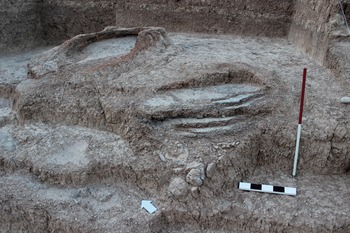
During the excavation of Trench 4, two heating structures were found. These structures had a relatively circular plan and their walls were baked red by continuous heat exposure. The floors consisted of a compact mixture of clay, fine sand and small pebbles and the excavation evidence suggests that they were repeatedly reconstructed over time (Fig. 7). One structure is at a lower level and the other at a slightly higher level, suggesting that the older structure became unusable for some reason, prompting the construction of the newer one.
Ovens discovered in Trench 4.
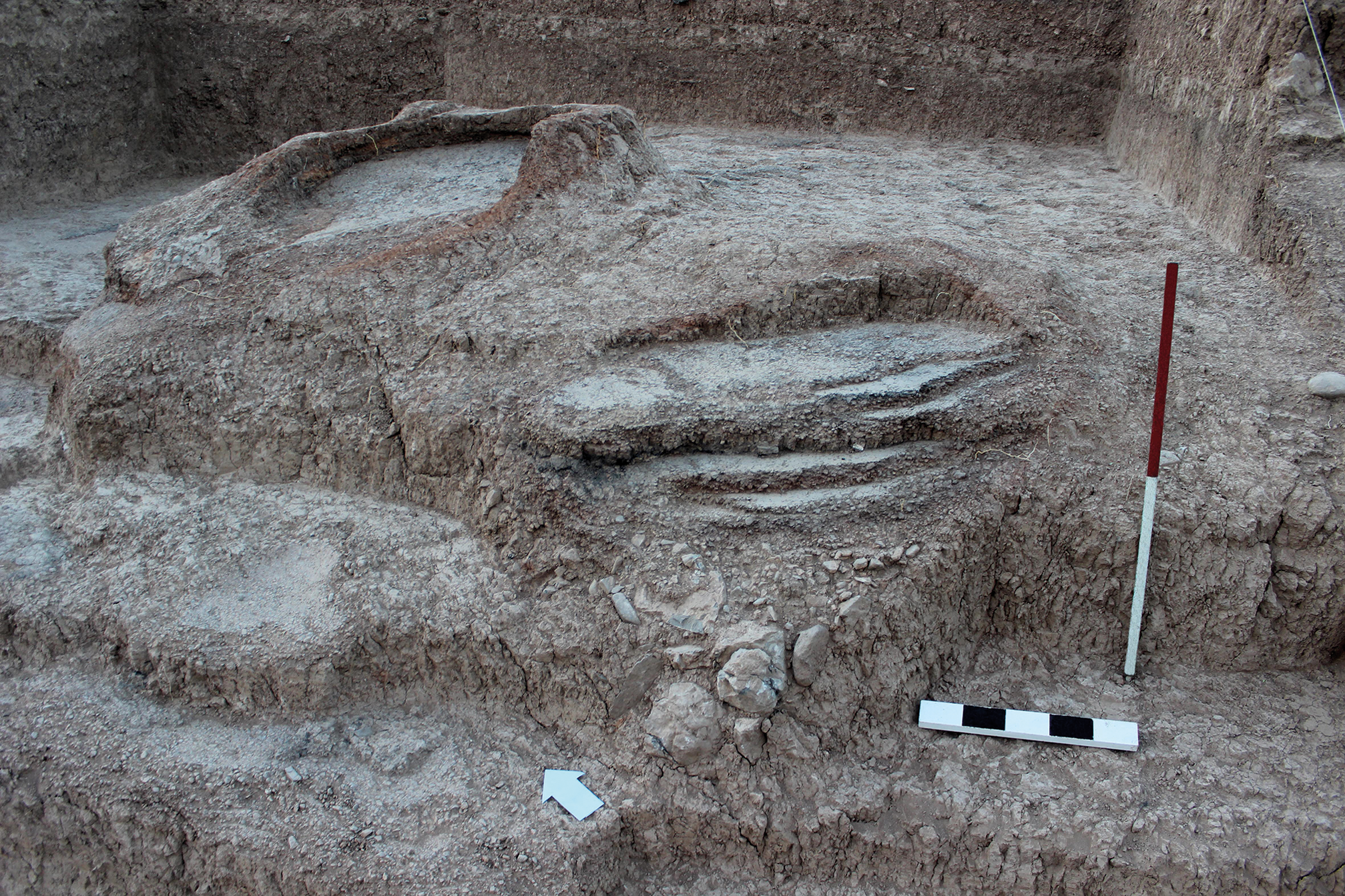
As mentioned, the heating installations identified in Trench 4 are located adjacent to one another within a restricted area of the site, and no similar examples of this type of structure have been found in other excavated trenches. In contrast, only simple hearths have been identified in other parts of the site. These two structures occur at different stratigraphic levels, with one located in a lower layer and the other in a higher one. Considering their spatial arrangement, their close morphological similarity, and their stratigraphic positions, it seems that the second structure was built in the same pattern and function in the vicinity after the earlier structure had gone out of use or become unsuitable for continued use. This suggests that the inhabitants deliberately maintained a particular form of heating installation through time.
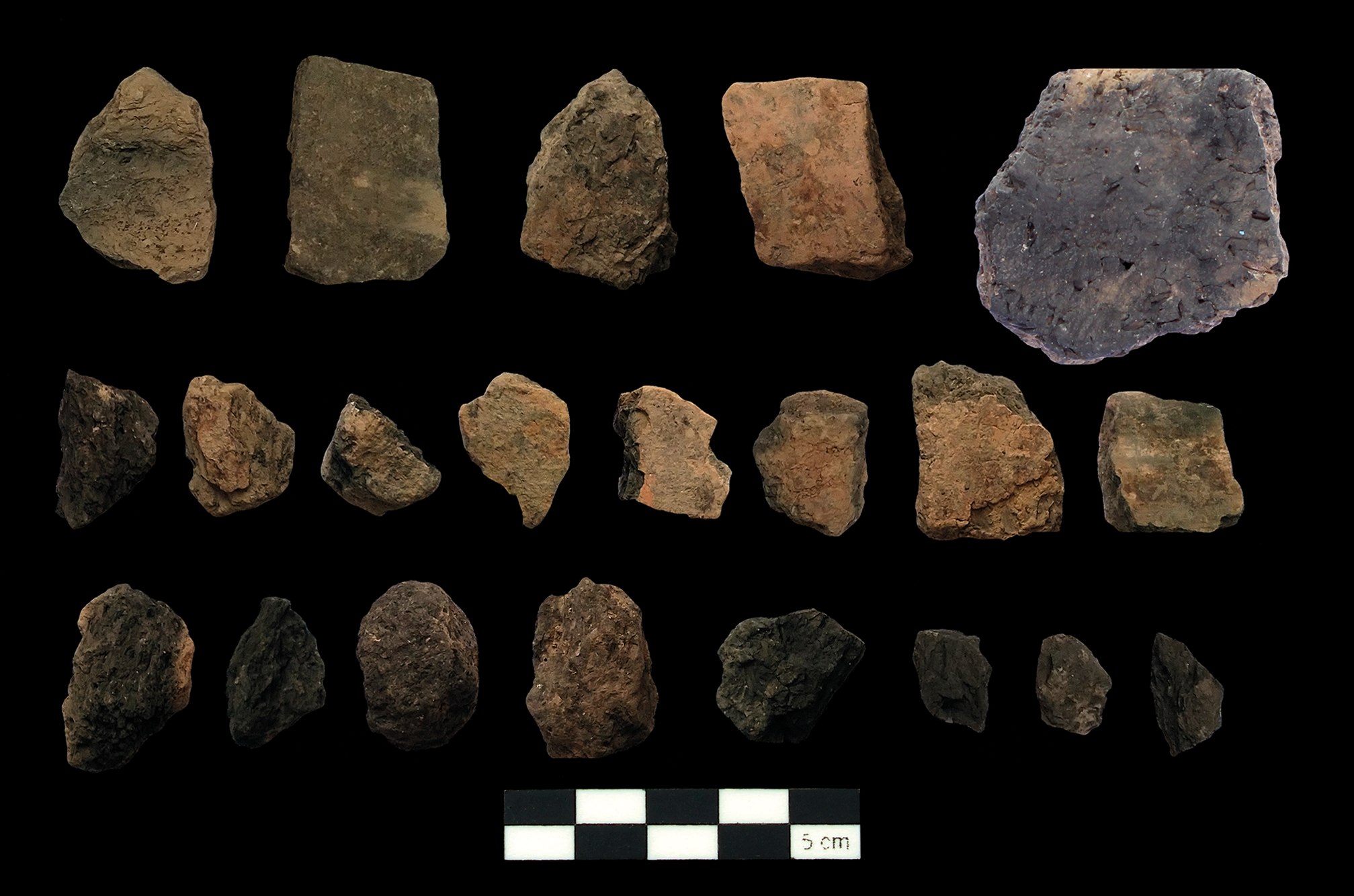
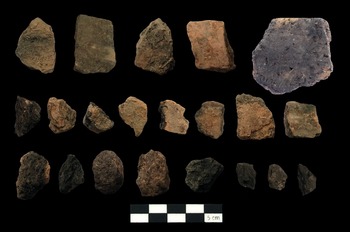
During the excavation, ash, along with animal bones, plant remains and underfired black pottery sherds, was recovered from the upper structure. As mentioned earlier, underfired black pottery (Fig. 8) was only recovered from this trench (Fig. 6), specifically from the structure and its surrounding layers, indicating that pottery was fired in these ovens. Based on the findings inside these heated structures, it is evident that this was a domestic oven used for cooking, with its floor repeatedly renovated. Therefore, in addition to cooking food, pottery was also fired in these ovens. Furthermore, the exclusive association of underfired pottery sherds with these installations strengthens the interpretation that they served not only for food preparation, but also for pottery firing.
Underfired black pottery from Tol-e Sangi.
Given that evidence of pottery production is limited to this part of the site and no similar structures were observed in other excavated areas, it is likely that the use of these firing facilities was beyond the needs of a single household. The presence of simple hearths in other parts of the site suggests that each household likely had the necessary facilities for everyday activities and cooking food. Therefore, the concentration of pottery-related thermal structures at a specific location could indicate shared use of these facilities by several households. Although the available evidence is not sufficient to definitively prove communal use of these structures, the concentration of pottery-related activities in a specific part of the site could be an indication of some degree of cooperation or shared use of firing facilities among the inhabitants of Tol-e Sangi.
Pottery production at Tol-e Sangi and production models
From early household-level production to large-scale industrial manufacture, various models and stages of development have been proposed by archaeologists and specialists to explain pottery production and craft specialization (Peacock Reference Peacock1982, 8–10; Rice Reference Rice1987, 184; Van der Leeuw Reference Van der Leeuw1977, 70). In fact, pottery production initially began as a household activity and gradually developed over time, eventually developing into highly specialized and large-scale production systems.
In this division, the first two stages include household production and household industry, which are usually carried out on a limited, small-scale basis at the village or family level. In household production, potters produce mainly to meet the consumption needs of their own family (domestic use) and production does not have a broad exchange or economic aspect (Rice Reference Rice1987, 184). In contrast, household industry refers to production carried out for profit, intended for exchange or sale beyond the family level (Peacock Reference Peacock1982, 2). Although detailed laboratory studies, including clay-sourcing analysis, have not been carried out on Tol-e Sangi pottery, the available archaeological evidence strengthens the possibility of local production. Specifically, the presence of underfired black pottery in direct association with the discovered ovens and surrounding deposits indicates that the pottery production and firing process was likely carried out within the settlement itself and on a village-based scale.
In addition, pigment analysis has shown similarities between the pigments observed on ground stones and those used in painted pottery motifs. This supports the use of local resources and strengthens the hypothesis of local production. Considering that the Tol-e Sangi pottery belongs to the earliest phase of pottery production in the region, and that the sherds were fired in domestic ovens likely used for daily cooking, the available evidence suggests that pottery production at Tol-e Sangi was most likely organized at the household level. In this system, pottery was produced primarily for family needs and everyday use, with no evidence of large-scale production for exchange or participation in complex economic networks.
The evidence from Tol-e Sangi also indicates that pottery production was embedded within domestic activities rather than being separated into a specialized craft sector. The use of domestic firing installations, the limited scale of production, and the absence of dedicated workshop areas suggest that pottery manufacture formed part of everyday household practices during the initial stages of ceramic adoption. This pattern is consistent with early stages of pottery production documented at many Neolithic sites in Southwest Asia, where ceramic manufacture was integrated into household activities before the emergence of specialized craft production (Peacock Reference Peacock1982; Rice Reference Rice1987).
Pottery origins in the southern Zagros
Two main perspectives have been put forward to explain the emergence of pottery in Southwest Asia: technology transfer from outside the region, or its formation in the context of local communities. Jordan et al. (Reference Jordan, Gibbs, Hommel, Piezonka, Silva and Steele2016) have considered Southwest Asian pottery to be part of a wave that probably spread from North Africa, using radiocarbon data. However, so far, there is no convincing technological and typological evidence to link early Southwest Asian pottery with African or East Asian pottery traditions. Furthermore, the southern Levant, which is the closest region of Southwest Asia to Africa, adopted pottery later than the Zagros, Anatolia and northern Mesopotamia, a pattern that supports the independent formation of this technology within the region (Gibbs Reference Gibbs2022).
Evidence from Neolithic sites in Iran is also more consistent with a local origin of pottery. At many of these sites, including Ganj Dareh (Petrova et al. Reference Petrova, Babenko, Darabi and Richter2025; Smith Reference Smith1976), Ali Kosh (Darabi et al. Reference Darabi, Richter, Mortensen, Richter and Darabi2024; Hole et al. Reference Hole, Flannery and Neely1969), Tappeh Sang-e Chakhmaq (Tsuneki Reference Tsuneki and Tsuneki2014; Reference Tsuneki, Tsuneki, Nieuwenhuyse and Campbell2017b), and Tol-e Sangi, pre-pottery communities used stone vessels and were familiar with clay-based technologies, including the making of figurines, tokens, sealing (Khanipour & Jamshidi Yeganeh Reference Khanipour and Jamshidi Yeganeh2025) and clay structures. This evidence suggests that knowledge of clay selection and preparation, shaping objects, and knowledge of controlling the drying process, and therefore pottery, should be considered a logical continuation of a set of previous skills and technologies within the framework of ‘soft ware technologies’, rather than a sudden innovation (Nieuwenhuyse & Campbell Reference Nieuwenhuyse, Campbell, Tsuneki, Nieuwenhuyse and Campbell2017; Rice Reference Rice1999; Vandiver Reference Vandiver1987).
This technical background suggests that Zagros communities already possessed the technical knowledge required for pottery production before the appearance of fired ceramics. Therefore, to assess whether the emergence of pottery at Tol-e Sangi was the result of indigenous development or the arrival of new populations and technologies, one must look at the stratigraphic and settlement evidence of the site. At Tol-e Sangi, no stratigraphic break or settlement hiatus has been observed between the Pre-Pottery Neolithic (PPN) and Pottery Neolithic (PN) layers, and absolute dating indicates continued occupation from about 7100 to 6700 bc; therefore, the emergence of pottery was most likely the result of local development within the same local community, rather than the result of population replacement. On the other hand, the presence of imported obsidian alongside local production of lithic tools, as well as the almost simultaneous emergence of pottery at sites such as Ali Kosh (Darabi et al. Reference Darabi, Richter, Mortensen, Richter and Darabi2024), Rahmat Abad (Azizi Kharanaghi & Khanipour Reference Azizi Kharanaghi, Khanipour, Azizi Kharanaghi, Khanipour and Naseri2014) and Gavkoshi (Alidadi Soleymani & Fazeli Nashli Reference Alidadi Soleimani and Fazeli Nashli2018), indicate that Zagros societies were part of regional interaction networks in which ideas and technical knowledge were exchanged between different communities. Therefore, the emergence of pottery at Tol-e Sangi can be seen as the result of endogenous development within a local community that was in constant interaction with other Zagros communities. Thus, pottery adoption was the result of cultural and social choices of local communities rather than a purely technological issue. From this perspective, the emergence of pottery at Tol-e Sangi is consistent with the ‘Local Multiple Origins Model’ for West Asia, a model that emphasizes the gradual development and adoption of pottery in local contexts (Campbell Reference Campbell, Tsuneki, Nieuwenhuyse and Campbell2017; Gibbs Reference Gibbs2022; Nieuwenhuyse & Campbell Reference Nieuwenhuyse, Campbell, Tsuneki, Nieuwenhuyse and Campbell2017).
Pottery adoption and the Neolithic economy of Tol-e Sangi
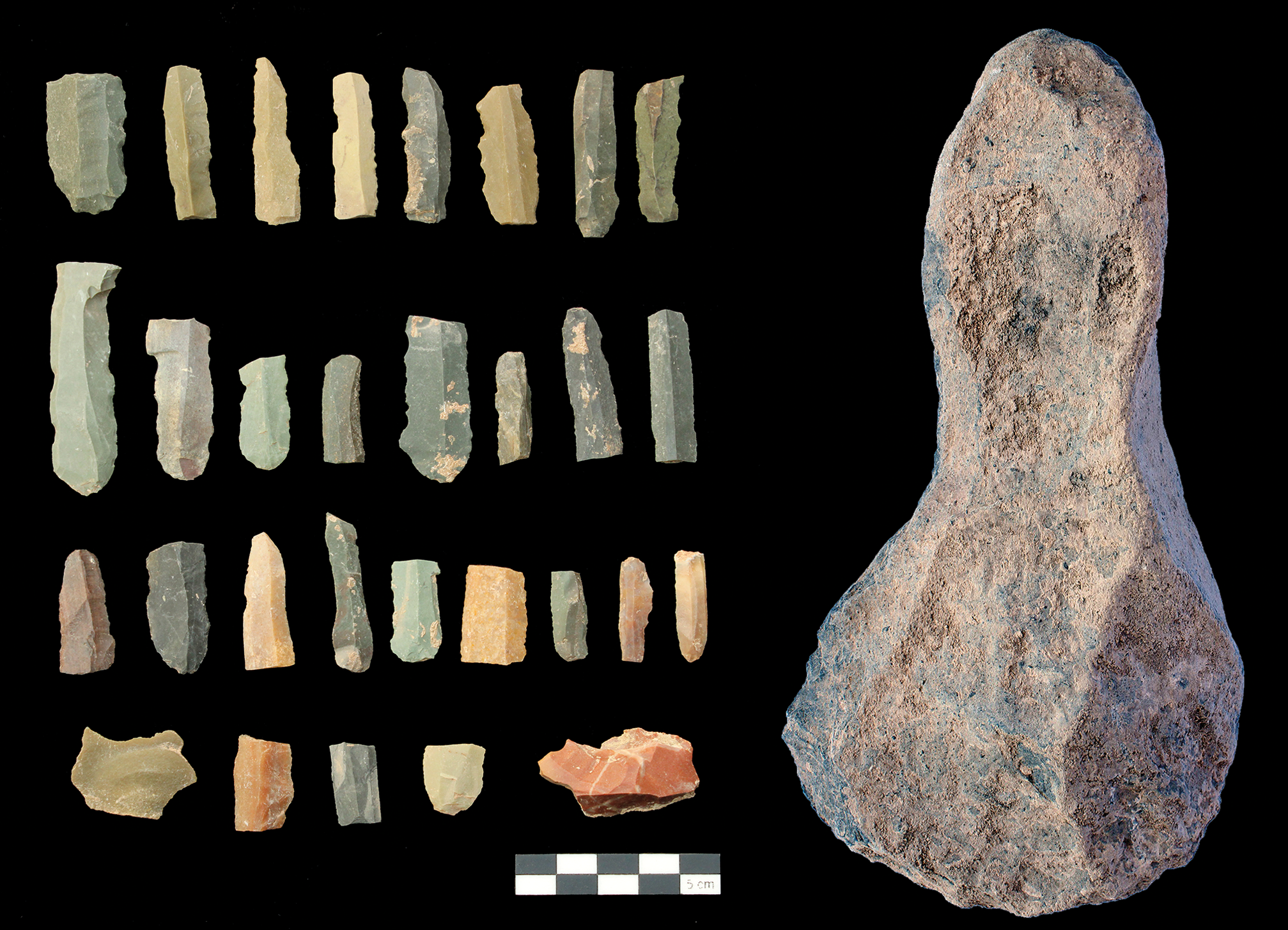
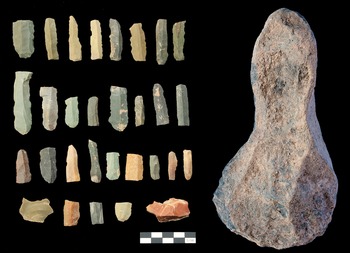
Although the evidence supports the local origins of pottery in the Zagros, a more important question is why societies in this region switched to continuous pottery production around 6900 bc. Studies in Southwest Asia have shown that the emergence of pottery was not necessarily accompanied by the introduction of a new food source or a sudden shift in the subsistence economy (Gibbs Reference Gibbs2022). The data from Tol-e Sangi also support such a pattern. Archaeobotanical studies indicate that the site’s inhabitants used domesticated wheat and continued to gather some wild plants, including wild pistachio (Caroe et al. Reference Caroe, Khanipour, Matthews and Charlesin press). The abundance of stone tools, especially sickle blades, together with the discovery of a hoe (Fig. 9), highlights the significant role of agriculture in the subsistence economy of the site. Faunal remains also indicate the central role of pastoralism, especially goat husbandry, in the livelihood of the inhabitants of Tol-e Sangi. Therefore, an agricultural and pastoral economy was established at the site before the appearance of pottery, and there is no evidence of the arrival of a new food source at the same time as the appearance of pottery.
Hoe and lithics recovered from Tol-e Sangi.
On the other hand, the inhabitants of Tol-e Sangi were familiar with the concepts of food storage, preparation and consumption before the production of pottery. The use of stone vessels, the existence of stone and mudbrick architecture, clay figurines and tokens indicate that this community was fully familiar with both the technologies related to the manufacture of vessels and the technical properties of clay. Therefore, the adoption of pottery cannot be considered simply a response to a new economic need, but rather should be considered part of broader developments in the material culture and social organization of the Neolithic communities of the Zagros. After its adoption, pottery quickly entered everyday activities. The presence of pottery in a diverse range of architectural contexts and activity areas indicates that this technology became part of everyday life and played a role in food preparation, consumption and possibly storage. This suggests that the inhabitants of Tol-e Sangi were prepared to incorporate pottery into everyday practices shortly after its adoption.
Evaluating explanatory models for early pottery at Tol-e Sangi
The origin and adoption of pottery remain important issues in Neolithic studies, and scholars have offered different explanations for the emergence of the first pottery vessels. One of the most well-known views is the ‘Prestige Technology’ theory, according to which pottery initially emerged in connection with feasting, status display and competition between individuals or groups (Cohen Reference Cohen2013; Hayden 1995; 1998; Reference Hayden2009; Hayden & Villeneuve Reference Hayden and Villeneuve2011). In contrast, another group of researchers has emphasized the role of pottery in everyday domestic activities, food preparation and the organization of sedentary lifeways (Haaland Reference Haaland1997; Lucquin et al. Reference Lucquin, Gibbs and Uchiyama2016; Pearson Reference Pearson2005; Rice Reference Rice1999; Shoda et al. Reference Shoda, Lucquin and Yanshina2020; Underhill Reference Underhill2003). More recent studies have highlighted the role of pottery in the formation of collective identities, social cohesion and the evolution of material culture (Patania & Jaffe Reference Patania and Jaffe2021; Shelach Reference Shelach2012).
The evidence from Tol-e Sangi does not strongly support the prestige technology model. There is no evidence of wealth concentration, elite formation, or exclusive access to pottery at this site. The ceramic assemblage is also limited in variety, consisting mainly of bowls, cups and simple pots. Decoration is sparse and limited to lines and bands, and no vessel forms or decorative elements have been identified that would indicate ceremonial activities or status display. On the other hand, the data do not strongly support the assumption that pottery was invented solely for cooking, as only a few sherds show direct heat traces. Therefore, the emergence of pottery cannot be adequately explained by reference to a single function alone.
Consequently, it seems most appropriate to consider the pottery of Tol-e Sangi as part of a broader transformation in the material culture of Neolithic societies. In this framework, pottery is neither a prestige good nor simply a cooking tool, but one element of a set of social, economic and technological changes that are simultaneously observed in the architecture, ritual activities, figurine production, early commodity management systems and social interactions of Neolithic societies in the southern Zagros (Gibbs Reference Gibbs2022; Nieuwenhuyse & Campbell Reference Nieuwenhuyse, Campbell, Tsuneki, Nieuwenhuyse and Campbell2017; Shelach Reference Shelach2012). Such an interpretation is most consistent with new models that consider the emergence of pottery as part of a gradual process of innovation, adoption and integration into the material culture of Neolithic societies.
Discussion
Global-scale studies indicate that the oldest potteries were initially produced in East Asia between 20,000 and 18,000 years ago by hunter-gatherer societies (Cohen et al. Reference Cohen, Bar-Yosef, Wu, Patania and Goldberg2017; Kuzmin Reference Kuzmin2017; Wu et al. Reference Wu, Zhang and Goldberg2012). In contrast, pottery emerged later in Southwest Asia during the Neolithic period, primarily among settled communities (Gibbs Reference Gibbs2015; Fletcher et al. Reference Fletcher, Baird, Spataro and Fairbairn2017; Khanipour & Nishiaki Reference Khanipour and Nishiaki2024; Le Mière Reference Le Mière, Nieuwenhuyse, Bernbeck and Berghuijs2023; Nieuwenhuyse & Campbell Reference Nieuwenhuyse, Campbell, Tsuneki, Nieuwenhuyse and Campbell2017; Petrova et al. Reference Petrova, Babenko, Darabi and Richter2025). Hence, the Neolithic period in large parts of West Asia is divided into two phases: the PPN and the PN. In western Iran, early clay vessels have also been identified at Ganj Dareh (Darabi et al. Reference Darabi, Richter and Mortensen2019; Smith Reference Smith1972) and Guran (Mortensen Reference Mortensen2014). From the early seventh millennium bc, pottery was found extensively at some sites in the west (Hole Reference Hole, Becker and Molist2018; Petrova et al. Reference Petrova, Babenko, Darabi and Richter2025) and southwest (Darabi et al. Reference Darabi, Richter, Mortensen, Richter and Darabi2024; Hole et al. Reference Hole, Flannery and Neely1969), and several sherds have also been recovered from the Tappeh Sang-e Chakhmaq in northeastern Iran (Tsuneki Reference Tsuneki and Tsuneki2014; Reference Tsuneki, Tsuneki, Nieuwenhuyse and Campbell2017b).
In the Fars cultural zone, the timing of the emergence of pottery remains a topic of debate. The Rahmatabad excavations have shown that the beginning of pottery production in southern Iran should be attributed to at least the early seventh millennium bc (Azizi Kharanaghi et al. Reference Azizi Kharanaghi, Fazeli Nashli, Nishiaki, Matthews and Fazeli Nashli2013; Azizi Kharanaghi & Khanipour Reference Azizi Kharanaghi, Khanipour, Azizi Kharanaghi, Khanipour and Naseri2014), although only one radiocarbon date is available from these layers. In contrast, Bernbeck et al. (Reference Bernbeck, Pollock and Fazeli Nashli2008) did not identify any layers associated with the emergence of pottery in their previous excavations at Rahmatabad and interpreted this period within the framework of the Neolithic without pottery. The results of the Tol-e Sangi excavations showed that there are more than 2.5 m of deposits belonging to the Pottery Neolithic deposits at this site, and several radiocarbon dates also attribute the beginning of pottery production in Fars to the early seventh millennium bc. The Tol-e Sangi is particularly important in that it contains deposits belonging to both the PPN and PN. The stratigraphic sequence of the site allows for a clear separation of the PPN and PN layers and complements the Rahmatabad data (Azizi Kharanaghi & Khanipour Reference Azizi Kharanaghi, Khanipour, Azizi Kharanaghi, Khanipour and Naseri2014). Findings from the Gavkoshi site in Kerman also show similar dates (Alidadi Soleimani & Fazeli Nashli Reference Alidadi Soleimani and Fazeli Nashli2018). Taken together, these data indicate that the spread of pottery in southern Iran began in the early seventh millennium bc. Current archaeological evidence indicates that pottery emerged through a gradual and regionally variable process across West Asia. Although limited pottery production had begun in the late tenth and ninth millennia bc, it was only in the early seventh millennium bc that pottery production became a common phenomenon among agricultural societies. Evidence from the Tol-e Sangi suggests that pottery developed within an already established technological tradition. The inhabitants of this site were familiar with stone vessels, clay figurines, tokens, mudbrick architecture, painted floors and other clay-based technologies before the advent of fired pottery. This evidence suggests that the technical knowledge required for selecting, preparing, shaping and finishing clay existed prior to the production of fired pottery. Furthermore, the lack of any stratigraphic break or settlement hiatus between the Neolithic and ware layers at Tol-e Sangi suggests that pottery production was developed within the context of local community development and cannot be seen as a result of population replacement or mass migration. The economic context of Tol-e Sangi also provides important information about the adoption of pottery. Animal and plant remains, stone tools and permanent architecture all indicate that agriculture and pastoralism were well established at the site before the emergence of pottery. Thus, the emergence of pottery cannot be seen as a response to the introduction of a new food source or a fundamental shift in the subsistence economy. This finding is also consistent with broader studies of Southwest Asia, which suggest that the adoption of pottery was not necessarily accompanied by changes in diet or food-production practices (Gibbs Reference Gibbs2022). The Tol-e Sangi assemblage also provides valuable insights into the organization of pottery production. The presence of underfired sherds in direct contact with firing installations, together with evidence of local preparation of pigments and the absence of specialized workshop areas, suggests that pottery production was carried out within the site. The use of domestic kilns and thermal structures suggests that pottery was part of household production and had not yet become a specialized craft. Thus, pottery production at Tol-e Sangi appears to have been primarily for local needs and daily consumption. Although decoration is rare at Tol-e Sangi, the presence of painted motifs indicates that visual appearance was considered alongside the functional aspects of pottery from an early stage. These motifs consist mainly of simple lines and stripes, but differ from nearly contemporaneous examples at sites such as Ali Kosh (Darabi et al. Reference Darabi, Richter, Mortensen, Richter and Darabi2024), Gavkoshi (Alidadi Soleimani and Fazeli Nashli Reference Alidadi Soleimani and Fazeli Nashli2018) and Qasr-e-Ahmad (Khanipour & Azizi Kharanaghi Reference Khanipour, Azizi Kharanaghi, Richter and Darabi2024). This suggests that although pottery-making knowledge was likely transmitted through regional interaction networks, each community also retained its own decorative traditions. These differences may represent the earliest stages in the development of local ceramic traditions, which became more clearly expressed as regional styles during the later Neolithic of Fars. In the second half of the seventh millennium bc, pottery production in Fars gradually became more standardized and decoratively sophisticated, a trend that is best seen in the Mushki Ware tradition (Khanipour et al. Reference Khanipour, Niknami and Abe2021). However, from the early sixth millennium bc onwards, the quality and variety of pottery decorations gradually declined, and in the late Neolithic, rough and simple pottery became prevalent (Khanipour Reference Khanipour2025).
Conclusion
Archaeological deposits from the PPN and PN periods were found during the excavation of Tol-e Sangi in southern Iran. 14C results indicate that pottery emerged in the Fars cultural zone in the early half of the seventh millennium bc and that this region played an active role in the formation of pottery technology in Southwest Asia. The presence of underfired black pottery in domestic ovens and the similarity of the pottery pigments with the ground stones and wall pigments indicate that pottery production in this site was local and pottery production in the Tol-e Sangi Neolithic society was at the household level; the painted pottery found represents the first human attempts to decorate pottery vessels, using red and black colours. While the red pigments contained high amounts of iron (Fe), the black pigments were mainly characterized by manganese (Mn) and iron (Fe). Black chromite was found on one of the sherds, which dates the use of chromite back to the first half of the seventh millennium.
The Tol-e Sangi data show that pottery was not a prestige good or restricted to specific social groups at this site. The simplicity of the vessel forms, the limited decoration and the widespread distribution of pottery across different areas of the site indicate that this technology had become part of the daily life of the community from the earliest stages of its appearance and that its function, rather than being symbolic or status-related, can be interpreted within the framework of the community’s ordinary activities and material culture.
The Tol-e Sangi evidence also suggests that pottery adoption cannot be seen simply as a result of migration, a sudden change in the subsistence economy, or a technological necessity. The absence of any stratigraphic break between the Pre-Pottery Neolithic (PPN) and Pottery Neolithic (PN) layers supports the continuity of local communities and the formation of pottery within existing technical traditions. Accordingly, the evidence from Tol-e Sangi supports a model that sees the emergence of pottery as the result of local development within a framework of regional interactions, rather than through the direct transfer of a fully developed ceramic tradition from outside the region. From this perspective, Tol-e Sangi provides important evidence for understanding how pottery was adopted and integrated into everyday life in Neolithic communities of Southwest Asia. The site also contributes to reconstructing the timing and local trajectories of pottery development in southern Iran.
Acknowledgements
I would like to express my sincere gratitude to the Research Institute of Cultural Heritage and Tourism, the Iranian Center for Archaeological Research (ICAR) and the Pasargadae World Heritage Site for granting the excavation permit and supporting the Tol-e Sangi excavation project. I am also grateful to the members of the excavation team: Farhad Zare Kordshouli, Hamidreza Karami, Hamed Molaie Kordshouli, Amar Tazik and Mehdi Safaeinejad for their valuable assistance during the fieldwork.



 Open access

