A large number of studies have been devoted to the investigation of peer victimization because it is a harmful experience that children suffer on a daily basis across cultures and international boundaries (Smith, Cowie, Olafsson, & Liefootghe, Reference Smith, Cowie, Olafsson and Liefootghe2002). Whereas the majority of past studies in this area have primarily focused on physical or overt forms of peer victimization, recent studies have examined nonphysical forms of peer victimization such as indirect, social, and relational victimization (Archer & Coyne, Reference Archer and Coyne2005; Bjorkqvist, Reference Bjorkqvist1994; Crick et al., Reference Crick, Nelson, Morales, Cullerton-Sen, Casas, Hickman, Juvonen and Graham2001; Galen & Underwood, Reference Galen and Underwood1997; Paquette & Underwood, Reference Paquette and Underwood1999). Relational victimizationFootnote 1 is defined as direct and indirect peer maltreatment in which the manipulation of interpersonal relationships primarily serves as the agent of harm (for a review, see Crick et al., Reference Crick, Nelson, Morales, Cullerton-Sen, Casas, Hickman, Juvonen and Graham2001). Relational victimization is thought to be a distinct construct of peer victimization, given Crick's pioneering studies (Crick & Bigbee, Reference Crick and Bigbee1998; Crick & Grotpeter, Reference Crick and Grotpeter1996) showing that relational victimization (i.e., experiences of being ignored and excluded by peers and being a target of malicious rumors) was conceptually and empirically different from physical and verbal victimization (i.e., experiences of being kicked, punched, and teased by peers). Relational and physical victimization has been shown to be a risk factor for forms of psychopathology and to predict short-term and long-term social–psychological maladjustment (Parker et al., Reference Parker, Rubin, Erath, Wojslawowicz, Buskirk, Cicchetti and Cohen2006).
Despite the well-established link between forms of peer victimization and social–psychological adjustment problems, a vast majority of studies in this area have merged all forms of peer victimization, including physical, verbal, and relational victimization, as a unit and examined it all together in the prediction of these adjustment problems. This is presumably because peer victimization has been thought to follow a parallel pathway to the same outcomes regardless of its form. This view may need to be revisited, however, given a study by Crick (Crick & Bigbee, Reference Crick and Bigbee1998, p. 345) informing us that “assessment of relational victimization provides unique information about children's adjustment difficulties beyond that accounted for by other, more commonly assessed social problems (i.e., overt aggression, overt victimization, and relational aggression).” Studies have demonstrated similar, unique, and differing links or pathways between each form of peer victimization and factors in biological, cognitive, emotional, and psychosocial domains (e.g., Benjet, Thompson, & Gotlib, Reference Benjet, Thompson and Gotlib2010; Crick et al., Reference Crick, Nelson, Morales, Cullerton-Sen, Casas, Hickman, Juvonen and Graham2001; Cullerton-Sen & Crick, Reference Cullerton-Sen and Crick2005; Espelage, Low, & De La Rue, Reference Espelage, Low and De La Rue2012; Giesbrecht, Leadbeater, & MacDonald, Reference Giesbrecht, Leadbeater and MacDonald2011; Ostrov, Reference Ostrov2008; Sullivan, Farrell, & Kliewer, Reference Sullivan, Farrell and Kliewer2006). A unique link between forms of peer victimization and developmental outcomes such as aggression and depression is also evident in non-Western cultures (Kawabata, Crick, & Hamaguchi, Reference Kawabata, Crick and Hamaguchi2010a, Reference Kawabata, Crick and Hamaguchi2010b; Reference Kawabata, Crick and Hamaguchi2013).
Whereas a growing number of studies have reported differential pathways that relational victimization and physical victimization may trail, the investigation of the mechanisms about why it occurs is still in its infancy. Relatively little is known about why some children are more or less vulnerable to peer victimization and associated depressive symptoms, as compared to their peers, and whether the forms of peer victimization matter in this effect. One potential candidate that has not been explicitly considered in developmental research is relational-interdependent self-construals. Relational-interdependent self-construals are one's self-defining processes in terms of whether the self is defined as more or less interdependent with others (Cross & Madson, Reference Cross and Madson1997). Reflecting the view that individual differences in self-defining processes play a pivotal role in children's social and emotional functioning and psychopathology (e.g., Cicchetti, Reference Cicchetti1991; Harter, Reference Harter and Damon1998: Sroufe, Reference Sroufe, Cicchetti and Beeghly1990), self-construals may change the magnitude and direction of the link between forms of peer victimization and depressive symptoms. That is, the effect of relational-interdependent self-construals may be more pronounced for children who suffer a relational form of victimization, which is a more relationally driven peer maltreatment, as compared to a physical form of victimization.
The effects of relational and physical victimization also need to be reexamined in a broader cultural context. To date, there are only a few studies that have been dedicated to the investigation of the processes from peer victimization to social and school adjustment problems with a non-Western, Asian sample (e.g., Kawabata et al., Reference Kawabata, Crick and Hamaguchi2010a, Reference Kawabata, Crick and Hamaguchi2010b; Schwartz, Chang, & Farver, Reference Schwartz, Chang and Farver2001; Schwartz, Farver, Chang, & Lee-Shin, Reference Schwartz, Farver, Chang and Lee-Shin2002). This is unfortunate, given important developmental theories suggesting that culture is a social context that may interact with individual behaviors and experiences to influence development and psychopathology (Bronfenbrenner's ecological systems theory, Reference Bronfenbrenner1979; Garcia Coll, Akerman, & Cicchetti, Reference Garcia Coll, Akerman and Cicchetti2000; Sameroff's transactional model, Reference Sameroff2010). The present study examined the common and unique pathways from relational and physical victimization to depressive symptoms and the moderating role of relational-interdependent self-construals in these paths among children in the non-Western, Chinese culture.
Children's Relational-Interdependent Self-Construals
Theory and research have documented that self-defining processes such as relational-interdependent self-construals play a crucial role in cognition, emotion, and behavior in the context of close relationships (Cross & Madson, Reference Cross and Madson1997). Relational-interdependent self-construals are distinct from similar constructs such as culturally labeled interdependent self-construals (Markus & Kitayama, Reference Markus and Kitayama1991) in that the former primarily focuses on individual differences in the self-defining processes nested in important relationships (Cross & Madson, Reference Cross and Madson1997). Relational-interdependent self-construals portray how much individuals include relationships with significant others such as family members, friends, and peers in their self-construals or the mental representation of themselves (Cross, Bacon, & Morris, Reference Cross, Bacon and Morris2000). In support of this view, individuals who displayed high levels of relational-interdependent self-construals placed more emphasis on close relationships, evaluated relationships more positively, and exhibited greater levels of emotional closeness, self-disclosure, and consideration of others' needs, beliefs, and expectations in comparison to others (Cross et al., Reference Cross, Bacon and Morris2000; Cross, Gore, & Morris, Reference Cross, Gore and Morris2003; Cross, Morris, & Gore, Reference Cross, Morris and Gore2002).
Past studies on interdependence have yielded significant and promising findings; however, existing research in this area is limited in two important ways: the exclusive focus on adults and the tendency to examine interdependence in nonspecific relationship contexts. These limitations are developmentally important, given past literature demonstrating that the self or self-concept in terms of relationships is formed among children and becomes more differentiated from middle childhood to adolescence (Harter, Reference Harter and Damon1998; Harter, Waters, & Whitesell, Reference Harter, Waters and Whitesell1998). For example, a child may describe himself or herself as a shy person within the relationships with classmates and teachers but may find him or herself to be an extraverted, active person within friendships. Hence, it is plausible that friendships may be an important relationship in which children may show their authentic self, which mirrors their thinking and perception about self–other relationships. The present study examined whether children develop relational-interdependent self-construals in the context of friendships and whether these construals would be associated with related and developmentally salient factors such as friendship closeness/intimacy, prosocial behavior toward peers, and peer acceptance.
The Association Between Relational and Physical Victimization and Depressive Symptoms
There is a widely accepted consensus that peer victimization is an interpersonally oriented stressful experience that results in social–psychological adjustment problems such as internalizing symptoms (for a review, see Card & Hodges, Reference Card and Hodges2008; Cook, Williams, Guerra, Kim, & Sadek, Reference Cook, Williams, Guerra, Kim and Sadek2010; Hawker & Boulton, Reference Hawker and Boulton2000). A meta-analytic study revealed a link between peer victimization and internalizing symptoms, showing that peer victimization predicted increases in these symptoms (Reijntjes, Kamphuis, Prinzie, & Telch, Reference Reijntjes, Kamphuis, Prinzie and Telch2010). This is in line with the finding of a larger longitudinal study demonstrating that peer victimization predicted time-dependent increases in depressive symptoms throughout middle childhood and early adolescence (Rudolph, Troop-Gordon, Hessel, & Schmidt, Reference Rudolph, Troop-Gordon, Hessel and Schmidt2011).
A relational form of victimization has also been shown to be similarly as well as uniquely associated with depressive symptoms (for a review, see Crick et al., Reference Crick, Nelson, Morales, Cullerton-Sen, Casas, Hickman, Juvonen and Graham2001). The unique effect of relational and physical victimization was tested in Crick's early, pioneering works on peer victimization, which revealed that self-, peer-, and teacher-reported relational victimization was a risk factor for depressive symptoms, and this effect was evidenced above and beyond the contribution of physical victimization (Crick & Bigbee, Reference Crick and Bigbee1998; Crick & Grotpeter, Reference Crick and Grotpeter1996; Cullerton-Sen & Crick, Reference Cullerton-Sen and Crick2005). Likewise, there was a subgroup of children who were exposed to relational victimization only (but not a subgroup of children who suffered physical victimization only) and that relative to non-victimized or minimally victimized peers, relationally victimized children exhibited greater levels of depressive symptoms (Espelage et al., Reference Espelage, Low and De La Rue2012). Together with the findings of the longitudinal effect of social victimization on elevated levels of depressive symptoms (Rosen et al., Reference Rosen, Underwood, Berton, Gentsch, Wharton and Rahdar2009), relational victimization is a short-term and long-term risk factor for depressive symptoms.
Further, relational victimization seems more likely to be linked to internalizing adjustment problems, including social anxiety, loneliness, and depressive symptoms, than does physical victimization (Crick & Grotpeter, Reference Crick and Grotpeter1996; Crick & Zahn-Waxler, Reference Crick and Zahn-Waxler2003). Studies examining the origins of depressive symptoms among children and adolescents have demonstrated that interpersonal conflict and the associated stress (e.g., peer-related stress) seem to be particularly related to the onset and the development of depression (e.g., Garber & Flynn, Reference Garber, Flynn, Ingram and Price2001; Rudolph et al., Reference Rudolph, Hammen, Burge, Lindberg, Herzberg and Daley2000). For instance, Rudolph et al. (Reference Rudolph, Hammen, Burge, Lindberg, Herzberg and Daley2000) indicated that adolescents who experienced interpersonal stress were more likely to develop depressive symptoms than were adolescents who lived through stress that was not interpersonal in nature. In turn, relational victimization is an adverse socializing context that deprives children of opportunities to satisfy their needs for closeness with, acceptance by, and belonging to peers (Crick et al., Reference Crick, Nelson, Morales, Cullerton-Sen, Casas, Hickman, Juvonen and Graham2001), contributing to the development of depressive symptoms (Crick & Zahn-Waxler, Reference Crick and Zahn-Waxler2003). The interpersonal processes in depression may not necessarily occur because of physical victimization. In sum, relational victimization, which is a relational peer-related stressor, may be uniquely and more strongly associated with depressive symptoms than is physical victimization.
Although the link from relational and physical victimization to depressive symptoms is evident, the reverse link may also be conceivable. That is, depressive symptom may invite more relational and physical victimization. This view has been empirically tested and supported in Kochel, Ladd, and Rudolph's (Reference Kochel, Ladd and Rudolph2012) symptom-driven model, showing that depression predated elevated peer victimization (but not vice versa). Children who exhibit depressive symptoms may show withdrawal, passivity, and fearfulness, which may increase their risk of experiencing peer victimization (Kochel et al., Reference Kochel, Ladd and Rudolph2012). A meta-analytic study demonstrated that depressive symptoms predicted increases in forms of peer victimization (Reijntjes et al., Reference Reijntjes, Kamphuis, Prinzie and Telch2010).
A Relational-Interdependent Vulnerability Model
Given the established link between relational and physical victimization and social–psychological adjustment problems such as depression, it is imperative to identify risk and protective factors that may change the magnitude of the link. Theory and research has suggested that the effect of peer victimization on internalizing problems may be in part mediated or altered by social–cognitive factors, including emotion dysregulation (McLaughlin, Hatzenbuehler, & Hilt, Reference McLaughlin, Hatzenbuehler and Hilt2009), self-blame (Graham & Juvonen, Reference Graham and Juvonen1998; Prinstein, Cheah, & Guyer, Reference Prinstein, Cheah and Guyer2005), and negative beliefs and perceptions of peers (Rudolph, Troop-Gordon, & Flynn, Reference Rudolph, Troop-Gordon and Flynn2009; Troop-Gordon & Ladd, Reference Troop-Gordon and Ladd2005). These findings are promising because they suggest that specific social–cognitive patterns may explain how and why children who experience peer victimization display differential levels of internalizing problems. The present study examined the moderating role of relational-interdependent self-construals, which has not been explicitly considered in the peer relationship and psychopathology literatures, in the link between forms of peer victimization and depressive symptoms.
Guided by an organizational perspective of developmental psychopathology (Cicchetti, Toth, Bush, & Gillespie, Reference Cicchetti, Toth, Bush, Gillespie, Nannis and Cowan1988), we propose a relational-interdependent vulnerability model where peer victimization, especially relational victimization, serves as a contextual risk factor or the origin of interpersonal stress and relational-interdependent self-construals act as an additive individual-level vulnerability that might exacerbate the impact of relational victimization on depressive symptoms. In other words, this model assumes that peer victimization, especially relational victimization, provides the environmental context in which, relative to peers, interdependent children, who include close relationships in the self-construals, become more stressed about inharmonious interactions with peers and, thus, develop relatively more severe depressive symptoms.
Cross et al. (Reference Cross, Bacon and Morris2000, Reference Cross, Gore and Morris2003) suggest that relative to noninterdependent ones, interdependent individuals place more emphasis on closeness of relationships and care about their significant others. Hence, it is conceivable that interdependent children may be relatively more affected by their friends' and peers' cognitions, emotions, and behaviors. In turn, relationally victimized children typically experience interpersonally manipulative and damaging maltreatment conducted by peers. For example, these children are often rejected by, isolated from, and treated as invisible by peers and even close friends (Crick & Bigbee, Reference Crick and Bigbee1998; Crick & Nelson, Reference Crick and Nelson2002). Thus, relative to peers, children who experience more relational victimization and who display higher levels of relational-interdependent self-construals may be more affected emotionally and psychologically by such negative peer experiences. These children may even view themselves as unworthy and may lack a sense of belongingness to friendships and peer groups, thereby having relatively low self-worth and self-esteem (Hawker & Boulton, Reference Hawker and Boulton2000). Consequently, they may deem the experiences of relational victimization as more appalling, damaging, and stressful than do other children who show low levels of relational-interdependent self-construals and thereby may display relatively more severe developmental adjustment problems. Relative to relational victimization, physical victimization, which targets a central aspect of the nonrelational-interdependent self-construals, may put high interdependent youth less at risk because it may not be as stressful as relational victimization. Hence, we expected that relational victimization (not physical victimization) and high levels of relational-interdependent self-construals (or a relational-interdependent vulnerability) in such negative contexts would predict more depressive symptoms.
Context of Chinese Culture
Traditionally, it has been documented that, relative to individuals in Western cultures, those who belong to Asian cultures, including Chinese culture, are more likely to form interdependent self-construals (Markus & Kitayama, Reference Markus and Kitayama1991). Taiwan, along with other Chinese societies, has been influenced by traditional Confucianism, which emphasizes harmonious interpersonal relationships, group orientation, compliance with authority, and avoidance of peer and interpersonal conflicts (Chen, Reference Chen, Comunian and Gielen2000). Hence, children in a relationship-oriented culture (e.g., Taiwan) are expected to understand general social expectations and requirements concerning their conduct; to conform to group expectations, goals; and objectives, and to maintain interpersonal and group harmony when interacting with their peers (Chen & French, Reference Chen and French2008). Even school environments and activities are structured, in accordance with such beliefs and values, to reinforce the peer group as the administrator of approval or rejection of behavior.
These cultural values and orientations may render children in Taiwan more likely to endorse interdependent values than independence, thereby incorporating their relationships with others into their views of selves. Thus, for children in Taiwan, relational-interdependent self-construals may be central to their self-defining processes. In turn, children in cultures that place an emphasis on relationships tend to view negative peer experiences as a threat, which may be a risk factor for depressive symptoms. Kawabata et al.'s (Reference Kawabata, Crick and Hamaguchi2013) study showed that children in interdependent-oriented cultures such as Japan were more vulnerable to relational victimization than physical victimization and exhibited more severe depressive symptoms. In light of the findings, Chinese societies, where interpersonal relationships are emphasized, are an important cultural context for examining individual differences in the effects of friend-oriented relational-interdependent self-construals as a personal vulnerability on the effect of peer victimization, especially relational victimization that is more interpersonal and relational oriented.
The Present Study
Crick's pioneering research on peer relationships and psychopathology demonstrated that relational victimization was uniquely associated with social–psychological adjustment problems such as depressive symptoms even after controlling for the contribution of physical victimization, suggesting that distinctions between different forms of peer victimization enhance our understanding of children's negative social experiences and their mental health problems (Crick & Bigbee, Reference Crick and Bigbee1998; Crick & Grotpeter, Reference Crick and Grotpeter1996). The goal of the present study was to evaluate psychometric properties of children's relational-interdependent self-construals, to extend Crick's findings concerning the unique effect of relational victimization to a non-Western culture (i.e., Taiwan), and to examine the associations between relational and physical victimization and depressive symptoms and the role of school-aged children's relational-interdependent self-construals in this association. Based on our literature review, we expected that higher relational-interdependent self-construals would be associated with greater levels of intimacy, more prosocial behavior, and more peer acceptance. In addition, we theorized that peer victimization, especially relational victimization, would predate depressive symptoms and that this effect would be moderated by relational-interdependent self-construals, such that this association may be stronger for highly interdependent children. The opposite link from depressive symptoms to peer victimization was hypothesized, such that depression would invite more peer victimization; however, there was no a priori hypothesis concerning the moderating role of relational-interdependent self-construals in the effect. Given the mixed findings and views concerning gender differences in interpersonal relationships, aggression, and victimization (Card, Stucky, Sawalani, & Little, Reference Card, Stucky, Sawalani and Little2008; Crick & Zahn-Waxler, Reference Crick and Zahn-Waxler2003; Rose & Rudolph, Reference Rose and Rudolph2006), and lack of gender differences in depressive symptoms before puberty (Nolen-Hoeksema & Girgus, Reference Nolen-Hoeksema and Girgus1994), gender differences were explored without an a priori hypothesis. Furthermore, we tested the validity of peer victimization measure (i.e., a two-factor model that shows the differentiation between relational victimization and physical victimization versus a one-factor model that includes all forms of peer victimization), which was not explicitly investigated in the Chinese culture.
Method
Participants
Participants of the present study were from a short-term longitudinal study that examined aggression, victimization, and adjustment problems over time in Taiwanese children. The original sample consisted of 500 fifth graders from four elementary schools in Taipei, Taiwan. The present study aimed to examine study variables at two time points, 6 months apart. Because one school discontinued participating in the study at Time 2, data from this school (n = 113) were not included in this study. As a result, the present sample consisted of 387 fifth graders (51.8% boys) from three elementary schools in Taipei City and Taipei County in Taiwan. The mean age of the sample was 10.48 years (SD = 0.55) at the initial assessment (Time 1). At Time 2, 262 students (67.70%) continued their participations in the study. The institutional review board at the authors' university approved the procedures and methods of this study. Written informed consent was obtained from each of the study participants (consent rate = 84.75%, ranging from 62.4% to 100% across the participating schools), their parents, and their teachers following an explanation of the purpose and procedure of the study, the lack of an obligation to participate in the study, and a reassurance of confidentiality. The average percentage of children who participated in peer nomination was 79.7% (range = 64.3%–100% across the participating classrooms), which should be sufficient to yield valid peer nomination data.
The socioeconomic status of the sample ranged from middle class to upper class based on parents' education levels and the household income. The distributions of paternal and maternal education levels were 55.7% and 52.7% for college and above, 32.0% and 35.1% for senior high school and vocational, and 12.3% and 12.2% for junior high and below, respectively. According to government data, the education attainment distributions for the overall population in Taiwan in 2007 were 32.9% for college and above, 32.7% for senior high school and vocational, and 34.4% for junior high and below. The average household income of participants was $20,516.38 to $30,774.57 (income range = $10,258.19 to $41,032.76+). According to a government survey on the household income published in 2008, the average household income for the population in Taipei City was $51,436.85, and for Taipei County it was $38,764.44, with a nationwide average of $36,782.09. Overall, the present sample consisted of students from diverse socioeconomic backgrounds and was slightly different from the overall population in Taiwan; however, it was viewed as a representative sample of northern Taiwan.
Procedure
Data for the present study were collected at two time points, 6 months apart: the Fall and the Spring semesters. Data were obtained from three primary sources: children's self-report, peer nomination, and teacher report. The same measures and assessments were administered at both time points of the data collection. Children were asked to report on their relational-interdependent self-construals and the friendship qualities (i.e., intimacy) with their best friends. Their peers/classmates were asked to provide information on peer victimization (relational and physical), peer acceptance, and prosocial behavior. Teachers reported on the child's depressive symptoms and prosocial behavior. Children's self-report and peer nomination instruments were administered in the classrooms. Teachers completed the questionnaires at home or at school. Children were compensated for their time and participation with a stationary set of a pencil and an eraser (worth about $1). Teachers were given a small gift, a 2-GB flash drive (worth about $15), for completing questionnaires for each participating student in their classrooms. All measures were developed in English, and they were translated and then backtranslated to ensure accuracy.
Of 387 participants enrolled at Time 1, 262 students (67.70%) remained in the study at Time 2. To examine whether there were differences between participants who dropped out and participants who remained in the study, we ran a series of comparisons on the demographic and study variables assessed at Time 1. The results indicated that attrition was not associated with gender, relational interdependent self-construals, physical and relational victimization, prosocial behavior, peer acceptance, or intimacy (χ2 or ts = 0.32–0.85, ps = .356–.748). However, attrition was related to teacher-reported depressive symptoms at Time 1 (t = 5.04, p < .001). That is, participants who dropped out of the study were reported by teachers as showing more depressive symptoms than those who stayed in the study (M = 0.35 and 0.17, respectively).
Measures
Peer victimization
A six-item peer-nomination instrument was administered to assess children's physical and relational victimization (Crick & Bigbee, Reference Crick and Bigbee1998). During the classroom administration of the peer-nomination instrument, participants were provided with a class roster and asked to nominate up to five classmates who best fit the behavioral descriptions provided for each item on the measure. Items for relational victimization (three items) asked children to nominate those who “get ignored by other children,” “get left out of the group,” or “are the target of rumors or gossip.” Items for physical victimization (three items) asked children to nominate those who “get hit,” “get beat up,” or “get pushed and shoved.” The number of nominations children received for each item on these subscales was standardized within classrooms. The average of the standardized scores for the items on each subscale was used in the analyses.
Depressive symptoms
Teachers completed the anxious/depressed subscale (14 items) of the Teacher Report Form (Achenbach, Reference Achenbach1991), a complement measure to the Child Behavior Checklist, to assess children's depressive symptoms. Teachers were asked to rate how true each item was of participants on a 3-point scale, from 0 (not true) to 2 (very true or often true). Sample items included “Unhappy, sad, or depressed” and “Complains of loneliness.” The mean score of the items on this subscale was used in the data analysis. The Cronbach α values for this subscale in the present sample were 0.90 and 0.82 at Time 1 and Time 2, respectively. The Chinese version of the Teacher Report Form has been demonstrated to be a reliable and valid instrument, and it has been widely used to measure children's behavioral syndromes in Taiwanese child populations (Yang, Chen, & Soong, Reference Yang, Chen and Soong2001; Yang, Soong, Chiang, & Chen, Reference Yang, Soong, Chiang and Chen2000).
Relational-interdependent self-construals
Children's levels of relational-interdependent self-construals were assessed, using a measure developed specifically for use in this investigation, the Relational-Interdependent Self-Construals Scale for Children (RISC-C). This measure was adapted from the RISC designed for use with adults (Cross et al., Reference Cross, Bacon and Morris2000). The items were modified to evaluate children's relational-interdependent self-construals. Several new items were added to reflect aspects of relational-interdependent self-construals that school-aged children might have in the context of friendships (e.g., “My friends and I are meant to be friends” and “When my friends are sad, I feel sad”). Because we were specifically interested in friend-oriented relational-interdependent self-construals, all items were created to assess relational-interdependent self-construals in the context of friendships. Experts in the area of research were consulted to ensure that the items of the measure captured the central meaning of relational-interdependent self-construals for children and to confirm the content validity of the measure. This measure included 11 items that were rated on a 5-point Likert scale (1 = not at all, 5 = very much). Items are presented in Appendix A. The mean score of the 11 items was used in the data analysis.
Peer acceptance
The peer-nomination procedure (Crick & Grotpeter, Reference Crick and Grotpeter1995) was also used to derive scores for peer acceptance by asking children to nominate up to five classmates who they liked the most. The number of nominations that children received from classmates was standardized within classrooms, yielding scores for peer acceptance.
Prosocial behavior
The peer-nomination procedure and teacher reports were used to assess children's prosocial behavior. Three peer nomination items (Crick & Bigbee, Reference Crick and Bigbee1998) asked children to nominate those who “say or do nice things for other classmates,” “help others join a group or make friends,” and “cheer up other classmates who are upset or sad about something.” The number of nominations children received for each item on this subscale was also standardized within classrooms, and the average of these standardized scores was used in the analyses. Five items from the Children's Social Behavior Scale—Teacher Report (Crick, Reference Crick1996) were also used to assess children's prosocial behaviors. Teachers were asked to rate the participating child on a 5-point scale (1 = not at all, true, 5 = always true). One sample item was “This child feels sorry for kids who are often rejected by other peers and tries to help them.” The mean score of the items on this subscale was used in the analyses. In the present sample, Cronbach αs for prosocial behavior reported by peers and by teachers were 0.91 and 0.86 at Time 1, and 0.93 and 0.84 at Time 2, suggesting that these measures were reliable in assessing prosocial behaviors in Taiwanese children.
Intimacy
The intimacy subscale (three items) from the Friendship Quality Measure (Grotpeter & Crick, Reference Grotpeter and Crick1996) was used to assess intimacy within children's friendships with their best friends. This subscale reflected the degree to which children shared their problems, secrets, and personal issues with the friends (Grotpeter & Crick, Reference Grotpeter and Crick1996). One sample item was “I can tell my friends my secrets.” Children were asked to identify their best friends and to rate how true each item was for their best friendships, using a 5-point scale (1 = never true, 5 = almost always true). The mean score was used in the data analysis. In the present sample, Cronbach αs were 0.78 at Time 1 and 0.80 at Time 2.
Results
Measurement analyses
Peer victimization
Confirmatory factor analysis (CFA) was conducted, using AMOS 19.0, to examine the factor structure of this peer victimization measure. It should be noted that the error variances of the items “get hit” and “get beat up” were allowed to correlate with each other based on modification indices and also because of the high correlation between these two items (rs = .82 at Time 1 and .89 at Time 2). The results of the CFA indicated that a two-factor model fit the data better than a one-factor model, Δχ2 (1) = 293.38, p < .001 for Time 1 data and Δχ2 (1) = 443.10, p < .001 for Time 2 data. Model fit for the two-factor model was good at Time 1, χ2 = 5.21, df = 7, p = .634, comparative fit index (CFI) = 1.00, root mean square error of approximation (RMSEA) = 0.00 (0.00, 0.06), and marginally acceptable for Time 2 data, χ2 = 20.23, df = 7, p = .005, CFI = 0.99, RMSEA = 0.096 (0.05, 0.15). All factor loadings were greater than 0.47 at p < .001 (0.66 and 0.68, for hit; 0.63 and 0.71, for beat up; 1.18 and 1.16, for pushed/shoved; 0.94 and 0.93, for ignored; 0.99 and 1.01, for left out; and 0.63 and 0.47, for a target of rumor, for Time 1 and Time 2, respectively). The standardized association between forms of victimization seemed to be moderate (0.56 at Time 1 and 0.43 at Time 2). For the present sample, Cronbach αs were 0.88 and 0.83 for relational victimization at Time 1 and Time 2, respectively, and 0.92 and 0.94 for physical victimization at Time 1 and Time 2, respectively. These results suggested that Taiwanese children were able to differentiate the two forms of peer victimization and that the victimization measure used in this study was reliable and valid in assessing both forms of peer victimization.
Children's relational-interdependent self-construals
Because this is the first study that assessed children's relational-interdependent self-construals, using the RISC-C, we conducted analyses to evaluate the factor structure, reliability (indexed by internal consistency), and concurrent and predictive validities of this measure and the stability of self-construals over 6 months. We conducted CFA using AMOS 19.0 to examine the factor structure of this measure. Error variances of the items “my relationships with friends are an important part of myself” and “when my friends are happy, I feel happy” were allowed to correlate with each other, as well as the error covariances between “when my friends are happy, I feel happy” and “when I think about myself, I often think of my close friends,” and between “when my friends are upset, I feel upset” and “when my friends are sad, I feel sad,” based on modification indices and because of the high correlations between the items (rs = .61–.74 at both time points). The results of the CFA indicated good model fit of a one-factor model with the data, χ2 = 125.48, df = 41, p < .001, CFI = 0.96, RMSEA = 0.078 (0.06, 0.09) for Time 1 data; χ2 = 121.52, df = 41, p < .001, CFI = 0.95, RMSEA = 0.089 (0.07, 0.11) for Time 2 data. All factor loadings were greater than 0.56 at p < .001. Cronbach αs = 0.92 at both Time 1 and Time 2, suggesting that this relational-interdependent self-construal measure was highly reliable at both time points.
Concurrent and predictive validities were evaluated by regression analyses in the Statistical Package for the Social Sciences software version 18.02 that predicted Time 1 and Time 2 indices of social and friend adjustment (i.e., teacher- and peer-reported prosocial behavior, peer acceptance, and intimacy within best friendships) from Time 1 relational-interdependent self-construals. The results showed that relational-interdependent self-construals were concurrently associated with higher levels of teacher- and peer-reported prosocial behavior (b = 0.16, p = .007 and b = 0.14, p = .019, respectively) and intimacy (b = 0.54, p < .001). Relational-interdependent self-construals also predicted higher levels of teacher- and peer-reported prosocial behavior (b = 0.18, p = .012 and b = 0.13, p = .081, respectively) and intimacy (b = 0.38, p < .001) 6 months later; however, these effects were not hold after controlling for outcome variables at Time 1. Relational-interdependent self-construals also showed high stability over a 6-month period (r = .57). In addition, girls showed greater levels of relational-interdependent self-construals than boys at both time points, t = 2.11, p = .036 at Time 1 (M = 3.51 for girls and 3.27 for boys) and t = 1.96, p = .05 at Time 2 (M = 3.73 for girls and 3.48 for boys). Overall, these findings suggested that the RISC-C was a reliable and valid instrument in assessing relational-interdependent self-construals in Taiwanese children.
Descriptive analyses
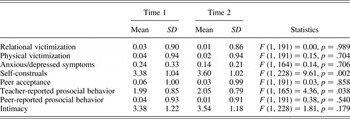
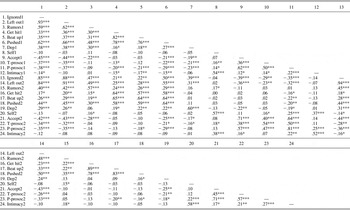
We conducted a repeated-measures analysis of variance to examine differences in relational-interdependent self-construals and other study variables between two data points. In the analysis, self-construals and other study variables were the dependent variable, and time was the within-subject variable. The results indicated a significant main effect of time, F (1, 228) = 9.61, p = .002. Specifically, relational-interdependent self-construals were greater at Time 2 (M = 3.60) than at Time 1 (M = 3.40). No significant differences were found in other study variables across two time points, with the exception of teacher-reported prosocial behaviors (see Table 1). Correlations among all study variables included in the structural models are presented in Table 2.
Means and standard deviations of study variables across time

Note: Self-construals, Relational-interdependent self-construals.
Correlations, means, and standard deviations of the study variables

Note: Dep, Depressive symptoms; Self, relational-interdependent self-construals; Accept, peer acceptance; T-prosoc, teacher-reported prosocial behavior; P-prosoc, peer-reported prosocial behavior.
*p < .05. **p < .01. ***p < .001.
A cross-lagged model of forms of peer victimization and depressive symptoms moderated by relational-interdependent self-construals
The main goal of the present study was to examine the bidirectional associations between forms of peer victimization (i.e., relational and physical) and depressive symptoms over time and the moderating role of relational-interdependent self-construals in these associations. To achieve this goal, we conducted structural equation model (SEM) analyses with full information maximum likelihood estimation using AMOS 19.0.Footnote 2 We first tested a baseline model that consisted of latent constructs of relational and physical victimization (created using items that tapped on these constructs) and an observed variable of teacher-reported depressive symptoms. It should be noted that error variances of the physical victimization items “get hit” and “get beat up” were allowed to correlate with each other based on modification indices. Included in this baseline model as well were the stability paths of the constructs, the covariances between constructs at both time points, and the cross-lagged paths between Time 1 constructs and Time 2 constructs (e.g., Time 1 relational victimization to Time 2 depressive symptoms and Time 1 depressive symptoms to Time 2 relational victimization).
This baseline model fit the overall sample fairly well, χ2 = 221.78, df = 62, p < .001, CFI = 0.94, RMSEA = 0.08 (0.07, 0.09). To examine the moderation of self-construals, we then tested this baseline model as a three-group model with the level of self-contruals as the grouping variable using multigroup analyses in AMOS. Three levels of relational-interdependent self-construals were identified: low (1 SD below the mean, n = 61), medium (1 SD around the mean, n = 205), and high (1 SD above the mean, n = 71). An unconstrained model in which the stability paths, the cross-lagged paths, and the covariances between constructs at both time points were set to be freely estimated while the rest of the paths (i.e., measurement part) were constrained to be equal across three self-construal groups was first tested and then compared to a constrained model in which all of the paths (including the measurement part) were set to be equal across groups. Model fit for the unconstrained model was χ2 = 442.13, df = 186, p < .001, CFI = 0.92, and RMSEA = 0.06 (0.06, 0.07); for the constrained model χ2 = 570.37, df = 236, p < .001, CFI = 0.90, and RMSEA = 0.07 (0.06, 0.07). Goodness of fit statistics between the constrained and the unconstrained models revealed significant change in fit, Δχ2 (50) = 128.11, p < .001, suggesting that the stability paths, cross-lagged paths and/or the covariances between constructs varied with the levels of relational-interdependent self-construals. Using a similar approach, we tested whether gender moderated the stability paths, the cross-lagged paths, and/or the covariances between constructs. The results showed that gender did not serve as a moderator, that is, the differences in model fit between constrained and unconstrained models was not significant, Δχ2 (15) = 6.36, p = .973.
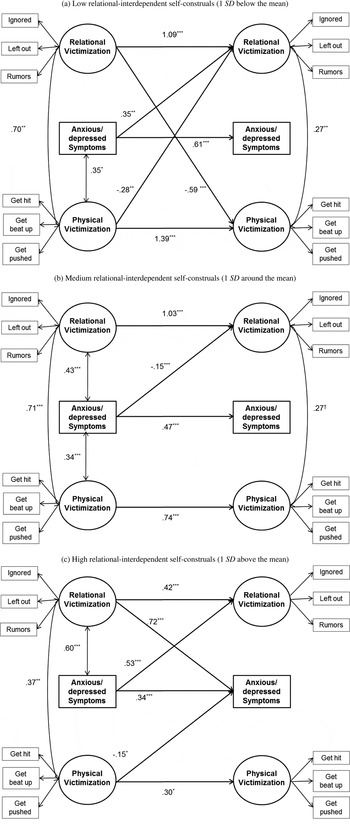
Figure 1a–c presents the results from the unconstrained models in the SEM analyses for low, medium, and high levels of self-construals, respectively. The results indicated that Time 1 relational victimization (not physical victimization) positively predicted Time 2 depressive symptoms in children who reported high levels of interdependent self-construals. Bidirectional effects were also found, such that Time 1 depressive symptoms positively predicted Time 2 subsequent relational victimization (not physical victimization) for children who exhibited low and high levels of relational-interdependent self-construals. However, Time 1 depressive symptoms negatively predicted Time 2 relational victimization in children with medium levels of interdependent self-construals, and Time 1 physical victimization negatively predicted Time 2 depressive symptoms in children who reported high levels of interdependent self-construals.
(a) Low relational-interdependent self-construals (1 SD below the mean), (b) medium relational-interdependent self-construals (1 SD around the mean), and (c) high relational-interdependent self-construals (1 SD above the mean). Bidirectional model (with standardized estimates) of relational and physical victimization and anxious/depressed symptoms for three groups of relational-interdependent self-construals. Significant paths are shown with solid lines; nonsignificant paths are not shown. Some standardized coefficients are >1 (especially in the low self group). This is potentially due to multicollinearity among constructs. However, it is important to remind the readers that standardized coefficients are not bound to ±1 and that coefficients >1 can legitimately occur (Deegan, Reference Deegan1978). This should not undermine the legitimacy of the model given that the model fit indices suggested good fit of the hypothesized model with the data. χ2 = 484.75, df = 206, p < .001, comparative fit index = 0.95, and root mean square error of approximation = 0.050 (0.045, 0.056). †p = .054, *p < .05, **p < .01, ***p < .001.

In addition, relational victimization, physical victimization, and depressive symptoms were highly stable over 6 months, especially for those who reported low to medium interdependent self-construals. Further, for all groups of children, relational victimization and physical victimization were significantly correlated at Time 1 and continued to correlate at Time 2 for those with low and medium interdependent self-construals. Relational victimization at Time 1 was concurrently and strongly related to depressive symptoms at Time 1 in children who reported medium to high levels of interdependent self-construals. In contrast, physical victimization at Time 1 was more strongly related to depressive symptoms at Time 1 in children who reported low to medium levels of interdependent self-construals.
Discussion
Consistent with Crick's prior works on relational and physical victimization (Crick & Grotpeter, Reference Crick and Grotpeter1996), the present study demonstrated that relational victimization (but not physical victimization) was uniquely predictive of elevated depressive symptoms in the Chinese culture; however, this was contingent upon the level of relational-interdependent self-construals. In other words, relational victimization predated depressive symptoms by at least 6 months for children who displayed relatively high levels of relational-interdependent self-construals. Therefore, having a high level of interdependence may be a personal vulnerability for depressive symptoms in school-aged children when exposed to negative interpersonal experiences such as relational victimization. Moreover, the findings showed that depressive symptoms predicted more relational victimization for children who displayed high and low levels of relational-interdependent self-construals. This suggests that the manifestation of depressive symptoms may invite relational victimization over time for children with high and low interdependence. Together, relational-interdependent self-construals may be developmentally crucial for school-aged children and may explain individual differences in vulnerability to the negative impact of relational and physical victimization on depressive symptoms.
In line with the findings of previous studies examining relational-interdependent self-construals in adults (e.g., Cross et al., Reference Cross, Bacon and Morris2000), the present study showed that greater levels of friend-oriented relational-interdependent self-construals, which were higher for girls than for boys, were predictive of higher levels of friendship intimacy, prosocial behavior, and peer acceptance. Given that one with relatively high levels of relational-interdependent self-construals places more emphasis on close relationships (Cross et al., Reference Cross, Bacon and Morris2000), it is conceivable that, relative to peers, highly interdependent children may be more likely to appreciate friendships that are high quality. In such friendships, these children may feel more comfortable about sharing personal concerns, problems, and secrets, and thereby may develop higher levels of intimacy and emotional closeness with friends. These children and their friends may take into more consideration the concerns, needs, and wishes of one another, and may form trustworthy friendships. Given the positive attributes of interdependent children, it is not surprising that they demonstrate social competence (i.e., an ability to interact with peers cooperatively and harmoniously), which explains why they exhibit high levels of helping behavior toward peers and are well liked and accepted by peers. Hence, having high levels of relational-interdependent self-construals may be an asset for friend and social adjustment, at least for children in Taiwanese elementary schools.
In support of the validity of relational-interdependent vulnerability model, the present study showed that relational victimization was predictive of subsequent depressive symptoms; however, this effect was evidenced for highly interdependent children only. This finding suggests that, relative to peers, children who defined themselves in terms of important relationships such as friendships plus who experienced relational victimization, including being ignored, excluded, and/or treated as invisible by peers, were more likely to exhibit depressive symptoms. One possible mechanism stems from the (cultural) socialization of school-aged children in Taiwan. Based on the interpersonal life-stress model of depression (Rudolph et al., Reference Rudolph, Hammen, Burge, Lindberg, Herzberg and Daley2000), the highly stressful experience of relational victimization may contribute to the onset of depression. This effect may be developmentally salient for highly interdependent children because these children may be more likely to be cognitively, emotionally, and psychologically affected by and may feel more stressed about experiences of relational victimization, as compared to children who reported a low and moderate level of interdependence. These processes may be evident for fifth-grade children, given that friendships and peer relationships become more central to children's social activities in early adolescence (Hartup & Stevens, Reference Hartup and Stevens1997). Together, older children who are highly interdependent may be vulnerable to relational victimization and thus develop severe depressive symptoms over time.
The finding that some highly interdependent children who form friendships that are close and intimate also experience relational victimization seems to be counterintuitive. However, this may be plausible, given that friendship intimacy and closeness may serve as both a buffer against negative peer experiences (Hartup & Stevens, Reference Hartup and Stevens1997) and a risk factor for interpersonal problems, including relational aggression (Murray-Close, Ostrov, & Crick, Reference Murray-Close, Ostrov and Crick2007), corumination, and depressive symptoms (Rose, Carlson, & Waller, Reference Rose, Carlson and Waller2007). One possible explanation for the “trade-off” is that highly interdependent children may form close and intimate friendships, which can serve as an adverse or maladaptive socializing context in which they can be a victim of relational aggression, exchange negative thoughts and feelings with their close friends, and thereby become vulnerable to internalizing symptoms such as depression. More studies are needed to clarify these complex processes involving relational victimization, friendship qualities, friend-oriented relational-interdependent self-construals, and internalizing symptoms.
The interactive effect of relational victimization and relational-interdependent self-construals did not differ between boys and girls. This is somewhat surprising given the ample evidence for gender differences in socialization processes, including vulnerability to negative relationships and peer-related experiences (Crick & Zahn-Waxler, Reference Crick and Zahn-Waxler2003; Rose & Rudolph, Reference Rose and Rudolph2006). In contrast, the literature has suggested that both boys and girls in relationship (or group)-oriented cultures such as in Taiwan are expected to be cooperative and maintain interpersonal and group harmony when interacting with their peers (Chen & French, Reference Chen and French2008). It is possible, then, that forming and maintaining positive, harmonious relationships may be developmentally crucial for both boys and girls in such interdependent-oriented culture; thus, self-defining processes involving the effect of interdependence (i.e., responses to physical and relational victimization) may be similar between boys and girls. Nevertheless, it is noted that there were gender differences in levels of relational-interdependent self-construals that were favoring for girls. These mean differences suggest the possibility that relative to boys, girls may be more at risk for developing depressive symptoms when they undergo relational victimization. A study that replicates and extends the findings of this study to a larger population is called for.
The findings of the present study also showed that depressive symptoms predicted increased relational victimization (not physical victimization) for children who reported low and high levels of relational-interdependent self-construals. This finding is partially consistent with previous studies showing “a symptom-driven model” in which depressive symptoms predated peer difficulties (Kochel et al., Reference Kochel, Ladd and Rudolph2012). Children who exhibited depressive symptoms may be socially disengaged in peer interactions and activities, and isolated from peer groups, thereby making them an easy target of relational aggression. This process may be applicable to depressed, low interdependent children who do not perceive friendships in the self-construal presumably because these children are inclined to be voluntarily independent or socially withdrawn from the peers. In a different mechanism, depressed, high interdependent children may seek friendships and peer groups in which they attempt to ruminate and complain to the peers. Both of these behaviors tend to be viewed as aversive by peers, which may elicit relational victimization.
Although relational-interdependent self-construals can be a risk factor for social adjustment problems such as relational victimization at the high and low levels, the story was different when they were at moderate levels. That is, depressive symptoms predated a lower level of relational victimization for children who exhibited a medium level of relational-interdependent self-construals. This suggests that a moderate level of interdependence may serve as a buffer against the negative consequences of depressive symptoms. One possible mechanism for this finding is that moderately interdependent children, at least in Taiwan, may be well adjusted to classrooms and fit in with the peer group. These children may have a moderate to high level of motivation to interact with peers prosocially, possessing the ability to make a good balance between self and others, and maintain appropriate interpersonal distance with peers. These children, even when they signal depression, may be able to seek help from peers and perhaps to receive instrumental and emotional support from peers, thereby preventing them from relational victimization. However, note that the effect size was relatively small and the practical significance indicating the utility of the results to the real world may be limited. A study that replicates the positive role of interdependence is warranted.
An unpredicted finding needs to be clarified. The finding is that physical victimization was associated with lower levels of depressive symptoms for highly interdependent children. Whereas a high level of interdependence was a risk factor for the effect of relational victimization, it seems to be a suppressor or protective factor for the negative impact of physical victimization. One possible explanation for this finding is the differential nature of relational versus physical victimization. Although both forms of peer victimization are interpersonal, physical victimization may be less relational in nature, as compared to a nonphysical form of peer victimization. In other words, physical victimization may be more likely to occur outside the friendship dyad and the peer group; therefore, having a high level of interdependence with friends may reduce a sense of loneliness, social anxiety, and depressive symptoms resulting from such peer difficulty. In contrast, relational victimization or being a victim of relational aggression may typically occur in the context of close relationships, given the view that relational aggression is frequency used in the context of close relationships whereas physical aggression is typically directed outside the friendship dyad (Grotpeter & Crick, Reference Grotpeter and Crick1996). Hence, relational victimization may signal betrayal by peers and even friends, which results in low self-esteem, self-worth, and well-being, particularly for interdependent children. The differential pathways from relational and physical victimization to internalizing problems for highly interdependent children may merit a future study that investigates the in-depth mechanisms involving forms of peer victimization, adjustment, and self-defining processes.
In addition to the main findings of the present study, the discussions of several findings concerning measurements need to be supplemented. The results of the present study confirmed that the two-factor model of peer victimization fit the data better than the one-factor model. This suggests that children view relational victimization and physical victimization as different experiences rather than the same experience, such as bullying, in the Chinese culture. This is in line with one of Crick's pioneering studies (Crick & Bigbee, Reference Crick and Bigbee1998), demonstrating the conceptual differentiation between forms of peer victimization with a Western sample. That relational and physical victimization trailed differential and unique pathways to depressive symptoms suggests that each form of peer victimization independently contributes to the development of depression, which has been partially evidenced in Western studies (Crick & Bigbee, Reference Crick and Bigbee1998). Crick and Bigbee (Reference Crick and Bigbee1998) discussed that “these findings are important because they demonstrate the significance of relational victimization for increasing our knowledge of social contributions to children's mental health problems” (p. 345). Overall, this study extends the findings of previous studies supporting the conceptualization and utility of each form of peer victimization to children who reside in non-Western cultures. A future cross-cultural study merits the investigation of unique, long-term consequences of each form of peer victimization in place of one merged peer victimization.
Although the present study revealed some important findings concerning forms of peer victimization, adjustment, and children's self-defining process, there are several limitations that need to be acknowledged. For example, similar to other studies, the representation of the sample and the generalizability of our findings may be limited. Whereas our sample was viewed as representative of contemporary Chinese society (Taiwan), it may not be necessarily generalized to all children in Taiwan. The sample did not include children from very low and high socioeconomic classes and children who reside in rural areas. Regarding the measure of the RISC-C, whereas the reliability and validity was sound by itself, it did not capture the function of the relational self in the context of peer groups. Thus, the current measure may limit the applicability of the findings to the effect of peer victimization in other relationship contexts (e.g., extended peer group). Relational and physical victimization was assessed at the classroom level and not the friendship level. It is possible that the moderating effect of relational-interdependent self-construals may be even stronger if victimization within the friendships was examined. Moreover, the present study conducted a multigroup SEM to test the moderation of relational-interdependent self-construals. Although it is a common approach to test group differences, the classification of a high and low group of relational-interdependent self-construals resulted in relatively smaller sample sizes. Further, a short-term longitudinal study like the present one makes it difficult to draw solid conclusions regarding long-term consequences of peer victimization and relational-interdependent self-construals. Because friendships and peer groups become more developmentally salient for older children and adolescents, age differences (school-age children vs. adolescents) in the interactive effect of relational victimization and relational-interdependent self-construals are possible. In addition, gender differences may emerge for adolescents conceivably owing to substantial changes in cognitive, social, emotional, and biological domains after puberty. A larger longitudinal study that addresses age and gender differences in the interactive effect of relational victimization and relational-interdependent self-construals is called for.
Implications for future research on peer relationships and psychopathology
The findings of the present study revealed that children's relational-interdependent self-construals, which were developmentally crucial for social and friend adjustment, moderated the link between relational victimization and elevated depressive symptoms. This finding is in line with the developmental psychopathology perspective such that individual factors or vulnerabilities (self-construals) and contextual factors (relational victimization) interact to influence the onset of internalizing symptoms (Crick & Zahn-Waxler, Reference Crick and Zahn-Waxler2003). However, physical victimization was linked to lower levels of depressive symptoms for highly interdependent children only. These findings suggest that forms of peer victimization may traverse differential developmental pathways to depressive symptoms, at least when the relational self is considered. A future study that examines, in addition to other social–cognitive factors (e.g., hostile attribution bias, negative perception toward peers, and co-rumination), children's self-defining processes in forms of peer victimization is warranted.
Given the findings of the relational-interdependent vulnerability model, it is plausible that relational aggression (i.e., the perpetrator of aggression) and relational-interdependent self-construals may interact to influence the onset and development of depressive symptoms. Crick (Reference Crick1995) showed that relationally aggressive children were cognitively and emotionally susceptible to peer provocations that are relational in nature and exhibited greater levels of relational hostile attribution biases and emotional distress than their peers. These children may exhibit a higher vulnerability to depression when they form a high level of interdependence with peers, conceivably owing to the greater levels of biases in cognitive processing and emotional distress that may be generated by peer conflicts including peer provocations.
Although the findings of this study demonstrated the possible detrimental effects of possessing varying degrees of relational-interdependent self-construals, the processes and mechanisms behind these phenomena are unclear. It would be informative to investigate in more depth why there is a stronger association between relational victimization and depressive symptoms for highly interdependent children. That is, it is important to know what makes these children more vulnerable and what could be possible mediators such as self-esteem in this process. It would also be interesting to examine the effects of children's relational-interdependent self-construals in different contexts (e.g., parents and teachers) and to see which self-construals with respect to a specific relationship (or different combinations of relationships) play the most important role in children's social and emotional development.
Another direction for a future study is to investigate the role of independent self-construals on the development of psychopathology. Unlike relational victimization, a nonrelational form of victimization such as physical victimization may target a central aspect of the self, which is not relational (i.e., independent self-construals). Combined with relational victimization targeting a central aspect of relational-interdependent self-construals, it may be that relationally victimized, interdependent youth and physically victimized, independent youth may be most at risk for depressive symptoms and even externalizing adjustment problems. This view suggests that each form of peer victimization is problematic; however, individuals may have a different vulnerability to psychopathology, depending on their self-construals. This argument is in line with the view that the modal form of aggression may differ across male and female peer groups owing to the differences in their self-construals (i.e., independent self-construals are predominant for male and interdependent self-construals are more common for female; Crick & Grotpeter, Reference Crick and Grotpeter1995). A larger longitudinal study is warranted to test these hypotheses along with the in-depth investigation of gender differences in the effect.
Another avenue for future research is to examine whether relational-interdependent self-construals function similarly or differentially in cultures other than the Chinese culture. Given the literature demonstrating that interdependent self-construals are predominant for members of Asian cultures such as in China (Markus & Kitayama, Reference Markus and Kitayama1991; Oyserman, Coon, & Kemmelmeier, Reference Oyserman, Coon and Kemmelmeier2002), it is possible that the impact of relational-interdependent self-construals on the link between relational victimization/aggression and social–psychological adjustment problems may be developmentally more salient for children in these cultures. This view is partially supported by the findings of recent cross-cultural studies showing that the link between relational victimization/aggression and depressive symptoms was stronger for Japanese children, who are thought to be more interdependent, as compared to European American children, who are assumed to be more independent; however, the same pattern for physical victimization was not evidenced (Kawabata et al., Reference Kawabata, Crick and Hamaguchi2010b, Reference Kawabata, Crick and Hamaguchi2013). A future cross-cultural study in the area of research is badly needed.
Conclusion
During her career, Nicki Crick initiated, developed, and refined the area of research on relational and physical aggression and victimization and its detrimental effect on mental health (Crick & Bigbee, Reference Crick and Bigbee1998; Crick & Grotpeter, Reference Crick and Grotpeter1995, Reference Crick and Grotpeter1996; Crick, Ostrov, & Kawabata, Reference Crick, Ostrov, Kawabata, Flannery, Vazsonyi and Waldman2007; Crick & Zahn-Waxler, Reference Crick and Zahn-Waxler2003). This significant contribution to the literature led Nicki to become an internationally recognized, leading researcher in the area of peer relationships and psychopathology. Her continuing legacy has spurred numerous research investigations to study aggression, victimization, and psychopathology through a more gender-balanced lens. Our findings support Nicki's (Crick & Grotpeter, Reference Crick and Grotpeter1996) view that the conceptual differentiation between relational victimization and other forms of victimization such as physical victimization is crucial and that each form of peer victimization provides the unique information about children's social experiences that may lead to psychopathology. Our findings further strengthen and extend Nicki's significant contribution to the literature by demonstrating that the unique effect of relational victimization differed by the levels of relational-interdependent self-construals that are central to the Chinese culture. Our future studies will examine the roles of biological and physiological markers (e.g., heart rate/blood pressure, skin conductance, EEG activity, and cortisol) and cultural factors (e.g., interdependence and independence, minority stress, and acculturation) on the linkages involving relational aggression, relational victimization, and social–psychological adjustment problems. We believe that this line of research will contribute to the enduring legacy of Nicki Crick's professional life and further enhance the understanding of the mechanisms and processes of children's relationally and physically aggressive behaviors and social experiences that may be influenced by the unique, shared, and interactive effects of biological factors and cultural beliefs, values, and practices.
Appendix A
Items of friend-oriented relational-interdependent self-construals