Introduction
Caesarean section (CS) rates have been rising worldwide, intensifying the clinical and economic burden on health care systems (Menacker et al., Reference Menacker, Declercq and Macdorman2006; Niino, Reference Niino2011). Based on data from 121 countries, Betrán et al. (Reference Betrán, Torloni, Zhang and Gülmezoglu2016) showed that the global average CS rate increased by 12.4% between 1990 and 2014, with the highest average annual rate of increase happening in Asia. India is no exception, with the rate of CS doubling from 2005–06 to reach 17% in 2015–16. The southern Indian states have recorded levels of CS deliveries comparable to those reported in countries with the highest levels of CS in the world (Potter et al., Reference Potter, Berquó, Perpétuo, Leal, Hopkins and Souza2001; Radhakrishnan et al., Reference Radhakrishnan, Vasanthakumari and Babu2017).
Globally, around 6.2 million unnecessary CS deliveries are performed each year, at an approximate cost of 2.3 billion US dollars (Gibbons et al., Reference Gibbons, Belizán, Lauer, Betrán, Merialdi and Althabe2010). According to the World Health Organization, a Caesarean section should only be performed when it becomes a medical necessity. Pregnancy/delivery complications like breech presentation, placenta previa, severe pre-eclampsia or eclampsia, prolonged labour, placental abruption and uterine rupture may be considered as medical necessities requiring a CS delivery (World Health Organization, 2015). Some studies have found older women (35 years and over) and obese women to have a high risk for CS. Caesarean sections among women with no medical causes/risks are defined as Low-Risk Caesarean (LRC) deliveries. From the available data, it is not clear whether high rates of LRC deliveries are driven by institutional, individual or family decisions. The international health care community considers the ideal rate of CS to be around 10–15% (World Health Organization, 2015). Maternal death rates have been found to be lower when CS rates lie in this range; however, it is not evident that mortality rates improve above the threshold limit. A study based on 159 countries found no decline in maternal or infant mortality in countries with CS rates above 10% (Ye et al., Reference Ye, Zhang, Mikolajczyk, Torloni, Gülmezoglu and Betran2016).
A rise in CS deliveries has been shown to have adverse implications for the health of infants and mothers and to increase delivery costs (Allen et al., Reference Allen, O’Connell, Farrell and Baskett2005; MacDorman et al., Reference MacDorman, Declercq, Menacker and Malloy2008; Kuklina et al., Reference Kuklina, Meikle, Jamieson, Whiteman, Barfield and Hillis2010). It is, therefore, an international public health concern (Van Roosmalen & Van der Does, Reference Van Roosmalen and Van der Does1995). Caesarean deliveries without a medical need place mothers and their babies at risk of short- and long-term health problems (Betrán et al., Reference Betrán, Torloni, Zhang and Gülmezoglu2016). Compared with vaginal births, CS deliveries performed on non-medical indications in low-resource settings are associated with higher maternal risks (Souza et al., Reference Souza, Gulmezoglu, Lumbiganon, Laopaiboon, Carroli and Fawole2010), longer postpartum recovery (Thompson et al., Reference Thompson, Roberts, Currie and Ellwood2002), higher rates of re-hospitalization (Declercq et al., Reference Declercq, Barger, Cabral, Evans, Kotelchuck and Simon2007), extended hospital stays (Liu et al., Reference Liu, Liston, Joseph, Heaman, Sauve and Kramer2007), higher risk of maternal morbidity (Sanchez-Ramos et al., Reference Sanchez-Ramos, Wells, Adair, Arcelin, Kaunitz and Wells2001) and problems in subsequent pregnancies (Silver, Reference Silver2012).
About 2.5% of all births in the US are delivered via Caesarean section upon maternal request without any medical indication (American College of Obstetricians and Gynecologists, 2007). Most of these women voluntarily undergo CS in the belief that Caesarean delivery is less painful, safer and healthier than a vaginal birth and that vaginal delivery causes stretching and can compromise their future sex lives. Changes in lifestyle leading to obesity (Litorp et al., Reference Litorp, Mgaya, Mbekenga, Kidanto, Johnsdotter and Essén2015) and an increase in mother’s age at first birth (Hall, Reference Hall1994) have increased the usage of Caesarean services. Studies have found a higher chance of CS among shorter women (Liston, Reference Liston2003) and younger mothers with a small pelvis (Nour, Reference Nour2006). Divyamol et al. (Reference Divyamol, Raphael and Koshy2016) found that CS deliveries in southern India were significantly higher in first pregnancies, younger women, women who had received antenatal care during pregnancy, those who had terminated a pregnancy and those who resided in an urban area.
Women of higher socioeconomic status (Hall, Reference Hall1994), those in higher social classes, highly educated women and those living in urban and metropolitan areas are more likely to opt for a Caesarean section (Gould et al., Reference Gould, Davey and Stafford1989; Padmadas et al., Reference Padmadas, Kumar, Nair and Kumari2000; Potter et al., Reference Potter, Berquó, Perpétuo, Leal, Hopkins and Souza2001; Mishra & Ramanathan, Reference Mishra and Ramanathan2002; Sufang et al., Reference Sufang, Padmadas, Fengmin, Brown and Stones2007; Al Rifai, Reference Al Rifai2017; Milcent & Zbiri, Reference Milcent and Zbiri2018). Other studies have reported that women’s concerns over potential complications arising from childbirth (Hopkins, Reference Hopkins2000), social factors, fear of pain during labour and childbirth, previous experience and interactions with health care professionals (O’Donovan & O’Donovan, Reference O’Donovan and O’Donovan2018) to be the factors leading women to voluntarily opt for CS delivery. Mishra and Ramanathan (Reference Mishra and Ramanathan2002) found that antenatal care is useful in identifing high-risk pregnancies, increasing the proportion of women accepting CS deliveries.
A few studies have found that some physicians conduct CS without any medical justification for economic gains and time management (Radhakrishnan et al., Reference Radhakrishnan, Vasanthakumari and Babu2017). The financial and organizational structure of hospitals (Lin & Xirasagar, Reference Lin and Xirasagar2004; Milcent & Rochut, Reference Milcent and Rochut2009) also influences these critical decisions. Al Rifai (Reference Al Rifai2017) found that the more than 4-fold higher rate of CS in the private sector in Egypt was driven by substantial increases in CS among mothers who were potentially at a low risk for CS delivery. The increase in monetary gains through Caesarean deliveries encourages many health providers to opt for CS (Epstein & Nicholson, Reference Epstein and Nicholson2009; Grant, Reference Grant2009).
The aim of CS is to save the lives of mothers and their children. However, several studies indicate that CS is becoming common among women with mild or no complications. The increasing prevalence of CS deliveries in the last few decades in India is an alarming issue with a wide scope for understanding the practice. Earlier studies done in India have focused only on CS deliveries and their determining factors. However, studies based on CS among low-risk pregnancies only seem to have been conducted in developed countries. Therefore, there is a need to understand whether CS in India is legitimately done out of the risk obligation or whether it is societal factors driving this trend. Questions such as: ‘What were the factors that compelled women who did not report a complication but went for a CS delivery?’ and ‘Do contextual factors like familial influence and community affect the CS deliveries among low-risk women in India?’ are important to answer. This study aimed to examine the demographic, socioeconomic and contextual factors affecting CS deliveries among low-risk women in India.
Methods
Secondary data analysis was performed on nationally representative cross-sectional survey data obtained from the Indian Demographic and Health Survey, Round 4, conducted in 2015–16 and widely known as the National Family Health Survey (NFHS-4) (IIPS & ICF, 2017). The NFHS-4, conducted under the stewardship of the Ministry of Health and Family Welfare (MoHFW) of India, provides information on population, health, nutrition, abortion, sexual behaviour, HIV/AIDS knowledge and domestic violence for India as a whole, as well as for each state and union territory and district. The survey covered all 36 states and union territories and also, for the first time, gave estimates for all 640 districts in order to enable corrective measures on the health front. The NFHS-4 used a stratified two-stage sampling procedure for the selection of the sample. A specific set of questions were asked using standard questionnaires with the consent of the respondents. A total of 628,900 households were selected, of which 601,509 were successfully interviewed, with a response rate of 98%. Among the interviewed households, 723,875 eligible women aged 15–49 years were identified for the individual women’s interviews. Of these, 699,868 women were interviewed with a response rate of 97%. The detailed methodology, with complete information on the survey design and data collection, was published in the survey report (IIPS & ICF, 2017).
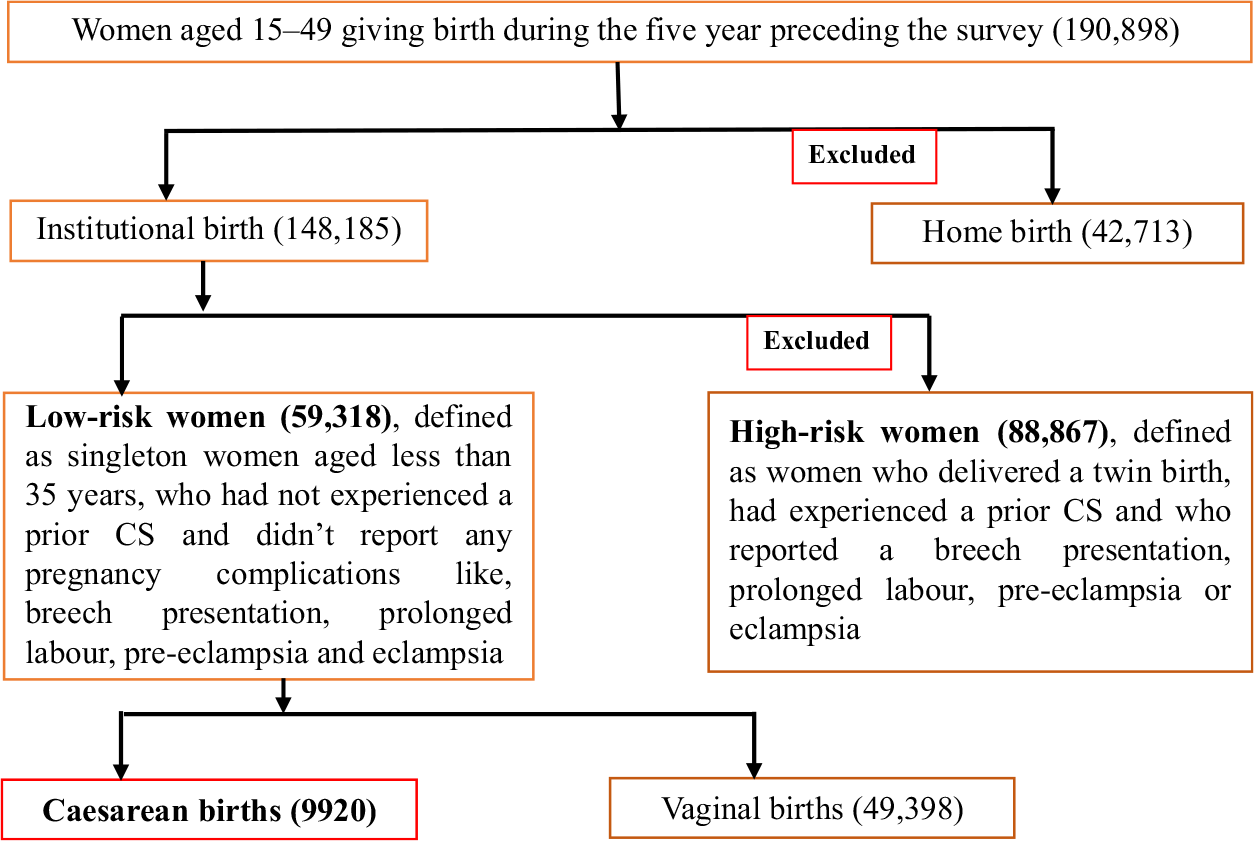
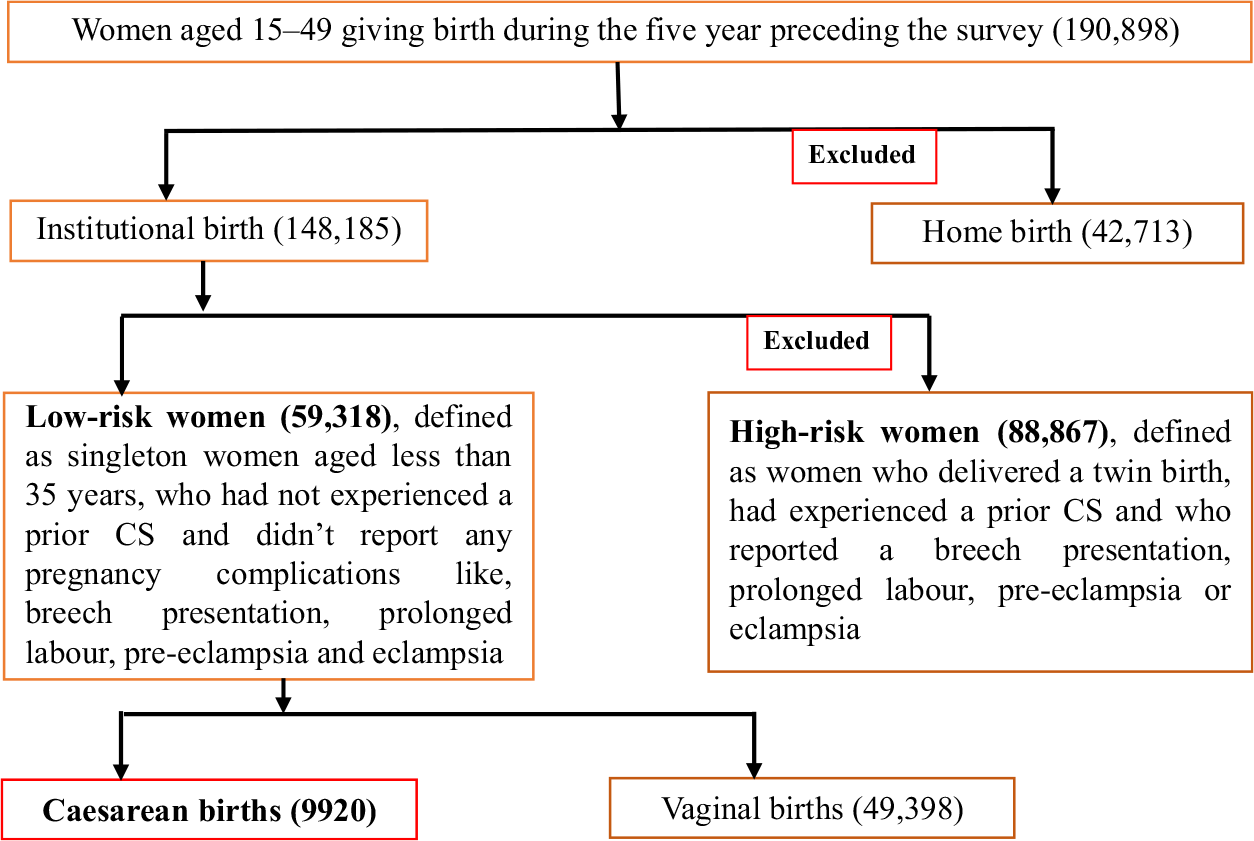
In the present study, data were restricted to mothers aged 15–49 years who had their last birth during the five years preceding the survey (N = 190,898). The analysis was restricted to 148,185 women who had had an institutional delivery. Furthermore, to examine the determinants of CS among low-risk women, those who had a medical risk of CS were excluded from the analysis. Therefore, the final sample constituted 59,318 low-risk women who had had an institutional delivery for their last birth during the five years preceding the survey. This final sample selection strategy is shown in Figure 1. In the multilevel analysis, 59,318 women were nested in 57,279 households, within 22,183 communities in 640 districts.
Flowchart showing final selection of sample women, NFHS-4, 2015–16.
Outcome variable
The study outcome variable was Caesarean section delivery among low-risk women. Caesarean section is a surgical procedure used to deliver a baby through incisions in the abdomen and uterus. In the NFHS-4, mothers were asked whether their most recent birth in the last five years was delivered by Caesarean section. The question was framed as ‘Did they cut your belly open to take the baby out or not?’ The responses were categorized as ‘1’ for ‘Yes’ and ‘0’ for ‘No’.
Detailed questions to differentiate medically and non-medically indicated cases of Caesarean delivery were not asked in the survey as such information needs to be collected from hospital/health providers. Therefore, the present study defined women at low risk of CS (low-risk women) as singleton mothers aged less than 35 years, who had not experienced a previous Caesarean and who didn’t report any pregnancy complications such as breech presentation, prolonged labour, pre-eclampsia or eclampsia. This low-risk pregnancy criterion was built from a thorough review of the literature on the medical risk factors for CS among women (Zhang et al., Reference Zhang, Liu, Meikle, Zheng, Sun and Li2008; Kazmi et al., Reference Kazmi, Sarva Saiseema and Khan2012; Tapia et al., Reference Tapia, Betran and Gonzales2016; Tilstra, Reference Tilstra2018).
Explanatory variables
Individual-level
These included age of the women (15–19, 20–24, 25–29, 30–34 and 35 years or older), women’s educational level (illiterate, primary, secondary and higher education, based on the number of years of schooling), parity (one, two, three, and four or more); number of antenatal checkups received during last pregnancy (none, one to three, and four or more) and women’s exposure to mass media (how often they read newspapers, listened to the radio and watched television; responses on the frequencies were: almost every day, at least once a week, less than once a week, or not at all; women were considered to have any exposure to mass media if they had exposure to any of these sources and as having no exposure if they responded with ‘not at all’ for all three sources of media).
Type of facility was categorized as public or private. Public facilities included government/municipality hospitals, government dispensaries, urban health clinics/urban health posts (UHP)/urban family welfare centres (UFWC), Community Health Centres (CHC)/Rural Hospitals/Block Primary Health Centres (BPHC), PHC/Additional PHC, Sub-Centres and other public sector health facilities. Private facilities included hospital/maternity home/clinics, other private sector health facilities and NGOs or trust hospital/clinics.
Household-level
These included religion, caste and wealth of the household. Caste was divided into four categories: scheduled caste (SC), scheduled tribe (ST), other backward class (OBC) and other caste. Religion was categorized as: Hindu, Muslim, and other (including Christian, Sikh, Buddhist/Neo-Buddhist, Jain, Jewish, Parsi/Zoroastrian, no religion, and other). A household wealth index was calculated in the survey by combining household amenities, assets and durables and characterizing households in a range varying from the poorest to the richest, corresponding to wealth quintiles ranging from the lowest to the highest.
Community-level
These included place of residence (rural and urban), community economic index and community women’s educational index. Community-level variables were constructed by aggregating the individual/household-level characteristics of the respondents to the primary sampling unit (PSU) level. The NFHS-4 provided a household wealth index (WI) based on information collected on household amenities and assets. The community economic index was divided into two categories, low and high, with low being for PSUs whose average household WI was less than the national average of WI and high being that for the remaining PSUs. Similarly, the community women’s educational index was created based on the average years of schooling of women at the PSU level. As the data did not have information on education for all household members, the community-level education index was based on women aged 15–49 years.
Statistical analysis
First, the percentage of women who had a low-risk pregnancy was analysed by their background characteristics. Women who had delivered their last child in a health institution were only considered in the denominator because the aim was to examine the association of this with CS, which can only be performed in an institution. Bivariate analysis was performed to examine the relationship between CS and low-risk CS with demographic and socioeconomic variables. The Chi-squared test was performed to test this relationship. Next, a multilevel (three level) logistic regression model was used to assess the effects of the individual-, household- and community-level variables on CS among low-risk women. The random effects of household, community, and district were estimated by using the melogit command in STATA (Version 14).
The application of the multilevel modelling was justified by the hierarchal structure of the survey, where women were nested within households, the households were nested within PSUs and PSUs were nested within districts. First, a null model was run; that is, without keeping any explanatory variables. This model represented the total variance in low-risk Caesarean deliveries at household, community and district levels. In multivariate modelling, three models were fitted. In the first model, individual-level variables, i.e. age of the women, education, parity of women, number of antenatal care (ANC) visits, mass media exposure and type of health facility, were included. The second model included individual- and household-level variables, i.e. religion, caste and household wealth. In the last model, community-level variables were added, i.e. place of residence, community women’s educational index, community economic index and geographical regions of India. The fixed effects at the individual, household, community and district levels, and the random effects at the household, community and district levels, were calculated. For all the estimated models, the significance of random effects was evaluated by using p-values.
The mathematical description of the final model (three levels) is given below:
 $${\rm{logit}}\left( {{\pi _{ijk}}} \right) = {\rm{log}}\left( {\frac{{{\pi _{ijk}}}}\over{{1 - {\pi _{ijk}}}}} \right) = {\beta _{0jk{\rm{\;}}}} + {\beta _1}{x_{1ijk}} + {\beta _2}{x_{2ijk}} + {\beta _3}{x_{3ijk}} + \ldots + {\beta _n}{x_{nijk}}$$
where
 ${\pi _{ijk}} = p\left( {{y_{ijk}} = 1} \right)$
is the probability that a woman i in household j, from PSU k, delivered a birth, where
 ${y_{ijk}}$
is equal to ‘1’ if a woman delivered through CS and ‘0’ if she did not. This probability was delivered as a function of an intercept and the exploratory variables as:
 $${\beta _{0jk}} = {\beta _0} + {\mu _{0jk}}$$
In this equation, β
0jk
indicates that the intercept in this relationship was random at the j
th (household) and
 ${k^{th}}$
(PSU) levels. The variables
 ${x_{1ijk\;}}{\rm{to}}\;{x_{nijk}}$
were the exploratory variables, and their coefficients were fixed effects. The technical advantage of this methodology relies on the error term structure. Linear or logistic regression models exhibit one error term for the whole equation, whereas multilevel analysis generates one error term for each level, allowing the individual-level and group-level residual variance to be isolated. The split error term in the multilevel analysis allows assessing unobserved effects at every level.
Results
Sample characteristics
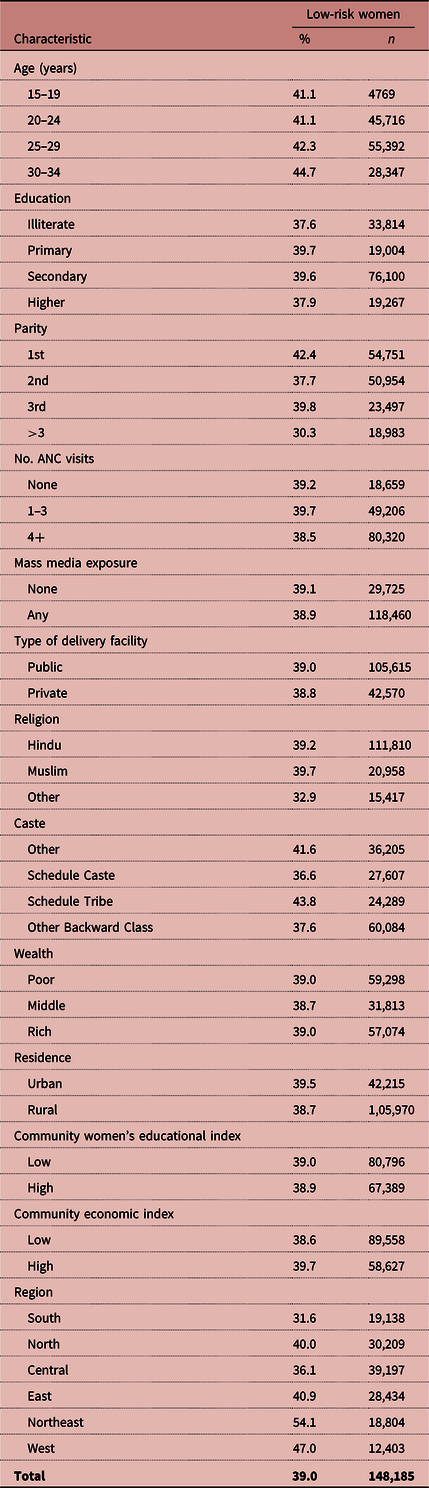
The percentages of women who had a low risk of CS by their socioeconomic and demographic characteristics are presented in Table 1. Overall, 39% of women in India who had delivered in an institution had a low-risk pregnancy. Nearly 45% of women in the age group 30–34 years, compared with 41% in the age group 15–24 years, had a low risk of CS. The proportion of low-risk women was higher among primary and secondary educated women (40%) in comparison to illiterates and those who had a higher level of education. Higher parity women, who delivered in an institution, had a significantly higher chance of having a low-risk pregnancy compared with first-parity women.
Percentage of women delivering in an institution with a low-risk pregnancy by background characteristics, India, 2015–16
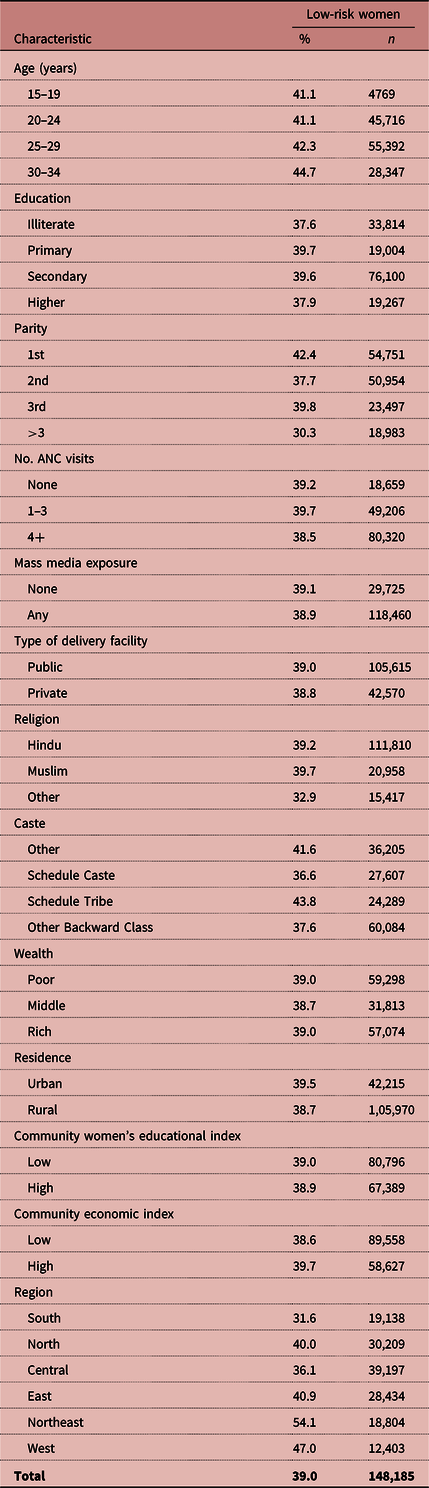
On the other hand, the proportion of low-risk women was high among those who had received one to three sessions of ANC. Urban women were more numerous in the low-risk category than their rural counterparts. In addition, more than half of the women in the Northeast region and nearly half (47%) of the women in the West region, who delivered in an institution, were in the low-risk category.
Prevalence of Caesarean section among low-risk women
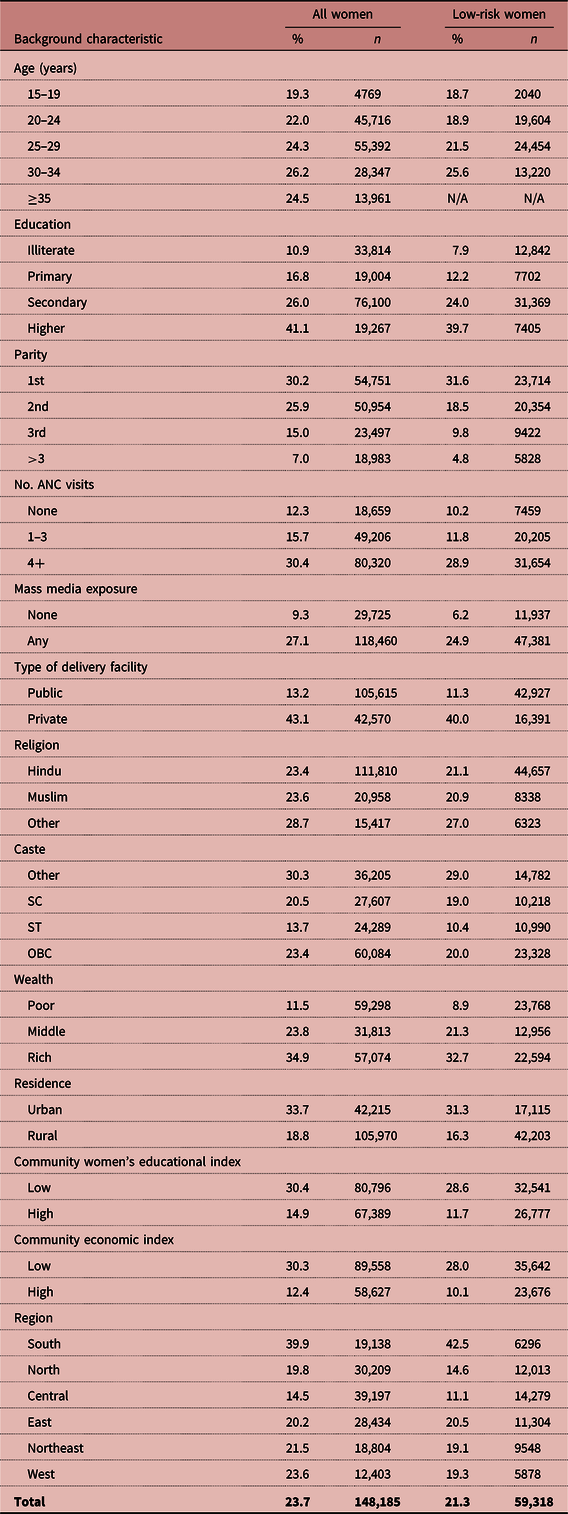
Table 2 shows the rates of CS among all women and among low-risk women, who delivered their last child in an institution, by their background characteristics. Overall, nearly a quarter of women delivered their most recent child by CS in an institution. This figure was also high among low-risk women (21%). There was a positive relationship between CS prevalence in all women and low-risk women and their age. The prevalence of CS was highest among women aged 30–34 years followed by those aged 25–29 years. Years of schooling also showed a positive association with CS in all women and low-risk women. The prevalence of CS was very high among women of first parity (30%), followed by those of 2nd parity (26%). It is noteworthy that these differences were more visible in low-risk women. Women who had received ANC services were more likely to have had a CS irrespective of their pregnancy risk. Furthermore, 40% of low-risk women who delivered in a private health facility had CS compared with only 11% of those who delivered in a public health facility.
Percentage of all women and low-risk pregnancy women having Caesarean sections who delivered in an institution by background characteristics, India, 2015–16
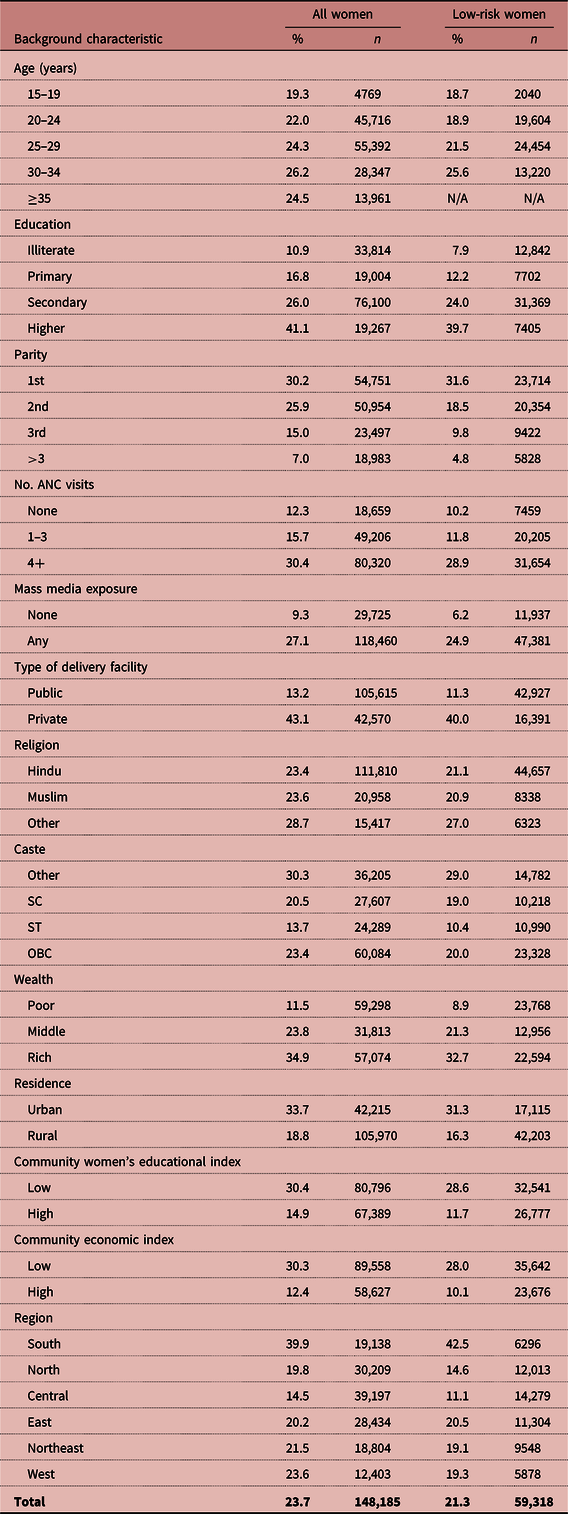
N/A: not applicable.
A higher rate of CS delivery was observed among low-risk women from affluent households (33%) compared with poor women (9%). Rural–urban differences in CS rates were significant among low-risk women, with women living in urban areas having nearly double the CS rate compared with their rural counterparts. An association was found between women’s community-level education and economic indices with CS rates; women from communities with a higher level of education and economic status had lower levels of CS, irrespective of their pregnancy risk. Moreover, a very high prevalence of CS delivery was found among low-risk women from the South region (43%).
Results of the multilevel logistic regression model
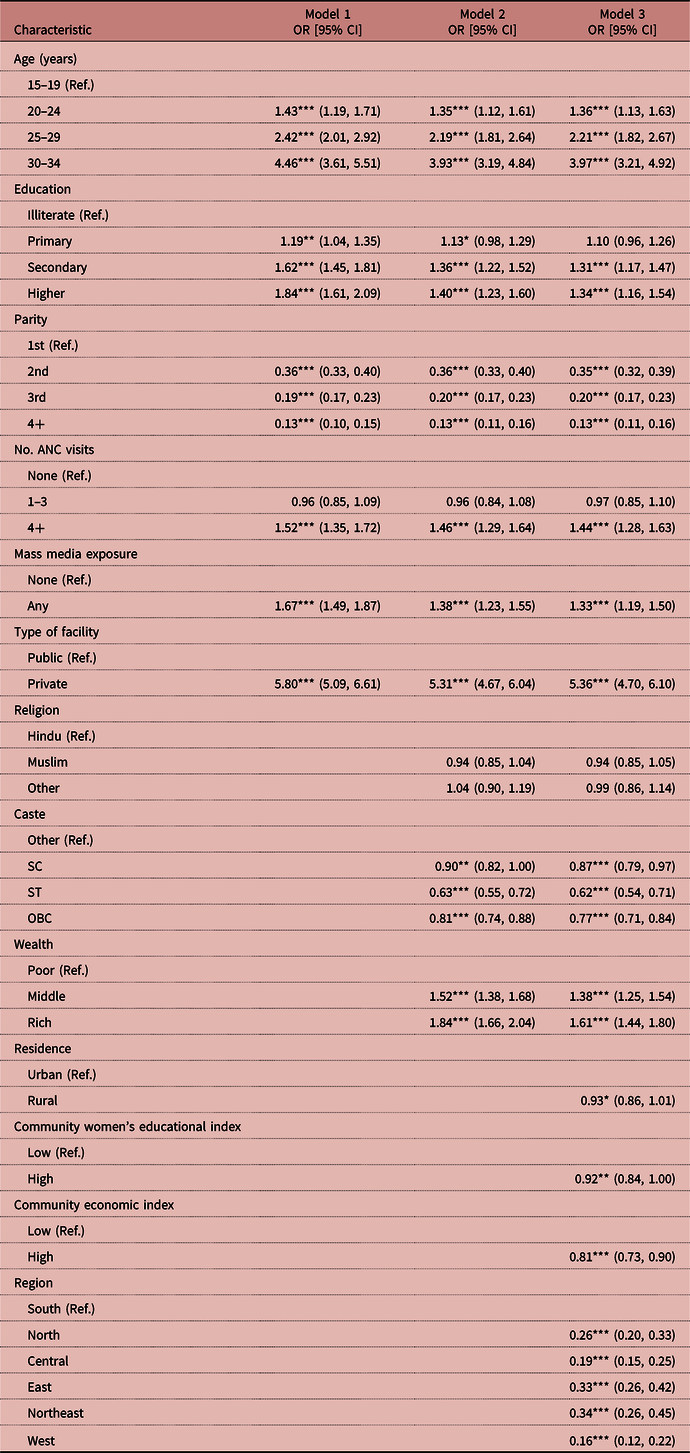
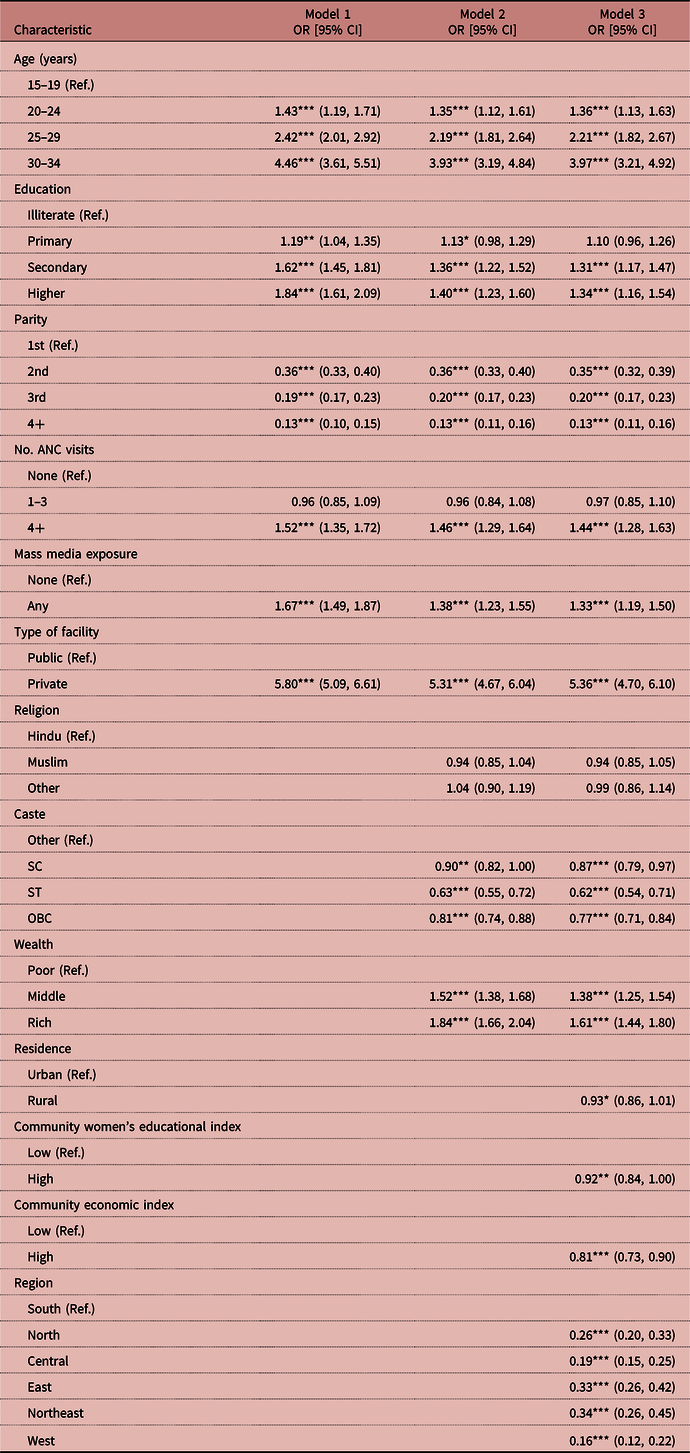
Table 3 shows the results of the multilevel logistic regression analysis, showing the odds ratios (and 95% confidence intervals) of the factors associated with LRC institutional deliveries. Model 1 shows that the individual-level explanatory variables age, education of women, parity, number of ANC visits, mass media exposure and type of health facility were significantly associated with CS delivery among low-risk women. Model 2 included household-level variables in addition to the explanatory variables used in Model 1, and Model 3 added community-level variables. Model 3 showed that the likelihood of CS deliveries among low-risk women was higher in the age groups 20–24 years (OR 1.36), 25–29 years (OR 2.21) and 30–34 years (OR 3.97) compared with the age group 15–19 years. Low-risk women with secondary and higher level of education had a higher likelihood (OR 1.31 and 1.34) of undergoing CS delivery than illiterate women. In comparison to first-parity women, all other women with low-risk pregnancies had a substantially lower risk of CS delivery.
Multilevel logistic regression analysis assessing the effect of background characteristics on the likelihood of CS deliveries among low-risk women aged 15–34 years, India, 2015–16
Ref.: Reference category.
*p<0.10; **p<0.05; ***p<0.001.
The odds of CS among women with a low-risk pregnancy who received 4 or more ANC sessions and those who had exposure to any mass media were higher (OR 1.44 and OR 1.33, respectively) compared with their counterparts with no ANC visits and no exposure to mass media. Furthermore, the odds of having a CS delivery were more than five times higher (OR5.36) among low-risk women who had delivered in a private health facility compared with those who gave birth in a public facility.
In comparison to women belonging to other castes, SC, ST and OBC women had lower odds of a CS delivery (OR 0.87, 0.62 and 0.77, respectively). The wealth of the households had a significant effect on the likelihood of CS delivery among low-risk women. The likelihood of having a CS birth was higher (OR 1.38 and 1.61, respectively) among women from middle wealth and affluent households compared with women from poor families.
Low-risk women from rural areas reported lower odds (OR 0.93) of CS delivery compared with those from urban areas. Women from communities with a high education index (OR 0.92) and high economic index (OR 0.81) had a lower risk of CS delivery compared with their other counterparts from communities with low indices. Geographical region also showed a significant association with CS delivery. Women from the North (OR 0.26), Central (OR 0.19), East (OR 0.33), Northeast (OR 0.34) and West (OR 0.16) regions were significantly less likely to undergo LRC births than women from the South region.
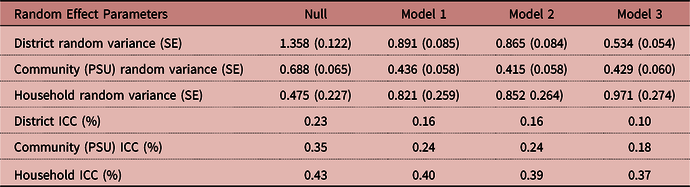
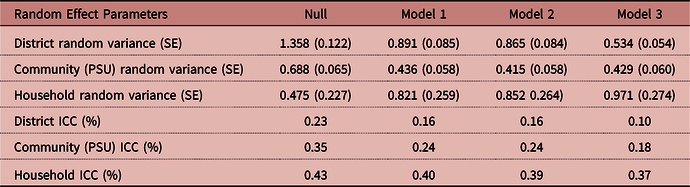
A model applied without covariates (called the null model) on CS deliveries among low-risk women (Table 4) showed a significant amount of variation in the prevalence of CS deliveries across families, communities and districts. Based on intra-class correlation coefficient (ICC) values, 43%, 35% and 23% of the total variance in the prevalence of CS deliveries were attributable to differences across families, communities and districts respectively. After including individual- (Model 1), household- (Model 2) and community-level variables (Model 3) in the null model, the ICC values decreased to 10% (district level), 18% (community level) and 37% (household level).
Variance estimates across families, communities and districts, and intra-class correlation coefficients (ICCs) for the multilevel models of CS deliveries among low-risk women
Discussion
The study found that two-fifths of the sample Indian women who delivered their last child in an institution had low-risk pregnancies. The proportion of low-risk pregnancies was the highest among women aged 30–34 years, first-parity women and women with primary and secondary education, which corroborates the findings of earlier studies (Tilstra, Reference Tilstra2018). The findings are also similar to those of Danilack et al. (Reference Danilack, Nunes and Phipps2015), who found that 15% of their sample of US women who had undergone a CS were categorized as having low-risk pregnancies. The small difference in the proportion compared with this study could be because of a different operational definition for the low-risk criteria. However, it was difficult to ascertain whether the high prevalence of CS found among low-risk women in this study was due to women’s own preference for CS or health providers’ advice for CS.
The literature suggests that most women who voluntarily undergo Caesarean delivery or have a low-risk Caesarean birth do so in the belief that it is less painful, safer and healthier than a vaginal birth (Hopkins, Reference Hopkins2000; Tatar et al., Reference Tatar, Gunalp, Somunoglu and Demirol2000; Potter et al., Reference Potter, Berquó, Perpétuo, Leal, Hopkins and Souza2001; Behague et al., Reference Behague, Victora and Barros2002; Pang et al., Reference Pang, Leung, Leung, Lai, Lau and Chung2007; Weaver et al., Reference Weaver, Statham and Richards2007; Gibbs, Reference Gibbs2008). However, women’s concerns about potential complications arising from childbirth, cultural factors, fear of labour previous experience, and interaction with health care professionals are also factors that can make women voluntarily accept Caesarean section delivery (Hopkins, Reference Hopkins2000; O’Donovan & O’Donovan, Reference O’Donovan and O’Donovan2018). On the other hand, private health providers may prefer to perform Caesarean deliveries in order to make more money (Einarsdóttir et al., Reference Einarsdóttir, Kemp, Haggar, Moorin, Gunnell and Preen2012; Begum et al., Reference Begum, Ellis, Sarker, Rostoker, Rahman and Anwar2018), as they require less time and a smaller health workforce (Hopkins, Reference Hopkins2000). With these motives, health providers may have been convincing even low-risk women (particularly richer, educated, urban women) to go for CS.
The study found a strong positive relationship between the age of women and the CS rate among low-risk women. Mothers’ preferences become apparent when observing CS births among low-risk mothers from affluent households, the highly educated and urban residents, as they were more likely to undergo low-risk Caesarean deliveries. These associations have also been reported in prior research (Gould et al., Reference Gould, Davey and Stafford1989; Hall, Reference Hall1994; Padmadas et al., Reference Padmadas, Kumar, Nair and Kumari2000; Potter et al., Reference Potter, Berquó, Perpétuo, Leal, Hopkins and Souza2001; Sufang et al., Reference Sufang, Padmadas, Fengmin, Brown and Stones2007; Al Rifai, Reference Al Rifai2017; Milcent & Zbiri, Reference Milcent and Zbiri2018). Mothers from the higher income group may have been choosing CS due to higher perceived costs in terms of sick leave, or due to the fear of pain or merely the inconvenience of undergoing a natural delivery. Earlier literature has demonstrated the role of mother’s preferences for low-risk Caesarean births (Hsu et al., Reference Hsu, Liao and Hwang2008). Mishra and Ramanathan (Reference Mishra and Ramanathan2002) suggested that the higher proportion of CS observed in urban than in rural areas of India may be a reflection of a combination of factors, such as urban areas having more advanced health facilities, higher levels of women’s choice and a wider prevalence of private sector health facilities, especially referral hospitals; such facilities are usually located in urban areas but deal with pregnancy complications among both rural and urban patients.
Another finding of this study was that the rate of CS delivery among low-risk women was significantly higher among first-parity women than other women, which has been confirmed by previous studies (Hall, Reference Hall1994; Divyamol et al., Reference Divyamol, Raphael and Koshy2016). Antenatal care is a useful way of identifying high-risk pregnancies and helps to increase the proportion of high-risk women accepting CS delivery (Hall, Reference Hall1994; Divyamol et al., Reference Divyamol, Raphael and Koshy2016). This study also found that women who made 4 or more ANC visits were more likely to undergo low-risk Caesarean deliveries.
The study further suggests that private health facilities play a crucial role in the CS delivery rate among low-risk women, as a higher proportion of CS births were found to have taken place in these facilities, with women undergoing unnecessary surgery (Betrán et al., Reference Betrán, Torloni, Zhang and Gülmezoglu2016). The study also found that all the southern states of India recorded CS delivery rates that were as high as those recorded in countries with the highest levels of CS in the world (Radhakrishnan et al., Reference Radhakrishnan, Vasanthakumari and Babu2017) and also revealed a higher CS rate among low-risk women in South India. The figure is alarming and raises a programmatic and research concern about the higher CS rates among low-risk pregnancies in southern India. Previous research has shown that women’s autonomy is positively associated with CS delivery (Gonen et al., Reference Gonen, Tamir and Degani2002; Potter et al., Reference Potter, Hopkins, Faundes and Perpetuo2008; Lazo-Porras et al., Reference Lazo-Porras, Bayer, Acuña-Villaorduña, Zeballos-Palacios, Cardenas-Montero and Reyes-Diaz2017). Since there is greater women’s autonomy in the southern Indian states (Jejeebhoy & Sathar, Reference Jejeebhoy and Sathar2001; Singh, Reference Singh2010), this may be leading to an increase in CS rates in those states.
A new and important finding of this paper is that, after controlling individual- and household-level socioeconomic and demographic indicators of women, low-risk women with higher levels of education and from communities of higher economic status were less likely to undergo CS compared with their other counterparts with lower levels of education and from communities of lower economic status. This finding is in contrast to the effect of individual-level education and household-level wealth on LRC deliveries. However, this study could not find a possible explanation for this in the existing literature.
The study also revealed a significant amount of variation in the prevalence of low-risk Caesarean deliveries across families, communities and districts. This suggests that low-risk women from the same families, communities or districts may have been influenced by other such women, and they either voluntarily opted for CS or were convinced/forced to undergo CS by the facility available in the same community/district. In other words, low-risk Caesarean deliveries were clustered in households, communities and districts.
In conclusion, this study found a high percentage (21%) of CS deliveries among low-risk women who delivered in an institution in India. Overall, the CS rate for institutional births was 24%. There are alarmingly high levels (more than 40%) of Caesarean deliveries among low-risk pregnancy women in private hospitals and in the southern region of the country. Special attention and efforts are required to address this problem. Household and community factors play a significant role in determining LRC deliveries in India. There was a significant amount of clustering of LRC deliveries within families, communities and districts. This suggests that the decision to go for CS is not only driven by medical factors but is also influenced by contextual factors such as with whom or where women live. It was also found that low-risk women from more-educated communities were less likely to undergo CS. There is therefore a need to focus on community-level awareness programmes to spread knowledge about the risks and benefits of LRC births and vaginal deliveries.
Funding
This research received no specific grant from any funding agency, commercial entity, or not-for-profit organization.
Conflicts of interest
The authors have no conflicts of interest to declare.
Ethical approval
The authors assert that all procedures contributing to this work comply with the ethical standards of the relevant national and institutional committees on human experimentation and with the Helsinki Declaration of 1975, as revised in 2008.