Implications
A prion is the causative agent of scrapie. It is different from bacteria or viruses, and there is no cure. However, scrapie eradication and the control of the disease is feasible because it is strongly related to polymorphisms of the PRNP in sheep and goats. Current efforts in genetic selection to develop scrapie resistance in sheep have been successful; for this reason, a possible application of breeding schemes integrating the genetic selection of goats could be advantageous.
Introduction
Prion diseases are a group of illnesses with unique characteristics because they are inheritable, infectious and sporadic, namely, transmissible spongiform encephalopathies (TSEs), a family of rare progressive neurodegenerative disorders that affect the brain and nervous system of humans and animals (Hunter, Reference Hunter1997; Glatzel and Aguzzi, Reference Glatzel and Aguzzi2001). TSEs can be transmitted both naturally and experimentally, and yet there is no known cure. Prion diseases are characterised by the posttranslational conversion of a normal cellular prion protein (PrPC) into an abnormal isoform (pathological prion protein (PrPSc) that accumulates in the tissues of infected animals (Prusiner, Reference Prusiner1991). Compatibility between infectious and PrPC proteins, dependent on the amino acid sequence of the two proteins, is important because it affects the successful replication of the pathological form (Prusiner, Reference Prusiner2013). TSEs in animals include scrapie in sheep and goats, bovine spongiform encephalopathy (BSE) in cattle, transmissible mink encephalopathy in mink, chronic wasting disease in elk, mule deer and white-tailed deer (CWD), exotic ungulate encephalopath in exotic ungulates and feline spongiform encephalopathy in cats (Goldmann, Reference Goldmann2008). The most common TSEs in humans are Creutzfeldt–Jakob disease (CJD), Gerstmann–Sträussler–Scheinker syndrome, fatal sporadic or familial insomnia (Prusiner, Reference Prusiner2013) and Kuru, which provides the principal experience of epidemic human prion disease. Its incidence has steadily fallen after the abrupt cessation of its route of transmission (endocannibalism) in Papua New Guinea in the 1950s (Collinge et al., Reference Collinge, Whitfield, McKintosh, Beck, Mead, Thomas and Alpers2006). Scrapie is recognised in two forms, classical and atypical scrapie (or Nor98) (Vaccari et al., Reference Vaccari, Panagiotidis, Acin, Peletto, Barillet, Acutis, Bossers, Langeveld, van Keulen, Sklaviadis, Badiola, Andréoletti, Groschup, Agrimi, Foster and Goldmann2009). Benestad et al. (Reference Benestad, Arsac, Goldmann and Nöremark2003) described the features of atypical scrapie diagnosed in Norway since 1998 that differ from classical scrapie. Scrapie and BSE are the most famous and common prion diseases; the first because it is very diffused in European flocks and the latter because of the severe epidemic disease that broke out in the United Kingdom in the mid-1980s but most of all because of its transmissibility to humans via the consumption of BSE-contaminated meat and bone, which resulted in the appearance of the new variant of Creutzfeldt-Jakob disease (vCJD). The epidemiological surveillance measures outlined by Reg CE 999/2001 focused on surveillance of bovines, eradication in farms affected by the disease, control measures for feedstuffs, the obligation to remove specified risk material at slaughterhouses and the classification of countries according to BSE risk (Regulation (EC) No 999/2001, 2001). European countries are taking these precautionary measures against the disease, and the prevalence of BSE has been decreasing since the mid-1990s (Prusiner, Reference Prusiner2004). However, many problems remain from both social and preventive medical perspectives because TSEs can spread through food and blood transfusions with very low concentrations of pathogenic prions that current technologies cannot detect. In addition, because prion diseases have long incubation periods similar to other degenerative chronic diseases, more scientific investigations must be performed to identify the overall pathogeneses of BSE and vCJD and to develop treatment strategies for them. Increased attention to this disease is mainly due to the hypothesised risk that BSE could be transmitted to sheep and goats with consequent danger for human health. BSE ‘natural’ cases were detected in goats. Although cross-species transmission of prion diseases appears to be limited by a species barrier, the occurrence of BSE and its transmission to humans indicate that animal prion diseases can create a significant public health risk (Eloit et al., Reference Eloit, Adjou, Coulpier, Fontaine, Hamel, Lilin, Messiaen, Andréoletti, Baron, Bencsik, Biacabe, Beringue, Laude, Le Dur, Vilotte, Comoy, Deslys, Grassi, Simon, Lantier and Sarradin2005; Jeffrey et al., Reference Jeffrey, González, Espenes, Press, Martin, Chaplin, Davis, Landsverk, MacAldowie, Eaton and McGovern2006). Therefore, inoculation of brain tissues of sheep (and cattle) experimentally infected with BSE can efficiently transmit BSE to humanised transgenic (Tg) mice causing vCJD, but prion disease is less likely to develop in humans after exposure to naturally occurring classical and atypical sheep scrapie prions (Wadsworth et al., Reference Wadsworth, Joiner, Linehan, Balkema-Buschmann, Spiropoulos, Simmons, Griffiths, Groschup, Hope, Brandner, Asante and Collinge2013). In addition, more recent studies using humanised Tg mice and cynomolgus macaques as recipients clearly demonstrated the zoonotic potential of certain classical ovine scrapie isolates and propagation in primates. After an incubation period of 10 years, scrapie in macaques showed signs that were identical to sporadic CJD (Cassard et al., Reference Cassard, Torres, Lacroux, Douet, Benestad, Lantier, Lugan, Lantier, Costes, Aron, Reine, Herzog, Espinosa, Beringue and Andréoletti2014; Comoy et al., Reference Comoy, Mikol, Luccantoni-Freire, Correia, Lescoutra-Etchegaray, Durand, Dehen, Andréoletti, Casalone, Richt, Greenlee, Baron, Benestad, Brown and Deslys2015). The monitoring activated all over the European Union (EU) since 2001 has allowed researchers to conclude that the BSE risk in small ruminants has to be considered negligible (Eurosurveillance, 2005).
Susceptibility or resistance to scrapie varies among sheep and goats depending on the PrP genotype of the host and the infectious strain (Hunter, Reference Hunter1997; Agrimi et al., Reference Agrimi, Conte, Morelli, Di Bari, Di Guardo, Ligios, Antonucci, Aufiero, Pozzato, Mutinelli, Nonno and Vaccari2003; Baylis and Goldmann, Reference Baylis and Goldmann2004; Aguzzi et al., Reference Aguzzi, Heikenwalder and Polymenidou2007; Aguilar-Calvo et al., Reference Aguilar-Calvo, Espinosa, Pintado, Gutiérrez-Adán, Alamillo, Miranda, Prieto, Bossers, Andreoletti and Torres2014). In many countries, scrapie represents a relevant cause of mortality in ewes, but, by itself, is not a hazard to humans. Although the zoonotic potential of scrapie prion was recently showed (Cassard et al., Reference Cassard, Torres, Lacroux, Douet, Benestad, Lantier, Lugan, Lantier, Costes, Aron, Reine, Herzog, Espinosa, Beringue and Andréoletti2014; Comoy et al., Reference Comoy, Mikol, Luccantoni-Freire, Correia, Lescoutra-Etchegaray, Durand, Dehen, Andréoletti, Casalone, Richt, Greenlee, Baron, Benestad, Brown and Deslys2015), there is no evidence of risk to humans, as reported by the European Food Safety Authority (EFSA). Since the implementation of a surveillance programme for TSE in apparently healthy animals, many cases of atypical scrapie have been reported in European countries (Fast and Groschup, Reference Fast and Groschup2013).
The ovine PrP gene is polymorphic, in particular at codons 136, 154 and 171 strongly modulate susceptibility to the classical scrapie (Hunter, Reference Hunter1997). In atypical scrapie the sheep genetic susceptibility is different from classical forms, thus atypical scrapie was more often detected in ARR/ARR genotype (Lühken et al., Reference Lühken, Buschmann, Groschup and Erhardt2004 and Reference Lühken, Buschmann, Brandt, Eiden, Groschup and Erhardt2007). The ovine genetic role in atypical scrapie was first described by Moum et al. (Reference Moum, Olsaker, Hopp, Moldal, Valheim, Moum and Benestad2005) at codons 141 and 154. These two polymorphisms are involved to different degrees of risk in the occurrence of the disease; in fact, the animals carrying the AHQ and AF141RQ alleles are more susceptible. As showed by Andréoletti et al. (Reference Andréoletti, Orge, Benestad, Beringue, Litaise, Simon, Le Dur, Laude, Simmons, Lugan, Corbière, Costes, Morel, Schelcher and Lacroux2011) the presence of infectivity loads accumulating in various peripheral tissues of atypical scrapie affected sheep, even if PrPSc could not be detected. In addition, an experimental oral transmission through brain-derived as well as peripheral tissue derived (ileum and spleen) of sheep atypical scrapie have demonstrated that it can be transmitted orally, from atypical ovine scrapie infection to susceptible lambs (AHQ/AHQ). These findings indicated the potential natural transmission and the iatrogenic spread through animal feed (Simmons et al. Reference Simmons, Moore, Konold, Thurston, Terry, Thorne, Lockey, Vickery, Hawkins, Chaplin and Spiropoulos2011).
The possible findings of single nucleotide polymorphisms (SNPs) in the PRNP in goats could offer a future opportunity to classify caprine genotypes in susceptible or resistance to scrapie. It could be useful to develop a genetic selection plan to eradicate and control the disease (White et al., Reference White, Reynolds, Waldron, Schneider and O’Rourke2012; Fast and Groschup, Reference Fast and Groschup2013; Aguilar-Calvo et al., Reference Aguilar-Calvo, Espinosa, Pintado, Gutiérrez-Adán, Alamillo, Miranda, Prieto, Bossers, Andreoletti and Torres2014 and Reference Aguilar-Calvo, Fast, Tauscher, Espinosa, Groschup, Nadeem, Goldmann, Langeveld, Bossers, Andreoletti and Torres2015; Lacroux et al., Reference Lacroux, Perrin-Chauvineau, Corbière, Aron, Aguilar-Calvo, Torres, Costes, Brémaud, Lugan, Schelcher, Barillet and Andréoletti2014).
The objective of this review was to summarise the main findings on the polymorphisms of the PRNP in goats, and to discuss a possible development of goat genetic selection and its relative advantages and limitations.
Goats and scrapie surveillance
The major uses for goats are meat production, milk production and mohair production. The presence of scrapie in goat concerns industry economically through production losses, lost exports, and increased production and disposal costs. There is an insufficient understanding of genetically based scrapie resistance in goats to assign goat risk categorically based on genetics. Thus, all goats are treated as genetically susceptible for programme purposes. When selection for classical scrapie resistance exploits a pre-existing breeding built to genetically improving production traits, it must be meant that selection of the PRNP can affect other traits of interest by different mechanisms (Elsen et al., Reference Elsen, Moreno, Bodin, François, Bouix, Barillet, Lantier, Lantier, Schibler, Roig, Brunel and Vitezica2006; Dawson et al., Reference Dawson, Moore and Bishop2008). The PRNP may be either directly involved or closely linked to a gene affecting the genetic determinism of a trait. In the latter case, the potential effects depend on the strength of the linkage and the phase that may be positive (favourable alleles inherited with resistant PRNP alleles) or negative (unfavourable alleles inherited with resistant PRNP alleles). Several studies on sheep reported that no association exists between the PRNP and the most relevant economic traits in the sheep industry (reproductive and growth traits; meat traits and milk traits). Therefore, selection for scrapie resistance will not adversely affect progress in the traits (Vitezica et al., Reference Vitezica, de Heredia and Ugarte2005, Reference Vitezica, Moreno, Bodin, François, Barillet, Brunel and Elsen2006 and Reference Vitezica, Moreno, Bouix, Barillet, Perret and Elsen2013; Pritchard et al., Reference Pritchard, Cahalan and Dewi2008).
The ability to select scrapie-resistant animals allows breeders to reduce costs during scrapie outbreaks. For scrapie, the European Commission defined active surveillance measures. They are now carried out according to Regulation 727/2007 (2007), an amendment of Regulation CE 999/2001, which first established rules for the application of surveillance on small ruminants on 1 January 2002, once again in slaughtered and dead-on-farm animals (over 18 months of age). Regulation 999/01 and subsequent amendments contemplate surveillance also on the rate of sheep and goats culled within outbreaks. As far as prevention is concerned, some European countries adopted PrP genotyping as a control measure for the disease in the early 1990s; in particular, the United Kingdom, the Netherlands, France and Eire established selection programmes based on PrP genotyping to increase the scrapie resistance of the ovine population (Dawson et al., Reference Dawson, Moore and Bishop2008; Dawson and Vilas, 2008). Based on the positive experience of these pioneer states, the European Commission first issued Decision 2002/1003/CE, which introduced a survey of the sheep breeds in the Member States (Commission Decision 2002/1003/EC, 2002). Subsequently, Decision 2003/100/EC established that, according to the outcome of the previous survey, on a voluntary basis from 1 January 2004 and compulsorily from 1 April 2005, each Member State had to introduce a breeding programme based on genetic resistance to scrapie (Commission Decision 2003/100/EC, 2003). Successful results of selective breeding programmes in sheep were reported in many studies (Hagenaars et al., Reference Hagenaars, Melchior, Bossers, Davidse, Engel and van Zijderveld2010; Nodelijk et al., Reference Nodelijk, Van Roermund, Van Keulen, Engel, Vellema and Hagenaars2011; Dobly et al., Reference Dobly, van der Heyden and Roels2013; Ortiz-Pelaez et al., Reference Ortiz-Pelaez, Thompson and Dawson2014). To achieve scrapie-free status, as described by the World Organization for Animal Health (OIE), in the United States has been similarly applied the National Scrapie Surveillance Plan. Nowadays, control strategies in ovine herds v. caprine herds are different: no selective breeding programme is actually being performed in caprine herds; there are only surveys to search for scrapie positive goats.
Classical and atypical scrapie: onset and clinical signs
The first case of scrapie in goats was recorded in France in 1942 (Vaccari et al., Reference Vaccari, Panagiotidis, Acin, Peletto, Barillet, Acutis, Bossers, Langeveld, van Keulen, Sklaviadis, Badiola, Andréoletti, Groschup, Agrimi, Foster and Goldmann2009). In Italy, the first case of classical scrapie in goats was described in 1997 (Capucchio et al., Reference Capucchio, Guarda, Isaia, Caracappa and Di Marco1998). Since then, naturally occurring scrapie in goats has been reported in different countries, including France, United Kingdom, Switzerland, United States, Canada, Cyprus, Greece and Finland (Fast and Groschup, Reference Fast and Groschup2013; Kipanyula et al., Reference Kipanyula, Chuma, Brundtland, Bårdsen, Msalya, Kifaro and Ulvund2014).
Since 1998, atypical cases of scrapie have also been described. The first, detected in Norway, was named Nor98 or atypical scrapie. The origin of atypical scrapie is not clear yet, maybe due to the low number of cases per flock and the old age of the animal suffering from it, atypical scrapie is commonly known as a sporadic prion disease. It is a prion protein strain, and its disease showed distinct phenotypic characteristics compared to classical scrapie. The onset of clinical signs in atypical scrapie is characterised by ataxia, with lack of coordination and itching (Colussi et al., Reference Colussi, Vaccari, Maurella, Bona, Lorenzetti, Troiano, Casalinuovo, Di Sarno, Maniaci, Zuccon, Nonno, Casalone, Mazza, Ru, Caramelli, Agrimi and Acutis2009). Goats affected by classical scrapie are between 2 and 5 years old, whereas goats affected by atypical scrapie are usually 6 years old or older (Colussi et al., Reference Colussi, Vaccari, Maurella, Bona, Lorenzetti, Troiano, Casalinuovo, Di Sarno, Maniaci, Zuccon, Nonno, Casalone, Mazza, Ru, Caramelli, Agrimi and Acutis2008). However, there are variations in the clinical symptoms between individual animals or between animals of different breeds, and these variations are always influenced by the prion strain and the animal’s genotype (Gavier-Widén et al., Reference Gavier-Widén, Stack, Baron, Balachandran and Simmons2005; Radostits et al., Reference Radostits, Gay and Blood2007).
Nor98 has been identified in most European countries, North America, Canada and New Zealand with sporadic distribution; it has also been reported in the Falkland Islands (Benestad et al., Reference Benestad, Sarradin, Thu, Schönheit, Tranulis and Bratberg2008; Kittelberger et al., Reference Kittelberger, Chaplin, Simmons, Ramirez-Villaescusa, McIntyre, MacDiarmid, Hannah, Jenner, Bueno, Bayliss, Black, Pigott and O’Keefe2010; Mitchell et al., Reference Mitchell, O’Rourke, Harrington, Soutyrine, Simmons, Dudas, Zhuang, Laude and Balachandran2010). Like classical scrapie, atypical scrapie cases were reported in goats but at a lower prevalence than in sheep (Vaccari et al., Reference Vaccari, Panagiotidis, Acin, Peletto, Barillet, Acutis, Bossers, Langeveld, van Keulen, Sklaviadis, Badiola, Andréoletti, Groschup, Agrimi, Foster and Goldmann2009; European Commission, 2012). Atypical scrapie cases in goats have also been reported in France, Spain, Switzerland and Italy (Fast and Groschup, Reference Fast and Groschup2013). Classical scrapie affects all breeds of small ruminants and is spread all over the world, with the exception of Australia and New Zealand, where the disease has been eradicated. The incubation period for scrapie depends on the prion strain involved and the infectious dose, the transmission route, the animal’s age at infection and its genotype (González et al., Reference González, Jeffrey, Dagleish, Goldmann, Sisó, Eaton, Martin, Finlayson, Stewart, Steele, Pang, Hamilton, Reid and Chianini2012). The clinical picture worsens with the onset of itching (hence the name scrapie, from English ‘to scrape’) and ataxia. The isolation of animals from the flocks is the first clinical sign. Itching, one of the specific symptoms, is initially localised in the lumbar region and then becomes generalised, producing complete loss of hair, deep abrasions and skin lesions. Ulvund et al. (Reference Ulvund, Bårdsen, Brundtland, Meling, Ersdal, Espenes and Press2007) described five different categories of scrapie clinical signs (general signs, changes in behaviour, changes in sensitivity, changes in locomotion and other signs). Not all symptoms are always present but at least one or more of these symptoms are typically verifiable. The clinical onset of the disease is insidious and is characterised by behavioural, sensation and movement changes and aggression that are recognisable only by a careful examination of the flock. In the terminal phase of the disease, the animal is recumbent and death typically occurs after 4 to 6 months.
Transmission routes in scrapie
The mechanism of the natural transmission of scrapie remains uncertain because the routes of transmission are not yet fully understood (Benestad et al., Reference Benestad, Sarradin, Thu, Schönheit, Tranulis and Bratberg2008). Placental and other tissues can contaminate pastures at the time of birth, and uninfected flocks develop the disease when maintained in such pastures without any direct contact with infected animals. The mechanisms of transmission of scrapie in the flock are not fully elucidated; it can be transmitted in the prenatal period, at birth or at weaning. Oral transmission and scarification of the skin seem to be the primary method of infection in horizontal transmission. Placental tissue from infected animals poses a risk to the animals that eat it and serves as a possible source of contamination of pastures. The presence of PrPSc has been demonstrated in the placenta of infected animals, which is a source of infection for the offspring and other animals in the flock. PrPSc was detected in the shed placentas from a sample of American goats with naturally acquired scrapie (O’Rourke et al., Reference O’Rourke, Zhuang, Truscott, Yan and Schneider2011). It was demonstrated that the placenta shed from goats with classical scrapie can transmit the disease to susceptible goat kids and lambs (Schneider et al., Reference Schneider, Madsen-Bouterse, Zhuang, Truscott, Dassanayake and O’Rourke2015). Intracerebral transmissibility of the atypical/Nor98 agent has been demonstrated in rodent models (transgenic animals expressing the ovine PRNP), sheep and primate (Simmons et al., Reference Simmons, Konold, Simmons, Spencer, Lockey, Spiropoulos, Everitt and Clifford2007 and Reference Simmons, Konold, Thurston, Bellworthy, Chaplin and Moore2010; Götte et al., Reference Götte, Benestad, Laude, Zurbriggen, Oevermann and Seuberlich2011; Comoy et al., Reference Comoy, Mikol, Luccantoni-Freire, Correia, Lescoutra-Etchegaray, Durand, Dehen, Andréoletti, Casalone, Richt, Greenlee, Baron, Benestad, Brown and Deslys2015). Experimental oral transmission of atypical scrapie showed that sheep carried AHQ/AHQ genotype developed the disease (Simmons et al., Reference Simmons, Moore, Konold, Thurston, Terry, Thorne, Lockey, Vickery, Hawkins, Chaplin and Spiropoulos2011). Peculiar epidemiological characteristics were also detected, including a lower rate in affected flocks and greater age of those affected, greater than the average registered for classical scrapie.
Scrapie diagnosis
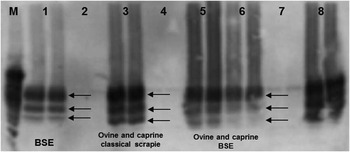
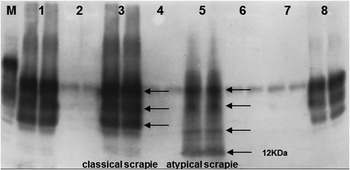
The clinical diagnosis of scrapie can be difficult because of the clinical signs, especially in the first phase, may coincide with other conditions, such as ectoparasitosis, hypomagnesemia, toxaemia of pregnancy, Visna-Maedi, listeriosis, poisoning by plants and chemicals and Aujeszky’s disease (Radostits et al., Reference Radostits, Gay and Blood2007). None of the clinical signs described above, in combination or alone, are pathognomonic for scrapie; thus, clinical diagnosis must be confirmed by laboratory investigations (Ulvund et al., Reference Ulvund, Bårdsen, Brundtland, Meling, Ersdal, Espenes and Press2007). According to the OIE Terrestrial Manual (2012), the diagnoses of classical and atypical scrapie are based on rapid tests using brainstem and cerebellum materials, respectively. It is also recommended where histological lesions are mild in severity and considered equivocal the combined use of immunohistochemistry (IHC) and Western immunoblotting (a method able to detect classical and atypical scrapie, Figures 1 and 2). In active surveillance programmes, the primary diagnosis will usually be accomplished using rapid test methods and, in the case of positive or inconclusive results, confirmatory methods should also be applied. All positive samples must be retested in the national reference laboratory using histopathology, IHC, electron microscopy to detect scrapie-associated fibrils and western blot.
Western blot analysis: different PrPSc band patterns of BSE and scrapie in cattle and small ruminants. Footnotes: ‘Courtesy of Thermo Fisher Scientific: © 2016 Thermo Fisher Scientific, Inc. Used under permission’. The arrows show the characteristic PrPSc bands after PK digestion of BSE in cattle, BSE and classical scrapie in ovine and caprine. M: molecular weight marker lane 1: BSE positive bovine obex lanes 2, 4, 7: negative samples lanes 3, 8: classical scrapie positive ovine and caprine obex lanes 5, 6: BSE positive ovine and caprine obex.

Western blot analysis: different PrPSc band patterns of classical and atypical scrapie in small ruminants. Footnotes: ‘Courtesy of Thermo Fisher Scientific: © 2016 Thermo Fisher Scientific, Inc. Used under permission’. The arrows show the characteristic PrPSc bands after PK digestion of classical and atypical scrapie in ovine and caprine. M: molecular weight marker lanes 1, 3, 8: classical scrapie positive obex lanes 2, 4, 6, 7: negative samples lane 5: atypical scrapie positive obex with characteristic 12 kDa band.

Scrapie distribution in goats
During the last years, genetic selection has been implemented in Europe and in the United States (Coseddu et al., Reference Coseddu, Agrimi, Pinto and Schudel2007; Pongolini et al., Reference Pongolini, Bergamini, Iori, Migliore, Corradi and Bassi2009; Meydan et al., Reference Meydan, Ozkan, Yildiz and Goldmann2013).
Over the period 2002 to 2012, classical scrapie in goats was detected in eight out of 27 Member States, by EU wide active surveillance data: Bulgaria, Cyprus, Greece and the United Kingdom reported only cases of classical scrapie whereas both classical scrapie and atypical scrapie were detected in Spain, Italy, Finland and France. In the same period, atypical scrapie in goats has been reported in five countries, Finland, France, Italy, Portugal and Spain (EFSA, 2014).
Although it was not possible to identify causes that can explain objectively the failure to improve the situation of classical scrapie in some Member States, the assessment of country-specific data, obtained through ad hoc surveys to Member States, and related to the implementation of surveillance and of genetic and non-genetic control measures, allowed the formulation of some hypotheses. In the case of goats the absence of genetic measures and the variability of the non-genetic measures applied as reported by EFSA (2014). In 2012, the report on the monitoring of ruminants for the presence of TSE in the EU reported a slight decline in the overall number of small ruminants tested for TSE in 2012 compared to 2011. The overall prevalence of classical scrapie cases in goats is smaller than in sheep in the EU, except in Cyprus and Greece. In particular, Cyprus appears to have a significantly higher prevalence of TSE in goats than any other Member State. The proportion of atypical scrapie cases has been growing since 2004, passing from a small share to a large majority of the TSE cases. These results, shown in the Annual Reports of member states on BSE and scrapie, should be interpreted with caution, as the monitoring requirements have changed during this period, and the testing and sampling methods have an influence on the detection of atypical cases (European Commission, 2012). However, the European Commission has also drafted a document, ‘The TSE Roadmap 2’, in which the future European strategy in the field of animal health is plotted; the main theme is represented by the recognition of prevention as the most effective tool in the fight against diseases in terms of cost/benefit (European Commission, 2010).
The goal of scrapie surveillance in the Unites States is to: eradicate the disease in sheep and goat population by finding the remaining cases (expected timeline: 2008 to 2016), high-level monitoring to ensure that no cases remain (2017 to 2020), and ongoing monitoring to meet OIE requirements (2021 and beyond). According to the OIE detection level nationally, the minimum annual collection goal for all States of America will be separated for sheep and goats, so over the period 2002 to 2014, in United States the confirmed positive cases of scrapie in goats was 39 (USDA, 2015).
Role of PRNP in small ruminants
Since the 1990s, data began to emerge about a role of genetics in the etiopathogenesis of scrapie. Species within Ruminantia carry almost one hundred alleles, which encode approximately ninety different mature PrP protein variants. This variability may represent an important barrier in the cross-species transmission of TSE. It has been fully demonstrated that the gene coding for the prion protein carries various SNPs. The role of different strains of scrapie in influencing the genetic susceptibility of small ruminants to scrapie has been known for a long time (Goldmann, Reference Goldmann2008). For these small ruminants, the distribution of some variants seems to be breed-specific, such that they appear absent in some breeds but occur in significant frequencies in others. Sheep and goats have a highly polymorphic PRNP and share the following nine amino acid polymorphisms: Q101R, G127S, H143R, N146S, R151H, R154H, R211Q, T219I and Q220H. The occurrence of identical amino acid substitutions in goats and sheep, mainly of the R154H dimorphism, is of great interest, as the association with TSE disease would be expected to be at least similar if not the same (Vaccari et al., Reference Vaccari, Panagiotidis, Acin, Peletto, Barillet, Acutis, Bossers, Langeveld, van Keulen, Sklaviadis, Badiola, Andréoletti, Groschup, Agrimi, Foster and Goldmann2009). Other genetic variations have been found in ruminant PrP protein; some precise insertions or deletions of PrP-characteristic octapeptide repeats exist. The N-terminus of PrP normally contains three copies of the octapeptide PHGGGWGQ enclosed by two nonapeptides P(Q/H)GGGGWGQ. Within this arrangement, the number of octapeptides is polymorphic. Variations in the number of octapeptide repeats have been described for Siberian goats (Vaccari et al., Reference Vaccari, Panagiotidis, Acin, Peletto, Barillet, Acutis, Bossers, Langeveld, van Keulen, Sklaviadis, Badiola, Andréoletti, Groschup, Agrimi, Foster and Goldmann2009). Goldmann et al. (Reference Goldmann, Marier, Stewart, Konold, Street, Langeveld, Windl and Ortiz-Pelaez2011) detected a three-octapeptide-repeat in goats. Goats have one additional allele with only one octapeptide (three repeats in total). It has been shown that a total number of repeats between three and seven, as found in ruminants, is associated with an increased risk of TSE susceptibility (Goldmann, Reference Goldmann2008).
Caprine PRNP polymorphisms
In goats, PRNP is highly polymorphic, and more than 50 polymorphisms within silent mutations have been described (White et al., Reference White, Herrmann-Hoesing, O’Rourke, Waldron, Rowe and Alverson2008; Vaccari et al., Reference Vaccari, Panagiotidis, Acin, Peletto, Barillet, Acutis, Bossers, Langeveld, van Keulen, Sklaviadis, Badiola, Andréoletti, Groschup, Agrimi, Foster and Goldmann2009; Fast and Groschup, Reference Fast and Groschup2013). The mutations are indicated with the two variants of the polymorphic amino acid and its position (e.g. S/P240) (White et al., Reference White, Herrmann-Hoesing, O’Rourke, Waldron, Rowe and Alverson2008). In Pakistan, where goats provide more than 50% of the total red meat production, a preliminary study has identified three variants, two silent mutations at codons 42 and 138 and S/P240, while in Kamori and Local Hairy Pakistani breeds were detected four amino acid polymorphic at codons 22, 63, 143 and 240 (Babar et al., Reference Babar, Farid, Benkel, Ahmad, Nadeem and Imran2009; Hussain et al., Reference Hussain, Babar, Imran, Haq and Javed2011). In Italian goats, different SNPs were found at codons G/V37, T/P110, G/S127, L/Q133, M/I137, I/M142 and T142, H/R143, R/H151, R/H154, P/Q168, T/P194, R/Q211, Q/K222 and S/P240 (Colussi et al., Reference Colussi, Vaccari, Rasero, Ponti, Ru, Sacchi, Caramelli, Agrimi and Acutis2010). Moreover, in an Italian case-control study, the H154 variation in goats was statistically associated with Nor98 (Colussi et al., Reference Colussi, Vaccari, Maurella, Bona, Lorenzetti, Troiano, Casalinuovo, Di Sarno, Maniaci, Zuccon, Nonno, Casalone, Mazza, Ru, Caramelli, Agrimi and Acutis2008). In Greece and Cyprus, goats represent one of the largest populations in Europe; in these countries, several scrapie cases have been registered (European Commission, 2012). In particular, many studies were carried out on Cypriot and Greek goats to select potential scrapie-protective alleles; thus, different SNPs and their frequencies were estimated. Particular significantly were N/S146, R/Q211 and Q/K222 in Greek goats and N/S146 and N/D146 in Cypriot goats (Fast and Groschup, Reference Fast and Groschup2013; Kanata et al., Reference Kanata, Humphreys-Panagiotidis, Giadinis, Papaioannou, Arsenakis and Sklaviadis2014). In the United Kingdom, Q/R101, R/H154 and N/S146 were observed. In addition, I/M142 was highly frequent in goat breeds and was associated with a partial resistance to scrapie (Goldmann et al., Reference Goldmann, Marier, Stewart, Konold, Street, Langeveld, Windl and Ortiz-Pelaez2011). The variability of PrP gene was determined in some Chinese indigenous goat breeds and ten polymorphisms (W/G102, G/S127, H/R143, N/S146, R/H154, R/Q211, I/L218, T/I219, Q/K222 and P/S240) were found (Zhou et al., Reference Zhou, Li, Xi, Li, Zhang and Zhao2013). In Mexican goats, allelic variants F/L201 in linkage with P/S240 were found, in addition to P/Q168, which has also been described in Italian, Greek and Cypriot goats (Goldmann et al., Reference Goldmann, Marier, Stewart, Konold, Street, Langeveld, Windl and Ortiz-Pelaez2011). A recent study identified five new polymorphisms of the PRNP that lead to amino acid changes (G/D74, M/T112, R/S139, L/F141 and Q/R215) and a new silent mutation at codon 122 in Spanish goats (Acín et al., Reference Acín, Martín-Burriel, Monleón, Lyahyai, Pitarch, Serrano, Monzòn, Zaragoza and Badiola2013). Kipanyula et al. (Reference Kipanyula, Chuma, Brundtland, Bårdsen, Msalya, Kifaro and Ulvund2014) described two additional new polymorphisms in Small East African and Norwegian white goats, A/V116 and Q/L220, respectively. The variants associated with a lower risk of developing classical scrapie are the H/R143, N/D146 and S146, R/H154, R/Q211 and Q/K222 alleles (White et al., Reference White, Reynolds, Waldron, Schneider and O’Rourke2012; Fast and Groschup, Reference Fast and Groschup2013; Lacroux et al., Reference Lacroux, Perrin-Chauvineau, Corbière, Aron, Aguilar-Calvo, Torres, Costes, Brémaud, Lugan, Schelcher, Barillet and Andréoletti2014). Association between PrP genotype and natural scrapie infection risk in French goats was assessed, the statistical analyses indicated that P240 mutation had no direct impact on scrapie infection risk, H154, Q211 and K222 mutation were associated with high resistance to scrapie (Corbière et al., Reference Corbière, Perrin-Chauvineau, Lacroux, Costes, Thomas, Bremaud, Martin, Lugan, Chartier, Schelcher, Barillet and Andréoletti2013). The epidemiological evidence for the resistance to natural scrapie at population associated with allelic variants D146 and S146 was provided in infected Cypriot goat (Ortiz-Pelaez et al., Reference Ortiz-Pelaez, Georgiadou, Simmons, Windl, Dawson, Arnold, Neocleous and Papasavva-Stylianou2015).
The effects of polymorphisms in caprine alleles 142M, 143R, 146S/D, 151H, 211Q and 222K were studied to evaluate their potential impact in vitro by cell-free conversion assay. The results showed that alleles 142M, 143R and 151H revealed a moderately protective effect, while 211Q reduced conversion rate. Interesting were the alleles 146D, 146S and 222K that confirmed a significant decrease in the conversion rate and their potential protective role (Eiden et al., Reference Eiden, Soto, Mettenleiter and Groschup2011). To date, several experimental scrapie infection studies on transgenic mice and goats were developed to define the specific role of the caprine polymorphisms on incubation time and resistance to scrapie and BSE agents (Acutis et al., Reference Acutis, Santagata, Colussi, Maniaci, Sacchi, Laurenza, Riina, Peletto, Zuccon, Caramelli and Rasero2012; White et al., Reference White, Reynolds, Waldron, Schneider and O’Rourke2012). Lacroux et al. (Reference Lacroux, Perrin-Chauvineau, Corbière, Aron, Aguilar-Calvo, Torres, Costes, Brémaud, Lugan, Schelcher, Barillet and Andréoletti2014) showed that under experimental oral and intracerebral (IC) inoculation of goats with I/M142 polymorphism failed to provide substantial resistance or lower risk of developing classical scrapie. In experimental infection of goats with classical caprine scrapie the S127 variant have showed that it is not protective (Dassanayake et al., Reference Dassanayake, White, Madsen-Bouterse, Schneider and O’Rourke2015). The most recent studies have revealed that K222 conferred a strong but not absolutely protective effect against classical scrapie, but the K222 variant had a pivotal protective effect on the oral susceptibility of goats to BSE (Lacroux et al., Reference Lacroux, Perrin-Chauvineau, Corbière, Aron, Aguilar-Calvo, Torres, Costes, Brémaud, Lugan, Schelcher, Barillet and Andréoletti2014; Aguilar-Calvo et al., Reference Aguilar-Calvo, Fast, Tauscher, Espinosa, Groschup, Nadeem, Goldmann, Langeveld, Bossers, Andreoletti and Torres2015). Aguilar-Calvo et al. (Reference Aguilar-Calvo, Espinosa, Pintado, Gutiérrez-Adán, Alamillo, Miranda, Prieto, Bossers, Andreoletti and Torres2014) showed that Tg K222 mice are susceptible to infections when inoculated with goat BSE isolates, even if transgenic mice expressing K222 allele are resistant to classical ovine scrapie and bovine BSE isolates. It is also important to understand the prevalence of K222 allele in the world, at least in the United States is observed a low K222 frequency in goats. The K222 allele was found in Saanen, Toggenburg and Anglo-Nubian goats, it confirms low frequency of scrapie-resistant K222 allele in British goat herds (Goldmann et al., Reference Goldmann, Ryan, Stewart, Parnham, Xicohtencatl, Fernandez and Foster2016). A high variability in the caprine prion protein gene in Northern and Southern Italian breeds (13-point mutations) were identified (Acutis et al., Reference Acutis, Martucci, D’Angelo, Peletto, Colussi, Maurella, Porcario, Iulini, Mazza, Dell’Atti, Zuccon, Corona, Martinelli, Casalone, Caramelli and Lombardi2007). An Italian study evaluated the prevalence of the K222 variant in Girgentana goats with the aim to evaluate its frequency (Migliore et al., Reference Migliore, Agnello, Chiappini, Vaccari, Mignacca, Di Marco Lo Presti, Di Domenico and Vitale2015). All these results are encouraging to the consideration of supporting breeding programmes for resistance in goats against classical scrapie in all EU Member States, as stated by the EFSA Panel on Biological Hazards in the ‘Opinion on genetic TSE resistance in goats in all EU Member States’ (EFSA, 2009).
Conclusions
The actual prevalence of classical and atypical scrapie in many countries remains unknown due to unsatisfactory passive surveillance systems, so it is not possible to understand whether freedom from infection is possible if an active surveillance plan were to be established all over the world. In summary, the numerous factors influencing the resistance or susceptibility to scrapie vary and depend on the prion strain, the genotype of the host, each flock’s breeds and geographical position, and the dose and transmission route. In the United States and Europe, programmes for selecting sheep with genotypes that confer resistance to classical scrapie have been used to eradicate and control the disease. National Scrapie Plans adopted in various EU states demonstrated that this approach is feasible and successful as a preventative measure for scrapie control. The strict application of ovine genetic selection plans and selective culling within outbreaks can bring scrapie under control.
The goat is the main economic tool in many hard environments and poor anthropological conditions. In those situations any loose of production can be crucial for the economic survival.
It has to be pointed out that the economic impact of scrapie may range from individual losses within a local marketing area to the loss of export markets.
Moreover the cost of administering an eradication or control programme can be very expensive; in these cases, funds may be better spent on achieve the indemnity for those animals that could be destroyed, as well as compensation to the producers that have to kept the flock empty for an extended time (Detwiler, Reference Detwiler1992).
For all these reasons the genetic goat scrapie control could have positive effect on different fields of agro economy.
EU policy strongly promotes scrapie eradication through the application of breeding programmes for genetic resistance. Unfortunately different European member states implement control measures with great heterogeneity. Allelic richness and genetic diversity are important for the conservation of genetic stocks. Scrapie infection studies and case reports are needed to understand the role of polymorphisms in resistance/susceptibility to classical and atypical scrapie disease. It is also necessary to know whether these mutations have effects, either alone or in association with others. In caprine classical scrapie, could be possible the detection and management of infected flocks; and breeding for resistance taking into account the evolution of the genetic structure of the population for controlling and eradicating disease. In particular, by the potential use of some allelic variants in goats for preventing new cases and outbreaks. The surveillance and control measures, together with increased genetic resistance at the population level could be guaranteed in order to obtain successful control of classical scrapie. Moreover an efficient strategy will benefit from campaigns aimed at refreshing the knowledge of scrapie among the relevant stakeholders.
For goats, no related breeding programmes have been actually developed, despite numerous indications that genetics play a specific role in goat scrapie. In light of this situation, a control strategy based on genetic selection would be advantageous. The identification of target polymorphisms in goats and their potential applicability in genetic selection programmes is possible. Among the allelic variants feasible, the best one appears to be K222, which has recently been implicated by different authors and could have a major protective effect respective to Q211 and S/D146. For this reason, K222 PRNP variants are good candidates for improving breeding programmes to control and eradicate TSEs in goats. Several studies on the association of rare PrP genotypes with scrapie susceptibility in goats are of major importance for eradication strategies, even if the frequencies of most of these PRNP variants must be investigated all over the world. The frequency of K222 represents a limit for the development of genetic selection programmes, but it could be advantageous if used to prove the efficacy of long-term control of the disease. In conclusion, genetic polymorphisms in PRNP could become a tool to control and eradicate scrapie in caprine herds and should be considered by authorities.
Acknowledgements
The authors want to thank the three anonymous referees for their valuable comments and constructive suggestions. The authors would like to thank Thermo Fisher Scientific for the delivery of Figures 1 and 2. The copyright property of figures is owned by Life Technologies Corporation (© 2016 Thermo Fisher Scientific, Inc. Used under permission; www.lifetechnologies.com).