EARLY DAYS OF INDIGIEARTH
Growing up in Gunnedah and Coonabarabran in NSW, outback Australia, Sharon remembers her Mother taking her ‘wild harvesting’. Here, she would fill her stomach with the food from the bush, ‘bush tucker’ as it is described, and gain some energy for all that her childhood had in store. These were beautiful days that she would later recall to see her through some dark and difficult times. As a child, her love of wild harvesting developed into a great passion for native foods, and a deep desire to explore the extraordinary fruits, plants, vegetables and nuts and how these could be used creatively in food.
Many years later as an adult, with an abusive partner and lack of resources, she put her energy into making a better life for herself and the future of the child she was carrying. Sharon being an Ngemba WeilwanFootnote 1 woman, drew courage from the things her Mother had taught her; how to be strong, persistent and determined, and how to have a better life than the one her Mother had endured.
With her great love and connection to her culture, Sharon established a small catering company in 1996 called Thullii Dreaming. This company also offered traditional dance performances from the Ngemba tribe and cultural awareness training. This business was small scale for the first 8 years with most of the activity taking place in her home kitchen. As the business began to grow, Sharon employed casual staff on an ad hoc basis, but most of the time the work was left to her.
The determination to change her life and succeed was met with more turmoil and Sharon lost her first child at birth in 1997, early in her career. This tragedy could have wiped her out but she summoned all the strength she had and continued. She named him Ngukirri (‘to give’), and although he was with her fleetingly he inspired her to change her life and never waste a moment in pity or regret. Ngukirri was indeed a generous giver, as he was the key to propel Sharon to more transitions and the expansion of her catering business onto a larger scale. Incorporating other products that maintained the heart of Indigenous spirit and the development of other platforms, Sharon’s business began to grow.
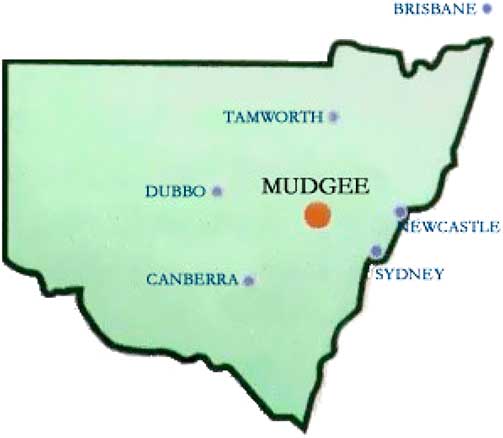
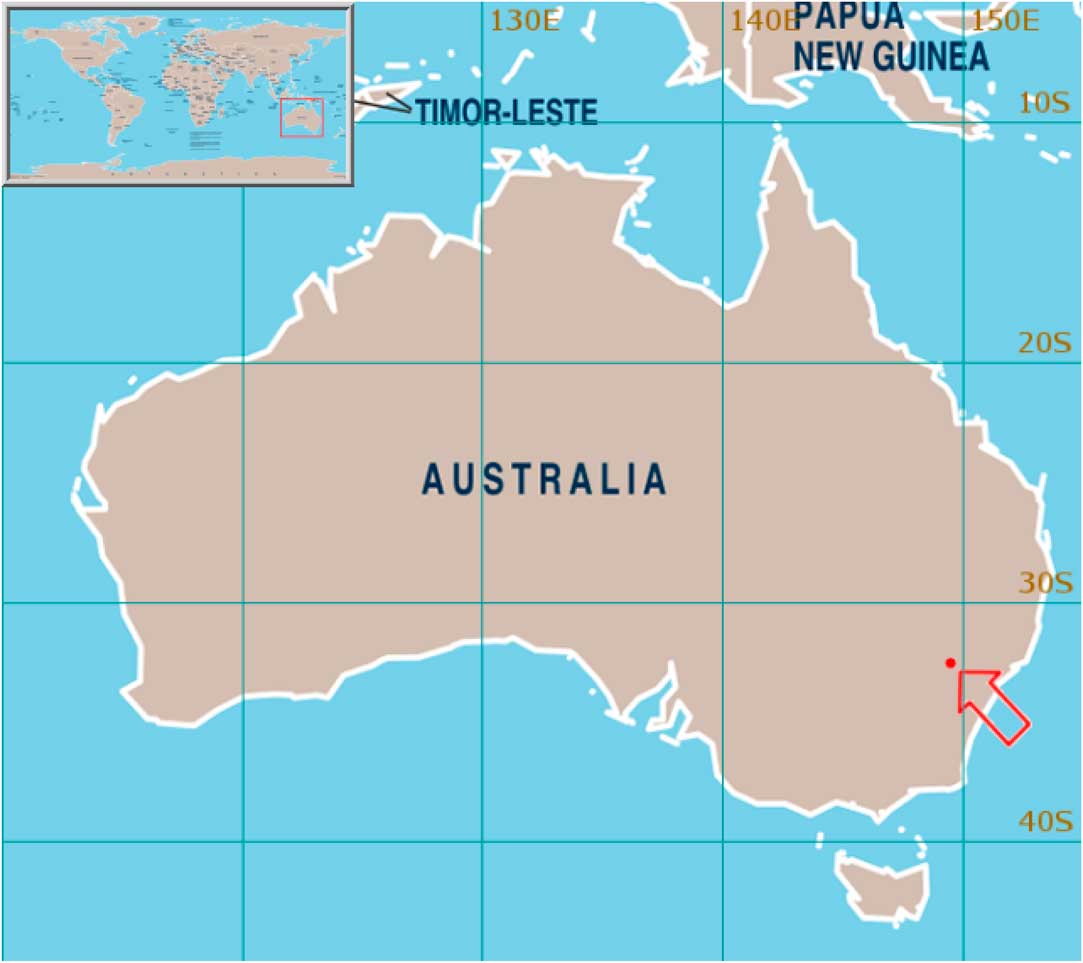
In 2010, Indigiearth was launched officially, though she had been thinking of the essence at work for growing her business by adding new and enticing products. Thulli Dreaming transformed into Indigiearth, continuing to provide cultural services, but now also offered a range of contemporary skin care and food products and natural bottled spring waterFootnote 2 . Meeting the demand for her native produce required her business to scale. Sharon now employs five full time staff and three part time staff. After developing into a larger business, Indigiearth relocated in 2012 to a regional wine and food growing area in Australia called MudgeeFootnote 3 .
Maps of Mudgee
Australia: Arrow pointing to Mudgee.
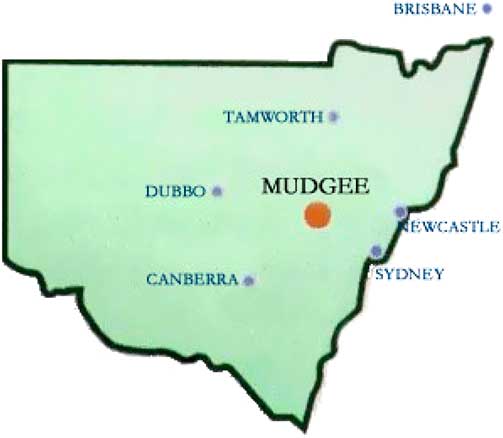
Maps of Mudgee
Australia: Arrow pointing to Mudgee.

INDIGIEARTH TODAY
Sharon did not realise she would now be labelled a social entrepreneur, with an award winning social enterprise. As someone who runs a profitable business, she was more focussed on being competitive and ‘showing we were as good as anyone else … we didn’t want any handouts …’. Sharon simply wanted to make sure the food and agricultural techniques of her people were not lost, and that her community could prosper.
This focus on applying business solutions to social problems reflects the concept of social entrepreneur that emerged in the 1980s, popularised by the work of Muhammad Yunus (the Nobel Prize winning professor who pioneered the concept of microfinance). Social entrepreneurs create organisations that seek to achieve social missions through business ventures. This automatically creates a tension for managing the business, as managers try to balance both achieving social impact yet also running a commercial business to make sure it is financially viable (to continue achieving social impact) (Smith, Gonin, & Besharov, Reference Smith, Gonin and Besharov2013). Key challengesFootnote 4 faced by social entrepreneurs in running these so-called hybrid organisations, that is, in trying to pursue both financial and social returns include structure, financing, human resources and customers. Legal structure and financing is one set of challenges, with for-profit legal structure preventing charity donations, but also enabling debt and equity financing options. Other challenges include the traditional split between having customers or beneficiaries. That is, ‘traditional businesses usually think of their consumers as customers, whereas traditional nonprofits think of their consumer base as beneficiaries. Hybrids, however, break this traditional customer-beneficiary dichotomy by providing products and services that, when consumed, produce social value. When consumption yields both revenue and social value, customers and beneficiaries may become indistinguishable’ (Battilana, Lee, Walker, & Dorsey, Reference Joshi and Chelliah2012). The other main challenge for hybrid organisations is culture and talent development. This refers to the ongoing challenge faced by social entrepreneurs such as Sharon in operating a business yet still trying to achieve social impact. As Battilana et al. (Reference Battilana, Lee, Walker and Dorsey2012) suggest, social entrepreneurs need to: ‘identify and communicate organizational values that strike a healthy balance between commitment to both social mission and effective operations. Equally important is the selection, development, and management of employees who are capable of recognizing and pursuing social and economic value’.
In building Indigiearth, Sharon received advice early in her business life from a government agency who advised her that Thullii Dreaming could only function as a ‘hobby’. This made Sharon’s life difficult as she attempted to access financial support, common to all entrepreneurs seeking to scale. As Sharon recalls ‘… When I first started there wasn’t a lot of support around in the community, so I had to find those positive things within close proximity of me, of wanting to develop and grow – there wasn’t a lot of growers. There wasn’t a lot of support for small business – Aboriginal business particularly back then. It was finding that – there wasn’t much around, so I just had to dig deep and I really believed in what I wanted to do. My passion for it just overcame anything else and just kept me going to do it’. An early contract with a large hotel chain for her cosmetic products provided Sharon with early stage capital to expand. As the Indigiearth website states:
… Our extensive range of Indigiearth Natural Earth Products has been developed specifically for the hotel and tourism sector. Launched in 2010, Indigiearth Natural Earth Products hotel amenities bring a luxurious new twist to guest care products. Using natural, certified organic ingredients from Mother Earth, we are able to promote and showcase all-Australian products within clean, contemporary packaging.
Indigiearth now exports to Europe, with plans to export to Japan and China in the New Year. Indigiearth products have a universal appeal with many of the products unique due to the knowledge applied in creating them.
Selected Indigiearth Products
Selection of native skin care products.

Selected Indigiearth Products
Selection of native skin care products.

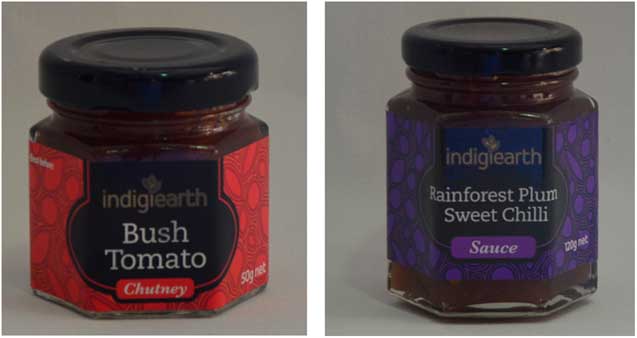
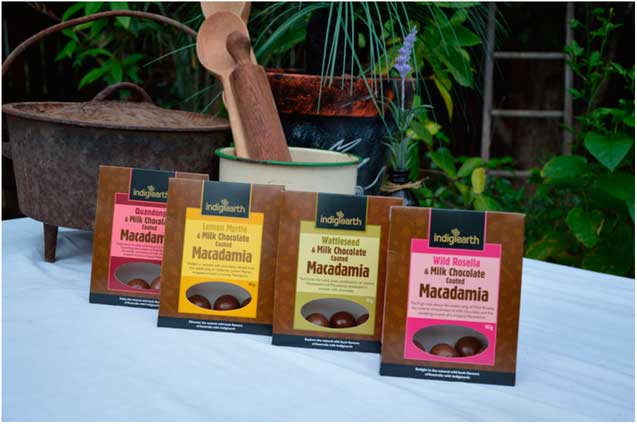
Selected Indigiearth Products
Selection of food products.

Recently, Sharon also established a partnership with BP, one of the world’s largest energy companies. In this partnership, a range of Indigiearth’s Australian native products will be sold in selected BP stores nationally. The partnership and sale of Indigiearth products will see 50 cents from each product sold at selected regional BP sites going towards supporting the Australian Literacy and Numeracy Foundation’s early language and literacy programme for Indigenous children.
Exhibit 3: BP Australia and Indigiearth partnership
Indigiearth and BP have partnered together to feature a range of Indigiearth’s Australian native products in selected BP stores nationally. The partnership and sale of Indigiearth products will see 50 cents from each product sold at selected regional BP sites going towards supporting the Australian Literacy and Numeracy Foundation’s early language and literacy programme for Indigenous children.
The new Indigenous range will be sold in regional BP stores and features food and skin care products produced and supplied by Indigiearth, with many products made with native ingredients gathered from nature in a sustainable manner to support Aboriginal communities across the country. As part of the partnership, BP has worked closely with Indigiearth to offer a broad spectrum of business support including product marketing design and national distribution logistics support. The range of products includes snack foods such as shortbread, natural infusion teas, and a range of chutneys and sauces as well as toiletry gift packs and spring water.
BP’s Reconciliation Action Plan
BP has a strong and proud history of involvement with Aboriginal and Torres Strait Islander issues for over a decade. Our Reconciliation Action Plan will formalise some of the work we have been doing in this area and continue our commitment to Indigenous programmes, leading to mutual advantage for us and the communities in which we operate. As a multinational organisation employing Australians, BP wants our Reconciliation Action Plan and overall approach to Reconciliation to reflect the unique values of Australian society. We believe that ‘mates help mates out’. BP understands that the landscape is changing and being proactive and progressive on issues affecting Aboriginal and Torres Strait Islanders is key to protecting our future. More importantly, we are motivated by a desire to make a sustainable difference. As a significant corporate organisation in Australia, BP is committed to one of the biggest issues facing Australia and we are focussed on contributing to the solution, strengthening our business and closing the gap. In doing so, we hope to unveil the possibilities for individuals and communities to reach their full potential.
VideoStories of success: Indigiearth and BP
Sharon Winsor, CEO at Indigiearth, Dean Hadden, Regional Merchandise Manager at BP and Peta Collins, Reconciliation Action Plan Program Manager at BP Australia discuss their business partnership, https://www.youtube.com/watch?v=cFdyuZMWEew (4 mins 17 s).
ON BEING AN INDIGENOUS ENTREPRENEUR
‘While Australia is one of the world’s richest countries in both absolute and per capita terms, many of its Indigenous peoples live in poverty’ (Altman, Reference Altman2007). The statistical social indicators tell a story about the difficulties Indigenous people face in a first world country.
In 2013, the median age at death of Aboriginal and Torres Strait Islander Australians varied across the selected states and territories. For men this was between 58.5 and 48.8 years. Similarly, for women the highest median age at death is 66.2 years and the lowest is 55.3 years. In comparison, non-Indigenous Australians male life expectancy is 80.1 years, while female life expectancy is 84.3 yearsFootnote 5 .
In addition, in 2011–2013 a number of states in Australia recorded a combined infant mortality rate for Aboriginal and Torres Strait Islander Australians that was around twice the rate for non-Indigenous Australians (6.1 and 3.4/1,000 live births, respectively)Footnote 6 .
The social and economic disadvantage experienced by Australia’s Indigenous population is also reflected in education and employment rates. The educational attainment rates remain at around half those for non-Indigenous people and correspondingly, the unemployment rate for Indigenous people was over three times the rate for all Australians in 2008Footnote 7 .
Foley (Reference Foley2008a, Reference Foley2008b) describes Indigenous entrepreneurship as ‘the entrepreneurial process of enterprise that encompasses the desire of an Indigenous person or persons to become self-reliant and socially cohesive’ (Peredo, Anderson, Galbraith, Hoing, & Dana, Reference Peredo, Anderson, Galbraith, Hoing and Dana2004: 3). Being an Indigenous entrepreneur is frequently motivated and necessitated by the desire to provide for family, as a survival mechanism. Foley (Reference Foley2008a, Reference Foley2008b) and other scholars (e.g., Builth, Reference Builth2002) have also traced Indigenous entrepreneurial activity back some 8,000 years, drawing upon archaeological evidence. Yet in contemporary Australia, Indigenous entrepreneurs face many more challenges to most other entrepreneurs. In addition to the usual blockers and inhibitors, dealing with access to finances, peer support and motivation, and access to innovation networks, there are a number of embedded structural problems that add complexity and difficulty (Foley, Reference Foley2006a, Reference Foley2006b). These include a lack of resources, networks and access to business mentors who can assist in giving advice and support on best practices for actualising the products and services of the Indigenous entrepreneur. In addition, there is also a level of racism experienced (Foley, Reference Foley2006a, Reference Foley2006b)Footnote 8 . As Sharon points out ‘There’s racism from other people … one example I’ve had is from a corporate company – and quite a senior executive … who had asked me why would I even identify as being Aboriginal when I could pass as being white fellow and why would I even bother’.
TRADITIONAL KNOWLEDGE AND INTELLECTUAL PROPERTY
Indigenous knowledge and Indigenous food is symbiotic, both exist because food is a manifestation of culture by acts of harvesting and consumption. In fact this is replicated the world over in many cultures and nuanced by regions and groups. Native food, hunting and cooking practices are integral to Aboriginal culture, often part of stories handed down over thousands of years, reflecting stories of country and people.
In early 1996, the now defunct Aboriginal and Torres Strait Islander Commission established an Indigenous Reference Group to find out what ‘Indigenous people consider should be protected, and how problems in this area could best be solved’. In 1999, a ground-breaking report entitled ‘Our Culture: Our Future’ was publishedFootnote 9 .
The report suggested a number of recommendations for the development and protection of Indigenous cultural and intellectual property. Most importantly the report focussed on a framework and a way forward. It is unclear how many of these recommendations were taken up, still this report provided insight into the unique legal issues inherent in protecting traditional Indigenous knowledge.
Since then, Indigenous knowledge still struggles to attract intellectual property protections which could provide many opportunities as assets for Indigenous communities. To add to the confusion, there are conflicting issues behind patent systems and how they are inadequate in addressing the unique aspects of Indigenous knowledge.
Marinova and Raven (Reference Marinova and Raven2006) identified the world’s first case of intellectual property accreditation process that allowed Indigenous people known as Kutkabubba in sandalwood territory to be recognised as ‘traditional owners’ of land and for their management and knowledge of sandalwood. In addition, they were also given a share of the profits for the commercial activities involving the sandalwood oil.
Marinova and Raven (Reference Marinova and Raven2006) reported that ‘… Indigenous knowledge is often defined as being holistic and collectively owned, and an appropriate protection should allow for maintaining the cultural and physical environment that has generated it. The current ways of protecting intellectual property are limited in their scope for recognizing indigenous rights to indigenous knowledge’ (Marinova & Raven, Reference Marinova and Raven2006: 587).
The issue of Indigenous knowledge has been the subject of much discussion and debate. The concept is one that is ingrained in the cultural aspects of many countries and is fundamentally a global issue. In 2004, the World Bank published material on development projects it supported in various countries of sub-Saharan Africa. These projects ranged from integrated childhood development to conservation and sustainable use of medicinal plants. The report demonstrates how communities from India to sub-Saharan Africa dealt with their Indigenous knowledge to address conflict, the empowerment of women, improving skills and competivenessFootnote 10 .
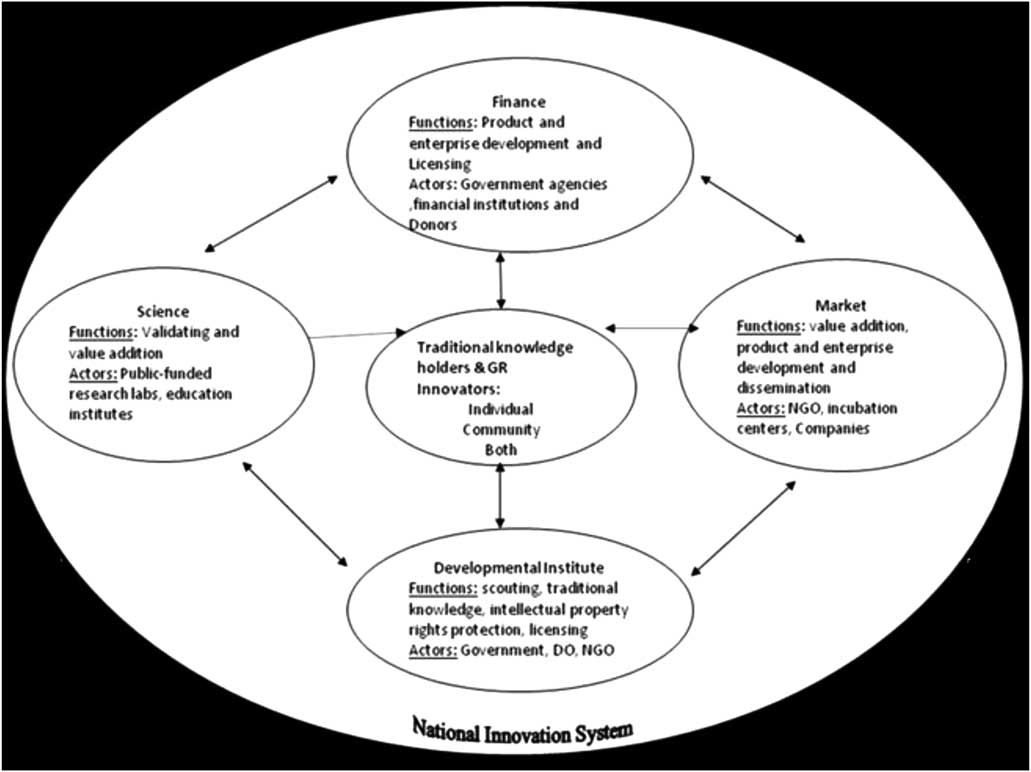
Like other Indigenous cultures across the global context, Sharon must handle with care her private knowledge of the land, her culture, and the special knowledge of harvesting and caring for crops that are critical to her business. There are multiple stakeholders involved in the commercialisation and diffusion of Indigenous knowledge, across public and private domains, that influence indigenous knowledge sharing.
Role of Stakeholders in the Diffusion and Commercialisation of Traditional Knowledge

Role of stakeholders in the diffusion and commercialisation of traditional knowledge (Joshi & Chelliah, Reference Joshi and Chelliah2013).
Sustainability
Indigenous cultures use sustainable methods for wild harvesting and have been practicing sustainable methods on the land for tens of thousands of years. With current concerns about agriculture and its effect on climate, Indigenous methods provide a key to a more sustainable future for Australia. Asafu‐Adjaye (Reference Asafu‐Adjaye1996) undertook a survey of traditional and nontraditional production activities of Indigenous communities in Cape York Peninsula in North Queensland, Australia. He concluded that traditional methods as implemented and used by Indigenous people in the region are fundamentally sustainable. He also added that poor economic prospects, if not improved, could exert pressure on Cape York Peninsula’s ecosystem and that the involvement of Indigenous people in resource management and social justice were critical.
Other Indigenous leaders in this area, such as Dermot Smyth, stated that ‘…Understanding the characteristics of caring for country, including its foundations in Indigenous culture and its contributions to national policy objectives, can contribute to new ways of thinking about Indigenous employment and other gap-closing imperatives, by nurturing other potential propitious niches as pathways to broader employment and economic opportunities’Footnote 11 . A number of benefits were identified from Indigenous people’s involvement in land management, such as employment, health and well-being, in addition to a contribution to biodiversity conservation and cultural preservation.
INTERNATIONAL MARKET GROWTH AND EXPANSION
In 2005 it was estimated that the fledgling native food industry was worth around $14 million annually. The Commonwealth Scientific and Industrial Research Organisation (CSIRO) scientists believe export for native foods is yet to reach its full potentialFootnote 12 .
One of the issues that emerges in terms of developing a healthy delivery to the international market rests on the ability to find good supply sources for the manufacture of products now in demand. Dr. Ryder from the CSIRO reported that the export potential is yet to be realised because it cannot be guaranteed regular supplies of high-quality produce. Another critical issue identified was the need to find better ways to commercialise native foods before they are appropriated overseas and sold back to Australia and other export markets.
There are unique issues that Sharon may face in the international expansion of Indigiearth, especially in obtaining the food and cosmetic ingredients that are short in supply and require specialised knowledge for their production. In addition, Sharon needs to consider bringing on board the right type of investors and partners. These issues build a complex momentum where Sharon needs to consider the tension between maintaining traditional agricultural techniques that are sustainable and suited to the Australian landscape. At the same time this great opportunity for expansion appears in tension with the desire to scale and build a sustainable supply chain.
Overseas markets interested in native foods
There is a lot of interest in Australian native food coming from many countries including Europe, America and the Asian countries.
The Japanese have shown considerable interest and now Austrade Japan is working to create a special website featuring Australian Native Food Industry Limited’s (ANFIL) native foods information translated into Japanese. This Japanese website is still under construction and we will let you know once it is ready.
For Australian growers and farmers this is an exciting industry to be a part of, whilst it is still pioneering days the facts are that all the research that is being done points to the considerable health aspects and benefits of native food. We are considered a ‘green’ country and the pressure to provide more and more native food will increase in the years to come. It is a great industry to be a part of.
The ANFIL committee and the Indigenous Advisory Committee are investigating a lot of issues that arise from native food going overseas and the pressures to keep up the demand. But the cultural significance of these products must be considered. Many countries who are keen to promote their native food, but also wish to protect it, are now exploring the best ways to do so. This will be an ongoing issue for many years to come.
(April 18, 2014/ANFIL News, Native Food)
http://www.anfil.org.au/interest-in-australian-native-food-from-overseas/
http://www.abc.net.au/local/stories/2014/08/25/4073937.htm
http://www.clw.csiro.au/publications/farming_ahead/2005/7-9%20FA%20MAY%202005_160.pdf
http://www.anfil.org.au/publications-media/research-projects/
http://www.austrade.gov.au/Export/Export-Markets/Countries/China/Market-profile#.VHqxT8txlMs)
http://www.abc.net.au/science/articles/2000/05/09/124369.htm
Next steps: As Sharon develops a strategy for international expansion, she requires additional investors in order to finance a growing business. These finances are required to purchase new equipment for the production and packaging; also more staff to access more suppliers and development of a larger-scale sales framework. After being labelled as a social enterprise, and winning a number of prestigious awards, is Sharon is ready to embrace expansion?
Awards
2013 NSW Business Leader
NSW Business Chamber

Awards
2013 Central West Business Leader
Central West Business awards 2010 Winner

Awards
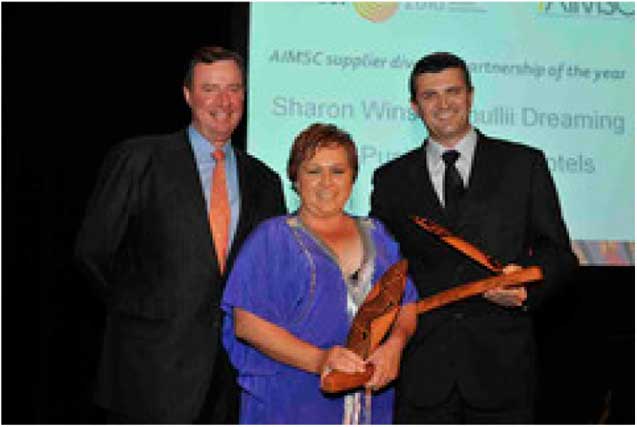
Supplier Diversity partnership of the year for work done with Marriott hotel

Summary, Sharon faces the following critical questions:
1. How can Sharon ensure she continues to be a social entrepreneur and achieve both financial and social returns? What impact does this have on the organisation’s management, human resources, strategy and structures?
2. How should Sharon structure her operations to ensure the supply of native foods, in gaining more certainty in the value chain, but also to ensure the protection of traditional knowledge?
3. Should she consider other legal structures to meet her aim of ‘shared value’ and attract ‘impact investment’?
4. How can Indigiearth protect its competitive advantage, and traditional knowledge, in the face of increased local agricultural competition, as Indigenous crops increase in value?
ACKNOWLEDGEMENT
The Authors would like to thank Ms Sharon Windsor for her contribution and collaboration. UTS HREC 2011000370.
Supplementary Video Material
To view supplementary video material for this article, please visit https://doi.org/10.1017/jmo.2017.24
Appendix TEACHING NOTE – INDIGIEARTH CASE STUDY
Synopsis
This case study tells the story of an Indigenous entrepreneur who has created one of Australia’s leading businesses in native foods – sourcing, selling and value adding. The firm has been operating for 18 years as Thullii Dreaming and 4 years as Indigiearth. The firm now finds itself facing international expansion opportunities, with the challenge of maintaining its commitment to protecting Indigenous knowledge and agricultural practices. Labelled by many stakeholders as a social enterprise (rather than by the founder), the privately owned for-profit firm and its founder now consider how it can develop a value chain that maintains a mission of ‘shared value’, manage the commercialisation of Indigenous knowledge and also engage with the newly emerging market of impact investors.
Teaching purpose
This teaching case study is designed for a variety of courses in the areas of social entrepreneurship, entrepreneurship and innovation, strategy and introductory management. It is an introductory case study that raises many issues around entrepreneurship and strategy, opening up discussions and debates that can be later pursued throughout a course of study. It would be useful as a module on value creation and capture, scaling entrepreneurial enterprises, supply chain management and the nature of social entrepreneurship. This packet includes links to publicly available videos on the entrepreneur, the protagonist in the case study, in addition to background videos on Indigenous issues in Australia. We also include suggestions for supporting academic journal articles for connections between theory and practice.
The following document highlights the three teaching objectives we have identified while researching the case study. We also share the sequencing of activities and logic of discussions that develop in a classroom.
1. Scaling of social enterprises while maintaining profit and purpose
The case study illustrates the scale and size of social enterprises and how the social mission (of Indigenous development and protection of Indigenous knowledge) is a competitive advantage. Discussions around how dual missions function in an organisational form (often called ‘hybrid organisation’) can commence class discussions, in addition to the emergence of new legal corporate forms for such hybrid organisations (e.g., Benefit Corporation in the United States and Community Interest Corporations in the United Kingdom). Selecting a legal structure and form is a common challenge for social enterprises with significant impact on investment and growth options. This connects to the recent global emergence of impact investors, and access to impact investing markets, as another consideration for social enterprises seeking scale. Other challenges include human resource management and recruitment, and the management of customers and beneficiaries (when they are the same or different groups of people).
2. Value chains and the development of ‘shared value’ as a competitive strategy
The case study illustrates the concept of ‘shared value’ (Porter & Kramer, 2011) as a competitive advantage – ‘a must do’, rather than a ‘nice to do’. It also situates ‘shared value’ as an opportunity (and challenge) to create and capture value across a value chain, reflective of current discussions around how to operationalise this concept. It illustrates how pursuing shared value is much more than social entrepreneurs trying to balance financial and social goals (Pirson, Reference Pirson2012; see also Austin, Stevenson, & Wei-Skillern, Reference Austin, Stevenson and Wei-Skillern2006). Shared value can be a competitive strategy for how to differentiate and legitimate hybrid organisations against traditional for-profit firms in existing markets, especially in building barriers to entry, and also in creating new markets. As a strategy, shared value involves reconceiving products and markets, redefining productivity in the value chain and enabling local cluster development.
3. Commercialisation of Indigenous knowledge
The case study illustrates broader economic and societal issues of the commercialisation of Indigenous knowledge facing many countries. While Indigiearth does not have intellectual property protections, it does have social legitimacy in being a 100% owned Indigenous business. The role and views of different stakeholders in the commercialisation and diffusion of Indigenous knowledge may be explored through this case study, raising debates on the ethics and morals of such commercialisation, with tensions and desires for economic and social development.
Reading Assignments for students
Battiliana, J., Lee, M., Walker, J., & Dorsey, C. (2012). In search of the hybrid ideal. Stanford Social Innovation Review, 10(3), 50-55.
Porter, M. E., & Kramer, M. R. (2011). Creating shared value. Harvard business review, 89(1/2), 62-77.
Kellogg, J., Higgs, C., & Lila, M. A. (2011). Prospects for Commercialisation of an Alaska Native Wild Resource as a Commodity Crop. Journal of Entrepreneurship, 20(1), 77-101.
Walsh, F., & Douglas, J. (2011). No bush foods without people: the essential human dimension to the sustainability of trade in native plant products from desert Australia. The Rangeland Journal, 33(4), 395-416.
Teaching plan
Students should come to class having read the case study and the suggested academic readings. Discussion should commence with the challenges facing social enterprises, moving onto shared value as a competitive strategy and finally broader issues surrounding the commercialisation of Indigenous knowledge.
1. Scaling of social enterprises while maintaining profit and purpose
Q: What makes Indigiearth a social enterprise?
Discuss the integration of profit and purpose for Indigiearth in terms of social enterprises being Mission centric, Mission-related social enterprise or Unrelated social enterprise. Suggest to students the case illustrates the scale and profitability possible by so-labelled social enterprises (similar to case studies on Grameen Phone – labelled a ‘social enterprise’ and now one of the biggest telecommunication providers in Bangladesh).
Q: What are the challenges facing Indigiearth?
The instructor then needs to shift participants towards identifying common challenges for hybrids (as described by Battilana et al., Reference Battilana, Lee, Walker and Dorsey2012). Asking questions such as:
∙ What type of staff are needed in Indigiearth?
Those that appreciate dual mission …
∙ What is the legal structure of Indigiearth? How might this influence the organisation?
For-profit and not charity means tax-breaks for donors not available; difficult to secure investors who understand dual mission and not only seek to maximise profit.
The instructor may then like to move into topical discussion on the emerging forms of legal structures becoming available to organisations who are pursuing a dual mission. Do we need different legal structures that make it possible for traditional not-for-profits to set up other entities, such as social enterprises, so they can access debt and equity finance? For example, several efforts are under way to establish new types of legal structures for such hybrids.
∙ In the United States, there are forms such as the Low-Profit Limited Liability Company: Low-Profit Limited Liability Companies are a hybrid structure that meets the needs of a social entrepreneur who does not want to run their business along the lines of a traditional profit or not-for-profit business. According to Americans for Community Development: ‘The L3C is a new form of limited liability company (LLC) which combines the best features of a for-profit LLC with the socially beneficial aspects of a nonprofit. It is the for-profit with a nonprofit soul’, http://www.socialentrepreneurshiplaw.com/l3cs-limited-liability-low-profit-companies.html
∙ The Benefit Corporation: Benefit Corporations are unlike other profit-driven companies as their focus is not just on profits but on taking into account the public benefits that are felt by society and the environment when their boards make decisions. These companies are also audited on how well they do in achieving their social goals.
∙ The Flexible Purpose Corporation: Flexible Purpose Corporations must state at least one ‘special purpose’ in its charter. These could be promoting environmental sustainability or minimising adverse effects on its employees http://www.law.berkeley.edu/files/bclbe/Berkeley_Handout_1182011_-_1.pdf
∙ In the United Kingdom there is the Community Interest Company: is a new type of company introduced by the UK government in 2005 under the Companies (Audit, Investigations and Community Enterprise) Act 2004, designed for social enterprises that want to use their profits and assets for the public good. See http://en.wikipedia.org/wiki/Community_interest_company
Move into a discussion, that a common entrepreneurial challenge is scaling and securing investment for that growth.
Q: What types of financing are available for Sharon to consider?
This will depend on the legal structure, but Sharon could consider angel investors, venture capitalists (who take a share of the company), banks (but they want commercial returns and contracts – not a social mission). Recent national research by two Australian universities (University of Technology Sydney and Charles Sturt University) have shown that very few Aboriginal enterprises have received bank loans and that often their businesses are created by working another job at the same time, credit card or small savings (Collins, Morrison, Krivokapic-Skoko, & Butler, Reference Collins, Morrison, Krivokapic-Skoko and Butler2014).
Raise student awareness of the emerging impact investing market, where impact investors are seeking deals in which they are achieving both profit and purpose. Impact investing seeks a social and financial return, and is a market estimated to be worth $650 billion by 2020 (according to some reports). It is not an asset class, but rather a lens through which to make investment decisions. You may ask: but does not every investment have impact in terms of creating jobs, wealth and so on? Impact investing has intentionality (investments motivated by the social and/or environmental return), and requires measurement of outcomes (social impact and financial return). Globally, there has been a lot of hype and buzz around this topic, making it on to the agenda of the recent G8 meeting, as governments and organisations seek to mobilise more capital to address the world’s pressing and wicked problems. Although there is an emerging global infrastructure for this sector (e.g., the Global Impact Investment Ratings System [http://www.giirs.org/]), at this stage the impact investment ecosystem and its development is best understood at the country and sector level. More information can be found here (http://www3.weforum.org/docs/WEF_II_FromMarginsMainstream_Report_2013.pdf).
2. Value chains and the development of ‘shared value’ as a competitive strategy
Q: What is the competitive advantage of Indigiearth?
Participants may respond it was its first mover advantage; responding to industry demand for native foods; low barriers to entry … teasing out that the combination of social purpose and profit make it competitive and a barrier to entry for others.
Move participants on to discussing Porter and Kramer’s (2011) notion of ‘shared value’.
Q: How can pursuing shared value be a competitive strategy for Indigiearth?
Suggest to participants that shared value can be a competitive strategy for how to differentiate and legitimate hybrid organisations against traditional for-profit firms in existing markets, especially in building barriers to entry, and also in creating new markets. As a strategy, shared value involves reconceiving products and markets, redefining productivity in the value chain and enabling local cluster development.
Play video: Case study: BP Australia and Indigiearth (4 mins 16 sec)
The inspiration for Indigiearth came about 10 years ago when owner and founder Sharon Winsor set about showcasing her Indigenous culture and heritage. The proud Ngemba woman was also anxious to provide a solid income for her family. Indigiearth was certified by Supply Nation in November 2011.
http://www.supplynation.org.au/resources/BP_Indigiearth
In growing her business, Sharon has unknowingly embraced the concept of ‘shared value’ (https://hbr.org/2011/01/the-big-idea-creating-shared-value). Sharon has promoted Indigenous communities and the varieties of foods and agricultural techniques that are slowly being lost. Indigiearth also supports growth in the community through employment and business opportunities and continues to grow, educating others about Indigenous culture, including the development of an Indigenous dance company that is also a social enterprise, performing for the likes of Oprah, Tyra Banks, Rugby World Cup and various commercial television stations and government events.
Q: What are the opportunities for Indigiearth around establishing shared value across the value chain?
Participants to consider how to structure arrangements with suppliers or to establish own supply/farming. There is no one right answer here; participants to consider the advantages and disadvantages of each option suggested in regards to who creates and who captures value.
3. Commercialising Indigenous knowledge
The discussion on value chains and supply should then prime participants to think about the challenge of protecting and commercialising Indigenous knowledge and products. Refer participants to the assigned reading on similar debates occurring in the United States regarding Alaskan berries. Commercialisation of traditional knowledge inherently involves the need to look at issues of ‘validation, value addition, product and enterprise development, intellectual property rights protection, licensing and diffusion of the knowledge/innovation. Each of these activities is carried out by varied agencies which network with the knowledge holders, innovators and among themselves and support the traditional knowledge diffusion’ (Joshi & Chelliah, Reference Joshi and Chelliah2013: 65).
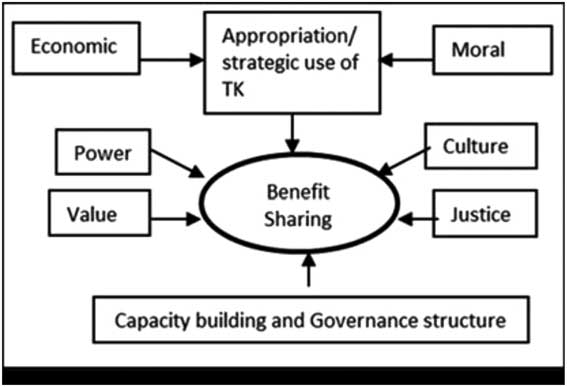
Some of these issues are explored by Joshi and Chelliah (Reference Joshi and Chelliah2013) who explain the intricate connections in understanding culture and traditional knowledge systems. They developed two models that help navigate the complex issues involved in understanding the commercialisation of traditional knowledge. They identify key success factors that influence the benefit of sharing as moral, economic, justice, culture, value and bargaining power. In developing a model that displays the key factors that need to be taken into consideration the authors help unravel the multiple stakeholders across public and private domains. See Teaching Exhibit 1.
Factors influencing equitable knowledge sharing mechanism (Joshi & Chelliah, Reference Joshi and Chelliah2013: 64).