Surgical site infections (SSIs) are among the most common healthcare-associated infections in the United States.Reference Magill, O’Leary and Janelle1 The most recent Centers for Disease Control and Prevention (CDC) guidelines for the prevention of SSI recommend against administration of prophylactic antibiotics in clean surgeries after the surgical incision is closed, even in the presence of surgical drains,Reference Berrios-Torres, Umscheid and Bratzler2 due to lack of data showing the benefit of this practice. Other organizations recommend discontinuing prophylactic antibiotics at the completion of surgery.3-Reference Shaffer, Baisden, Fernand and Matz5 In practice, compliance with antibiotic discontinuation within 24 hours of surgery varied from 58% to 100% in a study of National Surgical Quality Improvement Program hospitals.Reference Ingraham, Cohen and Bilimoria6,Reference Wang, Chen, Ward and Bhattacharyya7
In a recent systematic review, the pooled incidence of SSI after spine surgery was 3.1% (range, 0.2%–16.1%). Variation in SSI rates is associated with the indication for surgery (eg, scoliosis), instrumentation, duration of surgery, and surgical approach.Reference Zhou, Wang, Huo, Xiong, Kang and Xue8 Information in the literature regarding postoperative antibiotic prophylaxis is limited,Reference Kakimaru, Kono, Matsusaki, Iwata and Uchio9-Reference Maciejczak, Wolan-Nieroda, Walaszek, Kolpa and Wolak16 and information on postdischarge antibiotic prophylaxisReference Hellbusch, Helzer-Julin and Doran17 and its impact on SSI rates after spinal fusion procedures is sparse. Most studies analyzing the impact of postoperative or postdischarge antibiotics report no difference in SSI rates between short versus prolonged antibiotic prophylaxis after spine procedures.Reference Kakimaru, Kono, Matsusaki, Iwata and Uchio9-Reference Marimuthu, Abraham, Ravichandran and Achimuthu15,Reference Hellbusch, Helzer-Julin and Doran17 Overall, high-quality data are lacking because these studies in general were underpowered to detect a difference in SSI rates given small sample sizes and low incidence of SSI.
A concern with the use of postoperative antibiotic prophylaxis is exposure of patients to unnecessary antibiotics. Unnecessary antibiotics may result in additional costs, adverse drug events, selection of antibiotic-resistant bacteria,Reference Harbarth, Samore, Lichtenberg and Carmeli18 and the development of Clostridioides difficile infection.Reference Poeran, Mazumdar and Rasul19-Reference Balch, Wendelboe, Vesely and Bratzler22 The goals of our study were to determine the prevalence of postdischarge prophylactic antibiotic use and to identify patient characteristics, operative factors, and surgeon characteristics associated with use in a cohort of adults undergoing spinal fusion at 3 academically affiliated hospital study sites.
Methods
Data source
We conducted a retrospective cohort study using electronic health record (EHR) and billing data from 6 hospitals at 3 study sites in different geographic regions of the country. Site 1 included 1 academic and 1 community hospital; site 2 included 1 academic hospital; and site 3 comprised 1 academic and 2 community hospitals. Information was collected using queries of the respective hospital EHR systems and from manual medical record reviews.
Spinal fusion population
We identified spinal fusion operations among adults aged ≥18 years admitted between July 1, 2011 and June 30, 2015. Spinal fusion or refusion was defined using International Classification of Diseases, 9 th Revision, Clinical Modification (ICD-9-CM) procedure codes 81.00–81.08 and 81.30–81.39, respectively. We verified the spinal fusion procedures using provider Current Procedural Terminology, 4th edition (CPT-4) coding for spinal fusion (Appendix Table 1 online) for 1 study site and by reviewing the operating room log for the surgeon description and anesthesia duration for the remaining 2 sites.
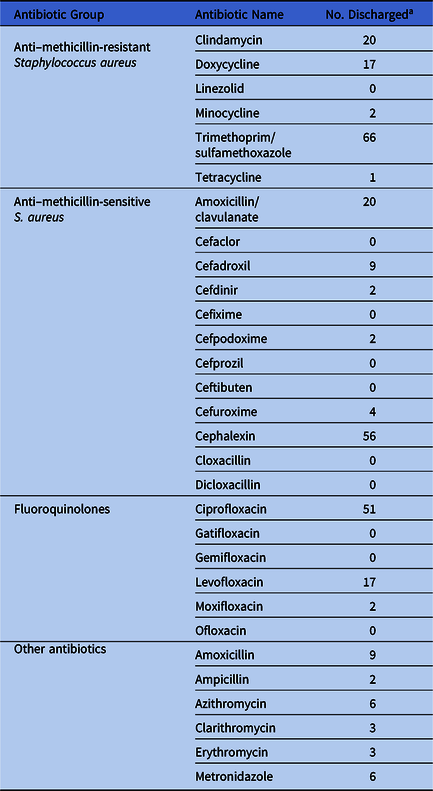
Categorization of Postdischarge Antibiotics by Class or Activity against Specific Organisms

a There were 298 prophylactic discharge antibiotics among 289 admissions with prophylactic discharge antibiotics.
We excluded surgical admissions for patients who would likely have had antibiotics prescribed at discharge for therapeutic indications based on ICD-9-CM diagnosis codes during the fusion admission (gunshot wound, motor vehicle accident, SSI/cellulitis, pneumonia, urinary tract infection, sepsis, upper respiratory tract bacterial infections, serious gastrointestinal infections). We also excluded admissions for which a patient was discharged on intravenous (IV) antibiotics (Appendix Table 2 online), admissions lacking ICD-9-CM diagnosis codes (due to lack of comorbidity information), and admissions with a length of stay of >90 days, and/or admissions during which the patient died during the spinal fusion surgical admission.
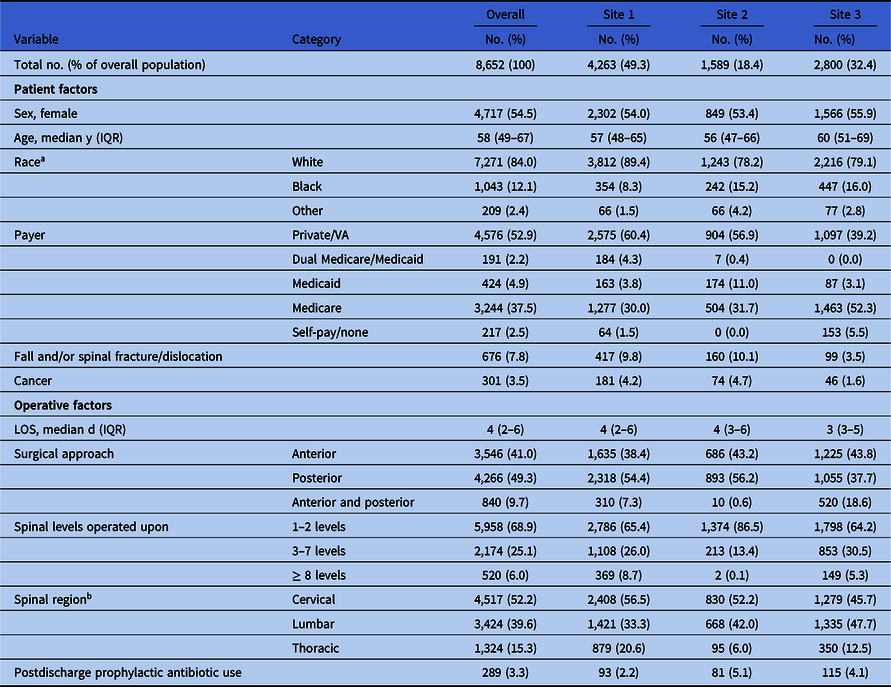
Characteristics of 8,652 Spinal Fusion Admissions by Study Site

Note. LOS, length of stay; IQR, interquartile range; VA, Veterans’ Affairs.
a 129 (1.5%) admissions were missing race.
b Categories were not mutually exclusive. 600 (6.9%) patients had >1 spinal region operated upon.
Postdischarge prophylactic antibiotics
Prophylactic antibiotics were defined as oral antibiotics prescribed at discharge in the absence of an infectious diagnosis during the surgical admission. If the patient was admitted on oral antibiotic therapy and the same antibiotic was prescribed at discharge, the antibiotic was not considered prophylactic. We characterized the distribution of individual antibiotics and grouped antibiotics based on activity against specific organisms or by class (Table 1).
Factors associated with prophylactic antibiotic use
Potential factors associated with prophylactic antibiotic use included patient factors (eg, demographics and comorbiditiesReference Elixhauser, Steiner, Harris and Coffey23), operative factors, and surgeon characteristics with clinical or biological plausibility for association with antibiotic use and/or risk for SSI. Comorbidities were defined using ICD-9-CM diagnosis codesReference Elixhauser, Steiner, Harris and Coffey23 and operative factors were defined using ICD-9-CM diagnosis and procedure codes during the surgical admission (Appendix Table 3 online). Demographics and other surgical details were abstracted from the medical records. Morbid obesity was defined as a body mass index ≥40 kg/m2. Surgeon details, including board certification and specialty, were determined using the institution and Medicare physician directories.
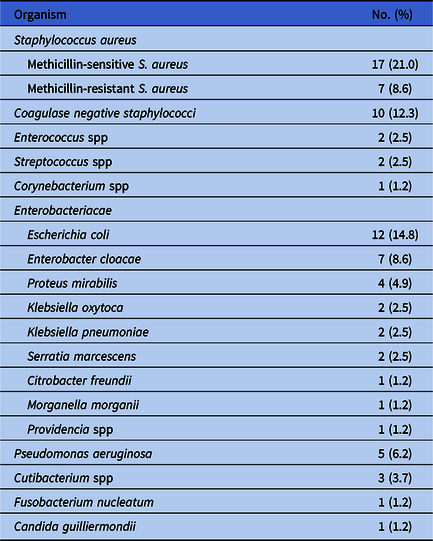
Organisms Identified From 77 Patients With Surgical Site Infection After Spinal Fusiona

a Of 77 surgical site infections, 1 was not cultured, 7 were cultured with no growth, and 69 had a positive culture. The table presents the 81 organisms identified among the 69 infections with a positive culture; 7 cases had 2 organisms isolated, 1 case had 3 organisms, and 1 case had 4 organisms isolated.
Complications after spinal fusion
SSIs within 90 days of the spinal operation were identified via standard hospital infection control surveillance using CDC National Healthcare Safety Network (NHSN) criteria.24 We captured C. difficile infection (ICD-9-CM diagnosis code 008.45) through 90 days after surgery.
Statistical analyses
Univariate risk factors for prophylactic antibiotic use were evaluated using the χ2 test, the Fisher’s exact test, logistic regression, or the Kruskal-Wallis test, as appropriate. Patient and operative factors with P < .20 in univariate analysis were included along with study site in a multivariable logistic regression model with backward selection, with cutoff of P < .10 for inclusion. Multicollinearity was assessed with tolerance values to ensure independence of explanatory variables. Once the final patient and operative factors were identified, we developed a hierarchical generalized linear model adding surgeon factors as a second level. We used a random intercept at the level of the study site and Laplace estimation techniques.Reference Ene, Leighton, Blue and Bell25 We performed likelihood ratio tests to assess model fit between the nested models. Data management was performed using REDCap and SAS version 9.4 software (SAS Institute, Cary, NC); statistical analyses were performed using SAS. Post hoc power calculations were performed using Power Analysis and Sample Size (PASS) version 14 software (NCSS, Kaysville, UT). This study was approved by the human research protection offices of the 3 institutions.
Results
The initial study cohort included 9,502 spinal fusion admissions. In total, 850 admissions were excluded for the following reasons: infection coded during the fusion admission (n = 599), spinal fusion was not performed based upon further review (n = 235), or patient was discharged on IV antibiotics (n = 16). The final study cohort included 8,652 spinal fusion admissions: 4,263 (49.3%) at study site 1; 1,589 (18.4%) at site 2; and 2,800 (32.4%) at site 3. None of the sites performed routine detection of intranasal Staphylococcus aureus colonization or decolonization, and only site 2 recommended preoperative bathing with chlorhexidine for spinal fusion patients during the study period.
In the final cohort of fusion admissions, the median age of patients was 58 years (interquartile range, 49–67); 4,717 (54.5%) were female; 676 (7.8%) had trauma (ie, sustained a fracture/dislocation and/or fall); and 301 (3.5%) had underlying cancer (Table 2).
Prevalence and class of prophylactic antibiotics
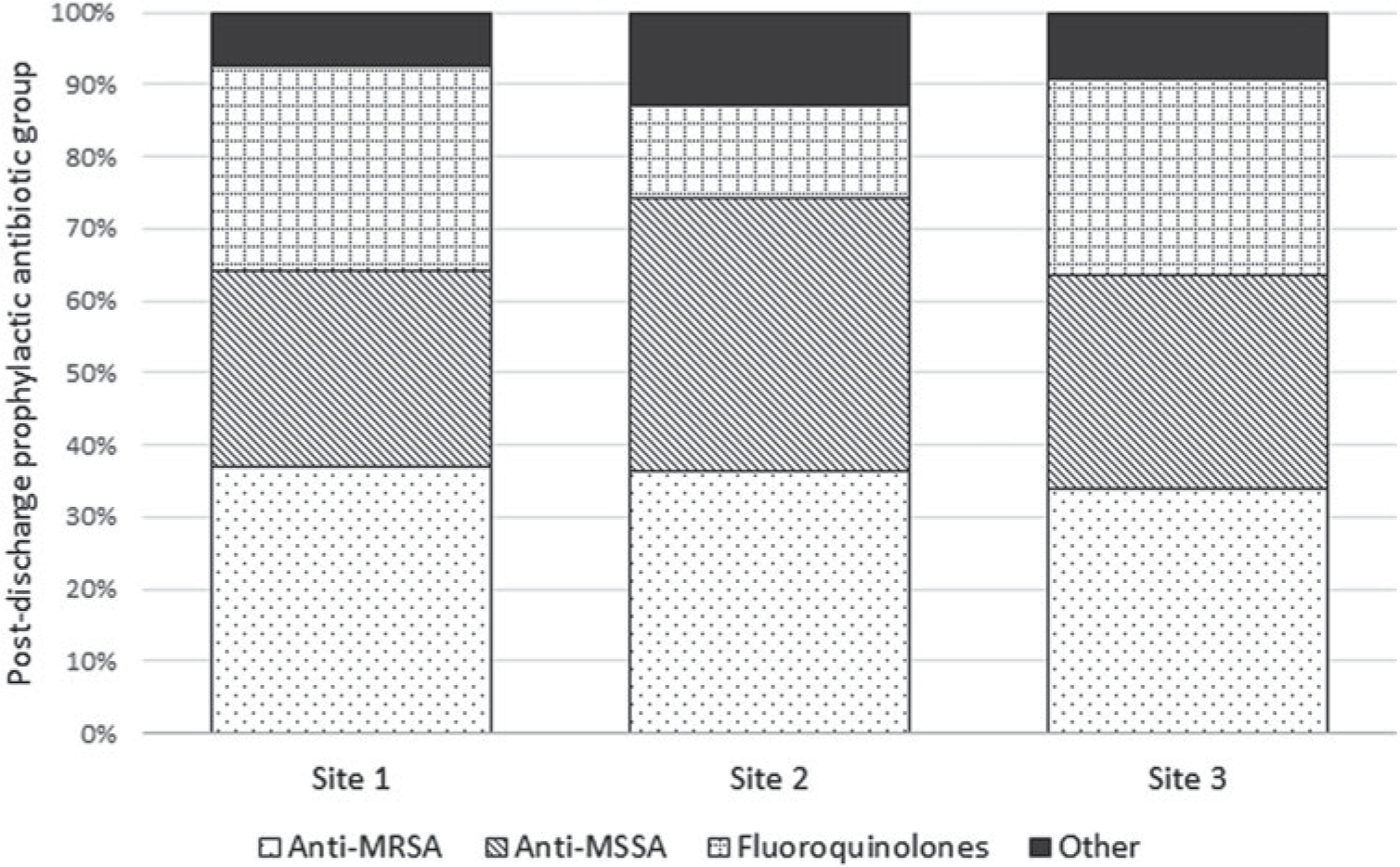
Prophylactic antibiotics were prescribed post discharge after 289 spinal fusion admissions (3.3%); after 93 admissions (2.2%) at site 1, 81 admissions (5.1%) at site 2, and 115 admissions (4.1%) at site 3 (P < .001). The most commonly prescribed prophylactic antibiotics varied by study site: at site 1, ciprofloxacin (27.4%), trimethoprim/sulfamethoxazole (26.3%), and cephalexin (22.1%) were most commonly prescribed. At site 2, cephalexin (18.8%), doxycycline (14.1%), and cefadroxil, levofloxacin, and trimethoprim/sulfamethoxazole were most commonly prescribed (all at 10.6%). At site 3, trimethoprim/sulfamethoxazole (27.1%), ciprofloxacin (19.5%), and cephalexin (16.1%) were most commonly prescribed. The distribution of antibiotics prescribed overall and by site and activity/class are presented in Table 1 and Figure 1. Antibiotics were prescribed by 16 of 33 spine surgeons (48%) at site 1, 7 of 11 surgeons (64%) at site 2, and 19 of 26 surgeons (73%) at site 3.
Distribution of postdischarge prophylactic antibiotic group after spinal fusion by study site. Note. MRSA, methicillin-resistant Staphylococcus aureus; MSSA, methicillin-sensitive S. aureus.

Of the discharges in patients given a prescription for an anti-MRSA antibiotic (Table 1), 63 of 106 (59%) received intraoperative vancomycin or clindamycin prophylaxis. In contrast, of the discharges among patients given a prescription for a first-generation cephalosporin or amoxicillin/ampicillin/amoxicillin-clavulanate, 89 of 96 (93%) received intraoperative cefazolin prophylaxis.
Incidence of surgical site infection and C. difficile infection
Overall, 77 (0.9%) SSIs were detected by infection preventionists within 90 days of the spinal fusion procedure: 13 (16.9%) were classified as superficial incisional; 27 (35.1%) as deep incisional; and 37 (48.1%) as organ-space SSIs. Cultures were performed on 76 of the 77 patients, and 69 (90.8%) were positive for 1 or more organisms (Table 3). Postdischarge prophylactic antibiotic use was not associated with SSI following spinal fusion: 5 of 289 (1.7%) with versus 72 of 8,363 (0.9%) without (P = .114). In total, 20 (0.2%) patients were coded for C. difficile infection within 90 days after surgery: 1 patient (0.3%) versus 19 patients (0.2%) among admissions with and without postdischarge prophylactic antibiotics, respectively (P = .494).
Factors associated with prophylactic antibiotic use
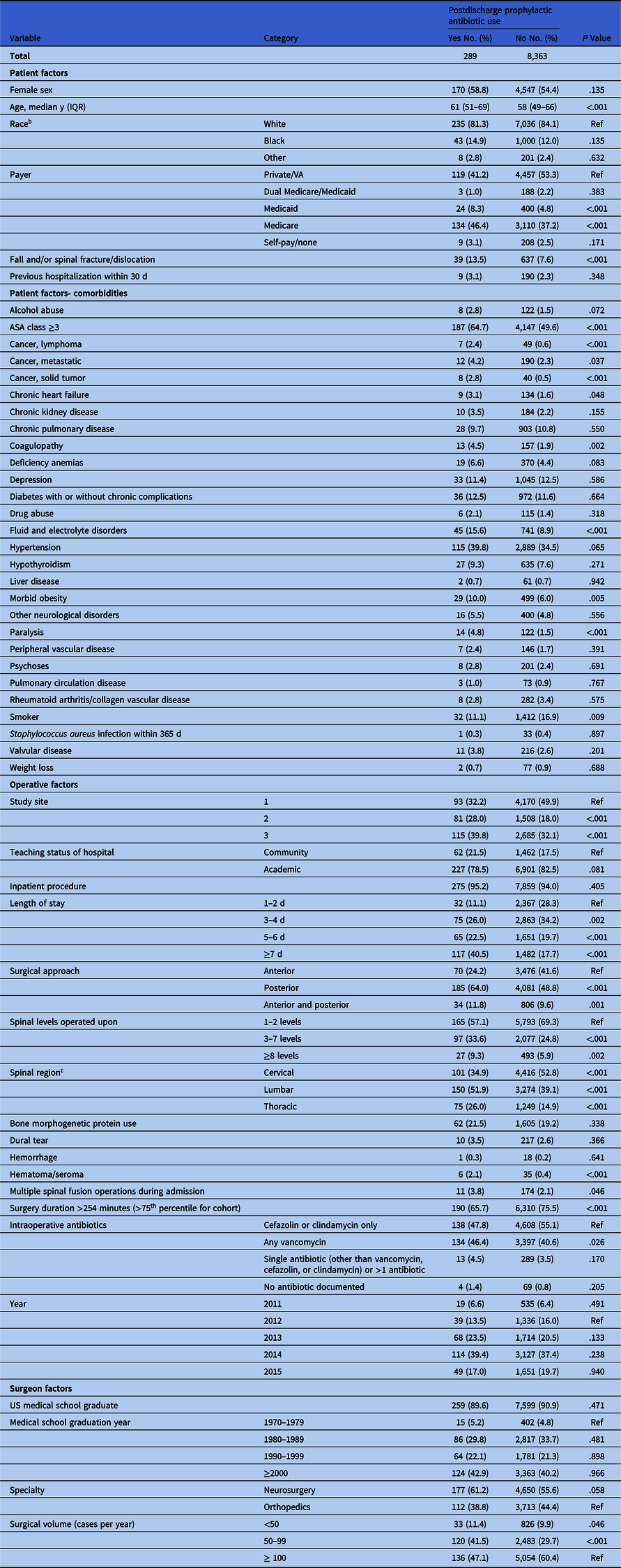
In univariate analysis, utilization of prophylactic antibiotics varied by study site. Compared with patients who did not receive postdischarge prophylactic antibiotics, those who received postdischarge prophylactic antibiotics were more likely to be female, to be older, to be of black race, to have Medicare or Medicaid health insurance, to have had fall and/or spinal fracture/dislocation, and to have multiple comorbidities (Table 4). Smokers were less likely to receive postdischarge prophylactic antibiotics. Operative factors associated with increased likelihood of postdischarge antibiotics included surgery at a community hospital, longer surgical admission length of stay, posterior surgical approach, surgery on the lumbar and thoracic regions, surgery involving increased number of spinal levels, hematoma/seroma during the surgical admission, multiple fusion operations during the surgical admission, and longer surgery duration. Use of vancomycin perioperative prophylaxis, compared with cefazolin or clindamycin only, was associated with increased likelihood of postdischarge antibiotics. Surgery on the cervical spine was associated with decreased likelihood of receiving postdischarge antibiotics. Surgeon factors associated with use of postdischarge prophylactic antibiotics were neurosurgical (compared to orthopedic) specialty and lower spinal fusion surgeon volume (Table 4). On average, surgeons who performed <50 fusions per year prescribed postdischarge antibiotics in 7.0% of their procedures, whereas surgeons who performed 50–99 fusions per year prescribed postdischarge antibiotics in 4.4% of their procedures and surgeons who performed ≥100 fusions per year prescribed postdischarge antibiotics in 2.9% of their procedures. Although postdischarge prophylactic antibiotics were slightly more likely at a community versus an academic hospital (Table 4), patients undergoing surgery at academic hospitals had a significantly higher comorbidity burden based on the Charlson comorbidity index (P <.001, Kruskal-Wallis test).
Univariate Factors Associated with Postdischarge Prophylactic Antibiotic Use After Spinal Fusiona

NOTE. ASA class, American Society of Anesthesiologists (ASA) Physical Status Classification System; IQR, interquartile range; Ref, reference group; VA, Veterans’ Affairs.
a The following factors had an overall n < 15 and were excluded from the table: acquired immune deficiency syndrome, chronic blood loss anemia, and dehiscence/necrosis.
b 129 admissions were missing race.
c Categories were not mutually exclusive. 600 (6.9%) patients had >1 spinal region operated upon.
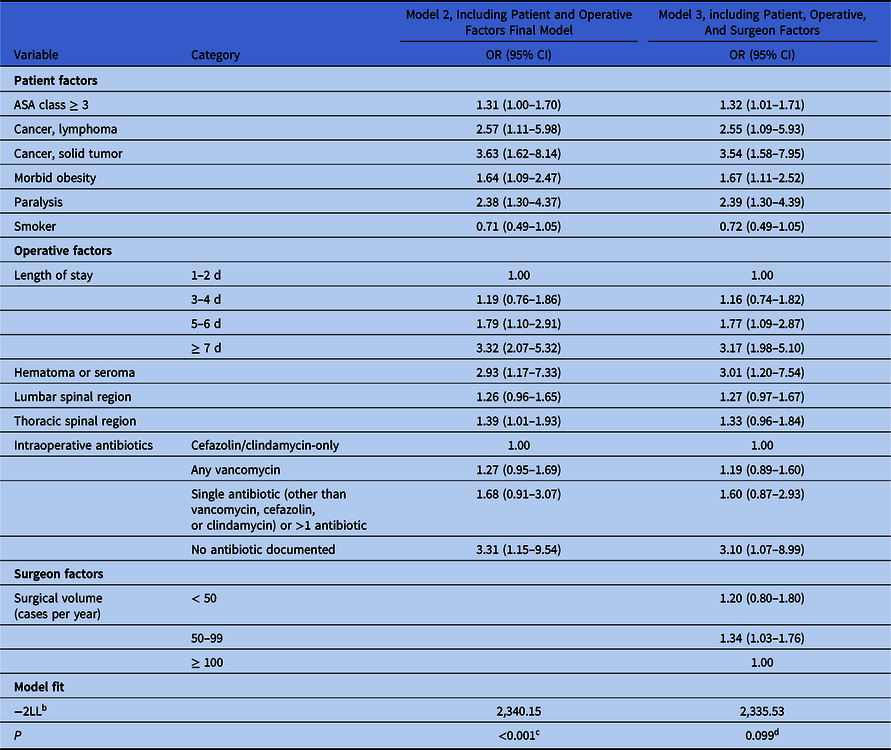
We tested whether site-specific surgeon characteristics were independently associated with the use of postdischarge prophylactic antibiotics using a hierarchical generalized linear model with random intercepts at the level of the study site (Table 5). The unconditional model with no patient-level covariates indicated that there was no significant covariance between patients treated at the same site (P = .131). The second model included patient and operative characteristics from the logistic regression model, and the model fit was significantly better than the empty model (−2LL = 2,340.15; P < .001). Factors associated with significantly increased risk of prophylactic antibiotic use after spinal fusion in multivariable logistic regression analysis were ASA class of 3 or greater, lymphoma, solid tumor, morbid obesity, paralysis, longer length of stay, hematoma/seroma, thoracic spinal region, and choice of intraoperative antibiotic. The third model added surgeon spinal fusion volume, but model fit was not significantly improved over model 2 (−2LL = 2,335.53; P = .099).
Hierarchical Model of Factors Associated With Postdischarge Prophylactic Antibiotic Use after Spinal Fusiona

NOTE. ASA class, American Society of Anesthesiologists (ASA) Physical Status Classification System; CI, confidence interval; LL, log-likelihood; OR, odds ratio.
a Hierarchical generalized linear model with random intercepts at the level of the hospital site.
b Empty model −2LL = 2,505.50.
c P value comparing −2LL of the model with patient and operative factors versus the empty model with only random effects for study site.
d P value comparing −2LL of model 3 with patient, operative, and surgeon factors versus model 2 with only patient and operative factors.
Discussion
We determined the prevalence, variation, and factors associated with postdischarge prophylactic antibiotic use after spinal fusion at 3 academic medical center study sites. We found a low prevalence of postdischarge prophylactic antibiotic use, but variation by study site ranging from 2.2% to 5.1% and by surgeon from 0.5% to 9.8% among surgeons who performed at least 50 spinal fusions per year. Patient and operative factors associated with postdischarge antibiotic use included ASA class of 3 or higher, lymphoma, solid tumor, morbid obesity, paralysis, hematoma/seroma, type of intraoperative antibiotic, surgery on the thoracic spine, and longer length of stay.
Of the patient-level factors associated with increased use of postdischarge prophylactic antibiotics, morbid obesity,Reference Pesenti, Pannu and Andres-Bergos26,Reference Pull ter Gunne, Hosman and Cohen27 cancer,Reference Olsen, Mayfield and Lauryssen28,Reference Veeravagu, Patil, Lad and Boakye29 higher ASA score,Reference Pesenti, Pannu and Andres-Bergos26,Reference Veeravagu, Patil, Lad and Boakye29 and paralysisReference Blam, Vaccaro and Vanichkachorn30 are known to be associated with increased risk of SSI after spinal fusion. Thoracic surgery was associated with increased antibiotic use, consistent with invasiveness of spine surgeryReference Mirza, Deyo and Heagerty31 and correspondingly with increased risk of SSI.Reference Cizik, Lee and Martin32 The association of these factors suggest that surgeons may be assessing infection risk in patients and selectively prescribing continuation of prophylaxis for higher risk patients in an attempt to prevent SSI. Interestingly, there was more consistency in postdischarge use of first-generation cephalosporin or penicillin in persons who received intraoperative cefazolin than for use of an anti-MRSA antibiotic in persons who received intraoperative vancomycin or clindamycin prophylaxis. This finding suggests that other factors outweighed simple continuation of surgical prophylaxis at hospital discharge.
Although surgeons may be targeting high-risk patients for postdischarge antibiotics, continuing antibiotics after incision closure is not recommended by the CDC, the European Centre for Disease Prevention and Control, or the World Health Organization.Reference Berrios-Torres, Umscheid and Bratzler2-4 The North American Spine Society does make an exception for complex procedures including trauma, diabetes, obesity, and multilevel instrumented surgery, but it does not specify a recommended duration or whether prophylaxis should be discontinued before discharge.Reference Shaffer, Baisden, Fernand and Matz5 There is little evidence that use of prolonged prophylaxis among fusion patients is beneficial.Reference Kakimaru, Kono, Matsusaki, Iwata and Uchio9-Reference Hellbusch, Helzer-Julin and Doran17 A single-institution study found significantly reduced SSI rates in patients undergoing instrumented spine surgery who were given antibiotic prophylaxis for 72 hours (2009–2014) compared to a single perioperative dose (2003–2008), but this finding has not been replicated in other cohorts and the investigators did not assess utilization of postdischarge antibiotics.Reference Maciejczak, Wolan-Nieroda, Walaszek, Kolpa and Wolak16 Inabathula et alReference Inabathula, Dilley and Ziemba-Davis33 reported a significant decrease in infections following hip and knee arthroplasty after implementing oral antibiotic prophylaxis for 7 days postdischarge among patients at high risk for infection at a single academic medical center. In this study, however, 60% and 70% of the hip and knee cohorts, respectively, were considered high risk, calling into question the benefit of stratification. In addition to lack of evidence for benefit among spinal fusion patients, there is clear potential for harm with unnecessary use of antibiotics, including selection of antibiotic-resistant bacteria,Reference Harbarth, Samore, Lichtenberg and Carmeli18 C. difficile infection,Reference Poeran, Mazumdar and Rasul19-Reference Balch, Wendelboe, Vesely and Bratzler22 and acute kidney injury.Reference Branch-Elliman, O’Brien, Strymish, Itani, Wyatt and Gupta20 In our study, the incidence of C. difficile did not differ by discharge antibiotic use; however, our study was not adequately powered for this comparison.
Inclusion of surgeon factors in the hierarchical model did not significantly improve the model fit; however, in this model, surgeons who performed 50–99 spinal fusions per year were 1.34 times more likely to prescribe prophylactic antibiotics at discharge than higher-volume surgeons (ie, ≥100 fusions per year). Low-volume surgeons (<50 fusions per year) trended toward increased utilization of postdischarge prophylactic antibiotics, albeit not significantly (odds ratio, 1.20; 95% confidence interval, 0.80–1.80), likely due to the smaller number of fusions by low-volume surgeons. Given the variation in discharge antibiotic prescribing at the level of the individual physician, surgeon education would be important to improve the success of hospital antibiotic stewardship programs.Reference Sartelli, Duane and Catena34
Variation existed by study site with respect to postdischarge antibiotic use and choice of antibiotic. Use of prophylactic discharge antibiotics was highest at site 2 (5.1%), followed by site 3 (4.1%) and was lowest at site 1 (2.2%). Although site 2 had the highest proportion of fusion admissions with fall and/or spinal fracture/dislocation (10.1%), the surgeries were generally less complex and invasive (ie, fewer multilevel and thoracic procedures and smaller percentage involving both anterior and posterior approaches), and thus carried a lower risk of infection.Reference Cizik, Lee and Martin32
Ciprofloxacin, trimethoprim/sulfamethoxazole, and cephalexin were the top 3 antibiotic choices for postdischarge prescriptions at sites 1 and 3. More than 25% of antibiotic prescriptions at sites 1 and 3 were for trimethoprim/sulfamethoxazole, suggesting that surgeons at these sites were concerned about prophylaxis against methicillin-resistant S. aureus. Site 2 used a broader mix of postdischarge antibiotics than the other 2 sites, with cephalexin and doxycycline most commonly prescribed. During the study period, the antibiotic stewardship program at site 2 restricted use of fluoroquinolones during inpatient stays, which may have carried over to the prescribing pattern of discharge antibiotics. In contrast, use of doxycycline or levofloxacin was rare at sites 1 and 3 (cumulative 2.1% and 9.3% by site, respectively). Antibiotic heterogeneity was not explained by the number of surgeons. Site 2 had the most variation in antibiotics, but only 7 spine surgeons prescribed postdischarge antibiotics. Sites 1 and 3 had less heterogeneity in antibiotic choice, but more surgeons who prescribed postdischarge antibiotics (16 and 19 surgeons, respectively).
Our study has several limitations. We included only 3 study sites, so our findings might not reflect practices in the community, particularly community hospitals that are not associated with a teaching hospital. We did not collect information on continuation of prophylactic antibiotics after incision closure or use of intraoperative vancomycin powder before incision closure. Misclassification of a therapeutic antibiotic as prophylactic may have occurred if an infectious diagnosis was not recorded during the fusion admission and/or if a continued therapeutic antibiotic was only coded at discharge and not at hospital admission. Because of low postdischarge antibiotic use in our study cohort, our study did not have enough power to detect differences in SSI or C. difficile infection rates by postdischarge antibiotic use or by individual surgeon. Notably, in our hierarchical model, study site was not significantly associated with variation in postdischarge antibiotic use, likely due to the small number of study sites with insufficient power to identify clustering. A future study with additional study sites would be of interest. Although the surgeon volume variable did not significantly improve our hierarchical model, we observed a trend toward more postdischarge antibiotic use by lower-volume surgeons. Future studies examining surgeon-based factors for prescribing postdischarge antibiotics would be helpful given that guidelines recommend against prolonged use of postoperative prophylactic antibiotics.
In summary, postdischarge prophylactic antibiotic use was uncommon after spinal fusion but varied by study site. Patient characteristics associated with risk of SSI were associated with use of postdischarge prophylactic antibiotics. Stewardship efforts to discourage continuation of antibiotics after hospital discharge are needed to avoid further increases in antimicrobial resistance and adverse events.
Supplementary material
To view supplementary material for this article, please visit https://doi.org/10.1017/ice.2020.117
Acknowledgments
We thank Cherie Hill and Dorothy Sinclair for database and computer management support.
Financial support
Funding for this project was provided by the Centers for Disease Control and Prevention (grant no. U54CK000482U54 to V.J.F.). REDCap at Washington University School of Medicine is supported by the Clinical and Translational Science Award (CTSA grant no. UL1 TR000448) and Siteman Comprehensive Cancer Center and NCI Cancer Center (grant no. P30 CA091842).
Conflicts of interest
M.A.O. reports consultant work with Pfizer and grant funding through Pfizer, Merck, and Sanofi Pasteur for work outside the submitted manuscript. V.J.F. reports her spouse is the Chief Clinical Officer at Cigna. D.K.W. reports consultant work with Centene, PDI, Pursuit Vascular, Homburg & Partner, and Carefusion/BD, and he is a subinvestigator for a Pfizer-sponsored study for work outside the submitted manuscript. No other authors report conflicts of interest relevant to this article.