


In 1923, Franklin Galvão, chief of the Ninth Police District of Rio de Janeiro, which included the area known as the Mangue (the Marsh), one of the city’s two red-light districts, sent the city’s chief of police a “Descriptive Map of the Prostitutes Who Live Beneath the Jurisdiction of the Ninth District”. The “map” was actually a detailed list that in ten typed pages, identified, street by street and house by house, the landladies and tenants (as well as their nationalities) occupying the houses of prostitution that fell under his oversight. All told, 674 women occupied an area that covered only nine streets, a significantly higher concentration than in the more elegant neighborhood of Lapa.Footnote 1
More than a mere description of a neighborhood, Galvão’s list documented the results of an evolving set of policies that redefined carioca urban space.Footnote 2 These ten pages also offer insights into a consequence of the reorganization of prostitution during Rio de Janeiro since 1889, when the city became the capital of the newly established Brazilian Republic. Such reorganization above all involved a process of concentration, in at least two different ways:Footnote 3 First, there was the spatial concentration of the Mangue’s houses of prostitution, due in large measure to the unprecedented expansion of the police’s prerogative to surveil and supervise sex work in the early years of the Republic, but also the consequence of an adaptation by the sex business to shifting patterns of urban masculine sociability. Second, there was a concentration of African-descended women listed as “tenants”, in contrast to the predominance of European women (particularly ones with Jewish surnames) on the list of “landladies”. Among the seven women who owned two or more houses, only one was Brazilian. There was also one Portuguese woman, while the others were variously identified as “Austrians”, “Poles”, and “Russians”. Lists like this one also had less evident meanings: for instance, they were useful for sustaining broader debates about the traffic in women. For many social reformers and private European and US organizations, the presence of European women in houses of prostitution in cities like Buenos Aires and Rio de Janeiro served as evidence of “the traffic in white women”, a widely used notion at that time based on the belief that the mobility of a certain groups of sex workers was automatic proof of the forced nature of their labor.
Due to these simultaneous connotations, the list can serve as a point of departure from which to examine the connection between two broader issues. First, the Mangue and its prostitutes seen from a labor history point of view: what was their world of labor like in the 1920s? Second, how were their lives affected by both national and transnational debates about prostitution that were intensifying at the time through organizations like the recently created League of Nations Committee on the Traffic of Women and Children? Formed by representatives of various countries and private organizations, in 1924 the Committee sent investigative agents to more than 100 cities, with a plan to interview both officials and representatives of the “underworld” in order to discover the “truth” about the traffic in women since World War I.Footnote 4 A few months after the Mangue’s list was put together, Rio de Janeiro was one of the cities to receive such a visit from three American investigators, official and undercover, in the name of the League of Nations. In 1927, the Committee released its final report, which became known as the first document about the traffic in women produced from an empirical, systematic study of intercontinental reach. In the following decades, the report would help form the foundation of an “abolitionist” paradigm that would come to dominate international discourse about prostitution, especially after the creation of the United Nations.
This article uses the League’s investigators’ visit to Rio de Janeiro as an entry way through which to examine the local social relations surrounding prostitution. It then contrasts their observations with the experiences of Fanny Galper, a well-to-do owner of several houses in the Mangue, cited in Galvão’s list. The case of Galper, a native of Russia, is of special interest because, contrary to other landladies and madams, it is possible to follow her across time through a variety of sources. Some of the documents about her reveal the police’s attempts to surveil and control the movement of men and women across international borders (through passports and entry and exit registries), others reveal local authorities’ attempts to control urban space and its construction (through tax records and municipal registries), while still others reveal Galper’s desire to register some of her own decisions (through contracts and deeds). Since some of these sources do not refer directly to the world of prostitution, but rather to her own economic, commercial, family, and affective relations, they go beyond the documents usually consulted when women’s lives in the sexual marketplace are studied. Her life thus sheds light on labor relations in the world of prostitution, immigrant trajectories, and strategies for accumulating wealth, all in the context of changes in the 1910s and 1920s that shaped the neighborhood of cheap prostitution known as the Mangue.
Like the neighboring capitals Buenos Aires and Montevideo, Rio de Janeiro was a point of entry for large numbers of immigrants and sex workers and often served as a transit point between Europe and other South American cities. Since the 1870s, both Montevideo and Buenos Aires adopted a regulationist policy towards prostitution, employing a set of sanitary and municipal measures, which subjected prostitution to special state oversight. In contrast, Rio de Janeiro never adopted any kind of formal regulation. Instead, the 1890 Brazilian Penal Code followed a Germanic tradition by criminalizing diverse ways of inducing someone into prostitution and mediating access to it, in a broader fashion than Argentina’s and Uruguay’s penal codes.Footnote 5 Rio’s legislation was closer to the abolitionist view, which criticized and denounced both the inefficacy and the double standard of regulation systems. By adopting a terminology from the British fight against the regulation of prostitution at home and its colonies, abolitionists in different parts of the world were also more willing to broaden the criminalization of pimping than to control prostitution itself.
In Rio, abolitionist legislation mixed with intense police vigilance over prostitution houses, resulting in an idiosyncratic practice that came to be known, around the 1920s, as “police regulation”.Footnote 6 While the use of “regulation” signaled a degree of acceptance of prostitution in social life, it was the police who should be responsible for defining how and where prostitution was practiced in urban space. Police also played a central role in expelling women and suspected pimps from the downtown area (and also from the country, using the 1907 expulsion law). In the 1920s, prostitution houses would become concentrated in specific neighborhoods, like Lapa and the Mangue. Therefore, in Rio, medically-inspired educational and prophylactic initiatives directed at sex workers and their customers in order to prevent sexually transmitted diseases coexisted with broad police prerogatives to surveil prostitutes and to repress pimps.Footnote 7
Rio de Janeiro was also unique compared to the nearby South American capitals in the way the internationally used expression “traffic in white women” acquired local meanings. This can be better understood in the light of previous histories of Brazilian race and labor relations: For most of the nineteenth century, slavery had been the habitual way to organize labor relations in Rio. Brazil was the last country on the continent to abolish it, only in 1888. In the last decades of that century, African-descended workers found themselves living and working in close proximity with new European immigrants, in a world shaped by the racialized logics of seigneurial domination in Brazil.Footnote 8 Thus, the vocabulary circulating in many of the world’s cities, which used metaphors of racialized slavery to talk about forced prostitution, would gain a specific weight in Brazil. Based on these singular factors, this article argues that the Brazilian approach to regulating sex work was not the result of a misunderstanding of European tendencies, or of a “lack of a system”, as some socialist opponents of the policing practices claimed at the time.Footnote 9 Rather, it was the product of a specific interaction between the international circulation of policies intended to regulate prostitution, the local social dynamics of European immigration, and the racialized history of labor relations in Brazil.Footnote 10
In keeping with recent trends in the historiography, this article treats the history of prostitution as labor history.Footnote 11 Framing the analysis in this way draws on two scholarly trends in Brazil that have examined women’s labor from a gendered perspective: First, the experiences of working-class urban women, which have received much attention in scholarship that has examined the social and cultural history of the First Republic (1889–1930). This literature has focused on daily life, urban history, and “popular culture” and so does not fall squarely within what has traditionally been understood as labor history. Yet, these studies have indeed allowed a rich and multi-layered understanding of how women in early twentieth-century Rio lived and how they worked. Many authors have examined, for example, the various ways in which they earned a living or made use of the legal system. They have also explored the gendered and moral meanings of urban space.Footnote 12 Second, the social history of slavery, which has produced some of the most exciting research in Brazilian labor history during the last decades, has recognized women’s centrality in organizing labor tasks and family ties, in cultivating cultural ties between Africans and their descendants, and in developing strategies for accumulating property and gaining autonomy or freedom.Footnote 13 Together, both trends in the literature have repeatedly demonstrated that a gender perspective has much potential in terms of elucidating long-standing problems in social history, including the trajectories of immigrants, social mobility, and social networks.
UNDERCOVER IN RIO
The 1920s were a critical period for the emergence of a transnational framework to think about and political deal with sex work. One key moment in this was the establishment of League of Nations Advisory Committee on the Traffic of Women and Children in 1921. Although most members took an abolitionist stance and criticized measures that sought to regulate prostitution, the debates in the committee were intense, especially concerning licensed bordellos.Footnote 14 Its early years focused on keeping an eye on ports and employment agencies, persuading participating countries to approve anti-trafficking legislation, and on becoming familiar with how prostitution was regulated in various cities. The International Anti-Trafficking Convention of 1921, in addition to recommending the creation of the committee, also proposed substituting the expression “traffic in white slaves”, widespread in the previous decade, for “traffic in women and children”. Although the old label would continue to be popular in the following decades, the shift in terminology signaled an intention to construct a problem of global dimensions, not simply one of European women emigrating to other continents. It was in this context that a representative of the United States proposed an unprecedented “social research project”, which would include sending several researchers to examine the situation on the ground, with financial assistance provided by the Rockefeller fortune, via the American Bureau of Social Hygiene.Footnote 15
That this proposal came from an US representative was no coincidence: In New York, the first decades of the twentieth century had been a heyday for local organizations promoting urban reform and social hygiene. John Rockefeller Jr. had funded new techniques for researching organized crime, corruption in municipal government, gambling, and prostitution. In Lower Manhattan, these private initiatives (which at the end of the nineteenth century had been dedicated to exposing ties between local authorities and organized crime) had begun to employ new strategies: the use of secret agents to infiltrate the criminal underworld and obtain valuable information for doctors, private detectives, social workers, scientists, and puritanical reformers.Footnote 16 In the US, these investigative initiatives had been associated, from the beginning, with efforts to combat the municipal regulation of prostitution. For many US reformers, “regulation” equaled “acceptance”, while combatting the traffic in women was a central step on the road to abolishing not only regulation, but also virtually all types of sex business.
Although the members of the League of Nations Committee received the idea of “social research” with enthusiasm, not all of them agreed with the North American researchers premises. In Geneva, the proponents of local regulation of prostitution continued to believe that prostitutes should live in licensed bordellos, where they could be identified and subjected to periodic medical examinations. In fact, throughout the nineteenth century, a variety of measures were taken for protecting “public morality” and “health”, all these converging in the creation of a separate legal status for prostitutes. In the cities that adopted this regulationist strategy, moral and hygienic arguments had the practical effect of placing a broad group of women under permanent suspicion and special police and medical control. The abolitionists, on the other hand, opposed regulation by denouncing its sanitary inefficiency, since it failed to prevent the spread of syphilis; its injustice, since it sanctioned what they saw as a sexual and moral double standard; and its immorality, since it led the state to tolerate, if not protect pimps (thus turning into a pimp itself), placing prostitutes at the mercy of unscrupulous exploiters.Footnote 17 Consequently, many abolitionists also urged the criminalization of a variety of intermediation activities in relation to sex work. Thus, in settings like the Anti-Trafficking Committee, the idea began to take hold that “abolition” was the most effective way to combat the exploitation of and traffic in women.Footnote 18
Drawing from these previous experiences, such as the North American social reform initiatives, and, more indirectly, from the European debates on regulation and abolitionist positions, three American researchers embarked on a long journey in 1924 with the goal of discovering first-hand, beyond “rumours” and “sensational stories”, the “real facts of the situation” concerning the global traffic in women.Footnote 19 Significantly, the trip started in South America; for the first leg, between May and July 1924, Bascom Johnson, a major of the US Army, accompanied by Samuel Auerbach and Paul Kinsie (the undercover agent referred to as P.K. in the project’s correspondence), visited Buenos Aires, Montevideo, the Argentine-Uruguayan border towns of Concordia and Salto, and finally arrived in Rio de Janeiro. They began in Buenos Aires precisely because they expected it would be an ideal place to demonstrate the harmful connection between systems of regulation and the traffic in women.Footnote 20
In South America they faced a significant challenge. In contrast to the experiences they had made when doing similar research in New York, the three researchers were unable to communicate directly with locals, they were not familiar with the urban geography, and they knew nothing of the everyday contact between residents and the authorities. They had to take the word of their private informants from the “underworld” and use this information to evaluate and question information obtained through official channels.Footnote 21 Upon their arrival in Rio, the difficulties became even greater: they had to understand a system that, as opposed to Buenos Aires, did not allow them to confirm their previous assumptions that the regulation of prostitution was connected to sex trafficking. Even though Rio de Janeiro did not regulate prostitution (at least not in ways that, at the time, were seen as “regulation”, such as a specific legal status for sex work and public health policies, for instance) it seemed to the researchers to be an important spot in the trafficking routes.
Paul Kinsie arrived at Rio ahead of the group in what was an exploratory trip. There, he met with Boris Thomashevsky, a well-known actor in the Yiddish theater scene of New York, who was in South America on tour with his troupe. Like P.K., Thomashevsky had previously lived in Manhattan’s Lower East Side. He had been active in theatrical productions with social themes since the 1910s. While talking to P.K., Thomashevsky expressed an interest in gathering information for an article on the participation of “people of his race” in South American prostitution.Footnote 22 The two of them made a few visits to houses of prostitution in Rio. Their conversations with Jewish women revealed that they had chosen to come to Rio both because they had friends who were already there and in order to escape Europe’s terrible post-war economic conditions.Footnote 23
This first visit had a powerful impact on P.K., labeling what he saw as “truly beyond description”. He was particularly struck by the “segregated districts” with up to 10,000 prostitutes, who were “clad in loose-fitting chemises and short dresses, with arms and legs exposed”, as they stood at the doors of rooms that offered little in the way of privacy or health.Footnote 24 P.K. did not name the streets or the neighborhood, but it is likely that he was describing the Mangue. What he saw as a sordid geography was home to women whom he described as “some of the most depraved that can be imagined”, prepared to offer such “perverted” sexual practices as the “Brazilian fashion”, which P.K. explained was a local term for “sodomy”. Despite the massive presence of Brazilian women working in the area, the two observers had the impression that foreign women predominated. The foreigners stood out from the locals due to both age and color. The Brazilians were “younger and the greater number [among them are] Portuguese negroes”, an expression that focused on the two outstanding features of these women in P.K.’s perspective: their skin color and the language they spoke (most likely, they were looking at Afro-Brazilian women). They noted that in Rio there were neither obligatory medical exams for sex workers, nor any restrictions on the women’s movement throughout the city.Footnote 25
Two months later, in July 1924, Kinsie returned to Rio, this time accompanied by Samuel Auerbach and Bascom Johnson, who devoted themselves to the official aspects of the study. During this second visit, P.K. established contact with the owner of an elegant house of prostitution in Lapa. He introduced himself as an envoy of his informant in Buenos Aires, who, he claimed, was interested in expanding his investments in the carioca market.Footnote 26 Sophie, anonymized as “7-M” in the report (“M” for madam), hoped to convince him to buy her boarding house for women in Lapa. It was in this way that she became one of P.K.’s most valuable informants; both talked in English, and in her attempts to close the sale she shared her understanding of the peculiarities of prostitution in Rio. Like P.K.’s informants in Buenos Aires, she believed that the market had become saturated with European women hoping to save money and return to Europe. But unlike in Buenos Aires, she highlighted the importance of avoiding any arrangement that might smack of pimping, since under Brazilian law, with its abolitionist undertones, a variety of ways of facilitating, intermediating, or profiting from prostitution were crimes.
This perspective was reiterated both by other madams and the men who lived with them, identified by P.K. as “T” (for “traffickers”). They explained to P.K. that, in Brazil, the “girls” were not allowed to have “managers”, but only “suckers” (customers). It was thus necessary to take certain precautions. These men seemed to see themselves as associates of either the girls or madams, and they hoped that their partners would someday have their own houses of prostitution.Footnote 27 In the meantime, the “girl” would usually work in a house, while her “boy” looked for an “honest and legitimate job” to avoid police harassment or potential denunciations by previous and “vengeful” girlfriends. Although everyone involved expected social mobility, many things could go wrong along the way, and many couples and agreements ended badly. Indeed, almost twenty years before the League of Nations researchers’ visit, many of the cases of expulsion of foreigners from Brazil recounted tales of relationships of this sort that had ended due to violence, pregnancy, or disease.Footnote 28 In Rio de Janeiro, unlike in Buenos Aires, 8-M, another anonymized madam, explained, with one quick complaint at a police station, a girl could “finish him”. All the men and women with whom P.K. spoke during his July 1924 visit alerted him to the dangers of the police campaigns to find and expel pimps.
Sophie and the other foreign madams of the more elegant Lapa boarding houses explained to P.K. that their main task, in addition to maintaining the house, was to serve as an intermediary in the oldest sense, by finding men willing to pay their girls’ bills. This was a good business, according to Sophie, because for rich men in Rio de Janeiro, maintaining a young foreign woman was a sign of prestige.Footnote 29 When she spoke of her niece in Warsaw, who she hoped to introduce to a prosperous Brazilian merchant, Sophie explained that she considered herself more matchmaker than job intermediary. Her goal was not so much for her niece to start working in a house and to specialize in specific sexual services, but rather for her charms to attract the rich man in question and thus save her from the fate of a “beggar” in the streets of Warsaw.Footnote 30
In their conversations with informants in both Rio de Janeiro and Buenos Aires, many of the perceptions of the men and women of the “underworld” clashed with the Americans’ expectations about the work, commercial, and affective relations of the sex workers. In both cities, pimps and madams found it awkward when P.K. asked them about strategies to recruit and deceive victims, and were taken aback by his obsession with so-called greenies (the inexperienced young women who P.K. assumed would bring in the most profit).Footnote 31 In both places, the informants emphasized that there was a high turnover among the women, and, as P.K. observed in Rio, the younger ones were more likely to be Brazilian. In contrast to the tacit presumption by P.K., it seemed obvious to the informants that older women, who were more experienced at the sexual techniques in demand in each city, were always the best option for working in houses of prostitution. For his part, P.K. searched for anything that might look like a constraint on the freedom of European women among all their complex strategies geared to survival and mobility. Any trace of coercion, threat, or deception led him to characterize these relations as “slavery” – “white slavery”, we might say, although the researchers did not use this expression anymore. After all, the way they ignored the plight of young Brazilian women, some of whom were children, who they saw in the houses they visited, indicated that exploitation required a certain type of victim, one that excluded Brazilians and non-whites.Footnote 32
The disconnect between the perspectives of researchers, madams, and “traffickers” illustrates different conceptions about what constituted exploitation and “white slavery”. For the researchers (as well as for Brazilian lawmakers), deception, seduction, lack of autonomy, threats, and other forms of coercion were all components of a relation equivalent to slavery.Footnote 33 But for those who were directly involved in this business, what they did was more akin to “work placement”, matchmaking, and other types of intermediary activities that were common at the time both among immigrants and in the domestic service sector, as well as in all sorts of commercial and artistic professions. This role was based on networks of friendship and kinship, both real and fictive, many founded upon common ethnic identities, which eased their departure from home and their arrival in a new country and culture.
Through these conversations, P.K. constructed a certain perspective on how prostitution worked in Rio de Janeiro. His view was strongly influenced by the racism and classism expressed by the European madams, who considered themselves far removed from the “window prostitutes” who filled various corners of the city center, many of them Brazilians whom they called “half niggers”. As one of the “traffickers” explained, the Brazilian women were “dumb” and not suitable for men like them.Footnote 34 Comments like these show the ways in which the social organization of prostitution was predicated upon a combination of racist, ethnic, and age-based criteria.
SEX WORK IN RIO: THE VIEW OF LOCAL AUTHORITIES AND PROFESSIONALS
The risk of police harassment for the men who lived with prostitutes and madams was something raised not only by P.K.’s informants, but also by the Brazilian authorities in their meetings with the research team of the League of Nations. They emphasized their compliance with the new international norms, explaining to the foreign visitors that Rio de Janeiro had not adopted the much-criticized Buenos Aires model of officially regulating prostitution. They proudly pointed to their laws governing the expulsion of foreigners, especially the more recent 1921 law that barred foreign prostitutes from entering the country and restricted the international movement of both prostitutes and pimps, in accordance with the recommendations of the international convention from that very year.Footnote 35
Still, the researchers had been trained to mistrust the authorities, and they suspected that the law was both poorly enforced and easy to evade; after all, the sex trade seemed to be functioning quite well. Indeed, P.K. had witnessed first-hand the cordial relations between the owners of the boarding houses in Lapa and the police, who ignored the presence of underage Brazilian girls and accepted bribes from the madams to protect their houses from troublesome clients.Footnote 36
The researchers also spoke with other informants, such as “respectable” individuals and representatives of private groups like the lawyer Lourenço de Mattos Borges, of the Brazilian Council of Social Hygiene.Footnote 37 In an effort to explain Brazilian racial categories, Borges, who was more comfortable speaking French than English, classified the prostitutes as blanches natives, blanches étrangères, mulâtres (café au lait), and noires. The last two categories contained, in Borges’ estimation, almost half of Rio’s prostitutes. While the noires were predominantly to be found in the Mangue (ninety-one out of 143 in the whole city, according to his count), the mulâtres were divided fairly equally between Lapa (139) and the Mangue (174). These statistics were complemented with data provided by the American nurse Bertie Rice, who worked in the Prophylactic Inspectorate for Leprosy and Venereal Diseases (Inspetoria de Profilaxia da Lepra e Doenças Venéreas), created in 1921.Footnote 38 Through Rice, they gained access to the lists of houses in Lapa and the Mangue put together by visiting nurses, who tried to convince the women to get treated for sexually transmitted diseases.Footnote 39
Consistent with the racially marked gaze of Lapa’s madams and of P.K. himself in his initial excursions with Thomashevsky, Rice explained that the Mangue was a small neighborhood, made up of just seven streets between the Mangue Canal and Salvador de Sá Avenue and packed with houses of “the worst type of prostitution” to be found in the city. The conditions were cramped and unhealthy: two or three women shared one small room, with nothing better to do than stand “partly clothed” in their doorways, where they tried to attract the attention of passersby. They ate their few meals of coffee and rolls in the area’s cheap restaurants. According to the visiting nurses, of the 579 women who lived in those houses, the overwhelming majority (396) were Brazilian, followed by seventy-four “Russians” and forty-five “Poles”. Of all the women, 174 were classified as “mulattos” and ninety-one as “blacks”. According to Rice, the local government’s complete lack of interest in this small area left the police as the only point of contact with the authorities and frequently gave way to fraternization with police officers who visited the women during their patrols.
To complement the knowledge they gained from both official and underworld informants, the researchers also had access to legal decisions and legislative debates, which might have offered further insight into local conceptions of prostitution and exploitation. For instance, the 1915 legislative debates – eventually resulting in revisions to the Penal Code that criminalized the “traffic in women” – clearly reveal that Brazilian parliamentarians were informed about debates taking place in France, Germany, and Italy about the definition of consent for adults, deception (both through informal promises and work agencies), and ways of intermediating and profiting from prostitution. Brazilian legislators were thus mindful of the international abolitionist trends, which they used to intensify the criminalization of relationships that involved prostitutes and their intermediaries. For them, the traffic in women was akin to slavery, “in which the poor victims completely lose their individuality and become subject to the vilest exploitations”.Footnote 40
As can be concluded from their reports, however, the League of Nations researchers were not very interested in the content of the cases that prosecuted pimps or the details of expulsion cases against pimps. Actually, both the Brazilian authorities and researchers from the League of Nations preferred to cite as their evidence the aggregate data from police stations and courts. For the Brazilians, lists of expelled foreigners offered proof that they were actually fighting human trafficking; for the researchers, lists of foreign prostitutes showed that victims of trafficking were living in the Brazilian capital. Since the way both groups conceived of prostitution was as if all were European women, it is easy to understand why the form of repression chosen was summary expulsion, carried out by the police, in accordance with the 1907 law of expulsion of foreigners, combined with more recent measures that sought to control who disembarked at the ports. The goal was to prevent foreign women from establishing a foothold to begin with.
The contrast between the documents produced by local authorities and the observations of the researchers from the Anti-Trafficking Committee offers a multifaceted view of the nature of sex work in Rio de Janeiro in the years after World War I. Despite language barriers and cultural misunderstandings, P.K.’s direct contact with the houses of prostitution in “elegant” Lapa and “depraved” Mangue shows, if only in an indirect and fragmented way, how the madams, pimps, and even sex workers themselves understood their experiences. It was more difficult for P.K. and his colleagues to make sense of the actions of local authorities and the peculiar carioca system, which combined abolitionist legislation (not least through a criminalization of pimps) with semi-official toleration in zones like the Mangue. The researchers preferred to view the records and statistics they gathered as unequivocal proof that European prostitutes comprised a significant portion of the women working in Rio’s brothels and that the city was thus a major destination in the international networks of trafficking.
THE LIFE OF FANNY GALPER IN RIO
Rio’s specific combination of abolitionism and regulation (the latter in a rather repressive, police-mediated variant) formed the general framework for the city’s world of prostitution and its sex workers. It is evident that such a framework did not function as a significant obstacle for those who acted as business people in the field, including the madams. At the same time, state practices influenced both the social mobility and race relations within the world of prostitution. Fanny Galper’s life in Rio de Janeiro is a case in point. In Franklin Galvão’s 1923 list, she was one of the few women who owned more than one house, both located in Rua Pinto de Azevedo (at numbers eighteen and twenty-three, see Figure 1). A Pole and a Brazilian lived in the first; two Russians and six Brazilians in the second.
Rio de Janeiro’s downtown area in the 1930s. From the last years of the nineteenth century up to the second decade of the twentieth century, prostitutes’ houses converged in the area around Praça Tiradentes. They were part of an expansive nightlife area, together with its many theatres, restaurants, cafés-concert and pubs. São Jorge street is highlighted. Known for hosting “Polish” women at the turn of the twentieth century, it is believed to be the first place that Fanny Galper established herself in Rio (circle 2). During the 1910s, police actions resulted in a spatial concentration into two neighborhoods: in Lapa (circle 3), elegant houses, known as “pensions des artistes”, whose residents were generally white, European women who identified themselves with a French style of prostitution; on the other hand, in the small group of streets around the Canal de Mangue, on the other side of the Praca da República, the Mangue neighborhood was associated with Russian and Polish house owners and Brazilian women. The picture (circle 1) also highlights the Mangue streets where Fanny Galper had her houses.

Fanny Galper owned still more houses; notary books contain records of some of her economic and personal relations over a nearly fifteen-year period, between 1921 and the mid-1930s. In addition, in 1930, her ex-husband Solly Debrotiner was accused of being a pimp and subjected to expulsion proceedings. Finally, entry and exit records from the United States reveal details of her life before she came to Brazil, which she deliberately omitted later on. Together, these documents form the pieces of a puzzle that hint at some of the strategies of a Russian immigrant whose life revolved around prostitution.
In 1930, when Fanny was fifty-two years old, an assistant police chief accused a fellow Russian, Solly Debrotiner, of having taken advantage of Fanny’s “weakness” following an illness making her “fall into his clutches” and marry him. The marriage lasted only a few months, enough for him to extort a part of her fortune, under the pretense of investing it in business ventures. Called to testify, Fanny gave the police a most interesting narrative that partly went along with the authorities expectations, and partly presented a remarkable account of her life. Through stereotyped expressions characteristic of police allegations, she accused her husband of having repeatedly asked her for money. When she got “tired” of this situation, she decided to ask for a divorce. The main lines of this accusation were the common point of many deportation trials for pimping, which contemporaries accused of expressing inquisitorial police procedures. As can be seen from registers of her financial procedures in those months (further analysed below), her accusations were not the whole story.
The other part of her testimony, in which she recreates her life as a prostitute, is unique and revealing. She arrived in Rio in 1908 and began working as a prostitute on Rua São Jorge (see Figure 1).Footnote 41 Since the end of the nineteenth century, this area had housed prostitutes who had been expelled from the houses located along busy tram lines, where they would post themselves in the ground floor windows. This highly visible “window prostitution” was antithetical to the authorities’ efforts to “morally cleanse” the city center, and many of the prostitutes expelled by police wound up on Rua São Jorge. These included both Brazilians and foreigners, particularly women from the Azores. According to an official report from 1912, only four years after Fanny’s arrival, forty-one houses of prostitution existed on Rua de São Jorge at the time.Footnote 42 The majority were home to only one to three tenants, most of whom were European women like Fanny: Persons identified as “Poles”, “Russians”, “Germans”, or “Austrians” made up more than half; there were also eight Italians, six Brazilians, and one Portuguese woman. The street had long been known not only as a “stronghold of prostitution”, but also as a place where sex was inexpensive, and the women who worked there, Brazilian and European, white and black, felt the force of police efforts to control both the location and nature of their activities.Footnote 43 Fanny Galper testified that she had moved away when “the police closed the houses in that [other] zone”. She was most likely referring to the periodic expulsions that happened during the 1910s, which forced many prostitutes to relocate to the Mangue, further still from the city center. In 1916, a journalist interpreted this new displacement as a symptom of the police’s lack of an effective plan, not as a conscious strategy to concentrate prostitution in a specific area: With this new wave of expulsions, the women began to “invade streets previously inhabited only by families”, particularly in the area known as Cidade Nova, where the Mangue was located.Footnote 44 In this process, Fanny Galper moved to Rua Pinto de Azevedo, one of the areas that would become known for “Poles”, a generic designation for cheap prostitutes from Eastern Europe. Although Fanny attributed her move to police measures, once established in the area, her life began to change radically. By 1930, she owned four buildings, whose rooms she rented or sub-rented to prostitutes, who paid 10 mil-réis per day.Footnote 45 All told, Fanny had four or five tenants per house.
Fanny’s situation and prosperity constitute a striking contrast to the image of a sordid and miserable Mangue that the League of Nations researchers had described. This image, on the one hand, was one of the results of a reorganization of the sex trade attempted to segregate the cheapest prostitutes; on the other hand, it also resulted from the researcher’s informants who, being from Lapa, had looked down on the Mangue. At any rate, in the deportation case against Fanny’s ex-husband, police were not interested in how she had become a madam or in explaining how she assembled so much property, but rather in presenting her as a victim, a (white) “slave”. Perhaps because of the pressures of the interrogation, she abruptly stopped telling her life story and switched to a tale typical of deportation cases (a switch that comes across as sensible in the document): “About eleven months ago, she met Solly Debrotiner in her home. […] He had no profession whatsoever.” She was sick, and he proposed marriage. Soon after, he began to ask for money, to launch business ventures that failed, until, “tired of satisfying her husband’s demands”, she applied for an amicable legal separation.Footnote 46 Satisfying the then prevailing needs of a police investigation for the expulsion of foreigners, Fanny’s case entered the annals of the “traffic in white women”. Despite this apparent conformity, Fanny’s testimony at the same time manifests how different her case was from what the League of Nations researchers considered as typical: Far from a young, recently arrived European, she was an experienced and prosperous woman. For police authorities, though, her age and illness had made her vulnerable to the shady interests of a man who the commissioner in charge of the case called a “rabbi of a society of Israelites, composed exclusively of prostitutes and pimps, charged with inspecting the bookkeeping for brothels”.Footnote 47
When Solly Debrotiner was in jail, and the authorities had already issued a decision for deportation, a request for habeas corpus to halt his expulsion reached the Supreme Court.Footnote 48 In addition to accusing the police of manipulating the accusations, the defense explained that Debrotiner and Galper’s separation had been friendly, seeking to prove that he was not a pimp, but rather a prosperous businessman and leather manufacturer.Footnote 49 Curiously, the defense did not mention his activity as a rabbi, although he had officiated a wedding at the “Beneficent and Recreational Society of the Sons of Israel”, whose membership included the “most distinguished elements of the Israelite colony”.Footnote 50 Thus, at least until his brief marriage to Fanny attracted the authorities’ attention, Solly Debrotiner appears to have been seen as a respected businessman, both within and outside of the Jewish community.
At this point in Fanny’s story, two questions still await an answer. First, how did she transform herself into a successful landlady in the Mangue, after starting out as a “Polish” and therefore rather marginal prostitute on Rua São Jorge? And second, why, as a successful landlady, did she marry a man who apparently was only after her money? The only way to answer these questions is to track her doings through other types of sources, in which she appears as neither prostitute, nor madam, and that shed light on a part of her life that she never revealed publicly. Particularly useful are the notary books of Rio de Janeiro, in which private individuals could record certain transaction and deeds. Fanny Galper made ample use of this instrument of legal certification having debts, purchases, leases of property, and even a will registered. Through these, it is possible to understand more fully some of her relations and decisions as well as fill some of the gaps in her life. Fanny Galper appears to have acquired her first property in the Mangue in 1921, when she purchased a building at 65 Rua Nery Pinheiro via a public auction of the estate of a Brazilian or Portuguese woman. Two years later, she bought her second property, at 250 Rua São Leopoldo, from an Italian couple.Footnote 51 Fanny’s acquisition of these two properties shows how the expansion of the sex trade in the Mangue was closely tied to the dynamics of the real estate market, illustrating how the character of premises in the area changed from “residential” to being used in sex business.
The researchers from the League of Nations and other contemporaries searched at length for evidence of organized crime rings run by traffickers and pimps of Jewish origin. But the transactions that Fanny recorded over fifteen years depended on other people, particularly on a Portuguese man named Antônio Alves Dias Pereira. He signed, in her stead, all the transactions that she registered, since she always declared that she did not know how to read or write. She also leased to him the building on São Leopoldo Street between 1924 and 1931. Finally, the two of them formed a consortium to construct dwellings on Rua Rodrigues dos Santos. The consecutive numbering of the addresses (twenty-two to twenty-six) indicates that these were probably small houses or even single rooms to be rented to prostitutes.Footnote 52
In addition to having been Fanny’s business partner throughout the 1920s, Antônio also had an affective role in her life. In her 1925 will, she named him her sole heir, calling him “a person who holds her esteem and consideration, with whom the testator lived in a marital relationship since nearly two years, and from whom she has received much affection and demonstrations of consideration and esteem”.Footnote 53 Antônio’s presence, in both economic and affective terms, was in keeping with practices common in Rio de Janeiro since at least the end of the nineteenth century, when the houses of prostitution were still located in the city center: Older foreign women, some of them ex-prostitutes, became commercial and romantic partners of Portuguese or Brazilian men, with whom they opened or took over establishments combining bar and brothel. As we have seen, this was also an expectation of the young “traffickers” with whom P.K. spoke, who hoped that their “girls” might eventually become madams, thus ensuring a more peaceful life for both. Rio de Janeiro’s legal strategy of targeting pimps placed these (as well as other persons who related to prostitutes) in the police’s crosshairs. It is in this light that we might make sense of both Fanny’s relationship with Antônio and her marriage to Solly. To understand why only the latter was prosecuted as a pimp, it may be relevant to consider that Antônio was a Portuguese merchant, far removed from the stereotype of the Jewish pimp, while Solly seemed to smoothly fit this image.
In contrast to both the expectations of the League of Nations researchers and the police about the “vile exploitation” of and the traffic in women, Fanny Galper’s reasons for associating with both men were far more complex. One additional factor here was the debt that she incurred with Antônio to build the houses on Rua Rodrigues dos Santos in 1926. They borrowed 110 contos de réis from a Lapa merchant, a significant debt that would demand sacrifices from both. Two years later, construction was complete, and they divided the houses between them in accordance with the investment each had made. When the debt was due, they were only able to make a partial payment and obtain an extension on the remainder. In 1930, the loan repayment was demanded under the extended terms. At that point, Fanny listed herself as Solly Debrotiner’s wife, although they had already begun the process of obtaining an amicable legal separation. Not only did Fanny not make any reference to their separation vis-à-vis the merchant, she used their marriage, which was legally designated as including joint ownership of their possessions, to amortize the debt, which was reduced to thirty contos de réis. The next year she finally paid off the debt. Fanny’s short marriage to Debrotiner thus might make more sense when we realize that it helped her reduce the debt she had incurred with Antônio.
Yet, there is another, even more surprising aspect of Fanny’s life that is revealed through the records of her prior stops in the United States: In the US, Fanny Galper, at least since 1904, had been Fanny Debrotiner, wife to real estate agent Solly Debrotiner and mother to William Debrotiner. In 1912, Solly obtained permanent US residency, and in 1916 he moved to Rio de Janeiro, where he intended to dedicate himself to the leather business.Footnote 54 Meanwhile, Fanny, who had, according to her later testimony, arrived already in 1908, built her own life in Rio using her maiden name, first as prostitute, then as a landlady in the Mangue.
So, Fanny left the US as Fanny Debrotiner, wife of Solly and mother of William, and, according to US documentation, a literate resident of Peabody, Massachusetts, and disembarked as Fanny Galper, an illiterate Russian prostitute on Rua São Jorge. During her long relationship with Antônio in the 1920s, she always presented herself as a Russian and a widow. Not even in her will did she mention her son, although she wanted to leave some money to siblings back in Russia. Thus, both Fanny and Solly seem to have shared a preoccupation with keeping the two worlds, one associated with the US and the other with Brazil, separate, omitting mention of the former in the documents generated in the latter.
Pictures from passport applications submitted by the Debrotiner family. In October 1916, 47-year-old Solly Debrotiner (bottom right) applied for a passport to travel to Rio de Janeiro. He declared the purpose of his travel as starting a “leather business for himself”. Five years later (29 September 1921), 42-year-old Fanny (top) and her son, 24-year-old William (bottom left), also applied for US passports to go to Rio de Janeiro. Both declared that the purpose of their travel was to join their father and husband Solly Debrotiner. Identified as a “housewife”, Fanny signed her own application and countersigned that of her son, William. All three declared that they were from Russia, and submitted proof that Solly Debrotiner had been naturalized in 1912. Solly’s 1916 passport picture was reprinted in a carioca newspaper during his deportation trial in early 1930. The report suggested that he was a victim of police persecution. Solly’s passport picture is reproduced in: “United States Passport Applications, 1795–1925”, database with images, FamilySearch, available at: https://familysearch.org/ark:/61903/3:1:3QS7-99X7-CGNL?cc=2185145&wc=3XZ8-PTP%3A1056306501%2C1056640201; last accessed 15 October 2017. See also “A polícia e sua campanha contra os exploradores de lenocínio. Solly Debrotiner estará sendo vítima de perseguicão?”, Diário da Noite, 11 January 1930, p. 3. Fanny and William’s application are in: “United States Passport Applications, 1795–1925”, database with images, FamilySearch, available at: https://familysearch.org/ark:/61903/1:1:QKDF-CZMS; last accessed 15 October 2017.
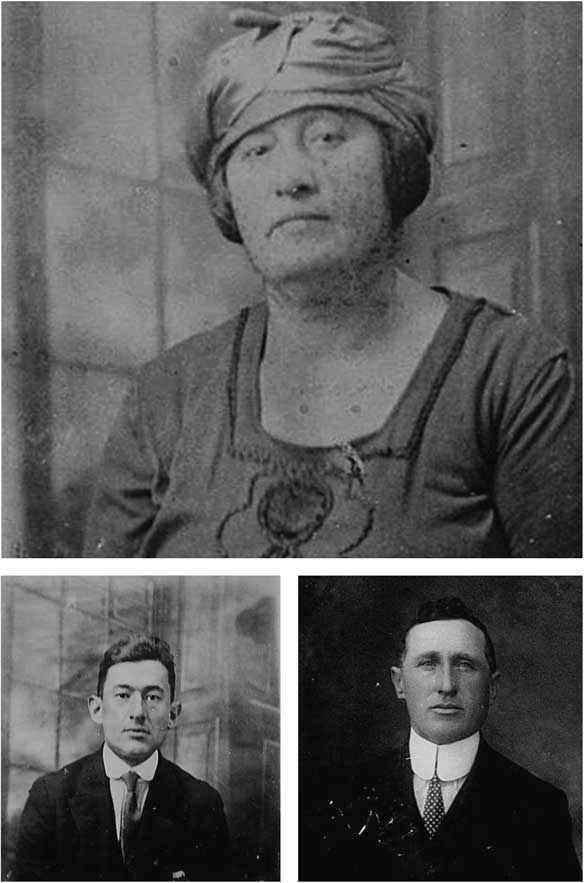
The evidence from Fanny Galper’s actions and economic movements constitutes a context for the deportation trial against Solly Debrotiner in 1930. Although these documents do not offer a plausible explanation for many of her actions (why she remarried him, why she accused him) or a conclusive indication of the nature of her relationship with Antônio, they do help to see the “old, vulnerable” Fanny and the “evil pimp” Solly in a different light. Both of them handled substantial sums of money during their years in Brazil. Both of them agreed not to mention their previous family life and their son, whatever their conflicts were. Therefore, there might be a possibility that what the police in its 1930 investigation saw as Solly extorting the vulnerable Fanny could equally be interpreted as way for both to put their accounts in order at the end of their lives, thus formalizing a separation that dated from years earlier. In other words, Fanny Galper’s actions during the brief time she was remarried to Solly Debrotiner suggest that this second marriage was, to a certain degree, economically convenient for her, at least inasmuch as it allowed her to amortize the debt she shared with Antônio – something that never came up in the trial. This hypothesis also offers plausible reasons for her to remarry for such a brief time. She thus may have acted on the grounds of previous agreements with Solly. In fact, after her second marriage to Debrotiner, Fanny continued to be in close contact with the Portuguese Antônio, with whom she invested in a bar in 1930.Footnote 55 Even if this was not the case, and there is no way to decipher the reasons and circumstances of many of her actions, the Fanny Galper that emerges from these fragmented references appears an attentive woman, prepared to take advantage of the few opportunities she had in order to build a life of wealth in Mangue, in the midst of police eviction orders and unequal partnerships conditions, among other constraints.
It is difficult to keep track of Fanny’s subsequent activities. She had put money aside in 1925 for the Israelite Beneficent Funeral and Religious Association, an organization that congregated Jewish prostitutes, to bury her in Inhaúma Cemetery.Footnote 56 Her participation in this Association had multiple dimensions: first, the importance of her religious identity, especially when she thought she was going to die soon. Secondly, as historian Beatriz Kushnir has shown, religious associations were a fundamental way of maintaining connections of mutual aid in the world of sex work in order to deal with the multiple challenges individuals were facing, as women, as Jewish persons, as immigrants, and as prostitutes or madams. Although there were similar associations in many cities where there was a strong presence of Jewish European immigrants in the sex trade during the first half of the twentieth century, Kushnir remarks that Rio’s association for many years was composed exclusively of women.Footnote 57 In this sense, Fanny Galper’s life was hardly unique.
There are indications that there is a grave in New York of a person named Fanny Debrotiner who passed away in 1942. Whether this is the burial place of the Fanny who prospered as a madam in Rio de Janeiro is still to be conclusively established – like so many other aspects of her remarkable life.Footnote 58
EXPLOITATIVE RELATIONS IN RIO’S WORLD OF SEX WORK
The League of Nations researchers were correct to stress the importance they placed on listening to the voices of the men and women whom they identified with the “underworld”, in order to achieve some understanding of the relations in and around prostitution in each place they visited. Despite their cultural perspectives, language restrictions, and abolitionist convictions, they established a dialogue that forced them to adapt their ideas about sex trafficking to the evidence they found. The eventual adoption of a broader and more malleable conception of trafficking demonstrates some of the difficulties they and Brazilian authorities encountered in drawing clearly marked lines between acceptable and unacceptable migrations.Footnote 59
The journeys and choices of Fanny Galper/Debrotiner as well as the relationship and agreements she entered allow us to see just how hard this was. Although the accusation against her ex-husband Solly Debrotiner portrayed Fanny as Solly’s “slave”, other records allow us to see her as a wife and mother, as a madam and real estate entrepreneur in partnership with Antônio, and as a Jewish immigrant concerned with guaranteeing a burial in accordance with the rites of her faith. In light of Fanny’s multiple identities over the course of her life as an immigrant, we can observe how, like many similar women in Buenos Aires and Rio de Janeiro, her economic and personal relations overlapped.
Fanny’s prosperity was partly built upon her ability to associate with and dissociate herself from different men at different points in her life. Also, her trajectory reflects a sense of opportunity in acquiring real estate property at precisely the moment when police were pushing for a reorganization of urban space and the creation a concentrated and segregated zones for sex trade and sex work. Similar trajectories of other European women, particularly “Russians” and “Poles”, such as those associated in the Israelite Beneficent Funeral and Religious Association, together with the widespread expectations among Jewish men and women who P.K. met as an undercover investigator, converge to suggest how widespread such stories of upward mobility were among the sex workers during those years. This does not mean that actual opportunities for such upward mobility were abundant, rather it was the expectations and hopes connected to such stories that counted. To follow Fanny Galper’s steps thus not only sheds light on her personal abilities and the particular circumstances of her life; it equally reveals the broad historical constraints and contexts in which such a biography became possible and in which her actions acquire meaning. These contexts involve the impact of the carioca way of dealing with paid sex work in the 1920s – in which regulation, abolition, and police repression were combined in a peculiar fashion, giving way to a specific social organization of prostitution. Under these circumstances, Fanny’s dependence on different kinds of men (from her lovers to, very probably, police officers) and the risk of having to hand over her money to them were constant. In this sense, questions about exploitation, gender relations, family organization, friendship and love intertwine in her history.
Another crucial context for understanding Fanny’s life is the racial dimension of this specific social organization of prostitution and its impact on the unequal production and distribution of wealth. Fanny Galper built her prosperity upon the exploitation of her tenants. By concentrating cheap prostitution in the Mangue, the police rendered these women vulnerable, nearly invisible, and potentially highly dependent on better positioned intermediaries such as Fanny. In other words, Fanny’s prosperity was, to a high degree, the result of very unequal labor arrangements that she established with young prostitutes, who were mainly Brazilians and mostly black. All national and foreign observers from the 1920s agreed in recognizing the difficult conditions in which these young women lived, as they paid up to ten mil-réis per day to women like Fanny, ate precariously in places like the bar that she owned with Antônio, and had to confront the attempts by Bertie Rice and others to urge them to come for a stay in the new venereal disease dispensary. This appears to have been a direct effect of the spatial and social organization of prostitution in Rio de Janeiro in the 1920s, which could be defined as concentration-cum-marginalization: enhanced opportunities to accumulate wealth for white women, based on the sexual labor of black women, in conditions marked, if not ensured by police control. All these dimensions of the world of prostitution and its labor relations remained unacknowledged in the abolitionist thrust among the League of Nations observers and the Brazilian authorities.
While it is possible to trace at least some of the moments in the lives of individuals such as Fanny Galper, it is much more difficult to know further details about those mostly Afro-Brazilian women who worked for her. In a few exceptional cases, however, their tragic fate allows us to catch a glimpse of their lives. Such was the case of Brazilian Hercília Maria Luz (see Figure 3): Her name appears on the list compiled by Franklin Galvão’s in 1923 as one of Fanny’s tenants. Since 1926, Hercília had been living in a house on Rua Rodrigues dos Santos, which Fanny and Antônio had just built together.Footnote 60 She may have been one of those very young Brazilian girls who P.K. observed fraternizing with soldiers and sailors during his excursions to the Mangue. Women like her were described as part of a degraded milieu that only worsened the condition of the European women living there, the potential “white slaves”, but their own work conditions and lives were never an object of interest. In 1927, her lover, a young soldier, murdered her, according to a newspaper.Footnote 61 The paper noted that she looked no older than twenty and was originally from Bahia, while her murderer was twenty-four, pardo (of “mixed” ethno-racial descent), and from the northeastern state of Pernambuco. Upon her return from a dance (“by automobile”, as the newspaper noted), she found the soldier waiting for her at the door of the house with his revolver. His motive, according to the newspaper, was that he felt “rejected”.
Pictures of Hercília Maria Luz, Fanny Galper’s tenant at least since 1923, and of José Ribeiro do Nascimento, her lover and murderer, in 1927, in his Army uniform. Both pictures are from the police column of Gazeta de Notícias, one of the most important carioca’s daily newspapers. They could have been one of the many couples formed by Brazilian military men and Brazilian young prostitutes that P.K. and other contemporary observers found in the streets, in windows, and in the doorways of the Mangue’s brothels in the 1920s. Hercília’s picture is from: “Uma cena de sangue na rua Rodrigo [sic] dos Santos”, Gazeta de Notícias, 27 September 1927, p. 4. José’s picture is from: “A cena de sangue da rua Rodrigo [sic] dos Santos”, Gazeta de Notícias, 28 September 1927, p. 4.
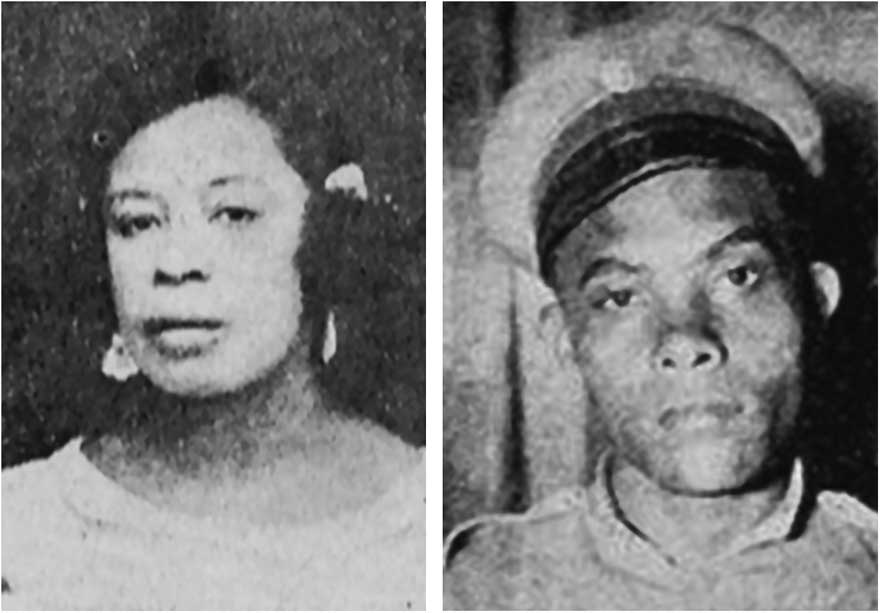
In addition to her tragic death, we know that, for at least four years, she paid Fanny and thus contributed to her prosperity. Such a relationship normally also included letting her “landlady” know about her comings and goings, possibly also the night she went to a dance and was killed afterwards. It is possible to imagine, then, how police measures to segregate prostitution facilitated the dependence of women like Hercília on women like Fanny. In spite of the fact that the sexual specializations associated with African-descended women were more highly valued and thus commanded higher rates, it was white women like Fanny who had more access to wealth and the skills and networks necessary for negotiations with the police, and who could even garner some kind of protection if they managed to be considered (white) “slaves”.
In the end, the carioca “system” was not the result of the distortion or misreading of debates that occurred elsewhere, but rather of a confluence of factors. To trace some of them shows the limitations of an approach that sees “local” and “international” settings as neatly separate. Rather, it seems more pertinent to follow the traces of human trajectories in the midst of an “international traffic in prostitution policy” in order to describe what took place in Rio.Footnote 62 In this way, “productive misunderstandings” between dissimilar actors can be properly highlighted, such as those produced in 1924 between the North American League of Nations researchers, local authorities, private organizations, madams, pimps, and prostitutes. They were “productive” in the sense that, from these encounters, the contested outlines of the very idea of “traffic in women” emerged. In the meantime, the terms under which these encounters took place were deeply connected to the partly unintended results of the city’s peculiar system of police surveillance of prostitution and the sex workers – a policy that, despite its “abolitionist” overtones, had a peculiarly “regulationist” effect giving way to a situation of repressive tolerance. All that became sharply visible in the more marginal red-light district of the Mangue, where the poverty and precariousness seen by P.K., Thomashevsky, Rice, and other contemporary observers, contrasted with the fact that the area was a source of wealth and prosperity for people such as Fanny Galper. Just as a Brazilian journalist observed in 1930, the Mangue’s sordidness tended to obscure that it offered more possibilities for striking it rich than elegant Lapa.Footnote 63 But these new economic opportunities for some white women cannot be fully grasped without understanding the context of prostitutes’ displacements in the urban landscape and across wider spaces. In this way, a focus on work relations is also a way to address the spatial mobility of the persons involved – within an urban area, within the country, yet also across national borders. These experiences of mobility were all bundled in the Mangue and the lives of those working there. At the same time, they are closely connected to the variegated attempts at surveillance of sex work that characterized Rio de Janeiro in the 1920s, and which had multiple effects on the organization of the women’s work relations in prostitution.
Translation: Bryan Pitts



