Introduction
Access and adoption of advanced prosthetics for children have traditionally been limited due to a variety of factors including high costs, limited insurance coverage options, challenges in adaptation and training leading to high rejection rates, and limitations in technology or performance.[Reference Biddiss and Chau1] These factors have driven prescribers and insurers to limit prescriptions of advanced prosthetics for children with congenital amputations, which occurs in approximately 5 out of every 10,000 live births.[Reference Parker, Mai, Canfield, Rickard, Wang, Meyer, Anderson, Mason, Collins, Kirby and Correa2–Reference Stoll4] For children, device usage rates with transverse upper limb amputations[Reference Buffart, Roebroeck, Van Heijningen, Pesch-Batenburg and Stam5] are reported between 44% and 66%.[Reference Tolsma, Meeuwisse-de Vries, Pesch-Batenburg, Rol, Arendzen, Roebroeck and Stam6–Reference Silcox, Rooks, Vogel and Fleming8]
The cause of rejection is still a point of great research interest and has been reported to be caused by a number of factors. The availability of affordable access coupled with esthetic design is often identified as two of the most important driving factors.[Reference Biddiss and Chau1] Postema et al.[Reference Postema, Van der Donk, Van Limbeek, Rijken and Poelma9] surveyed both parents and children between the ages of 6 and 19 and found driving factors of prosthesis rejection to include (i) a lack of functional gain, (ii) unattractive appearance, (iii) insufficient match of functionality expectations, (iv) parents' disappointment, (v) inadequate socioemotional guidance by the medical team, and (vi) the device overall weight. The team also reported that children over the age of 15 years old had high rejection rates of approximately 44%, and their responses did not reflect the device's appearance as a driving factor. Hermansson et al.[Reference Hermansson, Eliasson and Engström10] has reported on the role of gender and any correlation to device rejection, discussing further their psychosocial adjustment. Their findings highlighted that using cosmetically appealing myoelectric devices may increase self-perceived and societal affinity, which influences depressive symptomatology.
Additive manufacturing, a generic term for all 3D printing, promises advantages over traditional subtractive manufacturing techniques. In applications where parts are frequently bespoke, such as the emerging field of personalized medicine, 3D printing is becoming more common.[Reference Manero, Smith, Sparkman, Dombrowski, Courbin, Kester, Womack and Chi11] Injection molding is the most prevalent manufacturing technique for making plastic parts at large industrial scales and can be used as a standard for comparison with printed parts. A unique advantage with additive manufacturing is that it allows for the production of detailed parts without special tooling, which can be cost prohibitive for low numbers of parts and prototypes as compared to those made with injection molding. As the cost of initial tooling is a fixed expense and thousands to tens of thousands of parts can be made with the same molds, injection molding becomes more cost-effective as the quantity of parts being produced increases. 3D printing has a linear cost for each part and comes with a higher time cost per part when compared to injection molding. In small numbers or in custom applications, 3D printing is still advantageous. The role of additive manufacturing in medical devices has been developing both in practice and in the regulatory framework. The FDA's new non-binding best practices for additive manufacturing have been critical in the movement towards standardizing process flow and ensuring repeatability.
The design and production of prosthetic limbs has recently seen significant strides to incorporate additive manufacturing, aiming to reduce production costs for personalized devices.[Reference Manero, Smith, Sparkman, Dombrowski, Courbin, Kester, Womack and Chi11] When receiving a prosthesis, users often have a unique socket made to interface between their individual morphology and the device. With factors such as device weight and comfort of fit being significant drivers for device acceptance and retention,[Reference Biddiss and Chau1] incorporating additive manufacturing holds the significant promise of having long-term retention rate improvements. There has been promising research demonstrating that 3D printed transtibial sockets to exceed the ISO Standard 10,328 for lower-limb prostheses structural testing regardless of manufacturing infill, with increased testing being recommended.[Reference Pousett, Lizcano and Raschke12]
Device functionality, with its contributing factors including design, weight, and level of training mastery, is one of the largest drivers of both retention and abandonment.[Reference Biddiss and Chau1,Reference Zheng, Kalpakjian, Larrága-Martínez, Chestek and Gates13] More complex electromyographic prostheses, that allow higher degrees of hand dexterity, are viewed as difficult to learn and operate. This may limit usage among new users. Training considerations have been found to be an important role of device retention[Reference Biddiss and Chau1,Reference Postema, Van der Donk, Van Limbeek, Rijken and Poelma9] ; however, the training procedures for learning to use these devices often require a significant investment of time from both the patient and the physical therapists who must guide patients in learning to generate the correlating muscle contraction to a mechanical hand state. Insufficient training has been linked to rejection rates[Reference Postema, Van der Donk, Van Limbeek, Rijken and Poelma9] and may be a challenge to translate to everyday tasks.
The blend of considerations for functionality, weight, and esthetics[Reference Biddiss and Chau1,Reference Postema, Van der Donk, Van Limbeek, Rijken and Poelma9,Reference Zheng, Kalpakjian, Larrága-Martínez, Chestek and Gates13] has been a major driver for novel prosthetic limb design. This research team has developed a novel device[Reference Manero, Smith, Sparkman, Dombrowski, Courbin, Kester, Womack and Chi11] entering clinical assessment at Oregon Health & Science University (OHSU) and the University of Central Florida (UCF) that leverages the benefits of additive manufacturing, high-functioning electromyographic control, and cooperative expression of esthetics to investigate retention rates for congenital limb loss patients. Novel training methods have been explored and tested to investigate game-based training that may, in the future,supplement occupational therapy in the standard of care.
Using game-based simulation is not a new technique for both training and education, and such models can be an effective method for learning any number of tasks.[Reference Fletcher and Tobias14–Reference Hays16] The key to effective game-based training is the degree to which the learning objectives correlate with the game mechanics.[Reference Hays16] As such, the method of game-based training deployed is a simulation first model. This approach starts by creating a simulation of the desired training task, targeting application-based functionality of the prosthetic device, and then working backward to find engaging or fun uses with the device. This method follows the mechanics dynamics esthetics (MDA) framework model of game design, by simulating the real-world mechanics and then designing for esthetics that are compelling for the target audience.[Reference Hunicke, LeBlanc and Zubek17]
Previous investigations have incorporated electromyographic controllers interacting in a video game environment[Reference Smith, Dombrowski, Buyssens and Barclay18] indicated that games enabling the user to control objects with their hands had a significant increase in the enjoyment. This included games with a punching monster or a multi-limb squid that slapped away hungry customers at a sushi restaurant. The enjoyment level was measured by increasing Game User Experience Satisfaction Scale[Reference Phan, Keebler and Chaparro19] (GUESS) scores on those types of games. Other gameplay methods evaluated including an endless runner mechanism and an Asteroids' style game were considered equally enjoyable when compared to keyboard and flex controller interfaces.
In response to these evaluations, a new gamified simulation was therefore developed to simulate the functionality of the new generation of prosthetic arms that can read a single surface electromyographic sensor as an analog signal and interpret this data to trigger multiple gestures. In the simulation, this is expressed as multiple superpowers and abilities to interact in the virtual environment. This new game had the player take on the role of a magical character with elemental powers, where the magnitude of the muscle contraction resulting in an electromyographic signal correlated to different interaction power styles. Thresholds were set to require the player to flex at 10% for the first power, 60% for the second, and 100% of a calibrated range for the third. This tiered approach simulated the user controlling three hand-state gestures in the novel prosthetic device and is an important analog for engaging training to supplement the occupational environment. This effort may provide a sustaining effect between training visits. The findings from this training study will be presented herein and discussed in conjunction with the design considerations of the novel 3D-printed electromyographic prosthetic limb.
Materials
Prosthetic device design
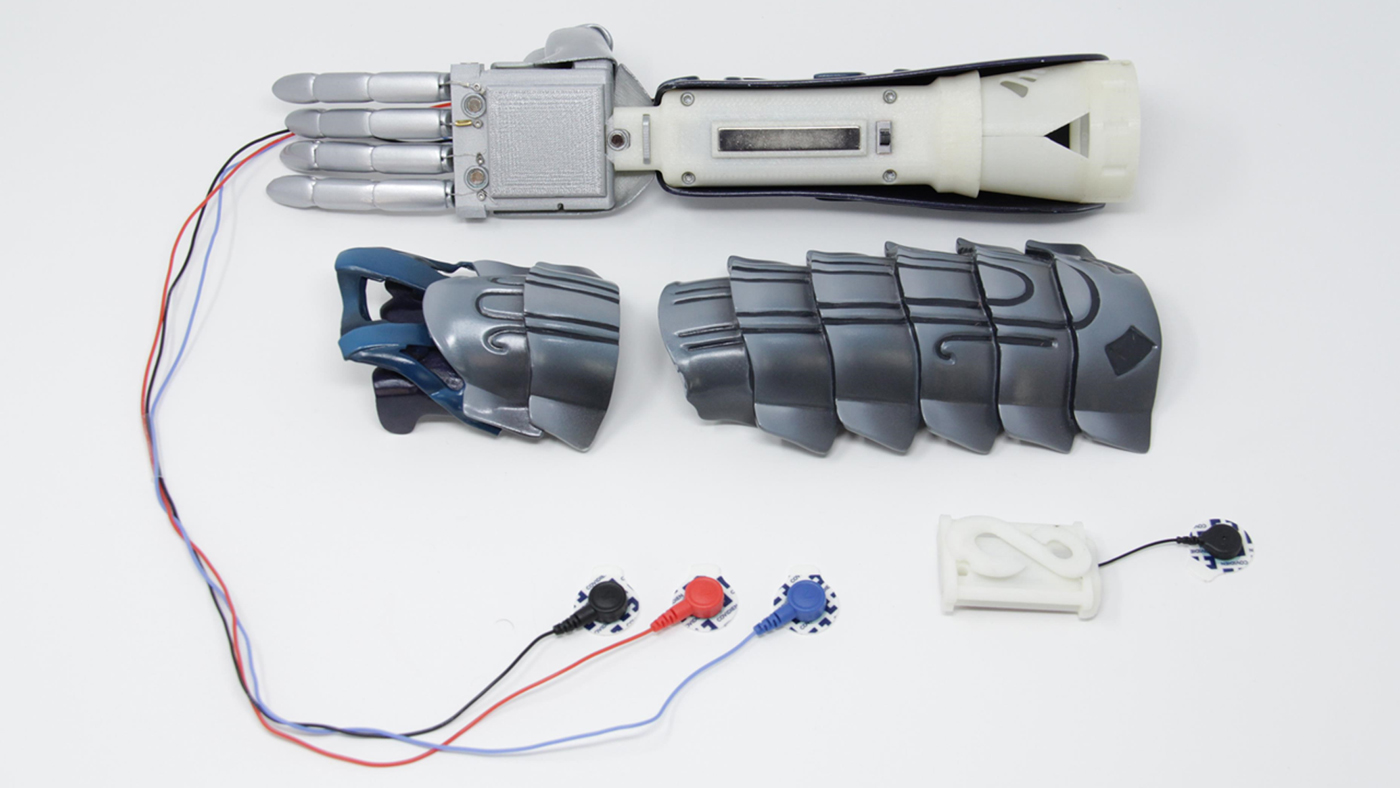
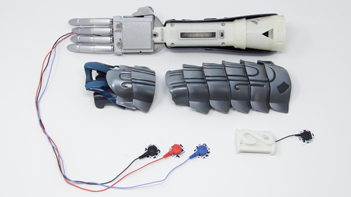
The prosthetic limb device and accompanying standalone training controller developed in this study have been produced using 3D-printed acrylonitrile butadiene styrene (ABS) plastic, via fused deposition modeling (FDM), including a dissolvable acrylic copolymer to allow for complex internal channels. Interlocking parts are created to interface with mechanical components including fasteners, springs, DC motors, gears, and cabling. The advantages of this type of manufacturing include the allowance for more rapid prototyping, cost-effective short-run manufacturing, and the ability to grow modular parts that can be used to resize the antebrachial and brachial segments of the device. An image of the device components and the standalone training controller is presented in Fig. 1.
Limbitless Solutions second-generation device design including structural core, artistic sleeves, and standalone training controller. Artistic design used in partnership with 343 Industries®.

These parts have demonstrated excellent strength, low weight, and durability. While 3D printing may generate parts with excellent performance, the printing parameters including printing orientation strongly influence the part's properties and performance.[Reference Maroti, Varga, Abraham, Falk, Zsebe, Meiszterics, Mano, Csernatony, Rendeki and Nyitrai20] Manufacturing orientation optimization is prioritized to orient the 3D-printed part, such that the printed part's anticipated load axis is normal to the Z-axis (parallel to the XY plane). This optimization reduces the impact of the anisotropic nature of FDM. To avoid failure mechanisms that may be driven from high porosity or stress concentrations due to surface roughness, surface preparation is conducted to polish the outermost layers. This preparation, in conjunction with an automotive grade-modified alkyd and acetone-based coating, establishes a strong protective layer. Urethane and polyurethane secondary layers are built on this base to achieve the desired surface finish and esthetics. In effort to provide the integration of multiple stylistic designs that can be interchanged, but remain robust and secure, an interlocking magnetic system was designed and implemented. This method is designed to support alignment and ease of application, which should support ease to be interchanged by a single (organic) hand.
To improve the contact friction and resulting dexterity, the fingertips leverage an over-molding deposition process to form the fingertips from a two-part silicone elastomer. The modeling chamber, which houses the structural 3D-printed distal phalanges, is manufactured via 3D printing in ABS as well. The silicone is a two-part, 1A to 1B, mixture commercially available from Smooth-On®. The viscosity of the compound can be controlled by additives to tailor the material properties for the application. The silicone interface provides stronger contact which results in more robust grip, where a fully 3D-printed ABS plastic contact point would otherwise cause objects to slip out of the hands. Other manufacturers may use silicon gloves, which can be of many colors, to provide higher contact friction along with lifelike or esthetic colors. This novel design differs, while using silicone only in the primary contact points and leveraging higher expression designs via urethane paints.
This study's novel prosthetic arm uses five independent DC motors that can activate a total of 32 hand states, from complete open and close to more specific dexterities. The custom-designed printed circuit board controls these motors based on the user's activation employing a single electromyography sensor to provide multi-gestural control to the user. The bioelectric potential measured from the user's muscle is gathered by surface-mounted pre-gelled Ag/AgCl electrodes and passed to an amplification circuit. After the measured signal is amplified at a ratio of 1000 to 1, it is then rectified and filtered with a bandpass. This rectified signal's sensitivity is then manipulated by a variable pull-up resistor to optimize the signal. The processed signal is sent to the onboard computation controller. A calibration is implemented to determine the measurable high and low ends of the user's electric potential, which is based on a number of factors including skin resistance, hydration, and muscle volume. The electric potential within this range is interpreted and translated into hand state gestures based on the magnitude, duration, and time-dependent pattern of the contractions.
To provide supplemental training beyond an occupation therapy environment and to effectively train complex hand states beyond the initial gross motor controls of all open or all closed, training games were developed to utilize the same electromyographic flex controller implemented as a standalone device. Different levels of control specification are possible with a user-specific calibration system. The electromyographic flex controller is analogous to the controller found inside the study's prosthetic arm and is designed to simulate the process of using the prosthetic. The measured and processed signal is sent to a simulation to interact with the virtual gaming environment, instead of the motors that control the hand. The materials used to develop the controller are the same as those used in the prosthetic itself, using 3D-printed housing and custom-printed circuit boards. This design is important because it allows the training of more complex states to take place in a private environment that can be calibrated and repeated whereby overcoming social stigmas or pressures that might deter real-world training.
Reported information[Reference Bennett, Dalley, Truex and Goldfarb21,Reference Gordon, Churchill, Clauser, Bradtmiller, McConville, Tebbetts and Walker22] has highlighted the comparison of organic and prosthetic hands, with the mass of a typical human hand approximately 400 g. Electromyographic actuated hands, usually reported excluding battery or cosmesis, have been weighed in between 400 and 515 g. This team's novel bionic system uses additive manufacturing and custom-printed circuit boards in an effort to reduce the weight to the user. This device was weighed and reported: (i) hand only, excluding cosmesis and battery, 200 g, (ii) forearm attachment including battery 215 g, (iii) cosmesis shells for hand and forearm between 120 and 240 g depending on the size and interchangeable artistic design. The full system weight is approximately 535–655 g, not including the human integration components. The hand length is reported at 16 cm and hand breadth reported at 7 cm, comparable for the target age range of 8–12 years of age.
Game-based training experiment
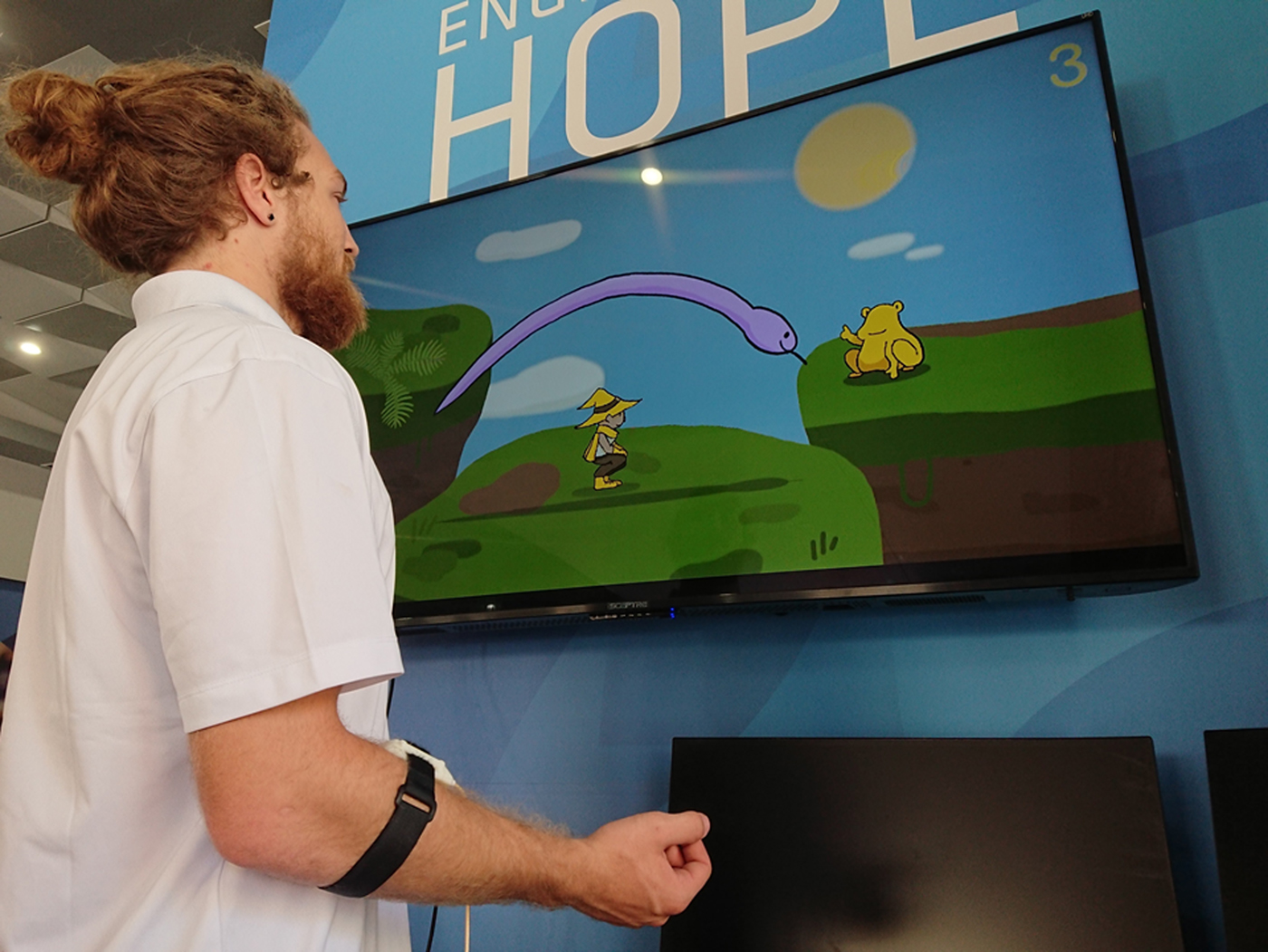
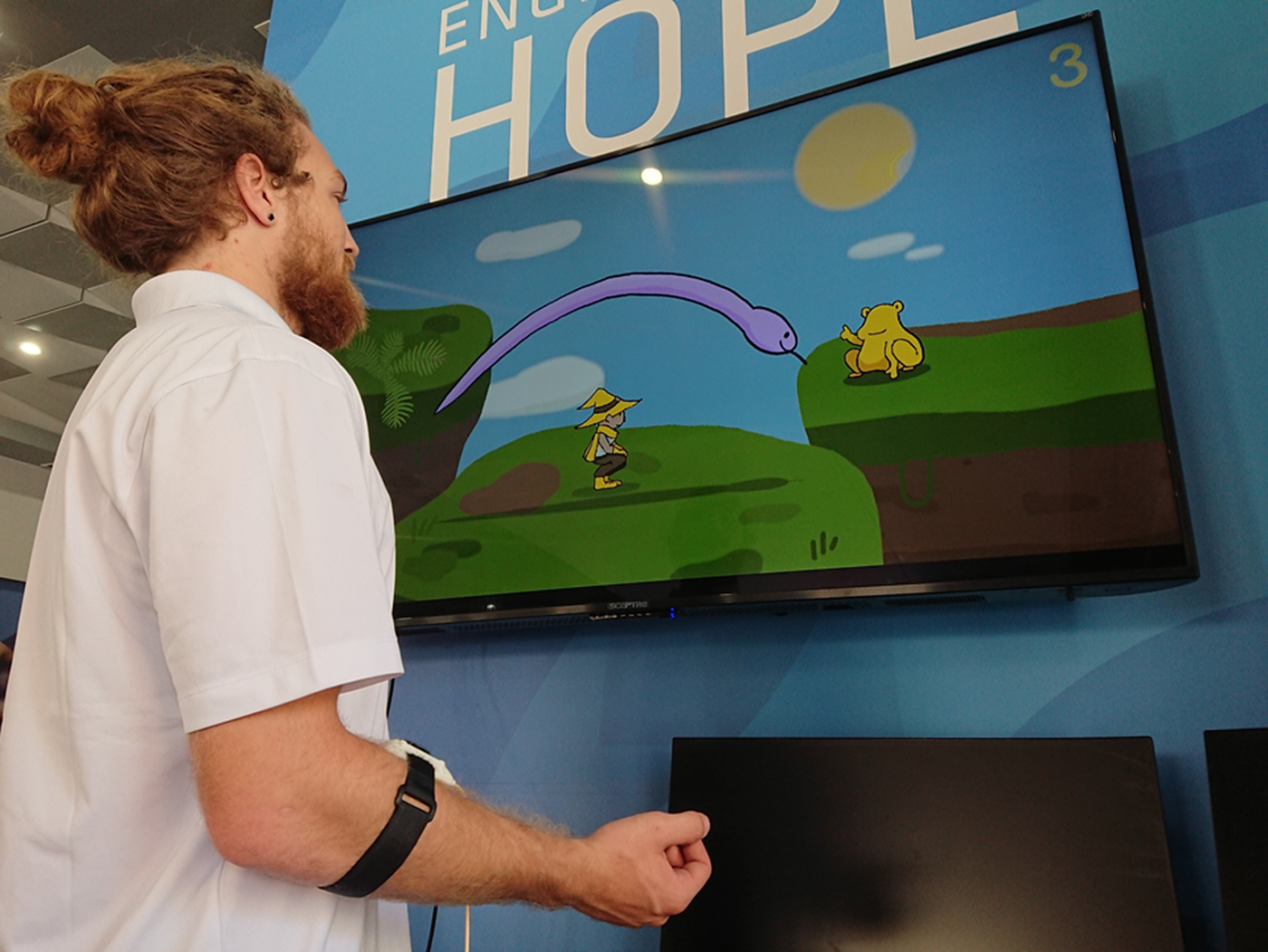
The training game designed for this study, named Magic Savior of Friends, is a side-scrolling platformer in which the player assumes the role of a wizard who must rescue the friendly characters and navigate complex environments. The player navigates a series of levels and mini-games by jumping from platform to platform and using magical spells to defeat enemies and solve puzzles. Magic spells require the user to interact using the electromyographic flex controller, with variable magnitude control correlated to the muscle contraction magnitude. This game was used for both training and learning evaluation. For in-level navigation, a controller with a single joystick and accompanying buttons was implemented to control the character apart of the special abilities that remained with the electromyographic flex controller. The application of the training method is presented in Fig. 2.
Application of training controller and performance assessment training game.
Gameplay consisted of three phases including a pre-test, user-led training, and a post-test. In the pre-test and post-test phases, participants played the Jump Rope mini-game. The jump rope game challenge asks the player to flex using the electromyographic flex control to jump over a jump rope, which cycles at regular intervals. Players must contract the muscle attached to the sensor, commonly the bicep muscles, to the action threshold and then release in order to jump. Successful jumping requires muscle contractions which are both adequate in intensity and are timed appropriately. The ability to shorten the overall time period from baseline through the maximum contraction and the subsequent return to baseline is one of the conditionings desired from the training.
In the training phase, participants played through the first three levels of the game. These levels are side-scrolling action gameplay, which requires typically requires the player to flex using the electromyographic flex controller in order to attack or defend with magical abilities. Attacks occur at three levels which trigger above baseline including a low, medium, and maximum threshold. For this study, the thresholds were set to 33%, 66%, and 100% of a user calibrated range, respectively. This version of the game was designed such that users could also play using a traditional X-Box controller rather than the electromyographic flex controller. For the control group, participants utilized the X-Box controller and activated their abilities by holding and releasing the X button in place of flexing.
Methodology
The study had a total of 50 participants who attended an in-person session in which they were randomized into two subgroups and completed short-term training with the training platform. These participants were undergraduate students at the UCF recruited through the SONA system. SONA is a research participation platform through which students enrolled in psychology classes at the university can sign up as participants in research studies for extra credit. Participants in this study ranged in age from 18 to 24 years of age (m = 18.77, SD = 0.47).
All data collection for this project was conducted under research protocols approved by the Institutional Review Board at UCF. All participants first played through the pre-test mini-game using the electromyographic flex controller before then advancing through the first three levels of the game. Group 1 was assigned as the training group using the electromyographic flex controller and Group 2 assigned as the control group using a traditional X-Box controller. Following the session, all participants played the assessment mini game using the EMG controller to assess post-training ability.
At the conclusion of the intervention, all participants completed measures of usability and user experience (UX; SUS and GUESS survey instruments). Additionally, while participants used the electromyographic flex controller, the game system recorded muscle flex values in real time throughout the play session. Immediately after gameplay, participants completed survey measures assessing video game UX and usability. The total duration of the experimental session did not exceed 1 h.
The GUESS[Reference Phan, Keebler and Chaparro19] was used to assess the users' enjoyment of the training game. The GUESS is a 55-item measure which asks the user to report their experience with a game on a 1–7 Likert style scale. Player satisfaction is measured across sevensubscales including:
• Playability
• Narrative
• Player Engrossment
• Enjoyment
• Creative Freedom
• Audio Esthetics
• Visual Esthetics
• Player Gratification
• Social Connectivity
Scores on this measure range from 9 to a maximum of 63 points, with higher scores indicating better UX for the player. The scale was presented in its entirety, and for elements which were not contained in the game (such as multiplayer functionality), participants were asked to provide a neutral answer indicative of a value of 4 on the 7-point scale.
Usability was measured using the System Usability Scale[Reference Brooke23] (SUS). The SUS is a 10-item questionnaire used for quick-and-dirty usability evaluation across a variety of domains. When answering the SUS survey instrument, participants were asked to focus on the control method specifically, either the flex controller or the X-Box controller, in order to keep observations consistent with previous research conducted by our team.[Reference Smith, Dombrowski, Buyssens and Barclay18] Scores on the SUS range from 0 to 100, with higher scores corresponding to reports of more usable devices.
Results and discussion
Electromyography used in the context of simulation and training, along with gamified experiences, is highly versatile. Its implementation can be directly applied for strengthening/training of different control strategies, specifically using tandem upper and lower magnitude thresholds, proportional control, pulse controls, and even co-contractions. Recent training methods[Reference Roche, Rehbaum, Farina and Aszmann24] reported have demonstrated the ability to train multiple gestures using a variety of control paradigms, both single-channel and multi-channel inputs. The evaluation of training methods and their translation to real-world application is still of great research interest.
This study aimed to evaluate the efficacy and engagement of the gamified treatment. Subgroups using the traditional controller and group subjects using the electromyographic flex control group had their performance scores and survey responses evaluate. This measurement was designed to evaluate whether using the training via the electromyographic flex controller was effective, as compared to an industry-standard game controller. Previous findings[Reference Smith, Dombrowski, Buyssens and Barclay18] had identified differences in usability and UX data between groups using the flex controller and groups using a tradition control scheme. The System Usability Scale (SUS) is an industry-standard tool for measuring usability.[Reference Brooke23] Used in over 1300 articles, the SUS is easy to administer, works with a small sample size, and has been validated to be reliable. It is, however, not designed with games specifically in mind. Therefore, the development team also employs the GUESS.[Reference Phan, Keebler and Chaparro19] The GUESS scale is available under creative commons license and looks at nine aspects of game usability including playability, narrative, engrossment, enjoyment, creative freedom, audio, visual esthetics, gratification, and social connectivity. The GUESS instrument allows for usability analysis of the full game system and makes it easier to compare the features of games that might make them more or less compelling to different players.[Reference Phan, Keebler and Chaparro19]
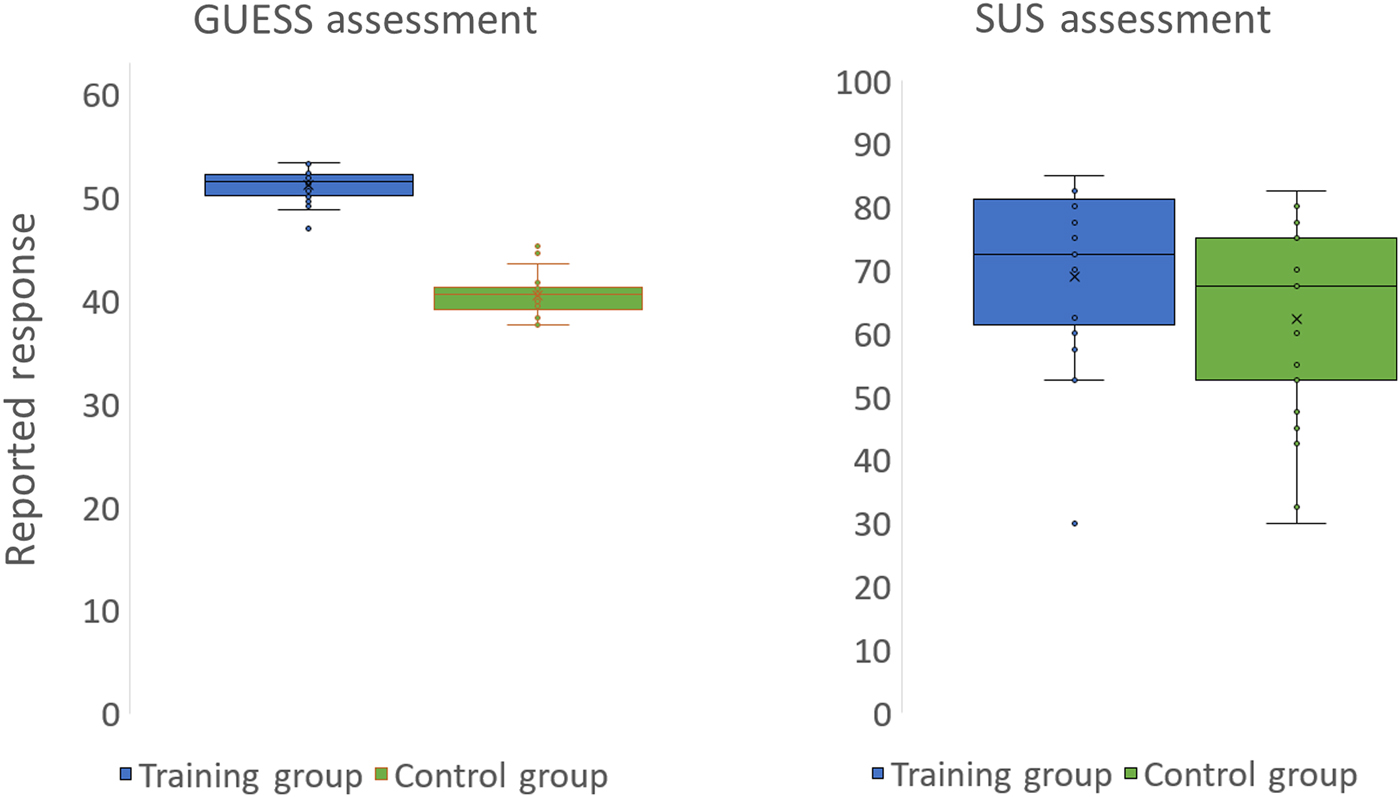
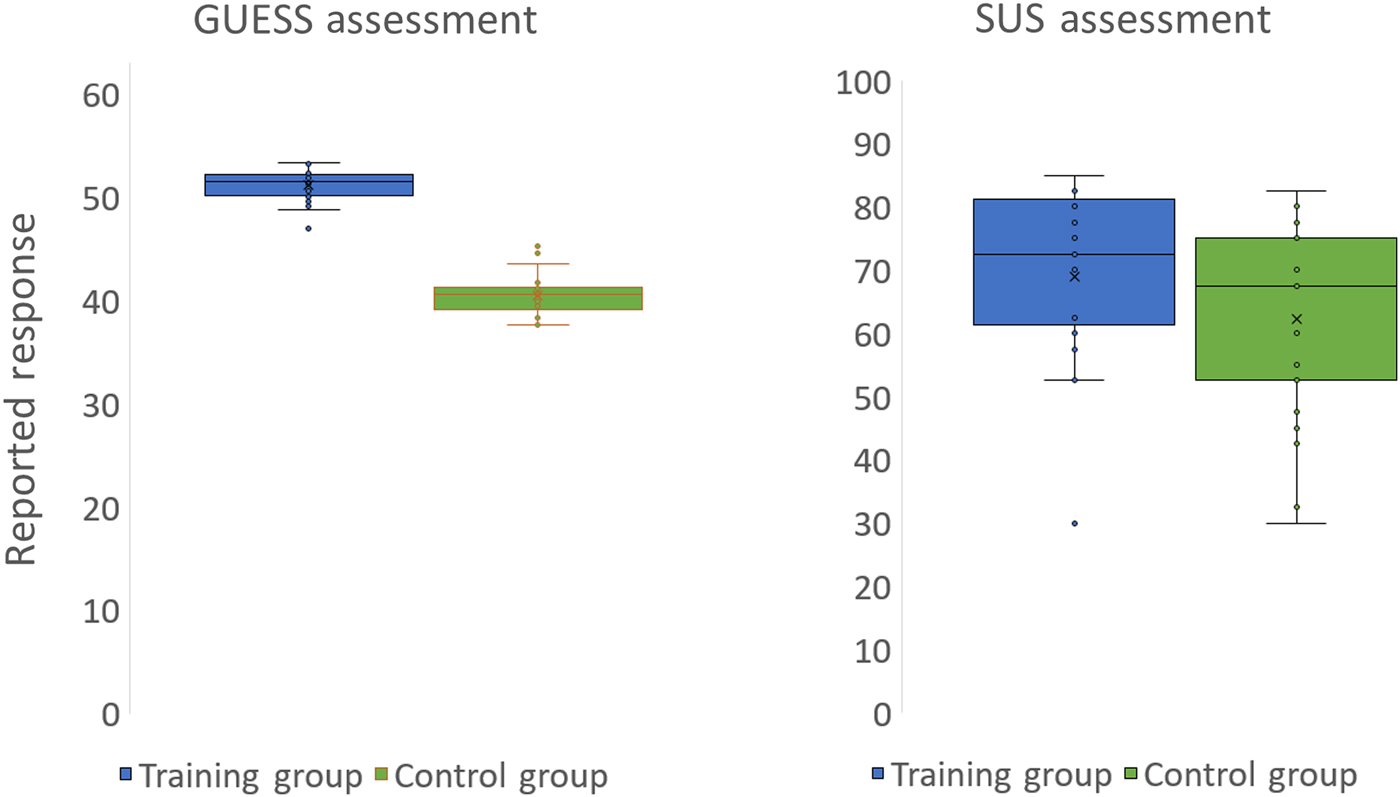
The aggregate scores on both the GUESS and SUS surveys were compared between groups using one-way ANOVA. Measures of central tendency were computed for both groups in order to compare overall usability and UX ratings for the training game, with similarly acquired measurements from a parallel design analysis. The one-way ANOVA of both the GUESS and SUS scores showed a significant between-groups difference in GUESS scores [F(1,49) = 47.2, p < 0005]. The groups reported no significant difference for SUS scores [F(1,49) = 2.60, p = 0.114]. For GUESS scores, participants in the training group using the electromyographic flex controller provided a mean rating of 51.08 (SD = 1.51), while participants in the Control group provided a mean rating of 40.47 (SD = 1.92). This indicated that participants who played the game using the electromyographic flex controller had a consistently higher reported UX than did users who played the game using the X-Box controller. The reported lack of significant differences in SUS ratings revealed that the participants viewed the electromyographic flex controller and the traditional X-Box controller as similar in terms of usability. This provides the support that the mechanics of the training controller are effective for the simulation. These data are presented in Fig. 3. The findings are consistent with patterns observed previously[Reference Smith, Dombrowski, Buyssens and Barclay18] that the two control styles were found to be similar in terms of usability. Users tended to give higher UX ratings when using the flex controller to perform actions that corresponded to the arm of the in-game character.
Results from GUESS and SUS assessment surveys for participants separated in subgroups based on the style of controller.
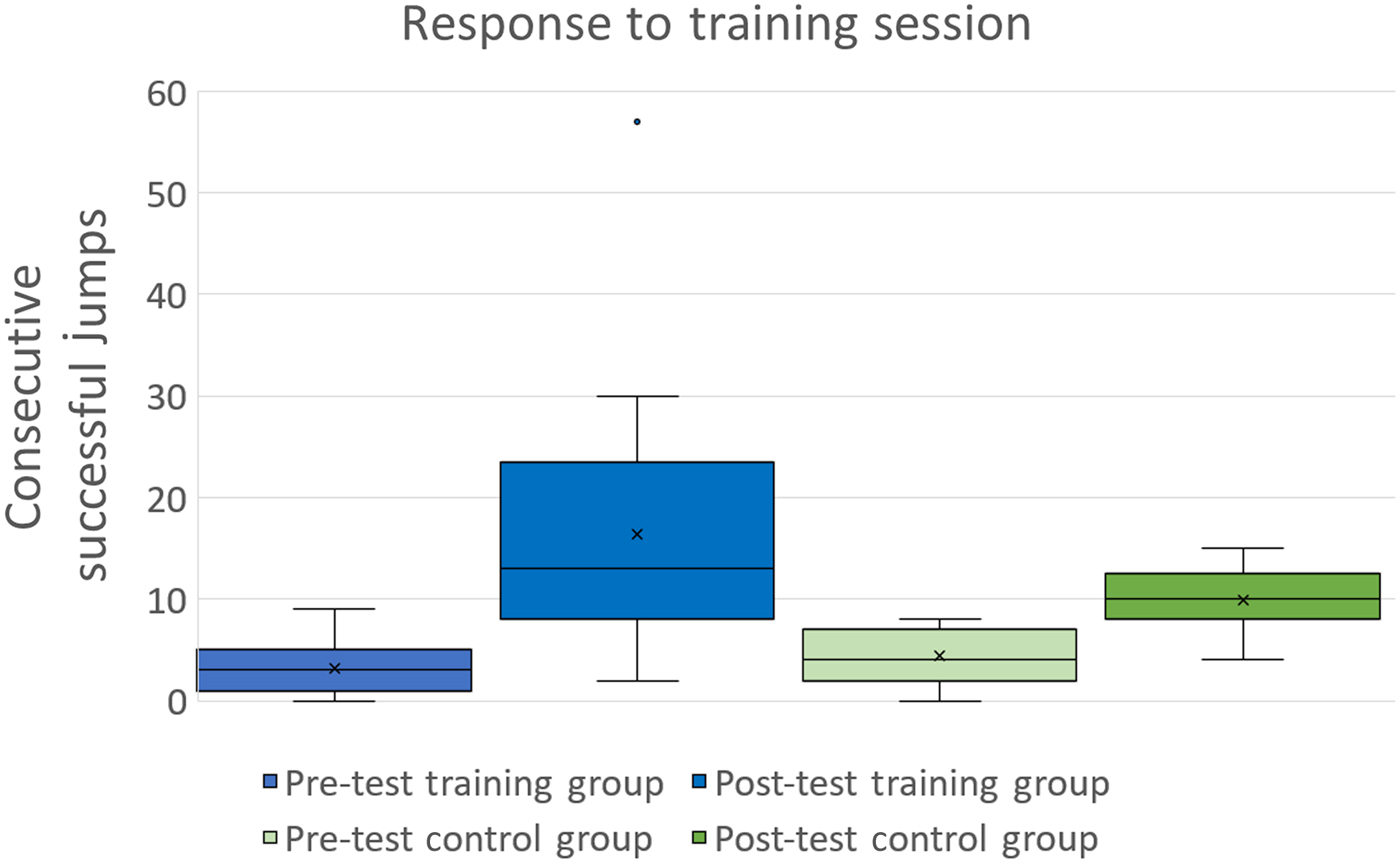
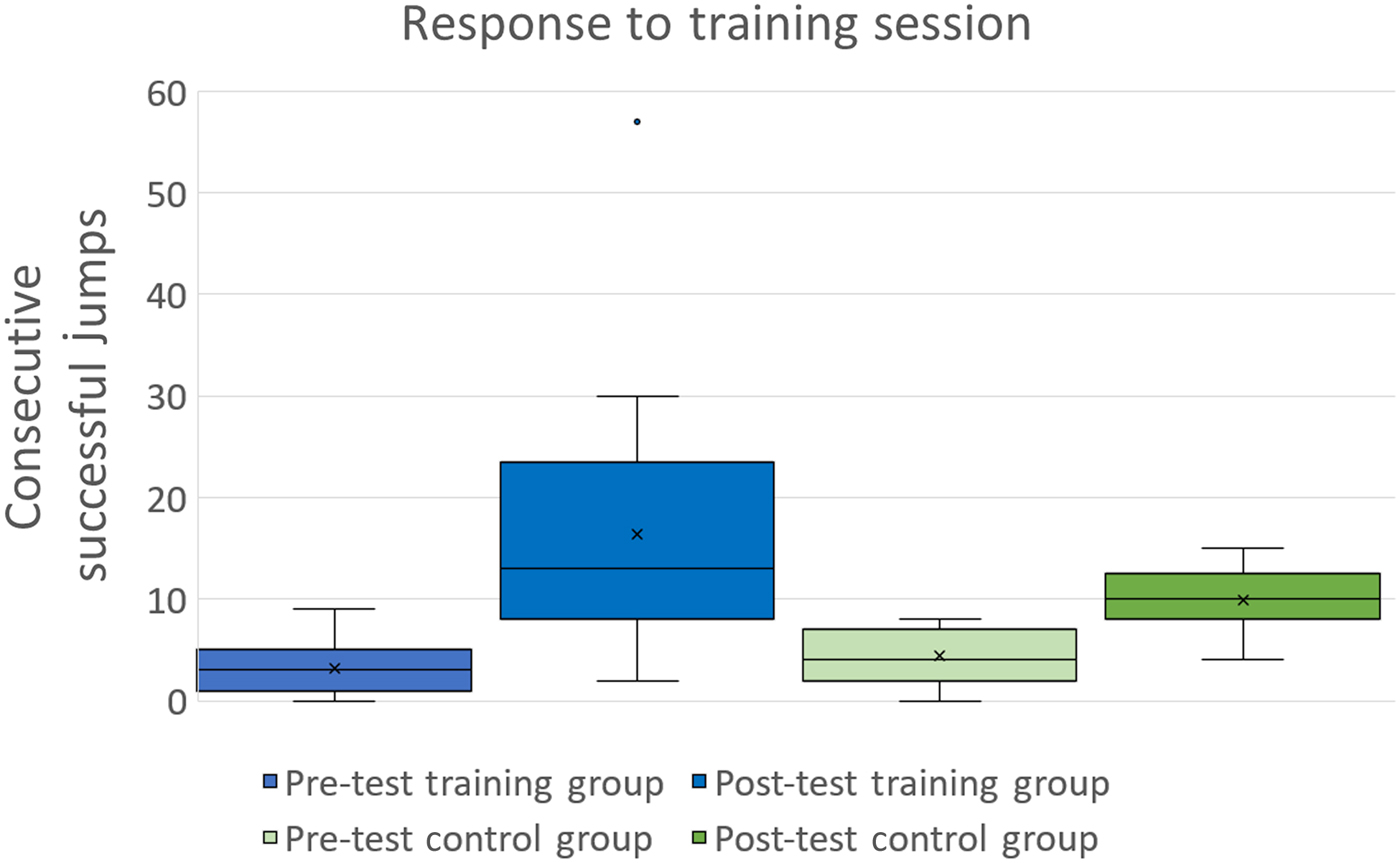
Training efficacy was computed using game performance during the training session. The total number of consecutive successful jumps in the testing mode was recorded at both pre-test and post-test. The results are presented in a box and whisker plot to visualize the improvement from baseline for both subgroups. It was hypothesized that users using the electromyographic flex controller would be more challenged in the pre-test phase that the subgroup using the traditional controller (Fig. 4). This test was designed to evaluate if the training simulation levels were effective to raise proficiency with the electromyographic flex controller while being benched marked against the traditional controller interface. Any experience inside an effective simulation or gamified experience was anticipated to produce increase post-test performance scores. It was hypothesized that the subgroup using the electromyographic flex controller would perform comparably to their counterparts in a subgroup using the traditional controller.
Results from pre- and post-test performance evaluation for both subgroups based on the style of controller.
Conclusions
These findings acknowledge that both evaluation subgroups showed significant pre-test to post-test performance, expected with the training intervention. The magnitude of change in the training groups using the electromyographic flex controller was significantly larger than that of the control group. Further, the findings reveal that within a 1-h training session with assessment, meaningful first-time training using an electromyographic flex controller could be conducted and subsequently resulted in much-improved performance with the device. The performance in the post-test exceeded the traditional control subgroup, which may be partially attributed to a more engaging training experience when using the electromyographic flex controller. In application with the prosthetic arm system, the training controller and evaluation would be meaningful in supporting patients' initial learning of an electromyographic controlled prosthetic, and this training may support elucidating the control mechanisms via a well-connected visual feedback. The use of initial training in a detached virtual environment is theorized to support the more difficult initial adaptation to a prosthetic device, where early use failure in real-life environments may provide feelings of embarrassment or external pressure.
Leveraging the effectiveness of additive manufacturing, the second generation of this novel prosthetic limb system has improved robustness and modularity. These improvements may allow for increased ease of use and performance outcomes. To take advantage of the added control capabilities, the companion training system leverages a virtual training environment to create a system where prolonged and repeated activities can improve performance outcomes. Reducing time to proficiency for the device is theorized to improve affinities and retention. The next phase of this study is designed to achieve quantifiable outcomes, including arm system performance and the influence on patient's quality of life. A first of its kind clinical trial protocol for assessment has been developed in conjunction with OHSU) and the UCF. This study will evaluate participating children ages 6 through 17 and how they are using their device, along with identifying any influences on their quality of life. The assessment protocol includes four visits with the occupational therapy team throughout the 1-year study. This assessment will provide valuable insight as to when multi-gesture hand states are appropriate to unlock for the patient and the role of in-home virtual training mechanisms to supplement scheduled occupational therapy visits. This novel development of technology and clinical translation is critical to advancing the accessibility of advanced prosthetics for pediatrics. The use of additive manufacturing has enabled significantly lower costs, rapid prototyping, and advanced customization critical to improving clinical outcomes and experience.
Acknowledgments
The authors would like to thank many members of the Limbitless Solutions team who have supported the project throughout its development. Our appreciation to the corporations and external artists from both Riot Games and 343 Industries for supporting additional designs in the sleeve catalog. The authors declare no personal conflicts of interest but want to disclose that the Limbitless Solutions organization has received support from the 3D printer manufacturer Stratasys.