Introduction
Identifying clinical features that predict later ‘conversion’ to bipolar disorder (BD) in young people at high familial risk would assist in identifying a more focused population for early intervention. A relatively small number of prospective studies have been undertaken either in subjects initially presenting with major depressive disorder (MDD) – irrespective of family history – or in those with a family history of BD. Reported predictors of the development of BD in those initially presenting with unipolar depression (irrespective of family history) include: family history of BD (Strober, Reference Strober1982; Akiskal et al. Reference Akiskal, Walker, Puzantian, King, Rosenthal and Dranon1983; Coryell et al. Reference Coryell, Endicott, Maser, Keller, Leon and Akiskal1995; Angst et al. Reference Angst, Sellaro, Stassen and Gamma2005; Wong et al. Reference Wong, Dunn, Tang, Chan and Chong2009; Tondo et al. Reference Tondo, Visioli, Preti and Baldessarini2014; Bukh et al. Reference Bukh, Andersen and Kessing2016); early age at depressive onset (Angst et al. Reference Angst, Sellaro, Stassen and Gamma2005; Fiedorowicz et al. Reference Fiedorowicz, Endicott, Leon, Solomon, Keller and Coryell2011; Dudek et al. Reference Dudek, Siwek, Zielinska, Jaeschke and Rybakowski2013; Tondo et al. Reference Tondo, Visioli, Preti and Baldessarini2014); greater number of depressive episodes (Angst et al. Reference Angst, Sellaro, Stassen and Gamma2005; Dudek et al. Reference Dudek, Siwek, Zielinska, Jaeschke and Rybakowski2013); psychotic features (Strober, Reference Strober1982; Akiskal et al. Reference Akiskal, Walker, Puzantian, King, Rosenthal and Dranon1983; Goldberg et al. Reference Goldberg, Harrow and Whiteside2001); psychomotor retardation (Strober, Reference Strober1982; Akiskal et al. Reference Akiskal, Walker, Puzantian, King, Rosenthal and Dranon1983); guilt, suicidal thoughts and diurnal mood variation (Pfennig et al. Reference Pfennig, Ritter, Höfler, Lieb, Bauer, Wittchen and Beesdo-Baum2015); and substance abuse (Bukh et al. Reference Bukh, Andersen and Kessing2016). Predictors of conversion to BD in those with a family history of this condition include: depressive episodes (Mesman et al. Reference Mesman, Nolen, Reichart, Wals and Hillegers2013; Duffy et al. Reference Duffy, Horrocks, Doucette, Keown-Stoneman, McCloskey and Grof2014; Axelson et al. Reference Axelson, Goldstein, Goldstein, Monk, Yu, Hickey, Sakolsky, Diler, Hafeman, Merranko, Iyengar, Brent, Kupfer and Birmaher2015; Hafeman et al. Reference Hafeman, Merranko, Axelson, Goldstein, Goldstein, Monk, Hickey, Sakolsky, Diler, Iyengar, Brent, Kupfer and Birmaher2016); anxiety disorders (Nurnberger et al. Reference Nurnberger, Mcinnis, Reich, Kastelic, Wilcox, Glowinski, Mitchell, Fisher, Erpe, Gershon, Berrettini, Laite, Schweitzer, Rhoadarmer, Coleman, Cai, Azzouz, Liu, Kamali, Brucksch and Monahan2011; Duffy et al. Reference Duffy, Horrocks, Doucette, Keown-Stoneman, McCloskey and Grof2014;); behavioural disorders (Nurnberger et al. Reference Nurnberger, Mcinnis, Reich, Kastelic, Wilcox, Glowinski, Mitchell, Fisher, Erpe, Gershon, Berrettini, Laite, Schweitzer, Rhoadarmer, Coleman, Cai, Azzouz, Liu, Kamali, Brucksch and Monahan2011); and dimensional measures of anxiety/depression, affective lability, and mania (for bipolar spectrum disorder) (Hafeman et al. Reference Hafeman, Merranko, Axelson, Goldstein, Goldstein, Monk, Hickey, Sakolsky, Diler, Iyengar, Brent, Kupfer and Birmaher2016). Recently, the Pittsburgh group (Hafeman et al. Reference Hafeman, Merranko, Goldstein, Axelson, Goldstein, Monk, Hickey, Sakolsky, Diler, Iyengar, Brent, Kupfer, Kattan and Birmaher2017) have also reported on a ‘personal-level risk calculator’ for prediction of new-onset bipolar spectrum disorder (with the majority of subjects having BD-NOS) , finding that univariate predictors of outcome were dimensional measures of mania, depression, anxiety, and mood lability.
Related to this frequently reported an association between depressive episodes and the later onset of BD, a growing literature has challenged the traditional view that there are no meaningful differences in the depressive symptoms experienced by those with BD and MDD (Grande et al. Reference Grande, Berk, Birmaher and Vieta2016). In 2008, a taskforce of the International Society for BDs identified clinical features that are more likely to be experienced by depressed adult patients with established BD than those with MDD (Mitchell et al. Reference Mitchell, Goodwin, Johnson and Hirschfeld2008; Phillips & Kupfer, Reference Phillips and Kupfer2013). The features identified by that ‘Probabilistic Approach to Bipolar Depression’ include specific symptoms (hypersomnia, increased weight and/or appetite, psychomotor retardation, psychotic features and/or pathological guilt, other atypical features such as leaden paralysis, and mixed features), longitudinal characteristics (onset before age 25 and at least five lifetime depressive episodes) and a positive family history of BD. Our group has since reported from validation studies that an empirically-derived cut-off of ⩾4 ‘Probabilistic features’ most optimally differentiates bipolar depression from MDD, with the most robust specific distinguishing features being psychomotor retardation, psychotic features, and mixed features (Mitchell et al. Reference Mitchell, Frankland, Hadzi-Pavlovic, Roberts, Corry, Wright, Loo and Breakspear2011; Frankland et al. Reference Frankland, Cerrillo, Hadzi-Pavlovic, Roberts, Wright, Loo, Breakspear and Mitchell2015). Similar findings have been reported from large UK, Chinese and US cross-sectional datasets (Forty et al. Reference Forty, Smith, Jones, Jones, Caesar, Cooper, Fraser, Gordon-Smith, Hyde, Farmer, McGuffin and Craddock2008; Xiang et al. Reference Xiang, Zhang, Wang, Hu, Ungvari, Dickerson, Kilbourne, Si, Fang, Lu, Yang, Lai, Lee, Hu, Chen, Huang, Sun, Wang, Li, Zhang and Chiu2013; Leonpacher et al. Reference Leonpacher, Liebers, Pirooznia, Jancic, MacKinnon, Mondimore, Schweizer, Potash, Zandi and Goes2015), although the predictive capacity of the Probabilistic Approach has yet to be demonstrated in a prospective study.
We are not aware of any prospective studies of BD outcomes in MDD subjects with a family history of BD, which have examined the predictive capacity of specific depressive features, above and beyond the effect of MDEs per se. We report here on the predictive capacity of both MDEs and specific depressive symptoms in a prospective evaluation of young subjects at high familial risk for BD. We hypothesized that: (i) those at high-risk (HR) would be more likely to report ⩾4 Probabilistic features (as based on our previous research (Mitchell et al. Reference Mitchell, Frankland, Hadzi-Pavlovic, Roberts, Corry, Wright, Loo and Breakspear2011; Frankland et al. Reference Frankland, Cerrillo, Hadzi-Pavlovic, Roberts, Wright, Loo, Breakspear and Mitchell2015)) when depressed at baseline than the control (CON) group; (ii) subjects with a baseline lifetime history of MDEs would be more likely to convert to BD; and (iii) the presence of ⩾4 Probabilistic features in subjects with a lifetime history of MDEs at baseline would be associated with an increased likelihood of conversion to BD. Furthermore, we investigated the relative predictive capacities of lifetime MDEs, anxiety, behavioural and substance use disorders.
Method
Participants
All participants were enrolled in the Sydney-based ‘Bipolar Kids and Sibs Study’, a prospective study investigating the development of BD in an HR sample. Participants aged between 12 and 30 years were recruited into one of two groups: (1) ‘HR’ participants with a first-degree relative with a confirmed diagnosis of either bipolar I (BD-I) or bipolar II (BD-II) disorder; and (2) a ‘CON’ group consisting of individuals with no first-degree relative with BD, recurrent MDD, substance abuse, or any psychiatric hospitalisation. Subjects were not eligible for inclusion in the HR group at baseline if they had already experienced a threshold syndromal hypo/manic episode. (Note that subjects were not excluded on the basis of subthreshold hypomanic episodes at baseline). At the time of analysis, 287 participants (n = 163 HR, n = 124 CON) had completed a baseline assessment. The 163 HR participants were drawn from 109 families, in which the proband was either a parent (n = 85) or a sibling (n = 24). The study was conducted with the approval of the University of NSW Human Research Ethics Committee (HREC Approval Number: 14128) in Sydney, Australia. Participants were recruited through prior BD studies, and advertisements in print and electronic media. All participants (and parents of participants aged under 16) provided written informed consent. Further clinical details on the HR and CON groups are available from Perich et al. (Perich et al. Reference Perich, Lau, Hadzi-Pavlovic, Roberts, Frankland, Wright, Green, Breakspear, Corry, Radlinska, McCormack, Joslyn, Levy, Lenroot, Nurnberger Jnr and Mitchell2015).
Clinical assessments
All families were administered the Family Interview for Genetic Studies (FIGS) to determine eligibility based on family history of psychiatric disorders (Maxwell, Reference Maxwell1992). The diagnosis of BD in the probands (parents or siblings) was confirmed by the Diagnostic Interview for Genetic Studies (DIGS) Version 4.0 (Nurnberger et al. Reference Nurnberger, Blehar, Kaufmann, York-cooler, Simpson, Harkavy-friedman, Severe and Malaspina1994), and medical records where available. At baseline, all eligible HR and CON participants were assessed for current and lifetime psychiatric symptoms. For participants aged 12 to 21 years (n = 106 HR, n = 60 CON), the child and a parent were interviewed using the Washington University in St Louis KSADS-BP (WASH-U K-SADS) with summary ratings based on both informants (Geller et al. Reference Geller, Zimerman, Williams, Bolhofner, Craney, DelBello and Soutullo2001). For participants aged between 22 and 30 years (n = 57 HR, n = 64 CON), the DIGS was administered. All interviews were conducted by specifically-trained research assistants who held at least an honours degree in psychology. Yearly follow-up assessments were carried out using either the DIGS or KSADS depending on age, with a median length of follow-up of 5 years.
Diagnosis
Current and lifetime diagnoses for a range of DSM-IV disorders were made using the Best Estimate Diagnosis (BED) methodology, with two psychiatrists conducting blind independent reviews (Leckman et al. Reference Leckman, Sholomskas, Thompson, Belanger and Weissman1982). Diagnoses were assigned a confidence rating from one to four; only those that met full DSM-IV criteria were rated at three or higher. Discrepancies were reviewed by the senior psychiatrist (PBM) to reach a consensus diagnosis. Inter-rater reliability for primary diagnosis was high (κ > 0.8). The BED process was also carried out following each annual follow-up assessment. Participants with a BED diagnosis of DSM-IV BD were categorised as either threshold converters (i.e. with BD-I or BD-II; confidence level of three or four) or subthreshold converters (i.e. with BD-NOS; confidence level of one or two), the latter diagnosis being made when subjects met full symptom criteria for hypomania, but did not meet the minimum duration criterion of 4 days.
Probabilistic features
We calculated the number of Probabilistic features endorsed by each participant during the most severe lifetime baseline MDE. ‘Leaden paralysis’ was not included in the DIGS, and the KSADS did not specifically ask about psychotic symptoms occurring during an MDE. Family history was not included as both the CON and HR groups were defined on this basis. We used the previously identified optimal cut-off of ⩾4 features to identify cases satisfying the Probabilistic criteria (Mitchell et al. Reference Mitchell, Frankland, Hadzi-Pavlovic, Roberts, Corry, Wright, Loo and Breakspear2011; Frankland et al. Reference Frankland, Cerrillo, Hadzi-Pavlovic, Roberts, Wright, Loo, Breakspear and Mitchell2015).
Statistical analyses
As bivariate comparisons showed no marked variation in clinical data between the DIGS and KSADS sample after accounting for age differences, the two samples were combined into a single group for analysis. Generalised estimating equations (GEE) logistic regression models were used, which accommodate the inclusion of multiple siblings from within families. Age- and sex-adjusted odds ratios and 95% confidence intervals in comparisons with the HR group are reported. Among participants with at least one lifetime DSM-IV MDE, we compared Probabilistic features between groups and modelled the association between these features and subsequent BD diagnosis at follow-up. A discrete-time survival analysis was used to model conversion to BD over time, based on: (i) the presence of a lifetime history of at least one MDE at baseline; and (ii) the presence or absence of ⩾4 Probabilistic features at baseline. We also examined whether lifetime history of any anxiety, behavioural (including oppositional defiant disorder, conduct disorder and ADHD), or substance disorders were associated with subsequent conversion to BD. Age and sex-adjusted hazards were calculated using a complementary log-log link, and estimates were used to generate survival curves.
Results
Clinical predictors of conversion to BD: depression
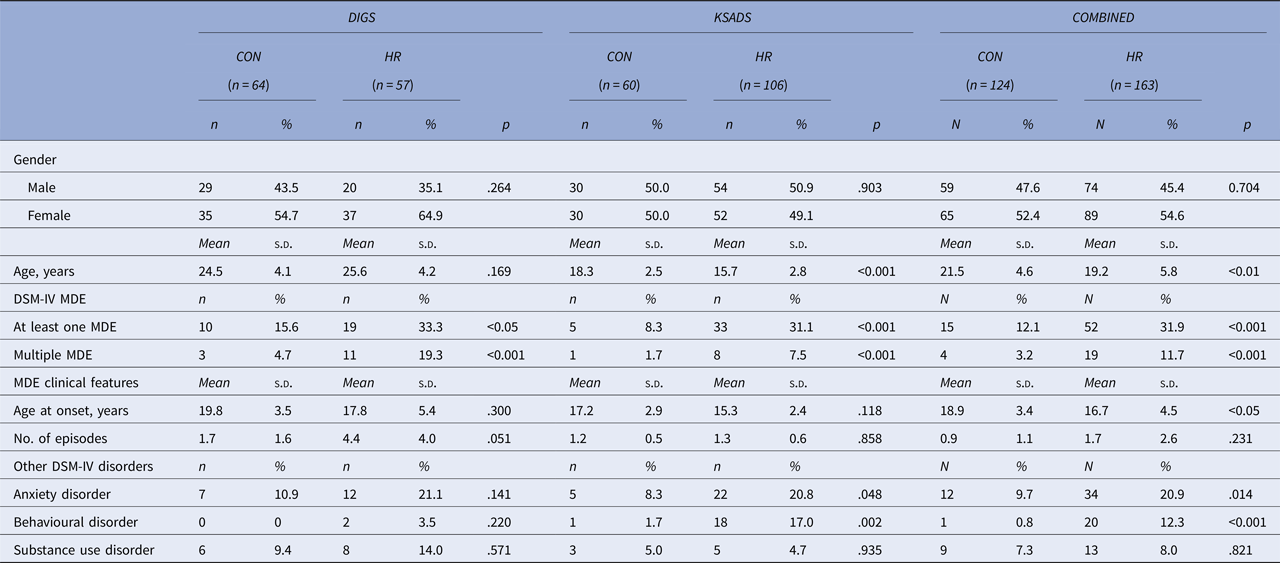
31.9% of the HR subjects and 12.1% of the CON participants had experienced at least one lifetime MDE at baseline (p < .01) (Table 1). Nineteen HR subjects developed hypo/mania at a follow-up assessment, with eight manifesting thresholds (4.9%; 4 bipolar I and 4 bipolar II) and 11 subthreshold (6.7%) episodes, i.e. a total conversion rate of 11.6% by up to 6 years. The median ages at which threshold and subthreshold criteria were met for a hypo/manic episode were 23 and 20 years, respectively. One CON subject developed a subthreshold episode. Of the 19 HR subjects who went on to develop hypo/manic episodes, 17 had experienced a lifetime MDE at baseline, while two had not (one of whom later developed a threshold hypo/manic episode, the other a subthreshold episode). Analyses reported below are based on participants with at least one lifetime MDE at baseline. On survival analysis, those HR subjects with at least one lifetime MDE at baseline were significantly more likely to convert to either threshold BD (hazard ratio 13.9, 95% CI 1.7–109.9, p < 0.05), subthreshold BD (hazard ratio 7.5, 95% CI 2.0–28.3, p < 0.01) or ‘any form of BD’ (threshold or subthreshold) (hazard ratio 9.0, 95% CI 2.9–27.5, p < 0.001) than those with no MDE.
Baseline clinical and demographic characteristics of the high risk (HR) and control (CON) groups

CON, control; HR, high-risk.
Probabilistic features at baseline
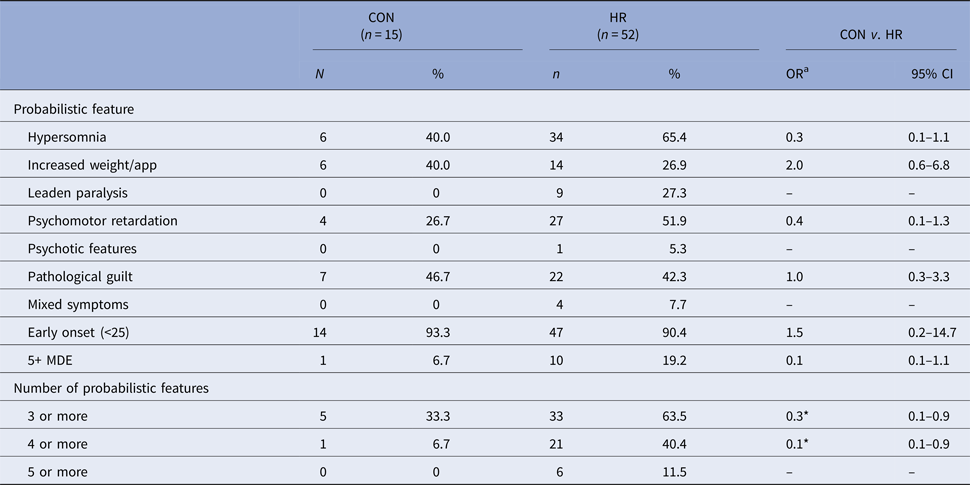
Although no individual Probabilistic feature distinguished significantly between the HR and CON groups (see Table 2), the HR participants were more likely to report at least three or four probabilistic features. As guided by our previous research, we chose a cut-off of ⩾4 features (Mitchell et al. Reference Mitchell, Frankland, Hadzi-Pavlovic, Roberts, Corry, Wright, Loo and Breakspear2011; Frankland et al. Reference Frankland, Cerrillo, Hadzi-Pavlovic, Roberts, Wright, Loo, Breakspear and Mitchell2015). Only 6.7% of the CON group compared with 40.4% of the HR group reached the threshold of ⩾4 Probabilistic features (p < 0.05).
Prevalence of probabilistic features at baseline and association with study group among high risk (HR) and control (CON) participants with at least one lifetime major depressive episode

CON, control; HR, high-risk.
a Odds ratios <1 indicate that a feature was more strongly associated with the HR group than the comparison group.
*p < 0.05, **p < 0.01, ***p < 0.001.
Association between individual Probabilistic features and later development of hypo/manic episodes
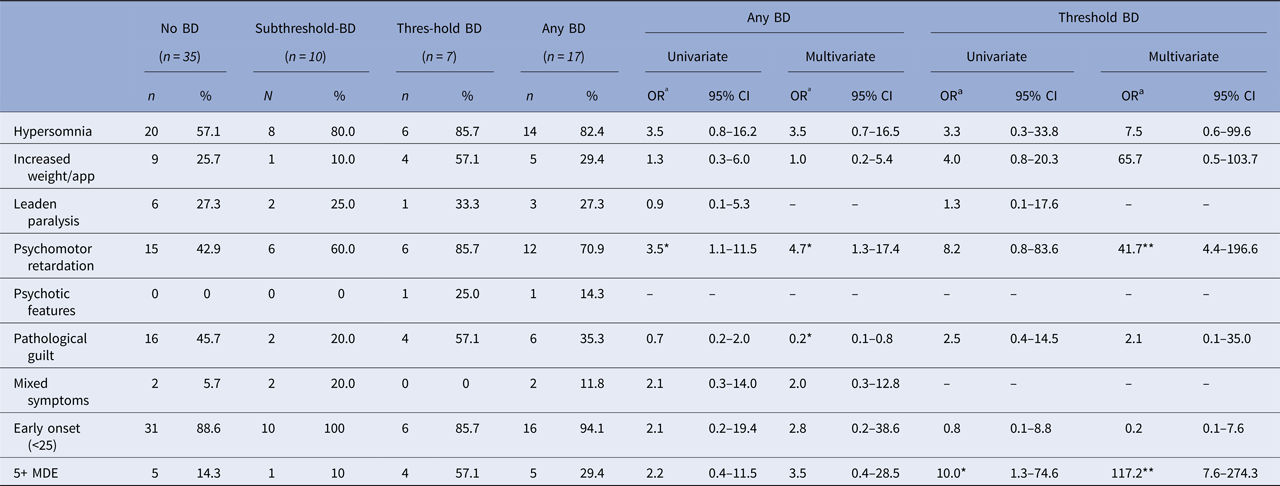
Of the 52 HR participants with a lifetime MDE, we identified 17 who were categorised as a threshold (n = 7) or subthreshold ‘converters’ (n = 10) to BD at a follow-up assessment, with baseline Probabilistic features summarised in Table 3.
Association between baseline depressive symptoms and bipolar disorder (BD) diagnosis at follow-up among high risk (HR) participants with at least one lifetime major depressive episode

Note: leaden paralysis and psychotic features were not included as data were not available for both age groups.
a Odds ratios >1 indicate that the presence of a given feature was associated with a greater likelihood of a BD diagnosis.
*p < 0.05, **p < 0.01, ***p < 0.001.
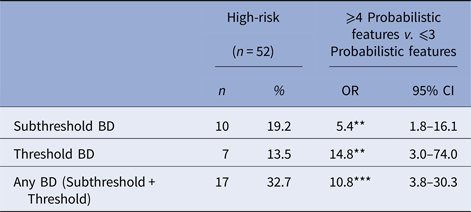
In the multivariate analyses, psychomotor retardation at baseline was significantly associated with later threshold BD diagnosis (OR = 41.7, 95% CI 4.4–196.6, p < 0.01) and any (threshold or subthreshold) BD diagnosis (OR = 4.7, 95% CI 1.3–17.4, p < 0.05) at follow-up (see Table 3). The presence of ⩾5 MDEs prior to baseline was also associated with a threshold BD diagnosis (OR = 117.2, 95% CI 7.6–274.3, p < 0.01). The presence of ⩾4 Probabilistic features at baseline, compared with < 3, was significantly associated with an increased likelihood of threshold BD (OR = 14.5, 95% CI 3.0–74.0, p < 0.01), subthreshold BD (OR = 5.4, 95% CI 1.8–16.1, p < 0.01), and ‘any’ form of BD (OR = 10.8, 95% CI 3.8–30.3, p < 0.001) at follow-up (see Table 4).
Association between number of probabilistic features and bipolar disorder (BD) diagnosis at follow-up among high risk (HR) participants with at least one lifetime major depressive episode

*p < 0.05, **p < 0.01, ***p < 0.001.
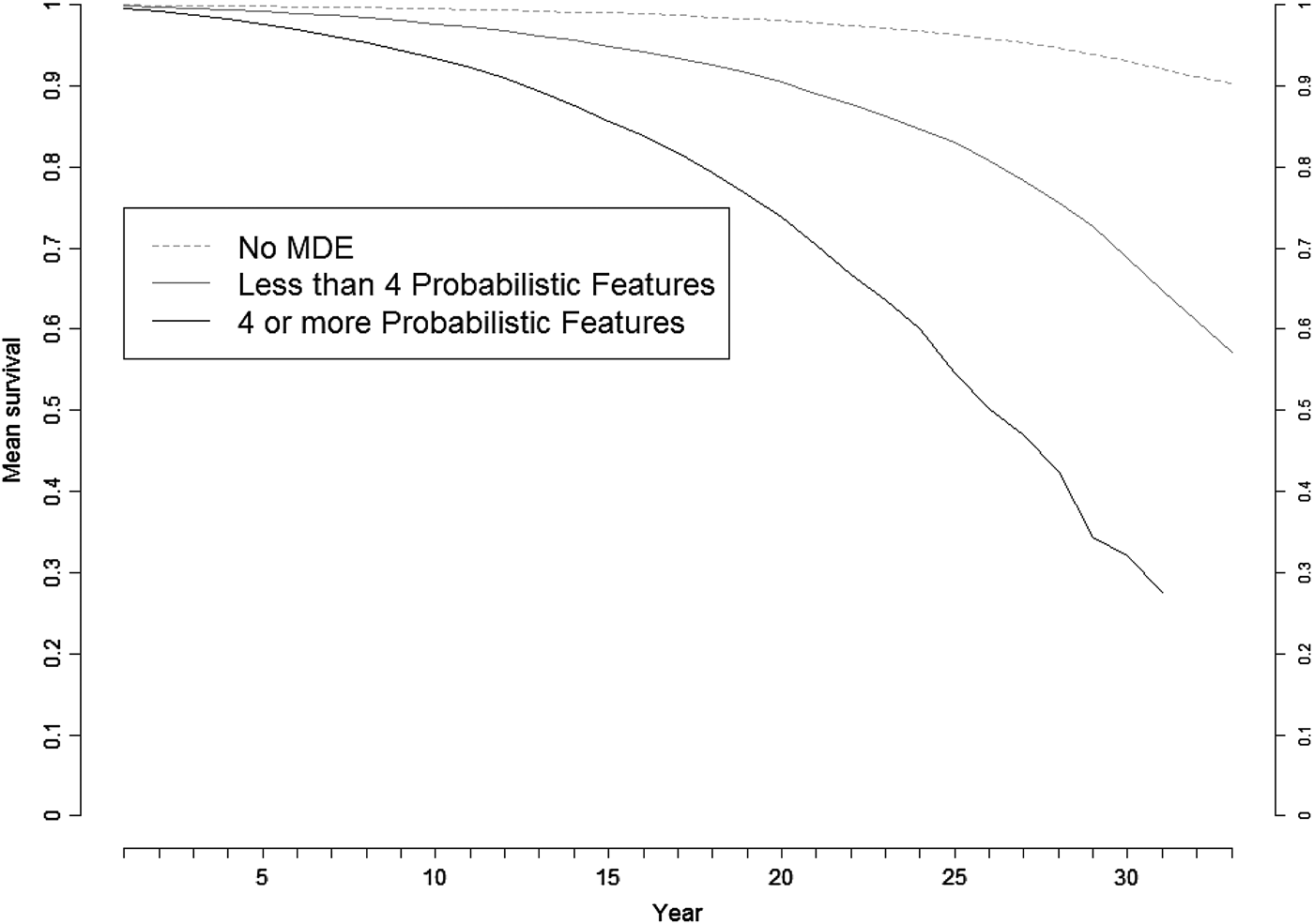
Using survival analysis, among participants with a lifetime MDE at baseline, those with ⩾4 Probabilistic features were significantly more likely to convert to threshold BD (hazard ratio = 8.2, 95% CI 1.5–46.3, p < 0.05) or any form (threshold or subthreshold) of BD (hazard ratio = 3.1, 95% CI 1.1–8.8, p < 0.05) compared with those with < 3 features. Among all HR subjects (see Fig. 1), those with an MDE and ⩾4 Probabilistic features were more likely to convert to threshold BD than those with either no MDE (hazard ratio = 37.0, 95% CI 3.8–333.3, p < 0.01) or those with an MDE and fewer probabilistic features (hazard ratio = 6.9, 95% CI 1.3–37.0, p < 0.05). Similarly, those with an MDE and ⩾4 Probabilistic features were more likely to convert to any form of BD (threshold or subthreshold) than both those without an MDE (hazard ratio = 15.9, 95% CI 4.8–52.6. p < 0.001) as well as those with MDEs who reported fewer probabilistic features (hazard ratio = 2.9, 95% CI 1.1–7.8, p < 0.05).
Risk of conversion to threshold bipolar disorder over time among all high-risk participants, comparing those with no MDE, those with MDE and <4 Probabilistic features, and those with MDE and ⩾4 Probabilistic features.

To examine the contributions of both prior MDEs and endorsement of ⩾4 Probabilistic features when both variables were included together as predictors of conversion in the survival analysis, we included all participants, which included some who reported depressive symptoms that did not meet full DSM-IV criteria for a MDE (for example, four or more symptoms of only 1 week duration, or Bereavement). Thus, the hazard ratio for ⩾4 Probabilistic features genuinely reflects the additional effect of having ⩾4 features on top of all other predictors. The effect coding for this analysis was as follows:

This analysis demonstrated that a prior history of MDEs was associated with an increased risk of later conversion to threshold BD (hazard ratio = 13.9, p < 0.05); the presence of ⩾4 Probabilistic features was associated with a further sevenfold increase in the risk of conversion to threshold BD (hazard ratio = 6.9, p < 0.05).
Other clinical predictors of conversion to BD: anxiety, behavioural and substance use disorders, and subthreshold hypomanic features
Rates of other baseline lifetime disorders in the HR and CON groups are detailed in Table 1. Of the eight who converted to threshold BD, one (12.5%) had a lifetime behavioural disorder; two (25.0%) had a lifetime anxiety disorder; and three (37.5%) had a lifetime substance use disorder. Of the 11 who converted to subthreshold BD, six (54.5%) had a lifetime behavioural disorder; one (9.1%) had a lifetime anxiety disorder; and 1 (9.1%) had a lifetime substance use disorder. On survival analysis, participants with any lifetime behavioural disorder were significantly more likely to convert to either subthreshold (hazard ratio = 8.3, 95% CI 2.2–31.3) or ‘any form of BD’ (threshold or subthreshold combined) (hazard ratio = 5.2, 95% CI 1.6–16.6). There were insufficient threshold convertors in the behavioural disorder group to be included in the analysis. Neither anxiety nor substance use disorders predicted conversion to the threshold, subthreshold or ‘any’ BD. None of the subjects who converted to a threshold or subthreshold BD at follow-up had experienced subthreshold hypomanic episodes at baseline.
All clinical predictors (MDEs, anxiety disorders, behavioural disorders and substance use disorders) were then included in a multivariate model. Only those with an MDE were more likely to convert to threshold BD (hazard ratio = 13.3, 95% CI 1.6–110.3), though there were insufficient threshold convertors in the behavioural disorder group to be included in the analysis. Any lifetime MDE was associated with an increased likelihood of converting to both subthreshold (hazard ratio = 7.7, 95% CI 1.6–36.1) or ‘any form of BD’ (hazard ratio = 20.1, 95% CI 3.7–109.0). Similarly, any lifetime behavioural disorder was associated with an increased risk of subsequently developing either subthreshold (hazard ratio = 12.2, 95% CI 2.5–59.1) or ‘any’ BD (hazard ratio = 8.7, 95% CI 2.1–35.6).
Discussion
We report in this paper only the second investigation of the prevalence of specific depressive characteristics in young subjects at high familial risk for BD, using those features included in the Probabilistic Approach to Bipolar Depression (Mitchell et al. Reference Mitchell, Goodwin, Johnson and Hirschfeld2008, Reference Mitchell, Frankland, Hadzi-Pavlovic, Roberts, Corry, Wright, Loo and Breakspear2011; Frankland et al. Reference Frankland, Cerrillo, Hadzi-Pavlovic, Roberts, Wright, Loo, Breakspear and Mitchell2015). We also explored whether such features predict later conversion to BD in a prospective longitudinal evaluation, above and beyond the effect of MDEs per se, in the context of other clinical predictors of conversion, including anxiety, behavioural and substance use disorders.
First, we found that the HR group was significantly more likely to report ⩾4 Probabilistic depressive features than were the CON group. This is consistent with our previous research in other datasets of those with established BD, which has found ⩾4 features to be the most robust threshold for discriminating between MDD and bipolar depression. No individual feature distinguished CON and HR participants. The only other study to examine depressive characteristics in a BD HR sample has been that of Diler et al. (Reference Diler, Goldstein, Hafeman, Rooks, Sakolsky, Goldstein, Monk, Hickey, Axelson, Iyengar and Birmaher2017), which reported that offspring at high familial risk who were depressed had more severe depression, including atypical depressive symptoms, than did the offspring from CON families. This is consistent with our findings reported in this current paper, as atypical features comprise one of the common Probabilistic features.
Second, and even more significantly, we assessed the predictive utility of both the lifetime presence of an MDE and the Probabilistic Approach. Our findings are consistent with prior longitudinal studies, which report that the majority of HR subjects who convert to BD experience depressive episodes prior to the onset of hypo/mania (Duffy et al. Reference Duffy, Alda, Hajek, Sherry and Grof2010; Mesman et al. Reference Mesman, Nolen, Reichart, Wals and Hillegers2013). Here, 88% of HR ‘converters’ to threshold BD and 89% of HR ‘converters’ to any form of BD reported an MDE prior to their first hypo/manic episode. Specifically, HR subjects with at least one lifetime MDE at baseline were significantly more likely to convert to threshold BD, subthreshold BD or ‘any form of BD’ (threshold or subthreshold) than those with no MDE.
Neither anxiety disorders nor substance use disorders were associated with subsequent conversion to BD. Our finding that anxiety disorders did not predict the later emergence of BD is not consistent with other (albeit a small number) prospective HR studies, which have reported anxiety disorders to be an antecedent to the development of later mood disorders (Duffy et al. Reference Duffy, Alda, Crawford, Milin and Grof2007, Reference Duffy, Horrocks, Doucette, Keown-Stoneman, McCloskey and Grof2014; Nurnberger et al. Reference Nurnberger, Mcinnis, Reich, Kastelic, Wilcox, Glowinski, Mitchell, Fisher, Erpe, Gershon, Berrettini, Laite, Schweitzer, Rhoadarmer, Coleman, Cai, Azzouz, Liu, Kamali, Brucksch and Monahan2011). Some of the discrepancies may arise from methodologic differences: prior studies have combined BD and MDD as an outcome, rather than considering BD alone as done here; and/or included both retrospectives as well as prospective data.
We did, however, find that behavioral disorders predicted conversion to subthreshold or ‘any form of’ BD, but not to threshold BD. The literature on whether offspring of BD parents are more likely to develop behavioral disorders, or whether these disorders are reliable precursors to BD, has been inconsistent (Chang et al. Reference Chang, Steiner and Ketter2000; Duffy et al. Reference Duffy, Alda, Crawford, Milin and Grof2007; Henin et al. Reference Henin, Biederman, Mick, Hirshfeld-Becker, Sachs, Wu, Yan, Ogutha and Nierenberg2007; Birmaher et al. Reference Birmaher, Axelson, Monk, Kalas, Goldstein, Hickey, Obreja, Ehmann, Iyengar, Shamseddeen, Kupfer and Brent2009; Nurnberger et al. Reference Nurnberger, Mcinnis, Reich, Kastelic, Wilcox, Glowinski, Mitchell, Fisher, Erpe, Gershon, Berrettini, Laite, Schweitzer, Rhoadarmer, Coleman, Cai, Azzouz, Liu, Kamali, Brucksch and Monahan2011). In the current study, the absence of a significant association with threshold BD would suggest caution regarding this association. Continued prospective observation will assist in clarifying whether this association represents either the nascent stages of a BD illness or alternatively symptoms of the behavioral condition.
Further, we demonstrated that not only does a prior history of MDE increase the risk for later conversion to BD, but that specific characteristics of those depressive episodes (such as psychomotor retardation and a minimum of five lifetime MDEs) were also significantly associated with conversion to BD. Further, we report the highly novel finding that the presence of ⩾4 Probabilistic features was associated with a seven-fold increase in the risk of later developing threshold BD, even after taking into account the risk conferred from having experienced a prior MDE. At present, 47.6% of those HR participants who endorsed ⩾4 Probabilistic features have experienced subsequent threshold or subthreshold hypo/manic episodes, indicating the potential of the Probabilistic Approach for identifying those at greater risk of conversion to BD, even within a group which already has an increased level of risk.
Few studies have examined the association between specific depressive symptoms in MDD and conversion to BD. Akiskal et al. and Strober both reported higher rates of psychomotor retardation during baseline depressive episodes in those (irrespective of family history) who ultimately converted to BD (Strober, Reference Strober1982; Akiskal et al. Reference Akiskal, Walker, Puzantian, King, Rosenthal and Dranon1983), although Pfennig et al. (Reference Pfennig, Ritter, Höfler, Lieb, Bauer, Wittchen and Beesdo-Baum2015) reported no significant association. The current findings, which are consistent with our previous reports of the strong association between psychomotor retardation and bipolar depression (Mitchell et al. Reference Mitchell, Frankland, Hadzi-Pavlovic, Roberts, Corry, Wright, Loo and Breakspear2011; Frankland et al. Reference Frankland, Cerrillo, Hadzi-Pavlovic, Roberts, Wright, Loo, Breakspear and Mitchell2015), confirm psychomotor retardation as a prominent feature of depressive episodes among those at high familial risk who will later develop BD. Furthermore, consistent with prior reports in MDD samples unrelated to family history (Angst et al. Reference Angst, Sellaro, Stassen and Gamma2005), a greater number of depressive episodes was a robust predictor of risk for the later development of BD in our HR sample.
Few prospective studies have investigated the predictors of BD amongst genetically HR subjects. Axelson and Hafeman, both reporting on the same Pittsburgh dataset (Axelson et al. Reference Axelson, Goldstein, Goldstein, Monk, Yu, Hickey, Sakolsky, Diler, Hafeman, Merranko, Iyengar, Brent, Kupfer and Birmaher2015; Hafeman et al. Reference Hafeman, Merranko, Axelson, Goldstein, Goldstein, Monk, Hickey, Sakolsky, Diler, Iyengar, Brent, Kupfer and Birmaher2016), found that both dimensionally-defined and categorically-defined depressive episodes were associated with conversion to BD. Further, Duffy (Duffy et al. Reference Duffy, Horrocks, Doucette, Keown-Stoneman, McCloskey and Grof2014) and Mesman (Mesman et al. Reference Mesman, Nolen, Reichart, Wals and Hillegers2013) reported that a high proportion of those who developed BD had experienced prior MDEs (76% and 88%, respectively). Based on two decades of retrospective and longitudinal HR data, Duffy et al. (Reference Duffy, Horrocks, Doucette, Keown-Stoneman, McCloskey and Grof2014) identified anxiety and sleep disorders during childhood, and depressive episodes during adolescence as predictors of later mood episodes. Whalley et al. (Reference Whalley, Sussmann, Romaniuk, Stewart, Kielty, Lawrie, Hall and McIntosh2015) reported greater depressive and cyclothymic temperament among subjects at-risk for BD who later developed depressive episodes compared with those without depressive features. These subjects also showed functional differences in cortico-thalamic-limbic activation during an emotional modulation fMRI task. Our research group has also reported differences in structural and functional neuroimaging, and neuropsychological testing, in at-risk subjects (Roberts et al. Reference Roberts, Green, Breakspear, McCormack, Frankland, Wright, Levy, Lenroot, Chan and Mitchell2013, Reference Roberts, Lord, Frankland, Wright, Lau, Levy, Lenroot, Mitchell and Breakspear2016, Reference Roberts, Perry, Lord, Frankland, Leung, Holmes-Preston, Levy, Lenroot, Mitchell and Breakspear2017; Breakspear et al. Reference Breakspear, Roberts, Green, Nguyen, Frankland, Levy, Lenroot and Mitchell2015; McCormack et al. Reference McCormack, Green, Rowland, Roberts, Frankland, Hadzi-Pavlovic, Joslyn, Lau, Wright, Levy, Lenroot and Mitchell2016). Future analyses will focus on whether these differences are also associated with later development of BD.
The current data, derived from an ongoing prospective study of a HR sample, confirm the presence of specific depressive features that are more common in those who will later go on to develop BD. As these features developed prior to the onset of any manic or hypomanic symptoms, our findings provide a substantial contribution to growing efforts to identify prodromal features of BD (Martin & Smith, Reference Martin and Smith2013). The Probabilistic Approach may be a useful tool for clinicians who are uncertain as to whether depressive episodes in a patient with a family history of BD reflect the beginning of a BD trajectory.
The results reported here should be considered in the context of several limitations. Although our sample represents one of the largest prospective studies of HR subjects, the number of converters at present is small, with 4.9% converting to threshold and 6.7% to subthreshold BD, after up to 6 years of follow-up, although consistent for this point in time with other longer follow-up studies (Duffy et al. Reference Duffy, Alda, Hajek, Sherry and Grof2010; Mesman et al. Reference Mesman, Nolen, Reichart, Wals and Hillegers2013). Our relatively small sample may have implications for statistical power (particular when including the predictive capacity of more than two variables) and also limited the analysis of low-prevalence symptoms, such as psychosis, which has been associated with conversion in some reports of MDD subjects irrespective of family history. Recruitment for this study is ongoing in order to increase the sample size to enhance statistical power.
In conclusion, we report the novel and highly clinically relevant findings that young HR subjects experience a greater number of Probabilistic features while depressed, and that these features are more common in those who will later go on to develop BD. We found that the presence of ⩾4 probabilistic features was associated with a seven-fold increase in the risk of conversion to threshold BD, even after accounting for the risk associated with a prior history of MDE.
Acknowledgements
We are grateful to all the individuals and families for their generous involvement in this study. This study was funded by the Australian National Health and Medical Research Council (NHMRC) through Program Grant No. 1037196; and the Lansdowne Foundation. The funding sources played no role in the design, analysis or writing of this report. The authors have no other declarations of interest to report.