Coarctation of the aorta constitutes 7–10% of CHDs.Reference Bower and Ramsay1 The natural course of coarctation of the aorta is associated with high mortality, with a median survival age of 31 years.Reference Campbell2 Repair of the coarctation of the aorta significantly improves outcome. However, even after successful repair, there is still a high risk of cardiovascular morbidity and mortality, which is mostly associated with hypertension and premature atherosclerosis.Reference Vigneswaran, Sinha, Valverde, Simpson and Charakida3
Patients with repaired coarctation of the aorta develop hypertension due to residual narrowing, recoarctation, or as a late chronic systolic hypertension. The prevalence of late hypertension is high even after successful repair with minimal or no demonstrable residual coarctation and repair in early childhood.Reference Vigneswaran, Sinha, Valverde, Simpson and Charakida3–Reference O’Sullivan, Derrick and Darnell7 Its prevalence is between 15 and 45% in paediatric cases and 35–50% in adult cases depending on the method and the definition of hypertension or duration of follow-ups.Reference Vigneswaran, Sinha, Valverde, Simpson and Charakida3–Reference Canniffe, Ou, Walsh, Bonnet and Celermajer8 Several vascular and neuro-humoral changes have been proposed as the underlying mechanisms of this late hypertension such as vascular remodelling, which causes structural and functional abnormalities,Reference de Divitiis, Pilla and Kattenhorn9–Reference Ou, Bonnet and Auriacombe12 sustained hyperactivation of the renin angiotensin system,Reference Parker, Streeten and Farrell13 abnormal cardiovascular autonomic homeostasis (baroreceptor sensitivity, blood pressure and heart rate variability),Reference Kenny, Polson and Martin5,Reference Polson, McCallion and Waki14 and lastly the shape of the repaired arch.Reference Canniffe, Ou, Walsh, Bonnet and Celermajer8,Reference Ou, Bonnet and Auriacombe12 The clinical risk factors of late hypertension are: older age at the time of repair, duration and severity of high blood pressure before repair, and older age at the time of follow-up.Reference Vigneswaran, Sinha, Valverde, Simpson and Charakida3,Reference Canniffe, Ou, Walsh, Bonnet and Celermajer8
Evaluation of blood pressure with ambulatory blood pressure monitoring has been suggested after repair of coarctation of the aorta in adult studies and guidelines.Reference Canniffe, Ou, Walsh, Bonnet and Celermajer8,Reference Stout, Daniels and Aboulhosn15 Ambulatory blood pressure monitoring, where available, has been used in a growing number of children and adolescents with a high risk of hypertension. In addition to the confirmation of hypertension, ambulatory blood pressure monitoring can assess the severity of hypertension, determine abnormal circadian blood pressure patterns, and detect masked hypertension. The American Academy of Pediatrics-Clinical Practice Guideline has recently recommended the use of ambulatory blood pressure monitoring in secondary hypertension including repaired coarctation of the aorta.Reference Flynn, Kaelber and Baker-Smith16 Few studies exist on ambulatory blood pressure and cardiovascular target organ damage in children and adolescents after successfully repaired coarctation of the aorta. With this study, we aimed to assess the frequency of late hypertension and the relationship between ambulatory hypertension and cardiovascular target organ damage by using surrogate markers (left ventricular hypertrophy and pulse wave velocity) in children and adolescents with coarctation of the aorta after early and successful repair.
Materials and methods
Study design and population
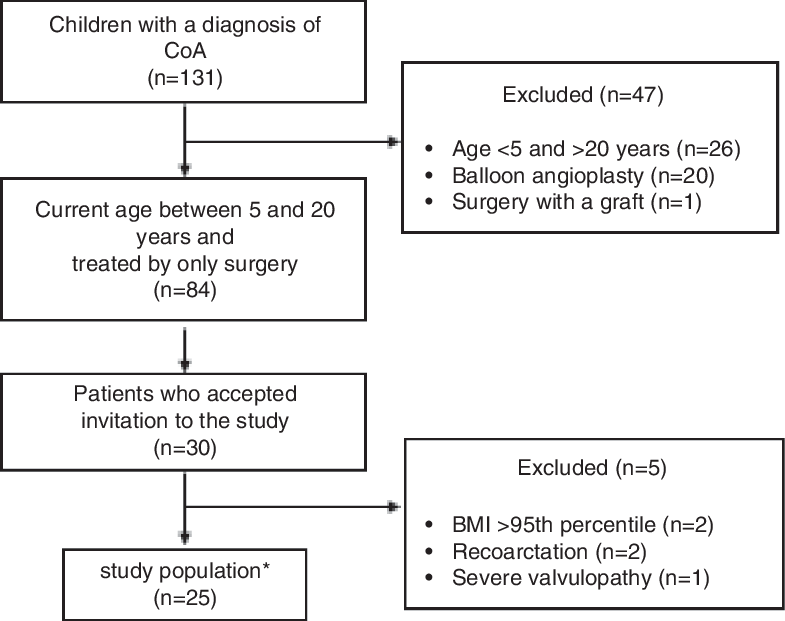
This single-centre, observational, and cross-sectional study was conducted at the Pediatric Cardiology and Pediatric Nephrology Division at Istanbul University-Cerrahpasa. The flowchart of the study population is shown in Fig 1. The inclusion criteria were: current age between 5 and 20 years old and coarctation repaired by surgery. Recoarctation was defined as (1) an arm–leg systolic blood pressure gradient greater than 20 mmHg, (2) a continuous Doppler echocardiographic velocity of >3.5 m/s with a diastolic extension of flow on the Doppler trace at the aorta distal to the anastomosis. Patients with recoarctation, obesity, and severe valvulopathy were excluded from the study. None of the patients had associated clinically significant cardiac anomalies or genetic syndromes nor were they receiving anti-hypertensive medication. Ultimately, the study population consisted of 25 children and adolescents with repaired coarctation of the aorta (patient group) and 16 healthy children and adolescents, who were the relatives of the hospital staff (control group). The control group was comparable with the patient group regarding age, gender, and height.
The flowchart of the study population. *None of the patients had clinically significant cardiac anomalies or was receiving anti-hypertensive treatment. CoA=coarctation of aorta.

Demographic and clinical data were collected from the patients’ files including age at the time of repair, type of surgical procedure, and associated intracardiac abnormalities. Anthropometric measurements (height and weight) were performed, and a standard deviation score of height and body mass index were calculated by using the Lambda-Mu-Sigma (LMS) method according to age- and gender-specific reference values.Reference Flegal and Cole17
Office and ambulatory blood pressure measurements
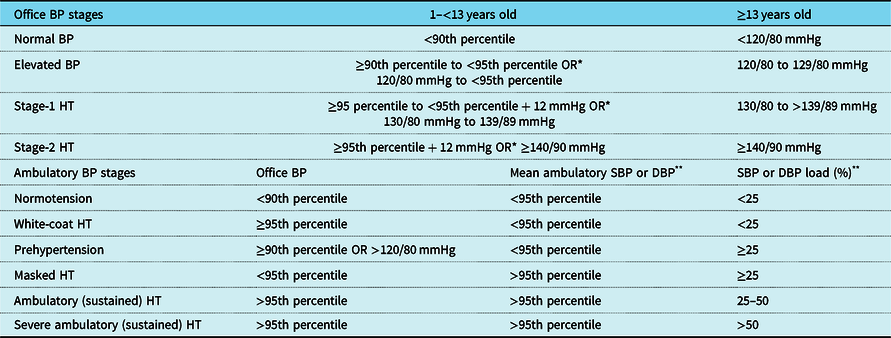
Office blood pressure measurements were taken from the patients’ right arm and right leg after a period of 10 minutes lying at supine rest using an oscillometric device (PRO 1000; DinaMAP, Freiberg, Germany) by the same investigator. Higher values were checked with a manual auscultatory measurement. The mean value of three consecutive measurements taken from the right arm was used to define office hypertension. The arm–leg gradient was defined as the difference of systolic blood pressure between the right arm and the leg. Ambulatory blood pressure monitoring measurements were obtained from the right arm every 20 minutes during daytime (8 a.m. to midnight) and every 30 minutes during night-time (midnight to 8 a.m.) with a Spacelabs 90207 oscillometric device (Spacelabs Healthcare, Washington, United States of America). Records with a valid measurement ratio of >75% were included in the study. The updated 2017-American Academy of Pediatrics guideline was used to define office hypertension,Reference Flynn, Kaelber and Baker-Smith16 and the 2014-American Heart Association guidelineReference Flynn, Daniels and Hayman18 was used to define ambulatory measurements as normotension, prehypertension, masked hypertension, and sustained hypertension (Table 1). The percentiles and standard deviation score of office and ambulatory blood pressure were calculated with the LMS method by using the reference values.Reference Flynn, Kaelber and Baker-Smith16,Reference Wuhl, Witte and Soergel19 Hypertensive patients were assessed by the Pediatric Nephrology Department and other etiologic causes were excluded.
Definition and stages of hypertension according to office and ambulatory blood pressure measurements by using the 2017-American Academy of Pediatrics and 2014-American Heart Association guidelines, respectively

BP = blood pressure; DBP = diastolic blood pressure; HT = hypertension; SBP = systolic blood pressure.
* Whichever is lower.
** For either daytime or night-time period blood measurement or both.
Pulse wave velocity
Aortic pulse wave velocity was measured to assess central arterial stiffness using oscillometric Vicorder device (Skidmore Medical, Bristol, United Kingdom) by the same investigator. The distance was the sum of suprasternal notch to the umbilicus and the umbilicus to the femoral recording point. Three measurements were obtained and averaged for all patients and controls. Age- and gender-specific standard deviation scores of pulse wave velocity were calculated with the LMS method by using the reference values.Reference Thurn, Doyon and Sozeri20
Echocardiography
One experienced paediatric cardiologist performed all echocardiographic examinations using a Siemens Acuson CV 70 device equipped with a 2.5-MHz transducer. M-mode measurements of the end diastolic diameter of the left ventricle, interventricular septum, and left ventricular posterior wall were performed as recommended by the American Society of Echocardiography.Reference Lopez, Colan and Frommelt21 Z scores of the left ventricular wall thickness and dimensions were calculated.Reference Kampmann, Wiethoff and Wenzel22 Left ventricular mass was calculated by using the Devereux formulaReference Devereux, Alonso and Lutas23 and indexed to height in metres raised to the power of 2.7 to calculate left ventricular mass index (g/m2.7). The left ventricular hypertrophy was defined as left ventricular mass index >95th percentile according to age- and gender-specific reference values.Reference Khoury, Mitsnefes, Daniels and Kimball24
Statistical analysis
Statistical analysis was performed with the SPSS version 15.0 package programme for Windows (SPSS, Chicago, Illinois, United States of America). The normal distribution of the data was checked using the Kolmogorov–Smirnoff test. Continuous data were shown as mean ± standard deviation score or median (25th; 75th percentile). Differences in proportions were assessed by χ2 testing or Fischer’s Exact test. The Mann–Whitney U-test was performed to define the differences between continuous data. Univariate analysis was performed to explore associations by the Spearman’s rank correlation test. All variables showing a univariable p-value lower than 0.10 were tested by stepwise multivariate linear regression analysis, to define the independent predictors of left ventricular mass index and pulse wave velocity. Significant differences are defined as a two-tailed p-value of <0.05.
Results
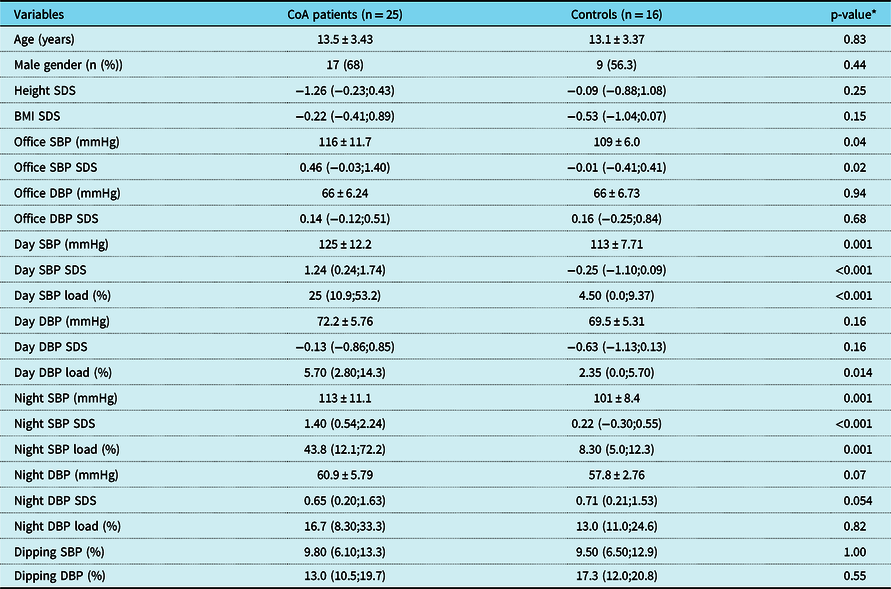
The study consisted of 41 children and adolescents: 25 patients with coarctation of the aorta (ranging from 7 to 19 years, 17 males) and 16 healthy controls (ranging from 6.7 to 17.2 years, 9 males) (Table 2). The median (25th; 75th percentile) follow-up duration was 12 (10.6; 13.9) years, and the median age at the time of repair was 4 (2; 22) months. In 16 patients (64%), coarctation of the aorta was repaired during the first year of life. The arm–leg gradient was lower than 10 mmHg in all patients. The types of surgical procedure were end-to-end anastomosis (n = 18), extended end-to-end anastomosis (n = 2), subclavian flap repair (n = 4), and isthmusplasty (n = 1). Of the 25 coarctation operations, 11 also included ductus arteriosus ligation. Associated intracardiac abnormalities were mild-to-moderate aortic stenosis/insufficiency (n = 7/6), mitral insufficiency (n = 5), and small ventricular septal defect/aneurysm (n = 3/3). Thirteen of the patients (52%) had bicuspid aortic valve.
Characteristics and ambulatory blood pressure measurements of patients and controls

BMI = body mass index; CoA = coarctation of aorta; DBP, diastolic blood pressure; SBP = systolic blood pressure; SDS = standard deviation score.
* Mann–Whitney U-test was performed for continuous data, and χ2 testing was performed for the categorical data. Data are given as mean ± standard deviation, median (25th–75th percentile) or n (%).
Evaluation of blood pressure by office and ambulatory blood pressure monitoring measurements
Office blood pressure measurements revealed hypertension in four (16%) and elevated blood pressure (prehypertension) in eight (32%) of the patients, who all had high systolic blood pressure. According to the ambulatory blood pressure monitoring data, all systolic blood pressure parameters (standard deviation score and load) during both daytime and night-time were significantly higher in patients compared to controls (p ≤ 0.001 for all, Table 2); however, only diastolic blood pressure load during daytime was higher in patients (p = 0.014). According to 2014-American Heart Association classification, a total of 14 patients (56%) were diagnosed as hypertensive (masked and sustained hypertension); the prevalence of masked hypertension was 40% (n = 10) and sustained hypertension was 16% (n = 4). In addition, three patients (12%) were classified as having prehypertension. There was no white-coat hypertension. Among 14 hypertensive patients, 11 patients had only systolic hypertension during daytime and/or night-time; however, diastolic hypertension was observed in three patients. Isolated nocturnal hypertension was seen in seven patients (28%). Fifteen patients were non-dipper; however, nocturnal dipping in systole and diastole did not differ between the patient and control groups (Table 2). Office and ambulatory blood pressure measurements were normal in the control group.
None of the demographic (age and gender) and clinical (age at repair, type of surgical procedure, and duration of follow-up) parameters, height standard deviation score, body mass index standard deviation score, findings of recoarctation (arm–leg gradient, velocity, and gradient on echocardiography), or pulse wave velocity standard deviation score were different between patients with (n = 14) and without (n = 12) hypertension. Likewise, in univariate analysis, there was no correlation between the ambulatory blood pressure parameters (blood pressure, standard deviation scores, and loads) and age, height standard deviation score, body mass index standard deviation score, age at the time of repair, duration of follow-up, pulse wave velocity standard deviation score, and findings of recoarctation (arm–leg gradient, velocity, and gradient on echocardiography).
Evaluation of arterial stiffness by pulse wave velocity
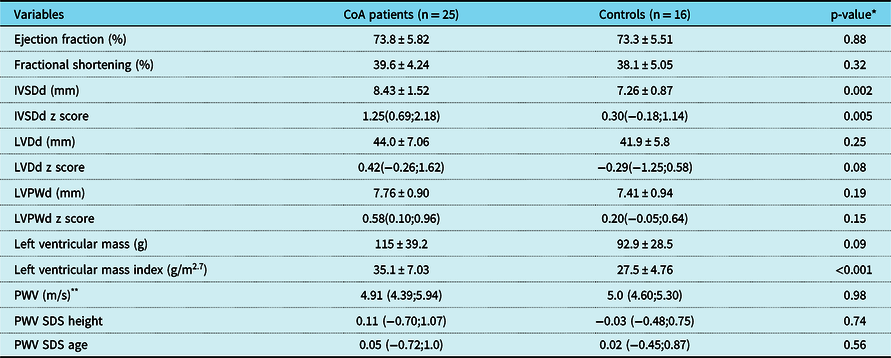
Pulse wave velocity (m/sec) and pulse wave velocity standard deviation score were similar between controls and patients (Table 3). In addition, the pulse wave velocity standard deviation score was not different between normotensive and hypertensive patients with coarctation of the aorta [0.01 (−0.59;0.96) versus 0.55 (−0.90;1.15) respectively, p > 0.05]. In univariate analysis, there was a positive correlation between pulse wave velocity (m/s) and age, height, and systolic blood pressure measurements (office, daytime and night-time), which were not observed within the control group (Supplementary Table S1). However, in multivariate analysis, age was the only independent predictor of pulse wave velocity (m/s) (p = 0.003, ß = 0.624, 95% CI = 0.056; 0.239). In line with this, none of the correlations above was present between the standard deviation score of pulse wave velocity (Supplementary Table S1).
Comparison of cardiovascular measurements of patients and controls

CoA = coarctation of aorta; IVSDd = interventricular septum diastolic diameter; LVDd = left ventricular diastolic diameter; LVPWd = left ventricular posterior wall diastolic diameter; PWV = pulse wave velocity; SDS = standard deviation score.
* Mann–Whitney U-test was performed. Data are given as mean ± standard deviation or median (25th–75th percentile).
** PWV was measured in 21 patients and 14 controls.
Evaluation of left ventricular hypertrophy using left ventricular mass index
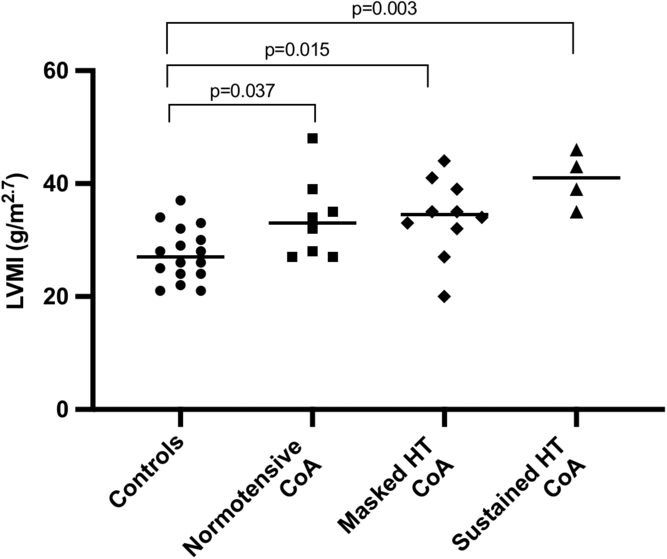
As shown in Table 3, the median end diastolic diameter of the interventricular septum and left ventricular mass index was significantly higher in patients compared to controls (p = 0.002 and p ≤ 0.001, respectively). All patient subgroups with coarctation of the aorta classified according to the American Heart Association guideline (as normotension, prehypertension, masked hypertension, and sustained hypertension) had higher left ventricular mass index compared to the control group (Fig 2). The difference was significant for patients with normotension, masked hypertension, and sustained hypertension (p < 0.05 for all). Age, height standard deviation score, and body mass index standard deviation score did not differ significantly between the control and normotension, masked hypertension, and sustained hypertension groups (p > 0.05 for all). Left ventricular hypertrophy was present in six patients with coarctation of the aorta (24%), and four of them had severe left ventricular hypertrophy (>51 g/m2.7). Among these six patients with left ventricular hypertrophy, one had prehypertension, two had masked hypertension, and one had severe sustained hypertension according to the American Heart Association guideline.
Comparison of left ventricular mass index between controls and patients with CoA, which were grouped according to ambulatory measurements by using the 2014-American Heart Association guideline. Patients with masked HT and normotension also had a significantly higher left ventricular mass index compared to controls, in addition to the sustained HT group. CoA=coarctation of aorta; HT=hypertension; LVMI=left ventricular mass index.

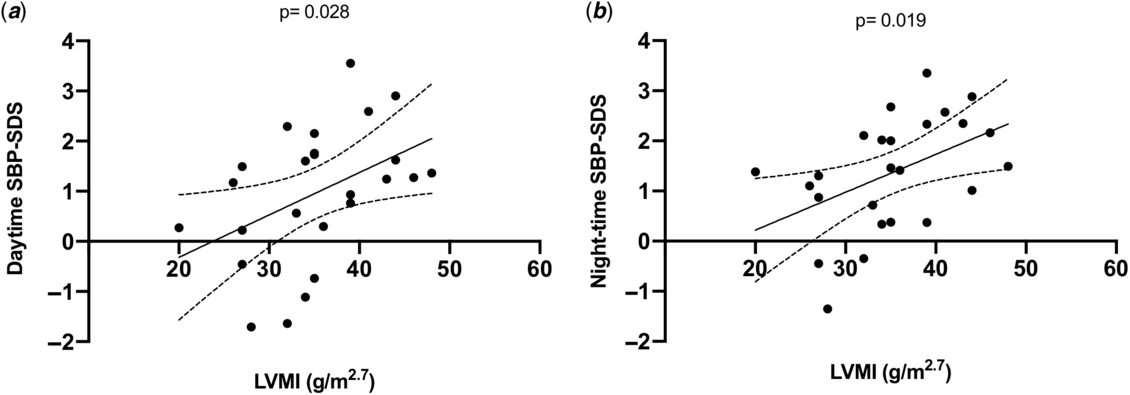
There was no significant difference between patients who had coarctation of the aorta with (n = 6) and without (n = 19) left ventricular hypertrophy regarding age, gender, age at the time of repair, duration of follow-up, height standard deviation score, body mass index standard deviation score, findings of recoarctation (arm–leg gradient, velocity, and gradient on echocardiography), office and ambulatory blood pressure parameters, and pulse wave velocity standard deviation score (Supplementary Table S2). In univariate analysis, left ventricular mass index was positively correlated with systolic blood pressure standard deviation score of both daytime and night-time (Fig 3a and 3b). In multivariate stepwise linear regression analysis, night-time systolic blood pressure standard deviation score was the independent predictor of high left ventricular mass index (p = 0.020, ß = 0.461, 95% CI = 0.48; 5.23).
Correlation between LVMI (g/m2.7) and (a) daytime and (b) night-time SBP SDS on univariate analysis with Spearman’s rank test. LVMI=left ventricular mass index; SBP=systolic blood pressure; SDS=standard deviation score.

Discussion
The present study reveals a high prevalence of late systolic hypertension and left ventricular hypertrophy in a group of children and adolescents after early successful repair of coarctation of the aorta with a mean follow-up period of about 10 years. The prevalence of masked hypertension was high (40%), and a majority of them had isolated nocturnal hypertension. The prevalence of left ventricular hypertrophy was 24%, and high left ventricular mass index was associated with increased systolic blood pressure.
The prevalence of late hypertension after successful repair of coarctation of the aorta is between 35 and 50% in adults with a follow-up duration of 20–30 years.Reference Presbitero, Demarie and Villani25–Reference Luijendijk, Lu and Heynneman29 In paediatric studies, the prevalence of office hypertension has been reported as 15–30%.Reference O’Sullivan, Derrick and Darnell7,Reference Dempsey, Parraga and Altamirano-Diaz30 Depending on the definition, the prevalence of ambulatory hypertension has been reported as 17–45%.Reference O’Sullivan, Derrick and Darnell7,Reference Dempsey, Parraga and Altamirano-Diaz30,Reference Di Salvo, Castaldi and Baldini31 Di salvo et al. and Dempsey et al. have reported the frequency of masked hypertension as 30–45%.Reference Dempsey, Parraga and Altamirano-Diaz30,Reference Di Salvo, Castaldi and Baldini31 In line with our study population, in these studies, repair was performed mostly during infancy and the duration of follow-up is about 10–15 years. In the present study, we found office hypertension as 16%, which was about three times higher than the healthy schoolchildren in Turkey.Reference Nur, Cetinkaya and Yilmaz32 The prevalence of masked hypertension was 40%, which is in accordance with the studies above. Nearly half of the patients with coarctation of the aorta had hypertension on ambulatory measurements including sustained hypertension (16%) and masked hypertension (40%). In addition, a substantial ratio of isolated nocturnal hypertension (28%) was observed, which was the majority of patients with masked hypertension. Ambulatory blood pressure monitoring should be used routinely to diagnose and manage hypertension during follow-up of patients with coarctation of the aorta, due to the high prevalence of isolated nocturnal hypertension and masked hypertension, even after successful repair.
Some of the previous studies have defined several clinical risk factors causing late hypertension such as older age at the time of repair,Reference Bocelli, Favilli and Pollini4,Reference Bald and Neudorf33,Reference Giordano, Matteucci and Calzolari34 longer duration of follow-up, and the type of surgery.Reference Vigneswaran, Sinha, Valverde, Simpson and Charakida3,Reference Canniffe, Ou, Walsh, Bonnet and Celermajer8 Age at repair is more favourable during infancy after first month of age. In the current study, there was no association between these clinical variables and blood pressure, which was probably due to the relatively homogenous distribution of these variables in our study population. The proposed mechanisms causing late hypertension are complex and multifactorial. Mild residual narrowing might play a role by increasing the aortic wall shear stress.Reference Vriend, Zwinderman and de Groot26,Reference Rinnstrom, Dellborg and Thilen35 None of the patients in our study had an arm–leg gradient greater than 10 mmHg, which suggests a low risk for residual narrowing. Therefore, in the present study, it is reasonable that there was no association between blood pressure parameters and any measure of narrowing such as arm–leg gradient, gradient, and velocity on echocardiography. Other proposed mechanisms underlying late hypertension are sustained activity of the renin angiotensin system,Reference Parker, Streeten and Farrell13 aortic baroreceptor sensitivity,Reference Polson, McCallion and Waki14 and the role of aortic arch morphology,Reference Ou, Bonnet and Auriacombe12 which were not assessed in the present study.
Another proposed mechanism is vascular remodelling of precoarctation aorta and its branches, including functional (decreased aortic distensibility and increased arterial stiffness) and structural (increased carotid intima media thickness) changes.Reference Vigneswaran, Sinha, Valverde, Simpson and Charakida3,Reference Dempsey, Parraga and Altamirano-Diaz30 There is an interdependent relationship between vascular remodelling and high blood pressure. Vascular remodelling can cause and can also be exacerbated by high blood pressure as a vascular target organ damage.Reference Vigneswaran, Sinha, Valverde, Simpson and Charakida3 In vitro studies have demonstrated increased collagen and elastin with reduced smooth muscle cells in the precoarctation aorta.Reference Sehested, Baandrup and Mikkelsen36 Pulse wave velocity is commonly used to assess arterial stiffness and shown to be increased as blood pressure increases.Reference Khoury and Urbina37 Both pulse wave velocity and blood pressure are affected by height and age in children.Reference Thurn, Doyon and Sozeri20,Reference Voges, Jerosch-Herold and Hedderich38 Most of the studies, evaluating pulse wave velocity in patients with coarctation of the aorta, have a heterogenous study population in terms of age including both adults and paediatric age groups.Reference de Divitiis, Pilla and Kattenhorn9,Reference Trojnarska, Mizia-Stec and Gabriel27,Reference Jesus, Assef and Pedra39–Reference Voges, Kees and Jerosch-Herold41 The studies which include only children and adolescents are scarce.Reference Kenny, Polson and Martin5,Reference Schafer, Morgan and Mitchell42 In general, these studies have shown increased pulse wave velocity (m/s) in the precoarctation aorta after successful repair of the coarctation compared to controls. The studies evaluating subgroups have shown that hypertensive patients had higher pulse wave velocity compared to normotensive ones, as expected.Reference Kenny, Polson and Martin5,Reference Trojnarska, Mizia-Stec and Gabriel27 Only two studies have compared patients with coarctation of the aorta who were normotensive with controls and have shown increased pulse wave velocity in the coarctation group.Reference Trojnarska, Mizia-Stec and Gabriel27,Reference Ou, Celermajer and Mousseaux40 These studies defined normotension by using office blood pressure measurement.Reference Trojnarska, Mizia-Stec and Gabriel27,Reference Ou, Celermajer and Mousseaux40 However, masked and isolated nocturnal hypertension are prevalent in this patient group. Therefore, the results of these studies must be interpreted carefully. In the present study, both aortic pulse wave velocity (m/sec) and pulse wave velocity standard deviation score were similar between hypertensive and normotensive patients with coarctation of the aorta and control groups. Pulse wave velocity (m/sec) was positively correlated with systolic blood pressure (mmHg), age, and height; however, in multivariate analysis, age was the only independent predictor of pulse wave velocity. Likewise, there was no such a correlation between standard deviation scores of pulse wave velocity and systolic blood pressure parameters. These findings demonstrate the risk of the confounding effect of age, while evaluating pulse wave velocity in the paediatric age group. To our knowledge, our study is the first using standard deviation score for both blood pressure and pulse wave velocity measurements in this patient group. In summary, interpretation of pulse wave velocity in paediatric patients with coarctation of the aorta is challenging. It is better to use standard deviation scores of pulse wave velocity and blood pressure in addition to matched control groups. Normative data have been published for different methods.Reference Thurn, Doyon and Sozeri20,Reference Voges, Jerosch-Herold and Hedderich38 As a summary of vascular studies, it is difficult to say that pulse wave velocity is increased in precoarctation aorta in normotensive patients with coarctation of the aorta who have had successful and early repair.
Childhood left ventricular hypertrophy has been associated with adulthood cardiovascular disease.Reference Flynn, Kaelber and Baker-Smith16 The prevalence of left ventricular hypertrophy in patients with successfully repaired coarctation of the aorta has been reported as 41–65% in adultsReference Luijendijk, Lu and Heynneman29,Reference Lee, Hemmes and Mynard43 and 38% in a paediatric study.Reference Bocelli, Favilli and Pollini4 In the current study, the frequency of left ventricular hypertrophy was 24% according to age- and gender-specific normative data, and most of them had severe left ventricular hypertrophy (left ventricular mass index > 51 g/m2.7). High left ventricular mass index was associated with high night-time systolic blood pressure. In addition, patients with coarctation of aorta who had masked hypertension had significantly higher left ventricular mass index compared to controls and two of them had left ventricular hypertrophy. Therefore, it is important to note that ambulatory blood pressure monitoring is more sensitive than office blood pressure measurement to detect hypertension and more relevant with target organ damage. Increased left ventricular mass index and abnormal left ventricular function have also been documented in normotensive coarctation of the aorta patients, which has been attributed to vascular remodelling.Reference Lombardi, Northrup, McNamara, Sugeng and Weismann44,Reference Murakami, Takeda and Yamazawa45 In the current study, there was no association between left ventricular mass index and pulse wave velocity. However, normotensive coarctation of the aorta patients had also significantly higher left ventricular mass index than controls, demonstrating a lifelong cardiovascular disease risk for all coarctation of the aorta patients even with a blood pressure within defined normal limits.
A relatively low number of the study population is the main limiting factor of our study. A continuous Doppler echocardiographic velocity cut-off value of 2.5 m/s would be more selective. However, we included patients with a gradient between 2.5 and 3.5 m/s as none of them had an arm–leg gradient higher than 10 mmHg or an accompanying diastolic tail. We could not evaluate the shape of the aorta which may affect the frequency of hypertension. Most of the patients had end-to-end anastomosis, therefore to assess the effect of the type of surgery on blood pressure characteristics was not possible. In addition, most of the time surgical operations were performed after neonatal period, which was late compared to developed countries and was related with our health care system at that time. Therefore, as this is a single-centre study, the results of which may not be representative for other populations. Investigators who performed measurements of blood pressure, pulse wave velocity, and echocardiography were blinded to hypertensive and normotensive patient subgroups, whereas they were not for the patient and control groups. The strength of our study is firstly, all of our patients had an arm–leg gradient lower than 10 mmHg demonstrating a selected cohort with successful repair and a low risk of residual narrowing. Secondly, we used the percentiles and standard deviation score of all variables (including anthropometric measures, blood pressure, left ventricular mass index, and pulse wave velocity) in addition to a control group. As a result, the confounding effects of age, gender, and anthropometric measures were excluded. In addition, we used the latest guidelines to define office and ambulatory hypertension, and we excluded obese patients with coarctation of the aorta.
In conclusion, masked and isolated nocturnal hypertension are prevalent in children and adolescents even after early and successful repair, in addition to a substantial ratio of left ventricular hypertrophy. We suggest using ambulatory blood pressure monitoring, which is sensitive to detect hypertension and more relevant with target organ damage, to diagnose and manage high blood pressure. Considering the higher left ventricular mass index even in children with normotension and the given importance of left ventricular hypertrophy as a risk factor for adulthood cardiovascular disease risk, all children with repaired coarctation of the aorta should be followed up lifelong and encouraged to establish a healthy lifestyle. Lastly, a clear blood pressure threshold at which the risk for cardiovascular events occurs, has not been defined for the general population,Reference Khoury and Urbina37 or for the patients with repaired coarctation of the aorta patients. Therefore, as a future direction, prospective longitudinal studies, which evaluate blood pressure and surrogate markers of cardiovascular disease, are needed to answer the question of “Is there a need to target lower blood pressure percentiles for patients with repaired coarctation of the aorta without recoarctation to decrease cardiovascular disease risk?”.
Acknowledgements
None.
Financial support
This research received no specific grants from any funding agency, commercial or not-for-profit sectors.
Conflict of interest
None.
Ethical standards
The authors assert that all procedures contributing to this work comply with the ethical standards of the relevant national guidelines on human experimentation and with the Helsinki Declaration of 1975, as revised in 2008, and has been approved by the institutional committees (The ethics committee of Istanbul University-Cerrahpasa Medical Faculty with a reference number of 2010/23391). Written informed consent was obtained from all children and/or their parents.
Supplementary material
To view supplementary material for this article, please visit https://doi.org/10.1017/S104795112000205X