


INTRODUCTION
Human Right Organizations (HROs) are central to efforts around the world to change the behavior of governments toward the rights of their citizens. They leverage information regarding human rights abuses into changes in behavior by naming perpetrators of rights violations, and shaming other members of the international community into acting to change the perpetrators’ behavior. While too often other international actors’ efforts to improve human rights practices have been ineffective or counterproductive (Peksen Reference Peksen2009; Reference Peksen2012; Wood Reference Wood2008), a burgeoning line of research has demonstrated the frequent success of HROs in changing human rights behavior (Becker Reference Becker2012; Brysk Reference Brysk1993; Clark Reference Clark2001; Hendrix and Wong Reference Hendrix and Wong2013; Hertel Reference Hertel2006; Keck and Sikkink Reference Keck and Sikkink1998; Krain Reference Krain2012; Murdie Reference Murdie2009; Murdie and Bhasin Reference Murdie and Bhasin2011; Wong Reference Wong2012). However, not all HRO campaigns are successful, and in some cases they may have deleterious effects on human rights outcomes (Carpenter Reference Carpenter2005). A detailed understanding of how to improve HRO efforts to shape human rights practices should therefore be of paramount importance to political scientists. Yet, the mechanism by which HROs generate the pressure necessary to convince states or international organizations to shame and sanction perpetrators is often assumed, and as a result is undertheorized and unexamined. We need to unpack the naming and shaming process that has previously been “black-boxed,” and peer inside at how HROs convert information about rights abuses into action against abusers. Without such examination, our understanding of the impact of HROs in world politics is incomplete.
HRO micromobilization efforts work to mobilize consensus about the nature of rights abuses and then mobilize action to change rights behavior.Footnote 1 They do this by attempting to shape individuals’ values on such contentious issues as the use of sleep deprivation as a method of interrogation and mobilizing them to act on their values. While much has been written describing this process of framing—“conscious strategic efforts. . . to fashion shared understandings of the world and of themselves that legitimize and motivate collective action” (Keck and Sikkink Reference Keck and Sikkink1998, 3)—as vital to advocacy efforts in general and human rights advocacy work specifically, little systematic research has been done evaluating the efficacy of framing on opinion or behavior (Benford and Snow Reference Benford and Snow2000, 632).
In this study, we begin to address these critical gaps in our understanding of how advocacy groups mobilize opinion and action to affect policy change. Using an experimental research design we test the efficacy of the three framing strategies most frequently used by large, international, Western-based HROs. How HROs relay information about human rights abuses, and how that information is received, may affect how able they are to mobilize consensus and action to change states’ human rights behavior. Therefore, our examination of HRO effectiveness begins at the individual level, examining international HRO efforts at micromobilization. Our results speak to the utility of the most common framing techniques in fostering consensus about the nature and severity of human rights violations (consensus mobilization), and the willingness of individuals exposed to those frames to mobilize to change them (action mobilization).
HUMAN RIGHTS ORGANIZATIONS (HROS) AS AGENTS OF CHANGE
HROs and the Mobilization of Consensus and Action
HROs—the specific type of NGOs focused on human rights issues—gather information that states do not want to be available to the public. Perpetrators of human rights abuses generally prefer to avoid the spotlight so as to be able to continue these practices without scrutiny by global or local audiences. They also wish to avoid being labeled as norm violators, particularly if this results in suffering consequences for their actions. An HRO's power lies in the information it possesses about these abuses, and how it uses that information to mobilize consensus that an issue is a human rights issue, and to mobilize action to address it (Becker Reference Becker2012; Keck and Sikkink Reference Keck and Sikkink1998).
HROs mobilize consensus by spotlighting a rights abuse, and making others perceive that action as an abuse and the perpetrator as an abuser of human rights. HROs can then mobilize action to pressure those perpetrators to change their behavior, and encourage other actors to shame or sanction the perpetrators (Becker Reference Becker2012; Brysk Reference Brysk1993; Keck and Sikkink Reference Keck and Sikkink1998; Krain Reference Krain2012; Murdie Reference Murdie2009; Murdie and Bhasin Reference Murdie and Bhasin2011; Wong Reference Wong2012). Studies have shown that such efforts are often effective at changing the behavior of rights violators, reducing or eliminating the use of particular human rights abuses in many instances (Becker Reference Becker2012; Brysk Reference Brysk1993; Clark Reference Clark2001; Hertel Reference Hertel2006; Hendrix and Wong Reference Hendrix and Wong2013; Keck and Sikkink Reference Keck and Sikkink1998; Krain Reference Krain2012; Murdie Reference Murdie2009; Wong Reference Wong2012). However, some important studies have found that HROs are strategic actors, and that sometimes their efforts can be problematic (Bob Reference Bob2005; Carpenter Reference Carpenter2005; Hafner-Burton Reference Hafner-Burton2008). The contrast in findings suggests that analyzing differences in human rights campaigns may yield insight into differences in HRO effectiveness in changing human rights outcomes.
Although much of the literature has focused on how HROs mobilize consensus and action of elites on the global stage, none of that is possible without micromobilization efforts. HROs mobilize individuals directly, or assist local groups in mobilizing, to pressure targets to change their human rights practices (Keck and Sikkink Reference Keck and Sikkink1998; Murdie and Bhasin Reference Murdie and Bhasin2011). For instance, HRO campaigns spotlighting the practice of manufacturing clothes in sweatshop conditions or with child labor have successfully convinced concerned citizens to view these issues as rights violations, and have triggered the mobilization of consumer boycotts. In turn, these actions have forced multinational corporations and host states to alter their labor practices (Elliott and Freeman Reference Elliott and Freeman2003; Hertel Reference Hertel2006). Similarly, Amnesty International's (AI) Urgent Action campaigns encourage citizen activists to identify an issue as a human rights violation, and to act on it by communicating directly with target governments to urge them to change their behavior. Governments previously able to act in the shadows are besieged with messages from people around the world, making it clear that rights violations no longer go unseen (Hendrix and Wong Reference Hendrix and Wong2013; Wong Reference Wong2012). HRO efforts at educating local populations about human rights issues yield greater appreciation for the human rights environment and a better understanding of governments’ failures to protect such rights (Davis et al. Reference Davis, Murdie and Steinmetz2012; Welch Reference Welch1995). This enables HROs to mobilize citizens to educate lawmakers about the nature and extent of the issues, and attempt to change their political calculus and behavior.
Scholars have noted the far-reaching success of this tactic, from the campaign to end chattel slavery in Great Britain in the 19th century (Wong Reference Wong2012) to the recent campaign in California to abolish sentences of life without parole for juvenile offenders (Becker Reference Becker2012). However, these successes are only possible if HROs are able to convince citizens that a given issue is a human rights issue, and to subsequently take action to change the situation (Davis et al. Reference Davis, Murdie and Steinmetz2012). To accomplish both of these tasks, HROs engage in framing. Despite its centrality to HRO activities, to our knowledge, there are no studies in the academic literatureFootnote 2 or within the advocacy community that explicitly examine under what conditions framing is effective as a tool to build consensus and action mobilization on human rights issues. In conversations with key figures in international HROs such as Human Rights Watch, Amnesty International, and Catholic Relief Services, advocacy professionals routinely noted that HROs would love to know what type(s) of framing works, both to design more effective campaigns and to justify efforts and expenditures to funders, but do not have the resources to examine the relative effects of these efforts. We contribute to this gap in the academic literature and in the knowledge base of practitioners by analyzing which framing strategies are most effective at aligning citizen views about human rights issues with that of the organization, and which are most effective at mobilizing citizens to act.
The Use of Frames to Mobilize Consensus and Action
Frames are the rhetorical lenses or “schemata of interpretation” that help actors construct the way in which issues are likely to be viewed or understood (Goffman Reference Goffman1974, 21). There are many frames through which individuals can view a given issue or situation (Benford and Snow Reference Benford and Snow2000; Chong and Druckman Reference Chong and Druckman2007). The frame employed affects how individuals process information, and helps individuals assign larger sociopolitical or cultural meaning to their own experiences and understandings (Domke et al. Reference Domke, Shah and Wackman1998; Scheufele Reference Scheufele1999). Framing is the process by which some actor constructs a particular perception of reality about that issue by causing individuals to “develop a particular conceptualization of an issue or reorient their thinking about an issue” (Chong and Druckman Reference Chong and Druckman2007, 104; see also Goffman Reference Goffman1974; Nelson and Oxley Reference Nelson and Oxley1999).
Framing is a particularly effective way for political entrepreneurs to influence individuals as they consider information about sociopolitical issues. Framing affects how individuals connect their values to political issues (Brewer Reference Brewer2002; Nelson et al. Reference Nelson, Clawson and Oxley1997). When exposed to a particular frame, people tend to assign greater weight to the value that the frame invokes (Nelson et al. Reference Nelson, Clawson and Oxley1997). Frames have even been found to “influence how citizens explain their thoughts about an issue in their own words” (Brewer Reference Brewer2002, 304).
Transnational advocacy networks, like other social movements and their component organizations, must frame issues to “make them comprehensible to target audiences, to attract attention and encourage action” (Keck and Sikkink Reference Keck and Sikkink1999, 90). Movements and organizations actively engage in the framing of social problems to bring individuals’ views on the issues at hand in line with their own, a process known as consensus mobilization (Klandermans Reference Klandermans1984). Since consensus mobilization is necessary for movement participation, the ability to effectively employ frames plays a significant part in action mobilization and the ability to shape public policy (Gamson Reference Gamson, Johnston and Klandermans1995; Klandermans Reference Klandermans1984; Snow et al. Reference Snow, Rochford, Worden and Benford1986; Snow and Benford, 1992). However, action mobilization is not a guaranteed outcome, and may require additional framing efforts (Klandermans Reference Klandermans, Klandermans, Kriesi and Tarrow1988).
Different frames have different impacts on the importance that individuals place on their beliefs about issues and action, and elicit different responses from those individuals (Druckman Reference Druckman2001; Shen Reference Shen2004). For example, the voter mobilization literature suggests that an individual is more likely to vote when he or she perceives his or her vote as instrumental to affecting the outcome, when the costs of voting are minimal, and when the psychic benefits of participation are high (Duffy and Tavits, Reference Duffy and Tavits2008; Sigelman and Berry Reference Sigelman and Berry1982). The latter includes complying with and reiterating social norms about participation, and gaining a sense of efficacy and importance through being able to express one's preference (Riker and Ordeshook, Reference Riker and Ordeshook1968). In short, different frames tap into different elements that may be critical to one's decision to participate politically, such as lowered costs of participating, greater feelings of empathy, or an increased sense of efficacy and agency. It is to these themes that we now turn.
THE EXPECTED EFFECTS OF DIFFERENT TYPES OF FRAMES
In order to determine which frames are used most frequently by large, international, Western-based HROs, we conducted field work in the Amnesty International USA (AI-USA) archives at Columbia University, which houses all of the institutional materials of AI-USA.Footnote 3 A sample of over 3,000 photos of their promotional and advocacy materials was collected and analyzed to gather information on the frames employed by AI to influence citizens’ attitudes and behavior.
The most common frames employed by AI in these documents were (1) informational frames, where the focus is to educate the reader by presenting them with facts and statistics; (2) personal frames, where a personal narrative is told with the aim of emotionally impacting the reader, and creating a sense of empathy for the aggrieved; and (3) motivational frames, which emphasize the reader's agency and potential efficacy, and include a direct appeal to take action. Informational frames were the most common, appearing in all of the campaign materials reviewed. This makes sense in that most campaign ads, regardless of other framing techniques, will present some basic information on the issue at stake. Personal and motivational frames were employed in 77 and 70 percent of the AI campaigns, respectively. As one can infer, AI often used all three framing strategies together in the same campaign ad.
We also examined recent campaign materials from Physicians for Human Rights and Oxfam International, and had conversations with advocates at Human Rights Watch, Catholic Relief Services, American Jewish World Service, and Doctors without Borders, confirming that other large, Western-based HROs also most regularly employ these three frames in their efforts to mobilize consensus and action. Given their prevalence, our study focuses on understanding the effectiveness of informational, personal and motivational frames. In the following section, we discuss each frame, how and why they are typically used and how they are likely to impact individuals’ opinions and actions regarding human rights.
Informational Frames
Informational frames are frames that provide objective information or statistics. These frames rely on the assumption that by increasing an individual's knowledge about the issue, s/he is more likely to see the issue as problematic and want to do something about it. Studies have found that the more knowledge individuals have about human rights issues, the more likely they are to report greater interest in human rights, an increased desire to get involved, and a greater likelihood of engaging in human rights activism (Cohrs et al. Reference Cohrs, Maes, Moschner and Kielmann2007; Stellmacher et al. Reference Stellmacher, Sommer and Brähler2005). In addition, voter mobilization studies show that providing factual information about an issue reduces the costs associated with information gathering, yielding a significant and sizeable impact on an individual's likelihood of political participation (Haspel and Knotts Reference Haspel and Knotts2005; Ladner and Pianzola Reference Ladner, Pianzola, Tambouris, Macintosh and Glassey2010; Larcinese Reference Larcinese2007).
HROs routinely use an informational frame to leverage their strengths in gathering and disseminating information about abuses to help inform and mobilize. As Jo Becker, a twenty-year veteran of numerous global and local human rights campaigns, notes, “[b]y spotlighting patterns of abuse, advocates can often let facts speak for themselves” (Becker Reference Becker2012, 251). Becker notes that the campaign to abolish sentences of life without parole for juvenile offenders “backed its arguments regarding young people's capacity for rehabilitation with recent findings from neuroscience on adolescent brain development,” information that proved key to mobilizing consensus on this human rights issue (Becker Reference Becker2012, 228). In fact, she reports that “when asked about the most effective aspect of the campaign, two family members of juvenile offenders serving life terms had a similar response. ‘Cold hard facts’ . . .” (Reference Becker2012, 241). Similarly, Keck and Sikkink (Reference Keck and Sikkink1998, 183) report that the international women's movement found its greatest successes in “promoting change by reporting facts.” Movement activists used that information both to shame governments into addressing human rights abuses and to inspire greater mobilization of grassroots activists.
Few studies have specifically examined the effectiveness of NGOs’ use of informational frames in changing attitudes and behavior. A notable exception is the work done by Davis et al. (Reference Davis, Murdie and Steinmetz2012), which demonstrated that public opinion about state respect for human rights changes when citizens are provided with information about government abuses by HROs. Absent such information, people do not change their beliefs about their government's respect for human rights, even in the face of worsening governmental abuses of those rights.
Informational frames should be effective at providing requisite information necessary to change opinions and mobilize consensus, and to increase the likelihood of the mobilization of action.Footnote 4 Thus, we hypothesize:
H1: Exposure to informational frames during an HRO campaign will result in greater alignment between individuals’ and the HRO's opinions regarding the campaign issue.
H2: Exposure to informational frames during an HRO campaign will increase individuals’ self-reported and observed willingness to mobilize around the campaign issue.
Because informational frames gain their power via the provision of facts, we further hypothesize:
H3: Exposure to informational frames during an HRO campaign will increase individuals’ self-reported and observed knowledge about the campaign issue.
Personal Frames
Personal frames focus the audience's attention on a particular episode such as the plight of an individual, rather than on broader factual information about the rights issue. Like a testimonial, but told by a third party, a personal frame “personifies abuse as the story of a single suffering individual who is warranted as representative, while it is narrated with features that connect to mass publics” (Brysk Reference Brysk2013, 12). It trades a focus on cold hard facts, which may create distance from the audience, for the humanization of victims of the abuse, and the creation of empathy. It is used intentionally to personalize, dramatize, and emotionalize the issue (Valkenburg et al. Reference Valkenburg, Semetko and De Vreese1999). This common convention in journalism, but also in activism, has a significant effect on viewer perceptions (Iyengar Reference Iyengar1991; Zillmann Reference Zillmann1999).
For instance, in one type of personal frame, an injustice frame, “movements identify the ‘victims’ of a given injustice and amplify their victimization” (Benford and Snow Reference Benford and Snow2000, 615; see also Gamson Reference Gamson, Johnston and Klandermans1995). The audience is asked to empathize with the victims, perhaps by imagining themselves or a loved one facing a similar situation. In an unscripted, but perfect illustration, when asked how AI goes about convincing the skeptic to care about a particular human rights issue, Dr. Carole Nagengast, Chair of AI-USA Board of Directors responded:
Close your eyes and imagine the person most dear in your life. Now, imagine that he or she is being dragged away, beaten, hair pulled, teeth yanked, beaten with a stick, in order to give information about her or his political activities, or maybe because of his or her religious orientation or sexual orientation. What would you do? (Nagengast Reference Nagengast2013).
By establishing a personal connection between the reader and the individual in the story, the audience is more likely to feel empathy and to prioritize the issue and want to affect change (Carpenter Reference Carpenter2005; Scheufele Reference Scheufele1999).
Studies of media framing seem to bear out that personal frames play a crucial role in the way individuals process information. One study found that “respondents who had just read a story framed in terms of human interest emphasized emotions and individual implications in their responses significantly more often” (Valkenburg et al. Reference Valkenburg, Semetko and De Vreese1999, 565). Humanization and identification with victims have been shown to have powerful effects on mobilizing consensus and action (Hunt Reference Hunt2007; Monroe Reference Monroe1996). Small and Lowenstein's (Reference Small and Loewenstein2003) experiment demonstrated that narratives about “identifiable victims” were more likely to evoke sympathy and move people to donate to causes working on their behalf than more informational narratives about “statistical victims.” Similarly, Kogut and Ritov (Reference Kogut and Ritov2005) found that participants in their experiments were more willing to help a single identified victim than multiple nonidentified ones, and confirmed that this effect was as a result of the respondent's emotional reaction to the identifiable victim. It appears that while information can be persuasive, framing issues in terms of a specific individual is more effective at prompting change.Footnote 5
HROs employ personal frames frequently as they try to mobilize their base supporters to act. Since its founding, Amnesty International (AI) has used personal frames very effectively in their campaigns. AI's adoption of “prisoners of conscience” humanized the plight of political prisoners by identifying spotlight cases and telling an evocative story about the individuals in detention and the conditions under which they were held (Benenson Reference Benenson1961). AI then used this personalized information about detention to mobilize volunteers to write letters directly to state officials on the detainee's behalf (Wong Reference Wong2012).
Similarly, the International Campaign to Ban Landmines used emotive images of devastating injuries children sustained as a result of landmine accidents to humanize the victims and stir emotions of politicians and potential activists alike. The United Nations Association-USA's Adopt a Minefield Program helped members of the public connect on a personal level to the issue by giving them the opportunity to “adopt” a particular area containing landmines, learn more about the individuals and communities affected, and raise funds to remove the mines (Warkentin and Mingst Reference Warkentin and Mingst2000).
This suggests that personal frames should be very effective at eliciting an emotional reaction, personalizing the issue, making it more salient, and making people feel a greater need to act. We hypothesize:
H4: Exposure to personal frames during an HRO campaign will result in greater alignment between individuals’ and the HRO's opinions regarding the campaign issue.
H5: Exposure to personal frames during an HRO campaign will increase individuals’ self-reported and observed willingness to mobilize around the campaign issue.
Since personal frames gain their power via the evocation of an emotional reaction through identification with and humanization of the victims of rights abuses, we further hypothesize:
H6: Exposure to personal frames during an HRO campaign will heighten individuals’ emotional reaction to the campaign issue, particularly regarding the consequences for the central person(s) in the campaign.
Motivational Frames
In the social movement literature, motivational frames are consistently recognized as affecting behavior (Benford and Snow Reference Benford and Snow2000). Social movement organizations (SMOs) are faced with the task of convincing members that the cause they are fighting for is both obtainable and worthy of action. Motivational frames are a call to arms “intended to mobilize potential adherents and constituents, to garner bystander support and to demobilize antagonists” (Benford and Snow Reference Benford and Snow2000, 614). They motivate individuals to act by creating feelings of agency and efficacy—suggesting that they can act, and that their actions can create the desired outcomes (Gamson Reference Gamson, Johnston and Klandermans1995).
When individuals think that their political participation will be pivotal to achieving the outcome they desire, they are more likely to participate (Duffy and Tavits Reference Duffy and Tavits2008; Edlin et al. Reference Edlin, Gelman and Kaplan2007). For instance, in studies of get-out-the-vote campaigns, messages that explicitly appeal to voter efficacy, including explicit statements that “your vote can make a difference” have a significant positive effect on voter mobilization (Green et al. Reference Green, Gerber and Nickerson2003). This is true even when an individual's efforts are not actually pivotal to the success of a campaign, since people tend to overestimate the importance of their own participation (Duffy and Tavits Reference Duffy and Tavits2008). Moreover, participation may be more likely when “a small effort yields a substantial expected social gain” (Edlin et al. Reference Edlin, Gelman and Kaplan2007, 297).
While there has been some analysis of the use of motivational frames in human rights campaigns (Harlow Reference Harlow2012; Kim et al. Reference Kim, Kim and Yoo2014), to our knowledge, there have been no empirical studies of the effectiveness of motivational frames on the behavior of individuals targeted for mobilization by HROs.Footnote 6 Given what we know from the voter mobilization and social movements literatures, motivational frames that explicitly call on the individual to act, suggesting that their participation is crucial, and that limited effort can yield a positive social good, should increase the motivation to act and the likelihood of action. Therefore, we hypothesize:
H7: Exposure to motivational frames during an HRO campaign will increase individuals’ self-reported and observed willingness to mobilize around the campaign issue.
Because motivational frames explicitly work by increasing individuals’ sense of personal agency, we hypothesize:
H8: Exposure to motivational frames during an HRO campaign will increase individuals’ reported level of agency.
Although these direct appeals for action on their own may successfully mobilize individuals in get out the vote or blood drive campaigns, where the issue is already so thoroughly contextualized and its importance imbedded in public discourse as to not require additional justification, we do not expect this to necessarily transfer to such contested issues as human rights. Because motivational frames do not contain detailed information about the issue, nor do they present personal narratives to humanize the victims, we hypothesize:
H9: Exposure to motivational frames during an HRO campaign will have no impact on alignment between individuals’ and the HRO's opinions regarding the campaign issue.
The hypotheses above address two central research questions: First, are informational, personal, and motivational frames effective at mobilizing consensus and action on human rights issues? Are individuals who see human rights campaigns featuring one of these framing strategies more likely to agree that a violation has occurred, and subsequently more likely to get involved in a campaign to end the practice? Second, if they are effective, what is the mechanism through which these frames change individuals’ beliefs and actions?
However, a third question remains—which of these commonly used framing strategies is most effective? Knowing which technique is most likely to yield the greatest effects is of paramount importance for HROs facing significant resource constraints. It is not surprising that motivational frames are so important in voter mobilization campaigns, as much of what we know about voting suggests how central an individual's calculation about her or his impact is to their decision. Yet this logic does not work as well in application to human rights activism, where most theorizing suggests the importance of empathy and emotional reaction in mobilizing consensus and action. Similarly, information about human rights abuses may be important in spurring mobilization, but we believe it is not sufficient. Facts alone should do less to make others focus on the problem as central and in need of their action than efforts that help people identify with other humans in distress.
We argue that there is an inherent fit between human rights issues and personal frames. By definition, human rights focus on those rights or freedoms that are necessary to preserving the basic humanity of all persons. Empathy generated by personal narratives about the humanity of others was crucial to the development and diffusion of the very idea of human rights (Hunt Reference Hunt2007), as well as altruism inherent in the willingness to act on behalf of the suffering of others (Monroe Reference Monroe1996). Personal frames remind the audience of the inalienability of these rights by humanizing the subject and connecting the audience to him or her. They should elicit strong emotional reactions based on a connection formed from a sense of a common humanity, and the recognition of the inhumanity of rights abuses. This, in turn, should yield both consensus and action mobilization. Therefore, we hypothesize:
H10: Exposure to personal frames during an HRO campaign will have a greater impact on alignment between individuals’ and the HRO's opinions regarding the campaign issue than exposure to informational or motivational frames.
H11: Exposure to personal frames during an HRO campaign will have a greater impact on self-reported and observed willingness to mobilize around the campaign issue than exposure to informational or motivational frames.
Table 1 below summarizes each hypothesis according to the research question being examined.
Hypotheses

METHODS AND DATA
To test these hypotheses, we designed an experiment wherein a fictitious human rights organization, The Human Rights Initiative, launched four campaigns on the use of sleep deprivation during police interrogations. Using Amazon's Mechanical Turk (MTurk) platform, we recruited 826 survey respondents. Each participant was randomly assigned to one of four treatment groups representing each of the different HRO frames, or a control group that was not exposed to a frame. The treatment groups were each shown the corresponding ad campaign about sleep deprivation as an interrogation technique, after which they were asked a series of questions about their attitudes on the issue. The control group was shown no ad campaign and was taken directly to the survey.
We chose the Human Rights Initiative as our institutional front to provide a perceived level of legitimacy to the campaign. The Human Rights Initiative shares its name with a few academic programs, but is distinct from the largest and most well known HROs. As such, it is unlikely that participants in the study would recognize the name or carry any preformed ideas regarding the group's work. This anonymity is essential in order to avoid any effect an organization's reputation may have on individuals’ opinions and actions, thus allowing us to isolate the independent impact of each frame.Footnote 7 Similarly, the design of the logo was driven by our concerns to create an HRO campaign that appeared official, while avoiding the introduction of any potentially biasing element. The dove, olive branches, and open palm are commonly associated with the human rights community, but should not conjure memories of any particular HRO. We used gray scale to avoid the influence of color on the audience's reactions and emotions (Valdez and Mehrabian Reference Valdez and Mehrabian1994). Our HRO's name and logo appeared on all pages of the survey for all participants (including the control group), to ensure that its presence did not bias the results.
Even among those individuals who are sensitized to human rights issues and predisposed to mobilize in their defense, given limited time and resources, there may be a greater willingness to get involved when the violation is perceived as particularly egregious. Focusing on the “lesser” offense of sleep deprivation represents a hard test of our mobilizing strategies. There is considerable variation in Americans’ attitudes regarding the acceptability of sleep deprivation in comparison to more “serious” violations. In a recent survey, Richards et al. (Reference Richards, Morrill and Anderson2012) find that “leaves no marks” interrogation techniques, including sleep deprivation, hooding, and verbal assaults, are more widely accepted than techniques employing direct physical violence (80–81). Fifty-six percent of respondents found sleep deprivation an acceptable interrogation technique in some cases; only 44 percent found it unacceptable in all cases (Richards et al. Reference Richards, Morrill and Anderson2012, 80). In an earlier study, Gronke et al. (Reference Gronke, Rejali, Drengis, Hicks, Miller and Nakayama2010) found that, of all possible torture techniques asked about in U.S. public opinion polls, sleep deprivation garnered the greatest amount of support (65%), while only 35% of respondents opposed its use. Therefore, we can assume that before viewing our human rights campaign many participants may believe sleep deprivation to be an appropriate interrogation tool.
Last, because the context of the narrative could greatly impact individuals’ attitudes and behavior, we carefully constructed the violation to occur during a “peacetime” civilian police interrogation to avoid any explicit connection to the terrorist attacks of September 11, 2001, the subsequent “Global War on Terror,” or the events of any particular country.
The campaigns were then distributed to participants who, after reading the campaign ad, were surveyed regarding their attitudes and potential participation in an anti-sleep-deprivation effort. Participants were recruited for the study through MTurk,Footnote 8 an online platform that allows “requesters” to pay workers (or “Mturkers”) to complete small tasks. While participants were paid $0.75, higher than that offered by social and psychological experimenters using MTurk (Berinsky et al. Reference Berinsky, Huber and Lenz2012; Mason and Suri Reference Mason and Suri2012; Paolacci et al. Reference Paolacci, Chandler and Ipeirotis2010), compensation for MTurkers completing surveys has been found to affect only the rate of responses, not the quality of the data (Buhrmester et al. Reference Buhrmester, Kwang and Gosling2011).
The job ad asked, “[p]lease participate in the following short opinion survey.” To avoid any selection effects (wherein potential participants would select in or out of the survey based on their preconceived notions of its contents), no mention of human rights, sleep deprivation, or police interrogation was made. Workers were required to be at least 18 years of age, live in the United States,Footnote 9 and have a completed task satisfaction rate of at least 85 percent to participate in the study.
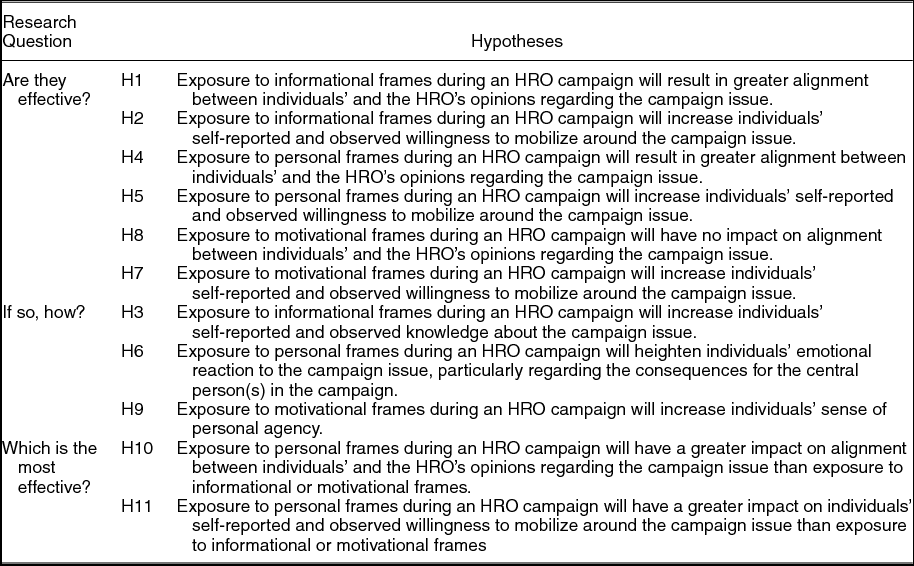
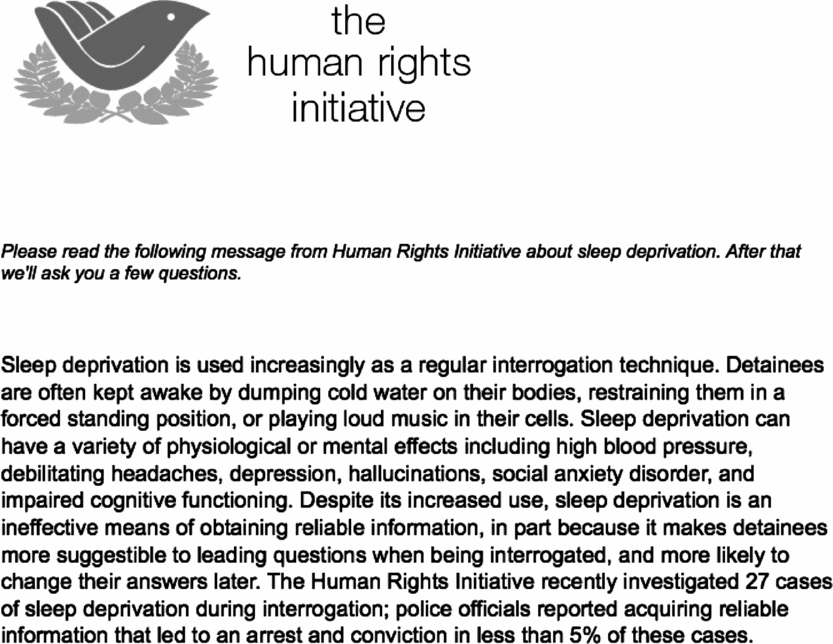
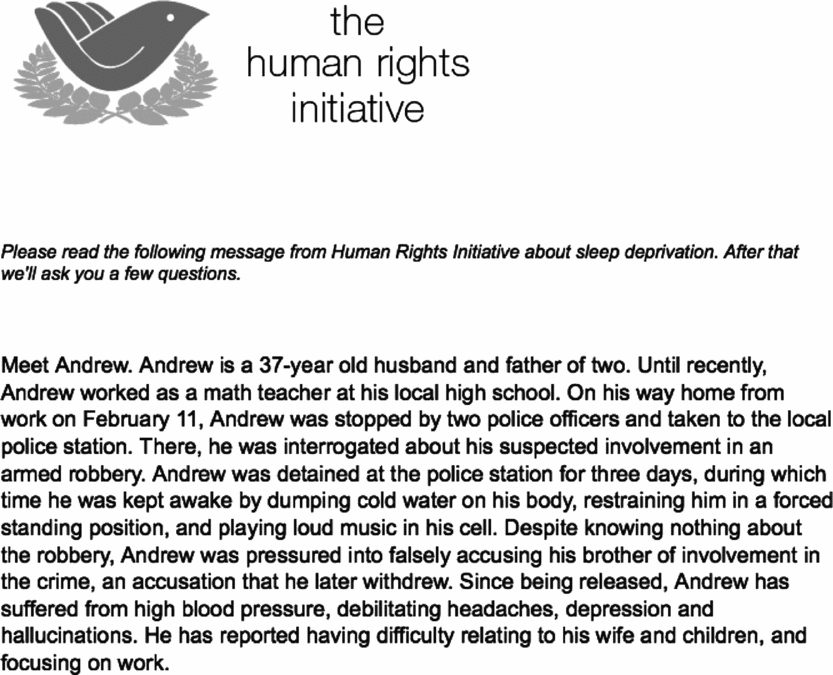
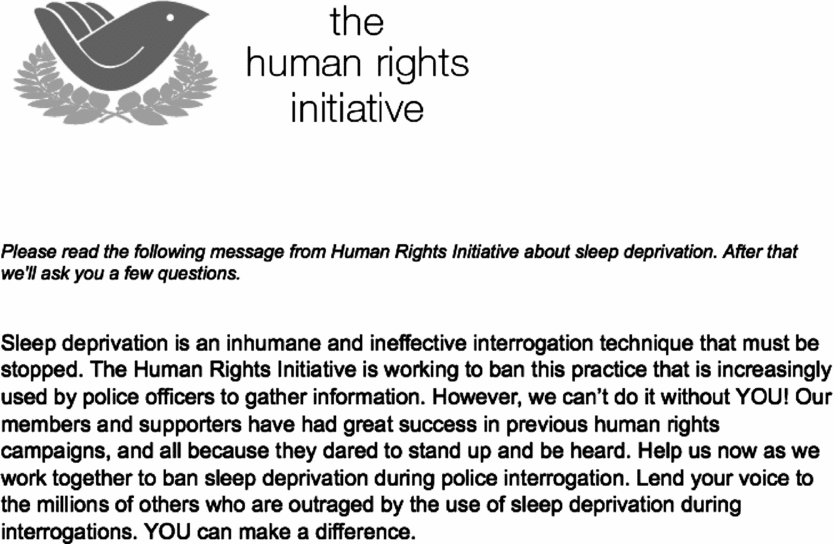
Participants were randomly assigned to the control group or one of four treatment groups by the online survey software.Footnote 10 Each was then presented with the front page of the survey, containing the Human Rights Initiative's official logo. Those in the treatment groups were directed to a second page, where they were asked to read the relevant campaign message before proceeding to the questionnaire. Those in the control group received no campaign message and were taken directly to the questionnaire.Footnote 11 The informational, personal, and motivational campaigns are shown in Figures 1–3 below.Footnote 12 We consulted AI-USA's historical archive of advocacy materials, as well as more recent campaign materials from Amnesty International, Physicians for Human Rights, and Oxfam International to ensure that the language, style, and tone of the treatments was comparable to that which individuals would actually be exposed to during an HRO campaign. We also made sure that the basic content was similar across all four treatments; each frame identified sleep deprivation as ineffective, inhumane, and occurring in the context of police interrogation. The physiological and psychological effects discussed in more detail in the informational and personal frames were also intentionally parallel to enhance comparability across treatments.
Informational Frame

Personal (Male) Frame

Motivational Frame

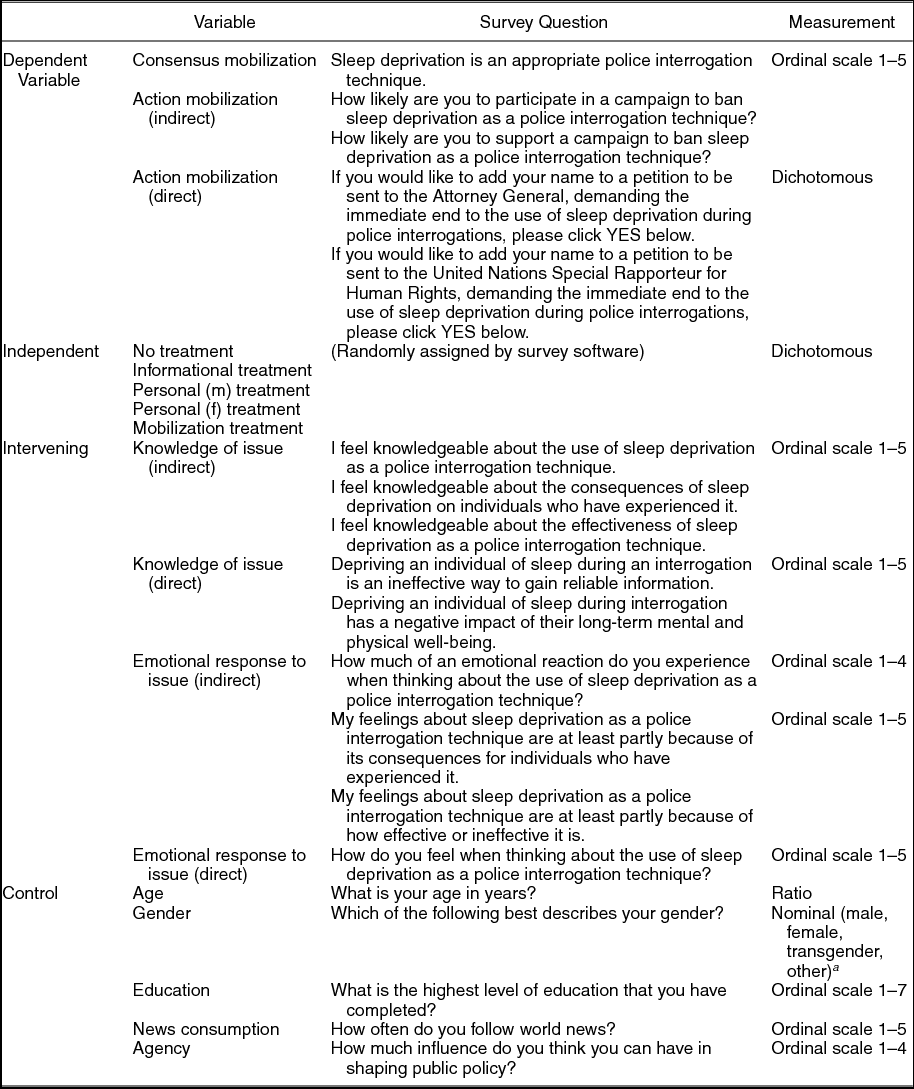
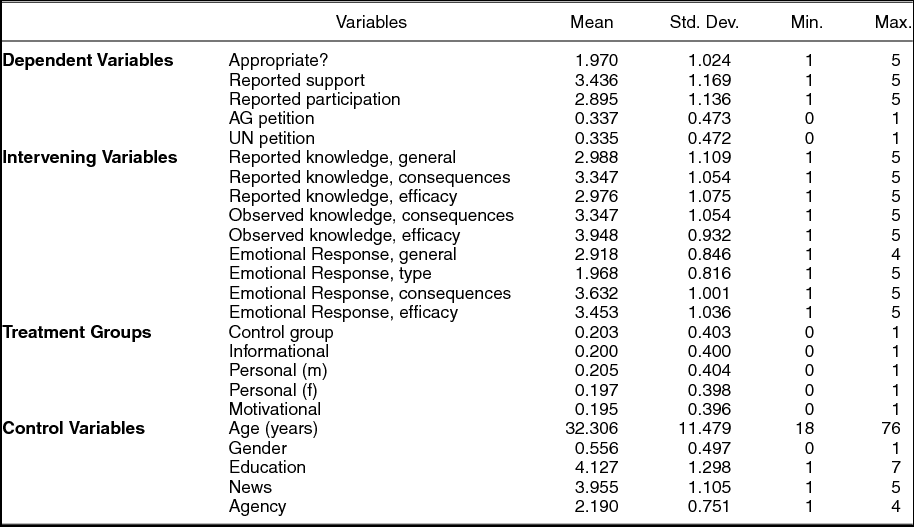
The survey was designed to offer at least one direct and/or indirect measure of the dependent, independent, and intervening variables in our theoretical model. The first dependent variable, consensus mobilization—fostering agreement about the nature and severity of an issue—is measured on an ordinal scale of 1 to 5 indicating a respondent's agreement/disagreement with the statement, “Sleep deprivation is an appropriate police interrogation technique.” The second dependent variable, action mobilization—the ability to get individuals to mobilize for social change—is measured both indirectly and directly. First, respondents are asked how (un)likely they are to either support or participate in a campaign to ban sleep deprivation. Both responses are recorded on an ordinal scale, ranging from 1 (very unlikely) to 5 (very likely). Next, respondents are given the opportunity to add their name to (fictitious) petitions to be sent to the Attorney General and the UN Special Rapporteur for Human Rights, demanding the immediate end to the use of sleep deprivation during police interrogations. Their willingness to take this direct action is recorded dichotomously, 1 if they “click” to add their name, 0 if they do not. Table 2 provides a full description of each variable, how it was captured in the survey, and how it was measured. A complete list of survey questions is presented in Appendix A. Descriptive statistics for these variables are presented in Appendix B.
Variables and Measurements

a Five of 826 respondents chose either the “transgender” or the “other” option. Ultimately, these cases dropped out of our analysis, leaving us with only self-reported “male” and “female” participants.
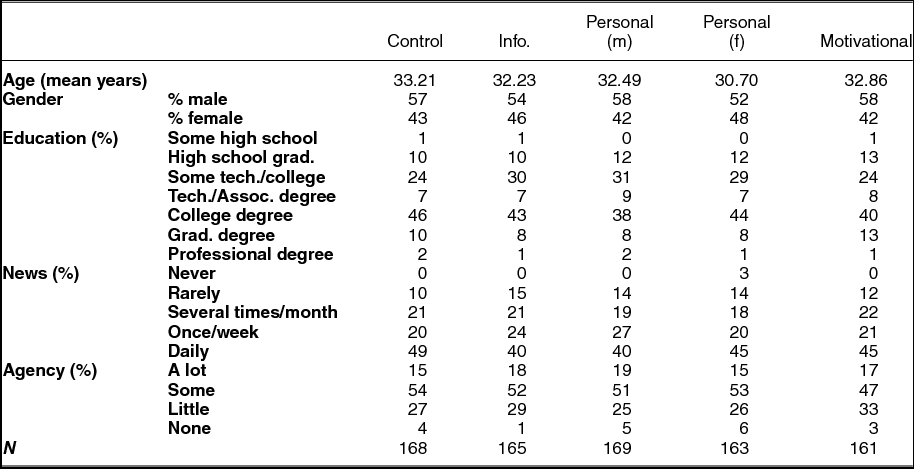
A demographic profile for the control and each treatment group is presented in Table 3. As we would expect with random assignment, difference of means t tests show that there are no statistically significant differences in the age, gender, and level of education across participants in the control group or any of the treatment groups. In addition, participants’ profiles appear to be consistent with those of other studies using MTurk (Berinsky et al. Reference Berinsky, Huber and Lenz2012; Buhrmester et al. Reference Buhrmester, Kwang and Gosling2011; Paolacci et al. Reference Paolacci, Chandler and Ipeirotis2010), many of which find high levels of internal consistency of self-reported demographics by MTurkers (Mason and Suri Reference Mason and Suri2012; Rand Reference Rand2012). Most studies conclude that “Mechanical Turk workers are at least as representative of the U.S. population as traditional subject pools, with gender, race, age and education of Internet samples matching the population more closely than college undergraduate samples and internet samples in general” (Paolacci et al. Reference Paolacci, Chandler and Ipeirotis2010, 414; see also Berinsky et al. Reference Berinsky, Huber and Lenz2012; Buhrmester et al. Reference Buhrmester, Kwang and Gosling2011). MTurkers are slightly younger, a bit more liberal, and slightly more educated than the average respondent in traditional samples (Berinsky et al. Reference Berinsky, Huber and Lenz2012).
Demographic Profile of Control and Treatment Groups a

a Percentages may not add to 100 due to rounding.
We suspected that the characteristics of MTurkers more generally, and of our sample specifically, matched quite well the target demographic for HRO advocacy materials, particularly large, Western-based HROs.Footnote 13 To verify this, we spoke with individuals at the AI-USA main office and regional offices, Human Rights Watch, Doctors without Borders, Catholic Relief Services, American Jewish World Service, and Abolition Ohio who play key roles in their organizations’ advocacy efforts. Most suggested that while they attempt to target a broad and representative cross section of the entire population, they are most likely to reach people that fit the profile described above. One interviewee at a major international HRO indicated that this is due in part to the lists of people that HROs purchase, which come predominantly from sources such as magazines that tend to target this demographic (Anonymous 2013). As a result, the sampling frame that HROs use to generate a mailing list is itself already skewed younger, more liberal, and better educated, leading to a slightly biased sample. Another interviewee suggested that the increasing use of the internet to mobilize consensus and action makes those they target for advocacy appeals more like the demographic of MTurkers and less like the demographic of the typical rank-and-file members of the organization (O’Keefe Reference O’Keefe2013).
In sum, MTurk generates samples that may not be nationally representative, but are highly representative of the population targeted by HROs. This makes MTurk an ideal tool for experimental studies examining the effects of HRO framing. We are confident that our sample is likely more representative of the typical target of HRO advocacy efforts than would be a more traditional random sample, or any other convenience sample.
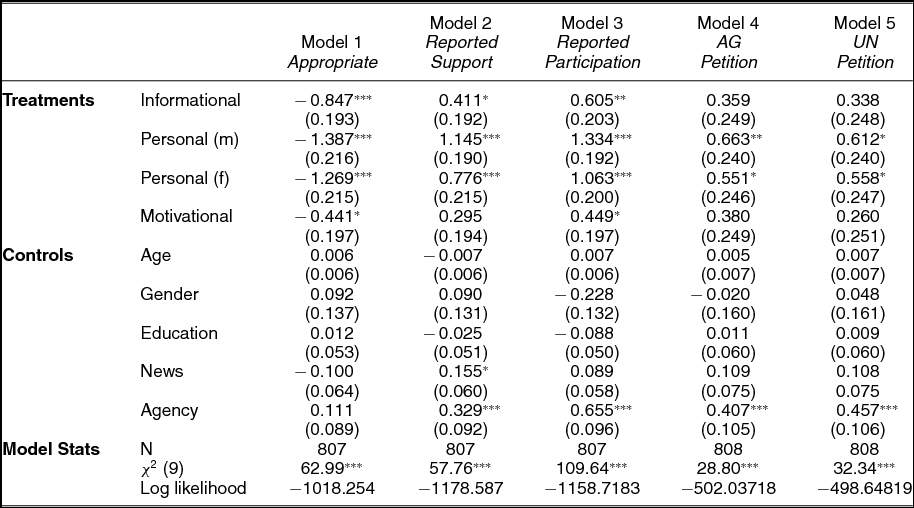
We use ordered logit to analyze our data because the dependent variables are not continuous, but rather ordinal (or dichotomous in the case of the direct measures of action mobilization). Tables 4–9 present the results of our analyses. We report the coefficients and robust standard errors for each variable. We also report the predicted probabilities to capture the substantive impact of each independent variable on the dependent variable.
Ordered Logit Results, Models 1–5 a

a We also examined the impact of each treatment independently on the dependent variables in bivariate (excluding all control variables) and multivariate (including all control variables) models. The results from the multivariate analyses are essentially the same as those presented here. The bivariate models confirm our general conclusion that the personal frames are more effective than informational and motivational frames at mobilizing consensus and action on human rights issues. However, while exposure to the male or female personal frame increases respondents’ willingness to reject of the use of sleep deprivation, in the bivariate models, only the personal-male frame increases their likelihood to sign a petition to ban the practice (p < 0.05).
Notes: Two-tailed tests; robust standard errors in parentheses;
* = p < 0.05; ** = p < 0.01; *** = p < 0.001.
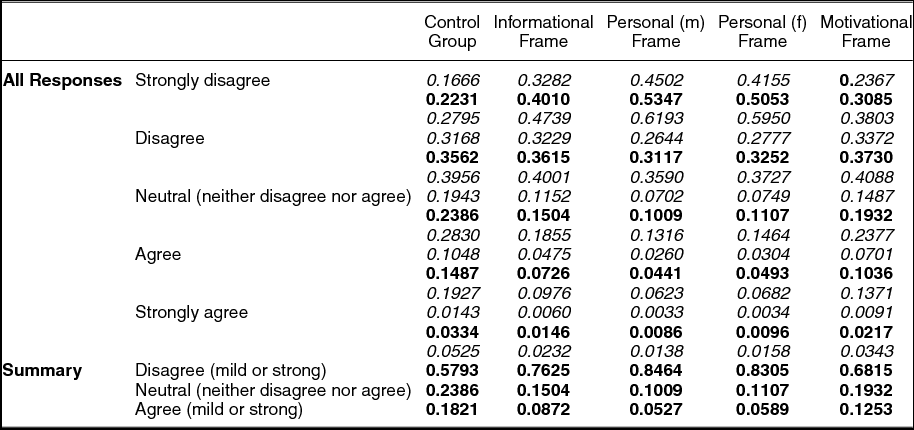
Predicted Probabilities of Responses to Question #6: “Sleep Deprivation is an Appropriate Police Interrogation Technique”

Notes: Dichotomous control variables held constant at their mode; all other control variables held constant at their median. Upper and lower bounds reported in italics; probabilities may not sum to 1.0 due to rounding.
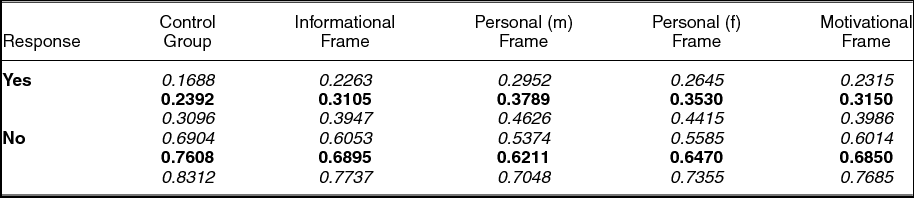
Predicted Probabilities of Responses to Whether Respondent Would Like Their Name Added to a Petition to Be Sent to the Attorney General

Notes: Dichotomous control variables held constant at their mode; all other control variables held constant at their median. Upper and lower bounds reported in italics; probabilities may not sum to 1.0 due to rounding.
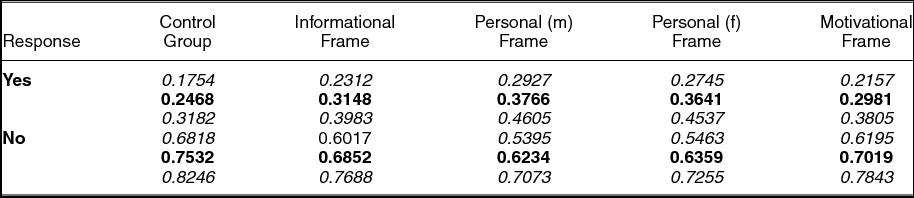
Predicted Probabilities of Responses to Whether Respondent Would Like Their Name Added to a Petition to Be Sent to the United National Special Rapporteur for Human Rights

Notes: Dichotomous control variables held constant at their mode; all other control variables held constant at their median. Upper and lower bounds reported in italics; probabilities may not sum to 1.0 due to rounding.
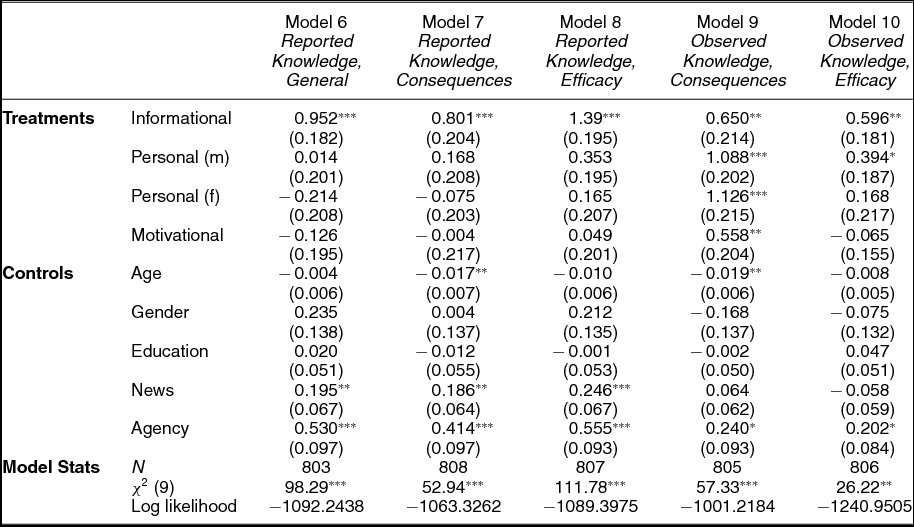
Ordered Logit Results, Models 6–10

Notes: Two-tailed tests; robust standard errors in parentheses;
* = p < 0.05; ** = p < 0.01; *** = p < 0.001.
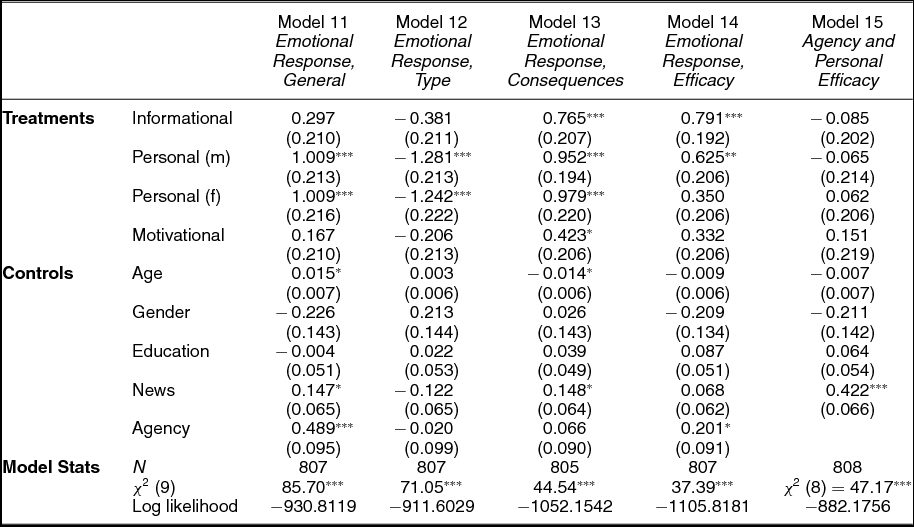
Ordered Logit Results, Models 11–15

Notes: Two-tailed tests; robust standard errors in parentheses;
* = p < 0.05; ** = p < 0.01; *** = p < 0.001.
RESULTS
In this section, we present the results from our analyses, testing the impact of various messaging techniques on individuals’ perceptions and actions on the issue of sleep deprivation. We find that the three most common messaging techniques employed by HROs—informational, personal, and motivational frames—are more effective at fostering consensus mobilization than action mobilization. Personal narratives appear to be the most consistently successful, increasing individuals’ knowledge of and emotional reaction to the issue, and as a consequence, leading them to reject the practice and participate in a campaign to demand its cessation.
Model 1 examines the effect that exposure to one of the treatments has on a participant's agreement with the use of sleep deprivation. Results from the regression analysis (Table 4) show that compared to the control group, exposure to any of the treatments—informational, personal, or motivational—significantly decreases one's likelihood of viewing sleep deprivation as an appropriate police interrogation technique. For example, reading a personal narrative of a male survivor of sleep deprivation results in a 1.39 unit decrease in the log odds of reporting a higher level of agreement with the use of sleep deprivation. As the log odds is not always an intuitive way to interpret logit coefficients, we use them to generate predicted probabilities for hypothetical cases of interest.
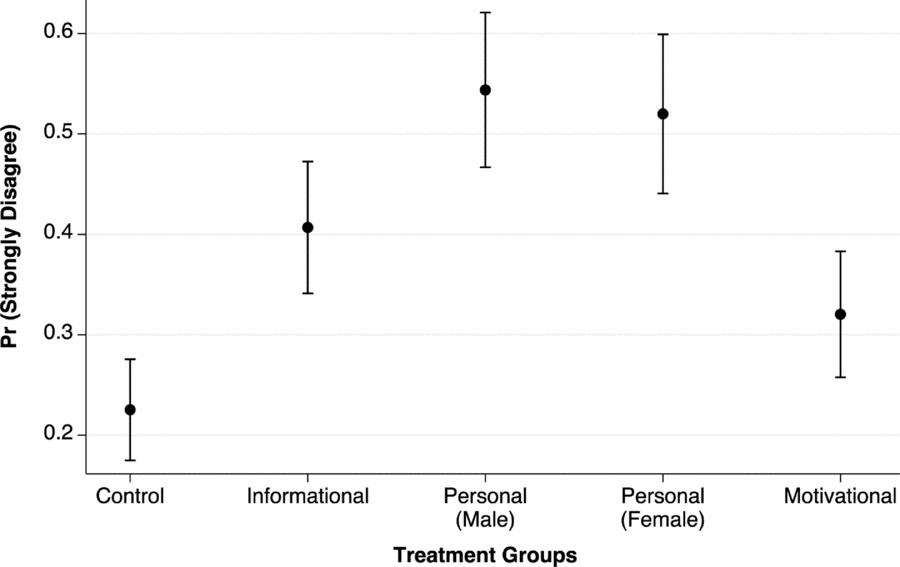
Table 5 depicts the predicted probabilities of how one might respond to the question of whether sleep deprivation is an appropriate interrogation technique, given their exposure to each of the treatments. The first column indicates the probabilities predicted for respondents in the control group who did not see the text of an advocacy campaign. Each subsequent column shows predicted probabilities for respondents viewing each of the treatments. We can compare, for example, the predicted probability that someone in the control group will strongly disagree with that statement (0.2231) to the probability of strongly disagreeing if they viewed the informational frame (0.4010), either of the personal frames (0.5347 [male]; 0.5053 [female]) or the motivational frame (0.3085). We can make similar comparisons across each of the rows.
The probability that someone in the control group will neither agree nor disagree with the use of sleep deprivation is 0.2386. The predicted probability of disagreeing in some manner is 0.5793 (the sum of predicted probabilities for both disagreeing and strongly disagreeing), while the probability that the respondent will agree in some manner is 0.1821 (the sum of predicted probabilities for both agreeing and strongly agreeing).
All of the treatments have measurable effects on the probability that a respondent will find sleep deprivation an inappropriate interrogation technique. However, exposure to the personal frames has the most dramatic effect; when compared to the control group, the probability of disagreeing with the use of sleep deprivation increases by 0.2671 if the respondent sees the personal-male frame, and by 0.2512 if the respondent sees the personal-female frame. When making similar comparisons, the probability of disagreeing with the use of sleep deprivation increases by only 0.1832 if the respondent sees the informational frame, and 0.1022 if the respondent sees the motivational frame. Although all of the frames have a statistically significant effect on respondents’ opinions that sleep deprivation is inappropriate (Table 4), the magnitude of the impact of personal frames on consensus mobilization is greatest (Table 5). That the various treatments had differential effects on the dependent variable (H10) is confirmed through a series of Wald tests (Long and Freese Reference Long and Freese2006; Williams Reference Williams2014).Footnote 14 In fact, only the effects of the personal-male and personal-female treatments were indistinguishable from one another. As an illustrative example, Figure 4 graphs the predicted probability of an individual strongly disagreeing with the statement “Sleep deprivation is an appropriate police interrogation technique.” We can see that respondents who view one of the treatments are more likely to find sleep deprivation inappropriate than are those who view no treatment. In addition, both personal frames are more likely to lead to consensus mobilization than the motivational frame, and somewhat less conclusively, the informational frame. Finally, there is no significant difference in the impact between the personal-male and personal-female frames.
Predicted Probability with 95% CI of Responding “Strongly Disagree” to Question #6: “Sleep Deprivation is an Appropriate Police Interrogation Technique,” by Treatment Group

Models 2–5 in Table 4 examine the effect that exposure to one of the treatments has on a participant's self-reported and observed willingness to mobilize around the issue of sleep deprivation. With one exception, participants who viewed any of the treatments were more likely than those who did not to report that they would both support and participate in a campaign to ban sleep deprivation (Models 2 and 3).Footnote 15 However, when asked to actually take action by signing a petition to be sent to the Attorney General or the UN Special Rapporteur on Human Rights, only those exposed to the personal frames were more likely to do so. Neither the informational nor the motivational frames had a statistically significant effect on participants’ actual choices to act or not (Models 4 and 5). Given the relatively low risk and low cost request (“If you would like to add your name to a petition to be sent to. . ., demanding the immediate end to the use of sleep deprivation during police interrogation, please click YES below”), we are not optimistic about the prospects of either the informational, or somewhat more unexpectedly, the motivational frames on their own to mobilize individuals around an issue area.
Tables 6 and 7 investigate the magnitude of the effects of these treatments on action mobilization. The difference in predicted probabilities of agreeing to add one's name to a petition to be sent to the Attorney General (Table 6) or the UN Special Rapporteur (Table 7) is minimal when comparing the control group to either the informational (0.0623 and 0.0680) or motivational (0.0758 and 0.0513) frames. However, when compared to the control group, the probability of being willing to add one's name to the UN petition increases by 0.1298 if the respondent sees the personal-male frame, and by 0.1173 if the respondent sees the personal-female frame. A similar effect is seen when examining the predicted probabilities for adding one's name to the Attorney General petition. While it appears that the personal frames have the strongest effect on action mobilization, given the significant overlap in the confidence intervals, and the Wald test statistics,Footnote 16 we cannot reject the null hypothesis that there is no difference in the treatments’ impacts on the dependent variable (H11).
Table 8 displays the results from Models 6–10, which test the proposed mechanisms driving participants’ beliefs and behavior regarding sleep deprivation. Results show that the informational frame is the only messaging strategy that has a consistent impact on individuals’ knowledge of the issue. With its emphasis on “objective” facts and statistics, it is not surprising that the informational frame increases participants’ perceived and real knowledge of sleep deprivation, including its negative impact on victims/survivors and its overall efficacy as an interrogation technique. In comparison, neither the personal nor the motivational frames left participants feeling more informed, even though both framing strategies increased individuals’ likelihood of correctly identifying sleep deprivation as deleterious for victims. The personal-male frame further led participants to correctly identify sleep deprivation as an ineffective interrogation tool.
Where informational frames attempt to change people's minds and behavior through education, personal frames do so by appealing to their base emotions. The results presented in Models 11–14 in Table 8 demonstrate that personal frames do, in fact, elicit emotional responses from viewers. Individuals exposed to personal narratives of suffering are more likely than those who are not to feel “bad” or “very bad” when thinking about sleep deprivation, feelings that were driven mostly by their understanding of the suffering it caused to victims.
Finally, motivational frames attempt to affect peoples’ sense of agency and the likelihood that their actions are effective in bringing about change. We saw in Tables 4, 6, and 7 above that while motivational frames change minds, they do not on their own make individuals more likely to act. The results presented in Model 15 in Table 9 may help to explain why. In this model, we remove agency as a control variable and instead make it the dependent variable. We find that none of the frames, motivational frames included, have an effect on respondents’ sense of personal efficacy and agency. A sense of agency plays a role in the processes of consensus and action mobilization, but itself is not affected by exposure to any one particular frame, even one that specifically targets that sense of agency.
CONCLUSION
This study provides the first systematic test of the efficacy of the three most common framing techniques employed by large, Western, global HROs—informational, personal, and motivational frames. Our results demonstrate that these frames are more effective at fostering consensus mobilization than they are at action mobilization. Personal narratives appear to be the most consistently successful, increasing individuals’ knowledge on the issue, their emotional reaction to the issue, and as a consequence, leading them to reject the practice and participate in a campaign to demand its cessation.
This study also demonstrated that there are clear systematic differences in how individuals respond to the ways in which information about human rights abuses are presented. HROs’ efforts to affect individuals’ attitudes or behavior on human rights issues are not uniformly successful, but rather depend greatly on the messaging strategy employed. To the extent that these micromobilization efforts—consensus and action mobilization—are critical to their ability to influence state or perpetrator behavior, the results of our study would suggest that HROs should emphasize personal narratives that provoke empathy and other emotional reactions from the target audience. Stirring emotions of empathy, sadness, and even anger appear more effective than simple issue education or motivational appeals at encouraging individuals to see sleep deprivation as a human rights violation and to participate in a movement to ban its practice.
Given the dearth of empirical research examining the efficacy of framing in HRO campaigns, this field is ripe with future research opportunities. One such opportunity concerns the use of simultaneous frames. This study demonstrated the impact of each framing strategy in isolation. While significant in its own right (we now know that the use of a personal narrative alone is sufficient to mobilize consensus and action on a human rights issue), the reality is that HROs rarely employ these frames separately. Do some combination of frames work better than others? Is the success of one type of frame contingent upon its use in conjunction with another? Do some frames mitigate the effectiveness of others? Future analysis is required to construct more complex, multiframe campaigns and examine how these interactions impact consensus and action mobilization.
We hope this study moves scholars to ask other questions that would enhance our understanding of how and under what conditions HROs can change behavior. Our study focuses on the types of campaigns commonly used by large, global HROs that target a more educated, Western audience. Future research should examine the ways in which local HROs, cultural contexts, and audiences change the choice of framing strategies or the efficacy of these frames. For example, our study focused on the mobilization of a relatively educated audience (mean = “technical or associate graduate”) from the global North. While respondents’ education was not a significant predictor of consensus or action mobilization, further analysis is required to determine if HRO campaigns targeting a less educated population employ the same framing strategies, and, if so, whether they have the same effect. In some contexts, for example, where information on rights and rights abuses is limited, campaigns with an informational lens may be essential to shaping individuals’ attitudes and behavior.
In addition, future studies should consider whether some framing strategies work better to mobilize consensus and action around some human rights issues (such as sleep deprivation) but not others (such as disappearances), or on behalf of some types of victims (such as those perceived as vulnerable, innocent, or apolitical) but not others (such as those who may be guilty of a crime, are political dissidents, or may be perceived as less vulnerable). And do consensus and action mobilization actually convince states or IOs to shame or sanction perpetrators, or otherwise affect perpetrator behavior? This study suggests that rather than assuming microlevel processes we should begin to explicitly test these relationships and further specify the relationship between HRO advocacy on human rights issues and actual changes in human rights conditions.
Finally, our study suggests that scholars and practitioners of citizen engagement and activism more broadly should explicitly examine the effects of framing strategies on consensus and action mobilization. For example, one might expect that the framing strategies that build consensus around issues of human rights will differ from those that mobilize consensus around environmental issues, which might rely less on personal narratives and empathy and more on providing information about environmental impacts. Similarly, get out the vote campaigns that are tied to specific rights related issues (such as marriage equality) might be better served with the use of a personal frame that builds connection and empathy. Still other issues might be best addressed using a framing strategy not identified here, such as a moral or religious frame. Future research would benefit from analyzing framing effects across a range of activists’ issues to better understand how and under what circumstances framing changes minds and mobilizes people to engage in political processes.
APPENDIX A: SURVEY
-
1. I feel knowledgeable about the use of sleep deprivation as a police interrogation technique.
Strongly Agree / Agree / Neither Agree nor Disagree / Disagree / Strongly Disagree
-
2. Depriving an individual of sleep during interrogation is an ineffective way to gain reliable information.
Strongly Agree / Agree / Neither Agree nor Disagree / Disagree / Strongly Disagree
-
3. I feel knowledgeable about the consequences of sleep deprivation on individuals who have experienced it.
Strongly Agree / Agree / Neither Agree nor Disagree / Disagree / Strongly Disagree
-
4. Depriving an individual of sleep during interrogation has a negative impact on their long-term mental and physical wellbeing.
Strongly Agree / Agree / Neither Agree nor Disagree / Disagree / Strongly Disagree
-
5. I feel knowledgeable about the effectiveness of sleep deprivation as a police interrogation technique.
Strongly Agree / Agree / Neither Agree nor Disagree / Disagree / Strongly Disagree
-
6. Sleep deprivation is an appropriate police interrogation technique.
Strongly Agree / Agree / Neither Agree nor Disagree / Disagree / Strongly Disagree
-
7. How much of an emotional reaction do you experience when thinking about the use of sleep deprivation as a police interrogation technique?
A lot / Some / Little / None
-
8. How do you feel when thinking about the use of sleep deprivation?
Very Good / Good / Neither Good nor Bad / Bad / Very Bad
-
9. My feelings about sleep deprivation as a police interrogation technique are at least partly because of its consequences for individuals who have experienced it.
Strongly Agree / Agree / Neither Agree nor Disagree / Disagree / Strongly Disagree
-
10. My feelings about sleep deprivation as a police interrogation technique are at least partly because of how effective or ineffective it is.
Strongly Agree / Agree / Neither Agree nor Disagree / Disagree / Strongly Disagree
-
11. How likely are you to participate in a campaign to ban sleep deprivation as a police interrogation technique?
Very Likely / Likely / Neither Likely nor Unlikely / Unlikely / Very Unlikely
-
12. How likely are you to support a campaign to ban sleep deprivation as a police interrogation technique?
Very Likely / Likely / Neither Likely nor Unlikely / Unlikely / Very Unlikely
-
13. What is your age in years?
-
14. Which of the following best describes your gender?
Male / Female / Transgender / Other (please indicate below)
-
15. What is the highest level of education that you have completed?
Some high school / High school graduate / Some technical school or college / Technical school or associate graduate / College degree (example: BS, BA) / Graduate degree (example: MA, MS, PhD, EdD)/ Professional degree (example: MD, DDS, DVM)
-
16. How often do you follow world news?
Never / Rarely / Several Times a Month / Once a Week / Daily
-
17. How much influence do you think you can have in shaping public policy?
A lot / Some / Little / None
-
18. If you would like to add your name to a petition to be sent to the Attorney General, demanding the immediate end to the use of sleep deprivation during police interrogations, please click YES.
Yes / No
-
19. If you would like to add your name to a petition to be sent to the United Nations Special Rapporteur for Human Rights, demanding the immediate end to the use of sleep deprivation during police interrogations, please click YES.
Yes / No
Descriptive statistics




Comments
No Comments have been published for this article.