Introduction
Loss of the ability to walk is an everyday occurrence in nursing homes, with an estimated 89% of residents experiencing some level of mobility limitation (Williams et al., Reference Williams2005). While the decline in function through predictable stages has been extensively documented in Alzheimer's disease (Reisberg et al., Reference Reisberg, Ferris, De Leon and Crook1982; Njegovan et al., Reference Njegovan, Man-Son-Hing, Mitchell and Molnar2001), coincident factors that aggravate the trajectory (such as comorbidities including depression, adverse drug effects, and environmental factors, among others), may be reversible but have not been well studied. Such reversible functional loss has been termed “excess disability” (Brody et al., Reference Brody, Kleban, Lawton and Silverman1971). Failure to recognize and treat excess disability adversely affects the health status and quality of life for people with dementia (Ballard et al., Reference Ballard, O'Brien, James and Mynt2001) as well as those who provide care for them, and has substantial economic consequences (Taylor et al., Reference Taylor, Schenkman, Zhou and Sloan2001).
Most longitudinal studies of functional loss in people with dementia have attributed it solely to dementia; however, two reports from the Consortium to Establish a Registry for Alzheimer's Disease (CERAD) have identified instances of a “backward transition” (Neumann et al., Reference Neumann2001) or “reversal of clinical milestones” (Galasko et al., Reference Galasko, Edland, Morris, Clark, Mohs and Koss1995) in people with mild to moderate Alzheimer's disease. Galasko et al. commented that intercurrent illness, delirium, depression or psychosis may lead patients to reach milestones that are later reversed as these conditions improve. Little research has been devoted to the complex issue of identifying the reversible factors which compromise physical function throughout the otherwise irreversible trajectory of dementia-related decline. The aims of the prospective cohort study reported here were to estimate the annual incidence of walking disability and the subset of walking disability not attributed to dementia, as well as to identify predictors of walking disability and excess disability in walking among nursing home residents with middle-stage dementia.
Methods
Participants and recruitment
The study included residents with middle-stage Alzheimer's disease, vascular, mixed, or unspecified dementia living in nursing homes in Calgary, Canada, who were able to walk with or without an assistive device and were able to feed themselves. Residents were excluded if they had a diagnosis of dementia with Lewy bodies (associated with unpredictable episodes of functional decline and improvement (McKeith et al., Reference McKeith1996)) or frontotemporal dementia (without a well-described pattern of functional decline (Neary et al., Reference Neary1998)), lacked an authorized representative to provide informed consent on their behalf, or dissented to participate in an interview to assess their stage of dementia. We included those with middle-stage dementia, as measured by the Global Deterioration Scale (GDS) (Reisberg et al., Reference Reisberg, Ferris, De Leon and Crook1982) because walking disability due to dementia is common at this stage in the trajectory of functional loss thereby facilitating the study of functional transitions.
Unit managers, or their designates, approached the authorized representatives of residents for permission to provide their contact information to the lead investigator. Informed consent was obtained from authorized representatives and assent to participate was obtained from residents when they agreed to be interviewed using the GDS (Reisberg et al., Reference Reisberg, Ferris, De Leon and Crook1982). Residents and their authorized representatives were enrolled in the study from August 2006 to March 2007 and subsequently followed for a year until March 2008. The Conjoint Health Research Ethics Board of the University of Calgary approved the study.
Resident-specific variables
Resident-specific data included date of birth, sex, education, score on the Charlson Comorbidity Index (Charlson et al., Reference Charlson, Pompei, Ales and MacKenzie1987), type of dementia, GDS score (Reisberg et al., Reference Reisberg, Ferris, De Leon and Crook1982), duration of nursing home admission, and drug use – cognitive enhancer (cholinesterase inhibitor or N-methyl-D-aspartate inhibitor) or psychotropic (neuroleptic, benzodiazepine, or antidepressant). The introduction and discontinuation of medications were recorded every two weeks.
Facility-specific variables
Data relating to the environment included the ownership status of the nursing home (for profit or not-for-profit), the presence of staff dementia education during the previous year (some or none), nursing home bed number, and staff-to-resident ratios (based on the number of full-time equivalent staff members on the day shift for registered nurses and licensed practical nurses, nurse aides, physiotherapists, occupational therapists, recreation therapists, their assistants, and volunteer coordinators). We evaluated the quality of the nursing home environments using the Professional Environmental Assessment Protocol (PEAP) which has demonstrated inter-rater reliability, criterion-related validity, and discriminant validity (Lawton et al., Reference Lawton2000; Morgan et al., Reference Morgan, Stewart, D'Arcy and Werezak2004). This is a 13-point scale that measures nine dimensions of the physical and social environment deemed to be therapeutic for people with dementia: awareness and orientation, safety and security, provision of privacy, regulation of stimulation, quality of stimulation, support for functional abilities, opportunities for personal control, facilitation of social contact, and continuity of the self with the past through personal and familiar objects (Lawton et al., Reference Lawton2000).
Outcome variables
Disability has been defined as a limitation in performing socially defined roles or tasks expected within a sociocultural and physical environment (Nagy, Reference Nagy, Pope and Tarlov1991). In the current study walking disability was identified in a resident who previously walked independently to the dining room with or without a walking aid, but subsequently used a wheelchair to go to the dining room at mealtimes, or did not go to the dining room. Those not going to the dining room usually were observed to be in bed.
Excess disability has been defined as the discrepancy between existing and potential functional capacity which is greater than that warranted by any irreversible cognitive, physical, or affective impairment (Brody et al., Reference Brody, Kleban, Lawton and Silverman1971). In the current study excess disability in walking was defined as disability due to something other than dementia. It was operationally defined in two ways. Residents observed going to the dining room in a wheelchair but subsequently observed walking to the dining room were coded as having excess disability. This transient loss of walking ability was one approach to identifying excess disability because individuals who lose the ability to walk due to dementia are not expected to recover. Secondly, residents could have lost the ability to walk due to a cause other than dementia but did not regain the ability to walk because the cause was not identified and treated. Thus an approach to identifying excess disability which did not rely on the transience of the disability was devised. This involved consulting those who knew the resident best: the involved nurse and family member. When both staff and family members attributed the walking disability to something other than dementia (e.g. environmental factors, adverse drug effects, pain, or other medical conditions) during separate open-ended interviews then the walking disability was coded as excess disability.
Data collection
At study entry, resident-specific data were collected through resident and family interviews, observation, health record review, and standardized assessment instruments. Environment-specific data were collected through observation and semi-structured interviews with nursing home managers. Outcome data were collected every two weeks for a year through resident observation and health record review. To minimize the impact of the study on the residents, fortnightly observations of walking were undertaken as they entered or exited the dining room at mealtimes. Residents who were observed to walk with or without a cane or a walking frame were coded as “maintaining ability to walk”. Residents who were absent for social or medical appointments were subsequently observed within two days of the scheduled observation. The walking abilities of residents who were hospitalized during a scheduled observation were determined by reviewing the nursing care flow-sheet for that day in the hospital health record. Only the first instance of disability was studied: repeated events which may have occurred if residents lost, recovered, but subsequently re-lost their ability to walk were not included in the analysis.
The resident's health record was reviewed whenever a functional loss was observed. Staff and family member interviews were triggered after three consecutive observations of walking disability because it was judged to be unlikely that after three observations of disability (an elapsed time of six weeks) the resident would regain the ability to walk. The six-week interval provided both the family and staff sufficient time to investigate and determine the cause of the walking disability. Causal attributions were assessed in a standardized manner during separate interviews with the resident's authorized representative or family member who visited the most frequently and with the registered nurse or licensed practical nurse working directly with the resident. Respondents were first asked what they thought was the reason for the loss of walking ability and then were asked, “Do you think the loss of ability to walk is because of dementia or because of something else?”
Sample size calculation
Based on the findings of Perrault et al. (Reference Perrault, Wolfson, Egan, Rockwood and Hogan2002), it was assumed that 50% of the sample would experience a loss of ability to walk during a one-year follow-up period. A sample size of 96 residents was calculated to estimate any proportion with a 10% margin of error and 95% confidence. This was judged as being an appropriate estimation of clinical significance. To compensate for an expected 20% attrition due to the frailty and advanced age of the participants, 120 residents were enrolled for study. This sample size provided 80% power to detect hazard ratios of 2.5 or greater at a two-sided 5% level of significance.
Statistical analysis
It was expected that some residents would die before an outcome event occurred and before the end of the follow-up period. Residents who died under these circumstances would have been likely to experience an event had they lived, i.e., they were more like residents who had experienced a functional loss than residents who survived to the end of the study. Thus residents who died were considered, in the analyses, as having had an irreversible walking disability event rather than having their data censored. A sensitivity analysis was performed to compare the results with and without censoring for death. Except for age, all study entry variables were dichotomized at the upper quartile, median, or lower quartile, as appropriate. The cut point for age was 85 years, which is the conventional definition for “oldest old” (Rosenwaike, Reference Rosenwaike1985).
We used the Kaplan-Meier method to estimate the cumulative proportion of residents with disability. Log rank tests compared groups defined by the study entry variables and Cox proportional hazard regression models were fitted to the data. Proportionality of the hazards was evaluated by visually inspecting corresponding log-minus-log plots.
To identify potential predictors of disability adjusted and unadjusted hazard ratios were calculated from Cox proportional hazard regression models by assuming an a priori relationship between stage of dementia and disability. To minimize the number of variables in the model only those variables with p-values < 0.2 in the bivariate regression analyses (Hosmer and Lemeshow, Reference Hosmer and Lemeshow2000) were included in the modeling process. Backward elimination of variables was used to reduce the models to their most parsimonious form.
To minimize the number of statistical tests during modeling, effect modification was assessed using the likelihood ratio test to compare the saturated model with all of the interaction terms to the partial model without any interaction terms (Ramsey and Schafer, Reference Ramsey and Schafer2002). Confounding covariates were identified when the inclusion of the variable changed the magnitude of the association between the stage of dementia variable and the disability outcome variable by 15% or more (Mickey and Greenland, Reference Mickey and Greenland1989). Given that age is associated with the progression of dementia, frailty and death, age was included in all models. Time-varying covariate analysis was performed with the four drug variables to assess the influence of these drugs at the times they were actually administered to the residents. All analyses were performed using STATA 10 (StataCorp, 2007, College Station, TX: Stata Corporation).
Results
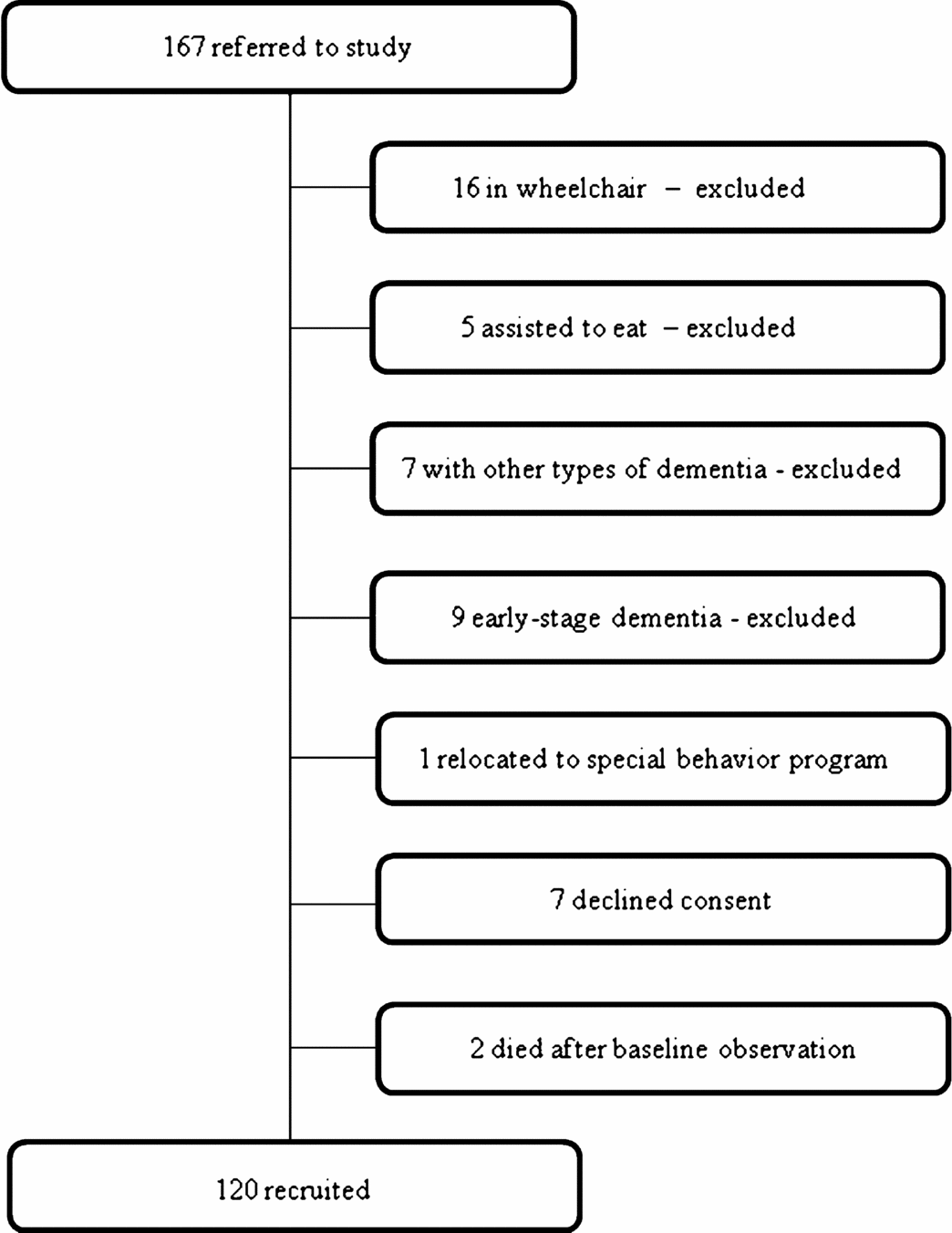
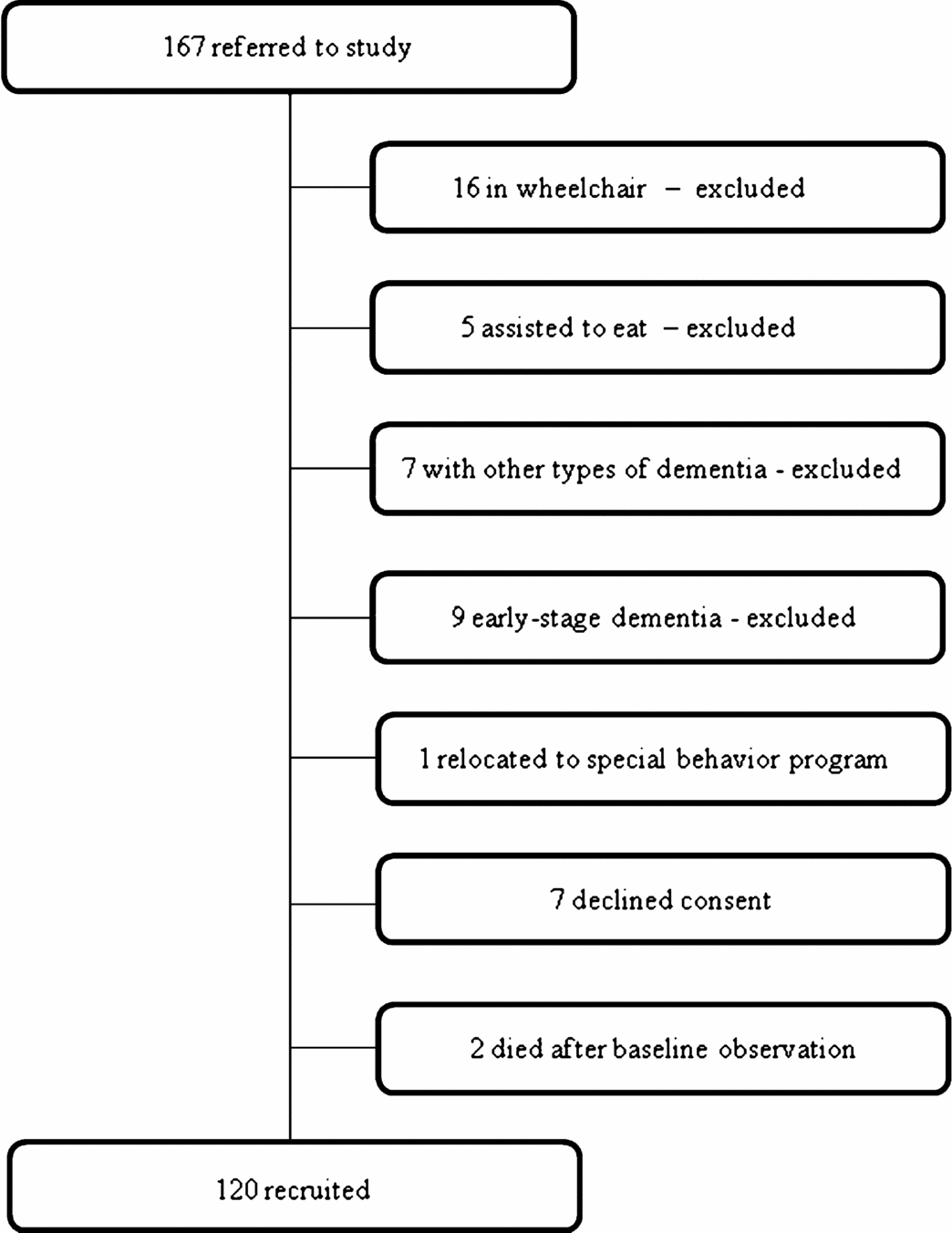
Of 167 residents referred to the study by unit managers, only 120 living in 15 nursing homes were enrolled. The flow diagram in Figure 1 identifies the reasons for exclusion from the study. Six deaths (5%) occurred prior to an observed loss of walking ability. Because there was minimal difference in the results by counting deaths as outcome events, rather than censoring, the six deaths were counted as outcomes in all analyses. There was no loss to follow-up.
Recruitment process flowchart.
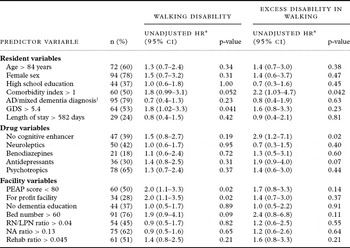
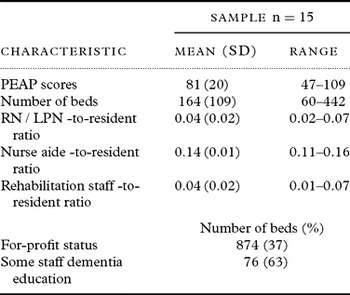
Residents in the sample had a mean age of 86 years (SD = 6.5, range 71–98), a median score of 1.5 (range 0–9) on the Charlson Comorbidity Index, and a mean score of 5.5 (SD = 0.41, range 4.8–6.4) on the GDS. Other characteristics of residents in the sample are summarized in the first two columns of Table 1 while characteristics of the 15 nursing homes in the sample are summarized in Table 2.
Unadjusted hazard ratios of all resident and facility-specific variables

*Hazard ratios from Cox proportional hazard regression models.
†Compared to vascular dementia and unspecified dementia.
CI = confidence interval; AD = Alzheimer's disease; GDS = Global Deterioration Scale; PEAP = Professional Environmental Assessment Protocol; RN = registered nurse; LPN = licensed practical nurse; NA = nurse aide; Rehab = rehabilitation.
Nursing home characteristics

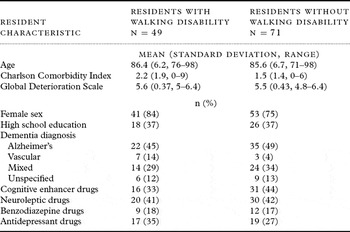
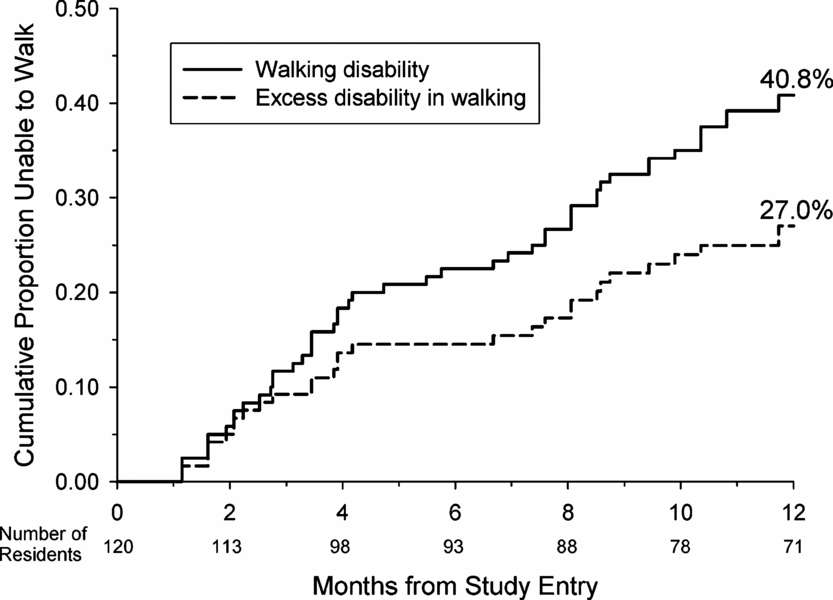
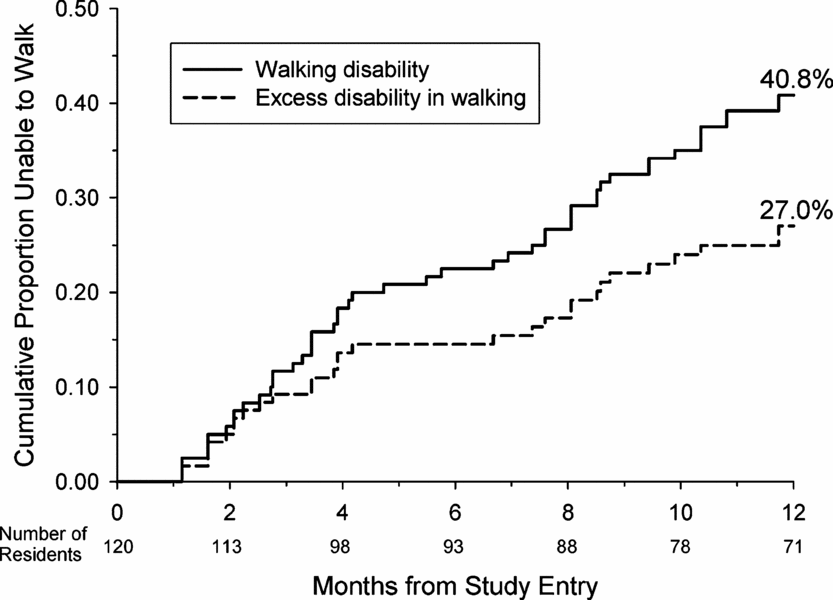
Within one year 49 residents were observed to experience an episode of walking disability. The Kaplan-Meier estimate of walking disability was 40.8% (95% CI: 32.7–50.2). Characteristics of residents who did and did not experience a walking disability are summarized in Table 3.
Characteristics of residents with and without walking disability

A subset of this walking disability was identified as excess disability: 30 residents had one or more episodes of excess disability in walking within the same period. Half (n = 15) of the excess disability was identified by recovery of walking ability and half was identified by agreement between the attributions of family and nurses. The Kaplan-Meier estimate of excess disability in walking was 27.0% (95% CI: 19.7–36.5). Figure 2 displays the cumulative failure curves for both walking disability and excess disability in walking.
Cumulative failure curves for walking disability and excess disability in walking from Kaplan-Meier analyses.
More than half of the walking disability was attributed to something other than dementia, namely excess disability.
Potential predictors of disability were assessed by computing unadjusted hazard ratios from Cox proportional hazard regression models (Table 1). Statistically significant predictors of walking disability included the GDS score, PEAP score, and profit status of the nursing home. In contrast, the statistically significant predictors of excess disability in walking included the Charlson Comorbidity Index and cognitive enhancer use.
Given the controversy surrounding the use of cognitive enhancers, a secondary analysis was conducted to ascertain whether there were selection effects which were not addressed in the multivariate model. Age was the only resident or facility variable that differed significantly between residents using and not using cognitive enhancers. Those using cognitive enhancers were significantly younger (M = 83.7 years, SD = 6.1) than those not using cognitive enhancers (M = 87.3 years, SD = 6.4) (t = 3.06, df = 118, p = 0.003).
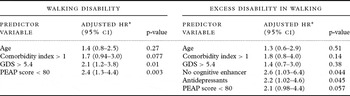
Multivariate Cox proportional hazard regression models were developed to identify potential predictors of walking disability and excess disability in walking. Cross-tabulations of every predictor variable with every other predictor variable revealed problems with small cell sizes and collinearity for PEAP score by profit status and PEAP score by size of facility. Thus these pairs of variables were not included in the same multivariate model. There was no evidence of effect modification or confounding. Predictors remaining in the two final multivariate models (for walking disability and excess disability in walking) are reported in Table 4. Proportionality of the hazards was met for all of these predictors. Stage of dementia as measured by the GDS and quality of the environment as measured by the PEAP predicted walking disability but not excess disability in walking. Using antidepressants and not using cognitive enhancers predicted excess disability in walking.
Adjusted hazard ratios from final regression models

* Hazard ratios from Cox proportional hazard regression models.
CI = confidence interval; GDS = Global Deterioration Scale; PEAP = Professional Environmental Assessment Protocol.
Because the drug covariates were coded for baseline status, misclassification bias was introduced if drugs were discontinued or introduced after the study had begun with a subsequent loss of walking ability. Time-varying covariate analyses corrected the misclassification for one walking disability event that occurred following the discontinuation of a cognitive enhancer, and for three walking disability events that occurred following the introduction of an antidepressant. In the final model for excess disability in walking the hazard ratio estimates were reduced by 18.2% and 29.5% with the time-varying covariate analysis for cognitive enhancer use and antidepressant use respectively. Since these were relatively small reductions the fixed time analysis is reported in Table 4.
Discussion
This is the first study to report the magnitude of the incidence of excess disability in walking in nursing home residents with dementia and to identify the predictors of such excess disability. Our study includes methodological limitations which we acknowledge. First, while defining excess disability based on a transient loss of ability has precedent (Gill et al., Reference Gill, Guo and Allore2008), it may have led to an overestimate if residents were observed when they were “having a bad day” and later recovered, but excluding residents with dementia with Lewy bodies (who experience “fluctuating cognition” (Bradshaw et al., Reference Bradshaw, Sailing, Hopwood, Anderson and Brodtmann2004)) reduced this potential misclassification bias. In addition, defining excess disability based on interviewees’ causal attributions of walking disability was also a potential source of misclassification because family members did not always understand that a decline in physical function could result from dementia, leading to a further overestimation of the incidence of excess disability. However, interviewees also may have overlooked a treatable cause of disability, thereby underreporting excess disability. Requiring agreement in attribution by staff and family members before coding excess disability helped to minimize misclassification bias further. Secondly, binary outcomes did not capture the gradual deterioration in walking ability observed in many, but did ensure the endpoints were clinically meaningful. Although a broad range of resident and facility-specific variables were assessed as potential predictors of excess disability, staff dementia education was a facility-specific variable offering only gross information, while potentially important resident-specific variables such as sensory impairment or pain were not included because they were not consistently available in the health record.
Despite the above limitations, our findings are important and relevant. The one-year incidence of walking disability (40.8%; 95% CI: 32.7–50.2), is comparable to the estimate from a six-month prospective cohort study in which 27% of a nursing home sample with moderate dementia declined in their ability to walk (Carpenter et al., Reference Carpenter, Hastie, Morris, Fries and Ankri2006). It is not possible to compare directly the estimated incidence of excess disability in walking from the current study with other studies because the latter used different definitions of excess disability in different populations. For example, Walstra et al. (Reference Walstra, Teunisse, van Gool and van Crevel1997) operationally defined treatable problems superimposed on dementia as excess disability without any consideration of change in functional status, while Thomas (Reference Thomas2001) conceptualized excess disability relative to the disability of people without dementia rather than relative to uncomplicated functional loss due to dementia. In contrast, the current study prospectively identified reversible disability in the context of the irreversible trajectory of dementia-related disability.
Consistent with previous research (Reisberg et al., Reference Reisberg, Ferris, De Leon and Crook1982; Njegovan et al., Reference Njegovan, Man-Son-Hing, Mitchell and Molnar2001; Sheridan and Hausdorff, Reference Sheridan and Hausdorff2007), the hazard of walking disability was increased for residents with more advanced dementia (GDS > 5.4) compared with residents with less advanced dementia (GDS ≤ 5.4). Until recently, walking has been considered to be an automatic process involving reflexes and requiring little central involvement (Dietz, Reference Dietz1997); however, evidence now suggests the motor cortex is more instrumental in walking than previously thought and executive function and attention may play a role in gait disturbance (Nielsen, Reference Nielsen2003; Sheridan and Hausdorff, Reference Sheridan and Hausdorff2007). The increased risk of falls in people with dementia may be explained by the role of higher order cognitive function in walking which is adversely affected by cognitive impairment associated with Alzheimer's disease (Sheridan and Hausdorff, Reference Sheridan and Hausdorff2007).
After adjusting for age, comorbidity, and stage of dementia, residents living in less supportive nursing home environments experienced twice the hazard of walking disability. Studies consistently point to the influence of nursing home environments on functional outcomes of residents (Reimer et al., Reference Reimer, Slaughter, Donaldson, Currie and Eliasziw2004; Kane et al., Reference Kane, Lum, Cutler, Degenholtz and Yu2007). An important goal of designing environments for people with dementia is to reduce the environmental demands on the person to promote functional ability and well-being (Day et al., Reference Day, Carreon and Stump2000). The importance of the nursing home environment on outcomes does not relate only to the physical characteristics of the space. Nursing home management (as well as prospective residents and their caregivers) should pay careful attention to the social environment in nursing homes as well. Supportive social environments may be specifically enhanced by nursing homes emphasizing the recruitment, training, and retention of those staff providing the most hands-on care and emotional support to residents: the nurse aides (Beck et al., Reference Beck, Doan and Cody2002).
After adjusting for age, comorbidities, stage of dementia, cognitive enhancer use, and quality of the environment, the use of antidepressants was estimated to double the hazard of excess disability in walking. Given that the prevalence of depressive symptoms in people with dementia has been estimated to be as high as 51% (Potter and Steffens, Reference Potter and Steffens2007), and people with both dementia and depression have significantly higher rates of functional loss than people with dementia alone (Kales et al., Reference Kales, Chen, Blow, Welsh and Mellow2005), the potential contribution of depression to excess disability in walking among people with dementia is substantial. In the current study 30% of the sample was taking an antidepressant.
It is unclear whether antidepressant use is a marker for depression and disability associated with it, or whether it increases the hazard of excess disability in walking due to the adverse effects of these drugs. This increased hazard of functional loss for those taking antidepressants emphasizes the importance of preventing depression in nursing home residents and treating depression where possible using nonpharmacological interventions. A recent consensus statement for mental health in nursing homes recommends that all residents be screened for depression within a month of admission and then every six months thereafter (American Geriatrics Society and American Association for Geriatric Psychiatry, 2003). Furthermore, nonpharmacological interventions are the recommended first-line treatment for residents who do not meet the criteria for major depression but who have significant symptoms of depression, dysthymia, or minor depression. However, the consensus statement did affirm the indication of antidepressants for major depression in conjunction with nonpharmacological treatments. Particular attention to the recognition and treatment of depression, and the careful monitoring of the effects of antidepressant agents when they are necessary, could achieve a major impact in the rate of excess disability in walking.
It is surprising, although not unprecedented (Elby et al., Reference Elby, Hogan and Fung1997) that the use of neuroleptics and benzodiazepines, which are known to have motor side effects, were not associated with increased disability. Elby et al. speculated that this might be due to the presence of confounding factors in people with dementia which independently can lead to adverse outcomes.
After adjusting for age, comorbidities, stage of dementia, quality of the environment, and antidepressant use, those residents who did not receive a cognitive enhancer drug were estimated to experience 2.6 times the hazard of excess disability in walking compared with those who did receive one. Although their use remains controversial based on the modest improvements in outcome and their relative costliness (Hogan, Reference Hogan2006), the findings of this study clearly support the use of cognitive enhancer drugs in nursing home residents with middle- to late-stage dementia (Feldman et al., Reference Feldman2003; Winblad et al., Reference Winblad2006).
One of the practical challenges in the assessment and management of excess disability is recognizing that it exists in residents with dementia. Identifying excess disability requires highly developed assessment skills yet few health professionals choose geriatrics or geriatric mental health specialties (Kovner et al., Reference Kovner, Mezey and Harrington2002). Furthermore nurse aides, who are usually the first to notice a decline in the functional ability of nursing home residents, are undervalued, and in short supply (Beck et al., Reference Beck, Doan and Cody2002). Health policy attracting both professional and unlicensed workers to work with this complex and challenging population would improve the recognition and treatment of excess disability in residents with dementia.
This study has revealed the substantial magnitude of excess disability in walking among nursing home residents with middle-stage dementia. Sixty-one percent of observed walking disability was estimated to be due to disability in excess of what would be expected from dementia alone. Walking disability in people with dementia is often assumed to be related to worsening dementia. Disability incorrectly attributed to dementia can result in a missed opportunity to remediate a potentially reversible functional loss, with serious consequences for all concerned. Important initiatives in practice, education, and policy are essential to maintain the walking ability of these people. Our evidence suggests that creating supportive environments, ensuring access to cognitive enhancer drugs, and preventing and treating depression and the adverse effects of antidepressants, could substantially reduce disability and excess disability in people with dementia.
Conflict of interest
None.
Description of authors’ roles
S. Slaughter conceived the study and its design, secured funding, gathered the data, completed the data analysis and interpretation, and drafted the final product. S. Slaughter had full access to all of the data in the study and takes responsibility for the integrity of the data and the accuracy of the data analysis. She is the guarantor for the study. M. Eliasziw advised on the design of the study and the data analysis, contributed to the development of the tables, produced Figure 2, and provided critical commentary on several drafts of the paper. D. Morgan advised on the design of the study, and provided critical commentary on several drafts of the paper. N. Drummond supervised the research by guiding the conception of the study and provided critical and substantive commentary to both the process and final product. All authors had full access to all of the data (including statistical reports and tables) in the study and can take responsibility for the integrity of the data and the accuracy of the data analysis.
Acknowledgments
This research was supported by a Health Research Studentship from the Alberta Heritage Foundation for Medical Research and the Ann C. Beckingham scholarship from the Canadian Gerontological Nursing Association. This project would not have been possible without the contribution of the 120 older adults and their family members who participated in the study and the nursing home staff, managers, and administrators who facilitated the work. The Primary Care Research and Development Group of the Department of Family Medicine at the University of Calgary provided substantive support by providing office space, equipment, and administrative assistance. The authors thank Dr. Don Schopflocher for his helpful comments on the statistical analysis of the study.