

Introduction
Recently, a new awareness on human nutrition has increased and the concept of ‘food’ has changed from ‘source of nutrients for body’s needs’ to ‘health promoter’ (Zymon et al., Reference Zymon, Strzetelski and Skrzyński2014). Consumers consider that food contributes directly to their health (Elsanhoty et al., Reference Elsanhoty, Zaghlol and Hassanein2009). Due to this fact, there is an increasing demand of ‘functional foods,’ foods which contain important levels of biological active components (Bhat and Bhat, Reference Bhat and Bhat2011), which can affect one or a limited number of functions in the body, consequently having positive effects on human health (Bellisle et al., Reference Bellisle, Diplock, Hornstra, Koletzko, Roberfroid, Salminen and Saris1998). Fruits and vegetables have been included into this particular category for years. More recent studies have demonstrated that bioactive components are also present in animal-derived foods such as milk and dairy products (Bauman et al., Reference Bauman, Mather, Wall and Lock2006). This leads to change in the idea of food safety to a broader concept of ‘nutritional safety,’ that implies the knowledge of how the nutrients contained in animal-derived foods positively affect human health, and how to increase their content in milk, meat and eggs (Cheli and Dell’Orto, Reference Cheli and Dell’Orto2015). This new interest is also a consequence of the awareness that, in the last 150 years, the n-6 : n-3 fatty acid (FA) ratio in westernized diet has increased drastically, changing from 1 : 1 to 15 : 1, due to the consumption of vegetable oils rich in n-6 FA (McDaniel et al., Reference McDaniel, Belury, Ahijevych and Belury2010). This shift in FA ratio is associated with health disorders, such as cardiovascular diseases, arthritis, psoriasis and colitis (Kearns et al., Reference Kearns, Hayek, Turek, Meydani, Burr, Greene, Marshall, Adams, Borgert and Reinhart1999; McDaniel et al., Reference McDaniel, Belury, Ahijevych and Belury2010), and various neuroendocrine conditions. In particular, it has been observed that saturated fatty acids (SFA) (specifically C14:0 and C16:0) and trans-fatty acids (TFA) in the diet increase the incidence of these kind of pathologies, with the risk associated with TFA being higher than SFA (Shingfield et al., Reference Shingfield, Bonnet and Scollan2008; Givens, Reference Givens2010; Shingfield et al., Reference Shingfield, Chillard, Toivonen, Kairenius and Givens2013). Moreover, high amount of SFA is also associated with lowered insulin sensitivity, increasing the risk of metabolic syndrome and diabetes (Funaki, Reference Funaki2009; Kennedy et al., Reference Kennedy, Martinez, Chuang, LaPoint and McIntosh2009). Interestingly, the costs related to cardiovascular diseases have been estimated as €200 billion/annum for European Union (Allender et al., Reference Allender, Scarborough, Peto, Raynor, Leal, Luengo-Fernandez and Gray2008) and as $403 billion/annum in the United States (Thom et al., Reference Thom, Haase, Rosamond, Howard, Rumsfeld, Manolio, Zheng, Flegal, O’Donnell, Kittner, Lloyd-Jones, Goff, Hong, Adams, Friday, Furie, Gorelick, Kissela, Marler, Meigs, Roger, Sidney, Sorlie, Steinberger, Wasserthiel-Smoller, Wilson and Wolf2006). The future will be even worse due to longer life and the increasing in obesity in the developed countries (Givens, Reference Givens2010). Public health policies recommend to decrease the intake of SFA and TFA and increase the amount of long-chain n-3 polyunsaturated fatty acids (PUFA), especially EPA (20 : 5 n-3) and DHA (22 : 6 n-3) from marine sources. Regular consumption of n-3 FAs has been shown to protect against cardiovascular morbidity and mortality (Calder, Reference Calder2004), and reduce inflammatory diseases (Calder, Reference Calder2012 and Reference Calder2013) and neurodegenerative illnesses (Calon and Cole, Reference Calon and Cole2007). During the past couple of decades, several studies, principally based on in vitro, and then based on clinical trials on humans, have been proving different biological activities of CLA found in food products of ruminant origin. These studies highlighted that CLA can positively affect human health, such as diminishing cancer, atherosclerosis, diabetes and obesity (Benjamin and Spener, Reference Benjamin and Spener2009).
Nowadays, it is easy to misunderstand the big amount of information coming from media and other sources about human health and functional foods, creating public confusion about the effects of fat and FAs in dairy products. Rather, we must consider biological and nutritional values of the individual FAs, and this is certainly true for saturated FAs. In fact, these latter are often associated with risk of coronary diseases, and fat contained in milk are mostly saturated. However, milk SFA are different, and some of them have no effect on plasma cholesterol (Bauman et al., Reference Bauman, Mather, Wall and Lock2006). The improvement of animal product FA composition, with a decrease of SFA and increase of monounsaturated FA (MUFA) and beneficial PUFA contents, can involve strategies in animal nutrition, in order to ameliorate the human diet, without any kind of change in consumer’s eating habits (Savoini et al., Reference Savoini, Agazzi, Invernizzi, Cattaneo, Pinotti and Baldi2010; Shingfield et al., Reference Shingfield, Chillard, Toivonen, Kairenius and Givens2013).
This review aims to discuss the role of FAs in ameliorating milk fat composition, environmental impact and animal health. In particular, we have focused on the role of n-3 and CLA FAs and how animal nutrition strategies can positively affect both human and animal health.
Dietary manipulation of milk fatty acid composition
According to Hippocrates, milk is ‘the nature’s most perfect and complete food’. In fact, with its bioactive components, it is a complete food with an important role in preventing, and in some cases curing different kind of diseases of modern civilization (Akalin et al., Reference Akalin, Gonc and Unal2006; Givens, Reference Givens2015). In particular, dairy milk fat contains on average 60% to 70% SFA, 20% to 35% MUFA and only 5% PUFA, and the latter are mainly represented by linoleic (C18:2 n-6) and α-linolenic acids (ALA, C18:3 n-3). Unfortunately, n-3 PUFAs cannot be synthesized by animals because desaturation of FAs does not occur at positions >D9 (Cook, Reference Cook1996) and the conversion of C18:3 n-3 into its long-chain derivates (EPA and DHA) is limited by metabolic factors, due also to the excessive dietary intake of n-6 FA, in particular of C18:2 n-6 (Zymon et al., Reference Zymon, Strzetelski and Skrzyński2014). According to Food and Agriculture Organization/World Health Organization (1993), the optimal n-6 : n-3 ratio should be 4 : 1 to 6 : 1, and not >10 : 1 (Zymon et al., Reference Zymon, Strzetelski and Skrzyński2014), but in most countries this theoretical ratio is far from reality, with an excessive intake of n-6. The n-3 FA intake in human diet is recommended to be between 250 and 500 mg/day (European Food Safety Authority Journal, 2012).
Interest in manipulating the milk fat content started at the beginning of 80 s and the pressure to reduce total fat content and its saturation has continued until now. Different are the strategies to improve fat composition in milk. For example, it is possible to manipulate animal diet adding long-chain FA, such as EPA and DHA, but it is important to take into account their low transfer rate into milk, due to their ruminal biohydrogenation and low intestinal digestibility (Zymon et al., Reference Zymon, Strzetelski and Skrzyński2014).
n-3 Fatty acids
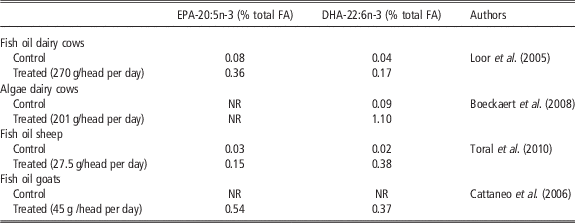
Several studies (Table 1) investigated the addition of fish oil and marine algae in ruminant diet as a way to enhance EPA and DHA content in milk (Loor et al., Reference Loor, Dann, Everts, Oliveira, Green, Janovick Guretzky, Rodriguez-Zas, Lewin and Drackley2005; Cattaneo et al., Reference Cattaneo, Dell’Orto, Varisco, Agazzi and Savoini2006; Boeckaert et al., Reference Boeckaert, Vlaeminck, Fievez, Maignien, Dijkstra and Boon2008; Toral et al., Reference Toral, Frutos, Hervás, Gómez-Cortés, Juárez and de la Fuente2010; Shingfield et al., Reference Shingfield, Chillard, Toivonen, Kairenius and Givens2013; Toral et al., Reference Toral, Rouel, Bernard and Chilliard2014; Bernard et al., Reference Bernard, Rouel, Leroux, Ferlay, Faulconnier, Legrand and Chilliard2015).
Effect of dietary fish oil and marine algae supplements on EPA and DHA content of ruminant milk (Shingfield et al., Reference Shingfield, Chillard, Toivonen, Kairenius and Givens2013, mod.)

FA=fatty acids.
In dairy cows, fish oil appears to have a toxic effect on ruminal microorganisms, reducing fat content and conferring off-flavors due to FA oxidation (Lock and Bauman, Reference Lock and Bauman2004). In particular, the phenomenon of reduction of milk fat content is known as ‘Milk Fat Depression,’ and it is typically observed with diets low in fiber and high in concentrates (Bauman and Griinari, Reference Bauman and Griinari2003). There are some aspects to take in consideration when using fish oil as a source of n-3 PUFA. Among them, the economic aspect and the sustainability of fish stocks are the major problems (Zymon et al., Reference Zymon, Strzetelski and Skrzyński2014), even if fish oil can be obtained from farmed fish. Therefore, it is crucial to consider alternative sources of n-3 PUFA, for example, marine algae rich in DHA (Franklin et al., Reference Franklin, Martin, Baer, Schingoethe and Hippen1999; Papadopoulos et al., Reference Papadopoulos, Goulas, Apostolaki and Abril2002; Toral et al., Reference Toral, Frutos, Hervás, Gómez-Cortés, Juárez and de la Fuente2010), linseed (Doreau and Ferlay, Reference Doreau and Ferlay2015) and camelina (Halmemies-Beauchet-Filleau et al., Reference Halmemies-Beauchet-Filleau, Kokkonen, Lampi, Toivonen, Shingfield and Vanhatalo2011; Pikul et al., Reference Pikul, Wójtowskib, Dankówa, Teicherta, Czyżak-Runowskab, Cais-Sokolińskaa, Cieślakc, Szumacher-Strabelc and Emilia Bagnickada2014), rich in C18:3 n-3, the precursor for EPA and DHA. Another natural dietary source of n-3 PUFA is green pasture. Pasture is able to enrich milk fat in ALA, cis-9 trans-11 CLA and its precursor trans-11 C18:1 (vaccenic acid (VA)) (Dewhurst et al., Reference Dewhurst, Shingfield, Lee and Scollan2006; Coppa et al., Reference Coppa, Verdier-Metz, Ferlay, Pradel, Didienne, Farruggia, Montel and Martin2011; Shingfield et al., Reference Shingfield, Chillard, Toivonen, Kairenius and Givens2013). Interestingly, milk of pasture-fed dairy cows also contain higher levels of EPA and DHA (Hebeisen et al., Reference Hebeisen, Hoeflin, Reusch, Junker and Lauterburg1993; Leiber et al., Reference Leiber, Kreuzer, Nigg, Wettstein and Scheeder2005; La Terra et al., Reference La Terra, Marino, Manenti, Licitra and Carpino2010). Nevertheless, the possibility to enhance DHA and EPA in milk is limited (Shingfield et al., Reference Shingfield, Chillard, Toivonen, Kairenius and Givens2013). Apparent transfer efficiency of EPA and DHA from fish oil to goat milk ranged from 7% to 14% and 7% to 8%, respectively (Cattaneo et al., Reference Cattaneo, Ferroni, Caprino, Moretti, Agazzi, Invernizzi and Savoini2010). A possible solution to limit ruminal biohydrogenation is the use of ruminal protected sources of PUFA, enhancing the transfer efficiency of supplied fat. Doreau and Ferlay (Reference Doreau and Ferlay2015) showed the possibility to take advantage of the natural constitution of linseeds, thanks to partially protected lipids when whole seeds are fed. Alternative rumen protection strategies include heating feeds at high temperature, using calcium salts of FAs or encapsulating the lipids in a matrix of rumen-inert protein (Jenkins and Bridges, Reference Jenkins and Bridges2007; Palmquist, Reference Palmquist2009).
Milk with a high content of PUFA may benefit human health, but at the same time is more vulnerable to oxidation. In this context, increasing milk vitamin E content may represent a useful tool to protect lipids from peroxidation and to maintain milk nutritional and organoleptic quality (Vagni et al., Reference Von Schacky, Kiefl, Jendraschak and Kaminski2011). Other antioxidants that can be included in the diet are plant extracts rich in polyphenols (Gladine et al., Reference Gladine, Rock, Morand, Bauchart and Durand2007; Gobert et al., Reference Gobert, Martin, Ferlay, Chilliard, Graulet, Pradel, Bauchart and Durand2009), or superoxide dismutase, catalase and glutathione peroxidase (De Marchi et al., Reference De Marchi, Palin, dos Santos, Lima, Benchaar and Petit2015).
CLA
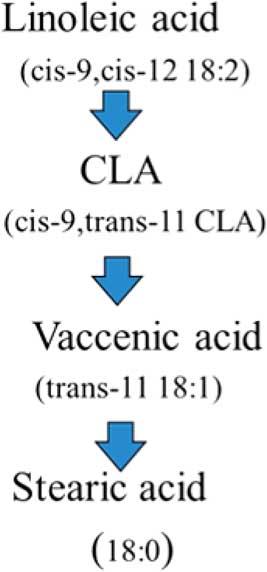
CLA belong to a series of positional and geometric isomers of linoleic acid, with conjugated double bonds. Important for their benefits in humans, they are present in products of ruminant origin. The most predominant form is rumenic acid (cis-9, trans-11), which represents >90% of total CLA in ruminant milk fat. Its origin is attributed to incomplete biohydrogenation of linoleic acid in the rumen (Figure 1) and from endogenous synthesis in the mammary gland (Griinari et al., Reference Griinari, Corl, Lacy, Chouinard, Nurmela and Bauman2000). Milk usually contains 0.2% to 0.9% of CLA and its concentration differs among ruminant species, depending also on stage of lactation (Cattaneo et al., Reference Cattaneo, Ferroni, Caprino, Moretti, Agazzi and Savoini2012; Tudisco et al., Reference Tudisco, Cutrignelli, Calabrò, Grossi, Musco, Monastra and Infascelli2013; Wang et al., Reference Wang, Oh, Lim, Hong, Kim, Kim, Kang, Choi and Lee2013). Diet is the most significant factor affecting the milk content of cis 9-trans 11CLA and of its precursor, trans-11 C18:1 (VA). Milk CLA can be enhanced by feeding sources rich in PUFA, such as pasture, plant oils, oilseeds, fish oil, marine algae and rumen protected CLA. Nutritional strategies have been directed toward enhancing ruminal production of trans-11 C18:1, in particular formulating diets providing PUFA C18:2 n-6 and C18:3 n-3, which are precursors for VA formation in the rumen. Linseed, sunflower oil and soybean oil all proved to be effective in increasing secretion of cis-9, trans-11 C18:2 in milk fat (Bernard et al., Reference Bernard, Leroux, Rouel, Delavaud, Shingfield and Chilliard2005; Cruz-Hernandez et al., Reference Cruz-Hernandez, Kramer, Kennelly, Glimm, Sorensen, Okine, Goonewardene and Weselake2007; Mele et al., Reference Mele, Serra, Buccioni, Conte, Pollicardo and Secchiari2008; Nudda et al., Reference Nudda, Battacone, Neto, Cannas, Francesconi, Atzori and Pulina2014; Toral et al., Reference Toral, Rouel, Bernard and Chilliard2014; Buccioni et al., Reference Buccioni, Pauselli, Viti, Minieri, Pallara, Roscini, Rapaccini, Trabalza Marinucci, Lupi, Conte and Mele2015). Numerous studies have also evidenced that fresh pasture feeding can increase milk CLA content compared with diets based on conserved forages (Leiber et al., Reference Leiber, Kreuzer, Nigg, Wettstein and Scheeder2005; Dewhurst et al., Reference Dewhurst, Shingfield, Lee and Scollan2006; Coppa et al., Reference Coppa, Verdier-Metz, Ferlay, Pradel, Didienne, Farruggia, Montel and Martin2011; Buccioni et al., Reference Buccioni, Decandia, Minieri, Molle and Cabiddu2012). Marine oils, rich in EPA and DHA, have been shown to be more effective than vegetable oils at increasing CLA concentration in ruminant milk. In dairy cows CLA proportion increased from 0.2%–0.6% to 1.5%–2.7% with diets supplemented with 200 to 300 g/day fish oil (Shingfield et al., Reference Shingfield, Chillard, Toivonen, Kairenius and Givens2013) and in dairy goats supplementation with 47 g/day fish oil enhanced milk fat CLA content from 0.6% to 1.93% (Savoini et al., Reference Savoini, Agazzi, Invernizzi, Cattaneo, Pinotti and Baldi2010). Recently, Tsiplakou and Zervas (Reference Tsiplakou and Zervas2013) showed that the inclusion of soybean oil in combination with fish oil in goat’s diet is also effective, resulting in an enhancement of CLA content in milk (4.04% v. 0.57%).
Rumen biohydrogenation of fatty acids.

Dietary manipulation of milk FA can imply changes also in cheese composition. Pintus et al. (Reference Pintus, Murru, Carta, Cordeddu, Batetta, Accossu, Pistis, Uda, Ghiani, Mele, Secchiari, Almerighi, Pintus and Banni2013) showed that the consumption of Pecorino sheep cheese, naturally enriched in ALA, CLA and VA, obtained by feeding dairy ewes with extruded linseed, could lower plasma cholesterol in hypercholesterolaemic patients. Also, plasma contents of CLA, VA and n-3 ALA and EPA were increased and that of the endocannabinoid anandamide, that is linked to adipogenesis, was lowered when the enriched cheese was fed to the same subjects. Another study was performed by Serra et al. (Reference Serra, Bulleri, Casarosa, Cappucci, Mannelli and Mele2015), who observed FA modification in buffalo milk by supplying sources of linoleic acid. The FA composition of mozzarella cheese reflected that of milk, showing that cheesemaking did not affect the transfer of FA (CLA and VA) from milk to cheese.
n-3 and Production of methane
Reducing emissions of greenhouse gases is a social and environmental priority. CH4 is a potent greenhouse gas produced in the rumen. The production occurs due to the metabolic activity of bacteria, the methanogenic archaea, which use hydrogen (H2) and carbon dioxide (CO2) as substrates (Martin et al., Reference Martin, Morgavi and Doreau2010). The major part of CH4 is produced in the digestive tract of ruminants, especially in the rumen (Doreau and Ferlay, Reference Doreau and Ferlay2015). High concentrations of H2 are toxic for microbial enzymes, affecting their activity and ruminal fermentation, so the formation of CH4 sustains the efficiency of ruminal degradation with the dissipation of H2 (Morgavi et al., Reference Morgavi, Forano, Martin and Newbold2010). Many dietary interventions are aimed to reduce CH4 emissions and dietary lipids are considered the best way for enteric CH4 mitigation (Martin et al., Reference Martin, Morgavi and Doreau2010; Hristov et al., Reference Hristov, Oh, Firkins, Dijkstra, Kebreab, Waghorn, Makkar, Adesogan, Yang, Lee, Gerber, Henderson and Tricarico2013). Substitution of dietary carbohydrates with lipids can reduce CH4 emission and can decrease rumen protozoa, which are producers of H2, the precursor of CH4 (Doreau and Ferlay, Reference Doreau and Ferlay2015). It has been shown that linseeds rich in n-3 PUFA can reduce CH4 yield more efficiently than saturated sources (calcium salts of palm oil, tallow), and unsaturated sources containing oleic acid (rapeseed) or linoleic acid (sunflower, cottonseed) (Martin et al., Reference Martin, Morgavi and Doreau2010; Doreau and Ferlay, Reference Doreau and Ferlay2015). Other authors demonstrated that it is possible to reduce CH4 production by adding fish oil in low-starch diets (Pirondini et al., Reference Pirondini, Colombini, Mele, Malagutti, Rapetti, Galassi and Crovetto2015). Also increasing doses of coconut and fish oil quadratically decreased concentration of CH4 in vitro (Patra and Yu Reference Patra and Yu2013). On the contrary, camelina oil had no effect on ruminal CH4 emission intensity (Bayat et al., Reference Bayat, Kairenius, Stefanski, Leskinen, Comtet-Marre and Forano2015). However, studies in this field are very limited and more investigations are needed in order to find the best way to reduce CH4 emission with a systematic strategy including animal nutrition.
Bioactive fatty acids and animal health
Among bioactive FAs, n-3 PUFA (EPA and DHA) have been shown to be essential for normal growth and development in mammals, explicating several nutritional and health beneficial actions (Innis, Reference Innis2007; Calder, Reference Calder2012 and Reference Calder2013). There is increasing evidence that feeding ruminants with n-3 PUFA may affect fertility, modulate immune and inflammatory response and affect maternal and progeny health.
n-3 Polyunsaturated fatty acid and fertility
Feeding fats to dairy cows can improve fertility by the increment of dietary energy density, alteration in the follicle development (Staples and Thatcher, Reference Staples and Thatcher2005), improvement in embryo quality (Cerri et al., Reference Cerri, Santos, Juchem, Galvao and Chebel2004) and other positive effects (Santos et al., Reference Santos, Bilby, Thatcher, Staples and Silvestre2008). Several studies showed that n-3 PUFA supplementation can positively affect fertility traits (Mattos et al., Reference Mattos, Staples, Arteche, Wiltbank, Diaz, Jenkins and Thatcher2004; Santos et al., Reference Santos, Bilby, Thatcher, Staples and Silvestre2008; Dirandeh et al., Reference Dirandeh, Towhidi, Zeinoaldini, Ganjkhanlou, Ansari Pirsaraei and Fouladi-Nashta2014; Otto et al., Reference Otto, Freeman, Malau-Aduli, Nichols, Lane and Malau-Aduli2014). n-3 and n-6 PUFA can affect fertility by regulating prostaglandin F 2α (PGF2α) secretion. Uterine synthesis of PGF2α is regulated in part by substrate availability, and arachidonic acid (C20:4 n-6) is the precursor for PGF2α synthesis. Therefore, it is plausible to suggest that increments of the content in endometrial tissue of C20:4 n-6 should enhance uterine PGF2α secretion, which may affect uterine health (Cullens et al., Reference Cullens, Staples, Bilby, Silvestre, Bartolome, Sozzi, Badinga, Thatcher and Arthington2004; Silvestre et al., Reference Silvestre, Carvalho, Francisco, Santos, Staples, Jenkins and Thatcher2011). Feeding fish oil could reduce PGF2α secretion, increasing fertility and reducing pregnancy losses (Mattos et al., Reference Mattos, Staples, Arteche, Wiltbank, Diaz, Jenkins and Thatcher2004). In a recent study, Dirandeh et al. (Reference Dirandeh, Towhidi, Zeinoaldini, Ganjkhanlou, Ansari Pirsaraei and Fouladi-Nashta2014) showed that feeding n-6 PUFA after calving to the first estrous cycle and shifting to n-3 PUFA after the first estrous cycle could be a nutritional strategy for improving fertility in lactating dairy cows.
n-3 Polyunsaturated fatty acid and immune and inflammatory response
FAs have a significant role in immune response both in humans and in animals (Ingvartsen and Moyes, Reference Ingvartsen and Moyes2013). Among them, n-3 PUFA (EPA and DHA) are the most effective, and their influence on the cell types involved in inflammation and on the production of some chemical mediators has been studied for many years.
Long-chain n-3 PUFA modulate immune functions in several ways by replacing, for example, arachidonic acid during the eicosanoid signaling cascade (Calder, Reference Calder2013), thus decreasing the production of inflammatory eicosanoids such as of prostaglandin E2 (PGE2) (Rees et al., Reference Rees, Miles, Banerjee, Wells, Roynette, Wahle and Calder2006), thromboxane B2 (TXB2) (Caughey et al., Reference Caughey, Mantzioris, Gibson, Cleland and James1996), leukotriene B4 (LTB4) (Kelley et al., Reference Kelley, Taylor, Nelson, Schmidt, Ferretti, Ericksonc, Yud, Chandrae and Mackey1999), 5-hydroxyeicosatetraenoic acid (Endres et al., Reference Endres, Ghorbani, Kelley, Georgilis, Lonnemann, van der Meer, Cannon, Rogers, Klempner, Weber, Schaeffer, Wolff and Dinarello1989) and leukotriene E4 (LTE4) (Von Schacky et al., Reference Vagni, Saccone, Pinotti and Baldi1993). EPA and DHA can also directly interfere with cytokine gene expression (Weldon et al., Reference Weldon, Mullen, Loscher, Hurley and Roche2007). Further regulatory pathways include regulation of cell surface expression of adhesion molecules (De Caterina and Libby Reference De Caterina and Libby1996), membrane fluidity and apoptosis rates (Sweeney et al., Reference Sweeney, Puri and Reen2001). In addition, both EPA and DHA give rise to family of anti-inflammatory mediators called resolvins (Serhan et al., Reference Serhan, Hong, Gronert, Colgan, Devchand, Mirick and Moussignac2002). Most of these activities directly target leukocyte function (Sijben and Calder, Reference Sijben and Calder2007).
Contreras et al. (Reference Contreras, Mattmiller, Raphael, Gancy and Sordillo2012) showed that the exposition of Bovine Aortic Endothelial Cells to a mixture of FAs that reflects the composition of non esterified fatty acids (NEFA) during the 1st week of lactation determined an increase of pro-inflammatory responses compared with cells exposed to a mixture of FAs enriched in EPA and DHA. Increasing the n-3 FA content of vascular phospholipids could mitigate the expression of cytokines (interleukin-6 and 8), of adhesion molecules (intercellular and vascular adhesion molecules) associated to an increase of inflammatory response, of reactive oxygen species (ROS), and of pro-inflammatory metabolites of linoleic acid.
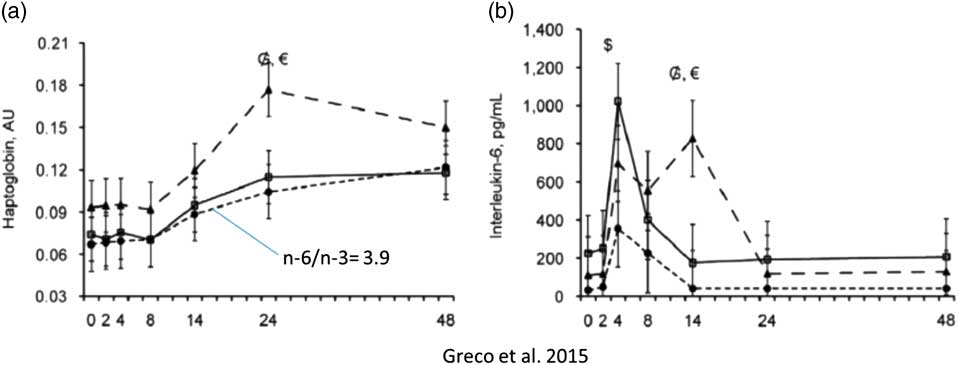
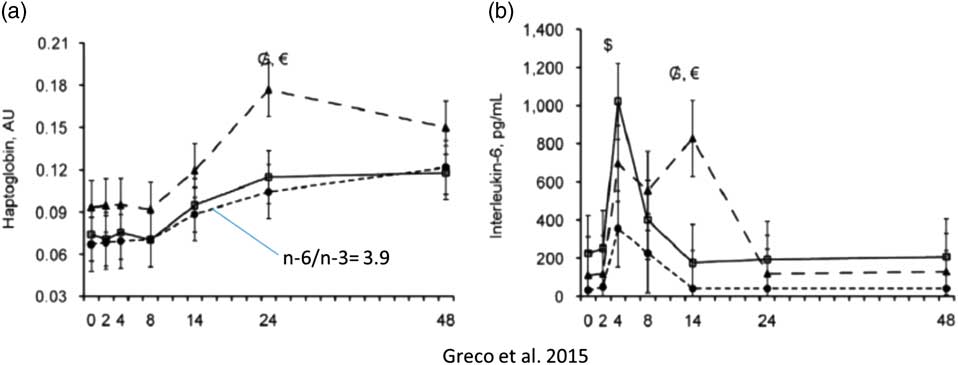
Recently, Greco et al. (Reference Greco, Neves Neto, Pedrico, Ferrazza, Lima, Bisinotto, Martinez, Garcia, Ribeiro, Gomes, Shin, Ballou, Thatcher, Staples and Santos2015) have proved that reducing the n-6/n-3 FA ratio in the diet of early lactation dairy cows can attenuate inflammatory response to lipopolysaccharide (LPS) challenge. In particular, haptoglobin (Hp) was greatest in the mammary gland of cows fed the highest n-6/n-3 ratio (5.9) (Figure 2a). Moreover, interleukin-6 concentration in plasma increased as the ratio n-6/n-3 FA increased (Figure 2b).
(a) Lipopolysaccharide (LPS) challenge in the mammary gland in early lactating dairy cows: haptoglobin concentration was higher 24 h after LPS challenge in the mammary gland in cows fed diet n-6/n-3 5.9. (b) Interleukin-6 concentration in plasma increased as the ration of n-6 to n-3 fatty acid increased.
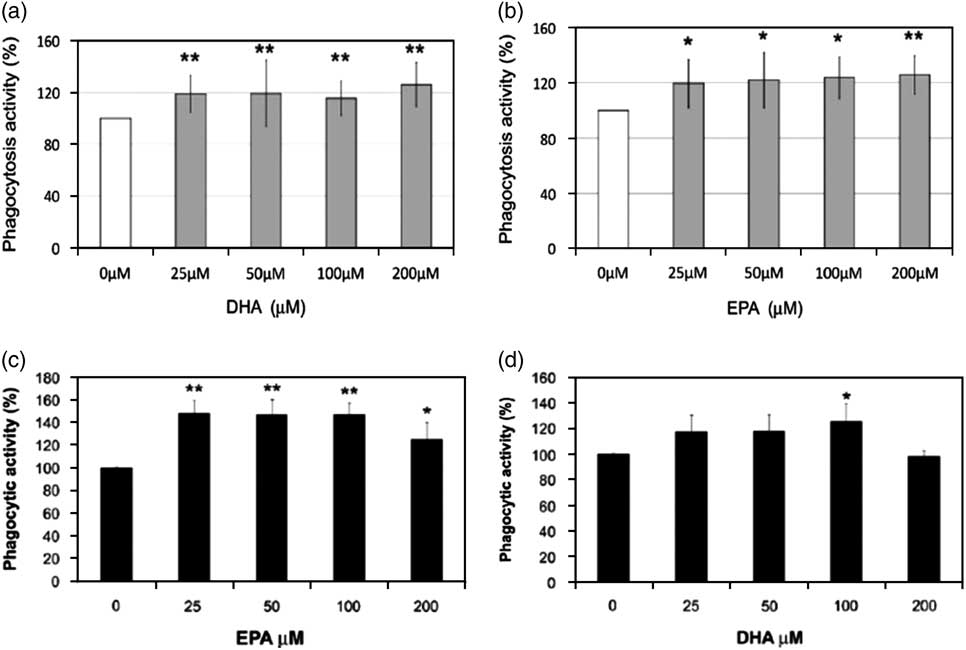
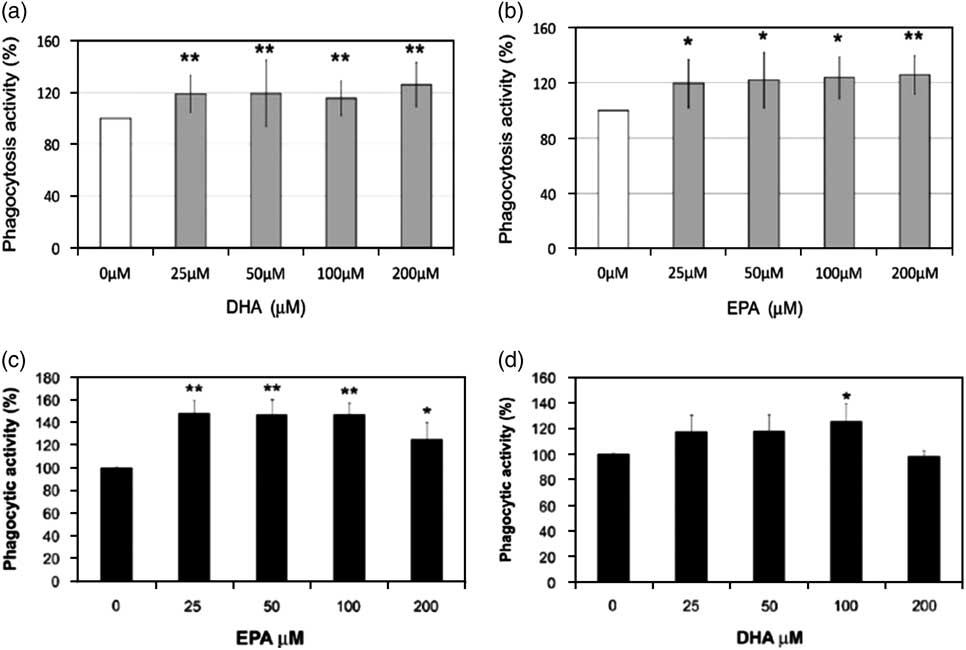
In a study by Agazzi et al. (Reference Agazzi, Cattaneo, Dell’Orto, Moroni, Bonizzi, Pasotto, Bronzo and Savoini2004), dietary fish oil fed to transition dairy goats was found to be effective on cell-mediated immune response, with modified mononuclear and polymorphonuclear (PMN) cells ratio as result. Treating cells with DHA (Pisani et al., Reference Pisani, Lecchi, Invernizzi, Sartorelli, Savoini and Ceciliani2009) exerted an increased PMN leukocytes phagocytic activity and lower ROS production after in vitro challenged with EPA and DHA (Figure 3a and 3b). A subsequent validation in vivo of the obtained results demonstrated that both EPA and DHA have beneficial effects on goats health by improving the defensive performances of neutrophils (Bronzo et al., Reference Bronzo, Puricelli, Agazzi, Invernizzi, Ferroni, Moroni and Savoini2010) avoiding cellular and tissue damages by ROS. EPA and DHA also affected goat monocyte activities by up-regulating phagocytic activity and ROS production (Figure 3c and 3d) (Lecchi et al., Reference Lecchi, Invernizzi, Agazzi, Ferroni, Pisani, Savoini and Ceciliani2011) and by interfering with the formation of lipid droplets and by up-regulating proteins belonging to PAT protein family, perilipin family, namely PLIN1 (perilipin), PLIN2 (adipophilin) and PLIN3 (Lecchi et al., Reference Lecchi, Invernizzi, Agazzi, Modina, Sartorelli, Savoini and Ceciliani2013).
EPA and DHA may improve the defensive performance of goat neutrophils (a) and (b) and monocytes (c) and (d) against bacteria by increasing their phagocytic activity.
Another study by Stryker et al. (Reference Stryker, Fisher, You, Or-Rashid, Boermans, Quinton, McBride and Karrow2013) demonstrated that supplementation of fish meal to pregnant and lactating ewes could alter both innate and acquired immune response. Specifically, after a LPS challenge at 135 days of pregnancy ewes fed fish meal showed an attenuated febrile response compared to soybean meal, and the basal Hp concentration was lower after a sensitization with hen egg white lysozyme during lactation.
Maternal diet and progeny health
A specific role for DHA during fetal and neonatal development has been recognized (Innis, Reference Innis2007), but DHA status of the mother and the newborn may be sub-optimal if maternal intake is insufficient. Dietary supply of long-chain n-3 PUFA during late pregnancy, and nursing period can improve EPA and DHA content in ruminant colostrum and milk (Cattaneo et al., Reference Cattaneo, Dell’Orto, Varisco, Agazzi and Savoini2006) and in plasma of the suckling newborn lambs, calves and kids (Moallem and Zachut, Reference Moallem and Zachut2012; Or-Rashid et al., Reference Or-Rashid, Fisher, Karrow, Al Zahal and McBride2012; Ferroni et al., Reference Ferroni, Cattaneo, Agazzi, Caputo, Invernizzi, Bellagamba, Caprino and Savoini2014). The increased supply of EPA and DHA from maternal circulation during fetal development and from colostrum during early neonatal period may affect health progeny status, but only few studies have addressed the potential programming effects of increased maternal n-3 PUFA intake on offspring’s immune functions (Lauritzen et al., Reference Lauritzen, Kjær, Porsgaard, Fruekilde, Mu and Frøkiær2011; Myles et al., Reference Myles, Pincus, Fontecilla and Datta2014; Ferroni et al., Reference Ferroni, Cattaneo, Agazzi, Invernizzi, Bellagamba, Caprino, Moretti and Savoini2015).
Conclusions
Through ruminant nutrition, it is possible to manipulate and improve milk FA composition, with positive effects on human health by the consumption of dairy products enriched in bioactive n-3 and CLA FAs.
Results on reduced emission of CH4 when feeding animals with n-3 FAs are not conclusive, therefore further nutritional strategies are needed in order to address this crucial environmental issue. In relation to animal health, n-3 FAs have been proved to modulate immune and inflammatory response in dairy ruminants. Moreover, feeding bioactive FAs to pregnant animals can affect progeny health status. At last, dietary long-chain FAs may affect the direction and dimension of changes in lipid metabolism gene network in key physiological organs such as liver (Agazzi et al., Reference Agazzi, Invernizzi, Campagnoli, Ferroni, Fanelli, Cattaneo, Galmozzi, Crestani, Dell’Orto and Savoini2010), adipose tissue and mammary gland (Hosseini et al., Reference Hosseini, Sharma, Bionaz and Loor2013) and temporal modulation on lipid metabolism (Jacometo et al., Reference Jacometo, Schmitt, Pfeifer, Schneider, Bado, da Rosa, Halfen, Del Pino, Loor, Correa and Dionello2014).
Acknowledgements
The authors’ works referred to in this review were funded by grants from Italian Ministry of University and Scientific and Technological Research COFIN/2000; FIRST/2002; PRIN/2005 (G. Savoini); PRIN/2006 (G. Savoini, V. Bronzo); FIRST/2006; FIRST/2007 (F. Ceciliani).