


Introduction
Unwanted, intrusive thoughts (i.e. thoughts, images and impulses) of infant-related harm (accidental and intentional) may be universally experienced by first-time mothers, and are a common experience for fathers also (Abramowitz et al., Reference Abramowitz, Schwartz and Moore2003a, Reference Abramowitz, Khandker, Nelson, Deacon and Rygwall2006, Reference Abramowitz, Nelson, Rygwall and Khandker2007; Fairbrother and Woody, Reference Fairbrother and Woody2008). Thoughts of intentionally harming one's infant are reported by as many as 50% of new mothers (Fairbrother and Woody, Reference Fairbrother and Woody2008). Although limited, the available literature suggests that these kinds of thoughts are a very common and distressing experience for the new parents who experience them. Unwanted, intrusive thoughts of infant-related harm are more common among first-time mothers and fathers, and are typically reported by parents with no prior history of violent behaviour or mental instability and who deeply love and wish to protect their infant from harm (Abramowitz et al., Reference Abramowitz, Schwartz and Moore2003a, Reference Abramowitz, Khandker, Nelson, Deacon and Rygwall2006, Reference Abramowitz, Nelson, Rygwall and Khandker2007; Fairbrother and Woody, Reference Fairbrother and Woody2008; Leckman et al., Reference Leckman, Mayes, Feldman, Evans, King and Cohen1999). On average, fathers report fewer infant-related harm thoughts, and experience them to be less time consuming, interfering and distressing compared with mothers (Abramowitz et al., Reference Abramowitz, Schwartz and Moore2003a). Compared with unwanted, intrusive thoughts of accidentally harming one's infant, unwanted, intrusive thoughts of intentionally harming one's infant have been found to be less frequent and less time consuming but, not surprisingly, more distressing. To date, there is no evidence of a relationship between the occurrence of unwanted, intrusive thoughts of infant-related intentional harm and aggressive parenting (Fairbrother and Woody, Reference Fairbrother and Woody2008).
Outside of the perinatal period, 80–90% of the general population reports occasional, unwanted, intrusive thoughts (Abramowitz et al., Reference Abramowitz, Schwartz, Moore and Luenzmann2003b; Fairbrother and Abramowitz, Reference Fairbrother and Abramowitz2007; Freeston et al., Reference Freeston, Ladouceur, Thibodeau and Gagnon1991; Niler and Beck, Reference Niler and Beck1989; Parkinson and Rachman, Reference Parkinson and Rachman1981; Rachman and De Silva, Reference Rachman and de Silva1978). One's current life concerns are typically expressed in the content of these thoughts (Purdon and Clark, Reference Purdon and Clark1993), and they are typically triggered by external stimuli (Salkovskis and Harrison, Reference Salkovskis and Harrison1984). During negative emotional states and stressful life situations, unwanted, intrusive thoughts appear to occur more frequently (Brewin et al., Reference Brewin, Hunter, Carroll and Tata1996; Klinger, Reference Klinger1996; Parkinson and Rachman, Reference Parkinson and Rachman1980). The content of these thoughts is frequently morally repugnant in nature (i.e. thought content is characterized by violence, blasphemy, or unacceptable sexual behaviour) (Fairbrother and Abramowitz, Reference Fairbrother and Abramowitz2007). Given the preoccupying and often stressful nature of early parenting, it is not surprising that new parents would experience these types of thoughts in relation to their infant, and that the frequency of unwanted, intrusive thoughts would be elevated postpartum. As the extant evidence indicates that such thoughts of intentionally harming one's infant are reported by a large proportion of new mothers and fathers, it is very likely that these thoughts are a normative postpartum experience (Fairbrother and Woody, Reference Fairbrother and Woody2008).
As the content of unwanted, intrusive thoughts is related to one's ongoing concerns and triggered by external stimuli, we were interested in specific triggers of infant-related harm thoughts. Specifically, we were interested in infant crying as a trigger of infant-related harm thoughts among first-time mothers of young infants. A number of factors have been shown to impact parents’ responses to infant crying, including depression (Esposito et al., Reference Esposito, Manian, Truzzi and Bornstein2017), attachment (Ablow et al., Reference Ablow, Marks, Feldman and Huffman2013; Raval et al., Reference Raval, Goldberg, Atkinson, Benoit, Myhal, Poulton and Zwiers2001), emotional sensitivity (Leerkes et al., Reference Leerkes, Parade and Gudmundson2011) and genetics (Mascaro et al., Reference Mascaro, Hackett, Gouzoules, Lori and Rilling2014). For example, depressed mothers have more difficulty bonding with their infant, experience their relationship with their infant as less rewarding, and exhibit decreased engagement with infant distress, compared with non-depressed mothers (Brockington, Reference Brockington2004; Brockington et al., Reference Brockington, Fraser and Wilson2006; Pearson et al., 2009). Insecurely attached women report more irritation in response to infant crying, compared with more securely attached women (Riem et al., Reference Riem, Bakermans-Kranenburg, van IJzendoorn, Out and Rombouts2012). Highly emotionally sensitive mothers show a large increase in heart rate in response to infant crying sounds, possibly indicative of increased responsivity to signals of negative affect (Joosen et al., Reference Joosen, Mesman, Bakermans-Kranenburg, Pieper, Zeskind and van IJzendoorn2013). Genetic factors play a role in intended caregiving responses for normal variations in sensitive caregiving, but are absent for harsh caregiving responses (Out et al., Reference Out, Pieper, Bakermans-Kranenburg, Zeskind and van IJzendoorn2010). High-pitched cry sounds that are perceived as more urgent receive intended caregiving responses that are more positive in nature – drawing immediate, affectionate attention. Additionally, high-pitched cry sounds are associated with parenting responses that are more harsh, irritable or negative in nature. Infants with abnormal cry acoustics (such as rapid increases in pitch) may therefore be a population more vulnerable to abusive or harsh parenting reactions (Out et al., Reference Out, Pieper, Bakermans-Kranenburg, Zeskind and van IJzendoorn2010). However, very little is known about whether the occurrence of unwanted intrusive thoughts might be components of parental responses to infant crying.
In our first study of infant crying as a trigger for new mothers’ thoughts of infant-related harm (Barr et al., Reference Barr, Fairbrother, Pauwels, Green, Chen and Brant2014), our investigation was limited to first-time mothers of infants under 6 months of age. New mothers were randomly assigned to listen to 10 minutes of infant crying or infant cooing while providing continuous, subjective ratings of their feelings of frustration. Close to a quarter of participants reported unwanted, intrusive thoughts of harming their infant. Women who listened to infant crying were more likely than women who listened to infant cooing to report thoughts of harm. When we assessed only those women who listened to infant crying, those who reported thoughts of infant-related harm also reported higher levels of frustration over the 10 minutes of crying, higher levels of post-test negative emotions, and stronger urges to flee the infant. State anger and personal distress empathy predicted the occurrence of unwanted thoughts of infant harm, whereas negative mood did not. We concluded that unwanted, intrusive, infant-related thoughts of harm appear to be triggered by prolonged infant crying, are predicted by personal distress empathy and a tendency to experience anger, and are associated with higher frustration, negative emotions and the urge to escape the infant.
Our objectives in the present research were to further understand conditions that stimulate thoughts of harm, whether or not they are similar in mothers and fathers, and whether they are similar prepartum and postpartum. Detailed objectives are presented below.
Study objectives
(1) To compare mothers’ and fathers’ responses to infant cry sounds with respect to:
(a) the likelihood of reporting unwanted intrusive thoughts of infant-related harm, and
(b) the number of thoughts of infant-related harm reported.
(2) To compare mothers and fathers who report unwanted, intrusive thoughts of infant-related harm in response to infant cry sounds with those who do not, with respect to:
(a) levels of self-reported negative emotions (anger, frustration, irritation, helplessness, sadness, feelings of being trapped, and anxiety),
(b) levels of state anger,
(c) levels of depression,
(d) likelihood of using infant shaking as a strategy for
(i) soothing a crying infant, and
(ii) coping with infant crying, and
(e) urges to flee, and comfort, the crying infant.
To begin to explore the effect of the baby's birth and presence in a parent's life, we recruited both a prepartum and a postpartum sample of mothers and fathers.
Methods
Participants
For this research, two samples of women and their partners were recruited. Sample 1 consisted of prepartum women and their partners, and sample 2 consisted of postpartum women and their partners. The inclusion/exclusion criteria for each sample is presented below.
Inclusion/exclusion criteria
Sample 1: Prepartum couples
Primiparous (i.e. expecting a first child) pregnant women, who were fluent in speaking and reading English and their male partners, and without any prior exposure to the Period of PURPLE Crying program materials (www.dontshake.org/purplecrying: National Center on Shaken Baby Syndrome [NCSBS], Farmington, UT), were eligible to participate in the research.
Sample 2: Postpartum couples
First-time (primiparous) mothers and fathers of infants between the ages of 2 and 4 months of age who were fluent in reading and speaking English were eligible to participate in the research. We elected to study primiparous women and their partners to avoid any confounds of multiparity.
Recruitment
A total of 48 prepartum couples were recruited from BC Women's Hospital Prenatal Ultrasound Clinic, BC Women's Hospital Diabetes in Pregnancy Clinic, and BC Women's Hospital Family Practice Maternity Services. A total of 44 postpartum couples were recruited from BC Women's Hospital Prenatal Ultrasound Clinic and Arbutus, Balsam, Cedar or Dogwood postpartum Maternity Wards. The research assistant approached prospective participants, explained the study and the woman's involvement and confirmed the eligibility criteria for women who were interested. The research assistant then collected the patients’ information and later contacted patients to schedule an appointment either at their home or in the study room located in the BC Women's Hospital.
Research ethics approval
This study was reviewed and approved by the University of British Columbia/Children's and Women's Health Center of British Columbia Research Ethics Board.
Design and procedures
Design overview
A pre–post design was used in both studies. Because the methodology for both studies were near identical, they are presented together below. In both studies, participants provided consent to participate, followed by (a) the completion of several pre-test measures, (b) a 10-minute listening task, and (c) the completion of post-test measures.
Pre-test procedures
At the beginning of participation, prospective participants were informed of the study procedures and asked to sign the study consent form. Following consent, and prior to the listening task, participants completed a demographic questionnaire, and self-report measures of negative mood and the tendency to experience anger. Participants were invited to decline answering any questions they did not wish to answer.
Listening task
Participants then listened to an audio-recording of 10 minutes of infant crying. Participants were asked to imagine ‘that the cries you are hearing are from your own baby, that you are holding him/her in your arms, and that s/he has been fed and changed and is healthy’. The sounds were pre-recorded and not of the participants’ own baby, ensuring that all participants listened to exactly the same sounds. For additional details regarding the listening task, please refer to Barr et al. (Reference Barr, Fairbrother, Pauwels, Green, Chen and Brant2014).
Post-test procedures
Following the listening task, participants were asked by the research assistant to complete a set of post-test questionnaires.
Debriefing
All the participants were debriefed verbally about the study aims and invited to discuss their experience and/or ask questions. Participants were asked if they felt upset or distressed as a result of any aspect of their participation, and were put in touch with the primary investigators should this have been the case. Additionally, all participants were provided with a written summary of the verbal debriefing, which included a list of parenting resources. When the interview was completed, participants completed the Edinburgh Postnatal Depression Scale (EPDS). Anyone with a score above 13 or who indicated suicide ideation was followed up with by Dr Fairbrother who could provide additional resources and discuss these results.
Measures
Pre-test questionnaires
The Edinburgh Postnatal Depression Scale (EPDS)
The EPDS is a 10-item self-report measure used to screen for pre- and postnatal depression. It is the most widely used screening tool for postpartum depression (Jomeen and Martin, Reference Jomeen and Martin2005). The sensitivity and specificity of the EPDS, when compared with interview-based assessments, are in acceptable ranges (65–100% and 49–100%, respectively) (Eberhard-Gran et al., Reference Eberhard-Gran, Eskild, Tambs, Opjordsmoen and Ove Samuelsen2001). Higher sensitivity relative to specificity is appropriate for a screening instrument.
The State-Trait Anger Expression Inventory-II (STAXI-II; 1999)
The STAXI-II was used to assess participants’ current anger state. The STAXI-II is a 57-item self-report measure of anger intensity as an emotional state (State Anger) and the tendency to experience anger (Trait Anger). In this study, only the State Anger subscale of the STAXI-II was administered. Internal consistency estimates for the STAXI-II state anger scale are 0.85 for women and 0.86 for men (Spielberger et al., Reference Spielberger, Sydeman, Owen, Marsh and Maruish1999). The STAXI is by far the most widely used measure of anger (Novaco and Taylor, Reference Novaco and Taylor2004).
Post-test questionnaires
Following the administration of infant crying, participants first completed a 14-item adjective rating scale to rate their subjective emotional experience during the listening task. The scale included seven positive valence items (happy, loving, warmly toward your baby, content, calm, relaxed, and joyful) and seven negative valence items (anxious, sad, angry, helpless, irritated, frustrated, and trapped). Each adjective was rated on a 0 (not at all) to 4 (extremely) scale. Negative emotions were categorized into hostile emotions (irritated, angry, frustrated) and internalizing emotions (anxious, sad, helpless, and trapped). The hostile emotions obtained higher Cronbach's alphas (0.75 and 0.84) compared with the internalizing emotions (0.59 and 0.66), in the pre- and postpartum samples, respectively.
Second, participants rated their subjective urge to comfort the infant and to flee the infant on a 0 (not at all) to 3 (extremely) Likert-type rating scale. Following this, parents were asked about a series of nine different strategies (e.g. feed, cuddle, distract) they might use to soothe a crying infant or cope with infant crying, including infant shaking. Specifically, parents were asked: (a) if this had been your baby crying, how likely are you to have used the following strategies to soothe your baby? and (b) if this had been your baby crying, how likely are you to have used the following strategies to help yourself cope with the crying?
Finally, participants were given a list of infant-related harm thoughts (adapted from earlier work by Fairbrother and Woody, Reference Fairbrother and Woody2008), and asked which, if any, they experienced during the listening task. Instructions to participants were as follows: ‘Did you experience any of the following unwanted, intrusive thoughts, images, or urges while listening to the crying sounds? Please indicate any that you experienced. Please remember that your answers are completely confidential and that they in no way reflect upon you as a parent.’ Thoughts content included hitting, throwing, smothering, shaking, abandoning, slapping, stabbing, strangling, stepping on, and yelling at the baby.
Data analysis
All statistical analyses were carried out using SPSS Statistics 22. Descriptive statistics are presented in the form of percentages, means and standard deviations. Differences between mothers and fathers, with respect to the likelihood of reporting unwanted intrusive thoughts of harm in response to infant crying, was tested using McNemar's test. Differences in the number of unwanted, intrusive thoughts of infant-related harm reported by male and female participants were assessed via independent samples t-tests. Generalized estimating equations (GEE) were used to test the effects of biological sex and the presence of intrusive thoughts of infant-related harm on the internalizing (angry, irritated and frustrated), and hostile (anxious, sad, trapped and helpless) negative emotions, state anger, likelihood of using shaking to cope with or comfort a crying infant, and urges to comfort and to flee the crying infant. Initially, a sex by harm thoughts interaction was added to each analysis. However, only when the interaction was significant was it retained in the final analysis. Specifically, non-significant interaction terms were removed and the analysis was re-run. In each of the GEE analyses, EPDS total scores were included as a covariate.
Results
Participants
Sample 1: Prepartum couples (n = 48 couples)
Mothers were slightly younger (mean = 33.5 years, SD = 4.5) than fathers (mean = 35.6 years, SD = 6.1), t = –3.13, p = .003. Couples in the sample were married (93.7%) or living with a romantic partner (6.3%). Mothers (mean = 17.3, SD = 2.5) and fathers (mean = 17.2, SD = 3.0) reported similar numbers of years of education (i.e. on average slightly more than 5 years of post-secondary education each). The majority of mothers (60.4%, n = 29) planned to return to full-time work, and 14.6% (n = 7) planned to stay at home with their infant. The majority of fathers (77.1%, n = 37) planned to return to full-time work, and only one (2.1%, n = 1) planned to stay at home with their infant. The average annual family income for participants was slightly more than $80,000 (mean = 83,900, SD = 26,200). The majority of the sample was Caucasian (69.8%, n = 67), or Asian (17.8%, n = 17). At the time of participation, women were at approximately 30 weeks gestation (mean = 28.9, SD = 6.0).
Sample 2: Postpartum couples (n = 44 couples)
Mothers were slightly younger (mean = 31.5, SD = 3.3) than fathers (mean = 33.8, SD = 4.3), t = –4.89, p < .001. Participating couples were married (88.6%) or living with a romantic partner (11.4%). Mothers (mean = 17.1, SD = 2.9) and fathers (mean = 17.1, SD = 1.9) reported similar numbers of years of education (i.e. on average slightly more than 5 years of post-secondary education each). Half of the mothers in our sample (50.0%, n = 22) planned to return to full-time work, and 13.6% (n = 6) planned to stay at home with their infant. The majority of fathers (79.5%, n = 35) planned to return to full-time work, and only one (2.3%, n = 1) planned to stay at home with their infant. The average family income for participants was slightly more than $80,000 (mean = 80,500, SD = 27,680). The majority of the sample was Caucasian (70.5%, n = 62), or East Asian (15.9%, n = 14). At the time of participation, infants of parent couples in the postpartum sample were, on average, 3 months of age (mean = 2.9, SD = 0.7).
Unwanted intrusive thoughts of infant-related harm
Overall, 26% (n = 25) of prepartum parents and 44% (n = 39) of postpartum parents reported unwanted, intrusive thoughts of infant-related harm in response to infant crying. Prepartum and postpartum participants reported, on average, 0.37 (SD = 0.68) and 1.06 (SD = 1.48) harm thoughts each, respectively.
There were no differences in the likelihood of reporting unwanted, intrusive thoughts of infant-related harm in response to infant crying based on whether or not the participant was tested first or second in the couple, in either the prepartum sample (p = 0.99), or the postpartum sample (p = 0.50). Consequently, order of testing was not taken into account in subsequent analyses.
Gender differences in intrusive thoughts
Prepartum couples
Female (29%, n = 14) and male (23%, n = 11) participants did not differ significantly in the likelihood that they would report unwanted, intrusive thoughts of infant-related harm in response to infant crying (p = 0.61). Mothers (mean = 0.46, SD = 0.80) and fathers (mean = 0.27, SD = 0.54) did not differ significantly with respect to the number of unwanted, intrusive thoughts of infant-related harm they reported (t (82.21) = 1.35, p = 0.180).
Postpartum couples
Similarly, female (43%, n = 19) and male (46%, n = 20) participants did not differ in the likelihood that they would report unwanted, intrusive thoughts of infant-related harm in response to infant crying (p = 0.98). Again, mothers (mean = 1.11, SD = 1.56) and fathers (mean = 1.00, SD = 1.41) did not differ significantly with respect to the number of unwanted, intrusive thoughts of infant-related harm they reported (t (86) = –0.36, p = 0.721).
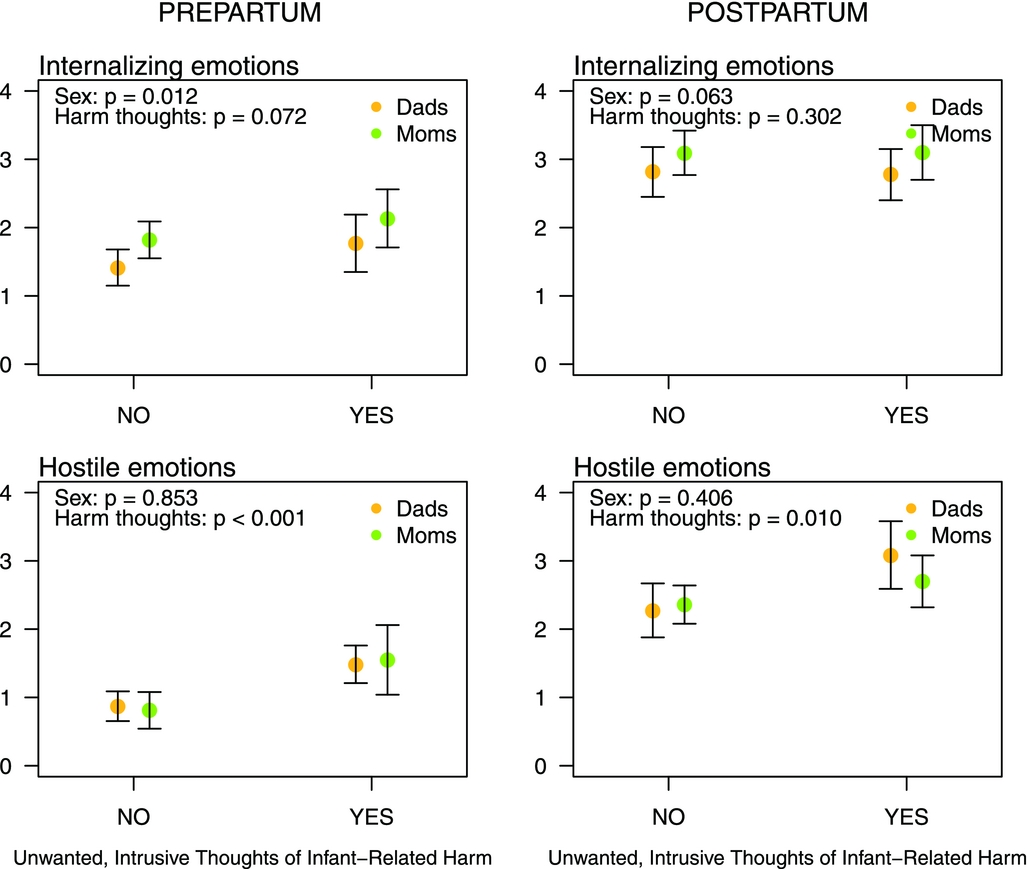
Internalizing emotions (Fig. 1)
Among prepartum couples, controlling for the effect of depressed mood, there was a main effect for sex (p = .012), with mothers reporting higher levels of internalizing emotions compared with fathers. There was no significant main effect for harm thoughts nor depression, nor a sex by harm thoughts interaction. Among postpartum couples, controlling for depressed mood, there was no significant main effect of sex nor gender, nor a sex by harm thoughts interaction. There was, however, a main effect for depressed mood (β = .07, SE = .02, p = .002).
Negative emotions

Hostile emotions (Fig. 1)
Among both prepartum and postpartum couples, controlling for depression, there was a main effect for harm thoughts (participants who reported harm thoughts also reported higher levels of hostile emotions), but not for sex. There was no interaction effect for sex and harm thoughts. Among postpartum couples only, there was also a main effect for depressed mood (β = .09, SE = .02, p < .001).
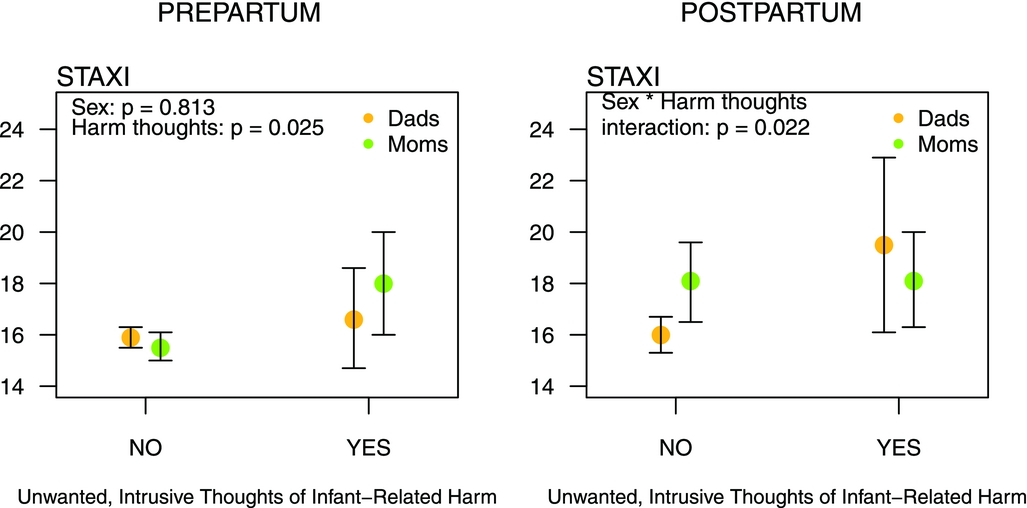
State anger (Fig. 2)
Among prepartum couples, there was a main effect for harm thoughts, but no main effect of sex or depressed mood. There was also no interaction effect for sex and harm thoughts. Higher state anger scores were reported by participants who also reported thoughts of infant-related harm. Among postpartum couples, fathers, but not mothers, who reported thoughts of infant related harm in response to the cry sounds, also reported significantly higher state anger scores, compared with those who did not. There was also a main effect of depressed mood (β = .33, SE = .17, p < .050).
State and Trait Anger

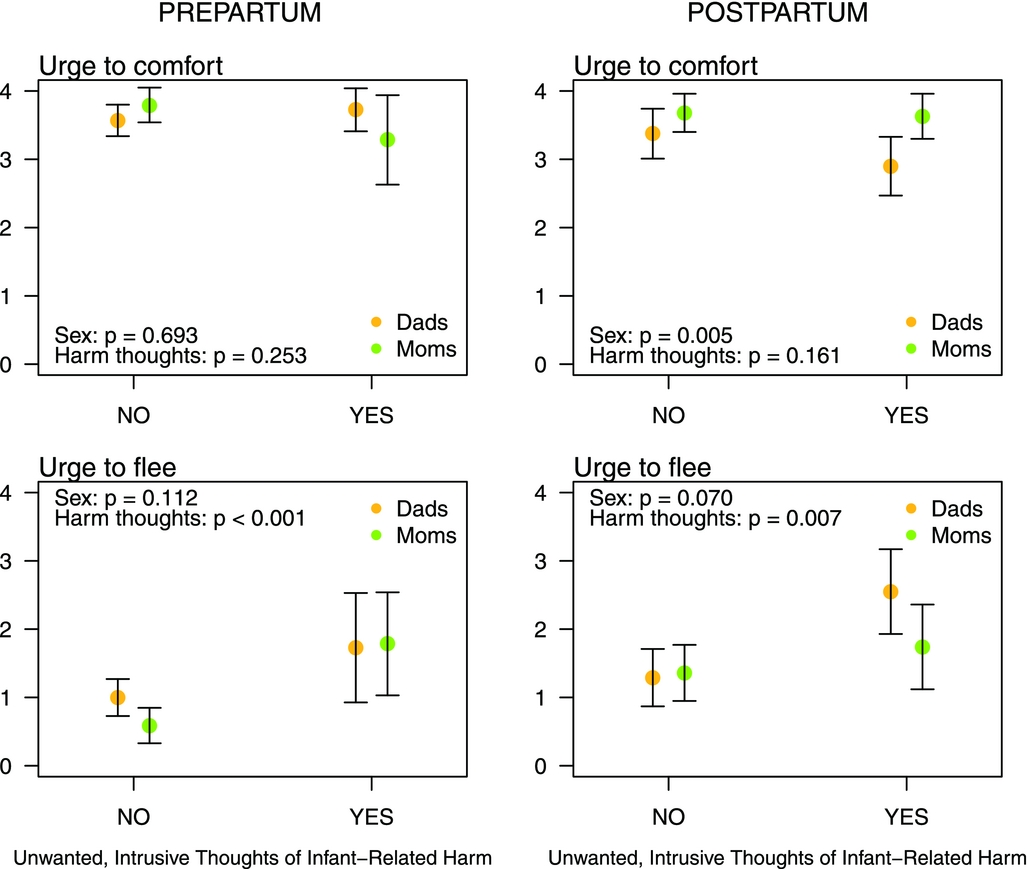
Urges to comfort and to flee (Fig. 3)
Comfort
Among prepartum couples, there were no main effects nor an interaction effect for sex and harm thoughts with respect to the urge to comfort the crying infant. Both mothers and fathers reported a strong urge to comfort the infant (all scores were in the 3–4 out of 4 range), whether or not they also reported thoughts of infant-related harm in response to the cry sounds. Depressed mood did not contribute significantly to the analysis. Among postpartum couples, there was no main effect of harm thoughts, nor was there an interaction between sex and harm thoughts. However, mothers, on average, reported a stronger urge to comfort the crying infant compared with fathers. This was true for mothers who reported thoughts of harm and for those who did not. There was also no main effect for depressed mood among postpartum couples.
Urges to comfort and flee

Flee
Similar results were obtained for both prepartum and postpartum couples. No main effect of sex, nor a sex by harm thoughts interaction effect was found. For both pre- and postpartum couples, there was a significant effect of harm thoughts. Participants who reported thoughts of infant-related harm also reported a stronger urge to flee the crying infant. Depressed mood did not contribute significantly to either analysis.
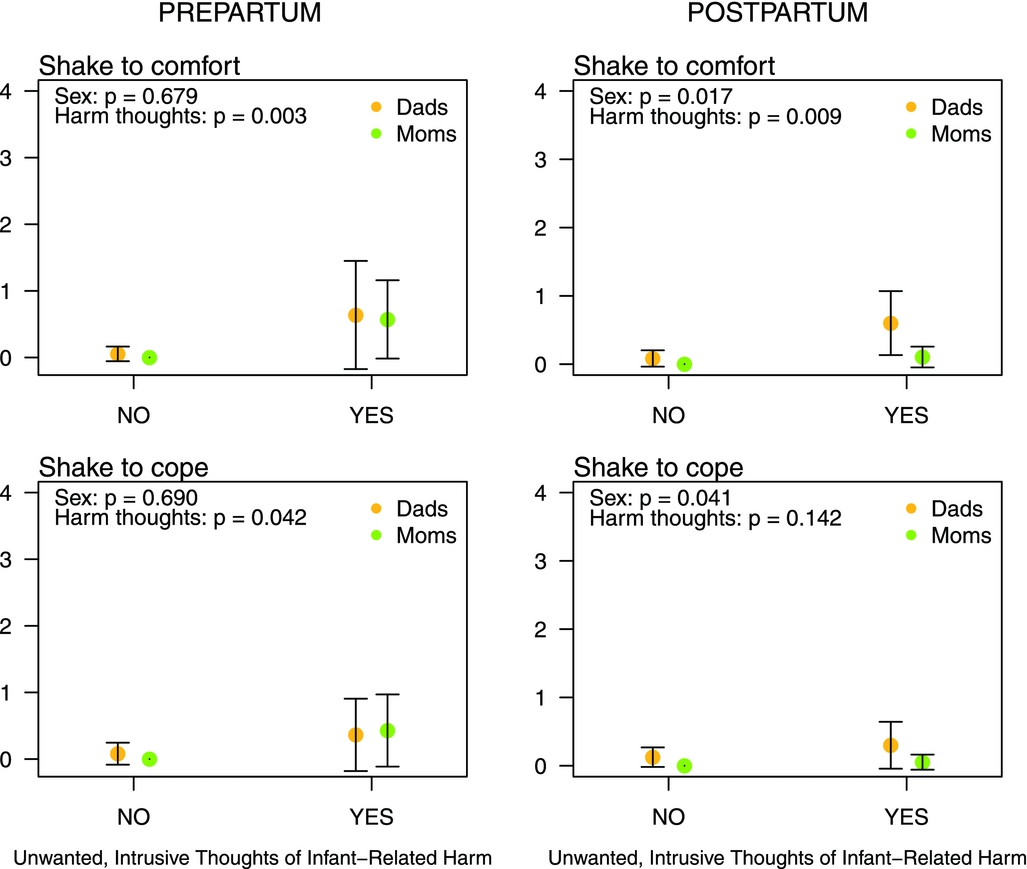
Infant shaking as a strategy to soothe or cope with the crying infant (Fig. 4)
Soothe
Among both prepartum and postpartum couples, there was a significant main effect of harm thoughts (i.e. those who reported harm thoughts also reported that they would be more likely to use shaking to soothe a crying infant). There were no significant interaction effects for either pre- or postpartum couples. There was, however, a main effect of sex among postpartum couples. Specifically, fathers reported a greater likelihood that they would use shaking as a strategy for soothing their own crying infant compared with mothers. There was no main effect of depressed mood for either the prepartum or the postpartum couples.
Shake to comfort and cope

Cope
A weaker pattern emerged for the use of infant shaking to cope with infant crying. Specifically, among prepartum couples there was a significant effect for harm thoughts (i.e. participants who reported thoughts of infant-related harm also reported a greater likelihood that they would use shaking as a strategy for coping with their own crying infant, compared with those who did not report thoughts of infant-related harm), but not for sex. Among postpartum couples, there was a significant effect for sex (fathers reported a greater likelihood of using shaking, compared with mothers, as a strategy for coping with infant crying), but not for harm thoughts. Neither interaction effect was significant, and nor did depressed mood contribute significantly to the analysis for either prepartum or the postpartum couples.
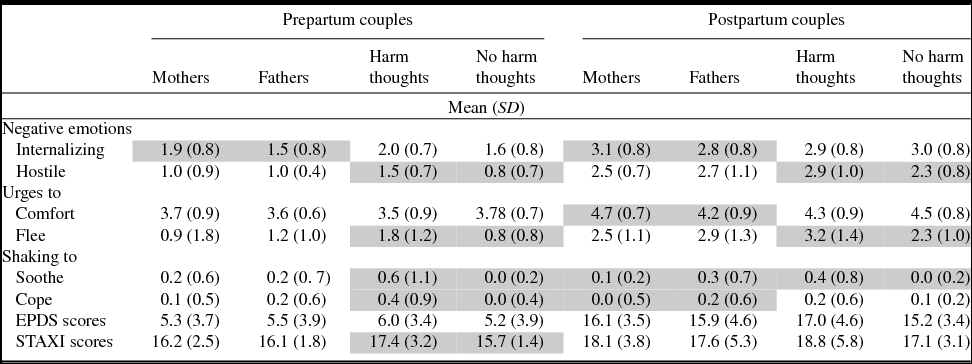
Please refer to Table 1 for the raw means and standard deviations for negative emotions (internalizing and hostile), urges to comfort or flee, shaking to soothe or cope, EPDS scores, and STAXI scores.
Descriptive information for prepartum couples (raw means and standard deviations)

The following variables were scored on a Likert-type scale. Negative emotions were scored on a scale from 1 = not at all to 5 = extremely. Urges to comfort and to flee the infant were scored on a scale from 1 = no urge at all to 5 = very strong urge. The likelihood that shaking would be used as a strategy for comforting the crying infant or for coping with the infant's crying was scored on scale from 1 = very unlikely to 4 = very likely.
Discussion
In this study, in response to infant cry sounds, approximately one-quarter of prepartum parents, and 44% of postpartum parents, reported unwanted, intrusive thoughts of infant-related harm (i.e. purposeful rather than accidental harm). This converges with our previous study in which 41% of postpartum mothers reported unwanted, intrusive thoughts of infant-related harm in response to the same cry stimulus (Fairbrother et al., Reference Fairbrother, Barr, Pauwels and Green2015). These findings are also consistent with our earlier work in which 50% of new mothers reported unwanted, intrusive thoughts of infant-related intentional harm (Fairbrother and Woody, Reference Fairbrother and Woody2008). Interestingly and perhaps surprisingly, mothers and fathers were similar both with regard to the likelihood that they would report harm thoughts in response to the cry sounds, and in the number of harm thoughts reported. This was true for both pre- and postpartum couples. Because these were independent samples, direct statistical comparisons were not feasible, but there was a notable difference in likelihood and number of harm thoughts reported between pre- and postpartum mothers and fathers. On average, 23–29% of prepartum mothers and fathers, and 43–46% of postpartum mothers and fathers reported thoughts of infant-related harm. It has been hypothesized that unwanted, intrusive thoughts of infant-related harm (both accidental and intentional harm) may be an adaptive response to early parenting (Fairbrother and Abramowitz, Reference Fairbrother and Abramowitz2007). Specifically, the occurrence of thoughts of infant-related harm, even thoughts of intentional harm may cause anxiety in caregivers and prompt them to increase their vigilance to potential sources of threat. For example, if a new mother stands near a 7th floor balcony while holding her infant and has a sudden image of throwing the infant from the balcony, she may take a step back, or return inside, thereby reducing the chances that she could accidentally drop her infant. If this is the case, one could anticipate our finding of an increase in such thoughts among postpartum parents. It is also likely that, emotionally and cognitively, new parents experience infant cry sounds quite differently from men and women who have yet to become parents.
The negative emotions we assessed were grouped into internalizing emotions (i.e. feeling anxious, sad, helpless and trapped) and hostile emotions (i.e. angry, frustrated and irritated). Mothers reported higher levels of internalizing emotions than fathers in the prepartum but not the postpartum. This is consistent with the literature pertaining to gender differences in internalizing emotions, with women generally reporting higher levels of them compared with men (Chaplin, Reference Chaplin2015). It is interesting that significant differences between men and women among the internalizing emotions were concentrated in prepartum women. Differences between mothers and fathers were smaller among postpartum couples compared with prepartum couples. It appears that, once they become fathers, men's feelings of empathy for a crying infant increase, and male/female differences diminish. Although direct comparisons were not possible, it appears that, in response to infant cry sounds, postpartum couples may experience higher levels of internalizing emotions than prepartum couples.
Among hostile emotions and state anger, there was a consistent trend for those emotions to be stronger among postpartum mothers and fathers compared with prepartum mothers and fathers. Given the sleep loss and increased stress accompanying early parenthood, one might anticipate higher levels of irritation and anger among postpartum compared with prepartum couples (Graham et al., Reference Graham, Lobel and DeLuca2002). Sleep deprivation has been shown to increase participant reported stress, anxiety and anger, when compared with well-rested controls (Minkel et al., Reference Minkel, Banks, Htaik, Moreta, Jones and McGlinchey2012), and postpartum women are more likely to experience sleep disturbances than prepartum women or women in general (Kennedy et al., Reference Kennedy, Gardiner, Gay and Lee2007). However, some studies report no increase in anger during the postpartum period (Behringer and Reiner, 2011).
Mothers and fathers (prepartum and postpartum) who reported thoughts of infant-related harm also indicated higher levels of hostile emotions in response to the cry sounds, compared with parents who did not. This finding suggests that feelings of anger/irritation/frustration are associated with, and may trigger hostile, unwanted intrusive thoughts. While minimal literature exists on the relationship between hostile emotions and intrusive thoughts, Whiteside and Abramowitz (Reference Whiteside and Abramowitz2004) reported that individuals with high obsessive-compulsive symptoms tended to experience more anger, and had more difficulty controlling their anger, than those with low obsessive-compulsive symptoms. As clinical obsessions can be viewed as an extreme form of unwanted intrusive thought (Clark and O'Connor, Reference Clark, O'Connor and Clark2005) it is possible that hostile emotions, like anger, may be associated with intrusive thoughts in other contexts – like the postpartum period. Additionally, it is thought that whether unwanted thoughts escalate to become clinical obsessions is dependent on how an individual evaluates or interprets the cognition (Clark and O'Connor, Reference Clark, O'Connor and Clark2005). Therefore, it is possible that hostile emotions may interrupt normal cognitive evaluation, resulting in a worsening of intrusive thoughts.
Mothers and fathers (both prepartum and postpartum) reported strong urges to comfort the infant whose cry sounds they were listening to. Postpartum mothers reported even stronger urges to comfort the infant, than did fathers. Between prepartum mothers and fathers, we found no significant differences in the urge to comfort. This suggests that early parenting results in specific emotional changes, some of which may be unique to mothers.
In both the prepartum and the postpartum samples, mothers and fathers who reported harm thoughts also reported stronger urges to flee the infant, compared with those who did not report such thoughts. It may be that the experience of harm thoughts is aversive and leads to a desire to escape the stimulus of the thoughts. Of course, infant crying can be, in and of itself, aversive. Perhaps the more aversive one's experience of infant crying, the stronger one's desire to flee the crying infant, and the greater the likelihood of experiencing aggressive, intrusive thoughts.
Not surprisingly and reassuringly, participants overall (prepartum and postpartum) reported that they were quite unlikely to consider using infant shaking as a strategy for soothing a crying infant or for coping with infant crying (mean responses ranged from very unlikely to somewhat unlikely). Prepartum and postpartum mothers and fathers reported a significantly greater likelihood of shaking to soothe their own crying infant if they also reported unwanted, intrusive thoughts of purposeful, infant-related harm. This was also true for shaking as a coping strategy but only among prepartum couples. This finding suggests a possible link between unwanted, intrusive and aggressive infant-related thoughts and, possibly, the potential for actual aggression. However, it is equally possible that no such relationship with actual aggression exists, and that our findings simply point to increased hostile emotions (e.g. anger, irritation), but no actual likelihood of acting upon them.
As might have been suspected, postpartum fathers (but not prepartum) reported a greater likelihood than mothers of considering using shaking to both soothe and cope with their own infant's crying. This is consistent with the literature pertaining to infant shaking in which fathers are far more frequently perpetrators of infant shaking than mothers (Barr, Reference Barr2012).
Depressed mood was minimally associated with the outcomes investigated in this study. Specifically, depressed mood was significantly associated with higher scores only for internalizing emotions, hostile emotions and state anger, and only for postpartum couples. This suggests, not surprisingly, that depressed mood plays a more significant role in parents’ emotional wellbeing postnatally compared with in pregnancy. That depressed mood is associated with feelings of anxiety, sadness, helplessness and feeling trapped may be saying no more than that depressed mood is related to symptoms of depression. That depressed mood is also related to hostile/angry emotions is consistent with the fact that feelings of anger and irritation are common symptoms of depression (Pasquini et al., Reference Pasquini, Picardi, Biondi, Gaetano and Morosini2004).
Limitations
Both in our initial (Fairbrother et al., Reference Fairbrother, Barr, Pauwels and Green2015) and current studies, the use of an analogue infant cry stimulus represents a possible limitation on the generalizability of these findings to real life situations. It is difficult to know if findings will translate well to real life parenting situations in which one's own, physically present infant is the source of the crying. It could be that the presence of one's own infant results in a decrease in negative emotions and harm thoughts, as one experiences greater empathy and love. However, when caring for one's own infant, one is very aware of not being able to walk away, and the possibility that the crying may last a very long time. It could be that this knowledge results in an increase in negative emotions and harm thoughts.
Future directions
Perhaps the most urgent need in the area of postpartum thoughts of infant-related harm is that of the relationship of unwanted, intrusive, aggressive infant-related thoughts and aggressive behaviours. Future studies would benefit from designs in which the relationship between these types of harm thoughts and actual aggressive behaviour is assessed. My research team (Fairbrother et al.) has recently completed data collection for a study in which new mothers’ unwanted, intrusive thoughts of intentionally harming one's infant, and aggressive maternal behaviours (obtained anonymously) were assessed. We hope that our findings will help to clarify what, if any, relationship exists between these distressing, albeit common, harm thoughts, and aggressive behaviour. Future research should also undertake to disentangle cause and effect relationships between negative emotions and urges to flee, and the occurrence of infant-related harm thoughts. Is it that anger and irritation trigger harm thoughts, or is it that infant crying simultaneously triggers hostile thoughts and hostile emotions? Finally, it would be beneficial, in future research on this topic, to include an assessment of parenting stress, as well as direct comparisons between parents and non-parents.
Conclusions
These two (i.e. prepartum and postpartum) inter-related studies significantly extend our understanding of the triggers and correlates of unwanted, intrusive thoughts of infant-related harm, specifically thoughts of intentional harm. It is now clear that harm thoughts typically co-occur with hostile emotions, urges to flee a crying infant, and an increased perception of one's own likelihood of using infant shaking in response to infant crying. Consistent with what is known about infant shaking, fathers reported a greater likelihood of using infant shaking in response to infant crying, compared with mothers. The pressing need in future research is to investigate these relationship in real life parenting situations, and in such a way as to answer questions pertaining to causality.
Acknowledgements
We would like to acknowledge the help of the parents who participated in our study.
Conflicts of interest: Nichole Fairbrother, Ronald G. Barr, Mandy Chen, Shivraj Riar, Erica Miller, Rollin Brant, and Annie Ma have no conflict of interest with respect to this manuscript.
Ethics statement: This study was reviewed and approved by the University of British Columbia/Children's and Women's Health Center of British Columbia Research Ethics Board.
Financial support: This research was supported by a Canadian Institutes of Health Research Operating Grant MOP115173 awarded to Ronald G. Barr, Nichole Fairbrother, Alissa Antle and Rollin Brant. It was also supported in part by a Canada Research Chair in Community Child Health Research and a Fellowship in the Child and Brain Development Program of the Canadian Institute for Advanced Research to Ronald G. Barr.



Comments
No Comments have been published for this article.