Introduction
There is high demand for poultry products in the South Pacific region and this trend is forecast to increase as a result of growing knowledge of the health benefits of poultry products and changing lifestyle (Diarra, Reference DIARRA2017). Despite the high demand however, domestic production in the region is still very low. Poultry meat import in Fiji increased by 69% between 2010 and 2011 (Diarra, Reference DIARRA2017) while spending on import in Samoa was valued at about US$ 17 million or 87% of total cost of meat import in the country in 2012 and 2013 (APHD, 2014 cited in Diarra, Reference DIARRA2017). The immediate consequence of this massive importation is loss of foreign exchange and employment opportunities in the region.
High feed cost is the major impediment to poultry production in the region. Traditional feed ingredients for diet formulation (grains and oilseeds) are not grown in the region and imported at high cost (FAO, 2012; Diarra, Reference DIARRA2017). Cereals imported by the feed industry in Fiji was estimated at 15,000 tonnes in 2011 (Diarra, Reference DIARRA2017). In Papua New Guinea the price of commercial poultry feed increased by 56 to 100% from 2003 to 2011 (Ayalew, Reference AYALEW2011).
Several ingredients, which are available locally, could be included to reduce feed cost in the region (FAO, 2012; Diarra, Reference DIARRA2015a). Currently however, there is dearth of statistics of the production of many such resources due to their low industrial and food applications. This review summarises the availability, and utilisation of some local raw materials in the South Pacific in poultry feeding. Major constraints and prospects in their utilisation in poultry diets are also highlighted.
Composition and dietary recommendations of selected alternative energy resources in the region
roots/tubers and by-products
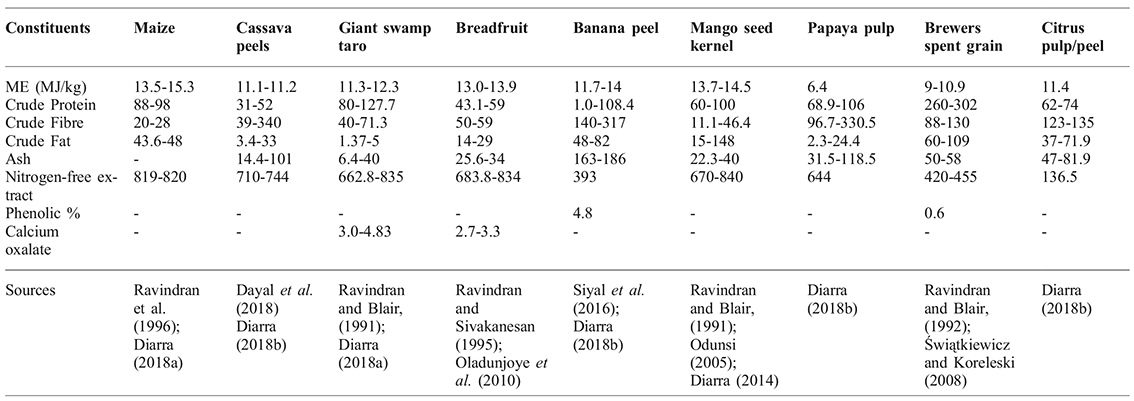
Cassava (Manihot esculenta) is a staple crop in most countries of the region (Dayal et al., Reference DAYAL, DIARRA, LAMETA, DEVI and AMOSA2018). Cassava production in Fiji was estimated at 74,028 metric tonnes in 2016 (FAOSTAT, 2018; Dayal et al., Reference DAYAL, DIARRA, LAMETA, DEVI and AMOSA2018). The high demand of cassava for human food makes it unavailable for poultry feeding at an economic cost in most countries of the region. During cassava processing for food, large quantities of peel are made available for livestock and poultry feeding. Taking cassava peel as 10-13% of the tuber weight (Oladunjoye et al., Reference OLADUNJOYE, OLOGHOBO and OLANIYI2010), the FAOSTAT (2018) production estimates translate into 7,403-9,624 tonnes of cassava peel produced in Fiji annually. The crude protein (CP) content of cassava peel ranges from 31-52 g/kg, metabolisable energy (ME) 11-11.2 MJ/kg, crude fibre (CF) 39-340 g/kg, ether extract (EE) 3.4-33 g/kg ash 14.4-101 g/kg and 710-744 g/kg nitrogen free extract (NFE) (Dayal et al., Reference DAYAL, DIARRA, LAMETA, DEVI and AMOSA2018; Diarra, Reference DIARRA2018b).
Giant swamp taro (Alocasia macrorrhiza) is a fast growing aroid listed as invasive in most countries of the South Pacific (Diarra, Reference DIARRA2018a). A variety of giant taro in Samoa was analysed to contain 80-127.7 g/kg CP, 11.3-12.3 MJ/kg ME, 40-71.3 g/kg CF, 1.37-5 g/kg EE, 6.4-40 g/kg ash, 662.8-835 g/kg NFE and 3-4.8 g/kg Ca oxalate (Diarra, Reference DIARRA2018a). Currently, giant taro has little food value in most countries in the region on account of its Ca oxalate content, which is responsible for acrid taste (Ravindran et al., Reference RAVINDRAN, SIVAKANESAN and CYRIL1996; Diarra, Reference DIARRA2018a). Peeling (Ravindran et al., Reference RAVINDRAN, SIVAKANESAN and CYRIL1996; Diarra et al., Reference DIARRA, WAMEKENI, VUNAGILEE, LAVAKA and FINAU2019), cooking (Ravindran et al., Reference RAVINDRAN, SIVAKANESAN and CYRIL1996) and additional inorganic Ca (Ravindran et al., Reference RAVINDRAN, SIVAKANESAN and CYRIL1996; Diarra et al., Reference DIARRA, WAMEKENI, VUNAGILEE, LAVAKA and FINAU2019) are known to reduce/suppress the negative effects of oxalate in taro corm and improve its utilisation by poultry.
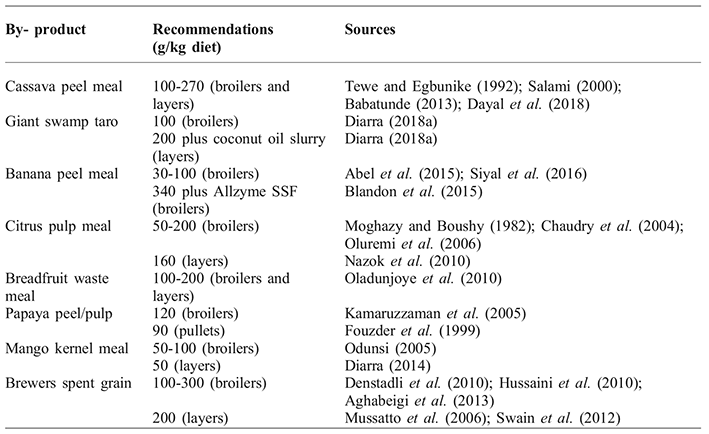
The recommendations for cassava peel meal (CPM) in poultry diet are quite variable, ranging from 100-270 g/kg diet (Babatunde, Reference BABATUNDE2013; Dayal et al., Reference DAYAL, DIARRA, LAMETA, DEVI and AMOSA2018). Several factors including the cultivar, processing and diet composition, species and age of birds and enzyme supplementation may affect the utilisation of CPM by poultry. Babatunde (Reference BABATUNDE2013) recommended 100 g/kg CPM as an optimum inclusion in feed for broilers. Recently, Dayal et al. (Reference DAYAL, DIARRA, LAMETA, DEVI and AMOSA2018) observed that broiler performance was not reduced when CPM was included at 154 g/kg, provided the diet was supplemented with enzymes and tallow, suggesting that both low energy and complex nutrient structure are major constraints to the utilisation of CPM by poultry. Cassava peel has been recommended at 200 g/kg (Salami, Reference SALAMI2000) and 270 g/kg (Tewe and Egbunike, Reference TEWE and EGBUNIKE1992) in layer diets. Feeding cassava products in animal protein-based diets was reported to improve poultry performance compared to plant sources, probably due to the higher sulphur amino acids in animal than plant sources (Garcia, Reference GARCIA1999). The effect of sulphur amino acid supplementation has been mainly attributed to the availability of free sulphur for detoxification (Ravindran et al., Reference RAVINDRAN, SIVAKANESAN and CYRIL1996) and methionine availability for protein synthesis.
Dietary inclusion of giant taro root meal at 100 g/kg diet maintained performance of broilers and laying hens, but performances deteriorated at 200 g/kg inclusion (Diarra Reference DIARRA2018a). Addition of coconut oil slurry improved utilisation of 200 g/kg by laying hens but not in broilers, probably due to age difference in fat digestion by poultry (Sell et al., Reference SELL, KROGDAHL and HANYU1986). Recently, Diarra et al. (Reference DIARRA, WAMEKENI, VUNAGILEE, LAVAKA and FINAU2019) observed that peeling or additional calcium carbonate improved the utilisation of 200 g/kg giant taro corm by laying hens. This supports earlier findings that i) Ca oxalate is higher in the peel (Ravindran et al., Reference RAVINDRAN, SIVAKANESAN and CYRIL1996) and ii) calcium availability is a major factor limiting the utilisation of giant taro by poultry.
fruits and their by-products
Fruit processing companies in Fiji produce juices from pineapple (Ananas comosus), orange (Citrus sinensis), guava (Psidium guajava) and mango (Mangifera indica) (Fiji Islands Trade and Investment Board, 2009, unpublished). Pulps from this processing are currently underutilised and mostly dumped in land fill. In Samoa, large volumes of spoilt and rejected papaya (Carica papaya) and breadfruit (Arocarpus altilis) are dumped (FAO, 2009). Citrus peel/pulp contains 62-74, 123-135, 37-71.9, 47-81.9, 136.5 g/kg CP, CF, EE, ash, nitrogen free extract (NFE) and 11.4 MJ/kg metabolisable energy (ME), respectively (Diarra, Reference DIARRA2018b). Crude protein, CF, EE, ash, NFE, phenolic compound and ME contents of 1.0-108.4 g/kg, 140-317 g/kg, 48-82 g/kg, 163-186 g/kg, 393 g/kg, 4.8% and 11.7-14 MJ/kg respectively have been reported for banana peel (Siyal et al., Reference SIYAL, WAGAN, BHUTTO, TAREEN, ARAIN, MUHAMMAD SAEED, BROHI and SOOMRO2016; Diarra, Reference DIARRA2018b). Breadfruit contains 43.1-59 g/kg CP, 50-59 g/kg CF, 14-29 g/kg EE, 25.6-34 g/kg ash, 683.8-834 g/kg NFE, 2.7-3.3 g/kg calcium and 13-13.9 MJ/kg ME (Ravindran and Sivakanesan, Reference RAVINDRAN and SIVAKANESAN1995; Oladunjoye et al., Reference OLADUNJOYE, OLOGHOBO and OLANIYI2010). Papaya peel contains 6.4 MJ/kg ME, 68.9-106 g/kg CP, 96.7-330.5 g/kg CF, 2.3-24.4 g/kg EE, 31.5-118.5 g/kg ash and 644 g/kg NFE (Diarra, Reference DIARRA2018b). The CP, CF, EE, ash, NFE and ME content of 60-100 g/kg, 11.1-46.4 g/kg, 15-148 g/kg, 22.3-40 g/kg, 670-840 g/kg and 13.7-14.5 MJ/kg have been reported for mango seed kernel (Ravindran and Blair, Reference RAVINDRAN and BLAIR1991; Odunsi, Reference ODUNSI2005; Diarra, Reference DIARRA2014). Factors including cultivar and stage of maturity, agronomic practices and processing method affect the nutritional composition of fruits and by-products (Diarra, Reference DIARRA2018b). Aside the nutritive composition, several functional properties, including antioxidation, antimicrobial and cholesterolemic activities have been identified in most fruits (Ahn, Reference AHN2011) making them ingredients of choice in place of commercial additives, such as antibiotics, which have been criticised in the feed for their health risks. Phenolics, flavonoids, tannins and stilbenes are the major anti-nutritional factors limiting the utilisation of fruit peels in animal feed (Ahn, Reference AHN2011).
Using fruit peels in poultry diets is well documented. Dietary citrus peel at 50 g/kg (Chaudry et al., Reference CHAUDRY, BADSHAH, BIBI, ZEB, AHMED, ALI and TERMEULEN2004), 79.2 g/kg (Oluremi et al., Reference OLUREMI, OJIGHEN and EJEMBI2006) and 200 g/kg (Moghazy and Boushy, Reference MOGHAZY and BOUSHY1982) had no adverse effects on broiler growth, and plasma cholesterol was reduced compared to the unsupplemented control (Chaudry et al., Reference CHAUDRY, BADSHAH, BIBI, ZEB, AHMED, ALI and TERMEULEN2004). Mourao et al. (Reference MOURAO, PINHEIRO, PRATES, BESSA, FERREIRA, FONTES and PONTE2008) and Nazok et al. (Reference NAZOK, REZAEI and SAYYAHZADEH2010) recommended 100-150 g/kg citrus pulp meal in layers and broilers, but performance deteriorated above this level. Inclusion of citrus pulp at 160 g/kg diet maintained egg production, increased serum glucose and high density lipoprotein and reduced cholesterol in laying hens (Nazok et al., Reference NAZOK, REZAEI and SAYYAHZADEH2010). However, citrus seed, normally in the pulp, may contain limonin which is toxic to monogastric animals (Göhl, Reference GÖHL1982), suggesting the need to separate the seed during juice extraction to obtain safer pulps for poultry. Sun-dried banana peel can be fed to broilers at 100 g/kg (Abel et al., Reference ABEL, ADEYEMI, OLUWOLE, OLADUNMOYE, AYO-AJASA and ANUOLUWATELEMI2015) and 340 g/kg when including a commercial enzyme Allzyme SSF (Blandon et al., Reference BLANDON, HAMADY and ABDEL-MONEIM2015) for maintaining growth and feed cost reduction. Kamaruzzaman et al. (Reference KAMARUZZAMAN, CHOWDHURY, PODDER and PRAMANIK2005) found no adverse effect of 120 g/kg sun-dried papaya peel meal on broiler growth. Fouzder et al. (Reference FOUZDER, CHOWDHURY, HOWLIDER and PODDER1999) recommended 90 g/kg papaya peel meal for better performance of pullets. Feeding 50-100 g/kg mango kernel seed meal have been reported to improve performance of broilers (Odunsi, Reference ODUNSI2005; Diarra, Reference DIARRA2014).
brewers’ spent grain
Most countries of the region own medium to large scale breweries and spent grain, the major by-product of this industry, is available for livestock and poultry feeding. Brewers’ spent grain (BSG) contains about 9-10.9 MJ/kg ME, 260-302 g/kg CP, 88-130 g/kg CF, 60-109 g/kg EE, 50-58 g/kg ash, 420-455 g/kg NFE and 0.6% phenolic compounds (Ravindran and Blair, Reference RAVINDRAN and BLAIR1992; Światkiewicz and Koreleski, Reference ŚWIATKIEWICZ and KORELESKI2008). However, high moisture and low dry matter contents, high fibre and low nutrient density are major limiting factors to efficient utilisation of BSG in poultry diets. More so, BSG is bulky and difficult to transport and can easily go mouldy under poor storage, leading to mycotoxin risks.
Recommendations for BSG in poultry diets are variable and depend on several factors including source and processing of the grain, age and type/age of birds, diet composition and feed processing. Inclusion of levels of 100-200 g/kg and 300 g/kg in pelleted wheat-soybean diets maintained performance in broiler starter and finisher periods, respectively (Denstadli et al., Reference DENSTADLI, BALLANCE, KNUTSEN, WESTERENG and SVIHUS2010; Aghabeigi et al., Reference AGHABEIGI, MOGHADDASZADEH-AHRABI and AFROUZIYEH2013). Hussaini et al. (Reference HUSSAINI, MOGHADDAM and KERMANSHAH2010) recommended 75 and 150 g/kg BSG in broiler starter and grower diets, respectively, suggesting that bird age is an important factor when considering the inclusion of BSG in the diet. Mussatto et al. (Reference MUSSATTO, DRAGONE and ROBERTO2006) and Swain et al. (Reference SWAIN, NAIK, CHAKURKAR and SINGH2012) observed improved growth performance and carcass yield in dual purpose Vanaraja birds fed 200 g/kg BSG in the diet. Better digestive tract development on BSG-based diets (Denstadli et al., Reference DENSTADLI, BALLANCE, KNUTSEN, WESTERENG and SVIHUS2010) is probably the main factor in the utilisation of BSG by poultry. Improved digestive tract development and nutrient digestibility of poultry fed BSG (Aghabeigi et al., Reference AGHABEIGI, MOGHADDASZADEH-AHRABI and AFROUZIYEH2013) or dried distillers’ grain with solubles (DDGS) (Thacker and Widyaratne, Reference THACKER and WIDYARATNE2007) has been reported. The beneficial effect of enzyme supplementation of BSG-based diets during the starter phase (Hussaini et al., Reference HUSSAINI, MOGHADDAM and KERMANSHAH2010) and both phases (Hussaini et al., Reference HUSSAINI, MOGHADDAM and KERMANSHAH2010) has been reported. In addition to animal factors, source and type of grain used in brewing (wheat, barley or sorghum) need to be considered in the evaluation of BSG for poultry feeding.
The composition and recommendations of selected alternative energy sources for poultry are summarised in Tables 1 and 2.
Composition of selected locally available energy sources for poultry (g/kg).

Recommendations of selected locally available energy sources for poultry.

Composition and dietary recommendations of selected alternative protein resources in the region
oil (copra and palm kernel) cakes
Copra cake (CC) and palm kernel cake (PKC), are readily available from commercial and small-scale oil extraction in the region. Copra Millers Fiji Limited produces about 900 metric tonnes of CC annually (Deo, 2018; personal communication). Annual production of CC in Samoa and Vanuatu is estimated at 800 tonnes (Devi and Diarra, Reference DEVI and DIARRA2017) and 6,000 tonnes (Quigley, 2018; personal communication), respectively. Taking on average 20% protein in copra meal, this translates to about 1,540 metric tonnes of CC produced in the three countries annually.
Guadalcanal Plains Palm Oil Limited in the Solomon Islands is a major producer of PKC in the region. The company's annual oil production was estimated at 32,000 tonnes in 2015 (Quarterly Report, 2015). Taking the oil to cake ratio at 50:50 (Pickard, Reference PICKARD2005), this will amount to 16,000 tonnes of PKC produced annually in Solomon Islands.
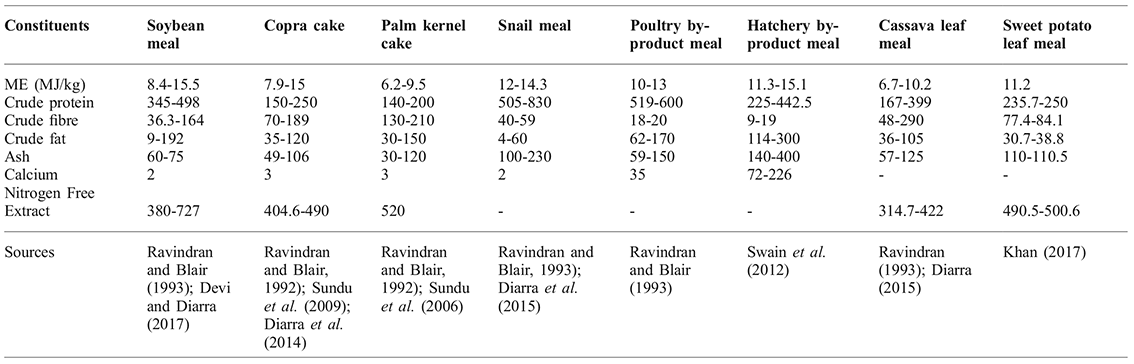
The composition of CC is variable with the source of copra and method of oil extraction being important factors. Crude protein, CF, EE, ash, NFE, calcium and ME contents of 150-250 g/kg, 70-189 g/kg, 35-120 g/kg, 49-106 g/kg, 404.6-490 g/kg, 3 g/kg and 7.9-15 MJ/kg respectively have been reported in CC (Ravindran and Blair, Reference RAVINDRAN and BLAIR1992; Sundu et al., Reference SUNDU, KUMAR and DINGLE2009). The fibre of CC is in the form of non-starch polysaccharides, mainly mannan and galactomannan which are resistant to hydrolysis by digestive enzymes (Sundu et al., Reference SUNDU, KUMAR and DINGLE2009). The cake is characterised by low essential amino acids, especially lysine and methionine, and a high arginine to lysine ratio (NRC, 2012) which reduces lysine utilisation (Swick, Reference SWICK1999). The complex structure, low nutrient density, poor and imbalanced essential amino acid profile limit utilisation of CC by poultry. The high moisture content of coconut meal from small scale processors in the region may not justify its application at commercial scale, but this could be used to reduce on-farm feed cost.
Palm kernel cake contains 140-200 g/kg CP, 130-210 g/kg CF, 30-150 g/kg EE, 30-120 g/kg ash, 3 g/kg calcium, 520 g/kg NFE and 6.2-9.5 MJ/kg ME (Ravindran and Blair, Reference RAVINDRAN and BLAIR1992; Sundu et al., Reference SUNDU, KUMAR and DINGLE2006). Palm kernel cake (PKC) has better essential amino acid profile (good for lysine but low in cysteine, methionine and tryptophan) but like copra meal, high fibre, low nutrient density, low amino acid availability and high water holding capacity hinder its efficient utilisation in poultry diets (Sundu et al., Reference SUNDU, KUMAR and DINGLE2008; Zamani et al., Reference ZAMANI, LOH, FOO, SAMSUDIN and ALSHELMANI2017).
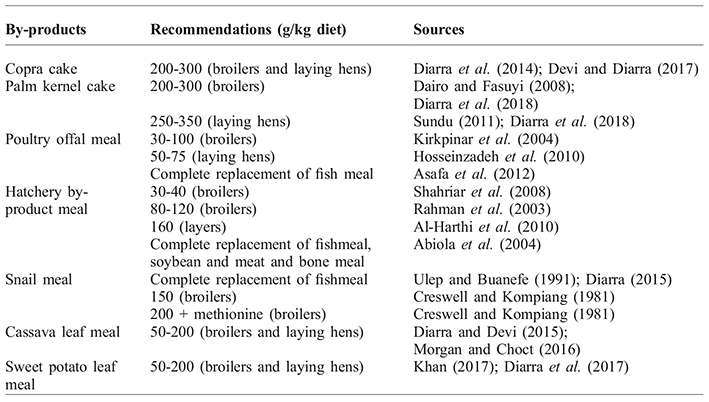
Dietary recommendations for CC in poultry diets range from 200-300 g/kg (Diarra et al., Reference DIARRA, SANDAKABATU, PERERA, TABUACIRI and MOHAMMED2014; Devi and Diarra, Reference DEVI and DIARRA2017). Palm kernel cake can be included at 200-300 and 250-350 g/kg diet for broilers, and laying hens, respectively (Sundu, Reference SUNDU2011; Diarra et al., 2018a). Several factors, including methods of oil extraction, diet composition, enzyme and amino acid supplementation are all known to affect the utilisation of CC (Low, Reference LOW1993; Sundu et al., Reference SUNDU, KUMAR and DINGLE2004; Devi and Diarra, Reference DEVI and DIARRA2017) and PKC (Sundu et al., Reference SUNDU, KUMAR and DINGLE2004). Thus, with adequate feed technology, CC and PKC can be used to reduce poultry feed cost in the South Pacific region.
slaughter by-products
Some countries of the region have relatively well-established beef and broiler industries which generate substantial quantities of slaughter by-products. According to Diarra (2015, personal communication) an estimated 20 tonnes of by-products was produced from broiler slaughter at Goodman Fielder Limited in Fiji. Another company in Fiji, Rooster produces reasonable quantities of by-products from the slaughter of about 1.2 million broilers annually (Evangelista, 2018; personal communication).
In the past few years, Vanuatu has increased its broiler production in response to an increasing demand (FAO Sub-regional Office for the Pacific Islands, 2014). An average of 736 (FMIB, 2015) and 1,375 (PHAMA, 2012) head of cattle are slaughtered monthly in Fiji and Vanuatu, respectively, yielding significant quantities of by-products. Fiji fish processing company dumps an average of about 9 tonnes (Prasad, 2018; personal communication) of fish waste annually. This could be processed and used in poultry diets to reduce cost.
The composition of slaughter by-products is influenced by several factors including age and species of animal, the proportion of different parts in the mixture and rendering method. Poultry offal meal has a good nutrient profile; 516-600 g/kg CP, 18-20 g/kg CF, 62-170 g/kg EE, 59-150 g/kg ash, 35 g/kg calcium and 10-13 MJ/kg ME (Patrick and Schaible, 1980 cited in Ravindran and Blair, Reference RAVINDRAN and BLAIR1993) and could replace fishmeal and soybean meal in poultry diets (Asafa et al., Reference ASAFA, OLOGHOBO and ADEJUMO2012).
Meat and bone meal (MBM) contains 400-580 g/kg CP and has a good balance of essential amino acids (Devi and Diarra, Reference DEVI and DIARRA2017), but the protein is poorly digested compared to fish meal (Zhou et al., Reference ZHOU, TAN, MAI and LIU2004). Currently, slaughter by-products in the region remain underutilised and are mostly dumped due to lack of functional processing plants and poor knowledge of their nutritive value (Diarra, Reference DIARRA2017). At the same time, feed mills in the region import animal protein concentrates at exorbitant prices, which adds to cost of the finished feed. Although banned in most countries in Europe, animal by-products, including those from ruminants, are still used in livestock and poultry feeding in many regions, including the South Pacific. The consequences of dumping slaughter by-products may outweigh their risks in animal feeding in the region.
Factors which affect the composition of slaughter by-products have an impact on dietary recommendations. Poultry offal meal has a recommended inclusion between 30-100 g/kg and 50-75 g/kg for broilers and layers, respectively (Kirkpinar et al., Reference KIRKPINAR, ACIKGOZ, BOZKURT and AYHAN2004; Hosseinzadeh et al., Reference HOSSEINZADEH, EBRAHIMNEZHAD, JANMOHAMMADI, AHMADZADEH and SARIKHAN2010). Meat and bone meal, on account of its high calcium (Ca) content, can be included at higher levels in layer diets to reduce the need for Ca supplementation. The lack of centralised slaughter plants in most countries of the region makes collection and processing of these by-products difficult.
hatchery by-products
Hatchery by-products comprise infertile, cracked eggs, dead-in-shells, empty shells, late hatching, weak and male chicks (Al-Harthi et al., Reference AL-HARTHI, EL-DEEK, EL-DIN and ALABDEEN2010). Three major companies in Fiji hatch about 23 million chicks annually (Devi, 2018; personal communication). Taking a mean hatchability of 70%, this amounts to about 600 tonnes of hatchery waste produced annually which could be processed into hatchery by-product meal (HBM), a high quality protein and mineral concentrate. Currently, all the waste from hatcheries in Fiji is dumped in landfill with associated environmental consequences.
The composition of HBM is variable depending on processing method and the proportion of the different components. Hatchery by-product meal contains 11.3-15.1 MJ/kg ME, 225-442.5 g/kg CP, 9-19 g/kg CF, 114-300 g/kg EE, 140-400 g/kg ash and 72-226 g/kg calcium (Swain et al., Reference SWAIN, NAIK, CHAKURKAR and SINGH2012). Recommendations for HBM use in feed have not been consistent among studies. Factors such as processing method, species, age and class of bird all affect utilisation of HBM in poultry. Inclusion levels from 30-40 g/kg (Shahriar et al., Reference SHAHRIAR, NAZER-ADL, DOOLGARISHARAF and MONIRIFAR2008) to 80-120 g/kg (Rahman et al., Reference RAHMAN, AKTER and HOWLIDER2003) have been reported in broiler diets. However, Shahriar et al. (Reference SHAHRIAR, NAZER-ADL, DOOLGARISHARAF and MONIRIFAR2008) observed that 80 g/kg HBM in the diet resulted in poor feed conversion ratio and reduced shelf-life of broiler meat. Other studies (Rahman et al., Reference RAHMAN, AKTER and HOWLIDER2003) reported improved protein utilisation and weight gain when fish meal was completely replaced with HBM in broilers. Complete replacement of fish meal, soybean meal or meat and bone meal with HBM did not affect egg production in laying hens (Abiola et al., 2004; Al-Harthi et al., Reference AL-HARTHI, EL-DEEK, EL-DIN and ALABDEEN2010) but quality traits (thicker eggshells, higher yolk and albumin weights) were improved (Abiola et al., 2004). Al-Harthi et al. (Reference AL-HARTHI, EL-DEEK, EL-DIN and ALABDEEN2010) recommended up to 160 g/kg HBM in layer diets, probably due to the high Ca requirement for egg production. The high Ca content of the product may be the main reason for its lower recommendations in broiler diets. Excess dietary Ca interferes with macro mineral absorption and reduces animal performance. Processing hatchery wastes can be used as high protein, energy and mineral concentrates for poultry which would reduce feed cost and overcome the environmental consequences that its dumping may cause.
snails
Snails are currently major agricultural pests in some countries in the South Pacific region (Diarra et al., Reference DIARRA, KANT, TANHIMANA and LELA2015) which could be used to reduce spending on expensive protein ingredients and minimise the environmental risk of chemicals pesticides in snail control. The CP, CF, EE, ash calcium and ME contents of snail meal range from 505-830 g/kg, 40-59 g/kg, 4-60 g/kg, 100-230 g/kg, 2 g/kg and 12-14.3 MJ/kg, respectively (Ravindran and Blair, Reference RAVINDRAN and BLAIR1993; Diarra et al., Reference DIARRA, KANT, TANHIMANA and LELA2015). Snail meal protein has a good balance of polyunsaturated fatty acids (linoleic, linolenic and arachidonic) and essential amino acids, except methionine (Diarra, Reference DIARRA2015b). Snails, depending on the species and ecological conditions, may contain several toxic factors and, hence, there is a need to analyse the meal before considering its inclusion in feed. Methionine supplementation improved the utilisation of snail meal-based diets by poultry (Creswell and Kompiang, Reference CRESWELL and KOMPIANG1981), probably through increased protein synthesis and the role of free sulphur in detoxification.
Complete replacement of fish meal with snail meal had no adverse effects on performance in boiler starters, growers, laying hens or ducks (Diarra, Reference DIARRA2015b). Creswell and Kompiang (Reference CRESWELL and KOMPIANG1981) recommended boiled snail meal at inclusion levels of 150 g/kg diet in broilers, but methionine supplementation allowed utilisation of 200 g/kg without adverse effects.
leaf meals
The harvest of root crops, a staple food sources in the South Pacific (Khan, Reference KHAN2017), yield huge volumes of leaves which are currently considered waste. Leaf meals (LM) are average to good sources of protein and sulphur amino acids, but high in fibre (Ravindran, Reference RAVINDRAN1991; Diarra and Devi, Reference DIARRA and DEVI2015). Cassava LM contains 167-399 g/kg crude protein, 48-290 g/kg crude fibre, 36-105 g/kg ether extract, 57-125 g/kg ash, 314.7-422 g/kg nitrogen free extract and 6.7-10.2 MJ/kg metabolisable energy (Ravindran, Reference RAVINDRAN1993; Diarra, 2015). According to Eggum (Reference EGGUM1970) almost 85% of cassava leaf protein is present as true protein. Crude protein, CF, EE, ash, NFE and ME contents of 235.7-250 g/kg, 77.4-84.1 g/kg, 30.7-38.8 g/kg, 110-110.5 g/kg, 490.5-500.6 g/kg and 11.2 MJ/kg ME, respectively were reported in sweet potato leaf (Khan, Reference KHAN2017). Leaf meals are high in carotenoids (Ravindran, Reference RAVINDRAN1991) which could reduce the need for commercial colourings in the feed, especially where yellow coloured products (egg yolk/skin) are favoured.
Major factors affecting the utilisation of LM by poultry include its high fibre content and likely presence of toxic factors, mainly cyanogenic glucosides (Ravindran, Reference RAVINDRAN1993; Morgan and Choct, Reference MORGAN and CHOCT2016). The high sulphur amino acids in LM, considering the role of sulphur in detoxification (Ravindran, Reference RAVINDRAN1991; Khan, Reference KHAN2017), may however, be an advantage to the use of LM in the diet.
Cassava and sweet potato leaf meals can be included at 50-200 g/kg (Diarra and Devi, Reference DIARRA and DEVI2015; Morgan and Choct; 2016; Khan, Reference KHAN2017) in broiler and layer diets. Like peels, the age of the leaf, processing and diet formulation will affect the inclusion level of LM in poultry diets (Ravindran, Reference RAVINDRAN1991; Diarra, 2018). The composition and dietary recommendations of selected alternative protein sources in the South Pacific region are presented in Tables 3 and 4.
Composition of selected locally available protein sources for poultry (g/kg DM).

Dietary recommendations of selected locally available protein sources for poultry.

Major issues with the utilisation of alternative feed resources in the region
problems of collection
There is no reliable statistical information of these resources in most countries of the region. This lack of information coupled with the scattered island nature and poor communication services make the efficient collection of alternative feed resources difficult in most countries in the region. Most locally available resources are generally high in moisture with a low dry matter content. Their bulkiness does not justify the transportation of such materials at economic cost.
inadequate feed processing facilities
Local feed resources need to be adequately processed to improve their utilisation by poultry. Currently, most countries of the region lack basic processing equipment and, where available, these are mainly found in urban centres far away from major production areas. The variability in nutrient composition and anti-nutritional factor content calls for the need for laboratory analysis before inclusion in diets. Such analyses cannot be done in most countries of the region due to lack of analytical facilities.
Prospects
The low dry matter content, presence of antinutritional factors and problems of collection hinder efficient utilisation of available feed materials for commercial poultry production in the region. However, through appropriate processing, supplementation, research and training these may be utilised to reduce cost of on-farm feed.
Basic feed processing facilities can be owned by government bodies, small scale farmers or communities to reduce running and maintenance costs. Processing techniques including sun-drying, pelleting, boiling, ensiling/fermentation and fat addition can improve utilisation of plant products by poultry (Diarra and Devi, Reference DIARRA and DEVI2015) and could be used to increase inclusion levels of available raw materials in poultry diets. There is need for more research into cost effective processing methods that will reduce antinutritional factors below toxic level and improve the nutritive value of these resources available in the South Pacific.
The increasing availability of commercial feed additives (enzymes, amino acids, probiotics and essential oils, antioxidants and antinutrient binders) which improve nutrient utilisation by poultry (Alagawany et al., Reference ALAGAWANY, ABD EL-HACK, FARAG, SACHAN, KARTHIK and DHAMA2018) can be an asset to the poultry industry in the region. Supplementation of diets with the right technical ingredients would maximise the utilisation of these resources and reduce feed cost in the region. Regular training will help update farmers and extension staff on the opportunities and strategies in the utilisation of local resources in on-farm poultry feed mixes for maximum cost reduction.
Conclusions
There is high demand for poultry products in the South Pacific region but domestic production is still very low. Feed cost remains the single most important factor affecting domestic production of in the region. Several alternative resources in the region have potential as energy and protein sources in poultry diets, but these remain underutilised due to anti-nutritional factors, inadequate processing equipment and poor knowledge regarding their nutritive value. With adequate processing and correct diet formulation, reasonable quantities of alternative ingredients from the South Pacific region could be included in diets to reduce cost of poultry production. Dietary recommendations vary depending on the type and source of material, processing method, diet composition, species, age and class of poultry. There is a need for more research, regular training and establishment of small to medium scale community feed processing units for optimum utilisation of locally available resources for poultry feeding in the South Pacific region.