

On 26 June 1846, Edwin Chadwick spoke before the House of Commons select committee on metropolitan sewage manure. Discussing the dilution of sewage, Chadwick noted an, oft-quoted, opinion that ‘in respect to the sanitary conditions of towns, that all smell is, if it be intense, immediate acute disease, and eventually we may say that, by depressing the system and rendering it susceptible to the action of other causes all smell is disease’.Footnote 1 Chadwick's dictum ‘all smell is disease’ has been influential, even more so among historians and literary critics than among nineteenth-century medical and sanitary professionals. Yet the relationship between smell and disease in the 1840s was far more complex than such a dictum would allow. The historiography of public health and disease in this period has been highly attentive to the complexity and variety of explanations for disease. This article builds on that work by tracing the uncertainty behind Chadwick's famous phrase. This ambiguity ran through nineteenth-century public health. But it can also be found in the relationship between two central narratives in the history of smell. On the one hand, historians have argued that smell acquired less significance and lost its epistemological utility with the onset of modernity. On the other hand, it has been argued that the same period witnessed a renewed attentiveness to odours, novel medical theories that linked odour and disease, and a quest to remove odours from spaces and bodies.Footnote 2
This article unpicks the relationship between these two narratives. It argues that smell performed a significant role in the emotional economy of sanitarianism, but this bore little relation to medical theory. Concerns about the imprecision of smell and the precise relationship between odour and air littered medical writing on disease. This led to severe critiques of new deodorizing fluids, which depended on an equation of smell and disease. Yet smell's subjectivity and emotive language gave it renewed power in the hands of sanitarians. It was the reconfiguration of smell as subjective, emotive, and irrational which gave it a rhetorical force in sanitary literature. This configuration resulted in a re-odorization of urban space in the noses of sanitary investigators and the texts that they produced.
The first part of this article explores the dominant narratives in the history of smell and highlights the conspicuous absence of detailed discussion of smell in the existing historiography of sanitation and medicine in the 1840s and 1850s. The second section of the article briefly explores the relationship between smell and disease in the seventeenth and eighteenth centuries, tracing the gradual development of significant doubts about smell's ability to signify disease. The third part of the article then focuses on smell's uneasy place in the response to cholera during the 1830s. Smell was rarely openly discussed in work on disease etiology. The relationship between odours and miasma, contagion, and other morbific poisons was uncertain. The fourth strand examines discussions – in nuisance law, debates on interment, and reports on disinfection – where smell's ambiguous relationship to disease in the 1840s and 1850s came into the open.Footnote 3 Debates over disinfection in the 1840s demonstrated that smell's uncertain place in disease etiology contributed to denunciations of deodorization. The fifth section then discusses the role of smell in sanitarian literature. In these texts, the re-emphasis on the emotive force of smell was a boon. A rhetoric of re-odorization underscored the desirability and success of sanitary reform. This article thus unpicks the contradictory narratives plotted by many histories of smell by tracing the impact of shifting languages and ideas in different contexts and communities.
I
Much of the historiography of smell, excepting an interest in perfume, has focused on the fecal and the fatal.Footnote 4 This stems from the nature of the relationship between the sensory historians and their archive. The tendency to become habituated to smells and therefore to note them only when they are surprising, out of time, or out of place means that the olfactory archive historians have been bequeathed is one in which such stinks frequently predominate.Footnote 5 Many historians have therefore followed the call of Alain Corbin, who in 1995 suggested historians should examine the sensorial ‘configuration of the tolerable and intolerable’.Footnote 6 Corbin's own work on the history of smell, in The foul and the fragrant, follows precisely this approach.
Corbin's arguments about medically inspired deodorization have been applied approvingly in work on nineteenth-century English sanitation and public health.Footnote 7 This article therefore aims to build on and nuance the pathbreaking narrative that Corbin sets out for France, in the context of England. It is therefore worth setting out the original argument in full. Corbin argues that between the 1750s and 1780s a revolution in environmental medicine and pneumatic chemistry occurred in which smell was used to detect and demarcate different airs and gases.Footnote 8 This generated a new concern with ‘the smell of the putrid’, often referred to as miasma, and medical thinkers erected a ‘whole system of indications conveyed by smells’ in which the nose could ‘detect the threat of mephitism’.Footnote 9 In the 1750s, medical and sanitary work focused on the materials of miasma – mud, cesspools, rotting bodies, and swamps – but by the 1770s, attention was turned to prisons, ships, and hospitals where doctors and chemists ‘measured and classified smells, in their complexity’.Footnote 10 During the 1820s, ‘scientific deodorization’ focused on using chloride of lime, sulfate, zinc chloride, and chloride of soda to disinfect sewers, graves, streets, markets, dissecting rooms, and the ulcerations and gangrenous decompositions of bodies.Footnote 11 What had occurred between 1750 and 1850 was a ‘perceptual revolution’ in which ‘odours were more keenly smelled and thresholds of tolerance abruptly lowered’.Footnote 12 This shift produced new prophylactic and preventative measures in which the deodorization of urban space was both the goal and material outcome.
This narrative, describing the progressive deodorization of urban space, sits uneasily with another common story told in histories of smell.Footnote 13 On the one hand, smell came to be seen as animal, uncivilized, and of little aesthetic, epistemological, or cultural value.Footnote 14 However, from 1750 onwards, a quest began to oust odours from public places, which made them less common. These two narratives have created a paradox in the historiography. Smell was becoming less important at precisely the time when a heightened sensitivity to odours was ostensibly transforming sensibilities and urban space. This paradox is observable in Corbin's narrative. Smell was a threat that needed deodorizing and so environmental chemists and doctors developed a complex and nuanced vocabulary for describing smells. Yet smell could not be incorporated into scientific language – because it was configured as subjective and therefore epistemologically unreliable.Footnote 15 Developments in chemistry rendered smell less important, but it remained central to the detection of disease. The chemists, doctors, and sanitary authorities all still believed that deodorization meant disinfection.Footnote 16 Deodorization as cultural decline and as material cleansing threaten to contradict each another. This article nuances our understanding of the two discourses identified by Corbin in the context of England. It attempts to make sense of the tensions between them by identifying their resonance in two different arenas: etiological theory and sanitarian discourse.
In doing so, it also builds on the historiography of nineteenth-century public health. Recent work on the nineteenth-century United States has claimed that Chadwick's ‘all is smell is disease’ would have made perfect sense to doctors and laypeople alike: before ‘microbes or bacteria…disinfecting practices adhered to miasma theory and thus aimed to purify the air by eliminating smelly effluvia’.Footnote 17 Work on British colonial administration has stressed that the deodorizing imperative was also transferred to the outposts of empire.Footnote 18 A voluminous historiography has traced the complexity of nineteenth-century disease theories. Medical historians have shown how discourses that constructed disease as the product of diverse social and environmental factors came to be superseded, in public health at least, by a sanitarian instance that poisonous emanations from putrid matter were the sole cause of disease.Footnote 19 A general scholarly consensus suggests that an association between smell and disease remained in place in the medical mind until the 1880s, when bacteriological findings finally disturbed, but did not overpower, the ancien régime of smell.Footnote 20 Jonathan Reinarz, a historian of smell and nineteenth-century medicine, has argued that nineteenth-century public health campaigns marked a definitive break that ‘irretrievably altered’ the smells of urban communities.Footnote 21 Chadwick's dictum ‘all is smell is disease’ is invoked, but given little focused analysis. Strikingly, ‘filthy’ is the word used in the contemporary English sources Reinarz quotes – certainly a term that ascribes impurity, alterity, and rejection to materials but one bound to vision as much as, if not more so, than smell.Footnote 22 This ontological blurring and reliance on the implicit rather than explicit olfactory archive, evoked in Corbin's description of ‘foul air’ and Reinarz's ‘filth’, is problematic.Footnote 23 This article therefore helps us trace smell's place in nineteenth-century public health with greater precision.
II
To do this, we need to trace the growing uncertainty about smell's relationship with disease that began in the eighteenth century. The link between smell and fear-producing, aerial, pestilence had been stronger in the seventeenth century. In that period, the medical efficacy and powers of smells were taken highly seriously. The hot, cold, dry, or moist qualities of smells played a role in managing the internal humours of the body. Medicines could act via odours, which could also indicate the medical properties and effects of materials.Footnote 24 Odours could also be nutritious. People who lived off odours had been recorded by ancient writers, and new examples of such dietary feats were provided by writers in the medical and natural historical works of the sixteenth and seventeenth centuries.Footnote 25 Given the powers attributed to odours, they were also believed to contain, communicate, or warn of the presence of infection. The records of urban governance, medical treatises, and texts on plague prevention directly refer to stinking and unsavoury scents as the cause of disease.Footnote 26 The response was frequently to fight odour with odour. Pomanders, fumigations, and pessaries all formed a way of dealing with disease-carrying stench. The ways in which such perfumed prophlyactics worked were various: they could replace foul air with perfume, purify the air of disease, push bad smelling air away, or could prevent the inhalation of foul odours by providing an olfactory barrier around the individual.Footnote 27
The eighteenth century witnessed a decline in olfactory anxiety, insofar as it related to disease.Footnote 28 Part of this may relate to the disappearance of plague, the primary disease associated with dangerous odours, from English shores.Footnote 29 By the 1800s, the idea that medical efficacy resided in smells, that the powers of smells could be discovered by sniffing, and that smells could be nutritious had all been rejected by medical writers as forms of risible quackery.Footnote 30 The English context differed that of the French one, on which Corbin has focused, in several ways. Whilst the neo-hippocratic ideas that focused on making the environment healthier were influential in England, the chief response was to build dispensaries and hospitals. In England, the paving and widening of streets was practised with aesthetic, visual, and polite goals and demonstrated little concern with odour. In late eighteenth- and early nineteenth-century England, industrial nuisances were regulated less coercively than in France.Footnote 31 Environmental medicine re-focused on putridity and atmospheric change but this did not mean ipso facto a new interest in smell. English pneumatic chemists and naval surgeons positively stated that odour was not linked to the degree of danger of a particular atmosphere. Certainly, ‘effluvia’, ‘gases’, or ‘foul air’ played a role in generating or spreading disease. But smell's relationship with these categories was ambiguous at best.Footnote 32 In English writing on environmental medicine, allied to new forms of ‘comfort’ espoused in eighteenth-century culture, it was temperature and moisture, not smell, which were often the defining elements of dangerous air.Footnote 33
The growing scepticism about smell's potential as an indicator of foul or disease-causing air can already be traced in reactions to the use of gaseous disinfectants in the 1790s. During the 1790s, the Scottish physician to the Middlesex hospital James Carmichael Smyth developed the use of nitrous acid gas as a method of destroying contagion and ‘purifying’ the air.Footnote 34 Carmichael Smith argued that contagious effluvia acted in a similar way to smell, which was another type of effluvia with a similar form of materiality. Smell demonstrated by analogy how long contagious effluvia might last when attached to clothing and walls.Footnote 35 However, throughout his trial reports Carmichael Smith oscillated between seeing the disappearance of smell as an indication of purification and worrying that getting rid of smell did not mean getting rid of disease.Footnote 36 Critics of Carmichael Smyth elaborated on this latter point.Footnote 37 As the naval surgeon Thomas Trotter put it: a pure atmosphere should not be distinguished ‘by a negation of smell’ but ‘by a full and grateful inspiration, expansion of the chest, exhilaration of spirits, alacrity of mind, and vigour of muscular motion’.Footnote 38 For medical practitioners the epistemological utility of smell was significantly diluted.
III
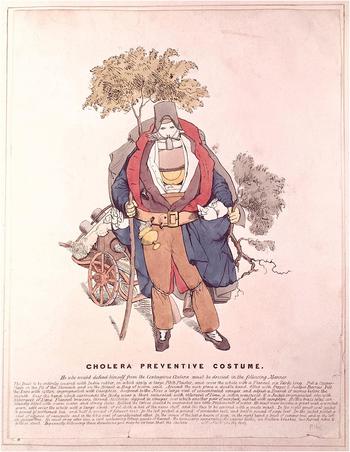
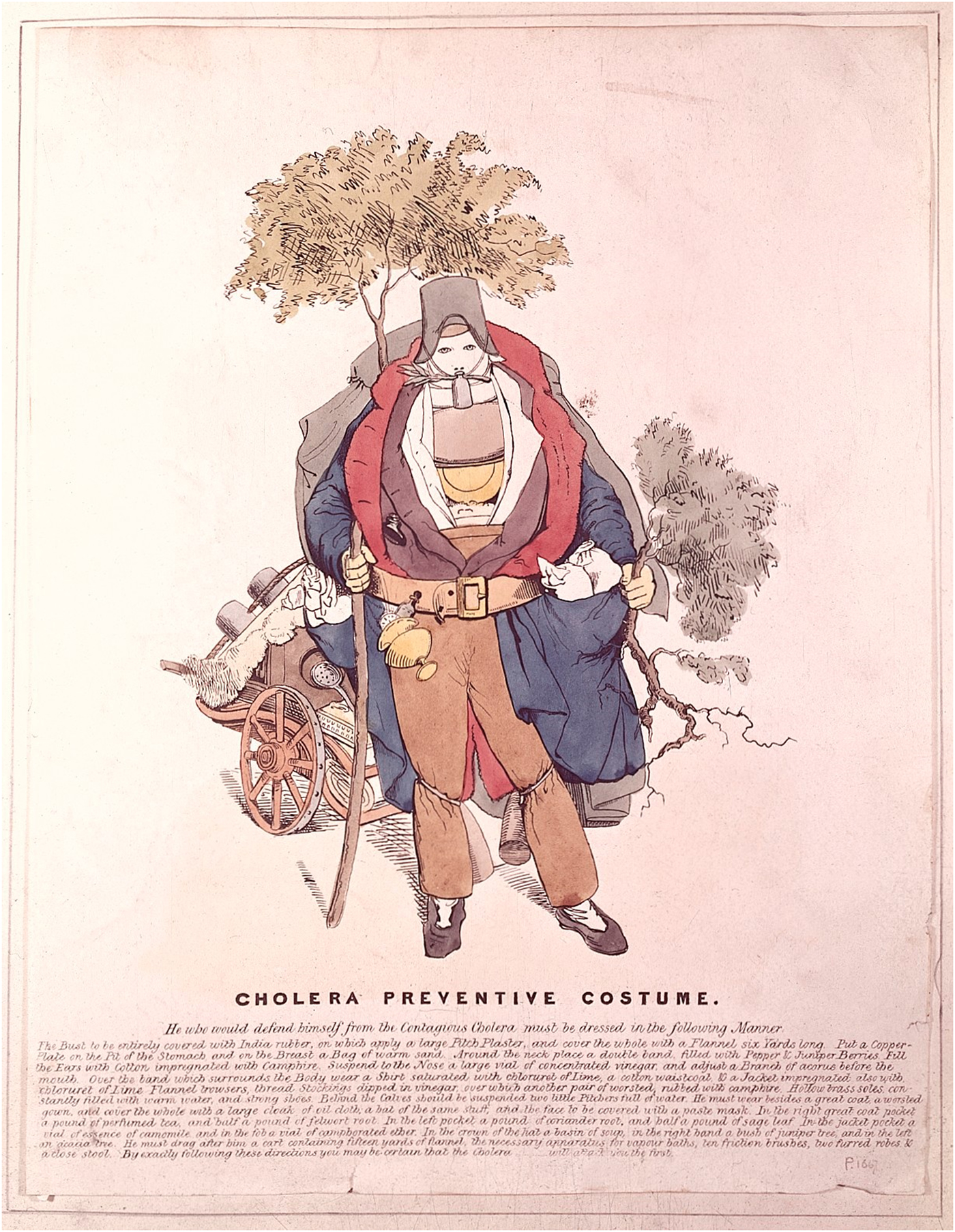
Yet despite this, the cholera outbreak of the 1830s witnessed a return to strong-smelling disease preventatives. Vinegar, camphor, and herbs all saw use in the houses and hands of cholera-phobic patients and were recommended by medical texts.Footnote 39 Satirical prints mocked these prophylactics for their reliance on strong odour (Figure 1).Footnote 40 Smoking tobacco, burning tar, and the use of chloride of lime to fumigate rooms were recommended by urban authorities.Footnote 41 Yet scepticism was also voiced regarding prophylactics: a number of medical texts warned that they ‘conceal[ed]’ what ‘ought to be attended to’.Footnote 42 Chloride of lime, despite its regular use, was also open to criticism. It could be used to ‘correct all offensive smells’ but it left a peculiar odour of its own and the gas was dangerous to anybody subjected to its influence for long periods.Footnote 43 Furthermore, whilst they might ‘extinguish a bad smell’, there was no evidence that chlorides of lime or soda really destroyed either miasma or contagion.Footnote 44 They might inspire a false confidence, managing the emotions which were often cited a predisposing cause for disease, but at the same time they might ‘actually be adding to its deleterious principle instead of neutralising it’.Footnote 45 In the medical semiotics of smell, getting rid of odour was potentially dangerous, because it was the sign of disease-causing decomposition, not the signified disease.
‘Cholera preventive costume’, 1832, London, coloured etching. Wellcome Library, no. 2083i. Credit: Wellcome Collection. CC BY.
A number of works in between the 1830s and 1850s brought together case histories of cholera patients with medical analysis. In these cases, collected by men of varied etiological opinions, the patients regularly linked the breathing of a bad odour to the presence of disease. For an example of the general tendency, we can take Elizabeth Wood, thirty-eight, whose case appears in Henry Gaulter's survey of Manchester:
on passing with her husband by the door of the Swan-street Hospital, she stood to read the daily report placarded on the gates. She became sensible in a moment of a faint sickly smell coming from the hospital and immediately turned sick, her head swam round…she lost her memory and the power of speech, this was followed by diarrhoea and extreme prostration of strength.Footnote 46
Many others in Gaulter's survey ascribed their illness to a ‘very offensive’ or ‘peculiar’ smell.Footnote 47 Similar reports could be found in the 1850s.Footnote 48 Upon inspecting the courts, alleyways, and homes of the patients, Gaulter frequently described the ‘insufferable’ or ‘intolerable’ smell.Footnote 49 Yet he placed little medical reliance on odour and it was almost entirely absent from his medical analysis. Gaulter argued that these examples merely displayed ‘the influence of the imagination with respect to the choleric smell’ and that since ‘smell is the most fallible of all the senses…the patient may be mistaken’.Footnote 50
Different sensory rhetorics were already at work in different discourses on disease. James Kennedy, a member of the Royal College of Surgeons, collected a series of patient testimonies to inform his work. The patient stories placed emphasis on an encounter with a ‘bad’ or ‘very bad’ smell as the moment when disease entered their bodies.Footnote 51 Yet in his analysis, Kennedy gave little credence to this and argued that ‘the imperfections of our senses’ meant that miasma or contagion ‘may long remain concealed from us’. He distinguished the complete lack of light shed on the ‘composition of the more subtle and destroying fluid’ from being ‘morally convinced of the presence of the latter in the chambers of the sick’.Footnote 52 Audiences were important here. In a lecture given to a local middle-class gathering at the assembly rooms of Ashby-de-la-Zouch, Kennedy spent a long time discussing the moral causes of cholera, which diffused ‘the seeds of whatever is subversive of decency and social purity’.Footnote 53 Whilst he admitted that putrid exhalations ‘for the most part, are gaseous and imperceptible’, Kennedy then went on to mention smell for the first and only time in the two texts (save the patient's testimonies) by warning against ‘those malarious emanations, which spread the seeds of unhealthiness in their offensive and sickening odours’.Footnote 54 Whilst sensory scepticism was important in a medical text for fellow practitioners, lectures to laypeople required a different register of rhetoric that equated the seeds of morality with the seeds of disease by reference to stench.
The belief that smell was associated with disease was not, as has been suggested, imposed from above by sanitarian propaganda.Footnote 55 The effect of the historiography of smell in the medieval and early modern period has certainly been to suggest long-term continuities in avoiding odours deemed disgusting.Footnote 56 But how cultures responded to this is quite another matter. Despite eighteenth-century scepticism about smell signalling or being disease, servants and the lower classes continued to use their noses to detect putrid smells in the marketplace as they sniffed for fresh food, a practice on which household manuals and cookbooks advised.Footnote 57 It is not unlikely that a long-standing association between foul smell and general unhealthiness, more or less submerged in the context of disease during the eighteenth century but present in other social contexts, thus gained a new cultural resonance and applicability with the visitation of cholera.
The rhetoric of later sanitary literature often covered up the role of the poor in smelling disease. However, there were cases where the mask slipped. In 1848, the surgeon Robert Bowie, a popular medical witness supportive of Southwood Smith and Chadwick's views, suggested that smell certainly signalled the presence of disease-causing matter. Yet to excuse his own senses from making the observation, Bowie proved his point by reference to poor patients who attributed attacks of cholera to encounters with bad odours. Despite this clear evidence that the poor were well aware of a link between smell and disease, Bowie then argued that the poor were ‘indifferent with regard to bad smells’ in order to emphasize the ‘surprise and approbation’ which they had for the ventilation, washing, and cleaning they had ostensibly resisted.Footnote 58 The poor's sensitivity to smell was used to back up flimsy medical theory, and their ostensibly poor sense of smell was used to give credence to claims of a moral sanitary victory.
IV
Between the 1830s and 1850s, medical texts ascribed a number of different causes for cholera and similar epidemic diseases. A peculiar state of the atmosphere, sudden changes in environment, and the presence of a morbific poison all played a role. Excesses of drink, sex, or fatigue could play a part. Lack of warmth, food, or clean water were also cited. The relationship between predisposing, remote, and exciting causes was frequently a blurred one.Footnote 59 By 1854, William Baly and William Gull were able to point to six predominant theories of cholera that reflected the increasing focus on a particular poison or morbific influence over environmental predisposition: an ‘atmospheric influence or epidemic constitution’ to which inhabitants were susceptible because of the continued respiration of impure air; a morbific poison or contagion propagated from the bodies of the sick; a poison that was swallowed in water and reproduced itself inside the body; a poison reproduced in the air that was diffused by the atmosphere; a form of fermentation in the air that was then diffused by human intercourse; or a poison spread by the combination of impure air and effluvia from the body.Footnote 60
How smell related to these different theories is difficult to grasp, mainly because smell is mentioned with very little frequency in discussions of disease etiology and theory. Baly and Gull made no reference to smell in their analysis; the only part of their work that did was the appended collection of abstracts from sanitary inspectors and patient histories.Footnote 61 On the sanitarian side, Chadwick's quote suggested that smell could be the poison but also that smells could debilitate and depress the system to make it more receptive to disease. He oscillated between arguing that miasmas had specific smells and admitting that establishing the relationship between specific smells and disease-causing emanations was difficult given the crowded smell-scape of towns.Footnote 62 Thomas Southwood Smith is often held up as the medical doyen of sanitarianism who made the theoretical case for ‘all smell is disease’.Footnote 63 Yet Southwood Smith also demonstrated an ambiguity towards smell: he gave examples where offensive odour was present but ‘febrile poison’ was not.Footnote 64 Smell could indicate the presence of animal and vegetable matter which might, through putrefaction, become the breeding ground of miasma.Footnote 65 There was no discussion of whether this had a distinctive smell or how this might be detected. In the few instances in the medical literature where smell's relationship to miasma was explicitly discussed, it was to note its unreliability: ‘deleterious miasma’ were ‘not appreciable by our senses, or even by the nicest instruments’.Footnote 66
The absence of smell from etiological discussion may have suggested that smell's role in disease causation was merely uninteresting or taken for granted. Yet more explicit discussions of smell reveal an underlying doubt about the equation of odorless environments with safety. To track the relationship between smell and disease, we have to find moments where the practical problems of public health forced questions about smell into the open. The statutes empowering improvement commissions from the 1830s and 1840s, along with the Public Health Act, frequently made a distinction between ‘offensive’ smells or odours, ‘offensive’ matter or substances, and ‘injurious’ vapours, gases, or effluvia that might be ‘prejudicial to health’. So too did the nuisance by-laws and cases examined by James Hanley. A long-standing legal view divided smells that were offensive from gases or effluvia that were deleterious (even when, in many cases, only the former was accepted as a valid nuisance). Concerns over the effects on businesses forced local governments to sharpen the language of by-laws from offensive matter and ‘smells’ to decaying biological material and dangerous ‘effluvia’. The attempt to medicalize nuisance law in the 1840s resulted in a retreat during the 1850s as nuisance inspectors without medical qualifications re-focused on offence rather than disease.Footnote 67 Smell's uncertain relationship with terms such as ‘effluvia’ enabled flexibility to the smells of manufacturing. This may help explain the more relaxed attitude to industrial pollution found in England when compared with France.Footnote 68
The debate over city internment provides further examples of the flexibility of ideas about smell. Arguments on opposing sides of the debate on urban graveyards both gestured to the lack of a link between smell and disease. George Alfred Walker, an authority on problems of urban burial who had been educated as a surgeon in London and Paris, put enormous emphasis on the gases and vapours emitted by decomposing corpses. Whilst the cases of sudden death by overpowering odours from exhumed corpses was rhetorically useful, Walker cautioned that they were ‘rare in their occurrence’ and ‘infinitely less important…than that certain lowering and gradual depreciation of the health of the community’ from an urban graveyard's very existence. Walker accepted that his readers might ‘affirm, that they have never perceived, by the sense of smell, any effluvia arising from these depositories’. Yet this was beside the point: the dangerous gases were diffused through the atmosphere. They were diluted enough to escape the nose but concentrated enough to degrade slowly but surely the health of the community. It was ‘of little practical importance to insist upon the presence or absence of an odorous compound’.Footnote 69 Despite this equivocation over smell, when dissenting and Anglican objections to his plans for closing London's graveyards emerged they zeroed in on Walker's sensory snooping ‘to and fro’ around the graveyards of London: ‘surveying the spoils of mortality, till his fancy became inflamed’.Footnote 70 Devaluing Walker's contributions involved tarring him with the morbid sensory curiosity of sanitarians. However, Walker's ecclesiastical opponents made similar suggestions about smell. The London archdeacon William Hale sought to prove that intramural burial was not injurious to the health and that witnessing decay and decomposition was a special part of English Christianity enabled by the country's colder climate. Even if bodies were left in the open to decompose in such a climate, medicine had shown that the ‘exposure to the fetid odours and putrid exhalations’ did not ‘generally injure health or shorten life’. If they did, medical students and surgeons would be dying in droves.Footnote 71
The ambiguity surrounding smell was demonstrated most forcefully in the debates over disinfecting fluids during the late 1840s and 1850s, in which the term ‘deodorization’ is first used. Scholars who have discussed disinfection have focused on the period after the 1860s, but the early debates on disinfectants are highly revealing about smell's relationship to disease and set the tone for later attitudes to their use.Footnote 72 Concerns about the decomposing animal and vegetable matter were coupled with a desire to monetize the waste produced by the urban metabolism.Footnote 73 Chadwick's preference, suggesting his own reservations about smell's utility, was to dilute sewage rather than use ‘chemical manipulation’.Footnote 74 Yet a range of sanitary entrepreneurs stepped forward to provide disinfecting fluids. Instead of being burnt in rooms, these new liquids could also be mixed with the ‘feculent’ matter or used to wash rooms, ships, surgical equipment, bed pans, water closets, wounds, or natural history specimens in order to remove infection and render them safe.
All of these applications were appropriate for the eponymous fluid promoted by Sir William Burnett, naval surgeon and later the British navy's first hospital inspector and surgeon-general. Burnett had written, broadly miasmatic, works on fever on Britain's Mediterranean fleet. The local environment of harbours at Carthagena, Minorca, and Malta produced, through a combination of heat, putrid animal and vegetable materials, and ill winds, the ‘form and essence’ of marsh miasma.Footnote 75 In the course of his 1816 report, Burnett makes very few scattered references to ‘offensive’ sewers, ‘perceptible’ effluvia, and a ‘noisome’ kitchen to describe spaces capable of producing miasma, but largely ignores explicit references to smell.Footnote 76 His argument against exclusively contagious approaches was the inability to sense the cause of disease.Footnote 77 Burnett's explanation of how his chloride of zinc solution worked was similarly vague. It had ‘effects’ on ‘noxious gas’ or ‘putrid animal or vegetable substances evolving noxious odours’, both of which could produce disease. Noxious gases and odours, denoted separately, were both rendered ‘imperceptible or innocuous, if not annihilated’. Linguistic doubling and hedging are everywhere in Burnett's discussion of his fluid.Footnote 78
A second fluid, named after the French chemist and health official Jean Ledoyen, was promoted by ‘Colonel’ A. C. Calvert. This was said to act by destroying a particular gas, sulpheretted hydrogen, which was thought to be a candidate for miasma.Footnote 79 A third and final fluid used in the London trials was promoted by Charles Frederick Ellerman, a merchant from Antwerp. Ellerman was the least successful of the three, although his writings on disinfection match up to the ‘all smell is disease’ rhetoric most forcefully. Ellerman claimed that ‘disease is borne upon the miasmatic odours that pervade our streets’, that his process neutralized ‘infectious gases by turning them into salts’, and that extensive ‘nose witnesses’ had witnessed his fluid work on cesspools and privies in Liverpool.Footnote 80
Ledoyen's fluid was put on trial by Southwood Smith, Richard Grainger, and Joseph Toynbee in June 1847. Burnett collected a series of testimonies from hospitals, ships, and other places where the fluid might be used, which were published in July of the same year. Further trials on the three fluids were made in London in 1848. Reports on Burnett's fluid praised its use in getting rid of smells from bilge water, bodily discharges, and close stools. But they separated its use as ‘a disinfectant’ from ‘the removal of noxious smells’: a ‘decided opinion’ could not be given on the former.Footnote 81 Southwood Smith's parliamentary report relied on the use of Ledoyen's fluid on night soil, privies, water closets, cesspools, and sick chambers. It was found that it did not get rid of all odour but restored the natural feculent odour of night soil and made it less ‘volatile’ so that it could not be smelt at a distance. Southwood Smith tried to argue that the fluids decomposed the gas ‘on which the foetor depends’, but he was forced to admit that this was just a ‘palliation of an evil’ with ‘no safety but in removal’. The chemist Dr H. B. Leeson argued that getting rid of offensive smells was different to destroying ‘the true miasmata’ and therefore the fluid was no disinfectant. Letters from hospitals in Dublin, Liverpool, and Manchester highlighted that ‘we wish to be understood as pronouncing no opinion regarding the disinfecting powers of the liquor’. Strikingly, given the sanitarian insistence on the blunted noses of night-soil men and labourers, the report argued that ‘all classes of witness, from the nurses and wardsmen to the highest medical authorities’, had corroborated their conclusions.Footnote 82 In the trial of Ellerman's liquid in 1848, the liquid had to be analysed by a chemist rather than using it since the foreman, labourers, and householders all complained of ‘the odour it gave out’.Footnote 83
The reaction to these experiments in medical journals was far from positive. For France, Corbin has given examples of highly qualified chemists who took part in serious experiments where buckets of filth were sniffed to detect how quickly they were deodorized.Footnote 84 English chemists and medical practitioners saw similar experiments as risible. The idea that sniffing could detect disease or that medical professionals would engage in such acts of sniffing, as in a trial of Burnett's and Ledoyen's fluids in Canada in October 1847, was beyond the pale:
It would, we believe, be difficult for any sober-minded person to realise the scene of ten medical men blindfolded, provided with two basins of feces, in equal quantity and strength, assiduously engaged in smelling the same, while the contents of each basin were kept stirred for an equal period of time; and then solemnly giving a judgment on the relative intensity of the odour in the two cases!
This, the London Medical Gazette went on to assure its readers, was ‘nothing more than sanitary quackery’. The only safe option for sanitation was in removing decomposing material.Footnote 85 The use of the noses of night men and dissecting-room porters in the London trials elicited disbelief. The description of the ‘magical’ disappearance of odours by witnesses was mocked as a ‘species of quackery and humbug’.Footnote 86 Parliamentary testimonies on Ledoyen's fluid were placed side-by-side with quack advertisements for snuff, pills, and ointments. The pretentions of Ledoyen's promoter ‘Professor’ Calvert were mocked.Footnote 87 The ‘moral stench’ of quackery could not be overcome. It was at this point that the term ‘deodorizing’ was first used to denote the failed effects of Ledoyen's fluid.Footnote 88 Ellerman, aware of what was happening, quickly changed his fluid to a ‘deodorizing’ one meant for sewage and disavowed its disinfecting qualities. The attacks from medical journals continued: these ‘nostrums’ removed odours but the poison existed ‘without a stench’ and ‘offensive odour and a poisonous miasm’ had no relation.Footnote 89 Ledoyen and Calvert had used ‘barefaced quackery’ to turn a parliamentary report into advertisements for their fluid.Footnote 90 Southwood Smith himself was criticized for ‘constantly associating in his mind the co-existence of foul smells with the generation and diffusion of infectious fevers’. Burnett also came in for criticism. He was accused of spreading the ‘misnomer’ that ‘disinfecting’ was the same as ‘stench destroying’ or even ‘putrefaction arresting’.Footnote 91 The promoters of fluids were using their noses to establish transformational effects. This contradicted the established belief, put forward by surgeons and physicians from the late eighteenth century onwards, that powerful smells could not distinguish the powers or effects of medicines and materials.
Odour could be a sign that generic, not necessarily dangerous, impurities were present. It could suggest a lack of ventilation or that decomposing material needed to be removed. In these contexts, deodorizing was a positively dangerous action. The second report of the metropolitan sanitary commission in 1848 questioned many of its witnesses on ‘the various substances, classed either as de-odorizers or dis-infectants’. Dr Lyon Playfair's evidence was as an indictment of Burnett's and Ledoyen's fluids. Playfair enumerated a three-way categorization of disinfectants that acted on miasmata, decomposers that arrested the decay of bodies, and deodorizers which took away odour without taking away infection. Most so-called ‘disinfecting fluids’ could be placed in the final category of ‘deodorizers’, which Playfair argued ‘may often be only a convenient means of concealing filth where it exists in abundance. It is going back in our knowledge to require and use deodorizers.’Footnote 92 Many others agreed. The General Board of Health concluded in 1851 that none of the experiments on ‘deodorizers’ or ‘disinfectants’ had been ‘satisfactory as preventatives’ and that they were often ‘useless or detrimental’.Footnote 93 John Simon, in 1850 the medical officer of health to the City of London and later to become the chief medical officer for Her Majesty's government, was similarly sceptical. Deodorizers were distinct from disinfectants. The former diffused ‘perfumes peculiarly their own’, obscured the ‘useful purpose’ of offensive odours in ‘warning us against the…poisons with which they are associated’, and did not ‘in any degree interfere with the spread of epidemic or infectious disease’. Since ‘odorous products’ were not the ‘agents of injury', Simon restated the value of removing all decomposing materials through sewage and ventilation over ‘the mere chemical neutralisation of certain stinks’.Footnote 94
These cautions continued to be emphasized into the 1860s and 1870s. Robert Angus Smith divided his investigation of the prevention of offence by deodorizers from the study of disease arresting disinfectants.Footnote 95 Another disinfectant promoter, Henry Condy, was quick to add medical credibility to his claims by admitting all of the necessary caveats. There was ‘no proof that the specific power of producing fever, small-pox, or cholera, is necessarily associated with any odorous matter’ and that therefore ‘the mere absence or destruction of such odours is not sufficient security against infection’, it could only ‘palliate or disguise an evil’.Footnote 96 It is no accident that his many chapters of testimonies focused on ways of making spaces and individuals more comfortable. Disinfecting fluids would still be useful in cases of cancer where suppurating, foul, tumours needed ridding of odour for the relief of patients, loved ones, and doctors.Footnote 97 They aimed at creating comfort over destroying disease. Sir William Tennant Gairdner offered a good summary of the place of smell in disease theory in the 1860s. Smells and gases were not the ‘sources of epidemic disease’ and special poisons might only be present in one in a hundred of the cases where offensive smells could be found. But if ventilation, removing putrid substances, and better sewerage systems removed the smells in the ninety-nine cases and the deadly disease in the hundredth then this was worth it.Footnote 98
V
The debates over deodorization and disinfection distinguished between the over-sensitive noses of sanitarian quacks and, the medical journals suggested, the less gullible senses of the medical profession. The paucity of references to odour in the etiological texts of the 1840 and 1850s is telling when compared to their density in sanitary reports. But the descriptions of smell in these reports was not a complex, nuanced, interpretation of the smells of miasma. Scholars have criticized the influence of Corbin's binary framing of foul and fragrant and called for attention to the uses of smells, the meanings of individual odours, and attention to more subtle scents that escape this dualism.Footnote 99 But it is also fruitful to discuss how and why binary (or other) ways of framing smell have acquired cultural resonance or uses. The eighteenth century saw a shift towards an emotive vocabulary of smell including terms such as agreeable, disagreeable, offensive, disgusting, and pleasant. This was matched by the new focus on smell's subjectivity and emotive power that rendered its epistemological utility questionable.Footnote 100 The effects of this shifting language are plain in the sanitary literature of the 1840s and 1850s. Here, it was precisely smell's emotive, anxiety-producing, qualities that made it so powerful. Smell's importance to sanitarian practice was not linked to its medical utility but its character as a ‘spasm of revulsion’.Footnote 101 Again and again in sanitary reports, smell is formulated as a binary and the side that is evoked is the offensive, intolerable, and nauseous.Footnote 102 It was smell's ability to overthrow the senses and language that was emphasized: the odorous brew of lodging houses and slums ‘beggars all description’.Footnote 103
Emphasis has been placed on stench's sudden, all-encompassing, power over the sanitary inspector.Footnote 104 But we should be careful to note that revulsion was also a product of the deliberate cultivation of sensory practices and textual strategies. The procedures of sanitary investigation helped reinforce a Chadwickian reductionism.Footnote 105 Chadwick and his acolytes repeatedly referred to the poor's tendency to become habituated to the stench that surrounded them.Footnote 106 The embodied practice of flitting from house to garden to court to street gave inspectors little time to become habituated to the odours they encountered.Footnote 107 This only reinforced their perceptions of sensory alterity. It also meant that the sudden transformation from smell to indorous on which Smith's trials of disinfecting fluids depended (and which the medical journals mocked as a sign of quackery) fitted perfectly well within the habitus of the sanitary inspector dependent on moving quickly in and out of states of stench.
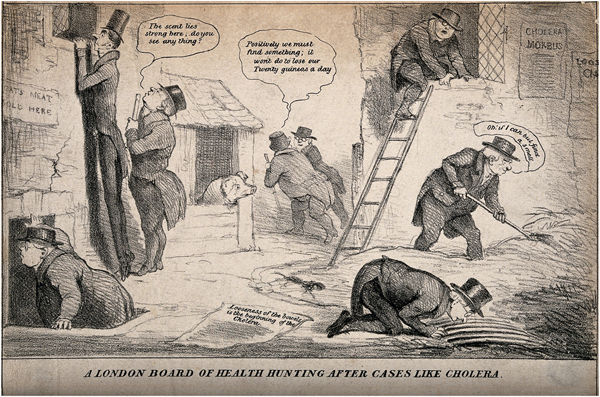
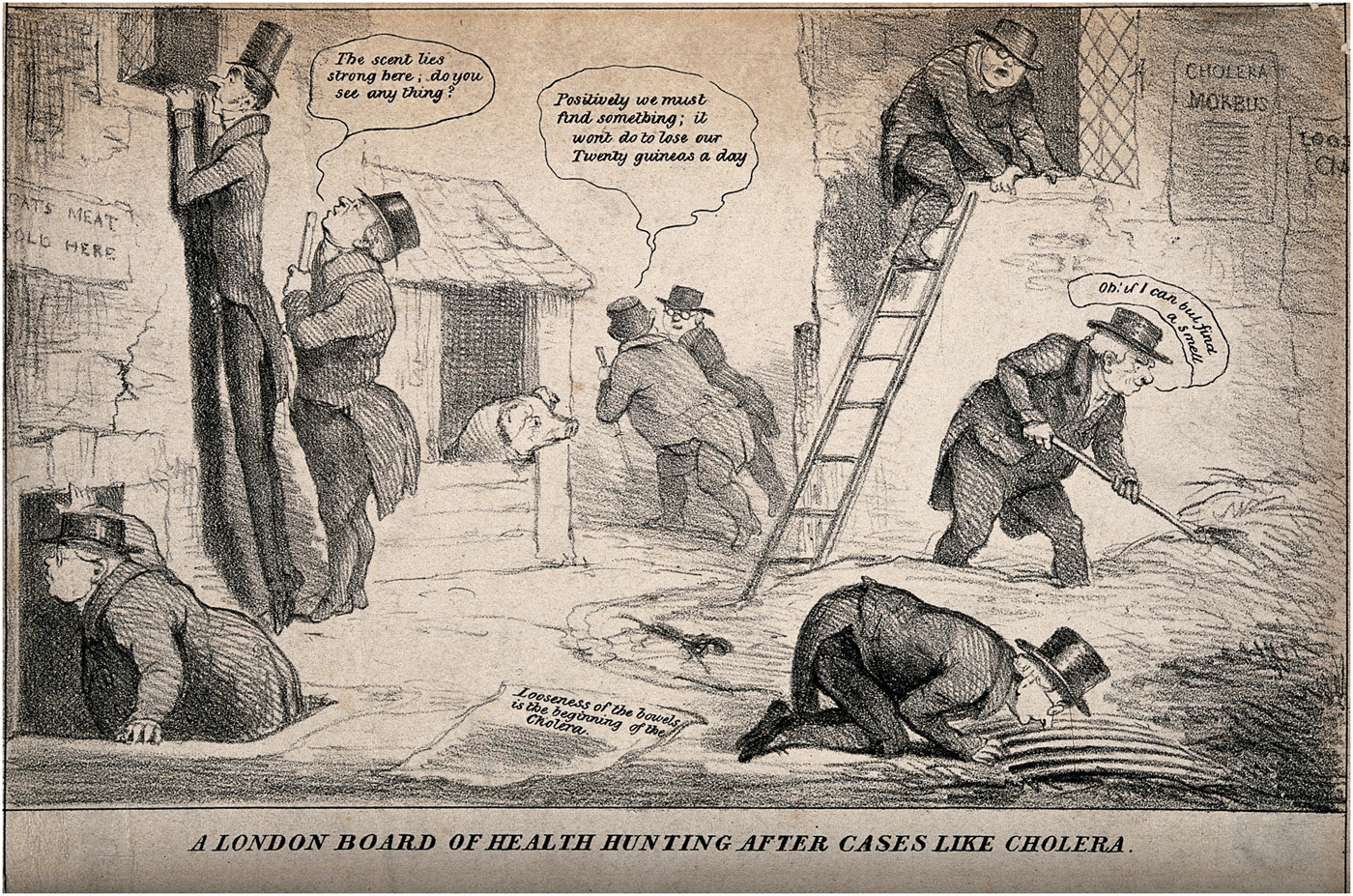
The questionnaires and lists which inspectors worked to were also guides to the ‘careful management of the eye and nose’.Footnote 108 Questions included whether sewers, drains, or rooms smelled close or emitted offensive odours.Footnote 109 But the attentive sniffing these aides implied were described as an overpowering assault on the senses once they were rendered into written reports. As the medical officer for St Saviours, London, put it in an 1848 report, ‘we are met, or, as the expression is, almost knocked down by offensive smells’.Footnote 110 Whilst inspectors and offices were ‘assailed’ and ‘stunned’, they emphasized that they did not have a ‘more than usually delicate sense of smell’ but were ‘compelled’ by odorous assaults.Footnote 111 The shift in representation was rhetorically powerful and countered the accusations of intrusive, nosy, interested forms of smelling (for filthy lucre as much as dangerous disease) displayed in satirical prints of inspectors (Figure 2). Similarly, in the committees on the health of towns, sanitary regulation, and the state of the poor discussions of offensive odours were pushed on witnesses.Footnote 112 This aided the focus on disgust and anxiety: how else could witnesses remember and express the smell other than by saying it was offensive? In his 1842 report, Chadwick had noted that many wealthier individuals in towns and cities were surprised by reports of the malodorous filth in which the lower classes lived.Footnote 113 It was precisely these conditions of surprise – of sudden, intolerable, offence at smells – that sanitary texts recreated in order to bolster their power. These reports of smell were practices that mobilized, named, and communicated an emotional style.Footnote 114 Their expression verbally in committee rooms, textually in reports, and in the minds of those who read them aimed to inculcate feelings of disgust and anxiety that would help promote sanitary reform.
‘A London Board of Health hunting after cases like cholera’, 1832, London, lithograph. Wellcome Library, no. 1998i. Credit: Wellcome Collection. CC BY.
VI
Smell was not, in an uncomplicated fashion, disease for any of the medical and sanitary writers surveyed in this article. Most medical experts could agree that breathing a foul-smelling atmosphere might make individuals more susceptible to disease. Many also acknowledged that smell signalled general impurities and that, accompanying these impurities, disease might also be present. But disease, especially miasmatic gases, could be completely odorless. The literature on deodorization and disinfection offers an instance where material practices forced these underlying beliefs into the archival open. This was certainly different to the kind of position espoused in sixteenth- or seventeenth-century texts on disease. In such texts, breathing in bad smells frequently meant breathing in disease: hence the use of prophylactics by doctors and laypeople alike during periods of plague.Footnote 115
To note early modern continuities and to outline, as this article has done, the ambiguity of smell's place in nineteenth-century medicine is to make an important point about the causal relationships plotted by histories of smells and smelling. The idea that smell correlated with disease had had a long history. After English anxieties about the plague quietened down in the late seventeenth century, the correlation between smell and disease lost some of its cultural resonance. It then re-emerged in the context of the sensory crisis of cholera in the 1830s, with a heightened attention to smell on the part of laypeople and sanitary inspectors. Yet this focus on smell was not matched by medical theory. This mismatch of ways of smelling adds further to our understanding of the complex relationship between the public and public health.Footnote 116 Rather than tracing the evolution of brand-new ideas about smell and disease to the eighteenth and nineteenth centuries, the chronologies of smell's history (or at least its medical history) might be better framed as a story about the submergence and re-emergence of certain types of linkage between smell and disease in different contexts and among different communities.Footnote 117 This has the advantage of taking historians away from the frequent futility that comes with trying to track a momentous modern ‘sensory caesura’.Footnote 118
The responses to Ledoyen's and Burnett's fluids in medical journals pursued a distinction between the quackery of sanitarian disinfectors, who smelt disease everywhere, and an ideal medical professional, who was more attuned to the deficiencies of the senses. The possibility that such ways of sensing were a part of the production of a collective, professional, medical identity in the 1840s, described by Michael Brown, is worthy of further exploration.Footnote 119 Yet, coupled with the conspicuous absence of smell from etiological discussion, these critiques of deodorization also suggest the influence of ideas about disease specificity. During the late eighteenth and early nineteenth centuries, the influence of the Paris Clinical School privileged ostensibly object sensory signs over the subjective symptoms described by patients. In this context, visible lesions and the audible auscultation of the chest provided readable signs and rhythms.Footnote 120 However, odours could not be reduced to specific, comparable, and quantifiable signs. The new emphasis, from the late eighteenth century onwards, on the imprecise vocabulary and emotive qualities of smelling diminished its clinical utility.
Smell was still important to the sanitarian project of the nineteenth century. But this was not because it was bound to a single disease theory. Instead, the use of smell in sanitary reports aimed to create a specific way of feeling. Ironically, the pervading resonance of this rhetoric ensured that the 1840s and 1850s witnessed a striking re-odorization of texts. Both public health texts and novels focused their attentions on the stench of the putrid and the lower classes with a peculiar avidity.Footnote 121 Rather than a medicalized fear of odour, this language was one of disgust and anxiety. The debate over deodorizing and disinfecting fluids witnessed an unsuccessful attempt to convert generalized anxiety back into the fear of a specific, identifiable, threat.Footnote 122 The form of deodorization narrative which has tracked the declining epistemological or cultural relevance of smell often turns on descriptions of smell as subjective, variable, and uncertain.Footnote 123 Yet it was precisely these facets of smell that lent odours their social and cultural power. The emotive language of smell was a simple and effective way of representing the abject state of the urban poor. Stench communicated immorality, idleness, stagnation, and unproductivity. It was therefore another plank in arguments for the need for infrastructural change that did not, as Christopher Hamlin has noted, really derive their principles from medical theory.Footnote 124
Popularizing the idea that, as George Orwell would later have it, ‘the lower classes smell’ required a constant re-iteration and textual re-inscription of their overpowering, offensive, odour.Footnote 125 Texts describing smell worked by phenomenological analogy – elucidating in readers the feelings and sensations that came with the smells they described – and language directly impinged on how individuals perceived.Footnote 126 The nested binaries of lower and middle class, stinking and odourless, that Stallybrass, White, and Corbin have gestured to thus required a re-odorization of urban space in the noses of readers at the precise moment when sanitarians were ostensibly deodorizing it. Sanitarian discourse, much as responses to the plague had done in the early seventeenth century, performed a sense of sensory crisis which has made the archive reek.Footnote 127 Historians of smell should be as attentive to the relationship between distinct practices of textual, as well as material, re-odorization as they have to deodorization. The emotive, subjective, character of smell that made it so rhetorically useful in sanitary propaganda also contributed to a view that it was epistemologically unreliable in medicine. Contrary to popular historiographical assertion, nineteenth-century medicine's distinctly ambiguous relationship with smell meant that the ventilation, circulation, and disinfection strategies pursued by sanitary reformers were frequently supported despite, not because of, the relationship between smell and disease.